Agility Robotics, the Oregon-based maker of humanoid robots, is planning to enter the public market through a merger with Churchill Capital Corp XI in a deal worth roughly $2.5 billion, according to a Wednesday report from the Wall Street Journal, which cited company executives.
According to the report, the two companies anticipate generating more than $600 million in gross proceeds from the transaction. That figure includes $420 million in cash from Churchill XI, along with more than $200 million raised through a common-stock private investment in public equity — an arrangement led by Taiwan-based Foxconn.
Once the deal closes, the newly public company is expected to trade on the stock market under the ticker symbol AGLT.
Agility Robotics is best known for its commercially deployable humanoid robot called Digit. The company has already received orders for an upgraded version of Digit currently in development. That next-generation model is designed to handle smaller objects with greater precision and will meet higher safety standards.
Reuters, which first reported the story, noted it was unable to independently confirm the details at the time of publication. Neither Agility Robotics nor Churchill Capital Corp XI responded to requests for comment made outside of normal business hours.
SEOUL — It took 14 years of risky bets, plenty of skepticism, and more than a few close calls, but SK Hynix has emerged as South Korea’s most valuable publicly traded company — surpassing the long-dominant Samsung Electronics and landing at the heart of the global artificial intelligence frenzy.
When conglomerate SK Group purchased Hynix Semiconductor back in 2012, many observers called the acquisition financially reckless. At that time, Samsung was worth more than ten times SK Hynix and held the top spot globally in Dynamic Random-Access Memory — the type of memory chip that powers everyday devices like laptops and smartphones.
Looking for a competitive advantage, SK Hynix chose to pursue a different and largely overlooked type of chip: high-bandwidth memory, or HBM. These chips could move data at high speeds but had limited use among data center operators at the time.
The company partnered with Advanced Micro Devices to release the world’s first HBM product in 2014. However, problems with the chip’s second generation caused SK Hynix to fall behind Samsung in the late 2010s. According to two former company executives, that setback sparked internal debate about whether to abandon HBM development altogether.
Leadership ultimately chose to press forward, overhauling their technology and committing to major production investments. A key factor in that decision was anticipated demand from Nvidia — a company that was then primarily recognized as a maker of 3D graphics chips for computers and video games. That account comes from Shim Dae-yong, who headed HBM development at SK Hynix during that period.
The decision came with a hefty price tag: an 880 billion won investment — roughly $640 million — directed toward a packaging facility in Icheon and other infrastructure. The bet initially looked like a mistake. In 2019, the facility sat largely idle as demand from both Nvidia and cryptocurrency miners dried up.
The U.S. dollar pushed higher Wednesday, reaching a fresh 13-month peak against a basket of major world currencies as investors fled a sharp downturn in technology and semiconductor stocks and braced for possible Federal Reserve interest rate increases.
A sweeping sell-off across the tech sector dragged global stock markets lower, as traders locked in profits following a prolonged rally. The turbulence sent investors toward traditional safe-haven assets like the dollar and government bonds.
At the same time, expectations for a Fed rate hike continued to grow, with central bank officials adopting an increasingly hawkish tone in light of the U.S. economy’s continued strength. According to CME FedWatch data, markets are now pricing in a 37% probability of a 25-basis-point rate increase at the July meeting — up sharply from 8.5% just one week ago. The odds for a September hike have also risen, climbing from 29.1% to 70%.
The dollar index, which tracks the greenback against currencies including the Japanese yen and the euro, reached an intraday high of 101.44 — its strongest reading since May 13, 2025.
Ray Attrill, head of FX strategy at National Australia Bank, noted the dollar’s continued appeal. “The U.S. dollar is still the preferred safe-haven,” he said.
Attrill added a note of caution, however. “Obviously the momentum is on its side at the moment, but I think there is a lot priced in,” he said. “We’ll have to see a correction in risk sentiment, one that’s broader rather than just the tech sector, or the market further ratcheting up its expectations for hikes, before the dollar can go very much higher from here.”
The euro was last trading near a one-year low at $1.1375. The British pound slipped slightly to $1.3199 after a Bank of England policymaker, Alan Taylor, indicated that an “extended hold” on interest rates was the appropriate response to ongoing inflation pressure.
The Australian dollar, which tends to reflect investor appetite for risk, held steady at $0.6918 ahead of a key inflation report due later in the day. The New Zealand dollar edged down 0.05% to $0.5665, hitting a fresh seven-month low.
Adding to safe-haven demand, tensions between the United States and Iran emerged over key elements of their fragile framework agreement, including disputes over nuclear matters and control of the Strait of Hormuz — raising doubts about whether the deal can hold.
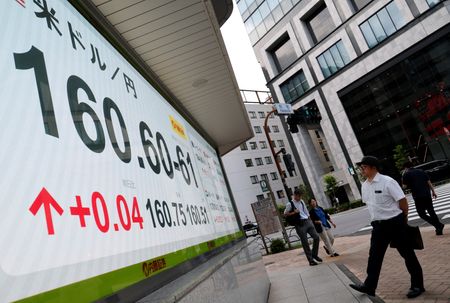
The Japanese yen remained under significant pressure, last trading at 161.57 after briefly falling to a two-year low of 161.93 late Monday. A move above 161.96 would push the yen to its weakest level since 1986.
Verbal warnings from Japanese government officials have done little to ease the strain on the currency, given the wide gap between U.S. and Japanese interest rates and skepticism about whether Tokyo would actually intervene in currency markets.
Former Bank of Japan policymaker Sayuri Shirai warned that the yen could weaken further to 165 per dollar if the Fed proceeds with rate hikes this year.
Meanwhile, a summary of opinions from the Bank of Japan’s June policy meeting, released Wednesday, revealed that some board members called for additional rate hikes to move the central bank’s policy rate closer to what would be considered a neutral level for the economy.
Asian financial markets were unsteady on Wednesday, one day after a worldwide selloff hit technology and semiconductor stocks hard, with market watchers raising red flags about the potential for more turbulence ahead.
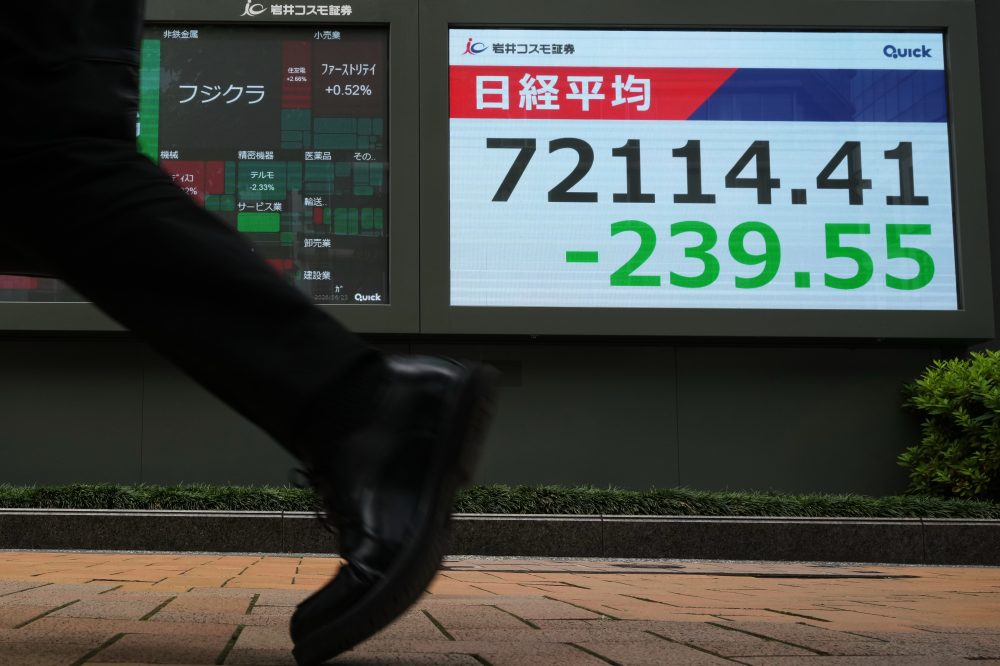
The MSCI index tracking Asia-Pacific shares outside of Japan dipped 0.02%. South Korean stocks, which had crashed 10% on Tuesday in their worst single-day decline since March, bounced back with a 2.2% gain. Japan’s Nikkei index swung back and forth between positive and negative territory, ultimately sitting 0.8% lower.
Michael McCarthy, a market analyst at Moomoo Securities Australia, described the recent trading environment as deeply concerning. “Price action in markets over the last seven trading days has been alarming, not just when it falls, but also when it rises,” he said. “When markets move so rapidly, in either direction, it’s a sign of instability.”
That cautious mood also gripped Wall Street overnight, following similar trends across Europe and Asia. U.S. stocks fell amid concerns over growing debt-financed spending on artificial intelligence and speculation that the Federal Reserve might take a more aggressive approach to interest rates. At the same time, investors moved toward the safety of government bonds, pushing Treasury yields lower.
The Dow Jones Industrial Average slipped 0.09%, the S&P 500 dropped 1.4%, and the Nasdaq Composite fell 2.2%. The yield on the benchmark 10-year U.S. Treasury note declined 1.41 basis points to 4.493%.
Oil prices continued their slide, trading near four-month lows reached in the previous session. The decline came as signs emerged that oil tankers stuck in the Gulf since the beginning of the Iran war are preparing to pass through the Strait of Hormuz.
Despite that development, questions remain about whether the peace arrangement will hold. The United States and Iran have offered contradictory accounts of what was agreed upon in their deal, including critical matters such as nuclear inspections and control of the Strait of Hormuz.
The strength of the U.S. dollar has put significant pressure on the Japanese yen, which hovered near 40-year lows at 161.57 per dollar. That situation has kept traders on alert for a possible government intervention to support the weakened currency.
A summary of opinions released Wednesday from the Bank of Japan’s meeting this month — in which the central bank raised interest rates to a 31-year high of 1.00% — showed that some board members are pushing for additional rate increases to bring the policy rate closer to what is considered a neutral level for the economy.
The dollar index, which tracks the greenback against a group of major currencies including the yen and euro, edged up 0.02% to 101.43, near its highest point in a year. The euro slipped 0.06% to $1.1375, while the British pound fell 0.08% to $1.3192.
Gold prices also retreated, falling 0.48% to $4,088.71 per ounce, as expectations of higher interest rates reduced demand for assets that don’t generate income.
In digital currency markets, Bitcoin climbed 0.84% to $62,914.94, while Ethereum gained 0.43% to reach $1,669.35.
Samsung Electronics is gearing up to launch a massive share repurchase program worth 90 trillion won — approximately $58.61 billion — according to a report from South Korea’s Yonhap News Agency published Wednesday.
The memory-chip giant is expected to formally unveil the specifics of the buyback in the near future, Yonhap reported, citing unnamed sources within the industry.
The announcement comes on the heels of a pay agreement reached last month between Samsung’s management and its union. Under that deal, Samsung is expected to allocate roughly 10.5% of its operating profit toward special bonuses for workers in its chip division, with those bonuses paid out in the form of company stock. The arrangement has raised concerns about potential inequality within the broader workforce.
Yonhap estimates Samsung will need to spend around 154 trillion won to cover the bonus program in total, a figure that accounts for a 40% tax obligation.
Workers who receive treasury shares as part of their bonus will have some flexibility in how they cash out. One-third of the shares can be sold right away, while another third must be held for at least one year before selling. The remaining third requires an additional year of waiting beyond that.
Abbisko Cayman announced Wednesday that its Shanghai-based subsidiary, Abbisko Therapeutics, has formed a strategic research collaboration and licensing agreement with pharmaceutical giant Eli Lilly.
Under the terms of the deal, both companies will work together on the discovery and development of new treatments across a range of targets. As part of the arrangement, Abbisko Therapeutics could receive milestone payments totaling as much as $1.9 billion, tied to development, regulatory, and commercial achievements.
SEOUL — The South Korean government is holding discussions with Samsung Electronics and SK Hynix about the next wave of large-scale semiconductor facility investments, according to a government official who spoke Wednesday. An announcement regarding a new chip manufacturing cluster is expected in the near future.
A presidential policy adviser, Kim Yong-beom, told a discussion panel that demand for chips fueled by the artificial intelligence industry has been nothing short of “exponential and explosive.” He said that surge in demand could force both companies to accelerate their current chip facility construction timelines by more than 10 years, potentially completing projects by 2034 to 2035.
“The question is how we will support the AI revolution. Looking ahead to the next stage after seven or eight years, we are faced with the challenge of finding a massive new site for a second cluster,” Kim said.
Dye & Durham, a Canadian company that develops software for the legal industry, announced Tuesday that its chief executive officer, George Tsivin, has departed the role effective immediately.
Tsivin had only been in the position for about a year, having been appointed CEO in 2025. Along with leaving the top executive post, he has also been removed from the company’s board of directors.
The company offered no explanation for his sudden exit.
In the meantime, a sub-committee made up of board members will take over the duties of the CEO’s office and manage day-to-day operations. That arrangement will remain in place while the company conducts a search for a permanent chief executive to fill the vacancy.
LAS VEGAS — Rio Tinto, the world’s second-largest mining company, anticipates its lithium division will become its fastest-growing business segment, outpacing even its copper and iron ore operations, according to a company executive who spoke Tuesday at an industry conference in Las Vegas.
The mining giant entered the lithium sector last year by acquiring U.S.-based Arcadium, a purchase that gave the company access to mines, processing operations, and mineral deposits spread across four continents. The deal also brought with it an established customer list that includes electric vehicle maker Tesla.
Since completing that acquisition, Rio Tinto has been working to absorb those new assets during a difficult period for the lithium market. A flood of supply from China drove prices sharply lower, triggering widespread layoffs across the industry. Market conditions have only recently begun to stabilize.
Jérôme Pécresse, who leads Rio Tinto’s aluminum and lithium business unit, spoke with Reuters on the sidelines of the Fastmarkets Global Lithium, Battery and Critical Materials Conference. He said the company is moving ahead with plans to open mines in Argentina and Canada — operations it believes will remain financially viable even if lithium prices fall again.
Rio Tinto is targeting production of at least 61,000 metric tons of lithium this year, with a goal of reaching the capacity to produce 200,000 metric tons annually by 2028, if market demand supports that level of output.
Mari Group, a live events company founded by TKO CEO Ari Emanuel, is in advanced discussions to acquire British West End theater operator ATG Entertainment for £4.5 billion — roughly $5.94 billion — according to a report published Tuesday by the Financial Times. The outlet cited four individuals with knowledge of the situation.
According to the Financial Times, U.S.-based investment firm Providence, which currently owns ATG, has entered into exclusive negotiations with Emanuel’s Mari Group. Sources told the publication that both sides are hopeful a deal can be finalized within the coming month.
However, the report cautioned that the timeline could shift and that no agreement has been confirmed at this point.
Emanuel is also the chief executive of TKO, the parent company of the Ultimate Fighting Championship, a major mixed martial arts promotion organization.
Reuters had previously reported last month that ATG Entertainment was in the early stages of being considered for a potential sale by its private equity owner Providence, also based on information from four people familiar with the matter.
Should the sale go through, it would represent a significant moment for the live theater industry. ATG Entertainment, formerly known as Ambassador Theatre Group, was among the sectors hit hard by pandemic-era lockdowns and closures.
Providence and ATG did not respond to requests for comment from Reuters. A representative for Mari declined to offer any statement.
SAN JUAN, Puerto Rico — The private company responsible for managing the transmission and distribution of electricity across Puerto Rico has turned the tables on the territory’s government, filing a countersuit on Tuesday.
Luma Energy leveled serious accusations against the government, claiming officials acted “in bad faith and with intentional malice to the detriment of the public interest.” The company also charged that the government was abusing its authority “to illegally try to fulfill a campaign promise.”
This legal countermove comes six months after Puerto Rico’s government took Luma to court in an effort to void the company’s multimillion-dollar contract — a cancellation that Gov. Jenniffer González has made a repeated public pledge to pursue. González previously stated that the island’s power system had failed to improve with the speed, consistency, or effectiveness that had been promised.
The courtroom battle is just the latest complication for an island long plagued by persistent blackouts and an aging power infrastructure that was devastated when Hurricane Maria struck in September 2017. Adding to the crisis, Puerto Rico’s Electric Power Authority continues to be stuck in bankruptcy proceedings, unable to work through more than $9 billion in public debt.
Luma made clear it expects significant financial compensation if its contract is ultimately terminated, stating it would be entitled to at least $4.5 billion in damages, along with additional billions.
A representative from Puerto Rico’s Justice Department had not responded to requests for comment as of Tuesday.
Luma Energy is a joint venture between Atco, headquartered in Calgary, Alberta, and Houston-based Quanta Services Inc. The consortium assumed control of Puerto Rico’s power transmission and distribution network in June 2021, stepping into a system already weakened by decades of neglect and poor management under the island’s own power authority.
Global stock markets took a significant beating on Tuesday, driven by a sharp selloff in technology shares that left investors on edge. A combination of worries — including heavy debt-funded spending on artificial intelligence, the possibility of a more restrictive U.S. interest rate policy, and tightening financial conditions tied to a stronger dollar and elevated U.S. bond yields — all contributed to the downturn.
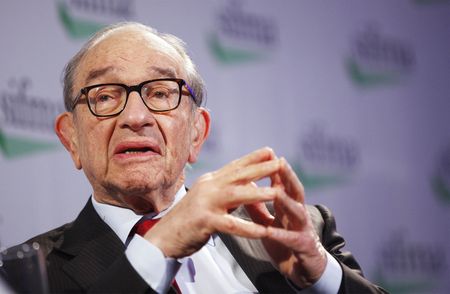
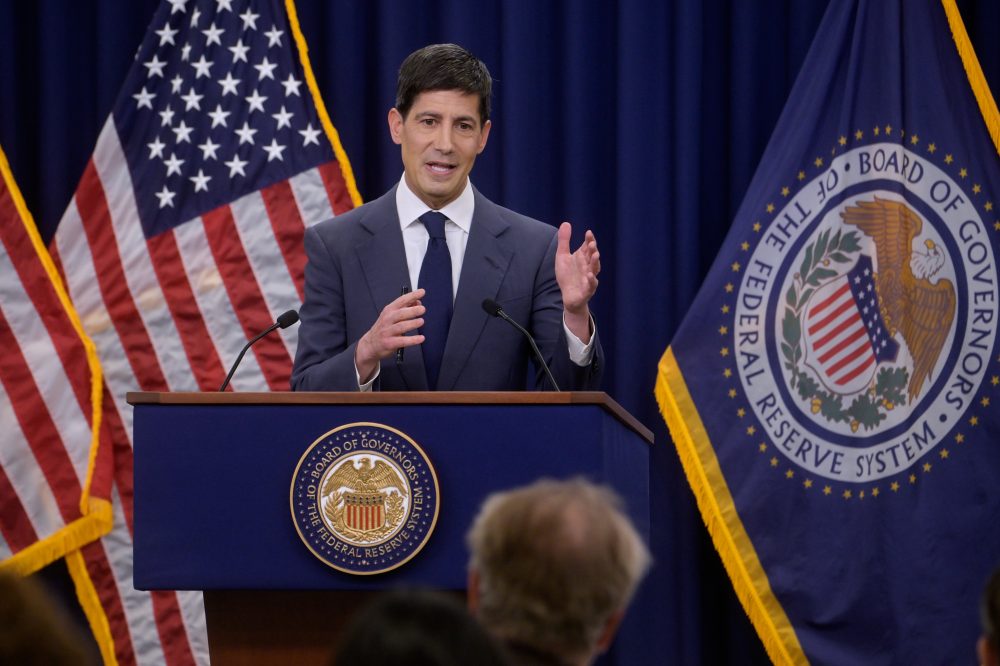
One financial analyst noted that investors may face challenges ahead when it comes to understanding Federal Reserve communications if the new Fed chair, Kevin Warsh, opts for the kind of vague, hard-to-read messaging that characterized the Alan Greenspan era. Notably, the wide gap between two major banks’ predictions for Fed policy suggests that unclear signaling may already be taking hold.
Tech Stocks Take the Hardest Hit
The global technology shakeout grew more severe on Tuesday. South Korea’s KOSPI stock index plunged 10%, the U.S. “SOX” chip index dropped 8%, and the S&P 500’s technology sub-index shed 4%. The Nasdaq fell roughly 2%, a decline that wiped out nearly $1 trillion in market value.
Analysts noted that some of this pullback may have been overdue — the SOX chip index had actually hit a record high just the day before, having more than doubled in under two months. Still, the losses raised concerns about potential market bubbles, and fears could grow if similar selloffs continue.
Key Market Moves for Tuesday
Stock indexes in Japan and China each fell about 3%, while South Korea’s market dropped 10%. European stocks slipped 0.7%. In the U.S., the Nasdaq fell 2.2% and the S&P 500 declined 1.4%.
Among sectors, technology dropped 3.7% and industrials fell 2%, while consumer staples bucked the trend with a 1.8% gain. Nvidia shares slid 4%, while IBM rose 5%.
The U.S. dollar index climbed 0.4% to its highest level in more than a year. The euro fell to $1.1375, its lowest point in a year. The Australian dollar, Swedish krona, and Norwegian krone each dropped about 1%.
In bond markets, Germany’s 10-year yield hit its lowest closing level in three months. The U.S. 2-year yield fell 4 basis points from the previous day’s 16-month high.
Gold prices fell 2% and silver dropped 5% to its lowest close of the year. Oil prices also declined, with Brent crude falling 1% and WTI dropping 2%.
Oil Continues to Slide
Crude oil prices are now down 40% from the peak reached at the start of the Iran war, with Brent crude futures on Tuesday posting their lowest closing price since that conflict began in late February. Brent has dropped below $80 per barrel, and WTI futures could soon approach $70 per barrel.
That’s a dramatic reversal from levels well above $100 per barrel. For policymakers, the decline is welcome news, as it helps ease inflationary pressure. Oil is now close to acting as a deflationary force — similar to its role throughout the year before the war began. As of Monday, the year-over-year change in WTI oil prices had fallen to zero.
Brexit Turns 10
Tuesday also marked the 10th anniversary of the Brexit referendum, when British voters chose in 2016 to leave the European Union. The country has been dealing with the economic and political fallout ever since.
The anniversary comes at yet another moment of political transition, following Prime Minister Keir Starmer’s announcement on Monday that he plans to step down. Deep divisions persist in the country, and uncertainty — both political and economic — remains elevated, which analysts say could mean a higher risk premium for UK-based investments.
What to Watch Wednesday
Markets will be keeping an eye on developments in the Middle East, inflation data from Australia, and statements from central bank officials in Australia and Japan. Other items on the radar include industrial production figures from Taiwan, an interest rate decision in Thailand, Germany’s Ifo business climate index, U.S. current account data for the first quarter, and two U.S. Treasury note auctions totaling $98 billion.
FedEx reported better-than-expected quarterly profits on Tuesday and projected around 11% revenue growth for 2026 — but that wasn’t enough to satisfy investors, as shares slid 5.7% in after-hours trading following a margin decline in its main express division.
The shipping company also issued an earnings-per-share forecast of $16.90 to $18.10 for the year. The company is in the process of shifting its fiscal year to align with the standard calendar year, moving away from its previous May year-end. Analysts have not yet developed financial models that allow for direct comparisons with the new projection.
The announcement comes on the heels of the June 1 spinoff of its freight trucking division, FedEx Freight — a move that is part of a longer-term strategy to simplify operations and reduce costs.
FedEx and competitor UPS are both dealing with the shifting landscape of U.S. trade policy, including the elimination of duty-free treatment for low-value e-commerce packages — known as “de minimis” shipments — from China-linked discount retailers such as Shein and Temu. That change has put downward pressure on overall shipping volumes.
The company’s fourth-quarter adjusted profit came in at $6.31 per share, topping the analyst consensus estimate of $5.96, according to data from LSEG. However, the operating margin at its core Federal Express segment slipped to 7.7%, down from 8.4% in the same period a year ago, as costs related to employees, outsourced transportation, and fuel all increased.
Quarterly revenue climbed 12.6% to $25 billion, surpassing analyst expectations of $24.04 billion, driven largely by solid domestic demand.
FedEx also said it plans to repurchase up to $1 billion worth of its own shares in 2026.
While the quarterly results still include figures from the freight trucking business that was recently spun off, Wall Street’s attention is primarily on the package delivery side of the business. That segment is seeing continued softness in standard e-commerce shipping, even as demand grows in the premium, overnight delivery market.
FedEx’s core express segment posted a 14% increase in revenue during the quarter, while the freight trucking unit recorded 5% revenue growth.
“Federal Express segment operating results improved during the quarter, driven by higher U.S. domestic and International Priority package yields,” the company stated in an official release.
Cerebras Systems released its first financial results since becoming a publicly traded company on Tuesday, revealing that first-quarter revenue nearly doubled compared to the same time last year.
The AI chip designer is well-positioned to capitalize on the surging demand for high-speed processing power used to train artificial intelligence models, as well as AI inference — the technology that allows AI systems to respond to user questions in real time.
Cerebras has built its business strategy around inference technology and has closely linked its growth to a partnership with OpenAI. That relationship includes a $20 billion multi-year agreement under which the creator of ChatGPT will deploy 750 megawatts worth of Cerebras chips.
For the first quarter, the company posted revenue of $193.4 million, a significant jump from the $99.5 million it recorded during the same quarter one year earlier.
The search for the next president of the Federal Reserve Bank of Atlanta was essentially restarted after Kevin Warsh took the helm as chairman of the U.S. central bank, CNBC reported Tuesday, citing two unnamed individuals with knowledge of the situation.
The full scope of changes to the search — including which candidates may still be in the running — remains unclear.
Sources who spoke with Reuters say the process had been close to wrapping up this past spring, but officials chose to pause the hiring until new Chairman Kevin Warsh was sworn in so he could personally review whoever was being considered for the role.
While regional Federal Reserve bank presidents are selected by their local boards of directors, those choices must receive approval from the Board of Governors in Washington.
The Atlanta Fed declined to address the specifics directly but shared a statement from its board chair, Gregory Haile.
“Our committee is conducting a thorough and deliberate search for the next president of the Federal Reserve Bank of Atlanta. We maintain our focus on selecting the best candidate to serve the Sixth District, while protecting the integrity of the process,” Haile said. “We will provide relevant updates about this important leadership role when appropriate.”
The Federal Reserve Board in Washington offered no comment on the matter.
The effort to fill the seat left vacant by former Atlanta Fed President Raphael Bostic — who stepped down on February 28 — has taken on greater political significance due to the Trump administration’s push to extend its reach over the Fed and its monetary policy decisions. That push has included an attempted removal of Fed Governor Lisa Cook and pressure applied through a since-abandoned criminal probe targeting former Chair Jerome Powell, who continues to serve on the Fed board.
The Fed’s 12 regional bank presidents rotate voting rights on interest rate decisions and also lead large teams responsible for economic research and various operational functions.
Unlike members of the Board of Governors, who are nominated by the president and confirmed by the Senate, regional bank presidents are appointed through a separate process. That distinction is seen as central to the Fed’s independence from political pressure and as a way to keep economic policymaking from becoming too centralized.
Any coordinated effort by the White House or the Treasury Department to shape who lands these regional positions would represent a significant shift in a system that has historically stayed out of Washington’s political spotlight — and was specifically structured to resist concentrated power.
Treasury Secretary Scott Bessent previously expressed interest in how regional presidents are appointed, floating the idea that candidates should be required to live in the district they would serve.
The owner of popular yoga and sportswear brand Alo has agreed to sell its wholesale T-shirt division, Bella+Canvas, in a deal that drew little excitement from Wall Street — but one that analysts say could be laying the groundwork for a major financial move involving the Alo brand itself.
While Alo’s founders have stayed quiet about the company’s future direction, equity analysts and retail merger-and-acquisition advisers believe the Bella+Canvas sale positions Alo for either a public stock offering or an outright sale. The deal has not yet closed.
According to Neil Saunders, managing director at research firm GlobalData Retail, offloading Bella+Canvas gives founders Danny Harris and Marco DeGeorge more room to maneuver with Alo, sharpening its identity as a focused, upscale athleisurewear brand in a crowded and competitive marketplace.
“Alo is a mature business, so it’s at the stage where you generally do something with it. You IPO it, you sell it off, you launch something else alongside it to grow another complementary area to Alo,” Saunders said.
Harris and DeGeorge, described as publicity-shy billionaires, have not made any public statements about whether a sale or IPO is on the table. Notably, when Bella+Canvas announced its sale, it made no mention of its connection to Alo — and that announcement was removed from its website shortly after Reuters reached out for comment last month.
Neither Alo nor Bella+Canvas responded to requests for comment. A spokesperson for SanMar, which agreed to purchase Bella+Canvas for an undisclosed price, confirmed there have been no developments since the May 18 announcement that deal terms had been agreed upon.
Harris and DeGeorge built Bella+Canvas into one of the largest wholesale T-shirt and apparel manufacturers in the United States, starting the company out of a garage in 1992. It operates under the parent company Color Image Apparel Inc. and has long served as a steady, if lower-profile, revenue source for the overall business.
Alo — which stands for air, land and ocean — was launched nearly 20 years ago in Los Angeles and has since grown into a major force in yoga and sportswear. The brand has earned a celebrity following, with stars like Taylor Swift, Bella Hadid and Hailey Bieber photographed wearing Alo clothing during everyday activities and workouts.
As Alo’s popularity climbed, so did its revenue, eventually surpassing Bella+Canvas as the larger business, according to a source with knowledge of the company.
By separating itself from the wholesale T-shirt operation, Alo becomes a more straightforward company for investors or buyers to assess and put a value on — simplifying any potential IPO or sale process, according to about a dozen retail analysts, M&A advisers and investors.
This would not be Alo’s first brush with outside investment. The company held discussions with several private equity firms and other potential investors back in 2023, seeking its first institutional investment partner in a deal that could have valued it at around $10 billion. At the time, Wall Street feedback indicated that Bella+Canvas added little value and made the company’s investment story harder to tell. No deal was reached.
“It makes sense to clean up the model and financials for investors,” said Cristina Fernández, a managing director and senior research analyst at Telsey Advisory Group.
Founded in 2007 as a yoga clothing line, Alo has since branched out into skincare, footwear, beauty and wellness products. The brand has been increasingly targeting luxury consumers, highlighted by the launch of a $3,600 leather duffel bag last year.
Alo competes directly with industry leader Lululemon, as well as rising athleisure brands including Vuori, Fabletics and Gymshark — all of which have reportedly been exploring IPOs in recent years.
The athleisure market surged during the COVID-19 pandemic as people working from home reached for comfortable clothing. But as employers began calling workers back to the office, consumer preferences began shifting away from loungewear.
“[Athleisure] certainly peaked during the pandemic. Since then, it has lost a little bit of its casualwear share and a lot of that is due to the huge resurgence we’ve seen in denim,” said Sky Canaves, a principal analyst at Emarketer. “More broadly we’re seeing a period of normalization in athleisure wear growth in the U.S.”
Those market pressures have hit Lululemon hard. Several quarters of weak performance sparked a bitter dispute with company founder Chip Wilson, who claimed the brand had “lost its cool” and blamed the board for its declining stock price. The board, in turn, accused Wilson of holding outdated views and making damaging public attacks. The two sides reached a settlement last month. Lululemon’s stock has fallen 50% so far this year, leaving the company with a market value of roughly $12 billion.
Typically, founder-owned companies bring in institutional investors before going public in order to establish a valuation benchmark. However, companies can also list on a stock exchange without first taking on outside capital.
The co-founders’ recent comments suggest they have strong preferences about the type of investors they want involved. In the Bella+Canvas sale announcement, DeGeorge said, “It was paramount to my partner and me that Bella+Canvas joins a privately held, family-owned company rather than private equity.”
Harris and DeGeorge have built Color Image Apparel entirely without outside institutional investment. Forbes estimates each founder is worth $3.7 billion.
Alo currently operates more than 150 stores worldwide. Some locations include yoga studios offering classes, and the company maintains an invitation-only gym at its Beverly Hills headquarters where celebrities work out in the brand’s signature leggings, which retail for over $100.
“Alo is a little more exclusive and higher end with stronger ties to luxury that really speak to the affluent or highly aspirational consumer,” Canaves said. “Their most recent campaign was with a super yacht in the French Riviera.”
Technology giants are opening their wallets wide to build out artificial intelligence systems and massive data centers — but some of the investors who rode that wave higher are now having doubts.
Supporters of AI view it as the next major transformation of the global economy, but that transformation carries an enormous price tag. Four companies alone — Alphabet, Amazon, Meta Platforms, and Microsoft — are expected to spend a combined total of up to $720 billion this year, with the bulk of that money going toward AI data centers.
This week, investors began taking a harder look at those staggering figures and asking whether AI can realistically deliver the profits and productivity gains needed to make those investments worthwhile. Critics have raised the specter of an AI investment bubble. On Monday, shares of both Amazon and Alphabet dropped roughly 5%.
The pain spread on Tuesday, when chipmakers — including Nvidia, Micron Technology, Broadcom, and Lam Research — led the broader market downward.
Initially, companies like Microsoft and Alphabet used their own cash reserves to fund AI expansion. Increasingly, however, they are turning to financial markets to raise additional capital.
Alphabet, the parent company of Google, announced earlier this month that it plans to raise $80 billion by selling shares of its stock to help cover its investment costs. In total, Alphabet is planning to spend up to $190 billion this year — a figure that exceeds the entire market value of The Walt Disney Co. The company has also signaled that its investment spending next year will “significantly increase.”
In March, Amazon raised $54 billion through bond sales in the United States and Europe as part of its plan to spend around $200 billion this year on AI-related projects.
Elon Musk’s rocket company SpaceX had been on a three-day losing streak heading into Tuesday. The stock clawed back some ground during the session but remained only modestly above where it closed on its first day of trading on June 12. Musk has acknowledged that SpaceX will need to spend heavily to pursue its ambitions of launching AI data centers into space, and the company has said a portion of an upcoming bond offering will go toward that AI buildout.
Several chip companies have seen their stock prices surge as demand for memory and processing power — driven by AI data centers and other projects — pushed prices higher. As investors bid up those stocks in anticipation of growing profits, a key valuation measure known as the price-to-earnings ratio, or P/E ratio, has climbed sharply.
Marvell Technologies posted losses for five consecutive years before recording a profit of $2.7 billion in the fiscal year that ended in January, fueled by strength in its data center business. The stock has more than tripled so far this year, with its P/E ratio jumping from around 30 at the start of 2026 to nearly 100. Some data storage companies have posted even more dramatic gains. Sandisk shares have surged more than 700% year to date, with a P/E ratio of 68.
On Tuesday, investors shed at least some of their positions in these high-flying stocks. Sandisk plunged 12.2%, while Marvell fell 8.1%.
The selloff also hit exchange-traded funds with heavy tech exposure. The Invesco QQQ Trust Series ETF declined 2.6%, while the iShares Semiconductor ETF dropped 7.1%.
While some investors may genuinely doubt that companies spending aggressively on AI infrastructure will be able to generate sufficient profits, analysts suggest that at least part of this week’s selling may simply be investors locking in gains after the stock market’s recent run of record highs.
“With no clear catalyst driving the move lower, we believe today’s pullback likely reflects profit-taking following a strong rally from the March lows,” said Brock Weimer, an investments strategy analyst at Edward Jones.
Big Tech’s gains have been a major engine behind record-setting runs in major stock indexes this year. Within the S&P 500, the technology sector alone has risen nearly 27% over just the past three months and about 18% for the year. In Asia, South Korea’s Kospi index has nearly doubled so far in 2026.
Heavy selling on Tuesday triggered a trading halt in the Kospi, which Wedbush analyst Dan Ives noted in a research report set the stage for the wave of tech stock selling when U.S. markets opened. Despite the turbulence, Ives wrote that overall AI demand across Asia is “showing no cracks in the armor, which continue to make us very bullish on owning the tech AI winners over the coming year.”
Still, the technology industry’s race to build out AI infrastructure could be setting the stage for a future oversupply problem, according to Philip Straehl, chief investment officer at Morningstar Wealth.
“Periods of elevated capital investment have historically not translated into strong outcomes for investors, leaving us cautious on the outlook,” Straehl wrote in a report released last week.
He anticipates that the rapid expansion of AI computing capacity will put downward pressure on pricing, squeeze company returns, and eventually lead to a pullback in investment. Semiconductor companies are “particularly exposed to this dynamic,” Straehl wrote.
A shortage of computer memory and rising prices helped drive stocks like Sandisk higher this year, but Straehl noted that the same supply-and-demand conditions are likely to attract competitors — including companies like Nvidia — looking to capture a share of that market.
Straehl suggests that as AI-related companies claim a larger slice of major stock indexes, investors may be better served by spreading their money into sectors such as healthcare and other areas that are less tied to AI expectations.
Investors betting against SpaceX are finding it increasingly convenient to borrow shares in the company, even as short interest in the stock has climbed to between 5% and 7% of its total float — representing roughly 40 million shares — according to data from S3 Partners.
Sam Pierson, director of research at S3 Partners, noted that conditions have become more favorable for short sellers. “Shares are getting easier to borrow,” Pierson said, adding that borrowing costs currently sit at around 60 basis points.
While that rate is higher than the approximately 30 basis points seen for stocks with the lowest borrowing costs, Pierson explained that the figure actually signals a healthier supply of available shares and suggests funds considering short positions are not worried about finding shares to borrow.
Short selling works by borrowing shares, selling them, and then repurchasing them later at a lower price to pocket the difference. When the supply of available shares is tight — as often happens with newly listed companies that have limited floats — borrowing costs can spike, making short positions more expensive to maintain.
The high valuation placed on Elon Musk’s rockets-and-artificial-intelligence company is expected to attract short sellers hoping to profit from a price decline. However, several factors may give those investors pause, including strong interest from both retail and institutional buyers, as well as Musk’s well-known history of publicly and aggressively going after those who bet against his companies.
On Tuesday, SpaceX shares climbed approximately 6%, reaching $164.04, though they dipped as low as $147.11 at one point during the trading session.
Supply chain software company SPS Commerce is considering putting itself up for sale, according to three sources with knowledge of the situation who spoke on condition of anonymity.
The Minneapolis-based company has brought in investment bank Morgan Stanley to assist with exploring the potential transaction, the sources said. The move is expected to generate interest from private equity firms looking to acquire the business.
Neither SPS Commerce nor Morgan Stanley offered a response when contacted for comment.
SPS Commerce develops cloud-based software that helps retailers, suppliers, and distributors handle logistics, inventory management, and electronic data exchange throughout their supply chains. The company counts more than 50,000 clients around the world, among them major retailers such as Walmart, Costco, Macy’s, Best Buy, Adidas, and Hershey.
The push toward a possible sale comes after activist investors — including Anson Funds and Irenic Capital — revealed they had taken stakes in the company in late March and early April, respectively. Both firms called for significant changes, including new leadership and a full review of strategic options, with a sale being one possibility on the table.
Over the past year, SPS Commerce shares have tumbled more than 80%, leaving the company valued at approximately $2 billion. The broader pullback from software stocks has been driven in part by uncertainty surrounding how artificial intelligence will reshape the industry.
While SPS Commerce previously delivered strong growth — including 18% revenue growth in 2025 — the company is now projecting a much slower increase of 6% to 7% for 2026. That slowdown has made investors more cautious about software company valuations going forward.
Meta CEO Mark Zuckerberg has quietly assigned a small team within the company to develop a new smartphone application modeled after existing prediction market platforms like Polymarket and Kalshi, according to a Tuesday report from the New York Times.
The newspaper said its reporting was based on information from two employees who had knowledge of the effort.
MILAN — The spirit of Giorgio Armani was very much present at a recent runway presentation held at the designer’s storied headquarters and personal residence in the center of Milan, where a co-ed fashion show was followed by a relaxed garden dinner attended by celebrities and industry insiders.
The Giorgio Armani Foundation is currently working to fulfill a requirement in the late designer’s will — finding a buyer for a 15% stake in the Armani fashion group within 18 months of his death last September. That backdrop gives every runway show added significance, as the brand must prove that Armani’s creative direction remains both timeless and forward-looking.
“We tried to continue the message that he wanted to convey,” said Silvana Armani, the designer’s niece and head of womenswear design, speaking to reporters after the show, which closed Milan Fashion Week on Monday evening.
The collection — blending Giorgio Armani menswear for next summer with womenswear cruise looks — embodied the relaxed, effortless quality that defined Armani’s work. That signature nonchalance came through not just in the loose silhouettes, but in the way models carried themselves on the runway, one toying with a ring as she approached photographers, another casually draping a jacket over his shoulder.
Silvana Armani and menswear designer Leo Dell’Orco did introduce some subtle updates. Jackets ran slightly longer than the traditional Armani cut, while trousers were trimmed just a bit slimmer to create a balanced look. Observers familiar with the brand noted that the roughly 160 outfits felt grounded and wearable — less like runway fashion and more like what real people might wear on a night out.
“When the models came for their fittings, they were always a bit taken aback,” Dell’Orco said. “It felt as though they could easily just walk out onto the street.”
The collection featured safari jackets and elongated blazers worn over deep shawl-collar vests or paired with shirts and long neckties. Colors drew from the Mediterranean, with sun-faded greens, cobalt blues, and warm sandy tones. Fabrics including linen, cotton, and textured knits gave the collection a breezy summer feel.
The womenswear cruise pieces — the first collection designed by Silvana Armani — were woven naturally throughout the show, featuring jackets, coats, and dresses that fell softly over the body.
“I think he would have applauded,” Dell’Orco said.
Seated in the front row were actors Chiwetel Ejiofor, Mark Strong, and Lucy Boynton, as well as pop singer Conan Gray. After the show, guests including film director Paolo Sorrentino and former Gucci CEO and Armani board member Marco Bizzarri moved from the courtyard venue into the adjoining garden for a casual dinner reception.
Under the terms of Armani’s will, his heirs are required to sell the 15% stake in the company — which encompasses the Emporio Armani label, Armani/Casa, and Armani Hotels — within 18 months of his passing last September.
For now, Silvana Armani and Dell’Orco are the driving creative forces behind the brand. Dell’Orco also serves as chairman of the foundation, which acts as the primary governing body for Armani’s business empire, and he holds 40% of the fashion group’s voting rights.
Following the show, Dell’Orco also addressed speculation that Dario Vitale — who departed Versace after just one season — would be taking a role at Emporio Armani. Those reports “are not true,” Dell’Orco told the news agency ANSA.
BERLIN — Porsche’s newly appointed chief executive took to the stage Tuesday to ask shareholders for patience, pledging to unveil a full turnaround plan later this year as pressure mounts to reverse shrinking profit margins and a steep sales decline in China.
CEO Michael Leiters, who joined the Volkswagen-owned automaker at the beginning of the year to lead a major restructuring effort, said investors can expect a detailed roadmap when the company hosts a capital markets day on October 7.
That timeline did little to satisfy many shareholders, who are demanding faster action following a dismal 2025 in which Porsche’s troubles in China deepened and its operating margin fell to just under 1%.
“Developments in China, in particular, make it clear that Porsche’s business model is no longer viable in its current form,” said Hendrik Schmidt, representing shareholder DWS.
Porsche — long defined by its iconic 911 rear-engine sports car — has seen its stock value cut roughly in half since going public in 2022. Over that same period, China has gone from being one of its most lucrative markets to its worst, with sales tumbling 26% in 2025.
Leiters’ plan to rebuild profit margins centers on shifting focus toward higher-end models and making broad cost reductions, on top of 3,900 job cuts already negotiated with labor unions.
German auto industry analyst Ferdinand Dudenhoeffer said the early signs of Leiters’ approach look like a standard restructuring playbook. “In the mid- to long-term, it is not clear where the journey is going,” he noted.
Harald Klein of the DSW association, which represents smaller investors, pointed out that Leiters made no mention of software development or autonomous driving technology — both considered essential for winning over tech-savvy Chinese consumers.
“It’s not just about brand image, quality or engineering expertise, which Porsche no doubt has. In China, massive investments must be made in the software user experience and new business models,” Klein said.
Under Leiters’ strategy, the beloved 911 and an upcoming all-electric version of the Cayenne SUV are expected to anchor Porsche’s future vehicle lineup.
Dudenhoeffer, however, expressed doubt about whether those models will be enough. “The Cayenne will certainly face its own test in China when it comes to value for money,” he said.
Porsche had long thrived in the world’s biggest auto market on the strength of demand for its premium SUVs. But the landscape has shifted significantly, with homegrown brands like Xiaomi now offering feature-packed SUVs at considerably lower price points.
A new survey from Bpifrance, a state-backed French investment bank, reveals that generative artificial intelligence has become widespread among mid-sized French companies — but tangible productivity benefits remain hard to come by.
The annual barometer from Bpifrance, which tracks so-called Entreprises de Taille Intermédiaire, or ETIs, found that 77% of 534 company leaders surveyed reported their businesses are now using generative AI. However, just 17% of those firms said they had actually experienced time savings as a result of the technology.
The data paints a picture of adoption racing ahead of results, with many businesses unable to convert new AI tools into practical, measurable efficiency improvements.
Among the report’s key findings, companies using generative AI on a more frequent basis were more likely to report positive outcomes. Some 23% of regular users said they saw productivity gains, compared with only 12% of those who used the technology occasionally.
Despite the current gap between adoption and results, business leaders remain hopeful about AI’s future impact. Roughly 78% of surveyed firms said they believe generative AI will have a positive effect on productivity over time — a figure that rose 11 percentage points compared to the previous year’s survey.
The survey also found that generative AI adoption varied by industry. Service companies, along with industrial and construction firms, were more likely to be using the technology than businesses in commerce, transport, and tourism.
On the broader economic front, weak demand continued to be the biggest obstacle to growth, with 55% of companies pointing to current or anticipated softness in demand as a drag on their operations.
The outlook for cash positions in 2026 slipped two points to a balance of -12, with industrial and construction companies expressing the most pessimism. Meanwhile, the revenue outlook balance climbed eight points to +18, though that figure still falls well short of the long-term average of +29 recorded between 2011 and 2025.
Financial services firm SoFi announced Tuesday that it has acquired Composer, an artificial intelligence startup designed to give everyday retail investors access to the kind of advanced trading strategies that have traditionally been available only to Wall Street hedge funds and large institutional players.
While commission-free trading has made buying and selling stocks more accessible in recent years, the sophisticated tools used to build and automate complex investment strategies have largely stayed out of reach for ordinary investors. SoFi is now betting that AI technology can help bridge that divide.
The company says its goal is to allow everyday investors — not just financial professionals — to build, test, and automate complex trading strategies without needing any coding background or specialized technical knowledge.
CEO Anthony Noto explained the vision to Reuters: “If you can explain an investment idea in plain English, you can now build, test, and automate it.”
Noto also drew a comparison to how mobile technology reshaped banking, saying, “AI is already a foundational part of investing, and much like how mobile became a foundational part of banking, it will completely transform the industry.”
With the Composer acquisition complete, SoFi says its customers will gain access to thousands of community-built trading strategies and will be able to automate trades all from one platform. The company declined to disclose the financial terms of the deal.
The San Francisco-based fintech reported strong growth earlier this year, with membership rising 35% to a record 14.7 million in the first quarter. Adjusted revenue jumped 41% over the same period to a record $1.1 billion.
The push to attract retail investors has become increasingly competitive since the pandemic-era trading surge brought millions of new participants into financial markets. With commission-free trading now standard across the industry and product offerings looking more and more alike, brokerages are fighting hard to differentiate themselves.
Last month, brokerage Robinhood announced it would let customers set up dedicated trading accounts and use AI agents to trade stocks on their behalf through its platform.
Commenting on how SoFi’s customers are handling recent market swings, Noto said, “Members are staying engaged through volatility and looking for opportunities rather than retreating from the market.”
Among the most critical financial moves to make in the two years before you retire — right alongside sorting out healthcare and easing out of your career — is accumulating a solid cash reserve. Beyond serving as a funding source once you’re retired, that cash buffer can be a lifesaver if circumstances force you to leave the workforce earlier than planned.
When constructing what financial planners call a “Bucket” portfolio, there are three key questions to address: how much cash to set aside, where that money should come from, and where it should be held.
The amount in your cash bucket should cover one to two years of portfolio withdrawals — not your total living expenses. The distinction matters because a portion of your retirement spending will likely come from outside your investment portfolio, such as Social Security benefits or a pension. Those outside income streams may also shift over time throughout your retirement years.
To get a clearer picture, consider this example: A 66-year-old planning to retire in two years anticipates needing $80,000 annually from a $1.5 million portfolio. Because he plans to wait until age 70 to claim Social Security, all spending in those early retirement years will come from his portfolio. After Social Security kicks in, roughly half of his spending needs will be covered by those benefits.
Taking a conservative approach, he could set aside $160,000 in cash — representing the first two years of portfolio withdrawals. A second bucket of high-quality bonds could cover eight years of withdrawals, which at that stage would be $40,000 per year (the $80,000 in total spending minus Social Security income). The remaining $1 million or so could be placed in a globally diversified stock portfolio.
Beyond the size of your cash reserve, you also need to think about where you’ll keep it — in taxable accounts, tax-sheltered accounts, or a combination of both. That decision ties closely to the order in which you plan to tap your accounts during retirement.
Taxable accounts are frequently the first to be drawn down in retirement because they carry higher ongoing tax costs than tax-sheltered accounts. In a taxable account, profits on investments held longer than a year are taxed at the lower long-term capital gains rate, but other income is taxed at the higher ordinary income rate. That said, some retirees may find it beneficial to draw from tax-deferred accounts early in retirement to reduce future required minimum distributions and tax obligations. A financial or tax adviser can help determine the best approach for your situation.
Once you’ve settled on how much cash to hold and where, the next step is figuring out how to build it up — ideally over a couple of years rather than scrambling to find it right before retirement. There are several common ways to grow your cash reserves:
Redirect new savings to cash: If you’re still contributing to retirement accounts, consider routing those contributions into cash. In the example above, if the retiree is contributing the maximum $32,500 to a 401(k) and $8,600 to an IRA, directing two years of those contributions to cash could get him nearly halfway to his $160,000 target — roughly $82,200 — by the time he retires.
Use windfalls wisely: Bonuses, inheritances, or other unexpected cash infusions are natural candidates for padding your cash reserves. These funds are often already in cash and sitting in a taxable account.
Rebalance your portfolio: Selling off some stock holdings and shifting the proceeds into cash and bonds serves a dual purpose for those nearing retirement: it lowers overall risk while helping to fund early retirement expenses. Be aware that selling can trigger a tax bill, so consider doing this rebalancing within tax-sheltered accounts when possible.
Trim problematic holdings: Even if your overall portfolio allocation looks fine, you may have specific investments worth reconsidering — such as a heavy concentration in employer stock, individual stocks that overlap with mutual funds you already own, or expensive actively managed funds that haven’t outperformed cheaper alternatives. These can be good sources of cash when building your reserve, though tax consequences should be carefully considered if they’re held in a taxable account.
This article was provided by Morningstar. Christine Benz is director of personal finance and retirement planning for Morningstar and co-host of The Long View podcast. For more retirement content, visit https://www.morningstar.com/retirement.
The U.S. Federal Reserve is scheduled to release the results of its yearly bank health evaluations on Wednesday at 4:00 p.m. ET.
Known as “stress tests,” these exercises put major banks’ financial standing up against a hypothetical worst-case economic scenario — one that shifts from year to year. Traditionally, the results carry significant weight because they determine how much money banks must keep in reserve and how much they can give back to shareholders through dividends and stock buybacks.
This year, however, the results come during a broad reworking of capital regulations under President Donald Trump’s banking regulators, meaning the findings won’t actually trigger changes to capital requirements — though they will still shed light on the overall health of the nation’s banking sector.
Why Does the Fed Test Banks This Way?
The Fed created these evaluations in the wake of the 2007-2009 financial crisis as a safeguard against future economic shocks. The formal testing program launched in 2011, and in the early years, several major institutions struggled to meet the bar. Citigroup, Bank of America, JPMorgan Chase, and Goldman Sachs Group all had to revise their financial plans to satisfy the Fed’s concerns. Deutsche Bank’s U.S. division failed the tests in 2015, 2016, and 2018.
Over time, banks have become more skilled at navigating the process, and the Fed has worked to make it more transparent. In 2020, the agency dropped the old “pass-fail” grading system in favor of a more tailored approach that sets capital requirements based on each bank’s individual risk profile.
How Are Banks Evaluated?
The tests measure whether a bank would remain above the required minimum capital ratio of 4.5% — the share of capital held relative to total assets — during a simulated economic crisis. Well-performing banks typically land well above that floor. The country’s largest global banks must also carry an added buffer known as a “G-SIB surcharge” of at least 1%.
A bank’s performance also determines the size of its “stress capital buffer,” an extra financial cushion introduced in 2020 that sits on top of the 4.5% minimum. The worse a bank performs in the hypothetical scenario, the larger that buffer must be.
This year’s test covers 32 banks and includes a scenario involving a severe worldwide recession, along with heightened stress in both commercial and residential real estate. Banks with large trading operations face the added challenge of a simulated global market shock and the sudden default of their biggest trading partner.
What Makes This Year’s Results Different?
Back in February, the Fed announced it would not update the stress capital buffers following this year’s test, choosing instead to keep the current levels in place for now. That means Wednesday’s results will give analysts and investors a window into each institution’s financial condition, but won’t lead to any changes in how much capital banks are required to hold.
Why Aren’t Capital Levels Changing?
The Fed is holding the line on capital requirements while it reworks the testing process in response to longstanding complaints from the banking industry. Banks have argued for years that the tests are too secretive, too subjective, and too burdensome.
The Fed has already made several adjustments — including dropping the pass-fail system and eliminating a qualitative review component that banks said gave regulators too much unchecked authority to penalize them. The stress capital buffer was also created to simplify the system and make capital requirements more specific to each bank’s risks.
Still, the industry remained dissatisfied, arguing the process lacked transparency, and in 2024 took the Fed to court to push for further changes. Under the Fed’s proposed reforms, banks would gain access to the previously secret models used in the tests and could weigh in on the annual scenarios before they are finalized.
While the banking industry celebrated the proposed changes as a significant victory, critics cautioned that the reforms could make the tests less unpredictable and therefore less effective.
Fed Vice Chair for Supervision Michelle Bowman, who is leading the reform effort, said keeping capital levels frozen during this year’s test would give regulators the opportunity to take in feedback and “correct any deficiencies.”
The United States is working to secure a fair and reciprocal trade agreement with India — one that expands access for American exporters and creates mutual benefits for both nations, according to a statement posted Tuesday by the U.S. Embassy in India on X.
U.S. Trade Representative Jamieson Greer sat down with Indian trade minister Piyush Goyal in New Delhi on Tuesday as part of ongoing efforts to push forward negotiations on an interim trade agreement between the two countries, the embassy said.
Independent energy firm NatPower and Tesla announced Tuesday that they have struck a deal to develop 25 gigawatt hours of battery storage capacity across Italy and the United Kingdom — representing the opening phase of a project valued at up to $5 billion.
The announcement comes as European nations continue pushing forward with large-scale battery storage initiatives designed to help manage the unpredictable nature of renewable energy sources on the power grid.
As part of the multi-year partnership, NatPower will deploy Tesla’s Megapack battery storage system at its facilities. The agreement also includes the use of Tesla’s energy trading technology, which is designed to determine the most advantageous times to buy and sell electricity on the market.
Five initial projects are set to be constructed as part of the first phase. The broader program ultimately aims to surpass 100 gigawatt hours of total storage capacity, with construction costs expected to fall between $4 billion and $5 billion. The two companies also stated that combined revenues could potentially exceed $15 billion across a 20-year span.
NatPower CEO Fabrizio Zago spoke to the significance of the partnership, saying: “The sector has access to technology and capital but still struggles to deliver infrastructure consistently and within the required timelines. What we have built with Tesla is an ecosystem that enables alignment between capital and execution, and that can be replicated across multiple markets.”
Heineken has chosen Rafael Oliveira to serve as its new chair and chief executive officer, making history as the first outsider ever appointed to lead the iconic Dutch brewing company. The announcement came Tuesday, with Oliveira set to officially take the reins on October 1 for a four-year tenure.
Oliveira currently serves as CEO of JDE Peet’s, a Dutch coffee and tea company, a role he has held since 2024. Heineken, which ranks as the world’s second-largest brewer and makes well-known brands including Tiger and Sol alongside its signature lager, said it expects the new leader to speed up the company’s existing strategy aimed at delivering results through 2030.
“After a rigorous global search, the supervisory board unanimously chose Rafa for his unique mix of strategic vision, operational expertise, and financial acumen,” the company said in a statement.
Investors responded positively to the news, sending Heineken’s shares up 3% — outpacing the broader market and reaching their highest point since March. The uncertainty surrounding who would lead the company had been a drag on its stock price for months.
The vacancy at the top dates back to January, when former CEO Dolf van den Brink shocked the industry by announcing his resignation after six years in the role. Heineken has been operating without a permanent CEO since the beginning of June.
Van den Brink’s exit was part of a broader wave of leadership changes across the consumer goods industry over the past year, including at major drinks companies Diageo and Remy Cointreau. In each case, hiring committees and investors have turned to outside candidates hoping fresh perspectives can breathe new life into struggling businesses.
Oliveira will face significant challenges from the start. He must oversee a plan to eliminate 6,000 positions, work to reverse declining sales volumes in the face of a projected drop in global beer demand, and close the gap with rival Anheuser-Busch InBev when it comes to returns for investors.
Those challenges are made steeper by industrywide pressures including rising costs of living, evolving consumer drinking habits, growing concerns about alcohol’s health impacts, and newer threats such as weight-loss medications that could further dampen alcohol consumption.
In a statement, Oliveira expressed confidence in Heineken’s direction. “I am confident we will accelerate growth, drive productivity and future-fit Heineken, winning the hearts of consumers worldwide,” he said, describing the company’s 2030 strategy as a strong foundation for what lies ahead.
Heineken noted that Oliveira brings roughly two decades of experience working across both established and developing markets, along with a history of sharpening business strategies and improving performance. Before joining JDE Peet’s, he held the role of president of international markets at Kraft Heinz.
Analysts pointed to Oliveira’s background in consumer goods and his earlier experience in capital markets as qualities that could help him satisfy investors who have grown frustrated with Heineken’s performance. Laurence Whyatt, an analyst at Barclays, noted that in just 17 months at JDE Peet’s, Oliveira “demonstrated a clear ability to diagnose and reset strategy rapidly.”
The move to Heineken comes after Keurig Dr Pepper, which acquired JDE Peet’s, had tapped Oliveira in April to lead its planned new global coffee business. The company had been preparing to split into two U.S.-listed entities — one focused on beverages, one on coffee — and wanted him at the helm of the coffee side. In a statement released Tuesday by Keurig Dr Pepper, Oliveira acknowledged that leaving was not an easy choice.
Still, some analysts flagged concerns. Oliveira has no direct experience in the beer or spirits industry, which could present risks as he learns the specific dynamics of that market. “As a beer industry and Heineken outsider, he will have a lot to prove,” analysts at ING wrote in a research note.
Stock futures fell sharply on Tuesday, June 23, with contracts tied to the tech-heavy Nasdaq dropping 2% and leading losses across Wall Street as investors grew increasingly worried about looming interest rate increases and the mounting costs of debt-fueled artificial intelligence spending.
The turbulence was not limited to U.S. markets. Stocks across Europe and Asia also came under pressure, continuing a global selloff that began on Wall Street the previous session. Crude oil and precious metals declined as well.
At 3:33 a.m. Eastern Time, Dow E-mini futures were down 372 points, or 0.71%. S&P 500 E-mini contracts fell 101.25 points, or 1.34%, while Nasdaq 100 E-mini futures dropped 693.25 points, or 2.25%.
According to the CME Group’s FedWatch Tool, traders now anticipate the Federal Reserve will raise borrowing costs by a combined 50 basis points before the end of December — a significant shift from expectations of just a single 25 basis point increase two weeks ago. The more aggressive outlook reflects investor expectations of tighter monetary policy under new Fed Chair Kevin Warsh.
The yield on the 2-year Treasury note — a short-term government bond — dipped roughly 4 basis points to 4.19%, pulling back after reaching a four-month high on Monday.
Concerns about inflated valuations in AI-related stocks have been building following a strong rally earlier this quarter that came in the wake of a Middle East ceasefire. Analysts suggest the weakness in AI stocks may continue as high borrowing costs make large-scale AI investment more expensive to sustain.
Semiconductor stocks had bucked the trend on Monday, with the Philadelphia SE Semiconductor Index reaching a record high. Investors will be watching results from Micron on Wednesday for signals about the direction of memory and AI chip demand.
Elon Musk’s SpaceX became the latest major company to tap the bond market, doing so despite recording net losses the prior year and following a blockbuster initial public offering earlier this month. SpaceX shares lost 16% on Monday, with stocks of Alphabet, Meta, Microsoft, and Amazon.com also falling sharply.
Meanwhile, investors are closely monitoring events in the Middle East after the United States granted a 60-day sanctions waiver to Iran following the first round of talks under a developing peace agreement. President Donald Trump stated he will “do what I have to do” if Iran fails to honor its commitments under the deal.
Later Tuesday, markets will focus on a set of private surveys measuring business activity for June. The week’s bigger event comes Friday with the release of the Personal Consumption Expenditures Index — the Federal Reserve’s preferred inflation gauge. Economists are forecasting the index to come in at 4.1%, more than double the central bank’s 2% target.
Nissan has quietly pulled the plug on plans to develop a fully electric version of its most popular vehicle in Europe, according to six people with knowledge of the decision, as the automaker works to reduce costs and streamline its product lineup.
The decision to halt work on an all-electric Qashqai SUV comes at a time when both established competitors and newer Chinese automakers are flooding the European market with competitively priced electric vehicles.
While abandoning the project saves money in the short term, Nissan risks falling behind its competition in an important market category. Even if the company decides to revive the effort, two of the sources said the vehicle would not be available for purchase until the early 2030s.
Back in 2023, Nissan announced its intention to manufacture an electric Qashqai at its Sunderland facility in Britain — the country’s largest car plant — a move that was celebrated by the UK government as reinforcing Britain’s standing as a global hub for electric vehicle production. At the time, Nissan did not provide a specific timeline for delivering the electric model.
Since then, the company has undertaken a sweeping global restructuring. It is currently in discussions with the London government about securing financial backing for an updated plan for the Sunderland plant, which is expected to be announced in the coming months, Reuters previously reported.
That upcoming announcement is expected to shed light on Nissan’s current intentions for the electric Qashqai, development of which was suspended early last year, according to the sources, who requested anonymity given the sensitivity of the matter.
The Sunderland plant already produces the electric compact Leaf, and in April Nissan revealed that an electric crossover version of the Juke would also be built there.
When asked for comment, Nissan did not directly address its plans for a fully electric Qashqai. Instead, the company said it remains committed to growing its “electrified” vehicle lineup, which includes hybrid models. Nissan also noted that the European market has seen “significant volatility” in electric vehicle demand, and said it is pursuing a “balanced” approach to electrification.
A spokesperson for the UK government declined to weigh in on Nissan’s business decisions.
The Qashqai is currently sold in petrol and hybrid versions, and it represented roughly 45% of Nissan’s total European sales of 330,000 vehicles in 2025, according to sales data reviewed by Reuters.
Any new government funding for Nissan is expected to be tied to the automaker’s commitments to produce new models or variants and to protect jobs at the Sunderland plant, which employs around 6,000 workers in England’s industrial northeast, sources previously told Reuters.
Nissan also announced this month that it has entered into an agreement with Chinese automaker Chery to explore the possibility of manufacturing Chery vehicles at one of the two production lines at Sunderland.
Britain is additionally consulting with automakers about potentially easing rules that require them to meet electric vehicle sales targets or face heavy financial penalties, two of the sources said. Those potential rule changes could give Nissan more flexibility to produce hybrid vehicles at the Sunderland plant, which last year accounted for more than 35% of all cars manufactured in Britain, according to the Society of Motor Manufacturers and Traders.
The shelving of the electric Qashqai reflects a wider reassessment of Nissan’s global vehicle lineup. Earlier this year, the company confirmed it was scrapping plans to build two electric SUVs at its Canton, Mississippi, plant, choosing instead to focus on hybrids. Globally, Nissan has said it plans to reduce its total number of models from 56 to 45.
Proposed European Union regulations that would impose local content requirements on electric vehicles have also created uncertainty for manufacturing those cars in Britain, which departed the EU in 2020. About 60% of vehicles produced in Britain are exported to the EU, and the UK car industry lobby group warns that being excluded from “Made in EU” status poses a serious threat to Britain’s automotive sector.
That uncertainty is already rippling through Nissan’s supply chain. A separate plan to build a three-in-one electric vehicle powertrain at a Sunderland factory operated by Nissan subsidiary JATCO has also been scrapped, the companies confirmed in statements to Reuters.
SYDNEY — KPMG Australia announced Tuesday that its chairman and two senior audit partners have stepped down in connection with the firm’s mishandling of whistleblower allegations that it improperly used confidential client information to win audit business.
Chairman Martin Sheppard, along with audit partners Paul Rogers and Eileen Hoggett, are the latest officials to exit the firm as the scandal continues to widen. The company’s CEO and audit chief had already resigned before these most recent departures.
Interim CEO Stan Stavros addressed the situation in a formal statement: “The decisions announced today are necessary and immediate.”
Stavros added, “We did not meet the standards expected of us, and we recognise the impact this has had on the whistleblower, our people, our clients and the community.”
The controversy centers on allegations that KPMG misused confidential board documents belonging to real estate company Lendlease to bolster bids for major audit contracts. The whistleblower’s claims became public in March and specifically identified Rogers and Hoggett as the lead partners on the Lendlease audit team involved in the alleged misconduct.
Both Rogers and Hoggett are currently under investigation by Australia’s corporate regulatory authority.
In response to the growing controversy, KPMG said it plans to bring on an independent chair and add independent members to its Australian board as part of efforts to strengthen the firm’s governance structure.
TOKYO (AP) — Asian stock markets turned in an uneven performance early Tuesday, as a recent stretch of strong gains gave way to caution over the uncertain path toward ending the war in Iran.
Japan’s benchmark Nikkei 225 dropped 0.9% in morning trading, landing at 71,681.29.
“We’ve had eight days of strong markets. The market was up for about 12.5%, and now it has cooled off a little bit,” said Neil Newman, Managing Director and Head of Strategy at Astris Advisory Japan.
Australia’s S&P/ASX 200 edged up less than 0.1% to 8,822.10 in early trading. South Korea’s Kospi tumbled 2.8% to 8,863.52. Hong Kong’s Hang Seng slipped 0.4% to 23,678.22, while China’s Shanghai Composite inched up 0.2% to 4,170.58.
Back on Wall Street, Monday brought a directionless session as oil prices retreated and major technology stocks fell. The S&P 500 declined 0.4%, retreating 27.79 points to 7,472.79. That index had posted gains in 11 of the past 12 weeks but now sits 1.8% below the all-time high it reached earlier this month. The Dow Jones Industrial Average gained 148.01 points, or 0.3%, closing at 51,712.71. The Nasdaq composite dropped 1.3%, falling 351.33 points to 26,166.60.
In the oil market, prices declined after the United States and Iran held weekend discussions about the conflict. U.S. Vice President JD Vance described the talks as creating a “good foundation for a successful final deal.”
A resolution to the war could reopen the Strait of Hormuz to oil tankers and restore the full flow of deliveries from the Persian Gulf. Iran’s military claimed Saturday that it had shut the strait again, though U.S. Central Command has contested that assertion.
By early Tuesday, benchmark U.S. crude had climbed 35 cents to $74.21 per barrel, while Brent crude — the global benchmark — added 23 cents to reach $78.13 per barrel.
The yield on the 10-year Treasury note rose to 4.50% from 4.46%. Yields have been trending upward amid speculation that the Federal Reserve could raise interest rates this year to combat inflation, which has been climbing due in part to higher oil costs tied to the Iran conflict. Economists anticipate a report due Thursday will show a key measure of consumer inflation accelerated to 4.1% in May, up from 3.8% in April.
SpaceX shares fell 16.4% to $154.60, marking the company’s third consecutive day of losses following a high-profile three-day surge after its debut on the U.S. stock market, where it initially priced shares at $135 each. The company is backed by xAI.
Among the biggest drags on the S&P 500 were Alphabet, which fell 5%, Amazon, which dropped 4.7%, and Broadcom, which declined 4.5%.
In currency markets, the U.S. dollar edged higher to 161.60 Japanese yen from 161.52 yen. The euro slipped slightly to $1.1427 from $1.1431.
A California-based artificial intelligence startup co-founded by Australians has announced it raised $1.5 billion in a new funding round, placing the company’s total valuation at $13 billion — a milestone that reflects the enormous wave of investment currently pouring into AI companies.
Baseten revealed late Monday that the funding round was spearheaded by U.S.-based investment firms Sands Capital and Wellington Management. Australian venture capital firm Blackbird VC also participated, contributing what it described as the largest single investment in the firm’s history, though the exact dollar amount was not disclosed.
The company’s core business involves selling software and infrastructure tools that allow other companies to build and customize their own AI models. Baseten positions itself as a more affordable option compared to well-known AI providers such as OpenAI and Anthropic.
Baseten reported that its revenue has expanded 20 times over the past year, driven by growing demand for what the industry calls “inference” — the process by which a trained AI model produces real-world results and outputs.
This latest fundraise marks the fourth time in just 18 months that Baseten has gone to investors for capital, reflecting strong appetite among backers for companies that provide the underlying infrastructure needed to bring generative AI into commercial use.
Blackbird partner Michael Tolo described the firm’s decision to increase its stake in Baseten as a show of confidence. “It’s a signal of conviction,” he said in a phone interview.
Tolo also suggested that Blackbird’s latest investment may rank as the largest ever made by an Australian venture capital firm. He added that for businesses incorporating AI into their technology systems, Baseten offers a competitive pricing advantage over rivals like OpenAI and Anthropic, calling it “the biggest shift that we’ve seen in both unit economics and competitive leverage within the AI market so far.”
Baseten said the newly raised funds will go toward expanding its computing capacity, developing additional software, and growing its workforce.
The U.S. dollar remained strong on Tuesday as investors positioned themselves for the possibility of Federal Reserve interest rate hikes, while the Japanese yen hovered dangerously close to a level not seen since 1986.
U.S. Treasury yields stayed high following a surge on Monday, with yields on 2-year notes — which are particularly sensitive to interest rate changes — sitting near a 16-month peak. Traders are increasingly expecting the Fed to raise rates before the year is out.
Market futures are currently pricing in a 75% chance of a rate hike by September. Both BofA Global Research and Deutsche Bank have scrapped their earlier predictions of no policy change and now forecast the Fed will increase rates this year, pointing to the economy’s continued strength.
“The dollar is holding firm on rising yields and hawkish Fed bets,” said Sim Moh Siong, an FX strategist at OCBC, adding that limited guidance from the Fed has been stoking market volatility. He noted that his bank now expects a modestly stronger dollar given the growing likelihood of tighter U.S. monetary policy, walking back a previous forecast that the currency would trade in a narrow range.
Siong also said the dollar index — which tracks the greenback against six other major currencies — could gain an additional 2% to 3% if it clearly breaks above the 14-month high of 101.97. The index was trading slightly higher at 101.01 on Tuesday, just below last week’s one-year peak of 101.13.
Oil prices also lent support to the dollar on Tuesday, rebounding after a steep decline the day before. The previous session’s drop came amid signs of progress in U.S.-Iran diplomatic talks, but investors are waiting for clearer confirmation that crude oil flows through the Strait of Hormuz will actually be restored before making further moves.
The euro was last changing hands at $1.1423, near a three-month low, after European Central Bank President Christine Lagarde downplayed concerns about a second wave of inflation. The British pound traded at $1.3246, largely stabilizing after Prime Minister Keir Starmer stepped down and set the stage for an orderly handover of power.
The Australian and New Zealand dollars each slipped about 0.1%, trading at $0.6991 and $0.5704, respectively.
Yen Teeters at Four-Decade Low
The Japanese yen was last trading at 161.59 after briefly sliding to a two-year low of 161.93 late Monday as the dollar extended its broad advance. A move above 161.96 would push the yen to its weakest point since 1986.
Japanese Finance Minister Satsuki Katayama held a virtual meeting with U.S. Treasury Secretary Scott Bessent late Monday, according to a source who spoke with Reuters, as anxiety grows over dramatic swings in the currency’s value. The discussion centered on how to respond to the yen’s historic weakness, with currency intervention among the options potentially on the table.
Japanese financial officials have kept markets guessing about whether they plan to intervene, with the absence of clear signals pointing to a possible change in how authorities are communicating their intentions.
“The market is now watching closely for signs that Japanese authorities will step in to defend the 161.95 level in the sessions ahead,” wrote Tony Sycamore, a market analyst at IG. “We think they are likely to intervene and try and hold the line at least temporarily,” he added, though he cautioned that any such action would probably not produce a long-lasting effect.
Oil prices edged higher on Tuesday, clawing back some ground after a sharp decline the previous session, as markets processed the latest developments in U.S.-Iran peace negotiations and kept a close eye on oil traffic through the Strait of Hormuz.
Brent crude futures climbed 24 cents, or 0.38%, to $78.15 per barrel, while U.S. West Texas Intermediate crude rose 33 cents, or 0.46%, reaching $74.19 per barrel as of 0026 GMT.
Monday’s decline of more than 3% came after the United States extended a 60-day sanctions waiver to Iran in the wake of early peace discussions, and as officials noted a pause in fighting in Lebanon connected to the broader agreement.
Those developments followed a tense weekend that had threatened to unravel the week-old deal. Tensions flared after U.S. President Donald Trump warned he would resume military action if Iran interfered with shipping in the Strait of Hormuz — a threat that came after Tehran declared the critical waterway closed.
Tim Waterer, chief market analyst at KCM Trade, noted that deep-rooted distrust between Washington and Tehran continues to weigh on market sentiment. “There remains a prevailing dose of market scepticism, rooted in deep-seated mistrust between Washington and Tehran, suggesting that any return to pre-war oil prices is likely to be delayed rather than immediate,” he said.
On Monday, Trump posted to Truth Social that Iran would agree to weapons inspections to ensure what he called “nuclear honesty.” He later told reporters, “If Iran doesn’t live up to their agreement, or if they’re not behaving, I will do what I have to do.”
Waterer also noted that while traders had initially priced in optimism about a potential reopening of the Strait of Hormuz, sentiment has shifted. “The market had priced in optimism around the roadmap and potential Strait of Hormuz reopening, but traders are now taking a more measured approach as they await concrete evidence that the deal will hold and traffic will normalise,” he said.
Ship-tracking data showed two oil tankers carrying just under 2 million barrels sailed through the Strait of Hormuz on Monday — an encouraging sign after weaker traffic on Sunday driven by safety concerns about the passage.
In a separate development, data from the Department of Energy released Monday revealed that U.S. crude stockpiles held in the Strategic Petroleum Reserve dropped to 331.2 million barrels last week — the lowest level recorded since June 1983 — as the U.S.-Iran conflict continued to strain supplies.
Meta announced Monday it is putting the brakes on an internal employee monitoring program while the company looks into concerns about data security.
The program in question, called the Model Capability Initiative, or MCI, was launched in April. It works by capturing mouse movements, clicks, and keystrokes on computers used by U.S.-based employees, with the goal of using that data to train Meta’s artificial intelligence systems.
The decision to pause the program follows a Reuters review of internal documents showing that sensitive employee data — gathered to track digital activity within Meta’s own systems — was viewable by any Meta employee, not just those authorized to see it.
Business Insider was first to report the pause.
Meta confirmed it is investigating the situation, though the company would not say how long the program would remain on hold.
Company spokesperson Tracy Clayton addressed the matter, stating: “We have carefully designed this program with privacy safeguards and while we have no indication at this time that any data was improperly accessed by Meta employees, we’re pausing it while we investigate.”
Despite the announced pause, a source told Reuters the tool was still actively recording as of Monday afternoon. Clayton acknowledged the rollout of the pause would take time to fully reach all employees.
The halt came after a Meta employee filed what is known as an SEV — a high-priority internal security incident report — flagging concerns about the exposure of employee data.
Internal documents revealed that the exposed data included “full prompts and transcriptions, private conversations, people and performance data, DSS sensitivity ratings (1-4).”
Reuters had previously reported in May that the MCI program was collecting more information than employees had originally been told, and that the data was being stored without encryption — raising significant privacy concerns among staff.
According to internal documentation, an employee who weighed in on the security report called for a more thorough look into the problem, writing: “I have accessed both personal tax and medical information through my work computer, as have many thousands of employees. We were told this data would be protected and only used for valid business purposes after aggressive filtering.”
Drivers across the country are getting a break at the gas pump, with prices falling for the sixth week in a row and now sitting 15% below their peak from May, according to new data released Monday.
The national average dropped 14.1 cents per gallon over the past week, landing at $3.85 per gallon on Monday, based on figures from price-tracking service GasBuddy.
The declines were widespread across the country. Colorado saw one of the sharpest drops, with prices falling 25 cents per gallon in just one week. Arizona followed with a 22-cent drop, and Ohio saw a 21-cent decrease, GasBuddy reported.
The falling prices could take some political pressure off President Donald Trump and fellow Republicans, who are fighting to maintain slim majorities in Congress heading into November’s midterm elections. High consumer prices have been a source of criticism for the party.
StoneX analyst Alex Hodes said the price decline should help ease inflation. However, Hodes cautioned that expecting energy flow through the Strait of Hormuz off the coast of Iran to return to normal is a “large assumption,” and that setbacks could emerge in the months ahead.
While two smaller crude oil tankers did pass through the Strait of Hormuz on Monday, Iran claimed it had shut the waterway again over the weekend. Overall traffic through the strait remains well below what it was before the conflict began in late February.
Patrick De Haan, who leads petroleum analysis at GasBuddy, said gasoline prices are not at serious risk of a sudden spike as long as some vessels continue moving through the strait. However, he warned that a breakdown in U.S.-Iran relations could change that picture quickly.
Additional threats to the recent price relief include tightening fuel supplies from refinery shutdowns and the start of the Atlantic hurricane season. Last week, a lightning strike knocked out power at TotalEnergies’ 238,000-barrel-per-day refinery in Port Arthur, Texas, forcing it offline. A full restart is expected within seven days.
Adding to supply concerns, a fire broke out Sunday at Marathon Petroleum’s Galveston Bay Refinery in Texas City, Texas — a facility capable of processing 631,000 barrels per day.
Best Buy announced Monday that its chief financial officer, Matt Bilunas, will be departing the role at the end of next month, with his last day set for July 31.
Bilunas first came aboard at Best Buy back in 2006 and was elevated to the top financial position in 2019, serving in that capacity for several years.
The leadership shake-up follows another recent change at the top of the company. Best Buy tapped Jason Bonfig to serve as its new CEO back in April, taking over from longtime executive Corie Barry.
The electronics retailer, which runs more than 1,000 store locations throughout North America, has been pushing to reignite its growth by leaning into online sales, expanded services, and advertising opportunities as rivalry in the retail space heats up.
Following the announcement, Best Buy’s stock slid roughly 3% during after-hours trading.
Domino’s Pizza announced Monday that Joe Jordan has been selected as its next chief executive officer, with the change set to take effect on October 1.
Jordan currently holds the titles of chief operating officer and president at the pizza giant. Over the course of his 15 years with the company, he has built experience across marketing as well as U.S. and international operations.
Outgoing CEO Russell Weiner will step down after serving as the company’s top executive for just over four years. Rather than leaving the company entirely, Weiner will assume the role of executive chairman designate beginning October 1.
The leadership transition comes as Domino’s faces some headwinds in the marketplace. Back in April, the company projected slower annual growth both domestically and abroad, citing reduced consumer spending and increasing competition in the pizza industry.
Oracle’s workforce shrank by roughly 13% during fiscal year 2026, with the cloud computing giant shedding approximately 21,000 employees as it continues to reshape its business operations.
According to the company’s annual report, released Monday, Oracle employed about 141,000 workers as of May this year — down from approximately 162,000 in May 2025.
The company cited ongoing restructuring efforts as a key driver of the workforce reduction, with the widespread adoption of artificial intelligence across its internal operations playing a significant role in the changes.
Oracle did not provide an immediate response when contacted for comment on the workforce figures.
AI startup Reflection AI announced Monday it has reached an agreement with SpaceX for access to expanded computing resources at the Elon Musk-led company’s Colossus 2 data center.
According to a CNBC report citing materials it reviewed, the open-source AI startup will receive immediate access to Nvidia GB300 chips — advanced processors used to develop and operate AI models. Under the terms of the deal, Reflection has agreed to pay SpaceX $150 million each month starting July 1, 2026, with payments continuing through 2029.
CNBC reported the total payments could reach approximately $6.3 billion if the contract runs its full course. Either party has the option to exit the agreement with 90 days’ notice, but only after the first three months of the deal.
Neither SpaceX nor Reflection responded to requests for comment from Reuters regarding the agreement. However, the Nvidia-backed startup posted a brief statement on LinkedIn, saying: “More compute gives us more room to push the frontier on open models,” without elaborating further.
The Reflection agreement is one of several recent commercial deals for SpaceX. The company has also secured contracts with technology giant Google and AI startup Anthropic. Earlier this month, SpaceX announced that Google would pay the company $920 million per month from October of this year through June 2029, with a reduced fee during a ramp-up period running through September.
SpaceX shares fell roughly 10.6% in afternoon trading on Monday.
Micron Technology announced Monday that it has reached an agreement with Anthropic covering the supply of memory and storage products, along with a strategic investment in the AI company’s most recent funding round.
AI developers are in a race to lock down essential hardware components as the cost of building out data centers continues to climb. Meanwhile, memory manufacturers are eager to capitalize on surging demand for high-bandwidth memory and storage products used in developing and operating advanced AI systems.
Tom Brown, Anthropic’s co-founder and chief compute officer, explained the importance of the partnership: “Our compute strategy depends on getting every layer of the stack right, and memory and storage are central to how efficiently we can train and serve Claude.”
Anthropic has been busy over recent months securing computing capacity through a series of major partnerships, including agreements with CoreWeave, Broadcom, and SpaceX.
As part of the new deal, Micron said it will collaborate with Anthropic to evaluate how memory and storage systems perform across various AI workloads and how they interact with the broader technology infrastructure.
Micron noted that it has already put Anthropic’s Claude models to work internally, using them for coding and automated task applications across engineering, manufacturing, and enterprise operations, with plans to broaden those deployments going forward.
The financial details of both the supply agreement and Micron’s Series H investment in Anthropic were not made public.
Anthropic, the company behind the widely used coding assistant Claude Code, announced on June 1 that it had confidentially filed for a U.S. initial public offering. That filing came after the company raised $65 billion in its Series H funding round, which placed its valuation at $965 billion.
WASHINGTON — The late former Federal Reserve Chairman Alan Greenspan, who passed away Monday, left behind a legacy that is already shaping the direction of the nation’s central bank under its newest leader, Kevin Warsh.
Warsh, who referenced Greenspan four times during his White House swearing-in ceremony exactly one month ago, appears to be adopting many of the same central banking philosophies that defined Greenspan’s tenure — along with some of the potential pitfalls that came with them.
Greenspan, who led the Federal Reserve for more than 18 years, was known for keeping his public statements vague and trusting financial markets to work things out on their own. That approach helped keep inflation low and economic growth steady for much of his time in office — a period so stable it became known as the “Great Moderation.”
However, that same philosophy led Greenspan to dismiss warning signs of a growing housing bubble, believing that the most sophisticated financial institutions would not systematically misjudge asset values or ignore major risks. When the U.S. subprime mortgage crisis triggered a global financial meltdown shortly after he left office, Greenspan acknowledged during congressional testimony that there was “a flaw” in his belief in rational and efficient markets.
Greenspan, who died at home from complications of Parkinson’s disease at age 100, had a gift for finding meaning in obscure economic data, according to Brookings Institution Senior Fellow Donald Kohn, a longtime top Fed staffer under Greenspan who later became Fed vice chair. In a tribute published Monday, Kohn wrote that Greenspan could “dazzle and puzzle” by “finding insight in often obscure pieces of data, occasionally combining these series in wondrous ways.”
But Kohn also noted that despite recognizing rapid price increases in certain local housing markets, Greenspan “doubted a national bubble across these markets, and he did little with his soapbox or powers over bank regulation to preemptively build resilience.”
In the aftermath of the 2007-2009 financial crisis, sweeping regulatory reforms — known as Dodd-Frank — required banks to hold larger financial cushions, develop contingency plans, and operate under tighter federal oversight, all to ensure no institution would ever be considered too large to be allowed to fail and require a taxpayer-funded rescue.
Some of those regulations are now being rolled back under Fed Vice Chair for Supervision Michelle Bowman, and Warsh has stated that reducing the Fed’s overall footprint is among his goals.
Warsh has made no secret of Greenspan’s influence on him, referencing him repeatedly during his May 22 swearing-in and connecting several of his own views on the economy and the Fed’s proper role to positions Greenspan was known for.
One area of alignment is communication. Greenspan was famously guarded and deliberately vague in his public statements, believing that keeping his options open made him better able to respond to unexpected developments. Warsh has similarly expressed concern that the Fed’s current habit of extensive public explanation risks restricting policymakers’ flexibility.
The first policy statement released under Warsh’s leadership last week was noticeably shorter and removed any explicit direction about where interest rates might be headed.
Still, Warsh has shown a willingness to speak about the future when he believes it matters. Before taking office, he pointed to how Greenspan in the mid-1990s correctly identified that rising worker productivity would help hold down inflation — and used that insight to push back against colleagues who favored raising interest rates.
Warsh believes a comparable situation may be unfolding today because of the rapid spread of artificial intelligence, and has directed one of five task forces he created at the start of his chairmanship to study productivity trends.
Broadly, the reforms Warsh is pursuing reflect an idea Greenspan would likely support: that the central bank should stay in its lane, keep its role as limited as possible, and allow households, businesses, and investors to handle the rest.
As Warsh works to scale back policies that grew out of the financial crisis — including the Fed’s large balance sheet and its expanded approach to public communications — he must ultimately decide how far to go in the one area where Greenspan himself admitted he was wrong.
At his first press conference as chairman, Warsh explained his thinking on market communication: “Financial markets perform best when they react to incoming data. I think the financial markets work less efficiently when they ask a question. How will the Federal Reserve react to that incoming information?” He added, “When all the financial markets are doing is reflecting back what we’ve said, then we’re taking the most important source of information and we’re being blind to it. I’d like us to create a system where those blinders come off, where markets are following data that they efficiently think is reliable.”
BERLIN — Despite ongoing headwinds in key markets around the world, Porsche is holding firm on its financial targets for the year, according to a speech prepared by the company’s top executive.
The text of a speech by Porsche CEO Michael Leiters, published online Monday, reveals what he plans to tell shareholders at the company’s annual general meeting on Tuesday. The remarks acknowledge significant shifts in both the U.S. and Chinese markets, which have created pressure on the 911 sports car manufacturer.
“In the short term, we will not see a return to the targeted margins we have seen in the past,” Leiters is expected to say, according to the published speech text.
Even so, Leiters confirmed that the Volkswagen subsidiary is sticking with its forecast of an operating margin between 5.5% and 7.5% for the current year — and that the company is pressing ahead “despite the environment remaining very challenging.”
Shares of the biggest names in U.S. technology took a sharp dive Monday, with SpaceX extending its losing streak to three straight sessions and major cloud computing companies Alphabet and Amazon on track to shed hundreds of billions of dollars in combined market value — all fueled by growing investor anxiety over the enormous costs of building out artificial intelligence infrastructure.
SpaceX dropped more than 10% following a sharp rally in the days after its initial public offering. The company, led by Elon Musk, announced Monday that it is launching a notes offering.
Alphabet fell 6% — its steepest single-day decline since May 2025 — and appeared set to wipe out more than $256 billion in market capitalization. Adding to the pressure, John Jumper, a senior research scientist at Google DeepMind and a Nobel laureate, announced his departure to join AI startup Anthropic, marking another prominent exit from the company.
David Wagner, head of equity and portfolio manager at Aptus Capital Advisors, described the situation as a broader retreat across the sector. “This is more of a broader sector pullback on ongoing anxiety over tech companies’ massive capital spend on the AI infrastructure,” he said.
Amazon fell 4.8%, while Meta Platforms and Microsoft each slipped roughly 3%. Combined, those three companies were on pace to lose more than $248 billion in market value.
Large cloud and technology firms have poured billions of dollars into expanding their AI capabilities, but investors remain skeptical as clear proof that those investments will generate meaningful returns has yet to materialize.
On the other side of the ledger, most chip-related stocks moved higher. Memory chipmaker Micron Technology led the gains with a 5.8% jump, reaching record highs. Micron also announced a new strategic partnership with Anthropic aimed at advancing next-generation AI infrastructure.
Wagner drew a clear line between the winners and losers in the current market environment. “There’s a distinguishing aspect of this market between those who are receiving the checks, like memory names and those who are writing the checks,” he said.
Micron, along with data storage companies SanDisk and Western Digital, rank among the top performers on the S&P 500 so far this year, emerging as the primary beneficiaries of Wall Street’s optimism around AI-driven demand.
Indian technology manufacturer Tata Electronics has acknowledged a recent cybersecurity breach after security researchers revealed that a ransomware group known as World Leaks published what appear to be confidential component designs and specification documents belonging to Apple and Tesla — both of whom are customers of the Indian company.
The ransomware group has made more than 200,000 files available on the dark web, according to security researchers who spoke with Reuters.
In a statement, Tata Electronics said: “A few weeks ago, Tata Electronics identified a cybersecurity incident on some of our systems. Our response protocols were deployed immediately, and the incident has had no impact on our operations across businesses, which remain unaffected.”
A source with knowledge of the situation told Reuters that Apple is currently looking into the breach and that a “full analysis was going on.” The same source confirmed that Tata had received a ransom demand tied to the incident. Apple did not respond to media requests for comment, and Tata Electronics declined to address questions about the ransom demand.
This breach adds to a series of difficulties facing Apple’s supply chain operations in India, where Tata has also faced scrutiny over alleged contamination of farmland near one of its iPhone component factories. Tata has been growing into one of Apple’s most significant manufacturing partners outside of China — a development that aligns with Indian Prime Minister Narendra Modi’s goal of turning India into a global hub for electronics manufacturing.
This is not the first time Tata has been targeted by cybercriminals. The company’s British Jaguar Land Rover division was hit by a cyberattack last year, which caused a six-week halt in production. India’s Computer Emergency Response Team, which operates under the country’s IT ministry and monitors cyber incidents, did not immediately reply to requests for comment.
World Leaks, which has previously claimed involvement in a breach of Nike, announced on its dark web site that it was releasing stolen data from Tata Electronics. Reuters was unable to independently confirm the authenticity of the data or reach World Leaks for a response.
According to the World Leaks website, the Tata data includes more than 200,000 files totaling over 630 gigabytes. The site’s database displays numerous purported Apple files and folders, some labeled “com.apple.factorydata,” along with documents referencing “material specification.”
Indian cybersecurity researcher Rajshekhar Rajaharia, who examined the Tata files on World Leaks on behalf of Reuters, said the data also contains emails, event logs going back several years, and passport copies of employees — including foreign nationals. Rajaharia has previously assisted Indian law enforcement on cyber-related cases.
The dark web site is not accessible through standard search engines and requires special software to reach. A second security researcher, Rakesh Krishnan, told Reuters the data has been available on the dark web since at least June 10.
Tata also manufactures parts for Tesla, according to industry sources. One folder in the World Leaks database was labeled “NV36 Chargeport Controller — North America,” apparently referring to components used in an upgraded version of Tesla’s Model Y SUV. Another document from 2023, marked “TRADE SECRET,” contained drawings tied to Tesla’s internal project called Highland — a publicly known codename for a redesigned version of the Model 3 sedan. Tesla did not respond to requests for comment.
Rajaharia also provided a screen recording of his file review. It showed that searching for “Apple” returned 181 files and folders, while a search for “Tesla” brought up files that appeared to include manufacturing specifications and an assembly document dated May 2025.
Some of the published files carried footers stating, “This document contains proprietary and confidential information of Apple Inc.” and “information contained herein is deemed confidential, proprietary, and a trade secret of Tesla Inc.”
Among the leaked materials was a 52-page document bearing Apple’s proprietary markings, which reportedly details quality inspection standards for iPhone circuit board parts. Additionally, 33 files and folders were associated with the search term “Hosur” — the location of Tata’s primary iPhone assembly facility in Tamil Nadu state.
Tata notified certain employees at its iPhone assembly operations about the data breach last week, a second industry source confirmed. The company currently handles approximately one-third of Apple’s iPhone production in India, with the remainder produced by Foxconn.
WASHINGTON — For decades, the Federal Reserve gradually evolved from a secretive government institution into a more open one, willing to explain its decision-making process and share its economic outlook with the public. Now, that trend appears to be going into reverse.
During his first press conference last Wednesday, new Fed Chair Kevin Warsh began rolling back some of that transparency. Like a number of economists, Warsh believes financial markets have grown overly reliant on the Fed’s guidance, and that such direction works best during financial emergencies or economic slumps.
The communications changes Warsh is making echo the more guarded style of former chair Alan Greenspan, who passed away at the age of 100 on Monday. Greenspan was the only former Fed chair Warsh singled out for praise at his swearing-in ceremony last month.
Since taking over, Warsh has moved quickly to trim the Fed’s communications footprint. He significantly shortened the statement the central bank releases after its policy meetings and made clear at his press conference that the Fed will no longer offer the kind of forward-looking interest rate signals it once routinely provided to markets. Analysts caution, however, that this approach could lead to sharper swings in stock and bond prices — and ultimately higher borrowing costs for everyday consumers and businesses.
BOSTON (AP) — Which wine goes best with Shark Week? Can a pinot noir hold up against the mud and sweat of a Tough Mudder obstacle race? And is a wine simply called SEX too bold — or not bold enough?
As strange as those questions might seem, they reflect the very real challenges facing wine marketers today. Sales are down, younger drinkers are harder to reach, and an industry long associated with snobbery and stuffiness is scrambling to reinvent itself for 2026 and beyond.
“That self-important way that wine can refer to itself — we’re really trying to tip that on its head,” said Helen Kurtz, chief of marketing for The Wine Group, which is hoping its easy-drinking Cupcake Vineyards line can appeal to a generation raised on Frappuccinos and gas station BuzzBallz. “It’s about being less serious about ourselves, because that’s what this consumer is demanding,” she added.
That philosophy has led The Wine Group to tie its MD 20/20 brand to World Wrestling Entertainment events under the tagline “Mad Dog Enters the Ring,” and to launch Fuel by Franzia — a boxed wine line aimed squarely at NASCAR fans under the slogan “Full Throttle Flavor.”
The broader picture is one of declining alcohol consumption across the board, a trend that picked up speed after the pandemic. An aging Baby Boomer generation is gravitating toward healthier lifestyles, Gen Z drinkers are reaching for low- and no-alcohol options, and marijuana has become a more widely available alternative. The U.S. alcohol industry, valued at roughly $560 billion, is responding in different ways — hard liquor, for instance, has found a growth area in ready-to-drink canned cocktails. But wine faces a particularly steep climb.
“You’ve got a bunch of things, what you might call friction points, with wine, that are particularly salient to younger consumers,” including cost and drinkability, said Christian Miller, director of research for the Wine Market Council.
Wine has long carried an air of pretension — from the flowery language used to describe it (“notes of asphalt and barnyard,” anyone?) to the price tags that come with many bottles. Styles have historically skewed toward high-alcohol, high-tannin options that don’t exactly appeal to someone used to sipping a hard seltzer. And according to a trends report by the British household products company Lakeland, fewer than a third of Gen Z households even own a corkscrew.
A growing number of wineries are pushing back against all of that, trading the formal façade for a more approachable, even irreverent personality. Price still matters — the sweet spot appears to be between $8 and $20 a bottle — but the message matters more.
“My mantra is always to communicate the language of wine to everyone because not everyone speaks wine. The wine should be a reflection of the consumer who is going to buy it,” said Charles Smith, founder of House of Smith, the company behind brands like Kung Fu Girl Riesling and SEX Rosé.
Bogle Family Wine Collection has taken a similarly bold approach with its Juggernaut Wines line. The bottles feature striking labels depicting powerful predators — a shark, a grizzly bear, an orca, a lion, and an aggressive bird of prey — a sharp contrast to the pastoral scenes and elegant imagery that dominate most wine shelves.
The strategy also involves placing those bottles in unexpected settings, said Jessica LaBounty, the company’s marketing director. For two years, Juggernaut has sponsored Tough Mudder obstacle races under the slogan “Adventure awaits.” The brand has also appeared at zoo events where attendees can name dead rodents and insects after former romantic partners before feeding them to the animals.
This year, Juggernaut has partnered with Discovery network’s Shark Week. Its chardonnay label features a particularly fierce great white shark and the tagline “just the right amount of bite.”
“The viewer base of Shark Week lines up really, really nicely with who we know our consumer to be,” LaBounty said. “It’s another way to meet them where they are already versus kind of asking them to come to us.”
The goal is to close a generational gap that wine largely missed. Younger drinkers simply don’t talk about wine the way their older counterparts do. A popular social media meme illustrates the divide perfectly: a Millennial marketing team pitches wine by discussing terroir and full-bodied flavors at length, while the Gen Z version cuts straight to the point — “it’s giving… yummy.”
Bread & Butter Wines has leaned fully into that casual mindset with its tagline, “Don’t overthink it.” The brand suggests pairing its red blend with a candy charcuterie board, its pinot noir with a Thanksgiving leftovers sandwich, and its prosecco with french fries.
“The No. 1 goal is to disrupt the shelf because it is so crowded,” said Caitlin Ward, the brand’s digital and marketing director. “Sassiness is a way to do that.”
Artificial intelligence networking company Upscale AI announced Monday that it has closed a $190 million extension to its early funding round, pushing its total valuation to $2 billion.
The fresh capital brings Upscale AI’s cumulative funding to $500 million. Premji Invest, the investment arm of Indian billionaire Azim Premji, took the lead role in the funding extension.
Several new investors came aboard for this round, including technology giant Nvidia, Salesforce Ventures, Seligman Ventures, and Temasek, a state-owned investment firm based in Singapore.
A number of existing backers also took part, among them Maverick Silicon, Mayfield, Prosperity7 Ventures, StepStone Group, and Tiger Global.
Upscale AI specializes in developing the hardware, software, and systems that link AI chips, memory, and storage together through a single high-speed network. The technology is designed to help large AI models operate and train more effectively while cutting down on processing delays.
The company stated it plans to put the new funding toward growing its operations and accelerating the rollout of its AI-native networking technology.
This latest round follows a $200 million Series A raise completed in January, which was led by Tiger Global, Premji Invest, and Xora Innovation.
Former Federal Reserve Chair Alan Greenspan Dies at 100
Alan Greenspan, who once led the United States Federal Reserve, has passed away at the age of 100. He died Monday due to complications from Parkinson’s Disease, according to his wife of 29 years, NBC News correspondent Andrea Mitchell. During his nearly 18 and a half years leading the Fed, Greenspan oversaw a long period of American economic growth and prosperity — though that era came to a painful end in 2008, two years after he stepped down from the central bank. By the time he left in 2006, Greenspan had earned widespread admiration and was commonly referred to as the “Oracle” and “Maestro.”
New Fed Chair’s Approach Could Mean Wilder Markets and Higher Rates
For decades, the Federal Reserve has gradually shifted from being a secretive government body to a more open institution that explains its decision-making process to the public. New Fed Chair Kevin Warsh has begun walking back some of that transparency, arguing that telegraphing the Fed’s intentions locks it into specific positions on interest rates. However, analysts warn this approach could trigger more dramatic swings in stock and bond markets, and could ultimately push interest rates higher for everyday consumers and businesses.
British Prime Minister Keir Starmer Announces Resignation
United Kingdom Prime Minister Keir Starmer has stepped down, pushed out by his own party following a significant drop in voter support. He will serve in a caretaker role while the Labour Party selects a new leader. Former Manchester Mayor Andy Burnham confirmed via social media that he intends to run to replace Starmer. Burnham’s recent win in a special parliamentary election is said to have triggered Starmer’s decision to resign. Starmer faced criticism for failing to deliver on economic promises and for appointing officials with scandal-linked backgrounds. While he earned international recognition for backing Ukraine, U.S. President Donald Trump publicly criticized his immigration and energy policies. His departure comes as Britain marks the tenth anniversary of the Brexit referendum.
Ten Years After Brexit: A Vote That Still Divides Britain
A decade has passed since British voters chose to leave the European Union — and that decision continues to shape political identities across the country. On June 23, 2016, 52% of voters, totaling more than 17 million people, chose to exit the EU. Though the margin was relatively narrow, the outcome triggered the most sweeping transformation of the U.K.’s economy and society since World War II. The actual process of leaving, however, was far from quick, taking nearly five years to complete.
How Starmer Fell From Landslide Victory to Political Downfall
Keir Starmer was elected Britain’s prime minister in 2024 with a commanding majority, seen as a steady hand who could bring stability after years of Conservative-led turmoil. Yet his tenure lasted less than two years, undone by political missteps, internal party conflict, and a major lapse in judgment that indirectly connected him to the scandals surrounding Jeffrey Epstein. Starmer himself never met Epstein and was not involved in his crimes. What ultimately cost him his position was his decision to appoint Peter Mandelson as the U.K.’s ambassador to the United States. In 2003, Mandelson had described himself as Epstein’s “best pal.” The final nail came after Labour suffered a poor showing in local elections in May.
Watch Duty App Expands from Fire Tracking to Flood Monitoring Nationwide
Watch Duty, a free smartphone application that gained widespread use during the 2025 Los Angeles fires, is now expanding its reach to track dangerous flooding across all 50 states. The nonprofit app gathers data from satellites, radio scanners, and other sources, then uses artificial intelligence to sort through the information and deliver real-time, color-coded map updates and live feeds to users. Founder John Mills developed the app after he failed to receive timely fire alerts near his own home. While experts praise the tool, they also emphasize that relying on multiple alert systems and maintaining personal emergency preparedness remains essential.
Toy Story 5 Scores Biggest Box Office Opening of the Year
The latest chapter in the beloved Pixar franchise has proven moviegoers still have a soft spot for Woody and Buzz. “Toy Story 5” opened with $160 million in domestic ticket sales, setting both a new franchise record and the largest opening weekend of 2025. The film arrives 31 years after the original hit theaters and easily topped the previous franchise record of $120 million set by “Toy Story 4” in 2019. Internationally, the film pulled in another $152 million, bringing its worldwide opening haul to $312 million. Steven Spielberg’s “Disclosure Day” dropped to second place, earning $17 million in its second weekend.
Australia and Canada Ink $1.75 Billion Radar Deal
Australia and Canada have finalized a $1.75 billion agreement to construct an Australian-designed long-range radar system on Canadian soil. Australian Defense Minister Richard Marles and Canadian Secretary of State for Defense Procurement Stephen Fuhr signed the first phase of the deal Monday. The radar system is intended to provide early warning coverage from the Canada-United States border up into the Arctic. Canadian Prime Minister Mark Carney had announced his preference for the Australian system over comparable American technology shortly after taking office. Marles described the agreement as adding an important strategic dimension to the relationship between the two countries.
Germany to Take 40% Stake in Leopard Tank Manufacturer KNDS
The German government has announced plans to acquire a 40% ownership stake in defense company KNDS, the maker of Leopard and Leclerc tanks, as part of broader efforts to strengthen European military production alongside NATO partner France. France already holds a 50% stake in KNDS, which was formed in 2015 through the merger of Germany’s Krauss-Maffei Wegmann and France’s Nexter. The remaining ownership is held by the German family behind Krauss-Maffei Wegmann. The move reflects a wider push across Europe to boost defense spending and military readiness amid Russia’s ongoing war in Ukraine and growing uncertainty about U.S. commitments to the region.
SpaceX announced Monday that it is moving forward with an offering of senior unsecured notes, while also revealing the company had approximately $100.8 billion in cash and cash equivalents on hand as of June 19.
The rockets-to-artificial intelligence company, led by Elon Musk, made its debut on the Nasdaq stock exchange on June 12 following a landmark $75 billion initial public offering — a record-setting figure that has positioned SpaceX as one of the most valuable companies on the planet.
WASHINGTON (AP) — Alan Greenspan, the former chairman of the U.S. Federal Reserve, has passed away at the age of 100.
Greenspan died Monday after suffering complications from Parkinson’s Disease, according to his wife of 29 years, NBC News correspondent Andrea Mitchell.
Mitchell shared a heartfelt tribute to her late husband, saying: “To me he was my husband, who shaped my life from our very first date in 1984. He had ‘irrational exuberance’ for baseball, the Washington Commanders, tennis, golf, and music, especially jazz. He will be remembered for his brilliance and his kindness. Being his life partner was the joy of my life.”
During his roughly 18 and a half years leading the Fed, Greenspan oversaw a remarkable period of American economic growth and prosperity — though that era came to a catastrophic end in 2008, two years after he had already departed the central bank.
At the height of his influence, Greenspan was revered worldwide. By the time he stepped down in 2006, he had earned the nicknames “Oracle” and “Maestro” — titles that reflected the near-mythical status he held among investors, policymakers, and economists alike.
His reputation, however, took a severe hit when the U.S. housing market collapsed, triggering a global financial crisis that pushed the American banking system to the brink and plunged the country into its worst economic downturn since the 1930s. Many critics pointed to Greenspan’s loose monetary policies and his strong belief in minimally regulated financial markets as key factors that allowed the crisis to develop.
Greenspan himself eventually conceded his error. “I made a mistake,” he admitted, acknowledging that he had wrongly assumed the nation’s banks — whose health is foundational to the entire financial system — were capable of policing themselves.
Before the crisis tarnished his legacy, Greenspan had been celebrated for presiding over a 10-year economic expansion that began in March 1991 — at the time, the longest sustained boom in American history. During that stretch, the national unemployment rate briefly dipped below 4% for the first time since 1970, and inflation remained surprisingly tame despite the economy’s rapid growth.
Greenspan’s every word was scrutinized for hints about the direction of interest rates and the economy. That intense focus on his communications even spawned what became known as the “Briefcase Indicator” — the idea that a bulging briefcase heading into a Fed meeting signaled potential policy changes, since Greenspan would bring charts and research to make his case.
In one of his most memorable moments, Greenspan rattled global financial markets on December 5, 1996, with just two words — “irrational exuberance” — suggesting that soaring stock prices had climbed dangerously high.
Aware of his enormous influence on markets, Greenspan often spoke in deliberately vague terms. He once quipped to a puzzled congressional committee: “I know you believe you understand what you think I said, but I am not sure you realize that what you heard is not what I meant.”
Greenspan was born in the Washington Heights section of Manhattan, where as a young child he was known as a math prodigy whom his mother would show off to guests. “I was a prop at parties,” he recalled in a 2007 interview with PBS NewsHour.
He briefly attended the Juilliard School before dropping out to work as a professional musician in his teens, playing clarinet and saxophone alongside future jazz legend Stan Getz. That experience, he later said, convinced him to pursue a different career path.
Greenspan went on to study economics at New York University, eventually earning his doctorate there. For nearly three decades, he operated an economic consulting firm. In the 1950s, he became a follower of libertarian philosopher Ayn Rand, who gave him the nickname “Undertaker” because of his dark wardrobe and reserved demeanor. When Greenspan was sworn in as President Gerald Ford’s chief economic adviser in 1974, Rand was present at the ceremony.
President Ronald Reagan chose Greenspan to lead the Federal Reserve in 1987, and he faced an immediate test. Just two months into his tenure, on October 19, 1987 — a day that became known as “Black Monday” — the stock market suffered the worst single-day percentage drop in U.S. history, with the Dow Jones Industrial Average losing 22.6% of its value.
Greenspan responded by assuring Wall Street that the Fed would inject as much money into the financial system as necessary to restore stability. The markets recovered, and the broader economy came through the crash without lasting damage.
His crisis management was tested again in 1997 and 1998, when a financial meltdown in Asia threatened to drag down economies around the world. Under his leadership, the Fed arranged emergency loans to Thailand and worked to persuade U.S. banks to extend short-term loans to a struggling South Korea.
On the personal side, Greenspan made headlines for his romantic life as well. He had dated television journalist Barbara Walters while serving as an adviser to President Gerald Ford. He later married Andrea Mitchell of NBC News following a 12-year courtship. The couple had no children.
According to a biography of Greenspan titled “The Man Who Knew” by Sebastian Mallaby, when President Ford came across a newspaper item about Greenspan and Walters, he cut it out and sent it to his chief of staff, Dick Cheney, with a note reading: “I don’t believe it.”
Throughout his career, Greenspan remained a firm believer that financial markets could largely oversee themselves. Working alongside officials from President Bill Clinton’s White House, he helped block efforts by Brooksley Born — the nation’s top commodities regulator — to impose federal oversight on the largely unregulated market for over-the-counter derivatives in the late 1990s. Those financial instruments allowed speculators to place bets on everything from oil prices to high-risk mortgages.
History ultimately sided with Born. The low interest rates Greenspan had maintained helped inflate a dangerous housing bubble, while the financial deregulation he championed allowed banks and financial firms to accumulate enormous hidden risks. Reckless bets on derivatives helped bring down insurance giant American International Group, which ultimately required a $180 billion taxpayer bailout.
The Financial Crisis Inquiry Commission, tasked by Congress with examining the collapse, concluded: “More than 30 years of deregulation and reliance on self-regulation by financial institutions, championed by former Federal Reserve chairman Alan Greenspan and others … had stripped away key safeguards, which could have helped avoid catastrophe.”
After stepping down as Fed chairman in 2006 — just a few months before his 80th birthday — Greenspan remained active. He launched his own consulting firm, Greenspan Associates, advising Wall Street clients and commanding significant speaking fees. He authored his memoir and two additional books on economics, and continued to appear on television news programs to share his views on current economic conditions well into his 90s.
In January 2026, Greenspan added his name to a statement criticizing the Trump administration’s investigation of Fed Chair Jerome Powell, calling it “an unprecedented attempt to use prosecutorial attacks to undermine” the Federal Reserve’s independence. The statement, also signed by two other former Fed chairs and five former Treasury secretaries, warned the investigation would carry “highly negative consequences for inflation.”
Greenspan’s time leading the Federal Reserve — from August 1987 through January 2006 — fell just five months short of the longest chairmanship in the institution’s history, a record held by William McChesney Martin, who served from 1951 until early 1970.
In his 2013 book “The Map and the Territory,” Greenspan pushed back against critics who held him largely responsible for the 2008 financial meltdown, arguing that conventional economic forecasting tools were simply not equipped to anticipate the kind of irrational risk-taking that fuels catastrophic market bubbles.
“Bubbles go up very slowly as euphoria builds,” he told The Associated Press in a 2013 interview. “Then fear hits, and it comes down very sharply. When I started to look at that, I was sort of intellectually shocked.”
Digital infrastructure company ITG announced Monday that it plans to raise up to $429.3 million through an initial public offering in the United States.
The company, headquartered in Hendersonville, Tennessee, intends to put 19.5 million shares on the market, with each share priced somewhere between $19 and $22.
ITG is backed by investment firm Oaktree Capital Management, which acquired the company in partnership with ITG’s own management team back in 2021.
Several major financial institutions are serving as joint bookrunners for the offering, including Morgan Stanley, Citigroup, UBS Investment Bank, and Stifel. Once listed, ITG’s shares will trade on the Nasdaq stock exchange under the ticker symbol “ITG.”
Pharmaceutical company AbbVie announced Monday that it has reached an agreement to purchase biotech firm Apogee Therapeutics in an all-cash deal valued at $10.9 billion.
The acquisition is aimed at expanding AbbVie’s lineup of next-generation immunology treatments, according to the companies.
Alan Greenspan, the former chair of the Federal Reserve who was once regarded by many as perhaps the finest central banker the world had ever seen, has died at the age of 100.
During his time leading the nation’s central bank, Greenspan earned widespread praise and an almost legendary reputation in financial circles. Many observers considered him to be among the most skilled and effective central bankers in history.
However, his standing was later significantly damaged in the wake of the worst financial collapse the country had experienced since the Great Depression, which cast a long shadow over his earlier achievements and raised questions about the policies he had championed during his tenure.
SpaceX’s entry onto the public markets has been nothing short of explosive, with its stock surging nearly 40% above its initial offering price of $135 per share since its June 12 IPO — pushing the company’s total market value past $2 trillion and briefly placing it among the five most valuable companies on the planet.
On its first day of trading on the Nasdaq, shares jumped 19%, helping the company raise more than $75 billion in what became a record-breaking initial public offering. Despite the company currently operating at a loss, the surge briefly made it the sixth-largest U.S. company by market capitalization.
Trading activity in SpaceX shares dominated Wall Street in the days that followed. The dollar volume of daily trades in the stock consistently ranked highest among major U.S.-listed companies during the first few days — at one point reaching more than 3.5 times the trading volume of Nvidia, which typically leads that category.
Everyday investors played a major role in the excitement. SpaceX set a record by allocating 20% of its IPO shares specifically for retail investors. According to data from Vanda Research, those traders made SpaceX one of the most heavily purchased stocks of the week. On debut day alone, net buying from retail investors hit $117.6 million — the highest figure ever recorded for a stock’s first day of trading.
Options trading on SpaceX kicked off on June 16 and immediately drew enormous interest. Volume hit record levels right out of the gate, with bullish activity leading the way, reflecting strong investor appetite for exposure to Elon Musk’s expanding ambitions in rocketry and artificial intelligence.
In its first three trading sessions, SpaceX’s valuation briefly surpassed Microsoft’s, making it the fourth most valuable company in the world. However, the stock hit some turbulence in the back half of the week — a pattern that analysts noted resembled the early trading behavior of Tesla following its own market debut back in 2010.
MILAN — Ferrari’s top marketing and commercial executive is setting the record straight after reports suggested the luxury automaker might require customers to buy its new electric vehicle in order to gain access to its most coveted limited-edition cars.
Chief Marketing and Commercial Officer Enrico Galliera addressed the claims at a product presentation late last week, directly refuting a Bloomberg report that purchasing the Luce — Ferrari’s first-ever electric vehicle, priced at €550,000 (approximately $630,000) — could become a condition for accessing Ferrari’s most exclusive models. Galliera described such an approach as a “huge mistake.”
“We’d run the risk of creating negative ambassadors who would speak poorly of the Luce and, after a few months, resell it,” Galliera said, as quoted by a company spokesman.
“This would destroy its residual market value, which is precisely what the luxury electric vehicle sector is suffering from today,” he added.
Ferrari has long operated an allocation system for its limited-edition vehicles, giving priority to loyal, established customers — particularly those who own multiple Ferraris, attend factory events, and hold onto their cars for extended periods of time.
Galliera emphasized that Ferrari has consistently instructed its dealers and customers that the Luce should only be sold to those who are “truly motivated to buy it.”
“Our message to the network was: make sure that anyone who asks for this car truly wants it, and isn’t buying it to please Ferrari because they’re somehow looking for other types of benefits,” he said.
The vast majority of Ferrari’s customer base already owns more than one of the brand’s vehicles. In 2025, roughly 84% of new Ferrari sales went to existing Ferrari owners, and about 56% of buyers owned more than one Ferrari.
The five-seat Luce was unveiled last month and immediately sparked a wave of criticism, including on social media, with many taking issue with its unconventional design — a significant departure from Ferrari’s traditionally bold and aggressive styling — as well as the company’s move away from its signature gasoline-powered engines.
Shortly after the Luce’s debut, Ferrari’s CEO said the company was seeing “strong interest” in the car from both new and returning customers. However, Ferrari has not released any additional order figures since then, stating it will provide more specific numbers when it reports its second-quarter financial results at the end of July.
Restrictions on access to certain American artificial intelligence services are prompting large European companies to move faster toward using multiple AI providers — and are strengthening the argument for homegrown European alternatives.
Among the most notable recent restrictions: the U.S. government directed San Francisco-based Anthropic, the company behind the AI chatbot Claude, to cut off foreign nationals from its Fable 5 and Mythos 5 models, citing national security concerns.
Those kinds of limits expose a significant weakness for businesses that rely on AI services delivered remotely. Unlike software run on a company’s own servers, these proprietary services can be shut off or restricted at any time by the companies that own them.
Executives from Siemens, Renault Group, Orange, and ChapsVision spoke with Reuters at last week’s VivaTech conference in Paris, and all said their companies already draw from a mix of American, Chinese, and European AI models to avoid being locked into a single provider.
Siemens, for instance, uses Chinese models including DeepSeek and Alibaba’s Qwen, along with Nvidia’s Nemotron and various other U.S. and European models.
European Union officials have been working to reduce the region’s reliance on U.S. technology, viewing that dependence as a risk to Europe’s economic future. They have put together a sovereignty package aimed at strengthening the bloc’s capabilities in semiconductors, artificial intelligence, and digital independence.
But major corporations say sovereignty is really about having options, not about going it alone.
“You need flexibility,” said Cedrik Neike, chief executive of Digital Industries at Siemens. “Sovereignty often gets confused with autarky (economic self-sufficiency), and autarky is absolutely not the way to do it.”
Europe’s lineup of general-purpose AI providers remains thin. France’s Mistral leads the pack, while others like translation specialist DeepL have carved out strong but narrower roles.
The broader AI market is divided into two categories: open-source or open-weight models that companies can host on their own infrastructure, and proprietary models that are accessed remotely and stay under the developer’s control.
“Today, in open source, when you look at European models, they’re not impressive. At one point, the Americans were there, then they moved to closed source, and now there are only Chinese models in open source,” said OVHcloud Chief Executive Octave Klaba.
Orange said its infrastructure is capable of running all open-source models, including those from China, and put the risk in straightforward terms: using a Chinese model on European servers is similar to buying a painting in China and bringing it home — the model operates independently and doesn’t send data back to China when run locally.
The Anthropic restrictions, Orange said, made it “patently clear, if it wasn’t before, how important it is for Europe to have access to an AI service that it can control, that will never be switched off on a whim.”
Orange’s Chief Executive Christel Heydemann, speaking at a keynote address, urged Europe to develop artificial intelligence that the continent can access, govern, and challenge on its own terms.
French AI and data analytics firm ChapsVision, which has secured government contracts in France and Germany to replace U.S. competitor Palantir, said it draws on models from Mistral, Anthropic, OpenAI, and Qwen. For ChapsVision, sovereignty means always having a reliable backup if a critical service goes dark.
Software companies SAP and Sopra Steria also agreed that resilience comes through diversification rather than isolation. IT group Capgemini noted that most AI providers are expanding their offerings beyond remote-only access to ease dependency worries in Europe, recognizing the market is too valuable to walk away from — though it acknowledged the transition is still ongoing.
Cost is increasingly becoming another pressure point for companies.
Token costs — the fees businesses pay per unit of information processed by an AI system — are climbing as more companies shift to automated AI agent systems that perform tasks on their own.
Orange said its executives would be “obsessed with cost per token” before the year is out, pointing to Uber as a company that burned through its entire 2026 token budget in just four months.
Carmaker Renault Group works with Google, Microsoft, Mistral, DeepSeek, and Dataiku, using both open-weight and proprietary models, though it noted it is not yet using DeepSeek in any significant way.
“Renault Group already has an in-depth reflection on the cost of AI tokens, which have risen sharply and are pushing us to adapt,” a spokesperson for the company said.
Rudy Kahn, a senior executive at German software firm Celonis — whose clients include BMW and Siemens — said companies must first build the right infrastructure to give AI agents context about how their business operates before putting those agents to work.
“If you do not provide a context model, AI needs to extract every single fact from the data itself,” he said. “This will just blow your token bill completely.”
A Netherlands-based company that builds precision measurement tools for the semiconductor industry announced Monday it has raised $380 million in new funding, bringing its total valuation to $1.6 billion.
Nearfield Instruments produces devices known as atomic force microscopes — instruments that measure the extremely small features found on advanced computer chips. The technology works by dragging a fine probe across the surface of a chip, much like a needle running along the grooves of a vinyl record, allowing it to detect features just a few atoms in height.
These measurements are taken repeatedly throughout the hundreds of manufacturing steps required to produce a chip, a process known as semiconductor metrology. That field is currently dominated by KLA Corp.
Nearfield Co-founder and CEO Hamed Sadeghian said the new capital will be directed toward expanding the company’s manufacturing capabilities and customer support infrastructure, driven by a surge in demand tied to artificial intelligence chip production.
While Sadeghian declined to identify specific customers, he confirmed that the company’s tools are already being used by leading chipmakers.
“We have significant demand for our systems from our customers in front of us, and we want to deliver on that demand,” Sadeghian said. “That means increasing the productivity of our production line, increasing the capacity of production, reducing the lead times.”
The funding round was led by Fidelity Management & Research Company, with participation from Temasek, Innovation Industries, M&G, Invest-NL, and Walden Catalyst Ventures — the venture capital firm where Intel CEO Lip-Bu Tan serves as a founding managing partner.
Nearfield Instruments also announced that the Qatar Investment Authority joined the round as a new investor, while existing backers TNO Ventures and ING also contributed to the raise.
Standard Chartered announced Monday that it is bullish on stocks across Asia excluding Japan, with Taiwan and China standing out as top picks, as the region benefits from robust earnings outlooks, growing AI-related investment, and easing concerns about oil supplies.
Speaking at a briefing held in Singapore, senior investment strategist Yap Fook Hien said that Asia ex-Japan markets are on track to post the strongest earnings growth among all major global markets in both 2026 and 2027. He credited that momentum to increased spending on artificial intelligence and the critical role chipmakers play in that ecosystem.
The bank formally upgraded its rating on Asia ex-Japan equities to “overweight,” signaling a stronger vote of confidence in the region’s market performance.
Among the specific markets highlighted, Taiwan ranked at the top due to its dominant position in chip manufacturing. China was favored for its relatively low stock valuations and demonstrated strength in innovation. India also made the preferred list, with analysts pointing to the country’s internally driven economic expansion as a key advantage.
Standard Chartered’s base-case outlook also anticipates that shipping traffic through the Strait of Hormuz will resume within a matter of weeks. That development, if it materializes, would relieve pressure on countries in the region that rely heavily on oil imports.
Global Chief Investment Officer Steve Brice noted that the bank continues to hold an “overweight” stance on global equities overall, with a particular preference for U.S. markets and Asia ex-Japan. Brice added that the bank also favors emerging market bonds denominated in U.S. dollars, as well as gold.
Looking further ahead, Standard Chartered projects the S&P 500 index will climb to 7,950 and that gold prices will reach $5,100 per ounce by the middle of 2027.
FRANKFURT — A sweeping rise in artificial intelligence adoption has not significantly dented overall employment or wage levels in the United States, according to a new study released Monday by the European Central Bank.
Companies have poured money into AI technology in recent years, fueling widespread concern that machines could increasingly replace human workers — reducing job opportunities and deepening economic inequality. But the latest data suggest those fears have not materialized on a large scale, at least not yet.
The ECB’s Economic Bulletin article concludes that the U.S. economy began adapting to the AI wave several years ago, with workers from the most at-risk fields gradually moving into other parts of the job market, quietly reshaping how Americans work.
“All else being equal, between 2019 and 2025 jobs with a high substitution risk grew by around 15 percentage points less than jobs with a low substitution risk,” the ECB stated.
Positions considered highly vulnerable to being replaced by AI — including economists and graphic designers — saw employment fall by more than 4% on average between 2019 and 2025. Meanwhile, roles considered less likely to be automated, such as electricians and high school teachers, saw employment climb by 13% over the same timeframe.
The overall makeup of the U.S. workforce has shifted as a result. Low-risk jobs now make up 25% of total employment, up from 23%, while the share of high-risk jobs has slipped from 35% to 33%.
When it comes to pay, the study found no notable impact so far. “AI substitution risk has had no significant impact on wage growth since 2019,” the ECB wrote. But the report left open the possibility of bigger changes ahead: “Over time, as the labour market continues to adjust and AI tools become more generative, income effects may be more pronounced.”
LONDON — The Bank of England unveiled its final stablecoin policy and a set of draft regulations on Monday, walking back some of the tougher measures it had floated during an industry consultation last year.
Among the key changes, the central bank dropped its earlier plan to place limits on how much of a stablecoin any single individual could hold. Instead, authorities will cap the total amount of each stablecoin that can be issued, with an initial ceiling set at £40 billion — equivalent to roughly $52.84 billion.
The Bank of England also eased its requirements related to the assets that must back stablecoins, offering the industry slightly more flexibility than originally proposed. Officials indicated they intend to wrap up the final version of the rules before the close of this year.
Travelers hoping for cheaper plane tickets following a drop in oil prices tied to a U.S.-Iran interim peace deal may be disappointed — airlines are more likely to pocket the fuel savings than pass them along to passengers.
The reason comes down to simple supply and demand. With limited seats available and airlines still trying to recover from steep fuel cost increases earlier this year, carriers have little motivation to slash fares.
U.S. jet fuel spot prices dropped to $2.85 per gallon as of June 17, a significant fall from a peak of $4.88 per gallon in early April. If that lower price level holds, it could reduce the U.S. airline industry’s annual fuel spending by more than $40 billion, based on a Reuters calculation using industry consumption figures.
Even so, airlines have not fully made up for what they lost when fuel prices spiked. Industry figures show jet fuel costs rose more than three times faster than airfares between January and May. Deutsche Bank estimated that U.S. carriers would recover only about 60 cents for every extra dollar spent on fuel — roughly $14.4 billion in added revenue compared to $24.1 billion in higher fuel expenses.
Alaska Air reported recovering about one-third of its increased fuel costs, while Delta Air Lines, United Airlines, and American Airlines said they recaptured roughly 40% to 50% during the second quarter. JetBlue Airways and Frontier Group expect to recover less than half.
United’s chief executive told Reuters that his airline is making progress toward full recovery: “We’re on a path to recovering 100% by the end of the year.”
Data from Raymond James show that average domestic fares booked one week before travel were 34.1% higher than the same period a year ago, as of June 8.
The bigger question now is whether airlines can hold those higher fares even as fuel costs ease. A Melius Research analyst noted, “What remains crucial is the ability to hold price,” adding that lower gasoline prices at the pump could reduce some of the public pressure airlines face over high airfares.
Outside the United States, the picture is mixed. An aviation and travel research head at a Dublin-based firm said lower crude oil prices take time to filter through to jet fuel costs, and unless jet fuel falls back to where it started the year, airlines are likely to keep fares steady or push them higher where travel demand allows.
In Europe, long-haul fares may soften somewhat because airlines were more successful at passing on fuel costs on those routes. Short-haul fares, however, could stay firm if the peace agreement boosts travel bookings. In Asia, analysts noted that China’s major carriers face weak pricing power and declining aircraft usage, while Hong Kong’s Cathay Pacific is better positioned thanks to stronger fares, cargo income, and premium travel demand. In the Middle East, some airlines may use promotional deals to rebuild traffic lost during the conflict, though fuel costs remain too high for widespread discounts. Carriers from the United Arab Emirates could be more aggressive, with stronger government support behind them.
Even with fuel prices falling, airlines still face a steep climb. Jet fuel currently costs 54% more than it did a year ago, according to the International Air Transport Association. Southwest Airlines’ chief operating officer captured the industry’s frustration when asked about returning to pre-pandemic profit margins, responding simply: “When’s fuel going to go down?”
Financial analysts at Jefferies estimated that every 5% drop from a roughly $3-per-gallon fuel cost forecast for 2027 would boost projected earnings per share by 10% to 15% for Delta, Southwest, and United — and by as much as 50% for American Airlines.
In past cycles when oil prices fell, airlines often added capacity quickly, which drove fares down. That scenario is unlikely this time around. Aircraft delivery delays, constrained airport capacity, and financially weaker budget carriers are all working against a broad fare war. U.S. domestic seat capacity is expected to grow just 0.4% year-over-year in the third quarter — a sharp drop from the 4.6% growth that had been projected before Middle East tensions escalated.
Analysts at J.P. Morgan said limited new aircraft deliveries and pullbacks by budget carriers reduce the risk of significant capacity increases in the U.S., giving major airlines an unusually strong ability to maintain current pricing.
Ultimately, whether travelers see any relief may hinge more on consumer spending trends than on fuel prices. As one aviation analyst put it, “This is very much subject to the strength of the consumer.”
U.S. investment firm Castlelake went public Monday with its £4.74 billion — roughly $6.26 billion — offer to acquire European budget airline easyJet, a move that comes after the airline turned down three separate proposals from the Minneapolis-based firm.
Castlelake, which oversees approximately $38 billion in assets and has poured more than $24 billion into aviation investments since 2005, said it made the bid public so that easyJet shareholders could evaluate its merits and share their opinions with the airline’s board before a June 26 deadline for a formal offer.
“Following the rejection of three proposals by the easyJet Board, and given its unwillingness to engage meaningfully, Castlelake is announcing this Third Proposal,” the company said in a written statement.
Attempts to reach easyJet for a response were unsuccessful.
The latest offer of £62.50 per share represents roughly a 57% premium over easyJet’s share price of £39.40 on May 29, which was the day before Castlelake first revealed its interest in the low-cost carrier. The current proposal follows two earlier bids of £56 and £60 per share respectively. Castlelake offered no indication of whether a fourth bid might be forthcoming.
Because European regulations require that airlines operating on the continent be majority-owned and controlled by EU nationals, Castlelake has brought in two aviation industry veterans to help structure the deal: Peter Bellew, the former chief executive of Malaysia Airlines, and Mark Breen, both of whom have held senior roles at various carriers.
The firm stated that its proposed ownership structure for easyJet is consistent with arrangements used by other European airlines to maintain full compliance with those regulations.
Castlelake also said it intends to offer a partial equity option, giving easyJet shareholders the opportunity to maintain a stake in the airline as a privately held company in partnership with the firm, though participation would be subject to a maximum cap.
Asian stock markets turned in a mixed performance Monday, with gains in Japan and South Korea offset by declines elsewhere, as oil prices slipped following encouraging developments in diplomatic talks between the United States and Iran.
American futures markets were pointing lower as trading got underway.
Japan’s Nikkei 225 index surged 1.6%, closing at 72,364.82 after briefly touching an all-time intraday high of 72,831.73. Technology stocks were a major driver of that rally, with investor enthusiasm for the global artificial intelligence sector playing a significant role.
SoftBank Group, the multinational investment and holding company with a heavy focus on AI, climbed 2.4%. Chip equipment manufacturer Tokyo Electron added 2.3%.
South Korea’s Kospi index advanced 0.4% to 9,084.37, hovering near record territory, with AI-linked stocks leading the charge. Memory chip producer SK Hynix posted an impressive 4.7% gain.
Neil Newman, managing director and head of strategy at Astris Advisory Japan, offered a measured take on the day’s gains. “We’re seeing another strong market today,” he said, while also warning that the Japanese market is “probably getting a little stretched” from an investor’s perspective, “especially with what’s going (on) in the Middle East.”
In Hong Kong, the Hang Seng index fell 1% to 23,690.86. China’s Shanghai Composite edged up 0.2% to 4,098.01. Australia’s S&P/ASX 200 slipped 0.1% to 8,822.80. Taiwan’s Taiex gained 2.8%, and India’s Sensex rose 0.6%.
Oil prices retreated as diplomats made headway toward a lasting resolution to the Iran conflict. Brent crude, the global benchmark, dropped 1.4% to $79.42 per barrel. For context, the price was hovering around $70 a barrel before the conflict began in late February.
High-stakes talks between U.S. and Iranian officials wrapped up early Monday in Switzerland, with lower-level technical discussions scheduled to continue through the rest of the week. There was some dispute over the status of the Strait of Hormuz — a vital shipping route for oil and gas — with Iran claiming the waterway had been closed again over the weekend, while the U.S. maintained that vessel traffic had continued uninterrupted.
ING commodities strategists Warren Patterson and Ewa Manthey sounded a note of caution in a Monday commentary. “Moving towards a more permanent deal will be challenging, with very real risks of a flare-up in hostilities,” they wrote.
Back in the United States, market watchers are also focused on Thursday’s release of the personal consumption expenditures price index for May — known as the PCE — which serves as the Federal Reserve’s preferred measure of inflation.
On the currency front, the U.S. dollar strengthened against the Japanese yen, rising to 161.68 yen from 161.22. The euro slipped slightly, trading at $1.1454 compared to $1.1473 previously.
Emerging Asian stock markets moved mostly higher on Monday, powered by impressive gains in Taiwan and South Korea, even as regional currencies struggled under the weight of uncertainty surrounding ongoing U.S.-Iran peace negotiations.
The MSCI EM Asia gauge climbed more than 1.5%, reaching a record high. The surge was largely fueled by artificial intelligence-related stocks in South Korea and Taiwan, which together account for roughly 60% of the index.
Taiwan’s main stock benchmark soared more than 3%, hitting a record high of 47,871.190 points and positioning itself for a sixth straight session of gains. South Korea’s KOSPI index also jumped more than 2%, hovering near its own record high set just last Friday.
Glenn Yin, director of research at brokerage ACCM, weighed in on the day’s trading activity. “Today’s equity trading shows that AI remains the strongest counterweight to geopolitics and higher rates,” he said.
Yin also noted the regional dynamics at play: “Korea and Taiwan are being treated as direct beneficiaries of the semiconductor and AI capex cycle, while Japan is getting an extra boost through large tech and AI-linked names.”
Both markets have emerged as the biggest winners in the global AI investment frenzy, with investors increasingly willing to bet on AI-driven growth even as concerns linger over the Iran conflict and the status of the Strait of Hormuz.
Mediators announced that the U.S. and Iran agreed to a roadmap aimed at reaching a final deal within 60 days. However, that progress was complicated when Tehran announced it had again closed the Strait of Hormuz, and U.S. President Donald Trump reiterated threats to resume military strikes against Iran.
A stronger U.S. dollar kept pressure on Asian currencies, with the murky outlook for U.S.-Iran peace talks making it harder for investors to increase their exposure to emerging market assets.
The MSCI EM currencies gauge slipped 0.3%, marking its third consecutive losing session. Indonesia’s rupiah weakened to 17,818 per dollar, while India’s rupee ended a six-session winning run, falling to 94.405 against the dollar.
Attention is also turning to Indonesia, where investors are awaiting MSCI’s decision on whether to change the country’s emerging market classification. The highly anticipated ruling could either provide relief to a struggling market or deliver another setback to Southeast Asia’s largest economy. MSCI is expected to release its decision in the early Asian hours on Wednesday.
“A downgrade would likely exacerbate capital outflows and could reinforce risk aversion, and open the door to even more downside risk for the country’s equity and currency,” Yin added.
South Korea’s won fell 0.5% to 1,538.8 per dollar, not far from a two-week low. The Philippine peso also dropped to its weakest level since June 12, extending its losing streak to five consecutive sessions.
In Latin America, right-wing Colombian presidential candidate Abelardo De La Espriella claimed a narrow victory in Sunday’s election, according to an initial ballot count. Voters backed his Donald Trump-endorsed platform, which centered on cracking down on crime and strengthening the economy.
Other notable developments in the region include SK Hynix overtaking Samsung Electronics to become South Korea’s most valuable company, Japan’s finance minister pledging readiness to intervene in yen markets at any time, and China holding its lending benchmark rates — known as LPRs — unchanged for the 13th consecutive month in June.
A coalition of 112 major corporations, representing combined annual revenues of roughly $1.5 trillion, is urging governments around the world to place electrification at the heart of their economic strategies.
The open statement, coordinated by the We Mean Business Coalition and the Global Renewables Alliance, was released Monday and includes companies such as Nestle, Ikea, Iberdrola, Volvo Cars, Uber, Mahindra Group, Nikon Corporation, and Levi Strauss, spanning industries from consumer goods and healthcare to industrials.
The businesses warned that continued dependence on fossil fuel markets creates serious risks. “Continued reliance on volatile fuel markets exposes economies to disruptions that drive price spikes, destabilise supply chains and delay investment,” the statement read.
The group noted that recent price volatility, including spikes tied to the Iran conflict, can translate into what they described as “persistent uncertainty,” raising operating costs and weakening competitiveness for businesses and economies alike.
While the companies expressed strong support for faster electrification, they acknowledged that success would hinge on clear, reliable government policy. Key steps they identified include improving electricity market design, investing in grid infrastructure, and speeding up permitting processes.
Kim Hellström, Senior Sustainability Climate Manager at retailer H&M, emphasized the need for policy action. “To reach the required scale, the transition to electrification notably needs to be accelerated through predictable and enabling policy frameworks,” Hellström said.
The statement pointed out that many of the technologies needed to electrify major sectors — including transportation, buildings, and industry — are already commercially available and could help reduce overall energy consumption.
The announcement coincides with the opening of London Climate Action Week, where more than 75,000 attendees are expected across more than 1,000 events, bringing together policymakers, investors, and corporate executives.
The push also aligns with an initiative by Turkey, which is hosting the COP31 climate talks in November, to secure a global agreement targeting electricity as the source of 35% of the world’s total energy demand by 2035.
A survey released last week found that 90% of business leaders anticipate their operations will be fully electrified within the next ten years.
The U.S. dollar held steady Monday as fresh uncertainty rattled a fragile ceasefire between the United States and Iran, following threats from President Donald Trump to resume hostilities in the Middle East and an announcement from Tehran that it had shut down the Strait of Hormuz.
Despite the escalating tensions, peace negotiations between the two countries entered a second day in Switzerland. The talks are taking place under the framework of a memorandum of understanding reached last week, which extended an April ceasefire by at least 60 additional days.
Chris Weston, head of research at Pepperstone, said the rapid breakdown in compliance with the deal’s terms was not unexpected. “Ultimately, what matters to markets is the flow of cargo through the Strait of Hormuz,” he said.
Shipping data confirmed a steep drop in vessel traffic through the waterway on Sunday following Tehran’s closure announcement. The development pushed oil prices higher, with Brent crude futures rising 1.30% to $81.62 per barrel.
“The physical market remains tight and that should provide some support, but flows in FX and commodities, particularly gold, will continue to be heavily influenced by developments in the energy complex,” Weston added.
The British pound slid in early trading as investors weighed political turmoil in the United Kingdom, where Prime Minister Keir Starmer was reportedly reconsidering his political future following a decisive parliamentary election victory by rival Andy Burnham. Sterling fell 0.24% to $1.32055, while the euro dipped 0.1% to $1.1462. The Australian dollar was down 0.19% at $0.70035, and the New Zealand dollar last traded at $0.573.
Strategists at Commonwealth Bank of Australia noted that markets would be watching closely to see how Burnham approaches fiscal policy and whether existing fiscal rules might be relaxed. “A loosening in fiscal rules would likely be poorly received by the UK bond market and weigh on pound,” they wrote in a research note.
Japan’s yen slipped to 161.53 per dollar, hovering near a two-year low set the previous week. A move beyond 161.96 would push the currency to its weakest point since 1986. Japanese Finance Minister Satsuki Katayama reiterated Monday that authorities stood ready to respond to currency fluctuations at any time.
“The MOF may be getting sore necks watching USD/JPY surge into the 2024 high,” said Matt Simpson, senior market analyst at StoneX. “Yet they may also feel powerless to do anything about it — as intervening against the tide of a hawkish Fed and strong U.S. fundamentals could prove costly and futile.”
The yen has given back all the gains it made following a round of interventions in late April, as a hawkish shift by the Federal Reserve has prompted traders to increase their bets on interest rate hikes this year. U.S. Treasury yields also remained under pressure, with 2-year note yields climbing to their highest level since early 2025 at 4.2276%. Markets are currently pricing in roughly 43 basis points of rate increases this year, with a 25 basis point hike fully expected by September.
Most stock markets across Asia declined Monday as growing skepticism about the Middle East peace process pushed oil prices and bond yields higher, prompting investors to factor in a greater likelihood of rising U.S. interest rates.
The British pound weakened following reports that Prime Minister Keir Starmer was weighing his political future. Those reports came after rival Andy Burnham’s commanding election win to parliament, which led more members of the ruling Labour Party to call for Starmer’s departure.
U.S. President Donald Trump posted online that Starmer was preparing to resign, while simultaneously threatening new strikes against Iran — even as Vice President JD Vance sat down with Iranian officials for the first round of talks under a temporary peace agreement.
Those diplomatic discussions were overshadowed when Tehran announced it had once again closed the Strait of Hormuz. Ship-tracking data showed fewer vessels making the passage, with 32 ships transiting on Friday and 26 on Saturday before the closure.
Iran’s latest threats pushed Brent crude futures up 1.1% to $81.43 per barrel, though that remains well below the May peak of $126.41. U.S. crude climbed 2.7% to $78.70 per barrel, staying above the $67 level where it traded before the conflict began.
U.S. stock futures also slipped, with S&P 500 futures falling 0.5% and Nasdaq futures dropping 0.7%. In Europe, EUROSTOXX 50 futures declined 0.5%, DAX futures fell 0.3%, and FTSE futures edged down 0.1%.
Japan’s Nikkei bucked the trend, rising 0.7% after climbing nearly 8% the previous week to reach all-time highs. South Korea’s market, which had surged more than 11% last week on strong demand for semiconductor stocks, pulled back 0.9%. The MSCI index tracking Asia-Pacific shares outside Japan slipped 0.4%.
U.S. Treasury bonds remained under pressure following a more aggressive tone from the Federal Reserve last week, which led markets to assign a 75% probability to a rate increase as early as September. Bond futures now suggest 38 basis points of tightening by year’s end, with yields on 2-year notes climbing 4 basis points to 4.2276% — the highest level since early 2025.
Fabio Bassi, head of cross-asset strategy at JPMorgan, offered his outlook: “Our baseline call is for patience and a first hike in the second half of 2027, but believe the margin for error and the tolerance for further inflation is limited, with genuine risks of earlier hikes.”
Bassi added, “We remain constructive on risk assets as improving labour markets will keep rates higher for longer, supporting a narrow leadership in Quality Growth, Large Cap and Tech. We see upside risks for the S&P target tilted towards 8,000.”
The Federal Reserve’s preferred measure of core inflation is set to be released Thursday and is expected to tick up to 3.4% for May, reinforcing concerns about tighter monetary policy ahead. Fed Governor Christopher Waller and Federal Reserve Bank of New York President John Williams are both scheduled to speak this week.
The Fed’s hawkish stance kept the U.S. dollar firm at 161.44 yen, with only the threat of Japanese government intervention holding back a test of the 161.96 resistance level — a high last seen in mid-2024. The euro dipped to $1.1462 after touching a three-month low of $1.1418 on Friday.
Skye Masters, head of market research at NAB, commented on the British political situation: “Amid the uncertainty around a potential challenge against the UK PM and what that means for the fiscal outlook, the likelihood is that gilts will remain under selling pressure to start the week.”
In commodities, gold slipped 0.1% to $4,154 an ounce, weighed down by the pressure that higher bond yields place on assets that don’t pay interest.
Most Asian stock markets declined Monday as growing skepticism about the Middle East peace process drove oil prices and bond yields higher, prompting investors to factor in a greater likelihood of rising U.S. interest rates.
The British pound weakened following reports that Prime Minister Keir Starmer was reconsidering his political future. Those reports came after rival Andy Burnham won a decisive parliamentary election victory, which led more members of the ruling Labour Party to call for Starmer to step down.
U.S. President Donald Trump posted on social media that Starmer was preparing to resign, while also threatening new strikes against Iran. This came even as Vice President JD Vance sat down with Iranian officials for the first round of talks under a temporary peace agreement.
Those negotiations were complicated by Tehran’s announcement that it had once again shut down the Strait of Hormuz. Ship-tracking websites showed a drop in vessel traffic through the waterway, following 32 ships making the passage on Friday and 26 on Saturday.
Iran’s threats were enough to push Brent crude futures up 1.1% to $81.43 per barrel, though that figure remains well below the May peak of $126.41. U.S. crude climbed 2.7% to $78.70 per barrel, staying above the $67 level seen before the conflict began.
On Wall Street futures markets, S&P 500 contracts slipped 0.5% and Nasdaq futures fell 0.7%. In Europe, EUROSTOXX 50 futures dropped 0.5%, DAX futures were down 0.3%, and FTSE futures edged 0.1% lower.
Japan’s Nikkei index managed a modest 0.7% gain after surging nearly 8% the previous week to record highs. South Korea’s market, which had soared more than 11% last week on strong demand for semiconductor stocks, pulled back 0.9%. The MSCI index tracking Asia-Pacific shares outside Japan slipped 0.4%.
U.S. Treasury bonds remained under pressure following a more aggressive stance from the Federal Reserve last week, which led markets to assign a 75% probability to a rate increase as soon as September. Bond futures now reflect expectations of 38 basis points of tightening before year’s end, and yields on 2-year notes climbed 4 basis points to 4.2276% — the highest level since early 2025.
Fabio Bassi, head of cross-asset strategy at JPMorgan, offered his firm’s outlook: “Our baseline call is for patience and a first hike in the second half of 2027, but believe the margin for error and the tolerance for further inflation is limited, with genuine risks of earlier hikes.”
Bassi added: “We remain constructive on risk assets as improving labour markets will keep rates higher for longer, supporting a narrow leadership in Quality Growth, Large Cap and Tech. We see upside risks for the S&P target tilted towards 8,000.”
The Federal Reserve’s preferred measure of core inflation is set for release Thursday and is expected to tick up to 3.4% for May, reinforcing concerns about tighter monetary policy ahead. Scheduled Fed speakers this week include Governor Christopher Waller and Federal Reserve Bank of New York President John Williams.
The Fed’s more hawkish tone kept the U.S. dollar firm against the Japanese yen at 161.44, with only the threat of Japanese government intervention holding back a test of resistance at 161.96 — a level last seen in mid-2024. The euro dipped to $1.1462, recovering slightly from a three-month low of $1.1418 hit on Friday. Sterling fell 0.2% to $1.3210 amid the political uncertainty in Britain.
Skye Masters, head of market research at NAB, commented on the UK situation: “Amid the uncertainty around a potential challenge against the UK PM and what that means for the fiscal outlook, the likelihood is that gilts will remain under selling pressure to start the week.”
In commodity markets, gold slipped 0.1% to $4,154 an ounce, weighed down by higher bond yields that reduce the appeal of the non-interest-bearing metal.
Electric bike and scooter network operator Lime is reportedly moving forward with plans to feature Uber as its anchor investor in an initial public offering, according to a report from The Information published Sunday, which cited a single source familiar with the matter.
According to the report, Lime is expected to begin meeting with potential IPO investors this week as part of a road show, with the goal of raising roughly $200 million. The offering is anticipated to place the company’s total value at around $1.8 billion.
Reuters, which first relayed the report, noted that it was unable to independently confirm the details at the time of publication.
Italian fashion house Moschino has brought on Loris Messina and Simone Rizzo to serve as its new creative directors, with their roles taking effect right away, according to parent company Aeffe. The announcement came on Sunday and marks the end of Adrian Appiolaza’s tenure at the brand.
Appiolaza, who had joined Moschino as creative director in 2024, officially parted ways with the company on Friday, Aeffe confirmed.
Messina and Rizzo are no strangers to the fashion world. The two co-founded the brand Sunnei back in 2014, though they stepped away from that label in September of last year. Their first work under the Moschino name is expected to be revealed during Milan Fashion Week this coming September.
Aeffe’s executive chairman Massimo Ferretti expressed confidence in the new creative team, stating: “Loris Messina and Simone Rizzo possess the qualities required to embrace this challenge: a contemporary creative vision, a deep cultural sensibility and the ability to develop relevant and distinctive creative languages.”
A legal fight has broken out between two of the biggest names in yogurt, as French dairy giant Danone filed suit against Chobani in Manhattan federal court, accusing the New York-based company of overstating the protein content on labels for its Chobani 20G Protein product.
Danone claims the multi-serving tubs of Chobani’s product use an inflated serving size to make protein numbers appear higher than they should be, which it says prevents shoppers from making a fair comparison with its own Oikos Pro yogurt in the ultra-high-protein category. Danone also alleged that Chobani copied its product and used these methods to undercut Danone’s Oikos brand — valued at €1 billion — on price.
Chobani pushed back forcefully. CEO Hamdi Ulukaya, who founded the privately held company in 2007, dismissed the allegations and suggested Danone was simply trying to generate damaging headlines. “In a way, I am kind of laughing at it,” Ulukaya told Reuters. “We never add external protein to our products. We will never mislead anybody.”
For its part, Danone said in a statement that consumers deserve “clear, accurate and consistent nutrition information” and that Chobani’s labeling approach makes it impossible for shoppers to make “an accurate comparison between products.”
The dispute comes at a critical moment in the yogurt industry. Growing numbers of Americans using GLP-1 weight-loss drugs are seeking out protein-rich foods to prevent muscle loss, and yogurt has emerged as one of the few food categories seeing a lasting benefit from that trend. A consumer study by Boston Consulting Group found that yogurt, unlike products such as protein shakes, experiences a more permanent sales boost tied to GLP-1 use.
“High-protein foods like yoghurt or meat seem to increase in frequency during and even more after stopping GLP-1s,” said Lauren Taylor, managing director and senior partner at BCG.
The competition between the two companies has intensified as Danone has struggled to keep up with consumer demand for high-protein yogurts. Analysts at Barclays noted in May that investors are growing uneasy about what they see as a slow response from Danone in rebuilding its U.S. dairy business. “Competitors, notably Chobani, (are) doing a much better job and growing currently at more than 20%,” Barclays wrote. “There is a feeling that Danone has been too slow to add capacity and perhaps it needs to spend more to compete with aggressive competitors such as Chobani.”
Danone’s stock has dropped 15% so far this year, while the MSCI World Index has risen 11% over the same period. Meanwhile, NielsenIQ data shared by Chobani shows the company’s U.S. market share climbed to 26% in the first quarter of this year, up from 21% three years ago. Danone’s share fell to 25.8% from 30.7% during that same stretch. Danone’s dairy division did report 3% like-for-like sales growth in the Americas in the first quarter.
This is not the first time Danone has taken Chobani to court. The Paris-based company has sued its rival at least four times since 2016, including a recent case over coffee packaging slogans. Ulukaya said those previous lawsuits were thrown out.
Brad Charron, a former Chobani marketing executive who now leads plant-based protein brand ALOHA, was blunt in his assessment. “Danone sues Chobani four or five times a year for everything,” he said. “If you can’t compete with them, sue them.” Charron did acknowledge that many large consumer food companies adjust serving sizes to present nutritional figures — including protein — in a favorable light, but added that “at the end of the day, I think the consumer is smart enough to figure out whether they’re being misled one way or the other.”
Canadian officials are preparing to sit down with their counterparts from Mexico and the United States on July 1, according to a report from CTV News published Saturday.
The gathering will mark the first trilateral meeting held specifically to review the U.S.-Canada-Mexico trade agreement, commonly known as USMCA.
WASHINGTON — For decades, the Federal Reserve gradually transformed itself from a secretive government institution into one that openly shares its thinking and decision-making with the public. That trend may now be reversing.
During his first press conference on Wednesday, incoming Fed Chair Kevin Warsh began rolling back some of that transparency. Warsh, echoing the views of many economists, believes financial markets have grown too reliant on the Fed’s guidance, and that such guidance is best reserved for times of financial crisis or economic trouble.
The changes came quickly. The Fed’s interest rate statement was trimmed to just 132 words — down sharply from 341 words in April. Warsh also made clear that the statement contained no hints, or “forward guidance,” about where the Fed might move next.
While Warsh delivered on his promise to scale back the Fed’s communications — especially regarding future interest rate moves — analysts warn the approach carries real risks. More unpredictable swings in stock and bond prices could follow, and consumers and businesses may ultimately face higher borrowing costs.
“Forward guidance in general has served to suppress volatility and anchor market expectations,” said George Pearkes, global macro strategist at Bespoke Investment Group. “And that has led to lower borrowing rates, relative to alternatives.”
That said, Pearkes noted the effect on everyday consumers would likely be limited, perhaps pushing mortgage rates about a quarter of a percentage point higher than they would have been otherwise.
Financial markets reacted with uncertainty Wednesday, falling after the Fed’s statement and Warsh’s news conference. The yield on the 10-year Treasury — which has a strong influence on mortgage rates — climbed to 4.49% from 4.43%, though it retreated somewhat by Thursday. The 2-year Treasury yield, which closely mirrors expectations for Fed action, stood at 4.16% Thursday, up notably from 4.05% before the meeting. The broad S&P 500 stock index fell 1.2% Wednesday.
These swings may be a preview of what’s ahead. Past Fed chairs have given financial markets enough clarity about upcoming decisions that investors could largely anticipate them. Warsh, however, has often pointed to former chair Alan Greenspan as his model — a leader whose carefully guarded comments frequently left investors uncertain about the Fed’s next steps.
Greenspan, who led the Fed from 1987 to 2005, did introduce the practice of issuing a statement after each meeting. The very first one, released February 4, 1994, announced a rate increase for the first time in five years — a move that caught investors off guard and sent the Dow Jones Industrial Average tumbling 2.4% that day.
The pullback in communications is part of a broader set of changes Warsh signaled Wednesday. He announced the creation of five task forces to review the Fed’s communications strategy, its balance sheet, how it collects and analyzes economic data, the effects of artificial intelligence on jobs and productivity, and the frameworks it uses to evaluate inflation.
Warsh said the communications task force would look at the Fed’s quarterly economic projections and other practices that have developed in recent years, including press conferences. Former chair Ben Bernanke was the first to hold such press conferences, though only after every other meeting. Warsh’s predecessor, Jerome Powell, later expanded that to after every meeting. Both of those practices may now be up for review.
The contrast with the 1990s is striking. During that era, Greenspan never publicly explained a Fed decision to reporters on the record. Warsh could ultimately walk back significant portions of the transparency the Fed has built up over the past few decades.
“This is a big change in how the Fed has conducted itself since the (2008-2009) global financial crisis,” said Matthew Luzzetti, chief U.S. economist at Deutsche Bank. “Since then there has been a one-way train to greater communication, more transparency, and more forward guidance. Warsh has now put that train in reverse.”
Previous Fed chairs beginning with Bernanke saw a clear advantage to more open communication: it allows the Fed to steer markets in the direction it wants. While Fed officials directly control a short-term interest rate, longer-term rates — such as the yield on the 10-year Treasury — are heavily shaped by investor expectations about inflation and economic growth. By telegraphing future moves, policymakers can influence those longer-term rates even before any official action is taken.
Warsh, however, believes markets have become too dependent on that guidance. He wants investors to form their own views by studying economic data, which the Fed can then factor into its own assessments.
“Financial market prices are probably the most important source of information to guide central bankers,” Warsh said at Wednesday’s news conference.
David Andolfatto, an economics professor at the University of Miami and a former economist at the St. Louis Fed, said he agrees with Warsh that forward guidance has real weaknesses. Unexpected events — such as Russia’s invasion of Ukraine or the Iran war — can quickly make such guidance irrelevant, he noted.
But Andolfatto argued that Warsh needs to go further and spell out how the Fed would respond to unexpected shocks or challenges like the ongoing struggle with persistent inflation — something Warsh has not yet done.
“I’m with him on dispensing with forward guidance, but you have to replace it with a contingency plan,” Andolfatto said. “It’s not enough to say, trust me, we’ll keep inflation at target.”
There may be an unintended consequence to Warsh’s approach, Pearkes noted. By stepping back from forward guidance, Warsh may actually give more influence to the other 18 members of the Fed’s rate-setting committee. Those officials — six members of the Fed’s governing board and the presidents of the 12 regional Fed banks — regularly give public speeches, and their remarks will draw even greater scrutiny as markets search for clues about the Fed’s direction.
A major test of Warsh’s approach could come if the economy hits a sharp downturn or financial crisis, similar to what happened during the COVID pandemic. In those situations, economists say, forward guidance can be a critical tool for steadying nervous markets.
“Whether it will stand the test of time and he will behave this way for five years is a very different question, but one that we’re going to have to wait for events to unfold to get an answer to,” Pearkes said.
Sun Pharmaceutical Industries announced Saturday that it intends to purchase the entirety of Innovcare Lifesciences in a transaction valued at roughly 2.71 billion rupees, equivalent to approximately $28.73 million.
The deal would give Sun Pharmaceutical a full 100% stake in Innovcare Lifesciences. At the time of the announcement, the exchange rate stood at 94.32 Indian rupees per U.S. dollar.
Porsche CEO Michael Leiters is pushing to quickly wrap up negotiations on a second cost-cutting package at the German sports car manufacturer, according to an interview published Saturday in Frankfurter Allgemeine Sonntagszeitung.
“We want to reach an agreement with the employees before the factory holidays in July. Porsche employees need clarity,” Leiters said.
The company has already announced plans to eliminate 1,900 positions over the coming years, following the layoff of 2,000 temporary workers last year. Leiters also indicated that Porsche intends to scale back production to levels below the roughly 280,000 vehicles it sold in the previous year.
“Porsche has to make money with fewer cars,” Leiters told the publication.
As part of its restructuring strategy, Porsche is also looking to work more closely with its sister company Audi. The company confirmed that its entry-level 718 model series will remain in production.
The automaker’s financial troubles have continued to deepen, with profits declining further in the first quarter of 2026 as the company grapples with tariff pressures, geopolitical uncertainty, and weaknesses in its current vehicle lineup.
TOKYO — Japan is setting its sights on a sweeping economic growth plan that would mobilize approximately $2.3 trillion in combined government and private investment across 17 key industries by the year 2040, according to a report published Friday by the Nikkei business newspaper.
The initiative, valued at 370 trillion yen, is tied to Prime Minister Sanae Takaichi’s emerging growth strategy and is expected to be formally announced as soon as next week. Priority sectors under the plan include artificial intelligence, semiconductor chips, and space development, the Nikkei reported. The newspaper did not identify a source for the information.
The strategy reflects Takaichi’s approach of using government expenditures as a catalyst to draw in greater spending from the private sector. Reuters attempted to reach the Prime Minister’s Office for comment on Saturday, but no one was available outside of normal business hours.
As part of the broader effort, officials are weighing the creation of a long-term budget structure designed to provide steady funding for investments considered vital to the country’s economic security. Some of those investments could be financed through what are known as bridging bonds.
Bridging bonds are short-term financial instruments used to address temporary funding gaps. They are backed by guarantees on specific repayment sources, which allows the Japanese government — already carrying a heavy debt load — to maintain that it remains committed to fiscal responsibility even while increasing overall spending.
(Exchange rate: $1 = 161.28 yen at time of reporting)
Toronto-Dominion Bank has notified a group of workers in its financial crimes and risk management division that it plans to deploy tracking software to observe their on-the-job activity, according to a recording of an internal team call reviewed by Reuters along with a document the bank distributed to staff.
The software in question will record how much time employees spend using internet browsers and internal chat and meeting platforms, the recording revealed.
TD Bank defended the move in a statement to Reuters, calling it “standard practice across the industry.” The bank added: “In various parts of our business, we use automated solutions to improve insights and better allocate resources. This is not AI and not specific to any business or matter, the tool allows managers to more accurately manage workflows, team capacity and performance. Where deployed, colleagues are informed about where they are used and for what purpose.”
The bank also stated that safeguards are in place to protect employee privacy.
The software is supplied by a company called ActiveOps, which markets the product — named WorkiQ — as a tool for “employee and wellbeing intelligence” on its website. ActiveOps did not respond to a request for comment.
During the internal call, Deanna Pacitti, TD’s associate vice president of high-risk investigations, explained the purpose of the tool to her team. “The idea is it’s going to show pain points, where do we spend too much time … We know we have a lot of pain points across our systems,” she said.
Pacitti also addressed employee concerns about privacy, noting that “it is running in the background and it did go through privacy review.” She clarified that while the tool would not listen in on meetings, it would register whether an employee was active — meaning present in a meeting. She also explained that while the software would detect that an employee was working in a spreadsheet application like Excel, it would not capture what they were actually doing within that program.
TD has been growing its financial crimes and compliance operations in recent years following a record-setting penalty for money laundering violations in the United States, as well as the largest such fine ever paid by a major bank in Canada.
Like many companies since the pandemic, TD has operated on a hybrid work model, with employees splitting time between home and the office.
In a Frequently Asked Questions document shared with employees — and later obtained by Reuters — TD explained that WorkiQ would help managers recover visibility into employee work habits that was lost during the shift to remote work. The document addressed questions including “Can I use the Internet during my lunch hour?” and “How much time is a colleague expected to have accounted for during the day?” TD indicated in the document that some unaccounted-for time is acceptable and that the company is still working out those specific expectations.
Reuters was unable to confirm exactly how many employees would be subject to the monitoring or whether those affected are based only in Canada. An anonymous source familiar with the situation said between 90 and 100 employees were present on the call, though Reuters could not independently verify that figure.
On the call, employees raised a range of concerns — including what data would be collected, whether the tool could factor into performance reviews, and whether workers would be asked to give their consent. Some staff also questioned how the collected data would ultimately be used.
One worker suggested that the resources being used to monitor employee time would be better spent reducing the volume of manual tasks. Pacitti acknowledged the frustration, responding: “I totally agree with you. We have way too much manual stuff. We’re spending way too much time on that manual effort. I can only hope that this will further prove that point.”
TD’s move comes amid a broader trend of companies increasing digital oversight of their workers. The Financial Times reported in March that JPMorgan, the largest bank in the United States, began tracking the hours of its junior investment bankers, framing the monitoring as a measure for employee well-being.
Separately, Meta has been scaling back parts of a plan to collect employee mouse movements, keystrokes, and other computer activity for use as artificial intelligence training data, following significant internal pushback from staff, according to an internal memo seen by Reuters this month.
Abu Dhabi-backed artificial intelligence investment firm MGX has been quietly looking into purchasing Singapore-based data centre company DayOne, according to three people familiar with the matter, in what could represent a significant milestone in its worldwide technology expansion.
Two of those sources, who requested anonymity due to the sensitive nature of the discussions, said MGX has enlisted an investment bank to help prepare for a possible transaction.
Reuters has previously reported that DayOne has been eyeing a U.S. initial public offering with a target valuation of around $20 billion — a figure that MGX may be reluctant to meet, according to two of the sources. All three cautioned that negotiations could fall apart and that DayOne may ultimately choose to go the IPO route instead.
A spokesperson for MGX declined to offer any comment on the matter. DayOne did not respond to requests for comment.
DayOne is affiliated with China’s GDS Holdings and runs data centre operations across Southeast Asia, as well as in Hong Kong, Japan, and Finland. Last month, Reuters reported the company was weighing a dual stock listing in both Singapore and the United States, though the Singapore portion of those plans remains uncertain.
Among DayOne’s notable investors are U.S. investment firm Coatue Management, SoftBank Vision Fund, and Citadel Securities founder Ken Griffin.
If completed, an acquisition of DayOne would mark MGX’s first deal in Asia as the firm pursues a rapid global expansion. MGX was established just over two years ago, with the $385 billion sovereign wealth fund Mubadala and AI company G42 as its founding partners.
MGX operates under the authority of Sheikh Tahnoon bin Zayed Al Nahyan, the United Arab Emirates’ national security adviser and brother of the country’s president.
The firm has set its sights on accumulating more than $100 billion in assets spread across the full artificial intelligence supply chain — from data centres to the advanced chips that power them — as the UAE channels billions of dollars into the sector to diversify its economy.
MGX has already placed investments in some of the world’s most prominent AI companies, including SpaceX’s xAI, OpenAI, and Anthropic. It has also participated in Aligned Data Centers through a $30 billion AI infrastructure fund that counts BlackRock and Nvidia among its participants.
In separate moves, MGX has acquired a 15% stake in TikTok’s U.S. operations and committed $2 billion for a minority ownership position in Binance, the world’s largest cryptocurrency exchange.
Charles Schwab is joining forces with Cboe Global Markets to bring a new type of investment product to its customers — all-or-nothing options contracts that let investors make simple yes-or-no bets on the performance of the S&P 500, according to a Wall Street Journal report published Friday, citing sources with knowledge of the situation.
These so-called binary options will either pay out a fixed cash amount or nothing at all, depending on whether the index hits the predicted level. Schwab plans to make these contracts available to its customers sometime in the coming months, the Journal reported.
Schwab did not respond to a request for comment. However, a source familiar with the arrangement confirmed that Cboe is indeed working with Schwab to bring these products to market, though no additional details were provided.
The broader prediction market space has exploded in popularity since the 2024 U.S. presidential election, growing into a recognized asset class where investors can wager on everything from Federal Reserve interest rate decisions to the outcomes of sports championships. Other trading platforms, including Robinhood and Interactive Brokers, have already launched similar event-based contracts in recent months.
Beyond the binary options, the Wall Street Journal also reported that Schwab is rolling out a separate options feature through Cboe that would allow traders to collect a partial payout even if they don’t get the closing price exactly right — rewarding investors who come close to the mark.
UK-based private equity firm Pollen Street Capital announced Friday that it has agreed to purchase the Universal Banking division, the global core banking software business belonging to financial software company Finastra. Neither company disclosed the financial terms of the transaction.
The Universal Banking unit offers a range of services to financial institutions, including account and deposit management, payments, lending, and treasury operations. Following the completion of the deal, the division will function as a standalone business and continue to be led by its current management team.
Reuters had previously reported in September that Finastra was looking into selling its Middle Eastern and Asian core banking operations in a deal that analysts suggested could exceed $1 billion in value.
In a separate transaction, Finastra sold its Treasury and Capital Markets division to Apax Partners last year. According to rating agency Fitch, the proceeds from that sale were used to fully pay off the company’s debt and speed up dividend payments.
Finastra itself was formed in 2017 after U.S. private equity firm Vista Equity Partners took Canadian payments technology provider D+H Corp private in a C$4.8 billion ($3.5 billion) deal and combined it with Misys, a banking software company Vista already had in its portfolio.
The purchase aligns with Pollen Street’s focus on investing in specialized financial services and technology companies. The deal also reflects a broader trend of private equity firms targeting UK-based businesses, which have attracted increased interest due to their comparatively lower market valuations.
One of the very few Black-owned banks in the country is unveiling a new debit card with a mission: helping single mothers who rely on government-subsidized housing find a path out of poverty.
Redemption Bank is launching the Bank King Card beginning Friday, timed to coincide with Juneteenth. For every new account opened, the Utah-based bank will donate to nonprofits that channel funds directly to families struggling to make ends meet.
Ashley Bell, chair and Chief Executive of Redemption Holding Co., described the vision behind the card: “Bank King Card represents a new regenerative banking model that starts with investing in mothers who are a few hopeful dollars away from breaking out of poverty, and opening up America’s vaults of opportunity that have been closed to too many for too long.”
A 2026 report from the Urban Institute and the Jeremiah Program found that households headed by single mothers face widespread economic and caregiving challenges.
Redemption Bank says it will make fixed-amount contributions based on the number of new Bank King Card accounts opened. The specific donation amount will be set each year by the bank’s board of directors and will not be tied to how much cardholders spend. Nonprofits offering direct cash services would apply for grants through a specially created foundation designed to ensure the money reaches those most in need.
Bell pointed to the power of guaranteed income programs: “What we’ve seen is these guaranteed income programs have been a jolt out of poverty for women around the country, including many women of color.”
Chastity Lord, president and chief executive of the Jeremiah Program — an organization focused on improving economic mobility for single mothers — said that cash given directly to mothers and children is overwhelmingly used for essential goods and services. But she said the impact goes well beyond basic necessities.
“It provides dignity,” Lord said. “It ensures summer learning, not leaving kids at home. It increases nutrition. It allows the mom to make powerful decisions that benefit their children and their families instead of making decisions to just get by.”
A pilot program through the Ohio Mother’s Trust provided $500 per month for one year to 32 single mothers in the Columbus, Ohio area. For Juanita Amakor of Columbus, that money helped her catch up on bills and keep up with rent.
“It’s the breathing room it gives you, knowing there is something extra coming in. It relieves a lot of anxiety,” said Amakor, 36, who has a 7-year-old daughter. “This help goes a long way, even if it was for something as little as being able to take my child to the grocery store, to the clothing store.”
In Michigan, a program called Rx Kids gives pregnant women a one-time payment of $1,500, followed by $500 each month during the child’s first months of life. The initial $1,500 can go toward food, prenatal care, rent, cribs, or other necessities, while the monthly $500 can be used for formula, diapers, or childcare.
Kinea Wright and her family in Flint benefited from Rx Kids, using the funds to cover bills, diapers for her newborn daughter, and other expenses — particularly after her husband was hurt in a forklift accident at work.
“Initially, (the money) was put up for a rainy day,” said Wright, 46. “I didn’t know the rainy day would come sooner than we thought. It was a blessing in disguise.”
Redemption Holding Co. completed its purchase of Utah-based Holladay Bank & Trust one year ago, becoming the first bank in the Western United States to be owned by a Black-led investment group. At that time, Redemption Bank held roughly $65 million in assets, with a primary focus on commercial lending and small business loans.
Bernice A. King, the youngest child of the Rev. Martin Luther King Jr., is a co-founder and senior vice president of the bank. She offered her perspective on the new card’s purpose.
“Economic opportunity must be practical, accessible and rooted in the needs of families,” King said. “Bank King Card is an innovative way to support that work. It creates a practical opportunity for people to align their financial choices with their values while supporting mothers, children and families working toward long-term stability.”
A Bank King Card credit card is also expected to be introduced at a later date, with interest rates capped at 12%.
The Bank King Card launch falls on Juneteenth, which also marks the one-year anniversary of Redemption’s acquisition of Holladay Bank & Trust. Juneteenth — a combination of “June” and “nineteenth” — marks the day in 1865 when enslaved people in Galveston, Texas, learned of their freedom, two years after President Abraham Lincoln issued the Emancipation Proclamation. In 2021, President Joe Biden signed legislation making Juneteenth a federal holiday.
Canadian space technology company MDA Space announced Friday that it plans to purchase Blue Canyon Technologies, a U.S.-based spacecraft manufacturer, from RTX’s Raytheon division in an all-cash deal worth $620 million. The move is designed to grow MDA Space’s presence in the American defense space industry.
The deal arrives at a time when governments around the world are ramping up investment in defense and space programs, creating new business opportunities for companies that make satellites, spacecraft, and related technologies.
The announcement also comes on the heels of SpaceX’s debut on the Nasdaq stock exchange last week, during which the company raised $75 billion through its initial public offering.
As part of the transaction, MDA Space would gain Blue Canyon’s spacecraft production capabilities, two manufacturing facilities located in Denver, Colorado, and a workforce of more than 400 employees.
Blue Canyon Technologies was established in 2008 and is headquartered in Colorado. The company specializes in designing and building small satellites, spacecraft buses, and mission systems for commercial, civil, and defense clients. RTX acquired the company in 2020.
MDA Space said the addition of Blue Canyon would expand its business opportunity pipeline by approximately $3.5 billion. The company also expects the acquisition to contribute positively to its adjusted earnings before interest, taxes, depreciation, and amortization, as well as adjusted earnings per share, starting in 2027.
The transaction is expected to close by the end of 2026, subject to regulatory approvals and standard closing conditions.
BERLIN — BMW and its employee representatives are getting ready to sit down for talks after the German luxury automaker dramatically lowered its profit expectations and committed to stepping up efforts to cut costs, according to a spokesperson for the company’s general works council.
“We are initially working on viable solutions — through dialogue and with a sense of responsibility toward our employees,” the works council spokesperson said in an emailed statement to Reuters, offering no additional specifics.
Earlier this week, BMW issued a formal profit warning, pointing to persistent sluggishness in the Chinese automobile market — the largest in the world — as well as financial pressures stemming from the ongoing conflict in the Middle East.
The automaker also announced plans to intensify structural cost reductions, noting that these measures would likely produce a one-time financial impact during the second half of the year.
While competitors Volkswagen and Mercedes-Benz have already unveiled broad job-cut programs, BMW has stopped short of similar announcements. However, the company’s overall headcount did dip slightly in 2025, and that downward trend is expected to carry into the current year.
Investors are closely watching Micron Technology’s upcoming earnings report as a way to measure whether the artificial intelligence boom driving U.S. stock markets higher still has momentum behind it.
Even after a significant mid-week drop, major U.S. stock indexes remain near record territory, buoyed by strong corporate profits tied to AI investment and easing concerns about the Iran conflict.
Micron’s stock has climbed 298% so far this year. When the company releases its quarterly financial results on Wednesday, June 24, investors will be looking for clues about whether the massive wave of spending on data centers — and the profits flowing to chipmakers as a result — can keep outperforming expectations.
“There’s been a lot of momentum here recently,” said Andy Pratt, director of investment strategy at Burney Company. “This AI trend is something that’s continued, and honestly, what we see with this revenue surprise signal that we monitor is there’s still a lot of juice.”
Adding to the positive sentiment, Apple has agreed to team up with Intel to design and produce chips domestically, a move that could meaningfully accelerate Intel’s recovery. That news helped push the S&P 500 up nearly 1% for the week, putting it on track for a second straight weekly gain. The Philadelphia SE Semiconductor index also hit a record high, rising about 7% for the week.
The pressure surrounding Micron’s report is significant. Stock valuations are stretched, and some investors are questioning whether the rally has gone too far. A strong showing from Micron could give markets the confidence to push higher.
Steve Kolano, chief investment officer at Integrated Partners, described Micron’s earnings as “setting up as a classic positive feedback loop.” He added: “That really seems to be kind of the only game in town. … If you look at the book to bill of semiconductor companies right now and the backlog, the demand is just through the roof in relation to chip capacity.”
Major technology companies have signaled that AI-related spending is not cooling off, with projections showing it could surpass $700 billion this year, up from $400 billion in 2025.
Still, the broader economic picture continues to loom over markets. The Federal Reserve’s preferred measure of inflation is scheduled for release next week, along with a final reading on first-quarter economic growth. Both reports will offer a clearer picture of consumer health and overall economic momentum.
Earnings growth for S&P 500 companies in the second quarter is projected at 22.9%, a step down from the 29.3% growth recorded in the first quarter, according to data from Tajinder Dhillon, head of earnings research at LSEG.
Drew Matus, chief market strategist at MetLife Investment Management, noted that rising stock markets have been a key pillar of support for American consumers. He said any threat to the AI trade or the ongoing stock market climb is being watched carefully.
“It has not just been market effects but macroeconomic effects at this point,” Matus said. “We’re definitely worried about the wealth effect going away and what that might mean.”
For now, most analysts believe the AI investment story remains on solid footing. The recent public debut of SpaceX has added to that momentum, and Nasdaq’s decision to include additional AI and chip infrastructure companies such as Astera Labs and CoreWeave will require index funds to purchase those stocks, further supporting the sector.
“The way I would view this is,” said Burney’s Pratt, “you could continue betting on these companies kind of until proven otherwise.”
The owner of the well-known Ladbrokes and Coral betting brands has started looking at what to do with its Central and Eastern European joint venture, and a sale is one of the possibilities on the table, according to three sources with knowledge of the situation.
The company, which also runs the BetMGM gambling operation in the United States, has been feeling the financial squeeze after the United Kingdom raised taxes on online gambling — bumping the rate on casino games and slots from 21% to 40%, and the rate on sports betting from 15% to 25%, effective in April.
Since those tax increases were announced in November, the company’s share price has dropped roughly 30%, according to financial data from LSEG.
Among the options being weighed is selling the company’s stake in the joint venture to its partner, Czech investment firm EMMA Capital. Two sources indicated this is one scenario under active consideration, with one adding that any money raised from such a deal could be used to pay down the company’s debt. The London-listed firm currently carries a market value of £3.5 billion, or approximately $4.63 billion.
The conversations are still in their early phases, and the sources — who spoke anonymously because the discussions are confidential — cautioned that there is no guarantee any agreement will be reached.
A company spokesperson declined to offer any comment on the matter. EMMA Capital said it would neither confirm nor deny that any discussions are taking place. Following the Reuters report on Thursday, the company’s shares climbed 0.8% on Friday.
The joint venture was established in 2022 after the two companies jointly acquired Croatian sportsbook operator SuperSport. As part of that arrangement, a call-and-put option was built in over EMMA Capital’s stake, which either side can exercise starting from the third anniversary of the deal’s completion — giving the company a potential path to taking full ownership.
The venture grew further in 2023 when it acquired Polish betting operator STS for approximately £750 million.
The Central and Eastern European division generated £183.7 million in earnings before interest, taxes, depreciation, and amortization in 2025, an increase from £170 million the year before, based on the company’s full-year financial results.
The broader company posted better-than-anticipated annual profit of £1.16 billion, while adjusted net debt reached £3.64 billion by the end of 2025.
The company has estimated that the UK tax hikes will add around £200 million in costs each year. It plans to offset roughly 25% of that burden this year and more than half by 2027.
Following the government’s tax announcement, the company recorded a £488 million non-cash impairment charge against its UK operations, which contributed to a loss after tax of £680.5 million for the year ending in December.
A former Bank of Japan board member is signaling that Japan’s central bank could lift interest rates as many as two additional times before the close of the current fiscal year in March, following what he called a landmark shift in how the bank approaches monetary policy.
Makoto Sakurai, a former BOJ board member who says he remains in close contact with current policymakers, made the comments in an interview on Friday. He said Tuesday’s decision to push the bank’s short-term policy rate up to 1% — its highest level in 31 years — represented something fundamentally different from previous rate increases.
In the past, the Bank of Japan framed its rate hikes as a sign of growing confidence that inflation was on track to stay durably at its 2% target. This time, however, the bank justified the move as a way to get ahead of the risk that underlying inflation could overshoot that target.
Indian real estate and investment company RMZ has set its sights on dramatically growing its data center footprint, with plans to reach 2 to 3 gigawatts of capacity within five years as part of a sweeping $35 billion investment strategy, according to a top company official.
The Bengaluru-based firm currently operates 250 megawatts of data center capacity. Deepak Chhabria, president of RMZ Infrastructure, told Reuters in an interview on Thursday that the company is in the final stages of negotiations on three separate data center projects that would collectively push its total capacity beyond 1 gigawatt.
Chhabria added that RMZ also intends to purchase land before the end of this year that could accommodate an additional 2 gigawatts of data center capacity.
Back in April, RMZ unveiled its plan to pour more than $35 billion into building co-location data centers and AI factories over the next five years, along with the possibility of an initial public offering.
India has become one of the most competitive battlegrounds for computing infrastructure, with global technology companies and major Indian conglomerates pouring billions into AI and data center development. The country’s digital infrastructure sector is expected to draw more than $50 billion in planned spending across data centers, cloud platforms, and AI ecosystems.
“We are seeing only positive signs from some of the hyperscalers, and I think by the middle of this year, we will start ramping up capacity as we get clients signed up,” Chhabria said, declining to identify specific customers.
RMZ operates across several major Indian cities, including Bengaluru, Mumbai, and Hyderabad. Chhabria said the data center expansion is also meant to serve as a gateway into related business areas such as graphics processing units, power infrastructure, and software development.
“Now we will use that as a stepping stone eventually to go up the food chain and build the bottom layer of power,” he said, describing the company’s ambitions to deepen its role in the infrastructure that underpins AI and cloud computing.
RMZ developed its current 250-megawatt capacity through a joint venture with UK-based Colt Data Centre Services, and Chhabria noted the two companies are continuing to explore further growth opportunities together.
Turkey’s competition watchdog announced Friday that it has cleared the way for Uber Technologies Inc. to take over the delivery business belonging to Turkish company Getir, with the transaction coming from Emirati controlling shareholder Mubadala.
The Turkish Competition Board highlighted the broader economic benefits tied to the deal, stating: “The commitment by Uber Technologies Inc. to invest a total of US$500 million in Turkey is expected to support high-quality employment, strengthen local engineering capabilities, and positively contribute to the development of Turkey’s digital and technology infrastructure.”
The deal was first announced back in February, when Uber said it had reached an agreement to purchase Getir’s delivery arm as part of an effort to grow its presence in Turkey.
BANGKOK — Asian stock markets slipped Friday as trading volumes remained light, with exchanges in Greater China shuttered for holiday celebrations.
U.S. futures moved lower as the initial enthusiasm surrounding a U.S.-Iran deal to end their conflict began to fade. That optimism took a hit after high-level talks aimed at reviving negotiations over Iran’s nuclear program — and restoring oil shipments through the Strait of Hormuz — were pushed back to a later date.
U.S. markets will remain closed Friday in observance of Juneteenth.
Investor confidence has also been rattled by growing expectations that central banks, including the Federal Reserve, will move to raise interest rates in an effort to bring inflation under control.
Japan’s Nikkei 225 index hovered near the flat line, ending little changed at 71,082.81. Government data showed that consumer prices, excluding volatile fresh food items, were flat, though analysts warned that inflation could pick up in the months ahead despite elevated fuel costs.
Inflation concerns were already a driving force behind the Bank of Japan’s decision earlier this week to lift its benchmark interest rate to 1% — a three-decade high — as the central bank continues to gradually shift away from its long-standing policy of near-zero or negative rates.
South Korea’s Kospi index dropped 0.5% to finish at 9,019.22, while Australia’s S&P/ASX 200 fell 1.1% to 8,818.40. India’s Sensex also declined, shedding 1%.
Stock exchanges in Hong Kong, Shanghai, and Taiwan were all closed for the Dragon Boat Festival.
The previous session on Wall Street told a very different story. Stocks climbed Thursday, recovering the bulk of losses suffered the day before and locking in weekly gains, thanks largely to strong performances from major technology companies. Wednesday’s selloff had been fueled by concerns that the Federal Reserve would likely hike interest rates later this year to combat rising inflation.
The S&P 500 gained 1.1%, closing at 7,500.58. The Dow Jones Industrial Average edged up 0.1% to 51,564.70, while the Nasdaq composite jumped 1.9% to reach 26,517.93.
Technology stocks were among the biggest winners and had the greatest influence on the market’s overall rise. Intel soared 10.6% after U.S. President Donald Trump announced the semiconductor company would manufacture chips for Apple domestically. Other chipmakers also saw gains — Nvidia climbed 3% and Micron Technology surged 8.7%.
Not everyone fared as well. SpaceX dropped for the second consecutive session following its high-profile debut on U.S. stock markets last week. The rocket and artificial intelligence company led by Elon Musk fell 3.6%, coming on the heels of a 4.9% loss on Wednesday.
Oil prices were mixed after the United States and Iran signed an agreement to end their conflict and reopen the Strait of Hormuz to oil tanker traffic. Brent crude, the international benchmark, spent most of Thursday in negative territory before finishing the day up 0.4% at $79.85 a barrel. The U.S. benchmark crude slipped 0.2% to $75.85 per barrel.
By early Friday, Brent crude had dipped 0.5% to $79.34 per barrel, while U.S. benchmark crude was down 0.5% at $75.37 per barrel.
Airline stocks posted notable gains. American Airlines climbed 3.7% and United Airlines rose 2.1%. Cruise operator Carnival jumped 3.2%.
Energy companies, however, moved in the opposite direction. Exxon Mobil fell 2.1% and Chevron dropped 2.2%.
While crude oil prices remain higher than the roughly $70 per barrel seen before the war, they have come well down from the $100-plus levels recorded just a few weeks ago.
Elevated oil prices have been a persistent drag on markets throughout the U.S.-Iran conflict. The newly signed agreement between the two nations lifts sanctions on Iran, allowing it to freely sell its oil on global markets, and reopens the Strait of Hormuz — a critical waterway through which approximately one-fifth of the world’s oil supply passes.
Rising energy costs have added further pressure to an already strained inflation environment. The national average price of gasoline has dipped back below $4 per gallon, but still sits about 25% above where it was a year ago. Costs for a broad range of goods have also risen due to higher shipping expenses.
The Federal Reserve held its key interest rate steady this week, but with inflation running hotter than expected, analysts anticipate the central bank will move to raise rates before the year is out. While lower interest rates make it easier for businesses and consumers to borrow and spend — boosting economic growth — they can also fuel inflation over time.
In currency markets early Friday, the U.S. dollar edged up to 161.39 Japanese yen from 161.38 yen. The euro dipped to $1.1441 from $1.1458.
NEW YORK (AP) — Earlier this month, Illumination founder and chief executive Chris Meledandri was honored with a star on the Hollywood Walk of Fame — and he greeted the milestone with characteristic self-deprecating humor.
“In years to come, as people walk down Hollywood Boulevard, they’ll come across my star,” he told the crowd gathered for the ceremony. “And unless they’re related to me, they’ll ask: ‘Who the hell was that guy?’”
Despite keeping a low profile in an industry full of big personalities, Meledandri has built one of the most dependable hit-making machines in Hollywood. At a time when the entertainment business seems to be in constant turmoil, his studio has thrived by focusing on family-friendly animated fare that keeps audiences coming back.
Since its debut film in 2010, “Despicable Me,” Illumination has racked up more than $11 billion in worldwide ticket sales. Its most recent release, “The Super Mario Galaxy Movie,” is the only film of 2026 so far to cross the $1 billion mark. The studio’s next project, “Minions & Monsters,” had its world premiere Sunday at the Annecy Film Festival in France and looks poised to match that performance.
The Minions — Illumination’s version of iconic cartoon characters like Mickey Mouse or Bugs Bunny — have been central to that success. But the studio, which operates as a division of Universal Pictures, has grown well beyond its original franchise. It now partners with Nintendo on the “Mario” films, has an animated “Barbie” movie in the works with Mattel, and continues to develop earlier series like “Sing” and “The Secret Lives of Pets.” If there’s one thing Illumination is known for, it’s lighthearted, cartoonish entertainment.
“From the outset, we really wanted to make films that would be joyous above everything else,” Meledandri said in a recent interview. “I found myself working with filmmakers who appreciated that Looney Tunes style of cartooning integrated into the creation of these animated films today.”
“Minions & Monsters,” set to hit theaters on July 1, may be the studio’s most playfully absurd adventure yet. The seventh entry in the “Despicable Me” series and the third standalone Minions film, it hands those lovable chaos agents a movie camera. The plot drops the Minions into the 1920s Golden Age of Hollywood, drawing comparisons to silent slapstick classics like Charlie Chaplin’s “Modern Times” and Harold Lloyd’s “Safety Last!” Jeff Bridges provides the voice of a studio boss, and the film has been described as the Minions’ take on “The Muppet Movie.” James, the most artistically inclined Minion, is even credited as director — at least in a first draft of the end credits.
The film’s actual director is Illumination veteran Pierre Coffin, who has helmed many of the studio’s productions and is also the well-known voice behind the Minions themselves. Coffin had a complicated history with the franchise’s ever-growing reach, and Meledandri knew convincing him to return would take some doing — the same executive who, as a producer, managed to reassemble the cast of DreamWorks’ “Shrek” for a fifth installment due next year.
“He called me one weekend and he said, ‘You’re going to say no but I’ve got to ask,’” Coffin recalled from Paris. “He said: ‘It’s Minions wanting to make a monster movie. They conjure monsters but then that creation turns on them and the Earth.’”
“He got me at ‘Minions making movies,’” Coffin added. “From that moment, I just had questions.”
The film arrives in theaters two weeks after Pixar’s “Toy Story 5” and will serve as a fresh gauge of just how powerful Illumination has become. Meledandri’s path to building the studio began after a stint overseeing Fox’s animation unit and producing the “Ice Age” series. He founded Illumination by leaning heavily on a group of artists at a Paris-based animation company then known as Mac Guff. While the studio’s headquarters are in Santa Monica, California, most of its film production work is done in Paris.
With partnerships now extending to Japan through Nintendo, Illumination has taken on a distinctly global character — something Meledandri says was always part of the plan.
“An objective from day one, when I started the company, was to have the complexion of creative leadership reflect our desire to make films for the entire world, as opposed to being so American-centric,” he said.
Meledandri never aimed to go head-to-head with Disney or Pixar. “Those goals just felt unrealistically ambitious,” he said. Instead, he gave filmmakers room to tell stories about mischievous antiheroes and leaned into subversive comedy rather than emotional storytelling. Audiences are far more likely to laugh at an Illumination film than cry.
That formula has turned Illumination into a box-office powerhouse. Universal’s output arrangement with Netflix — after films first stream on Peacock — has also helped expand the studio’s reach. But awards recognition has been another story. Illumination has never taken home an Oscar, a fact the new film cheekily acknowledges. Only one of its releases, “Despicable Me 2,” has ever received a best animated feature nomination.
“Minions & Monsters” may have a shot at broader industry appreciation, though, thanks to its love letter to filmmaking. Even filmmaker George Lucas lends his voice to the movie.
Whatever happens at awards season, the film is nearly guaranteed to turn a profit — something Meledandri has made a point of ensuring throughout his career. Ever since producing the 2000 box-office flop “Titan A.E.” at Fox, he has treated financial discipline as a core value. “Everyone’s expectation was that I would be fired,” he said of that experience. “I probably should have been fired.”
While many studio blockbusters carry budgets north of $200 million, “Minions & Monsters” was made for a comparatively modest $85 million. Illumination’s priciest production to date, “The Super Mario Galaxy Movie,” cost $110 million — still well below the $250 million budget attached to “Toy Story 5.”
“In 19 years, I cannot remember a single conversation where a director came back and said: We need more money. It’s just not part of our ethos,” Meledandri said. “It may be: How are we going to solve this problem? Or: We can’t get this done by this date. But it’s never: We need more money.”
On the subject of artificial intelligence, Meledandri is notably cautious. While some in Hollywood see generative AI as a tool for cutting costs, he’s not rushing to embrace it.
“My main focus right now is the preservation of jobs and at the expense of being the most technologically advanced,” he said. “It always feels better to be part of a front of a wave as opposed to a Luddite. But in this case, we’re not pushing AI into our pipeline.”
He also pushed back on the argument that past technological shifts should reassure workers about AI. “I do not believe that a sufficient answer is, ‘Well, we’ve had technological advances before and people were worried yet it all was fine and things kept surging forward,’” he said. “None of those other technologies had agency.”
Animation has seen its share of larger-than-life executives come and go. Neither Jeffrey Katzenberg of DreamWorks nor John Lasseter of Pixar still leads the studios they once defined. The 67-year-old Meledandri, who grew up on Manhattan’s Upper East Side, has emerged as an unlikely giant in the field — the self-described “big boss” of the Minion empire.
His road into the film industry began when a customer of his father’s men’s clothing store brought him on as an assistant on the film “Footloose.” His next major opportunity came when he produced the 1993 Disney hit “Cool Runnings.” Today he runs an animation studio that was once considered an underdog but now boasts a nearly spotless track record.
The competitive threat that keeps him up at night isn’t Disney or Pixar — it’s short-form content competing for audiences’ attention.
“It’s got to force us to be more imaginative and more surprising and to reach further than storytelling that could feel safe because it’s worked before,” he said. “In ‘Minions & Monsters,’ what Pierre Coffin has done is made a movie that is so wildly imaginative and unexpected that it’s exactly where I would wish Illumination to be in this moment in time.”
Shares of BHP Group took a significant hit on Friday after the world’s largest publicly listed mining company revealed substantial cost overruns at its Jansen Stage 2 potash project located in Canada, along with a $2.3 billion financial charge.
The Melbourne-based miner’s stock dropped as much as 4.4%, falling to A$62.21 — putting the company on pace for its worst trading day since March 9. The share price also touched its lowest point since June 12.
In a statement released late Thursday, BHP announced it was raising the estimated cost for the second stage of the Jansen project to $6.9 billion, up from the previous estimate of $4.9 billion — a $2 billion increase.
This latest cost revision is the third time BHP has surpassed both cost and timeline projections across the project’s two stages, dealing another blow to the company’s long-running strategy to expand its operations beyond copper and iron ore.
BHP also confirmed that the revised project costs would result in an impairment charge of approximately $2.3 billion tied to the potash development.
Stock markets in Japan and South Korea soared to all-time highs on Friday, fueled by a sharp drop in oil prices after the Strait of Hormuz reopened to shipping traffic. An interim agreement to end a three-month conflict brought peace to the region and helped ease concerns about inflation.
The U.S. dollar surged close to its highest level in 13 months against major currencies after the Federal Reserve took a more aggressive stance on interest rates. Nine of 19 Fed officials indicated they expect borrowing costs to rise further this year, even as the central bank held rates steady at its Wednesday meeting. New Fed Chair Kevin Warsh pledged to keep inflation under control.
Oil tankers began moving through the Strait of Hormuz on Thursday after the United States lifted its blockade on Iran as part of the interim deal. Brent crude futures fell 1% on Friday to $79.03 per barrel, putting the commodity down 9.5% for the week.
It was a remarkable week for global share markets. Japan’s Nikkei index rose 0.8% to set a new record for the fifth consecutive session, bringing its weekly gain to 8.5%. South Korea’s market surged 3.1% on Friday, adding to a weekly increase of 15.3%. Stock markets in mainland China, Hong Kong, and Taiwan were closed for holiday observances.
Despite the optimism surrounding the reopening of the strait, some analysts warned that the situation remains fragile. Madison Cartwright, a senior geo-economics analyst at the Commonwealth Bank of Australia, noted that Iran and Oman will oversee future governance of the waterway, which could allow Iran to impose a so-called maritime service fee. She also pointed out that toll-free passage is only guaranteed for 60 days.
“It undermines international norms on free navigation and sets a precedent that could be followed by others,” Cartwright added.
On Wall Street, futures edged down 0.2% after overnight gains. Intel shares jumped 10% to a record high after U.S. President Donald Trump announced that Apple had agreed to partner with Intel to design and produce chips domestically.
The U.S. dollar index was on pace for a weekly gain of 1%, sitting at 100.78 on Friday. The stronger dollar pushed the Japanese yen to 161.26 per dollar — its weakest point since July 2024 — well past the 160 level that many analysts consider a threshold for potential Japanese government intervention in currency markets.
The British pound slipped 0.1% to $1.3195 after falling 0.7% overnight. The Bank of England voted 7-2 to hold interest rates steady. Separately, Greater Manchester mayor Andy Burnham won an election in northern England on Friday, removing a significant obstacle to a potential leadership challenge against Prime Minister Keir Starmer.
The Fed’s hawkish signals hit short-term bond markets hard. Two-year U.S. Treasury yields climbed 9 basis points this week to 4.1790%. Longer-dated bonds, however, benefited from falling oil prices and confidence that the Fed won’t bow to political pressure to cut rates. Ten-year yields dropped 3 basis points to 4.4510%, while 30-year yields fell 7 basis points to 4.9010% — near their lowest level in two months.
“The curve remained notably flatter than before the meeting, reflecting the combination of higher expected policy rates and firmer confidence in the Fed’s inflation-fighting credibility,” said Molly Nickolin, a strategist at Morgan Stanley.
Trading in U.S. Treasury markets in Asia was paused due to the Juneteenth holiday back home.
Precious metals took a hit from the dollar’s strength. Spot gold fell 0.5% to $4,188 per ounce, while spot silver dropped 0.8% to $65.30 per ounce.
Oil prices dropped Friday as the prospect of increased global supply grew, with tankers resuming movement through the Strait of Hormuz in the wake of a newly signed U.S.-Iran interim peace agreement.
Brent crude futures declined 54 cents, or 0.68%, to $78.31 per barrel as of 0146 GMT. U.S. West Texas Intermediate crude also slid 46 cents, or 0.60%, settling at $76.14 per barrel. The front-month July contract is set to expire Monday, while the more heavily traded August contract sat at $75.06 per barrel, down 79 cents.
Both major benchmarks hit their lowest levels since early March on Thursday, after several tankers — including three Saudi-flagged vessels carrying a combined 6 million barrels of crude — passed through the strait just hours after U.S. President Donald Trump signed the deal with Iran to bring their war to an end.
Market analysts anticipate the agreement will push more than 85 million barrels of oil that had been stranded in the Middle East Gulf back into worldwide circulation. The deal also calls for the removal of U.S. sanctions on Iranian oil, which would further boost available supply.
KCM Chief Market Analyst Tim Waterer noted that markets are still waiting for confirmation that shipping traffic through the strait has truly returned to normal. “Traders are still waiting for hard evidence that tanker traffic through the Strait of Hormuz is actually normalising before committing to the next leg lower,” Waterer said. “Until those ships start moving consistently again, scepticism lingers and keeps a lid on the downside.”
Before the war broke out, approximately one-fifth of the world’s oil and liquefied natural gas passed through the strait. Analysts have suggested that trade volumes could return to pre-war levels over the coming months, provided the U.S.-Iran agreement remains intact.
Oil-producing nations in the Middle East are also preparing to resume exports. Kuwait Petroleum Corp announced Thursday that all force majeure notices issued during the conflict have been lifted with immediate effect. Iraq’s Oil Minister Basim Mohammed stated that the country’s oil fields are prepared to restart production, with output expected to climb back gradually to previous levels.
Despite the positive developments, concerns linger. Israel has continued its military campaign against Hezbollah in Lebanon, prompting questions about the long-term stability of the U.S.-Iran peace deal.
Hyundai Motor Group is reportedly preparing to purchase the last remaining slice of Boston Dynamics that it doesn’t already own, according to South Korea’s Maeil Business Newspaper, which published the report on Friday.
The South Korean automaker and conglomerate plans to buy SoftBank Group’s 9.65% stake in the U.S.-based robotics company for $325 million, a move that would give Hyundai complete ownership of Boston Dynamics as a wholly owned subsidiary.
According to the newspaper, which cited unnamed industry sources, Hyundai Motor is expected to hold a board meeting on June 22 to formally approve the acquisition.
The report indicates that SoftBank notified Hyundai of its intention to sell off its remaining interest in Boston Dynamics by exercising a put option — a contractual right to sell — that was established when SoftBank originally sold Boston Dynamics to Hyundai.
Hyundai Motor Group, which includes Group Executive Chair Euisun Chung along with affiliates Hyundai Motor, Kia, Hyundai Mobis, and Hyundai Glovis, already holds just over 90% of the robotics firm, the newspaper reported.
Neither Hyundai Motor nor SoftBank responded to requests for comment at the time of the report.
U.S. Commerce Secretary Howard Lutnick has raised serious concerns with senior leadership at Dutch chip-equipment manufacturer ASML, warning that one of the company’s most advanced machines may have been illegally shipped to China in violation of U.S.-led export restrictions, according to a Bloomberg News report published Thursday.
During a series of meetings, Lutnick voiced those concerns directly to ASML executives, focusing specifically on the company’s extreme ultraviolet lithography machines — known as EUV machines — which represent some of the most sophisticated semiconductor manufacturing equipment in the world, Bloomberg reported, citing individuals with knowledge of the discussions.
Japan’s yen continued to struggle near historic lows on Friday, with financial markets closely watching for possible government intervention after neither a diplomatic breakthrough nor a central bank rate increase managed to reverse the currency’s prolonged decline.
The yen edged 0.1% higher against the U.S. dollar, trading at 161.205 yen, finding a brief moment of stability following a drop to a two-year low the day before. However, trading volumes remained light due to holidays in the United States and across much of Asia.
Most major world currencies saw little movement as shipping traffic through the Strait of Hormuz returned to normal following the signing of a U.S.-Iran peace deal earlier in the week, though doubts remain about whether the agreement will hold long-term.
Japan’s currency has received little lasting support despite the Ministry of Finance stepping in earlier this year to sell U.S. dollars and the Bank of Japan raising interest rates to their highest level in 31 years last week. Investor confidence has been further shaken by concerns over the spending agenda of Japanese Prime Minister Sanae Takaichi, fueling speculation that additional government currency intervention may be on the horizon.
Tony Sycamore, a market analyst at IG in Sydney, offered his outlook on what Japan’s Ministry of Finance might do next. “Our view is that Japan’s Ministry of Finance will likely defend the 161.95 level the first couple of times it’s tested, deploying similar firepower to what we saw in April and May — around ¥11.7 trillion,” he said.
Sycamore cautioned, however, that such efforts would come at a cost. “That would mean they would have used roughly 11–12% of their total reserves in a relatively short period, with little noticeable impact,” he noted. “At that stage, they would need to become far more selective with future interventions to preserve flexibility and credibility, keeping plenty of ammunition in reserve.”
New data released Friday showed Japan’s annual core inflation remained below the Bank of Japan’s 2% target for the fourth consecutive month in May, as government fuel subsidies helped offset rising raw material costs tied to the ongoing Middle East conflict.
Analysts from Capital Economics offered a longer-term inflation warning in a research note: “While the government’s fuel price caps have so far kept a lid on consumer prices, we expect the pass-through of higher energy costs to utilities charges and other goods and services to lift inflation to around 3.5% by early-2027.”
Notes from the Bank of Japan’s April meeting, also released Friday, revealed that some board members pushed for faster interest rate increases if the Middle East conflict drags on, in order to prevent underlying inflation from surpassing targets. Bank of Japan Deputy Governor Ryozo Himino echoed that sentiment Friday, stating the central bank will keep raising rates while monitoring the risk of inflation exceeding its 2% goal.
Elsewhere in currency markets, the U.S. dollar index — which tracks the greenback against a group of six major currencies — held steady at 100.81, a day after climbing 0.5% to reach a one-year peak.
The British pound was essentially flat at $1.3205 after the Bank of England opted to hold interest rates steady at 3.75% on Thursday, determining it was too soon to raise them given ongoing uncertainty about inflation pressures. Traders are also keeping an eye on a by-election involving Greater Manchester mayor Andy Burnham, whose potential victory could set up a leadership challenge to Prime Minister Keir Starmer within the ruling Labour Party.
The euro held steady at $1.1459. The Australian dollar dipped 0.1% to $0.7011, while the New Zealand dollar remained unchanged at $0.5756.
In the cryptocurrency market, Bitcoin slipped 0.2% to $62,868.18, while Ethereum was flat at $1,708.98.
Commonwealth Bank of Australia announced Friday the appointment of Victoria Ledda as group chief information officer and Rodrigo Castillo as group chief technology officer, as the institution intensifies its efforts around digital services, data, and artificial intelligence.
In their respective roles, Ledda will be responsible for guiding business-aligned technology strategy and execution across the organization, while Castillo will manage the bank’s core technology infrastructure — covering engineering, security, and AI capabilities.
The leadership changes come as the bank, Australia’s largest by market value, continues to pour money into technology improvements aimed at enhancing the customer experience and reinforcing its operations. This comes even as the costs and complexities of deploying AI continue to grow across the industry.
Chief Executive Matt Comyn spoke to the significance of the hires, saying the appointments reflected the bank’s commitment to “delivering better, safer and more resilient technology for customers.”
Both appointments are set to become official on July 1, pending regulatory approvals.
The bank has been positioning itself as an early mover in artificial intelligence. It recently held an internal summit that featured OpenAI’s chief executive and has brought on what it called the country’s first chief AI scientist to work within a banking institution.
The appointments come as competition heats up among Australian banks on the technology front. In late April, Bloomberg reported that rival ANZ Group had named its first chief data and AI officer.
Ledda joined the bank in 2021 in senior technology positions, while Castillo came aboard as chief technology officer in 2023. Prior to joining the bank, Ledda spent 15 years at Goldman Sachs, and Castillo held senior positions at HSBC.