Author: Admin

  • India’s Tech Industry Projected to Expand 6.1% This Year, Revenue to Top $300B

    India’s Tech Industry Projected to Expand 6.1% This Year, Revenue to Top $300B

    MUMBAI, India – A leading industry organization announced Tuesday that India’s technology industry is projected to experience 6.1% growth during the current fiscal year.

    The trade association Nasscom attributes this anticipated expansion to increased demand for artificial intelligence-driven services and continued business growth at global capacity centers operating throughout the country.

    According to Nasscom’s projections, the technology sector’s total revenue is anticipated to surpass the $300 billion milestone in fiscal year 2026, representing significant growth for one of India’s most important economic sectors.

  • British Medical Device Company Raises Growth Projections After Strong Year

    British Medical Device Company Raises Growth Projections After Strong Year

    A British medical device manufacturer announced Tuesday it is boosting its medium-term revenue growth projections after reporting strong financial performance driven by an improved product lineup and strategic business changes.

    Convatec, which specializes in medical products including wound care supplies, catheters, and drug delivery devices, saw its adjusted operating profits climb more than 12% annually, reaching $544 million compared to the previous year’s $485 million.

    The company has transformed its business model by focusing exclusively on chronic care products, streamlining operations and introducing innovative items like advanced wound dressings. This strategic shift has included expanding their presence across North American and European markets.

    Looking ahead, Convatec has revised its medium-term organic revenue growth expectations upward to a range of 6% to 8%, an increase from the previously projected 5% to 7%. The company maintains its forecast for organic sales growth of 5% to 7% for fiscal 2026, excluding revenue from its InnovaMatrix skin-graft product.

    Company officials indicated they expect the first-half adjusted operating margin to show modest improvement compared to the same period last year. However, they cautioned that reduced sales from the InnovaMatrix product line and additional tariff expenses may create some headwinds for overall performance.

    The positive financial results were supported by consistent demand for the company’s chronic care product portfolio and successful launches of new medical devices throughout the year.

  • Military Helicopter Crashes Into Market in Iran, Killing Four People

    Military Helicopter Crashes Into Market in Iran, Killing Four People

    Four people died Tuesday when an Iranian Army helicopter went down in a fruit market located in the central Isfahan province, according to state media reports.

    The aircraft crashed in Dorcheh city, sparking a blaze that emergency responders were able to extinguish. Both the pilot and co-pilot were killed in the incident, along with two market vendors.

    Aviation experts point to Iran’s troubled history with aircraft safety, noting frequent crashes involving planes purchased prior to the nation’s 1979 Islamic Revolution. Many of these older aircraft lack access to genuine replacement parts needed for proper upkeep.

    This latest incident follows another recent crash just one week ago, when an American-made F-4 fighter jet belonging to Iran’s air force went down during a training exercise in Hamadan province’s western region, resulting in one pilot’s death.

  • Vatican Artists Keep Ancient Mosaic Tradition Alive in St. Peter’s Basilica

    Vatican Artists Keep Ancient Mosaic Tradition Alive in St. Peter’s Basilica

    VATICAN CITY – For more than four centuries, a specialized team of artisans has maintained the vibrant mosaic artwork adorning St. Peter’s Basilica, continuing an ancient craft that transforms tiny colored tiles into stunning religious displays.

    The Vatican Mosaic Studio employs twelve skilled artists who not only care for the basilica’s extensive tile work but also craft smaller pieces that serve Pope Francis in what could be called “mosaic diplomacy” – presenting these handmade treasures to visiting world leaders and during papal travels abroad.

    Creating each mosaic requires months of painstaking labor, as craftspeople carefully arrange minuscule colored pieces to form religious imagery of Jesus and Mary, or secular scenes like Rome’s famous Colosseum.

    “It is very important today to use the mosaic technique because we are saving the ancient tradition,” studio director Paolo Di Buono explained to reporters.

    The artists approach their craft with permanence in mind, knowing their creations will endure for generations. “We have the idea that we are working for something that (is) … almost eternal,” Di Buono noted.

    Within the basilica itself, the workshop oversees an impressive 90,000 square feet of mosaic surfaces, including the artwork in the central dome. Church officials chose mosaics over traditional paintings specifically because the tile work better withstands smoke from candles and incense during religious ceremonies.

    Among the studio’s recent accomplishments is a papal portrait now displayed at Rome’s Basilica of St. Paul Outside the Walls. Three artists collaborated for five months to complete the image, which incorporates approximately 16,000 separate tiles.

    “It is meticulous work because the tiles are very small,” explained Nicoletta Marino, one of the studio’s artists. “It takes a lot of patience.”

    Artist Adriano Galise proudly displayed photographs showing his mosaic creations being presented by the late Pope Benedict XVI to former U.S. Presidents George W. Bush and Barack Obama during their official Vatican visits.

    “The fact that our mosaics are used as a gift by the pope is one of the most important traditions in the Vatican,” Di Buono emphasized.

    Each artist in the workshop employs unique techniques when beginning new projects. Galise typically starts with black-and-white images marked with potential tile placement locations, creating something resembling a complex puzzle blueprint. Other craftspeople prefer beginning with colored photographs or sketches.

    Beyond serving as an active workshop, the studio functions as a remarkable historical archive. The facility maintains a collection of 27,000 different colored tile varieties, organized within a massive 9,000-drawer filing system that spans two complete floors.

    Approximately 23,000 of these tiles represent historical artifacts – color stockpiles from previous centuries that cannot be reproduced and will eventually be depleted. Some of these antique pieces were manufactured using toxic materials no longer permitted in modern production.

    When creating Pope Francis’s portrait, studio artists accessed these archived materials to achieve more accurate facial shading effects.

    Currently, team members are working inside St. Peter’s Basilica to restore mosaics in the Clementine Chapel dome, located in one of the church’s most sacred and ancient areas. This grotto sits near the burial site of St. Peter, Christianity’s first pope.

    “We preserve the works made by our predecessors,” Di Buono reflected on the studio’s role in maintaining these artistic treasures. “We are connected in a sort of long chain, of which we are the last part.”

  • Ukrainian President Marks Four Years Since Russian Invasion at Anniversary Ceremony

    Ukrainian President Marks Four Years Since Russian Invasion at Anniversary Ceremony

    On the fourth anniversary of Russia’s full-scale military assault, Ukrainian President Volodymyr Zelenskyy declared Tuesday that his nation has successfully maintained its sovereignty and vowed not to abandon the sacrifices of its citizens in pursuit of lasting peace.

    Speaking from Kyiv, Zelenskyy stated: “Putin has not achieved his goals. He has not broken the Ukrainian people. He has not won this war. We have preserved Ukraine, and we will do everything to achieve peace. And to ensure justice.”

    The Ukrainian leader is scheduled to host high-ranking European officials, including European Commission President Ursula von der Leyen, for commemorative events marking four years since Russia launched its invasion on February 24, 2022.

    The conflict has become Europe’s most devastating war since World War II, claiming the lives of hundreds of thousands of military personnel from both nations. Russian attacks have resulted in the deaths of tens of thousands of Ukrainian civilians and caused widespread destruction across Ukrainian cities through continuous missile and drone bombardments.

    Current diplomatic efforts led by the United States have reached an impasse due to disagreements over territorial control. Russian forces, which continue to make gradual advances, maintain their demand that Ukraine surrender the remaining 20% of the eastern Donetsk region, while Ukrainian leadership firmly rejects giving up territory that has cost thousands of lives to protect.

    In his anniversary remarks, Zelenskyy emphasized: “We want peace. Strong, dignified, lasting peace.”

    The president revealed his instructions to Ukraine’s diplomatic team, stating: “Do not nullify all these years, do not devalue all the struggle, courage, dignity, everything that Ukraine has gone through. We cannot, we must not, give it away, forget it, betray it.”

  • FBI Chief Kash Patel Faces Questions Over Olympic Hockey Team Celebration Visit

    FBI Director Kash Patel is facing renewed questions about his travel activities following his unexpected appearance at the U.S. men’s hockey team’s Olympic gold medal celebration.

    The federal law enforcement chief made a surprise visit to the team’s locker room after the American squad secured their Winter Olympics hockey championship, raising eyebrows about the appropriateness and circumstances of his attendance at the sporting event.

    This latest incident has sparked additional examination of Patel’s travel decisions during his tenure as head of the Federal Bureau of Investigation.

  • Ukraine War Transformed as Small Drones Replace Tank Battles After Four Years

    Ukraine War Transformed as Small Drones Replace Tank Battles After Four Years

    KHARKIV REGION, Ukraine – A Ukrainian tank commander recalls when armored warfare in the early days of Russia’s invasion resembled heavyweight fighters exchanging blows. Now, four years after the conflict began, Senior Sergeant Valentyn Bohdanov says those direct confrontations have become virtually extinct.

    Compact yet lethal “first-person-view” drones have transformed Ukraine’s war zones, making movement extremely dangerous for armored units, according to Bohdanov of Ukraine’s 127th Separate Heavy Mechanised Kharkiv Brigade.

    “They won’t enter an open field: they’ll be peppered by FPV drones and stronger ones,” the 36-year-old soldier, known by his call sign “Bodia,” explained.

    Today, his T-72 tank – seized from Russian forces – sits concealed under camouflage netting in the snowy northeastern Kharkiv region, functioning essentially as stationary artillery rather than mobile armor.

    Since joining the fight during Moscow’s February 2022 assault, Bohdanov has witnessed conventional warfare strategies completely overturned as advancing technology forces both armies to recalculate their battlefield approaches.

    Countless precision drones, many priced at just a few hundred dollars each, patrol daily across an expanding “kill zone” spanning the 1,200-kilometer front line. These are accompanied by increasingly sophisticated drones with extended range capabilities and larger explosive payloads.

    The constant aerial threat makes nearly all movement – whether troop changes, medical evacuations, or armored attacks – exponentially more dangerous.

    According to a recent French Institute of International Relations study, drone-caused casualties surged from under 10% of total losses in 2022 to as high as 80% in the previous year, as much of the conflict evolved into an “air battle of mutual denial.”

    The research characterized this transformation as part of “a new logic of warfare defined by speed of innovation, rapid adaptation, and seamless technological integration” that will incorporate emerging technologies like artificial intelligence.

    Mobile anti-drone squads, similar to one Reuters observed near the contested eastern city of Kostiantynivka, have become standard operations.

    These teams patrol highways covered with anti-drone mesh and scattered with burned vehicle wreckage, maintaining constant vigilance for aircraft ranging from small FPVs to massive long-range Shaheds. Their mission involves protecting supply lines essential for forces along front sections where Russian troops are gaining ground.

    A drone-hunter known as “Marine” from the 93rd Mechanised Brigade described witnessing 54 drones targeting a single objective within 60 minutes.

    “Three would circle, another would attack while the others join,” he recalled. “They’re in the air like that all the time, not letting anyone get away.”

    Numerous soldiers who’ve experienced direct drone attacks describe feeling overwhelmed by FPV speed and maneuverability. Video footage of these strikes now floods social media platforms on both sides.

    From a military hospital in northeastern Kharkiv, Andriy Meskov described returning from a mission when he and two colleagues faced drone attacks that pursued them while seeking shelter.

    “We ran into a building, not really expecting that it would follow us,” said the 42-year-old, who operates drones for the 151st Separate Reconnaissance-Strike Battalion.

    “The speed of a human being doesn’t compare to the speed of an FPV drone, so I didn’t even have time to pick up my rifle to shoot at it.”

    Meskov suffered a shattered knee when a drone bounced off his helmet before detonating near his leg.

    He was ultimately rescued using an unmanned ground vehicle. Such robotic systems are increasingly utilized for missions including supply delivery and casualty evacuation to reduce human losses.

    These ground robots completed over 7,000 operations in January alone, Defense Minister Mykhailo Fedorov announced recently. Ukraine intends to increase their manufacturing and acquisition this year, he added.

    Extended evacuation periods represent another potentially deadly result of the widening “kill zone.” Colonel Viacheslav Kurinnyi, 45, head physician at the Kharkiv hospital treating Meskov, reported that drone threats to vehicles have extended average medical evacuation times beyond three days.

    This contradicts the established “golden hour” principle of battlefield medicine, he noted, referencing the crucial 60-minute period when immediate treatment can save a wounded soldier’s life.

    Ukraine’s Western partners must understand these realities, Kurinnyi emphasized: “Any countries that are preparing for war at home need to realise that there will be no ‘golden hour.’ Maybe a ‘golden day’ if they’re lucky.”

    His facility once treated a wounded soldier who had worn a tourniquet for over two months.

    Standing beside his snow-covered tank, Commander Bohdanov believes such equipment is becoming obsolete and should be reduced in favor of extended-range artillery. His team remains willing to retrain for greater effectiveness, he noted.

    Although tanks continue serving in urban combat or adverse weather, armor-led offensives have largely given way to small infantry operations, according to military expert Rob Lee from the Foreign Policy Research Institute.

    However, dismissing tanks entirely may be premature. The rapid pace of technological change suggests tactics could shift again soon, Lee observed.

    “Right now, the current role is diminished, and I think we’re waiting for the next technological breakthrough that will enable manoeuvring again,” he concluded.

  • Sacramento Kings Break Historic 16-Game Losing Streak with Victory Over Memphis

    Sacramento Kings Break Historic 16-Game Losing Streak with Victory Over Memphis

    The Sacramento Kings finally broke free from their historic slump Monday night, defeating the Memphis Grizzlies 123-114 to end a franchise-record 16-game losing streak that had plagued the team.

    Russell Westbrook led Sacramento’s offensive charge with 25 points, while Precious Achiuwa delivered a strong double-double performance with 22 points and 12 rebounds. The victory marked Sacramento’s first win since January 16th and just their fourth road victory in 30 attempts this season.

    DeMar DeRozan contributed 19 points for the Kings, matching the output of Daeqwon Plowden, who proved crucial down the stretch with 10 fourth-quarter points as Sacramento seized control. Maxime Raynaud also made his mark with 10 points and a team-leading 13 rebounds.

    Despite a solid effort from Javon Small, who tallied 21 points, nine assists and six rebounds, Memphis couldn’t avoid their sixth loss in seven contests. Olivier-Maxence Prosper chipped in 17 points for the Grizzlies, while GG Jackson added 16.

    In other NBA action, the San Antonio Spurs extended their winning streak to nine games with a 114-103 victory over Detroit, ending the Pistons’ five-game run. Devin Vassell exploded for 28 points, connecting on seven three-pointers, while Victor Wembanyama overcame a slow start to finish with 21 points, 17 rebounds, six blocks and four assists.

    Julian Champagnie added 17 points for the Western Conference’s second-place Spurs, and Stephon Castle recorded 16 points with 11 assists. Detroit’s Jalen Duren paced the East-leading Pistons with 25 points and 14 rebounds, though Cade Cunningham struggled mightily, shooting just 5-of-26 from the field for 16 points and 10 assists.

    Meanwhile, Houston dominated visiting Utah 125-105 behind Jabari Smith Jr.’s game-high 31 points on six three-pointers. Kevin Durant facilitated the offense with 18 points and a season-best 12 assists, while Tari Eason registered 11 points and 10 rebounds.

    Amen Thompson was nearly perfect for the Rockets, scoring 20 points on 8-of-9 shooting, while Alperen Sengun nearly achieved a triple-double with 16 points, nine rebounds and nine assists. Reed Sheppard provided a spark off the bench with 15 points on five three-pointers.

    Utah got strong individual efforts from Lauri Markkanen (29 points) and Brice Sensabaugh (26 points and four threes). The Jazz managed to convert 27 Houston turnovers into 34 points, but it wasn’t enough to prevent their third consecutive defeat.

  • Hyundai Executive Warns of Rising Tariff Threats Despite Court Setback

    Hyundai Executive Warns of Rising Tariff Threats Despite Court Setback

    The head of Hyundai Motor is sounding the alarm about potential escalating trade tensions between the United States and South Korea, despite recent legal developments that appeared to favor international companies.

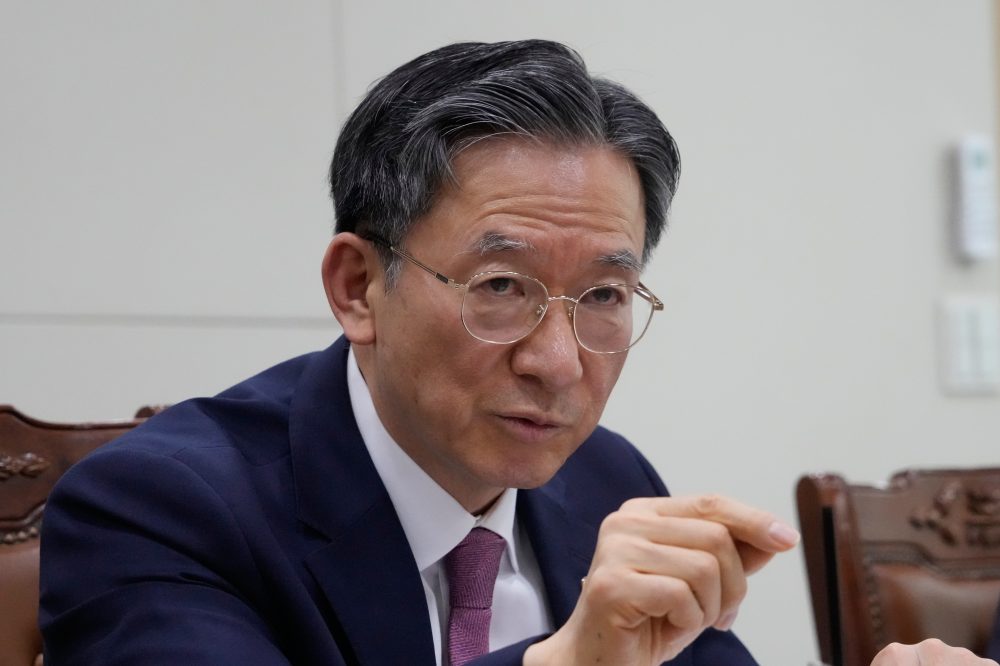
    During a Tuesday meeting with South Korean opposition legislators and business leaders, Hyundai Motor President Sung Kim pressed for rapid approval of legislation enabling a massive $350 billion U.S. investment deal. The package represents part of a trade agreement reached between the two nations last year that would reduce tariffs from 25% to 15%.

    Kim’s concerns center on the possibility that the Trump administration may pivot toward targeting specific industries like automotive manufacturing, even after suffering a setback when the Supreme Court overturned universal tariff measures.

    President Trump has issued warnings about imposing higher tariffs on nations that he claims are not honoring their existing trade commitments with America.

    “I think that with the reciprocal tariffs now nullified, there may be increased pressure to raise sector-specific tariffs,” Kim explained to the assembled lawmakers.

    The Hyundai executive painted a stark picture of potential consequences, stating: “Should the 25% tariffs be materialised, the competitiveness of Korean companies will inevitably weaken, at a time when the entire industry is undergoing upheaval, including the ongoing transition to electric vehicles and the acceleration of competition for autonomous driving.”

    South Korea had already been working urgently to enact the necessary legislation before the Supreme Court decision, responding to Trump’s threats to increase automotive, pharmaceutical, and other product tariffs to 25% from 15%. The administration accused Seoul of failing to implement the trade agreement negotiated last year.

    Both Hyundai and its corporate affiliate Kia have been actively advocating for tariff policies that would create fair competition with their Japanese and European competitors in the crucial American market.

    According to Kim, the automotive sector has faced what he described as a “major crisis” stemming from U.S. tariffs implemented last year. He expressed expectations that industry-specific tariffs, particularly affecting steel and automotive products, would likely continue.

    The financial impact has been substantial for the Korean automakers. Kim revealed that Hyundai and Kia together absorbed a devastating 7.2 trillion won ($4.98 billion) loss from U.S. tariffs in the previous year. He warned this figure could grow if tariffs return to the 25% level.

    Following the Supreme Court’s ruling on Friday, Trump quickly responded by implementing a new 15% universal import duty and launching fresh investigations that have reignited concerns about tariffs affecting automobiles, semiconductors, and other key sectors.

    Lawmaker Park Soo-young, speaking to media after the meeting, reported that Kim suggested the court’s decision might actually accelerate Trump’s tariff initiatives rather than slow them down.

    The Korean government announced Monday that it remains committed to the trade agreement established last year, despite the ongoing tensions and uncertainty surrounding tariff policies.

  • Trump Prepares State of Union After Turbulent 13 Months in Second Term

    Trump Prepares State of Union After Turbulent 13 Months in Second Term

    President Donald Trump prepares to deliver his State of the Union speech Tuesday evening following 13 months of controversial policy decisions and significant challenges during his second presidential term.

    The address comes as Trump faces mounting criticism over his economic policies, particularly after the Supreme Court recently struck down his emergency authority to impose tariffs on allied nations and other countries.

    ECONOMIC CHALLENGES

    Throughout his current term, Trump has made tariffs a cornerstone policy, using them against nations that resist his agenda and to address what he views as unfair trade relationships, especially with China. His administration now searches for alternative legal methods to maintain these trade barriers while implementing a temporary 15% levy on all U.S. imports.

    The president is expected to highlight his signature legislative achievement, the One Big Beautiful Bill Act, which reduced certain individual income taxes. Questions remain about how much recognition he’ll provide to former ally Elon Musk’s Department of Government Efficiency for reducing federal employee numbers.

    Despite Trump’s repeated claims of defeating inflation, Americans continue struggling with elevated living costs, and polling shows declining approval for his economic management. The job market has weakened under his watch, with rising unemployment rates, prompting Trump to pressure the Federal Reserve aggressively for interest rate cuts.

    FOREIGN POLICY TENSIONS

    The United States stands at the brink of potential military confrontation with Iran regarding its nuclear ambitions as Trump delivers his address.

    Trump has increased American military forces throughout the Middle East, warning that “really bad things will happen” without a diplomatic resolution to the nuclear standoff.

    His unconventional military deployments have included bombing Iranian nuclear sites last June, attacking suspected drug vessels in Caribbean international waters, arresting Venezuelan leader Nicolas Maduro last month, and threatening to take control of Greenland, creating concerns about NATO’s future.

    While positioning himself as a peace-focused leader through efforts like brokering a fragile Gaza ceasefire and establishing a Board of Peace for Palestinian reconstruction, Trump’s claims of resolving eight conflicts for Nobel Prize consideration are widely considered overstated. His attempts to end Russia’s invasion of Ukraine through alternating pressure on Kyiv and largely unenforced threats against Moscow have yet to produce results.

    IMMIGRATION CRACKDOWN

    Trump may attempt to restore public confidence in his strict immigration approach, as support has weakened following violent confrontations between masked federal agents and American protesters that resulted in two citizen deaths in Minneapolis.

    After campaigning on the largest deportation operation in American history, Trump immediately launched extensive immigration sweeps upon returning to office in January 2025. Some deportees have been sent to third-party nations with poor human rights records rather than their home countries. While these measures have significantly reduced border crossings from Mexico, public opinion has shifted negatively.

    EXPANDED EXECUTIVE AUTHORITY

    The current administration has pursued its objectives primarily through unilateral action, controlling federal agencies, abandoning international organizations, and disregarding traditional governmental norms.

    Trump’s team has targeted civil society organizations, activists, local leaders, judges, and media figures viewed as opposition. Most policy achievements have come through executive actions, representing a governing style that previous presidents typically avoided due to its circumvention of Congress.

    The president has issued hundreds of pardons, including clemency for everyone charged in connection with the January 6, 2021, Capitol attack.

    This year alone, Trump has used executive directives to establish tariffs, promote glyphosate-containing pesticides, increase coal production, discourage private equity purchases of single-family residences, and redirect Venezuelan oil revenues.

    Trump has signed 240 executive orders during his 13-month tenure, the highest number since Franklin D. Roosevelt’s wartime presidency.

    ENVIRONMENTAL POLICY REVERSALS

    The administration has systematically dismantled Biden-era environmental regulations along with clean energy and electric vehicle tax benefits. Officials have weakened the legal framework supporting these policies to complicate future administrations’ ability to implement new environmental rules without congressional approval.

    Trump withdrew America from the Paris Climate Agreement and the underlying U.N. Framework Convention on Climate Change last year, leaving the country alongside Iran, Libya, and Yemen as holdouts.

    The administration has actively blocked renewable energy projects, including nearly completed wind and solar installations, through stop-work directives and delayed permitting processes. Simultaneously, officials have relaxed clean air and water standards while exempting coal facilities and oil and gas infrastructure from regulatory compliance.

    HEALTHCARE DEVELOPMENTS

    Sixteen major international pharmaceutical companies have negotiated “most-favored nation” agreements with Trump’s administration, reducing drug costs for Americans in exchange for tariff exemptions. These deals will lower prices for the government’s Medicaid program and cash-paying customers through the government-operated TrumpRx website.

    However, millions of Americans face increased healthcare expenses in 2026 after Congress failed to agree on reinstating generous COVID-era tax credits, which Trump did not support extending.

  • German Dialysis Giant Posts Strong Q4 Earnings Amid Major Restructuring

    German Dialysis Giant Posts Strong Q4 Earnings Amid Major Restructuring

    A major German dialysis company delivered impressive fourth-quarter financial results on Tuesday, with operating income soaring well beyond Wall Street expectations.

    Fresenius Medical Care announced that its operating income, excluding one-time items, climbed 44% to reach 705 million euros (equivalent to $830 million) during the final three months of last year. This performance significantly exceeded the 633 million euros that financial analysts had projected.

    Company CEO Helen Giza emphasized the firm’s ongoing transformation efforts in her statement. “We remain steadfast in our commitment to further improve profitability, while investing in our future and overcoming regulatory headwinds,” Giza declared, noting that the organization is moving into the next stage of what it calls the “FME Reignite” strategy.

    Under Giza’s leadership, the German-based dialysis company has been implementing sweeping changes aimed at improving profit margins, maintaining strict cost controls, and streamlining its business portfolio. These efforts intensified after the company separated from its former parent organization Fresenius in 2023.

    While the company’s fourth-quarter revenue of 5.07 billion euros met market forecasts without exceeding them, the impressive profit margins indicate that management’s efficiency initiatives are showing results. These improvements have helped counterbalance challenges including rising labor costs in the United States and unfavorable currency exchange rates.

  • German Auto Industry Crisis Offers Economic Lessons for Delaware Manufacturers

    German Auto Industry Crisis Offers Economic Lessons for Delaware Manufacturers

    A manufacturing crisis unfolding in Germany’s industrial heartland offers sobering lessons for Delaware’s own manufacturing sector as global economic pressures reshape traditional industries.

    In Baden-Wuerttemberg, Germany’s premier automotive region, small supplier companies like Dostech are feeling the squeeze from a broader industry upheaval. The Moessingen-based sealant technology firm pivoted to electric vehicle projects in 2018 when automotive inquiries surged, allowing them to purchase their current headquarters facility south of Stuttgart.

    However, that strategic shift has now left them vulnerable to Germany’s automotive sector crisis.

    “This area is shaky,” company director and co-founder Steffen Braun explained to reporters. “It is no longer as stable and it’s hard to make investments.” The company has been forced to reduce workforce numbers while automotive-related income has declined.

    These challenges are spreading throughout Baden-Wuerttemberg as the state prepares for its March 8 election, with economic concerns topping voter priorities.

    The region houses Mercedes and Porsche, automotive brands that have long represented German manufacturing prowess. However, fierce competition from Chinese manufacturers, an inconsistent transition to electric vehicles, and increasing operational costs have destabilized the industry.

    Decreased demand throughout the automotive supply network is pressuring hundreds of smaller manufacturing companies while threatening employment stability and local government services.

    While Chancellor Friedrich Merz’s conservative party remains favored to win the upcoming election, economic anxieties and diminished regional confidence are creating opportunities for far-right political movements.

    Baden-Wuerttemberg faces greater exposure to industrial transformation than most German regions. The state leads Germany in exports, representing 15.5% of national export activity, with manufacturing contributing 38.1% of the state’s total economic output compared to 28.5% nationally.

    The state’s economy contracted 0.4% in 2024, exceeding Germany’s overall 0.2% decline, and analysts expect another contraction despite modest national growth.

    U.S. trade tariffs have particularly impacted export-focused states with significant automotive sectors, according to Ifo economist Robert Lehmann.

    “Baden-Wuerttemberg is a classic example,” he noted.

    Warning signs continue mounting across the region.

    Business insolvency cases in Baden-Wuerttemberg climbed for the second consecutive year to 2,445 in 2024, representing a 30% increase and the highest level since 2010, state statistics show. A third straight annual increase appears likely.

    Cornelius Pleser, managing director of valuation and asset-disposition company Pleser KG, reports dramatically increased demand for his services in his home state.

    “Ten years ago, there was significantly more capital in the market, and in insolvency proceedings investors or successors were often found,” he explained, adding that companies without viable succession plans are now at an “alarmingly high” number.

    Restructuring efforts have swept through Baden-Wuerttemberg’s industrial corridor.

    “There is a domino effect,” said Matthias Bianchi, public affairs representative for the DMB, which advocates for Germany’s small and medium-sized enterprises. “This crisis in the lead industries slowly trickles down.”

    While Baden-Wuerttemberg’s unemployment remains below national levels, the rate increased to 4.8% in January 2026 from 3.9% in January 2023.

    Economic analysts attribute the relatively modest unemployment increase to labor retention practices, where companies maintain staff despite weakening demand due to concerns about future worker shortages.

    “The employees I’ve trained here are irreplaceable. If they leave tomorrow, I can’t replace them the day after—impossible,” Dostech’s Braun explained.

    Nevertheless, staffing issues persist for his company. Reassigning employees to new positions becomes what he describes as an “odyssey” involving extensive paperwork, changing government contacts, and lengthy approval delays.

    Despite the moderate unemployment increase, Hanno Kempermann, economist and managing director of IW Consult, points to other indicators suggesting labor market weakness. Job postings in Baden-Wuerttemberg have dropped 30% compared to 2022, while companies plan to eliminate 14,000 automotive positions by 2030.

    “The situation is very tense,” stated Barbara Resch, Baden-Wuerttemberg head of the IG Metall trade union. “Suppliers invested a lot in electromobility and now demand isn’t coming and at some point they simply run out of air financially.”

    IG Metall, the primary union representing workers at companies like Mercedes and Volkswagen, is working to preserve employment through reduced working hour agreements.

    “Right now it’s hitting everyone: apprenticeship positions are being reduced and highly qualified people are also at serious risk,” Resch added.

    While the automotive industry faces deep structural challenges and export-dependent industrial firms struggle, other economic sectors are experiencing strong growth, according to Bianca Schmitz, founding director of the Hidden Champions Institute at ESMT Berlin.

    “It’s an asymmetry you find here,” she observed, highlighting rapid expansion in automation and robotics, medical technology, and software and information technology companies.

    The state accounts for over 25% of Germany’s total research and development expenditure, demonstrating the southwest region’s heavy reliance on innovation-driven industry and applied research. Research and development investment represents approximately 5.7% of state economic output—nearly double the national average.

    The economic slowdown’s impact extends beyond major cities like Stuttgart and Sindelfingen to smaller communities where automotive suppliers suddenly reduce staff or halt hiring, creating financial pressure on local governments.

    “People notice when the opening hours of municipal facilities are cut and kindergarten fees go up,” explained Friedrich Heinemann, economist at the ZEW economic institute. “That hits home.”

    Five economists consulted for this analysis agreed that maintaining failing companies through government subsidies would be counterproductive, a position supported by Reint Gropp, president of the Halle Institute for Economic Research.

    “We need to allow a process of predatory competition, where new ideas push out old ones,” he stated.

    However, if artificial industry preservation isn’t viable, what actions should the next state government take to revitalize the struggling economy?

    Many business leaders provide identical responses: invest in infrastructure including high-speed internet, transportation networks, and rail systems.

    Merz’s federal government approved a 500 billion euro infrastructure fund last year and reformed state borrowing regulations, though economists note the funding has yet to begin flowing.

    From the 100 billion euros designated for states, Baden-Wuerttemberg will receive 13 billion euros, with 8.7 billion euros directed to municipalities, Kempermann reported.

    “It’s a bit like a drop in the ocean, because it’s still too little to eliminate the infrastructure deficits that have built up over the last 20 years,” he assessed.

    According to Heinemann, state governments can orient their budgets toward economically essential growth factors: quality education systems, reliable transportation infrastructure, digital networks, and research and development.

    “We need to look into what Baden-Wuerttemberg is doing and whether they manage this very structural change,” Schmitz concluded. “It is at the forefront of what is currently happening in Germany.”

  • Trump Implements New 15% Tariffs After Supreme Court Ruling, Economists Question Basis

    Trump Implements New 15% Tariffs After Supreme Court Ruling, Economists Question Basis

    President Donald Trump has implemented new 15% tariffs using an obscure 1974 trade statute following the Supreme Court’s decision to overturn his previous import duties, but economists are questioning whether the economic emergency Trump cites actually exists.

    The new tariffs took effect at midnight Tuesday, replacing the 10% to 50% duties that were eliminated when the Supreme Court ruled against Trump’s use of the International Emergency Economic Powers Act on Friday.

    Trump is now invoking Section 122 of the Trade Act of 1974, a provision that has never been used before and allows presidents to impose duties up to 15% for 150 days to address “large and serious” balance-of-payments deficits and “fundamental international payments problems.”

    The president’s order claims the United States faces a severe balance of payments crisis, pointing to the nation’s $1.2 trillion annual goods trade deficit, a current account deficit representing 4% of GDP, and the reversal of America’s primary income surplus.

    However, economic experts are pushing back on this characterization. Former International Monetary Fund First Deputy Managing Director Gita Gopinath told Reuters the administration’s concerns are misplaced.

    “We can all agree that the U.S. is not facing a balance of payment crisis, which is when countries experience an exorbitant increase in international borrowing costs and lose access to financial markets,” Gopinath said.

    Gopinath dismissed the administration’s argument that America’s first negative primary income balance since 1960 signals a major payments problem. Instead, she explained this shift resulted from increased foreign investment in U.S. stocks and high-risk assets over the past decade, which have outperformed international markets during this timeframe.

    Former Treasury and IMF official Mark Sobel echoed these sentiments, noting that balance of payments crises typically affect nations with fixed exchange rates. He pointed out that the dollar remains stable, Treasury yields are steady, and U.S. markets continue performing well.

    Josh Lipsky from the Atlantic Council think tank agreed with this assessment, explaining that genuine balance of payments crises occur when countries cannot afford their imports or service foreign debt obligations – a fundamentally different situation from having a trade deficit.

    Brad Setser, a trade expert at the Council on Foreign Relations who previously advised the Biden administration’s Trade Representative, offered a different perspective. In social media posts Sunday, Setser suggested Trump might have legitimate grounds to claim a “large and serious” balance of payments deficit exists.

    Setser noted that today’s current account deficit exceeds the levels that prompted President Richard Nixon to impose tariffs during the 1971 balance of payments crisis, and America’s net international investment position has deteriorated significantly since then. This “gives the administration a real argument” for their tariff strategy, Setser wrote.

    The White House, Treasury Department, and U.S. Trade Representative’s office have not responded to requests for comment regarding the Section 122 implementation.

    The Trump administration’s new approach faces potential legal challenges, particularly given the Justice Department’s previous position on this statute. In court documents defending the now-struck-down IEEPA tariffs, Justice Department lawyers argued Section 122 had “no obvious application” to trade deficit emergencies, calling trade deficits “conceptually distinct from balance-of-payments deficits.”

    Attorney Neal Katyal, who represented plaintiffs challenging the original tariffs before the Supreme Court, told CNBC that the administration’s contradictory stance makes the new tariffs vulnerable to litigation.

    “I’m not sure it will necessarily even need to get to the Supreme Court, but if the president adheres to this plan of using a statute that his own Justice Department has said he can’t use, yeah, I think that’s a pretty easy thing to litigate,” Katyal said.

    It remains unclear which parties might challenge the Section 122 tariffs in court. Sara Albrecht, who chairs the Liberty Justice Center representing small businesses in the previous tariff case, said her organization will closely watch any new legal authorities being used.

    Rather than revealing litigation plans, Albrecht said their immediate priority is “making sure the refund process begins and that checks start flowing to the American businesses that paid those unconstitutional duties.”

    The Supreme Court’s ruling did not specify refund procedures, instead sending the case back to a lower trade court to determine the next steps in the process.

  • Trump Set to Deliver State of Union Speech Amid Political Challenges

    Trump Set to Deliver State of Union Speech Amid Political Challenges

    President Donald Trump prepares to take the podium Tuesday evening for his State of the Union address to Congress during what many consider a challenging period for his administration, with polling numbers dropping and growing concerns about international tensions as the fall midterm elections approach.

    The nationally televised evening address marks Trump’s second such speech in the 13 months since he resumed office, providing the president an opportunity to make his case for maintaining Republican control of Congress. However, the speech occurs amid significant political obstacles both domestically and internationally.

    Recent days have brought additional complications for the Trump administration, including a Supreme Court ruling that struck down his worldwide tariff program and fresh economic indicators revealing slower-than-anticipated growth coupled with rising inflation.

    A congressional standoff between Republicans and Democrats over the administration’s hardline immigration policies has resulted in a partial shutdown of the Department of Homeland Security, which occurred after two U.S. citizens were fatally shot in Minneapolis. Additionally, Trump continues to deal with ongoing controversy regarding the government’s disclosure of documents connected to convicted sex offender Jeffrey Epstein.

    Despite Trump’s public desire for the Nobel Peace Prize and his establishment of a “Board of Peace,” tensions with Iran over its nuclear activities appear to be escalating, with the administration deploying naval vessels to the Middle East and developing strategies that could involve regime change, according to government sources.

    Tuesday’s address may provide Trump with his first major public platform to justify potential military action against Iran.

    Two administration officials, who requested anonymity, confirmed that Trump plans to discuss Iran policy but declined to provide specifics.

    The president will also highlight his diplomatic achievements, they indicated. The speech coincidentally falls on the fourth anniversary of Russia’s invasion of Ukraine, serving as a reminder that Trump has not yet fulfilled his campaign promise to end that conflict “in 24 hours.”

    Trump is anticipated to address the Supreme Court’s tariff decision, contending that the justices made an error and presenting alternative legal mechanisms he could employ to restore most of the trade penalties.

    The president responded angrily to last week’s court decision, launching personal criticisms against several justices. Should he repeat such attacks Tuesday, it could create uncomfortable moments, as several of the nine justices are expected to be in attendance.

    White House staff and Republican campaign strategists, concerned about the upcoming congressional elections, have encouraged Trump to concentrate on Americans’ financial concerns. While Trump’s 2024 electoral success was largely built on promises to reduce living costs, surveys indicate voters remain skeptical of his progress.

    Trump has had difficulty maintaining focus, often veering from economic topics to personal complaints during public appearances, while sometimes claiming he has already resolved economic issues.

    According to one White House official, Trump intends to “claim victory on the economy,” a message that may not resonate well with Republican legislators facing reelection. He plans to argue that he inherited economic problems from his Democratic predecessor Joe Biden and that Democrats have exaggerated affordability issues, both officials stated.

    The president will cite stock market increases, private sector investments, and his tax reduction legislation as proof of his economic success, the officials noted. Trump will also emphasize his strict border enforcement and deportation efforts, even though polling suggests most Americans believe his administration has been too aggressive in targeting undocumented immigrants.

    “This is the one opportunity the president has where the whole world is looking at what he has to say, and this is his opportunity to summarize everything that he’s done and not go off script,” said Amanda Makki, a Republican strategist and former Florida congressional candidate.

    Trump, known for improvising during speeches, indicated Monday that his remarks would be extensive. His 100-minute address last March — technically not a State of the Union but similar in format — set a record as the longest presidential speech to Congress in recent decades.

    The White House officials revealed that this year’s speech was deliberately structured to accommodate spontaneous moments.

    “We are planning around it,” one official explained.

    During last year’s address, several Democrats disrupted Trump’s speech with vocal objections before staging a walkout. This year, more than 20 House and Senate Democrats plan to boycott the speech entirely, instead attending an outdoor gathering on the National Mall.

    Senator Jeff Merkley of Oregon, among the boycotting Democrats, told reporters Monday that their alternative event would provide a more “honest description” of Trump’s presidency, contrasting it with what he called the “propaganda push” of the official speech.

    Virginia Governor Abby Spanberger, whose significant November victory served as an early warning signal for Republicans ahead of the midterms, will present the official Democratic response. Democratic Senator Alex Padilla of California, who was forcibly detained and handcuffed last year after trying to question Homeland Security Secretary Kristi Noem during a press conference, will deliver the Spanish-language response.

  • Analysis: Trump Claims Peace Prize Merit, But Many Conflicts Remain Unresolved

    Analysis: Trump Claims Peace Prize Merit, But Many Conflicts Remain Unresolved

    WASHINGTON – President Donald Trump believes he merits the Nobel Peace Prize following his involvement in eight international disputes since assuming office in January. However, the root causes behind many of these conflicts persist, and violence has reignited in several areas, including the Democratic Republic of Congo and the Cambodia-Thailand border region.

    Below is an examination of the international conflicts where Trump has played a mediating role:

    ARMENIA AND AZERBAIJAN

    On August 8, Trump facilitated a meeting between Armenian and Azerbaijani leaders, resulting in a joint statement committing both nations to pursue peaceful relations after decades of hostility dating back to the late 1980s.

    “I got to know them through trade,” Trump explained during a subsequent radio appearance. “I was dealing with them a little bit, and I said, ‘Why you guys fighting?’ Then I said, ‘I’m not going to do a trade deal if you guys are going to fight. It’s crazy.’”

    Both nations had agreed to a ceasefire in 2023. By March, they announced consensus on draft peace agreement language, though no formal signing has occurred.

    The White House-facilitated declaration remains short of a binding peace treaty with enforceable legal obligations. Unresolved matters include whether Armenia must amend its constitution as part of any final agreement.

    Both countries entered into economic partnerships with Washington, granting the United States development access to a crucial transit route through southern Armenia. The Trump administration highlighted this corridor’s potential for increased energy exports. Released documentation shows the corridor bears Trump’s name. Vice President JD Vance traveled to both nations in February, establishing a strategic partnership with Azerbaijan and finalizing a nuclear agreement with Armenia.

    CAMBODIA AND THAILAND

    Despite Trump’s earlier mediation efforts, tensions persist between Thailand and Cambodia under a fragile ceasefire arrangement.

    The U.S. president helped bring Thailand to negotiations after longstanding disputes with Cambodia erupted into five days of military confrontation in July – the most lethal fighting between the nations in over ten years.

    Trump contacted then-acting Thai Prime Minister Phumtham Wechayachai two days following the outbreak of border hostilities. He suspended trade agreements with both countries until the conflict ceased.

    The president oversaw ceasefire agreement signing between the two nations in Malaysia during October, though this arrangement collapsed within weeks before a new truce took effect on December 27.

    ISRAEL, IRAN AND THE PALESTINIAN TERRITORIES

    Trump convened the inaugural meeting of his Board of Peace initiative on Thursday as part of efforts to broker an agreement ending Gaza conflict and facilitating reconstruction.

    Israel and Hamas reached agreement in October on the initial phase of a Trump-mediated hostage release and ceasefire arrangement. Fighting has persisted despite this agreement.

    Nevertheless, the deal represents significant progress toward ending a two-year Gaza war that has claimed over 67,000 Palestinian lives. Under the arrangement, Hamas released hostages captured during the deadly attacks that initiated the conflict. Both parties have repeatedly accused the other of truce violations.

    Major disagreements remain between the sides, including Hamas disarmament, post-conflict Gaza governance, and the structure and authority of an international security presence in the territory.

    The president continues working to expand the Abraham Accords, his first-term initiative designed to normalize diplomatic relationships between Israel and Arab states.

    Trump initially pursued discussions with Iran regarding its nuclear program. Israel began aerial operations against Iran on June 13 and urged Trump’s participation. He joined the effort on June 22, targeting Iranian nuclear facilities, then pressured both Israel and Iran to accept a Qatar-mediated ceasefire.

    Trump claimed at the time that Iran’s primary nuclear facilities were destroyed and challenged reports suggesting the program was merely delayed. Recently, however, Trump has issued threats to Iran concerning both its nuclear activities and human rights record. He has authorized substantial military buildup in the Middle East and preparations for potential extended air strikes against the country.

    RWANDA AND DEMOCRATIC REPUBLIC OF THE CONGO

    The Rwanda-supported M23 rebel organization conducted a rapid offensive this year and now controls more eastern Democratic Republic of Congo territory than previously. Recent territorial gains have raised concerns about expanded regional conflict spillover.

    Following Trump’s pressure, Rwanda and Congo signed a U.S.-mediated peace accord on June 27. Implementation has not occurred.

    Trump brought Congolese and Rwandan leaders to a December 4 Washington gathering at a peace institute his administration unofficially renamed to honor the U.S. president. There, they executed additional documents reaffirming commitment to Trump’s peace proposal.

    Fighting has continued nonetheless. Congolese President Felix Tshisekedi has stated that Rwanda is breaching its commitments, as has U.S. Secretary of State Marco Rubio. Rwanda has consistently denied M23 support, though U.N. specialists and Congolese officials disagree. Qatar has facilitated separate negotiations between Congo and M23.

    Meanwhile, a Congolese rebel coalition leader that includes M23 has declared a December critical minerals agreement between Congo and Washington unconstitutional, creating implementation uncertainty.

    This insurgency represents the most recent chapter in a decades-long conflict rooted in the 1994 Rwandan genocide.

    Trump has warned of “very severe penalties, financial and otherwise” for agreement violations. The U.S. seeks access to Congo’s extensive critical mineral resources as it competes with China for natural resource control.

    INDIA AND PAKISTAN

    U.S. officials feared escalation when nuclear-armed India and Pakistan clashed in May following an attack in India that Delhi attributed to Islamabad.

    Working with Trump, Rubio and Vance encouraged Indian and Pakistani officials to reduce tensions.

    A ceasefire was declared on May 10 after four days of combat. However, it resolved few fundamental issues dividing India and Pakistan, nations that have fought three major wars since 1947 independence from the United Kingdom.

    Following the ceasefire, Trump said he used trade cut threats to secure the agreement. India disputed that U.S. pressure caused the truce or that trade considerations were involved.

    EGYPT AND ETHIOPIA

    Egypt and Ethiopia maintain a prolonged dispute over the Grand Ethiopian Renaissance Dam, which Cairo considers a national security concern and fears will threaten Nile River water access.

    “We’re working on that one problem, but it’s going to get solved,” Trump stated in July.

    White House spokeswoman Karoline Leavitt subsequently listed Egypt and Ethiopia among conflicts that “the president has now ended.”

    Trump’s specific actions on this issue remain unclear, though he has expressed interest in bringing parties together for discussions. In public statements, Trump has largely supported Cairo’s position.

    Ethiopian Prime Minister Abiy Ahmed opened the dam in September despite objections from Sudan and Egypt. Egyptian President Abdel Fattah al-Sisi has pledged to defend his nation’s interests.

    SERBIA AND KOSOVO

    Kosovo and Serbia maintain strained relations five years following agreements Trump negotiated with both countries during his first presidency to enhance economic connections.

    Without offering evidence, Trump claimed in June he “stopped” war between the countries during his initial term and that “I will fix it, again,” in his second.

    Kosovo declared independence in 2008, nearly a decade after NATO bombed Serbian forces to stop ethnic Albanian killings and expulsions during a 1998-1999 counter-insurgency conflict.

    Serbia continues viewing Kosovo as integral territory. No peace agreement exists between the countries.

    Kosovo Prime Minister Albin Kurti has sought to expand government authority over the north, where approximately 50,000 ethnic Serbs reside, many refusing to acknowledge Kosovo’s independence.

    Kosovo President Vjosa Osmani said in July that during “the last few weeks,” Trump had prevented regional escalation. She provided no details, and Serbian President Aleksandar Vucic denied any impending escalation.

    RUSSIA AND UKRAINE

    Trump, who promised during his 2024 campaign to resolve the Ukraine war in one day, has thus far been unable to end the nearly four-year conflict that analysts estimate has caused over 1 million casualties.

    “I thought this was going to be one of the easier ones,” Trump said on August 18. “It’s actually one of the most difficult.”

    Trump’s peace strategy has varied from advocating for ceasefires to suggesting negotiations could continue amid ongoing combat. He imposed sanctions on Russia’s two largest oil companies in October.

    Recently, Trump has attempted to pressure Ukrainian President Volodymyr Zelenskiy into accepting a war-ending agreement that European leaders worry would benefit Moscow and destabilize the continent. Recent discussions have shown minimal progress.

    SOUTH KOREA AND NORTH KOREA

    Trump has expressed desire to meet North Korean leader Kim Jong Un and pursue renewed peace efforts.

    “We’ll come back, and we’ll, at some point in the not-too-distant future, meet with North Korea,” Trump told reporters during an October South Korea visit.

    Trump and Kim conducted three summits during Trump’s 2017-2021 presidency. They also exchanged letters Trump described as “beautiful” before the unprecedented diplomatic initiative collapsed over U.S. demands for Kim’s nuclear weapons abandonment.

    North Korea has advanced with larger ballistic missiles, expanded nuclear weapons facilities, and gained regional support in subsequent years. During his second term, Trump has acknowledged North Korea as a “nuclear power.”

    Kim stated in September that talks with Washington were possible if it abandoned demands for his country’s nuclear disarmament. Trump agreed to support Seoul’s pursuit of nuclear-powered submarine capabilities for defense.

  • Italian Church Choir Promotes Disability Inclusion Before Winter Paralympics

    Italian Church Choir Promotes Disability Inclusion Before Winter Paralympics

    MILAN (AP) — Just before disabled athletes prepare to compete on the world stage at the Winter Paralympics in Milan Cortina, a musical group from northern Italy delivered a powerful message about acceptance and unity during a special church performance.

    Approximately 70 choir members, ranging from teenagers to adults in the Terzo Tempo ensemble, made the journey from nearby Abbiategrasso to Milan’s Sant’Antonio church on February 18th for their concert called “Like Yeast in the Dough.” The title draws inspiration from biblical imagery representing a quiet force that helps everyone grow from within.

    The musical event was part of a broader effort by Milan’s archdiocese to use the Olympic and Paralympic Games as an opportunity to promote Christian principles.

    “The Olympics and the Paralympics are not something that simply passes over our heads, but something that also touches our lives,” explained Rev. Stefano Guidi, director of the Archdiocese of Milan’s Service for Oratories and Sport.

    Three years ago, Milan’s Catholic Church established a specialized department dedicated to promoting awareness about inclusion. The initiative works across neighborhood parishes and communities to create welcoming spaces for people of all abilities.

    “If we focus on organizing things only for people with disabilities, we risk segregation,” noted Rev. Mauro Santoro, who oversees the program with 13 volunteers. “Instead, we try to bring everyone together — children’s catechism, sports, the simplest activities — because this is true inclusion.”

    Italy’s Catholic Church relies heavily on oratories — parish facilities where young people gather after school for athletics and social activities. According to Santoro, these venues host training sessions on disability involvement and discussions about Paralympic values.

    “There are testimonies from athletes, including Paralympians,” he explained. “The real challenge is to change the game so everyone can play well and participate.”

    The Sant’Antonio concert embodied this philosophy through its diverse musical selection. The choir performed pieces in Italian, English, and featured a Congolese samba — choices designed to celebrate diversity and embody Olympic ideals.

    “We tried to choose songs that speak about the desire to achieve something and about constant commitment because that is what really matters beyond the result,” shared choir director Silvia Gatti. “These are values that athletes believe in, but they should concern everyone.”

    Operating under the motto “Where singing is unity, passion, freedom and joy,” the choir embraces members from diverse backgrounds and creates opportunities for children to perform alongside participants in their seventies.

    The group has previously tackled social issues including peace advocacy and campaigns against domestic violence, highlighting their commitment to community engagement.

  • Drug Lord’s Death Sparks Tourism Fears Ahead of World Cup in Mexico

    Drug Lord’s Death Sparks Tourism Fears Ahead of World Cup in Mexico

    TAPALPA, Mexico — For decades, Maria Dolores Aguirre’s family has operated a corner shop in the picturesque mountain town of Tapalpa, relying on the steady stream of visitors drawn to its cobblestone streets in Jalisco state.

    But everything changed when gunfire broke out and military helicopters circled overhead as Mexican forces killed the nation’s top drug kingpin just miles from her doorstep.

    The 50-year-old shop owner now fears the violence will devastate her business and transform communities throughout western Mexico — from coastal resort areas to Guadalajara, which is set to host 2026 FIFA World Cup games this June.

    “It’s going to affect us. It’s collateral damage,” Aguirre said. “The government is going to have to have a lot of security. … The entire world just saw what happened and, of course, people are going to think twice about coming.”

    Battles between the Jalisco New Generation Cartel and Mexican military forces continued across multiple states Monday, intensifying concerns among residents like Aguirre about future violence.

    Officials reported Monday that more than 70 people perished during the operation to apprehend Nemesio Oseguera Cervantes and the subsequent retaliation. The criminal boss, nicknamed “El Mencho,” headed the Jalisco New Generation Cartel, among Mexico’s most rapidly expanding drug organizations responsible for smuggling fentanyl, methamphetamine and cocaine into the United States while launching bold assaults on Mexican authorities.

    The White House acknowledged providing intelligence assistance for the mission to capture the cartel chief and praised Mexico’s military for eliminating one of both nations’ most sought-after fugitives. U.S. officials had posted a $15 million bounty for information leading to “El Mencho’s” capture.

    Oseguera Cervantes’ elimination occurred as Mexico’s administration has intensified its campaign against drug cartels to satisfy demands from U.S. President Donald Trump for a crackdown on criminal organizations, with Trump threatening additional tariffs or unilateral military intervention without visible progress.

    Mexican officials hoped eliminating one of the world’s largest fentanyl suppliers would reduce that pressure, though many citizens remained anxious about the powerful cartel’s potential response.

    The drug lord was killed following a gun battle with Mexican troops Sunday. Defense Secretary Gen. Ricardo Trevilla explained Monday that authorities had traced one of his girlfriends to his hiding place in Tapalpa. The cartel leader and two guards escaped into nearby woods where they sustained severe injuries during the firefight. They were captured and died while being transported to Mexico City, Trevilla reported.

    Following the operation, anxiety spread throughout tourist destinations.

    The Pacific coast resort of Puerto Vallarta also suffered from cartel revenge attacks, alarming vacationers.

    Steve Perkins, 57, was vacationing in Puerto Vallarta with his wife Gayle and friends when explosions and dark smoke began appearing across the city Sunday morning from their hotel balcony.

    Their departure to Broken Arrow, Oklahoma, was postponed when their Monday flight was cancelled and rescheduled for March 1.

    Perkins and his spouse have made yearly trips to Puerto Vallarta since 2012 and previously felt secure, but not anymore. He stated they won’t be returning to Mexico.

    “There’s a lot of Americans trapped here,” Perkins said.

    In Tapalpa, Aguirre continued working alongside her son at the small neighborhood store her family has operated for five decades. The 15-year-old’s school was closed because of the violence.

    Aguirre said it remained uncertain whether the military or the cartel controlled the surrounding region. She also wondered if this was an isolated incident or if more bloodshed would follow.

    “We don’t know if these people (cartel leaders) are permanently here or not,” she said. “If they really did kill this leader, it could be that they fight between each other to win control or see who will lead it.”

  • Record-Breaking Blizzard Slams Northeast, Delaware Among States Hit with Power Outages

    Record-Breaking Blizzard Slams Northeast, Delaware Among States Hit with Power Outages

    Communities across the Northeast, including Delaware, are working to recover from a devastating winter storm that meteorologists are calling the most powerful in ten years, leaving hundreds of thousands without electricity and causing massive travel disruptions.

    The historic blizzard deposited more than 24 inches of snow across portions of the region before moving northward Tuesday. Delaware was among several states where residents lost power, along with Massachusetts, New Jersey, and Rhode Island. Recovery efforts are underway as roads reopen and public transit systems restore service in major metropolitan areas.

    However, weather experts are already tracking another storm system that could bring additional snowfall to the region later this week.

    The massive storm created chaos in New York City’s school system, where classes were cancelled Monday. Mayor Zohran Mamdani decided to resume in-person instruction Tuesday, despite snow-covered sidewalks throughout the city.

    Staten Island Borough President Vito Fossella opposed the decision to reopen schools, while United Federation of Teachers President Michael Mulgrew called the circumstances “a big mess.”

    “There’s going to be low attendance of students. You’re going to have low attendance of staff because people don’t know if they can travel, if they can get to schools,” Mulgrew explained.

    While Mamdani’s representatives did not respond to requests for comment, Schools Chancellor Kamar Samuels posted on social media that officials were “confident in our decision to reopen.”

    Philadelphia implemented remote learning for both Monday and Tuesday. School districts across Long Island and other New York suburban areas announced continued closures for Tuesday.

    The National Weather Service is monitoring another storm system that could deliver more snow to the area before week’s end.

    Although the approaching storm isn’t expected to match Monday’s intensity, even modest additional snowfall could complicate ongoing cleanup efforts, according to Frank Pereira, a meteorologist with the National Weather Service in College Park, Maryland.

    “Any additional snow at this point is probably not going to be welcome,” Pereira stated.

    Weather officials classified Monday’s storm as a “classic bomb cyclone/nor’easter off the Northeast coast.” This phenomenon occurs when atmospheric pressure drops rapidly within 24 hours, typically happening during fall and winter months when Arctic air masses collide with warmer temperatures.

    Flight tracking service FlightAware reported more than 2,000 domestic flight cancellations Tuesday, with airports in New York, New Jersey, and Boston experiencing the majority of disruptions.

    Rhode Island’s T.F. Green International Airport suspended operations Monday after receiving nearly 38 inches of snowfall, surpassing a record established in 1978.

    Central Park in Manhattan measured 19 inches of snow accumulation. Warwick, Rhode Island, saw more than three feet of snow, leading the nation in total accumulation. Nantucket recorded the highest wind speeds at 83 mph, with hurricane-strength gusts battering Cape Cod.

    Emergency declarations were issued by New York, Philadelphia, and other municipalities, as well as multiple states.

    For the first time in over 150 years, The Boston Globe suspended printing its daily edition because severe weather conditions prevented staff from safely reaching the printing facility.

    In the New York metropolitan area, the Metropolitan Transportation Authority reported Monday evening that subway operations had largely resumed following earlier delays, except in Staten Island, where rail service remained halted.

    Limited commuter rail service to northern and eastern suburbs was scheduled to restart before Tuesday’s morning rush hour, according to MTA officials.

    Brooklyn resident Christa Prince joined two others Monday afternoon, using shovels and an electric snow blower to clear pathways.

    “We’re just making a path for this car,” Prince explained. “It’s not our car but you know, we’re just doing our neighbor a kind deed.”

  • Russian Authorities Launch Terror-Related Investigation Into Telegram CEO

    Russian Authorities Launch Terror-Related Investigation Into Telegram CEO

    Russian security officials have opened a criminal investigation targeting Telegram’s chief executive Pavel Durov on charges related to supporting terrorist activities, according to a report from the government-controlled newspaper Rossiyskaya Gazeta on February 24.

    The Federal Security Service is leading the probe, though Durov has not yet responded to requests for comment regarding these allegations. In recent statements, Telegram has pushed back against multiple Russian accusations that the messaging platform serves as a hub for illegal activities and has been compromised by Western and Ukrainian intelligence agencies.

    “The actions of the head of Telegram, P. Durov, are being investigated as part of a criminal case on the grounds of a crime under Part 1.1 of Article 205.1 (assistance to terrorist activities) of the Criminal Code of Russia,” the state newspaper reported, citing information provided by Russia’s FSB.

    The messaging service, which reports having over one billion users worldwide, has not issued a statement in response to inquiries about the investigation.

    Russian telecommunications regulators have already imposed limitations on Telegram’s operations within the country, claiming the company has failed to remove extremist material from its platform. The app remains widely used throughout Russia for both personal and public communications.

    The Russian government has been promoting its own messaging application called MAX as an alternative, which debuted nearly twelve months ago as part of efforts to move citizens away from foreign-owned platforms.

  • President Trump Warns Trade Partners After Supreme Court Blocks Emergency Tariffs

    President Trump Warns Trade Partners After Supreme Court Blocks Emergency Tariffs

    President Donald Trump is issuing stern warnings to international trading partners, telling them not to “play games” by withdrawing from recently finalized trade agreements after the Supreme Court overturned his emergency tariff policies.

    Several foreign nations are now questioning whether the trade terms they previously secured will remain valid under the new circumstances.

    Political observers anticipate Trump will “come out swinging” during Tuesday evening’s State of the Union speech following the tariff ruling, potentially directing criticism toward Supreme Court justices who will be present in the chamber.

    Asian governments are particularly seeking clarity on their trade status. Japan is inquiring whether it will continue receiving the same favorable treatment under any new U.S. tariff system that was established in last year’s bilateral agreement. Similarly, Taiwan’s leadership is requesting guarantees from Washington that the advantageous terms they previously secured won’t be altered.

    Adding to the international trade tensions, China announced Tuesday it would ban exports of dual-use materials to 20 Japanese companies it claims have military connections, as part of efforts to prevent Japan’s “remilitarisation.”

    Despite the diplomatic friction, Japanese and Chinese financial markets showed resilience, with both gaining over 1% as trading resumed following local holidays. The Nikkei 225 and CSI 300 indices both posted strong gains, benefiting from reduced U.S. tariff pressures.

    Across Asia, markets found stability after Monday’s Wall Street decline, which analysts linked to a pessimistic report from Citrini Research warning of potential economic disruption from artificial intelligence in coming years. U.S. S&P 500 e-mini futures rebounded with a 0.3% increase.

    Companies involved in AI manufacturing helped drive Taiwan and South Korean markets to record highs, pushing MSCI’s Asia-Pacific index excluding Japan to an all-time peak.

    European markets opened with modest gains, as pan-regional futures climbed 0.3%, German DAX futures rose 0.2%, while FTSE futures dipped 0.1%.

    Tuesday’s key market events include earnings reports from Home Depot, Workday, Telefonica, and Endesa, along with France’s February business confidence data and a UK 7-year government debt auction.

  • Swiss Tennis Player Masarova Stuns Top Seed in Austin Tournament Opening

    Swiss Tennis Player Masarova Stuns Top Seed in Austin Tournament Opening

    In a stunning first-round performance at the ATX Open in Austin, Texas, Swiss qualifier Rebeka Masarova dominated third-seeded Xinyu Wang of China with a decisive 6-3, 6-2 victory on Monday.

    Masarova’s serving proved exceptional as she captured 85.7% of her first-serve points, winning 30 out of 35 attempts. The Swiss player also demonstrated strong defensive skills, successfully defending four out of five break point opportunities. This victory served as redemption for Masarova, who had fallen to Wang just three weeks earlier during the second round in Cluj-Napoca, Romania.

    Another seeded player faced elimination on Monday as seventh-seeded Anna Bondar from Hungary suffered a defeat against Uzbekistan’s Kamilla Rakhimova, losing 6-3, 7-5.

    Among American qualifiers, Whitney Osuigwe mounted an impressive comeback against Elizabeth Mandlik, recovering from an opening set loss to win 2-6, 6-3, 6-1.

    Taylor Townsend from the United States secured a hard-fought victory over Czech Republic’s Linda Fruhvirtova 4-6, 7-6 (3), 7-5. However, other American players faced setbacks as Czech qualifier Nikola Bartunkova eliminated Katie Volynets 6-4, 7-5, and Russia’s Oksana Selekhmeteva overcame Alycia Parks 6-4, 3-6, 6-3.

    At the Merida Open Akron in Mexico, 21-year-old Canadian Marina Stakusic, currently ranked 142nd globally, scored a major upset by defeating fifth-seeded Ukrainian Dayana Yastremska 6-4, 6-3 in opening round action.

    This marked Stakusic’s first tour-level victory of the season after previous first-round exits in Canberra, Australia, and at the Australian Open in Melbourne, despite qualifying for the latter tournament. Yastremska’s struggles with consistency, including six double faults, contributed to Stakusic’s breakthrough win.

    Additional first-round results from Merida saw straight-set victories for Great Britain’s Katie Boulter and Colombia’s Emiliana Arango, while Victoria Jimenez Kasintseva from Andorra secured a hard-fought 6-4, 1-6, 6-4 triumph over Kazakhstan’s Yulia Putintseva.

  • Philip Rivers’ Son Chooses NC State, Following Dad’s Footsteps

    Philip Rivers’ Son Chooses NC State, Following Dad’s Footsteps

    The son of former NFL quarterback Philip Rivers has decided to continue the family legacy at North Carolina State University. Gunner Rivers, a standout signal-caller in the high school Class of 2027, announced his commitment to the Wolfpack, choosing the same program where his father made his mark two decades ago.

    The younger Rivers has earned recognition as a consensus four-star recruit. Rivals ranks him as the 12th-best quarterback in his graduating class, while ESPN lists him as the 11th-ranked pocket passer nationally. Both recruiting services place him within the top 150 prospects for 2027.

    Currently preparing for his final high school campaign at St. Michael Catholic High School in Fairhope, Alabama, Gunner has played under the guidance of his father, who serves as the team’s head coach. The talented quarterback has been the team’s starter since his freshman year, leading St. Michael to three consecutive state titles during his first three seasons.

    His junior season statistics were impressive, with reports indicating he completed passes for 3,176 yards and 46 touchdowns while throwing just five interceptions, though ESPN recorded his 2025 totals at 2,813 passing yards.

    Several major college programs pursued Rivers, including Miami, Georgia, Auburn, Missouri, Boston College, and South Carolina, according to multiple recruiting reports.

    Philip Rivers established himself as one of NC State’s greatest players during his collegiate career from 2000 through 2003. As a senior, he ranked second nationally with 4,491 passing yards and earned seventh place in Heisman Trophy balloting.

    The elder Rivers went on to have a distinguished professional career after being selected fourth overall in the 2004 NFL Draft. He spent 16 seasons with the San Diego and Los Angeles Chargers organization before joining Indianapolis for the 2020 season. After a four-year retirement, he returned to action last December, starting three games for the Colts.

    Philip Rivers compiled impressive career numbers during his NFL tenure, finishing with a 134-109 record as a starter. His career statistics place him among the league’s all-time leaders: sixth in touchdown passes with 425, eighth in passing yards with 63,984, ninth in completions with 5,335, and tenth in attempts with 8,226.

  • Earthquake Shakes Taiwan, No Damage Reported

    Earthquake Shakes Taiwan, No Damage Reported

    TAIPEI — Taiwan experienced a moderate earthquake Tuesday when a 5.6 magnitude tremor hit waters off the northeastern Yilan County coastline, according to the island’s weather administration.

    Buildings in Taiwan’s capital city swayed momentarily during the seismic event. Weather officials reported the earthquake originated approximately 42 miles underground.

    Fire department officials determined the earthquake’s center point was located about 10.5 miles offshore from Yilan County’s main government offices.

    The island nation sits at the meeting point of major tectonic plates, making earthquakes a common occurrence in the region.

    Taiwan has experienced devastating seismic activity in recent decades, including a 2016 earthquake in the southern region that claimed over 100 lives and a catastrophic 7.3 magnitude quake in 1999 that resulted in more than 2,000 deaths.

  • China Bans Trade With 40 Japanese Companies Over Taiwan Dispute

    China Bans Trade With 40 Japanese Companies Over Taiwan Dispute

    BEIJING – Chinese officials announced Tuesday they are imposing trade restrictions on 40 Japanese corporations following escalating diplomatic tensions over Taiwan, the island territory that Beijing considers part of China.

    The Commerce Ministry in China revealed that 20 Japanese firms will face complete prohibitions on receiving dual-use materials – products that serve both civilian and military functions – from Chinese suppliers.

    Among the companies facing total bans are several arms of Mitsubishi Heavy Industries that focus on shipbuilding, aircraft engine manufacturing, and maritime equipment production. Other affected businesses include branches of Kawasaki Heavy Industries and Fujitsu.

    Chinese authorities also prohibited foreign entities and individuals from supplying China-sourced dual-use materials to these 20 corporations.

    “All ongoing related activities must cease immediately,” the ministry declared in its announcement.

    An additional 20 Japanese businesses were placed on a monitoring list requiring Chinese exporters to obtain special export permits, complete risk evaluations, and provide written guarantees that dual-use materials won’t reach Japan’s armed forces.

    This second group includes Subaru Corporation, Mitsubishi Materials Corporation, and the Institute of Science Tokyo.

    China’s Commerce Ministry defended the restrictions as efforts to prevent Japan’s military expansion and nuclear development, calling them “entirely legitimate, reasonable, and legal.”

    Officials emphasized the measures “are only aimed at a small number of Japanese entities, and the relevant measures only target dual-use items,” adding “They will not affect normal economic and trade exchanges between China and Japan, and honest and law-abiding Japanese entities have absolutely nothing to worry about.”

    The restrictions stem from ongoing friction over statements made by Japanese Prime Minister Sanae Takaichi, who suggested in November that Japan might take military action if China launches an assault on Taiwan.

    China views Taiwan as a rebellious territory that must eventually reunite with the mainland, using military force if needed, and strongly objects to foreign government statements supporting Taiwan’s independence.

    Takaichi’s political party won decisively in recent parliamentary voting, positioning her to pursue more conservative approaches to national security, immigration, and additional policy areas.

  • Fact-Checking Trump’s Claims Before State of the Union Address

    Fact-Checking Trump’s Claims Before State of the Union Address

    As President Donald Trump prepares to address the nation during Tuesday’s State of the Union speech, his second-term agenda continues to focus on economic growth, border security, criminal justice, energy policy, and national defense matters.

    Over the past year, Trump has regularly promoted his administration’s achievements while criticizing former President Joe Biden’s record. However, many of these public statements contain inaccuracies and distortions that may resurface during his national address.

    The following examines several misleading statements Trump has made during recent public events.

    Trump frequently describes America as “the hottest country anywhere in the world” following what he calls years as a “dead country.” However, the U.S. economy was far from dormant when Trump began his second presidency. While his current term has shown generally solid economic performance, it started with some challenges.

    During 2024, Biden’s final presidential year, America’s gross domestic product expanded by 2.8% when adjusted for inflation, outpacing every other developed nation except Spain. The economy also maintained steady growth throughout 2021-2023.

    Economic growth contracted during 2025’s first quarter for the first time in three years. While recovery occurred mid-year, momentum slowed again in the final quarter, resulting in 2.2% annual GDP growth for 2025.

    Inflation measurements reached nearly a five-year low in January using one key indicator. Nevertheless, the Federal Reserve’s preferred inflation gauge shows prices remain high for items including furniture, clothing, and food products.

    Employment growth has also declined significantly. Businesses created only 181,000 new positions in 2025, marking the smallest increase outside of a recession since 2002. Economic analysts point to several causes: Trade tariff uncertainty and artificial intelligence developments likely made companies hesitant to expand their workforce. Many businesses also hired extensively after the pandemic and have since stopped creating additional roles.

    While U.S. stock markets performed well last year, they lagged behind many international markets. The S&P 500 index rose 17%, a solid performance that still fell short of South Korea’s 71% jump, Hong Kong’s 29% increase, Japan’s 26% rise, Germany’s 22% gain, and the United Kingdom’s 21% growth.

    Trump has consistently stated that America has attracted up to $18 trillion in investments, yet he has provided no documentation supporting such an enormous figure. This number appears either greatly inflated, highly speculative, or both.

    The White House website lists a much smaller amount at $9.6 trillion, and this total seemingly includes investment pledges made during Biden’s presidency.

    Research published in January questioned whether more than $5 trillion in investment promises made last year by major U.S. trading partners will actually come to fruition and raised concerns about how such funds would be utilized if they do materialize.

    Immigration enforcement represents a central component of Trump’s administrative priorities, although the president frequently relies on incorrect information to justify his positions.

    Trump has consistently argued that immigrant arrivals have caused crime rates to skyrocket. However, FBI data doesn’t categorize crimes by perpetrator immigration status, and no evidence supports claims of migrant-related crime increases either at the U.S.-Mexico border or in cities receiving large numbers of migrants, such as New York. Research indicates that individuals residing illegally in America face arrest for violent, drug, and property offenses at lower rates than native-born citizens.

    The president also regularly mentions approximately 300,000 migrant children who are supposedly missing. This distorts findings from an August 2024 Department of Homeland Security Inspector General report, which criticized Immigration and Customs Enforcement for inconsistently “monitoring the location and status of unaccompanied migrant children” after their release from federal custody.

    Trump repeatedly praises coal as an optimal energy source, describing it as “beautiful, clean coal.” While coal production has become cleaner compared to historical standards, it cannot be considered truly clean.

    Carbon dioxide emissions from coal operations have declined over three decades, according to U.S. Energy Information Administration data. However, United Nations-supported research indicates that global coal production must decrease dramatically to combat climate change.

    Beyond carbon dioxide, coal combustion releases sulfur dioxide and nitrogen oxides that create acid rain, smog, and breathing problems, the EIA reports.

    The president also frequently criticizes wind energy, arguing it costs too much and that wind turbines kill birds.

    Onshore wind ranks among the most affordable electricity generation methods, with new wind installations expected to produce power at approximately $30 per megawatt hour, based on July Energy Information Administration projections.

    Wind turbines can threaten bird populations like all infrastructure projects. However, the National Audubon Society, devoted to bird protection, believes developers can address these dangers and considers climate change a more serious threat.

    As the 2026 midterm elections approach, Trump has resumed asserting that he won the 2020 presidential race.

    This represents a clear falsehood that has been repeatedly debunked — the 2020 election was not fraudulent.

    Biden’s victory has been confirmed through recounts, audits, and examinations in contested battleground states where Trump challenged his 2020 defeat. He and his supporters lost numerous court cases regarding the election, and his own attorney general stated that no widespread fraud occurred that would have changed the outcome.

    Biden secured 306 electoral votes compared to Trump’s 232. He also received more than 7 million additional popular votes.

    Furthermore, the president boasts that his 2024 victory constituted a “landslide.” However, Trump’s winning margin was smaller than he suggests.

    He captured the electoral vote 312 to 226, sweeping all seven swing states, according to Federal Election Commission records. The popular vote was much tighter, with Trump earning 49.8% with 77,302,580 votes compared to Democrat Kamala Harris’ 75,017,613 votes (48.32%).

    Trump claims responsibility for substantial violent crime reductions during 2025, stating that America’s murder rate fell to its lowest point in 125 years. This characterization is misleading since crime had already been declining in recent years.

    January research from the Independent Council on Criminal Justice, which gathered information from 35 American cities regarding homicides, documented a 21% homicide rate decrease from 2024 to 2025.

    The study noted that when the FBI releases comprehensive national data for all jurisdiction sizes later this year, homicides in 2025 will likely drop to approximately 4.0 per 100,000 residents. This would represent the lowest rate ever documented in law enforcement or public health records dating to 1900.

    FBI statistics for 2023 and 2024 demonstrate substantial violent crime reductions.

    Crime increased during the coronavirus pandemic, with homicides rising nearly 30% in 2020 compared to the previous year, representing the largest single-year increase since FBI record-keeping began. However, violent crime fell to near pre-pandemic levels around 2022 during Biden’s presidency.

    The pandemic-era violent crime surge defied simple explanations, and experts similarly note that last year’s historic violence decline resists easy analysis despite elected officials from both parties claiming credit.

    Among Trump’s most common talking points is his claim to have “solved” eight wars, a figure that is greatly exaggerated. While he has helped facilitate diplomatic relations between various nations, his influence isn’t as decisive as he portrays.

    The disputes Trump includes among those he has resolved involve Israel and Hamas, Israel and Iran, Egypt and Ethiopia, India and Pakistan, Serbia and Kosovo, Rwanda and Congo, Armenia and Azerbaijan, and Cambodia and Thailand.

  • Trump to Defend Foreign Policy Record in State of Union as Critics Question Priorities

    Trump to Defend Foreign Policy Record in State of Union as Critics Question Priorities

    WASHINGTON — Tuesday’s State of the Union speech will give President Donald Trump an opportunity to defend his international agenda before Americans who increasingly question his foreign policy direction, even as domestic concerns are expected to dominate the address.

    Trump points to several major international achievements, including negotiating a tenuous Gaza ceasefire, the successful capture of Venezuelan strongman Nicolás Maduro, and pushing NATO allies to boost their military spending commitments.

    However, with polling data revealing growing public focus on economic concerns, the Republican president faces the challenge of addressing mounting doubts about whether he’s remained faithful to his “America First” campaign promise after spending considerable attention on international matters. This skepticism extends even to former close supporters.

    Former Georgia Representative Marjorie Taylor Greene, who left Congress last month following a public break with Trump, criticized the president on social media as the White House prepared for the address: “If you had put America FIRST from the start, instead of your rich donor class and foreign policy, you wouldn’t have to strategize on how to gaslight Americans.”

    Recent polling from The Associated Press-NORC Center for Public Affairs Research reveals significant public concern, with 61% of American adults expressing disapproval of Trump’s foreign policy management. Additionally, 56% believe Trump has overreached in deploying U.S. military forces for international interventions.

    Several key international issues are likely to feature prominently in Trump’s remarks:

    Trump faces mounting pressure regarding potential military action against Iran as diplomatic tensions escalate. Last week, he issued a stark warning to Iranian leadership, stating that “bad things will happen” soon without progress on nuclear negotiations.

    U.S. envoys Steve Witkoff and Jared Kushner are set to resume discussions with Iranian representatives Thursday in Geneva, while American naval vessels and combat aircraft continue building up in Middle Eastern waters.

    The Trump administration appears puzzled by Iran’s resistance to increasing diplomatic and military pressure.

    “He’s curious as to why they haven’t — I don’t want to use the word capitulated — but why they haven’t capitulated,” Witkoff explained during a weekend Fox News interview when discussing Trump’s perspective.

    The president may use this platform to justify potential military intervention to the American people, coming just eight months after claiming U.S. airstrikes had “obliterated” three key Iranian nuclear installations and forced “the bully of the Middle East” into peace negotiations.

    Diplomatic progress remains uncertain as Iran’s religious leadership insists on limiting discussions solely to nuclear issues, while Washington and Jerusalem seek broader talks covering Tehran’s missile development and support for regional militant groups like Hezbollah, Hamas, and the Houthis.

    Tuesday’s address coincides with the fourth anniversary of Russia’s Ukrainian invasion.

    During his campaign, Trump promised to resolve the Russian-Ukrainian conflict within 24 hours, but that commitment has proven elusive.

    While Russian and Ukrainian representatives continue U.S.-facilitated negotiations, major disagreements persist over Moscow’s territorial demands and control of the Zaporizhzhia nuclear facility, Europe’s largest power plant.

    Russian forces have advanced approximately 30 miles into Ukraine’s eastern Donetsk region over the past two years.

    Despite limited territorial gains, Russian President Vladimir Putin maintains maximum demands, insisting Ukraine withdraw from four regions Moscow illegally claimed but never completely occupied.

    Trump contends Russian victory over disputed Ukrainian territory is unavoidable and has urged President Volodymyr Zelenskyy to negotiate a settlement to prevent further casualties.

    “Russia wants to make a deal, and Zelenskyy is going to have to get moving,” Trump stated last week.

    The president appears determined to secure a peace agreement before midterm elections despite ongoing obstacles. Zelenskyy indicates the White House has established a June deadline for ending the conflict and will likely pressure both nations to comply.

    Ukrainian, Russian, and European leaders will closely monitor Trump’s comments regarding war resolution.

    Trump is expected to again highlight last month’s dramatic military operation that resulted in Maduro’s capture.

    The Venezuelan leader and his spouse were transported to New York to face federal drug conspiracy charges.

    Following the operation, Trump has encouraged American oil companies to return to Venezuela while the administration seeks $100 billion in infrastructure investments to restore the country’s petroleum production capabilities.

    Trump’s Venezuelan intervention, combined with increased Western Hemisphere enforcement targeting drug trafficking and illegal immigration, has generated regional concern while earning support from some smaller nations.

    The president has compared this approach to the Monroe Doctrine, emphasizing American dominance throughout what his administration calls “America’s backyard” while rejecting foreign interference.

    Under Trump’s direction, U.S. forces have conducted numerous operations against suspected drug vessels in Caribbean waters, seized sanctioned oil tankers, and strengthened Cuba’s embargo as part of what the president terms the “Donroe Doctrine.”

    Brian Fonseca, an Americas specialist at Florida International University, described Venezuela as ongoing work for Trump while noting it may represent one area where he can clearly connect foreign policy actions to American benefits.

    “With Venezuela, he has the chance to say, ‘The U.S. military under my direction displaced a violent, narco-dictator that was repressing his own people and perpetuating the global drug trade,’” Fonseca explained. “‘And, by the way, there are now opportunities for America to make a lot of money in Venezuela.’”

    Trump has criticized the six Supreme Court justices, including two he appointed during his first presidency, who struck down his use of 1977 legal provisions for implementing most tariff increases over the past year.

    On Monday, Trump warned international partners to honor existing tariff agreements.

    Any nation attempting to “play games” with the Supreme Court ruling, Trump posted on social media, will face “a much higher Tariff, and worse, than that which they just recently agreed to.”

    Over the weekend, Trump announced plans to raise a new global tariff to 15% to replace many import taxes the Supreme Court declared illegal.

    He has already authorized an executive order bypassing Congress to impose 10% worldwide import taxes beginning Tuesday. These tariffs remain active for 150 days unless Congress extends them.

    Bharat Ramamurti, former deputy director of the Biden administration’s National Economic Council, predicted Trump’s strategy will cause businesses and investors to remain cautious because “they’re just not sure what the tariff outlook is going to be.”

    “This decision and the follow-up to pursue other forms of tariffs under other legal authorities is only going to add to that confusion,” Ramamurti added.

  • Cities Win $1M Each for AI-Powered Solutions to Help Residents

    Cities Win $1M Each for AI-Powered Solutions to Help Residents

    Cities across the globe are receiving major funding to launch groundbreaking programs that blend artificial intelligence with community engagement to enhance municipal services, according to Tuesday’s announcement of Bloomberg Philanthropies Mayors Challenge recipients.

    Among the innovative approaches is South Bend, Indiana Mayor James Mueller’s program, which employs AI technology to analyze resident data – such as households struggling with water bill payments – and proactively connect them with assistance before problems escalate.

    “Technology is not necessarily good or bad – it’s how it’s used and how you protect against abuses,” Mueller explained. The Democratic mayor, who took office in 2020, added: “We’re trying to use cutting edge tools to deliver city services in a proactive way that meets our residents’ needs.”

    The competition selected 24 municipal governments from around the world, with projects ranging from Boise, Idaho’s geothermal energy program to reduce heating costs, to Beira, Mozambique’s initiative to move fishing families from flood-vulnerable coastal areas to secure inland housing. Each winning city receives $1 million in funding plus expert guidance from Bloomberg Philanthropies staff.

    Former New York City Mayor Michael R. Bloomberg, who established both Bloomberg Philanthropies and Bloomberg L.P., envisions successful programs spreading to additional municipalities.

    “The most effective city halls are bold, creative, and proactive in solving problems and meeting residents’ needs – and we launched the Mayors Challenge to help more of them succeed,” Bloomberg stated.

    According to James Anderson, who leads government innovation programs at Bloomberg Philanthropies, this year’s recipients are incorporating AI in advanced ways that strengthen connections between local governments and their communities.

    “Testing and learning and adapting new ideas don’t generally get funded with public dollars,” Anderson noted. “It is up to philanthropy to support experimentation.”

    In the Philippines, Pasig City Mayor Vico Sotto plans to accelerate his floating river park project, which will create community spaces while reducing flood risks in the Pasig River. Sotto said the Bloomberg support moves his timeline up by one to two years.

    “The government doesn’t have a great reputation when it comes to maintaining infrastructure,” Sotto acknowledged. “So we will be creating a governance council, including people who live in the area, so definitely they’re not going to abandon these parks. They’re going to take care of them because they’re using them as well.”

    Lafayette, Louisiana faced different challenges with sewer system upgrades complicated by infrastructure located on private property, which prevented city funding. Mayor-President Monique Blanco Boulet said the Mayors Challenge motivated her team to develop a workaround that enables necessary repairs and promotes urban development.

    “Bloomberg Philanthropies, the staff, Michael Bloomberg – all of them – have such a global impact in ways that most people will never know,” said Boulet, a Republican who won election in 2023. “They bring in a level of capacity and give you the space to really be creative and to come up with solutions that can change lives.”

    Mueller emphasized that the competition addresses the growing need for local solutions to worldwide challenges.

    “Trust in government is at an all-time low, but local governments consistently perform better in surveys about trust from their residents,” Mueller observed. “It is critical for us to maintain that level of trust with our residents and build it even further. So that’s why we’re always looking at innovative ways of doing things better and making the city a better place to live.”

    The complete list of 2026 Bloomberg Philanthropies Mayors Challenge recipients includes: As-Salt, Jordan; Barcelona, Spain; Beira, Mozambique; Belfast, Northern Ireland; Benin City, Nigeria; Boise, Idaho, United States; Budapest, Hungary; Cape Town, South Africa; Cartagena, Colombia; Fez, Morocco; Fukuoka, Japan; Ghaziabad, India; Ghent, Belgium; Kanifing, The Gambia; Lafayette, Louisiana, United States; Medellín, Colombia; Netanya, Israel; Pasig, Philippines; Rio de Janeiro, Brazil; South Bend, Indiana, United States; Surabaya, Indonesia; Toronto, Canada; Turku, Finland; Visakhapatnam, India.

  • Trump to Address Economic Anxieties in Tuesday State of the Union Speech

    Trump to Address Economic Anxieties in Tuesday State of the Union Speech

    WASHINGTON — During Tuesday evening’s State of the Union address, President Donald Trump plans to highlight his administration’s immigration enforcement efforts, federal government reductions, and recent military operations in Iran and Venezuela.

    The Republican president aims to persuade skeptical Americans that his administration’s policies have benefited their daily lives and strengthened the nation’s economy beyond what many citizens perceive — hoping to boost Republican candidates in November’s midterm contests.

    Balancing praise for his second-term accomplishments while building support for his party in races where his name won’t appear presents challenges for any commander-in-chief. This task may prove particularly difficult for Trump, given his tendency to abandon prepared remarks and stray from carefully planned messages.

    A central focus will emphasize national prosperity through increased domestic manufacturing and job creation, even as many citizens don’t experience such improvements. “It’s going to be a long speech because we have so much to talk about,” Trump stated, promising extensive economic discussion.

    The commander-in-chief will likely criticize the Supreme Court’s rejection of his key tariff initiatives and discuss efforts to circumvent that ruling without relying on Congressional approval or alarming financial markets. He’s expected to call for increased defense spending and stricter voter ID laws while defending immigration enforcement that has faced criticism from both parties following fatal shootings of two American citizens.

    Jeff Shesol, who wrote speeches for Democratic President Bill Clinton, noted Trump typically adopts more traditional tones during State of the Union speeches compared to his usual rhetoric — though he remains prone to frequent exaggerations.

    “His job, for the sake of his party, is to show the silver lining,” Shesol explained. “But if he’s going to insist that the silver lining is gold, no one’s buying it. And it will be a very difficult position on the campaign trail for Republicans to defend.”

    Michael Waldman, Clinton’s former head speechwriter, observed that second-term presidents “have a tough job because what they all want to say is, ‘Hey, look what a great job I’ve been doing — why don’t you love me?’”

    Regardless of his written speech, Trump enjoys departing into personal complaints, suggesting Tuesday will likely include topics such as disputing his 2020 presidential election defeat.

    His messaging inconsistency became apparent after concerns about living expenses contributed to Democratic victories nationwide last November. The administration subsequently pledged the president would tour the country weekly to demonstrate his commitment to addressing affordability concerns. Instead, Trump has focused more on criticizing Democrats and dismissing suggestions that everyday economic issues require attention.

    Trump frequently claims credit for controlling inflation and maintaining economic momentum, pointing to the Dow Jones Industrial Average recently surpassing 50,000 points for the first time.

    However, such market achievements feel meaningless to Americans without investment accounts. Ongoing concerns persist that tariffs have increased consumer prices, potentially damaging economic growth and employment opportunities. Economic expansion decelerated during the final quarter of last year.

    Waldman, currently leading the Brennan Center for Justice, which supports democratic principles, civil rights and election fairness, said previous presidents confronted similar periods of “economic disquiet.”

    This situation raised questions about “how much do you sell vs. feeling the pain of the electorate,” he explained.

    Shesol observed that Trump has “always believed — going back to his real estate days — that he can sell anyone on anything.”

    “He’s still doing that. But the problem is, you can’t tell somebody who has lost their job and can’t get a new one that things are going great,” Shesol said. “He can’t sell people on a reality that for them, and frankly for most Americans, does not exist.”

    This disconnect poses political risks before November elections that could grant Congressional victories to Democrats, similar to 2018’s “blue wave” that significantly constrained his first-term agenda.

    Multiple Congressional Democrats plan to boycott Tuesday’s address, instead participating in a demonstration called the “People’s State of the Union” at Washington’s National Mall.

    Trump’s speech occurs as two American aircraft carriers have been sent to the Middle East during heightened tensions with Iran.

    The president will describe how American air attacks last summer targeted Tehran’s nuclear facilities, praise the operation that removed Venezuelan President Nicolás Maduro, and highlight his administration’s role in negotiating a Gaza ceasefire between Israel and Hamas.

    However, he has also damaged American military partnerships within NATO through his efforts to acquire Greenland from Denmark and his reluctance to take stronger action against Russian President Vladimir Putin regarding the Ukraine conflict.

    Connecting foreign policy achievements to domestic concerns remains challenging for any president.

    Jennifer Anju Grossman, who wrote speeches for Republican President George H.W. Bush and currently heads the Atlas Society promoting Ayn Rand’s philosophy, suggested Trump could demonstrate how Maduro’s socialist agenda devastated Venezuela’s economy so severely that one of the world’s most oil-rich nations couldn’t satisfy its own energy requirements.

    Venezuelan oil will now contribute to reducing American gasoline costs.

    Nevertheless, regarding international developments, she noted, “I think it’s going to be a bit of a challenge to make clear why this is relevant to the domestic situation.”

  • Defense Chief to Meet AI Company CEO Over Military Tech Concerns

    Defense Chief to Meet AI Company CEO Over Military Tech Concerns

    WASHINGTON — A crucial meeting is scheduled for Tuesday between Defense Secretary Pete Hegseth and the head of artificial intelligence company Anthropic, as disagreements continue over how AI should be deployed in military operations.

    Anthropic, the company responsible for creating the Claude chatbot, stands alone among major AI firms in refusing to participate in the Pentagon’s new internal technology network. CEO Dario Amodei has expressed serious ethical reservations about unrestricted government AI applications, particularly regarding fully automated weaponized drones and AI-powered mass monitoring systems that could track political opposition.

    A defense department source, speaking anonymously due to lack of authorization for public statements, verified the upcoming discussion between Hegseth and Amodei.

    This scheduled conference highlights ongoing tensions surrounding artificial intelligence’s place in national defense and worries about the technology’s potential use in life-or-death scenarios, classified intelligence matters, or government monitoring programs. The meeting also occurs as Hegseth has promised to eliminate what he describes as “woke culture” within military ranks.

    “A powerful AI looking across billions of conversations from millions of people could gauge public sentiment, detect pockets of disloyalty forming, and stamp them out before they grow,” Amodei wrote in an essay last month.

    Last summer, the Pentagon revealed it was granting defense agreements to four artificial intelligence companies — Anthropic, Google, OpenAI, and Elon Musk’s xAI. Each agreement carries a potential value of $200 million.

    Anthropic became the initial AI firm to receive approval for classified military systems, where it collaborates with partners including Palantir. The remaining three companies currently function only within unclassified settings.

    By the start of this year, Hegseth was promoting just two companies: xAI and Google.

    During a January address at Musk’s SpaceX facility in South Texas, the defense secretary stated he was dismissing any AI systems “that won’t allow you to fight wars.”

    Hegseth outlined his military AI vision as systems functioning “without ideological constraints that limit lawful military applications,” then emphasized that Pentagon “AI will not be woke.”

    In January, Hegseth announced that Musk’s AI chatbot Grok would become part of the Pentagon system called GenAI.mil. This declaration followed shortly after Grok — integrated into Musk’s social platform X — faced worldwide criticism for creating explicit deepfake images without individuals’ permission.

    OpenAI revealed in early February that it would also participate in the military’s protected AI platform, allowing service personnel to access a specialized ChatGPT version for non-classified duties.

    Since its establishment in 2021 by former OpenAI executives, Anthropic has consistently marketed itself as the most responsible and safety-focused among leading AI companies.

    The Pentagon situation is testing those commitments, according to Owen Daniels, associate analysis director and fellow at Georgetown University’s Center for Security and Emerging Technology.

    “Anthropic’s peers, including Meta, Google and xAI, have been willing to comply with the department’s policy on using models for all lawful applications,” Owens said. “So the company’s bargaining power here is limited, and it risks losing influence in the department’s push to adopt AI.”

    Following ChatGPT’s launch and the resulting AI enthusiasm, Anthropic worked closely with President Joe Biden’s team by volunteering to allow independent evaluation of its AI systems to prevent national security threats.

    CEO Amodei has cautioned about AI’s potentially devastating risks while rejecting characterization as an AI “doomer.” In his January essay, he contended that “we are considerably closer to real danger in 2026 than we were in 2023” but argued those threats should be addressed in a “realistic, pragmatic manner.”

    This wouldn’t mark the first occasion Anthropic’s push for enhanced AI protections has created friction with the Trump administration. Anthropic publicly challenged chipmaker Nvidia, condemning Trump’s proposals to relax export restrictions that would permit certain AI computer chips to be sold to China. Despite this criticism, the AI company maintains a strong partnership with Nvidia.

    The Trump administration and Anthropic have also found themselves on opposing sides regarding AI regulation efforts in various states.

    David Sacks, Trump’s senior AI advisor, claimed in October that Anthropic was “running a sophisticated regulatory capture strategy based on fear-mongering.”

    Sacks posted these comments on X responding to Anthropic co-founder Jack Clark’s discussion about balancing technological optimism with “appropriate fear” regarding the continuous development of more advanced AI systems.

    Following Trump’s White House return, Anthropic recruited several former Biden administration officials while attempting to demonstrate bipartisan appeal. The company recently appointed Chris Liddell, a former White House official from Trump’s initial presidency, to its board.

    The Pentagon-Anthropic disagreement echoes a previous controversy when technology workers protested their companies’ involvement in Project Maven, a Pentagon drone monitoring program. Although some employees resigned over the initiative and Google withdrew, the Pentagon’s dependence on drone surveillance has continued expanding.

    Similarly, “the use of AI in military contexts is already a reality and it is not going away,” Owens said.

    “Some contexts are lower stakes, including for back-office work, but battlefield deployments of AI entail different, higher-stakes risks,” he explained, referencing lethal force applications or weapons systems like nuclear arsenals. “Military users are aware of these risks and have been thinking about mitigation for almost a decade.”

  • High Court Blocks Trump Tariffs, But Trade Uncertainty Continues

    High Court Blocks Trump Tariffs, But Trade Uncertainty Continues

    WASHINGTON — Friday’s Supreme Court decision blocking President Donald Trump’s extensive import taxes represents a major legal setback, stripping away his ability to impose new trade levies without proper authorization.

    However, the high court’s decision is expected to do little to reduce the trade policy confusion that has left businesses in limbo for months. Trade attorney Ryan Majerus, a partner at King & Spalding and former U.S. trade official, noted that “It’s only gotten more complicated for everybody.”

    Several critical issues remain unresolved: How will Trump utilize alternative legislation to rebuild the tariff structure the Court dismantled? Will these new attempts survive court challenges? What impact will this have on trade agreements Trump negotiated using his now-invalidated tariffs as bargaining chips? Can companies recoup the tariff payments they made, and through what process?

    Trump’s erratic response has added to the confusion. Despite having weeks to prepare for a potential adverse ruling, his reaction remained disorganized: Friday brought announcements of 10% import levies through different legal channels, which he increased to 15% by Saturday.

    While reduced tariffs from the Court’s ruling might typically boost economic activity, economist Mike Skordeles from Truist bank explained that “any benefit you would get from that is more than offset to a modest negative from the uncertainty front.”

    The comprehensive tariffs Trump implemented using the 1977 International Emergency Economic Powers Act (IEEPA) to address trade imbalances are permanently eliminated. Nevertheless, the president retains access to other statutes that could reconstruct much of his protective trade barrier.

    Treasury Secretary Scott Bessent stated during a Fox News appearance Sunday that “Tariff revenues will be unchanged this year and will be unchanged in the future.”

    Following Friday’s Supreme Court loss, Trump immediately turned to an emergency measure: Section 122 of the Trade Act of 1974 permits presidential tariff implementation up to 15% for 150 days maximum. However, any extension requires Congressional approval, which seems unlikely given the approaching November midterm elections and reluctance to approve tax increases.

    This provision has never been utilized previously, and legal experts question whether it can substitute for IEEPA tariffs in addressing trade deficits.

    National Taxpayers Union’s Bryan Riley contends that Section 122 was designed to address “fundamental international payments problems,” not trade imbalances.

    The law emerged from 1960s and 1970s financial crises when the dollar was gold-backed and other nations were exchanging dollars for gold at fixed rates, creating currency pressure. Since the U.S. abandoned the gold standard, Riley argues Section 122 has become “effectively rendered obsolete.”

    Trade lawyer Dave Townsend from Dorsey & Whitney warned that “Given the amount of money at issue for U.S. businesses, it is not hard to imagine a new wave of litigation attacking Section 122, and again seeking refunds of Section 122 duties collected.”

    A more robust option is Section 301 of the 1974 trade act, which provides tools to target nations accused of “unjustifiable,” “unreasonable” or “discriminatory” trade practices. U.S. Trade Representative Jamieson Greer announced Friday that the administration was initiating multiple 301 investigations following the Court defeat.

    Trump previously used Section 301 during his first presidency to impose broad Chinese import tariffs over Beijing’s aggressive technology competition tactics. These levies survived legal challenges and were maintained under the Biden administration.

    “We’re eight years in, and those China tariffs are still here,” Majerus observed. “They’re sticky tariffs.”

    The Court’s ruling also creates questions about the one-sided trade agreements Trump secured using IEEPA tariff threats to extract concessions from partners including the European Union and Japan.

    Will these nations attempt to withdraw from their commitments now that the IEEPA threat no longer exists?

    The EU’s trade agreement with Trump has been suspended amid confusion following the Supreme Court decision and Trump’s response with the 15% global Section 122 tariff.

    European legislators postponed their ratification vote Monday to seek clarification. They worry Trump’s new import tax will combine with existing “most favored nation” tariffs under World Trade Organization rules, pushing U.S. tariffs on EU goods beyond the 15% Europeans agreed to previously.

    Commission spokesman Olof Gill stated that “A deal is a deal. So now we are simply saying to the US, it is up to you to clearly show to us what path you are taking to honor the agreement.”

    The United Kingdom, which negotiated 10% tariffs on its U.S. exports last year, faces similar uncertainty about whether rates will actually reach 15%.

    Despite these concerns, trade experts generally anticipate that U.S. partners will honor their Trump-era agreements. The United States could impose substantial Section 301 tariffs, which have no limits, for agreement violations.

    “They’re going to pretty leery of rocking the boat on their deals,” Majerus explained. “Violations of trade agreements can be a basis for taking 301 action. So you could see Section 301 become an enforcement mechanism” for American interests.

    Trade Representative Greer affirmed in his statement that “We are confident that all trade agreements negotiated by President Trump will remain in effect.”

    The Supreme Court avoided addressing the fate of $133 billion collected through IEEPA tariffs as of mid-December. The complex refund process for importers — though likely not consumers — was left to lower courts and Customs and Border Protection. With hundreds of companies already seeking refunds, the overwhelmed system could require months or years to process payments.

    “The whole thing’s going to be a mess,” Majerus predicted.

    Investment bank Macquarie strategists Thierry Wizman and Gareth Berry suggested Congress might direct Customs toward an “easy ‘one-click’ approach to refunds.” Without such direction, they cautioned the Trump administration could “make the refund process as burdensome as possible, requiring every importer to file stacks of paperwork, if not file a lawsuit, to get its money back. That would be costly for businesses.”

  • Utah Court to Decide if Prosecutor Should Be Removed from Charlie Kirk Murder Case

    Utah Court to Decide if Prosecutor Should Be Removed from Charlie Kirk Murder Case

    PROVO, Utah — A Utah judge will make a crucial decision Tuesday about whether a prosecutor should remain on the murder case involving Tyler Robinson, the 22-year-old defendant accused of fatally shooting conservative activist Charlie Kirk at a university event.

    The September 10th shooting occurred during an outdoor gathering at Utah Valley University in Orem, where Robinson allegedly opened fire while Kirk was speaking on stage. Prosecutors are pursuing capital punishment in the case, filing aggravated murder charges against Robinson, who has yet to enter a plea. No trial date has been scheduled.

    State District Judge Tony Graf is considering multiple procedural matters, including whether Utah County Chief Deputy Attorney Chad Grunander should be removed from the prosecution team due to potential conflicts of interest.

    Defense lawyers contend that Grunander cannot fairly handle the case because his daughter was present during the shooting incident. The prosecutor’s daughter, whose name has been kept confidential, provided court testimony stating she did not film the shooting or its immediate aftermath. She explained that she was observing the crowd and only discovered Kirk was the victim after fleeing to safety.

    Approximately 3,000 attendees had gathered to hear Kirk speak at the rally. Kirk, who co-founded Turning Point USA, was known for his efforts to encourage young voters to support President Donald Trump.

    Judge Graf has also restricted the display of complete video footage showing Kirk’s shooting during court proceedings, following defense objections that such material could compromise Robinson’s ability to receive a fair trial.

    Additionally, Robinson’s legal team wants to exclude television cameras and photographers from courtroom proceedings, claiming that “highly biased” media coverage could prejudice the case. However, prosecutors, legal representatives for news organizations, and Kirk’s surviving spouse have asked Graf to maintain public access to the hearings.

  • Historic Blizzard Forces Boston Globe to Skip Print for First Time Ever

    Historic Blizzard Forces Boston Globe to Skip Print for First Time Ever

    An unprecedented winter storm has forced The Boston Globe to make history in a way it never intended — by suspending print operations for the first time since the newspaper launched in 1872.

    Dangerous snow conditions and high winds made it impossible for employees to reach the publication’s printing facility safely, preventing Tuesday’s edition from going to press, according to a report published on the Globe’s digital platform. The newspaper’s printing operation is housed in Taunton, located in Bristol County, Massachusetts, where the National Weather Service recorded 32 inches of snowfall by Monday evening.

    The decision highlights how dramatically news consumption has shifted in the digital era. Recent research from the Pew Research Center in 2025 revealed that just 7% of American adults regularly consume news through print publications. In contrast, 56% of adults frequently access news content via smartphones, computers, or tablets.

    While this represents the first management-ordered suspension of daily printing in the Globe’s history spanning more than 150 years, work stoppages did occur several times during the 1950s and 1960s due to labor disputes.

    The newspaper managed to continue operations during another historic storm almost 50 years ago, producing several thousand copies on February 7, 1978. However, delivery proved nearly impossible as snow accumulation trapped distribution vehicles within just a mile or two of the facility.

    This week’s storm established new snowfall records throughout the region, including at Rhode Island’s T.F. Green International Airport in Warwick, which measured nearly 38 inches — surpassing the previous record set in 1978.

    Print subscribers will receive Tuesday’s newspaper content with Wednesday’s delivery, the Globe announced.

  • Wall Street Selloff Hits AI Companies, Asian Markets Show Mixed Results

    Wall Street Selloff Hits AI Companies, Asian Markets Show Mixed Results

    BANGKOK (AP) — Stock markets across Asia showed varied performance Tuesday following a significant downturn on Wall Street, where investors heavily sold shares of companies viewed as vulnerable in the artificial intelligence competition.

    Meanwhile, U.S. market futures showed upward movement and crude oil prices increased.

    Japan’s Nikkei 225 jumped 0.9% to reach 57,354.14, driven by advances in semiconductor-related companies. Chip testing equipment manufacturer Advantest climbed 4.6%, while machinery producer Disco Corp. gained 2.2%.

    Chinese mainland markets rose more than 1% as trading resumed after a week-long holiday break, though Hong Kong’s Hang Seng declined 1.9% to 26,564.01 as investors took profits from recent increases.

    Shanghai’s Composite index advanced 1.2% to 4,129.78.

    South Korea’s Kospi surged 1.8% to 5,951.90, reaching new record highs boosted by Samsung Electronics, which jumped 3.2%. Fellow chipmaker SK Hynix climbed 4.8%.

    Australia’s S&P/ASX 200 dipped 0.1% to 9,014.50, while Taiwan’s Taiex rose 2.4%. India’s Sensex dropped 0.3%.

    President Donald Trump’s State of the Union address is scheduled for Tuesday.

    Monday saw U.S. markets decline after Trump announced his latest tariff measures.

    The S&P 500 dropped 1% to 6,837.75 following Trump’s announcement of temporary 15% tariffs on other nations, coming after a Supreme Court decision rejected his comprehensive “reciprocal” import taxes from worldwide sources.

    The Dow Jones Industrial Average fell 1.7% to 48,804.06. The Nasdaq composite declined 1.1% to 22,627.27.

    Trump’s rapid implementation of more aggressive tariff policies demonstrates the continued uncertainty surrounding the global economy, despite the Supreme Court ruling that the president lacks legal authority for his broad “reciprocal” tariff plan.

    Market analysts suggest it may require considerable time and additional legal challenges before greater clarity emerges regarding future global trade patterns.

    Wall Street experienced major declines in companies suspected of facing threats from AI-powered competitors.

    CrowdStrike dropped 9.8%, expanding its year-to-date losses to 25.3%. A new Anthropic tool that examines codebases for security weaknesses and recommends targeted software fixes for human evaluation has impacted cybersecurity industry stocks.

    AppLovin plummeted 9.1%, bringing its yearly decline to 43.5%. The company joins other software firms affected by concerns that AI competition will capture customers and fundamentally transform their sectors.

    Additional significant Wall Street movements may occur this week, especially with Nvidia’s earnings report scheduled for Wednesday.

    Growing concerns suggest that companies such as Alphabet and Amazon may be investing so heavily in Nvidia’s processors that they won’t recover their investments through enhanced productivity and future earnings.

    In other Wall Street activity, airline stocks declined after severe snow and strong winds led to thousands of flight cancellations throughout the busy Northeast region.

    United Airlines lost 5.2%, American Airlines fell 4.9%, and Delta Air Lines dropped 3.7%.

    Novo Nordisk’s U.S.-traded stock plummeted 16.4% after the Danish pharmaceutical company reported that its CagriSema drug trial showed participants lost less weight after 84 weeks compared to a comparable treatment from competitor Eli Lilly. Eli Lilly’s stock rose 4.9%.

    Federal Reserve Governor Christopher Waller stated Monday that it’s a “coin flip” whether the Fed will reduce its primary interest rate at the March meeting or maintain current levels.

    This represents a significant change from January, when he was among two Fed governors who opposed the central bank’s decision to keep rates unchanged after three rate reductions at year’s end.

    Reduced rates would stimulate economic growth, and Trump has strongly advocated for them. However, they could also risk increasing inflation.

    In early Tuesday trading, U.S. benchmark crude oil rose 57 cents to $66.88 per barrel. Brent crude, the global standard, increased 59 cents to $71.70 per barrel.

    Oil prices have been rising due to concerns that President Trump might pursue military action against Iran.

    The U.S. dollar strengthened to 155.16 Japanese yen from 154.66 yen. The euro weakened to $1.1775 from $1.1786.

    Bitcoin’s price fell 2.4% to $63,330.

  • Air Ambulance Crash in India Claims 7 Lives During Storm

    Air Ambulance Crash in India Claims 7 Lives During Storm

    NEW DELHI – A tragic air ambulance accident in eastern India has claimed the lives of all seven individuals on board, including a patient being transported for emergency medical care along with his family members and flight crew, authorities confirmed Tuesday.

    The fatal incident occurred Monday when a Beechcraft C90 aircraft operated by Redbird Airways departed from Ranchi, the capital city of Jharkhand state. According to India’s aviation authority, the pilot contacted air traffic control requesting permission to alter the planned flight route because of adverse weather conditions.

    Contact with the medical transport plane was subsequently lost, with both communication and radar tracking ending abruptly, aviation officials reported.

    “We have pulled out the bodies and sent them for post-mortem and further investigation,” said Keerthishree G, the deputy commissioner of Chatra district, where the crash occurred during a thunderstorm.

    The patient aboard the doomed flight, identified as Sanjay Kumar, had suffered injuries in a fire incident and was receiving medical treatment in Ranchi before his condition deteriorated, prompting the emergency transport to Delhi.

    “His condition had become worse so we were taking him to Delhi by air ambulance,” said Vijay Sau, his older brother.

    India’s Aircraft Accident Investigation Bureau has deployed a specialized team to determine what caused the deadly crash. Aviation safety experts note that such investigations typically require a minimum of one year to complete, as most aircraft accidents result from multiple contributing factors.

    This marks the second significant aviation tragedy in India within recent weeks. In January, a Learjet 45 charter flight crashed, resulting in five fatalities including Maharashtra state’s deputy chief minister and two staff members.

  • Taiwan’s Legislature Set to Review $40 Billion Defense Package After U.S. Pressure

    Taiwan’s Legislature Set to Review $40 Billion Defense Package After U.S. Pressure

    TAIPEI, Feb 24 – Taiwan’s legislative body has scheduled deliberations for next week on a massive $40 billion defense spending package that has been stalled due to opposition party resistance, drawing attention from concerned American legislators.

    The enormous military expenditure was put forward last year by Taiwan President Lai Ching-te as a response to escalating Chinese military threats aimed at forcing the island nation to submit to Beijing’s territorial claims.

    However, opposition parties holding a parliamentary majority have blocked consideration of the proposal, instead pushing forward their own reduced-cost alternatives that would only cover portions of the American weaponry sought by President Lai.

    This month, 37 U.S. Congress members from both parties sent correspondence to top Taiwanese officials voicing worries about the legislative delays on the proposed military funding.

    The governing Democratic Progressive Party, along with the primary opposition Kuomintang and the smaller Taiwan People’s Party, have now reached an agreement to place the administration’s defense proposal on the March 6 agenda, as shown in social media posts shared by legislators.

    Last week, Taiwan’s parliamentary leadership issued a response to the American lawmakers’ correspondence, committing to make the defense spending measure a top priority for legislative review.

    America serves as Taiwan’s primary international ally and weapons provider, even without official diplomatic recognition between the nations.

    The current U.S. administration has encouraged partner countries to boost their military expenditures, a policy direction that President Lai and his administration have eagerly adopted.

    Beijing has maintained its position of not ruling out military action to bring Taiwan under Chinese authority. While President Lai has consistently proposed dialogue with China, these overtures have been rejected, and he maintains that Taiwan’s citizens alone have the right to determine their nation’s destiny.

  • Spurs Handle Pistons’ Physical Play in Heated 114-103 Victory

    Spurs Handle Pistons’ Physical Play in Heated 114-103 Victory

    DETROIT — In what could serve as a preview of the NBA Finals, the San Antonio Spurs demonstrated they won’t be intimidated by aggressive play, matching Detroit’s physicality with skill and determination during Monday night’s 114-103 victory over the Pistons.

    Victor Wembanyama delivered an impressive performance with 21 points, 17 rebounds and six blocked shots, while Devin Vassell led all scorers with 28 points as San Antonio extended their winning streak.

    “It’s definitely a night where we confirmed progression and confirmed potential as well,” Wembanyama said. “That was a good test.”

    San Antonio successfully met that challenge despite their franchise player experiencing shooting difficulties. Wembanyama connected on just 6 of 16 attempts, but his supporting cast stepped up significantly with Vassell draining seven three-point shots and three additional players reaching double-digit scoring. The team collectively hit 18 three-pointers on 40 attempts from beyond the arc.

    “We know how talented Wemby is and how impactful he can be, but it’s not a one-man show over there,” Pistons coach J.B. Bickerstaff said. “They have a bunch of talented perimeter players.”

    The victory marked San Antonio’s ninth consecutive win, a season-best streak that positions them second in the Western Conference behind only defending champion Oklahoma City Thunder.

    Detroit, currently leading the Eastern Conference, saw their five-game winning streak end. The Pistons will face another test Wednesday night when they host Oklahoma City in another measuring stick game against elite competition.

    “No matter who the opponent is, our guys are looking forward to those challenges,” Bickerstaff said.

    Cade Cunningham struggled significantly against San Antonio’s defense, particularly with Stephon Castle as his primary defender. Cunningham made only 5 of 26 shot attempts, finishing with 16 points and 10 assists.

    “I don’t know what the playoffs are like, but I know we’re going to need some of that,” said Wembanyama, who is in his second NBA season with a franchise that hasn’t reached the postseason since 2019.

    Detroit aims to make significant playoff progress this season after not advancing past the first round since 2008. Last season marked one of the most dramatic turnarounds in NBA history for the Pistons, who ended a lengthy playoff drought but fell to the New York Knicks in the opening round.

    Tensions escalated during the first half of Monday’s contest. Cunningham received an offensive foul call after extending his arms and sending Castle to the floor. Spurs forward Keldon Johnson retaliated by shoving Cunningham, prompting Pistons center Jalen Duren, who recently served a league suspension, to point his finger at Johnson’s face.

    “That sparked a lot of energy on our team because we’re not going to back down,” Castle said.

    Following official review, both Johnson and Duren received technical fouls during the second quarter of the tightly contested game.

    The NBA recently suspended Detroit center Isaiah Stewart for seven games after he left the bench during a fight in the team’s game at Charlotte. Stewart remained suspended during San Antonio’s visit, while Duren previously served a two-game suspension for his role in initiating that altercation.

    Wembanyama characterized Detroit’s approach as “bully ball,” expressing appreciation for experiencing their aggressive style of play.

    “This is probably the team that is most capable of playing that ball,” he said.

    San Antonio proved capable of matching Detroit’s intensity and physicality throughout the contest.

    “They are going to test your toughness,” Spurs coach Mitch Johnson said. “Detroit just toes the line. I don’t think they cross it.”

  • Dominican Republic Suffers Second Nationwide Power Outage in Three Months

    Dominican Republic Suffers Second Nationwide Power Outage in Three Months

    SANTO DOMINGO, Dominican Republic — Power went out across the entire Dominican Republic on Monday, marking the Caribbean nation’s second complete electrical system failure in just three months and sparking worries about grid reliability.

    The widespread outage created chaos on roadways, halted public transit services, and forced numerous businesses to shut their doors while utility workers rushed to bring the system back online.

    According to the state-owned Dominican Electricity Transmission Company, the nation’s primary power facilities suddenly ceased operations before midday, which triggered automatic shutdowns at all remaining plants. However, Energy Minister Joel Santos reported that by mid-afternoon, approximately 30% of normal capacity had been restored.

    “Essential services such as hospitals, drinking water systems, mass transit and airports are operating with their backup systems,” he said.

    Santos explained that the widespread failure resulted from a malfunction in a transmission line switch, which activated the system’s protective shutdown protocols.

    The previous nationwide outage that struck the Dominican Republic in November was attributed to worker error during routine maintenance on transmission lines.

  • Meta Executives Called Messenger Encryption Plan ‘Irresponsible’ in Internal Messages

    Meta Executives Called Messenger Encryption Plan ‘Irresponsible’ in Internal Messages

    Internal company communications show that Meta’s senior executives moved forward with encrypting Facebook and Instagram messaging despite strong objections from safety officials who warned the change would severely limit the company’s capacity to identify and report child exploitation to authorities.

    Court documents filed in a New Mexico lawsuit reveal that Monika Bickert, who leads Meta’s content policy division, expressed sharp criticism in March 2019 internal messages as CEO Mark Zuckerberg prepared to announce the encryption initiative.

    “We are about to do a bad thing as a company. This is so irresponsible,” Bickert stated in the company chat.

    These previously unreported documents became public Friday as part of a lawsuit filed by New Mexico Attorney General Raul Torrez. The case alleges that Meta provided predators with unrestricted access to minors and facilitated connections that resulted in actual abuse and human trafficking. This groundbreaking case against Meta is currently being heard by a jury.

    The revelations surface amid mounting legal challenges and regulatory pressure worldwide concerning the protection of young users across Meta’s platforms.

    Beyond the New Mexico litigation focused on alleged failures to prevent child predation, over 40 state attorneys general are pursuing separate claims that Meta’s services negatively impact youth mental health.

    Multiple school systems have also filed lawsuits against the company, while Zuckerberg provided testimony last week in another case in Los Angeles County Superior Court involving a teenager allegedly harmed by Meta’s products.

    The New Mexico court filing specifically challenges Meta’s public statements about the safety measures surrounding its decision to implement automatic end-to-end encryption for Facebook Messenger, initially announced in 2019 and later extended to Instagram direct messaging.

    ELEVATED CONCERNS

    End-to-end encryption technology ensures that messages are scrambled during transmission and can only be read by the intended recipient’s device. This privacy feature is commonly found in messaging platforms like Apple’s iMessage, Google Messages, and Meta’s WhatsApp service.

    However, child protection organizations, including the National Center for Missing and Exploited Children (NCMEC), have raised concerns that implementing this technology within public social networks that easily connect children with strangers creates additional dangers.

    The court filings demonstrate that Meta’s own safety leadership shared these concerns. While Zuckerberg publicly assured that the company was addressing potential risks, internal communications show top safety and policy executives voiced serious reservations, with Bickert criticizing what she called “gross misstatements of our ability to conduct safety operations.”

    “I’m not very invested in helping him sell this, I must say,” Bickert wrote regarding Zuckerberg’s public promotion of encryption for privacy reasons. She noted that with end-to-end encryption, “there is no way to find the terror attack planning or child exploitation” and proactively alert law enforcement.

    Internal company analysis from February 2019 projected that if Messenger had been encrypted the previous year, Meta’s reports of child nudity and sexual exploitation imagery to NCMEC would have dropped from 18.4 million to 6.4 million cases – a 65% reduction.

    A subsequent version of the same analysis indicated Meta would have been “unable to provide data proactively to law enforcement in 600 child exploitation cases, 1,454 sextortion cases, 152 terrorist cases [and] 9 threatened school shootings.”

    ENHANCED PROTECTION MEASURES

    Meta representative Andy Stone responded to inquiries by explaining that the concerns raised by Bickert and Antigone Davis, Meta’s Global Head of Safety, prompted the company to develop enhanced safety tools before rolling out encrypted messaging for Facebook and Instagram in 2023.

    Although messages are now encrypted automatically, users retain the ability to report problematic content to Meta for evaluation and potential law enforcement referral.

    “The concerns raised in 2019 represent the very reason we developed a range of new safety features to help detect and prevent abuse, all designed to work in encrypted chats,” Stone explained.

    The company’s protective measures included establishing specialized accounts for minors that block unknown adults from initiating contact with underage users.

    Safety executives particularly highlighted concerns about children being targeted on Meta’s public social media platforms and then victimized through private messaging features.

    “FB [Facebook] allows pedophiles to find each other and kids via social graph with easy transition to Messenger,” Davis wrote in a 2019 email evaluating the plan’s dangers.

    She contrasted this with Meta’s existing encrypted WhatsApp service, noting it operates independently from social media platforms and therefore presents fewer risks.

    “WA (WhatsApp) does not make it easy to make social connections, meaning making Messenger e2ee (end-to-end encrypted) will be far, far worse than anything we have seen/gotten a glimpse of on WA,” Davis stated.

  • Canada Offers Aid to Cuba as U.S. Tightens Oil Embargo

    Canada Offers Aid to Cuba as U.S. Tightens Oil Embargo

    Canadian officials announced Monday they are developing a support package for Cuba as the island nation faces critical fuel shortages resulting from intensified U.S. efforts to cut off oil deliveries.

    The Trump administration has ramped up its pressure strategy against the Communist nation, a longtime adversary of the United States, over recent weeks.

    President Trump’s government has taken steps to prevent all petroleum products from reaching Cuba, including supplies from Venezuelan sources, leading to increased costs for food and transportation while creating serious fuel shortages and extended power outages.

    “We are preparing a plan to assist. We are not prepared at this point to provide any further details of an announcement,” stated Canadian Foreign Minister Anita Anand during Monday’s briefing, declining to specify what type of aid the assistance package would contain.

    United Nations officials have cautioned that failure to address Cuba’s energy requirements could trigger a humanitarian emergency. Canadian authorities indicated last week they were closely watching Cuba’s situation and expressed worry about “the increasing risk of a humanitarian crisis” developing there.

    Following the U.S. military’s capture of former Venezuelan leader Nicolas Maduro during a fatal operation in January, Trump has grown more confident, frequently discussing potential action against Cuba and applying pressure to its government.

    Relations between Washington and Ottawa have also been strained during Trump’s presidency over various issues including trade duties, Trump’s statements regarding Greenland, Ottawa’s efforts to improve relations with Beijing, and Prime Minister Mark Carney’s comments that “middle powers” should work together to prevent being dominated by U.S. influence.

    Trump has declared “Cuba will be failing pretty soon,” noting that Venezuela, previously the island’s primary oil provider, has not recently delivered petroleum or financial support to Cuba.

    The United Nations human rights division has declared that the U.S. operation that resulted in Maduro’s capture violated international law. Human rights analysts describe Trump’s foreign policy approach and his emphasis on accessing Venezuelan oil while pressuring Cuba as resembling imperialist tactics.

  • Pfizer Partners with Chinese Company for New Diabetes Drug Worth Up to $495M

    Pfizer Partners with Chinese Company for New Diabetes Drug Worth Up to $495M

    Pharmaceutical giant Pfizer has struck a major licensing agreement with Chinese biotech company Sciwind Biosciences to commercialize a new type 2 diabetes medication, with the deal potentially worth up to $495 million based on achieving specific milestones.

    According to a Tuesday announcement from the Hangzhou-based firm, the partnership involving their diabetes drug ecnoglutide marks “an important first step to advance Pfizer’s global strategy in the metabolic field in China.”

    The medication belongs to a popular category of treatments known as GLP-1 receptor agonists, which has attracted significant investment from major pharmaceutical companies such as Novo Nordisk, Eli Lilly, Innovent Biologics, and Guangzhou Innogen.

    This marks Pfizer’s second foray into the GLP-1 drug market in recent months, following a December licensing deal with another Chinese pharmaceutical company for a similar experimental treatment. These medications work by managing blood sugar levels and creating a sensation of satiety in patients.

    Chinese regulators gave their approval for ecnoglutide in January, and Sciwind has submitted an application to market an experimental version of the treatment for weight management purposes.

    The financial terms include an undisclosed upfront payment to Sciwind, plus additional compensation tied to regulatory approvals and sales performance. The licensing arrangement covers distribution rights for mainland China.

    When contacted for additional details, a Pfizer representative declined to reveal the initial payment amount, launch timeline, or expected pricing for the medication.

    However, unlike competing treatments such as Novo’s Ozempic, Lilly’s Mounjaro, and Innogen’s efsubaglutide alfa, the new diabetes drug will not receive coverage through China’s government-operated health insurance program for type 2 diabetes care.

  • Ranked Baylor Dominates Kansas State, Keeps Big 12 Championship Hopes Alive

    Ranked Baylor Dominates Kansas State, Keeps Big 12 Championship Hopes Alive

    The 18th-ranked Baylor Bears dominated Kansas State with an impressive 80-54 victory Monday evening in Waco, Texas, keeping their championship aspirations alive with stellar performances from Taliah Scott and Bella Fontleroy.

    Scott led the Bears with 20 points while Fontleroy contributed 16 points in the commanding win. Darianna Littlepage-Buggs recorded a double-double with 10 points and 11 rebounds, helping Baylor control the boards with a 43-29 rebounding advantage over the Wildcats.

    The Bears found their rhythm in the final 20 minutes, connecting on an impressive 61.5% of their shots in the second half to pull away from Kansas State and secure the blowout victory.

    With the win, Baylor improves to 24-6 overall and 13-4 in Big 12 conference play, keeping their hopes for both the regular season championship and the top seed in the conference tournament within reach. The Bears trail 11th-ranked TCU by just half a game, setting up a crucial showdown when they travel to face the Horned Frogs this Sunday.

    Kansas State received balanced scoring efforts from Tess Heal and Jordan Speiser, who each finished with 12 points, while Brandie Harrod added 10 points. The loss drops the Wildcats to 15-15 overall and 8-9 in conference action.

    In other Top 25 action, 23rd-ranked Georgia defeated Auburn 74-52 behind Dani Carnegie’s 17-point performance that included four rebounds and four steals. Rylie Theuerkauf and Mia Woolfolk each scored 16 points as the Lady Bulldogs shot an efficient 56.8% from the field and an even better 65% in the second half.

    Georgia overcame an early six-point deficit by closing the opening quarter with a 10-0 scoring run and maintained control throughout the remainder of the contest. The Lady Bulldogs improve to 21-7 overall and 7-7 in SEC play, while Auburn falls to 14-14 and 3-11 in conference games.

  • Apple Moving Mac Mini Manufacturing from Asia to Texas Facility

    Apple Moving Mac Mini Manufacturing from Asia to Texas Facility

    Technology giant Apple plans to relocate portions of its Mac Mini desktop computer manufacturing operations from overseas facilities to a Texas location, according to a Monday report from The Wall Street Journal.

    The tech company will begin producing the compact desktop computers at a Foxconn manufacturing plant located in northern Houston sometime later this year, marking another step in Apple’s domestic production strategy.

    This manufacturing shift represents the latest in Apple’s domestic investment initiatives, building on the company’s August announcement of a $600 billion commitment to U.S. operations over the coming four years.

    The decision comes after former President Donald Trump issued threats in May regarding potential 25% import duties on Apple products made abroad, representing a significant policy change from his administration’s previous exemptions for electronics, smartphones, and computers from Chinese import tariffs.

    Chief Operating Officer Sabih Khan explained to the Journal that Asian manufacturing will continue alongside the new domestic operations, with the Texas facility initially serving local market needs while production capacity increases.

    “The facility will meet local demand as the U.S. assembly line ramps up,” Khan told the publication.

    Company representatives did not immediately clarify whether overseas production volumes would decrease as domestic operations expand. Apple has not yet responded to requests for additional information.

    Khan noted the company feels increasingly optimistic about long-term Mac Mini sales projections, citing the product’s stronger market performance compared to the Mac Pro line.

    The Houston location will also feature an expanded advanced manufacturing training facility, according to the report.

    Apple’s history with manufacturing investment commitments shows mixed results. In 2019, CEO Tim Cook and Trump toured a Texas production facility that was presented as new manufacturing, though the site had actually been producing Apple computers since 2013. That operation has since relocated to Thailand.

    The majority of Apple’s product lineup, including iPhones and iPads, continues to be manufactured in Asian countries, with China serving as the primary production hub. However, the company has gradually expanded operations to Vietnam, Thailand, and India in recent years.

  • Detroit’s Star Pitcher Skubal Limits Team USA Role in World Baseball Classic

    Detroit’s Star Pitcher Skubal Limits Team USA Role in World Baseball Classic

    LAKELAND, Fla. — Detroit Tigers star pitcher Tarik Skubal has announced he will limit his participation with Team USA in the upcoming World Baseball Classic to just a single start, no matter how deep the American squad goes in the tournament.

    The left-handed pitcher, who has claimed the last two American League Cy Young Awards, wants to stick with his typical spring training preparation schedule to be ready for Detroit’s season opener.

    “The reason I didn’t announce it (sooner) was I wanted to keep the momentum on the WBC, but I’m just making one start and then I’ll stick around for a few games,” Skubal explained to media members Monday in Florida. “I haven’t determined what games I’m going to watch. If they go to the finals, I think I’m going to try and lobby to just go watch and be with the guys. But yeah, I’m just making one start and getting back on track and getting back to here.”

    The 29-year-old made his spring training debut Monday, recording four strikeouts across two shutout innings while allowing just two hits in Detroit’s 3-0 defeat to Minnesota. His next scheduled appearance will be Sunday versus Toronto, followed by his lone Team USA outing during pool play in Houston next week.

    Following that international appearance, Skubal plans to return to the Tigers for the remainder of spring training.

    “It’s kind of the best of both worlds. That was the communication I had with those guys,” Skubal noted. “There’s some risk obviously, and I’m trying to do both things, trying to pitch for Team USA, but also I understand I need to be here with these guys and get ready for the season. I think it’s kind of the best of both worlds in that aspect, and I’m grateful they took me in that capacity.”

    Skubal, who could enter free agency this fall, is set to take the mound for Detroit’s March 26 season opener in San Diego. The pitcher recently won his arbitration case against the Tigers, securing a $32 million salary for this season rather than the team’s proposed $19 million.

    The World Baseball Classic will take place March 5-17 across multiple cities including Tokyo, Houston, San Juan, Puerto Rico, and Miami, where the championship game will be held for the second consecutive tournament.

    “The whole point of me doing the WBC was to make sure that I could stay on a normal workload of a spring training regimen and be able to make a start for Team USA and then come back here and continue my normal routine to get ready for opening day,” Skubal emphasized. “I think everything’s going to stay the same. I’m not ramping up earlier than I need to. I don’t want that narrative out there. I’m treating this as I’m going to Team USA, making a start, coming back to Lakeland and getting ready to go for opening day.”

    The two-time All-Star has dominated American League hitters over the past two seasons, capturing back-to-back Cy Young Awards and ERA titles. Last season, he posted a 13-6 record with a career-low 2.21 ERA across 31 starts, striking out 241 batters while issuing only 33 walks in 195 1/3 innings. His 0.891 WHIP led all qualifying pitchers.

  • Mexico’s Most Wanted Drug Kingpin ‘El Mencho’ Killed by Military Forces

    Mexico’s Most Wanted Drug Kingpin ‘El Mencho’ Killed by Military Forces

    MEXICO CITY (AP) — Mexican military forces killed one of the world’s most notorious drug kingpins Sunday during an operation in western Mexico’s Jalisco state.

    Nemesio Oseguera Cervantes, better known by his alias ‘El Mencho,’ died when army special forces tried to apprehend him in Tapalpa, according to authorities. The 59-year-old had managed to stay largely invisible despite commanding one of Mexico’s most feared criminal enterprises for over twenty years.

    The few existing photos of Oseguera Cervantes date back to his early run-ins with law enforcement in California during the 1980s and 1990s, when he faced robbery and narcotics charges.

    Born as Rubén Oseguera Cervantes in the rural town of El Naranjo in Michoacan state, he later adopted the name Nemesio for reasons that remain unclear, according to Carlos Flores, who studies organized crime at the Center for Research and Higher Education in Social Anthropology. This name change led to his infamous moniker ‘El Mencho.’

    As a young man, Oseguera Cervantes crossed into the United States and made California his home. His marriage connected him to the ‘Cuinis’ criminal network through his brother-in-law Abigael González Valencia, nicknamed ‘El Cuini.’

    Following a three-year federal prison sentence for heroin distribution, American authorities sent Oseguera Cervantes back to Mexico. Once in Michoacan, he deepened his involvement with ‘Los Cuinis,’ a group connected to drug trafficker Armando Valencia Cornelio, known as ‘El Maradona,’ who headed the now-dissolved Milenio cartel.

    During the 1990s, Oseguera Cervantes ‘was in contact with a significant organization’ that moved cocaine with Colombian suppliers and maintained connections to Sinaloa trafficking networks, Flores explained. Valencia Cornelio employed him as an armed enforcer.

    Rising violence with rival factions in Michoacan forced Valencia Cornelio and González Valencia to relocate their criminal enterprise to Jalisco, where they expanded their partnership with Sinaloan drug networks.

    When authorities captured Valencia Cornelio in 2003, both González Valencia’s crew and Oseguera Cervantes shifted their allegiance to Ignacio ‘Nacho’ Coronel, who handled financial operations for the Sinaloa Cartel and worked alongside Joaquín ‘El Chapo’ Guzmán, the former cartel boss currently imprisoned for life in the United States.

    Óscar Nava Valencia assumed leadership of the Milenio organization, transforming them into muscle for the Sinaloa Cartel in their war against the brutal Zetas.

    The arrest of Nava Valencia in 2009, followed by Coronel’s death at the hands of Mexican forces a year later, created internal fractures that demonstrated how eliminating cartel leadership often spawns new criminal groups. Oseguera Cervantes aligned with Erik Valencia Salazar, called ‘El 85,’ to establish the Jalisco New Generation Cartel around 2009.

    Within less than twenty years, Oseguera Cervantes built a massive criminal empire employing thousands of operatives. The U.S. Drug Enforcement Administration reports the organization maintains operations across 21 of Mexico’s 32 states, while Mexican officials claim the cartel functions in 36 nations worldwide.

    Flores credits this explosive expansion to several elements, particularly security strategies under former President Enrique Peña Nieto that damaged the Sinaloa Cartel, including Guzmán’s final arrest and transfer to American custody. These developments created opportunities for the Jalisco organization to fill the void.

    American authorities took notice of the cartel’s rapid growth, placing Oseguera Cervantes on their most wanted fugitive list in May 2016. The U.S. State Department initially posted a $10 million bounty for information leading to his capture in 2018, later increasing it to $15 million in 2024. Former President Donald Trump classified the Jalisco New Generation Cartel and five other Mexican trafficking organizations as foreign terrorist groups last year.

    Despite having only a basic education, Oseguera Cervantes possessed the cunning and strategic thinking necessary to construct an organization that secured backing from local and federal corruption while expanding beyond drug smuggling into extortion, property investment, fuel theft and various other illegal enterprises, Flores noted.

    His violent end highlighted what Flores described as his ‘capacity for violent action’ that enabled him to construct his criminal kingdom.

  • Former South Korean Leader Challenges Life Prison Term for Martial Law

    Former South Korean Leader Challenges Life Prison Term for Martial Law

    SEOUL, South Korea — Former South Korean President Yoon Suk Yeol is challenging his life prison sentence after being found guilty of rebellion for his short-lived martial law declaration in December 2024, according to his legal representatives on Tuesday.

    The imprisoned conservative politician showed defiance after his conviction at Seoul Central District Court last week, describing the ruling as illogical and claiming his decisions were “solely for the sake of the nation and our people.” He also alleged judicial bias against him.

    Yoon’s attorneys stated in a text message that they plan to challenge what they consider “errors in fact-finding and misinterpretations of the law” from Thursday’s verdict. The appeal will go before a special panel at Seoul High Court, created under December legislation to handle rebellion, treason, and foreign subversion cases.

    “We will never be silent about what we view as an excessive indictment by a special prosecutor, the contradictory judgment rendered by the lower court based on that premise, and its political circumstances,” his defense team declared.

    The martial law order, issued late on December 3, 2024, remained in effect for approximately six hours before legislators fought past armed military personnel and police surrounding the National Assembly. They successfully voted to reverse the decree, compelling his administration to withdraw the measure.

    Following his impeachment by the opposition-controlled parliament, Yoon lost his presidential powers on December 14, 2024, and was officially removed by the Constitutional Court in April 2025. After being detained again in July, he now confronts eight separate criminal proceedings related to the martial law incident and additional charges, with rebellion carrying the most severe penalty.

    Despite its brief duration, Yoon’s emergency declaration created South Korea’s most serious political upheaval in decades, freezing government operations and diplomatic activities while destabilizing financial markets. The crisis subsided only after his liberal opponent Lee Jae Myung secured victory in an emergency presidential contest last June.

    Yoon has defended his martial law announcement as a lawful and essential governance measure against opposition legislators, characterizing them as “anti-state” elements who were crippling government functions through impeachments of senior officials, budget reductions, and legislative obstruction.

    However, Seoul Central District Court determined that Yoon’s conduct constituted organizing a rebellion, concluding he deployed military forces and law enforcement in an illegal attempt to control the legislature, detain political adversaries, and establish unlimited authority for an extended period.

    The special prosecutor investigating Yoon’s rebellion charges had requested capital punishment, arguing he warranted the maximum legal penalty due to the danger his actions created for the nation’s democratic system. After last week’s decision, investigation team member Jang Woo-sung suggested they might appeal, citing unspecified concerns about certain court findings and the sentence’s severity.

    South Korea has not carried out an execution since 1997, reflecting what many consider an unofficial halt to capital punishment amid growing public support for its elimination.

    Yoon becomes the first former South Korean president to receive life imprisonment since deceased military ruler Chun Doo-hwan, who received a death sentence in 1996 for his 1979 military takeover, the deadly 1980 suppression of democracy advocates in Gwangju that killed or disappeared over 200 people, and corruption. The Supreme Court later commuted Chun’s sentence to life imprisonment, and he was freed in late 1997 through a special presidential clemency.

  • IBM Stock Plummets 13% After AI Company Claims It Can Replace Legacy Systems

    IBM Stock Plummets 13% After AI Company Claims It Can Replace Legacy Systems

    International Business Machines experienced its worst single-day stock performance in more than two decades Monday, plummeting 13.2% after artificial intelligence company Anthropic announced technology that could replace traditional IBM services.

    The massive selloff represents IBM’s largest daily decline since October 18, 2000, triggered by Anthropic’s announcement that its Claude Code technology can modernize COBOL programming systems.

    COBOL represents a decades-old computer programming language that runs extensively on IBM’s mainframe computers, particularly within banking institutions, insurance companies, and government agencies.

    According to Anthropic’s Monday blog announcement, traditional COBOL system updates previously demanded extensive consultant teams working for multiple years to map complex workflows. The company stated that its Claude Code technology can now handle the exploration and analysis work that typically consumes the majority of modernization efforts.

    “With AI, teams can modernize their COBOL codebase in quarters instead of years,” the startup explained in its announcement.

    The broader software industry has faced significant pressure in recent months as investors grow increasingly concerned about artificial intelligence capabilities potentially disrupting established technology companies, especially following Anthropic’s expansion of its Claude language model through new plug-in applications.

    Other technology stocks also suffered Monday, with cybersecurity firms like CrowdStrike and Datadog declining as market participants evaluated how Anthropic’s new security applications might affect their business prospects.

  • WNBA Eyes March 10 Target Date to Finalize Labor Deal Before 2026 Season

    WNBA Eyes March 10 Target Date to Finalize Labor Deal Before 2026 Season

    The Women’s National Basketball Association has established March 10 as a crucial target date to complete collective bargaining agreement discussions with its players’ union to prevent any disruption to the upcoming 2026 season, according to reports from ESPN and the New York Post released Monday.

    League officials communicated this timeline during a virtual meeting Monday that drew participation from more than 50 players, the reports indicated.

    While this date doesn’t serve as a firm deadline for reaching an agreement, it does establish a goal for both parties to conclude their discussions and ensure the 2026 league schedule remains intact.

    Both the WNBA and the Women’s National Basketball Players Association require a completed CBA to move forward with an action-packed offseason. Free agency must commence, and officials need to organize an expansion draft for two new franchises: the Toronto Tempo and Portland Fire.

    Currently, the college draft is scheduled for April 13, with training camps set to begin six days afterward. The season’s opening games are planned for May 8.

    On Monday morning, the union informed ESPN that the league achieved a revenue milestone in 2025 that activated revenue sharing with players for the first time. This achievement will result in $8 million being distributed among players across the 13 teams that competed last season.

    Revenue sharing arrangements and player housing provisions remain central issues in the ongoing CBA discussions between league management and the union. Recent reports indicated the union has softened its position on certain revenue-sharing elements in its most recent counterproposal.

    A significant disagreement exists between the negotiating parties: the union seeks a percentage of gross revenue, while league officials are proposing a share of net revenue instead.

  • Gold Prices Drop as Strong Dollar Overshadows Trade and Iran Tensions

    Gold Prices Drop as Strong Dollar Overshadows Trade and Iran Tensions

    Precious metals markets experienced a sharp reversal Tuesday, with gold prices tumbling 1.5% as the strengthening U.S. dollar overshadowed geopolitical concerns and trade uncertainties that had previously supported the safe-haven asset.

    Gold dropped to $5,150.38 per ounce by early morning trading after reaching its highest level in more than three weeks earlier in the session. April gold futures also declined, falling 1.1% to $5,170.70.

    The retreat came as the dollar gained strength, making gold more costly for investors using other currencies. This pressure outweighed factors that typically drive investors toward gold as a safe haven.

    Trade policy remains a key concern after President Trump issued warnings Monday to countries considering backing away from recently negotiated trade agreements. Following the Supreme Court’s decision to overturn his emergency tariffs, Trump threatened to impose “much higher duties under different trade laws” on nations that withdraw from deals.

    Federal Reserve Governor Christopher Waller added to market uncertainty, stating he would consider keeping interest rates unchanged at the upcoming March meeting if February employment data shows the job market has “pivoted to a more solid footing” following weakness in 2025.

    Current market expectations point to three quarter-point interest rate reductions this year, according to the CME FedWatch Tool.

    International tensions also weighed on investor sentiment, with the State Department announcing Monday the evacuation of non-essential personnel and eligible family members from the U.S. embassy in Beirut due to escalating concerns about potential military action involving Iran.

    These developments contributed to overnight losses on Wall Street that carried over into Asian markets Tuesday morning, creating broader uncertainty in global financial markets.

    Other precious metals also faced selling pressure, with silver declining 3.1% to $85.50 per ounce after reaching a more than two-week peak Monday. Platinum dropped 2.9% to $2,092.31 per ounce, while palladium decreased 2.1% to $1,706.50.

    Looking ahead, investors will be watching for France’s February business climate data and U.S. consumer confidence numbers, both scheduled for release later today.

  • President Trump Plans to Highlight Economic Achievements in Tuesday State of Union

    President Trump Plans to Highlight Economic Achievements in Tuesday State of Union

    President Donald Trump plans to emphasize the nation’s economic performance and introduce fresh initiatives aimed at reducing expenses for Americans during his upcoming State of the Union address, according to a Wall Street Journal report published Monday.

    White House officials familiar with the preparations told the Journal that the address will carry the official theme “America at 250: Strong, Prosperous and Respected,” highlighting the upcoming 250th milestone of the nation’s establishment.

    The president is scheduled to present his remarks before Congress on Tuesday evening at 9 p.m. Eastern Time.

  • Delaware Government Offices Delay Opening in Kent, Sussex Counties Tuesday

    Delaware Government Offices Delay Opening in Kent, Sussex Counties Tuesday

    Delaware government facilities in the state’s two southern counties will delay their Tuesday opening until 10 a.m., officials announced Monday.

    The delayed start applies to state offices located in Kent and Sussex counties, with workers classified as non-essential who either live or work in these areas instructed to wait until the later time before reporting to work.

    Meanwhile, government operations in New Castle County will proceed according to their normal Tuesday schedule without any delays or modifications.

    Officials continue to assess driving restrictions currently in place for Kent and Sussex counties, with authorities planning to provide an updated announcement Tuesday morning regarding road conditions and travel advisories.

  • Weather Service Issues Special Statement for Delmarva Region Sunday Night

    Weather Service Issues Special Statement for Delmarva Region Sunday Night

    The National Weather Service office serving the Delmarva Peninsula issued a special weather statement Sunday evening, alerting residents to changing weather conditions across the region.

    The weather alert was released at 9:53 PM Eastern Standard Time on February 23rd by meteorologists at the Mount Holly, New Jersey forecast office, which provides weather forecasting and warnings for Delaware and the broader Delmarva area.

    Special weather statements are typically issued when meteorologists need to communicate important weather information that doesn’t meet the criteria for watches or warnings, but still requires public attention.

    Residents across Delaware and the Eastern Shore should stay tuned to local weather updates and monitor conditions as they develop.

  • Safety Board Blames Pemex for Texas Refinery Deaths from Toxic Gas Release

    Safety Board Blames Pemex for Texas Refinery Deaths from Toxic Gas Release

    Federal safety investigators have determined that poor safety protocols at a Pemex oil refinery in Texas resulted in a fatal toxic gas leak that claimed two workers’ lives last October.

    The U.S. Chemical Safety and Hazard Investigation Board released findings Monday showing that workers at the Deer Park, Texas facility accidentally opened the wrong pipe while preparing equipment for maintenance on October 10, 2024. The mistake occurred because the Mexican oil company failed to implement proper identification systems for inactive equipment.

    The error triggered a massive release of 27,000 pounds of hydrogen sulfide, a lethal gas. One worker died immediately after opening the incorrect pipe connection. The toxic cloud then spread across the facility, killing a second employee who couldn’t get to safety in time.

    Pemex representatives could not be reached for immediate response to the investigation findings.

    According to the safety board’s conclusions, “PEMEX Deer Park had written procedures that standardize pipe marking for pipe cutting but did not have a standardized process for flange opening and blind removal activities.” The investigators added, “Had PEMEX Deer Park required clear standardized markings for all line opening activities, this incident may have been prevented.”

    The toxic gas reached dangerous levels of at least 500 parts per million throughout the refinery during the incident. Thirteen additional workers required medical treatment at area hospitals. Local authorities in the Houston-area communities of Pasadena and Deer Park ordered residents to shelter indoors until the emergency passed.

    Following the deadly accident, the Pemex facility has implemented new equipment identification procedures, according to the federal report.

  • Key Witness in Texas Immigration Agent Shooting Dies in Fiery Crash

    Key Witness in Texas Immigration Agent Shooting Dies in Fiery Crash

    A key eyewitness who challenged the federal government’s account of a deadly shooting by immigration officers has been killed in a car crash in San Antonio.

    Joshua Orta was riding with Ruben Ray Martinez when a Department of Homeland Security agent shot and killed Martinez during a traffic enforcement operation in Texas last March. Orta died Saturday when his vehicle struck a utility pole at high speed on a highway exit ramp, according to San Antonio Police.

    The 25-year-old had provided detailed testimony to attorneys representing Martinez’s family that directly contradicted the official government narrative of the shooting incident.

    Last Friday, the Department of Homeland Security claimed that Martinez “intentionally ran over a Homeland Security Investigation special agent,” prompting another officer to fire “defensive shots to protect himself, his fellow agents, and the general public.”

    However, Orta’s sworn statement painted a dramatically different picture of the events. In a draft legal document prepared after September interviews, Orta stated that Martinez never struck any officer with their vehicle, describing their car as “just crawling as we were trying to turn around.” He alleged that a federal agent opened fire through the driver’s window from approximately two feet away without “giving any warning, commands, or opportunity to comply.”

    The shooting represents one of at least six fatal incidents involving federal officers during the Trump administration’s nationwide immigration enforcement efforts. DHS kept the agent’s involvement secret from the public for nearly a year.

    In Saturday’s fatal crash, police report that passengers managed to escape the burning vehicle but could not rescue the driver. Legal representatives for Rachel Reyes, Martinez’s mother, confirmed that Orta was the crash victim.

    “First and foremost, Joshua’s death is an awful tragedy for his family and friends,” stated Alex Stamm, an attorney for the Martinez family. “In terms of Ruben’s death, the world has also now lost a critical eyewitness.”

    When contacted Monday, DHS officials responded: “We stand by our original statement.”

    The Texas Rangers have opened an investigation into Martinez’s shooting but did not respond to inquiries about whether they had questioned Orta before his death.

    According to Orta’s testimony, the two friends had made an impromptu journey to South Padre Island for spring break festivities. After spending time at a condominium with “a few drinks,” attending a pool party, and visiting Whataburger, they encountered the accident scene and reduced their speed.

    A local officer initially approached their vehicle, noticed an open alcohol container in the back seat, but instructed the young men to turn around and leave, Orta recounted. As they attempted to navigate through traffic, another officer approached their car and struck the hood while “seemed to be trying to get in front of the car,” he said.

    Orta emphasized that Martinez “did not hit anyone.”

    Multiple officers then surrounded their vehicle, shouting commands to stop and drawing their weapons, according to Orta’s account. “This was crazy to me because we were only crawling,” he explained, noting that Martinez never accelerated and the officers faced no real threat.

    An officer positioned near Martinez’s open driver’s door then discharged his weapon without warning, firing from such close range that spent shell casings fell inside their vehicle, Orta testified.

    Orta described hearing his friend say “I’m sorry” before Martinez collapsed unconscious after being struck in the chest. He alleged that agents then removed Martinez from the vehicle and handcuffed him, delaying medical assistance for at least ten minutes.

    Martinez’s mother told reporters last week that her son sustained three gunshot wounds. She also revealed that a Texas Rangers investigator had secured video footage of the shooting that she believes contradicts DHS claims that her son attempted to strike the agent with his vehicle.

    Internal documents from Immigration and Customs Enforcement, obtained through a Freedom of Information Act lawsuit, show that the HSI agents involved typically work with a maritime border security task force targeting criminal organizations at seaports. However, officers from various federal agencies have been reassigned to immigration enforcement duties over the past year.

    A similar incident occurred in January when Renee Good, a 37-year-old Minneapolis mother, was fatally shot by an ICE officer while sitting in her SUV. Trump administration officials initially characterized Good as a “domestic terrorist” who tried to ram officers with her vehicle, but multiple videos later emerged that questioned the government’s account.

    Law enforcement training typically discourages officers from positioning themselves in front of moving vehicles due to injury risks. Like Good, Martinez had no prior criminal history.

    Attorney Stamm said Orta’s testimony confirmed that Martinez’s vehicle was moving very slowly when the HSI agent opened fire.

    “He also told us unequivocally that Ruben did not hit anyone,” Stamm explained. “We believe Joshua’s account, and, as we have seen recently in Minneapolis, Chicago, and elsewhere, it is critical that the public be shown every piece of evidence in the government’s possession, and that any witness come forward.”

  • Oil Prices Stay Near Seven-Month Peak Amid Iran Nuclear Talks, Trade Tensions

    Oil Prices Stay Near Seven-Month Peak Amid Iran Nuclear Talks, Trade Tensions

    Crude oil markets stayed near seven-month highs on Tuesday as investors monitored developments in U.S.-Iran nuclear negotiations while also considering uncertainties surrounding American trade policies.

    Brent crude dropped 9 cents, representing a 0.1% decline to $71.40 per barrel by 0120 GMT. This followed Monday’s turbulent trading session that saw prices reach $72.50 – the peak level since July 31 – with swings exceeding 1% in both directions.

    Meanwhile, U.S. crude fell 11 cents or 0.2% to $66.20 per barrel, after climbing to $67.28 during the prior session, marking the highest point since August 4.

    ANZ analyst Daniel Hynes noted in his research analysis that “Crude oil markets remained on edge as U.S.-Iran talks resume this week.” He added that “Renewed trade tensions also weighed on sentiment.”

    According to Oman’s Foreign Minister Badr Albusaidi’s Sunday announcement, Iran and the United States are scheduled to conduct their third round of nuclear discussions on Thursday in Geneva.

    While Washington seeks Iran’s abandonment of its nuclear program, Tehran has consistently rejected these demands and maintains it is not pursuing atomic weapons development.

    A senior State Department official announced Monday that non-essential U.S. government staff and their families are being withdrawn from the American embassy in Beirut due to increasing worries about potential military confrontation with Iran.

    President Donald Trump posted on social media Monday, warning it would be a “very bad day” for Iran if no agreement is reached.

    IG market analyst Tony Sycamore explained in a client note that “Crude oil remains at the very top of the $55–$66.50 trading range that has defined the past six months.” He continued, “A sustained break above the top of this range would open the way for further gains towards $70.00–$72.00. Conversely, signs of de-escalation would likely see a retracement back towards $61.00.”

    Regarding trade matters, Trump cautioned nations Monday against withdrawing from recently completed trade agreements with America following the Supreme Court’s rejection of his emergency tariffs, threatening significantly higher duties under alternative trade legislation.

    The President announced Saturday his intention to increase temporary tariffs from 10% to 15% on American imports from all nations, reaching the maximum permitted under current law.

    Additionally, a Ukrainian security official reported Monday that Ukrainian drones attacked a Russian pumping facility connected to the Druzhba oil pipeline, which transports Moscow’s crude to Eastern European markets.

  • Canadian Tennis Star Auger-Aliassime Advances in Dubai Tournament Return

    Canadian Tennis Star Auger-Aliassime Advances in Dubai Tournament Return

    Canadian tennis player Felix Auger-Aliassime made a successful comeback to the Dubai Duty Free Tennis Championships on Monday, securing a challenging 6-3, 7-6 (4) victory against Zhizhen Zhang from China in the tournament’s opening round.

    The Canadian competitor, who reached the finals at this same event in 2025 before falling to Greece’s Stefanos Tsitsipas, demonstrated resilience throughout the match. While Auger-Aliassime successfully defended against all four break point opportunities he encountered, Zhang proved equally tenacious by saving five match points during the contest. Zhang rescued two match points in the second set’s 10th game and defended three additional match points in the 12th game, ultimately pushing the set into a tiebreaker.

    Auger-Aliassime will face French qualifier Giovanni Mpetshi Perricard in the next round, after Mpetshi Perricard defeated Tunisian wild card Moez Echargui in a grueling three-set battle, 7-6 (3), 6-7 (3), 7-6 (4). The French player dominated with his serve, delivering 29 aces during the marathon match that lasted two hours and 36 minutes.

    In other Dubai tournament action, Britain’s fourth-seeded Jack Draper defeated French qualifier Quentin Halys 7-6 (8), 6-3, while Swiss wild card Stan Wawrinka claimed victory over Lebanese wild card Benjamin Hassan with a 7-5, 6-3 result.

    Meanwhile, at the BCI Seguros Chile Open in Santiago, Germany’s Yannick Hanfmann dominated the opening of his first-round match, claiming the initial seven games en route to a 6-0, 6-3 victory over Serbia’s Dusan Lajovic. Hanfmann controlled the match with a 22-9 advantage in winners, completing the victory in an efficient 74 minutes despite recording 24 unforced errors.

    Seventh-seeded Francisco Comesana required nearly three hours to advance, overcoming Spain’s Pedro Martinez 6-4, 2-6, 7-6 (4) after saving a match point in the final set. Comesana will meet Italian qualifier Andrea Pellegrino next, who defeated Argentine qualifier Alex Barrena 6-2, 2-6, 6-1. The day’s final match between Chile’s Nicolas Jarry and Croatia’s Dino Prizmic was still in progress.

  • U.S. Dollar Weakens as Trump’s New Tariff Threats Shake Global Markets

    U.S. Dollar Weakens as Trump’s New Tariff Threats Shake Global Markets

    The U.S. dollar faced pressure Tuesday as Asian financial markets returned from holiday breaks, grappling with fresh uncertainty surrounding President Donald Trump’s trade policies and tariff announcements.

    America’s currency maintained its recent decline while markets in China and Japan resumed trading, following Trump’s warnings to nations considering backing away from existing trade agreements after the Supreme Court overturned his emergency tariff measures.

    Japan’s yen experienced slight weakness following reports in the Nikkei newspaper indicating that American officials spearheaded currency intervention efforts last month aimed at supporting Japan’s monetary unit.

    The Supreme Court’s decision that Trump overstepped his constitutional powers by using a 1977 emergency statute to implement tariffs has created fresh doubts about international trade’s future direction.

    Ray Attrill, who leads currency strategy at National Australia Bank, expressed concerns during a NAB podcast, stating: “Now we’re back in a very uncertain environment. It’s just the uncertainty about what the future trade landscape will look like, just at a point where most countries had signed or were on the cusp of signing trade deals.”

    The dollar index, tracking America’s currency performance against multiple international currencies, remained unchanged at 97.69 following a decline of up to 0.45% during Monday’s trading session.

    European currency gained 0.07% reaching $1.1793, while Japan’s yen declined 0.03% against the dollar, trading at 154.71 per dollar.

    Over the weekend, Trump announced plans to increase temporary import duties from 10% to 15% on goods from all nations—the highest rate permitted under existing legislation. Monday brought additional social media threats from the president, promising even steeper penalties for countries that “play games” following the high court’s ruling.

    According to Wall Street Journal reporting, the Trump administration is exploring additional national security-based tariffs targeting sectors including large-scale battery production, cast iron manufacturing, iron fittings, plastic piping, industrial chemicals, and power grid plus telecommunications equipment.

    European Parliament lawmakers postponed Monday’s scheduled vote on the EU-U.S. trade agreement, citing concerns over the new import taxes.

    Japanese officials confirmed that Trade Minister Ryosei Akazawa contacted U.S. Commerce Secretary Howard Lutnick Monday, urging that Japan receive treatment under new tariff policies no less favorable than previous agreements.

    As Japan’s markets reopened following an extended weekend, the yen weakened slightly after Nikkei reported that American authorities conducted currency market rate checks in January without Tokyo’s request, while remaining prepared for joint intervention to strengthen the yen.

    These trade policy uncertainties emerge alongside growing skepticism about massive artificial intelligence investments and Federal Reserve officials’ worries regarding persistent inflation levels.

    America’s central bank is anticipated to maintain current interest rates through at least June. Fed Governor Christopher Waller indicated Monday his willingness to keep rates steady at March’s meeting if February employment data shows the U.S. job market has “pivoted to a more solid footing” after 2025’s weak start.

    Market participants are also monitoring escalating geopolitical tensions.

    The State Department announced Monday the withdrawal of non-essential government staff and eligible family members from the U.S. embassy in Beirut, according to a senior department official, amid rising concerns about potential military confrontation with Iran.

    Australia’s dollar gained 0.1% against the greenback, reaching $0.7061. New Zealand’s currency rose 0.08% to $0.5961.

    Cryptocurrency markets saw bitcoin increase 0.6% to $64,961.86, while ethereum climbed 0.2% to $1,866.88.

  • Coast Guard Investigates Hate Symbol Found at New Jersey Training Facility

    Coast Guard Investigates Hate Symbol Found at New Jersey Training Facility

    The U.S. Coast Guard has initiated a formal investigation after discovering a hate symbol at their main recruit training facility in Cape May, New Jersey, officials announced Monday.

    A swastika was found drawn on a men’s restroom wall at Training Center Cape May last Thursday evening by a Coast Guard instructor, according to reports from The Washington Post.

    “Following discovery of a hate symbol drawn on a bathroom wall in a building at Training Center Cape May, the Coast Guard immediately referred the matter to the Coast Guard Investigative Service (CGIS) for investigation – consistent with longstanding Coast Guard policy,” a Coast Guard spokesperson stated. “This hate symbol was immediately removed.”

    Coast Guard Commandant Admiral Kevin Lunday made a trip to the training center to personally address the situation, speaking directly to approximately 900 recruits and staff members about the incident.

    “Anyone who adheres to or advances hate or extremist ideology – get out. Leave. You don’t belong in the United States Coast Guard and we reject you,” Lunday declared in an official statement released by the service.

    The swastika, which was used by Nazi Germany and has become associated with white supremacist movements and far-right extremism, represents the type of hate symbolism the Coast Guard says it will not tolerate.

    Civil rights organizations have pointed to President Donald Trump’s political influence as contributing to increased white supremacist and far-right messaging in recent years, though Trump has publicly stated his condemnation of white supremacists and neo-Nazis.

    This incident comes after The Washington Post reported last November that the Coast Guard had modified language in its workplace harassment guidelines, changing how swastikas were described from “hate symbols” to “potentially divisive.”

    At that time, Lunday firmly rejected suggestions that the Coast Guard was softening its stance, stating that “claims that the U.S. Coast Guard will no longer classify swastikas, nooses or other extremist imagery as prohibited symbols are categorically false.”

  • Asian Markets Dip Following Wall Street Decline Amid Trade Policy Concerns

    Asian Markets Dip Following Wall Street Decline Amid Trade Policy Concerns

    Stock exchanges throughout Asia showed unsteady performance during Tuesday’s opening hours following a decline on Wall Street that left investors on edge, as concerns mounted over President Donald Trump’s trade policies and increasing international tensions.

    The MSCI Asia-Pacific index, excluding Japanese stocks, shifted from positive territory into negative ground after a six-day upward streak, closing down 0.2% with South Korean markets leading the decline.

    Japan’s Nikkei 225 bucked the trend, climbing 0.7% as trading resumed following a holiday break. S&P 500 electronic mini futures showed a modest 0.1% increase.

    Market analysts from Bernstein explained in their research note that stock market strength “has been under pressure with increased concerns around the AI trade and escalation in geopolitical and trade uncertainty.”

    President Trump issued warnings Monday to nations considering withdrawal from recently completed trade agreements with the United States, following the Supreme Court’s rejection of his emergency tariffs. He threatened to impose significantly higher duties through alternative trade legislation.

    The administration’s new tariff approach relies on Section 122 of the Trade Act of 1974, creating additional market confusion as investors struggle to understand U.S. protectionist strategies.

    Monday’s U.S. trading session saw the S&P 500 fall 1.0%, wiping out gains from the previous week, while concerns about artificial intelligence’s impact on software and related sectors drove the Nasdaq Composite down 1.1%. A pessimistic analysis from Citrini Research regarding potential global economic risks further dampened already nervous investor attitudes.

    The CBOE Volatility Index, known as the VIX, increased 1.9 percentage points to reach 21.01.

    Both Japanese and Chinese markets reopened Tuesday after holiday closures, boosting regional trading volume. The U.S. dollar strengthened 0.1% against the yen to 154.77, while China’s yuan held steady at 6.889 in overseas trading.

    Federal Reserve futures indicate a 95.5% likelihood that the central bank will maintain current rates during its March 18 two-day meeting, according to CME Group’s FedWatch monitoring system.

    The 10-year U.S. Treasury yield rose 0.6 basis points to 4.029% as market participants evaluated how the Supreme Court ruling might affect federal tax collections.

    Commodity markets saw WTI crude oil slip 0.1% to $66.23 amid ongoing U.S.-Iran tensions. The State Department announced Monday it would withdraw non-essential staff and eligible family members from the U.S. embassy in Lebanon due to growing military conflict concerns.

    Market uncertainty drove safe-haven gold prices up 0.3% to $5,244.96, while silver decreased 0.1% to $88.12.

    In cryptocurrency trading, Bitcoin gained 0.4% to $64,832.48, while Ethereum fell 0.1% to $1,861.22.

  • Coastal Flood Advisory in Effect for Delaware Through 5 PM Today

    Coastal Flood Advisory in Effect for Delaware Through 5 PM Today

    Delaware residents in coastal and low-lying areas should prepare for minor flooding through 5 PM today as a Coastal Flood Advisory remains in effect for Kent County, Inland Sussex County, and Delaware Beaches. The National Weather Service warns that up to six inches of water could accumulate above ground level in vulnerable areas near shorelines and tidal waterways. The flooding is expected to impact the most susceptible roads in coastal and bayside communities, with some partial or full road closures possible throughout the afternoon. Officials say minor tidal flooding may continue into tonight’s high tide cycle, particularly along the back bays. Drivers are urged to avoid leaving vehicles in flood-prone areas and never attempt to drive through standing water, as depths can be deceptive and lead to vehicle damage or dangerous situations. The advisory, issued this morning by the National Weather Service Mount Holly, affects popular areas including Rehoboth Beach, Bethany Beach, and communities along the Delaware Bay. Residents and visitors should monitor local conditions and consider alternate routes if traveling in affected areas. The Coastal Flood Advisory is set to expire at 5 PM today, though minor flooding effects could linger through the evening high tide.
  • National Weather Service Issues Coastal Flood Advisory for Delaware Shore

    National Weather Service Issues Coastal Flood Advisory for Delaware Shore

    Delaware coastal areas are under a flood advisory issued by the National Weather Service Mount Holly office on Friday morning.

    The advisory went into effect at 10:11 AM on February 23rd and will remain active until 5:00 PM the same day.

    Residents and visitors along Delaware’s coastline should monitor conditions and take appropriate precautions during the advisory period.

    The National Weather Service Mount Holly serves the Delaware region and issues weather warnings and advisories for local communities.

  • Ukraine Official: New Peace Talks May Resume Later This Week

    Ukraine Official: New Peace Talks May Resume Later This Week

    A senior Ukrainian official announced Monday that diplomatic negotiations aimed at resolving the ongoing conflict could resume before the weekend concludes.

    Kyrylo Budanov, who serves as President Volodymyr Zelenskyy’s chief of staff, indicated to Ukrainian news outlets that discussions may occur within days. Multiple diplomatic sessions have already taken place in Abu Dhabi and Geneva, with participation from Ukraine, Russia, and the United States, as Washington works toward ending the conflict that began with Moscow’s invasion in 2022 and has now stretched into its fourth year.

    When reporters questioned Budanov about timing for upcoming negotiations, he responded: “I think at the end of the week, this week.”

    According to statements released by the president’s office, Budanov acknowledged the challenging nature of the diplomatic process while expressing optimism. “It is no secret that the negotiations are not easy, but we are definitely moving forward and approaching the moment when all sides will need to make final decisions — whether to continue this war or transition to peace,” he stated.

    Beyond peace discussions, Budanov revealed that a prisoner exchange between the two nations might also occur within the coming days. He suggested this swap could surpass the scale of the most recent exchange, where both countries returned 157 prisoners of war each, though he declined to specify exact numbers.

    Regarding Russia’s behavior during diplomatic sessions, Budanov described their approach as “restrained, polite and professional.”

    “They behave in a completely diplomatically correct manner; it’s also clear to everyone that we have different positions,” he explained to media representatives.

    While Ukraine continues pursuing arrangements for a direct meeting between the Ukrainian and Russian presidents, Budanov characterized such a summit as “very difficult” to organize at this time, despite his country “doing everything” to make it happen.

  • Supreme Court Rejects NRA’s Second Appeal in New York Official Lawsuit

    Supreme Court Rejects NRA’s Second Appeal in New York Official Lawsuit

    The highest court in the nation has turned down the National Rifle Association’s second attempt to pursue legal action against a former New York financial regulator, according to a Monday decision.

    The gun rights organization had filed suit against Maria Vullo, who previously headed New York’s Department of Financial Services, claiming she violated their constitutional right to free speech by pressuring financial institutions to sever business relationships with the NRA.

    In May 2024, the Supreme Court had unanimously restored the organization’s legal challenge after lower courts initially threw out the case. However, the justices refused to intervene again after another court dismissed the lawsuit a second time.

    The NRA’s original 2018 legal filing claimed Vullo engaged in unlawful retaliation against the group for their Second Amendment advocacy through what they described as an “implicit censorship regime” in the aftermath of the deadly Parkland, Florida high school massacre that claimed 17 lives.

    When the Supreme Court restored the case last year, the justices ruled that the First Amendment “prohibits government officials from wielding their power selectively to punish or suppress speech, directly or, as alleged here, through private intermediaries.”

    However, that earlier Supreme Court decision did not resolve whether Vullo could claim qualified immunity, a legal protection that prevents government officials from facing civil lawsuits in specific situations.

    The case went back to the 2nd U.S. Circuit Court of Appeals in New York, which determined that Vullo deserved immunity protection because the relevant law was not clearly defined when she took her actions. This ruling led the NRA to make their unsuccessful second Supreme Court appeal.

    The influential lobbying organization, which maintains strong ties to Republican politicians and has challenged gun control measures supported by many Democrats, alleged that New York conducted a “blacklisting” effort designed to cut off the NRA’s access to essential financial services and undermine their advocacy efforts.

    Following the Parkland tragedy, Vullo, who received her appointment from a Democratic governor, urged financial institutions to weigh the “reputational risks” of maintaining business relationships with gun advocacy organizations.

    Vullo’s office subsequently imposed fines exceeding $13 million on Lloyd’s of London and two additional insurance companies for selling an NRA-backed product known as “Carry Guard.” Her department determined this product violated state insurance regulations by providing liability protection for policyholders who injured others with firearms, including cases involving improper gun use.

    The insurance companies agreed to discontinue sales of NRA-endorsed products that New York deemed illegal.

    In their ruling, the 2nd Circuit concluded that Vullo warranted qualified immunity protection because the legal standards were not “clearly established” when she applied pressure on banks and insurers to distance themselves from the NRA.

    “Reasonable officials in Vullo’s position would not have known for certain … that her conduct crossed the line from forceful but permissible persuasion to impermissible coercion and retaliation,” the appeals court stated in their decision.

  • Winter Weather Forces House Agriculture Committee to Push Back Farm Bill Review

    Winter Weather Forces House Agriculture Committee to Push Back Farm Bill Review

    Winter weather predictions have forced the House Agriculture Committee to reschedule an important legislative session. The committee was planning to convene Monday to start reviewing and marking up the farm bill, but the meeting has been moved to next week due to an incoming winter storm expected Sunday.

    The postponement affects the timeline for debating the comprehensive agricultural legislation that impacts farming communities across the country, including those here in Delaware and the broader Delmarva region.

  • Corn Farmers Brace for Potential Return of Devastating Southern Rust Disease

    Corn Farmers Brace for Potential Return of Devastating Southern Rust Disease

    Corn producers across the Midwest are keeping a close watch on whether a devastating crop disease might return to plague their fields once again. After experiencing unprecedented outbreaks of southern rust in 2025, agricultural communities remain on high alert for the upcoming growing season.

    Alison Robertson, who specializes in field crop diseases at Iowa State University Extension, noted that last year’s infection rates reached record-breaking proportions. “So it’s a big concern on everybody’s mind here,” Robertson explained when discussing the plant pathogen responsible for southern rust damage.

    The agricultural expert emphasized that farmers throughout corn-producing regions are anxiously awaiting signs of whether this destructive disease will make another appearance in their crops this year.

  • Rehoboth Beach Issues Storm Recovery Updates on Power, Water, Roads

    Rehoboth Beach Issues Storm Recovery Updates on Power, Water, Roads

    Rehoboth Beach city officials have released several critical updates as the coastal community recovers from severe storm conditions:

    Water Conservation Measures:

    City officials had previously requested residents exercise caution with water usage and toilet flushing following a power failure at the wastewater treatment plant. However, authorities want to reassure the public that backup power systems are installed at the facility and generators are currently operational. The treatment plant has continued functioning through its emergency power supply, with staff actively overseeing operations throughout the outage.

    The temporary water conservation request serves as a precautionary measure while conditions throughout the city return to normal. Officials emphasize there is no current threat to infrastructure or environmental safety. City leadership states their main focus continues to be safeguarding public health and ensuring dependable service delivery to residents. They express gratitude for community patience and cooperation as response teams continue storm recovery efforts.

    Electrical Outages and Fallen Trees & Power Lines:

    City officials acknowledge numerous fallen trees and downed power lines throughout Rehoboth Beach. Municipal crews are working diligently to respond and remove debris while simultaneously focusing on roadway clearance.

    Officials report many residences remain without electricity and have maintained communication with Delmarva Power, who are returning to the city after completing work at Holland Glade. Utility crews were present overnight but had to withdraw personnel due to dangerous wind conditions. Residents can monitor power outage information across Sussex County by accessing Delmarva Power’s online map at www.delmarva.com/outages/experiencing-an-outage/view-outage-map

    Anyone who encounters downed electrical lines should stay away from them and contact Delmarva Power immediately at 1-800-898-8042.

    Travel Restrictions:

    Sussex County has implemented a Level 3 Driving Ban. Here’s what this designation means:

    – Under a “Level 3 Driving Ban,” no individual may operate any motor vehicle on Delaware roads while this restriction remains active, with exceptions limited to designated first responders and essential workers, including public utility personnel as outlined in Title 26 § 102(2) and snow removal equipment operators working for public or private organizations, according to established protocols and gubernatorial executive orders.

    – All commercial establishments, professional offices, organizations, and other entities are strongly urged to implement appropriate safety measures to protect citizens, customers, and staff by ceasing operations or implementing shelter-in-place procedures.

    – Public or private employers are prohibited from terminating, reprimanding, disciplining, or taking any negative employment actions against workers who cannot or refuse to report to work due to an active Level 3 Driving Ban.

    – Individuals or organizations violating an active Level 3 Driving Ban will face penalties according to Title § 3125.

    Residents should avoid all roadway travel until officials provide further guidance.

    Waste collection services citywide have been rescheduled for Thursday, February 26.

  • New Castle County Driving Warning Reduced to Level 1

    New Castle County Driving Warning Reduced to Level 1

    Officials in New Castle County announced this morning at 11:30 AM that the area’s driving advisory has been reduced to Level 1 status.

    Under a Level 1 Driving Warning, motorists are advised to exercise continued caution while on the roads and should plan for additional travel time when making trips.

    The downgrade suggests improving road conditions in the county, though drivers should remain vigilant and prepared for potentially hazardous driving situations.

  • Grassley Questions Supreme Court’s Silence on Trump Tariff Powers

    Grassley Questions Supreme Court’s Silence on Trump Tariff Powers

    Iowa Senator Chuck Grassley is raising concerns about what last week’s Supreme Court decision means for former President Trump’s tariff policies, saying key questions remain unanswered.

    According to Grassley, the nation’s highest court left significant issues unresolved in its recent ruling. “The Supreme Court was silent on whether refunds will need to be issued for the tariffs that President Trump has already levied. It also didn’t address whether the President has the authority under” existing trade laws, the senator stated.

    The Republican lawmaker believes the full impact of the court’s decision on Trump’s trade policy implementation is still unclear, leaving businesses and trade partners uncertain about future implications.

  • Four Years Later: Ukrainian Lives Forever Changed by War

    Four Years Later: Ukrainian Lives Forever Changed by War

    KYIV, Ukraine — Four years into the conflict with Russia, Ukrainian citizens continue to endure tremendous hardship while maintaining their determination. They’ve suffered the loss of family members, physical injuries, destroyed homes, and shattered careers, yet their spirit remains unbroken. These are their personal accounts, with nearly all individuals holding photographs captured by family or friends prior to Russia’s comprehensive military assault.

    Khimion spent her life immersed in ballroom dancing from childhood, eventually becoming a certified international judge and operating her own dance academy in Sloviansk within the Donetsk area. Her days revolved around competitions and instruction rather than combat.

    “We believed that the world was beautiful and kind,” she said.

    Today she serves as a marksman in Ukraine’s military forces. Her platinum blonde hair cascaded over her military green uniform as she stood in woodland outside Kyiv. While her spouse enlisted immediately and encouraged her to wait, she explained, “but once I decide something, it’s very hard to turn me from that path.”

    Following training in Europe and service with multiple units, she eventually reached frontline duty. “Sniping is a very creative profession, and I’m a creative person,” she said. “At the same time, it’s very mathematical, and I love math.”

    The mother of two adult sons hopes they won’t face the same military obligation.

    Osypenko and her welder husband Oleksandr were parenting their son Davyd in northern Ukraine’s Chernihiv while hoping to expand their family. Their second son Hlib arrived in 2020.

    Oksana, who worked as a high school educator, described the feeling as “New breath of life, new plans, a fresh start.” The couple accumulated savings for better housing while making future plans.

    However, on March 3, 2022, a Russian aerial bombardment of Chernihiv claimed multiple lives, including Oleksandr, who was serving with local defense forces. His family didn’t learn of his death for over two weeks and found the news difficult to accept.

    “I lived for about a year and a half with the feeling that he might walk through the door,” Oksana said.

    Now 5 years old, Hlib has spent more time without his father than with him. “He seems to be starting to understand that his father isn’t there anymore,” his mother said.

    Prior to the conflict, Liliia focused on dance and theatrical performance. She connected with her partner Bohdan through a dating application in January 2019. “I didn’t think it would turn into anything really serious,” she recalled.

    Bohdan had joined the Azov Brigade voluntarily in 2015 to fight Russian forces in eastern Ukraine. When Russia began its comprehensive offensive in 2022, he responded immediately before being taken prisoner.

    Late last year, a Russian tribunal sentenced Bohdan to 18 years imprisonment.

    “It’s a constant fear for someone you love, for his life above all, and for his health, which is deteriorating every day in captivity, in inhumane conditions,” said Liliia, who withheld her surname for safety reasons.

    She participates in weekly demonstrations supporting imprisoned soldiers in Kyiv.

    “It’s hard for me to function and to give people beauty on stage while dancing in the theater when inside I feel empty,” she said.

    Knysh was 16 when he stepped outside his Selydove apartment in the Donetsk area at sunrise on Feb. 24, 2022, as Russian military began their major offensive. He described the sky as ominous and troubling.

    “I was feeling defenseless and powerless,” he recalled.

    At 20, he’s now a war veteran. In February 2024, he enlisted in Ukraine’s military following family disputes over his pro-Ukrainian stance in an area where some locals favor Russia.

    A drone strike in the Kharkiv area wounded him last October, resulting in the loss of both arms and legs.

    During recovery and preparation for prosthetic treatment in America, he maintains his spirits through dark comedy, recites Ukrainian poetry, and stresses the value of understanding history.

    “There are moments when it really overwhelms you, when you start thinking about ending your life,” he said. “But I realize that maybe fate has its own plans.”

    Nehoda and his spouse Antonina spent approximately two decades trying to conceive before their daughter Adelina was born healthy last April.

    They frequently visited the home constructed by Nehoda’s grandfather following World War II in Pohreby village near Kyiv. The location appeared more secure than the capital, and Nehoda’s parents could assist Antonina with childcare.

    A Russian Shahed drone hit their house in the early hours of Oct. 22. Nehoda’s wife, their 6-month-old daughter, and his niece were in the targeted room. All three perished.

    “If it had hit half a meter to the side, they would all be alive,” said Nehoda, who had remained in Kyiv that evening.

    He describes living dual existences — one filled with memories and another focused on rebuilding. The challenge is significant.

    “I’m not in my twenties anymore,” he said.
    Khmelnytskyi previously managed customer service calls for large delivery companies. On Feb. 24, 2022, morning, he accessed the work platform to find no other employees online. Explosions had already occurred near his Kyiv-area town, though he had slept through them.

    He initially tried to enlist but was rejected due to lack of military experience. Later, a friend informed him about a position with the State Emergency Service.

    Currently, Khmelnytskyi serves as a sergeant with an emergency response team, primarily addressing missile and drone attacks. He says the work has toughened him. Initially fearful of walking on unstable wreckage, experience gradually replaced his apprehension.

    He maintains constant readiness, keeping his phone beneath his pillow while sleeping. Sometimes he rests in vehicles between duties. Even during time off, he can be summoned within an hour.

    “The hardest thing is that this becomes normal,” he said, adding: “No Ukrainian likes this. People are tired. Tired — but holding on.”

    Shytik and her 78-year-old husband Viktor had established their lives in Vuhledar within the Donetsk region. He worked construction at a coal facility while she handled accounting duties.

    On Feb. 24, 2022, Shytik was tending her garden when a low-altitude aircraft flew overhead. Artillery bombardment soon followed. Trees were uprooted from the earth. She and her husband took shelter underground for almost a month before evacuating with only identification papers in a plastic container. Their residence was subsequently destroyed by fire.

    The pair has relocated nine times. One Kyiv apartment sustained damage during a missile attack in October 2022, injuring them and their daughter with flying debris.

    They currently occupy subsidized housing near Kyiv, where they’ve resided for two of their allotted five years. Their future destination remains uncertain.

    “At first I couldn’t bear it,” Shytik said regarding their displacement. She eventually compelled herself to concentrate on her daughters and grandson.

    “But we will live,” she added, smiling. “We are not going to die.”

  • Bombing Near Moscow Train Station Leaves Officer Dead, Two Wounded

    Bombing Near Moscow Train Station Leaves Officer Dead, Two Wounded

    MOSCOW – A suicide bombing targeting law enforcement officers in Russia’s capital left one police officer dead and two others wounded in the early morning hours Tuesday, according to Russian authorities.

    The incident unfolded shortly after midnight in downtown Moscow, near the Savyolovsky Train Station, as reported by the Interior Ministry’s Moscow division.

    Officials say an unknown individual walked up to a traffic enforcement patrol car and set off an explosive, instantly killing one officer while sending two colleagues to the hospital with injuries.

    Russia’s Investigative Committee has opened an investigation into the bombing but has not released the identity of the perpetrator or provided any details about what may have motivated the attack.

    The timing of the assault coincides with the four-year mark since Russian President Vladimir Putin ordered military forces into Ukraine.

  • Canadian PM Carney Seeks Trade Partners Beyond US Amid Trump Tariff Threats

    Canadian PM Carney Seeks Trade Partners Beyond US Amid Trump Tariff Threats

    Canadian Prime Minister Mark Carney announced Monday he will embark on a multi-nation diplomatic mission to India, Australia and Japan over the next two weeks as part of his strategy to reduce his country’s economic reliance on the United States.

    The prime minister’s first stop will be Mumbai on Thursday, where he is scheduled to hold discussions with Indian Prime Minister Narendra Modi and meet with business executives.

    Carney’s itinerary includes a historic address to Australia’s Parliament in Canberra, marking the first time a Canadian leader has spoken to both legislative chambers in two decades. He will also hold talks with Australian Prime Minister Anthony Albanese focusing on defense cooperation and artificial intelligence developments.

    The diplomatic tour concludes in Tokyo, where Carney plans to meet with Japanese Prime Minister Takaichi Sanae to explore partnerships in renewable energy, essential minerals and food security initiatives.

    “In a more uncertain world, Canada is focused on what we can control. We are diversifying our trade and attracting massive new investment,” Carney said in a statement.

    The Canadian leader has established an ambitious objective to double his nation’s exports to countries other than the United States within ten years, citing concerns that American trade barriers are deterring investment.

    President Donald Trump has repeatedly targeted Canada’s economy and independence through tariff threats, including controversial suggestions that Canada should become “the 51st state.”

    Trump has recently warned of imposing 100% tariffs on Canadian imports in response to Canada’s potential trade agreement with China, escalating tensions with the longtime North American ally and Carney personally.

    During last month’s World Economic Forum in Davos, Carney criticized economic bullying tactics used by major powers against smaller nations. His remarks garnered significant international praise and media attention, overshadowing Trump’s presence at the event.

    Canada and India have worked to rebuild their trade relationship over the past year following a two-year period of diplomatic tensions. India currently ranks as Canada’s seventh-largest trading partner as of 2024.

    The relationship between the two nations deteriorated after Canadian law enforcement officials alleged that New Delhi was involved in the June 2023 killing of a Canadian Sikh activist near Vancouver.

    Canada is not alone in making such accusations against Indian officials regarding foreign assassination plots.

    U.S. federal prosecutors revealed in 2023 that an Indian government representative orchestrated an unsuccessful attempt to kill another Sikh separatist leader in New York. Earlier this month, an Indian national pleaded guilty to conspiring to hire an assassin to carry out the planned killing of the Sikh separatist leader.

  • Hayes Family Resolves Legal Dispute Over Trump Campaign Song Usage

    Hayes Family Resolves Legal Dispute Over Trump Campaign Song Usage

    The family of legendary soul musician Isaac Hayes has reached a settlement agreement with Donald Trump’s presidential campaign regarding the unauthorized use of Hayes’ classic song “Hold On, I’m Coming,” the family announced this week.

    The legal battle began in August 2024 when Hayes’ estate filed a federal lawsuit claiming Trump’s campaign had used the iconic track without proper authorization on 133 separate occasions during his 2020 and 2024 presidential runs. The complaint sought financial compensation for alleged copyright violations involving the song’s use in campaign videos and at political rallies.

    Isaac Hayes III, the musician’s son, revealed on social media platform X that his family had reached an agreement with the campaign, stating they “are satisfied with the outcome.” However, the family did not disclose the specific terms of their settlement.

    The disputed song, which became a major hit for the soul duo Sam and Dave in 1966, was co-written by Hayes and David Porter. Hayes, who passed away in 2008 at 65 years old, was a celebrated figure in soul and R&B music.

    Federal Judge Thomas Thrash issued a court order in September 2024 requiring Trump’s campaign to cease all use of the song in future events and promotional materials. Trump’s legal team maintained they had already discontinued using the track prior to the judicial ruling.

    The case took an interesting turn when Sam Moore, one half of the original Sam and Dave duo, filed court documents opposing the Hayes estate’s legal action. Moore had previously performed “America the Beautiful” at a Trump pre-inauguration event.

    This settlement adds to a growing list of musical artists who have challenged Trump’s use of their work at campaign events, including pop star Sabrina Carpenter, Swedish group ABBA, and Canadian singer Celine Dion.

    When contacted for comment, the White House directed inquiries to Trump’s private attorney, Ronald Coleman, who did not respond to requests for information.

    In previous court filings, Trump’s legal representatives argued that the Hayes estate could not prove ownership of the disputed copyright or demonstrate any actual damages from the song’s use.

    During a 2024 court hearing, Coleman told media representatives that the campaign had voluntarily agreed to stop using the track, explaining: “The campaign has no interest in annoying or hurting anyone, and if the Hayes family feels that it hurts or annoys them, that’s fine, we’re not going to force the issue.”

  • Mexico Deploys 2,000 Troops to Jalisco After Top Cartel Boss Dies

    Mexico Deploys 2,000 Troops to Jalisco After Top Cartel Boss Dies

    MEXICO CITY – Mexican officials dispatched 2,000 additional military personnel to Jalisco state on Monday as violence erupted following the capture and killing of the nation’s top-priority cartel boss.

    The military reinforcements were sent to the western Mexican state after authorities apprehended and killed Nemesio Oseguera, who went by the alias “El Mencho” and was considered Mexico’s most wanted cartel leader.

    The troop deployment represents the government’s response to unrest that broke out in Jalisco following Oseguera’s death while in custody.

  • Panama Strips Chinese Company of Canal Ports, Hands Control to Maersk and MSC

    Panama Strips Chinese Company of Canal Ports, Hands Control to Maersk and MSC

    PANAMA CITY – Panama officially ended more than two decades of port operations by a Hong Kong-based company on Monday, transferring temporary control of two vital Panama Canal terminals to major international shipping firms.

    The country’s Supreme Court ruling, now published in Panama’s official record, officially terminated the port agreements held by Panama Ports Company, a division of Hong Kong’s CK Hutchison. The decision clears the path for new operators to manage the Balboa and Cristobal terminals.

    Panama’s Maritime Authority has assumed control of both facilities through government decree to maintain continuous operations, according to Alberto Aleman Zubieta, who leads the technical committee managing the transition process.

    The government announced Monday afternoon that it has authorized two interim operating agreements with the Maritime Authority, each running up to 18 months. APM Terminals Panama, owned by Maersk, will manage the Balboa facility, while TIL Panama, connected to Mediterranean Shipping Company, will oversee Cristobal operations.

    President Jose Raul Mulino described the interim agreements as “a legitimate tool that respects asset ownership.”

    “Let me be clear, this does not imply an expropriation of those assets, but rather their use to ensure the operation of the ports until their real value is determined for the corresponding actions. I repeat, this is not an expropriation,” Mulino stated during a Monday afternoon television broadcast.

    Earlier this month, Mulino had indicated the government would proceed with formalizing arrangements with APM Terminals Panama to oversee the ports once the court decision became legally enforceable.

    Mulino explained the temporary setup will continue while Panama creates a new “competitive” bidding process for future port management, “with the humility not to repeat the mistakes of the past.”

    The president assured that neither port functions nor jobs would be disrupted during the transition period.

    Maersk has not yet provided a response regarding the development.

    “The moment the official gazette publishes the court’s ruling, Panama Ports loses control of the ports,” political observer Jose Stoute had predicted before the official publication.

    The January court decision emerges during intensifying competition between the United States and China over international shipping lanes and represents a victory for Washington’s interests.

    President Donald Trump has actively worked to limit Chinese control over the Panama Canal, a waterway that handles approximately 5% of worldwide maritime commerce.

  • High Court Decision on Trump Tariffs May Shake Up International Trade Agreements

    High Court Decision on Trump Tariffs May Shake Up International Trade Agreements

    A recent Supreme Court decision overturning former President Trump’s tariff policies is creating ripple effects in international trade relationships, according to agricultural economics experts.

    The high court’s ruling against the former president’s tariff strategy has prompted concerns about the stability of existing trade agreements, says Ian Sheldon, an agricultural economist at Ohio State University.

    “A lot of countries are now questioning the validity of the deals that they signed. The EU was already starting to back away a little bit. Countries,” Sheldon explained to Brownfield news.

    The economist’s comments highlight growing uncertainty among international trading partners about the reliability of U.S. trade commitments following the Supreme Court’s intervention in tariff policy.

  • Wisconsin Legislature Advances Farm Bills, Some Await Governor’s Decision

    Wisconsin Legislature Advances Farm Bills, Some Await Governor’s Decision

    Wisconsin lawmakers concluded their legislative session Friday by moving several agriculture-focused bills through the State Assembly. Multiple measures that have successfully navigated both chambers of the legislature are now awaiting action from Governor Tony Evers, who will decide whether to sign them into law or issue vetoes.

    According to Wisconsin Farm Bureau representative Tim Fiocchi, the bills that have completed the legislative process and are bound for the governor’s desk represent various agricultural policy initiatives. However, the legislative pipeline still contains additional farm-related measures that require Senate consideration before they can advance further in the process.

    The completion of the Assembly session marks a significant milestone for Wisconsin’s agricultural community, as these pending bills could impact farming operations and rural communities throughout the state.

  • French Government Cuts Off Access for US Ambassador After No-Show

    French Government Cuts Off Access for US Ambassador After No-Show

    PARIS – France has prohibited US Ambassador Charles Kushner from conducting meetings with French government officials following his failure to appear at a scheduled Foreign Ministry appointment on Monday, according to diplomatic sources.

    The ambassador had been called to the ministry to address statements made by the US Embassy regarding last week’s death of French far-right activist Quentin Deranque. A diplomatic source explained the situation: “Following the publication by the U.S. Embassy of comments on a tragedy that occurred in France and concerns only our national public debate – which we refuse to allow to be exploited – ambassador Charles Kushner was summoned today to the ministry. He did not show up.”

    Deranque died after being attacked during a confrontation with suspected far-left activists in an incident that has deeply disturbed France. Some have compared it to “France’s Charlie Kirk moment,” referencing the shooting of the American conservative activist last year.

    The American Embassy in France and the State Department’s counterterrorism office issued statements on social media platform X, declaring they were tracking the situation and cautioning that “violent radical leftism was on the rise” and represented a threat to public safety.

    French officials expressed their displeasure with what they viewed as inappropriate interference. “Faced with this apparent misunderstanding of the basic expectations of an ambassador who has the honour of representing his country, the minister requested that he no longer be allowed direct access to members of the French government,” the diplomatic source stated.

    This marks the second occasion Kushner has ignored a French government summons. Previously, in August 2025, he was called to provide explanations at the Foreign Ministry after publicly expressing concerns about increasing antisemitic incidents in France and condemning French officials for insufficient action against such acts.

  • Agricultural Commodities Show Mixed Results in Monday Trading

    Agricultural Commodities Show Mixed Results in Monday Trading

    Agricultural commodity markets concluded Monday’s trading session with mixed results across major grain and livestock contracts for February 23, 2026.

    In grain markets, March corn futures held steady at $4.27 and 1/2 with no change from the previous session. March soybean contracts experienced downward pressure, closing at $11.34 and 1/4, representing a decline of 3 and 1/4 cents. Soybean meal for March delivery also fell, finishing at $308.70, down $1.10 for the day. However, March soybean oil bucked the trend in the soy complex, gaining 47 points to close at 59.39.

    Wheat futures faced selling pressure, with March Chicago wheat contracts dropping 44 cents to settle at $5.69 and 1/2.

    Livestock markets predominantly moved lower during Monday’s session. April live cattle futures declined $2.75 to close at $239.25, while March feeder cattle contracts fell more sharply, losing $3.72 to finish at $364.30. April lean hog futures provided the lone bright spot in livestock trading, edging up 2 cents to $93.70.

    March Class III milk futures data was incomplete at market close.

  • Mexico’s Bold Strike Against Top Cartel Boss Sparks Nationwide Violence

    Mexico’s Bold Strike Against Top Cartel Boss Sparks Nationwide Violence

    MEXICO CITY – A daring military strike that eliminated Mexico’s top cartel kingpin has become President Claudia Sheinbaum’s most significant gamble since taking office, as she escalates her administration’s battle against the nation’s most dangerous criminal organizations.

    Mexican forces executed a surprise assault Sunday targeting Nemesio Oseguera, better known as “El Mencho,” who commanded the Jalisco New Generation Cartel. The criminal organization, abbreviated as CJNG in Spanish, had grown into Mexico’s largest and most violent syndicate, surpassing even the notorious Sinaloa Cartel in geographic influence.

    U.S. officials had placed a $15 million reward on Oseguera’s head, and the crime boss had successfully avoided capture across several American and Mexican presidential terms.

    Sunday’s operation – representing Mexico’s most significant security action in over ten years – could signal a turning point in the nation’s ongoing cartel conflict.

    American intelligence agencies assisted in the mission, as Washington has intensified pressure on Sheinbaum to strengthen anti-cartel efforts. President Donald Trump has repeatedly warned of potential unilateral U.S. military intervention in Mexico.

    The successful raid allowed Sheinbaum to demonstrate to Washington that Mexico can execute complex operations against top criminals without requiring American ground forces. However, domestically, the action threatens to generate public opposition if it leads to uncontrolled violence.

    “It was a huge bet to go against the most powerful criminal group in the country,” stated David Mora from the International Crisis Group in Mexico. “The stakes are really high.”

    Mexico’s presidential office declined to provide comment on the matter.

    DEPARTING FROM PREVIOUS STRATEGY

    Oseguera’s followers responded with widespread revenge attacks Sunday that revealed the extensive territorial control of their criminal network through destructive displays.

    Cartel members burned vehicles and commercial properties while establishing over 250 roadblocks across 20 of Mexico’s 32 states, with violence extending from the American border to Guatemala’s frontier, Mexican officials reported.

    Authorities had cleared most blockades by Monday morning, though the violent outbursts renewed concerns among citizens exhausted by nearly twenty years of brutal cartel warfare.

    These political dangers pose particular challenges for Sheinbaum, whose leftist MORENA party gained control in 2018 largely due to Mexican frustration with the drug conflict that has claimed tens of thousands of lives and disappearances.

    Former President Andres Manuel Lopez Obrador focused on addressing poverty and violence’s underlying causes through social initiatives, adopting the motto “hugs not bullets.” However, opponents argue his strategy enabled groups like CJNG to strengthen territorial control and diversify into numerous criminal enterprises, ranging from avocado producer extortion to sophisticated fuel trafficking operations.

    Although Sheinbaum has generally continued Lopez Obrador’s political direction, Oseguera’s elimination marks her clear departure from her predecessor’s security approach, according to Jeronimo Mohar, who leads Aleph risk analytics firm.

    U.S. officials immediately praised the mission. White House press secretary Karoline Leavitt announced Sunday that the Trump administration “commends and thanks the Mexican military for their cooperation and successful execution of this operation.”

    Nevertheless, Trump maintained pressure on Sheinbaum Monday, posting on social media: “Mexico must step up their effort on Cartels and Drugs!”

    EXPANDING THE CONFLICT?

    Under Sheinbaum’s leadership, Mexico has experienced significant homicide rate reductions, though analysts wonder whether post-raid violence might reverse this improvement.

    Mexican security specialist Carlos Perez Ricart explained that declining murder statistics partly resulted from CJNG establishing territorial monopolies in various regions. The leader’s death could destabilize this arrangement.

    Unlike conventional cartels, CJNG operates through a franchise model – Perez Ricart likened it to Mexico’s widespread Oxxo convenience store network – with numerous smaller organizations functioning under CJNG branding. Following Oseguera’s elimination, some semi-independent groups might change loyalties, noted Carlos Olivo, a former U.S. Drug Enforcement Administration agent and CJNG specialist.

    Mexican leadership must now determine whether to launch comprehensive operations against CJNG while already conducting year-long campaigns against the established Sinaloa Cartel. Mexico has positioned hundreds of soldiers in Sinaloa state, yet violent incidents continue, including January’s kidnapping of ten Canadian mining company employees.

    Matthew Smith, former Joint Task Force North commander experienced in Mexican anti-cartel missions, questioned the military’s capacity to simultaneously wage intensive campaigns against both Sinaloa and CJNG organizations.

    “The Mexican military couldn’t seize and hold terrain when they were fighting only the Sinaloa Cartel. There’s no way they could do it with both,” Smith explained.

  • AI Security Tool Sparks Major Stock Drop for Cybersecurity Companies

    AI Security Tool Sparks Major Stock Drop for Cybersecurity Companies

    Major cybersecurity firms experienced steep stock losses Monday as Wall Street reacted to the debut of a new artificial intelligence security product from startup Anthropic.

    The AI company unveiled Claude Code Security, a feature that identifies serious security flaws in open-source software libraries and provides fixes for discovered problems.

    Market reaction was swift and severe. CrowdStrike, Datadog and Zscaler each saw their stock prices tumble approximately 11%, while Fortinet and Okta declined about 6%. Palo Alto Networks dropped 3% and SentinelOne fell 5%.

    The technology sector has faced mounting pressure in recent months as investors grow concerned about AI’s expanding abilities, especially after Anthropic introduced new plugins for its Claude language model in what appears to be an effort to expand into applications.

    Shrenik Kothari, a security and infrastructure analyst at Robert W. Baird, characterized Monday’s market movement as ongoing investor anxiety. “What you’re seeing today is really the continuation of a panic-driven, narrative-led selloff,” Kothari stated.

    However, Kothari noted important limitations in Anthropic’s new tool. Claude Code Security doesn’t perform immediate security functions like identifying active breaches, halting ongoing cyber attacks, or overseeing compiled software in live environments – capabilities that established security companies provide.

    Market observers suggest the sell-off may be excessive, driven by oversimplified assumptions that artificial intelligence will eliminate the need for current cybersecurity products.

    In related news, graphics chip giant Nvidia announced Monday it has partnered with Akamai, Forescout, Palo Alto Networks, Xage Security and Siemens to enhance immediate cybersecurity protection for industrial control systems.

  • Medical Expert Leaves CBS News Role After Epstein Connection Surfaces

    Medical Expert Leaves CBS News Role After Epstein Connection Surfaces

    A medical expert specializing in longevity research has departed from CBS News after correspondence linking him to convicted sex offender Jeffrey Epstein became public knowledge, according to network officials Monday.

    Dr. Peter Attia’s departure comes approximately three weeks following the public disclosure of his email exchanges with Epstein. The physician’s name surfaces more than 1,700 times throughout the massive collection of 3 million documents that the U.S. Department of Justice made available on January 30 as part of the Epstein legal files.

    A representative for Attia explained the decision, stating: “Dr. Attia’s contributor role was newly established and had not yet meaningfully begun. As such, he stepped back to ensure his involvement didn’t become a distraction from the important work being done at CBS. He wishes the network and its leadership well and has no further comment at this time.”

    The network had just announced Attia as a new contributor on January 27, bringing him aboard as part of Editor-in-Chief Bari Weiss’ restructuring initiative. This plan involved adding 19 fresh contributors to implement a “streaming mentality” approach at the Paramount Skydance-owned network.

    Attia had previously appeared on CBS programming, including an October “60 Minutes” segment where producers characterized him as “both a pioneer and a star in the growing field of longevity medicine.”

    Following the document release, Attia addressed the controversy through a February 2 social media post on X, where he rejected any involvement in illegal activities. However, he expressed regret about the Epstein correspondence, acknowledging his shame regarding what he described as “crude, tasteless banter.”

    The released emails reveal the nature of their relationship. In a 2015 message, Attia wrote: “The biggest problem with becoming friends with you? The life you lead is so outrageous, and yet I can’t tell a soul…”

    Another email from 2016 showed Attia writing, using Epstein’s initials: “I go into JE withdrawal when I don’t see him.”

    Epstein, a wealthy financier who maintained connections with prominent figures, received a 2008 conviction for soliciting a minor for prostitution. He died by suicide while in custody in 2019.

    The Hollywood Reporter initially broke the story regarding Attia’s separation from CBS News.

    This CBS departure represents the second professional consequence Attia has faced since the email revelations. Earlier this month, on February 2, he resigned from his position as chief science officer at protein-bar manufacturer David Protein, according to the company founder’s social media announcement. Attia had invested in the company and participated in its $10 million seed funding round completed in August 2024.

  • Digital Currency Exchange Crypto.com Receives Federal Banking Charter Approval

    Digital Currency Exchange Crypto.com Receives Federal Banking Charter Approval

    Digital currency exchange Crypto.com announced Monday that federal banking regulators have granted the company preliminary authorization to operate as a national trust bank, marking a major milestone in the cryptocurrency industry’s push toward mainstream financial services.

    The Office of the Comptroller of the Currency issued the conditional charter approval, which positions the digital asset platform to become a federally supervised custodian for client investments.

    This development reflects the shifting regulatory landscape under President Trump’s administration, where government agencies have begun reversing previous restrictions and enforcement measures against cryptocurrency businesses.

    Under the new charter, Crypto.com would gain authority to safeguard and manage customer assets while processing transaction settlements within federal regulatory oversight. However, the authorization excludes traditional banking services such as accepting cash deposits or issuing loans.

    The company stated that upon receiving final approval, it will function as a fully regulated national trust bank under OCC supervision.

    Industry experts note that obtaining a national trust bank charter represents a crucial step for cryptocurrency-focused businesses seeking to attract large institutional investors and establish deeper connections with conventional financial institutions.

    Established in 2016, Crypto.com operates as a widely-used digital asset trading platform, featuring more than 400 different cryptocurrency tokens for users to buy and sell.

  • Agricultural Markets Show Mixed Results as South American Weather Impacts Crops

    Agricultural Markets Show Mixed Results as South American Weather Impacts Crops

    Agricultural commodity markets showed varied performance on Monday as traders closely monitored crop conditions across South America. Soybean prices displayed mixed results while market participants tracked Brazil’s ongoing harvest progress, which has now reached approximately 30% completion.

    Weather patterns in Argentina continue to capture traders’ attention as the country’s crop conditions have experienced significant challenges this growing season. However, recent rainfall has provided some relief, leading to modest improvements in crop ratings that now exceed last year’s levels during the same period.

    Market analysts are also keeping a watchful eye on potential tariff developments and their impact on commodity demand moving forward.

  • Fallen Tree Forces Baker Mill Road Closure at Fleetwood Pond

    Fallen Tree Forces Baker Mill Road Closure at Fleetwood Pond

    Delaware transportation officials have shut down a section of Baker Mill Road following a tree collapse that’s blocking traffic flow.

    The roadway closure is in effect at the intersection where Baker Mill Road meets Fleetwood Pond Road, according to DelDOT incident reports.

    Motorists traveling through the area are being advised to seek alternate routes while cleanup crews work to remove the fallen tree and restore normal traffic patterns.

    Officials have not provided an estimated timeframe for when the roadway will reopen to vehicle traffic.

  • Olympic Gold-Winning US Women’s Hockey Team Can’t Attend State of the Union

    Olympic Gold-Winning US Women’s Hockey Team Can’t Attend State of the Union

    The United States women’s ice hockey squad that claimed Olympic gold by defeating Canada last week will not be attending President Donald Trump’s State of the Union address on Tuesday evening, multiple news outlets reported Monday.

    The team’s absence from the 9 p.m. congressional address stems from scheduling conflicts, according to USA Hockey officials who expressed appreciation for the presidential invitation while acknowledging the honor of having their recent Olympic victory recognized.

    “Due to the timing and previously scheduled academic and professional commitments following the Games, the athletes are unable to participate,” USA Hockey said in a statement. “They were honored to be included and are grateful for the acknowledgment.”

    The women’s squad secured their gold medal triumph in dramatic fashion, edging out Canada 2-1 in an overtime showdown at the Milano Cortina Olympics last week.

    Meanwhile, the U.S. men’s ice hockey team, which also claimed gold by defeating Canada with an identical 2-1 overtime victory in Milan, has received invitations to both Tuesday’s State of the Union and a White House celebration scheduled for Wednesday. Their attendance remains unconfirmed.

    Following their championship win, the men’s team received a congratulatory phone call from Trump in their locker room, during which the president extended the invitation to visit Washington.

  • Massive Northeast Storm Grounds Over 8,000 Flights, Travel Chaos Continues

    Massive Northeast Storm Grounds Over 8,000 Flights, Travel Chaos Continues

    Airlines across the United States continue working to recover from a massive winter storm that battered the Northeast, creating widespread travel disruptions with over 8,000 flights affected on Monday.

    According to FlightAware, a service that monitors air traffic, 5,683 domestic flights were canceled while another 2,703 experienced delays. This comes after more than 11,000 flights faced similar issues on Sunday. Looking ahead, airlines have already grounded an additional 2,000 flights scheduled for Tuesday.

    The storm hit some carriers particularly hard. JetBlue experienced the most severe impact, scrapping approximately 80% of its Monday schedule, according to FlightAware data. The budget carrier announced it has eliminated 1,600 flights spanning through Wednesday.

    Other major airlines also felt significant effects, with American, Delta, and United each canceling roughly 20% of their Monday operations. The severe weather system brought more than 2.5 feet of snowfall to portions of the Northeast region.

    Recovery efforts are gradually showing progress. American Airlines announced it has restored service at both Washington Reagan National Airport and Philadelphia International Airport.

    Both Delta and American indicated they anticipate returning to normal operations at New York’s LaGuardia and JFK airports, as well as Boston Logan, by late Tuesday morning. Delta also plans to restart flights from Newark on Tuesday.

    The transportation disruptions extended beyond aviation. Amtrak suspended numerous train services connecting New York and Boston, along with other Northeast corridor routes. Multiple states issued advisories urging residents to avoid non-essential road travel for extended periods due to dangerous snow accumulations.

  • Major Winter Storm Dumps Over a Foot of Snow Across Northeast States

    A major winter storm has brought significant snowfall to several northeastern states, creating challenging conditions but also opportunities for winter recreation enthusiasts.

    The storm delivered more than 12 inches of snow across Connecticut, with similar accumulations reported in New York, New Jersey, and Massachusetts. Despite harsh conditions including temperatures around 20 degrees and strong winds creating blowing snow, dedicated skiers and winter sports fans ventured out to take advantage of the fresh powder.

    In Mansfield, Connecticut, a group of skiing enthusiasts braved the elements on Monday afternoon at Horsebarn Hill, making the most of the snowy conditions as the storm system continued to move through the region.

    The winter weather event has impacted daily life across the affected states as residents and local authorities work to manage the aftermath of the significant snowfall.

  • Jamie Dimon Plans to Stay as JPMorgan Chase CEO for Several More Years

    Jamie Dimon Plans to Stay as JPMorgan Chase CEO for Several More Years

    The chief executive of America’s largest bank announced Monday that he plans to continue in his leadership role for several more years.

    Jamie Dimon, who heads JPMorgan Chase, made his intentions clear during the financial institution’s investor meeting held in New York on Monday.

    “I’m here for a few years as CEO, and maybe a few after that, as executive chairman,” Dimon told attendees at the bank’s investor day event in New York.

    The announcement provides clarity about Dimon’s future plans at the helm of the nation’s biggest banking institution.

  • Brazil Cancels Amazon Waterway Plan After Indigenous Protesters Occupy Cargill Port

    Brazil Cancels Amazon Waterway Plan After Indigenous Protesters Occupy Cargill Port

    The Brazilian government announced Monday it will cancel a controversial policy that would have expanded privatization of Amazon waterways, following the takeover of a major grain shipping facility by Indigenous demonstrators.

    Indigenous groups had occupied a Cargill grain terminal on the Tapajos River over the weekend, bringing operations at the Santarem port facility in Para state to a halt. The demonstrators had been protesting outside the terminal for several weeks before moving inside the facility.

    The protesters opposed an August government decree that they said would lead to increased dredging of Amazon rivers including the Tapajos. They argued such operations would damage water quality and threaten the fishing that provides their primary food source. The waterways are crucial shipping routes for soybeans, corn and other agricultural products heading to international markets.

    Guilherme Boulos, who heads Brazil’s presidential secretariat, confirmed the policy reversal while explaining the protesters’ concerns. “Indigenous people have been demonstrating for more than 30 days, questioning the decree and pointing out the effects it could have on their communities,” Boulos stated.

    Demonstrators at the Cargill terminal cheered when they learned of the announcement, according to witnesses. However, a local Indigenous leader said the group would continue occupying the facility until the government officially publishes the decree’s cancellation in the federal register.

    Cargill has not yet provided a statement regarding the situation at their Santarem terminal.

  • Venezuela Frees Almost 2,200 Prisoners Through New Amnesty Program

    Venezuela Frees Almost 2,200 Prisoners Through New Amnesty Program

    A Venezuelan government official announced Monday that approximately 2,200 individuals have been freed from the country’s prison system following the launch of a new amnesty program.

    Jorge Arreaza, who heads the commission responsible for overseeing the amnesty law’s implementation, confirmed the prisoner releases. The legislation officially went into effect this past Friday.

    Arreaza serves as the chairman of the monitoring body established to track how the new law is being carried out across Venezuela’s correctional facilities.

  • Two Die in Peru Mudslide as Heavy Rains Displace Thousands

    Two Die in Peru Mudslide as Heavy Rains Displace Thousands

    LIMA, Peru (AP) — Officials in Peru announced Monday the recovery of two bodies – a father and his son – who perished when heavy rainfall in the nation’s southern region caused deadly mudslides that have impacted approximately 5,500 residences and prompted mass evacuations.

    The tragic deaths occurred when the pair were caught in a landslide within Arequipa city, in an area where houses were constructed directly on top of a historic natural waterway. Experts note these residences sit on a route that has channeled rushing water for hundreds of years whenever intense rainfall occurs.

    Local officials in Arequipa are urging the nation’s interim president to issue an emergency declaration for their region. Regional Governor Dr. Rohel Sánchez Sánchez has announced the establishment of numerous emergency shelters throughout the Arequipa area. He also reported that both the National Institute of Civil Defense and Arequipa’s regional administration have begun distributing emergency supplies including food and temporary housing.

    Weather experts attribute the recent weeks of torrential downpours to the El Niño Costero weather pattern.

    Officials report that Pacific Ocean temperatures are rising, with El Niño Costero projected to intensify somewhat during March. The elevated ocean temperatures create higher evaporation levels and severe precipitation, along with swollen river systems.

  • Search Teams Continue Hunt for Today Host’s Mother Against Police Warnings

    Search Teams Continue Hunt for Today Host’s Mother Against Police Warnings

    TUCSON, Ariz. — Independent search teams continue combing through rugged Arizona desert terrain looking for Nancy Guthrie, the missing 84-year-old mother of NBC Today show anchor Savannah Guthrie, even as local law enforcement agencies have requested civilian volunteers step back from the investigation.

    The Pima County Sheriff’s Department expressed gratitude for public concern regarding Nancy Guthrie’s disappearance but emphasized that citizen volunteers should allow trained investigators to handle the complex case without interference.

    “We all want to find Nancy, but this work is best left to professionals,” the agency said in a statement over the weekend.

    Nancy Guthrie vanished from her residence on the outskirts of Tucson on January 31 and was officially reported as a missing person one day later. Law enforcement officials suspect she may have been taken by force, citing blood evidence discovered on her front porch, though investigators have released limited details about other evidence in the case.

    Ignoring official requests to cease independent search activities, volunteer groups have persisted in their efforts. One small team discovered a black backpack on Sunday, though it did not match the brand seen in FBI surveillance footage showing a masked individual at Guthrie’s residence on the evening she disappeared.

    A sheriff’s department representative informed Tucson’s KOLD television that the recovered bag and its contents did not appear to provide meaningful investigative leads. The Associated Press contacted the sheriff’s department seeking additional comment on Monday.

    Members of Madres Buscadoras de Sonora, known as “Searching Mothers of Sonora,” arrived Sunday carrying excavation equipment near Guthrie’s residence, announcing their intention to participate in search efforts. The group attached flyers bearing Guthrie’s photograph and their contact details to her mailbox.

    Former Santa Cruz County Sheriff Tony Estrada acknowledged that volunteer searchers possess admirable motivations and can provide valuable assistance, but stressed the importance of coordinating such efforts with official law enforcement operations.

    “You can’t have people all over the place looking for something and not reporting to anybody or letting them know that they’re going to be in that area,” Estrada said. “They may be trampling into things that may come out to be helpful in the future.”

    Chris Boyer, who serves as executive director of the National Association for Search and Rescue, noted that nearly every search operation conducted by U.S. law enforcement relies on volunteer personnel.

    However, untrained civilians who arrive uninvited at search locations, despite good intentions, risk compromising crime scene integrity, according to experts.

    “It’s painful for law enforcement when that happens,” Boyer said.

    Boyer emphasized that volunteers should complete background screenings, receive training in areas such as first aid administration and crime scene preservation, and operate under direct law enforcement supervision. His organization provides educational resources, certification programs, and advocacy for search and rescue operations throughout the United States and internationally.

    The sheriff’s department reports that several hundred personnel are actively working the Guthrie investigation, with more than 20,000 tips received from the public. Federal Bureau of Investigation agents and additional agencies are providing support.

    Continuous surveillance has been established around Guthrie’s home, with authorities implementing temporary traffic restrictions to ensure emergency vehicles and waste collection trucks can navigate the area. The persistent presence of media crews, online content creators, and curious spectators has generated varied responses from local residents.

    While some neighbors welcome the attention focused on the case, others have positioned traffic cones and warning signs on their properties to discourage trespassing.

    A growing memorial continues expanding outside Nancy Guthrie’s home, featuring floral arrangements, yellow ribbons, religious crosses, written prayers, and figurines representing patron saints associated with elderly individuals and desperate circumstances.

    Aran Aleamoni and his daughter Ariana selected a bouquet containing red, pink and white flowers, placing it at the boundary of Guthrie’s property next to a sign reading “Let Nancy Come Home” and an angel statue.

    “My heart goes out to the entire family,” said Aran Aleamoni, who has maintained a longtime relationship with the Guthrie family. “We are all pulling for you. We’re with you in your corner.”

  • Civil Rights Icon Jesse Jackson to Be Honored at South Carolina Capitol

    Civil Rights Icon Jesse Jackson to Be Honored at South Carolina Capitol

    COLUMBIA, S.C. — The late Rev. Jesse Jackson Sr. will receive a final tribute at the South Carolina State Capitol, returning to his birthplace where his journey as a civil rights champion first began during his teenage years when he fought to desegregate his hometown library.

    Governor Henry McMaster has confirmed that Jackson’s remains will lie in state at the South Carolina Statehouse this coming Monday, with additional arrangements to be announced at a later time.

    The renowned activist passed away on February 17 at the age of 84, following his struggle with a uncommon neurological condition that impaired his mobility and speech.

    This week, Jackson’s body will first lie in repose at his Rainbow PUSH Coalition offices in Chicago. Following the South Carolina ceremony, his remains will travel to Washington, D.C., for additional memorial events. A large public memorial service is scheduled for March 6 at Chicago’s House of Hope, a venue that accommodates 10,000 people, with private funeral services planned for the following day at Rainbow PUSH headquarters, which will be broadcast online.

    Jackson entered the world in 1941 in Greenville, South Carolina, in a modest home on Haynie Street near the city center. City officials plan to rename part of that street to commemorate his legacy.

    As the starting quarterback for the all-Black Sterling High School, Jackson made history in 1960 when he guided seven fellow African American students into Greenville’s segregated public library, where they quietly read until police took them into custody.

    This bold action launched an extraordinary civil rights journey that would see Jackson become a close associate of Rev. Martin Luther King Jr., participating in the historic voting rights demonstration from Selma to Montgomery, Alabama.

    Jackson later sought the Democratic Party’s presidential nomination during the 1984 and 1988 election cycles.

    His activism in South Carolina continued throughout his life, including his 2003 campaign urging Greenville County officials to recognize the federal Martin Luther King Jr. holiday, and his 2015 efforts to remove the Confederate battle flag from the State Capitol grounds following the tragic racist massacre of nine African American churchgoers in Charleston.

  • Popular Health Expert Steps Down From CBS Role After Epstein Document Links

    Popular Health Expert Steps Down From CBS Role After Epstein Document Links

    A prominent health expert has voluntarily stepped down from his role at CBS News following revelations about his communications with convicted sex offender Jeffrey Epstein.

    Dr. Peter Attia, known for hosting a popular podcast and writing “Outlive: The Science & Art of Longevity,” was recently named by CBS News editor-in-chief Bari Weiss as part of a new group of contributors to the network’s programming. The longevity specialist had been featured in a “60 Minutes” segment that aired in October.

    However, Attia’s connection to the disgraced financier came to light when his name appeared in hundreds of documents released by the U.S. Justice Department last month. The correspondence between the two men was among the materials made public in the ongoing legal proceedings.

    While maintaining his innocence regarding any criminal activity and stating he never participated in Epstein’s illicit gatherings, Attia issued a public statement earlier this month describing some of his email exchanges as “embarrassing, tasteless and indefensible.”

    Rather than being terminated by the network, Attia chose to resign from his CBS position voluntarily, according to reports verified by the news organization on Monday. The network had not severed ties with him despite facing some public criticism.

    Attia joins a growing list of prominent individuals from business and public life whose connections to Epstein have emerged in recent weeks, leading to several high-profile departures from various organizations.

  • Two Dead in Moscow Train Station Bombing, Including Officer and Suspect

    Two Dead in Moscow Train Station Bombing, Including Officer and Suspect

    Two fatalities resulted from a bombing incident that occurred during the early morning hours Tuesday outside a railway station in Moscow, according to statements from Russian law enforcement officials.

    The deadly blast at Savyolovsky station in central Moscow claimed the lives of both a police officer and the individual suspected of carrying out the attack, Russian news agencies reported citing police sources.

    According to law enforcement officials, surveillance video revealed that a suspect had approached a police vehicle stationed outside the railway terminal and positioned an explosive device at that location.

    The incident also left two additional officers with injuries from the blast. Authorities have not provided any details regarding the motive behind the attack or circumstances that may have led to the incident.

  • LA 2028 Olympics CEO Stands Behind Controversial Chairman Despite Calls to Resign

    LA 2028 Olympics CEO Stands Behind Controversial Chairman Despite Calls to Resign

    The chief executive of the Los Angeles 2028 Olympics organizing committee is firmly standing by his embattled chairman, despite mounting calls for the leader to resign following revelations in federal documents.

    Reynold Hoover, CEO of LA28, expressed his complete confidence in Chairman Casey Wasserman during an interview Monday, marking his first public comments since Wasserman’s name surfaced in Justice Department files connected to Jeffrey Epstein released last month.

    “The board has taken their position – they support him and I support him,” Hoover, a former three-star Army lieutenant general, stated following the conclusion of the Milano Cortina Winter Olympics.

    The controversy stems from flirtatious email communications between Wasserman and Ghislaine Maxwell, Epstein’s convicted associate, that occurred over twenty years ago. Los Angeles Mayor Karen Bass has publicly urged Wasserman to resign from his position.

    Earlier in February, the LA28 board reinforced its backing of Wasserman after an independent legal review determined his previous connections to Maxwell and the deceased convicted sex offender Epstein were limited to what was already known publicly.

    Hoover emphasized the organization’s impressive financial achievements as proof of effective leadership under the current structure.

    “We’ve got a great leadership team here at LA28,” he declared. “Just look at the results.”

    The privately-funded Olympic Games have already secured more than $2 billion in commercial sponsorship deals, according to Hoover, putting the organization at 80% of its $2.5 billion target with over two years remaining before the opening ceremonies.

    Public enthusiasm for volunteering at the Games has also exceeded projections, he noted.

    “We’ve exceeded all expectations, we’ve broken all Olympic records by any measure,” Hoover explained. “If that doesn’t give people confidence, I don’t know what will.”

    According to Hoover, the Wasserman situation has not prompted discussions about leadership changes, disrupted daily operations, or raised concerns among current or prospective sponsors.

    “I was at a meeting in Dallas with a potential sponsor – hopefully we’ll get them signed up – and it wasn’t even raised,” he revealed, noting that LA28 will soon unveil another major sponsor to join existing partners including Delta Air Lines, Honda, Google, Starbucks, Comcast, Intuit and Korn Ferry.

    “No one is asking about it.”

    Hoover, who began his role with LA28 nearly two years ago, described his relationship with Mayor Bass as “great, very close” and admitted he was “a little surprised” by her recent statement calling for Wasserman’s departure.

    “Look, that’s her opinion. But she also said that the LA28 board has taken a position and is supporting Casey, so there’s nothing more to really be said on it,” he responded.

    These comments represent the first official LA28 response since Wasserman issued a statement in late January expressing regret over his communications with Maxwell, which he said occurred “long before her horrific crimes came to light.”

    Wasserman has maintained he never maintained personal or business ties with Epstein.

    Los Angeles City Council member Monica Rodriguez has denounced the LA28 board’s support for Wasserman and recently proposed a resolution “reaffirming Los Angeles’ commitment to the core values of the Olympic movement, including excellence, respect and integrity in leadership.”

    The 51-year-old Wasserman has dedicated more than ten years to bringing the Olympic Games back to Southern California, and Hoover stressed their commitment to organizing what he described as the largest and most spectacular Summer Games in Olympic history.

    “This is going to be an incredible, incredible Games and people need to start focusing on that aspect of it, and let’s move on,” Hoover concluded.

  • Digital Currency Linked to Trump Family Rebounds After Brief Security Incident

    Digital Currency Linked to Trump Family Rebounds After Brief Security Incident

    A digital currency associated with the Trump family experienced a temporary decline in value Monday after what company officials described as a security incident targeting their platform.

    The cryptocurrency known as USD1, which is designed to maintain a steady $1 value, dropped to approximately $0.994 before bouncing back to normal trading levels. The currency serves as a key offering from World Liberty Financial, a company established in 2024 with backing from President Donald Trump and his three sons.

    Representatives from World Liberty Financial told reporters that their technical and security staff had “successfully repelled a coordinated attack.” The company clarified that unauthorized individuals had gained access to social media accounts belonging to some co-founders, though they did not specify which accounts were compromised.

    In a social media statement, the organization emphasized that the underlying technology and digital wallets supporting both World Liberty Financial and USD1 remained untouched by hackers.

    “Zero smart contracts were affected. All USD1 funds remain completely safe, secure, and fully backed. Our infrastructure and team operated exactly as designed,” the company stated in their public response.

    USD1 operates similarly to other stable digital currencies, maintaining reserves of U.S. dollars and equivalent securities to keep its market value near the $1 target. While minor fluctuations are typical, sudden drops in value draw significant attention from investors and industry observers.

    Current trading data shows USD1 at $0.9994, which falls within its normal price range. According to CoinGecko.com, a cryptocurrency tracking service, USD1 ranks as the fifth-largest stable digital currency by total market value.

  • Trump Eyes New Industry-Specific Tariffs Following High Court Setback

    Trump Eyes New Industry-Specific Tariffs Following High Court Setback

    The Trump administration is exploring additional national security-based tariffs targeting approximately six specific industries following last week’s Supreme Court decision that struck down many of the president’s broader second-term trade levies, according to a Wall Street Journal report published Monday.

    These proposed tariffs would be implemented using Section 232 of the Trade Expansion Act of 1962 and would operate independently from the 15% worldwide tariff that Trump announced over the weekend, the newspaper reported, referencing sources with knowledge of the administration’s plans.

    Reuters was unable to independently verify the Wall Street Journal’s reporting. The White House has not yet responded to requests for comment from Reuters.

    Last week, the nation’s highest court overturned Trump’s comprehensive tariff program that had been implemented under legislation designed for national emergency situations. Following that ruling, Trump initially established a temporary 10% tariff on imports from all nations before increasing that rate to 15%.

    According to the Wall Street Journal report, the potential new tariffs could impact several key sectors including large-scale battery manufacturing, cast iron and iron fitting production, plastic piping systems, industrial chemical manufacturing, and equipment used in power grid and telecommunications infrastructure.

  • New Castle County Driving Warning Canceled, Roads Still Hazardous

    New Castle County Driving Warning Canceled, Roads Still Hazardous

    New Castle County drivers can breathe a little easier tonight after Governor Meyer canceled the Level 1 Driving Warning at 6:00 p.m.

    Despite the lifted warning, state officials are asking motorists to stay alert while traveling. Snow remains on certain roads and intersections throughout the county, creating potentially dangerous conditions.

    Bridge crossings require extra attention, as these elevated surfaces are prone to freezing and may still be slippery. Drivers should reduce speed and increase following distance when crossing any bridge.

    The warning cancellation comes from Smyrna, where state transportation officials have been monitoring road conditions throughout the day.

  • U.S. Markets Plunge as Trump’s New Global Tariffs Create Economic Uncertainty

    U.S. Markets Plunge as Trump’s New Global Tariffs Create Economic Uncertainty

    U.S. stock markets experienced significant losses Monday as investors grappled with fresh uncertainty surrounding President Trump’s trade policies and growing concerns about artificial intelligence’s impact on the software industry.

    The market downturn came after the Supreme Court declared most existing tariffs unlawful, prompting Trump to immediately respond with a temporary 15% levy on global imports. This development has created widespread confusion among investors, businesses, and consumers who thought they had navigated the previous round of trade disputes.

    The uncertainty extends beyond just trade policy, affecting federal revenue projections, potential tariff refund litigation, existing trade agreements, upcoming midterm elections, inflation expectations, and asset valuations. Market analysts acknowledge that nobody has clear answers about the ultimate consequences.

    Adding to market stress, the private credit sector continues facing scrutiny due to exposure to struggling U.S. software companies and liquidity issues. Blue Owl, an alternative asset manager, suspended redemptions at one of its funds, causing its shares to drop another 3% Monday. The company has lost nearly 25% of its value this month alone.

    Major private credit firms Apollo and KKR saw their stock prices fall 5% and 9% respectively. UBS analysts warn that private credit defaults could potentially increase by 8% over the coming year in a worst-case scenario.

    The software sector’s troubles have deepened, with the industry down 25% year-to-date and having erased almost all gains made since April’s “Liberation Day.” This decline pushed the S&P 500 back into negative territory for the year.

    While the Nasdaq has fallen 3% and the Dow remains up 1.5% year-to-date, U.S. markets are significantly underperforming international counterparts. Europe’s STOXX 600 has gained 6%, Britain’s FTSE 100 is up 8%, and Japan’s Nikkei has climbed 12%. Asian chip-making centers Taiwan and South Korea have seen even stronger performance, with stocks rising 16% and 38% respectively.

    During Monday’s trading session, investors sought traditional safe-haven assets. Gold reached a three-week high above $5,200 per ounce, while silver jumped 5%. Treasury bonds rallied, pushing yields down as much as 7 basis points. The Swiss franc and Japanese yen strengthened, while the U.S. dollar weakened and bitcoin fell 5% below $64,000.

    Among U.S. stocks, six S&P 500 sectors managed gains, led by healthcare and consumer staples. However, five sectors lost at least 1%, with financials suffering the biggest decline at 3% – their worst performance since April. Individual stock losers included IBM, down 13%, and KKR, falling 9%.

    Currency markets saw the Mexican peso as the day’s biggest decliner, falling 1%, while the Norwegian crown dropped 0.5%. Oil prices hit six-month highs before ending lower.

    Looking ahead, several Federal Reserve officials are scheduled to speak Tuesday, including Chicago Fed President Austan Goolsbee, Atlanta Fed President Raphael Bostic, and Boston Fed President Susan Collins. The Treasury Department will auction $69 billion in two-year notes, and President Trump will deliver his State of the Union address after markets close.

    The current market environment reflects growing concerns about policy uncertainty and sector-specific challenges, with investors remaining cautious as they await clearer direction on trade policies and economic conditions.

  • Fallen Tree Blocks Traffic on Veale Road Near Evergreen Lane

    Fallen Tree Blocks Traffic on Veale Road Near Evergreen Lane

    A fallen tree is blocking traffic on Veale Road at the intersection with Evergreen Lane, according to Delaware Department of Transportation officials.

    The tree obstruction is causing delays for drivers in the area. DelDOT crews are working to remove the debris and restore normal traffic flow.

    Motorists traveling through the area should expect delays and may want to consider using alternate routes until the roadway is cleared.