
OTREBUSY, Poland (AP) — During wet spring evenings in a woodland area outside Poland’s capital city, volunteers mobilize as part of a community ‘Frog Patrol’ — citizens assisting amphibians in navigating perilous street crossings so they can participate in ancient breeding traditions.
When temperatures rise in Mlochowski Forest, located 30 kilometers (19 miles) west of Warsaw, countless toads and frogs emerge from their winter hibernation and start their careful spawning migration to nearby wetlands, several kilometers distant.
The female amphibians bear the responsibility of this trek. Male toads in this region don’t exhibit particularly noble behavior, instead riding on the backs of their significantly larger female companions, gripping tightly to prevent being abandoned for a competitor once they arrive at the breeding waters.
Although countless generations of toads and frogs have made this journey to the wetlands for reproduction, a roadway constructed within the past ten years directly through their migration path has made the springtime trip far more hazardous.
The result was devastating amphibian carnage — during mating season when the frogs began moving, thousands were killed by vehicles.
Łukasz Franczuk, who coordinates the ‘Frog Patrol’ program, described the tragic circumstances from four years earlier.
‘The frogs were being run over in the hundreds or thousands,’ he said. ‘When you were driving on this road, you could see the decomposing corpses of the frogs. People going to collect the surviving ones were crying, they couldn’t stand to watch what was happening.’
Franczuk and his companions responded by assisting local residents in organizing efforts, beginning three years ago.
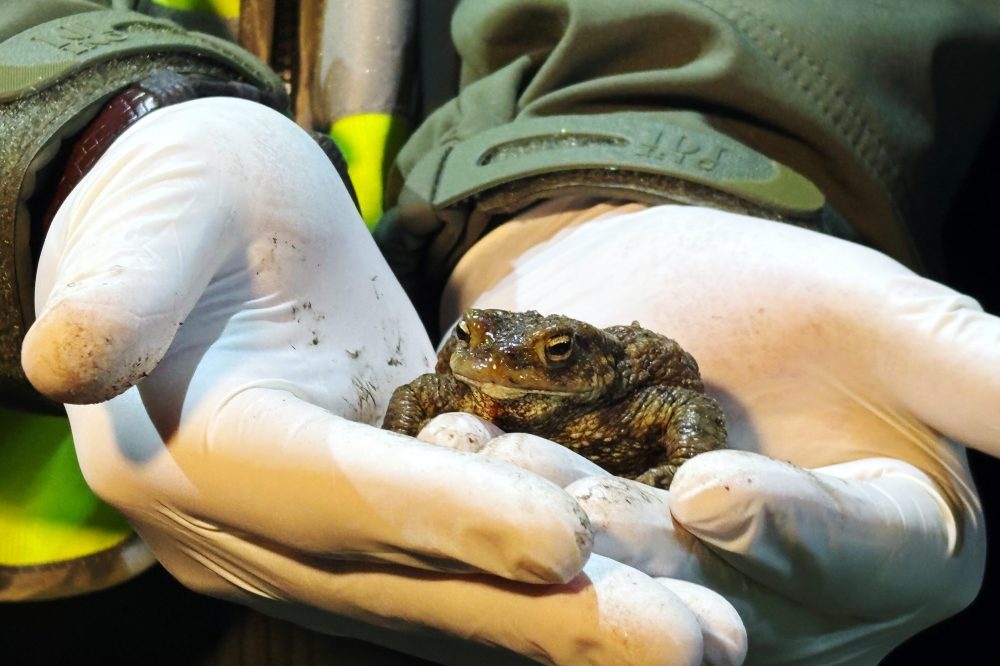
Volunteers gather each damp, rainy night when spring begins, spread out along the forest road and gather frogs from the roadway, then transport them safely to the wetlands. Since frogs breathe through their skin, which requires moisture, they only travel and migrate during rainfall.
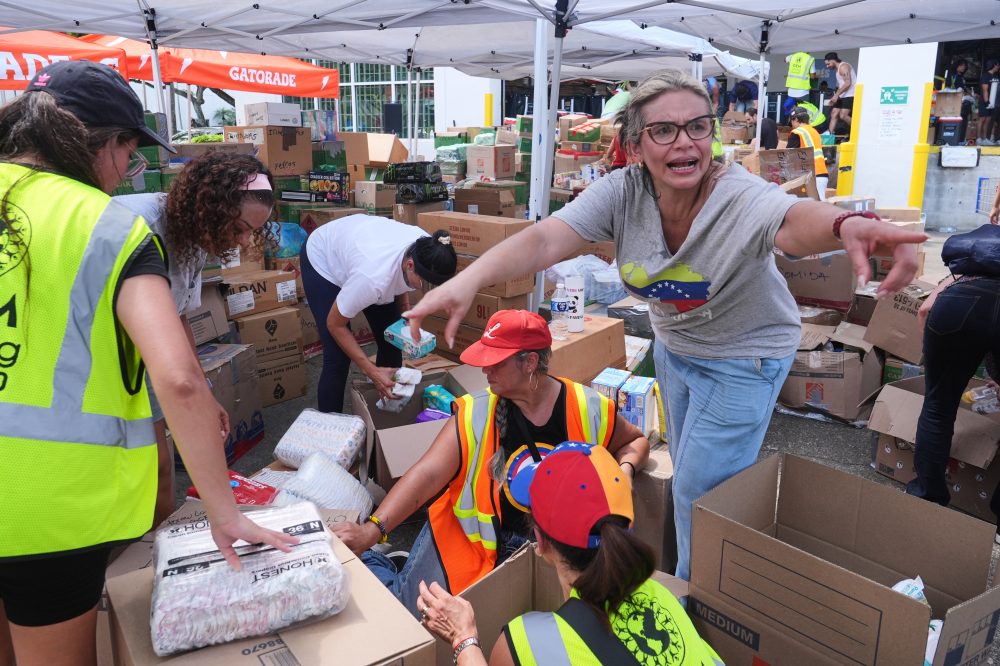
Dressed in reflective yellow vests marked with ‘Frog Patrol’ and equipped with headlights and containers, hundreds of volunteers are now regularly visible in the evenings throughout migration periods.
Community members, including young people, have also begun carrying gloves during daylight hours, enabling them to assist any amphibians they encounter in danger at any moment.
‘It’s really impressive to see whole families with kids walking in the rain, with buckets, in these lovely jackets to make them visible because it’s pretty unsafe, this road is narrow, and they carry the frogs from one side of the road to the other,’ said Katarzyna Jacniacka, one of the participants.
‘When the frogs are migrating, there are a lot of people here,’ she added.
For Aleksandra Tkaczyk, another volunteer, this represents ‘the kind of connection with nature about which some of us care deeply.’
Community members report they have rescued approximately 18,000 amphibians since launching their program.
Biologist Krzysztof Klimaszewski from the Institute of Animal Sciences at Warsaw SGGW University, who participated in several frog patrols, explained that the local efforts are crucial because ‘it actually allows this local population of amphibians to survive.’
These community programs to assist toads and frogs in crossing roads constructed through their natural environments exist beyond Poland’s borders.
In New Hampshire, volunteers from the Harris Center for Conservation Education protect various amphibians, including salamanders, from vehicle strikes. In Bavaria, southeastern Germany, volunteers from BUND Naturschutz report rescuing up to 700,000 frogs, toads, newts and salamanders annually.
Even in France, where frog legs are considered a culinary specialty, local volunteers assist struggling amphibians. In the southern French region of Provence-Alpes-Côte d’Azur, residents have placed nets along roadsides to capture frogs before they enter dangerous traffic areas.
In Estonia’s capital of Tallinn, officials announced in early April the installation of additional frog barriers on Tahetorni Street — directly along the frogs’ spring migration path — to direct amphibians and other creatures safely into underground passages and prevent traffic fatalities.