Drivers traveling through New Castle County should prepare for significant traffic disruptions this week as state transportation officials implement multiple overnight road closures near Newark.
Delaware’s transportation department has announced that three lanes of southbound Interstate 95 will be shut down during nighttime hours from Monday through Wednesday to allow crews to complete overhead sign installation work.
Simultaneously, motorists will encounter closures on northbound Route 896 and the connecting on-ramp to northbound I-95 as crews perform road milling and paving operations Monday through Wednesday nights.
The construction schedule extends into Thursday night, when workers will close the southbound I-95 exit ramp leading to northbound Route 896 for additional milling and paving activities.
All closure work is scheduled during overnight hours to minimize impact on daily commuter traffic through the busy I-95 and Route 896 interchange area.
DALLAS (AP) — The intensity level between the Dallas Stars and Minnesota Wild reached playoff heights with their first-round Western Conference series still a week away.
The Central Division rivals, who have already secured their playoff matchup, delivered a physical preview of what’s to come in the postseason during Dallas’ 5-4 victory Thursday night.
“That’s probably exactly what you’re going to expect. Guys finishing hits, taking hits to make plays,” said Jason Robertson, who netted his 42nd goal of the season with 9:25 remaining to secure the win for Dallas.
Stars coach Glen Gulutzan agreed with the assessment. “You knew there was going to be some emotion in the game. They’ve been trying to hunt us down for months, and it’s given them some fuel,” he said.
Dallas rallied from a two-goal deficit thanks to contributions from Wyatt Johnston, Mikko Rantanen, and Colin Blackwell, who each recorded a goal and assist. The victory pushes the Stars to 106 points, establishing a four-point lead over Minnesota for home-ice advantage in their upcoming series. Both clubs have three regular-season contests remaining before the playoffs begin.
The physical nature of the game was evident in the penalty statistics, with officials calling 12 roughing infractions — split evenly between the teams — along with numerous other altercations involving multiple players.
“Every time these two teams play each other it always is a hard-fought battle,” said Wild coach John Hynes, whose squad saw its four-game winning streak come to an end. “You saw some emotion in the game, and I think that is to be expected.”
Dallas will face only Eastern Conference opponents in their remaining games, beginning with Saturday’s home finale against the New York Rangers before traveling to Toronto. The Stars conclude the regular season at Buffalo, which has ended a franchise-record 14 seasons without playoff qualification.
Minnesota’s schedule keeps them in the Western Conference, starting with a road game at Nashville and finishing at home versus Anaheim — both teams still battling for playoff positioning. The Wild will also visit St. Louis between those contests.
Kirill Kaprizov led Minnesota’s offensive attack with two power-play goals, bringing his season total to 45 and tying his franchise record with 19 power-play tallies.
Kaprizov gave the Wild a 2-1 advantage with 16 seconds left in the opening period, scoring just 14 seconds into the man advantage. He extended Minnesota’s lead to 3-1 in the second period with another quick power-play strike, finding the net only 16 seconds into the penalty.
After Dallas tied the game, Ryan Hartman’s power-play goal with nine seconds remaining in the middle frame put Minnesota ahead 4-3.
However, the Wild couldn’t hold their lead. They suffered their first regulation defeat since March 2024 when leading entering the final period, ending a remarkable 61-0-4 record in such situations.
Minnesota had one final opportunity to tie the game after Rantanen took a slashing penalty with 2½ minutes left, but couldn’t convert even after pulling goaltender Filip Gustavsson for an extra attacker.
“How we played, we should have gotten a better result. I felt like we were playing very good,” Gustavsson said. “We went 2-2 against them.”
The season series between these teams began with Dallas winning 5-2 in their home opener on October 14. Minnesota captured both games on their home ice, winning 5-2 on December 11 and taking a 2-1 overtime decision on March 21.
The Stars may face a significant concern heading into the playoffs after defenseman Miro Heiskanen left the game with a lower-body injury following a hard check into the boards by Hartman late in the first period.
Gulutzan had no immediate update on Heiskanen’s condition but indicated the defenseman would miss the next game. “We’ll have him looked at tomorrow and the next day,” said Gulutzan when asked about potential playoff availability. “Honestly, I don’t know, but any time there’s an injury, especially your top guys, it’s concerning.”
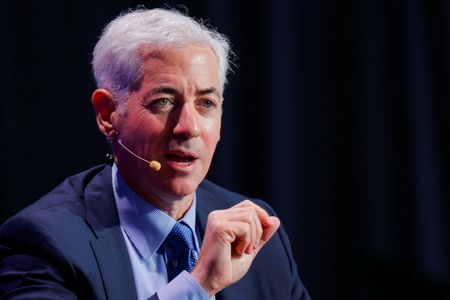
American hedge fund manager Bill Ackman made his first phone call to French billionaire Vincent Bollore before announcing his massive $64 billion takeover attempt for Universal Music Group this week.
The Pershing Square Capital Management founder later informed investors that Bollore’s reaction to his proposal was “music to my ears,” noting that the French mogul’s team appeared “intrigued” by the offer.
“Without Bollore, we don’t have a transaction,” Ackman stated about the 74-year-old businessman, who maintains control of just under 32% of the entertainment giant that houses major artists including Taylor Swift, Billie Eilish and Kendrick Lamar.
Despite being officially retired, Bollore remains actively involved in business dealings and possesses effective veto power over any potential deal through his direct ownership and indirect holdings via his family enterprise and stake in French media company Vivendi.
Representatives for Bollore’s Paris-traded holding company have not responded to requests for comment regarding Ackman’s proposal, which industry observers view as a test of the French tycoon’s business philosophy.
Ackman declined to provide additional comment. Universal has stated that its board of directors is examining Pershing’s “unsolicited and non-binding proposal” but refused further commentary.
Following his successful transformation of his family’s centuries-old business, Bollore expanded his empire through strategic stake-building campaigns during the 1990s, particularly targeting construction-to-media conglomerate Bouygues.
He later perfected this strategy during his acquisition of advertising company Havas in the early 2000s, creating a “creeping control” method he subsequently applied to media ventures while earning recognition for his direct management style.
Universal, where CEO Lucian Grainge has maintained considerable independence, has represented a notable departure from this pattern.
Bollore’s investment in the world’s largest music company, obtained through Vivendi’s 2021 spinoff and Amsterdam stock exchange listing, is considered among his most profitable decisions.
Over time, Bollore steadily expanded his influence within Vivendi, placing supporters on the board and strengthening his control.
“He has always known how to unlock value, and he did so in a truly striking way with Vivendi’s assets, bringing out the real wealth inside that conglomerate,” said Vincent Beaufils, author of a Bollore biography.
While Bollore has transformed France’s media environment, including Vivendi’s acquisition of Lagardere and the sale of its logistics division to CMA CGM, not every investment has succeeded.
Vivendi’s Telecom Italia investment eliminated billions of euros in value, while an attempt to enter Mediaset created conflict and legal battles with Silvio Berlusconi’s family, and a push into Ubisoft fell short of complete acquisition due to opposition.
Forbes calculates that Bollore and his family’s wealth has grown from $5.2 billion in 2017 to $9.8 billion in 2026.
Ackman, who holds a 4.7% stake in Universal and served on its board until May of last year, is presenting Bollore and other shareholders with choices to exchange their shares for cash or ownership in a new U.S.-listed company.
“He will look at it in a very cold and analytical way,” said one individual who has collaborated with Bollore. However, two industry leaders who have previously dealt with him indicated that Bollore’s choices can be challenging to predict.
JPMorgan analysts remain among those skeptical that Ackman will receive his desired response, arguing that Universal will find it difficult to endorse a proposal that “materially undervalues” the company.
The primary consideration influencing Bollore’s decision-making is his group’s extremely complicated ownership framework, analysts noted in a Friday report, adding that they anticipate rejection of the Pershing offer.
“It does not need cash; it has been a buyer, not a seller, of UMG shares; it is unlikely to sell at a discount to fair value; it would not want to reduce its influence; and it has historically favoured a European listing and domicile for UMG.”
Bollore’s group reported maintaining a net cash position of approximately 5.6 billion euros ($6.55 billion) at the end of last year.
New Castle County police have taken two teenagers into custody after catching them in the act of breaking into cars in a Newark neighborhood early Friday morning.
Officers with the New Castle County Division of Police were called to the first block of Alexis Drive in the Chapman Woods Townhomes development around 2:24 a.m. on April 10, 2026, following reports of people burglarizing vehicles.
When police arrived at the scene, they spotted three people who fit the descriptions provided by witnesses. Authorities successfully apprehended two of the suspects, both juveniles, while a third individual managed to escape.
During the arrests, officers discovered a loaded firearm in connection with the incident.
The investigation into the vehicle break-ins remains ongoing as police continue to search for the third suspect who fled the scene.
Similar to how underdog teams have become scarce in March Madness, smaller colleges are seeing fewer of their players selected in the NFL draft.
The culprits are NIL deals and the transfer portal, which together have created a talent pipeline flowing toward major conference schools.
The Power Four conferences – SEC, Big Ten, ACC and Big 12 – control college football through superior revenue streams, television contracts and financial resources.
These advantages are increasingly drawing top athletes away from smaller programs.
“Jerry Rice still gets drafted by the 49ers, but I don’t know that it’s from Mississippi Valley State today,” said Denver Broncos head coach Sean Payton, referencing the Hall of Fame receiver’s legendary rise from a small school. “That’s where he started, but I think it may be from — pick a big school.”
The NCAA basketball tournament once regularly showcased unknown programs from remote locations that captured national attention and destroyed tournament brackets. However, for the first time since the field expanded in 1985, all 16 Elite Eight teams last year came from major conferences, including the Big East. This pattern repeated in the most recent tournament, indicating that the transfer portal is consolidating elite talent at well-funded institutions.
This basketball trend is now appearing in football recruiting and development.
The numbers tell the story: Just 24 players from non-major conferences were drafted in 2024, continuing a steep decline from 70 such selections in 2022. The figure dropped to 38 in 2023 before reaching last year’s low of 34.
Even these statistics include players from traditionally strong programs outside major conferences. Last year’s two first-round picks from non-power schools were Boise State running back Ashton Jeanty, chosen sixth by Las Vegas, and North Dakota State lineman Grey Zabel, selected 18th by Seattle.
Boise State has consistently produced NFL talent, with seven draft picks since 2021, while North Dakota State has captured 18 national titles, including 10 FCS championships since 2010 and eight Division II crowns.
Other 2024 selections came from schools like Alabama A&M, Central Arkansas and Western Kentucky.
The NCAA implemented its name, image and likeness policy in summer 2021, allowing athletes to earn money from their personal brands. Soon after, rule changes permitted multiple transfers while maintaining immediate eligibility under specific conditions.
Athletes like Jeanty and Zabel continue reaching the draft – they’re just more likely to come from established football programs now.
This year’s draft from April 23-25 in Pittsburgh could see even fewer small-school names called, as only 17 of the 319 combine invitees represented non-power conference programs.
Notable exceptions include Toledo safety Emmanuel McNeil-Warren, rated by NFL analyst Daniel Jeremiah as the draft’s 16th-best prospect, and San Diego State defensive back Chris Johnson, ranked 40th by Jeremiah.
This shift has altered how NFL organizations approach college scouting, with fewer trips to smaller campuses.
“I think as you set your schedule for where you want your scouts to spend their most time, I think even in the last couple of years, you want them more in those places, concentrated areas like we talked about,” explained Broncos general manager George Paton. “Not that there’s not going to be good players in some of these other smaller schools.”
The difference is that many talented players now transfer to major conferences, where they access better financial opportunities, increased visibility and stronger personal branding possibilities.
Paton discovered one of the decade’s best small-college gems when he selected Wisconsin-Whitewater guard Quinn Meinerz in the third round of 2021.
Among 37 smaller-school draftees that year, Meinerz quickly became one of the league’s premier guards, famously wearing a gold paisley suit to sign his $80 million contract extension in 2024. He has since earned consecutive first-team All-Pro selections.
Despite playing “for the love of the game” in Division III’s Wisconsin Intercollegiate Athletic Conference, Meinerz attracted NFL attention.
“There’s a pretty good scouting department across the entire NFL,” Meinerz noted, “and they’ll come find you.”
While that remains true, scouts increasingly find their targets concentrated within Power Four conference boundaries.
MADRID — Emergency responders in Spain’s Canary Islands reported that a tourist-filled bus crashed into a ravine on Friday, resulting in one death and sending 27 people to the hospital with injuries.
The majority of those aboard the vehicle were tourists from Britain.
The crash occurred on La Gomera, which is part of the eight-island Spanish chain located in the Atlantic Ocean west of Africa’s coast.
According to emergency officials, all injured passengers were transported to a hospital on the island where they received medical care for their wounds.
La Gomera ranks among the smaller islands in the Canary chain and features challenging geography including volcanic peaks, thick forests, and communities perched on cliffsides. These Atlantic islands attract numerous British and European vacationers throughout the year due to their consistently mild climate.
A federal court has granted a one-week extension of an emergency order blocking a massive $6.2 billion acquisition between television broadcasting companies Nexstar Media Group and Tegna, while the judge considers whether additional delays are warranted.
The legal challenge comes from eight state attorneys general along with DirecTV, who filed suit claiming the combination of these television broadcasting powerhouses would drive up costs for consumers while damaging local news coverage. The plaintiffs petitioned U.S. District Court Chief Judge Troy L. Nunley in Sacramento, California, to prevent the acquisition from moving forward until their antitrust case reaches resolution.
Legal representatives for Nexstar counter that the acquisition will enhance rather than diminish local news programming and coverage.
Judge Nunley pushed back the temporary restraining order deadline to April 17, explaining the additional time would allow him to properly consider whether to issue a more extended preliminary injunction. The judge also adjusted the current order to permit both broadcasting companies to conduct “reasonable steps” for routine operations, including compliance with federal debt reporting requirements.
The acquisition, which was first announced the previous year and received Federal Communications Commission approval, would establish a media company controlling 265 television stations across 44 states plus the District of Columbia. The majority of these stations serve as local affiliates for the major broadcast networks: ABC, CBS, Fox and NBC.
The broadcasting deal required sign-off from the Republican Trump administration’s FCC since regulators had to waive existing restrictions on how many local stations a single company may control.
During his initial ruling imposing the temporary restraining order, the judge expressed concern that the merger could enable Nexstar to charge higher rates to multichannel video programming distributors such as DirecTV. He noted that if these distributors declined to accept rate increases, they might risk their customers losing access to popular programming like Sunday NFL games.
President Donald Trump’s backup strategy for implementing worldwide import taxes is facing another court battle as his signature economic initiative encounters continued legal resistance.
On Friday, the U.S. Court of International Trade in New York conducted oral arguments regarding Trump’s current tariff system, which he implemented after the Supreme Court rejected his original, more expansive tariff plan in February.
Trump initially attempted to establish global tariffs by citing the International Emergency Economic Powers Act of 1977, declaring the nation’s persistent trade deficit a national emergency to justify imposing substantial import taxes worldwide. His interpretation of this legislation was broad, allowing him to set tariffs of any amount, at any time, targeting any nation he chose.
However, the Supreme Court invalidated those tariffs on February 20, ruling that the emergency powers law did not grant authority to use tariffs as a response to national emergencies.
Following this setback, Trump turned to Section 122 of the Trade Act of 1974 as his backup plan. This provision permits presidents to establish worldwide tariffs up to 15% for a maximum of 150 days, requiring Congressional authorization for any extension. Trump immediately announced 10% tariffs under this authority and indicated he might increase them to the full 15%, though he has not yet done so. These current tariffs will end on July 24.
The legal dispute centers on whether Section 122’s language regarding “fundamental international payments problems” encompasses trade deficits — the difference between American exports and imports with other nations.
This trade provision was created during the monetary crises of the 1960s and 1970s, when the dollar was backed by gold. During that era, foreign countries were exchanging dollars for gold at fixed rates, threatening to destabilize American currency and create financial market turmoil. Since the gold standard no longer exists, opponents argue Section 122 has become outdated.
The situation presents complications for both sides. Trump’s own Justice Department previously filed court documents stating the president had to use emergency powers because Section 122 lacked “obvious application” to trade deficit issues, describing trade deficits as “conceptually distinct” from payment problems.
Conversely, the challengers face their own contradiction: the same trade court that is now hearing their case previously ruled that Trump could have used Section 122 to address trade deficits instead of emergency powers.
A federal jury in Manhattan started weighing evidence Friday in a major antitrust lawsuit where 34 states are challenging Live Nation Entertainment over alleged monopolistic practices.
In the civil lawsuit, state attorneys general claim the entertainment conglomerate and its Ticketmaster division have cornered the market on live music events, resulting in inflated ticket costs for consumers.
Live Nation maintains that the concert industry has never been more competitive and denies any unfair business practices in what they describe as a thriving entertainment market.
Shortly after beginning their discussions, jurors in the Manhattan federal courthouse requested to hear portions of testimony again from the five-week proceedings.
The state coalition continued pursuing their case even after federal authorities reached a settlement agreement with Live Nation last month.
According to the Justice Department, their settlement secured significant changes from Live Nation, especially regarding ticket sales at numerous company-owned amphitheaters.
During Thursday’s closing statements, an attorney representing the states claimed Live Nation dominates 86% of the concert venue market and holds 73% control when sporting events are factored in.
Live Nation’s legal team acknowledged the company’s position as the nation’s largest entertainment and ticketing corporation. However, their attorney argued that “success is not against the antitrust laws in the United States.”
Whirlpool Corporation announced Friday its plans to pour more than $60 million into a new Ohio manufacturing facility dedicated to producing components for washing machines and dryers.
The major appliance manufacturer revealed that this new facility will mark its 11th production site across the United States and its sixth location within Ohio. The investment is projected to generate between 100 and 150 new employment opportunities.
“Whirlpool Corporation is leaning into our commitment to U.S. manufacturing,” stated Marc Bitzer, CEO of the Benton Harbor, Michigan-based company, in a release. Bitzer has been a vocal supporter of President Donald Trump’s tariff policies. The company made this announcement during an event held at its major washing machine manufacturing facility in Clyde, Ohio, where U.S. Trade Representative Jamieson Greer was in attendance.
Greer made the trip to the Midwest this week as part of efforts to promote the current administration’s initiatives designed to strengthen domestic manufacturing capabilities.
This latest announcement follows Whirlpool’s October revelation of a separate $300 million investment plan focused on expanding capacity within its current laundry-related manufacturing operations.
AUGUSTA, Ga. — A moment of pure frustration at Augusta National has put Scottish golfer Robert MacIntyre in hot water both literally and figuratively during Thursday’s opening round of the Masters Tournament.
MacIntyre displayed his middle finger toward the course after watching his approach shot find the water hazard fronting the 15th green. Standing at 3-over-par at the time, the Scottish player’s troubles were just beginning. His next attempt from the drop zone suffered the same watery fate, spinning backward off the firm green surface.
The disastrous sequence resulted in a quadruple-bogey 9, pushing MacIntyre to 7-over for the tournament. Additional struggles on the 17th hole with another bogey left him at 8-over 80 for the day. His woes continued into Friday’s second round with a double-bogey on the opening hole, placing him at 10-over and well outside the projected cut line.
Tournament officials may review MacIntyre’s gesture for possible disciplinary measures, as such conduct violates professional golf’s standards of sportsmanship.
The 15th hole, typically among Augusta National’s more manageable scoring opportunities, proved treacherous for multiple players due to exceptionally dry and firm course conditions. Thursday’s field averaged 74.65 strokes, with the par-5 15th playing to a 5.12 average — the only par-5 to play above par.
Patrick Reed experienced similar misfortune when his well-struck 7-wood approach bounced off the green and rolled into the water near the 16th hole. Reed attributed the outcome to unfortunate bounces on the concrete-hard putting surface. Gary Woodland narrowly avoided disaster, watching his second shot roll dangerously close to the same watery grave.
Veteran Fred Couples endured perhaps the day’s most painful experience at the 15th. Sitting comfortably at 2-under and inside the top-10, Couples watched in disbelief as two consecutive approach shots rolled back into the hazard, matching MacIntyre’s quadruple-bogey 9. A subsequent double-bogey on 16 contributed to his 78.
“I’ve played I don’t know how many rounds. I’ve never done that, hit it in the water going for the green. Never hit a 90-yard shot in the water and then followed up with another one,” Couples explained. “I’ve played 41 years here. I’ve never done that.”
“It was kind of like a shot I can handle, but I wasn’t even trying to handle it. I was just trying to hit it 30 feet right. No one is going to hit it in there five feet I don’t think. The greens are like concrete. The course was really, really good.”
Adam Scott also found the water with his 15th-hole approach but demonstrated better course management. Rather than dropping in the same location, Scott utilized the designated drop area forward of the hazard, pitched to the back portion of the green, and limited the damage to a single bogey.
Utility companies across the nation delivered their most impressive quarterly performance in five years, posting a 7.5% gain during the first three months of 2024 according to market data from LSEG.
The utilities sector’s strong showing marked the best opening quarter since 2019, as investors moved money away from riskier investments during a period of market uncertainty sparked by Middle East tensions and concerns about rising inflation.
While the broader S&P 500 dropped 4.6% during the same timeframe – marking its worst quarterly decline since 2022 – utility stocks attracted investors looking for steady dividend payments and less volatile returns during turbulent market conditions.
Matt Stucky, who manages equity portfolios at Northwestern Mutual, explained the appeal of defensive investments during uncertain times. “When volatility really ramps up and there are questions about where the market is going in the short term, it’s natural for investors to rotate into defensive type equities and utilities tend to be a prime recipient of along with healthcare,” Stucky said.
Beyond their traditional safe-haven status, utility companies are experiencing unprecedented demand from technology giants constructing massive data centers to support artificial intelligence operations. Research from the Electric Power Research Institute projects that electricity consumption by data centers could increase more than fourfold by 2030, potentially accounting for 17% of the nation’s total power usage.
Gerry Sparrow, who leads Sparrow Capital Management, noted the significant impact of this technological shift on utility companies. “I read a few recent quarterly calls from some of the utility companies and the big drivers are the data centers and the increased electricity demand, which is crowding out other interests,” Sparrow explained.
Major technology corporations including Alphabet, Meta Platforms, and Oracle are driving this electricity surge through their substantial capital investments in AI-focused data center construction, according to Sparrow.
“The data center demand is coming from technology companies — in particular Alphabet, Meta Platforms and Oracle, with their capital budgets that include data center buildout for AI. So that’s some of the stuff that’s moving the market around, especially around individual utility companies,” he said.
Market analysts expect that as geopolitical tensions ease following recent ceasefire agreements, investors may shift back toward growth-oriented investments, potentially reducing some of the utilities sector’s recent gains.
However, utility companies positioned to serve the expanding AI infrastructure – particularly those providing power to commercial customers in key data center regions including Virginia, Texas, Florida, and Midwest markets – are expected to maintain strong investor appeal.
Companies such as American Electric, Dominion Energy, Nextera Energy, Xcel Energy, and Duke Energy are among those well-positioned to benefit from this trend, according to Sparrow.
“A lot of the performance is likely going to be tied to how much they’re serving industrial customers versus residential customers closer to the larger cities,” Sparrow noted.
WASHINGTON – President Donald Trump encouraged Americans in February to enjoy their enhanced tax refunds, describing this year’s payments as “substantially greater than ever before” due to new individual tax relief measures enacted in 2025.
“Don’t spend all of this money in one place!” Trump posted on his Truth Social platform.
However, Americans are finding themselves doing exactly that, as rising fuel costs are consuming the majority of increased tax refunds resulting from new deductions on gratuities, Social Security benefits, overtime wages, vehicle loan interest, and state and local taxes included in last year’s GOP tax legislation.
Oil prices remained near $100 per barrel Friday despite an unstable ceasefire in the U.S.-Iran conflict, with the Strait of Hormuz still blocked ahead of diplomatic discussions in Islamabad. Even with potential reopening of the crucial waterway that carries roughly 20% of global oil supplies, fuel costs may continue climbing for months, according to Energy Information Administration projections showing Brent crude averaging $96 annually.
Energy analysts at Rystad Energy warn that damaged infrastructure throughout the Gulf region will constrain future production, with reconstruction expenses estimated at a minimum of $25 billion and potentially rising as hostilities persist.
Continued energy supply disruptions suggest extended hardship at gas stations, with economists noting that lower-income Americans, who dedicate larger portions of their earnings to fuel, will experience minimal benefits from tax reductions.
Consumer prices surged 0.9% in March, marking the steepest monthly increase in nearly four years, primarily due to unprecedented gasoline price jumps amid global oil market volatility and ongoing tariff impacts, Friday’s Bureau of Labor Statistics report revealed. Additional cost increases for diesel fuel, fertilizer, aluminum, and other commodities affected by Middle Eastern conflicts, along with food price inflation, threaten to eliminate remaining refund benefits.
Through March 27, average individual tax refunds for 2025 increased by $351, representing an 11.1% jump to $3,521 compared to the previous year, based on current Internal Revenue Service processing statistics.
These amounts may climb before Wednesday’s April 15 filing deadline, with projections ranging from Morgan Stanley’s $560 estimate to the Tax Foundation’s $611 calculation and Treasury’s $1,000 forecast. However, some relief may appear through reduced payroll withholding or decreased quarterly individual payments.
TAX BENEFITS BECOMING ECONOMIC BUFFER
Stanford Institute for Economic Policy Research economists calculate that conflict-related price increases have raised Americans’ typical annual gasoline expenses by $857 this year. Their March 23 analysis assumed Brent futures at $99 per barrel – roughly $2 above Friday’s levels – and projected Strait of Hormuz reopening around April 10.
Congressional Joint Economic Committee Democrats estimate Americans spent an extra $8.4 billion on gasoline during the Iran war’s initial month, using AAA price information, Edmunds.com fuel efficiency data, and federal consumption statistics. This amount represents nearly one-third of the $26.5 billion total IRS refund increase through March 27.
“Gas prices are probably the most salient price in the economy,” explained Stanford University economics professor Neale Mahoney. “The impacts may be modest from a macro perspective, but for the sort of kitchen-table economics of a family, and things that they’re paying attention to, they can be big.”
Families anticipating larger refunds for summer vacations or home renovations may scale back plans as they spend more filling their tanks. Food costs are also expected to rise as higher diesel, fertilizer, jet fuel, and aluminum prices ripple through the economy.
What officials intended as economic stimulus is now functioning more as protection against deeper recession, though analysts are reducing U.S. consumption and GDP projections by several tenths of a percentage point. Morgan Stanley now forecasts 2026 consumption growth slowing to 1.7% from 2025’s 2.1%, with durable goods bearing most impacts, while Oxford Economics cut global GDP growth expectations for 2026 to 2.6% from 3.0%, well below recent performance.
ENHANCED DEDUCTIONS FOR PROPERTY OWNERS
Most tax relief provisions in the One Big Beautiful Bill Act approved by the Republican-majority Congress last year applied retroactively from January 2025, meaning initial benefits primarily come through claimed income deductions.
Multiple breaks, including those covering tips, overtime, Social Security, and auto loan interest, apply whether taxpayers itemize returns or claim the standard deduction, which also increased $1,150 for individual filers in 2025. This modification would generate a $138 refund boost for 12% tax bracket filers earning $11,926 to $48,475.
Treasury Secretary Scott Bessent recently praised the overtime deduction as “a home run,” noting 25% of filers are utilizing it.
However, one major benefit – a $30,000 increase in state and local tax deductions – still requires itemization, essentially excluding non-homeowners without mortgages or property tax obligations.
Only taxpayers with market incomes between $71,659 and $126,348 – exceeding 60% of earners – will retain money from new tax breaks after covering increased fuel expenses, according to Tax Foundation analysis. Market income encompasses adjusted gross income, tax-exempt interest, employer health and retirement benefits, and additional components.
Tax Foundation research indicates that reductions for the top 0.01% of returns exceeding $2.24 million in income still provide greater tax savings than benefits for those earning up to $37,486.
SACRAMENTO, Calif. – A federal court has granted another week-long extension to temporarily block the proposed merger between television broadcasting companies Nexstar and Tegna, as legal proceedings continue over antitrust concerns.
U.S. District Judge Troy Nunley announced Friday that he would prolong the temporary restraining order that requires Nexstar to maintain separation of Tegna’s business operations while the court weighs whether to impose a preliminary injunction. The judge initially imposed the asset separation requirement on March 27 following an antitrust challenge brought by satellite television provider DirecTV.
During Friday’s proceedings, Judge Nunley indicated he plans to modify certain aspects of the current order to address specific objections raised by Nexstar’s legal team. The extended timeline will allow the court additional time to evaluate whether the merger should face longer-term restrictions pending resolution of the underlying lawsuit.
Kuwaiti military officials announced Friday that Iran carried out strikes against multiple National Guard installations within the country, leaving several service members injured and causing extensive damage to the targeted sites.
The assault on the strategic military facilities represents a significant escalation in regional tensions, according to statements from Kuwait’s armed forces leadership.
President Donald Trump’s ambitious initiative to rebuild Gaza has encountered a severe financial obstacle, with sources revealing that his Board of Peace has collected less than $1 billion of the $17 billion promised by international donors.
The funding shortage has effectively halted Trump’s strategy for the devastated Palestinian territory’s reconstruction, according to Reuters sources familiar with the situation.
Just ten days prior to U.S.-Israeli military operations against Iran that escalated regional tensions into full conflict, Trump organized a Washington conference where Gulf Arab nations committed billions toward Gaza’s governance and rebuilding efforts following two years of Israeli bombardment.
The reconstruction blueprint calls for extensive rebuilding of the coastal territory following the disarmament of Hamas, the Palestinian militant organization whose attacks on Israel sparked the Gaza offensive, and the complete withdrawal of Israeli forces.
The promised financial contributions were also designated to support operations of the National Committee for the Administration of Gaza (NCAG), a U.S.-supported group of Palestinian technocrats designed to take governmental control from Hamas.
A source with direct access to the peace board’s operations revealed that among ten nations that made funding commitments, only three have actually delivered money: the United Arab Emirates, Morocco, and the United States.
The Iran conflict “has affected everything,” the source explained, making existing funding challenges even worse.
Security concerns and insufficient funding have prevented NCAG from entering Gaza, the source noted. Despite a ceasefire agreement reached last October, Israeli military actions have resulted in at least 700 Palestinian deaths according to Gaza health officials, while militant attacks have claimed four Israeli soldiers’ lives.
A Palestinian official with knowledge of the situation said the board has notified Hamas and other Palestinian groups that NCAG cannot currently enter Gaza due to financial constraints.
“No money is currently available,” the official quoted board envoy Nickolay Mladenov as telling Palestinian organizations.
Hamas has consistently stated its willingness to transfer governance responsibilities to NCAG, which is headed by Ali Shaath, a former deputy minister with the Palestinian Authority that currently maintains limited self-governance in portions of the Israeli-occupied West Bank.
Shaath’s committee is intended to take charge of Gaza’s government ministries and oversee its police operations.
According to a diplomatic source, Shaath and his 14 committee members remain confined to a Cairo hotel under American and Egyptian supervision.
Neither the Board of Peace nor NCAG representatives provided immediate responses to requests for comment.
International organizations estimate that rehabilitating Gaza, where Israeli bombardments destroyed four-fifths of all buildings over two years, would require approximately $70 billion.
This struggling Gaza initiative mirrors other ambitious Trump projects, as the president has positioned himself as a global peacemaker while facing difficulties ending the Ukraine conflict as promised and watching this week’s Iran truce face immediate serious challenges.
Egypt, which has been facilitating disarmament negotiations, extended new meeting invitations to Hamas for Saturday, according to a source within the militant organization.
The ceasefire ended large-scale warfare but left Israeli forces controlling a depopulated area covering more than half of Gaza, while Hamas maintains power in a narrow coastal section.
Trump’s board has been directing negotiations with Hamas and other Palestinian factions regarding disarmament. Israel demands Hamas surrender its weapons before withdrawing troops from Gaza, while Hamas refuses compliance without guarantees of Israeli withdrawal and cessation of attacks in Gaza.
The diplomatic source familiar with disarmament discussions said negotiations remain stalled and expressed concern that Israel might seek justification to resume full-scale Gaza operations.
Israeli military leadership has indicated preparation for rapid return to comprehensive warfare if Hamas fails to surrender its weapons.
The Gaza conflict originated with Hamas’ October 7, 2023, attacks on Israel that resulted in 1,200 deaths according to Israeli records.
Israel’s subsequent two-year military campaign has killed more than 72,000 Palestinians, predominantly civilians, according to Gaza health authorities, while causing widespread famine and displacing most of the territory’s population.
Motorists traveling on Bear Road southbound should expect lane restrictions today as construction crews work in the area between Reybold Drive and North DuPont Highway.
The Delaware Department of Transportation has temporarily shut down the right shoulder for ongoing construction activities. The closure began earlier today and is expected to last until 3:00 PM this afternoon.
Drivers are advised to use caution when traveling through the work zone and allow extra time for their commute. Traffic may experience delays during peak travel hours as vehicles merge away from the construction area.
Delaware State Police have taken two Felton residents into custody on multiple felony drug charges after a probation compliance check led to the discovery of methamphetamine and drug paraphernalia.
Eric Cane, 47, and Amber Knolls, 43, were both arrested during the April 6th operation at a Jessica Lane residence in Felton. The incident began around 10:00 p.m. when the Kent County Governor’s Task Force responded to assist Probation & Parole officers with a routine administrative check at Cane’s home.
Before conducting the search, investigators observed Cane engaged in what appeared to be a drug transaction with an unidentified individual outside the residence. When law enforcement approached, officers witnessed Cane toss a bag containing narcotics underneath a vehicle parked in the driveway.
Both suspects were taken into custody without resistance. The subsequent search of the individuals and property yielded approximately 13.54 grams of methamphetamine along with various drug-related equipment.
Cane faces multiple charges including Possession with Intent to Deliver a Controlled Substance, Tier 2 Quantity (Felony), Possession of a Controlled Substance, Tier 2 Quantity (Felony), Tampering with Physical Evidence (Felony), Conspiracy 2nd Degree (Felony), and Possession of Drug Paraphernalia. He was processed at Troop 3 and appeared before Justice of the Peace Court 2, where he received a $30,200 unsecured bond. However, he was sent to Sussex Correctional Institution due to probation violations.
Knolls was charged with Possession with Intent to Deliver a Controlled Substance, Tier 2 Quantity (Felony), Possession of a Controlled Substance, Tier 2 Quantity (Felony), Conspiracy 2nd Degree (Felony), and Possession of Drug Paraphernalia. After being processed at Troop 3, she appeared before Justice of the Peace Court 11 and was committed to Delores J. Baylor Women’s Correctional Institution on a $30,000 cash bond.
Dover Police Department has issued updated registry information for sex offenders residing within city limits, as required under state notification laws.
The department’s latest notifications include photographic identification and details for individuals required to register under Delaware’s sex offender registry requirements. Community members can view the complete notification materials through the police department’s official website.
Residents who have questions or concerns regarding these registry updates are encouraged to reach out directly to the Dover Police Sex Offender Enforcement Unit for assistance.
PHILADELPHIA — When Philadelphia Flyers supporter Mike Culin decided his struggling hockey team needed divine assistance, he abandoned conventional lucky charms for a celestial strategy: presenting Pope Leo XIV with a personalized Flyers uniform during a family vacation to Italy.
“I thought, what are you doing? That jersey is expensive,” recalled Culin’s spouse, Christine. “Do you honestly believe you’ll manage to reach the Pope and give him this? But he had confidence.”
Few have endured more heartbreak than Flyers supporters over the past fifty years, but Mike Culin never lost his belief, whether in hockey or in heaven.
When the opportunity arose, Culin prepared for the ultimate play — an attempt to somehow deliver the Flyers jersey bearing “Pope Leo” on the nameplate and number 14 (with respect to current No. 14 Sean Couturier) from Essington, Pennsylvania, to Vatican City and into the possession of the first American-born pope, a Chicago native and devoted sports enthusiast.
The Culin family, along with their son Jesse Gennett, his spouse, and her parents, embarked on an Italian journey that included securing a position for the papal gathering in St. Peter’s Square. The group assembled on March 18 with jersey ready, hoping to attract Leo’s notice as he passed in the popemobile.
“Our objective was simply getting him to notice it,” Gennett explained. “We figured we needed to position ourselves near the edge because that would give us the best opportunity for him to spot it. And he did notice it. He gestured toward it and gave what looked like a thumbs up. Everything happened incredibly quickly.”
Christine Culin raised the jersey by gripping both shoulders so the pope would see it, while her daughter-in-law requested the jersey for a better opportunity to hand it over as the popemobile drew near.
“For you! For you! For you! For you!” Gennett’s wife, Valerie Giacobbe, shouted toward the papal procession.
Indeed, a security officer grabbed the jersey and transferred it to someone who examined the uniform while seated in the vehicle behind Leo. The families cheered with excitement and captured additional photos when the popemobile paused so Leo could bless some infants.
“He might have looked right and completely missed it,” Mike Culin noted. “Instead he looked left and spotted the jersey.”
Culin’s hope centered as much on securing some heavenly assistance for the Flyers’ final games as it did on gifting Leo a jersey.
“He believed the Flyers required that support,” Gennett said. “And they absolutely did.”
With this ultimate advantage, the Flyers defeated Anaheim that evening to begin a three-game victory run, contributing to a 9-4 performance during that period to enter the Eastern Conference playoff race. The white smoke signaling a playoff position hasn’t yet emerged from their home venue: The Flyers maintain a slim one-point advantage for the final spot with three contests remaining.
Certain Flyers supporters attribute papal influence to the winning streak, while more skeptical fans believe it was actually an arrival from above that triggered the turnaround: Canadian teenager Porter Martone, who has scored one goal and earned four points in his initial five NHL appearances.
The papal footage gained social media attention when Chris Gennett, a musician and Jesse’s brother, shared the 60-second family video on TikTok.
The pope, formerly Robert Prevost, is a recognized sports enthusiast, particularly of the Chicago White Sox. He was present at the 2005 World Series opening game against Houston in Chicago and witnessed his favorite team defeat the Astros 5-3 en route to a four-game championship sweep and their first title since 1917.
But what would prompt him to acknowledge a Flyers jersey? He did study at Villanova University near Philadelphia, where he earned a Bachelor of Science in 1977. Perhaps he attended some games at the former Spectrum and cheered for those combative Broad Street Bullies.
Culin mentioned he would have kept the jersey — a family friend hand-sewed the nameplate — as a novelty memento if Leo hadn’t noticed the gift.
Maybe during his private moments, Leo has tried on the size 52 jersey, just for enjoyment.
“He had to check if it fits, right?” Culin said with a chuckle.
A groundbreaking legal case in Scotland has resulted in an eight-year prison sentence for a man whose pattern of abuse led to his wife’s tragic death by suicide in July 2023.
Lee Milne, age 40, received the sentence Friday after being found guilty of culpable homicide and abusive behavior at Glasgow’s High Court. The case represents a historic first for Scottish courts, where prosecutors successfully convinced a jury that an abusive partner could be held criminally responsible when their victim dies by suicide.
Kimberley Milne, 28, ended her life by jumping from a bridge in Dundee on July 27, 2023. However, prosecutors argued that her husband’s systematic campaign of terror drove her to that fatal decision.
“Lee Milne physically and psychologically abused Kimberly,” stated Prosecutor Laura Buchan. “He deliberately and ruthlessly exploited Kimberly’s vulnerabilities, which makes him culpable for her decision to end her own life.”
During their year-and-a-half marriage, court evidence revealed a horrific pattern of control and violence. Lee Milne strangled his wife, struck her unconscious, confined her to their home without food, and systematically cut her off from family members and financial resources.
Judge Lorna Drummond emphasized the escalating nature of domestic violence during sentencing.
“Domestic abuse is rarely about one incident,” Judge Drummond explained. “It’s not only about violent acts, it includes more subtle, but nonetheless as harmful, exertions of power and control in a relationship. And it builds over time, each act, whether physical, psychological or financial, adds to the next. Increasing pressure and fear, eroding confidence and independence.”
Family members described Kimberley as a beloved daughter, sister and aunt whose loss has devastated them.
Text messages revealed the psychological grip Lee Milne maintained over his wife. When Kimberley’s sister urged her to leave the marriage four months before her death, Kimberley responded with fear.
“How can I leave him if he’s saying he’s gonna do himself in without me,” she wrote back.
Security footage from Kimberley’s final day captured disturbing scenes of continued intimidation. Despite their separation, the couple was together when Lee Milne deliberately drove his vehicle toward his wife in a parking lot, stopping just short of hitting her before repeating the threatening behavior.
Shortly afterward, Kimberley walked to a nearby bridge and jumped onto the highway below.
“By the jury’s verdict, you must bear responsibility not only for all of your abusive acts, but also for causing her death,” Judge Drummond told Lee Milne during sentencing.
MOSCOW — A military court in Moscow has handed down a 19-year prison sentence to Pavel Popov, who previously served as Russia’s deputy defense minister, following his conviction on corruption charges, Russian state media reported Friday.
Popov’s arrest in 2024 stemmed from illegal business dealings connected to a massive military-themed attraction in Moscow that some have nicknamed Russia’s “military Disneyland.”
The facility, known as Patriot Park, was a signature initiative of former Defense Minister Sergei Shoigu aimed at fostering patriotic feelings among Russia’s youth through displays of Soviet and Russian military equipment. The complex includes shooting ranges, an airfield, multiple museums, a conference facility, and a large olive-colored Cathedral of the Russian Armed Forces decorated with mosaics depicting Soviet and Russian military personnel.
According to the Kremlin, President Vladimir Putin personally contributed funds for the church’s primary religious icon.
Court investigators determined that Popov, who oversaw Patriot Park’s construction and operations, illegally redirected more than 25 million rubles ($324,000) from the park’s budget to fund renovations on his private residences in the Moscow area, state news outlet Ria Novosti reported.
Popov maintained his innocence throughout the proceedings, and his legal representative announced plans to challenge the ruling, state news agency TASS reported. The court also imposed an 85 million ruble ($1.1 million) fine.
Two additional defendants faced charges alongside Popov: the park’s director received a six-year sentence, while Maj. Gen Vladimir Shesterov, who worked in the Defense Ministry’s innovation division, was sentenced to five years behind bars.
This case represents part of a broader criminal investigation targeting more than a dozen officials connected to former Defense Minister Sergei Shoigu, all facing allegations of misconduct within Russia’s military hierarchy.
Popov held the deputy defense minister position from 2013 through June 2024, when President Putin removed him from office through an official decree.
PARIS (AP) — A charitable organization in France is conducting a unique fundraiser, giving participants the opportunity to own an authentic Pablo Picasso artwork for just 100 euros ($117) per entry, with all money raised benefiting Alzheimer’s disease research.
Christie’s auction house in Paris will host Tuesday’s drawing for the coveted prize.
This marks the third such lottery since the program began. The first “1 Picasso for 100 euros” drawing took place in 2013, when a Pennsylvania fire-sprinkler technician became the lucky winner of “Man in the Opera Hat,” a piece the renowned Spanish artist created in 1914 during his Cubist era.
A second artwork, the oil painting “Nature Morte,” was awarded through raffle in 2020 to Italian accountant Claudia Borgogno, whose son had purchased the winning ticket as her Christmas gift.
That 1921 still life was acquired for the raffle from art collector billionaire David Nahmad, who told the Associated Press in a rare interview that the famous artist would have supported making his works accessible through such means. Picasso passed away in 1973.
“Picasso was very generous. He gave paintings to his driver, his tailor,” Nahmad said. “He wanted his art to be collected by all kinds of people, not only by the super-rich.”
The current prize, a gouache on paper work called “Tête de Femme” (meaning “head of a woman”), was completed by Picasso in 1941.
The Alzheimer Research Foundation, which coordinates this charitable raffle, operates from one of Paris’ premier public medical facilities and claims to have become France’s top private funding source for Alzheimer’s medical studies since establishing operations in 2004.
Christie’s will display the artwork at its Paris location starting Monday, before conducting Tuesday’s 6 p.m. drawing.
According to the organizers’ digital sales system, ticket sales will be limited to 120,000 entries, potentially generating 12 million euros ($14 million) if completely sold out.
Of the total revenue, 1 million euros will go to Opera Gallery, the international art dealer that currently owns the painting.
The foundation reports that the two earlier Picasso raffles generated over 10 million euros combined for cultural initiatives in Lebanon and water and sanitation projects across Africa.
A Vietnamese national entered a guilty plea Friday in a Malaysian courtroom for illegally holding protected wildlife materials without proper permits, according to his legal representative.
Hoang Van Thai, age 39, faced charges for unlawfully possessing 1,022 python gallbladders and 191 python tongues from the python reticulatus species, which receives legal protection, at a location in Malaysia’s southern Johor state.
These python parts were discovered among a massive collection of illegal wildlife products during an April 4 enforcement operation conducted by Malaysia’s Wildlife Department, which valued the entire seizure at approximately 37 million ringgit ($9.3 million). The confiscated materials included various python organs, bear bile, suspected tiger body parts, primate remains, and reproductive organs believed connected to global illegal wildlife trafficking operations.
Malaysia serves as a significant center for unlawful wildlife commerce, functioning as both an origin point and transfer location for smuggled species, fueled by consumer demand for exotic creatures and their body parts.
Authorities have not explained why Hoang received charges only related to the python materials. Some people believe python bile from gallbladders possesses healing qualities, while tongues are utilized in traditional ceremonies or consumed as aphrodisiacs.
Defense attorney Mohamad Fazaly Ali Mohamad Ghazaly stated he challenged the wildlife department’s price assessment in court due to insufficient supporting documentation. He explained that Hoang arrived in Malaysia last November and worked as a driver, while his two children attended school in the country.
Hoang awaits sentencing and could receive up to three years imprisonment, monetary penalties, or both punishments. The court plans to confirm his immigration standing on April 20 before deciding on bail. Government prosecutors opposed releasing him on bail, arguing the substantial quantity of confiscated items indicates organized criminal activity.
Vincent Chow, an adviser with the Johor Malaysia Nature Society, told The Star English-language newspaper that Hoang likely served as a storage operator for a broader criminal organization.
“The majority of the confiscated wildlife materials had undergone processing and some were already packaged, apparently awaiting shipment to either domestic or overseas markets,” he stated.
BUDAPEST, April 10 (Reuters) – For the first time since taking office, Hungarian Prime Minister Viktor Orban and his Fidesz political party are encountering serious electoral competition in the April 12 vote, breaking a pattern of overwhelming victories that began in 2010.
Throughout his decade-and-a-half tenure, Orban has drawn condemnation from the international community regarding democratic institutions, press liberty, and LGBTQ rights.
Here’s an examination of his signature policy initiatives.
INSTITUTIONAL CONTROLS AND CIVIL LIBERTIES
Leveraging a commanding two-thirds parliamentary majority, Orban implemented a new constitution in 2011 and restructured hundreds of existing laws.
In Fidesz’s initial term, the party forced hundreds of judicial officials into retirement through legislation that European Union officials determined violated EU standards. Hungary’s Constitutional Court subsequently invalidated portions of that legal framework.
Opposition voices argue that revised voting regulations have solidified Fidesz’s dominance by benefiting major parties, restructuring voting districts, and extending voting privileges to ethnic Hungarians throughout central Europe, who predominantly back Orban.
Individuals loyal to Orban occupy leadership roles in critical government institutions.
Beginning in 2022, he has regularly ruled through executive orders, utilizing emergency powers established following Russia’s invasion of neighboring Ukraine.
His administration has targeted certain non-governmental organizations and imposed stricter oversight on educational institutions. Consequently, the Open Society Foundations, established by Hungarian-born billionaire George Soros, closed its Budapest headquarters in 2018 and relocated to Berlin, while Central European University, a prominent liberal institution also created by Soros, transferred operations to Vienna in 2019.
Orban dismisses claims of weakening democratic governance, asserting that voters provided clear authorization to restructure existing laws.
CONSERVATIVE RIGHTWING AGENDA
Orban has positioned himself as a guardian of Hungarian cultural heritage against Muslim immigration and as a champion of Christian principles against what he terms “gender and LGBT ideology” and Western liberal thought.
His administration has constitutionally redefined marriage as exclusively between one man and one woman, while restricting gay adoption and transgender rights.
In March 2025, parliament enacted legislation providing legal grounds for police to prohibit Pride demonstrations, contending they could endanger children and that child protection should override assembly rights.
Hungary constructed border barriers along its southern frontier following the 2015 migration crisis and established some of Europe’s most restrictive asylum policies. Rather than accepting immigration as a solution to Hungary’s population decline, Orban has attempted to increase birth rates through substantial family tax benefits.
MEDIA OVERSIGHT
Orban has restructured Hungary’s media environment, prompting accusations from the European Union and democracy advocates that press freedoms are being restricted, allegations his government refutes.
His administration has strengthened control over state media, including broadcasting outlets, converting them into government propaganda tools, according to critics.
Government advertising funds directed to pro-administration media have encouraged favorable coverage in private outlets, while numerous other publications have been closed or acquired by government-aligned owners.
EASTERN AND WESTERN RELATIONS
During Orban’s leadership, the EU and NATO member has pursued an “Eastern opening” toward Russia and China, encouraging business investment from those nations – alongside German automotive manufacturers – while advocating for Moscow’s positions within the EU.
Orban denounced Russia’s 2022 war against Ukraine and criticized but supported EU sanctions targeting Moscow. However, he firmly opposes prohibiting Russian energy imports, claiming such action would devastate Hungary’s economy.
Relations between Hungary and Ukraine have deteriorated over multiple issues including energy deliveries, and Hungary has prevented a 90 billion euro European Union loan to Ukraine.
ECONOMIC POLICIES
Hungary completed repayment of all outstanding International Monetary Fund debt in 2013 following a bailout during the global financial crisis, and its debt achieved investment grade rating three years afterward.
Orban’s government controlled fiscal deficits and public debt until the coronavirus pandemic reversed this progress. Recently, the government increased its budget deficit projections to 5% for 2025 and 2026 to accommodate pre-election expenditures.
Europe’s steepest banking tax, nationalization of certain private pension funds, and taxes on telecommunications, energy, and retail companies – primarily foreign-owned – strengthened government revenues but created conflicts with Brussels.
As businesspeople and oligarchs connected to Fidesz have acquired substantial portions of these strategic industries, Hungarian ownership has expanded, with Orban stating earlier this year that banking, media, and energy sectors had achieved majority Hungarian ownership.
The economy has remained stagnant for three years.
An activist hedge fund is mounting a challenge against WEX’s leadership, seeking to remove CEO Melissa Smith from the company’s board of directors during the upcoming shareholder meeting scheduled for May 5th.
Impactive Capital, which holds approximately 5% of WEX shares, is calling on other investors to vote out Smith from her board position while allowing her to continue as chief executive. The hedge fund wants to separate the dual roles of CEO and board chair that Smith currently holds, according to sources familiar with the matter and internal documents.
The investment firm is targeting three board members total, including Smith, Stephen Smith, and Nancy Altobello. Impactive argues that Stephen Smith bears responsibility for increasing executive pay packages, while it faults Altobello for permitting the CEO to maintain her board chairmanship despite what the fund considers underwhelming performance.
Impactive’s criticism centers on WEX’s stock performance since Smith assumed the board chair role in September 2019. The hedge fund contends that shares have underperformed against key rivals Corpay and HealthEquity, as well as the broader S&P Mid-Cap Index during this timeframe.
The company’s market capitalization, currently valued at $5.5 billion, has dropped by half since 2019, resulting in $3.4 billion in lost shareholder value, according to Impactive’s analysis. However, WEX stock has gained 28% over the past year.
WEX operates primarily in fleet management services, corporate payment solutions, and employee benefit programs. The company previously indicated it has reviewed Impactive’s suggestions regarding strategic direction, capital distribution, and board makeup.
A WEX spokesperson did not provide immediate comment when contacted.
The activist investor is proposing three replacement candidates: technology and payments specialist Kurt Adams, financial services veteran Ellen Alemany, and Lauren Taylor Wolfe, who co-founded Impactive Capital.
This proxy battle has been developing for months and is anticipated to be among this year’s most contentious shareholder disputes. Impactive points to declining confidence in Smith’s leadership, noting that she received support from only 64.3% of shareholders in the most recent vote, a significant drop from the 97.7% backing she received in 2024.
WEX operates WEX Bank, a Utah-chartered industrial bank, which subjects the company to oversight by the Federal Deposit Insurance Corporation and Utah’s Department of Financial Institutions. Last month, WEX suggested in regulatory documents that Impactive might face regulatory hurdles related to FDIC and state requirements for proxy contests.
However, Impactive states it has addressed regulators’ questions and has not received additional inquiries from either oversight body.
MOSCOW – A Moscow court ruled Friday that investigative reporter Oleg Roldugin must stay in jail until May 10 while he awaits trial on charges related to the alleged improper handling of personal information.
Roldugin, who works for the independent Russian publication Novaya Gazeta, was arrested Thursday after authorities conducted a search of his residence. The detention came as masked security officers also raided the newsroom of Novaya Gazeta, which ranks among Russia’s most prominent investigative news organizations.
The charges against Roldugin center on accusations that he misused personal data, though specific details about the alleged violations have not been disclosed.
WASHINGTON – Federal data released Friday shows that manufacturing orders across the United States held steady in February, marking the second month in a row without change.
The Commerce Department’s Census Bureau reported the flat performance exceeded analyst predictions, which had forecast a 0.2% drop. When compared to the same period last year, orders climbed 3.7%.
Data releases continue to lag behind schedule due to disruptions from the previous year’s federal government shutdown, according to the Census Bureau.
The manufacturing sector, representing just over 10% of the nation’s economic output, had been showing recovery signals after taking hits from extensive trade tariffs implemented under former President Trump’s administration. However, escalating oil costs – up more than 30% due to Middle East conflicts involving the U.S. and Israel against Iran – threaten to slow this rebound.
Aircraft orders for commercial use dropped sharply by 28.6%. Meanwhile, several industries posted gains, including computer and electronic equipment, industrial machinery, basic metals, and metal fabrication.
The Census Bureau also revised upward its figures for non-defense capital equipment orders excluding aircraft – considered an indicator of corporate investment intentions. These orders actually grew 0.7% in February, higher than the 0.6% initially reported earlier this week.
Deliveries of these core capital goods also received an upward revision, rising 1.0% rather than the previously stated 0.9%.
Defense contractor Lockheed Martin announced Friday it has been awarded a massive $4.7 billion preliminary contract by the federal government to accelerate manufacturing of Patriot interceptor missiles.
The agreement covers production of the Patriot Advanced Capability-3 Missile Segment Enhancement (PAC-3 MSE) and builds on a seven-year deal with the Defense Department aimed at more than tripling yearly output as nations face rising global security threats.
President Trump has directed the Defense Department to rebrand as the Department of War, though such a change would need Congressional approval.
The PAC-3 MSE serves as the Army’s main high-to-medium altitude interceptor technology and represents a cornerstone of American and allied air defense capabilities.
Current stockpiles of the PAC-3 MSE face significant strain following extensive deployment in the Gulf region to counter Iranian attacks, while Ukraine depends on these systems to protect critical energy facilities and military sites from ballistic missile threats. The manufacturing increase is not expected to alleviate supply shortages within the current year.
The State Department gave approval earlier this year for a potential $9 billion sale of PAC-3 MSE systems and associated equipment to Saudi Arabia.
A traffic accident has resulted in lane closures on southbound Concord Pike at Independence Mall, creating potential delays for evening commuters.
Delaware Department of Transportation officials report that the two rightmost lanes are currently blocked due to the vehicle crash. The incident is impacting traffic flow in the area as emergency responders work to clear the scene.
Drivers traveling through the area should anticipate slower than normal traffic conditions and may want to seek alternative routes until the roadway fully reopens.
No additional details about the crash or any potential injuries have been released at this time.
WASHINGTON (AP) — Vice President JD Vance issued a stern warning to Iran on Friday as he departed for overseas peace negotiations, cautioning the nation against attempting to “play” the United States during upcoming talks.
President Donald Trump has assigned his vice president—who has appeared most hesitant about the six-week conflict with Iran—to seek a diplomatic solution and prevent Trump’s dramatic threat to destroy Iran’s “whole civilization” from becoming reality.
The vice president, known for his skepticism toward foreign military interventions and opposition to open-ended troop deployments, departed Friday to oversee mediated discussions with Iran in Islamabad, Pakistan’s capital. Before boarding Air Force Two, Vance expressed optimism about the upcoming negotiations, stating, “We’re looking forward to the negotiation. I think it’s gonna be positive. We’ll of course see.”
Referencing Trump’s position, Vance explained, “If the Iranians are willing to negotiate in good faith, we’re certainly willing to extend the open hand.” However, he cautioned, “If they’re gonna try and play us, then they’re gonna find that the negotiating team is not that receptive.”
The vice president mentioned that Trump “gave us some pretty clear guidelines” for conducting the talks but declined to provide specifics. He avoided answering questions from accompanying reporters.
This diplomatic mission occurs while a fragile temporary ceasefire teeters on the edge of failure. The gap between Iran’s public positions and demands from the U.S. and Israel appears impossible to bridge. Domestically, where Vance may seek the presidency in two years, mounting political and economic pressure exists to conclude the conflict.
Accompanying Vance are Trump’s special envoy Steve Witkoff and the president’s son-in-law Jared Kushner, both of whom participated in three previous rounds of indirect negotiations with Iranian representatives. Those earlier talks focused on addressing U.S. concerns regarding Tehran’s nuclear and ballistic missile programs and its backing of armed proxy organizations throughout the Middle East, occurring before Trump and Israel initiated the February 28 war against Iran.
The White House has released minimal information about the negotiation format—whether discussions will be direct or indirect—and has not outlined specific goals for the meetings.
Vance’s participation represents an uncommon instance of senior-level U.S. government interaction with Iranian leadership. The most significant direct communication since Iran’s 1979 Islamic Revolution occurred when President Barack Obama telephoned newly elected Iranian President Hassan Rouhani in September 2013 regarding Iran’s nuclear activities.
Disagreements over ceasefire conditions emerged almost immediately after the White House and Iran announced the temporary truce Tuesday evening.
Iran maintains that ending Israel’s war in Lebanon forms part of the ceasefire agreement. However, Israeli Prime Minister Benjamin Netanyahu and Trump have stated the truce excludes Lebanon, allowing Israeli operations there to continue.
The United States has insisted Iran must fulfill its commitment to reopen the Strait of Hormuz. The Islamic Republic had blocked this vital shipping corridor following Israel’s escalated attacks against the Hezbollah militant organization in Lebanon.
Trump criticized Iran’s performance Thursday, claiming the country was “doing a very poor job” of permitting oil tanker passage. He wrote on social media, “That is not the agreement we have!”
White House spokeswoman Anna Kelly stated that Vance, Witkoff, Kushner and Secretary of State Marco Rubio “have always been collaborating on these discussions.” She said Trump remains confident a permanent agreement can be achieved during the two-week ceasefire period. “President Trump has a proven track record of achieving good deals on behalf of the United States and the American people, and he will only accept one that puts America first,” Kelly commented.
This represents the most critical moment yet for Vance, who maintained a relatively low profile during much of last year in the Trump White House, particularly as figures like Elon Musk and Rubio became prominent presidential advisers.
Vance’s responsibilities are expanding rapidly, beginning with a domestic mission to eliminate fraud in government programs and now extending to helping resolve a U.S. military conflict in the complex Middle East.
Despite serving in the Iraq War as a Marine, spending two years as an Ohio U.S. senator, and slightly over one year as vice president, Vance possesses limited diplomatic experience.
On Wednesday, he rejected suggestions that Iran specifically requested his involvement in the talks, telling reporters: “I don’t know that. I would be surprised if that was true. But, you know, I wanted to be involved because I thought I could make a difference.”
Jonathan Schanzer, former Treasury Department official and current executive director of the Foundation for Defense of Democracies, a hawkish Washington think tank, described Vance as an intriguing choice to lead the delegation given his limited Iran policy experience.
Trump has acknowledged his vice president was “less enthusiastic” than other senior Republican administration officials, making Vance a compelling negotiator for Iran, according to Schanzer.
“I think they probably prefer him knowing that his perspective on foreign intervention is one of skepticism,” Schanzer said regarding Iranian preferences. “I do think that he’s going to need some help. I don’t think he’s ever been engaged in negotiations with this kind of weight, this kind of seriousness. This is as serious as it gets.”
The White House has disputed characterizations that Iran requested Vance’s participation, describing such claims as attempts to undermine negotiations.
While the White House has not identified other talk participants beyond Vance, Witkoff and Kushner, Kelly confirmed that officials from the National Security Council, State Department and Pentagon “will also play a supportive role.”
During preliminary indirect nuclear negotiations with Iran before the war, Democrats and nuclear experts questioned whether Kushner and Witkoff possessed sufficient technical expertise. The White House has not disclosed whether the pair, whom Trump has entrusted with challenging negotiations since returning to office, had nuclear specialists available during those discussions.
Vice presidents commonly assume significant negotiating responsibilities for presidents, according to Joel Goldstein, a Saint Louis University law professor specializing in vice presidential history.
However, he noted, “I don’t recall a situation where a vice president has been sent to negotiate a ceasefire or peace in connection with a war the United States was involved with.”
Vance and Rubio are considered the Republican Party’s leading potential 2028 presidential candidates, though neither has clearly indicated campaign intentions.
According to a person familiar with internal discussions who requested anonymity, Vance’s team is not approaching these negotiations with future political considerations in mind.
As vice president, Vance would naturally inherit any administration baggage if he eventually seeks the presidency, Goldstein explained. However, leading these negotiations further connects him to the conflict’s outcome.
“The fact that he’s involved in the negotiations in a very visible way, that means that, if things go south, that people will be pointing fingers at him,” Goldstein observed.
Simultaneously, Goldstein added, “If things go well, then it will be something that he could point to.”
Motorists traveling along US 113 are encountering periodic lane restrictions at the Shortly Road intersection as construction crews continue their work in the area.
According to DelDOT traffic reports, drivers should expect intermittent lane closures at this location throughout the day. The construction-related traffic disruptions are expected to remain in effect until 6 PM this evening.
Commuters are advised to plan for potential delays and consider alternate routes if possible while crews complete their work at this intersection.
A former major championship winner found himself banned from Augusta National Golf Club this week after breaking the venue’s well-known cell phone restrictions, according to reports from Golfweek.
Mark Calcavecchia, who captured the 1989 British Open title at Royal Troon, was removed from the golf course Wednesday, just one day before the Masters Tournament began. The 65-year-old golfer had been invited to attend as an honorary guest.
When contacted by Golfweek about the incident, Calcavecchia declined to elaborate on what happened.
“I’ve got nothing negative to say about Augusta National Golf Club and the Masters, so I think we should literally hang up right now,” Calcavecchia told the publication before terminating the conversation.
Neither Augusta National officials nor Calcavecchia’s representative provided immediate confirmation when Reuters reached out for comment via email.
Throughout his career, Calcavecchia secured 13 victories on the PGA Tour and participated in the Masters Tournament on 18 occasions. His strongest showing at Augusta came in 1988, when he placed second behind Britain’s Sandy Lyle.
The Massachusetts Supreme Judicial Court delivered a significant ruling Friday, determining that Meta Platforms cannot escape a lawsuit brought by the state’s attorney general over claims the company intentionally created addictive features targeting young users on Facebook and Instagram.
This landmark decision represents the first instance where a state’s highest court has examined whether federal legislation protecting internet companies from user-generated content lawsuits would also shield them from accusations of deliberately creating addiction among minors.
Meta has rejected these accusations and maintains the company implements comprehensive measures to protect teenagers and young people using its social media platforms.
The court’s ruling follows significant legal developments, including a Los Angeles jury’s March 25 verdict finding both Meta and Google’s parent company Alphabet liable for creating social media platforms that harm young users. That case resulted in a $6 million award to a 20-year-old woman who claimed childhood social media addiction.
One day before that verdict, another jury determined Meta owed $375 million in civil penalties in a New Mexico attorney general’s lawsuit alleging the company misled users about platform safety and allowed child sexual exploitation on Facebook and Instagram.
Thirty-four additional states are pursuing comparable federal court cases against Meta. Massachusetts Attorney General Andrea Joy Campbell, a Democrat, filed her state court case as part of at least nine similar lawsuits state attorneys general have initiated since 2023, including one filed Wednesday by Iowa’s Republican Attorney General Brenna Bird.
Campbell’s legal action initially attracted attention due to allegations about CEO Mark Zuckerberg’s dismissive attitude toward concerns about Instagram’s potentially harmful effects on users.
The lawsuit claimed Instagram features including push notifications, post “likes,” and endless scrolling were specifically engineered to exploit teenagers’ psychological weaknesses and capitalize on their “fear of missing out.”
State officials alleged that internal company data demonstrated the platform was causing addiction and harm to children, while senior executives refused to implement changes that research indicated would benefit teen users’ mental health.
The California-based Meta attempted to dismiss the Massachusetts lawsuit by invoking Section 230 of the 1996 Communications Decency Act, federal legislation that broadly protects internet companies from lawsuits related to user-posted content.
Massachusetts argued Section 230 doesn’t cover what the state characterized as Meta’s false statements regarding Instagram’s safety, the company’s youth protection efforts, or its age-verification systems designed to keep children under 13 off the platform.
A lower court judge supported this position, ruling the law also didn’t apply to allegations about Instagram’s harmful design features because the state was “principally seeking to hold Meta liable for its own business conduct,” rather than third-party content.
Swiss private banking institution Julius Baer has launched a hunt for a new chief financial officer, completing a sweeping transformation of its executive leadership following substantial losses from high-risk lending practices.
The financial institution verified the executive search through an official statement after the news broke. Chief Financial Officer Evie Kostakis will depart her position to take on another international executive role following a structured handover process anticipated for the latter half of the year, according to the bank. Kostakis declined to respond to requests for comment.
Kostakis assumed the CFO position in 2022, becoming the most senior remaining member of a leadership team that has experienced dramatic turnover during the past two years as the Swiss institution began disclosing a series of devastating losses and asset writedowns.
According to insider information, the search for a replacement CFO has been underway for multiple weeks.
Julius Baer’s annual financial reports for 2022 and 2023 indicated that the CFO held responsibility for supervising credit risk management during what ultimately became a turbulent period for the institution.
Difficulties started surfacing in late 2023 when Julius Baer became entangled in the aftermath of Austrian real estate mogul Rene Benko’s Signa empire collapse, resulting in the bank recording loan losses totaling 586 million Swiss francs ($742 million) in early 2024.
The bank remains subject to an enforcement review by Swiss financial market supervisor FINMA regarding the Signa losses, which prevents it from declaring new share repurchase programs.
When announcing those writedowns, the institution dismissed CEO Philipp Rickenbacher, bringing in external candidate Stefan Bollinger, a former Goldman Sachs executive who assumed control in January 2025.
Long-serving chairman Romeo Lacher became the next executive to exit, with his departure announced shortly after Bollinger’s arrival. Former HSBC chief Noel Quinn was named as the new chairman.
Subsequently, in May 2025, the bank announced that chief risk officer Oliver Bartholet would retire as it disclosed a 130 million franc credit charge following a comprehensive review of its lending portfolio.
In November, the institution reported additional losses of 149 million francs, marking down loan positions within its property portfolio that it stated were no longer aligned with corporate strategy.
NEW YORK, April 10 – American consumers faced higher prices in March as inflation accelerated to 3.3% compared to the same period last year, according to federal data released Friday. This marks the initial economic measurement capturing price effects from the ongoing U.S.-Israeli military conflict with Iran.
The Consumer Price Index increase aligned with forecasts from financial analysts surveyed by Reuters, though it represented a notable jump from February’s 2.4% annual rate. Monthly price growth reached 0.9% between February and March, matching predictions after the previous month’s 0.3% increase.
Core inflation, which strips out unpredictable food and energy costs, performed better than anticipated. It climbed just 0.2% monthly, below the projected 0.3%, and reached 2.6% annually, also under estimates.
Financial markets watched Friday’s inflation data closely since it represents the first official glimpse of how the military conflict has affected American prices. The war has pushed crude oil costs significantly higher and raised investor concerns about future inflation trends.
Stock markets showed mixed responses following the report’s release. The Dow Jones Industrial Average dropped 0.2% while the Nasdaq Composite gained 0.4%. Treasury bond yields edged higher, with the benchmark 10-year note yield increasing one basis point to 4.30%. The dollar weakened, with the dollar index falling 0.2% to 98.6.
Peter Cardillo, Chief Market Economist at Spartan Capital Securities in New York, focused on the core inflation figure. “The key here is the core rate, which actually came in a little bit lower than we were looking for. The top line was hotter than we were looking for and on a yearly basis,” Cardillo explained.
He cautioned that current numbers don’t capture the complete energy crisis impact. “So, while these numbers are not overly worrisome at this time, they do not include the full effects of the energy crisis,” Cardillo said. “Moving forward, obviously we should expect more increases in inflation, but the key is the core rate which was cooler than expected suggests that energy prices eventually will work their way into the system, and they’ll show up later on. But for now, inflation remains elevated and sticky.”
Alexandra Wilson-Elizondo, Global Co-CIO of Multi-Asset Solutions at Goldman Sachs Asset Management, viewed the data as temporary relief. “The market was braced for a hot print, so today’s inline number is a slight relief. However, it may be the best headline inflation number we see for a while as it may only partially capture the full force of the Iran conflict, which sent U.S. crude and U.S. gas up 70% at peak,” she stated.
Wilson-Elizondo noted broader economic pressures ahead. “With input costs globally surging to their highest levels since Covid, the next print may tell a different story, at least at the headline level. That said, the U.S. economy is far less oil-intensive than it was in the 1970s, and a 10% sustained rise in oil adds only about 5 basis points to core.”
She expressed confidence in Federal Reserve policy flexibility. “Wage growth has decelerated to levels consistent with the inflation target, and long-term inflation expectations remain anchored. We believe the Fed will look through the energy-driven noise so long as these factors hold. The Fed has room to be patient, and every reason to do so. Today’s number buys the Fed time, but the real test lies ahead.”
Marc Chandler, Chief Market Strategist at Bannockburn Global Forex, didn’t expect immediate Federal Reserve policy changes. “I think that the bar to a Fed change later this month is very high, and the CPI was largely in line with expectations,” he commented.
Brian Jacobsen, Chief Economist at Annex Wealth Management in Wisconsin, expressed surprise at gasoline price effects. “Although I was braced for a jump in the headline CPI number due to higher gasoline prices, it was still startling to see it in print. There are no signs, yet, that high energy prices are seeping into core inflation. That could be a process that plays out over time as companies absorb the brunt of the blow, at least initially. Perversely, consumers cutting back on other discretionary items could push core inflation lower instead of higher,” Jacobsen observed.
Worcester County officials are alerting drivers about upcoming traffic disruptions scheduled for next week.
A partial lane closure will affect Golf Course Road, which runs along the southern side of US Route 50, on April 15th. The restriction will limit traffic flow in the area throughout the day.
Drivers who regularly use this route should plan for potential delays and consider alternate routes during the closure period. The county has not specified the duration of the closure or the reason for the traffic restriction.
Motorists are advised to exercise caution when traveling through the work zone and allow extra time for their commute.
Drivers should expect delays on Kent Avenue at the intersection with Garfield Parkway, also known as Route 26, where construction activities have forced the closure of the right turn lane.
According to DelDOT officials, the lane restriction will remain in place until 4 PM today as crews complete necessary roadwork in the area.
Motorists are advised to plan alternate routes or allow extra travel time when navigating through this intersection during the closure period.
WASHINGTON — A dramatic surge in gasoline costs triggered the most significant inflation increase in almost four years during March, presenting new obstacles for Federal Reserve policymakers and creating political headaches for the current administration as Americans face higher living expenses.
The Labor Department reported Friday that consumer prices climbed 3.3% in March compared to the same month last year, a notable jump from February’s 2.4% rate and the highest annual increase recorded since May 2024. Month-to-month, prices advanced 0.9% from February to March, representing the steepest such rise in nearly four years.
This marks the initial inflation data reflecting the economic impact of the Iran conflict.
When removing fluctuating food and energy costs, core inflation increased 2.6% annually in March, rising from February’s 2.5%. However, core prices grew just 0.2% for the month, indicating that escalating fuel costs haven’t yet affected numerous other sectors.
The petroleum price surge resulting from the Iran conflict has altered inflation’s path, transforming a steady, gradual decrease into a sharp upturn that moves further from the Federal Reserve’s 2% goal. Consequently, the central bank will likely delay any interest rate reductions for several months, with many Fed officials indicating rate increases might be necessary if inflation fails to moderate. Gasoline costs remain highly visible expenses that significantly influence consumer confidence and political opinions.
Rising fuel expenses reduce consumers’ purchasing power for other products and services, potentially slowing economic expansion. In the immediate term, most Americans have limited options to modify their driving patterns, which depend largely on residential, shopping, and employment locations. Therefore, most individuals will absorb higher gasoline costs and possibly reduce spending elsewhere.
Gasoline averaged $4.15 per gallon nationally on Friday, climbing from $2.98 the day before hostilities commenced, according to AAA data.
The crucial question for consumers and the economy involves whether the oil and gas price surge will generate sustained, widespread inflation pressure, resembling events following the pandemic in 2021-2022. Inflation peaked at 9.1% in June 2022, as COVID-19 disrupted supply networks and multiple stimulus payments boosted consumer demand. Costs skyrocketed for food, furniture, dining, and numerous other products and services.
Currently, economists note that employment markets and consumer spending show less strength, with no substantial government stimulus payments being distributed to stimulate demand. While unemployment remains low at 4.3%, companies aren’t urgently hiring as they did when the economy recovered from the pandemic, which prompted many businesses to offer significant wage increases to attract and retain employees.
Quick salary improvements and steady income growth helped consumers manage higher costs resulting from pandemic supply chain problems, and fueled demand spikes that encouraged many companies to increase prices further.
“That’s where this really differs, is that we aren’t seeing anywhere near the strength of demand,” said Alan Detmeister, a UBS economist. During 2021 and 2022, income growth “was increasing really strongly. We aren’t seeing that now,” he explained.
Detmeister believes a more accurate comparison might be 1990-91, when elevated oil and gas prices from Iraq’s Kuwait invasion contributed to recession but didn’t trigger inflation increases, partly due to reduced consumer spending.
The fuel price spike’s inflation impact resembles President Donald Trump’s tariffs in some respects, as effects will depend mainly on the magnitude and length of increases.
For the present, economists anticipate March and April impacts will primarily affect energy-dependent sectors like airlines, shipping companies, and mass transit. Overall, the American economy relies much less on oil and gas than in previous decades.
Nevertheless, the substantial inflation jump — almost certain to persist for several months — has already changed Federal Reserve discussions. The central bank started the year expecting to reduce its benchmark interest rate at least twice. However, increasing numbers of Fed officials now consider raising rates if core inflation doesn’t decline meaningfully.
Most officials will likely support maintaining the Fed’s key rate unchanged in coming months at approximately 3.6% while evaluating economic developments. Investors currently don’t anticipate Fed rate cuts until late 2027.
Elevated gasoline prices present Fed challenges because they can also slow growth by reducing consumer spending, potentially causing job losses. The Fed typically lowers rates to encourage spending when unemployment increases, while raising rates to fight inflation.
Costlier oil and gas will probably increase grocery prices, creating additional hardship for consumers who have already experienced roughly 25% higher food costs since the pandemic. Nearly all groceries arrive via diesel-powered trucks, and diesel prices have risen more than regular gasoline. Still, analysts don’t expect food price acceleration for another month or two.
Motorists in New Castle County should expect delays on West Newport Pike this afternoon as construction crews have shut down the right lane of westbound traffic.
The lane restriction affects the stretch of roadway between Stanton Road and Petro Drive, according to Delaware Department of Transportation officials.
The construction-related closure is expected to be lifted by 3:30 PM today. Drivers are advised to allow extra travel time and use caution when passing through the work zone.
Cloud computing provider CoreWeave announced Friday a new multi-year partnership with artificial intelligence company Anthropic, boosting the firm’s stock price by more than 5% during early trading sessions.
The agreement will provide Anthropic with essential computing infrastructure to support its Claude AI model operations, with services expected to launch later this year. Financial details of the contract remain undisclosed.
Company officials said the collaboration will begin with a gradual infrastructure deployment, leaving room for potential expansion down the road.
This latest partnership adds to CoreWeave’s growing portfolio of high-profile clients, reflecting increased demand for computing resources needed to develop and operate artificial intelligence systems. The company secured an $11.9 billion agreement with OpenAI in 2023, followed by a $6.3 billion initial contract with Nvidia last September, and expanded its Meta partnership to $21 billion just this week.
The Anthropic agreement helps CoreWeave reduce its dependence on Microsoft, which represented approximately 67% of the company’s revenue in the previous year. Meta has also emerged as one of its major clients.
CoreWeave operates as a specialized cloud provider, offering hardware and computing services to technology companies. Its strong relationship with Nvidia has positioned the firm as a crucial supplier of advanced AI processing chips that major tech corporations need for their operations.
Despite concerns about the company’s rising capital expenditures and project backlogs affecting investor confidence, CoreWeave’s stock has gained nearly 29% year-to-date.
ABUJA, Nigeria — A high-ranking military officer and multiple troops lost their lives Thursday morning when militants launched an unsuccessful raid on a Nigerian army installation in the country’s northeast region, according to military officials.
The deadly confrontation took place at a base in Benisheikh, located in Borno State, military spokesperson Michael Onoja confirmed. Despite the casualties, Nigerian forces successfully fought off the attackers.
Military officials characterized the attackers as “terrorists,” the standard designation used by Nigeria’s armed forces when referring to Islamic extremist organizations operating throughout the northeastern region.
Nigerian President Bola Tinubu acknowledged the death of a general during the raid and praised the fallen soldiers’ sacrifice.
“The insurgents’ counterattack is a sign of desperation,” he said in a statement. “I extend my condolences to the families of our gallant soldiers, led by Brigadier General Oseni Omoh Braimah, who made the ultimate sacrifice in the defense of our country today in Borno State. The government will never forget their sacrifices.”
“Their sacrifices will not be in vain,” Tinubu said. “Because of the courage and dedication of our troops on the front line, our resolve to defeat terrorism and all forms of violence across Nigeria is stronger than ever.”
Army spokesman Onoja declined to provide specific casualty figures from the latest assault on military installations.
“This attack is a clear indication of the desperation of terrorist elements who, having suffered significant losses in recent operations, continue to resort to futile and ill-fated offensives against well-defended military positions,” he said. “Regrettably, the encounter resulted in the loss of a few brave and gallant soldiers who paid the supreme price in the line of duty.”
The West African nation, home to Africa’s largest population, continues wrestling with widespread security challenges, particularly across northern regions where a decade-long insurgency persists alongside numerous armed organizations conducting kidnapping operations for financial gain.
The most notable Islamic extremist organizations include Boko Haram and a splinter group connected to the Islamic State, called Islamic State West Africa Province. Additionally, the IS-connected Lakurawa organization operates in northwestern communities along the border with Niger Republic.
Security conditions have deteriorated further with the involvement of additional militant groups from the broader Sahel region, including Jama’at Nusrat al-Islam wal-Muslimin, or JNIM, which conducted its inaugural attack within Nigerian territory last year.
The United States deployed 200 military personnel and drone aircraft to Nigeria earlier this year to support Nigerian forces in combating extremist groups. American military officials emphasized that U.S. troops would not participate in direct combat operations or assume operational leadership roles, maintaining Nigerian command authority throughout all missions.
This military cooperation represents part of an expanded security alliance established after U.S. President Donald Trump raised concerns about attacks targeting Christians within Nigeria’s ongoing security crisis. American forces conducted airstrikes against Islamic State positions on December 26.
United Nations data indicates that thousands of Nigerian civilians have perished in the violence. Security analysts argue that government efforts remain insufficient to adequately protect the population from ongoing threats.
BUDAPEST, Hungary (AP) — A former government insider has emerged as the strongest challenge to Hungarian Prime Minister Viktor Orbán’s lengthy rule, leading in polls just days before critical elections this Sunday.
Péter Magyar, a 45-year-old attorney who leads the opposition Tisza party, has experienced a remarkable political transformation since entering the public spotlight in early 2024. Over the past two years, he has energized Hungarian voters nationwide who view him as the most viable candidate to end Orbán’s 16-year dominance.
Magyar’s background tells the story of someone who once thrived within Orbán’s political structure. He joined the prime minister’s nationalist-populist Fidesz party in 2002 and spent years navigating its inner workings, securing influential positions at government-controlled organizations and building relationships with key power brokers.
Current polling data shows Tisza holding a substantial double-digit advantage over Fidesz — marking the first time any opposition group has achieved such numbers since Orbán regained control in 2010. While some Magyar supporters express concern about his previous government connections, others argue that his insider knowledge makes him uniquely qualified to dismantle the current system.
Magyar, born in 1981, has spoken about his early fascination with politics. During his childhood in the waning days of communist Hungary, he looked up to Orbán and his young liberal democratic allies who were confronting Soviet influence as the Cold War concluded.
As a student, Magyar reportedly watched parliamentary proceedings on television and joined his parents at political rallies. Deeply involved in conservative political circles, he became a Fidesz member at 21 in 2002, developing close relationships with future party leaders including Gergely Gulyás, who eventually became Orbán’s chief of staff.
Following his 2003 law degree from a Catholic institution, Magyar entered legal practice. During Fidesz’s opposition period in 2006, he offered free legal services to anti-government protesters who faced arrest during violent demonstrations against the Socialist administration.
That year also marked his marriage to attorney Judit Varga, who would later become a prominent Orbán cabinet member. In 2009, the couple relocated to Brussels, where Varga served as an advisor to a Hungarian European Parliament representative.
While living abroad, Magyar balanced diplomatic work for Hungary’s Foreign Ministry and its EU mission with time as a stay-at-home father to their three children.
Upon their 2018 return to Hungary, Magyar assumed leadership positions at multiple state-connected institutions. Simultaneously, Varga’s political profile grew within Fidesz, culminating in her 2019 appointment as justice minister. Along with Katalin Novák, an Orbán supporter who became Hungary’s youngest and first female president in 2022, Varga was considered a potential Orbán successor.
However, a 2024 political crisis would dramatically alter Magyar’s personal and professional path, reshaping Hungarian political dynamics.
After returning from Brussels, Magyar and Varga’s marriage crumbled, ending in divorce in 2023.
The following year brought a scandal that shook Hungary when revelations surfaced that President Novák had pardoned someone convicted of assisting in child sexual abuse. The shocking decision prompted Novák’s resignation, while Varga, who had supported the pardon, also resigned from her position.
The day after Varga’s resignation, Magyar participated in an extensive interview with Partizán, a prominent Hungarian YouTube channel, publicly severing ties with Fidesz and alleging widespread government corruption serving only a narrow group of political and business elites.
The interview became an instant sensation, accumulating over 2 million views in a nation of less than 10 million people, catapulting Magyar from relative obscurity to national prominence overnight.
In subsequent weeks, he escalated his government criticism and began organizing public gatherings. On March 15, Hungary’s national holiday, he spoke to thousands of supporters in Budapest, announcing his intention to create a new political organization that would become the Tisza party.
By June, Tisza captured 30% of votes in European Parliament elections, securing Magyar a seat as an EU legislator.
Shortly after his government break, Varga publicly accused Magyar of abusive conduct during their marriage. Magyar has rejected these claims, characterizing them as a political smear campaign following his opposition to the ruling party.
In recent political interviews, Magyar has described himself as someone who frequently expressed dissent even while working within the Fidesz framework, claiming he consistently voiced criticism and advocated for internal discussion.
His political emergence has reinvigorated significant portions of Hungarian society who, frustrated with previous generations of divided and ineffective opposition movements, have long searched for a credible Orbán alternative.
Additionally, while Orbán’s campaign emphasizes various external dangers facing Hungary, including the conflict in nearby Ukraine, Magyar has concentrated on everyday concerns affecting regular Hungarians: rising prices, inadequate wages, declining public healthcare and transit systems, and widespread corruption.
Though Magyar has successfully united Orbán opponents across the political landscape, his support doesn’t always stem from ideological agreement. Some liberal voters remain skeptical of his confrontational approach and conservative positions.
Seeking to avoid errors made by previous opposition figures who provided Fidesz with attack opportunities, Magyar has deliberately refrained from taking definitive stances on controversial topics such as Orbán’s anti-LGBTQ+ legislation and whether Hungary should increase Ukrainian support.
Beyond his substantive critiques of Orbán’s governance, Magyar has achieved a level of political stardom rarely witnessed in Hungarian politics outside of Orbán himself. Following his rallies, crowds frequently rush toward the stage for selfies, patiently waiting as he poses individually with supporters.
His swift rise has inspired a documentary film released in Hungarian theaters this year. “Spring Wind — The Awakening,” which has dominated box office charts, chronicles Magyar’s transformation from an obscure insider to the political figure now challenging Orbán’s administration.
SAN DIEGO (AP) — Natural evolution takes thousands of years to occur. Global warming is happening much more rapidly.
This timing problem is destroying some of Earth’s most important ecosystems, including California’s massive redwood forests and underwater seagrass beds along the coastline. Both environments capture enormous amounts of carbon and sustain intricate networks of wildlife.
Ocean heat surges, unprecedented wildfire seasons and shoreline development are overwhelming these natural systems as global warming, fueled by burning fossil fuels, gains momentum. According to a 2019 study by a United Nations-connected scientific organization, approximately 1 million species could become extinct, many in the coming decades, primarily because of human actions including habitat loss, contamination and excessive exploitation of natural resources.
Researchers are attempting to bridge this divide through a new field known as conservation genomics: analyzing an organism’s full genetic code to identify individuals with characteristics that help them survive extreme heat, lack of rainfall, disease and other climate-related challenges, then applying this knowledge to guide ecosystem restoration efforts.
Coral reef systems are among the initial environments where these genetic techniques are being implemented. Recurring ocean heat events, causing widespread coral bleaching, have destroyed reef systems across the globe. Through genetic analysis of corals and their symbiotic algae partners, scientists have found coral communities that naturally tolerate elevated temperatures and are starting to experiment with selective breeding of these hardier corals to aid reef restoration efforts.
In Southern California, scientists are using this method with eelgrass, a seagrass variety, after conventional restoration techniques have proven unsuccessful. This underwater plant creates homes for marine life including fish, crabs and tiny organisms, provides food for migrating birds and traps carbon dioxide and methane — both greenhouse gases that contribute to warming — in ocean floor sediments.
Environmental conditions in San Diego’s coastal waters are shifting. Ocean temperatures are rising. King tides — the annual peak tides that global warming is making more common and intense — churn up bottom materials and block sunlight from reaching the ocean floor. Urban development creates runoff that flows into these waters, making them even murkier.
Because of these changes, attempts to restore lost seagrass beds are unsuccessful roughly fifty percent of the time.
“Conservation genomics is becoming particularly important because right now, the climate is changing — a plant that was growing great in San Diego Bay, now San Diego Bay might be too hot for it,” said Todd Michael, a research professor at the Salk Institute for Biological Studies.
In Mission Bay, Michael and his research team made a discovery that could increase success rates: a naturally formed hybrid eelgrass that performed better than either of its parent varieties. This plant, created by crossbreeding between shallow-water eelgrass Zostera marina and deep-water Zostera pacifica, survived in areas where both original species failed.
Through genetic sequencing, the research team found genes connected to the plant’s internal biological clock that remained active for extended periods in dim lighting conditions. Scientists think this pattern might enable the plant to conduct photosynthesis more effectively in cloudy water.
These discoveries indicate that restoration success could increase by choosing or developing eelgrass varieties better adapted to changing environmental conditions. However, this research remains mostly in testing phases and has not been implemented widely in actual restoration projects. The scientists have formed partnerships with marine biologists at the Scripps Institute of Oceanography to investigate how these discoveries might be used in future restoration work.
Redwood trees rank among Earth’s tallest and most ancient trees, and their forest ecosystems capture more carbon per acre than any other type, based on a 2020 research study conducted by Save the Redwoods League and Humboldt State University.
Although these trees developed alongside regular, mild forest fires, current hotter and more devastating wildfire seasons, along with extended dry periods, are causing increasing damage. Historical logging has created even greater harm: approximately 95% of ancient redwoods were harvested, severely limiting genetic diversity.
Researchers have completed genetic sequencing of the redwood genome — an enormous project considering its scale, which is almost nine times bigger than human genetic material.
Scientists emphasize that this work involves more than rebuilding what previously existed, but rather preparing forest ecosystems for environmental conditions that differ significantly from the past.
“Where one organism was adapted to a certain location at one moment in time, it may no longer be,” said David Neale, a forest geneticist and distinguished professor emeritus at the University of California, Davis. “It might require different genetic variation to adapt to the new environment.”
Initial studies have started connecting specific genes to characteristics like drought resistance and temperature tolerance, but scientists say more thorough research is required to verify these connections before using them in restoration planning. This research has stopped due to insufficient funding.
“It can be helpful, but it’s not a solution unto itself,” said Karen Holl, a distinguished professor of environmental studies at the University of California, Santa Cruz. “What should be prioritized is reducing greenhouse gas emissions.”
Genetic techniques might assist certain species, especially long-living varieties like redwoods that cannot evolve rapidly enough naturally, but these approaches have restrictions. Natural ecosystems depend on intricate connections between plants, animals, microorganisms and fungi. Developing or selecting for climate-resistant characteristics in one species does not ensure the survival of numerous other organisms that rely on it.
“Can you genetically engineer a few species that would be more tolerant? Absolutely. But that’s not an ecosystem,” said Holl. “We’re not going to engineer our way out of climate change.”
BEIJING – Chinese government officials have called in executives from seven major online travel booking companies to issue warnings about their use of automated ticket-purchasing systems, according to an announcement made Friday by the country’s Cyberspace Administration.
The travel platforms targeted in the crackdown include Trip.com, Meituan, Tongcheng, and Alibaba’s Fliggy service. Officials told these companies they are “prohibited from using automated programs to conduct large-scale, high-frequency ticket-snatching operations that interfere with the security verification measures” and disrupt the normal functioning of China’s official railway booking system called “12306.”
The issue has become particularly problematic as China’s rail system handles enormous passenger volumes, with more than 4.6 billion passenger journeys recorded in 2025. During busy travel seasons like the Lunar New Year holiday – considered the world’s largest annual mass migration – passengers often struggle to secure tickets through official channels and turn to third-party software that promises better odds of obtaining hard-to-get reservations.
A defense technology firm that tracks radio signals from space announced Friday its intention to go public through an initial stock offering.
HawkEye 360, which focuses on collecting intelligence through satellite technology, submitted its IPO paperwork despite ongoing challenges in the stock market that have slowed down new public offerings.
Current market uncertainty has put a damper on the IPO recovery process, causing companies to postpone their public debuts as investors remain cautious, although financial experts anticipate renewed activity once market conditions improve.
The defense contractor operates from the United States and focuses on radio frequency intelligence gathered through space-based technology. Their business centers on running a network of satellites designed to identify and pinpoint RF signal locations, providing critical intelligence data for defense and national security purposes.
When the company begins trading, shares will be available on the New York Stock Exchange using the ticker symbol “HAWK.”
Several major financial institutions will handle the stock offering, including Goldman Sachs, Morgan Stanley, RBC Capital Markets, and Jefferies serving as underwriters.
Vice President JD Vance departed the nation’s capital Friday afternoon bound for Pakistan, where he will engage in diplomatic discussions concerning Iran, delivering a stern message to Iranian leadership about negotiating honestly.
Speaking with members of the press before his departure from Washington, Vance expressed optimism about the upcoming diplomatic mission. “We’re looking forward to the negotiation. I think it’s going to be positive,” he stated.
The Vice President emphasized the administration’s willingness to engage constructively while making clear the consequences of dishonest negotiations. “As the president of the United States said, if the Iranians are willing to negotiate in good faith, we’re certainly willing to extend the open hand,” Vance explained. “If they’re going to try to play us, then they’re going to find the negotiating team is not that receptive.”
The diplomatic talks represent a significant moment in U.S.-Iran relations as both nations navigate complex regional tensions through dialogue.
Financial markets maintained their position Friday that the Federal Reserve will keep interest rates unchanged through the end of 2026, following the release of March consumer price data that showed inflation climbing as economists had anticipated.
Market participants continue to assign roughly a one-third probability to the possibility of an interest rate reduction by the Fed’s December meeting, according to analysis of interest-rate futures contracts trading on the CME Group.
London-based mining giant Glencore announced Friday its purchase of a 45% ownership interest in an aluminum recycling and remelting facility located near Charleston, South Carolina, bolstering the company’s presence in America’s aluminum supply network.
The acquisition comes as ongoing conflicts in the Middle East have disrupted supply chains and driven up prices for aluminum, a crucial metal used in transportation, construction, and packaging industries.
“This partnership reinforces Glencore’s active participation in supporting a resilient and sustainable domestic aluminium supply chain in the United States,” the company stated. Glencore previously held a 30% ownership stake in Century Aluminum, a U.S.-based aluminum producer.
Prior to this purchase, Glencore had provided financial backing to the Charleston-area facility in return for marketing rights to its products.
Alumicore, an aluminum melting and recycling company, will maintain the remaining 55% ownership stake and continue operating the South Carolina facility.
The company currently operates a facility in Pennsylvania and is developing another plant in Pittsburgh.
When all three locations become fully operational, they are projected to process more than 120,000 tonnes of aluminum annually through recycling operations.
Motorists traveling on northbound Route 13 should expect to see cleanup crews working in the median today as Delaware Department of Transportation teams conduct litter removal operations.
The cleanup activity is taking place along Governor Printz Boulevard (Route 13) in the northbound direction between the Edgemoor and Claymont areas. DelDOT officials say the litter removal work in the median strip will continue through 12 PM today.
Drivers are advised to use caution when passing through the work zone and may experience minor delays during the cleanup operations.
Motorists using Old Mill Bridge Road are encountering temporary traffic delays today as construction crews work along a busy section of the roadway.
Delaware Department of Transportation officials report that periodic lane restrictions are affecting traffic between Millers Neck Road and Bayard Road. The construction-related closures are expected to remain in place through 4 p.m. today.
Drivers are advised to plan for possible delays and consider alternate routes if traveling through the area. The lane restrictions are occurring on an intermittent basis as work progresses.
The Cecil County Board of Elections in Maryland has issued an official public notice to residents.
The announcement was posted on the county’s official website as part of their civic alerts system to keep the community informed about election-related developments.
Cecil County is located in northeastern Maryland, bordering Delaware and Pennsylvania.
Drivers using Frederica Road are encountering traffic delays today due to ongoing construction work that has forced the closure of one southbound lane.
The lane restriction affects the stretch of Frederica Road between David Street and Market Street, with the closure expected to remain in effect until 4 PM this afternoon.
Motorists are advised to plan for extra travel time and consider alternate routes if possible while crews complete their work in the area.
The highest court in Eswatini has delivered a victory for four men who were sent to the African nation by U.S. authorities last July, ruling they can now access in-person legal representation after being denied such meetings for nine months while confined in a maximum-security facility.
The men had been held at Matsapha Correctional Complex since their deportation under a Trump administration initiative that sends migrants to third-party nations rather than their countries of origin.
While an initial court decision had authorized local attorney Sibusiso Nhlabatsi to visit the detained men on behalf of their American legal team, Eswatini’s government quickly challenged that ruling.
Thursday’s Supreme Court decision rejected government claims that the four deportees had no desire to meet with Nhlabatsi and dismissed arguments that legal representation wasn’t warranted since no local criminal charges had been filed against them.
The African kingdom operates as the continent’s sole remaining absolute monarchy under royal rule, with authorities facing criticism for harsh treatment of democratic reform advocates.
Attorney Alma David from Novo Legal Group, representing two of the four detained men, issued a statement Friday highlighting the significance of the prolonged legal battle. “The fact that it took nine months of litigation to allow the men to meet with a lawyer speaks volumes about how hard the government of Eswatini is fighting to deny these men the most basic of rights,” David said.
The detained individuals, who originated from Cuba, Yemen, Laos and Vietnam, have maintained telephone contact with their U.S.-based legal representatives throughout their confinement.
At least eight African countries have entered into agreements with Washington to accept migrants who cannot easily return to their home nations, part of an immigration enforcement strategy designed to expedite removals of individuals without legal status in America.
Opponents of these arrangements argue they enable violations of deportees’ fundamental rights in nations with poor human rights records, particularly when those being deported have no connection to the receiving countries.
While U.S. officials maintain proper procedures were followed in these deportations, they have largely transferred responsibility for deportee treatment to the host nations.
Government representatives in Eswatini declined immediate comment on the court’s decision.
According to U.S. authorities, all four men had completed prison terms for serious criminal convictions and were subject to deportation orders. However, their attorneys contend the continued detention in Eswatini violates legal standards since no charges have been filed against them in that country.
State Department records reveal the U.S. agreed to provide $5.1 million to Eswatini’s government for accepting deportees. Since July, at least 19 individuals have been sent to the country in multiple groups, with officials indicating they could face detention for up to one year. Two deportees have since returned to their native countries.
The remaining seven African nations participating in similar deportation agreements include South Sudan, Rwanda, Uganda, Ghana, Cameroon, Equatorial Guinea and Congo.
Public documentation shows varying financial arrangements, including a $7.5 million payment to Rwanda. South Sudan reportedly requested sanctions relief for a corruption-accused official and assistance prosecuting an opposition figure in exchange for accepting deportees, though there’s no evidence the U.S. entertained these proposals.
Democratic senators have raised concerns about a $7.5 million transfer to Equatorial Guinea, whose leadership faces allegations of widespread corruption and authoritarian practices. Many aspects of these international agreements remain classified, including detention locations and duration for some African deportees.
A February analysis by Democratic Senate Foreign Relations Committee staff found the Trump administration allocated at least $40 million to deport approximately 300 migrants to countries other than their homelands, spanning Africa, Central America and other regions.
Associated Press reporting previously revealed 47 third-country deportation agreements had been finalized or were under negotiation based on internal government documents.
BUDAPEST, Hungary — Viktor Orbán, who has controlled Hungarian politics for over twenty years, faces a critical election Sunday that could end his remarkable transformation from young democracy advocate to authoritarian strongman.
The 62-year-old leader, who currently serves as the European Union’s most enduring prime minister and frequent critic, trails significantly in polling data despite receiving a campaign boost from a recent visit by U.S. Vice President JD Vance.
Orbán’s challenger comes from the center-right Tisza party, led by the increasingly popular Péter Magyar. In response to this threat, the incumbent has launched misleading information campaigns, artificial intelligence-created attack advertisements, and apocalyptic warnings that economic collapse and military conflict would devastate Hungary under new leadership.
The current prime minister’s journey began in 1963 in the small village of Felcsút, located roughly 20 miles from the capital. As an academically gifted youth with a passion for soccer, he pursued legal studies before attending Oxford University on a scholarship from George Soros’s foundation — ironically, the same billionaire Orbán would later vilify as a national threat.
Orbán helped establish Fidesz in 1988 as a liberal organization opposing communist rule. One year later, the 26-year-old law student delivered a passionate address to massive crowds, boldly calling for Soviet military withdrawal from Hungarian territory during the communist system’s final phase.
Following his 1990 parliamentary debut as Fidesz’s leader, he achieved the distinction of becoming Europe’s youngest prime minister when voters elected him in 1998 at age 35. However, as Hungary’s political landscape evolved and competing liberal movements gained ground, he gradually repositioned Fidesz toward conservative nationalism.
Political analysts often point to his 2002 electoral loss to the Socialist party as the moment that fundamentally altered Orbán’s governing philosophy. Addressing party members following that defeat, he outlined his strategy for future dominance.
“We’ve only got to win once, but we’ve got to win big,” he said.
That decisive victory materialized eight years later. Capitalizing on public frustration over the 2008 financial crisis and Socialist government scandals, Orbán reclaimed the prime minister’s office in 2010 with Fidesz securing a parliamentary supermajority.
This overwhelming mandate enabled sweeping institutional changes. Fidesz unilaterally drafted a new constitution, restructured election laws, and installed loyalists throughout the judiciary.
Simultaneously, Orbán directed European Union-funded government contracts toward allied businesses. These supporters subsequently acquired hundreds of media companies while forcing others to shut down. By decade’s end, analysts estimated that Fidesz-aligned entities controlled approximately 80% of Hungary’s private media landscape.
Leveraging state resources, Orbán converted public broadcasting into a party propaganda tool and invested billions in government-sponsored messaging through billboards, advertisements, and direct mail campaigns. The organization Reporters Without Borders has labeled him a press freedom “predator.”
While EU officials and international monitoring groups have raised alarms — with the European Parliament designating Hungary an “electoral autocracy” in 2022 — Orbán’s base celebrates him as a champion of Christian principles and national independence against globalization, mass immigration, and what he characterizes as EU oppression.
Seemingly energized by disrupting European Union consensus, Orbán constructed border barriers and implemented strict immigration policies, portraying migrants and asylum seekers as instruments of a globalist conspiracy to “replace” Europe’s white majority.
At a 2022 party event in Romania, he declared: “we do not want to become peoples of mixed-race.”
His administration has repeatedly confronted Brussels over corruption allegations, media freedom restrictions, judicial independence, and anti-LGBTQ+ laws. Most recently, it has blocked EU initiatives supporting Ukraine and imposing sanctions on Russia following its comprehensive invasion.
The European bloc has suspended billions in Hungarian funding due to rule-of-law violations. Orbán has responded by intensifying anti-EU rhetoric, drawing comparisons between Brussels and the Soviet system that controlled Hungary for over four decades.
The Hungarian leader has also developed strong relationships with ideologically similar figures including U.S. President Donald Trump and Russian President Vladimir Putin. He has aligned with Euroskeptic, far-right movements while forecasting a “patriotic” conquest of EU institutions.
His independent foreign policy approach, which contradicts Western consensus, has prompted allegations that he serves Moscow’s interests.
As Sunday’s election nears, media investigations have indicated Russian intelligence services may be interfering to support Orbán’s campaign, claims Russia has rejected. Additional reporting revealed that Orbán’s foreign minister routinely disclosed confidential EU meeting information to his Russian counterpart.
Opposition candidate Magyar has highlighted the prime minister’s Moscow connections, with rally attendees chanting: “Russians go home!”
Magyar, whose victory remains uncertain, describes Sunday’s vote as a choice between Hungary’s continued slide toward authoritarianism or its return to European democratic norms.
A groundbreaking partnership announced this week could transform how news audiences interact with the reporters covering their favorite stories.
Noosphere, a New York-based media technology company, has secured a multi-year licensing deal with British broadcaster Sky News to provide an innovative app that enables direct communication between journalists and their audiences. Sky News plans to launch pilot programs with their defense and security correspondents, creating what they describe as “a dedicated experience expressly designed for highly engaged audiences.”
The concept centers on providing audiences with unprecedented access – not just to news content, but to the reporters themselves. Environmental advocate Christine Holland from Menlo Park, California, exemplifies this new relationship. She regularly follows Amazon region coverage by journalist Tiffany Higgins, sending comments and questions through the platform. Recently, Higgins responded to Holland’s inquiry about Brazilian arts coverage with an extensive personal video message.
“With this, I am much more inclined to remain loyal” to the journalist and news outlet, Holland explained. She appreciates that the approach makes stories feel more personal, as if the reporter is speaking directly to her rather than broadcasting from an impersonal distance.
Jane Ferguson, Noosphere’s founder and former war correspondent, sees this as addressing a long-standing industry challenge. “Getting the endorsement of the industry is really special for us,” Ferguson stated. “It has been a long time coming for them to be ready for this level of a change.”
Ferguson’s two-year-old platform currently supports approximately 24 journalists operating as independent contractors, including former NBC “Meet the Press” host Chuck Todd and former CNN reporter Chris Cillizza. These correspondents specialize in personalized reporting from around the globe while maintaining direct availability to their followers.
Mike Varga, a retired business professional living near Tampa, Florida, contrasts this experience with traditional media interactions. He’s grown accustomed to receiving no responses or generic replies when contacting news organizations or political figures. However, Todd sent him a personalized video thanking him for positive feedback on a tariff story. When Varga contacted Ferguson about her coverage of late British war photographer Paul Conroy, she invited him to participate in a Noosphere focus group.
“It’s kind of surprising more media organizations don’t do that,” Varga observed, noting how the personal touch makes him feel more connected to his news sources.
The timing appears strategic for news organizations struggling with declining audience numbers. The growing trend of journalists establishing independent platforms on Substack or YouTube – some offering subscriber access for fees – demonstrates consumer appetite for authentic, direct reporting relationships, according to Ferguson.
“It’s so hard to know what is even written by a human being anymore,” Holland remarked. “I really appreciate that there is a real human being behind the story.”
Noosphere’s business model includes revenue-sharing arrangements where journalists receive portions of subscription fees from followers. While this specific financial structure isn’t part of the Sky News agreement, Ferguson suggests that providing reporters with greater independence could help traditional outlets retain talent while reducing costs and preventing defections to platforms like YouTube.
The arrangement also appeals to legacy media journalists seeking more autonomy without completely abandoning the resources and reach that established companies provide. Ferguson describes it as potential middle ground for reporters wanting independence while maintaining institutional support.
“We see a lot of appetite for deals like this,” Ferguson noted. “We’re very interested and looking forward to expanding into the U.S. marketplace.”
Neither Ferguson nor Sky News disclosed financial terms of their partnership, and Noosphere has not publicly revealed its current subscriber numbers.
WASHINGTON — The Democratic Party finds itself overwhelmed as external organizations pour unprecedented amounts of money into their midterm primary contests.
While Democrats work to reclaim congressional control, groups connected to the American Israel Public Affairs Committee, along with cryptocurrency and artificial intelligence organizations, have taken over television advertising, often pushing actual candidates to the margins of their own races.
“These primaries have become proxy wars, and the candidates are almost afterthoughts in larger skirmishes,” explained Democratic pollster Zac McCrary.
The Democratic National Committee is now moving forward with a resolution during their New Orleans spring gathering to criticize this spending surge that has disrupted their primaries and heightened internal party divisions. The final vote is scheduled for Friday.
Defeated candidates have blamed special interest groups for destroying their campaigns. Current contenders are appealing to voters by criticizing wealthy outside organizations. Even those who received benefits from the spending have voiced concerns.
“It’s definitely a brave new world,” McCrary noted.
“We’re not talking about doubling of campaign expenditures,” he continued. “We’re talking about 10 times or 20 times more.”
Dan Sena, who previously served as executive director at the Democratic Congressional Campaign Committee, explained that party organizations no longer hold the influence to promote their preferred candidates.
“All that’s been completely smashed now,” Sena stated. He cautioned that even if Democrats recapture the U.S. House, outside spending could harm the party’s future.
Speaking about House Minority Leader Hakeem Jeffries, he warned, “You’re going to hand Jeffries a caucus that is divided.”
During this election cycle, external funding in U.S. House contests has primarily focused on districts strongly favoring Democrats, indicating the primaries will probably decide November’s general election winners. Following a record number of House retirements this year, numerous seats became available for the first time in years, attracting many Democratic candidates.
Illinois witnessed over $125 million in outside expenditures across five open Democratic primaries. In nearly every congressional race, external spending surpassed what candidates themselves spent.
Though the election calendar is still early, signs point to significant spending in many additional races. Nearly 40 seats have already experienced more than $1 million in outside expenditures, based on Federal Election Commission records.
In Illinois, AIPAC-affiliated groups topped the spending list for U.S. House races, according to AdImpact, which monitors political advertising purchases, with cryptocurrency-linked Fairshake following behind.
AIPAC was established to promote robust U.S.-Israel relations, a particularly divisive topic as Democratic opposition to Israel grows due to the Gaza conflict. Some DNC members sought to specifically address AIPAC’s primary involvement, but the final resolution avoided this.
“We had various resolutions that focused on different industries and groups, and instead of going one-by-one, we passed a blanket repudiation,” stated DNC Chair Ken Martin.
This recent DNC gathering represents another installment in ongoing conflicts between progressives and party leadership.
Progressive members want the party to establish official language requiring all Democratic presidential candidates to reject funding from dark-money organizations, or super PACs that don’t need to reveal their donors.
“It’s necessary that we actually have the party do something on this issue, not just say something,” said Larry Cohen, co-chair of Our Revolution, a progressive organization created by independent Sen. Bernie Sanders of Vermont, who aligns with Democrats.
Progressives view the New Orleans DNC resolution as progress toward their objective. However, some Democrats caution against weakening their candidates when confronting a well-funded Republican Party.
“Provided that we don’t handcuff ourselves in the general elections — because if the Republicans are going to use dark money in general elections, we should be using our money in general elections, too — if you provide an even playing field, I think then that’s fine,” explained Sen. Ruben Gallego, an Arizona Democrat. “But we just can’t be handcuffing ourselves in the general to lose races.”
DNC resolutions wouldn’t prevent outside groups from injecting funds into primary or general election contests. But some Democrats consider this issue fundamental to party principles.
“We should eliminate any super PAC in a Democratic primary. And I think every presidential candidate in 2028 should pledge that they will not have any super PAC spending in a Democratic primary,” said Rep. Ro Khanna, a progressive and potential Democratic presidential candidate who co-chaired Sanders’ 2020 presidential campaign.
“That should be a litmus test,” Khanna maintained. “If you’re not willing to take that pledge, then you’re part of the problem.”
A former United States Ambassador has provided analysis on whether America’s security has improved following military action against Iran initiated during the Trump presidency. NPR correspondent Leila Fadel conducted an interview with Nicholas Burns, who previously served as a U.S. Ambassador, to examine the implications of the Iranian conflict on national safety.
In an unusual move, former First Lady Melania Trump released a public statement Thursday addressing speculation about her connection to convicted sex offender Jeffrey Epstein. Trump categorically denied maintaining a friendship with Epstein and disputed assertions that the disgraced financier facilitated her introduction to former President Donald Trump.
SRN News has created a daily audio program designed to keep audiences informed about religious developments worldwide. The two-minute segment, known as “Global Landscape,” offers listeners a quick overview of faith-related headlines from across the globe.
The brief audio format focuses on delivering current information about religious events, community changes, and noteworthy developments where spirituality intersects with world events. The program serves as a daily resource for those interested in staying current with faith-based news coverage.
Drivers traveling westbound on Pike Creek Road are facing lane restrictions today due to ongoing construction activities.
The Delaware Department of Transportation reports that one westbound lane is currently closed on Pike Creek Road in the area between Larkspur Road and Abbey Drive.
Officials indicate the lane restriction will remain active until 5 PM today. Motorists are advised to expect delays and consider alternate routes if possible.
Delaware Department of Transportation crews are conducting construction work on Old Orchard Road that is impacting traffic flow during afternoon hours.
The southbound lanes of Old Orchard Road between East Edgemoor Street and East Chesapeake Street are currently under flagging operations as workers complete their project. The traffic control measures are scheduled to remain in place until 5 PM today.
Drivers using this route should plan for potential delays and consider alternate routes if possible. DelDOT advises motorists to exercise caution when traveling through the work zone and to follow the directions of flagging personnel.
CAMARILLO, Calif. (AP) — A California technology company is charging nearly two dollars per minute for video conversations with an artificial intelligence version of Jesus Christ, representing a growing trend of faith-based digital platforms.
The platform called Just Like Me allows users to engage in video sessions with a computer-generated Jesus avatar that provides spiritual guidance and prayers in multiple languages. The digital figure can recall past discussions and responds through slightly misaligned lip movements due to technical limitations.
“You do feel a little accountable to the AI,” CEO Chris Breed said. “They’re your friend. You’ve made an attachment.”
The development of religious artificial intelligence applications mirrors the broader expansion of chatbot technology into areas like mental health counseling, medical consultation, and personal relationships. These spiritual programs include digital Hindu teachers, Buddhist monks, various Jesus simulations, and Catholic-focused chatbots similar to OpenAI’s ChatGPT.
As these religious technology tools gain popularity, many individuals are questioning how such innovations affect their connections to faith, religious leadership, and spiritual counseling.
Software developer Cameron Pak, who follows Christianity, established guidelines for evaluating religious applications, requiring that programs clearly disclose their artificial nature and “must not fabricate or misrepresent Scripture.”
Pak identified certain unacceptable features: “AI cannot pray for you, because the AI is not alive.”
Pak created a website showcasing approved Christian applications that satisfy his standards, featuring a sermon translation tool and an AI counselor designed to help users address lustful thoughts. “AI, especially if you give it all the tools that it needs, it can be so helpful. But it also can be so dangerous,” Pak said.
Several programs have been discontinued or redesigned after producing false information or creating data security concerns, according to Beth Singler, an anthropologist studying religion and AI at the University of Zurich. Beyond practical issues, believers across different faiths are wrestling with fundamental questions about artificial intelligence’s appropriate role in religious practice.
Islamic teachings include “prohibitions against representations of humanoids,” leading to debates among Muslims about whether AI technology should be “forbidden,” Singler said.
Some organizations view faith-based applications as evangelism tools, while others use them to organize and analyze ancient religious texts.
Breed operates his technology business alongside co-founder and investor Jeff Tinsley from a Southern California estate, stating his goal is spreading hope to younger generations.
Their system learned from the King James Bible and various sermons — though they haven’t revealed which preachers — and drew visual inspiration from actor Jonathan Roumie from “The Chosen.” A subscription package costing $49.99 provides users with 45 minutes monthly.
Bathed in soft golden lighting with flowing hair, the avatar blinks deliberately from a vertical display, hesitating before responding to questions about AI’s relationship with religion.
“I see AI as a tool that can help people explore Scripture,” the AI Jesus said to The Associated Press. “Like a lamp that lights a path while we walk with God.”
The actual usage levels of religious AI applications remain uncertain, Singler noted. However, as artificial intelligence becomes more embedded in daily life, worries increase about its effects on psychological well-being and the necessity for protective measures and oversight. Recent legal cases have connected suicides to AI chatbot interactions.
Some creators fear religious exploitation in this emerging technology sector. “There’s a lot of opportunism, I think, in the religious space. People see it’s a big market,” said Matthew Sanders, the Rome-based founder of Longbeard, a tech company helping to digitize ancient Catholic teachings.
Sanders cautions against what he terms “AI wrappers,” where businesses create religious-themed interfaces for existing AI models that haven’t been trained on specific sacred texts. “You call it a Catholic or Christian AI without any other scaffolding or grounding,” he said.
The company’s projects include Magisterium AI, a chatbot educated on 2,000 years of Catholic information, developed after Christians began using ChatGPT for spiritual guidance.
Pope Leo XIV has recognized the “human genius” behind AI while also calling it one of humanity’s most pressing challenges. Last year he cautioned that artificial intelligence might harm people’s intellectual, neurological and spiritual growth.
Ethical concerns about creating religious AI platforms explain why beingAI’s founder Jeanne Lim hasn’t launched its AI called Emi Jido — a non-human Buddhist priest — despite years of training and development.
“She’s kind of like a little child,” Lim said. “If you give birth to a child, you don’t just throw them out to the world and then hope that they become good people. You have to train them and give them values.”
The program received ordination in a 2024 ceremony conducted by Roshi Jundo Cohen, a Zen Buddhist priest who continues training it from his Japanese residence. He imagines the bot eventually becoming a hologram.
“She’s just meant to be a Zen teacher in your pocket,” Cohen said. “It’s not meant to replace human interactions.”
Lim, who plans to offer Emi Jido publicly without charge, aims to develop more compassionate AI systems. She wants greater diversity, with AI’s development influenced by more than just a few companies guided by “Western values.”
Seiji Kumagai, a Kyoto University professor and Buddhist theologian, initially thought AI and religion were incompatible. However, he reconsidered when a monk challenged him in 2014 to address declining faith participation.
His team created BuddhaBot, trained exclusively on early Buddhist scriptures like Suttanipāta. The newest version, BuddhaBot Plus, also incorporates OpenAI’s ChatGPT technology.
During conversations with the program, a basic Buddha symbol appears above an image of a flowing stream.
Since chatbots lack the physical presence essential for Buddhist ceremonies, the university partnered with tech companies Teraverse and XNOVA in February to introduce Buddharoid, a humanoid robot monk intended to eventually support clergy members.
Similar to Emi Jido, these chatbots operate but aren’t yet available to the general public. Kumagai explains the product can be accessed upon request, which is why one organization in Bhutan currently uses it.
Peter Hershock of the Humane AI Initiative at the East-West Center in Honolulu recognizes enormous potential for these technologies. However, the practicing Buddhist also finds the connection between spirituality and AI problematic.
“The perfection of effort is crucial to Buddhist spirituality. An AI is saying, ‘We can take some of the effort out,’” he said. “‘You can get anywhere you want, including your spiritual summit.’ That’s dangerous.”
Others express concern about AI’s capacity to manipulate or exploit people, particularly as the technology advances.
Graham Martin, a podcast host and atheist, said he’s experimented with several applications, including one called Text With Jesus. “It came up with very good answers,” he said.
However, Martin became troubled when the AI-powered Jesus began encouraging him to purchase a premium subscription. Despite not being religious, he worries some people will be deceived by religious AI.
“I grew up with Southern U.S. televangelism … Jim and Tammy Faye Bakker and all that crowd. And all they had to do was get on TV once a week and tell you to send money,” he said. “We’ve seen people around the world getting into emotional relationships with AIs. Now imagine that that’s your lord and savior, Jesus Christ.”
Drivers using Baynard Boulevard should expect delays this afternoon as construction work has forced the closure of the right lane in the northbound direction.
The lane restriction affects the stretch of roadway between Shipley Road and Marsh Road, according to DelDOT traffic alerts.
Officials indicate the construction activity will continue until 4 PM today, after which normal traffic patterns are expected to resume.
Motorists are advised to allow extra travel time and use caution when navigating through the work zone area.
Motorists traveling on southbound Kenton Road experienced temporary traffic delays due to construction activity that reduced the roadway to a single lane.
The Delaware Department of Transportation reported that the lane restriction affected the stretch of Kenton Road between Burning Tree Road and Carnoustie Road, with the closure scheduled to lift at 5 PM today.
Drivers in the area were advised to expect delays and consider alternate routes during the construction period.
A Delaware artist is transforming everyday items into compelling works of art through his latest collection of still-life paintings. Mike McSorley’s newest exhibition discovers beauty, compassion, and soul within commonplace objects that most people overlook.
The Delaware Division of the Arts’ Mezzanine Gallery will host “Out of the Ordinary,” featuring McSorley’s recent creations, from April 10 through April 24, 2026. The Wilmington venue announced the solo show on April 9, 2026.
Gallery visitors can attend a special opening reception to meet the artist and view the collection firsthand. The exhibition demonstrates McSorley’s unique ability to elevate ordinary household items and everyday materials into thought-provoking artistic expressions.
The Mezzanine Gallery, operated by Delaware’s arts division, regularly features works by local and regional artists. McSorley’s latest paintings continue his exploration of finding extraordinary meaning in the mundane objects that surround us daily.
PHNOM PENH, Cambodia (AP) — King Norodom Sihamoni of Cambodia revealed on Friday that he has been diagnosed with prostate cancer and will remain in China to receive medical treatment for the condition.
The 72-year-old monarch shared the news through a post on his Facebook page, which was also distributed by Cambodia’s official news agency AKP. According to his statement, doctors discovered the cancer during a routine medical examination at a government hospital in Beijing. The king had traveled to China in late February alongside his mother, Queen Mother Norodom Monineath, for their annual health screenings.
The king’s announcement did not provide details regarding the severity of his diagnosis. Medical experts note that prostate cancer typically responds well to treatment when caught in its early phases. The American Cancer Society reports that roughly one out of every eight men will face a prostate cancer diagnosis at some point in their lives.
This health challenge follows a similar path taken by Sihamoni’s father, the late King Norodom Sihanouk, who also sought medical care in China. The elder king received his own prostate cancer diagnosis as far back as 1993 but continued to live for nearly two more decades, passing away in Beijing in 2012 at the age of 89.
King Sihamoni assumed the throne in October 2004, just one week following his father’s decision to step down. His position operates primarily in a ceremonial capacity, and he typically stays out of the public spotlight.
Prior to his royal duties, Sihamoni worked as Cambodia’s representative to UNESCO, the United Nations’ cultural organization, and gained recognition as a performer in classical ballet. He remains unmarried and has no offspring.
Federal health officials have conceded they made a major data error when launching a fraud investigation into New York’s Medicaid program, raising questions about the accuracy of similar probes targeting other states across the country.
The mistake involved wildly inflated numbers that Dr. Mehmet Oz, who leads the Centers for Medicare & Medicaid Services, used to justify the investigation. In a social media video and official correspondence to New York’s governor last month, Oz stated that approximately 5 million New Yorkers received personal care services through Medicaid in the previous year.
“That level of utilization is unheard of,” Oz declared in his video, demanding that New York “come clean about its Medicaid program.”
However, federal officials now admit the actual figure was roughly 450,000 people, representing just 6% to 7% of the state’s total Medicaid recipients rather than the three-quarters that the original claim suggested.
CMS spokesperson Chris Krepich explained this week that the agency incorrectly interpreted New York’s billing code system and has since updated its analysis methods. “CMS is committed to ensuring its analyses fully reflect state-specific billing practices and will continue to work closely with New York to validate data and strengthen program integrity oversight,” Krepich stated in an email.
The blunder has drawn criticism from policy experts who question the thoroughness of the administration’s anti-fraud initiatives. “These numbers could have been cleared up in a phone call, so it’s really slapdash,” commented Michael Kinnucan, a senior health policy adviser at the Fiscal Policy Institute who first highlighted the administration’s incorrect figures.
Despite acknowledging the error, federal officials say their investigation continues, citing other concerns about New York’s Medicaid spending and oversight practices. They point to higher-than-average costs per beneficiary and the state’s substantial investment in personal care aide positions.
New York health officials have pushed back against the characterizations. Cadence Acquaviva from the state Department of Health described Oz’s original statements as “a targeted attempt to obscure the facts.” She emphasized that “New York State remains committed to protecting and preserving vital Medicaid programs that deliver high-quality services to New Yorkers who depend on them.”
Governor Kathy Hochul’s office welcomed the federal admission of error. “The initial claim by CMS was patently false, and we are glad they now admit it,” said spokesperson Nicolette Simmonds. She added that Hochul “has been clear that New York has zero tolerance for waste, fraud and abuse in Medicaid, or any other state programs.”
The New York investigation is part of a broader federal effort targeting potential healthcare fraud in multiple states, including California, Florida, Maine, and Minnesota. President Trump recently established an anti-fraud task force headed by Vice President JD Vance, which has already moved to suspend $243 million in Minnesota Medicaid funding over fraud allegations.
Critics argue this approach creates unnecessary confrontation in what should be collaborative oversight efforts. “We want to think collaboratively among all the stakeholders in the program about how we can actually fix it,” Kinnucan explained. “We don’t want to have fraud be this political football.”
Beyond the numerical error, advocates say Oz made additional misleading claims about New York’s program. He suggested the state had relaxed eligibility requirements to include conditions like being “easily distracted” as grounds for personal care assistance.
Rebecca Antar, who directs the health law unit at the Legal Aid Society, contradicted this assertion, explaining that New York actually tightened its requirements in September and that “easily distracted” doesn’t appear in the criteria.
Oz also characterized personal care services as tasks “that our families would normally do for us, like carrying groceries,” a description that upset program participants like Kathleen Downes, a 33-year-old Nassau County resident with quadriplegic cerebral palsy.
Downes, who requires assistance with basic activities like bathing and eating, said the comment overlooks the reality that many people lack family members who can provide such intensive care. “He’s assuming that everybody wants to and can just do it for free forever,” she noted. “And that’s not feasible for a lot of people.”
Content creator Sam Mintesnot had prepared extensively for the Coachella music festival, organizing perfect outfits, scheduling beauty appointments, purchasing a one-way flight to Los Angeles, and developing a detailed spreadsheet of video concepts. However, just days before the festival’s Friday opening, she still lacked one crucial element: an actual ticket.
As a social media influencer, Mintesnot was pursuing brand sponsorship opportunities to gain access to the annual Indio, California event, often dubbed the “influencer Olympics.” She documented her ticketless situation across social platforms, hoping to secure entry by promising promotional content for interested companies.
“You never know what’s going to happen,” she explained. “There’s so many opportunities out there.”
The festival, filled with picture-perfect moments, creates mutually beneficial relationships between content creators and businesses. While social media posts from the expansive music event appear spontaneous, extensive preparation typically occurs weeks or months beforehand. Securing sponsorship deals, arranging promotional content agreements, and developing posting schedules demand patience, strategic planning, and business expertise.
Content creators frequently face online criticism for boldly requesting event access or complimentary products. However, these tactics prove successful for some creators like Mintesnot, who received a YouTube invitation on Wednesday, just two days before the two-weekend festival commenced.
Now in its 25th year, Coachella has become a cornerstone of digital culture. Both festival weekends are completely sold out, but global viewers can watch YouTube livestreams featuring headliners Sabrina Carpenter, Justin Bieber, and Karol G, alongside numerous other performers. The platform simultaneously broadcasts seven stages while offering creator videos and additional festival content.
Influencers document not only musical performances but every aspect of their festival experience, including exclusive brand events, complimentary items, and mundane details like restroom queues and dining choices.
According to Matt McLernon, YouTube’s head of artist partnerships who oversees the Coachella relationship, the festival represents the platform’s largest marquee livestream music event.
“Seeing how much the creator side has breathed this whole additional life into it — what’s on the stage, the creators, the fans, the kind of intersection of all of them, of what happens from there — it’s really truly magical,” he stated. “There’s as many cameras pointed at the actual artists on stage as there are amongst the crowd.”
Revenue opportunities for creators differ significantly. Fashion and beauty influencers utilize shopping features integrated into TikTok and YouTube to earn commission payments. This approach proves particularly profitable during Coachella, when audiences seek style and makeup inspiration or explore current trends.
Beauty YouTuber Magdaline Janet credits YouTube Shopping with enabling her full-time creator career.
“It’s huge because Coachella essentially is a beauty and fashion show along with music,” she noted.
Some creators find value in purchasing independent tickets and traveling without brand sponsorship. The audience engagement generated by Coachella content — before, during, and after the event — frequently results in overall profits.
Sydney Morgan, a content creator specializing in special effects makeup, bought her own admission. She’s sharing a rental house with fellow creator friends, selecting the Airbnb specifically for video aesthetics and organizing schedules around everyone’s filming requirements.
“Me and my friends like to joke that Coachella’s our favorite holiday,” Morgan shared. The group traveled to Indio on Wednesday for a complete day of content creation before musical performances began. “We talk about it all year and we romanticize the crap out of it, and I know that our audience does the same thing, especially those that can’t be there in person.”
Morgan developed comprehensive plans for an extended video highlighting her festival fashion plus several shorter clips.
Similar to Morgan, many creators arrive with predetermined content filming goals, but entertainment news host and content creator Louis Levanti emphasized that mastering the festival requires “willingness to adapt.” Levanti works as a full-time creator but previously handled digital video production and media, bringing those abilities to his current content strategy.
“It’s important to tell the story from your lens as quickly but as accurately and efficiently as possible,” he explained. “I do really think of it as a newsroom. I do look at every story as like, ‘How do I build this into more than just a headline?’”
Levanti is also attending this year’s festival with YouTube, but he sees value in using the event to establish relationships with other brands for future festivals and opportunities. Some sponsorship agreements, like Levanti’s previous Coachella partnerships with Coca-Cola and Absolut Vodka, include limitations on creator posts and restrict collaboration with competing brands.
“It’s a great opportunity where there’s no constraints or stress on me to make content, which makes it easier for me to do that while also appealing to more brands,” he said.
While festival brands, fashion trends, and artist lineups evolve annually, Coachella consistently generates enormous online demand for festival-related content. These creators eagerly anticipate their preparation paying off to satisfy that appetite.
“We want to feed the audience, keep ’em fed, give them good content and have fun while doing it,” Morgan concluded.
WASHINGTON (AP) — Following the announcement of a ceasefire between Iran and the United States, officials in President Donald Trump’s administration have been asserting that Iranian military and weapons capabilities have been nearly eliminated after weeks of combat operations.
However, there is also recognition that Tehran still possesses some defensive and offensive capabilities.
General Dan Caine, chairman of the Joint Chiefs of Staff, stated this week that American forces have targeted over 13,000 locations. He provided high percentage figures for successful attacks on Iran’s air defense systems, naval forces, and munitions manufacturing facilities.
Nevertheless, these numbers fall short of the complete “decimation” of Iran’s military capabilities that the Republican president has claimed.
Data from the Armed Conflict Location & Event Data project, an American organization that monitors global conflicts, indicates that Iranian attacks continued at a fairly consistent and uninterrupted rate from the war’s start on February 28 through Wednesday.
The following breakdown shows what US officials report has been targeted, degraded, or remains of Iran’s military assets:
Caine informed Pentagon reporters Wednesday that American forces have attacked over 1,500 air defense installations, more than 450 facilities storing ballistic missiles, and 800 storage sites for one-way attack drones. “All of these systems are gone,” he stated.
Defense Secretary Pete Hegseth made similar assertions, declaring that “Iran no longer has an air defense” and “we own their skies” before acknowledging shortly after that Iran “can still shoot — we know that.”
Hegseth further explained that while Iranians might “have a system here or there,” they no longer possessed an air defense “system that’s capable of defending their skies.”
Both Caine and Hegseth failed to specify what the remaining 20% of Iran’s air defenses consisted of or which regions of the country retained the ability to conduct the intermittent firing they described.
Caine provided no additional information about the type of weapon Iranians used to bring down an American F-15E Strike Eagle last week. This marked the first downing of a US military aircraft during the conflict, demonstrating Tehran’s ongoing ability to retaliate despite administration claims.
Trump characterized it Monday as a “handheld shoulder missile, heat-seeking missile.”
White House press secretary Karoline Leavitt informed reporters Wednesday that the Iranian navy was “completely annihilated.”
Although 150 Iranian vessels “are at the bottom of the ocean,” Caine noted, only half of the paramilitary Revolutionary Guard’s small attack craft — vessels the government employed to swarm and harass military ships and merchant vessels in the Strait of Hormuz — have been destroyed.
Caine also reported that following more than 700 attacks, military officials believe they have eliminated over 95% of Iran’s naval mines.
Since the US has not disclosed the size of Iran’s pre-war stockpile, the number of naval mines comprising the remaining 5% is unknown. Semi-official Iranian news outlets published a diagram Thursday indicating the Revolutionary Guard deployed sea mines in the Strait of Hormuz, a vital oil trade passage, during the conflict.
This messaging likely serves as a negotiating tactic as Iran, Israel, and the United States prepare for talks this weekend in Pakistan. Independent experts report no changes in commercial shipping through the strait since the fragile ceasefire began this week.
Caine declared Wednesday that military forces “destroyed Iran’s defense industrial base” while highlighting that the US and allies targeted “approximately 90% of their weapons factories.”
He also stated, “nearly 80% of Iran’s nuclear industrial base was hit, further degrading their attempts to attain a nuclear weapon.”
While noting that Iran could no longer manufacture certain components like solid rocket motors, he avoided saying Iran couldn’t eventually reconstruct facilities or obtain weapons through alternative means, or that the targeted factories had been completely destroyed or made inoperable.
Trump recognized this possibility when he cautioned nations against supplying arms to Iran.
“A Country supplying Military Weapons to Iran will be immediately tariffed, on any and all goods sold to the United States of America, 50%, effective immediately,” Trump posted on social media Wednesday.
Meanwhile, Israel’s military highlighted how many drones or missiles it has successfully intercepted. Officials reported an interception rate exceeding 90% through their aerial defense networks.
Over decades, Israel has built an advanced system capable of identifying incoming threats and responding only when projectiles target populated areas or critical military or civilian infrastructure.
Israeli officials say the system isn’t completely foolproof but credit it with preventing major damage and numerous casualties.
NEW YORK (AP) — During his opening 100 days as New York City’s mayor, Zohran Mamdani has transformed municipal leadership with an unprecedented level of celebrity influence rarely witnessed in local politics.
Large gatherings of supporters regularly attend his public announcements. Standard city operations have gained fresh energy and public attention. High-profile entertainers actively promote his policy initiatives.
Through this approach, he has secured several significant early accomplishments. He has also established a working relationship — temporarily at least — with President Donald Trump, an unpredictable leader who appreciates celebrity culture.
However, as the Democratic mayor reaches this early benchmark in his administration, questions remain about whether his public prominence can translate into successful implementation of the progressive policies that helped him win election.
While facing determined opposition, particularly from those who continue to criticize his previous statements about law enforcement and Israel, the mayor has managed to reduce concerns among some former doubters.
Jay Jacobs, who leads the state Democratic Party and notably declined to support Mamdani during the campaign, said: “It’s early but so far, so good. We may not agree on everything philosophically, but he is getting the job done.”
As his administration reached the 100-day mark — traditionally used to evaluate new leadership — his staff has emphasized their focus on fundamental municipal responsibilities.
Although these tasks represent standard mayoral duties — waste collection, snow removal and road maintenance — the 34-year-old leader has utilized his talent for creating viral online content to generate public engagement with government services.
When winter weather threatened the city, Mamdani’s social media appeals for additional snow removal volunteers successfully recruited thousands of new workers. A separate online video from the mayor promoting the city’s emergency notification system attracted over 50,000 new participants within one week, according to his administration.
Working with WNBA player Natasha Cloud from the New York Liberty, Mamdani launched a tournament-style voting system allowing residents to select minor infrastructure repairs they wanted the mayor to personally address in their communities. Within several weeks, the initiative received more than 21,000 votes.
To generate excitement for his childcare initiative serving 2-year-olds, Mamdani enlisted rapper Cardi B to help evaluate a musical competition that will select the program’s official theme song.
Speaking to journalists on his 99th day in office this week, Mamdani stated: “The challenge that we set out for ourselves was to work as hard and as fast as New Yorkers do.”
The celebrity attention, however, can create negative reactions. His unexpected guest spot on “Tonight Show With Jimmy Fallon” during an extreme cold period drew criticism as inappropriate timing while homeless deaths were increasing throughout the city.
Curtis Sliwa, a Republican candidate who opposed Mamdani in last year’s election, criticized what he called “Too much styling and profiling,” pointing to persistent issues with street homelessness, public housing conditions and infrastructure problems.
Nevertheless, Sliwa, who strongly criticized Mamdani during the campaign but recently joined the mayor in a comedic performance at the City Hall press corps’ annual event, seemed to offer qualified praise.
“We just had Eric Adams, swagger man who’d party to the break of dawn, and now we have a guy who seems like he’s got a normal working schedule,” Sliwa said, referring to the previous mayor. “So having Zohran as the alternative, I think for a lot of people even if they disagree with him, there’s some stability.”
Mamdani has also directed his significant public following toward another standard aspect of municipal leadership: budget planning.
Earlier this year, Mamdani conducted an unusually serious news conference at City Hall regarding a substantial budget shortfall, stating that either the state would need to impose higher taxes on wealthy residents or he would be forced to raise local property taxes to achieve budget balance.
The mayor’s public strategy was widely interpreted as an attempt to pressure New York Governor Kathy Hochul into supporting a millionaires tax, a central priority for Mamdani and his political supporters. Hochul, a centrist Democrat facing reelection this year, has firmly rejected such legislation.
When the City Council presented an alternative budget proposal using different methods to address the deficit, Mamdani criticized the plan and produced a video targeting Council Speaker Julie Menin, which led to online harassment of the speaker by some of his supporters.
The city’s financial difficulties, which remain unresolved, may present a significant obstacle for Mamdani as he works to advance his policy agenda.
Andrew Rein, who heads the fiscally conservative Citizens Budget Commission, described Mamdani as facing an “extra challenging” budget process, but noted that the mayor’s communication abilities could help him manage difficult circumstances.
“What we’ve seen is him bringing his newer strategies and tools to communications but in a very practical, old-school problem,” Rein explained. “When he uses his communications skills to get people more invested and to improve the functioning of government and to help New Yorkers the trade offs that have to be made, that is going to be a great win.”
On the evening of Mamdani’s victory celebration, hundreds filled the streets, many arriving spontaneously, hoping to catch sight of the mayor-elect as he departed the event. Departing campaign workers received cheers by name well past midnight. One observer compared the street celebration to Beatlemania.
Medhavie Agnihotri, a 25-year-old technology consultant, remarked: “I feel like I’m at a presidential inauguration. This is the first time in a while I’ve felt this hope.”
His celebrity appeal has remained strong among certain groups since taking office.
Around City Hall, New Yorkers and visitors regularly request photographs, looking through the metal fencing hoping to spot the mayor.
This week, during the mayor’s 97th day in office, a large crowd assembled in the main area of Manhattan’s busy Bellevue Hospital, observing as Mamdani announced the city would begin transferring certain individuals with severe medical conditions from the notorious Rikers Island detention facility to the hospital.
He arrived to cheers and applause from the substantial gathering, many appearing to be hospital employees who raised their phones to record the mayor’s remarks. Additional spectators watched from elevated walkways above.
Ricardo Granados, a 67-year-old retiree accompanying his son to a medical appointment, paused to investigate the commotion. He expressed enthusiasm upon learning Mamdani would appear, mentioning he had previously met Mamdani when the politician was campaigning in Granados’ neighborhood.
“I’m extremely fond of him. I think he’s going to make a real difference,” Granados said. “He wants to find out who needs what and he wants to help.”
While some observers have noted signs of spiritual awakening among America’s youngest generation, new research suggests young adults largely lack a Biblical perspective on life, according to findings from Arizona Christian University’s Cultural Research Center.
The study reveals that merely 1% of Generation Z Americans maintain a Biblical worldview. The research indicates that across all age groups, only 4% of Americans hold such beliefs, with older generations demonstrating higher rates than younger ones.
Additional findings from the Barna Group show a disconnect between pastoral priorities and practical implementation. While most religious leaders acknowledge the importance of developing disciples within their congregations, few have established concrete strategies to accomplish this goal.
In other religious news, Muhammad Khan, a Pakistani national, admitted guilt this week to federal terrorism charges in Manhattan court. Khan confessed to planning an attack using automatic weapons against Jewish individuals at a Brooklyn facility. Authorities say Khan responded to ISIS recruitment efforts and intended to carry out the assault in October 2024 to mark the one-year anniversary of Hamas’s October 7, 2023 attack on Israel. Khan was apprehended in Canada in September 2024 and subsequently brought to the United States. Assistant Attorney General for National Security John Eisenberg confirmed Khan’s plan involved a mass shooting timed to coincide with the Hamas attack anniversary.
Meanwhile, efforts to preserve Jewish communities in rural America continue through Colby College’s Center for Small Town Jewish Life. The decade-old initiative supports Jewish congregations located away from metropolitan areas, now serving more than 60 communities across over 20 states. The organization notes that one in eight Jewish Americans reside outside major cities, and the center aims to help these communities flourish despite declining synagogue numbers nationwide and a shortage of rabbis willing to serve rural areas.
In Jerusalem, religious authorities have reopened holy sites to worshippers following Israel’s decision to lift security measures imposed during recent conflicts with Iran. Previous restrictions had either completely banned access or limited gatherings to small groups at Christian, Jewish, and Muslim sacred locations during the missile attacks that frequently sent Jerusalem residents to shelters. These limitations resulted in subdued observances of Lent, Passover, and Ramadan at some of the world’s most significant religious sites. Despite the reopening, security measures remain heightened throughout Jerusalem.
Religious institutions throughout the United Kingdom faced an alarming surge in criminal activity last year, with authorities documenting close to 4,000 separate incidents targeting places of worship, according to data compiled by the Countryside Alliance.
The criminal activities averaged approximately 10 incidents each day and encompassed a range of offenses including theft, property destruction, intentional fires, and physical attacks on individuals, based on reports filed with law enforcement agencies across England.
The capital city of London experienced the most severe concentration of these crimes against religious buildings and their congregations.
Representatives from the Countryside Alliance emphasized the urgency of addressing this troubling pattern, stating: “We cannot allow this to continue. It is vital that the public keep a watchful eye and report any issues to the police.”
According to its newly released annual report for 2024-25, Planned Parenthood performed approximately 435,000 abortion procedures nationwide. The reproductive health organization, which operates as the country’s largest abortion provider, also distributed $3.7 million in financial assistance to help women “overcome obstacles to abortion care.”
While the report does not specify the exact number of abortion medications dispensed by Planned Parenthood, medical abortions using pills have become the predominant method for terminating pregnancies in the United States, surpassing surgical procedures.
A naval installation in Halifax, Canada recently displayed the Transgender Pride flag on its flagpole to mark the Transgender Day of Visibility in late March, according to reports. The flag-raising at the Canadian naval base reportedly surprised some military personnel, with one service member expressing astonishment to LifeSiteNews.com, stating “I was shocked.”
Canadian military officials have defended the decision, issuing a public statement explaining their position. “Recognizing the courage of transgender people can help create a welcoming and respectful environment for all,” the Canadian armed forces said in their official response to the incident.
A comprehensive survey by the Pew Research Center has revealed the listening preferences of Americans who regularly tune into religious radio programming. The research examined the habits of the 45% of Americans who consistently listen to faith-based broadcasts.
The study found that music tops the list of preferred content, with 37% of listeners saying they primarily tune in for musical programming. Sermons and religious services came in second place, attracting 30% of regular listeners as their main preference.
Religious talk shows drew the attention of 18% of respondents, while the remaining listeners showed a preference for Christian audio dramas. The research also identified that White Evangelical Protestants and Black Protestants represent the largest audiences for Christian radio programming.
Southbound traffic on U.S. Route 113 has been halted at Radish Road while law enforcement officials handle an ongoing police matter in the area.
The Delaware Department of Transportation is directing drivers to find alternative routes while authorities work at the scene. Officials have not yet indicated when the roadway will reopen to normal traffic flow.
Motorists traveling in the area should expect delays and plan accordingly while the investigation continues.
Dense fog has descended upon Delaware, creating hazardous driving conditions across the First State and prompting safety warnings for all travelers.
The Delaware Department of Transportation reports that visibility has been significantly reduced due to fog formations of different intensities affecting roadways statewide. Officials are strongly encouraging all drivers to exercise heightened caution and adjust their driving habits accordingly.
Motorists should reduce their speed, increase following distances, and use low-beam headlights while navigating through the foggy conditions. Drivers are also advised to avoid using high-beam headlights, which can reflect off the fog and further reduce visibility.
The weather conditions are expected to impact travel times and may cause delays for commuters throughout the region.
MILAN (AP) — One half of the famous fashion duo behind Dolce & Gabbana has resigned from his leadership position at the luxury brand, according to a company announcement made Friday.
Stefano Gabbana left his chairman duties effective January 1st, marking what the fashion house described as “a natural evolution of its organizational structure and governance.”
The 63-year-old designer will remain with the company in his artistic capacity, the statement confirmed.
Gabbana appeared at the brand’s most recent fashion show in February, where pop icon Madonna sat in the front row as their longtime muse. Following the presentation, both Gabbana and his business partner Domenico Dolce personally welcomed Madonna at her seat before escorting her behind the scenes.
The luxury label first appeared on Milan’s fashion scene in 1985, establishing itself with a dedication to Sicilian artistry that has remained central to the designers’ vision over the decades.
The fashion house gained widespread recognition during the 1990s through signature pieces including cone bras, corset-inspired designs and impeccably fitted black dresses. The creative team has consistently incorporated elements from Dolce’s Sicilian heritage, featuring provocative transparent fabrics and mesh in their men’s collections, alongside vibrant botanical and fruit patterns and jewelry featuring large cross motifs.
Throughout their partnership, the brand has diversified beyond clothing into perfumes, home accessories and timepieces, among other luxury lifestyle products.
With Peru preparing for its presidential election this Sunday, the United States is launching its most significant diplomatic campaign in years to strengthen relationships with the South American nation that has become increasingly aligned with China, according to government officials and business executives.
The diplomatic initiative, spearheaded by recently appointed U.S. Ambassador Bernie Navarro, represents a notable change following ten years during which China surpassed America as Peru’s primary trading partner, especially in mining operations and infrastructure development.
Sunday’s election features more than 30 presidential candidates with no clear leader, potentially providing Washington an opportunity to restore diplomatic ties while protecting access to essential minerals and countering China’s expanding influence across South America.
“The relationship with the U.S. is really strengthening,” stated Felipe James, leader of Peru’s manufacturing industry chamber, who participated in February meetings with Navarro to establish a working group focused on enhancing trade and investment opportunities.
This past January, the White House granted Peru major non-NATO ally status, a designation that will enhance defense collaboration and broaden access to trade and security initiatives. The following day, the State Department authorized an equipment package designed to help upgrade a naval facility near Callao port.
Peruvian representatives joined former U.S. President Donald Trump and his key regional partners in Florida last month to establish a new alliance targeting Latin American drug trafficking organizations. Additionally, American defense contractor Lockheed Martin is competing against Swedish and French companies to provide Peru with fighter aircraft.
Navarro’s outreach to Peruvian stakeholders demonstrated Trump’s “commitment to strengthening the U.S.-Peru partnership on shared priorities including economic growth and security cooperation,” according to a State Department representative.
SECURITY CONCERNS
Peru ranks as the globe’s third-largest copper producer and serves as a significant source of other essential minerals utilized in semiconductors, defense equipment, and renewable energy technologies. The country’s commerce with China reached a record $50 billion in the previous year, far exceeding the approximately $19 billion in trade with the United States.
Instead of focusing on trade volume, Washington has emphasized the transparency and dependability of American companies operating in Peru, business leaders report, while Ambassador Navarro has encouraged Lima officials to address judicial uncertainties and confront public safety issues amid rising organized criminal activity.
“He has clearly called for legal certainty and stronger public security to attract investment,” explained Julia Torreblanca, director of mining and energy association SNMPE and corporate affairs vice president at Cerro Verde, a copper mining operation managed by Freeport-McMoRan.
Navarro has also highlighted Peru’s recent political instability as an increasing threat to the business climate. The nation has experienced eight different presidents since 2018.
“The United States will never interfere in Peruvians’ right to self-determination, but stability is needed,” he stated during an interview with local radio station RPP last month.
The U.S. Embassy refused to provide Navarro for an interview.
With Peruvian leaders frequently preoccupied with surviving regular impeachment threats rather than developing coherent geopolitical strategies, experts noted that China’s economic influence has overshadowed traditional American connections.
“There’s a correlation between those last ten years of political instability and more Chinese investments being able to trickle to Peru,” observed Martin Cassinelli from the Atlantic Council.
TRADING PLACES
Washington’s renewed diplomatic efforts coincide with Peru establishing itself as a portal for Chinese commerce throughout South America.
The Chinese-constructed Chancay megaport located north of Lima, managed by Cosco Shipping, has reduced shipping times to Asia and is starting to function as a distribution center for products including electric vehicles destined for regional markets.
The facility, which opened in late 2024, has generated concerns in Washington regarding foreign oversight of critical infrastructure.
Former U.S. Southern Command leader General Laura Richardson has cautioned it could function as a “gateway” for Chinese military and intelligence operations throughout South America.
Attempts by Peruvian officials to enhance regulatory supervision were prevented earlier this year when a court sided with Cosco’s argument that Chancay represents private investment. The ruling is currently being appealed.
Peru’s economic connections to China will prove difficult to reverse.
Trade imbalances have increased in recent months, with Peru returning to a deficit with the U.S. following a temporary surplus in 2024. Lima officials are working to eliminate tariffs implemented by U.S. President Donald Trump, which they claim breach a bilateral free trade agreement active since 2009.
“China is not leaving,” stated Margaret Myers from the Inter-American Dialogue, who indicated U.S. efforts will likely concentrate on areas connected to national security interests rather than trying to replace China’s economic significance to Peru.
The outcome will depend on Sunday’s election results. All candidates are polling under 15%, making a June runoff virtually inevitable.
Conservative candidate Keiko Fujimori, who received her education in the U.S. and is considered a top contender, has positioned herself as a more reliable partner for Washington than opponents she connects to Beijing, while conservative Carlos Alvarez has balanced support for renewed U.S. involvement in Latin America with recognition of Chinese investment value.
“They say: do you want a gringo hamburger or some chifa (Chinese fusion)?” Alvarez told Reuters during an interview.
Alvarez indicated he would choose a local dish: fried guinea pig.
TOKYO — Japan’s Prime Minister Sanae Takaichi experienced a rock fan’s dream come true Friday when she welcomed the iconic British band Deep Purple to her official Tokyo residence.
The enthusiastic leader greeted the legendary musicians with open arms, exclaiming her disbelief at their presence. “Welcome to Japan… Oh I can’t believe Deep Purple are here,” Takaichi expressed as she entered the guest quarters with visible excitement. “I have always admired Deep Purple.”
During the memorable encounter, Takaichi presented drummer Ian Paice with a special gift of signed TAMA drumsticks manufactured in Japan, telling him “You’re my god.” Paice responded warmly, saying “You’re a drummer, we are friends.”
The Prime Minister’s passion for hard rock and heavy metal music stems from her college years when she actively played drums. Her devotion to Deep Purple spans more than five decades, beginning when she discovered their 1972 “Machine Head” album during elementary school, which featured classic tracks including “Highway Star” and “Smoke on the Water.”
Takaichi shared her musical journey with the band, explaining how she performed keyboards in a Deep Purple tribute group during middle school before transitioning to drums in college. She even revealed a personal anecdote about her current drumming habits: “Nowadays, when I have a fight with my husband, I play drums on ‘Burn’ and put a curse on him.” She has previously identified “Burn” as a favorite track that helps “clear my mind.”
This lighthearted meeting provided a welcome respite for Japan’s first female prime minister, who faces significant challenges including deteriorating relations with China, complications from Middle Eastern conflicts, and domestic inflation concerns.
Takaichi expressed her admiration for the band’s enduring legacy, stating “I express my deepest respect for you for making rock history and continuing to take on new challenges and producing even more compelling music today.” She extended wishes for their successful concert tour launching Saturday in Tokyo.
Even during this personal moment, the Prime Minister maintained her official duties, emphasizing that cultural content promotion remains a cornerstone of her administration’s economic development plans.
BANGKOK — The military leader who orchestrated Myanmar’s 2021 coup was formally installed as president Friday, marking another chapter in the Southeast Asian country’s troubled political landscape.
Min Aung Hlaing, 69, took the presidential oath after winning what international observers and human rights organizations have denounced as a fundamentally flawed electoral process. The December and January voting excluded Aung San Suu Kyi’s widely supported National League for Democracy and numerous other opposition groups.
The ceremony represents what analysts describe as a calculated move to maintain military dominance while creating an appearance of civilian governance. This pattern mirrors historical precedents where Myanmar’s military rulers have sought to validate their authority through manipulated democratic processes.
Following his parliamentary selection on April 3, Min Aung Hlaing will serve a five-year presidential term. The swearing-in ceremony also installed 28 new cabinet ministers, nearly all of whom are active or retired military officers, representatives from the military-aligned Union Solidarity and Development Party, or veterans of previous military administrations.
Military-backed politicians now control approximately 90% of legislative seats across both parliamentary chambers.
“Myanmar is back on the path to democracy and moving toward a better future,” Min Aung Hlaing declared during his inaugural address.
The new president also committed to pursuing peace negotiations with armed ethnic opposition groups and rebuilding diplomatic ties with the Association of Southeast Asian Nations, which has imposed pressure on Myanmar due to ongoing political turmoil.
The inauguration took place in Naypyitaw’s recently restored parliament facility, which sustained earthquake damage last year. Min Aung Hlaing was joined by First Vice President Nyo Saw, a former military commander and trusted advisor, along with Second Vice President Nan Ni Ni Aye, an ethnic Karen representative from the USDP.
International election monitors delivered harsh assessments of the voting process, noting significant geographical limitations due to active conflict zones.
“The junta’s elections were held in only 42% of Myanmar’s territory, under a restrictive legal framework that barred legitimate political competition to the advantage and benefit of the military-aligned Union Solidarity and Development Party,” stated the Asian Network for Free Elections, a Bangkok-based nonpartisan organization, in Friday’s analysis.
“Every aspect of the staged elections, from its election management body to the design of the electoral system and the selection of political parties, was carefully engineered to ensure a predetermined outcome,” the report continued.
Constitutional requirements forced Min Aung Hlaing to step down from his senior general position and military leadership role before assuming the presidency. General Ye Win Oo, a close associate, has assumed command of the armed forces.
Min Aung Hlaing’s military career includes overseeing a brutal 2017 operation targeting the Rohingya Muslim population under Suu Kyi’s administration, which forced hundreds of thousands to flee to Bangladesh. International authorities have characterized the campaign as potentially genocidal.
The Assistance Association for Political Prisoners, a human rights monitoring organization, reports that military actions since the 2021 takeover have resulted in nearly 8,000 civilian deaths and left approximately 22,208 political prisoners in detention. Experts believe total casualty figures from the ongoing conflict are significantly higher.
Eighty-year-old Suu Kyi remains imprisoned on a 27-year sentence stemming from charges critics dismiss as fabricated and politically driven. Her party achieved overwhelming victories in 2015 and 2020 before being forced to disband in 2023 when it refused compliance with new military registration requirements.
HOUSTON — Four astronauts successfully concluded humanity’s first journey to the moon in more than five decades Friday, touching down in Pacific waters to wrap up the historic Artemis II mission.
Mission Control experienced rising anxiety as the crew aboard their spacecraft drew closer to Earth for the critical reentry phase.
Focus centered on the capsule’s protective heat shield, which must endure extreme temperatures during atmospheric reentry. During the spacecraft’s previous unmanned test in 2022, the shield returned with a heavily damaged, crater-like surface.
The crew — Commander Reid Wiseman, pilot Victor Glover, Christina Koch, and Canada’s Jeremy Hansen — approached Earth’s atmosphere at Mach 32, reaching speeds 32 times faster than sound. This velocity matched the breakneck pace last achieved during NASA’s Apollo missions from the 1960s and 1970s.
The astronauts planned to let their automated Orion capsule, named Integrity, handle the landing without manual intervention unless emergency situations arose.
Lead flight director Jeff Radigan expected to experience some natural anxiety, particularly during the six-minute communication blackout before parachute deployment. The recovery vessel USS John P. Murtha stood ready along with military aircraft and helicopters.
This marked the first joint NASA-Defense Department lunar crew recovery operation since Apollo 17’s return in 1972. Artemis II approached Earth at 34,965 feet per second — equivalent to 23,840 mph — before decelerating to 19 mph for ocean touchdown.
Following their April 1 launch from Florida, the astronauts achieved multiple milestones during NASA’s long-awaited return to lunar exploration, marking the initial phase toward establishing a permanent moon base.
While Artemis II didn’t include lunar landing or orbital operations, the mission surpassed Apollo 13’s distance record. Wiseman and his teammates became the humans who have traveled farthest from Earth, reaching 252,756 miles. In an emotional moment, the crew requested permission to name two lunar craters after their spacecraft and Wiseman’s deceased wife, Carroll.
During their record-setting flyby, the astronauts documented unprecedented views of the moon’s hidden side and witnessed a total solar eclipse aligned with their launch timing. “It just blew all of us away,” Glover remarked about the eclipse experience.
The crew’s sense of amazement and affection impressed observers worldwide, along with their spectacular photographs of Earth and the moon. The Artemis II team echoed Apollo 8’s pioneering lunar explorers by capturing an Earthset image, displaying our blue planet disappearing behind the gray lunar surface, similar to Apollo 8’s iconic Earthrise photograph from 1968.
“It just makes you want to continue to go back,” Radigan commented before splashdown. “It’s the first of many trips and we just need to continue on because there’s so much” more to discover about the moon.
The mission attracted worldwide attention and celebrity endorsements from President Donald Trump, Canadian Prime Minister Mark Carney, Britain’s King Charles III, actor Ryan Gosling from “Project Hail Mary,” Marvel star Scarlett Johansson, and William Shatner from the original “Star Trek” series.
Despite significant scientific achievements, the nearly 10-day journey encountered technical challenges. The capsule experienced valve malfunctions in both water and fuel systems. Most notably, toilet complications prevented normal bathroom use throughout most of the trip, requiring the crew to use traditional collection bags and funnels.
The astronauts maintained positive attitudes despite these setbacks.
“We can’t explore deeper unless we are doing a few things that are inconvenient,” Koch explained, “unless we’re making a few sacrifices, unless we’re taking a few risks, and those things are all worth it.”
Hansen added: “You do a lot of testing on the ground, but your final test is when you get this hardware to space and it’s a doozy.”
The updated Artemis program plans for next year’s Artemis III mission to have astronauts practice connecting their capsule with lunar landing vehicles while orbiting Earth. Artemis IV aims to land two crew members near the moon’s south pole in 2028.
Wiseman emphasized the crew’s dedication to future Artemis teams.
“But we really hoped in our soul is that we could for just for a moment have the world pause and remember that this is a beautiful planet and a very special place in our universe, and we should all cherish what we have been gifted,” he said.
Companies worldwide are scrambling to find alternative shipping methods as ongoing Middle East tensions drive air cargo costs through the roof and create major bottlenecks in crucial shipping lanes.
Businesses that traditionally transported electronics and other high-demand consumer goods from Asia to Europe through Middle Eastern hubs are now taking their shipments on detours through Los Angeles to cut costs, according to industry experts.
“It’s a lot faster than going by ocean around (the southern tip of Africa), but much, much cheaper than doing air direct,” said Ryan Petersen, CEO of Flexport.
The price surge in air freight stems from increased demand combined with expensive jet fuel costs, all while Iran continues blocking the critical Strait of Hormuz shipping passage.
Data from WorldACD Market Data shows air cargo capacity heading to the Middle East has dropped by more than half compared to the same period last year over the past two weeks.
Long-term air freight contracts from Vietnam to Europe have seen costs nearly double to $6.27 per kilogram since before the conflict began, Flexport reports.
However, shipping rates from Los Angeles to Paris have only increased by 8% as airlines expand passenger service due to high travel demand, creating additional cargo space in aircraft holds.
“We could see a bump if trade disruptions persist in the Middle East,” commented Noel Hacegaba, CEO of the Port of Long Beach, which forms part of the nation’s largest seaport complex in Los Angeles.
The global air cargo industry, which analysts predicted would expand by 5.5% this year, has instead contracted by 1% due to the Iranian conflict that began in late February, according to Marco Bloemen, managing director at consulting firm Aevean.
Future recovery depends largely on major Gulf airlines restoring their wide-body passenger fleets, which provide approximately half the region’s air cargo capacity, Bloemen explained.
Niall van de Wouw, chief air freight officer at transportation pricing platform Xeneta, warned that slow tourism recovery in the Gulf region after hostilities end could force airlines to reduce passenger service, further affecting cargo operations.
“Gulf carriers such as Emirates and Qatar Airways operate some of the world’s most important air freight networks,” van de Wouw noted.
British Airways announced Thursday it would reduce Middle East flights when operations restart, signaling that regional tensions continue affecting travel demand.
Major shipping companies like UPS maintain regional operations through “contingency plans” while avoiding key hubs like Dubai with their pilot crews.
Charter aircraft companies have stepped in to handle some routes, but aviation fuel supplies are expected to stay limited and expensive for several months ahead.
“The major issue for everyone is the massive hike in fuel prices,” explained Dan Morgan-Evans, group cargo director at Air Charter Service.
One client of AIT Worldwide Logistics paid five to six times normal rates to transport oil drilling equipment to Saudi Arabia by air and truck after canceling planned ocean shipping from Houston due to the conflict, said Ryan Carter, the company’s Americas executive vice president.
Despite the steep costs, many businesses feel they have little choice but to pay premium air shipping rates.
“Sometimes the cargo just has to move,” Morgan-Evans said.
A major cryptocurrency exchange has achieved a financial industry first by securing direct access to the Federal Reserve’s payment system, but the historic move is raising red flags among banking officials and lawmakers.
Kraken, a Wyoming-based digital currency platform established in 2011, made history last month when it became the initial cryptocurrency company to obtain a Fed master account. The Kansas City Federal Reserve approved a “limited-purpose” account for a one-year period, though specific restrictions remain undisclosed by both organizations.
These specialized accounts function similarly to banking services for financial institutions, enabling account holders to transfer funds directly through the Federal Reserve’s payment infrastructure.
The approval has generated pushback from banking institutions and Representative Maxine Waters, the leading Democrat on the House Financial Services Committee, who cite potential threats to financial system stability. Critics argue the approval process lacked transparency and violated Federal Reserve procedures. Waters has demanded the Kansas City Fed provide additional information by Friday.
While banks face potential competition as crypto companies enter their domain, some regulatory specialists believe the banking sector’s risk concerns have merit.
A Kraken representative explained to Reuters that the Fed master account enables the company’s Wyoming banking division to utilize the central bank’s wholesale payment network, Fedwire, and maintain limited overnight balances. This capability allows the company to bypass traditional bank intermediaries and process transactions more quickly and cost-effectively.
However, Kraken’s account differs from typical arrangements. The company cannot generate interest on reserve funds held at the Fed or utilize emergency Fed lending or the central bank’s FedNow and ACH payment networks, according to the spokesperson. The representative declined to specify whether Kraken would have Fed credit access.
These account specifications have not been previously disclosed. Kraken plans to initially serve wholesale customers and hopes to expand services later, according to Jonathan Jachym, the company’s global policy director.
“We look at this as a great testament to regulatory rigor and cooperation. It promotes principles of both safety and soundness, and innovation,” said Jachym.
A Kansas City Fed representative confirmed they were examining Waters’ correspondence but declined additional comment.
The account approval, granted more than five years after Kraken’s initial application, represents another win for the digital asset sector under President Trump’s cryptocurrency-supportive administration, which is expanding the industry’s mainstream financial access while alarming traditional banks.
Additional crypto firms including Ripple, Anchorage Digital, and fintech payment company Wise are pursuing similar master accounts, based on public records.
Regional Federal Reserve banks oversee these accounts under Fed board guidance. The central bank has indicated plans to expand payment system access to additional crypto and fintech companies. In December, officials requested public input on a proposed new payment account type with restrictions similar to Kraken’s arrangement. This proposed account would also exclude Fed credit access.
Federal Reserve officials stated these limitations would reduce liquidity disruptions, minimize credit risk to the central bank, and preserve reserve management capabilities.
Despite protective measures, providing crypto firms direct Fedwire access—which supports the global dollar clearing network—introduces money-laundering and operational hazards while potentially draining banking system liquidity, lenders have cautioned.
Federal Reserve regulations limit master accounts to depository institutions. Kraken and Anchorage possess depository licenses but lack federal insurance. Wise and Ripple are pursuing comparable licenses alongside several other cryptocurrency companies.
Although the Fed thoroughly reviews uninsured depository institution applications, these entities face less stringent ongoing supervision than federally insured banks.
“The concern is by introducing institutions that may have less of a track record, less rigorous compliance and operations, even if they have limited models, that it could create a degree of systemic risk,” said Richard Levin, chair of the fintech practice at Taft Stettinius & Hollister.
Regulators have consistently highlighted that fintech and cryptocurrency sectors sometimes maintain inadequate internal controls and cybersecurity measures. A primary concern involves these firms potentially becoming operational weak points. Cyberattacks, system failures, or liquidity problems could trigger settlement breakdowns, creating system-wide effects and forcing Fed intervention.
“They don’t have the experience,” said Yesha Yadav, an associate dean at Vanderbilt University Law School.
The cryptocurrency industry also faces elevated money-laundering exposure, an issue Fed Governor Michael Barr emphasized in December when opposing the Fed’s information request regarding potential new payment accounts.
The Kraken spokesperson stated the company’s bank reserves maintain full backing and comply with all banking-level anti-money laundering and customer verification requirements, noting the company has never experienced security breaches.
Rachel Anderika, Anchorage’s chief operating officer, emphasized uniform anti-money laundering rule application. “The AML risks with crypto are unique, but they are entirely manageable.”
London-based transfer service Wise declined commentary. A Ripple spokesperson referenced CEO Brad Garlinghouse’s December social media statement that the industry was “prioritizing compliance.”
More broadly, eliminating bank intermediaries and potentially enabling additional crypto and fintech firms to deposit funds directly with the Fed could eventually drain deposits from the banking system, experts warn.
“Banks play a critical role as a keystone in the resilience of the broader financial system,” said Kathryn Judge, a professor at Columbia Law School. “We need to be thoughtful, particularly when we are allowing access to a valuable federal resource.”
Fed regulatory chief Michelle Bowman stated last month that Kraken’s account would not automatically trigger widespread approvals, while acknowledging the unprecedented nature of the situation.
French catering and food services company Sodexo dramatically lowered its financial projections for 2026 on Friday, acknowledging significant operational challenges that have plagued the business for years. The announcement triggered a sharp 13% drop in the company’s stock price.
The food service giant now anticipates organic revenue growth of just 0.5% to 1% this year, a steep reduction from its previous forecast of 1.5% to 2.5%. The company also expects its underlying operating margin to fall significantly to between 3.2% and 3.4%, much lower than earlier projections of a slight decline from last year’s 4.7%.
Jefferies analysts warned in their initial assessment of the half-year report that “shares should react negatively given a bigger-than-expected earnings reset and deteriorating commercial performance in H1.”
The company’s stock has plummeted approximately 40% over the past two years, significantly trailing behind major competitors Compass and Aramark. New Chief Executive Officer Thierry Delaporte directly addressed this poor performance during media briefings.
“We have consistently underperformed compared to the market and our competitors,” Delaporte stated to reporters. “The causes are deep-rooted and long-standing.”
Delaporte, who took over from Sophie Bellon in November, identified several critical problems within the organization. He said Sodexo had failed to invest adequately in essential skills and struggled with inconsistent performance and forecasting.
The new CEO also highlighted problems with commercial intensity, priority management, and an overly complex decision-making framework, all areas he plans to reform.
Financial analyst Yi Zhong from AlphaValue predicted that Sodexo will need to boost capital expenditures to compete with industry peers, potentially requiring reduced dividend payments.
The company’s struggles are particularly pronounced in North America, where revenue declined 3.7% to 12.02 billion euros ($14.05 billion) during the first half of its fiscal year. Currency conversion effects and continued weakness in the North American market contributed to results falling approximately 60 million euros short of analyst expectations.
Morningstar analyst Ben Slupecki suggested that increased competition from Aramark may be contributing to Sodexo’s difficulties in U.S. markets.
“Sodexo has failed to adjust, has been caught flat-footed, and has seen net new deceleration into losses in the first half of the year,” Slupecki explained to Reuters.
Emergency vehicles rushed to a Beirut medical facility Thursday, heading directly to the morgue rather than the emergency department as weary medical staff removed bags containing remains for family members to identify.
Search and rescue teams continued working around the clock to pull victims from the debris of collapsed buildings, nearly a full day after Israel launched its most devastating assault on Lebanon’s capital in recent memory. Wednesday’s bombardment claimed more than 250 lives throughout Lebanon, including strikes on downtown Beirut that occurred without advance notice.
Kheir Hamiyeh, 54, lost his brother and teenage nephew in an attack on Hay el-Sellum, a crowded neighborhood in Beirut.
“We are waiting because there’s so many people, there are so martyrs… all of them children and women,” Hamiyeh said while standing outside the morgue at Rafik Hariri University Hospital.
The Israeli bombardment, which Israel claims targets the Iranian-backed Hezbollah militant organization, leveled their residence and injured his young niece Khadija, who stood beside him with facial bandages.
“Her father was killed. Her brother was killed. She has one brother left. What are we supposed to do?” Hamiyeh said.
Zeinab, Khadija’s mother, spoke to Reuters through tears, describing how she had to transport the remains of her husband and 13-year-old son to the building’s ground level by herself.
Lebanon’s emergency response agency reported that Israeli strikes killed at least 92 people in Beirut proper on Wednesday, with another 61 fatalities in the city’s southern districts.
One rescue worker stationed outside Rafik Hariri Hospital described spending both Wednesday and Thursday extracting casualties from demolished residential towers throughout the city.
“We’re piecing people together because they’re all cut up into different body parts. I’ve never seen anything like this,” the rescuer told Reuters, requesting anonymity since he lacked authorization to speak with media.
Family members waiting outside the morgue wept openly, making phone calls to inform other relatives when they successfully identified a deceased loved one. Three women sat huddled together on the pavement, supporting each other to prevent collapse.
“The numbers are high, the situation is disastrous and painful,” hospital director Dr. Mohammad al-Zaatari said during a press briefing.
While al-Zaatari wouldn’t specify the morgue’s current capacity, a rescue worker informed Reuters that at least 100 bodies were housed inside.
Al-Zaatari advised anyone seeking missing family members to contact Beirut’s medical facilities, noting that DNA analysis would begin later to identify remains too damaged for visual recognition.
Rescue teams told Reuters they faced significant challenges reaching certain bombed structures due to narrow streets that prevented ambulances and heavy machinery from accessing the sites.
Nada Jaber informed Reuters that her nephew died in a strike, but rescue workers only retrieved his body Thursday morning. “The houses just blew up,” she explained.
Prior to the attacks, Israeli military forces issued widespread evacuation alerts for Beirut’s southern suburbs and southern Lebanon, though they didn’t specify exact target locations. No advance warnings were provided for central Beirut, which also came under bombardment.
Abdelrahman Mohammed, a 24-year-old Syrian resident who has lived in Beirut since conflict began in his homeland in 2011, lost five family members.
He had just brought his sister home when an Israeli strike hit their area.
“I came back and didn’t find the building. I didn’t find my sister, and I didn’t find my family. Any of them,” he told Reuters.
“I don’t have any sisters anymore… I came from Syria in 2011 and now I’m going back to Syria carrying five martyrs who are my family,” Mohammed said.
Reuters interviewed several other Syrians who reported losing relatives in the bombardment.
“There are many Syrian martyrs, not just my family. A lot. Go ask. It’s full of Syrian martyrs. Lebanese and Syrian blood are mixed,” Mohammed said.
Israel, which launched a ground operation in Lebanon last month to eliminate Hezbollah while simultaneously conducting its war on Iran, maintains that its Lebanese operations fall outside the ceasefire agreement announced late Tuesday by President Donald Trump. Pakistan, which assisted in mediating the U.S.-Iran negotiations, has indicated the truce would encompass Lebanon.
Wall Street investors remained cautious Friday morning, with stock market futures showing minimal activity as traders awaited key inflation data while keeping a close eye on developments in the Middle East.
A two-week ceasefire deal announced earlier this week between the United States and Iran has helped propel major market indices toward strong weekly performance. The S&P 500 appears headed for its largest weekly increase since November, while the Dow Jones is on pace for its most significant gain since June.
Market attention will center on the March Consumer Price Index report, set for release at 8:30 a.m. Eastern Time. The data is anticipated to reveal how rising energy costs from the Iran conflict have affected the American economy.
Economic forecasters surveyed by Reuters predict consumer prices experienced their steepest climb in almost four years during March, with annual CPI expected to reach 3.3%. Such figures could diminish expectations for Federal Reserve interest rate cuts this year.
Money market traders are currently not anticipating any policy loosening through 2026. Before the conflict erupted, they had projected two rate reductions, according to CME Group’s FedWatch Tool. During the height of tensions, some even increased bets on a possible rate hike in December.
UBS Global Wealth Management analysts stated, “While Fed officials expected higher oil prices to delay the anticipated decline in US inflation toward their 2% target, we continue to believe that the central bank remains on track to cut rates later this year.”
The analysts anticipate that “sequential core inflation to cool” in upcoming months as tariff impacts diminish and weakening labor demand could potentially drive unemployment higher, which might support the argument for rate reductions.
As of 4:45 a.m. Eastern Time, Dow E-mini contracts dropped 72 points or 0.15%, S&P 500 E-minis fell 5.75 points or 0.08%, and Nasdaq 100 E-minis declined 21.25 points or 0.08%.
Market participants continued monitoring Iran conflict developments, as the two-week ceasefire between America and Iran displayed signs of stress before the initial round of negotiations scheduled for Saturday.
Nevertheless, markets found reassurance in Israeli Prime Minister Benjamin Netanyahu’s statements indicating his pursuit of direct discussions with Beirut, which contributed to Thursday’s gains across Wall Street’s primary indices.
Following Friday’s market opening, traders will also monitor the preliminary April reading of the University of Michigan’s consumer sentiment survey.
Employment statistics show a striking trend in the American job market: women are claiming nearly all of the positions created in recent months, with healthcare leading the charge in female hiring.
According to Labor Department data, female workers have captured the lion’s share of employment opportunities over the past twelve months, particularly in medical and healthcare support roles.
This employment shift highlights a broader challenge facing male workers in today’s economy. Labor economists are studying the factors contributing to men’s struggle to secure new positions in an evolving job landscape.
One economic expert suggests that addressing male unemployment may require innovative approaches to make traditionally female-dominated industries more attractive to male job seekers, describing it as finding ways to “make girly jobs appeal to manly men.”
The data underscores significant changes in workforce demographics and raises questions about how different sectors can better attract diverse talent pools while addressing employment gaps affecting male workers nationwide.
A weekly quiz focusing on celebrity secret identities promises participants at least one correct answer if they stay current with hidden personas and alternate identities.
The quiz features prominent entertainment figures including talk show host Arsenio Hall, late-night television personality Stephen Colbert, and actress Zendaya.
Quiz organizers suggest that those who follow celebrity news and entertainment industry secrets will find success with the questions presented this week.
Military service personnel are expressing mounting concerns about how the Trump administration has utilized the armed forces since the president returned to office for his second term, based on conversations with active duty members and military advocacy groups.
The unrest within military ranks has intensified following the administration’s military engagement in Iran, according to interviews conducted by NPR with various service members and those who represent their interests.
The growing dissatisfaction among military personnel highlights tensions between the administration’s military policies and the comfort level of those tasked with carrying out orders within the armed services.
The maker of iPhones secured the top position in worldwide smartphone deliveries during the opening quarter of this year, according to new research from Counterpoint Research released Friday.
Apple managed to increase its shipments by 5% compared to the same three-month period in 2023, despite significant headwinds affecting the broader mobile device industry.
The technology giant’s success came as the entire smartphone market continued to face difficulties from limited availability of memory components and decreased consumer confidence, the research firm noted.
The quarterly performance demonstrates Apple’s ability to maintain momentum in a challenging environment where many competitors have struggled with supply chain issues and reduced demand from buyers.
Good morning, Delmarva! We’re looking at a beautiful spring day ahead with just a touch of morning fog to start things off.
If you’re heading out early this morning, expect some patchy fog between 7 and 9 AM, so take it easy on those morning commutes. Once that fog lifts, we’ll see mostly sunny skies take over with a pleasant high near 70 degrees. A gentle south wind around 5 mph will keep things comfortable throughout the day – perfect weather for any outdoor plans you might have!
Tonight will be partly cloudy with temperatures dropping to a cool 51 degrees, so you might want to grab a light jacket if you’re out enjoying the evening.
Looking ahead to your Saturday, it’s shaping up to be absolutely gorgeous! Expect wall-to-wall sunshine with a high of 67 degrees. Saturday night will be mostly clear with lows around 44 degrees.
Overall, it’s a fantastic start to the weekend here on the peninsula. Enjoy this beautiful spring weather, and I’ll see you back here tomorrow morning with your weekend update!
A judicial panel in Eswatini has determined that five migrants sent to the African kingdom under Trump administration deportation policies are entitled to legal counsel, following their transfer from American custody to a Swazi detention facility last July without attorney access.
The three-judge panel dismissed government claims that the detained individuals had not explicitly asked for representation from human rights attorney Sibusiso Nhlabatsi, who has been attempting to advocate for the migrants while being prevented from meeting with them.
“There can be no real harm in granting the Respondent access to the detainees,” the judicial panel stated in their ruling, which Reuters obtained and reviewed.
“If they do not wish to see the Respondent (they can) tell this to the Respondent to his face,” the judges added.
These five individuals are part of a larger group of at least 19 third-country nationals from Africa, Asia, and the Americas who were sent to Eswatini under the Trump administration’s immigration enforcement policies. Similar deportation arrangements have been established with other nations as well.
While this ruling specifically covers the initial five deportees who were the subject of the original legal challenge, it may establish a legal framework for the remaining detainees. Under the absolute rule of King Mswati III, Eswatini has freed only two individuals from custody – a Jamaican national in the previous year and a Cambodian citizen last month.
Legal representatives in both Eswatini and the United States have questioned the validity of the $5.1 million agreement between the two nations, arguing that it results in deportees being imprisoned in the southern African country even after completing criminal sentences in America.
Last month, the nation’s high court dismissed a separate legal challenge filed by a local human rights attorney targeting the deportation agreement itself, though that decision is currently under appeal.
Citizens in Djibouti headed to polling stations Friday to choose their next president, with 78-year-old Ismaïl Omar Guelleh positioned to claim his sixth consecutive term after more than two decades in power.
The election comes after parliamentary leaders removed age restrictions for presidential candidates last year, clearing the way for Guelleh to continue his rule over the Horn of Africa nation of approximately one million people. In the previous 2021 contest, Guelleh captured nearly 99% of all votes cast.
Only one opponent challenges the incumbent this time: Mohamed Farah Samatar, a former member of the ruling political party. Political experts say the contest lacks meaningful competition, as opposition movements regularly refuse to participate in elections due to what they call limits on political liberties. Government supporters counter that their leadership provides stability in an unstable region, while critics argue the political system remains under strict control.
Guelleh took power in 1999 when he replaced his uncle, Hassan Gouled Aptidon, continuing a family dynasty that has controlled the nation’s government for many years.
The small country plays an outsized role in international affairs due to its location along crucial shipping lanes connecting the Red Sea and Gulf of Aden. Military installations from the United States, China, France and Japan operate within its borders, generating significant revenue alongside port fees from landlocked Ethiopia’s trade operations.
However, this economic strategy creates vulnerability to outside disruptions. The nation relies heavily on Ethiopian commerce through its ports, while global shipping problems and Red Sea security issues threaten income streams. Growing international rivalry and debt obligations, especially to China, create additional long-term challenges.
Election monitors from the African Union and Intergovernmental Authority on Development observed the voting process.
“The scrapping of term limits in Djibouti is less about electoral competition and more about preserving regime continuity in a highly strategic state,” Mohamed Husein Gaas of the Raad Peace Research Institute told The Associated Press.
“While it raises concerns about democratic backsliding, external actors are likely to prioritize stability given Djibouti’s critical role in Red Sea security and global trade routes, especially amid ongoing tensions in the Middle East,” he said.
MUNICH — German police say they believe anti-Jewish hatred drove an attack on an Israeli restaurant in Munich, where explosive devices shattered windows during the early morning hours of Friday. The incident left no one hurt.
Law enforcement officials confirmed to the German news agency dpa that the restaurant owners are Jewish.
Photos from the scene reveal the targeted establishment as the Eclipse Grillbar, though authorities have not officially disclosed the restaurant’s name. According to the business’s website, it operates as Munich’s first genuine Israeli restaurant. The establishment has not responded to requests for comment.
Police say they suspect explosive materials, possibly fireworks, were hurled at the restaurant, shattering glass in three separate locations. Officers responding to the scene around 12:45 a.m. found no suspects in the vicinity, and the identity of those responsible remains unknown. Authorities estimate the destruction at several thousand euros.
Germany has experienced a surge in antisemitic incidents following the October 7, 2023 Hamas-led assault on Israel, during which militants killed approximately 1,200 people, predominantly civilians, and captured 251 hostages. While Israel and the United States have recently targeted Iran, a two-week ceasefire remains active. However, Israel has significantly intensified its military operations in Lebanon against Hezbollah, the Iranian-supported militant organization.
Demonstrations against escalating fuel costs in Ireland have stretched into their fourth consecutive day Friday, raising alarm about potential shortages and impacts on emergency response teams as protesters continue blocking roadways and fuel distribution centers nationwide.
Irish officials plan to convene with farmers, truckers and agricultural contractors Friday to address the mounting crisis, which stems from increased gasoline and diesel prices linked to Middle Eastern conflicts that have limited regional oil exports. Although protest leaders have indicated they would end their coordinated demonstrations if officials agree to negotiations, their participation in Friday’s discussions remains uncertain.
The demonstrations launched Tuesday with slow-moving vehicle convoys that restricted traffic flow on Dublin’s busiest thoroughfares while protesters established blockades at fuel terminals serving half the nation. Many demonstrators remained in their vehicles through the night, insisting on direct dialogue with government representatives.
More than 100 gas stations across the country have exhausted their fuel supplies, with industry group Fuels for Ireland warning through national broadcaster RTE that the number could reach five times that amount by Friday night if distribution disruptions persist.
On Thursday, government officials requested military assistance to clear vehicles from obstructed roadways, expressing worry that the blockades could hinder police, fire department and ambulance emergency response capabilities.
The widespread disruption evolved from individual demonstrations in Ireland’s major metropolitan areas, all centered on demands for additional reductions to skyrocketing fuel expenses.
Officials had previously enacted several cost-cutting measures, including temporary reductions in motor fuel excise taxes, expanded diesel rebates for trucking companies and bus operators, and extended assistance programs helping low-income residents with heating expenses.
Chinese automotive manufacturers experienced a dramatic increase in overseas vehicle sales during March, according to data released Friday by an industry trade group, as companies intensify their international expansion efforts.
The China Association of Automobile Manufacturers reported that passenger vehicle exports climbed 82.4% compared to the same period last year, reaching approximately 748,000 units. This represents a significant increase from February’s export total of 586,000 vehicles.
Electric and hybrid passenger vehicles showed even more impressive growth, with exports skyrocketing over 140% year-over-year in March to 363,000 units. This figure also marked a 31% increase from February’s approximately 276,000 exported electric and hybrid vehicles.
Major Chinese manufacturers like BYD and Geely Auto have intensified their international sales strategies, including establishing manufacturing operations beyond China’s borders. Industry observers anticipate that global energy disruptions and elevated fuel costs stemming from the Iran conflict may encourage more consumers to consider switching to electric vehicles.
Chinese automotive brands have successfully penetrated markets across Europe, Latin America, and Southeast Asia in recent months.
“The impact of the Iran conflict hasn’t fully shown up in March data yet, but it can act as a trigger,” said Chris Liu, a Shanghai-based senior analyst at advisory group Omdia.
“In many markets that are structurally well suited for EVs, adoption has been slow simply because consumers lacked urgency,” he said. “A sharp rise in fuel prices changes that.”
This international expansion comes as Chinese automakers face challenges in their home market, where domestic vehicle sales have been hurt by reduced government incentives for electric vehicle purchases this year.
Intense competition among automotive brands within China, combined with a struggling real estate sector that has dampened consumer appetite for major purchases, has also affected domestic manufacturers.
Home market passenger vehicle sales dropped 19.2% in March compared to the previous year, totaling nearly 1.7 million units. This marked the fifth straight month of declining domestic sales, based on industry association figures.
UBS automotive analyst Paul Gong expects the domestic sales downturn to be temporary and believes strong international sales growth could compensate for weaker home market performance.
“For the overall industry, the overseas market’s sales volume growth is more than enough to offset domestic decline on a full-year basis,” said Gong, head of China autos research at UBS investment bank.
He forecasts that Chinese automakers’ international passenger vehicle sales could increase by 20% or more this year compared to 2023.