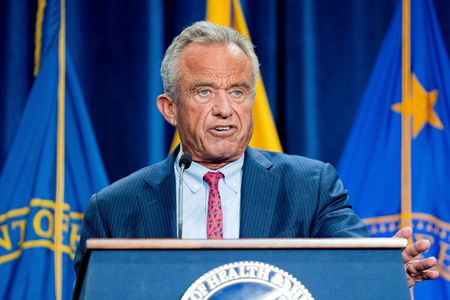

Health and Human Services Secretary Robert F. Kennedy Jr. has established new operating guidelines for a federal vaccine advisory committee, expanding the panel’s scope to emphasize vaccine risk assessment and potential safety data shortcomings.
Kennedy signed the updated charter on March 31, which was made public Thursday. The action follows a federal court decision last month that found most of Kennedy’s previous panel appointees lacked proper qualifications and suspended their recommendations.
The Advisory Committee on Immunization Practices provides guidance to the Centers for Disease Control and Prevention regarding vaccine usage and has become a central component of Kennedy’s initiative to transform national vaccination policies.
U.S. District Judge Brian Murphy in Boston ruled on March 16 that the committee had been improperly restructured. Kennedy, known for his opposition to vaccines, had dismissed all 17 independent specialists who previously served on the panel and appointed new members who align with his disputed positions on vaccination.
The revised charter expands qualification standards for committee members beyond traditional vaccine expertise and immunization research, now incorporating toxicology, data science, and professionals with “expertise in the assessment of vaccine safety and efficacy.”
Dorit Reiss, a UC Law San Francisco professor specializing in vaccine policy, explained that the updated charter reduces expertise requirements by only requiring members to be “knowledgeable,” potentially making it more difficult for courts to enforce expertise standards.
The new guidelines also designate four additional organizations as non-voting committee liaisons, including the Association of American Physicians and Surgeons, the Independent Medical Alliance, and Physicians for Informed Consent—all groups that have promoted anti-vaccine positions.
Additionally, the Medical Academy of Pediatrics and Special Needs, which supports children with autism, has been included. Kennedy has persistently claimed that childhood vaccines trigger autism, despite extensive scientific research demonstrating vaccine safety.
Earlier this week, Kennedy’s Department of Health and Human Services announced plans for the expanded charter, which affects recommendations influencing vaccine usage and insurance coverage, including the national childhood vaccination schedule.
HHS spokesperson Andrew Nixon stated that renewing and publishing the committee charter represents “routine statutory requirements and do not signal any broader policy shift.”
Daniel Jernigan, who previously directed the CDC’s National Center for Emerging and Zoonotic Infectious Diseases, warned that the new charter will simplify committee restructuring and “further politicizes the discussion at the meeting.”
Jernigan was among three senior CDC officials who resigned in August to protest Kennedy’s vaccination policies.
Richard Hughes IV, representing the American Academy of Pediatrics in their lawsuit challenging Kennedy’s vaccine policies, said it was too early to determine whether his organization would contest the new charter. “It really remains to be seen how they reconstitute the committee,” Hughes explained.