Motorists traveling on Kingsley Drive should expect delays and plan alternate routes as construction crews continue work that requires periodic lane restrictions.
The affected area spans from Durso Drive to Tamara Circle, where workers are causing intermittent lane closures throughout the day. These traffic disruptions are expected to remain in place until 5 PM today.
Drivers are advised to allow extra travel time when using this route and to exercise caution when approaching the construction zone.
ROME – Italian Prime Minister Giorgia Meloni announced Tuesday that her administration will halt the automatic renewal of a military cooperation agreement with Israel due to ongoing Middle Eastern conflicts.
While Meloni’s conservative administration has maintained strong ties with Israel among European nations, recent weeks have seen Italy condemn Israeli military operations in Lebanon. These strikes have impacted Italian military personnel deployed in the region as part of United Nations peacekeeping operations.
Speaking in Verona in northern Italy, Meloni stated: “In light of the current situation, the government has decided to suspend the automatic renewal of the defence agreement with Israel,” according to Italian media reports.
According to a defense ministry official, the suspension means Italy will end its collaboration with Israel on military training programs.
The prime minister made this determination Monday alongside Foreign Minister Antonio Tajani, Defense Minister Guido Crosetto, and Deputy Prime Minister Matteo Salvini, the anonymous source revealed.
Israeli foreign ministry representatives have not yet provided a response to requests for comment.
Hungary’s long-serving Prime Minister Viktor Orban has been voted out of office in Sunday’s election, dealing a significant blow to Europe’s far-right political movement.
The nationalist leader, who held power for 16 years, served as a role model for right-wing populist politicians worldwide and received praise from both former U.S. President Donald Trump and Russian President Vladimir Putin.
During his tenure, Orban championed ethnic nationalism, restricted press freedoms and civil society organizations, and opposed immigration, LGBTQ rights, and liberal policies. Among European leaders, he maintained the strongest connections to Trump’s MAGA movement, highlighted by Vice President JD Vance’s recent trip to Budapest to support him.
Hungarian voters’ frustration with economic conditions, government corruption, and limitations on democratic liberties led to Orban’s downfall. His defeat removes both an influential example for European far-right parties seeking power and a well-funded supporter who invested hundreds of millions into promoting these ideologies.
“Orban has been pretty much the figurehead of the European far right for the last few years and even beyond the European far right,” said Gabriela Greilinger, a doctoral researcher based in the United States, focusing on the European far right and democratic erosion.
“He has been the model because he was able to cling to power for so long and really entrench himself and his ideology in the state. And that’s something that most other far-right parties have not been able to do so far.”
Orban’s relationship with the MAGA movement has become problematic for some far-right politicians, as Trump’s controversial policies including threats toward Greenland and conflict with Iran have made him unpopular in Europe.
Alternative for Germany lawmaker Matthias Moosdorf wrote on social media Monday that Orban’s “ostentatious friendship” with the current U.S. administration “hung like millstones around Orban’s neck.”
BLOCKING EU INITIATIVES
Throughout his time in office, Orban frequently used Hungary’s veto authority within the European Union to obstruct aid to Ukraine and sanctions against Russia, earning appreciation from other leaders who wanted to weaken the bloc.
“He was a thorn in the side to the EU and that was a good thing,” said Ben Habib, the leader of the Advance UK party, an anti-immigration party launched in Britain last year.
Following Orban’s loss to pro-EU candidate Peter Magyar, Alice Weidel, co-leader of Alternative for Germany, posted on social media: “His achievements for his homeland and his contributions to Europe continue to inspire us to stand up for a continent of sovereign nations.”
Orban’s impact extended beyond domestic success to his ability to promote his ideas and policies internationally.
Using government resources and business investments, Orban provided more than a billion dollars equivalent to organizations like the Mathias Corvinus Collegium (MCC), a private research institute, and the Danube Institute, which functioned as ideological extensions of his Fidesz party.
“Budapest became a pilgrimage – people were over there all the time from MAGA world, so it was a successful strategy,” said Daniel Fried, a fellow at the Atlantic Council think tank in Washington, D.C.
Political gatherings brought together groups from across Europe and America, including influential organizations in Trump’s current administration such as the Heritage Foundation, America First Policy Institute and Alliance Defending Freedom.
Jacob Ross, a research fellow at the German Council on Foreign Relations, noted the significant presence of Orban-connected institutes in Washington as Trump prepared for his second presidency.
“I was really surprised to see how many Hungarian delegations were there, how active the Hungarian embassy in D.C. was interacting with Heritage,” he said.
Magyar announced Monday that his government would stop using public funds to support organizations like MCC or political party activities.
However, these institutes have already proven effective and will likely continue operating despite funding changes, according to Greilinger.
“Most of these organisations are also there to ensure that these ideas kind of live on even beyond the rule of the leader, or in this case, beyond the rule of Viktor Orban,” she said.
FAR-RIGHT ALLIES REMAIN HOPEFUL
Orban’s European partners expressed confidence that their movement still has momentum, noting that long-serving governments typically face increasing public dissatisfaction.
“We are going to miss the support of the Hungarian government, but let’s see how we move from here,” said Tânger Corrêa, a member of the European Parliament in the Patriots for Europe group, which includes Fidesz.
Corrêa pointed to encouraging polling for France’s National Rally before next year’s presidential race, and noted that his own Chega party became Portugal’s second-largest parliamentary party last year.
“It’s not pleasant that one of our members lost an election,” said Corrêa.
Financial markets are displaying growing resilience to geopolitical tensions, with investors maintaining optimism about potential diplomatic progress between the United States and Iran despite ongoing conflicts.
Stock markets experienced only a brief decline on Monday morning before recovering, suggesting that traders are becoming less sensitive to daily developments in the international standoff. Investors continue to believe that significant de-escalation will occur soon, potentially freeing up global oil supplies.
Even with the implementation of U.S. port blockades and continued harsh rhetoric between Washington and Tehran, recent reports indicate that diplomatic channels remain open and negotiations could restart within days.
This optimism has helped push both Brent and WTI crude oil prices back under the $100 per barrel mark. The decline in energy costs contributed to Monday’s stock market rally, with the S&P 500 climbing approximately 1% and reaching levels higher than when the conflict began more than six weeks ago.
The positive trend extended into Tuesday’s trading sessions, with Asian markets closing higher, European indices gaining ground, and U.S. futures pointing upward. The dollar index dropped to its lowest level in six weeks as investors showed increased appetite for risk.
In corporate developments, the quarterly earnings reporting period is in full swing as investors await updates from major U.S. financial institutions. Goldman Sachs, which released results Monday, saw its stock price decline despite beating profit expectations, due to weaker performance in fixed income and currency trading operations.
JPMorgan, Citigroup, and Wells Fargo are scheduled to report next in what analysts expect will be another strong quarter for corporate performance, despite the oil price volatility at quarter’s end.
The International Monetary Fund faces the challenging task of updating its global economic projections today. Both the IMF and World Bank have already indicated they will reduce growth forecasts and increase inflation estimates due to the ongoing conflict.
On the domestic economic front, existing home sales dropped to a nine-month low in March, affected by a sluggish job market and declining consumer purchasing power. The housing market outlook for the year appears challenging as mortgage rates climb amid the international crisis.
Meanwhile, China’s export growth slowed dramatically in March, with the conflict apparently impacting demand for technology products. International shipments increased by only 2.5%, marking a five-month low and falling well short of February’s 21.8% jump. Economic forecasters had predicted 8.3% growth.
Goldman Sachs exceeded quarterly profit expectations Monday, benefiting from strong merger activity and equity trading performance. However, the investment bank’s shares dropped 2% due to disappointing results in fixed income markets, interest rate trading, and mortgage sectors. The bank generated $17.2 billion in revenue, its highest three-month total since the record $17.7 billion achieved in the first quarter of 2021.
Key economic events scheduled for today include the release of U.S. March Producer Price Index data at 8:30 a.m., a Treasury bill auction at 11:30 a.m., and speeches from multiple Federal Reserve officials. Major banks JPMorgan, Citigroup, and Wells Fargo will also announce quarterly results, while the IMF publishes its updated World Economic Outlook at 9 a.m.
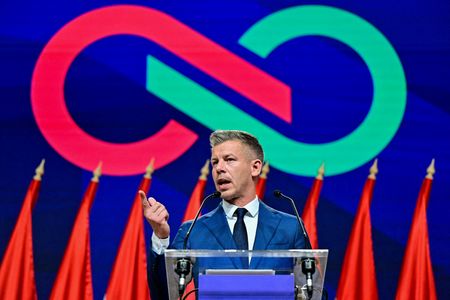
Financial markets are expressing confidence in Hungary’s economic prospects as newly elected Prime Minister Peter Magyar prepares to take office after decisively defeating Viktor Orban in recent elections.
Magyar’s overwhelming victory positions his center-right Tisza party to overhaul key legislation governing the judiciary, elections, public contracts, and media oversight – areas that created significant tension between Orban’s administration and European Union leadership, resulting in approximately 18 billion euros ($21.2 billion) in suspended EU financial support.
Following his electoral triumph, Magyar outlined an ambitious reform agenda during an extensive news conference. His plans include implementing comprehensive government changes, joining the European Public Prosecutor’s Office, establishing term limits for prime ministers, and clearing the path for a 90 billion euro EU loan package designated for Ukraine.
Economic analysts view the potential restoration of EU funding as particularly significant, given that these resources represent roughly 8% of Hungary’s total annual economic output. Morgan Stanley projections suggest that accessing these funds could boost the country’s growth rate by 1 to 1.5 percentage points.
Investment professionals see substantial opportunities in this political transition. “It’s a new chapter for Hungary and it’s a great opportunity,” said Magdalena Polan, who leads emerging market research at PGIM. “To move the economy will not take much because sentiment and rule of law are such an important part of the economic set of factors that impact growth.”
JPMorgan researchers anticipate that Hungary’s relationship with the EU will improve rapidly, with initial reform commitments likely sufficient to begin releasing the frozen European funding.
European Commission President Ursula von der Leyen praised Magyar’s electoral success as “a victory for fundamental freedoms,” drawing parallels between Orban’s departure and Hungary’s historic 1956 resistance against Soviet control and its 1989 transition away from communist rule.
While the mid-year timeline for utilizing EU post-pandemic recovery funds appears challenging, JPMorgan analysts believe the “extraordinary circumstances will call for exceptional flexibility” from European officials.
Financial markets responded enthusiastically to the election outcome. Hungary’s currency reached its strongest position against the euro in four years, government borrowing costs dropped by half a percentage point to 2024 lows, and the national stock exchange climbed nearly 5%.
However, the incoming administration faces significant fiscal challenges that may temper initial market enthusiasm. Hungary currently maintains one of the EU’s largest budget shortfalls at over 5% of GDP, while its debt burden exceeds 70% of economic output and continues rising. Credit rating agency S&P Global has positioned the country just one downgrade away from junk bond status.
Magyar has expressed hope that accelerated economic growth and improved investor confidence leading to lower government borrowing costs will address these financial pressures. He has committed to eliminating corruption, ending vanity infrastructure projects, and stopping inflated government purchasing practices.
“I’m sure they will find some skeletons,” commented Viktor Szabo, who manages emerging market debt portfolios at Aberdeen, referring to Tisza’s planned financial audit. Despite this concern, he expects S&P to maintain Hungary’s current credit rating given the likelihood of restored EU funding.
The new government must also develop a credible long-term budget strategy, with a formal plan due to the European Commission by October. However, preliminary measures and budget outlines may be required much sooner.
Euro currency adoption remains a long-term objective despite being years away from implementation. This commitment was central to Magyar’s campaign platform, and Tisza’s parliamentary supermajority should enable passage of necessary constitutional amendments.
Deutsche Bank analysts note that Hungary’s “fiscal and debt dynamics remain incompatible with Maastricht criteria at the moment,” given eurozone requirements for budget deficits below 3% of GDP and debt levels at or declining toward 60% of economic output.
Additionally, Hungary’s current 3% inflation target needs alignment with the European Central Bank’s preferred level of just under 2%.
PGIM’s Polan identifies several persistent economic and political challenges. Rapid EU funding distribution before implementing reforms could prompt legal challenges from other member nations. Hungarian businesses continue struggling with labor shortages worsened by demographic aging, language barriers, and immigration policies. Living standards haven’t improved as quickly as in neighboring countries, and reducing dependence on Russian energy appears more difficult given current Middle East conflicts.
Despite these obstacles, Orban’s departure signals significant change ahead, with most developments likely favoring international investors. “We are in a completely new situation here,” Polan observed.
Two members of the prominent Graham evangelistic family are preparing for overseas ministry trips this spring. Franklin Graham is set to deliver gospel messages on May 30th and 31st at Madrid’s Festival de la Esperanza, a religious gathering coordinated by local Spanish congregations that will also feature musical performances by Michael W. Smith and other well-known Contemporary Christian artists.
At the same time, Franklin’s son Will Graham has plans to conduct evangelistic services on May 4th and 5th in Shikoku, Japan. The younger minister expressed his excitement about the spiritual climate in the country, stating: “God is doing something wonderful in Japan. I believe that God’s heart is for the next generation of Japanese that will choose to follow Him and lead others to Him.”
While the SAVE America Act appears headed for failure in Congress, nearly two dozen states have already enacted similar voting changes ahead of November’s midterm elections, according to a new Reuters analysis.
Twenty-three states, primarily under Republican leadership, have modified their election procedures to incorporate elements from President Donald Trump’s comprehensive voting restrictions proposal since 2024.
These state-level changes span from Wyoming to Georgia and include stricter proof-of-citizenship demands for voter registration and tighter controls on acceptable photo identification at polling locations.
A significant portion of these states – at least 17 – have adopted one of the federal bill’s most debated provisions: cross-referencing voter registration databases with a federal system typically used for verifying public benefits eligibility.
The Reuters examination found that while these state modifications generally fall short of the federal proposal’s strictest requirements regarding citizenship documentation and photo identification, they still raise concerns among voting rights organizations.
“Still have really serious impacts on voters,” said Danielle Lang, vice president for voting rights and the rule of law at the Campaign Legal Center, referring to the new state-level citizenship and photo ID mandates despite their less severe nature compared to Trump’s federal push.
Voting rights advocates worry these measures could prevent eligible citizens from participating in elections that will decide Republican control of Congress, particularly those lacking specific identification documents.
Senate Majority Leader John Thune, a Republican, made no reference to the SAVE America Act during his opening remarks when Congress returned to session Monday.
Trump signed an executive order in March targeting mail-in voting procedures, describing voter fraud in the United States as “massive” during the ceremony. However, legal challenges make it unlikely this order will be implemented soon.
Research by the bipartisan reform organization Issue One, examining a Heritage Foundation election fraud database, identified just 65 convictions for non-citizen voting from 2000 to 2025 among approximately 1.4 billion federal election votes cast.
The Heritage Foundation characterizes its database as a “non-comprehensive” collection of election fraud cases and did not respond to requests for comment.
The federal legislation’s headline requirement mandates documentary citizenship proof, such as passports or birth certificates, for federal election voter registration.
Among seven states implementing new citizenship verification requirements for November’s election, only New Hampshire matches the federal bill’s stringency.
Chris Diaz, legislative tracking director at the nonpartisan Voting Rights Lab, observed that most Americans already provide citizenship documentation when obtaining driver’s licenses or state identification, with the 2005 Real ID Act requiring states to maintain digital copies of such records.
“It just doesn’t make any sense for a state to not leverage the massive amount of information they already have about voters,” he said.
Diaz noted that most states recognize the federal proposal’s photo identification restrictions – limiting acceptable documents to unexpired U.S. passports, driver’s licenses, state IDs, military IDs, or tribal IDs – as unnecessarily limiting.
Of nine states tightening photo ID requirements for November, several permit student identification, expired documents, or any photo identification displaying the voter’s name. New Hampshire and Indiana represent exceptions, fully replicating the federal bill’s photo ID standards.
The provision most closely replicated by 17 states involves submitting complete voter registration lists to the Department of Homeland Security for screening through a system normally used for verifying citizenship or immigration status for benefit applications.
Election officials previously used this “Systematic Alien Verification for Entitlements” system only occasionally to investigate individual voters with questionable citizenship status.
The Trump administration expanded this system last year to incorporate additional personal data, including Social Security Administration information, while encouraging states to submit entire voter databases for non-citizen screening.
Six states have enacted legislation requiring periodic voter roll submissions to the DHS system, while election officials in 12 additional states have chosen to participate voluntarily.
Iowa’s screening process identified 277 non-citizens among 2.1 million registered voters, with 40 attempting to vote in 2024, according to the secretary of state’s office. Utah’s review flagged nearly 9,000 of 2 million voters for additional investigation, but manual verification found only one non-citizen, according to the lieutenant governor.
“The initial results of those searches mostly just prove that there’s nothing to see here, that there isn’t a problem to be fixed,” said Sean Morales-Doyle, director of the Voting Rights program at the Brennan Center for Justice.
A February investigation by ProPublica and the Texas Tribune revealed that Missouri and Texas officials incorrectly identified dozens of voters as non-citizens through the system, resulting in suspended voting rights or removal from voter rolls.
WASHINGTON – Small business owners across America are feeling increasingly pessimistic about their prospects, with confidence levels hitting their lowest point in 11 months during March, according to new federal data released Tuesday.
The National Federation of Independent Business reported that its Small Business Optimism Index fell by 3.0 points to reach 95.8 in March, marking the weakest reading since April 2025 and dropping below the long-term historical average of 98.0 points.
Business uncertainty soared dramatically, with the survey’s uncertainty measure climbing 4 points to 92 – significantly higher than the typical reading of 68. This troubling trend mirrors recent consumer data from the University of Michigan, which showed consumer confidence plummeting to record lows in April.
The primary culprit behind the declining business sentiment appears to be rapidly escalating energy costs tied to ongoing Middle East tensions. Oil prices surged past $100 per barrel on Monday following U.S. military announcements of a naval blockade targeting Iranian shipping ports. Since the U.S.-Israeli conflict with Iran began in late February, crude oil prices have skyrocketed more than 35%.
“The 20% Small Business Deduction and other supportive small business tax provisions in the Working Families Tax Cut Act have had many positives for small business owners,” explained NFIB Chief Economist Bill Dunkelberg. “However, the dramatic spike in oil prices has spooked consumers and owners alike. Small business owners are having to absorb those higher input costs and pass them along to their customers.”
Business owners expressed growing pessimism about future earnings and revenue potential. The percentage of survey respondents anticipating improved business conditions plummeted 7 points to just 11% on a seasonally adjusted basis – the most negative outlook since October 2024 and representing the third straight month of declining expectations.
Economic experts suggest both small business and consumer confidence are unlikely to recover quickly given the volatile international situation and its impact on energy markets.
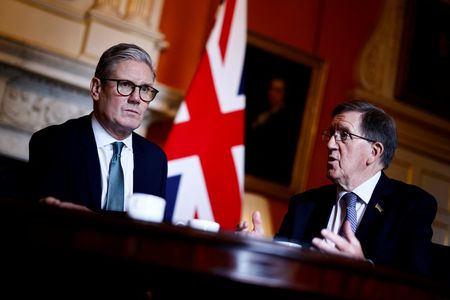
French President Emmanuel Macron and British Prime Minister Keir Starmer will lead a virtual meeting this Friday with nations interested in participating in a multilateral naval operation designed to restore safe shipping passage through the Strait of Hormuz, according to an announcement from the French presidency on Tuesday.
The leaders will convene the video conference from Paris, bringing together countries willing to contribute to the defensive mission once security conditions allow for safe operations in the strategic waterway.
Prior to Friday’s leadership meeting, senior diplomatic officials are scheduled to participate in a preparatory video call on Wednesday, according to two European diplomatic sources.
COTONOU, Benin — The West African nation of Benin has a new president-elect after Finance Minister Romuald Wadagni secured a commanding victory in Sunday’s presidential race, capturing more than 94% of ballots cast.
Sacca Lafia, who heads the country’s independent electoral commission, revealed the preliminary results during a televised announcement Monday evening. The figures represent tallies from over 90% of votes counted, with citizen participation reaching 58.75%.
Benin’s constitutional court must still validate the outcome, with official confirmation anticipated within the coming weeks.
The lone opposition contender, Paul Hounkpè, acknowledged his loss before Monday’s formal announcement after receiving just 5.95% of the vote.
At 49 years old, Wadagni had been widely regarded as the designated successor to President Patrice Talon, who will conclude his tenure at the end of May following a decade-long presidency that began in 2016. Political observers had forecast Wadagni’s victory, citing the marginalized state of opposition forces.
Talon’s presidential term concludes with a complicated record featuring economic expansion alongside increasing jihadist threats in northern regions and the systematic weakening of political opposition. Despite Benin’s historical reputation as one of Africa’s most reliable democracies, opposition figures and human rights advocates have criticized Talon for weaponizing the judicial system against political rivals.
Both Amnesty International and Human Rights Watch have condemned the persistent suppression of dissenting voices during Talon’s administration, pointing to unlawful imprisonments, stricter controls on public gatherings, and increased harassment of independent journalism.
During January’s parliamentary contests, opposition groups were unable to meet the required support threshold of 20% from registered voters across each electoral district, resulting in Talon’s two supporting parties claiming all 109 National Assembly positions.
Renaud Agbodjo, who leads The Democrats opposition party, was prevented from participating in Sunday’s presidential contest after being unable to obtain sufficient parliamentary backing — a requirement that critics argue was deliberately designed to exclude challengers.
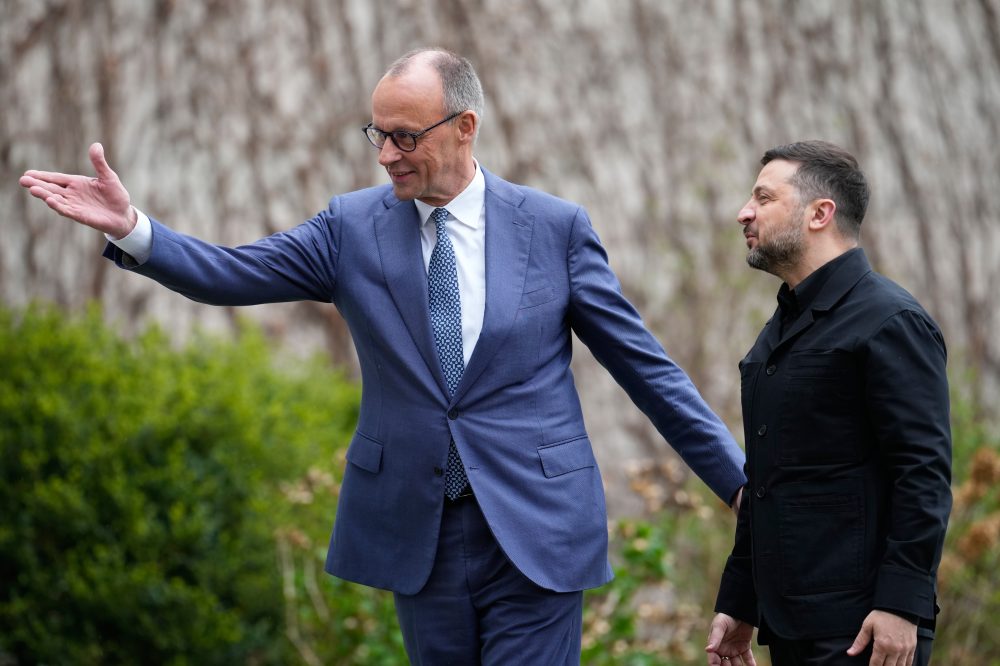
Ukrainian President Volodymyr Zelenskyy traveled to Berlin on Tuesday for discussions with German Chancellor Friedrich Merz, as Ukraine continues its fight against Russia’s full-scale invasion that has now entered its fifth year. Germany remains among Ukraine’s most significant allies in the ongoing conflict.
During the same visit, German Defense Minister Boris Pistorius conducted separate discussions with Ukraine’s Defense Minister Mykhailo Fedorov. Fedorov, who previously served as Ukraine’s digital transformation chief before assuming his current role in January, has been recognized for his work in advancing military drone capabilities.
The diplomatic meetings occur as U.S.-led diplomatic initiatives to resolve the Russian conflict have recently lost momentum, with the Trump administration’s focus shifting toward the Iran situation. However, Tammy Bruce, serving as deputy U.S. ambassador to the United Nations, assured the U.N. Security Council on Monday that Washington “will continue to push for a negotiated and durable end” to the hostilities.
According to Western military experts and government officials, Ukraine has achieved notable military victories in recent months against Russia’s numerically superior forces. These successes have disrupted Russia’s spring military campaign, which began as weather conditions improved and terrain became more favorable for operations.
Ukrainian forces have also demonstrated their capability to strike targets far beyond the front lines, with domestically-produced long-range drones and missiles consistently hitting petroleum infrastructure and manufacturing facilities throughout Russian territory.
Finland’s President Alexander Stubb offered an optimistic assessment during remarks at the Brookings Institution in Washington on Monday, stating that Ukraine “is in a much better place than it has been at any stage in this horrific war.”
Stubb further argued that Ukraine “is on top from a military perspective,” pointing out that Ukrainian forces launched more projectiles at Russian targets last month than Russia directed toward Ukraine.
Russian officials have also declared military advances in their favor. Neither side’s battlefield claims could be independently confirmed.
Russian forces currently control approximately 20% of Ukrainian territory, including the Crimean Peninsula, which Moscow annexed in 2014.
Ukraine faces severe financial constraints and urgently requires a pledged 90-billion-euro ($106 billion) European Union loan package. Hungarian Prime Minister Viktor Orbán had previously blocked this funding, though his recent electoral defeat could potentially clear the way for the loan’s approval.
Ukrainian forces also depend heavily on American intelligence for targeting operations within Russia and require additional advanced U.S.-manufactured air defense systems to counter Russian attacks on civilian power infrastructure. Zelenskyy has expressed concern that prolonged conflict in Iran could diminish crucial American support for Ukraine.
The Ukrainian military also confronts significant personnel challenges, with Defense Minister Fedorov reporting in January that approximately 200,000 troops have deserted and around 2 million individuals have avoided military conscription.
While Iran’s nuclear capabilities have drawn international military attention from the United States and Israel, religious freedom advocates point to another troubling aspect of the regime: its severe persecution of Christian believers. According to Open Doors’ yearly ranking of nations where practicing Christianity poses the greatest risks, Iran holds the tenth position worldwide. Religious freedom organizations express hope that any potential regime change could bring relief to persecuted believers in the country. Prior to the Islamic Revolution that swept through Iran during the 1970s, Christian communities represented a minority population but did not face execution for practicing their faith. The decades following that political transformation have brought continuous and often fatal persecution for religious minorities.
For the first time in more than three decades, Lebanese and Israeli officials are sitting down for face-to-face diplomatic negotiations in Washington, marking a historic moment amid ongoing conflict that has devastated the small Mediterranean nation.
The groundbreaking discussions are taking place with U.S. Secretary of State Marco Rubio serving as facilitator, bringing together Israeli Ambassador to the United States Yechiel Leiter and Lebanese Ambassador Nada Hamadeh Moawad.
The diplomatic initiative comes after weeks of devastating warfare between Israeli forces and the Hezbollah militant organization, which has taken a catastrophic toll on Lebanon. According to the country’s Health Ministry, Israeli military operations have claimed the lives of at least 2,089 Lebanese citizens, including 252 women, 166 children, and 88 healthcare professionals, with an additional 6,762 people suffering injuries. The conflict has forced over one million residents from their homes.
Lebanese officials are hopeful these negotiations will create a pathway toward ending the current hostilities. While Iran has demanded cessation of regional conflicts as a prerequisite for engaging with Washington, Lebanon is asserting its independence by pursuing separate representation in these talks.
However, Hezbollah and various critics remain doubtful about the initiative, arguing that Lebanon’s government lacks sufficient negotiating power and should instead capitalize on Iran’s stronger position as the militant group’s primary supporter and financial backer.
Israeli military forces continue their ground operations in southern Lebanon, with some Israeli leaders stating their objective is establishing an uninhabited “security zone” extending from the border northward to the Litani River, covering approximately 30 kilometers. Despite being weakened from the previous conflict that concluded in November 2024, Iran-supported Hezbollah continues launching daily attacks using drones, rockets, and artillery against northern Israeli territory and ground forces operating within Lebanon.
According to a U.S. State Department representative, the Israeli and Lebanese delegations are meeting to explore methods for establishing lasting security along Israel’s northern frontier while supporting Lebanon’s efforts to reclaim territorial control and political independence from Iran-backed Hezbollah influence.
These represent the first direct negotiations between the two nations since 1993, confirmed the State Department official, who requested anonymity as they were not authorized for public statements.
Lebanon’s senior political leadership, who criticized Hezbollah’s March 2 rocket attacks toward Israel conducted in solidarity with Iran, swiftly advocated for direct negotiations to prevent further escalation, hoping to deter Israel from proceeding with ground operations.
Israel remained unresponsive to these diplomatic overtures until recent days, following the execution of 100 airstrikes throughout the country, including attacks in central Beirut.
Lebanese officials are seeking a ceasefire as a condition for negotiations, similar to Pakistan-mediated discussions between the United States and Iran.
“Israel’s destruction of Lebanese territories is not the solution, nor will it yield any results,” declared President Joseph Aoun on Monday, who assumed office promising to disarm non-governmental armed groups including Hezbollah. “Diplomatic solutions have consistently proven to be the most effective means of resolving armed conflicts globally.”
Israel has rejected any ceasefire proposals.
“We will not discuss a ceasefire with Hezbollah, which continues to carry out indiscriminate attacks against Israel and our civilians,” stated Shosh Bedrosian, spokesperson for Israeli Prime Minister Benjamin Netanyahu, on Monday.
Hezbollah and its allies have condemned the talks, characterizing them as an unwarranted concession to Israel.
Hezbollah Secretary-General Naim Kassem delivered an impassioned address urging Lebanon to abandon the negotiations. The organization prefers returning to the 2024 framework where discussions occurred indirectly through U.S., French, and United Nations peacekeeping mediators in southern Lebanon.
WASHINGTON – Kevin Warsh, the former Federal Reserve board member selected by President Donald Trump to head the nation’s central banking system, has turned in his mandatory financial disclosure paperwork to move forward with the confirmation process.
The comprehensive 69-page document was submitted to the U.S. Office of Government Ethics during the overnight hours, outlining Warsh’s income sources and investment portfolio. Notable holdings include two separate investments in the Juggernaurt Fund LP valued at more than $50 million apiece, along with $10.2 million earned through consulting work for the investment firm of prominent Wall Street figure Stanley Druckenmiller.
The filing represents a necessary procedural step before Warsh can appear before the Senate for his confirmation hearing, which has not yet been scheduled by congressional leadership.
Stock prices for French luxury powerhouse LVMH tumbled as much as 3% Tuesday following the company’s announcement that ongoing conflict in Iran negatively impacted first-quarter sales figures, pushing back hopes for recovery in the high-end retail sector.
The parent company behind 75 luxury brands such as Louis Vuitton, Dior, and Tiffany & Co revealed Monday that the Middle Eastern conflict reduced worldwide sales by a minimum of one percentage point. This decline stemmed from reduced consumer spending in Gulf commercial centers like Dubai and decreased numbers of Middle Eastern customers traveling to European shopping destinations.
Since January, LVMH stock has declined 26% as expectations for luxury market recovery have diminished, with war-related disruptions and rising prices creating additional challenges for growth.
“It remains clear that 2026 is still a transition year for LVMH,” stated Ben Lambert, who manages European equity portfolios at Ninety One in London. “For the shares though that is already reflected in the valuation.”
Rising energy costs and mortgage rates will likely reduce demand from middle-income luxury shoppers, according to Kevin Thozet, a portfolio adviser at Carmignac in Paris. He also noted that declining stock markets could impact spending among affluent American consumers.
“The question is whether we are just kicking the can down the road because of what’s happening in the Middle East, postponing expectations of a recovery by one or two quarters, or if it’s something more material,” Thozet explained.
LVMH finance chief Cecile Cabanis reported that shopping center foot traffic in the Middle East, representing approximately 6% of company revenue, initially plummeted between 30% and 70%, averaging around 50%. “What we see today is still that demand is very much down,” she noted.
Although LVMH typically releases profit data during July’s half-year results, Cabanis indicated the war would likely have a more significant impact on profitability, describing the Middle East as “quite a profitable market.”
Market watchers will monitor how the conflict affects other luxury companies when Kering, Gucci’s parent company, releases results Tuesday evening, and Hermes announces first-quarter figures Wednesday morning.
“LVMH is one of the best-managed groups in the sector, I think, and if they’re doing all the right things and they’re struggling to move the dial, then it speaks to the broader malaise in the sector,” commented Berenberg analyst Nick Anderson.
A strengthening euro compared to the dollar also affected LVMH’s quarterly sales and may continue pressuring luxury demand as fewer tourists visit Europe to purchase handbags or fragrances, Anderson noted. “This will still be a big issue in the second quarter,” he added.
MOSCOW – Russian government officials on Tuesday justified their extensive digital restrictions, acknowledging these measures have significantly disrupted internet access for countless citizens across the nation.
Since launching its military operation in Ukraine in February 2022, Moscow has dramatically expanded its online oversight, blocking messaging applications and virtual private networks that citizens use to circumvent digital censorship. Authorities have also disabled mobile internet services in various regions.
Dmitry Peskov, speaking for the Kremlin, indicated that certain restrictions may be temporary and could be removed when security conditions improve. He also noted that some measures target technology companies that have failed to follow Russian legal requirements.
Peskov emphasized that these digital controls do not signal a return to previous eras of strict information control, despite their widespread impact on Russian internet users.
A top executive at international banking giant HSBC has stepped down from his leadership role, marking another departure in the company’s ongoing organizational changes.
Gerry Keefe, who supervised commercial and investment banking activities for HSBC across Europe and the Americas, submitted his resignation this week. The bank confirmed his exit through an internal company message on Tuesday.
Taking over Keefe’s responsibilities temporarily will be Jo Miyake, who currently leads banking operations for Asia and the Middle East, according to an HSBC representative.
Keefe had been in his position for approximately one year, managing the bank’s commercial and investment banking divisions across both continental regions.
The resignation comes as HSBC continues implementing significant organizational changes that started in 2024, with the company shifting its focus toward Asian markets. As part of this strategic pivot, the bank closed down its merger and acquisition operations, along with certain equity trading divisions in both Europe and the Americas during early 2025.
Before his recent role, Keefe came to HSBC in 2021 from competitor Citigroup, where he initially served as head of Americas banking. The European-based institution recruited him and other prominent banking professionals in an effort to strengthen its dealmaking presence in the United States.
Keefe’s departure follows other executive changes, including the exit of Lisa McGeough, HSBC’s former U.S. banking chief, who left last September to join Deutsche Bank.
Delta Air Lines has discreetly withdrawn two major environmental commitments from its corporate sustainability website, according to a Bloomberg News investigation published Tuesday.
The major airline eliminated its promise to incorporate sustainable aviation fuel for 10% of its total fuel consumption by 2030, Bloomberg reported. Additionally, Delta modified the language surrounding its carbon-neutral objectives for 2050, shifting from calling it a firm “goal” to describing it as an “aspiration.”
Sustainable aviation fuel, primarily produced from waste materials and used cooking oil, can dramatically reduce carbon emissions when compared to standard jet fuel. Despite its environmental benefits, this alternative fuel costs two to five times more than traditional aviation fuel.
According to Bloomberg’s reporting, a Delta representative stated that while the company continues to regard sustainable aviation fuel as a crucial component for reducing aviation’s carbon footprint, the sluggish progress in developing these alternatives poses challenges to the aviation sector’s environmental objectives.
Delta has not yet provided a response to requests for comment from Reuters.
Earlier this year in February, Willie Walsh, who leads the International Air Transport Association, warned that limited supplies of fuel-efficient aircraft and alternative fuels were increasing costs for suppliers while jeopardizing the industry’s primary emissions reduction targets.
The International Air Transport Association, representing approximately 350 airlines worldwide, established these environmental targets in 2021 to address emissions that account for 2% to 3% of global carbon output. This initiative depends significantly on widespread adoption of sustainable aviation fuel and timely delivery of advanced aircraft and engines, which have faced delays due to supply chain disruptions.
Good morning, Delmarva! We’re looking at a beautiful Tuesday ahead with mostly sunny skies and pleasant spring weather across the peninsula.
Today will be gorgeous for any outdoor plans, with temperatures climbing to a comfortable 86 degrees under mostly sunny skies. You’ll feel a gentle southwest breeze picking up throughout the day at 5 to 15 mph, making it feel just right for lunch on the patio or an evening walk.
Now, don’t put those umbrellas away just yet! Tonight brings a change as we’ll see the chance for some showers and thunderstorms moving through the area. Temperatures will drop to a mild 65 degrees, so it’ll be a pleasant evening once any storms pass.
Looking ahead to Wednesday, we’re back to beautiful weather with full sunshine and temperatures warming up to 89 degrees. Wednesday night stays nice with partly cloudy skies and lows around 66.
Bottom line: enjoy today’s sunshine, keep an eye on the sky tonight, and get ready for another fantastic day tomorrow. Have a wonderful Tuesday, Delmarva!
A former NATO secretary-general is delivering sharp criticism of British Prime Minister Keir Starmer’s defense policies, warning that inadequate military funding has left the United Kingdom dangerously vulnerable to international threats.
George Robertson, who previously served as NATO’s top official and helped create a defense strategy review for Starmer’s government, plans to deliver harsh words during a Tuesday lecture in Salisbury, England. Robertson, a former defense minister in Starmer’s Labour Party during the 1990s, told the Financial Times that the prime minister talks about defense priorities but fails to back up his words with sufficient financial commitment.
“Britain’s national security and safety is in peril,” Robertson is scheduled to declare, according to excerpts shared with the Financial Times and BBC. “We are under-prepared. We are under-insured. We are under attack. We are not safe.”
The former NATO chief plans to specifically criticize Finance Minister Rachel Reeves for giving defense matters minimal attention in recent budget presentations, reportedly dedicating just “40 words” to military spending in her autumn budget speech and completely ignoring the topic in a March update.
Robertson’s upcoming remarks represent an unusual public confrontation with Starmer’s administration, particularly significant given that he helped write the Strategic Defence Review that Starmer commissioned after taking office in 2024. The review recommended modernizing Britain’s military capabilities with advanced drones, cyber warfare tools, and data-driven combat technologies based on lessons learned from Ukraine’s conflict.
Starmer has defended his administration’s approach by pointing to what he calls 14 years of military underfunding by the previous Conservative government. The prime minister has committed to achieving the most substantial and sustained defense spending increase since the Cold War era, targeting 3% of the nation’s economic output during the next parliamentary term.
Government officials say they will soon release a decade-long defense investment blueprint designed to fulfill the goals outlined in Robertson’s 2024 strategic review. Last week, Starmer described ongoing Middle East conflicts as a critical moment for Britain, promising to strengthen both economic and military capabilities to address what he called an increasingly “volatile and dangerous” global environment.
However, Robertson intends to accuse British political leaders of displaying “corrosive complacency” toward defense priorities. He plans to describe financial decisions made by “non-military experts in the Treasury” as acts of “vandalism” against national security.
“We cannot defend Britain with an ever-expanding welfare budget,” Robertson is expected to argue during his lecture.
The former NATO leader will emphasize that global security conditions have significantly worsened following Russia’s invasion of Ukraine and escalating Middle Eastern tensions, characterizing the current period as among the most dangerous in recent decades.
Neither Robertson’s representatives nor Starmer’s office immediately provided responses to requests for comment about the planned criticism.
ANKARA, Turkey — An 18-year-old former student attacked a vocational high school in southeastern Turkey on Tuesday, injuring 16 people with a shotgun before taking his own life, according to local authorities.
The shooting occurred at a school in Siverek, located in Sanliurfa province, where the young man fired indiscriminately before barricading himself inside the building. He ultimately used the same weapon to end his life, according to Governor Hasan Sildak.
Among those hurt in the violence were 10 students, four teachers, one cafeteria worker, and one police officer, Sildak reported. Most victims received medical care locally in Siverek, though five individuals with more severe injuries were transported to a hospital in the provincial capital for advanced treatment.
Authorities have not yet determined what drove the attacker to carry out the shooting. Such incidents at schools are uncommon in Turkey.
Initial news accounts indicated that all students were safely evacuated while specialized police units responded to the scene after the gunman refused to give himself up.
“The individual was cornered inside the building through police intervention and died after shooting himself,” Sildak explained to news media, noting that officials would conduct a “comprehensive” investigation into the shooting.
Television footage captured dozens of students fleeing the school building, rushing through the entrance gates and into the surrounding streets.
Stock prices for United Airlines and American Airlines climbed during premarket trading Tuesday following reports that United’s chief executive discussed a possible merger between the two major carriers with former President Donald Trump.
The potential combination of these two aviation giants would represent the industry’s most significant consolidation in over ten years.
American’s stock price jumped approximately 4% while United’s shares increased by roughly 2%.
Both airlines have experienced declining stock values in recent weeks due to rising jet fuel costs stemming from the U.S.-Israeli conflict with Iran. American’s stock has dropped 14.1% while United has fallen 10.4% since the conflict started in late February.
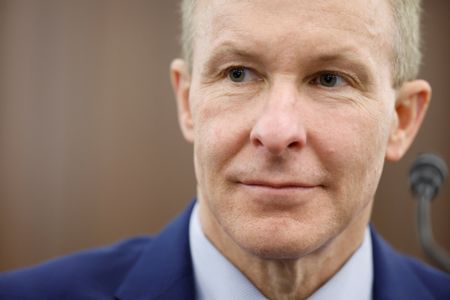
According to sources, United CEO Scott Kirby brought up the merger concept during a February 25 White House discussion about the future development of Washington’s Dulles airport.
Kirby’s argument centered on the idea that a merged airline would be better positioned to compete on international routes, where foreign airlines currently control most long-distance flight capacity to and from the United States, even though the majority of passengers are American citizens.
Aviation industry leaders and antitrust specialists indicated that regulatory approval would face significant obstacles, pointing to concerns about reduced competition, increased ticket prices, potential job cuts, and substantial route duplication in a U.S. airline industry already controlled by four major companies.
Both United and American Airlines refused to provide comment, while the White House has not responded to media inquiries about the matter.
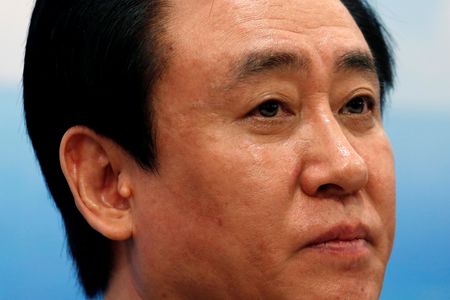
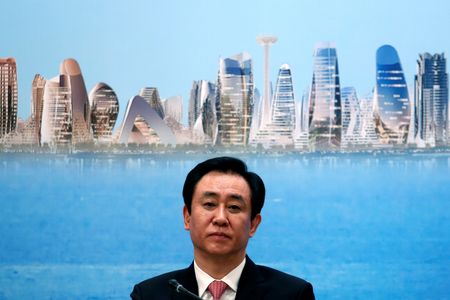
The dramatic downfall of a Chinese real estate mogul reached its conclusion as Hui Ka Yan, founder of the now-collapsed China Evergrande Group, entered guilty pleas to fraud and bribery charges.
Less than three years ago, in July 2021, Hui appeared confident and relaxed at Chinese Communist Party centenary celebrations in Tiananmen Square. Dressed in a navy suit with an open collar, the 67-year-old businessman stood among China’s elite, discussing his company’s debt reduction plans just weeks after addressing over 1,000 suppliers about the same goals.
That appearance, viewed by many as official endorsement of the billionaire, now seems like the final act before an unprecedented corporate collapse.
Today, Evergrande faces liquidation with debts exceeding $300 billion – roughly matching Finland’s entire economic output. Hui’s guilty plea, entered after three years in custody, officially closes the chapter on a business empire whose failure sent shockwaves through China’s property market and international investment circles.
The son of a rural village in Henan province, raised by his grandmother, Hui began his career as a steel technician before building a real estate fortune focused on affordable housing. He established Evergrande in 1996 in Guangzhou, growing the company through aggressive expansion funded by extensive borrowing for land acquisitions.
Evergrande’s strategy centered on selling homes with thin profit margins but rapid turnover, eventually reaching annual sales of 700 billion yuan ($103 billion) by 2020.
At his peak in 2017, Forbes ranked Hui as Asia’s wealthiest individual with assets worth $45.3 billion. By 2023, that figure had plummeted to an estimated $3 billion.
Former employees described Hui as intensely private and demanding, expecting staff to match his workaholic approach. He consistently set bold objectives and, when challenged about his company’s heavy debt load, maintained that Evergrande’s rapid sales and asset values would cover all obligations.
Hui strategically aligned his business ventures with Chinese leadership priorities, investing in electric vehicles and soccer – both interests of President Xi Jinping.
Beyond mainland China, Hui cultivated relationships with Hong Kong’s business elite, joining an exclusive “poker club” where wealthy investors often collaborated on deals.
“He was very composed when he was first brought to the club; he knowingly lost a lot of money in the games and gained the fondness of Cheng,” recalled one source familiar with the group, referencing Cheng Yu Tung, the deceased founder of New World Development.
This relationship proved valuable when Cheng invested $150 million in Evergrande before its 2009 Hong Kong stock listing, providing crucial support during the financial crisis as the company pursued aggressive growth.
However, Hui’s debt-heavy business model increasingly concerned regulators, who repeatedly urged Evergrande to address its financial structure to prevent broader economic damage.
At the 2018 China Charity Awards, where he won recognition for the eighth straight year, Hui reflected on his company’s contributions and his personal journey.
“Without the country’s policy to reform higher education, I could not have left the village. Without the country giving me a scholarship of 14 yuan every month, I could not have completed university,” Hui stated.
“Without the country’s good policy to reform and open up, Evergrande would not have become what it has today. Therefore, everything that Evergrande and I have, they are all given by the Party, by the country, and by society.”
He noted that Evergrande had contributed 185 billion yuan in taxes over 22 years and donated more than 10 billion yuan to charitable causes.
Court-appointed liquidators for Evergrande declined to provide statements, while attempts to reach Hui for comment were unsuccessful.
A former student carried out a deadly attack at his old school in southeastern Turkey, injuring 16 people before taking his own life when authorities arrived, according to provincial officials.
The 19-year-old gunman used a rifle in the assault that left both students and teachers among the wounded in Sanliurfa province, Governor Hasan Sildak reported to media on Tuesday. Emergency responders transported the injured victims to medical facilities in the Siverek district.
“Twelve of the wounded were still in the hospital,” Sildak stated during his briefing with reporters.
According to the governor, the attacker ended his own life as law enforcement officers moved in to apprehend him at the school location.
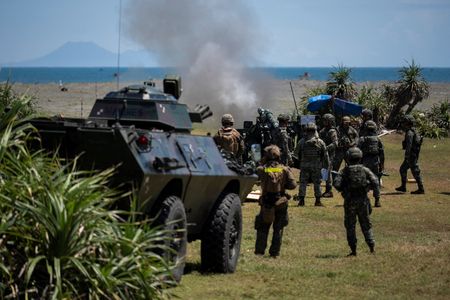
A massive multinational military training operation scheduled for late April through early May will demonstrate America’s unwavering dedication to its Pacific allies, according to U.S. military leaders speaking in Manila on Tuesday.
The annual “Balikatan” exercises, which translates to “shoulder-to-shoulder,” will run from April 20 through May 8 across various sites throughout the Philippine islands. More than 17,000 military personnel will take part in what officials describe as one of the most extensive and complicated training operations to date, expanding from a two-nation exercise into a comprehensive multinational partnership.
“Balikatan represents an opportunity to showcase our ironclad alliance with the Philippines and demonstrate our commitment to a free and open Indo-Pacific,” said Colonel Robert Bunn, the U.S. spokesperson for the training exercises, during a Manila press briefing.
Japan’s involvement will reach new heights this year, with Japanese Self-Defense Force members participating in live ammunition exercises for the first time. They will deploy their Type 88 surface-to-ship missile system to help destroy a retired vessel during maritime combat training.
This enhanced cooperation follows a 2024 mutual access agreement between Tokyo and Manila that permits both nations to station military forces within each other’s borders.
The training program will also showcase the Philippines’ growing network of defense partnerships, with Canada, France, New Zealand, and Australia providing warships, aircraft, and personnel for the exercises.
According to Bunn, the size and complexity of this year’s Balikatan operations reflect America’s ongoing dedication to the Indo-Pacific region, even as global crises demand attention elsewhere.
Thousands of American military members are deploying to the Philippines for the training, strengthening alliance preparedness and regional security while advancing shared objectives for maintaining regional freedom, according to both U.S. and Philippine military leaders.
These expanded exercises occur as tensions escalate between the Philippines and China over disputed South China Sea territories, where Manila has criticized Beijing for increasingly hostile behavior—claims that China disputes.
Training activities will cover air, ground, naval, and cyber warfare domains, featuring maritime operations, combined air and missile defense systems, anti-landing live-fire training, and humanitarian assistance missions.
Colonel Dennis Hernandez, the Philippine spokesperson for the exercises, stated that his country has every right to strengthen its defense capabilities, emphasizing that the training was not targeted at any specific nation.
A major Wall Street investment firm has expressed renewed confidence in US stock markets, shifting its stance as technology companies show robust performance and corporate earnings outlook improves.
Citigroup moved its rating on US equities from “Neutral” to “Overweight” in a Monday evening research note. This decision follows the S&P 500’s impressive recovery of nearly 9% from its seven-month bottom reached in late March, as investors grew more optimistic about potential de-escalation in Middle East tensions that could prevent oil-price-driven inflation spikes.
The investment bank joins several other major financial institutions, including BlackRock Investment Institute, which also elevated its US stock rating on Monday, showing preference for American equities compared to international alternatives.
“The (U.S.) market has derated and now trades at a premium to developed markets, excluding the U.S.; that’s close to historical averages,” Citi strategists said in a note on Monday, just as global earnings growth is narrowing and tilting more heavily toward technology.
According to Citigroup’s analysis, while earnings per share across all global sectors are projected to increase by 2026, the technology sector alone is anticipated to contribute approximately 50% of that growth.
However, the firm simultaneously reduced its outlook on emerging market stocks to “Neutral,” citing concerns that many developing economies face significant risks from energy supply disruptions, potentially worsened by the strengthening US dollar.
Emerging market investments have faced renewed challenges as conflicts involving Iran have pushed oil prices upward, raising worries about inflation, worsening trade balances, and investment capital leaving energy-dependent nations. The MSCI Emerging Markets index has declined 2.8% since the current conflict began.
Despite these concerns, Citigroup raised its year-end projection for the MSCI EM index to 1,770, up from its previous target of 1,540.
The financial services company also elevated the global materials sector to “Overweight,” pointing to enhanced earnings momentum and stronger growth potential that have increased its attractiveness while valuations remain low. Conversely, it downgraded the global communication services sector to “Underweight.”
The Trump administration has reversed its previous decision and will now allow the Pride flag to be displayed once more at Stonewall National Monument, several months after the banner was taken down from the historic location.
The flag’s return comes after it was removed from the site that holds significant importance as the starting point of the contemporary LGBTQ+ rights movement in America.
Stonewall National Monument stands as a symbol of the fight for LGBTQ+ equality, commemorating the historic events that sparked nationwide advocacy for civil rights within the community.
Former President Trump has removed a disputed image from his social media following widespread criticism over its religious imagery.
Trump defended the controversial post, stating that the image portrayed him in the role of a medical professional rather than as a Jesus-like figure, as critics had suggested.
The deletion came after significant public pushback regarding the nature of the image and its perceived religious connotations.
Listen to the Morning Delmarva Farm Report Update — April 14, 2026
DELMARVA — Cattle producers across Delmarva need to stay alert for bovine viral diarrhea, a disease that’s quietly costing operations nationwide. BVD continues to spread silently through herds, undermining animal performance and profitability long before obvious symptoms appear.
Despite regular vaccination programs, this virus affects productivity in ways that often go unnoticed. Experts say many farmers assume their herds are protected, but the infection can persist and reduce performance measures across the board.
Markets
June live cattle closed Monday at $248.52 per hundredweight, down $0.67. August live cattle settled at $244.45, off $0.30. May feeder cattle gained $0.47 to close at $346.25. Lean hog futures moved lower across the board.
Forecast
Mostly sunny skies are expected today with temperatures reaching 80°F and southwest winds 5 to 10 mph. Good conditions for field work. Tonight stays partly cloudy with lows near 60°F. Wednesday brings more sunshine with highs climbing to 83°F before a slight chance of showers arrives Wednesday night.
This article is based on the Delmarva Farm Report Update Morning Edition, April 14, 2026. Hosted by Tom Bradley.
Drivers using Route 13 should expect delays as construction work continues to impact traffic flow in both the northbound and southbound directions.
Delaware Department of Transportation officials report that the left lanes remain blocked between American Legion Boulevard and Hyett’s Corner Road as crews work on ongoing construction projects.
The lane restrictions affect traffic traveling in both directions and are expected to stay in place until 5 AM, according to DelDOT’s traffic management system.
Motorists are advised to allow extra travel time and exercise caution when passing through the construction zone during the overnight hours.
A major Russian mining corporation announced Tuesday its plans to finalize development of a palladium-powered catalyst for lithium-sulphur batteries used in electric vehicles, targeting completion within the next three years.
Nornickel, which produces approximately 40% of the world’s palladium supply, believes this innovation could solve a critical problem with lithium-sulphur battery technology. While these batteries theoretically provide greater energy storage capacity and cost less than current lithium-ion versions, they haven’t reached widespread commercial use because they wear out too quickly.
The company’s research focuses on dramatically improving the durability of lithium-sulphur batteries, aiming to achieve more than 1,000 charge cycles before replacement becomes necessary.
“I think this is a three-year horizon for us to further refine the technology so that it can compete with existing solutions. Overall, lithium-sulphur technologies look quite promising in terms of energy density (driving range),” stated Nornickel Vice President Vitaly Busko.
Should the research prove effective, the mining company projects it would “open up huge new markets for palladium,” with projected annual demand reaching at least 1.5 million ounces.
The corporation recently established a specialized palladium research facility in Moscow, dedicated to finding alternative uses for the metal beyond traditional automotive catalysts in gasoline-powered vehicles, which currently represent over 80% of worldwide palladium consumption.
Nornickel has committed $100 million to an initiative designed to generate approximately 1.7 million troy ounces of additional yearly palladium demand between 2030 and 2035. This strategy aims to compensate for anticipated decreases in traditional demand as electric vehicle adoption increases. The company has already identified a short-term commercial opportunity in China’s fiberglass manufacturing sector.
International investors are turning to Chinese government bonds as a refuge from global economic turmoil, with the Asian nation’s debt markets attracting significant capital while other regions face mounting pressure from inflation and geopolitical tensions.
Unlike many major economies grappling with rising energy costs and inflation concerns, China’s unique position has allowed it to maintain stable monetary policy without the need for aggressive interest rate increases that are becoming common elsewhere.
“If you look at other economies, people are trading stagflation,” explained Zheng Lianghai, a bond fund manager at Fuanda Fund Management, referencing the sharp increases in U.S. and Japanese treasury yields. “This is not happening in China.”
The appeal stems from China’s ability to weather current economic storms through several key factors: controlled inflation due to weak consumer spending, substantial oil reserves, and an energy infrastructure built on coal and renewable sources that provides protection from volatile fuel prices.
Market data reveals the stark contrast in investor sentiment. According to the Institute of International Finance, Chinese debt markets attracted $2.5 billion in foreign investment during March, even as conflicts involving the U.S. and Israel with Iran created uncertainty. This stands in sharp opposition to the $16.7 billion that fled other emerging market bonds during the same period.
Bond yields, which move in the opposite direction of prices, tell a compelling story. China’s one-year government bond yields have dropped to their lowest point in 15 months, while short-term yields in markets spanning from Australia to Europe and the United States have experienced their steepest climbs in years.
Money markets further reflect this trend, with China’s overnight pledged repo rate – a critical measure of market liquidity – falling to its lowest level in two and a half years.
The phenomenon extends beyond bonds, as Chinese stocks and currency have also demonstrated remarkable resilience compared to other assets during recent global market stress.
“(Chinese government debt) is a safe haven in the current environment – a unique combination of global energy supply shock and China’s domestic resilience,” noted Louis Luo, deputy head of macro investments at Aberdeen Investments.
However, this flight to safety has created an interesting dynamic within China’s bond market itself. While investors rush to purchase short-term Chinese debt, demand for longer-term bonds has cooled, creating a steepening yield curve – the gap between short and long-term interest rates.
“In the short term, we can bear the impact better than others, but if oil stays very high for long it will still lift inflation,” warned Lin Sheng, chief investment officer at Shenzhen-based Wish Fund. “If the war doesn’t end soon, avoid long-dated bonds.”
Bond trader Wang Hongfei suggested it would be logical for major fund managers to “buy mainly three- to five-year bonds and stay cautious on 30-year tenors.”
The yield difference between China’s 30-year and 1-year bonds expanded to 1.16 percentage points last week, representing the largest gap since August 2023. This contrasts with other markets where traders have been rapidly selling short-term debt as expectations shift toward rate increases, while concerns about long-term economic growth have pressured longer-dated securities.
Interestingly, the gap between 10-year and 2-year U.S. Treasury yields actually contracted slightly in March.
China isn’t completely insulated from the inflationary pressures affecting the global economy. Factory gate inflation returned to positive territory in March after three years of decline, and investment banks have reduced their expectations for small rate cuts.
Additionally, Chinese yields are relatively low compared to global standards, meaning the income provided to investors remains modest.
Nevertheless, many market participants believe China’s struggling housing market and weak consumer spending will continue to suppress yields and short-term rates well beyond the current oil price shock.
“There’s no sign of monetary tightening … and expectation is low for the PBOC to turn hawkish,” observed Ji Yu, a strategist at AllianceBernstein.
For many investors, the stability itself provides sufficient reason to invest in Chinese bonds.
“China’s bond market is relatively stable and lowly correlated with global markets,” explained Zhu He, a research fellow at the CF40 Institute, a think tank. “The trend of yuan appreciation also lures some global capital into China’s bond market, increasing its safe-haven appeal.”
WARSAW, Poland — Afghan refugees living in Poland are confronting the possibility of forced removal to their homeland, where they fear persecution under Taliban rule, as the country continues to block asylum applications that were supposed to be temporarily suspended.
Human rights organizations warn that Polish officials are misapplying legislation enacted in March 2025, which was designed to temporarily limit asylum requests at the Belarus border for individuals who entered the NATO and EU nation without authorization.
“I tried more than a billion times to seek safety,” said a young Afghan man in his twenties, currently held at a migrant detention facility in eastern Poland during a phone interview. He described how Taliban forces murdered his father and also captured and assaulted him.
His remaining family members continue to live in hiding within Afghanistan, he explained to The Associated Press under anonymity due to concerns about his security if forced to return to his country.
He told Polish officials about these experiences, he noted, “but they did not care.”
The Polish Interior Ministry has not responded to AP inquiries regarding Afghan deportations and the implementation of the new limitations.
Similar to other Afghans, this young man entered Poland through Belarus and successfully reached Germany, where authorities arrested him before sending him back to Poland for asylum processing under European Union regulations.
He claims Polish officials have chosen to remove him without thoroughly examining his situation, solely because he initially arrived through Belarus — a dangerous pathway that Warsaw has attempted to restrict after thousands of migrants used this route to enter the EU in recent years.
Polish officials state they have been overwhelmed by the massive influx and contend that Russia and Belarus deliberately sent these migrants to undermine Poland and other Western nations.
The temporary halt — initially set for 60 days — on asylum rights applies specifically “on the border with Belarus,” according to the new law. However, the government has extended this timeframe repeatedly, essentially blocking asylum requests for more than a year.
Legal authorities including Poland’s Ombudsman, responsible for protecting civil and human rights, along with the UNHCR, have condemned Poland’s asylum suspension.
These organizations argue it violates international law, particularly the Geneva Conventions regarding refugee protections, which require host nations to evaluate each person’s individual protection claim.
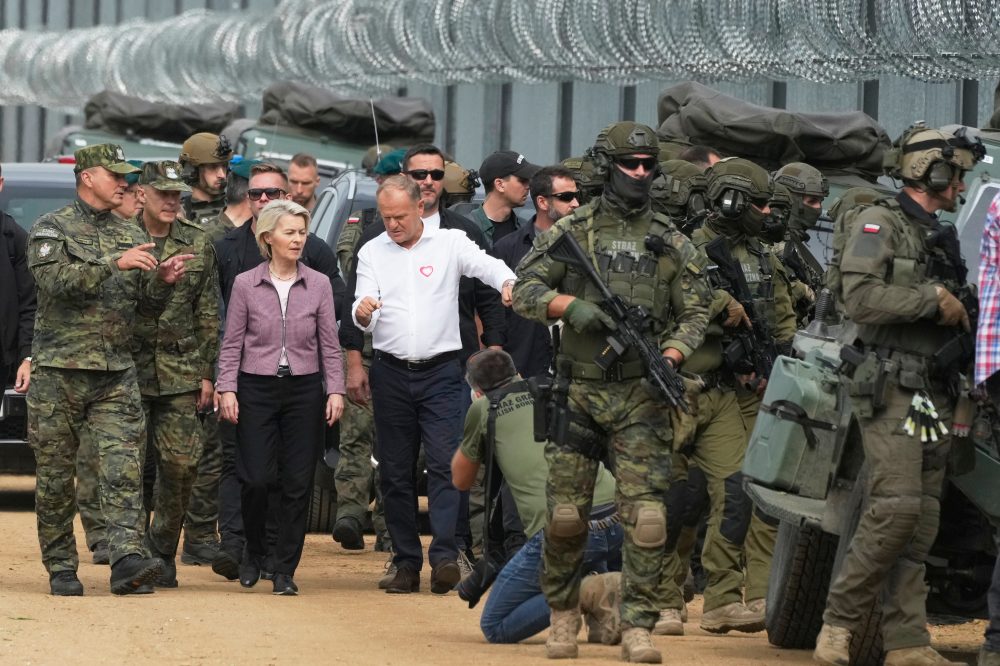
Poland’s liberal Prime Minister Donald Tusk has defended the security concerns at the Belarus border as justification for these policies, an argument the EU has not dismissed, though member nations must still guarantee minimum rights to asylum seekers during orchestrated migration emergencies.
Following the law’s implementation, advocacy groups and migrants report that Poland has expanded the measure beyond those caught at the Belarus-Polish border to include anyone found throughout the country — provided they entered via that border.
This effectively prevents Afghan migrants, whose journey to Poland typically involves Belarus, from requesting asylum regardless of their personal situations.
Michael O’Flaherty, the Council of Europe’s Commissioner for Human Rights, wrote to Polish leadership in a letter dated April 1 and released Tuesday, expressing concern that asylum requests are “suspended in every case in which border guards consider that the person has crossed the Poland-Belarus border irregularly.”
“In this regard, I note information about the recent removal of a group of Afghan nationals from Poland to Afghanistan, who were not provided with an opportunity to lodge asylum applications,” O’Flaherty stated.
This legal uncertainty has apparently troubled even Frontex, the EU’s border control agency. Its observers withdrew from a government-organized deportation flight to Pakistan last year after discovering that Polish authorities had failed to properly evaluate the asylum applications of those being removed.
“We have to make sure that people that are returned have fully gone through the entire asylum procedure as per EU law,” explained Krzysztof Borowski, Frontex spokesperson.
The young migrant who spoke with the AP represents one of approximately 120 Afghans currently detained in Polish facilities. He claims a friend was recently deported by Poland back to Afghanistan, and his family has received no communication since.
Roughly 65% of Afghans seeking asylum obtain protection in Europe, according to the EU Agency for Asylum, suggesting their applications generally succeed elsewhere in the bloc.
Tomasz Sieniow from the nongovernmental Foundation Institute for the Rule of Law was present on a flight last Friday that Polish authorities used to deport nine Afghans home via Uzbekistan.
He informed the AP that the European Court of Human Rights had issued orders requesting Poland not to deport the nine individuals, but authorities subsequently removed only six Afghans from the flight.
Sieniow explained that most detained Afghans in Poland had collaborated with the former U.S.-allied Afghan government that fell when the Taliban seized control of Afghanistan in August 2021, or had worked with American or other NATO forces.
These individuals and their families “should not be removed,” the NGO worker stated, adding that “Poland never analyzed their reasons for asking for protection.”
ISLAMABAD (AP) — Tensions between the United States and Iran escalated on Tuesday as America implemented a naval blockade of Iranian ports while Pakistan worked urgently to arrange another round of peace negotiations between the warring nations.
Although a ceasefire from last week remains in place, the dispute over the strategic waterway threatens to restart fighting and worsen the economic impact of the regional conflict.
Diplomatic efforts to permanently resolve the war — which started February 28 with American and Israeli attacks on Iran — did not reach an agreement over the weekend, but Pakistan has offered to host additional negotiations in the near future.
Two Pakistani government sources, speaking anonymously because they lacked authorization to comment publicly, described the initial negotiations as part of a continuing diplomatic effort rather than a single attempt.
Two American officials, also speaking anonymously about sensitive diplomatic matters, confirmed Monday that discussions continue regarding new talks. They indicated that while the location, schedule and delegation members remain undetermined, negotiations could occur Thursday.
The conflict, now entering its seventh week, has disrupted markets and shaken the worldwide economy as shipping routes have been severed and air attacks have devastated military and civilian facilities throughout the region.
The violence has claimed at least 3,000 lives in Iran, over 2,000 in Lebanon, 23 in Israel and more than a dozen across Gulf Arab nations. Thirteen American military personnel have also died.
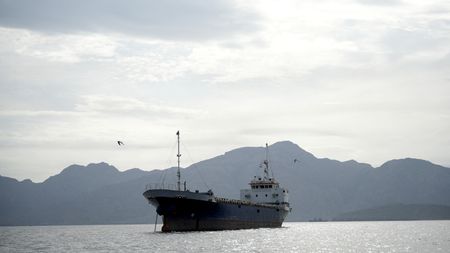
American military officials announced Monday that the blockade targets vessels traveling to and from Iranian harbors. This action could limit movement of the limited number of ships that Tehran considers allies, which have been allowed to navigate the Strait of Hormuz since Iran began restricting maritime traffic when hostilities started.
Most commercial ships have stayed away from the waterway due to Iranian threats, except for the few permitted to use shipping lanes between Iran’s islands and shoreline.
The enforcement methods and degree of ship compliance remained uncertain during the blockade’s first complete day Tuesday. However, early indicators showed reluctance: at least two oil tankers approaching the strait Monday reversed course shortly after the blockade began, according to vessel tracking service MarineTraffic in a Monday social media post.
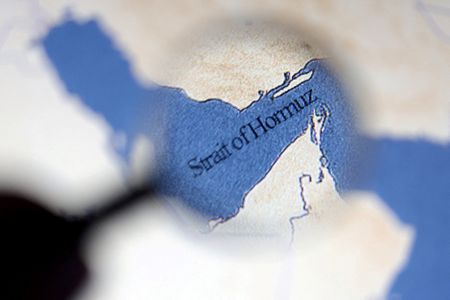
Iran’s practical shutdown of the strait, which handles one-fifth of global oil transport during peacetime, has caused oil prices to surge dramatically, increasing costs for gasoline, food and other essential items well beyond the Middle East.
The blockade aims to pressure Iran, which has shipped millions of oil barrels, primarily to Asian markets, since fighting commenced. Much of this oil likely traveled through covert operations that avoid sanctions and monitoring, generating crucial revenue to maintain the country’s operations.
Trump stated Monday that Iran’s control of the strait constituted blackmail and extortion as the American blockade began. He posted on social media that Iran’s naval forces had been “completely obliterated” but still possessed “fast attack ships.”
He cautioned that “if any of these ships come anywhere close to our BLOCKADE, they will be immediately ELIMINATED.”
Iran responded with threats to attack Persian Gulf ports if confronted.
“If you fight, we will fight,” declared Iran’s parliamentary speaker Mohammad Bagher Qalibaf in a statement directed at Trump.
Separately, direct negotiations between Israel and Lebanon were scheduled to start Tuesday in Washington, marking the first such discussions in decades.
Israel has continued its aerial and ground operations since last week’s Iranian ceasefire, maintaining that the truce does not cover Lebanese fighting. However, it has stopped bombing the country’s capital since last Wednesday, following devastating strikes that hit multiple busy commercial and residential districts in central Beirut, prompting international condemnation and Iranian threats to abandon the ceasefire.
Following more than a year of almost daily attacks in southern Lebanon, Israel intensified its campaign early in the war after Hezbollah fired rockets into Israel. The combat has created widespread destruction from farming communities near the border to Beirut, killing over 2,000 people and displacing more than 1 million, according to Lebanese government figures.
The discussions are anticipated to be exploratory, concentrating on establishing guidelines rather than solving fundamental disputes. Lebanese representatives have advocated for a ceasefire, while Israel has structured the talks around Hezbollah’s disarmament and a possible peace agreement, without publicly promising to stop fighting or remove its forces.
Israel seeks Lebanon’s government to take control of disarming Hezbollah, similar to what was outlined in a November 2024 ceasefire. However, the militant organization has withstood attempts to reduce its power for decades and announced Monday that it will not honor any agreements that might emerge from the talks.
Three vessels with ties to Iran successfully navigated through the critical Strait of Hormuz on Tuesday, marking the initial complete day of newly implemented US maritime restrictions targeting ships that dock at Iranian facilities, according to shipping tracking information.
The maritime restrictions were announced by President Donald Trump on Sunday following unsuccessful diplomatic negotiations between Washington and Tehran that took place over the weekend in Islamabad.
The three ships traveling through the strategic waterway avoided falling under the restrictions because their destinations were not Iranian ports.
Shipping data revealed that the Panama-registered vessel Peace Gulf, classified as a medium-range tanker, was bound for Hamriyah port located in the United Arab Emirates.
According to tracking information, this particular vessel regularly transports Iranian naphtha, which serves as petrochemical raw material, to various Middle Eastern ports outside Iran before being shipped to Asian markets.
Two additional tankers that have been placed under US sanctions also made passage through the narrow maritime corridor.
The smaller tanker Murlikishan was traveling toward Iraq with plans to take on fuel oil cargo on April 16, tracking data indicated. This vessel, previously called MKA, has a history of carrying oil from both Russian and Iranian sources.
A second sanctioned vessel, Rich Starry, became the first ship to successfully transit the strait and depart the Gulf region since the maritime restrictions took effect, according to multiple shipping databases.
US authorities have imposed sanctions on both the Rich Starry tanker and its operating company, Shanghai Xuanrun Shipping Co Ltd, due to their business dealings with Iran. Attempts to contact the company for a response were unsuccessful.
The Rich Starry, also a medium-range tanker, was transporting approximately 250,000 barrels of methanol, the data showed. The vessel had loaded this cargo during its previous stop at Hamriyah in the UAE.
Shipping records indicated that the Chinese-owned tanker was operating with a Chinese crew aboard.
China’s foreign ministry responded on Tuesday by characterizing the US restrictions on Iranian ports as “dangerous and irresponsible,” cautioning that such actions would only heighten regional tensions. Officials did not address whether Chinese vessels were transiting through the strait.
Diplomatic delegations from the United States and Iran may head back to Pakistan’s capital later this week for another round of high-stakes peace negotiations, according to five sources familiar with the discussions.
The potential return to Islamabad comes just days after the most significant direct diplomatic contact between Washington and Tehran in decades concluded without reaching an agreement.
While no specific date has been confirmed, talks could resume as soon as the weekend, sources indicated Tuesday.
“No firm date has been set, with the delegations keeping Friday through Sunday open,” a senior Iranian source said.
The previous weekend’s discussions in Pakistan represented the first face-to-face meeting between American and Iranian officials in more than ten years, marking the highest-level diplomatic engagement since Iran’s Islamic Revolution in 1979. These talks occurred four days following last Tuesday’s ceasefire declaration.
Officials have presented both Washington and Tehran with a proposal to send their representatives back to continue the diplomatic process, according to one source with knowledge of the situation.
Two Pakistani sources familiar with the negotiations confirmed that Islamabad is coordinating with both sides regarding the timing for the next session, with weekend meetings appearing most likely.
“We have reached out to Iran and we got a positive response that they will be open to a second round of talks,” a senior Pakistani government official said.
Neither Pakistan’s foreign ministry, military leadership, nor the prime minister’s office provided responses to requests for comment. The White House similarly has not yet responded to inquiries about the potential talks.
The previous round featured U.S. Vice President JD Vance and Iranian Parliamentary Speaker Mohammad Baqer Qalibaf heading their respective teams to address multiple complex issues. Key topics included the Strait of Hormuz, a crucial passage for global energy shipments that Iran has effectively shut down while the U.S. has pledged to reopen, along with Iran’s nuclear program and international sanctions imposed on Tehran.
Following the conclusion of the initial talks, Vance addressed reporters, stating: “We leave here with a very simple proposal, a method of understanding that is our final and best offer.”
Indonesia’s foreign ministry has issued a warning to defense officials about a United States proposal that would grant American military forces extensive rights to conduct flights over Indonesian territory, expressing concerns it could draw the nation into South China Sea disputes, according to sources familiar with the matter.
The confidential communication, marked as urgent, was sent in early April before Indonesian Defense Minister Sjafrie Sjamsoeddin met with U.S. Defense Secretary Pete Hegseth in Washington this past Monday, two Indonesian sources revealed.
The previously unreported correspondence advised the defense ministry to postpone any final decision on the agreement with Washington. It remains unclear whether the overflight arrangement was addressed during the Hegseth-Sjafrie discussions.
Sources indicated the agreement was scheduled to receive signatures during Monday’s meeting.
Following the Washington meeting, Pentagon officials announced the establishment of a significant defense cooperation partnership between the two nations, outlining various ways to strengthen military relationships, though overflight permissions were not specifically mentioned.
An unnamed U.S. official noted that the absence of overflight references in public statements doesn’t necessarily mean the topic wasn’t addressed privately.
Pentagon representatives have not yet provided comment on the matter.
While Indonesia’s defense ministry declined to confirm whether the proposal was discussed during the bilateral meeting, officials stated the U.S. request is undergoing thorough evaluation by Jakarta, with several modifications being considered to protect the country’s sovereignty and national interests.
The Southeast Asian archipelago nation, comprising over 17,000 islands, occupies a crucial position at the southern gateway to the South China Sea, where it administers the Natuna Islands while maintaining important relationships with both Beijing and Washington.
Beijing asserts territorial claims over nearly the entire South China Sea—a vital shipping route handling over $3 trillion in annual trade—despite competing claims from the Philippines, Brunei, Malaysia and Vietnam.
The foreign ministry’s letter emphasized that the American proposal requires careful consideration because it would enable Washington to expand surveillance and intelligence-gathering operations using Indonesian waters and territory, potentially impacting relationships with other regional strategic partners, particularly China.
The communication stated that such an agreement would create “the impression that Indonesia is involved in an alliance with the implication of increased national security risks because it places Indonesia as a potential target in a regional conflict situation.”
The letter also documented that U.S. military aircraft conducted surveillance missions in the South China Sea on 18 separate occasions between January 2024 and April 2025, which it characterized as violations of Indonesia’s territorial waters and airspace.
The document noted that Indonesia’s formal complaints about these operations have not received adequate responses from the United States.
Representatives from Indonesia’s foreign and defense ministries, along with Pentagon officials, have not yet responded to requests for comment regarding the concerns outlined by Indonesian foreign ministry officials.
Indonesia maintains a non-aligned foreign policy stance, and President Prabowo Subianto has pledged to maintain friendly relations with all nations.
The country serves as a prominent member of President Donald Trump’s Board of Peace initiative and has pledged the largest military contingent for the organization’s proposed peacekeeping force in Gaza.
Subianto has also preserved close ties with Beijing. His initial international trip as president in 2024 was to China, and he participated in a military parade hosted by President Xi Jinping last year, where he was photographed alongside U.S. adversaries including Russian President Vladimir Putin and North Korean leader Kim Jong Un.
Meanwhile, the United States and Australia have joined the Philippines for their second joint maritime training exercises in the South China Sea this year, as tensions continue with China over the disputed waters.
Russian Foreign Minister Sergei Lavrov touched down in Beijing on Tuesday for high-level diplomatic meetings focused on ongoing global conflicts and strengthening ties between Russia and China.
Russian state media broadcast footage of Lavrov’s arrival, where he is scheduled to meet with his Chinese counterpart, Foreign Minister Wang Yi.
According to a statement from Russia’s Foreign Ministry, the discussions will include “a thorough exchange of views on a number of ‘hot topics’ and regional issues, including the Ukrainian crisis and the situation in the Middle East.”
The diplomatic agenda also includes talks about enhancing bilateral cooperation and coordinating efforts within international organizations including the United Nations, BRICS, the Shanghai Cooperation Organization, the G20, and the Asia-Pacific Economic Cooperation forum, according to ministry officials.
The meeting comes amid the strengthened relationship between Moscow and Beijing, which announced a “no limits” partnership in February 2022 during Russian President Vladimir Putin’s visit to China. That visit occurred just days before Putin launched his military invasion of Ukraine with tens of thousands of troops. Putin has occasionally referred to China as an “ally” in recent statements.
According to the latest annual threat assessment from U.S. intelligence agencies, both China and Russia represent Washington’s primary global competitors across multiple domains, including Arctic interests, artificial intelligence development, space exploration, and nuclear weapons capabilities.
Major world economies are experiencing unprecedented financial strain as debt burdens climb to dangerous levels while mounting expenses from demographic shifts, environmental initiatives, and military spending create additional fiscal challenges.
Recent conflicts, including tensions with Iran, have reignited inflationary pressures that threaten to overwhelm governments already battered by multiple economic shocks throughout this decade.
The Middle Eastern conflict sparked the most significant increase in borrowing expenses across Europe in years during March. European nations, heavily reliant on imported energy, face mounting fiscal challenges as oil and natural gas prices continue their upward trajectory.
When governments face elevated debt costs, citizens may experience reduced living standards due to constrained public spending and limited economic expansion. In extreme situations, nations may reach a breaking point where servicing their obligations becomes impossible.
A comprehensive analysis of debt indicators across Group of Seven nations reveals concerning trends:
ESCALATING BORROWING EXPENSES
Interest rates on government securities throughout G7 countries have climbed dramatically since the coronavirus outbreak and Russia’s Ukrainian invasion, as monetary authorities implemented aggressive rate increases to combat rising prices.
Higher long-term financing costs also demonstrate that investors demand greater compensation for assuming debt-related risks.
The Iranian situation presents fresh obstacles. The United Kingdom, where decade-long yields reached 2008 highs during March, currently faces the steepest costs among comparable nations.
SHORTER DURATION STRATEGY
The gap between short-term and extended government bond rates has widened dramatically, creating relatively higher expenses for longer-term financing.
This pressure intensifies due to budget concerns, central banks reducing their bond portfolios, and major institutional investors like insurance companies and retirement funds decreasing their purchases from Japan to Britain.
To reduce impact, numerous governments have begun issuing securities with briefer terms. However, this approach carries risks since they must repay or restructure obligations sooner, meaning any rate increases quickly affect interest expenses.
DEBT TRAJECTORY CONCERNS
Obligations roughly match or exceed economic production across G7 nations except Germany, Europe’s largest economy.
The 2008 worldwide financial collapse, 2011-12 European debt emergency, and 2020 health crisis all elevated debt amounts while damaging growth and increasing expenditures.
Japan maintains the highest ratio, with obligations exceeding double its production, while Germany, previously an advocate for spending restraint, is expanding its borrowing to finance defense and infrastructure investments.
Looking ahead, aging societies, interest obligations, and expanded defense and environmental spending will push debt levels higher without policy modifications.
INTEREST OBLIGATIONS
Elevated post-pandemic financing costs are impacting government interest payments as they replace low-cost debt with higher market rates.
Though remaining below historical peaks for many nations, interest payments relative to economic output have increased consistently across most G7 countries recently, particularly in America.
Interest payments across developed nations already exceeded defense spending in 2024.
INCREASING RISK FACTORS
The compensation investors require for holding longer-term U.S. Treasury bonds has increased since the pandemic, reflecting various concerns from American fiscal policy to Federal Reserve bond reduction and independence worries, plus long-term inflation uncertainty.
This represents a worldwide trend, with risk premiums across major developed countries reaching decade-high levels recently.
EUROPEAN DEBT DYNAMICS
One improving debt indicator involves how little investors now demand to hold individual European government bonds compared to German securities, considered Europe’s safest investment.
The region has progressed significantly from its debt emergency when Greece required assistance and breakup fears sent costs soaring.
Italy exemplifies this transformation. Once representing debt problems, increased European unity following the pandemic, political stability, and reduced budget shortfalls have driven its risk premium to 2008 lows recently.
Conversely, investors now perceive greater risk in French bonds as political fragmentation following surprising 2024 elections hampers deficit reduction efforts.
JAPANESE MARKET STRESS
Japan, the developed world’s most indebted nation, faces scrutiny as Prime Minister Sanae Takaichi’s spending proposals have renewed fiscal worries. The country’s debt auctions receive careful monitoring for stress indicators.
Japan’s bond market difficulties began last May following a problematic long-term security sale.
Extended Japanese bond yields reached records after a 20-year bond auction experienced the weakest demand since 2012, with another sentiment measure hitting its second-worst level since 1987.
Japan reduced longer-term bond offerings in response, helping stabilize demand. Nevertheless, borrowing costs continue facing upward pressure.
Pakistan announced Tuesday its willingness to facilitate another round of diplomatic discussions between the United States and Iran, as American leaders indicate recent negotiations may be moving forward.
According to Pakistani government sources who requested anonymity due to lack of authorization to speak publicly, Islamabad has extended an invitation for a second round of U.S.-Iran discussions to take place in their capital city within the coming days, potentially before any current ceasefire expires.
The diplomatic developments come after Vice President JD Vance indicated that recent negotiations with Iran “did make some progress” and President Donald Trump stated Monday that “we’ve been called by the other side” and “they want to work a deal.”
Pakistani sources emphasized that the location for potential talks could change based on preferences from both participating nations. One official noted that despite the first round of discussions concluding without a formal agreement, they represented part of a continuing diplomatic effort rather than an isolated attempt.
Meanwhile, tensions remain high in the Middle East as a senior Hezbollah representative declared Monday that the Lebanese militant organization would not honor any agreements emerging from direct Lebanon-Israel negotiations scheduled to begin Tuesday in Washington.
Lebanese leadership hopes to negotiate an end to the Israel-Hezbollah conflict, which has resulted in at least 2,089 deaths in Lebanon. However, Israeli Prime Minister Benjamin Netanyahu has stated his opposition to a ceasefire, emphasizing goals of Hezbollah’s disarmament and a potential peace treaty between Lebanon and Israel.
The diplomatic efforts unfold against a backdrop of escalating tensions, as a U.S. blockade of Iranian ports initiated Monday and Iran’s threatened response create significant risks for global economic stability and raise concerns about potential ceasefire breakdown.
In related developments, Chinese President Xi Jinping presented a four-point peace initiative for the Middle East during Tuesday meetings with Abu Dhabi Crown Prince Sheikh Khaled bin Mohamed bin Zayed Al Nahyan, according to China’s official Xinhua news agency.
Xi’s framework emphasizes regional peaceful coexistence, respect for national sovereignty, and coordination between development and security priorities. “Safeguard the authority of the international rule of law. It can’t be ‘use it when it suits us, discard it when it doesn’t,’ and we cannot allow the world to revert to the law of the jungle,” Xi stated.
Financial markets responded positively to diplomatic prospects, with Asian stock indexes climbing while oil prices declined Tuesday. Benchmark U.S. crude dropped 1.7% to $97.37 per barrel in early trading, while Brent crude fell 0.9% to $98.49 per barrel.
Tokyo’s Nikkei 225 gained 2.3% to reach 57,804.81, and South Korea’s Kospi surged 2.7% to 5,968.06. Hong Kong’s Hang Seng increased 0.5% to 25,783.41, while Shanghai’s Composite index rose 0.5% to 4,007.93.
The Baltimore Orioles pulled off a stunning comeback Monday night, erasing a six-run deficit to defeat the Arizona Diamondbacks 9-7 in their series opener.
Baltimore found itself trailing 7-1 entering the bottom of the sixth inning before mounting their remarkable rally. Leody Taveras started the comeback with an RBI single, followed by Jeremiah Jackson’s grand slam that cut Arizona’s lead to 7-6. Pete Alonso then delivered the decisive blow with a two-run homer in the seventh inning that gave Baltimore their first lead of the game. Jackson capped the rally with his second home run in the eighth inning.
The Orioles’ comeback overshadowed outstanding performances from Arizona’s Ketel Marte and Nolan Arenado, who both hit two home runs. Marte opened the game by taking Baltimore starter Dean Kremer deep on the very first pitch and added another solo shot in the third inning. Arenado finished the night with five RBIs.
Baltimore collected eight hits and drew four walks while extending their winning streak to three games and capturing their sixth victory in seven contests. Gunnar Henderson contributed a run-scoring triple for the Orioles, who posted their highest run total of the season.
In other MLB action Monday:
The New York Yankees ended a five-game losing streak with an 11-10 thriller over the Los Angeles Angels. Jose Caballero scored the winning run on a wild pitch by Jordan Romano. Trent Grisham homered twice and drove in five runs, including a two-run blast in the ninth that tied the game 10-10. Aaron Judge also went deep twice, surpassing Mickey Mantle for second-most multi-homer games in Yankees history with his 47th career two-homer performance.
Mike Trout powered the Angels with his 31st career multi-homer game, hitting his 407th and 408th career home runs while driving in five runs.
Minnesota dominated Boston 13-6 as Ryan Jeffers went 3-for-4 with a homer and three RBIs. Victor Caratini also homered and drove in three runs for the Twins, who have won seven of their last eight games. Boston ace Garrett Crochet struggled mightily, allowing a career-high 11 runs in just 1 2/3 innings.
Seattle completed a four-game sweep of Houston with a 6-2 victory. Josh Naylor hit his first two extra-base hits of the season, both home runs, while driving in five runs. The loss extended Houston’s losing streak to eight games and capped a disastrous 1-9 road trip.
Pittsburgh routed Washington 16-5 behind Brandon Lowe’s five RBIs, his second consecutive five-RBI performance. Paul Skenes earned the win, striking out six while allowing one run over six innings.
Philadelphia defeated Chicago 13-7 as Kyle Schwarber homered twice and drove in three runs while scoring four times. The Phillies bounced back after losing four of five games.
Miami snapped out of an offensive slump with a 10-4 victory over Atlanta, collecting 16 hits after scoring just three runs in a weekend sweep at Detroit. Agustin Ramirez homered and drove in four runs for the Marlins.
Cleveland beat St. Louis 9-3 behind Brayan Rocchio’s two-run homer and multi-RBI performances from Daniel Schneemann and Steven Kwan.
Los Angeles blanked New York 4-0 as Justin Wrobleski pitched eight scoreless innings, allowing just two hits. Andy Pages hit a three-run homer for the Dodgers. The loss extended the Mets’ losing streak to a season-high six games.
Texas defeated Oakland 8-1 as Jake Burger hit two home runs and drove in four runs while Nathan Eovaldi threw seven shutout innings. The victory snapped Oakland’s five-game winning streak.
The Los Angeles Kings secured their spot in the Western Conference playoffs Monday night after defeating the Seattle Kraken 5-3, powered by a two-goal performance from forward Quinton Byfield.
Trevor Moore and Alexis Laferriere each contributed one goal and one assist, while Adrian Kempe found the net once and goalie Anton Forsberg turned away 28 shots for Los Angeles (35-26-19, 89 points). The Kings have now won five consecutive games, marking their longest winning streak this season. With regular season contests remaining Tuesday in Vancouver and Thursday at Calgary, Los Angeles could still secure a top-three position in the Pacific Division or claim a wild-card position.
For Seattle (34-35-11, 79 points), Adam Larsson, Frederick Gaudreau and Bobby McMann each scored while Matty Beniers recorded two assists. The loss ended the Kraken’s two-game winning streak. Rookie netminder Nikke Kokko, making only his second NHL appearance due to injuries to Joey Daccord and Philipp Grubauer and Matt Murray’s absence for family reasons, made 25 saves on 29 shots.
Byfield’s quickness resulted in two unassisted scores during the opening period.
His first goal came after Seattle’s Jordan Eberle won a faceoff in the offensive zone and sent the puck back toward Ryan Lindgren at the left point. Byfield reached the puck first, bounced it off the boards to bypass Lindgren, and created a 2-on-1 opportunity. He then fired a wrist shot from just inside the faceoff circle that hit the top of the net at 2:43.
Byfield’s second tally occurred at 13:19 when Eberle’s pass back to Lindgren at the point bounced over the defenseman’s stick, creating a breakaway opportunity down the right side. He deked as if moving across the crease before lifting a forehand shot over Kokko’s glove hand.
Los Angeles increased their advantage to 3-0 at 7:13 of the second period when Laferriere’s shot from the left faceoff circle bounced energetically off the end boards back to Moore, who buried a wrist shot from the slot.
Seattle mounted a comeback effort in the final period.
Larsson connected on a wrist shot from the left point through traffic past Forsberg at 1:53, ending the goaltender’s chance for consecutive shutouts.
Gaudreau cut the deficit to 3-2 at 8:08, receiving a feed from Kaapo Kakko and hammering the puck home from just outside the left post.
Los Angeles restored their two-goal cushion as Kempe received a pass from Anze Kopitar during a 2-on-1 break and scored with a snap shot at 12:29. The goal was Kempe’s team-high 35th of the campaign.
With Kokko pulled for an additional skater, McMann fired a wrist shot from the slot at 17:33 to bring Seattle within one goal.
Laferriere sealed the win with an empty-net goal at 19:58.
Left-handed pitcher Justin Wrobleski delivered eight dominant shutout innings while Andy Pages connected on a decisive three-run blast, leading the Los Angeles Dodgers to a 4-0 triumph over the New York Mets in Monday’s series opener at Dodger Stadium.
The southpaw Wrobleski (2-0) held New York hitless until Jorge Polanco broke through with a single to right field in the fifth inning’s opening at-bat. Wrobleski surrendered only two hits while issuing no free passes and recording two strikeouts across his stellar outing.
Miguel Rojas collected three hits to pace the Dodgers’ offense. Despite going hitless in four plate appearances, Shohei Ohtani managed to reach base and push his consecutive on-base streak to 47 games, matching the second-longest such run since the franchise relocated to Los Angeles.
Ohtani took a 94 mph sinker from Mets starter David Peterson to his right shoulder on the game’s opening pitch but continued playing. The two-way star is slated to take the mound Wednesday.
Peterson (0-3) surrendered four runs on five hits across five innings of work, walking four batters while striking out seven. The Mets managed only three singles as their losing skid reached a season-worst six games to begin a six-game road swing.
Tommy Pham, making his 2024 Mets debut after inking a minor league contract in late spring, went hitless in three at-bats with one strikeout.
Los Angeles nearly broke the contest wide open in the opening frame. Following Ohtani’s hit-by-pitch on Peterson’s third delivery, Kyle Tucker drew a walk before Will Smith delivered an RBI single. Teoscar Hernandez walked to fill the bases, but Peterson escaped further damage by striking out Freddie Freeman, Pages and Max Muncy in succession.
The third inning saw Tucker and Hernandez work walks ahead of Pages’ two-out, three-run homer that sailed down the left field line. The blast marked Pages’ fifth of the campaign, as he continues leading Major League Baseball with a .417 batting average and 25 hits. His 20 RBIs also top the majors.
Major Australian businesses are beginning to feel significant financial strain from the ongoing Middle East conflict, as escalating fuel costs and declining confidence signal potential economic trouble ahead.
Two of the country’s largest corporations – Qantas Airways, the nation’s leading airline, and Westpac Banking Corp, Australia’s second-biggest bank – have issued warnings that their earnings face pressure from skyrocketing energy prices and customer impacts, concerns previously raised by the nation’s central banking authority.
“With the supply shock from the energy market disruption expected to result in higher inflation and higher interest rates, an expected slowing in economic growth will create a more challenging environment for some customers,” Westpac stated.
These corporate announcements represent the most concrete evidence to date of how the Middle Eastern warfare and resulting energy crisis are affecting Australian company profits.
The warnings coincided with survey data revealing sharp drops in both business and consumer confidence, while Reserve Bank of Australia Deputy Governor Andrew Hauser warned the nation might be confronting “the central bank’s nightmare: the stagflationary shock – inflation up, activity down.”
Qantas disclosed that its aviation fuel expenses for the latter half of its fiscal year ending in June could reach A$800 million ($567 million), representing a 32% increase over earlier projections due to oil price surges. The carrier has responded by reducing flight schedules and increasing ticket prices.
“Jet fuel prices have more than doubled and remain highly volatile,” Qantas reported in its market announcement, noting it was carefully watching the “dynamic environment” and might implement additional measures to counteract rising fuel expenses.
The airline also postponed a planned A$150 million share repurchase program due to increased market uncertainty.
Westpac expanded its credit loss reserves, expecting borrowers to face greater difficulties amid rising costs and interest rates. The bank noted its provisioning reached levels not seen since the COVID-19 pandemic.
Market reaction was more severe for Westpac than for Qantas, with banking shares dropping 3.7% compared to the airline’s 1% decline.
“Westpac is interesting because they’re talking about potentially higher bad debts on some of their energy-exposed customers,” commented Omkar Joshi, chief investment officer at Opal Capital Management.
Market analysts suggested that prolonged Middle Eastern conflict would create increasingly significant financial impacts, likely triggering additional profit warnings across industries.
The National Australia Bank’s business confidence indicator plummeted 29 points to -29 in March, a decline typically associated with major economic crises like the 2020 pandemic. Consumer sentiment separately fell 12.5% in April to its weakest point in over two years.
The ripple effects extended beyond Australia, with New Zealand’s a2 Milk reducing its 2026 profit outlook on Monday, attributing the change to supply chain disruptions from the Middle Eastern conflict.
Joshi from Opal Capital Management characterized recession or stagflation as “definitely a real risk.”
“And has the risk increased in the last six weeks? I’d say definitely it has,” he added.
Iran’s petroleum minister announced Tuesday that strong oil sales in recent weeks will help fund reconstruction efforts for industrial infrastructure damaged during military strikes.
Oil Minister Mohsen Paknejad stated that petroleum workers successfully kept facilities operational throughout the conflict period, preventing any disruption to the nation’s oil exports. According to Paknejad, exports continued without interruption, “even for a single day,” from critical shipping locations including Kharg Island.
The announcement comes as Iranian crude oil prices have seen substantial increases, according to statements the minister made last month. Paknejad indicated that a portion of these enhanced revenues will now be directed toward repairing war-related damage to the country’s industrial sector.
NEW YORK — What started as a regular baseball matchup between Aaron Judge and Mike Trout quickly escalated into an epic power display between two of the game’s biggest stars.
The Angels superstar launched his second homer of the night deep into left-center field, the ball ricocheting off the back wall beyond the bullpen area to give Los Angeles a two-run advantage in the eighth inning. This came after Judge had already connected twice to help the New York Yankees build their lead.
The historic showdown marked the first time in seven decades that two players who have each won three MVP awards hit multiple home runs in the same contest.
Trent Grisham delivered his second blast of the night — matching his season total — to even the score in the ninth frame. José Caballero crossed home plate when Jordan Romano’s wild pitch ended the game, securing an electrifying 11-10 Yankees victory on Monday that snapped a five-game skid.
“It was great. That’s baseball for you,” Trout marveled. “It’s what fans want, and to be able to see something like that, pretty cool.”
According to STATS Perform, such a performance between two three-time MVP winners had occurred just once previously.
The last instance happened on June 21, 1956, when Stan Musial connected twice before Roy Campanella launched a game-tying three-run shot in the ninth for his second homer of the day. Don Zimmer then delivered a walk-off single as the Brooklyn Dodgers defeated the St. Louis Cardinals 9-8 at Ebbets Field.
Trout came close to a third home run, flying out to Cody Bellinger near the center-field wall with the bases loaded in the fourth inning. This occurred after the Angels had knotted the game 4-4 with four unearned runs following Caballero’s fielding mistake on Trout’s leadoff ground ball to short.
Judge had anticipated meeting up with Trout in the Yankee Stadium weight room.
“I was going to talk some smack to him after the one he hit all the way to the warning track,” Judge said, “but I didn’t get a chance to and then he answers right back with two big homers for him. You put that guy in a clutch situation, a big moment and he’s going to show up every single time, so it’s fun going back and forth with a guy like that, especially in New York and the Bronx.”
The Yankees had dropped five consecutive games following an 8-2 beginning and entered the night winless in six one-run contests.
Seven long balls combined to travel 2,846 feet — exceeding half a mile — with New York accounting for five of them. Judge’s opening blast sailed 456 feet into the left-field bleachers, leaving his bat at 116.2 mph for the season’s hardest-hit home run.
Both Grisham and Trout drove in five runs apiece, while Judge contributed three RBIs.
The game featured the sport’s top four active home run hitters. Judge, now with 374, moved one ahead of teammate Paul Goldschmidt. Yankees slugger Giancarlo Stanton, who leads active players with 454, missed by approximately a foot with a fifth-inning double off the center-field wall. Trout sits at 408 career homers.
The 34-year-old Trout captured AL MVP honors in 2014, 2016, and 2019 but has battled injuries throughout much of the last five seasons.
“He’s the greatest of all time. It’s been fun to watch his whole career, coming up at such a young age and instantly just putting yourself at the top of the list. It’s special,” Judge said.
Judge, who celebrates his 34th birthday on April 26, earned AL MVP recognition in 2022, 2024, and 2025.
“Those are two of the greats, so it’s really fun to watch,” Yankees starter Will Warren said.
Both Judge and Caballero launched two-run shots off Yusei Kikuchi during a four-run second inning on an unusually warm 77-degree evening. Following Caballero’s defensive miscue that led to unearned runs against Warren, Grisham entered as a pinch-hitter in the fifth and connected for a three-run drive against Shaun Anderson, extending the lead to 7-4.
Trout responded with a three-run blast in the sixth against Jake Bird, who was sent down to Triple-A following the game.
Judge’s homer off Anderson to start the bottom half gave him 47 multi-homer performances, surpassing Mickey Mantle by one and trailing only Babe Ruth’s 68 among Yankees players.
“To be surrounded by some greats like that, it’s special,” Judge said.
Josh Lowe tied the game at 8 with a seventh-inning sacrifice fly, and Trout’s two-run shot in the eighth off Camilo Doval pushed the Angels ahead 10-8 with his 31st multi-homer game. Judge, observing from right field, shook his head in disbelief.
“Every time he comes to the Bronx, man, he puts on a show,” Judge said. “I hate to see it, but it’s fun competing against a guy like that.”
Jazz Chisholm Jr. opened the ninth with a single against Jordan Romano, and Grisham reached down to pull a slider into the right-field seats as the closer placed both hands on his head in dismay.
Caballero doubled and stole third base without a throw. After Austin Wells drew a walk, Caballero scored when Romano bounced a full-count slider to Ryan McMahon to the backstop on the ninth pitch of the at-bat.
The Yankees hadn’t won while surrendering double-digit runs since defeating Minnesota 14-12 on July 23, 2019.
Yankees manager Aaron Boone described his emotions as “tough … for the belly.”
He then shifted focus to his team.
“You get a lead, then you get another lead, and then it’s gone,” he said. “For the guys, maybe it was good to have a game like that where it was a little messy.”
GENEVA — While luxury timepieces are making a comeback, the ongoing Middle East conflict is casting uncertainty over the high-end watch market as Geneva prepares for its most important industry gathering.
Beginning Tuesday, the Swiss city will welcome thousands to the “Watches and Wonders” exhibition, the industry’s premier annual event. The timing comes as watchmakers hope to recover from two consecutive years of declining sales, particularly in the wealthy Gulf Arab nations.
However, the military conflict between the United States, Israel and Iran that started February 28th has created ripple effects throughout the global economy. Energy costs have surged, fertilizer shipments have stalled, and air travel has faced disruptions — all impacting the luxury timepiece sector.
Rising costs for precious metals including gold and silver, combined with President Trump’s Liberation Day tariffs from last year, had already created market pressures before the current crisis emerged.
Fresh inflationary concerns and weakening consumer sentiment are now adding additional challenges to an industry worth tens of billions annually.
Philippe Pegoraro, chief economist at the Federation of the Swiss Watch Industry, explained that official March export data won’t be available until month’s end.
“At this point, we’re expecting a sharp drop” due to both shipping complications and declining demand, Pegoraro explained.
While buyers in the United Arab Emirates continue making purchases, tourist spending at locations like Dubai’s airport has suffered following Iranian attacks on the nation, according to Pegoraro.
“Rebuilding confidence is going to take some time,” he noted.
The exclusive trade show features 65 participating brands from across the globe, representing just a fraction of Switzerland’s 450 watchmaking companies. Organizers anticipate approximately 60,000 attendees.
A February report from Morgan Stanley and LuxeConsult revealed Swiss watch exports fell 1.7% in value during the previous year, marking the industry’s second consecutive annual decline.
“When you look back at a year ago, the sort of theme was: The tariffs and the uncertainty,” industry analyst Ming Liu observed. “Unfortunately, we aren’t anywhere closer to certainty, probably even less with what’s happening in the Middle East.”
“That’s obviously going to have a cloud over Watches and Wonders,” she added. “But it has a cloud over everything, right?”
Like other luxury sectors, market dominance is concentrating among top brands. Four Swiss companies — Rolex, Cartier, Patek Philippe and Omega — control more than half the total Swiss retail market share.
The ultra-premium segment continues expanding, with handmade timepieces costing over 50,000 francs ($63,000) representing 37% of total Swiss export value last year, up from 33.5% in 2024.
Swiss-manufactured watches dominate approximately 96% of the global luxury timepiece market, defined as pieces retailing for at least 2,000 francs ($2,200).
Japan’s Grand Seiko emerged as the “most credible non-Swiss challenger” while India’s Titan is pursuing top-tier status, according to the Morgan Stanley analysis.
The Swiss industry weathered significant challenges last year when Trump implemented severe U.S. tariffs reaching 39% — the steepest imposed on any developed Western nation.
Swiss business leaders visited the White House in November, presenting Trump with gifts including a Rolex timepiece. The following month, an agreement was reached substantially reducing U.S. tariffs on Swiss products.
The businessman who established China Evergrande, one of the world’s most debt-burdened property companies, has admitted to criminal wrongdoing in a Chinese courtroom, according to court documents released Tuesday.
Hui Ka Yan, who also goes by Xu Jiayin, entered guilty pleas to multiple criminal charges during proceedings that took place Monday and Tuesday at the Shenzhen Intermediate People’s Court. The charges include unlawfully collecting public deposits, fraud, and corporate bribery, the court announced via WeChat.
Chinese authorities arrested Hui in September 2023 while investigating suspected criminal activity. Court officials said the defendant showed regret during the proceedings, though sentencing will be announced at a future date.
Additional accusations against Hui encompass unlawful lending practices, misuse of company funds, and violating regulations regarding the disclosure of important business information, according to the court statement.
The courtroom included representatives from previous fundraising activities and members from China’s National People’s Congress, the nation’s parliament.
By 2024, when a Hong Kong court issued a liquidation ruling, Evergrande had become the globe’s most debt-heavy real estate company, owing more than $300 billion to creditors.
Hui established the company during the mid-1990s, and by the time of the 2024 court decision, more than 90% of its holdings were located within mainland China. The Hong Kong Stock Exchange delisted China Evergrande shares in 2025.
Evergrande joined dozens of other property developers that failed to meet debt obligations after Chinese authorities implemented stricter lending rules for the real estate sector in 2020. These companies found themselves unable to secure new financing, making their massive debts to lenders and buyers impossible to maintain.
The regulatory crackdown triggered a widespread crisis in China’s property market, weakening the world’s second-biggest economy and creating financial instability both within China and internationally.
Throughout the court proceedings, China Evergrande Group confronted accusations including illegally collecting public deposits, fundraising fraud, corporate bribery, and unauthorized lending. The company’s mainland property division, Evergrande Real Estate Group, faced additional allegations of fraudulent securities offerings.
KABUL, Afghanistan — Frustration boiled over for residents in one of Afghanistan’s capital city’s most impoverished areas as they face a mounting water emergency.
In the muddy streets of Kabul’s Deh Mazang district, 52-year-old Marofa expressed her anger while adjusting her headscarf to show her graying hair. “You see this hair? Even I with my white hair, I have to carry water,” said Marofa, who uses only one name like many Afghans. “These containers are heavy. We have no strength left in our backs, no strength left in our legs.”
A local mosque provides free water from its well, but the liquid is yellowish and salty, making it unsuitable for drinking despite requiring manual transport. Clean water arrives via three-wheeled motorcycles for purchase, but many residents cannot afford the cost.
“We have no money for food. How can we get water?” demanded 90-year-old Wali Mohammad, another neighborhood resident expressing his frustration.
Both residents explained that several months following the Taliban’s return to power in Afghanistan during 2021, new leadership severed pipes that some community members had installed to channel water from a shared well directly to their residences.
“They cut off our water. They are powerful and they don’t even give us a reason why,” Mohammad stated.
However, 32-year-old neighborhood resident Najibullah Rahimi offered a different perspective, explaining that the residential pipes caused the well’s water levels to decline significantly, leaving residents at higher elevations completely without access. “So the government came and cut the pipes.”
Located within a mountainous valley of the Hindu Kush range at high elevation, Kabul is experiencing rapid water depletion. The city’s inhabitants depend primarily on underground water sources accessed through wells. However, these underground reserves have been declining at a concerning pace, with some wells requiring excavation to depths of 150 meters (approximately 500 feet) to locate water.
A report released in April 2025 by humanitarian organization Mercy Corps revealed that Kabul’s underground water reserves had decreased by 25-30 meters (roughly 80-100 feet) during the previous ten years. These underground reserves store vast quantities of water beneath the earth’s surface. Water accumulates in them gradually over extended periods as rainfall slowly penetrates downward. Excessive extraction from these reserves, combined with climate variations reducing water input, results in depletion.
“Without large-scale changes to Kabul’s water management dynamics, the city faces an unprecedented humanitarian disaster within the coming decade, and likely much sooner,” the report warned.
Environmental changes, primarily resulting from fossil fuel combustion, have contributed to the problem. Recurring dry periods have decreased snowfall, whose slow melting process typically refills underground water sources. Instead, Kabul experiences more intense, brief rainfall events that create flooding but fail to adequately reach underground reserves.
Environmental shifts have intensified what has been a developing emergency for years, according to Najibullah Sadid, a water resources and environmental specialist based in Germany with the Afghanistan Water and Environment Professionals Network.
“Even without climate change Kabul would have seen this crisis, with the enormous, unprecedented increase in population and urbanization,” Sadid explained.
The metropolitan area has expanded by more than 100% over the last twenty years. Kabul experienced a significant influx of Afghan nationals returning from neighboring nations after the Taliban’s initial removal in 2001. The city is witnessing another wave currently, as Pakistan and Iran initiated Afghan deportations in 2023. Growing from approximately 2.5 million residents in 2001, Kabul now houses an estimated 6 million people.
In certain areas, surface-level underground water sources have completely dried up, Sadid noted. Recent precipitation provides minimal benefit since Kabul has become so heavily developed that little natural, unpaved terrain remains where water can seep through.
“Even if it is raining every day, it will not impact groundwater levels anymore, because there is no place to impact the groundwater,” Sadid explained.
Poor water resource management has worsened the situation, he noted, specifically criticizing beverage manufacturers and greenhouse operations that consume substantial amounts of underground water.
Government officials recognize the severity of the situation.
“The water situation in Kabul city is in a critical state,” stated Ministry of Water and Energy spokesman Qari Matiullah Abid. “The main reasons are that the population has increased significantly, rainfall has decreased and consumption has increased.”
He indicated the government is implementing measures. Officials have established limitations on underground water extraction by beverage manufacturers, agricultural producers and other commercial operations. Water monitoring devices have been installed and usage limits imposed on enterprises including vehicle washing facilities and large structures, with those exceeding limits instructed to relocate outside Kabul.
To assist in refilling underground water supplies, small temporary barriers across waterways have been built in Kabul’s 14 districts, and thousands of drainage wells designed to handle storm runoff have been excavated, Abid reported.
He also referenced the completion of Kabul’s Shah wa Arous Dam, officially opened in 2024 and engineered to contain 10 million cubic meters (353 million cubic feet) of water, plus the extraction of millions of tons of sediment from the Qargha Dam, expanding the reservoir’s storage capacity.
However, these measures remain insufficient.
Two significant projects that could substantially reduce the emergency have experienced postponements.
One involves a approximately 200-kilometer (124-mile) water pipeline from the Panjshir River located north of Kabul, while the other is a proposed dam and water storage facility called the Shah Toot Dam situated about 30 kilometers (18 miles) southwest of the metropolitan area. Combined, these projects could supply water for roughly 4 million residents, according to the Mercy Corps analysis.
“A combination of both would be a sustainable solution for the future,” Sadid stated. While dam construction would require multiple years, the pipeline could be finished in relatively less time, he noted.
Shafiullah Zahid, Kabul Zone Director for Afghanistan’s Urban Water Supply and Sewage state corporation, confirmed the Panjshir pipeline’s approximately $130 million budget has received approval. The initial assessment, finished under the former government, “has been completely revised, and now another review is needed,” he stated. Following that completion, “practical work can begin.”
The Shah Toot Dam, announced months prior to the Taliban takeover, was planned as a collaborative Afghan-Indian initiative. It has also encountered funding obstacles. Should construction commence, completion would require six to seven years, Zahid indicated.
However, Sadid criticized Afghanistan’s leadership, both current and former, for emphasizing other infrastructure development over essential water initiatives.
“Numerous roads are being built, flyovers are being built with a lot of money. But there is no priority for water projects,” he stated. “They are just doing the projects which are eye-catching and not the projects which are fundamental to the people’s health and people’s fundamental rights. Water is essential. Water is more important than roads.”
Rural Nevada experienced a significant 5.7 magnitude earthquake Monday evening, with the epicenter located east of Carson City, the state’s capital.
According to the U.S. Geological Survey, the seismic event occurred shortly before 6:30 p.m. The earthquake’s center was positioned 12.9 miles east of Silver Springs at a shallow depth of 3.1 miles below ground.
Footage captured in Fallon revealed the quake’s impact on local businesses, with broken glass and food products strewn across grocery store floors.
Local resident Trina Enloe was helping her daughter with homework in their dining room when the earthquake began.
“You could hear the rumbling just coming before it even got to us,” Enloe said. She described the shaking as lasting approximately one minute. While the tremor toppled some cast iron candle holders in her Fallon home, Enloe reported no visible cracks or structural damage.
Federal geological officials confirmed that people in surrounding areas experienced intense to very intense ground movement, resulting in minor to moderate property damage throughout the region.
The Danish pharmaceutical company behind the popular weight-loss medications Wegovy and Ozempic announced Tuesday it will collaborate with artificial intelligence leader OpenAI to enhance its operations across multiple business areas.
Novo Nordisk revealed the partnership as it works to catch up with competitor Eli Lilly in the rapidly expanding obesity treatment market, which analysts project could generate over $100 billion annually within the next ten years.
The collaboration will utilize OpenAI’s advanced technology to examine complicated data sets, pinpoint potential new medications, and enhance operational efficiency in production, supply management, distribution, and corporate functions.
The pharmaceutical industry is increasingly turning to artificial intelligence to simplify the more routine aspects of medication development, including locating clinical trial volunteers, choosing research locations, and completing regulatory paperwork. However, industry leaders acknowledge the technology hasn’t yet achieved its full potential in the more challenging area of discovering breakthrough new compounds.
This strategic move comes as Novo Nordisk faces intensified competition from Indianapolis-based Lilly, which recently received U.S. regulatory approval for its weight-loss pill Foundayo. Novo had launched its oral version of Wegovy in January.
While the Danish company did not reveal the financial details of the arrangement, it stated that initial test programs will commence across research, development, manufacturing, and commercial divisions, with complete implementation scheduled for completion by late 2026.
The partnership will also focus on educating Novo’s global employees, enhancing their understanding of AI technology and increasing workplace efficiency across all departments.
“The aim here is not replacing our scientists. It’s about supercharging them,” stated CEO Mike Doustdar during an interview.
Doustdar explained that the collaboration isn’t designed to reduce the company’s existing staff, but rather to enhance productivity and slow down future recruitment needs. He noted that AI will enable workers to perform more quickly and effectively, decreasing the necessity to expand personnel as extensively as previously required. Following his appointment as CEO last year, Doustdar implemented organizational changes that eliminated 9,000 positions.
“AI is reshaping industries and in life sciences, it can help people live better, longer lives,” OpenAI CEO Sam Altman said in a statement. “This collaboration with Novo Nordisk will help them accelerate scientific discovery, run smarter global operations, and redefine the future of patient care.”
Novo emphasized that the partnership incorporates comprehensive data security measures, oversight protocols, and human supervision, building upon the company’s current AI projects with other technology partners and research institutions.
American diplomatic officials have expressed serious reservations about the economic strategies proposed by France’s far-right National Rally party, according to two diplomatic sources who spoke on condition of anonymity.
The concerns emerged following meetings between U.S. Ambassador Charles Kushner and his team with National Rally leaders, including Marine Le Pen and her 30-year-old ally Jordan Bardella. These discussions were part of broader diplomatic outreach to potential French presidential candidates ahead of the 2027 election.
The National Rally has risen to become France’s dominant parliamentary force by combining strict anti-immigration positions with populist promises to protect employment and consumer spending power. However, their traditional support for government intervention and trade protectionism has created anxiety among major French corporations and financial investors.
According to the diplomatic sources, American officials found the party’s approaches to reducing France’s substantial budget deficit, attracting U.S. investment, and stimulating economic growth to be particularly troubling. While the U.S. representatives weren’t especially impressed with any of the French political candidates they encountered, the National Rally’s economic positions stood out as especially concerning.
These diplomatic reservations mirror worries expressed by France’s business community about whether the National Rally possesses the necessary experience or knowledge to guide the heavily indebted French economy toward sustainable growth while stabilizing government finances. France’s economy currently faces sluggish expansion, elevated borrowing expenses, and a debt load reaching 115.6% of GDP – among Europe’s highest.
The National Rally has outlined economic priorities including enhancing household spending power through tax reductions, cutting government expenditures and France’s European Union budget payments, and reforming social programs to favor French citizens. However, comprehensive policy details remain absent, with critics arguing the party lacks a unified economic platform.
American officials were particularly troubled by contradictory economic messaging from the party, including their support for reversing expensive 2023 pension reforms that increased retirement ages, combined with vague strategies for deficit reduction, the sources indicated.
The party also drew criticism for supporting a budget proposal that would double a digital services tax to 6%, which Washington opposes because it primarily affects American technology companies. Though this amendment didn’t survive in the final 2026 budget, it highlighted policy disagreements.
When contacted for response, the National Rally did not reply to requests for comment regarding the American officials’ assessments. A senior aide to Bardella mentioned the party continues developing its economic program, including potentially controversial structural changes to France’s expensive pension system.
A State Department representative declined to discuss what they termed “private diplomatic exchanges.”
Business executives have previously told reporters they’re confused by conflicting economic philosophies within the party leadership, with Le Pen viewed as favoring high government spending while Bardella appears to pursue more business-friendly policies.
This internal contradiction initially helped the National Rally expand its voter base but has become problematic as the party attempts to demonstrate governing credibility, according to business leaders.
Despite electoral gains, the National Rally – historically rejected by France’s political and business establishments – continues struggling to win over major corporations.
However, signaling corporate interest in understanding the party’s economic agenda as the April 2027 election approaches, Le Pen conducted meetings with executives from luxury conglomerate LVMH, energy giant TotalEnergies, insurance company AXA, and automaker Renault on April 7, according to two additional officials.
Fund manager François Durvye, who serves as Bardella’s economic advisor, helped arrange the meeting, one official noted. The same source characterized the session as an intense question-and-answer exchange.
A senior National Rally figure described the meeting’s purpose as dispelling “the stereotypes frequently associated with our program, which actually represents the most growth-oriented and business-friendly platform across the entire political landscape.”
Questions about the National Rally’s economic competence could create electoral challenges in France and influence American decisions about whether to publicly endorse the party in 2027, when polling suggests they could achieve victory.
President Donald Trump’s administration has supported ideological partners across Europe, though with inconsistent outcomes. American efforts to assist Hungarian Prime Minister Viktor Orban’s re-election campaign ultimately failed when he lost power after 16 years in office on Sunday.
One diplomatic source noted no evidence that National Rally leaders are actively seeking American support, and European far-right and populist movements that previously celebrated Trump are increasingly cautious about appearing too closely aligned with the United States.
Businesses throughout Australia and New Zealand are reporting mounting financial pressures stemming from the Middle East conflict between the U.S.-Israel alliance and Iran, with escalating fuel costs driving up inflation and dampening both business and consumer confidence.
On Tuesday, two major Australian corporations – Westpac Banking Corp and Qantas Airways – issued warnings that rising fuel prices and economic pressures on consumers dealing with elevated costs and borrowing rates could significantly affect their bottom lines.
The following companies across both nations have reported impacts from the ongoing Middle Eastern tensions:
Air New Zealand
The country’s national airline withdrew its annual earnings forecast in early March and implemented fare increases citing instability in jet fuel markets, making it among the first carriers to announce such price hikes. On April 7, the carrier announced flight reductions through May and June, impacting approximately 4% of scheduled flights and 1% of total passenger volume.
a2 Milk
The New Zealand-based company reduced its fiscal 2026 profit projections due to increased shipping expenses and temporary disruptions to supply chains caused by the conflict, which have affected the distribution of its China-branded infant formula products in that key market.
Cleanaway Waste Management
This waste management firm reduced its annual operating earnings projection by approximately A$20 million ($14.17 million), primarily due to increased operational costs, reduced business activity, and delays in cost recovery processes.
Fonterra
New Zealand’s major dairy manufacturer reported that the conflict is disrupting its supply chain operations and may lead to higher inventory levels and increased costs during the year’s second half, while also contributing to instability in worldwide commodity pricing.
Orora
The packaging corporation lowered its yearly earnings expectations for its French subsidiary Saverglass and suspended its share repurchase program due to war-related impacts. The company also halted bottle manufacturing at its glass facility in Ras al Khaimah, United Arab Emirates, because of shipping route closures.
Qantas
Australia’s flagship airline increased its fuel expense forecast for the year’s latter half by as much as A$800 million and postponed its planned A$150 million share buyback program, attributing these decisions to dramatically higher and unstable jet fuel costs. To counteract rising expenses, Qantas is increasing ticket prices and redirecting flights to more profitable routes like Paris and Rome where passenger demand stays strong, while reducing domestic flight capacity by roughly 5 percentage points during the June quarter.
Virgin Australia
In mid-March, Virgin Australia announced fare adjustments as increasing costs throughout the aviation industry are “exacerbated by the situation in the Middle East.”
Westpac
Australia’s second-largest bank by assets reported that energy market disruptions from the conflict are creating profit pressures during the first half of the financial year ending March 31, leading the institution to boost credit provisions. The bank’s net interest margin in its treasury and markets division weakened due to interest-rate instability connected to the conflict, with deteriorating prospects already driving increased credit provisioning. Westpac’s provisions for potential loan defaults have reached their highest level since the COVID-19 pandemic.
The creator of China Evergrande Group has admitted to multiple financial crimes in a Shenzhen courtroom, marking a significant development in one of the world’s largest corporate debt crises.
Hui Ka Yan, whose company became the globe’s most heavily indebted real estate firm, acknowledged guilt on charges of fund misappropriation, fundraising fraud, and unlawfully accepting public deposits, according to court officials in the southern Chinese city.
During Monday and Tuesday court sessions, Hui “pleaded guilty and expressed remorse” for his actions, the Shenzhen Municipal Intermediate People’s Court announced through its official WeChat social media platform.
Evergrande has been unable to meet obligations on most of its $300 billion debt load since 2021, along with failing to honor billions in wealth management payments to investors. These financial troubles reflect broader challenges facing China’s real estate industry, which has significantly impacted the nation’s economic expansion.
The court representatives for Evergrande’s liquidation process refused to provide statements regarding the ongoing legal proceedings.
Hui has remained out of public view since Chinese officials took him into custody in 2023, following his company’s financial collapse. Attempts to reach him for comment have been unsuccessful.
China’s financial regulatory body imposed a $6.6 million penalty on Hui last year and permanently banned him from securities markets. This action came after investigators discovered that Evergrande’s primary subsidiary had artificially inflated its financial performance and committed securities violations.
Additional charges against Hui and his company include unauthorized lending activities, fraudulent security issuance, and bribery involving subsidiary operations, the court stated. Officials indicated that final judgments will be announced at a future date, though no specific timeline was provided.
Global advertising powerhouse Publicis delivered first-quarter results that surpassed industry competitors on Tuesday, posting organic net revenue growth of 4.5% that matched company forecasts and exceeded peer performance, driven by artificial intelligence initiatives and strategic purchases in major markets like the United States and China.
The French advertising giant anticipates stronger performance in the upcoming second quarter and confirmed its annual projection for organic net growth between 4% and 5%.
Company leader Arthur Sadoun restated plans to deploy “the billion in cash” earmarked for this year toward strategic acquisitions instead of shareholder dividends or stock repurchases, focusing on expanding capabilities to serve client needs.
Throughout the opening quarter, Publicis completed two notable acquisitions: content measurement technology firm AdgeAI for an undisclosed sum and sports marketing company 160over90 in a $500 million transaction.
Sadoun emphasized that Publicis retained its dominant position in securing new client contracts in both China and the U.S. markets, even amid the IPG-Omnicom consolidation.
Speaking with reporters during a conference call, he voiced optimism that Publicis would maintain its competitive edge as the company broadens its market reach, noting how the sector has consolidated from six major global players to just three within six years.
Sadoun credited the strong results to advantages gained from deploying their proprietary AI system Marcel internally beginning in 2017 for task automation.
The corporation nearly doubled its earnings before interest, taxes, depreciation, and amortization (EBITDA) across eight years, climbing from 1.7 billion euros in 2017 to 3.2 billion euros in 2025, despite workforce expansion.
The Paris-headquartered firm recorded first-quarter revenue increases of 6.4% year-over-year, totaling 4.2 billion euros ($4.93 billion), with net revenue hitting 3.5 billion euros.
The company noted that marketing services, comprising 86% of overall revenue, expanded 7.6% organically, while technology services declined “slightly” as Middle East conflicts impacted large-scale IT capital expenditures without affecting marketing spending.
ALGIERS, Algeria (AP) — The first American pope is making history this week with an unprecedented papal journey to Algeria, where he’s paying tribute to the 5th-century Christian scholar who has shaped his entire pontificate.
Pope Leo XIV traveled to Annaba, formerly known as Hippo, on his second day in the North African nation. The pilgrimage represents a deeply personal mission for the pontiff, who has repeatedly called himself a follower of St. Augustine, the legendary theologian who lived, ministered and died in this ancient city.
The papal visit comes during a turbulent period marked by the ongoing U.S.-Israel conflict in Iran, with Leo’s peace advocacy creating tensions with U.S. President Donald Trump back home.
Since his election, Leo has consistently referenced Augustine’s teachings and declared himself “a son of St. Augustine” on the evening he became pope. For this groundbreaking trip, he’s highlighting Augustine’s role as someone who brought different communities together.
The journey also shines light on Augustine’s African heritage, which scholars say has often been overshadowed by European perspectives on his legacy. Despite spending just five years in Italy, Augustine is frequently viewed through a Western lens as one of Christianity’s greatest intellectual giants for his profound writings on truth, evil, creation and divine grace.
Augustine entered the world in 354 in Thagaste, now the Algerian town of Souk Ahras near Tunisia’s border. His mother was Berber and his father Roman, living when this region belonged to the Roman Empire. He studied and taught public speaking in Carthage, located in present-day Tunisia.
In 383, Augustine departed for Rome, then Milan, where he embraced Christianity. He soon returned home, established a monastery at Hippo, rose to bishop, and penned masterworks including “Confessions” and “The City of God.”
Catherine Conybeare, who studies Augustine at Bryn Mawr College in Pennsylvania, has written “Augustine the African,” examining the scholar from his North African viewpoint. She describes someone who saw Rome as his world’s center but felt self-conscious about his Punic-influenced Latin.
“One of the most important thinkers in the Western intellectual tradition actually came from Africa, spent almost his whole life in Africa,” Conybeare explained to The Associated Press. “How does that change things?”
“Of course, because his successors — the people who carried on his heritage — were in Europe, they got to tell the story,” she noted. Europe also claimed his remains: following his death in Hippo, Augustine’s body was eventually moved to Pavia, Italy, though one forearm stays in Annaba’s basilica.
Algerian President Abdelmadjid Tebboune welcomed Leo by expressing the “immense pride” his people feel regarding St. Augustine. He described the saint as “a cherished son of this land, which having been his first cradle, proudly became his initial resting place.”
During his flight to Algeria and in speeches to government officials, Leo emphasized how personally meaningful this visit is due to his spiritual bond with Augustine. He had previously visited twice as head of the Augustinian religious order.
“This journey, which is very special for several reasons, was supposed to be the first of my pontificate,” Leo explained to journalists aboard the papal aircraft. “As early as last May, I had said that on my first journey, I would like to visit Africa. Several people immediately suggested Algeria because of St. Augustine.”
Though other travels took precedence, he maintained his commitment to this trip.
The saint represents “a very important bridge in interreligious dialogue” that today’s world desperately needs, he explained.
“We must always seek bridges to build peace and reconciliation,” he stated. “This journey, then, truly represents a valuable opportunity to continue with the same voice, with the same message, that we wish to convey: to promote peace, reconciliation, respect and consideration for all peoples.”
During his time in Annaba, Leo toured the archaeological remains of ancient Hippo, including its amphitheater, marketplace and public baths. Vatican officials noted the site contains remnants of the basilica where Augustine delivered sermons and the connected baptistry.
The pope also met with a community of nuns and local Augustinian friars in Annaba. He concluded his day leading Mass at the Basilica of St. Augustine, constructed in the 1890s, which houses the saint’s relic. The basilica welcomes thousands of visitors annually, including Muslim pilgrims.
BEIJING (AP) — Chinese President Xi Jinping and Spanish Prime Minister Pedro Sánchez committed Tuesday to deepening bilateral ties and promoting international cooperation during a high-level meeting in Beijing, as global conflicts continue to impact nations worldwide.
During the reception at the Great Hall of the People, Xi emphasized the importance of collaboration between the two nations. “We should strengthen communication, consolidate mutual trust, cooperate closely, oppose the world’s retrogression to the law of the jungle, and jointly safeguard genuine multilateralism,” the Chinese leader stated.
The Spanish Prime Minister echoed these sentiments, expressing confidence that their partnership could make a meaningful difference globally. Sánchez noted that both countries “can contribute to finding solutions to the various trade tensions that exist, to the geopolitical difficulties and complexities of today’s world, to the wars, to the environmental and social challenges that afflict the world.”
This marks Sánchez’s fourth visit to China in slightly more than three years, highlighting Spain’s commitment to building stronger relationships with the world’s second-largest economy.
The diplomatic meeting occurs as Spain seeks to expand both political and economic partnerships with Beijing, particularly as Sánchez navigates challenging relations with the United States due to his stance opposing the conflict in Iran.
HONG KONG (AP) — Financial markets throughout Asia posted strong gains Tuesday, mirroring positive performance on Wall Street, while petroleum prices dropped as investors grew increasingly optimistic about potential renewed diplomatic discussions between the United States and Iran regarding an end to the ongoing Iran conflict.
Japan’s Nikkei 225 index climbed 2.4% to reach 57,842.72, while South Korea’s Kospi surged 3.4% to 6,004.30.
In Hong Kong, the Hang Seng index increased 0.4% to 25,759.75, and China’s Shanghai Composite index advanced 0.6% to 4,010.45. Chinese officials reported Tuesday that export growth reached only 2.5% in March, falling short of projections for the initial month following the start of the Iran conflict.
Australia’s S&P/ASX 200 posted a 0.3% increase, while Taiwan’s Taiex index jumped 2.2%.
Market participants remain optimistic about a sustainable reduction in tensions from the Iran conflict, now entering its seventh week, as reports suggest both the United States and Iran are considering additional negotiations before the current temporary ceasefire arrangement concludes next week. Washington initiated a blockade of Iranian ports Monday, intensifying pressure on Tehran after weekend ceasefire discussions between both nations concluded without reaching an accord.
However, U.S. President Donald Trump indicated Monday that America remains open to diplomatic engagement with Tehran. “I can tell you that we’ve been called by the other side,” he stated, declining to provide additional specifics.
Petroleum prices continued their retreat Tuesday following earlier increases. Brent crude, the global benchmark, declined 1.3% to $98.12 per barrel after reaching nearly $104 early Monday morning due to Iran conflict concerns following limited progress in weekend ceasefire negotiations.
U.S. benchmark crude dropped 2.2% in early Tuesday trading to $96.92 per barrel.
The worldwide energy crisis resulting from shipping disruptions in the Strait of Hormuz, through which approximately one-fifth of global oil typically passes, has caused fuel prices to spike and threatens to increase inflation across numerous nations while potentially hampering economic expansion.
U.S. markets advanced Monday, with the S&P 500 rising 1% to 6,886.24. The Dow Jones Industrial Average increased 0.6% to 48,218.25, while the Nasdaq composite grew 1.2% to 23,183.74.
Goldman Sachs investment bank shares fell 1.9% despite the company reporting quarterly earnings that exceeded analyst expectations.
In additional trading activity, precious metals prices increased Tuesday. Gold advanced 0.6% to $4,796.60 per ounce, while silver gained 1.8% to $77.05 per ounce.
The U.S. dollar weakened to 159.08 Japanese yen from 159.45 yen. The euro traded at $1.1768, rising from $1.1759.
ANNAPOLIS, Md. — A push by Maryland Governor Wes Moore to alter the state’s congressional districts in favor of Democratic candidates has collapsed after facing resistance within his own party during the legislative session that concluded Monday evening.
The redistricting initiative became a victim of Democratic infighting, with the Maryland Senate ultimately keeping the legislation trapped in committee. Senate Democrats expressed worry that the plan might backfire if challenged in court.
This wave of mid-decade redistricting began after President Donald Trump urged Texas Republicans to redraw their congressional boundaries last year. The trend is set to continue with upcoming efforts in Florida by Republicans and a voter referendum in Virginia backed by Democrats.
However, Maryland Democrats will miss an opportunity to potentially gain an additional House seat, as the proposed district lines would have made it more challenging for the state’s only Republican congressman to retain his position.
Moore, who some view as a possible 2028 presidential contender, expressed his disagreement with Senate President Bill Ferguson regarding “what is required to be able to make sure we’re fighting back” against Trump.
“This is not a political game to me,” Moore told The Associated Press. “I don’t look at this as some kind of political talking point. I look at the fact that I think Donald Trump is actively trying to manipulate and change the rules around the November election and beyond because he knows he cannot win on his policies.”
Ferguson maintained that pursuing redistricting could actually harm Democrats in Maryland, as any resulting court battle might lead to a judicial mandate for new maps that could be worse for the party. He stood firm despite pressure from both Moore and House Minority Leader Hakeem Jeffries.
During a Thursday appearance at the National Action Network in New York alongside Rev. Al Sharpton, Moore criticized Trump for encouraging redistricting in some states while advising others to “sit on your hands.”
“Don’t play with me,” Moore declared. “And if the rest of the country is going to have this conversation about mid-decade redistricting, then so should Maryland, and so should every other state. Because until it is done nationally, we have to make sure that this election is not stolen right before our face so this pain is made permanent.”
Despite establishing a commission in November to develop the new district map, Moore was unable to convince the Democratic-majority Maryland Senate to support his proposal.
In January, the governor urged state lawmakers to take action against what he termed “political redlining” by Trump in other states, arguing it would reduce Black representation in Congress.
Moore, currently the nation’s sole Black governor, drew parallels between Trump’s redistricting push and discriminatory housing policies, stating that the president and his supporters “are doing everything in their power to silence the voices and trying to eliminate Black leadership — elected leadership — all over this country.”
Maryland’s Democratic voters outnumber Republicans by a 2-to-1 margin, and Democrats currently control seven of the state’s eight House seats. Representative Andy Harris serves as the lone Republican in the delegation.
While the Maryland House of Delegates approved the redistricting measure in early February, it faced strong opposition from Ferguson in the Senate.
Ferguson referenced a 2021 map that would have threatened Harris’s seat but was struck down by a judge who characterized it as “a product of extreme partisan gerrymandering.” Maryland subsequently adopted different boundaries in 2022, leading both parties to abandon their legal disputes.
Looking at redistricting efforts elsewhere this month:
Florida Governor Ron DeSantis has called a special legislative session for next week, allowing the Republican-controlled legislature to create new congressional districts. Republicans currently hold 20 of Florida’s 28 House seats.
Any Republican-favorable redistricting in Florida could significantly impact Trump’s broader strategy to reshape districts in GOP-controlled states, potentially helping Republicans gain seats in midterm elections and maintain control of the narrowly divided House.
Virginia voters are already casting early ballots on a constitutional amendment for new congressional boundaries next week.
Following this series of redistricting initiatives, Republicans estimate they could secure up to nine additional House seats across Texas, Missouri, North Carolina, and Ohio. Democrats project they could gain six seats combined in California and Utah, with Virginia potentially adding four more Democratic seats.
California Democratic Congressman Eric Swalwell has withdrawn from the state’s gubernatorial race and announced his departure from Congress after facing sexual assault allegations that surfaced earlier this week. The 45-year-old lawmaker denies all accusations against him.
Until recently, Swalwell was considered a top contender among Democrats seeking to succeed Governor Gavin Newsom, who is term-limited and cannot run for a third consecutive term in the country’s largest state.
The congressman’s political future collapsed rapidly after the San Francisco Chronicle published a report detailing allegations that he sexually assaulted a female employee on two separate occasions – once in 2019 and again in 2024. According to the report, the woman claimed she was too intoxicated to provide consent in both instances and didn’t file police reports because she feared not being believed.
Additional allegations emerged when CNN reported that multiple women accused Swalwell of sending inappropriate messages and explicit photographs.
On Sunday, Swalwell suspended his gubernatorial campaign, writing on social media: “I will fight the serious, false allegations that have been made — but that’s my fight, not a campaign’s.”
By Monday, facing mounting pressure from both parties in Congress for his expulsion, Swalwell announced he would resign from the House on his own terms. He stated it would be unfair to his constituents to remain in office while dealing with these distractions from his congressional responsibilities.
Swalwell’s departure creates opportunities for remaining candidates to court his former supporters as the June 2 primary approaches without a clear frontrunner. Key Democratic competitors include former Representative Katie Porter and billionaire Tom Steyer, who previously ran for president in 2020.
The Republican side features Riverside County Sheriff Chad Bianco and former Fox News personality Steve Hilton, who has received President Donald Trump’s endorsement.
California’s unique primary system allows only the two highest vote-getters to advance to November’s general election, regardless of party membership. With seven established Democrats still competing, party leaders worry about vote-splitting that could potentially allow Republicans to claim both spots on the November ballot in this deeply blue state.
Although Swalwell has exited the race, his name will still appear on primary ballots due to timing constraints. The House Ethics Committee had initiated an investigation into the sexual misconduct allegations, though such inquiries typically end when members resign.
Swalwell hasn’t specified his exact departure date from Congress. Once he officially leaves, California law requires the governor to schedule a special election within two weeks of the vacancy.
The seven-term congressman, originally from Iowa, first won his House seat in 2012, representing a district east of San Francisco. He briefly pursued the presidency in 2019 before ending that campaign after several months.
During his congressional tenure, Swalwell served as a House manager during Trump’s second impeachment proceedings in early 2021 and participated in investigations examining connections between Trump associates and Russian officials while serving on the House Intelligence Committee.
Delaware Department of Transportation crews are conducting construction work that has forced the temporary closure of a section of southbound Route 13.
The affected stretch runs between New Sweden Street and Millside Drive, with the roadway remaining closed to traffic until 6 a.m.
Motorists traveling in the area should plan alternate routes and expect potential delays during the closure period. DelDOT has not provided additional details about the nature of the construction work being performed.
A Kentucky-based bourbon company has stepped into ongoing merger discussions between the maker of Jack Daniel’s whiskey and a major French spirits corporation, according to sources close to the negotiations.
Sazerac, a privately-owned distillery, recently contacted Brown-Forman about a possible deal while the Louisville company was already in talks with Paris-based Pernod-Ricard, industry insiders revealed Thursday. The unexpected move comes as alcohol companies seek to expand their operations amid declining sales and rising costs.
Despite Sazerac’s overture, Brown-Forman continues its discussions with Pernod-Ricard, a second source confirmed. Industry experts believe the French company maintains the advantage in securing a deal.
Market analysts suggest Pernod-Ricard holds the upper hand because it could structure the transaction as a stock exchange rather than a cash buyout. This approach would allow the Brown family, which has controlled the bourbon maker since 1870, to retain some ownership and influence over the company.
All three companies declined to provide comments about the potential transactions.
A successful merger between Brown-Forman and Pernod-Ricard would create the world’s second-largest spirits company by revenue, trailing only London-based Diageo. Financial experts estimate the combined entity could reduce annual expenses by up to $450 million, helping counter the downturn in alcohol sales that has occurred since pandemic-era consumption peaks.
Both companies have seen their stock values drop approximately 60% over the past five years as the industry grapples with changing consumer habits and economic pressures.
Pernod-Ricard operates extensive distribution networks across Europe and Asia and dominates the Scotch whisky market with brands like Chivas and The Glenlivet. Brown-Forman is renowned for Jack Daniel’s but also owns significant tequila brands including Herradura and El Jimador.
While the United States represents 44% of Brown-Forman’s revenue, domestic demand has been sluggish. Morningstar analyst Kristoffer Inton believes partnering with Pernod would offer superior growth prospects compared to joining with Sazerac, particularly in emerging markets like India and Latin America where whiskey consumption continues expanding.
“If it takes off, that will be the brand in the market that people recognize, and it will probably get a little bit of cachet,” Inton explained.
Financial analysts from Bernstein noted that cost reductions would primarily come from streamlining American and European operations, helping offset increased whiskey production expenses Brown-Forman has faced recently.
Sazerac’s pursuit of Brown-Forman represents a shift from its typical acquisition strategy, which has focused on purchasing struggling brands from large corporations or smaller emerging labels. The company recently acquired Svedka vodka from Constellation Brands in 2024 and has targeted younger brands like BuzzBallz.
The New Orleans-based company’s familiarity with Brown-Forman stems from their shared roots in Louisville’s tight-knit bourbon community. A merger between the two Kentucky distillers would strengthen their bargaining power with major American distributors, according to industry merger advisors.
However, such a combination could face regulatory challenges. The merged company would control 13% of the American spirits market, just behind Diageo’s 15% share, and would command 30% of the American whiskey segment alone, Jefferies analysts calculated. This concentration could require selling off certain brands to gain approval.
“The strategic logic is less compelling vs a Pernod deal,” Jefferies researchers concluded.
Sazerac, owned by the Goldring family, would likely need to purchase Brown-Forman outright with cash, forcing the Brown family to surrender control entirely. Such a transaction would probably involve significant borrowing, creating a more debt-heavy combined company.
In contrast, Pernod could offer a stock-based transaction that would give the Browns ownership stakes in the new entity along with some governance authority, sources familiar with the discussions explained.
The Brown family controls more than 50% of Brown-Forman’s voting shares, while the Ricard family holds 21% of Pernod’s voting rights. Even in a deal structured as an equal merger, the extent of control the Brown family would maintain remains uncertain.
“A merger still has complications, especially when families are involved,” Barclays analysts observed in a recent research note.
MILAN – Seven months after taking the helm at luxury conglomerate Kering, CEO Luca de Meo has successfully stabilized the company’s financial position. Now comes his biggest test: breathing new life into the struggling Gucci brand.
The former Renault executive has worked quickly since assuming leadership in September, divesting assets to strengthen Kering’s financial foundation, establishing fresh partnerships, and bringing in automotive industry colleagues to drive transformation at the French luxury giant.
Investors are now turning their attention to a more complicated objective: restoring momentum at Gucci, the company’s flagship label that once served as its primary revenue generator but has become its most significant ongoing concern.
This effort faces additional hurdles from deteriorating market conditions linked to the Iran conflict, as evidenced by lackluster first-quarter performance at competitor LVMH. Kering will announce quarterly results on Tuesday, followed by de Meo’s inaugural capital markets presentation in Florence, where Gucci was founded.
“Investor focus will simply be Gucci, Gucci, Gucci,” commented Bassel Choughari, a portfolio manager at Comgest.
De Meo arrived at Kering with credentials earned outside the luxury sector, having transformed Renault through streamlined strategy, enhanced discipline and elimination of corporate inefficiencies. His approach at Kering has followed similar principles.
Early in his tenure, he halted the planned purchase of Italian fashion house Valentino. He also negotiated a 4-billion-euro deal to transfer Kering’s complete beauty division to L’Oreal and generated approximately 1.5 billion euros through premium real estate sales in New York and Milan, addressing worries about the company’s debt burden.
These actions have strengthened Kering’s financial stability and changed the narrative. With liquidity assured and debt concerns diminished, attention has returned to its traditional focus: Gucci.
The brand that once drove the group’s profitability has seen revenues drop to nearly half their highest point under previous creative director Alessandro Michele. Extended periods of steep price increases, evolving design direction and leadership turnover have distanced portions of its clientele.
De Meo’s strategy has involved questioning established practices within Kering. He has criticized the organization’s historic dependence on Gucci and recognized that mistakes in pricing decisions required correction.
The Italian executive, who mentioned to employees at a technology conference in January that he could manage an entire corporation using only a smartphone and WhatsApp, has also centralized oversight from Paris headquarters, limiting the independence traditionally granted to Kering’s individual brands, including Yves Saint Laurent and Balenciaga.
Marketing operations and supply networks are undergoing closer coordination, an initiative designed to reduce expenses while restoring organizational consistency.
To implement these changes, de Meo has positioned several trusted associates from the automotive sector – many former Renault colleagues – in roles spanning manufacturing and human resources to investor communications and artificial intelligence.
For a luxury organization traditionally rooted in creative culture, this represents a significant shift. “The level of bullshit has decreased,” de Meo told reporters in February, characterizing his initial months.
This straightforward approach has resonated with investors. Kering stock has climbed roughly 13% since his appointment, exceeding the performance of rivals LVMH and Hermes during the same timeframe, despite those companies reporting substantially stronger sales figures. Expectations have improved, though starting from a modest baseline.
The financial impact is evident. Kering recorded a 29 million euro net loss from continuing operations last year, compared to peak profits of 3.6 billion euros in 2022. Its recurring operating margin reached only 11%, down from a high of 28% in 2021.
Addressing these issues, however, extends beyond de Meo’s efforts alone. Success also depends on Demna, Gucci’s current creative director.
After replacing Sabato de Sarno, who served less than two years, the Georgian designer has presented two collections featuring intentionally bold, eye-catching designs that have generated mixed reviews from critics.
These creations are just now appearing in retail locations, making concrete sales information limited, with first-quarter numbers likely affected by the Iran conflict and uncertain consumer sentiment.
De Meo’s challenge on Thursday will be convincing investors that while the recovery may not yet be apparent, progress is underway.
Global financial markets showed signs of recovery Tuesday as investors held onto hope for a diplomatic solution between Iran and the United States, despite ongoing military action affecting oil supplies worldwide.
While the U.S. military has implemented a blockade of Iranian ports, creating additional strain on global energy markets, trading floors remained optimistic about potential negotiations between the two nations.
Although weekend diplomatic discussions between Iranian and American representatives ended without success, Reuters sources indicated that communication channels between the countries remain open. A U.S. official suggested progress was being made toward reaching an accord.
On Monday, President Donald Trump stated that Iran was interested in negotiating a deal, while emphasizing he would reject any agreement permitting Tehran to develop nuclear weapons capabilities.
This news was sufficient to fuel a recovery in international stock markets, with Asian shares climbing higher along with American and European market futures. Meanwhile, crude oil prices dropped back under the $100 per barrel mark.
However, global economic challenges persist. Rising energy costs will continue creating inflationary pressure on businesses and consumers as long as the Strait of Hormuz remains closed to shipping traffic.
Singapore’s central bank responded Tuesday by implementing stricter monetary policies, citing inflation concerns stemming from the Middle Eastern conflict.
Additionally, China’s export sector experienced a significant slowdown in March, falling well short of analyst predictions as artificial intelligence market enthusiasm collided with wartime economic realities.
The current U.S. corporate earnings season will provide important insight into how American companies are managing the conflict’s economic impact.
Financial reports from JPMorgan Chase, Wells Fargo and Citigroup are expected later Tuesday, following Goldman Sachs’ Monday announcement of quarterly profits exceeding forecasts, boosted by strong performance in deal-making and stock trading divisions.
Tuesday’s key market-moving events include earnings releases from major banks and Johnson & Johnson, U.S. March Producer Price Index data, and speeches from multiple Federal Reserve officials including Barr, Collins, Barkin, Paulson, and Goolsbee.
BUDAPEST, Hungary (AP) — A stunning election upset in Hungary on Sunday saw young voters play a decisive role in toppling Prime Minister Viktor Orbán after his 16-year hold on the nation’s leadership. The youth demographic was instrumental in bringing Péter Magyar’s Tisza party to victory, with many young participants expressing heartfelt reactions following the historic results.
This represents a curated collection of photographs compiled by Associated Press photo editors documenting the momentous political shift.
Chinese export growth experienced a dramatic decline in March, falling to just 2.5% compared to the same period last year, according to data released Tuesday by China’s customs agency. This represents a steep drop from the robust 21.8% growth rate recorded during January and February combined.
The March figures fell short of what analysts had predicted and highlight growing concerns about the impact of the Iran conflict on international trade. Meanwhile, China’s imports jumped significantly by 27.8% last month, an increase from the 19.8% year-over-year growth seen in the first two months of 2026.
Early this year, China’s strong export performance was driven largely by technology-related products, particularly semiconductor shipments that benefited from the global artificial intelligence surge. However, economists warn that the ongoing Iran war could dampen worldwide appetite for Chinese goods throughout the remainder of 2026.
“China’s exports have decelerated as the Iran war starts to affect global demand and supply chains,” said Gary Ng, a senior economist for Asia Pacific at French bank Natixis.
Bank of America economists, led by Helen Qiao, noted in a recent analysis that while China saw strong export recovery in the first two months of the year, demand will likely soften due to energy market disruptions caused by the conflict. They warned that risks will “arise from a persistent global slowdown in overall demand if the conflict lasts longer than currently expected.”
Trade tensions with the United States have also created challenges for Chinese exporters. President Donald Trump’s increased tariffs on Chinese goods and ongoing diplomatic friction between Washington and Beijing have pressured China’s shipments to American markets in recent months. In response, China has expanded its export focus to alternative markets in Europe, Southeast Asia, and Latin America.
Market watchers are paying close attention to Trump’s scheduled Beijing visit in May for meetings with Chinese President Xi Jinping, which was postponed due to the Iran conflict.
For 2026, Chinese officials have established an economic growth target between 4.5% and 5%, marking the most conservative goal since 1991. China successfully achieved its “around 5%” growth objective for 2025, largely driven by strong export performance that generated a record $1.2 trillion trade surplus. Economists believe exports will remain crucial for sustaining economic growth this year, particularly as China’s domestic real estate sector continues to struggle, limiting internal demand and investment opportunities.
NEW YORK — Disgraced Hollywood producer Harvey Weinstein is returning to a New York courtroom to face rape charges once again, following years of legal battles and imprisonment stemming from the #MeToo movement.
The former film executive’s latest court proceedings could begin jury selection as soon as Tuesday, marking the third time a panel will consider allegations that he sexually assaulted actress and hairstylist Jessica Mann at a Manhattan hotel in 2013.
Weinstein’s new legal representative, Marc Agnifilo, recently informed Judge Curtis Farber that this proceeding won’t replicate previous trials.
Unlike earlier cases that involved multiple accusers and various charges, this trial centers on a single allegation from one complainant, rather than the numerous accusations presented in his prior New York and Los Angeles proceedings. The Academy Award-winning producer maintains his innocence regarding all allegations and stated in court this past winter that while he “acted wrongly,” he “never assaulted anyone.”
The presiding judge has suggested he may reconsider certain evidentiary decisions regarding what information about Weinstein and Mann’s relationship history will be admissible. Additionally, Weinstein’s recent attorney change could influence the trial’s approach and strategy.
Agnifilo and his legal team assumed representation only this past February, after Arthur Aidala, Weinstein’s long-standing counsel, withdrew from the retrial to concentrate on the former studio executive’s appeals and civil litigation. While both Aidala and Agnifilo are prominent New York criminal defense lawyers, their courtroom approaches contrast significantly — Aidala employs a more casual style, whereas Agnifilo presents a more formal demeanor.
The former producer once commanded considerable influence within Hollywood, having established his career through acclaimed films including “Shakespeare in Love,” “Pulp Fiction,” and “Chocolat.” He also maintained a high profile as a Democratic Party contributor.
However, multiple sexual harassment and assault accusations against Weinstein surfaced in media reports during 2017, catalyzing the widespread #MeToo movement.
Criminal charges were filed against him in New York during 2018, followed by additional charges in Los Angeles two years afterward.
Weinstein faced trial and received convictions on certain charges in both jurisdictions, though not on all counts. His original New York convictions were later reversed, necessitating last year’s retrial.
The retrial produced split results: Weinstein was found guilty of compelling production assistant and producer Miriam Haley to perform oral sex in 2006, but was cleared of similar charges involving model-turned-therapist Kaja Sokola from the same year. The jury failed to reach a decision on the rape charge concerning Mann after the jury foreman declined to continue deliberations.
Following the proceedings, Weinstein reportedly contemplated accepting a plea agreement, according to Aidala. Ultimately, Weinstein appears to have declined that option.
Mann previously testified that she maintained a consensual, intermittent relationship with Weinstein, who was married at the time. However, she described an incident where he trapped her in a Manhattan hotel room during a weekend trip, and despite her protests of “I don’t want to do this,” she told jurors he persisted with his advances and demands until she “just gave up.”
While Weinstein has not provided testimony in any of his trials, his defense attorneys have argued that all sexual encounters were consensual.
The defense maintained that Mann and other accusers voluntarily engaged with his advances because they sought his assistance in advancing their entertainment careers. The accusers, however, testified that Weinstein used his Hollywood power to lure them into his sphere before victimizing them.
His conviction for sexually assaulting Haley could result in up to 25 years imprisonment, though no sentencing date has been scheduled. The pending rape charge represents a lesser felony with a maximum four-year sentence. The 73-year-old Weinstein has already served more than that duration.
Weinstein experiences multiple health issues and requires a wheelchair for mobility. During a January court appearance, he expressed fear about potentially dying in New York’s Rikers Island facility.
“My mental state is collapsing. … My spirit is breaking,” he addressed the judge.
Weinstein’s legal team has contended that his New York conviction last year was compromised by juror conflicts. He is simultaneously appealing his Los Angeles verdict.
Personal tragedies and housing instability derailed Jevona Anderson’s educational journey when she was just months away from earning her bachelor’s degree. At 59, the University of Baltimore student watched her grades plummet as family deaths and homelessness overwhelmed her ability to focus on coursework.
Anderson became part of what educators call “stopouts” – approximately 38 million working-age Americans who have abandoned their college studies before graduation. These individuals often carry student debt without the credential needed to increase their earning potential.
Though most students who leave college express intentions to return, very few actually do. Recent initiatives by educational institutions and local governments are changing that trend. Data shows stopout reenrollment climbed to over 1 million during the 2023-2024 academic year, marking a 7% jump from the previous year.
For Anderson, a specialized scholarship program became her pathway back to education. The financial assistance enabled her to resume studies at the University of Baltimore.
“It was so easy for someone my age to stop, because I have a lot of professional skills to get a job to continue to just live,” said Anderson, who aspires to become an educator. “It’s bigger than that.”
Despite the long-term financial benefits of completing a degree, countless students abandon their academic pursuits even after investing substantial money and time. The challenges are multifaceted – higher education demands significant time and financial resources while presenting complex administrative requirements. Simple obstacles like outstanding fees, confusing paperwork, or difficulties managing childcare, employment, health concerns, and transportation can derail academic progress.
“Life is always changing. Everybody is going through something,” said Nina Diggs-Pindell, a University of Baltimore student who has interrupted her studies multiple times due to parenting duties and work obligations.
Anderson initially enrolled at the University of Baltimore in 2019 to study environmental sustainability. Her diverse work background included roles as a fingerprint technician and fitness director, but her career vision became clear during substitute teaching assignments in urban schools.
Childhood memories of playing outdoors combined with observations about the lack of green spaces in low-income urban areas motivated her educational goals. She sought a bachelor’s degree to potentially teach and share environmental knowledge with children through interactive learning experiences.
“I needed to make sure that I get this degree so I can get back to them somehow, some way,” said Anderson, now 60.
Balancing academic demands with life responsibilities proved challenging for Anderson. Fellowship opportunities provided valuable experience but minimal compensation. Grief from losing family members intensified her financial difficulties, and the eviction made concentration nearly impossible.
“I’m looking at my grades go from A’s and B’s to, like, ‘what is this?’ … to ‘I have to take this class again,” Anderson said.
Following extensive discussions with her student support coordinator, she chose to temporarily suspend her studies.
According to National Student Clearinghouse data, the overall stopout population continues expanding despite decreasing annual dropout rates and increasing reenrollment numbers. Recent departures significantly exceed the number of students returning to their studies.
Nevertheless, states are making progress through deliberate efforts providing financial support or eliminating administrative barriers such as account holds.
When Anderson’s circumstances improved late last year and she felt prepared to return, academic advisers informed her about a university scholarship program targeting students near degree completion, primarily funded by the Carnegie Corporation. The assistance covered her remaining credit hours and housing expenses. She now approaches graduation.
“Higher education continues to have great unmet potential to help people live better lives, and we’re talking about a group of Americans that have already started down to that path; they’re close to the finish line,” said James Kvaal, former undersecretary of education during the Biden administration who currently oversees Carnegie’s educational and democracy grantmaking.
Maryland institutions reenrolled 25,068 students from across the country during 2023-2024, an increase of 2,259 from the previous year. However, this represents a small fraction compared to the 600,000 working-age adults who had withdrawn from Maryland schools without completing degrees.
Multiple states have collaborated with ReUp, a company facilitating reenrollment through coaching services and data analysis tools that help schools improve outreach strategies. The organization also connects students with appropriate college programs based on academic records, personal circumstances, and career objectives.
Many institutions utilize data analytics to identify individuals with substantial credit accumulation, focusing on specific support services to help them complete their degrees.
Tracking and reengaging people who have deprioritized education presents significant challenges. ReUp research indicates an average of 24 contact attempts – including text messages, emails, and meetings – before a stopout reenrolls.
Many colleges consider this a worthwhile investment and less demanding than recruiting completely new students, according to Jennifer Latino of education research firm EAB, which has examined reenrollment strategies.
When Richie Ince established a stopout scholarship at Colorado’s Pueblo Community College approximately ten years ago, he discovered many former students left due to what he terms “life happens moments.” Gentle encouragement through social media advertising and personalized communication – combined with a scholarship now valued at roughly $2,000 – frequently succeeded in bringing students back.
“We just heard a lot of students say this was the kind of kick in the pants they needed, or that they just needed someone to reach out,” said Ince, the college’s director of enrollment management.
Scholarship recipients must pass their first semester back with C grades or better before receiving funds. This requirement helps ensure the program produces graduates, Ince explained. Staff members also assist returning students with financial aid applications and provide regular check-ins to maintain progress.
The scholarship provided the support Melody Blair, 55, needed to pursue an associate’s degree in health information management. She has worked decades of night shifts at a call center – employment that covers expenses but causes exhaustion. “There are days I just want to take the headset off and say ‘no more,’” she said.
Blair, who was adopted as an infant, is now pursuing a career in genomic registry work, assisting people who lack access to their medical histories. “It’s one of those jobs I know I can wake up and look forward to doing.”
While Anderson expects to graduate after this semester, she felt disappointed realizing she couldn’t afford graduation regalia. The school’s student center has since offered to loan her a cap and gown. Regardless, she emphasized that the most important aspect is the opportunity to work with children again soon.
“Me and God made a pact — I am graduating this spring,” she said.
House lawmakers will cast votes Tuesday evening on aviation safety legislation developed in response to the tragic January collision between a commercial airliner and military helicopter near Washington DC that claimed 67 lives, though several senators and grieving families believe the proposed law requires additional strengthening.
Known as the Alert Act, the House legislation has gained support from major industry organizations. The National Transportation Safety Board recently indicated that the updated bill now incorporates their recommendation mandating aircraft operating near high-traffic airports to install advanced positioning systems that provide pilots with precise real-time information about surrounding air traffic.
The NTSB has advocated for these technological improvements since 2008, with Chairwoman Jennifer Homendy stating that implementing such systems would have averted the catastrophic crash between the American Airlines aircraft and Army Black Hawk helicopter that crashed into the frigid Potomac River on January 29, 2025.
Two major House committees gave unanimous approval to the measure last month. The legislation now moves to a full House vote under procedures that prohibit any modifications. However, families who lost loved ones emphasize the importance of including firm deadlines to ensure reform implementation.
Co-sponsored by Republican Sam Graves and Democrat Rick Larens, the bill must obtain support from two-thirds of House members to proceed to Senate consideration. Alternative legislation known as the ROTOR Act, developed by the Senate, fell just one vote short during House deliberations. Senators Ted Cruz and Maria Cantwell have indicated the Alert Act requires further enhancements.
NTSB Chairwoman Homendy delivered harsh criticism earlier this year regarding the bill’s initial draft, describing it as a “watered down” proposal insufficient to prevent future catastrophes. The safety board now says the updated version addresses deficiencies their investigation revealed and mandates action from the Federal Aviation Administration, Transportation Department and military branches.
During late January hearings, National Transportation Safety Board officials expressed serious concern about years of unheeded warnings regarding helicopter traffic hazards and additional safety issues that preceded the collision.
All passengers and crew aboard the American Airlines flight from Wichita, Kansas, and the military helicopter perished in the crash. The incident represents the most devastating aviation disaster on American territory since 2001, with casualties including 28 individuals from the figure skating world.
Investigators determined that a helicopter corridor intersecting with a Reagan National Airport runway approach failed to maintain adequate spacing between helicopters and aircraft using the airport’s alternate runway, and officials did not conduct regular evaluations of this route. The flawed design of this flight path contributed significantly to the accident, along with air traffic controllers depending excessively on pilots’ visual detection and avoidance of other aircraft.
The current legislation mandates aircraft installation of Automatic Dependent Surveillance-Broadcast In technology capable of receiving location data from nearby aircraft. Supporters argue these systems would have provided earlier warning to American Airlines pilots about the approaching collision with the Black Hawk. Most commercial aircraft already carry the corresponding ADS-B Out equipment that transmits their positions.
While the NTSB identified systemic failures and years of overlooked safety warnings as primary crash factors, Homendy emphasized that equipping both the airliner and Black Hawk with operational ADS-B In systems would have prevented the collision. Army regulations at the time required helicopters to operate without this technology activated to maintain location secrecy, despite this particular helicopter conducting routine training rather than classified operations.
LOS ANGELES (AP) — California’s gubernatorial campaign has entered a new phase following the stunning collapse of Democratic Congressman Eric Swalwell’s candidacy.
Swalwell, who had emerged as a prominent contender to succeed outgoing Democratic Governor Gavin Newsom, ended his campaign and announced his congressional resignation after facing sexual assault accusations. The remaining candidates are set to make their first joint public appearance Tuesday in Sacramento since Swalwell’s exit dramatically altered the competitive landscape.
Additional misconduct allegations against Swalwell are expected to be presented by attorneys Tuesday in Beverly Hills.
With no frontrunner emerging in the heavily Democratic state’s crowded field, Swalwell’s withdrawal creates opportunities for remaining contenders to court his former backers just weeks before early May mail-in voting begins. The June 2 primary featuring more than 50 candidates remains highly unpredictable.
For months, Democrats have worried that the extensive candidate roster could split votes enough to exclude the party entirely from November’s general election, potentially leaving only Republican nominees on the ballot due to state electoral procedures.
Republican candidates have also struggled to unite behind a single choice. While President Donald Trump has backed conservative media personality Steve Hilton, state party convention delegates declined to endorse any gubernatorial candidate, with support divided between Hilton and Riverside County Sheriff Chad Bianco.
Swalwell ended his campaign Sunday following reports in the San Francisco Chronicle and CNN detailing the allegations. He maintained his innocence, stating, “I will fight the serious, false allegations that have been made — but that’s my fight, not a campaign’s.”
The following day, he announced plans to step down from Congress without specifying a timeline. In a post on X, he explained it would be unfair to constituents to remain distracted from his duties. He pledged to continue challenging the accusations while acknowledging, “I must take responsibility and ownership for the mistakes I did make.”
Political analysts find it challenging to predict where Swalwell’s base will migrate, with supporters likely dispersing among the seven remaining established Democratic candidates or potentially disengaging from the race entirely.
Nationally recognized as a House manager during Trump’s second impeachment proceedings in early 2021, Swalwell lacked extensive Democratic connections beyond his San Francisco Bay Area constituency.
Billionaire hedge fund executive turned progressive activist Tom Steyer has invested heavily in media advertising using personal funds. Former Los Angeles Mayor Antonio Villaraigosa seeks political redemption after his unsuccessful 2018 gubernatorial bid, while Katie Porter stands among leading Democratic hopefuls following her unsuccessful 2024 Senate campaign.
Porter shared a San Francisco Chronicle opinion piece on X stating “Democrats can pull victory from the jaws of defeat by coalescing around Porter.” Steyer announced endorsements from several legislators, including Representative Jared Huffman, whose coastal district neighbors Swalwell’s territory north of San Francisco. Villaraigosa launched new advertising promising relief from gas and grocery expenses in the notoriously expensive state.
Despite suspending his campaign, Swalwell’s name will remain on ballots.
“Nobody has really caught fire,” observed Democratic strategist Andrew Acosta, who remains uninvolved in the campaign. Swalwell’s backers “will scatter out to other candidates.”
Many Democrats had hoped former Vice President Kamala Harris or Senator Alex Padilla would join the race, but both declined participation.
Several Sacramento lawmakers quickly transferred their endorsements from Swalwell to Steyer. Democratic Assemblymember Nick Schultz expressed confidence that Steyer would develop strong legislative relationships. Steyer’s business experience without prior elected office positions him to challenge existing practices, Schultz noted.
Democratic Assemblymember Corey Jackson, also switching to Steyer, said he wanted to support a viable candidate. He stated in a release that he and Steyer share a “commitment to building an economy rooted in dignity for working people.”
San Jose Democratic Mayor Matt Mahan, pursuing his first statewide office, attempted to differentiate himself from both Steyer and Republican candidate Hilton, known for his six-year Fox News hosting tenure.
With Swalwell eliminated, “now we have a field that’s got a billionaire who made his fortune investing in private prisons, ICE facilities, oil and gas companies … and a MAGA-backed TV commentator on the other hand,” Mahan said during an MSNBC “Morning Joe” appearance.
“California deserves so much better,” Mahan declared.
Swalwell’s rapid political demise occurred amid mounting pressure for his congressional departure. He previously lost backing from influential labor organizations supporting his candidacy, along with former allies including California Senator Adam Schiff and Representative Jimmy Gomez.
A dramatic public confrontation has erupted between President Donald Trump and Pope Leo XIV, marking an unprecedented clash between two of the world’s most influential American leaders. The dispute centers on the ongoing conflict in Iran and reveals stark differences in how each views warfare and diplomacy.
Trump launched a social media attack calling Leo XIV ‘Weak’ and influenced by the ‘Radical Left,’ even claiming the Pope owed his position to Trump’s influence. Meanwhile, Leo XIV has condemned Trump’s military threats against Iran as ‘truly unacceptable’ and has directed Catholics to scripture and church teachings about war and peace.
‘I’m not afraid of the Trump administration,’ Leo said Monday on the way to Africa, ‘or of speaking out loudly about the message of the Gospel, which is what the Church works for.’
This extraordinary public dispute involves two Americans wielding unprecedented global influence for the first time in history. Their conflict has deep roots.
EARLY POSITIONS: During Russia’s 2022 invasion of Ukraine, the future pope served as a bishop in Peru and didn’t hesitate to blame Moscow directly. On the Peruvian program ‘Weekly Expression,’ Prevost called it an ‘imperialist invasion in which Russia wants to conquer territory for reasons of power given Ukraine’s strategic location.’
This footage gained attention in Italian media after his papal election on May 8, 2025.
Earlier in 2025, Cardinal Prevost shared social media content criticizing Vice President JD Vance, a Catholic convert, for defending strict immigration policies by claiming Christianity prioritizes caring for family and citizens over foreigners.
‘JD Vance is wrong: Jesus doesn’t ask us to rank our love for others,’ read the headline the future pope shared.
SIGNIFICANCE: While Catholic bishops frequently comment in local media, they differ widely in their political specificity. Many limit themselves to broad doctrinal statements rather than challenging individual politicians. Prevost’s Peru comments and his rare social media sharing as a cardinal demonstrated his engagement with global affairs and willingness to speak directly.
TRUMP’S INITIAL RESPONSE: ‘Congratulations to Cardinal Robert Francis Prevost, who was just named Pope,’ Trump posted on Truth Social on May 8, 2025. ‘It is such an honor to realize that he is the first American Pope. What excitement, and what a Great Honor for our Country. I look forward to meeting Pope Leo XIV. It will be a very meaningful moment!’
Trump later told the White House press that ‘we were a little bit surprised and very happy’ with Leo’s election.
By Monday, he was claiming credit for Leo’s selection on Truth Social: ‘He wasn’t on any list to be Pope, and was only put there by the Church because he was an American, and they thought that would be the best way to deal with President Donald J. Trump.’
ANALYSIS: Trump views Leo through the lens of national pride and personal loyalty. His immediate interest in meeting Leo (which hasn’t occurred) reflects his typical attraction to power and celebrity, regardless of political compatibility. Trump’s perspective lacks understanding of Leo’s background or Vatican-U.S. relations.
The College of Cardinals has historically approached the U.S. with caution — particularly regarding Washington’s military and economic policies affecting global poverty, and general reluctance to give the papacy to someone from the world’s dominant superpower.
Leo was raised, educated and ordained in America but spent decades leading churches elsewhere, including impoverished South American regions. ‘He was the least American of the Americans,’ said Steven Millies, a professor at Chicago’s Catholic Theological Union, where young Leo earned his master of divinity.
LEO’S FIRST WORDS: ‘Peace with you all … the first greeting of the risen Christ, the Good Shepherd who gave his life for the flock of God.’
These were Leo’s initial words from St. Peter’s balcony. During his first Sunday blessing, he addressed Russia’s war on Ukraine and Israel-Gaza violence, lamenting a ‘third world war in pieces.’ The next Monday, Leo began a journalist audience by quoting Jesus. ‘In the Sermon on the Mount, Jesus proclaimed: ‘Blessed are the peacemakers,” the pontiff said.
SIGNIFICANCE: Leo’s earliest papal statements centered ‘peace’ as Jesus’s core message — previewing a major theme of his papacy. Mentioning Ukraine, Russia, Israel and Palestine showed his readiness to move beyond theory and apply doctrine to current global suffering.
LANGUAGE CHOICES: Equally significant as Leo’s peace-focused words were the languages this polyglot chose: None were English.
At his St. Peter’s Square introduction, Leo spoke Italian, then used Spanish to address Peruvian Catholics where he’d served. His Sunday blessing was in Italian. He briefly greeted journalists in English with obvious Chicago inflection, but quickly switched to Italian for his remarks. Even in recent reporter encounters, Leo opens in Italian before answering in English.
MEANING: While Latin and Italian are Vatican’s official languages, Leo’s conscious choice to use fluent Italian and Spanish emphasizes his role leading a global institution with 1.4 billion followers.
‘He doesn’t want to be perceived, I think, as coming from the American side or as relying on his authority as American,’ said Catholic University professor William Barbieri. ‘He wants to speak in the name of the church.’
EASTER CONFRONTATION: Trump intensified Iran threats around Easter, when Christians commemorate Jesus’s resurrection. Leo used his Palm Sunday message to call Jesus the ‘King of Peace’ and say God ‘does not listen to the prayers of those who wage war, but rejects them, saying: ‘Even though you make many prayers, I will not listen: your hands are full of blood.”
Trump hosted conservative religious leaders at the White House for Holy Week observance. His spiritual adviser Paula White compared the president to Jesus, saying they’re both persecuted figures who endured.
In Rome, Leo washed others’ feet, as the Last Supper records Jesus doing for his disciples. Speaking to reporters, Leo named Trump directly for the first time and said he hoped the president would seek an ‘off-ramp’ in Iran. On Easter, Trump threatened extensive bombing of Iran’s civilian infrastructure and destruction of a ‘whole civilization.’ Leo called that threat ‘truly unacceptable.’
SIGNIFICANCE: Their contrasting viewpoints and personalities, combined with the Iran war’s seriousness, finally eliminated any possibility that Trump and Leo could avoid direct engagement.
CURRENT EXCHANGE: In Trump’s Sunday post attacking Leo as ‘weak,’ among other criticisms, the president said, ‘I don’t want a Pope who criticizes the President of the United States because I’m doing exactly what I was elected, IN A LANDSLIDE, to do.’ He added that Leo should ‘focus on being a Great Pope, not a Politician.’
Leo, meanwhile, reiterated that he’s not speaking politically.
‘To put my message on the same plane as what the president has attempted to do here, I think is not understanding what the message of the Gospel is,’ Leo told The Associated Press aboard the papal flight to Algeria. ‘And I’m sorry to hear that but I will continue on what I believe is the mission of the church in the world today.’
BROADER IMPLICATIONS: This represents an unusual situation for the papacy, whose occupants typically comment on global affairs without specifically naming secular politicians. While Trump routinely attacks perceived enemies, these dynamics are uncommon for him too: This time, Trump is confronting someone who rejects the president’s terms and faces no political pressure to comply.
Chinese President Xi Jinping welcomed Spanish Prime Minister Pedro Sanchez to Beijing on Tuesday for high-level discussions focused on strengthening bilateral relations between their nations.
During their meeting, both leaders committed to enhancing cooperation while working to protect international peace and stability. Xi characterized the current global situation as a “crumbling” international order during their talks.
The diplomatic meeting underscores efforts by both countries to deepen their partnership as they navigate an increasingly complex geopolitical landscape.
BEIJING, April 14 – Chinese President Xi Jinping urged stronger collaboration with Arab nations on Tuesday, emphasizing the need for enhanced partnerships during a period of global transformation.
During discussions with Abu Dhabi’s visiting crown prince, Xi stressed that increased coordination and cooperation are essential as humanity confronts critical decisions between peace and conflict, as well as unity versus division, according to media pool reports.
Sheikh Khaled bin Mohamed bin Zayed Al Nahyan’s diplomatic visit takes place amid heightened regional tensions following unsuccessful weekend negotiations between Washington and Tehran aimed at resolving the ongoing conflict in Iran that has persisted for weeks.
Treasury Secretary Scott Bessent recommended Monday that the Federal Reserve adopt a cautious stance on interest rate reductions while monitoring the ongoing conflict in Iran, according to comments made to Semafor’s Editor-in-Chief Ben Smith.
During the interview, Bessent characterized the U.S. economic performance in the first two months of the year as “very strong” and endorsed the Fed’s current approach, stating they are “doing the right thing by sitting and watching” as events unfold in the region.
Regarding European monetary policy, Bessent expressed surprise at the possibility of rate increases, noting “I would be shocked, for instance, if (the European Central Bank) hiked (rates).” He also pointed out differences in economic support measures, saying “Although I will say that many European countries, (such as) the UK, and Asian countries, are subsidizing demand, which we haven’t done in the U.S.”
The Treasury Secretary voiced optimism that current price spikes will not become “going to get embedded into inflation expectations.”
Economic data from March showed consumer prices climbing at their fastest pace in nearly four years, driven largely by the Iranian conflict’s impact on energy costs. The war has created significant challenges for President Donald Trump’s administration as public dissatisfaction grows regarding economic management.
Global oil markets have experienced dramatic volatility, with crude prices jumping over 30 percent due to the conflict. This surge has pushed average gasoline prices nationwide beyond $4 per gallon, marking the first time this threshold has been crossed in more than three years.
When questioned about the war’s long-term economic implications for America, Bessent offered a measured perspective: “I think we will look back and say – I don’t know the number of days – whether it’s 50 or 100 or more (days) for 50 years of stability.”
BEIJING – China experienced a notable decline in export momentum during March as geopolitical tensions in the Middle East overshadowed the technology sector’s artificial intelligence boom, according to customs data released Tuesday.
The world’s second-largest economy saw overseas shipments increase by only 2.5% compared to the same period last year, representing the weakest performance in five months. This figure fell dramatically short of economist predictions of 8.3% growth and marked a steep drop from the robust 21.8% expansion recorded during the first two months of 2024.
Meanwhile, China’s imports surged 27.8% annually, achieving the strongest showing since late 2021 and exceeding both the previous period’s 19.8% rise and analyst forecasts of 11.2% growth.
The March data represents the initial major test of whether artificial intelligence enthusiasm and demand for related semiconductors and computing equipment could counterbalance disruptions caused by Iran’s blockade of the Strait of Hormuz, a crucial passage handling one-fifth of global oil and natural gas transportation.
Energy imports took a significant hit, with natural gas purchases declining 10.7% year-over-year to reach the lowest point since October 2022. Crude oil imports also decreased by 2.8%, partly due to Chinese vessels being stranded in the strategic waterway.
China had started 2024 with impressive export performance that exceeded projections, driven primarily by technology product sales and raising possibilities of surpassing last year’s record $1.2 trillion trade surplus. However, the ongoing Middle Eastern conflict has introduced uncertainty about maintaining this upward trend.
Despite China’s reputation for government-subsidized manufacturing that undercuts global competitors, even Chinese producers face challenges as rising fuel and shipping costs reduce international buyers’ spending capacity.
Fred Neumann, HSBC’s chief Asia economist, suggested Chinese manufacturers might still capture market share as customers look for more affordable alternatives. He noted that China’s extensive commodity reserves accumulated over decades have helped cushion the impact of raw material price volatility on production costs.
Chinese refined petroleum product exports climbed 20.5% from the previous month, totaling 4.6 million metric tons.
Xu Tianchen, senior economist at the Economist Intelligence Unit, pointed out that seasonal factors from a delayed Lunar New Year holiday also influenced the numbers, as manufacturing facilities typically close during the celebration period.
“This explains the decline across the low-value added sectors, textiles, garments, bags, toys, furniture, as they are reliant on migrant workers,” Xu said.
The comparison was also affected by elevated figures from March 2023, when Chinese factories accelerated shipments to avoid President Donald Trump’s April 2 tariff implementation deadline.
South Korean exports to China, considered an indicator of Chinese economic demand, jumped 62.4% in March, led by a 151.4% increase in semiconductor shipments driven by higher memory chip prices and strong AI server demand.
Recent manufacturing data from China indicated that goods exports continued supporting economic growth, though Middle Eastern tensions dampened business confidence as commodity prices increased sharply, raising production costs.
China recorded a trade surplus of $51.13 billion in March, down from $214 billion during the January-February period.
President Trump is anticipated to visit China for discussions with President Xi Jinping in May, with analysts expecting potential agreements on agricultural products and aircraft components while seeing limited progress on contentious issues like Taiwan.
The Duke and Duchess of Sussex touched down in Melbourne on Tuesday, marking their first return to Australia since departing their senior royal positions in 2020.
Harry and Meghan’s four-day journey represents a significant shift from their previous 2018 visit as newlyweds, when they conducted an official 16-day royal tour across Australia, New Zealand, Fiji and Tonga.
The couple has emphasized that this trip is self-financed, traveling on a commercial Qantas flight from Los Angeles in business class. However, taxpayer-funded security expenses for police departments have sparked public debate as the Sussexes plan stops in Melbourne, Canberra and Sydney.
Unlike their 2018 tour that drew massive crowds at public gatherings, this visit will be more subdued due to security cost considerations. Their two children, 6-year-old Prince Archie and 4-year-old Princess Lilibet, remained in California. Notably, Meghan revealed her first pregnancy while in Sydney during their previous Australian visit.
Local media coverage has been mixed, with Melbourne’s Herald Sun newspaper calling the trip a “faux royal tour to shore up Brand Sussex.” Additional criticism has emerged regarding the couple’s participation in ticketed events during their stay.
The Sussexes have pushed back against characterizations of the visit as a publicity campaign. Their office released a statement explaining: “The program is rooted in long-standing areas of work for the Duke and the Duchess, with a clear focus on amplifying organizations delivering measurable impact. The visit prioritises listening, learning and supporting communities rather than promotion.”
The statement also mentioned “a small number of private engagements” designed to “support broader commercial, charitable and commercial objectives.”
Royal family media expert Afua Hagan defended the couple’s approach, noting that the Sussexes are often portrayed negatively by news outlets. “This is a privately funded trip. To pay for that, they’re going to have to have some commercial interest,” Hagan explained to Australian Broadcasting Corp.
Hagan continued: “If they didn’t have commercial interest, the problem would be: ‘Oh my goodness, these people are leeching off the Royal Family and the taxpayers whether or not they’re making their own money. How dare they make their own money.’ They can’t do right for doing wrong.”
The couple’s Melbourne itinerary includes visits to a children’s hospital, a women’s shelter and a veterans’ art museum. Harry will make a solo trip to the Australian War Memorial in Canberra, while both will participate in an Invictus Australia sailing event on Sydney Harbor.
The Invictus Games connection holds special significance for the couple, as they hosted the opening ceremonies in Sydney during 2018. Harry established the sporting competition in 2014 as a platform for wounded military personnel and veterans to compete.
Drivers using southbound Route 113, also known as DuPont Boulevard, should expect delays this evening as construction crews continue work that has closed the left travel lane.
According to the Delaware Department of Transportation, the lane closure will remain in place until 11:30 PM tonight. Motorists are advised to use caution when traveling through the construction zone and allow extra time for their commute.
The ongoing construction work is causing the temporary lane restriction, though DelDOT has not provided additional details about the specific nature of the project or its expected completion date.
President Donald Trump has selected former California Representative Michelle Steel for the position of U.S. Ambassador to South Korea, the White House revealed Monday, filling a diplomatic role that has remained empty throughout Trump’s current presidency.
Steel’s appointment requires Senate confirmation before she can officially take the post representing American interests in Seoul, one of the nation’s most important strategic partnerships in Asia.
According to media reports, South Korean presidential officials expressed optimism Tuesday about Steel’s potential appointment, stating they anticipate she would help strengthen the relationship between both nations and foster deeper connections between American and South Korean citizens.
The ambassadorial position has been temporarily filled by State Department official Kevin Kim since October, around the time of Trump’s diplomatic visit to South Korea. The previous Senate-confirmed ambassador was Philip Goldberg, who received his appointment under former President Joe Biden’s administration.
Steel, who is Korean-American and represents conservative Republican values, recently concluded her congressional career after losing a close reelection battle in Orange County to Democratic challenger Derek Tran, a Vietnamese-American candidate, following two complete terms in office.
Media coverage of that 2024 congressional race described it as particularly contentious, with both Steel and Tran trading accusations of using divisive red-baiting strategies against one another during the campaign.
Police in New York City took nearly 100 protesters into custody Monday as demonstrations erupted demanding the United States halt weapons shipments to Israel and cease military assistance to the Middle Eastern ally.
The antiwar organization Jewish Voice for Peace reported that roughly 90 individuals were detained during the demonstrations. Notable among those arrested was Chelsea Manning, the former Army soldier turned whistleblower who previously leaked classified information to WikiLeaks.
While the New York City Police Department confirmed “multiple” arrests occurred, officials declined to specify an exact number of those taken into custody.
Video footage from the demonstrations revealed crowds assembled outside the offices of Senate Minority Leader Chuck Schumer and fellow Democratic Senator Kirsten Gillibrand.
Activists could be heard shouting various slogans including “stop the bombs,” “end the killings” and “free Palestine” as they voiced their opposition to joint U.S.-Israeli military actions against Iran, Israel’s operations in Lebanon, and the ongoing assault on Gaza.
Additional chants heard throughout the protest included “let Gaza live,” “let Iran live” and “let Lebanon live.”
The demonstrations come amid escalating Middle East tensions following joint U.S.-Israeli strikes against Iran on February 28. Iran retaliated with its own attacks targeting Israel and Gulf nations that house American military installations. The combined U.S.-Israeli operations in Iran and Israeli military actions in Lebanon have resulted in thousands of deaths and displaced millions of civilians.
The Trump administration has implemented strict measures against similar protests, including attempts to deport international students, threats to cut university funding where demonstrations occurred, and requirements for screening immigrants’ social media activity. These enforcement efforts have encountered legal challenges in the courts.
New York City became a focal point for pro-Palestinian demonstrations throughout 2024.
American military assistance to Israel has drawn increased criticism from human rights organizations during Israel’s Gaza conflict, which has claimed tens of thousands of lives, created widespread hunger, forced the displacement of Gaza’s entire population, and prompted genocide allegations from academic experts and United Nations investigators.
Israel maintains its military actions constitute legitimate self-defense following the Hamas-led attack in October 2023 that killed 1,200 people and resulted in more than 250 hostages being taken.
E-commerce giant Amazon is reportedly close to finalizing an acquisition of satellite telecommunications company Globalstar, according to Bloomberg News sources on Monday.
The purchase would strengthen Amazon’s efforts to develop its own satellite network capabilities as the company expands beyond its traditional retail operations.
Sources familiar with the negotiations told Bloomberg that an official announcement regarding the transaction could come as early as Tuesday.
Reuters has not been able to independently verify the reported deal at this time.
The Duke and Duchess of Sussex touched down in Australia on Tuesday, beginning a four-day tour that will address mental health initiatives, veterans’ support, and community outreach programs.
Prince Harry and Meghan Markle’s itinerary kicks off with a stop at a Melbourne children’s hospital, followed by the Duchess visiting a shelter for women experiencing domestic violence, according to their official statement.
“Their programme will focus on mental health, community resilience and support for veterans and their families, alongside private meetings and special projects,” the statement said.
The royal couple’s schedule includes traveling to Canberra on Wednesday for meetings with military veterans, participating in a Melbourne mental health summit Thursday, and concluding their visit with sailing and rugby activities in Sydney on Friday.
This marks the Sussexes’ return to Australia since their 2018 visit as active working royals, when they announced Meghan’s first pregnancy shortly after landing in Sydney. The couple stepped away from royal duties in 2020, relocating to the United States while seeking financial independence and privacy from intense media scrutiny.
While their current visit has generated public interest in Australia, where King Charles serves as head of state despite growing republican sentiment, the reception appears markedly different from their previous trip. Television coverage showed the pair arriving via commercial aircraft from Los Angeles, with no fanfare or large crowds present at the airport.
The couple is personally financing their travel expenses, though Australian taxpayers will cover some security costs, prompting a protest petition that has gathered over 45,000 signatures from local media reports.
Unlike their previous official visit, the Sussexes plan to engage in commercial ventures during this trip. Meghan will remain in Australia beyond the tour to facilitate a wellness retreat at an upscale Sydney beachside resort over the weekend.
The retreat experience, featuring yoga sessions, manifestation workshops, and sound healing activities, carries a starting price of 2,699 Australian dollars (approximately $1,912 USD) per participant.
ROME, April 13 (Reuters) – The United Nations Food and Agriculture Organization warned Monday that an extended conflict in the Strait of Hormuz could lead to a worldwide food emergency by interrupting fertilizer and energy shipments, causing food costs to soar and reducing agricultural production.
According to FAO Chief Economist Maximo Torero, developing nations face the greatest risk because their agricultural timing schedules mean that interruptions in essential farming supplies could rapidly result in reduced harvests, increased inflation, and weakened economic growth worldwide.
Global financial markets responded positively Tuesday to renewed diplomatic signals between the United States and Iran, with stock indices climbing while oil prices and the dollar weakened on hopes for peaceful resolution.
Despite the breakdown of weekend peace negotiations, sources indicate both Washington and Tehran remain open to continued diplomatic discussions. A U.S. official reported progress in efforts to reach an agreement.
Asian markets led the rally, with the MSCI Asia-Pacific index excluding Japan climbing 1% during early trading sessions. Japan’s Nikkei and South Korea’s KOSPI each surged more than 2%.
U.S. market futures showed modest gains, with Nasdaq futures up 0.13% and S&P 500 futures remaining flat following Monday’s Wall Street rally. European markets also showed strength, with EUROSTOXX 50 futures gaining 0.63% and DAX futures adding 0.77%.
“Markets are trading hope, not resolution,” explained Charu Chanana, chief investment strategist at Saxo.
“The failed weekend talks did not produce a deal, but they also did not close the door on diplomacy, and that is enough for equities to keep pushing higher for now.”
President Donald Trump announced Monday that Iran had “called this morning” and “they’d like to work a deal,” though Reuters was unable to independently confirm this claim.
Simultaneously, U.S. military forces initiated a blockade of Iranian ports as a pressure tactic against Tehran. Trump has warned that Washington would intercept Iranian vessels and any ships paying related fees, threatening to destroy Iranian “fast-attack” ships approaching the blockade zone.
“The U.S. has actually played that trump card. To me it’s important because they forced the onus back on Iran to open the Strait without the need to put those boots on the ground,” noted Tony Sycamore, a market analyst at IG.
“It’s now forced the Iranians back to the drawing board.”
Energy markets reflected the diplomatic optimism, with oil prices declining as resolution hopes overshadowed supply disruption concerns. Brent crude futures dropped 2.7% to $96.66 per barrel, while U.S. crude futures fell 3% to $96.13 per barrel.
Currency markets saw the dollar weaken to a six-week low of 98.328 against a basket of major currencies as improved risk sentiment reduced demand for the safe-haven currency. The euro gained 0.05% to $1.1764, while the British pound reached a six-week high of $1.3514.
“The U.S. and Iran have started to walk down the path of coming up to an agreement,” said Joseph Capurso, a strategist at Commonwealth Bank of Australia.
However, he cautioned that “the markets are still facing a global economic outlook that is deteriorating, and I think the risks are high that you get equity markets and credit markets and the like fall again, and that would push up the U.S. dollar against probably all currencies.”
U.S. Treasury yields showed little movement, with two-year yields at 3.7722% and benchmark 10-year yields at 4.2854%.
The recent surge in energy prices has led investors to anticipate potential interest rate increases from major central banks, representing a significant shift from pre-conflict expectations of rate cuts or extended pauses.
Precious metals benefited from the risk-on sentiment, with spot gold rising 0.7% to $4,771.81 per ounce. Cryptocurrency bitcoin also gained 1.5% to approximately $74,312.
YOKOHAMA, Japan – Japanese automaker Nissan Motor announced Tuesday its intention to reduce its worldwide vehicle offerings by cutting 11 models from its current roster of 56, bringing the total down to 45 models globally.
The automotive manufacturer also revealed plans to incorporate artificial intelligence driving technology into 90% of its vehicle lineup as part of its long-term strategic vision.
According to a company announcement, Nissan has set ambitious sales targets for key markets by the 2030 financial year. The automaker aims to achieve annual sales of 1 million vehicles in the United States market and reach 550,000 annual vehicle sales in its home market of Japan by that timeframe.
SYDNEY, April 14 – Business confidence in Australia experienced a dramatic collapse in March, with concerns over the Iran conflict triggering economic uncertainty not witnessed since major financial downturns, according to new survey data released Tuesday.
National Australia Bank’s latest survey revealed that business confidence dropped by 29 points to reach -29 in March, marking the second-steepest monthly decline on record. However, actual business conditions remained relatively stable at +6.
Sales figures showed a minor decrease of 1 point to +11, maintaining relatively solid ground, while profit margins took a hit, declining from +4 to +1. This downturn reflects companies facing pressure from rising purchase costs, which surged 3% during the quarter ending in March.
Companies appear to be having difficulty transferring increased costs to customers, as retail price growth slowed to a quarterly rate of 0.5% compared to the previous 0.9%.
The Reserve Bank of Australia implemented its second interest rate increase in March, bringing rates to 4.1% and reversing two of the three rate reductions made the previous year. The central bank projects that elevated fuel prices resulting from Middle Eastern conflicts will push overall inflation to approximately 5% during the second quarter.
Additional survey data released Tuesday indicated that consumer sentiment dropped to its lowest point in over two years during April. An index tracking consumer willingness to make major purchases plummeted 15% as households became more cautious with spending.
A California man is now facing attempted murder charges after allegedly launching a Molotov cocktail attack against the residence of OpenAI’s chief executive officer, according to law enforcement officials.
The incident took place in San Francisco, where authorities say the suspect targeted the home of the artificial intelligence company’s leader. Law enforcement agencies have confirmed that nobody sustained injuries during the attack on either the executive’s residence or at OpenAI’s corporate facilities.
San Francisco law enforcement held a press conference on Monday, April 13, 2026, where FBI San Francisco Acting Special Agent in Charge Matt Cobo addressed the media alongside San Francisco Police Chief Derrick Lew and San Francisco District Attorney Brooke Jenkins.
The case represents a serious escalation in threats against technology executives, as the artificial intelligence industry continues to face scrutiny and controversy over its rapid development and potential societal impacts.
Investigators have not released additional details about the suspect’s motivations or the specific circumstances surrounding the alleged attack. The case remains under active investigation by federal and local authorities.
BOGOTA – During a Monday cabinet meeting broadcast on television, Colombian President Gustavo Petro clarified that his nation’s recently imposed 100% tariffs on imports from Ecuador will not cover every product category.
The president explained that his administration plans to implement subsidies along with what he called “smart tariffs” as part of the policy. The tariff increase came after Colombia responded to similar trade restrictions Ecuador had put in place just one day before, escalating tensions between the two South American nations.
The trade measures represent the latest development in an ongoing commercial and diplomatic conflict between Colombia and its neighboring country.
SEOUL, South Korea — Kim Jong Un oversaw additional weapons testing from his newest naval vessel this past weekend, according to state-controlled media reports released Tuesday, while promising to strengthen his navy’s combat readiness through an expanding arsenal of nuclear-armed weaponry.
The state-run Rodong Sinmun newspaper reported that Kim witnessed the firing of two strategic cruise missiles and three anti-ship weapons on Sunday from his 5,000-ton destroyer called the Choe Hyon, which made its debut in April 2025. According to the publication, the cruise missiles remained airborne for over two hours while the anti-ship weapons flew for more than half an hour, following predetermined flight paths across the nation’s western waters before successfully hitting their intended targets.
The Korean Central News Agency, another government media outlet, released images showing Kim and other high-ranking officials observing from a dock as a missile created a trail of gray smoke while launching from the naval vessel.
Kim had previously directed two separate missile testing sessions from the Choe Hyon during the previous month while promising to speed up his navy’s nuclear weapons development. Following Sunday’s launches, he declared his administration’s continued commitment to the “limitless expansion” of nuclear capabilities and assigned unspecified new objectives to enhance the nation’s nuclear strike and quick-response abilities. The leader also examined blueprints for weapons systems intended for his third and fourth destroyers currently under construction, according to Rodong Sinmun.
Kim has praised the creation of the Choe Hyon as a significant advancement in extending his military’s operational range and first-strike potential. Government media sources claim the vessel can accommodate various weapon systems, including air defense and anti-ship armaments along with nuclear-capable ballistic and cruise missiles. South Korean authorities and defense analysts believe the ship was probably constructed with Russian technical support as military cooperation between the countries has intensified, though some specialists doubt whether it’s prepared for actual deployment.
North Korea revealed a second destroyer of identical specifications in May of last year, but it suffered damage during a failed launch at Chongjin port in the north, triggering an angry reaction from Kim. The nation subsequently announced the vessel, designated Kang Kon, was relaunched in June following repairs, though outside analysts have expressed doubts about its full operational status.
Government media reports indicate a third destroyer being constructed at the Nampo shipbuilding facility on the western coastline should be finished by the ruling Workers’ Party’s founding celebration in October.
The most recent launches from the Choe Hyon contribute to a series of recent weapons evaluations as North Korea works to expand its nuclear-armed forces aimed at neighboring South Korea amid deteriorating relations and stalled diplomatic efforts.
North Korea carried out multiple tests the previous week that state media described as involving different new weapons platforms, including ballistic missiles equipped with cluster-bomb payloads, while senior officials made harsh statements mocking South Korean desires for improved relations.
Kim has halted substantive negotiations with Washington and Seoul following the breakdown of his diplomatic engagement with U.S. President Donald Trump in 2019. He has since taken a confrontational approach toward South Korea, currently characterizing it as his “most hostile” opponent, and has declined U.S. proposals to restart discussions as Trump begins his second presidency, demanding Washington abandon its insistence on denuclearization as a requirement.
Russia has become a primary foreign policy focus for Kim in recent years, with North Korea deploying thousands of soldiers and substantial weapons supplies to assist Moscow’s military campaign in Ukraine. He has also strengthened relationships with China, the North’s longtime partner and economic supporter, and expressed backing for Beijing’s promotion of a “multipolar world” during talks last week with Chinese Foreign Minister Wang Yi.
Military officials announced Monday that U.S. forces conducted a fatal strike against a vessel suspected of drug trafficking in the Pacific Ocean’s eastern waters, resulting in two deaths.
This ongoing military operation targeting alleged narcotics smuggling boats in Latin American waters has now lasted over seven months, continuing despite the military’s focus on the Iran conflict for more than six weeks.
Monday’s action marked the second consecutive day of announced strikes by U.S. Southern Command through social media channels. Officials reported Sunday that forces destroyed two vessels in the eastern Pacific on Saturday, resulting in five deaths and one survivor whose current status remains unknown.
Following Monday’s operation, the death toll from these maritime strikes has reached at least 170 people since the campaign launched in early September, occurring months before the January U.S. operation that resulted in the capture of former Venezuelan President Nicolás Maduro. Maduro now faces drug trafficking charges in New York and has entered a not guilty plea.
U.S. Southern Command reiterated earlier statements claiming the strikes targeted suspected drug traffickers operating along established smuggling corridors. Military officials did not present evidence confirming the vessel was transporting narcotics. They shared footage on X depicting a small watercraft before an explosion engulfs it in smoke.
President Donald Trump has characterized the U.S. as being in “armed conflict” with Latin American cartels, defending these operations as essential escalation to reduce drug imports and American overdose deaths. However, his administration has provided minimal evidence supporting claims of eliminating “narcoterrorists.”
Trump appeared to reference these maritime strike tactics Monday while issuing fresh warnings to Tehran as an Iranian port blockade commenced.
“Warning: If any of these ships come anywhere close to our BLOCKADE, they will be immediately ELIMINATED, using the same system of kill that we use against the drug dealers on boats at Sea,” Trump posted on Truth Social.
SACRAMENTO, Calif. — California’s race for governor has been thrown into chaos after Representative Eric Swalwell unexpectedly withdrew from the contest, leaving Democrats without a clear frontrunner as mail-in ballots are set to go out in less than four weeks.
The Golden State’s unique primary system has party leaders worried about being completely shut out come November. Under California’s top-two format, all candidates appear on a single ballot, with only the highest two vote-getters moving forward regardless of political affiliation. Democratic officials are concerned their large field of contenders could split their voter base, potentially allowing two Republican candidates to claim both spots in the general election.
The battle to succeed Governor Gavin Newsom, who cannot seek reelection due to term limits, has become increasingly contentious as hopefuls clash over debate participation rules and identity-based campaign strategies.
Among the leading Republican contenders is Chad Bianco, the Riverside County Sheriff who took office in 2018. Bianco has been a vocal advocate for former President Donald Trump’s agenda throughout his three-decade career in law enforcement.
Recently, Bianco made headlines by confiscating over 500,000 ballots from a November special election, claiming he was looking into vote counting irregularities. Multiple lawsuits have been filed challenging this action, and California’s highest court has ordered him to halt the investigation.
Steve Hilton brings a media background to the Republican field, having hosted a program on Fox News for six years while also serving as an advisor to former British Prime Minister David Cameron.
Last week, Trump praised Hilton as “a truly fine man” and gave him his endorsement. However, the state Republican Party chose not to back any candidate during their recent convention.
On the Democratic side, Katie Porter stands out as a former House representative famous for using whiteboards during congressional hearings to challenge corporate executives. She first won her Orange County seat in 2018 by defeating a Republican incumbent, though her 2024 Senate bid was unsuccessful.
Porter faced controversy last year when she nearly ended a television interview early following a tense exchange with the interviewer. She has also dealt with accusations regarding her management style with staff members.
Porter represents one of just two prominent female candidates in the race. California has never had a woman serve as governor.
Tom Steyer, a billionaire who made his fortune in hedge funds before becoming a liberal political activist, is largely self-funding his gubernatorial campaign. The progressive candidate also mounted an unsuccessful White House run in 2020.
Steyer has recently faced increased scrutiny over his previous financial involvement with coal mining operations and private prison facilities that now house immigration detainees.
Matt Mahan, currently serving as San Jose’s mayor, emerged as a frequent critic of Newsom before officially entering the race this past January. Positioning himself as a centrist Democrat, he has rapidly secured millions in backing from Silicon Valley executives and other business interests.
Mahan’s political career began in 2020 when he won a city council seat, followed by his mayoral victory in 2022, marking his initial foray into elected positions.
Betty Yee brings extensive state government experience, having previously held the controller position and served as vice chair of the state Democratic Party. In her role as the state’s chief financial officer, she managed fund distribution, conducted government audits, and participated in more than 70 boards and commissions.
While Yee has attempted to establish herself as a progressive leader, her campaign has failed to build significant support despite launching her gubernatorial bid over two years ago.
Xavier Becerra served as President Biden’s Secretary of Health and Human Services, leading the federal COVID-19 response efforts. He also held the position of California Attorney General during Trump’s initial presidency and spent more than twenty years in Congress.
Even with his statewide electoral success, Becerra’s campaign has struggled to gain momentum. His former chief of staff was charged with federal corruption last year for allegedly stealing campaign funds from Becerra, though Becerra himself faces no accusations.
Antonio Villaraigosa made history in 2014 when he became Los Angeles mayor, the first Latino to hold that office in over 100 years. His political background includes time in the state Legislature, where he served as Assembly Speaker.
This marks Villaraigosa’s second gubernatorial attempt, having lost to Newsom in the 2018 primary without reaching the general election.
Tony Thurmond has overseen the state’s education system as Superintendent of Public Instruction since 2019. He gained attention for fighting against policies that would require school personnel to inform parents when students change their pronouns or gender identity. He previously served in the state Legislature.
Newly released police body camera footage reveals a St. Louis officer shooting 17-year-old Emeshyon Wilkins in the back of the head as he ran away, directly challenging the department’s initial claim that the teenager had aimed a weapon at law enforcement.
The footage was made public Monday after family attorney Al Watkins secured it through federal court proceedings. Watkins says his attempts to obtain the video through standard public records channels were unsuccessful.
“They fought that video issue for over a year,” Watkins told The Associated Press. “We had to file a federal lawsuit to get it. That’s not transparent. That’s not integrity. Indeed, it’s irresponsible.”
The fatal shooting occurred in June 2024, just two weeks following Wilkins’ 17th birthday. According to Watkins, the Black teenager had no previous criminal record.
The incident began when detectives tried to pull over an SUV that had been reported as stolen, according to police reports. While authorities described a brief chase, Watkins characterized it as a low-speed pursuit with the vehicle traveling approximately 10 mph.
The chase concluded when Wilkins abandoned the SUV and ran on foot, with two officers following behind. Court documents indicate one officer carried a taser while the other was armed with a firearm.
The recorded footage captures the gun-carrying officer shouting commands for the teenager to lie down while raising his weapon. The officer can be heard ordering the teen to drop a gun. As Wilkins continues fleeing, the officer opens fire.
According to the lawsuit, one of four bullets hit the teenager in the back of his head, causing his death. While a firearm was discovered in Wilkins’ pocket, the lawsuit states it was broken apart into several pieces and could not be fired.
The video evidence does not show Wilkins holding or pointing any weapon at the pursuing officer.
“There was no threat to the public, and you look at the video, and there were no furtive movements,” Watkins said.
Following Monday’s video release, police officials admitted that “information provided by a third-party to investigators in the immediate aftermath of the incident was not consistent with the actual events or what was initially shared with the community.”
The department announced it now deploys a member of its body-worn camera unit to such incidents so footage can be examined by investigating supervisors before detailed public statements are issued.
“In this case, an earlier review of body-worn camera footage would have provided greater clarity than what was available in the initial moments following the incident,” the statement says.
The shooting brings back painful memories of the 2014 killing of 18-year-old Michael Brown, an unarmed Black teenager, by a white Ferguson police officer in the St. Louis area. Some witnesses claimed Brown had raised his hands in surrender. The officer was cleared of criminal charges and later resigned, while Brown’s death sparked months of demonstrations.
Watkins noted that officials promised reforms would follow that incident. However, he points out that the officer who killed Wilkins remains on administrative duty with full pay, questioning why the investigation is proceeding so slowly.
“The family needs answers, and the only way answers can be given is if there is justice that is open and transparent,” Watkins said.
The St. Louis Circuit Attorney’s Office confirmed receiving the police investigation report in October. However, officials say they conduct their own “review of the evidence and law to determine whether there is a basis for criminal liability.”
“The CAO is committed to reviewing each matter as expeditiously as possible while ensuring that all available evidence and legal considerations are carefully and thoroughly evaluated,” the statement says.
Currency markets showed little movement Tuesday as traders evaluated the potential economic impact of escalating Middle East tensions alongside ongoing diplomatic efforts between the United States and Iran.
The greenback’s performance index, which tracks the currency against major international counterparts like the euro and yen, climbed a modest 0.04% to reach 98.38. The euro gained 0.03% to $1.1761 during trading.
Against the Japanese yen, the dollar weakened slightly by 0.08% to 159.3 yen per dollar, while the British pound advanced 0.03% to $1.3508.
Market analyst Terumasa Kawakami from Mitsubishi UFJ Bank noted the cautious optimism among investors. “Expectations that the negotiations will continue are helping to stem the worsening of sentiment in financial markets,” Kawakami wrote in his analysis.
The currency stability comes as President Donald Trump announced Monday that US naval forces have initiated a blockade of vessels departing Iranian ports. Iran has responded with threats to target neighboring Gulf nations’ shipping facilities after weekend peace negotiations in Pakistan collapsed without agreement.
Despite the heightened tensions, Reuters sources indicate that diplomatic channels between Washington and Tehran remain active following the unsuccessful Islamabad meetings. Trump stated Monday that Iranian officials have maintained contact and expressed interest in reaching an agreement, while Vice President JD Vance indicated in a recent interview that the administration anticipates Iranian cooperation in reopening the Strait of Hormuz.
Commonwealth Bank of Australia currency expert Carol Kong warned that the naval blockade could challenge the fragile ceasefire established last week, potentially driving the dollar higher if the situation deteriorates.
Oil markets reflected the uncertainty, with US crude futures dropping more than $2 during early Asian trading to $96.99 per barrel.
The geopolitical instability has also influenced expectations for Japanese monetary policy. The Bank of Japan, previously expected to raise interest rates this month, now appears less likely to act as regional conflicts create market volatility and economic uncertainty, according to Reuters sources.
Tokyo market data showed interest rate swap indicators reflecting a 40% probability of a BOJ rate increase this month, down from 57% on Friday.
National Australia Bank’s forex strategy chief Ray Attrill warned of potential currency intervention if current trends continue. “We’re very much of the view that if the BOJ decides to stand pat at the end of April, then the risks are that the dollar-yen exchange rate is going to punch up through 160 (yen against the dollar),” Attrill said in a recent podcast.
The 160-yen threshold represents a significant psychological barrier that many traders believe could trigger government currency market intervention.
Bank of Japan Governor Kazuo Ueda emphasized Monday the importance of monitoring Middle East developments when considering future monetary policy decisions, departing from the central bank’s previous commitment to continued rate increases.
Other Pacific currencies showed mixed results, with the Australian dollar declining 0.04% to $0.7091, while New Zealand’s currency strengthened 0.03% to $0.5868.
Cryptocurrency markets bucked the cautious trend, with bitcoin jumping 1.70% to $74,438.67 and ethereum surging 5.32% to $2,373.32.
WASHINGTON, April 13 – The chief executive of United Airlines discussed a possible merger with American Airlines during a February meeting with President Donald Trump, according to two sources familiar with the conversation.
Scott Kirby, who leads United Airlines, brought up the merger topic at the conclusion of a White House discussion that was originally scheduled to address future plans for Dulles airport, the sources revealed.
When contacted for a response, United Airlines chose not to provide any statement. The White House has not yet replied to requests seeking comment on the reported discussion.
Two key New York Yankees starting pitchers are approaching their return to action after extended injury recoveries, according to manager Aaron Boone’s comments to media before Monday’s matchup with the Los Angeles Angels.
Star right-hander Gerrit Cole and left-handed pitcher Carlos Rodon could both begin minor league rehabilitation assignments within the coming week as they work their way back from elbow procedures.
Cole, who had Tommy John surgery 13 months ago, has been gradually building up his arm strength. While he appeared in a pair of spring training contests, the organization slowed his progression to align with his recovery timeline. On Sunday, the veteran hurler completed live batting practice, reaching 42 pitches during the session, Boone reported.
Meanwhile, Rodon underwent surgery following last season to have bone chips removed from his elbow. The southpaw, coming off his most successful Yankees season with an 18-9 record, 3.09 ERA, and 1.05 WHIP in 2025, threw 50 pitches during Monday’s live batting practice.
Both pitchers will take their next turn after four days of rest, though team officials haven’t determined whether that will come in an actual game setting or another batting practice session.
“I don’t have an opinion one way or the other,” Cole said. “I just want to make sure we do what’s right, really. So I think we’re just taking in a little bit more information over the next couple of days before we make that call.”
The Yankees’ current rotation has performed exceptionally well through 15 games, posting a major league-leading 2.67 ERA while tying Pittsburgh for the fewest home runs allowed with just three.
The 35-year-old Cole captured the Cy Young Award in 2023 after going 15-4 with a league-best 2.63 ERA across 209 innings. Throughout his career, he’s been selected as an All-Star six times, earning recognition with Pittsburgh in 2015, Houston in 2018 and 2019, and the Yankees from 2021-2023.
Over 12 major league seasons, Cole has compiled a 153-80 record with a 3.18 ERA in 317 starts.
Rodon, 33, brings an 93-72 record and 3.73 ERA over 231 games across 11 big league seasons. He’s also earned All-Star selections with three different organizations: Chicago White Sox in 2021, San Francisco Giants in 2022, and the Yankees last year.
Additionally, Boone announced that shortstop Anthony Volpe is scheduled to participate in four games with Double-A Somerset this week, pending medical clearance. Volpe played through most of last season with a partially torn labrum in his left shoulder and had corrective surgery during the offseason.
A top-tier basketball recruit has reversed course on his college plans, withdrawing his pledge to the University of North Carolina after meeting with the program’s new coaching staff.
Dylan Mingo, ranked as the eighth-best prospect nationally in the 2027 graduating class by 247Sports, announced Monday that he is backing out of his February commitment to UNC and will explore other college options. The 6-foot-5 versatile guard from Long Island Lutheran in New York had originally pledged to play for former head coach Hubert Davis on February 17.
The decision comes after UNC brought in Michael Malone as the new head coach on April 7, replacing Davis who was dismissed from his position. Mingo spent time with Malone and his coaching staff during the weekend before making his announcement.
Since Mingo never signed an official letter of intent with North Carolina, he remains free to consider other programs. His original list of finalists included Baylor, Penn State, and Washington, while he also received scholarship offers from Alabama, Illinois, Louisville, UConn, and Texas.
The talented guard’s senior season was largely derailed by an ankle injury, which kept him sidelined for most games and prevented his selection to the prestigious McDonald’s All-American roster. Despite the setback, Mingo demonstrated his abilities last summer by earning Most Valuable Player honors at the NBPA Top 100 camp, where he averaged 23.8 points, 6.8 assists, and 6.5 rebounds per contest.
In limited action during 12 regular-season games with the PSA Cardinals in the Nike EYBL circuit, Mingo still managed impressive numbers, posting 19.3 points, 7.8 rebounds, 2.6 assists, and 2.3 steals per game.
When he initially committed to the Tar Heels, Mingo expressed his championship aspirations to ESPN, stating: “I feel like from Day 1, my role will be a player who impacts winning in every aspect. Honestly, I am just a person who will give it his all to win a national championship.”
SAO PAULO, April 13 – Three major Brazilian healthcare companies have called off discussions to form a joint venture, according to a report from local publication O Globo on Monday, which cited unnamed sources.
• Last month, Fleury, Porto, and Oncoclinicas had signed a preliminary agreement that gave them 30 days of exclusive negotiating rights to work out final terms for the partnership.
• The proposed arrangement would have seen Oncoclinicas bring its cancer treatment facilities and liabilities worth as much as 2.5 billion reais (equivalent to $500.44 million) to the new entity.
• Meanwhile, Fleury and Porto had planned to combine forces and put 500 million reais into the venture through a joint holding structure.
• When contacted for comment, representatives from all three companies did not respond immediately.
Motorists traveling northbound on Route 896 will need to find alternate routes as the roadway remains completely blocked at Old Baltimore Pike for construction activities.
According to DelDOT traffic reports, the northbound lanes are expected to stay closed until 6:00 AM while crews complete their work in the area.
Drivers are advised to plan extra travel time and seek alternative routes to avoid delays during the closure period.
Motorists should expect delays on a stretch of McKennan’s Church Road as construction crews continue work that requires periodic lane closures.
The affected roadway runs from Newport Gap Pike to Bardell Drive, where workers are causing intermittent lane restrictions that will remain in place until 6 AM.
Drivers are advised to plan alternate routes or allow extra travel time when using this section of McKennan’s Church Road during the construction period.
Drivers traveling on northbound Interstate 95 near Wilmington should expect delays as construction crews have shut down the two right lanes between Chapman Road and Exit 5A.
According to the Delaware Department of Transportation, the lane restrictions will remain in place until 5:00 AM. Motorists are advised to use caution when traveling through the work zone and allow extra time for their commute.
The construction activity is affecting traffic flow in the area, and drivers should consider alternate routes if possible to avoid potential backups.