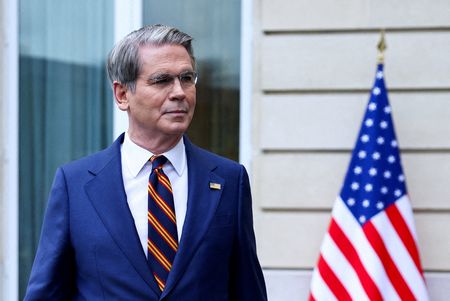

Treasury Secretary Scott Bessent recommended Monday that the Federal Reserve adopt a cautious stance on interest rate reductions while monitoring the ongoing conflict in Iran, according to comments made to Semafor’s Editor-in-Chief Ben Smith.
During the interview, Bessent characterized the U.S. economic performance in the first two months of the year as “very strong” and endorsed the Fed’s current approach, stating they are “doing the right thing by sitting and watching” as events unfold in the region.
Regarding European monetary policy, Bessent expressed surprise at the possibility of rate increases, noting “I would be shocked, for instance, if (the European Central Bank) hiked (rates).” He also pointed out differences in economic support measures, saying “Although I will say that many European countries, (such as) the UK, and Asian countries, are subsidizing demand, which we haven’t done in the U.S.”
The Treasury Secretary voiced optimism that current price spikes will not become “going to get embedded into inflation expectations.”
Economic data from March showed consumer prices climbing at their fastest pace in nearly four years, driven largely by the Iranian conflict’s impact on energy costs. The war has created significant challenges for President Donald Trump’s administration as public dissatisfaction grows regarding economic management.
Global oil markets have experienced dramatic volatility, with crude prices jumping over 30 percent due to the conflict. This surge has pushed average gasoline prices nationwide beyond $4 per gallon, marking the first time this threshold has been crossed in more than three years.
When questioned about the war’s long-term economic implications for America, Bessent offered a measured perspective: “I think we will look back and say – I don’t know the number of days – whether it’s 50 or 100 or more (days) for 50 years of stability.”