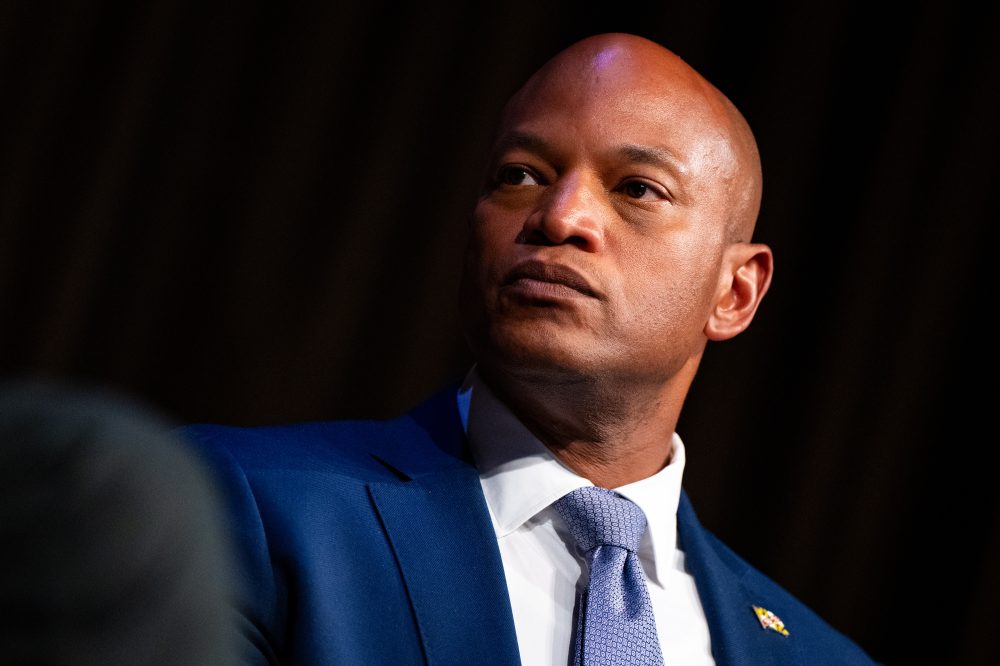

ANNAPOLIS, Md. — A push by Maryland Governor Wes Moore to alter the state’s congressional districts in favor of Democratic candidates has collapsed after facing resistance within his own party during the legislative session that concluded Monday evening.
The redistricting initiative became a victim of Democratic infighting, with the Maryland Senate ultimately keeping the legislation trapped in committee. Senate Democrats expressed worry that the plan might backfire if challenged in court.
This wave of mid-decade redistricting began after President Donald Trump urged Texas Republicans to redraw their congressional boundaries last year. The trend is set to continue with upcoming efforts in Florida by Republicans and a voter referendum in Virginia backed by Democrats.
However, Maryland Democrats will miss an opportunity to potentially gain an additional House seat, as the proposed district lines would have made it more challenging for the state’s only Republican congressman to retain his position.
Moore, who some view as a possible 2028 presidential contender, expressed his disagreement with Senate President Bill Ferguson regarding “what is required to be able to make sure we’re fighting back” against Trump.
“This is not a political game to me,” Moore told The Associated Press. “I don’t look at this as some kind of political talking point. I look at the fact that I think Donald Trump is actively trying to manipulate and change the rules around the November election and beyond because he knows he cannot win on his policies.”
Ferguson maintained that pursuing redistricting could actually harm Democrats in Maryland, as any resulting court battle might lead to a judicial mandate for new maps that could be worse for the party. He stood firm despite pressure from both Moore and House Minority Leader Hakeem Jeffries.
During a Thursday appearance at the National Action Network in New York alongside Rev. Al Sharpton, Moore criticized Trump for encouraging redistricting in some states while advising others to “sit on your hands.”
“Don’t play with me,” Moore declared. “And if the rest of the country is going to have this conversation about mid-decade redistricting, then so should Maryland, and so should every other state. Because until it is done nationally, we have to make sure that this election is not stolen right before our face so this pain is made permanent.”
Despite establishing a commission in November to develop the new district map, Moore was unable to convince the Democratic-majority Maryland Senate to support his proposal.
In January, the governor urged state lawmakers to take action against what he termed “political redlining” by Trump in other states, arguing it would reduce Black representation in Congress.
Moore, currently the nation’s sole Black governor, drew parallels between Trump’s redistricting push and discriminatory housing policies, stating that the president and his supporters “are doing everything in their power to silence the voices and trying to eliminate Black leadership — elected leadership — all over this country.”
Maryland’s Democratic voters outnumber Republicans by a 2-to-1 margin, and Democrats currently control seven of the state’s eight House seats. Representative Andy Harris serves as the lone Republican in the delegation.
While the Maryland House of Delegates approved the redistricting measure in early February, it faced strong opposition from Ferguson in the Senate.
Ferguson referenced a 2021 map that would have threatened Harris’s seat but was struck down by a judge who characterized it as “a product of extreme partisan gerrymandering.” Maryland subsequently adopted different boundaries in 2022, leading both parties to abandon their legal disputes.
Looking at redistricting efforts elsewhere this month:
Florida Governor Ron DeSantis has called a special legislative session for next week, allowing the Republican-controlled legislature to create new congressional districts. Republicans currently hold 20 of Florida’s 28 House seats.
Any Republican-favorable redistricting in Florida could significantly impact Trump’s broader strategy to reshape districts in GOP-controlled states, potentially helping Republicans gain seats in midterm elections and maintain control of the narrowly divided House.
Virginia voters are already casting early ballots on a constitutional amendment for new congressional boundaries next week.
Following this series of redistricting initiatives, Republicans estimate they could secure up to nine additional House seats across Texas, Missouri, North Carolina, and Ohio. Democrats project they could gain six seats combined in California and Utah, with Virginia potentially adding four more Democratic seats.