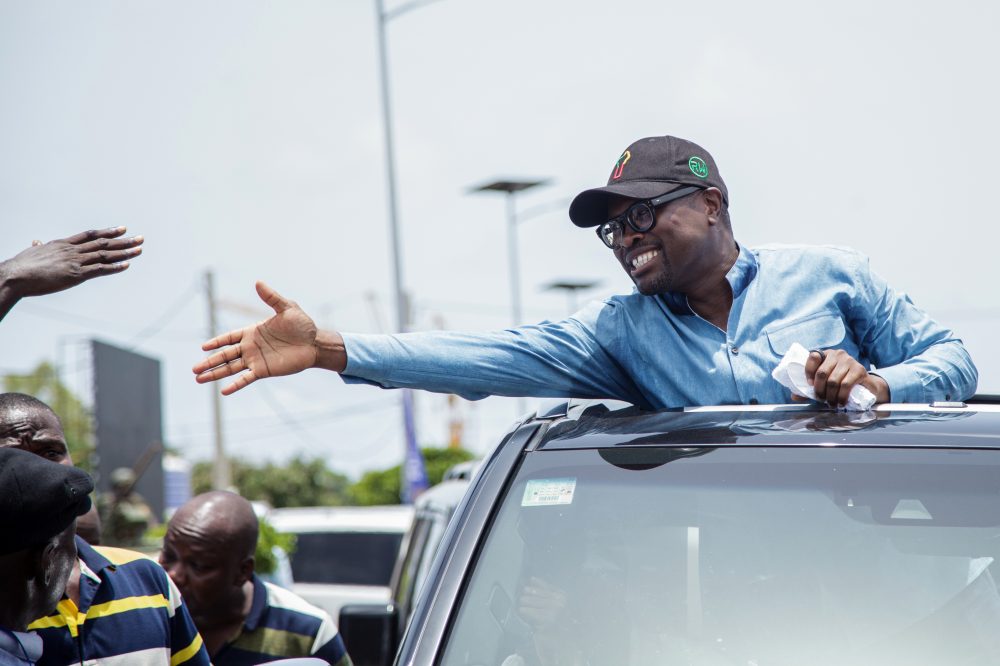

COTONOU, Benin — The West African nation of Benin has a new president-elect after Finance Minister Romuald Wadagni secured a commanding victory in Sunday’s presidential race, capturing more than 94% of ballots cast.
Sacca Lafia, who heads the country’s independent electoral commission, revealed the preliminary results during a televised announcement Monday evening. The figures represent tallies from over 90% of votes counted, with citizen participation reaching 58.75%.
Benin’s constitutional court must still validate the outcome, with official confirmation anticipated within the coming weeks.
The lone opposition contender, Paul Hounkpè, acknowledged his loss before Monday’s formal announcement after receiving just 5.95% of the vote.
At 49 years old, Wadagni had been widely regarded as the designated successor to President Patrice Talon, who will conclude his tenure at the end of May following a decade-long presidency that began in 2016. Political observers had forecast Wadagni’s victory, citing the marginalized state of opposition forces.
Talon’s presidential term concludes with a complicated record featuring economic expansion alongside increasing jihadist threats in northern regions and the systematic weakening of political opposition. Despite Benin’s historical reputation as one of Africa’s most reliable democracies, opposition figures and human rights advocates have criticized Talon for weaponizing the judicial system against political rivals.
Both Amnesty International and Human Rights Watch have condemned the persistent suppression of dissenting voices during Talon’s administration, pointing to unlawful imprisonments, stricter controls on public gatherings, and increased harassment of independent journalism.
During January’s parliamentary contests, opposition groups were unable to meet the required support threshold of 20% from registered voters across each electoral district, resulting in Talon’s two supporting parties claiming all 109 National Assembly positions.
Renaud Agbodjo, who leads The Democrats opposition party, was prevented from participating in Sunday’s presidential contest after being unable to obtain sufficient parliamentary backing — a requirement that critics argue was deliberately designed to exclude challengers.