INGLEWOOD, Calif. — When Los Angeles Clippers coach Tyronn Lue reflects on this season’s journey, he can barely contain his emotions.
“A lot,” Lue simply stated when asked about the challenges his team has faced.
Following a devastating 6-21 opening to the season, the Clippers battled back to secure a play-in tournament berth. Their final 42-40 record preserved the NBA’s longest active streak of winning seasons at 15 years. The franchise made history by becoming the first team ever to fall 15 or more games below .500 and still finish above the break-even mark.
“Usually a team deals with adversity maybe once or twice throughout a season,” Lue explained, “but not five or six times.”
Los Angeles will welcome Stephen Curry and the Golden State Warriors for Wednesday evening’s play-in matchup. The victorious team advances to Friday’s elimination contest, while the defeated squad heads into the offseason.
“Pretty remarkable turnaround,” Warriors head coach Steve Kerr acknowledged. “I know Ty well. One of his strengths is just staying the course and really keeping the guys on an even keel, and that’s not easy to do when you’re 6-21.”
The franchise’s struggles extended beyond game performance.
Kawhi Leonard and the organization continue facing an NBA probe that launched last September, examining potential salary cap violations related to Leonard’s compensation through an endorsement agreement with a now-defunct sponsor. The external legal team conducting the review has not announced a completion timeline.
Team officials have embraced the inquiry and rejected any misconduct allegations.
“It doesn’t impact anything we do on a daily basis,” basketball operations president Lawrence Frank stated in February. “We know it’s out there, we know at some point there’ll be a decision made.”
The roster suffered an early setback when Bradley Beal sustained a season-ending fracture requiring surgical intervention.
Despite enthusiastically bringing Chris Paul back to the organization last autumn, the team dismissed him in December.
Management sent him away during a road trip in an unexpected decision. The 40-year-old future Hall of Fame floor general had hoped to conclude his 21st NBA campaign by retiring as a Clipper.
February’s trade deadline brought additional changes as the Clippers eliminated their status as the league’s most veteran squad by dealing 36-year-old James Harden and beloved player Ivica Zubac.
The constant changes threatened to eclipse their hosting duties for All-Star weekend at their two-year-old facility.
Lue praised his roster’s determination in weathering the tumultuous campaign.
“To not give up, not give in, it just shows a lot about the guys in the locker room that care to what they bring every single day,” he noted.
Kerr drew parallels between the Clippers’ revival and the 1977-78 Seattle SuperSonics, who started 5-17 before firing their coach and finishing 47-35 under new leader Lenny Wilkens. That Seattle team reached the NBA Finals before capturing the franchise’s sole title the next season.
While nobody expects such a deep playoff push from Los Angeles, they’ve already overcome extraordinary obstacles.
“We always knew we were a better team that what we were showing,” veteran Brook Lopez commented, “but to go out there and prove it, it’s a nice little honor.”
VATICAN CITY — Tourists visiting St. Peter’s Square on Tuesday delivered sharp criticism of President Donald Trump following his recent social media attacks on Pope Leo XIV over the pontiff’s appeals for peaceful dialogue.
The unprecedented public feud between the American-born pope and the U.S. president has captured global attention. Trump labeled Leo as “weak” and influenced by the “radical left” in posts this week, responding to the pope’s statement that Trump’s threatening language toward Iran was “truly unacceptable.”
While Pope Leo continues his 10-day African journey, Vatican visitors rallied to defend his message of peace.
Swiss visitor Joerg Soler dismissed Trump’s comments as nonsensical. “It’s just ridiculous, because if the pope is not speaking about peace, and is not taking care about every people in the world, he’s not the pope,” Soler explained.
French tourist Mariella Acciaioli called the president’s behavior unacceptable. “It’s completely inappropriate,” she stated. “Things are getting too much. We need to mobilize everyone, especially our leaders, to deal with this behavior that is going beyond every limit.”
American visitor Paul Sarauskas expressed shock at the president’s unprecedented attack on the pontiff. “I think he needs to keep his nose out of religion. He’s telling the pope what to do. He’s telling the pope how to do his job,” Sarauskas said. “Where the pope just wants to do good things, right? He wants to talk about peace, about helping other people, whereas the current administration is doing something completely opposite. They’re just tearing people apart. They’re talking about division and war and hate.”
Italian journalist Massimo Franco, author of “Popes, Dollars and Wars” examining U.S.-Vatican diplomatic relations, suggested Trump anticipated the American pontiff would defer to U.S. interests.
“A pope must be a pope. He must respond to a wider community. And if he sees that Trump’s policy risks to give a distorted view of the United States, I think the pope is helping the United States as well, not just the United States, to find the right path,” Franco explained.
The Rev. Antonio Spadaro, a respected Italian Jesuit theologian serving as undersecretary to the Vatican’s Dicastery for Culture and Education, interpreted Trump’s anger as evidence of presidential weakness.
“He can’t bring the pope to the same terrain where he has brought everyone else, where he can dominate with language,” Spadaro told Italian Radio 24. “In this sense, the moral force of the church is evident. It is not a counter-power but a space in which power is being judged by criteria that power itself cannot control.”
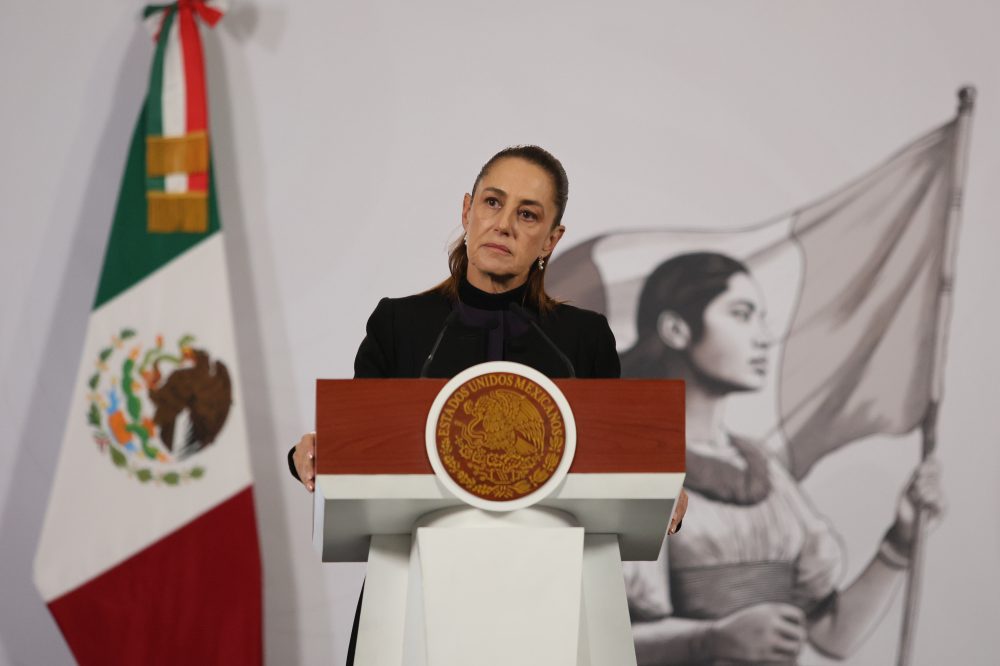
Mexico’s leadership is adopting a more confrontational approach toward the Trump administration following a series of deaths involving Mexican citizens held in U.S. immigration facilities.
President Claudia Sheinbaum’s government issued strong condemnation Tuesday after the death of 49-year-old Mexican national Alejandro Cabrera Clemente at an ICE detention facility in Louisiana, marking the 15th fatality of a Mexican citizen in American custody over the past year.
For over a year, the progressive Mexican president has maintained a cautious diplomatic approach with Trump, responding to provocations with restraint while increasing cooperation on cartel enforcement beyond what previous administrations provided, hoping to avoid threatened tariffs and potential military intervention against criminal organizations.
However, the escalating number of Mexican deaths in immigration custody, combined with Trump’s energy embargo against Cuba—a crucial Mexican partner—has prompted Sheinbaum to adopt a more assertive position.
“We’ve seen the president raise her tone,” said Palmira Tapia, an analyst for Mexico’s Center for Economic Research and Teaching. “There’s been a shift, and we’ve seen Sheinbaum be more vocal than before.”
Mexico’s administration swiftly denounced the fatalities as “unacceptable” and characterized ICE detention facilities as “incompatible with human rights standards and the protection of life.”
During a morning press conference, Sheinbaum revealed she had requested investigations into all 15 migrant deaths without receiving any response, and has directed Mexican diplomatic officials to conduct daily visits to detention facilities.
“We are going to defend Mexicans at every level,” Sheinbaum said, adding that “there are many Mexicans whose only crime is not having papers.”
Mexico has announced plans to submit a legal brief supporting a lawsuit filed by detainees challenging poor detention conditions and will bring the custody deaths before the Inter-American Commission on Human Rights. Sheinbaum indicated Tuesday her administration is also exploring an appeal to the United Nations.
These actions coincide with growing criticism within the United States regarding Trump’s immigration enforcement tactics. An AP-NORC poll from February shows approximately 60% of American adults believe Trump has “gone too far” in deploying federal immigration agents throughout U.S. cities.
“Growing dissatisfaction around ICE activities in the United States creates a more comfortable platform for members of the Mexican government to raise concerns about the fate of Mexican citizens,” said Carin Zissis, Washington interim director of the Council of the Americas.
Sheinbaum has previously maintained what she calls a “cool head” when responding to Trump’s provocations, despite facing more pressure from the U.S. than Latin America has experienced from any American president in decades. Within months, the Trump administration removed Venezuela’s president, established an oil embargo against Cuba, and threatened military action against Mexican cartels.
The Mexican leader must balance preserving strong U.S. relations while consistently emphasizing Mexico’s sovereignty to satisfy her domestic supporters. Her careful responses mirror those of a legal professional rather than the leader of Mexico’s dominant populist political organization.
Her administration has intensified cartel enforcement beyond her predecessor’s efforts and extradited numerous cartel figures to the United States. Mexican economic representatives have regularly visited Washington to strengthen diplomatic ties before upcoming renegotiations of the USMCA trade agreement.
Although Trump has publicly criticized Sheinbaum—once claiming cartels exercise more control over Mexico than her government—he has also frequently acknowledged their positive working relationship.
“She is really a nice person, I like her a lot,” he said last month, proceeding to imitate the Mexican leader in a high voice.
Changing regional dynamics and increasing ICE facility deaths have created opportunities for Sheinbaum to adopt a stronger position.
Cuba represents the primary source of tension between both governments. Supporting the U.S. adversary has remained fundamental to Mexico’s political identity since the Cuban revolution, which Fidel Castro, Ernesto “Ché” Guevara and fellow exiles famously organized while in Mexico City. This issue particularly resonates with her progressive Morena party, whose founder brought Sheinbaum to power.
Relations encountered obstacles in late January when Trump announced tariffs on any nation shipping oil to Cuba. This policy directly affected Mexico, which has supplied oil to Cuba for years.
While Sheinbaum reluctantly suspended Cuban oil shipments, she continues challenging the Trump administration’s regime change efforts.
“Mexico has every right to send fuel, whether for humanitarian or commercial reasons,” Sheinbaum stated earlier this week, noting her government proceeds carefully to avoid tariffs that could damage Mexico.
She has labeled Trump’s Cuban energy embargo as “unjust” and accused the American government of “suffocating” Cubans through sanctions. The Mexican president has dispatched food and additional aid shipments, even contributing $1,000 of personal funds to relief efforts as a symbolic gesture.
“For her, the defense of Cuba also means the defense of Mexico,” Tapia said.
Nevertheless, the Mexican leader’s actions have drawn concern from Washington.
Sheinbaum recently declared her nation would maintain Cuban medical personnel programs, departing from other Central American and Caribbean countries that terminated theirs under U.S. pressure.
This decision prompted implied threats from the Trump administration, which referenced visa restrictions imposed on Central American officials connected to what Secretary of State Marco Rubio called a “forced labor scheme.”
The White House declined to comment Tuesday regarding Sheinbaum’s increasingly firm positions or the rising deaths of Mexican citizens in ICE custody.
Sheinbaum’s recent bold approach suggests her administration believes it can resist on certain politically significant issues while simultaneously advancing trade relations and fulfilling Trump administration security and migration demands, according to Zissis.
Meanwhile, rising energy costs due to the Iran conflict have increased American dependence on Mexican allies, prompting Washington to retreat from dramatic actions against Mexican cartels or Cuba, at least temporarily, she and other experts noted.
“We’re at a moment where, due to global events, we’re facing different economic uncertainties. That gives the U.S. and Mexico more reason to work together,” she said.
Six international organizations advocating for press freedom and human rights have written to Kazakhstan’s leader demanding he release journalists currently detained and reform laws that restrict media independence.
The Committee to Protect Journalists joined five other groups in sending the letter Monday to President Kassym-Jomart Tokayev, expressing alarm over what they called a “recent spate of arrests of journalists and an escalating pattern of harassment of independent media in Kazakhstan.”
The organizations specifically highlighted the situations of well-known independent reporters Gulnara Bazhkenova, Amir Kasenov, Aset Matayev and Botagoz Omarova, all currently confined to their homes while awaiting court proceedings. The groups warned that a “rising tide of harassment is rendering the work of independent Kazakh media increasingly difficult.”
The coalition called on Tokayev to free all media professionals facing prosecution for their journalism and dismiss the criminal cases against them. They also demanded changes to laws governing the spread of false information to protect press freedoms.
The organizations pointed out that government officials have refused to grant press credentials to dozens of Radio Free Europe/Radio Liberty reporters for months and have blocked access to the news website ResPublika in actions that “appeared to have little justification beyond a desire to obstruct these outlets’ reporting.”
The letter also mentioned that “dozens of prominent journalists, news outlets, and press freedom groups have in recent months reported having their social media accounts and posts blocked or removed following spurious and apparently orchestrated complaints.”
“Mr. President, collectively these attacks on the press threaten to create a climate of fear and self-censorship that irreparably undermines the credibility of your reform agenda,” they said.
Officials from Tokayev’s administration did not respond to requests for comment about the correspondence.
Constitutional amendments backed by Tokayev received strong public support in a recent referendum, strengthening his authority in the region’s most populous nation.
The 72-year-old leader, a former Soviet bureaucrat and Kazakhstan diplomat with previous United Nations experience, faces current term restrictions that keep him in office through 2029. Political observers suggest Tokayev might leverage the referendum results to extend presidential term limits.
Since Western nations imposed economic penalties on Russia for its invasion of Ukraine, Tokayev has worked to maintain diplomatic ties with both Moscow and Western capitals, presenting the constitutional modifications as necessary for rapid decision-making in an unstable global environment.
While America’s most common family names stayed the same over the past decade, surnames of Asian origin experienced the most dramatic growth nationwide, according to new data released Tuesday by the U.S. Census Bureau.
Traditional surnames including Smith, Johnson, Williams, Brown, and Jones maintained their positions as the nation’s five most prevalent last names in 2020, matching their 2010 rankings based on the most recent national population count. However, Census officials report that Asian family names dominated the list of fastest-growing surnames during the decade.
Leading this growth were Zhang, Liu, and Wang, which claimed the top three spots for surname increases.
Completing the 2020 top-10 list of most frequent last names were Garcia, Miller, Rodriguez, Davis, and Martinez. The sole shift from 2010 rankings occurred when Rodriguez moved past Davis to claim eighth place.
This marks the fourth consecutive decade that the Census Bureau has tracked surname frequency, beginning with the 1990 count. For the first time since that initial survey, the 2020 Census also collected data on given names, though the Social Security Administration maintains annual records of popular baby names by gender.
Census findings indicate that Michael, John, James, David, and Robert were the most common male first names in 2020, while Mary, Maria, Jennifer, Elizabeth, and Patricia topped the female list.
Comparing these results to 1990 data shows minimal change over three decades. Thirty years ago, James, John, Robert, Michael, and William led male names, while Mary, Patricia, Linda, Barbara, and Elizabeth were most popular among females.
The Census Bureau’s methodology differs from Social Security Administration tracking by including all residents rather than focusing solely on newborns.
“The names people choose are a function of what they are exposed to, so culture certainly plays a role, but so does social influence,” said Jonah Berger, a professor of marketing at the University of Pennsylvania. “People are constantly exposed to names of others around them, and that can shape not only which names they like, but also which ones they avoid.”
WASHINGTON — Four Justice Department attorneys who prosecuted cases involving anti-abortion activists have been terminated by the Trump administration, which alleges the previous Biden administration misused federal laws meant to safeguard abortion facilities from blockades and intimidation.
These dismissals represent another round of employee removals targeting those connected to cases that drew conservative criticism or who were viewed as inadequately committed to President Donald Trump’s policies. The terminations occurred alongside the publication of a report claiming the Biden administration conducted biased prosecutions under the Freedom of Access to Clinic Entrances Act, known as the “FACE Act.”
“This Department will not tolerate a two-tiered system of justice,” Acting Attorney General Todd Blanche stated. “No Department should conduct selective prosecution based on beliefs. The weaponization that happened under the Biden Administration will not happen again, as we restore integrity to our prosecutorial system.”
This marks the initial report from the Justice Department’s “Weaponization Working Group,” established by former Attorney General Pam Bondi to examine federal prosecutions of Trump and additional cases that conservatives have challenged.
Former Attorney General Merrick Garland and Special Counsel Jack Smith, who led Trump’s prosecution, have maintained they based their decisions solely on facts, evidence and legal standards. Trump administration critics argue that Bondi — recently dismissed by Trump — and Blanche have actually politicized the department through unprecedented actions that raise concerns about using the institution to further Trump’s personal and political objectives.
Under Biden’s leadership, the administration pursued cases against numerous defendants using the FACE Act, which criminalizes physically blocking access or threatening force to intimidate individuals seeking reproductive healthcare services, while also prohibiting property damage at abortion facilities and related centers. The legislation became law in 1994 during a period of increased clinic demonstrations and blockades, following violent incidents against abortion providers including the murder of Dr. David Gunn.
According to the Trump administration’s report, Biden-era prosecutors frequently “ignored and downplayed” attacks targeting pregnancy resource centers and religious institutions, which also receive protection under the statute. The report further alleges that the Biden administration sought more severe penalties for anti-abortion activists compared to cases involving abortion-rights defendants. Trump previously pardoned anti-abortion activists convicted of blocking clinic entrances, describing them as “peaceful pro-life protesters.”
Kristen Clarke, who directed the Justice Department’s Civil Rights Division during the Biden administration, stood by the prosecutions, stating the attorneys “enforced the law even-handedly and put public safety at the center of this work.”
“The Civil Rights Division brought law enforcement leaders, crisis pregnancy center representatives, faith leaders, and reproductive health care staff together to address the real violence, threats of violence, and obstruction that too many people face in our country when it comes to reproductive health care,” Clarke said in an emailed statement on Tuesday.
These dismissals are part of a wider staff overhaul that has disrupted career Justice Department attorneys who traditionally remain protected from administrative changes through established civil service safeguards.
Justice Connection, an organization of former department staff members, characterized the agency leadership’s actions as showing “cruelty and hypocrisy are on full display in this report.”
“They insist on zealous advocacy by career staff in advancing the President’s priorities, while shaming and firing those who did just that in the prior administration,” said Stacey Young, a former department attorney who established Justice Connection. “They’ve put career employees on notice: if they do their jobs, they face potential termination if future political leadership disagrees with the policy goals of prior leadership.”
Congressional redistricting efforts are intensifying across the nation as states compete for political advantages before November’s midterm elections, with fewer opportunities remaining and deadlines approaching fast.
Maryland’s legislative session concluded this week, ending Democratic hopes to redraw the state’s congressional districts. Meanwhile, Florida legislators will convene Monday for a special session focused on Republican redistricting efforts. Virginia residents will vote Tuesday on a Democratic redistricting proposal that could deliver several additional House seats to the party this election cycle.
Congressional maps are traditionally redrawn every ten years following the census. However, former President Donald Trump sparked an uncommon mid-decade redistricting wave last year by encouraging Texas Republicans to alter House districts for GOP benefit in the midterms. California Democrats responded in kind, triggering redistricting movements nationwide.
Current projections suggest Republicans could secure nine extra seats in states where they’ve redrawn congressional boundaries, while Democrats anticipate gaining six seats through redistricting elsewhere. These estimates assume historical voting trends continue into November, though uncertainty remains high given that the governing party typically loses midterm seats and Trump faces unfavorable poll numbers.
Democrats require only a small number of additional seats in November to reclaim House control from Republicans, potentially enabling them to block Trump’s legislative priorities.
More than twelve states have considered or proposed redistricting measures. Current attention centers on two states with opposing party leadership.
Current composition: eight Democrats, 20 Republicans
Proposed changes: Republican Governor Ron DeSantis has scheduled a special legislative session starting Monday to address congressional redistricting. Republicans have not yet revealed their specific redistricting strategy.
Legal obstacles: The state constitution prohibits drawing districts with the intention of favoring or disadvantaging any political party or incumbent officeholder.
Current composition: six Democrats, five Republicans
Proposed changes: A new congressional map approved by the Democratic-controlled General Assembly could assist Democrats in winning up to four additional seats. Implementation requires voter approval of a constitutional amendment permitting mid-decade redistricting, which appears on Tuesday’s ballot.
Legal obstacles: The state Supreme Court authorized the referendum to proceed but has not determined the effort’s legality. The court is reviewing an appeal of a Tazewell County judge’s decision declaring the amendment invalid due to lawmakers violating procedural rules during passage.
Six states have implemented new congressional districts since last summer. Four states pursued redistricting voluntarily, one was mandated by state constitutional requirements, and another acted under judicial order.
Current composition: 13 Democrats, 25 Republicans
New configuration: Republican Governor Greg Abbott enacted a revised House map last August that could help Republicans secure five additional seats.
Legal obstacles: The Supreme Court cleared the path in December for using the new districts in this year’s elections, suspending a lower court decision that blocked the map for being “racially gerrymandered.”
Current composition: 43 Democrats, nine Republicans
New configuration: Voters approved revised House districts in November drawn by the Democratic-controlled Legislature that could help Democrats gain five additional seats.
Legal obstacles: The Supreme Court permitted the new districts for this year’s elections in February, rejecting appeals from Republicans and the Justice Department claiming the districts improperly favor Hispanic voters.
Current composition: two Democrats, six Republicans
New configuration: Republican Governor Mike Kehoe enacted a revised House map last September that could help Republicans gain one additional seat.
Legal obstacles: A Cole County judge ruled the new map takes effect while election officials determine if a referendum petition meets constitutional standards and contains sufficient valid signatures. The Missouri Supreme Court dismissed claims that mid-decade redistricting is illegal and will hear arguments in May regarding allegations the new districts violate compactness requirements and should be suspended pending the potential referendum.
Current composition: four Democrats, 10 Republicans
New configuration: The Republican-controlled General Assembly finalized revised districts in October that could help Republicans win one additional seat.
Legal obstacles: A federal court panel denied a November request to prevent the revised districts from being used in midterm elections.
Current composition: five Democrats, 10 Republicans
New configuration: A bipartisan panel with Republican majority approved revised House districts in October that enhance Republicans’ prospects of winning two additional seats.
Legal obstacles: None exist. The state constitution mandated new districts before the 2026 election because Republicans had previously approved maps without adequate Democratic support following the last census.
Current composition: no Democrats, four Republicans
New configuration: A judge implemented revised House districts in November that could help Democrats win one seat. The court determined lawmakers had bypassed voter-approved anti-gerrymandering standards when adopting the previous map.
Legal obstacles: Both a federal court panel and the state Supreme Court rejected Republican challenges to the judicial map selection in February.
Governors, legislators, and partisan officials advocated for congressional redistricting in multiple states. At least five states saw these efforts gain initial momentum before ultimately failing in either legislative bodies or courts.
Current composition: seven Democrats, one Republican
Proposed changes: The Democratic-controlled House passed a redistricting plan in February supported by Democratic Governor Wes Moore that could help Democrats win one additional seat.
Legal obstacles: The legislative session concluded in April without the Democratic-led Senate voting on the redistricting proposal. The Senate president cited concerns it might harm Democratic interests.
Current composition: 19 Democrats, seven Republicans
Proposed changes: A judge ordered a state commission in January to redraw boundaries for New York City’s only Republican-represented congressional district, ruling it unconstitutionally weakens Black and Hispanic voting power.
Legal obstacles: The Supreme Court granted Republicans’ request in March to stop the judge’s order, maintaining existing district boundaries for the 2026 election.
Current composition: two Democrats, seven Republicans
Proposed changes: The Republican-controlled House approved a redistricting plan in December that would have enhanced Republicans’ chances of winning two additional seats.
Legal obstacles: Despite Trump’s pressure to adopt the new map, the Republican-led Senate rejected it in a bipartisan vote on December 11.
Current composition: one Democrat, three Republicans
Proposed changes: Several Republican lawmakers attempted to initiate congressional redistricting.
Legal obstacles: Lawmakers abandoned a petition drive for a special redistricting session in November after failing to secure sufficient support.
Current composition: 14 Democrats, three Republicans
Proposed changes: The Democratic Congressional Campaign Committee proposed a new congressional map in October that would improve Democrats’ chances of winning one additional seat.
Legal obstacles: The Democratic-controlled General Assembly refused to pursue redistricting, expressing concerns about impacts on Black representation.
Communities across the Plains and Midwest are bracing for another round of dangerous weather after tornadoes and severe thunderstorms left a trail of damage on Monday, injuring several people and destroying homes.
Weather experts are cautioning that Tuesday afternoon and evening could bring another wave of severe storms featuring large hail, tornado activity, and destructive wind gusts to the same regions hit just one day earlier.
Kansas bore the brunt of Monday’s severe weather, with multiple counties reporting injuries and significant property damage. Franklin County authorities documented three people with minor injuries in rural areas approximately 50 miles southwest of Kansas City. The town of Ottawa experienced building damage but fortunately recorded no fatalities or injuries, according to local officials. Chelsea Picha, a meteorologist from the National Weather Service’s Topeka office, confirmed that a survey team would evaluate Ottawa-area damage on Tuesday to confirm whether tornado activity occurred.
Miami County also felt the storm’s impact, with two residents sustaining minor injuries while several homes were completely destroyed and multiple recreational vehicles and campers were flipped over, the sheriff’s office reported. Electrical service to Hillsdale was temporarily shut off as a safety precaution during cleanup operations.
Southern Minnesota experienced three confirmed tornado touchdowns, resulting in damage to agricultural properties, according to Jake Beitlich, a meteorologist from the Twin Cities weather office. The region also endured baseball-sized hail that damaged numerous vehicles.
Northwestern Wisconsin saw tornado activity near the village of Gilman, home to roughly 380 residents, though damage remained relatively minor, said Jeff Boyne, a meteorologist from the National Weather Service’s La Crosse office. Weather officials are still working to classify the tornado’s intensity rating. In southwestern Wisconsin, storms tore the roof from a manufactured home in Steuben, a community of about 120 people, though no injuries were reported statewide.
The severe weather’s aftermath forced numerous schools in the Madison area to cancel Tuesday classes due to widespread power outages. More than 25,000 Wisconsin customers remained without electricity Tuesday morning, according to poweroutage.us tracking data.
Weather officials are predicting substantial flooding along rivers and smaller waterways throughout the Upper Great Lakes region extending through week’s end. The most intense rainfall is anticipated overnight into Wednesday, with isolated flash flooding possible.
Meanwhile, Michigan faces its own weather-related emergency as Governor Gretchen Whitmer issued an emergency declaration Friday for the Cheboygan Lock and Dam Complex. Record March snowfall combined with recent rainfall has pushed water levels to dangerous heights. Additional pumps were deployed Monday to redirect water toward Lake Huron. As of 7 a.m. Tuesday, water levels measured just 7.68 inches below the structure’s top, state monitoring data showed.
NEW YORK (AP) — With just weeks remaining before its scheduled closure, the Pittsburgh Post-Gazette announced Tuesday that new ownership has stepped in to rescue the historic publication.
The newspaper, which traces its origins back to 1786 as the first publication established west of the Allegheny Mountains, would have left Pittsburgh as America’s largest city without a locally-based newspaper had it closed as planned.
Block Communications, the current ownership group, revealed that the Venetoulis Institute for Local Journalism — the organization behind the digital Baltimore Banner — has reached an agreement to purchase the newspaper’s assets. The companies did not reveal the purchase price.
Under the new ownership structure, the Post-Gazette will maintain its print edition twice weekly on Thursdays and Sundays, while operating its digital platform throughout the remainder of the week.
The historic publication had been scheduled to cease operations on May 3rd.
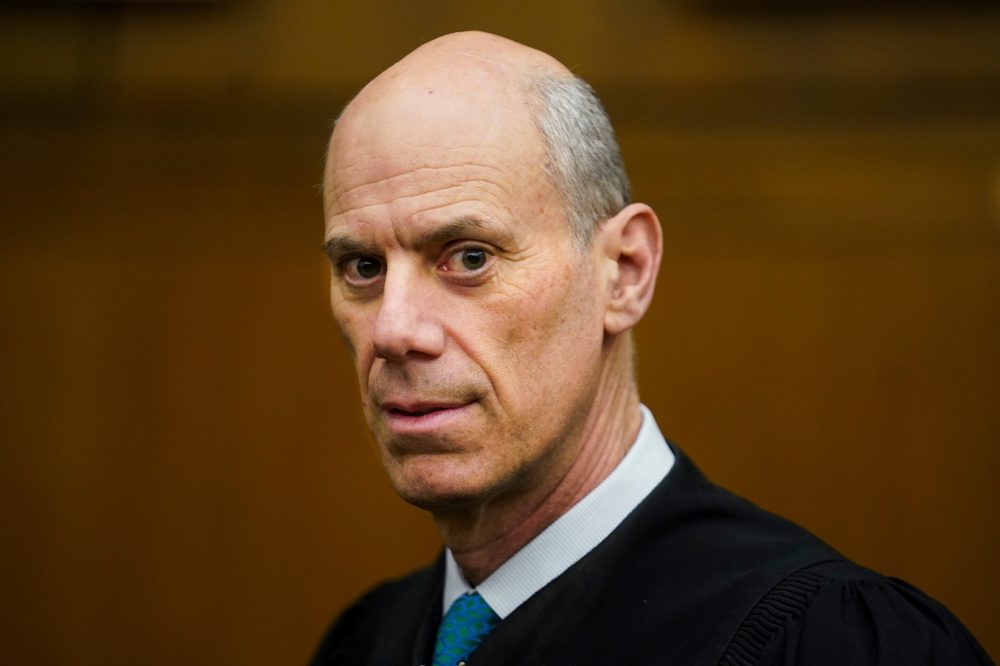
WASHINGTON — A Washington D.C. federal judge has been ordered to halt his contempt investigation into the Trump administration’s handling of deportation flights involving Venezuelan migrants, following a ruling from a federal appeals court panel on Tuesday.
The U.S. Court of Appeals for the District of Columbia Circuit determined that Chief Judge James Boasberg exceeded his authority when he continued criminal contempt proceedings related to deportation flights from March 2025. The appeals court described the investigation as overly “intrusive.”
In the majority decision, Circuit Judge Neomi Rao stated that President Donald Trump’s administration possesses a “clear and indisputable” right to have the contempt proceedings terminated.
“The legal error at the heart of these criminal contempt proceedings demonstrates why further investigation by the district court is an abuse of discretion,” Rao explained in her written opinion. “Criminal contempt is available only for the violation of an order that is clear and specific. (Boasberg’s March 2025 order) did not clearly and specifically bar the government from transferring plaintiffs into Salvadoran custody.”
The controversy stems from events on March 15, 2025, when Judge Boasberg issued an order directing the Trump administration to reverse course on two aircraft that were already airborne, carrying Venezuelan migrants from the United States to El Salvador.
Trump administration representatives maintain that Boasberg demonstrated bias and exceeded his judicial powers. They argue the judge acted inappropriately in his handling of the deportation matter.
In a subsequent April 16, 2025 ruling, Boasberg indicated that the Trump administration potentially acted dishonestly by attempting to expedite the removal of Venezuelan migrants despite his order preventing their deportation to El Salvador. The judge noted he provided the administration with sufficient chances to “rectify or explain their actions” but found that “none of their responses has been satisfactory.”
The political tensions surrounding this case have escalated significantly. President Trump has publicly advocated for Boasberg’s impeachment, while the Justice Department submitted a misconduct complaint last year alleging the judge made inappropriate public statements regarding Trump and his administration. However, Supreme Court Chief Justice John Roberts has publicly dismissed calls for the judge’s impeachment.
The appeals court panel consisted of Circuit Judge Rao, a Trump appointee, along with Circuit Judges Justin Walker and J. Michelle Childs. Walker, another Trump nominee, authored a separate opinion supporting Rao’s decision. Childs, who received her nomination from Democratic President Joe Biden, filed a dissenting opinion. Judge Boasberg was originally nominated by former Democratic President Barack Obama.
DUBLIN, April 14 – A junior minister in Ireland’s government stepped down Tuesday, criticizing leadership for their handling of widespread demonstrations over rising fuel costs that swept the nation last week. He announced plans to support opposition efforts to remove the coalition from power.
Michael Healy-Rae’s departure during parliamentary proceedings caught government officials off guard, as the coalition depends on support from independent legislators like him to maintain control. The ruling party is still anticipated to survive the confidence vote triggered after demonstrators blocked oil facilities and forced roughly one-third of the country’s gas stations to run dry. Those disruptions concluded Monday.
“The leader of the country should have listened and because of the fact that I believe this government has let the people of Ireland down, I will be voting no confidence in the leader of the country and I will be tendering my resignation as a Minister of State from now,” Healy-Rae declared to lawmakers.
The departing minister indicated his rural Kerry County voters opposed seeing him “or any Healy-Rae” supporting the current administration. His comments hinted that his brother Danny, also an independent member of parliament, might similarly withdraw backing, which would further reduce the government’s working majority.
Attempting to calm public anger, officials unveiled a 500 million euro ($586 million) package of increased spending and reduced taxes Sunday to help consumers and businesses cope with rising costs. This followed a 250 million euro relief measure implemented three weeks earlier.
A court in Milan has given the green light to a collective lawsuit targeting Meta Platforms following a significant breach of Facebook user information that impacted hundreds of millions of people worldwide.
The ruling from the Italian court stems from a data harvesting incident that occurred over an 18-month period from January 2018 through September 2019. Meta publicly revealed the breach in 2021, acknowledging that approximately 533 million Facebook accounts across the globe were compromised.
The CTCU consumer advocacy organization filed the legal action seeking damages for social media users whose personal information was stolen or who worried about losing control of their private data. The incident represents a violation of the European Union’s comprehensive data privacy laws known as the General Data Protection Regulation.
Legal experts estimate that roughly 35 million Italian Facebook users could be eligible for compensation as part of the data harvesting case.
A representative from Meta pushed back against Tuesday’s court decision, stating: “We respectfully disagree with the court’s decision, which is a procedural ruling only and makes no finding that Meta violated any law.” The company spokesperson continued: “We are confident this meritless action will ultimately be dismissed.”
Military units from Libya’s competing governments worked side-by-side Tuesday during American special forces training exercises in Sirte, marking an unprecedented collaboration between the former civil war opponents.
The North African nation has remained fractured since civil conflict erupted in 2014, following the 2011 revolution that toppled dictator Muammar Gaddafi. The discord reached its peak during 2019-2020 when eastern-based military leader Khalifa Haftar’s Libyan National Army launched an unsuccessful campaign to capture Tripoli, the western capital.
However, relations between the rival factions have significantly improved recently. Just last week, both sides reached agreement on their first shared budget in over ten years, establishing how to distribute the nation’s substantial annual oil income worth billions of dollars.
The special operations training program, called “Flintlock” and organized by the United States Africa Command (AFRICOM), brought together troops from both Haftar’s eastern-based Libyan National Army and the internationally recognized Government of National Unity headquartered in Tripoli.
During opening ceremonies in Sirte, Saddam Haftar, who serves as deputy commander of the LNA and is the son of Khalifa Haftar, delivered remarks stating the training “reaffirms Libya’s position as a reliable partner in supporting regional and international peace and security.”
According to AFRICOM officials, military personnel from over 30 nations will participate in the exercises, which will continue later this month in Ivory Coast.
The command emphasized Italy’s substantial contribution to organizing and executing the Libyan portion of Flintlock, describing it as a “historic milestone” that advances “the continued development of a unified Libyan military.”
BRUSSELS – Two major food corporations, Nestle and Mondelez, released individual statements Tuesday clarifying that they were not the focus of European Commission enforcement actions conducted Monday during an investigation into potential antitrust violations within the chocolate confectionery industry.
European Commission officials had announced Monday that they conducted enforcement raids at business locations across two nations, targeting a company suspected of violating competition laws that ban cartel behavior and practices that restrict fair competition.
The investigation centers on possible breaches of antitrust regulations within the chocolate manufacturing sector, though the Commission has not identified which specific company is under scrutiny.
An artificial intelligence company has brought on its first pharmaceutical industry executive as a board member, signaling growing ties between AI technology and healthcare sectors.
Anthropic announced Tuesday that Vas Narasimhan, who serves as Chief Executive Officer of pharmaceutical giant Novartis, will join the company’s board of directors. The appointment represents a milestone for the AI startup, which develops the Claude chatbot system.
Narasimhan now sits alongside other notable board members including Anthropic’s CEO Dario Amodei, President Daniela Amodei, Confluent’s CEO Jay Kreps, and Netflix chairman Reed Hastings. His addition follows the February appointment of Chris Liddell, a former Microsoft executive, making Narasimhan the second new board member this year.
The Anthropic Long-Term Benefit Trust, an independent organization whose members hold no financial interest in the company, selected Narasimhan for the position. Reports suggest Anthropic may pursue a public stock offering potentially as soon as this year.
In a LinkedIn message, Narasimhan shared his perspective on technology’s role in healthcare advancement. “Working across medicine, innovation, and global health has helped me realize that technology creates the most value when it’s deployed responsibly,” he wrote.
The Novartis leader highlighted artificial intelligence’s current impact on medical research and drug development. “In healthcare AI is already accelerating some of our hardest scientific challenges – from deepening our understanding of disease biology to helping identify promising targets and design better medicines. But speed alone isn’t the goal,” Narasimhan explained, adding “what matters just as much is how these tools are built, governed, and ultimately applied in the real world.”
The aerospace giant Boeing reported delivering 46 aircraft during March, representing a decline from the 51 planes delivered in February, as the company addressed electrical wiring defects in roughly 25 of its widely-used 737 MAX aircraft.
While Boeing didn’t reveal exactly how many aircraft handovers were postponed due to the repair work, Chief Financial Officer Jay Malave previously indicated in March that approximately 10 deliveries of 737 aircraft would shift into the second quarter, though he emphasized this wouldn’t impact the company’s annual delivery targets for the 737 program.
The Seattle-based aircraft manufacturer’s March performance fell short of European competitor Airbus, which completed 60 aircraft deliveries during the same period. Boeing has consistently delivered fewer planes than Airbus annually since 2018. Wall Street analysts pay close attention to delivery figures since aircraft manufacturers collect the majority of payment when planes are transferred to buyers.
For new business, Boeing secured 33 fresh orders while experiencing two order cancellations, resulting in 31 net new orders for March.
Looking at the broader picture, Boeing handed over 143 aircraft during the first quarter of the year, surpassing Airbus’s 114 deliveries as the European manufacturer faces challenges with engine supply shortages. This compares to 41 jets Boeing delivered in March of the previous year.
March’s delivery breakdown included 33 aircraft from the 737 MAX line, one 737 Next Generation model designated for U.S. Navy P-8 conversion, seven 787 Dreamliners, three 777 cargo planes, one 767 freighter, and one 767 scheduled for conversion into a KC-46 military refueling aircraft for the U.S. Air Force.
Regarding new orders, Boeing received 25 requests for 737 aircraft from undisclosed buyers in March, consisting of 20 MAX variants and five Next Generation models. Additionally, the company logged eight orders for 787 aircraft from unidentified customers.
Two airlines, Air Europa and Enter Air, each withdrew orders for 737 MAX aircraft during the month.
For the entire first quarter, Boeing accumulated 149 new orders after accounting for cancellations and aircraft conversions. The company concluded March with a total order backlog of 6,127 aircraft, including 4,368 from the 737 family, 94 of the 767 model, 606 from the 777 line, and 1,059 787 Dreamliners.
Drivers in southern Delaware’s coastal areas should plan for extra travel time today as roadway maintenance crews conduct striping operations in Lewes, Dewey Beach, and Rehoboth Beach.
The Delaware Department of Transportation reports that the road marking work is causing traffic slowdowns throughout these beach communities and is expected to continue through 6 PM this evening.
Motorists are advised to use alternate routes when possible or allow additional time for their commute through the affected areas.
Drivers in Bear should prepare for overnight construction activity beginning this Sunday as state transportation crews start road repairs on Salem Church Road.
DelDOT officials say workers will conduct hot mix asphalt patching operations along the stretch of Salem Church Road running from Old Baltimore Pike to Gender Road. The overnight construction schedule runs from 9 PM until 5 AM each night, beginning Sunday, April 19th and continuing through the remainder of the week.
Officials advise drivers to exercise caution when traveling through the work zone and to allow extra time for potential minor traffic delays during the construction hours.
A new committee designed to give farmers throughout the Chesapeake Bay watershed a stronger voice in environmental restoration efforts has completed its first year of operations, with two Delaware representatives playing key roles.
The Chesapeake Bay Program’s Agricultural Advisory Committee launched in March 2025 during a critical period as the bay restoration program moves “Beyond 2025.” The committee was established to provide those who farm the land with direct input into leadership decisions affecting the bay’s future.
Fourteen appointed members make up the committee, representing all states within the Chesapeake Bay watershed plus the District of Columbia. Delaware’s representatives include Bill Powers and Will Carlisle, who joined farmers, agricultural business leaders, and technical specialists from across the region. This mix of practical farming experience aims to give the agricultural sector formal representation in restoration planning.
“For too long, agricultural policy was often seen as something happening to farmers rather than with them. The AAC has fundamentally changed that dynamic,” the committee stated in reviewing its first year.
The advisory group serves as an official liaison to the Chesapeake Executive Council and the Principals’ Staff Committee, working to ensure policy decisions reflect actual farming conditions and challenges.
During its first year, the committee achieved several significant milestones. Members helped shape revisions to the “Beyond 2025” Framework and the Chesapeake Bay Watershed Agreement, successfully ensuring agriculture received explicit representation in the updated agreement. This inclusion is considered crucial since farming operations must deliver a substantial portion of the remaining nutrient reduction targets needed to meet bay restoration goals.
The committee’s initial formal recommendations emphasized that economic sustainability must come first for conservation efforts to succeed. “You can’t ask a farmer to invest in the future of the Bay if they can’t stay in business today,” the group noted.
Other priorities established during the first year included promoting soil health as fundamental to restoration success and pushing for more transparent data systems that properly recognize conservation work already being performed by farmers.
Committee members believe their approach represents a fundamental shift from previous restoration efforts. “We are no longer just reacting to implementation goals; we are helping to write the playbook,” they stated.
Looking ahead to year two, the advisory committee plans to continue advocating for producer interests while maintaining focus on farm viability as essential for achieving water quality and habitat improvements. The group sees farmers as leaders in the next phase of bay restoration rather than simply contributors to pollution problems.
“The message from the first year is clear: when farmers engage as partners rather than just ‘sources’ of runoff, we see record reductions in pollution and stronger rural economies,” the committee concluded.
The Board of Trustees for the Maryland Agricultural Land Preservation Foundation will conduct their next meeting through video conference on February 24, 2026, beginning at 9:00 a.m.
The virtual session will focus on standard board operations and general organizational matters, according to the meeting announcement.
The foundation works to protect farmland across Maryland through conservation easements and other preservation programs.
CHARLOTTE, N.C. — Two Charlotte Hornets guards have achieved something that hasn’t been done since the Golden State Warriors’ legendary Splash Brothers dominated from beyond the arc.
Kon Knueppel and LaMelo Ball have become the first teammates since Steph Curry and Klay Thompson to claim the top two spots in the NBA for three-pointers made in a season. Their impressive shooting performance comes as Charlotte attempts to break the league’s longest active playoff drought, which has stretched for a decade.
The rookie Knueppel shattered NBA first-year records on his way to leading the entire league with 273 three-pointers while maintaining an impressive 42.5% accuracy rate from long range.
Ball finished just one shot behind his teammate with 272 successful three-pointers on 36.8% shooting from beyond the arc.
“I think it’s pretty cool — they must have a great coach that allows them to shoot that many 3s,” Charlotte coach Charles Lee joked about his players’ achievement.
Beyond the humor, the Hornets appear to have discovered their offensive identity under Lee’s guidance and are moving in a positive direction after spending most of the past decade struggling near the Eastern Conference basement.
Expect plenty of long-range attempts Tuesday evening when Charlotte welcomes the Miami Heat for their 9 vs. 10 NBA play-in tournament matchup — marking the franchise’s first home postseason contest in ten years.
Charlotte must defeat Miami and then beat whichever team loses the 7-8 contest between Philadelphia and Orlando to advance to an actual playoff series for the first time since the 2015-16 campaign.
Knueppel has provided exactly what the Hornets organization desperately needed.
The first-year player earned Eastern Conference Rookie of the Month honors four times and paces all rookies with 36 games scoring 20 or more points. He surpassed six-time NBA champion Michael Jordan’s rookie record for most 20-point games while shooting 65% true shooting percentage, accomplishing the feat 27 times.
“Kon is like my brother for real, and I love playing with him,” Ball explained. “He’s such a great shooter it makes our whole team better the way we play off each other.”
The two players bring contrasting styles to Charlotte’s backcourt.
Ball prefers creating space with step-back three-pointers and employs an unconventional shooting form, frequently launching shots off one foot. Knueppel displays textbook shooting mechanics that remain consistent from attempt to attempt, and while he excels as a catch-and-shoot threat, he regularly uses side dribbles to evade approaching defenders and generate open opportunities.
Despite their differences, the pair has found remarkable chemistry on the court.
Knueppel held a three-shot advantage over Ball entering the regular season finale, but the point guard nearly overtook him by connecting on five three-pointers in that last game.
If Ball had attempted and converted one additional three-pointer in the fourth quarter, he would have tied Knueppel for the league lead.
“Well, we were passing each other good looks and trying to make the right reads,” Knueppel said about the team’s victory over the New York Knicks. “It wasn’t like somebody was going in there jacking (up shots). We were passing back and forth trying to make the right play. It just so happened to be me.”
Lee noted that such unselfish play has characterized his team throughout the entire season.
“Those two guys, they work so hard on their craft,” Lee commented. “One thing I like is our team’s unselfishness to create those looks for them with the drives and kicks. And it’s impressive that our guards and our bigs are setting such great looks to get these guys clean looks.”
Charlotte’s offensive arsenal extends well beyond just two players.
Brandon Miller represents another elite shooter who connected on 204 three-pointers this season and might have challenged Knueppel and Ball’s totals if not for missing 17 games with an injury. Miles Bridges also possesses three-point range, though he’s better recognized for his ability to attack the rim and his athletic finishing on fast-break alley-oops.
The Hornets also added Coby White, who has made a significant impact off the bench following his midseason acquisition from the Chicago Bulls.
White has knocked down 43 three-pointers across 21 appearances with Charlotte.
Don’t overlook undersized center Moussa Diabate, who generates open three-point looks by distributing the ball to the perimeter following offensive rebounds.
Now Charlotte must determine whether their prolific three-point shooting can produce playoff victories like it once did for Golden State’s Splash Brothers.
BELGRADE, Serbia — Serbian President Aleksandar Vucic announced Tuesday that his country will partner with Israel to manufacture military drones, marking another step in the Balkan nation’s efforts to strengthen its defense capabilities and weapons manufacturing sector.
Speaking to reporters, Vucic declared that “we will have the best drones in this part of the world,” as reported by the Tanjug news agency. The Serbian leader noted that while the unmanned aircraft won’t come at a low cost, they will demonstrate exceptional capability in targeting armored military vehicles.
The president acknowledged Serbia’s limitations in drone technology, stating: “We don’t know how to make drones as Israel does. I am proud of that (plan,) we will do it together, it will be half-half, 50-50.”
Vucic emphasized the educational benefits of the partnership, explaining that Serbia “will get innovation and (educate) our people who will be able to do it in the future.”
According to Serbia’s BIRN news outlet, the collaboration will involve the country’s state-owned Yugoimport SDPR arms manufacturer establishing a drone production facility alongside Israeli defense contractor Elbit Systems. Reports indicate the Israeli firm will hold a 51% stake in the manufacturing plant.
This drone partnership represents the latest move by Vucic’s administration to enhance Serbia’s military strength. Earlier in 2024, the country purchased 12 Rafale fighter aircraft from France as part of its air force modernization program.
Serbia has diversified its military procurement, obtaining defense equipment from both China and Russia while maintaining strong relationships with these nations. This approach continues even as Belgrade officially pursues European Union membership.
The country has committed to remaining outside NATO, the alliance that conducted bombing campaigns against Serbia in 1999 to halt the Kosovo conflict, which followed a turbulent decade of warfare throughout the Balkan region.
PORT-AU-PRINCE, Haiti — Haiti’s government has terminated two officials Tuesday in response to a deadly crowd crush at a historic mountaintop site that claimed 25 lives during the weekend.
Haiti’s Ministry of Culture and Communication announced the firings in an official statement, removing a director from the Institute for the Preservation of National Heritage for what they called “serious negligence.” A second ministry director was also terminated for alleged “biased passivity.”
The deadly incident unfolded Saturday at La Citadelle, a historic fortress and popular tourist destination in Haiti’s northern region. A local DJ had organized the gathering through social media promotion and loudspeaker announcements from vehicles traveling through local communities.
“The Ministry of Culture and Communication, without going into the details of the criminal investigation, believes that the tragedy at La Citadelle is the result of administrative negligence,” officials stated, emphasizing that the government “will fully assume its responsibilities.”
The crowd surge left dozens injured beyond the 25 fatalities. Medical officials reported Monday evening that 30 hospitalized victims had been discharged from care.
Law enforcement has taken nine individuals into custody related to the incident, with five of those arrested being police officers.
Cap-Haitien prosecutor Eno Zephirin spoke with Radiotélévision Caraïbes Tuesday, confirming that investigators are working to determine what triggered the deadly stampede. While declining to name two suspects, Zephirin confirmed that two others arrested Monday work for Haiti’s Institute for the Preservation of National Heritage, the agency responsible for managing La Citadelle.
BUENOS AIRES, Argentina — Court proceedings have restarted in Argentina against seven medical workers facing charges of negligent care in the 2020 death of soccer legend Diego Maradona, nearly twelve months after the initial trial fell apart when a judge resigned following her appearance in a documentary about the proceedings.
The case focuses on allegations that seven healthcare workers failed to deliver proper medical attention during the final weeks before Maradona’s passing five years ago at a residence near Buenos Aires. The soccer icon, considered among history’s finest players, passed away at 60 from heart failure while recuperating from surgery to address a brain blood clot.
All seven face charges of culpable homicide, comparable to involuntary manslaughter, which claims the defendants knew their negligent actions created danger but did nothing to stop it. Conviction could bring prison terms between eight and 25 years.
Legal representatives for the defense maintain that the leader of Argentina’s 1986 World Cup championship squad battled numerous severe health issues and assert no criminal wrongdoing occurred.
Maradona experienced various health crises throughout his life, many linked to excessive drug and alcohol use. Reports indicate he nearly died in both 2000 and 2004.
The defendants include doctor Leopoldo Luque, who served as Maradona’s primary physician in his final years, along with psychiatrist Agustina Cosachov and psychologist Carlos Díaz.
Court sessions are scheduled twice weekly on Tuesdays and Thursdays. Nearly 100 witnesses are anticipated to provide testimony, including relatives, close associates of the former athlete, medical experts and law enforcement officials.
Judges Alberto Gaig, Alberto Ortolani and Pablo Rolón are anticipated to announce their decision in early June.
Fernando Burlando, legal counsel for Maradona’s eldest daughters Dalma and Giannina who are plaintiffs in the lawsuit, spoke to media before Tuesday’s session expressing faith in the new judicial panel.
“We place enormous trust in them,” Burlando stated. “They are judges with extensive experience and backgrounds.”
He noted that Maradona’s daughters continue to feel “very exhausted.”
“It is very difficult,” Burlando explained. “They are Maradona’s daughters, and that alone is not easy, and the fact that they cannot even have a moment of relief to know what happened to their father … although we are convinced of what happened.”
The original proceedings ended in mistrial last May when Judge Julieta Makintach, one of three presiding judges, resigned amid controversy over her participation in a documentary covering the case.
Makintach stepped down after prosecutors revealed video evidence of her prominent role in the documentary “Divine Justice,” which examined events following Maradona’s death when accusations and suspicions of misconduct first surfaced through the trial’s beginning.
“I present my resignation with serenity, without renouncing the right to exercise my defense in the appropriate arenas,” Makintach wrote in her resignation letter to court officials in June.
Maradona passed away on November 25, 2020, weeks following brain surgery for a subdural hematoma. He had been hospitalized earlier that month at a La Plata medical facility for anemia and dehydration before transfer to Clínica Olivos for the operation. Following his November 11 discharge, he relocated to a Buenos Aires area residence where he remained under medical care.
A 20-member medical investigation team appointed to examine Maradona’s death issued a 2021 report accusing his healthcare team of operating in an “inappropriate, deficient and reckless manner,” leaving him suffering and without assistance for over 12 hours prior to his death.
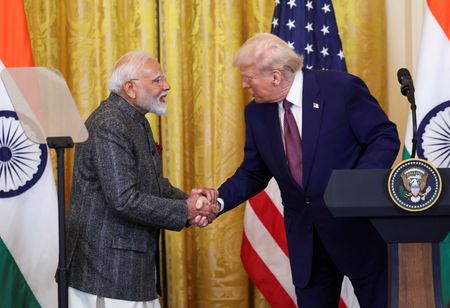
President Donald Trump and Indian Prime Minister Narendra Modi conducted a lengthy phone conversation Tuesday, focusing on international security concerns and strengthening ties between their nations.
The discussion between the two world leaders extended for approximately 40 minutes, according to Indian media outlets that initially broke the story.
Modi took to social media platform X to share details of their conversation, writing: “Received a call from my friend President Donald Trump. We reviewed the substantial progress achieved in our bilateral cooperation in various sectors.”
The Indian leader further explained the scope of their discussion, stating: “We are committed to further strengthening our Comprehensive Global Strategic Partnership in all areas. We also discussed the situation in West Asia and stressed the importance of keeping the Strait of Hormuz open and secure.”
The conversation highlighted ongoing diplomatic efforts between the United States and India to address regional security challenges, particularly regarding the strategically vital waterway that serves as a crucial shipping route for global oil supplies.
President Donald Trump delivered harsh criticism of Italian Prime Minister Giorgia Meloni during a Tuesday interview with an Italian publication, expressing disappointment in what he called her lack of bravery in international affairs.
Speaking with Corriere della Sera, Trump voiced his dissatisfaction with Meloni’s recent positions, particularly her opposition to his military actions against Iran and her condemnation of his weekend remarks about Pope Leo.
“I’m shocked by her. I thought she had courage. I was wrong,” Trump stated in the interview published online.
The president specifically criticized Meloni for declining to support efforts to reopen the Strait of Hormuz, which Iran has blocked. He described the Italian leader as “very different from what I thought” and accused her of avoiding responsibility in the crisis.
Neither the White House nor Meloni’s office provided responses to requests for comment regarding the published statements.
This public rebuke represents a significant shift in Trump’s relationship with Meloni, who had previously enjoyed strong support from the American president. She was the sole European leader present at Trump’s 2025 inauguration ceremony.
Just one month earlier, Trump had praised Meloni to the same Italian newspaper, calling her “a great leader.” However, in Tuesday’s interview, he accused her of failing to support American initiatives on energy security and Iran policy, claiming Italy expects America “to do the job for her.”
When questioned about Meloni’s criticism of his Pope Leo comments, Trump responded sharply: “She is the one who is unacceptable, because she does not care whether Iran has a nuclear weapon and would blow Italy up in two minutes if it had the chance.”
The deteriorating relationship poses challenges for Meloni, who had hoped her alliance with Trump would enhance her political standing both domestically and internationally. Instead, the association may be becoming a political burden.
Recent polling shows that 66% of Italian citizens view the American president unfavorably, and political analysts suggest Meloni’s White House connections may have contributed to her recent defeat in a judicial reform referendum.
Italy’s economy has suffered from rising energy costs due to the Iranian conflict, as the country relies heavily on imported oil and natural gas.
“They (Italy) pay the highest energy costs in the world and are not even ready to fight for the Strait of Hormuz… They depend on Donald Trump to keep it open,” the president remarked.
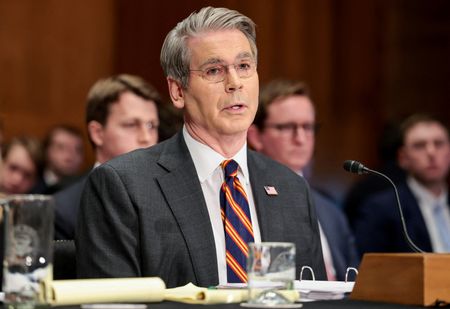
WASHINGTON – Treasury Secretary Scott Bessent expressed strong confidence Tuesday that America’s core inflation will keep declining despite the ongoing conflict involving Iran, while renewing his push for the Federal Reserve to lower interest rates.
Speaking in Washington, Bessent acknowledged that central bank officials might want to monitor economic impacts from the Middle East war before making rate adjustments. He also emphasized that President Trump’s Federal Reserve chair nominee, Kevin Warsh, should spearhead the upcoming monetary policy changes.
When questioned about whether the Trump administration would allow current Fed Chair Jerome Powell to remain in his position beyond his May term expiration if the Senate hasn’t confirmed Warsh by then, Bessent made the administration’s preference clear: “We want Kevin Warsh in as soon as possible.”
A new research study reveals that developing countries worldwide are spending tens of billions of additional dollars to finance essential infrastructure, healthcare, and education initiatives because they cannot secure affordable loans from international development banks.
The analysis, conducted by ONE Data (the research division of anti-poverty organization ONE) and The Rockefeller Foundation, examined the increasing borrowing expenses faced by low- and lower middle-income nations.
Ten “blend” nations—including Kenya, Ghana, Senegal, and Bangladesh—are experiencing the most severe financial pressure. These countries fall between the world’s poorest nations and more prosperous developing economies, making them eligible for loans from both the World Bank’s market-rate division and its discounted lending division.
The research determined that these blend nations could have avoided spending up to $20.8 billion between 2020 and 2024 if they had been able to secure $40.6 billion in sovereign bond financing through less expensive development bank lending programs.
Instead, these countries must borrow at substantially higher rates from global bond markets, while affordable lending alternatives remain restricted in both availability and adaptability, according to the findings.
Increasing borrowing expenses are undermining governments’ capacity to finance healthcare systems and social safety nets, researchers discovered.
The analysis revealed that many nations resort to international bond markets not solely because development bank financing is limited, but also to maintain their credit standing and market accessibility.
Problems within development banks themselves worsen the situation: a survey of 650 government and bank representatives from 125 countries revealed that while over 80% desire predictable and adaptable financing, only approximately two-thirds believe development banks provide it successfully.
The primary provider of discounted financing is the International Development Association, a World Bank Group division supported by voluntary donations from wealthy donor countries. Reduced aid, especially from North American and European contributors, has strained its funding replenishment.
“Every year that IDA is underfunded, every month that restructuring is delayed, every loan that is slowed down by bureaucratic processes adds up to resources that do not reach schools or clinics or power grids,” the report authors stated.
The study suggests increasing development bank lending capacity, accelerating loan approval procedures, and protecting IDA funding. It highlights that the G20’s Capital Adequacy Framework could generate $300-$400 billion in additional lending capacity, while recent announcements from credit rating agency S&P could unlock another $600-$800 billion—all without requiring new financial contributions from shareholder governments.
Amazon’s cloud computing division rolled out a new artificial intelligence platform on Tuesday that promises to revolutionize how pharmaceutical companies discover new medications.
The technology, called Amazon Bio Discovery, enables researchers to conduct sophisticated drug development processes without needing programming expertise, according to Amazon Web Services.
Pharmaceutical companies and tech firms have increasingly turned to artificial intelligence to streamline the traditionally lengthy drug development process.
Amazon Web Services explained in a company blog that their new platform provides scientists with access to specialized biological AI models capable of creating and analyzing potential medications, plus an AI assistant that guides users through model selection, parameter configuration, and result interpretation.
The system allows researchers to forward promising candidates to laboratory partners for creation and evaluation, with test outcomes feeding back into the platform to inform subsequent design cycles.
Rajiv Chopra, Amazon Web Services’ vice president of healthcare AI and life sciences, told Reuters that the technology dramatically cuts development time. “(It) would take, 18 months to come up with 300 potential drug candidates. Now, scientists can quickly create 300 candidates within a couple of weeks,” Chopra explained.
According to Chopra, the explosion of drug-discovery AI models has created a shortage of computational biologists capable of converting laboratory objectives into machine-learning systems.
Amazon Web Services reports that Bayer, the Broad Institute, and Voyager Therapeutics are testing the platform early, while 19 of the world’s 20 largest pharmaceutical companies currently utilize AWS cloud infrastructure.
In partnership with Memorial Sloan Kettering Cancer Center, the platform successfully created nearly 300,000 new antibody molecules and filtered them down to 100,000 testing candidates through partner Twist Bioscience, reducing months of traditional work to just weeks.
Chopra emphasized that the technology aims to support rather than eliminate scientists and contract research firms.
The company plans to provide a complimentary trial featuring five experimental units before rolling out paid subscription options.
Additionally, AWS, Boston Consulting Group, and Merck plan to introduce an AI system at AWS’s Life Science Symposium focused on enhancing clinical trial location selection, another frequent obstacle in pharmaceutical development.
Motorists traveling along Route 1 are encountering traffic delays this afternoon as construction crews have shut down the left lane at Garfield Parkway.
According to DelDOT, the lane closure on Coastal Highway is scheduled to remain in effect until 5 PM today. Drivers are advised to plan for extra travel time and merge safely into the right lane when approaching the work zone.
The construction activity is taking place at the intersection of Route 1 and Garfield Parkway, creating a bottleneck for afternoon commuters and beach traffic.
New Castle County law enforcement officials made arrests and confiscated a weapon following a reported assault incident Thursday evening.
Police from the New Castle County Division responded to a call around 4:49 p.m. on April 9, 2026, regarding an alleged weapon assault that had just taken place in the unit block of Ferris Court.
During their investigation, detectives learned that the victim had previously arranged to meet with the suspects before the incident occurred.
The investigation resulted in multiple arrests and the seizure of a firearm, though additional details about the circumstances surrounding the assault have not been released by authorities.
Amazon announced Tuesday its plan to acquire satellite operator Globalstar in a deal worth $11.57 billion, marking the company’s latest move to compete with SpaceX’s dominant Starlink service.
The space-based internet sector is experiencing rapid growth due to reduced launch costs, improved technology, and increasing demand for connectivity in isolated regions, making orbital networks more economically feasible.
Originally developed primarily to serve rural households without traditional internet access, satellite internet services have now diversified into multiple sectors including aviation, maritime operations, military applications, emergency communications, and direct-to-cellular services.
Here’s an overview of the leading satellite internet providers, their locations, planned network sizes, and current operational status:
Starlink, operated by SpaceX from Hawthorne, California, leads the market with authorization for 15,000 second-generation satellites and long-term plans for 42,000 units. The company currently operates more than 9,500 satellites in orbit.
Amazon’s Project Kuiper, based in Redmond, Washington, plans an initial constellation of 3,236 satellites and is in early deployment with over 200 satellites currently operational.
Eutelsat OneWeb, headquartered in Paris, France and London, UK, operates a first-generation network of more than 600 satellites with plans for 440 additional units in future expansions.
Globalstar, located in Covington, Louisiana, currently maintains 32 active low-earth orbit satellites with 24 focused on Internet of Things and emergency messaging services. Future expansion could involve thousands of additional satellites.
Telesat Lightspeed, based in Ottawa, Canada, is preparing to launch 150-200 satellites beginning in 2026-2027 and is currently in pre-operational manufacturing phases.
AST SpaceMobile, operating from Midland, Texas, targets deployment of 45-60 satellites by 2026 and currently has six satellites in early operational status.
LONDON – A British man and Greek associate are facing serious criminal charges in a London courtroom for allegedly orchestrating multimillion-dollar illegal weapons transactions with nations under international arms restrictions.
David Greenhalgh, a 68-year-old British citizen, and Christos Farmakis, 48, from Greece, face a combined 23 criminal counts related to unauthorized arms trafficking activities spanning seven years from 2009 to 2016. Both men have entered not guilty pleas as their trial commenced this week at Southwark Crown Court, though Farmakis has chosen not to appear and proceedings are continuing without his presence.
According to prosecutor Edmund Burge, the pair had established “very close connections to senior figures” within South Sudan’s government, with Farmakis even receiving an appointment as South Sudan’s “honorary consul” to Greece and Cyprus.
The prosecution alleges the defendants facilitated the sale of a “complete air defence missile system” purchased from Ukraine for approximately $55 million during the 2009-2011 timeframe. This transaction occurred while South Sudan remained under British arms embargo restrictions, as the region had not yet gained independence from Sudan until 2011.
Court documents reveal that Greenhalgh and Farmakis allegedly discussed securing a Ugandan end-user certificate to serve as “cover” and hide the true destination of the missile equipment, according to Burge’s testimony.
The investigation into their activities began when Farmakis was apprehended in 2016 after mistakenly using his work email from the government-funded Greater London Enterprise for private arms dealing communications, Burge explained.
An email forwarding error sent arms deal correspondence to Farmakis’ supervisor, ultimately exposing documentation related to planned sales of fighter aircraft and additional weaponry to Libya following the 2011 Arab Spring uprising, the prosecutor stated.
Evidence presented suggests the defendants also attempted to arrange weapon sales to Iran, Iraq and Syria, all nations subject to international arms restrictions, based on recovered emails and documentation.
The criminal proceedings are scheduled to continue through June.
Armed rebels in Cameroon have declared a temporary ceasefire to coincide with Pope Leo XIV’s scheduled visit to the Central African nation this Wednesday.
The Unity Alliance, representing multiple English-speaking separatist organizations, issued a Monday evening statement announcing the three-day halt in hostilities to ensure “safe travel” during the papal visit. The group cited the “profound spiritual importance” of the pope’s arrival as justification for allowing civilians, religious pilgrims, and officials to move without threat.
Government spokesman René Sadi stated last week that “all necessary arrangements have been made” to guarantee a successful papal visit, though Cameroonian officials have not yet responded to requests for comment regarding the ceasefire announcement.
The western regions of Cameroon have experienced ongoing violence since English-speaking rebels began their uprising in 2017, seeking to establish an independent nation separate from the French-speaking majority. According to International Crisis Group data, this armed conflict has resulted in over 6,000 deaths and forced more than 600,000 people from their homes.
Pope Leo, currently conducting a four-nation African tour that began in Algeria, will touch down in Yaoundé, Cameroon’s capital city.
The pontiff plans to conduct a “peace meeting” Thursday in Bamenda, which serves as the central battleground between rebel forces and government troops.
Unity Alliance spokesman Lucas Asu stated the fighting suspension “reflects a deliberate commitment to responsibility, restraint, and respect for human dignity, even in the context of ongoing conflict.”
Asu emphasized that the papal visit should maintain its “spiritual” character without appearing to support any particular political faction.
While separatist violence has diminished somewhat in recent years, no resolution appears imminent. International mediation efforts have reached an impasse, with each side claiming the other negotiates dishonestly.
The roots of this conflict trace back to Cameroon’s colonial past, when France and Britain divided the territory following World War I. The English-speaking areas voted in 1961 to unite with French Cameroon through a U.N.-supervised referendum, but separatists maintain they have faced systematic political and economic discrimination ever since.
A nationwide television advertising effort defending mail-in voting has been launched by a major postal workers union, entering the heated political discussion surrounding absentee ballots that President Donald Trump has repeatedly criticized.
The American Postal Workers Union, representing 200,000 members, announced Tuesday it will air a 30-second commercial showcasing different voters—including a working farmer and airline crew member—sharing their reasons for choosing mail ballots. The advertising blitz starts this week in Ohio, the state where Civil War soldiers first used mail voting in 1864, before expanding nationwide.
The commercial concludes with the statement: “Vote by mail — keep it, protect it, expand it.” This initiative follows Trump’s recent executive order aimed at establishing a national registry of verified voters and preventing postal employees from delivering absentee ballots to individuals not listed on state-approved rolls.
Legal challenges and resistance from postal worker organizations quickly emerged after the order. The National Rural Letter Carriers’ Association stated the USPS lacks the equipment and authority to determine voting eligibility, warning that such responsibilities could politicize a highly trusted government service. The group also expressed concerns about undermining public confidence in both mail delivery and electoral processes.
American Postal Workers president Jonathan Smith clarified that the television advertisement was created prior to Trump’s executive order, rather than as a reaction to it. Trump previously signed election-related orders last year that also targeted mail ballots by mandating Election Day return deadlines, despite over a dozen states permitting extended submission periods.
Smith emphasized the union’s goal of encouraging continued mail voting while voicing concerns about requiring postal employees to make voter eligibility determinations.
“It is our position that it is not the job of the postal workers to verify voter eligibility,” he said. “It is our job to move mail from one destination to the next.” He added: “We do not want to be politicized.”
Multiple legal challenges have already been filed against Trump’s newest election executive order, including lawsuits from Washington Democrats who contend that constitutional authority over election procedures belongs to states and Congress, not the presidency.
Despite having used mail voting himself as recently as last month, Trump has consistently attacked the practice as fraudulent and is pushing congressional action to restrict it through comprehensive legislation. Mail voting existed for over a century and gained steady acceptance in states led by both parties until 2020, when Trump began targeting the method with unsubstantiated fraud allegations. Republican support has since declined.
Research published by the Brookings Institution in 2025 documented mail voting fraud in only a minuscule percentage of total absentee ballots—approximately four instances per 10 million mail votes cast.
The television campaign targets voters directly rather than addressing the president.
“Our message is to America: Vote by mail is efficient, it’s safe, and it’s successful. Period,” Smith said. “This is educating the American people that you can use vote by mail and you can be guaranteed that your voice will be heard and your vote will be counted.”
Sussex County officials are now accepting grant applications for $479,641.50 in opioid settlement funding awarded by the Delaware Opioid Settlement Commission.
Local community organizations and service providers have until May 4, 2026, to submit proposals for programs that would expand treatment options and long-term recovery support services for individuals battling opioid addiction.
The funding is designed to help organizations develop and expand comprehensive care programs throughout Sussex County, addressing various stages of addiction treatment and recovery support.
Interested community partners can access the grant application through the Sussex County government website.
Drivers using River Road today will need to exercise caution as construction activities have forced the closure of the right shoulder along a busy section of the roadway.
The Delaware Department of Transportation reports that the northbound right shoulder is currently blocked between Hamburg Road and Federal School Lane due to ongoing construction work.
Officials indicate the shoulder closure will remain in effect until 3 PM this afternoon. Motorists are advised to allow extra travel time and merge safely into the left lane when approaching the work zone.
The construction activity may cause temporary delays and reduced speeds in the area as traffic is consolidated into fewer lanes during the work period.
Motorists traveling southbound on Interstate 95 should expect potential delays as the Delaware Department of Transportation has temporarily closed the right shoulder lane near the toll plaza.
The shoulder closure is located roughly one mile before drivers reach the toll plaza and is necessary to accommodate drone operations currently taking place in the vicinity.
DelDOT has not specified the duration of the closure or provided additional details about the nature of the drone activity requiring the traffic restriction.
Drivers are advised to exercise caution when passing through the area and to expect possible congestion during the closure period.
Delaware transportation officials have temporarily shut down the right shoulder lane on Interstate 95 southbound due to ongoing drone operations in the area.
The lane restriction is located roughly one mile ahead of the toll plaza on the southbound side of the interstate. Officials implemented the closure as a safety precaution while the unmanned aircraft conducts its operations overhead.
Motorists traveling through the area should expect potential delays and are advised to move into the left lanes when approaching the affected section of highway. The duration of the closure has not been specified, as it depends on the completion of the drone mission.
Delaware Department of Transportation continues to monitor the situation and will reopen the shoulder once the aerial operations conclude and it is safe to do so.
Students at Arcadia High School in Accomack County, Virginia witnessed a powerful educational demonstration this week as the school staged a mock drunk driving accident on campus.
The simulated crash was organized as part of the school’s ongoing efforts to educate students about the dangers and consequences of driving while intoxicated. The realistic demonstration aimed to provide students with a sobering look at how impaired driving can devastate lives and families.
School officials coordinated the educational event to coincide with heightened awareness campaigns about safe driving practices, particularly targeting teenage drivers who are statistically at higher risk for motor vehicle accidents.
The mock accident scenario was designed to create a lasting impression on students about making responsible choices when it comes to alcohol and driving, emphasizing the importance of designated drivers and alternative transportation options.
Major financial institutions across the United States are developing strategies to utilize billions of dollars they anticipate freeing up through upcoming banking regulation reforms.
JPMorgan Chase Chief Executive Jamie Dimon disclosed in his annual shareholder communication that his institution holds approximately $40 billion in surplus capital under the most recent Basel III implementation proposals. While Dimon acknowledged that reductions in capital requirements since the 2023 proposals represent positive progress, he criticized certain elements as illogical. “There are still some aspects that are frankly nonsensical. The GSIB surcharge is still broken,” Dimon stated in his shareholder letter, using the acronym for Global Systemically Important Banks.
Meanwhile, Federal Reserve officials conducted meetings with Morgan Stanley executives to review proposed regulations aimed at increasing transparency and public oversight of the central bank’s yearly stress testing procedures. The discussions also covered the Federal Reserve’s request for public input regarding scenarios and modeling approaches for the 2026 stress examinations.
During these sessions, Morgan Stanley representatives shared their perspectives on the stress testing proposals, particularly focusing on the suggested pre-provision net revenue modeling framework planned for the 2026 assessments.
A significant early-season warm-up is underway across the Delmarva region, with temperatures to surge well above normal through the middle of the week and into the upcoming weekend. Forecast confidence continues to increase that some locations to challenge or even break daily temperature records.
High pressure anchored over the Atlantic Ocean, combined with a warm front positioned well north of the region, is allowing a strong southwest flow to transport unusually warm air into the Delmarva Peninsula. Both surface and upper-level conditions are aligning to support temperatures running 20 to 40 degrees above average for this time of year.
By Tuesday, inland areas across Delaware and Maryland’s Eastern Shore are expected to climb into the low to mid 80s. The peak of the heat arrives Wednesday and Thursday, when many inland communities, including areas around Salisbury, Cambridge, and Dover, could reach the upper 80s to near 90 degrees. If temperatures hit 90°, it would mark the first 90-degree day of the year and the first since early September.
Coastal communities, such as Ocean City and Rehoboth Beach, will once again see a noticeable difference. Cooler ocean temperatures will promote a daily sea breeze, keeping highs closer to the 70s, especially during the afternoon hours.
A weak front is expected to pass through late Thursday night into early Friday, but it will do little to disrupt the overall warm pattern. Temperatures will remain well above normal heading into the weekend, generally ranging from the mid 70s to mid 80s across the region.
Despite the heat, conditions will remain largely dry. Only a very limited chance exists for an isolated shower or thunderstorm, mainly well north of the Delmarva region. This lack of rainfall is a growing concern, as ongoing abnormally dry to drought conditions across portions of the peninsula may worsen through the week.
While warm and dry weather can sometimes elevate fire risk, that threat remains relatively low for now. Light winds and a modest increase in low-level moisture from the southwest flow should help limit more critical fire weather concerns.
Spring planting season has arrived, bringing with it the annual rush to garden centers and nurseries. This year, Delaware gardeners might want to think twice about the materials their gardening supplies are made from, particularly whether those items contain plastic components.
Plastic gardening products eventually deteriorate into tiny fragments known as microplastics, which can seep into our food supply and contaminate landfill sites. These microscopic particles come from everyday items including food containers, cooking tools, cleaning product bottles, and certain fabrics, and researchers have found them in tap water, meals, and even human tissue.
Many gardeners may not realize their backyard soil could be harboring these contaminants.
While garden soil naturally contains millions of helpful microorganisms such as bacteria and fungi, it may also contain these problematic plastic particles. What options do environmentally aware gardeners have?
Although we cannot undo existing contamination, gardeners can take action to reduce their contribution to plastic pollution while working toward a cleaner environment. These changes might even help save money along the way.
Rather than purchasing plastic starter trays, gardeners could try soil-blocking equipment to create their own planting containers. These metal tools compress a damp blend of compost, peat moss, perlite, and plant nutrients into firm blocks that maintain their shape without additional support.
These compressed blocks actually benefit young plants through a process called air-pruning of roots. Rather than growing in circles and becoming tangled when they reach container walls, plant roots stop extending outward and develop more densely when they encounter air at the block edges. This results in easier transplanting into garden beds.
For those who prefer ready-made options, biodegradable containers made from coconut fiber or composted animal waste offer good alternatives. These products are odorless and resemble cardboard in appearance.
When selecting containers for mature plants, natural materials such as wood or clay pottery work well.
Root crops, herbs, and tomato plants thrive in fabric growing containers available in multiple sizes. Potato-specific versions feature roll-up openings that simplify harvest time. Always check product labels to confirm they use natural rather than artificial fibers.
When available, choose bare-root plants instead of those sold in plastic containers.
Creating a home compost system reduces the need to purchase soil amendments or fertilizers. This eliminates plastic packaging waste while giving gardeners complete control over compost ingredients. If home composting is not feasible, purchasing bulk compost costs less than bagged versions.
Select canvas covers instead of plastic tarps and avoid installing landscape fabric beneath garden beds or border areas. Natural mulching materials like shredded bark, wood chips, or dried leaves effectively suppress weeds, though gravel is recommended in fire-prone areas for safety reasons.
Support climbing plants and tomatoes using stakes made from bamboo, wood, or metal. Fasten them with natural rope materials such as hemp or jute fibers.
Simple wooden craft sticks serve as excellent plant identification markers.
When plastic purchases become necessary, avoid disposable items like flimsy starter trays. Investing in durable products that will last multiple seasons before disposal represents progress in the right direction. Many small improvements will create meaningful change over time.
WASHINGTON — Global economic progress has been disrupted by the ongoing conflict in Iran, prompting the International Monetary Fund to lower its worldwide growth projections for the coming year.
On Tuesday, the IMF revised its global economic expansion forecast downward to 3.1% for 2026, a reduction from its January prediction of 3.3%. This represents a slowdown from the 3.4% growth experienced in 2025.
Military actions by the United States and Israel against Iran, combined with Tehran’s decision to block the Strait of Hormuz and launch counterattacks on energy facilities in surrounding nations, have caused petroleum and natural gas costs to surge internationally.
Consequently, the IMF increased its global inflation projection for this year to 4.4%, up from 4.1% in 2025 and higher than the 3.8% rate it had anticipated for this year in its January report.
Before the conflict erupted, the global economy had demonstrated remarkable strength despite President Donald Trump’s trade protection measures, which established significant import duties around America, the planet’s largest economy that was previously highly accessible to foreign goods. The economic impact proved less severe than anticipated, partially because Trump’s actual tariff implementations last year fell short of his initial proposals.
Additionally, a technology surge characterized by substantial investments in data infrastructure and artificial intelligence, along with increased productivity, helped bolster the world economy.
“War in the Middle East has halted this momentum,” IMF chief economist Pierre-Olivier Gourinchas wrote in a blog post accompanying the fund’s latest World Economic Outlook.
The IMF’s projections are based on the assumption that Persian Gulf hostilities will be brief and energy costs will climb by “a moderate 19%” this year. However, the situation could deteriorate significantly. Under a “severe scenario” where energy disruptions extend into the following year and central banks must increase interest rates to fight inflation, worldwide growth could fall to 2% in both 2026 and 2027. “Despite the recent news of a temporary ceasefire, some damage is already done, and the downside risks remain elevated,” Gourinchas wrote.
The organization marginally reduced its U.S. growth estimate for this year to 2.3%. The 21 European nations using the euro currency, severely affected by escalating natural gas costs, are projected to collectively expand by 1.1% this year, down from 1.4% in 2025.
The most severe impact is expected on heavily indebted developing nations that rely on energy imports and lack the financial resources to cushion their economies through increased government expenditure and tax breaks. The IMF significantly reduced projections for Sub-Saharan Africa, lowering expectations to 4.3% this year from the 4.6% predicted in January.
Russia emerges as a beneficiary of the crisis, being an energy supplier positioned to profit from elevated prices. The IMF improved its forecast for the Russian economy, which has been severely affected by sanctions following the 2022 Ukraine invasion, to a still-modest 1.1%.
In related developments, Ukraine’s central bank governor has worked to maintain focus on Russia’s war in his nation during discussions among global economic officials. However, in a Monday press interview, Andriy Pyshnyy acknowledged how increased oil prices from the Iranian conflict are damaging his country.
Speaking through an interpreter, he reported that Ukraine’s annual inflation reached 7.9% in March, significantly exceeding the 7% forecast primarily due to elevated fuel expenses. He calculated that fuel price increases could drive annual inflation up by 1.5 to 2.8 percentage points.
Pyshnyy observed that fertilizer and production expenses could also rise in an economy seeking price stability amid ongoing conflict with Russia, which launches aerial attacks on Ukraine approximately every 3 to 4 minutes.
“We are trying to walk on a razor blade,” he said of a mission complicated by external factors.
The IMF serves as a 191-member lending institution dedicated to fostering economic expansion, financial stability, and global poverty reduction.
WARSAW, Poland — Fifty Holocaust survivors from across the globe participated alongside thousands of others in Poland’s annual March of the Living ceremony Tuesday, commemorating the 6 million Jewish lives lost during Nazi Germany’s systematic genocide in World War II.
The survivors who attended included some who made the journey from Israel, according to event organizers, overcoming travel challenges created by airspace limitations related to ongoing regional conflicts.
Revital Yakin Krakovsky, who serves as deputy chief executive for the International March of the Living organization, expressed alarm about the persistence of antisemitism in modern times, despite historical lessons from the Holocaust.
“Since Oct. 7, anti-Semitism has surged and is spreading everywhere,” she said. “The scale and normalization of this hatred echoes the dark times we have seen before and, today of all days, we know how it ended.”
The ceremonial walk occurred on the Jewish calendar’s designated Holocaust Remembrance Day, starting at the Auschwitz memorial site and concluding at Birkenau, located 3 kilometers (2 miles) away. Birkenau was where European Jews were transported via railway and systematically murdered in gas chambers.
Participants included survivors from recent antisemitic violence, such as the December mass shooting that claimed 15 lives during a Hanukkah gathering at Sydney’s Bondi Beach in Australia.
Hannah Abesidon, whose 78-year-old father Tibor Weitzen survived the Holocaust but was among the 15 victims killed in the Bondi Beach attack, shared her family’s tragic experience.
“My father didn’t make it because he was a Jew,” Abesidon said. “It starts with the Jews but it doesn’t end with the Jews.”
The commemorative march, now marking its 38th year, typically attracts thousands of attendees, including Holocaust survivors, Jewish students, community leaders, and political officials.
Families looking for weekend activities can enjoy a free outdoor event this Saturday at James Farm Ecological Preserve. The Delaware Department of Natural Resources and Environmental Control is teaming up with the Center for the Inland Bays to present the Water Family Fest and Native Plant Sale.
The celebration runs from 10 a.m. until 2 p.m. on Saturday, May 2nd, offering activities for all ages at no cost to attendees. The event combines environmental education with family entertainment at the popular ecological preserve location.
Officials from Pakistan announced Tuesday that their government has offered to facilitate another round of diplomatic discussions between Washington and Tehran, as Vice President JD Vance indicated that previous negotiations “did make some progress” and President Trump revealed Monday that “we’ve been called by the other side” and “they want to work a deal.”
The Pakistani sources requested anonymity since they lacked authorization to publicly discuss the diplomatic initiative.
A high-ranking Hezbollah leader stated Monday that the Lebanese militant organization will reject any outcomes from direct Lebanon-Israel negotiations scheduled to begin Tuesday in Washington.
Officials from Lebanon are working to establish a ceasefire in the Israel-Hezbollah conflict that has resulted in at least 2,089 deaths in Lebanon. Israeli Prime Minister Benjamin Netanyahu has stated his opposition to a ceasefire, emphasizing that the objective involves Hezbollah’s disarmament and potentially achieving a peace agreement between Lebanon and Israel.
A U.S. naval blockade of Iranian ports that commenced Monday, along with Iran’s threatened response, has created an unprecedented confrontation that poses significant risks to the worldwide economy and threatens to undermine ceasefire efforts.
Italy Ends Military Partnership with Israel
Italian Prime Minister Giorgia Meloni announced Tuesday that her administration has halted the automatic extension of a defense pact with Israel, referencing “the current situation.”
Meloni and additional Italian leaders have sharply criticized Israel’s aerial bombardment campaign in Lebanon, which has targeted civilians and struck an Italian convoy serving with U.N. peacekeeping forces. The defense agreement, approved in 2005, encompasses ongoing collaboration between both nations’ defense departments and military forces, with automatic five-year renewals.
IMF Reduces Global Growth Projections Due to Iran Conflict Impact
The Iranian conflict has disrupted worldwide economic progress, the International Monetary Fund cautioned Tuesday while reducing its global growth projection to 3.1% for 2026, representing a slowdown from the previous year’s 3.4% growth.
American and Israeli military actions against Iran, combined with Tehran’s closure of the Strait of Hormuz and retaliatory attacks on oil facilities and energy infrastructure in surrounding nations, have caused oil and gas costs to surge globally. Consequently, the IMF increased its global inflation prediction to 4.4% from the earlier 4.1% forecast for 2025.
Substantial investment in data centers and artificial intelligence, coupled with rising productivity, had strengthened economic indicators, but “War in the Middle East has halted this momentum,” IMF chief economist Pierre-Olivier Gourinchas stated in a blog post accompanying the organization’s latest World Economic Outlook.
The IMF’s projections assume the conflict will conclude shortly and energy costs will increase “a moderate 19%” this year, though circumstances could deteriorate significantly.
Israeli Foreign Minister Proposes Lebanese Government Cooperation Against Hezbollah
Israel’s Foreign Minister Gideon Saar is suggesting potential collaboration with Lebanon’s government to eliminate Hezbollah.
“Hezbollah has also its financial roots, there are a lot of dimensions holding this organization, practically keeping Lebanon under Iranian occupation,” Saar stated Tuesday, noting that Lebanon’s government also considers the Iran-supported militant organization “unlawful.”
Israel and Lebanon will commence their first direct negotiations in decades Tuesday, despite substantial disagreements over each side’s objectives.
Lebanese representatives seek a ceasefire, while Israeli negotiators have indicated they oppose a ceasefire but want discussions centered on dismantling Hezbollah as a crucial step toward a possible peace agreement between both countries.
The Hezbollah militant organization resumed hostilities with Israel on March 2, launching missiles into northern Israel. Approximately 2,088 people in Lebanon have died in Israeli airstrikes since then, based on data from Lebanon’s Health Ministry.
U.S. Military Conducts Large-Scale Philippines Exercises Despite Middle East Focus
Over 17,000 American and Filipino military personnel will engage in one of their largest yearly combat training exercises in the Philippines, demonstrating the United States’ strong commitment to Asia despite Middle Eastern preoccupations, a U.S. military spokesperson announced Tuesday.
“Our message is our dedication and commitment to our alliance and regional security,” Col. Robert Bunn, a spokesperson for U.S. forces, stated when questioned about the message the U.S. military wants to convey through this large deployment during the Middle Eastern conflict.
Bunn did not immediately specify U.S. force numbers for the April 20-May 8 exercises. Last year, approximately 9,000 U.S. military personnel participated in the Balikatan — Tagalog for shoulder-to-shoulder — exercises.
This year’s training between the U.S. and Philippines will include Japan, France and Canada, which have established visiting forces agreements with Manila, according to the Philippine military.
French President Calls for Renewed U.S.-Iran Negotiations
French President Emmanuel Macron called for resuming negotiations between the U.S. and Iran following phone conversations with President Donald Trump and Iran’s President Masoud Pezeshkian.
“It is essential, in particular, that the ceasefire be strictly respected by all parties and that it include Lebanon,” Macron wrote in an X post Tuesday.
He also demanded the reopening of the Strait of Hormuz “without restrictions or tolls.”
Macron announced that France and the U.K. will host a Paris conference this Friday, connecting non-belligerent countries via videoconference that are prepared to contribute to a mission restoring navigation freedom in the strait when security conditions permit.
Energy Costs Drive U.S. Wholesale Price Increases
The Labor Department reported Tuesday that its producer price index — measuring inflation before reaching consumers — increased 0.5% from February and 4% from March 2025. The annual increase represented the largest gain in over three years. Energy costs jumped 8.5% from February.
Excluding volatile food and energy costs, core producer prices rose a modest 0.1% from February and 3.8% annually. Wholesale price gains were lower than economists had predicted.
Wholesale prices can provide early indicators of future consumer inflation trends. The Labor Department reported last week that rising gasoline prices pushed consumer prices up 3.3% last month compared to a year earlier, marking the biggest annual increase since May 2024. Consumer prices jumped 0.9% compared to February, representing the largest gain in nearly four years.
Energy Agency Predicts Sharpest Oil Demand Drop Since Pandemic
The Iranian conflict will cause the first annual oil demand decline since the pandemic, when billions lived in isolation, according to the International Energy Agency.
The organization, established following the 1974 oil crisis, announced Tuesday that oil demand is projected to decrease by an average of 80,000 barrels daily this year, a dramatic revision from the 850,000 barrel daily increase forecast before the conflict began.
March’s decline was especially severe due to energy infrastructure attacks and Strait of Hormuz closure, according to the IEA, which anticipates a 1.5 million barrel demand reduction in the current quarter.
While the largest oil usage cuts initially occurred in the Middle East and Asia Pacific regions, demand destruction is expected to spread as oil prices increase and scarcity continues.
South Korea Announces Humanitarian Aid for Iran
South Korea announced it provided $2 million in humanitarian assistance to Lebanon through international organizations and decided to provide $500,000 in aid to Iran through the International Red Cross.
Seoul’s Foreign Ministry stated Tuesday it hopes the assistance will help alleviate the humanitarian crisis in affected regions.
Red Cross Delivers Initial Emergency Supplies to Iran
The Red Cross delivered its initial emergency aid shipment to Iran since the conflict began over a month ago, expected to assist nearly 25,000 people.
The International Committee of the Red Cross announced Tuesday that it sent assistance to the Iranian Red Crescent Society, including five truckloads delivered Monday.
Supplies included blankets, jerrycans, tarpaulins, hygiene kits and solar lamps. The remaining aid shipment, consisting of nine aid trucks, will be provided to IRCS later this week.
France and Britain to Lead Strait of Hormuz Protection Talks
French President Emmanuel Macron and British Prime Minister Keir Starmer will jointly lead a Friday conference in Paris, gathering non-belligerent nations willing to participate in a Strait of Hormuz mission “when security conditions allow.”
Additional participants will join via videoconference, Macron’s office stated. European and other partners are prepared to contribute to a “purely defensive mission aimed at restoring freedom of navigation in the Strait of Hormuz,” the statement indicated.
France and Britain have worked in recent weeks to establish an operation escorting oil tankers and container ships to ensure safe passage through the strait.
Ireland’s ruling coalition confronts a potential no-confidence motion in Parliament Tuesday following its handling of widespread fuel demonstrations that disrupted oil deliveries and created severe traffic disruptions across the country.
The crisis emerged after Middle East conflict involving the U.S., Israel and Iran resulted in the shutdown of the Strait of Hormuz, a crucial global oil shipping route. Prime Minister Micheál Martin has announced additional tax relief measures in an attempt to resolve the situation, though opposition lawmakers have sharply criticized the government’s delayed response and inadequate assistance.
The largest opposition party, Sinn Fein, has called for Tuesday evening’s no-confidence motion. However, Martin’s coalition plans to hold an earlier confidence vote that could potentially nullify the opposition’s effort if successful.
Should the no-confidence measure pass, the current government would be forced to step down, leading either to Parliament selecting a new prime minister or calling fresh elections. Multiple parties including the Social Democrats, Labour, People Before Profit, Aontu, The Green Party and Independent Ireland have announced their support for removing the government.
The demonstrations started April 7 with slow-moving vehicle convoys that jammed highways. Social media helped spread the movement as truckers, agricultural workers, taxi drivers and bus operators shut down critical infrastructure and major routes through Dublin, the capital city.
Protesters demanded government action through either price controls or tax reductions to address skyrocketing fuel expenses they warned would force businesses to close.
While acknowledging lessons could be learned from the protests, Martin defended law enforcement and military actions to remove roadblocks at Whitegate oil refinery in County Cork and various fuel depots. The blockades caused over one-third of gas stations to run out of fuel.
“We had to clear Whitegate and the ports because we export about 90% of everything we make in this country,” Martin said. “The ports are the lifeblood of economy, and if the ports were blockaded for any length of time, people would have lost jobs, part-time production would have ceased, and it would have been very, very serious.”
Authorities initially allowed the demonstrations to continue until weekend confrontations saw police deploy pepper spray against some protesters and military vehicles remove log barriers at Galway port. Many demonstrators claimed success in forcing government concessions.
Parliament is also set to vote Tuesday on Martin’s 505 million euro ($595 million) fuel assistance package designed to reduce cost-of-living pressures.
The relief plan includes direct payments to truckers and school bus drivers along with fuel subsidies for farming and fishing sectors. This assistance would supplement a 250 million euro tax reduction enacted three weeks earlier.
Sinn Fein has attacked the Fianna Fáil and Fine Gael coalition for failing to shield citizens from fuel price increases, refusing to reconvene Parliament during a holiday period to address the crisis, and offering what the party characterized as insufficient solutions.
ROME — Two American families brought their fight for Italian citizenship to Italy’s supreme court on Tuesday, challenging new restrictions enacted by Prime Minister Giorgia Meloni’s administration that limit heritage-based citizenship claims.
The families’ attorney, Marco Mellone, presented arguments to the Cassation Court contesting a year-old statute that blocks citizenship applications from Italian descendants beyond two generations. Mellone maintains the restrictions should only affect individuals born after the legislation became active, which could open citizenship doors for millions of Americans and Latin Americans with Italian roots.
An expanded judicial panel is expected to issue a binding decision within weeks that will guide future lower court rulings.
The far-right government implemented the decree in March 2025, halting previous policies that permitted anyone proving Italian lineage dating to the country’s 1861 unification to pursue citizenship. While Italy’s constitutional court upheld the new statute last month, Mellone believes the supreme court can determine the law’s exact application.
“The families involved in this case are simply descendants … from an Italian ancestor who emigrated in the late 19th century to the United States, like millions of other people, of other Italians,” Mellone stated before the proceedings. “Today they are invoking their right to Italian citizenship.”
The attorney’s legal challenge could determine citizenship eligibility for descendants of approximately 14 million Italians who left their homeland between 1877 and 1914, based on Foreign Ministry data, along with later emigrants.
Though Mellone represents two families specifically, an additional dozen individuals whose citizenship applications were halted by the new law gathered outside the courthouse in support.
Karen Bonadio expressed hopes of eventually relocating to Italy based on her heritage. She displayed childhood photographs of herself with her Italian-born great-grandparents who moved from Basilicata in southern Italy to upstate New York, accompanied by their official birth documents.
“The new law says, ‘all these great-grandchildren didn’t know their great-grandparents.’ This is from 1963, I think I was 3 ½,” she explained while showing the photograph.
At least one case Mellone is handling had been denied in lower courts prior to the new legislation, partly due to decisions stating that Italian emigrants who acquired foreign citizenship before having children cannot transfer Italian nationality.
Jennifer Daly’s application has navigated Italian administrative processes for almost ten years. Her grandfather, Giuseppe Dallfollo, moved to America in 1912 from the northern Trento province when it was part of the Austro-Hungarian Empire. He subsequently married an Italian woman, brought her to the United States, and eventually obtained American citizenship.
Daly explained she maintained a strong Italian cultural identity despite her surname being anglicized by American immigration authorities. She pursued citizenship because “it is truly a recognition of who I am, where I am from. It’s so much more than citizenship. It’s everything,” the retired history professor said during a phone interview from Salina, Kansas.
At the courthouse, Alexis Traino shared that great-grandparents from both her mother’s and father’s families originated from Italy, where she currently resides, primarily in Florence.
“My entire life, I grew up knowing — and my parents always emphasized — that I was Italian. I had a very, very strong connection with Italy,” said the 34-year-old Traino, who was awaiting documentation from both Italy and the United States when the new law passed, halting her application.
“I want to be Italian. I want to contribute to Italy and be a citizen,” she declared.
LIMA, Peru — Peru is heading toward a June presidential runoff election after Sunday’s chaotic voting failed to produce a clear winner among 35 candidates, with ballot counting still underway following significant logistical problems.
Election officials have been tallying votes for three consecutive days after widespread ballot delivery failures forced them to extend the voting period through Monday.
Current results from Peru’s National Office of Electoral Processes show two conservative candidates at the front of what represents the largest presidential field in the South American nation’s history, with 72% of votes counted as of Tuesday.
Leading the race is Keiko Fujimori, whose father is a former president now in disgrace, capturing 16.92% of the vote. Following her is Rafael López Aliaga, an ultra-conservative who previously served as Lima’s mayor, with 12.95% support.
Since no candidate achieved the required 50% threshold for an outright win, the top two vote-getters will compete in a runoff scheduled for June 7. Whoever emerges victorious will become Peru’s ninth president within a decade.
The voting process was severely disrupted by organizational failures that prevented thousands of citizens both domestically and internationally from casting their ballots. These problems led officials to permit over 52,000 Lima residents to vote on Monday. The voting extension, declared after Sunday evening’s count had already begun, also applied to Peruvian voters registered in Orlando, Florida, and Paterson, New Jersey.
“I’m fed up,” said Iris Valle, 56, while waiting in line Monday at a Lima public school polling site. She expressed concern about potential pay cuts from her employer due to arriving late to work while fulfilling her voting duty.
Peruvian law requires all citizens between 18 and 70 years old to vote, with penalties reaching $32 for those who fail to participate.
The election occurred during a period of escalating violent crime and corruption that has created widespread voter dissatisfaction, with many citizens viewing the candidates as dishonest and ill-equipped for presidential duties.
Despite the crime wave and political turmoil caused by a constant rotation of presidents — including three since October alone — Peru’s economy has shown resilience. The nation, benefiting from its position as a major global copper producer, achieved growth exceeding 3% in both 2024 and 2025, though this falls short of the 5%-6% annual expansion seen during the 2000s.
Will Freeman, a Latin American Studies fellow at the Council on Foreign Relations, noted that the central bank’s independence has been crucial to maintaining economic stability.
“Although Peru has had all these presidents, it has had only one central bank president since the mid-2000s, Julio Velarde,” Freeman explained. “He’s been a real source of stability and given investors some confidence that there is an institutional core that remains from one presidency to the next in Peru.”
However, Freeman cautioned against overconfidence, noting that current growth rates lag behind the robust performance of the 2000s and recent Congressional actions suggest “a more conservative economic populism.”
Fujimori, making her fourth presidential attempt, has pledged aggressive anti-crime measures while simultaneously supporting legislation that experts argue hampers criminal prosecutions. Her party has backed recent laws eliminating preliminary detention in certain situations and increasing thresholds for confiscating criminal assets.
Her proposed reforms include anonymous judges for criminal proceedings and requiring prisoners to work for their meals.
López Aliaga’s platform includes constructing prisons in Peru’s Amazon territory, permitting judges to hide their identities, and deporting foreign nationals residing illegally in the country.
Voters also selected members of a two-chamber Congress for the first time in over three decades, following recent legislative changes that grant substantial authority to the newly created upper chamber.
Residents of remote U.S. Pacific territories are battening down as Super Typhoon Sinlaku unleashes devastating winds and torrential rains, causing structures to crumble and debris to become deadly projectiles.
“It’s hitting us hard,” said Mayor Ramon “RB” Jose Blas Camacho of Saipan during the nighttime assault. “It’s so difficult for us to respond with this heavy rain, heavy wind to rescue people. Objects are just flying left and right.”
Camacho reported that rescue operations have saved some residents, while trees are being hurled through the air and wooden and metal structures are collapsing. Even his office is under threat as the glass door flexes under the storm’s power.
“It’s already bending. That’s how powerful this is,” he explained.
The monster storm is crawling toward Saipan, the main island in the Northern Mariana chain, at just 3 mph. Weather officials warn conditions will deteriorate further through the night.
According to the Navy’s Joint Typhoon Warning Center in Guam, Sinlaku has intensified to 150 mph winds. Forecasters say the storm will make landfall “imminently” near Tinian, located roughly 6 miles from Saipan, or the uninhabited Aguijan island.
The typhoon’s sluggish pace has officials particularly worried.
“That’s the scary part,” Camacho noted, adding “it’s better to speed up so it can just exit.”
To the south, Guam – a U.S. territory housing multiple American military bases and approximately 170,000 people – is experiencing “torrential rainfall” and “ongoing flash flooding,” weather officials reported. “We ask that everyone remain indoors and away from windows.”
National Weather Service meteorologist Landon Aydlett in Guam characterized the typhoon as moving at “a very slow gradual crawl” Tuesday evening.
“The slow motion means destructive winds in excess of 150 miles an hour will be prolonged once they arrive” at Tinian and Saipan, Aydlett warned.
“This is an extremely dangerous and life-threatening situation,” he emphasized.
Dangerous flash flooding is forecast to persist across both islands through Wednesday. Approximately 50,000 people inhabit three islands in the region, with Saipan hosting the largest population and serving as the capital, famous for its relaxed resorts, diving opportunities, and golf courses.
Despite predictions that Sinlaku will weaken somewhat in coming days, it’s expected to pass through the islands as a Category 4 or 5 typhoon.
Saipan holds historical significance as the location of one of the Pacific Theater’s most devastating World War II battles, claiming over 50,000 Japanese and American military personnel and civilian lives.
On Guam, where Typhoon Mawar caused extended power outages in 2023, U.S. military commanders have instructed personnel to prepare for the storm and remain sheltered. Military installations occupy roughly one-third of this strategically important Pacific hub.
Prior to targeting Guam and the Northern Marianas, the storm caused substantial destruction across Chuuk’s outer islands and atolls in the Federated States of Micronesia, meteorologist Landon Aydlett confirmed.
Glen Hunter, a Saipan native experienced with typhoons, described the situation after awakening to powerful gusts and fallen trees.
“We sit in what they call ‘Typhoon Alley,’” he said early Tuesday.
Hunter explained that most islanders live in solid concrete homes, while those in weaker wooden structures with metal roofing typically stay with relatives or in government shelters during storms.
Tourism-reliant Saipan was still rebuilding from 2018’s Super Typhoon Yutu when the COVID-19 pandemic struck in 2020, Hunter remembered. The local economy remains struggling, he noted.
President Donald Trump authorized emergency disaster declarations for Guam and the Northern Mariana Islands on Saturday, enabling additional emergency assistance.
The Federal Emergency Management Agency announced it’s organizing multi-agency support, deploying almost 100 FEMA personnel along with staff from the Environmental Protection Agency, Department of Transportation, and U.S. Army Corps of Engineers.
Super typhoons represent the most powerful tropical cyclones that develop in the northwestern Pacific Ocean, Earth’s breeding ground for the most severe storms.
Tracked by Guam’s Joint Typhoon Warning Center, super typhoons match Category 4 or 5 Atlantic hurricanes in intensity, featuring winds of at least 150 mph. More than 300 super typhoons have been documented since the warning center began using this classification nearly 80 years ago.
WASHINGTON — March brought the sharpest rise in wholesale pricing that the nation has experienced in over three years, driven primarily by escalating energy costs tied to the ongoing Iran conflict.
According to Tuesday’s release from the Labor Department, the producer price index — a key indicator that tracks inflation before it reaches everyday consumers — climbed 0.5% compared to February and jumped 4% from the same period last year. Energy costs alone spiked 8.5% month-over-month.
When removing the more unpredictable food and energy sectors from the equation, core producer pricing showed a more moderate increase of just 0.1% from February and 3.8% year-over-year. Despite the concerning trends, these wholesale price increases came in below what economic experts had predicted.
These rising costs present new challenges for Federal Reserve officials working to control inflation, particularly as they face mounting pressure from President Donald Trump to reduce the central bank’s key interest rate. However, some Fed officials are considering the opposite approach — raising rates to combat the inflation risks posed by higher energy expenses.
Producer pricing serves as an important preview of potential consumer inflation trends. Economic analysts pay close attention to these figures because certain components, particularly healthcare and financial services measurements, directly influence the Fed’s primary inflation metric — the personal consumption expenditures price index.
Last week’s Labor Department data showed that rising gasoline costs pushed consumer prices up 3.3% annually in March, representing the largest year-over-year jump since May 2024. Month-to-month, consumer prices rose 0.9% from February to March, marking the most significant monthly increase in nearly four years.
The international medical organization Doctors Without Borders reported Tuesday that two people were killed and 56 others wounded in five separate drone strikes launched by Sudan’s military forces in the Darfur region.
The humanitarian group operates across nine Sudanese states, delivering emergency assistance and medical treatment during the ongoing conflict between Sudan’s national army and the paramilitary Rapid Support Forces.
“As Sudan enters its fourth year of war, these attacks by the Sudanese Armed Forces demonstrate complete disregard for civilian life,” the Geneva-headquartered organization stated. “We call on the warring parties in Sudan to protect civilians.”
United Nations human rights officials report a dramatic increase in drone warfare throughout Sudan this year, with more than 500 civilians losing their lives in such attacks from January through mid-March.
“Children in Sudan continue to bear the heaviest toll, with drones responsible for nearly 80% of all reported child killings and injuries,” stated Eva Hinds, who speaks for UNICEF in Sudan, during a briefing with reporters in Geneva. Hinds noted that at least 245 children were killed or wounded during the first quarter of 2024, representing a significant rise compared to the previous year’s figures.
More than six weeks after launching military operations against Iran, Israeli Prime Minister Benjamin Netanyahu finds himself unable to convert battlefield successes into meaningful political victories at home.
While Israel has demonstrated superior military capabilities, the campaign has failed to neutralize key adversaries across multiple fronts. Iran continues to maintain its nuclear infrastructure and missile systems despite significant airstrikes conducted jointly with U.S. forces, and Tehran still controls the strategically vital Strait of Hormuz through which 20% of global oil supplies flow.
Hamas remains operational in Gaza without being completely dismantled, while Hezbollah forces backed by Iran continue launching rocket attacks on northern Israeli territories from Lebanon.
Danny Citrinowicz, who researches Iran at Israel’s Institute for National Security Studies, offered a stark assessment: “Netanyahu is not winning. This war is a strategic failure. There is a gap between what he promised at the start of the campaign and where we ended up.”
The 76-year-old prime minister is experiencing declining public support as the military operation, initially launched alongside U.S. President Donald Trump, fails to produce the definitive results that were promised. Political experts across the region note that Netanyahu’s approval numbers have fallen, creating increased risks as Israel approaches legislative elections scheduled for late October.
Netanyahu’s representatives did not provide responses to requests for comment. However, the prime minister has defended the military campaign’s accomplishments, arguing that critics are downplaying Israel’s successes against Iranian targets.
“There are massive achievements here. This is a historic change. We crushed the nuclear program. We crushed the missiles. We crushed the regime,” Netanyahu declared in a weekend statement.
Early in the conflict, Netanyahu predicted that Iranian citizens would “be called upon to take to the streets” and overthrow their government. Israeli security personnel have grown doubtful that such regime change will occur anytime soon, according to a senior military source.
Two Israeli government officials revealed that initial planning anticipated completing operations within three weeks. Instead, the conflict has evolved into a broader regional crisis with international ramifications.
Aviv Bushinsky, who previously advised Netanyahu, explained that the Iranian campaign initially helped restore the prime minister’s reputation, which had suffered following Hamas’s October 7, 2023 attack that sparked the Gaza conflict.
Netanyahu’s tough stance against Hamas and Hezbollah initially appealed to segments of the Israeli population, but polling data shows his support has weakened over time.
Recent survey results from Hebrew University’s Agam Labs on April 11 revealed that only 10% of Israelis consider the war successful, while Netanyahu’s approval rating dropped to 34% from 40% when operations began. More than half of respondents rated his leadership performance as poor or very poor.
Regional political observers note that while the air-focused military strategy has achieved tactical victories and operational advances, it hasn’t created a coherent long-term strategic outcome.
“There is this idea that F-15s and F-35s (fighter jets) can shape or remake the Middle East – that if you kill enough Iranian leaders, the regime will fall,” Citrinowicz explained. “It’s a flawed assumption, and the cost of it keeps getting higher every time.”
Bushinsky questioned Israel’s emphasis on targeted assassinations, even though Iranian Supreme Leader Ali Khamenei was killed in such operations.
“There is always someone who replaces them,” Bushinsky noted. “It wakes the bear, it doesn’t kill it.”
Sources indicate that Netanyahu learned about a ceasefire agreement finalized last week only during its concluding phases. A Western official said the prime minister was frustrated by his exclusion from the negotiation process.
Since then, Netanyahu has worked to counter any impression that he was marginalized during the Pakistan-mediated discussions, issuing a Tuesday statement claiming U.S. Vice President JD Vance contacted him from his aircraft to update him on the talks.
The prime minister has also initiated efforts to persuade voters that the military campaign justifies its expenses.
Israel’s finance ministry reported Sunday that war-related costs have reached approximately $11.5 billion, with defense spending accounting for a substantial portion.
Regional diplomats suggest Netanyahu’s challenges will likely intensify without clear military victories, as security concerns persist in Gaza and the Israeli-controlled West Bank, while tensions with Lebanon continue.
Some analysts believe Netanyahu might attempt to prevent immediate diplomatic progress with Iran, calculating that a U.S.-Iran agreement could worsen his domestic political situation.
Netanyahu’s office has not responded to questions about this possibility.
Israeli officials have stated they would support any agreement that restricts Iran’s missile and nuclear capabilities while removing enriched uranium stockpiles.
Iran policy experts suggest the conflict has reached a significant turning point for Washington, with Iran demonstrating its ability to survive confrontation with the U.S. while threatening adversaries through attacks on Gulf infrastructure and Strait of Hormuz control.
“You can’t put the genie back in the bottle,” Citrinowicz said regarding Iran’s strait control. “The Iranians feel strengthened now, they feel emboldened and they want much more than they were offered in previous talks.”
Aaron David Miller, a former U.S. Middle East negotiator, identified Gulf Arab nations as the primary casualties, facing the prospect of dealing with increasingly hostile Iranian leadership.
Abdulaziz Sager, who chairs the Saudi-based Gulf Research Center, said Gulf states would accept increased confrontation risks with Iran if necessary to maintain strait access, rather than allowing Tehran to threaten maritime commerce or Gulf facilities.
Medical authorities in Gaza reported Tuesday that four people, including one child, were killed when Israeli forces conducted an airstrike targeting a police vehicle in Gaza City, marking another deadly incident amid ongoing tensions despite a ceasefire arrangement.
According to medical personnel and eyewitnesses, the strike occurred on Nafaq Street, where the targeted police vehicle burst into flames. Local residents and emergency responders immediately mobilized to search for survivors and casualties in the area. Officials have not confirmed how many of those killed were police officers.
Israeli military officials have not yet provided a response to requests for comment regarding the incident.
The current ceasefire, which went into effect last October, brought an end to two years of intense warfare but has left Israeli forces maintaining control over a largely evacuated area comprising more than half of Gaza’s territory. Hamas continues to govern the remaining narrow coastal region.
Since October, Israel has intensified operations targeting Hamas-controlled police and security personnel, resulting in dozens of deaths according to Hamas officials who spoke to Reuters. The group claims Israel is deliberately attempting to create disorder and lawlessness in the territory.
Israeli officials maintain their operations are designed to prevent attacks from Hamas and other armed groups operating in the region.
Statistics show that more than 750 Palestinians have lost their lives since the ceasefire agreement began, while militant groups have killed four Israeli military personnel. Both Israel and Hamas have accused each other of violating the ceasefire terms.
Palestinian authorities also claim that Israeli forces have been expanding their occupied territory, an allegation that Israel disputes.
WASHINGTON – Wholesale prices across the United States climbed at a more moderate pace than anticipated during March, according to federal economic data released Tuesday, though rising energy costs tied to Middle Eastern conflicts continue to fuel inflationary concerns.
The Bureau of Labor Statistics reported that the Producer Price Index for final demand climbed 0.5% last month, matching February’s revised increase. This figure fell short of the 1.1% jump that economists surveyed by Reuters had predicted, following a previously reported 0.7% February gain.
While energy costs surged during the month, unchanged service sector pricing helped balance the overall increase. Analysts note that March data likely captures only the beginning effects of ongoing Middle Eastern tensions.
Year-over-year producer pricing accelerated to 4.0% through March, marking an increase from February’s 3.4% annual rate.
Additional price pressures appear likely as crude oil costs soared beyond $100 per barrel Monday following U.S. military announcements regarding port blockades affecting Iranian shipping operations.
Oil markets have experienced increases exceeding 35% since the U.S.-Israeli conflict with Iran began in late February.
Last week’s Consumer Price Index data revealed the largest monthly jump in nearly four years for March, driven by record increases in gasoline and diesel fuel costs, the Bureau of Labor Statistics noted.
The Federal Reserve monitors Personal Consumption Expenditures price measurements as part of its 2% inflation targeting strategy.
Before Tuesday’s producer price report, economic forecasters projected that core PCE inflation, which excludes volatile food and energy sectors, rose 0.2% in March after two consecutive months of 0.4% increases. This would represent a yearly increase of 3.1%, up from February’s 3.0% rate. Experts anticipate the oil price shock will have measured effects on core inflation measures.
A Salisbury University volleyball player will represent the United States on an international goodwill mission to East Africa after being chosen for a prestigious coaching association program.
Gwen Eustace, a standout athlete for the Sea Gulls volleyball team, was picked to take part in the first-ever AVCA Ambassador Tour that will travel to Tanzania and Kenya. The American Volleyball Coaches Association made the announcement last week regarding this groundbreaking international initiative.
The inaugural ambassador program marks a new effort by the coaching organization to expand volleyball’s global reach through cultural exchange and athletic diplomacy.
Construction activity is causing periodic lane restrictions at the intersection of Moonlight Court and Abbey Road, according to DelDOT traffic reports.
The lane closures are intermittent throughout the day as crews continue their work in the area. Motorists traveling through this location should plan for possible delays and exercise caution around construction equipment and workers.
The temporary traffic restrictions are expected to be lifted by 5 PM today. Drivers are encouraged to seek alternate routes if possible or allow extra travel time when passing through the construction zone.
Motorists traveling westbound on W Newport Pike are experiencing lane restrictions today due to ongoing construction activities.
DelDOT reports that the right lane is currently closed between Petro Drive and Stanton Road as crews complete construction work in the area. The lane closure is expected to remain in effect until 5:00 PM this evening.
Drivers are advised to allow extra travel time and exercise caution when passing through the construction zone. Traffic may be slower than usual during peak travel periods.
Motorists traveling along Holland Glade Road should expect delays due to ongoing lane restrictions between Route 1 and Hebron Road.
DelDOT reports that intermittent lane closures are currently affecting traffic flow in the area, with the restrictions expected to continue until 4 PM today.
Drivers are advised to allow extra travel time and consider alternate routes if possible while the lane closures remain in effect.
Drivers traveling north on Coastal Highway should expect lane restrictions today as construction crews work along a busy stretch of the roadway.
The Delaware Department of Transportation has temporarily closed the shoulder on northbound Coastal Highway between Sea Blossom Boulevard and Seaside Outlet Drive for ongoing construction activities.
The shoulder closure is expected to remain in place until 4 PM today. Motorists are advised to use caution when traveling through the work zone and allow extra time for their commute.
DelDOT continues to monitor traffic conditions and will reopen the shoulder once construction work is completed for the day.
NASHVILLE, Tenn. — The unwavering self-belief that some view as cockiness has carried Diego Pavia from a New Mexico junior college all the way to finishing second in Heisman Trophy voting in the Southeastern Conference. Now, the Vanderbilt quarterback has his sights set on professional football.
However, skeptics question whether Pavia’s 5-foot-10 frame will limit his draft prospects and NFL opportunities, as that height is typically considered too short for professional quarterbacks.
When asked about concerns over his stature, Pavia offers a straightforward answer.
“I would just say turn on the tape,” Pavia stated during the NFL combine, referencing his performance over two seasons with Vanderbilt. “The SEC and the Big Ten probably have the most guys getting drafted in the first (and) second round. So we’re playing those guys.”
Former teammates support Pavia’s position. Eli Stowers, who moved from quarterback to tight end while playing alongside Pavia at New Mexico State before both joined Vanderbilt, believes the discussion about physical dimensions misses the point.
“Can the kid play football?” Stowers asked during Vanderbilt’s pro day. “And Diego was the best player in college football last year. He led the entire country in total yards. I mean, he won 10 games and got us to the point where we had two winning seasons back-to-back after going 2-10 the year before.”
Following the 2025 season, Pavia earned AP SEC offensive player of the year honors after guiding Vanderbilt to an unprecedented 10-win campaign. He connected on 71% of his throws for 3,539 passing yards while accumulating 4,401 total yards and 39 touchdowns. His 29 passing touchdowns topped the SEC, and he also rushed for 862 yards and 10 scores.
Nationally, he ranked second in total offense with an average of 338.5 yards per contest.
According to Stowers, Pavia instilled a winning mentality throughout the Commodores program.
“He’s the best leader I’ve ever been around, the hardest worker I’ve been around,” Stowers explained. “He always cares about everyone around his team, around the facility. I mean, you just watch him on film. The kid is an amazing football player, and he will win you games at any level.”
Center Jordan White, who handled snaps to Pavia at Vanderbilt, said watching game film with the quarterback was consistently impressive.
“I know every time I snap it to him, a great play’s going to be made no matter what it is,” White commented at the pro day.
Physical measurements carry significant weight with NFL franchises, potentially making Pavia a late-round selection at most.
According to Sportradar data, just three quarterbacks measuring 5-10 or under have started NFL games since the 1970 AFL-NFL merger: Doug Flutie (66 starts), Bryce Young (44), and Kyler Murray (87) — all listed at exactly 5-10.
Sportradar’s records dating to 1948 show only one quarterback under 5-10 ever started professionally. Eddie LeBaron, known as “The Little General” at 5-9, started 88 games across 11 NFL seasons from 1952 to 1963.
Pavia received no college scholarship offers from high school. He attended junior college, capturing a national title at New Mexico Military Institute before transferring to New Mexico State and eventually Vanderbilt in 2024. He even pursued federal court action to secure an injunction permitting him to play the 2025 season.
Under Pavia’s leadership, the historically struggling SEC program achieved a 7-6 record in his debut season, including their first victory over an AP top-five opponent. The 2025 campaign brought a 10-3 finish with six conference victories, four wins against ranked teams, and a peak ranking of No. 9 — Vanderbilt’s highest AP poll position since 1937.
At 24 years old, Pavia brings six seasons of experience and extensive game footage for NFL evaluators to examine.
“I’ve seen a lot of football,” Pavia noted.
Several NFL organizations have shown interest, with Tampa Bay speaking to Pavia at the Senior Bowl and the New York Jets meeting with him at the combine, where he participated in throwing drills. A source familiar with the visit confirmed he met with Carolina on April 7, though the Panthers don’t discuss their top 30 prospect meetings.
Pavia’s self-assurance comes from his belief in what he offers any organization.
“What’s true about me is I’m humble and I get my confidence from my process,” Pavia said. “And if you saw how much I put into this, you would see where I get my confidence for anything.”
MADRID — Spanish officials have given final approval to an immigration amnesty program first announced earlier this year, creating a pathway for potentially hundreds of thousands of undocumented residents to obtain legal status in the country.
The policy stands in stark contrast to immigration approaches across much of Europe, where many nations are working to limit new arrivals and increase removal efforts. It also represents a different direction from restrictive immigration measures implemented during the previous Trump presidency.
Prime Minister Pedro Sánchez described the initiative as “an act of justice and a necessity.” He emphasized his administration’s belief that individuals already residing and employed in Spain should “do so under equal conditions” while contributing through taxation.
“We recognize rights, but we also demand obligations,” Sánchez posted on his social media accounts.
Government estimates suggest approximately 500,000 unauthorized residents may qualify for the program, though some experts believe as many as 800,000 individuals are living without legal documentation in the country.
A significant portion of these immigrants, many originating from Latin American and African nations, provide essential labor in agriculture, hospitality, and service industries.
Qualified individuals can now seek one-year permits allowing both residency and employment. Migration Minister Elma Saiz announced that in-person applications will begin April 20, with online submissions starting Thursday.
To qualify, immigrants must have entered Spain prior to January 1 of this year and demonstrate continuous residence for a minimum of five months. Saiz explained that applicants can establish their presence through either “public or private” documentation.
Additionally, those seeking amnesty must provide evidence of a clean criminal background, according to government requirements.
This marks the seventh time Spain has offered legal status to undocumented immigrants, with previous amnesty programs occurring six times from 1986 through 2005.
TORONTO — Prime Minister Mark Carney will return to Parliament Tuesday with significantly enhanced authority after his Liberal Party swept three special elections, delivering him majority control of Canada’s government.
The Liberal Party now controls 174 seats out of 343 in the House of Commons, eliminating their need for opposition party support to advance their legislative agenda. These victories filled vacant positions that opened up following last year’s general election.
This marks an unprecedented achievement in Canadian political history, as no previous government has successfully transformed from minority to majority status between general elections.
Monday’s electoral success positions the Liberal Party to potentially maintain power through 2029.
“Voters have placed their trust in our new government’s plan. We accept that support with humility, determination and a clear understanding of what this moment demands,” Carney stated on social media.
Carney initially claimed the prime minister’s office last year amid widespread Canadian frustration over President Donald Trump’s territorial acquisition threats, promising to decrease the nation’s dependence on the United States.
Following his election victory, five opposition lawmakers switched parties to join the Liberals, with four coming from the Conservative Party, bringing Carney’s government to the brink of majority status.
One defecting politician cited Carney’s World Economic Forum address in Davos, Switzerland, as influential in their decision. During that appearance, Carney criticized economic intimidation tactics used by powerful nations against smaller countries, earning widespread international acclaim.
The former Bank of England governor and previous head of Canada’s central bank has shifted the Liberal Party toward center-right positions since succeeding Justin Trudeau as prime minister in 2025.
The special election victories included Danielle Martin in Toronto’s University Rosedale district, Doly Begum in Scarborough Southwest, and Tatiana Auguste in the Terrebonne area north of Montreal.
University of Toronto professor emeritus Nelson Wiseman noted Trump’s significant role in Carney’s political ascension, while emphasizing how his international presence has boosted his domestic standing.
“Canadians liked seeing how well he was received at Davos and have been impressed by his travels abroad — he visited 13 countries by last September — in search of new alliances, investments and trade pacts. World leaders want to do business with him,” Wiseman explained.
“Carney has proven he is a formidable politician. He has studied politics and politicians his whole life and met with many. He met Trump before either was elected. How many other world leaders can say that?”
MANILA, Philippines — Over 17,000 military personnel from the United States and Philippines will take part in one of their biggest yearly combat training exercises, demonstrating America’s strong dedication to the Asia-Pacific region even as conflicts continue in the Middle East, according to a U.S. military spokesperson announced Tuesday.
The training exercises, known as Balikatan, will run from April 20 through May 8 and will feature Japanese forces conducting live missile firing drills aimed at sinking ships in Philippine waters near the contested South China Sea. Officials from the Philippine military confirmed that Japan’s defense minister has been invited to observe the live-fire demonstration.
This year’s extensive military training between the U.S. and Philippines, who maintain a long-standing defense treaty, will grow to incorporate additional allied nations including Japan, France and Canada, all of which have established visiting forces agreements with Manila, Philippine military representatives stated.
“Our message is our dedication and commitment to our alliance and regional security,” said Col. Robert Bunn, spokesperson for U.S. forces, during a media briefing when questioned about what signal the military intended to convey through the substantial Balikatan presence amid ongoing Middle Eastern conflicts.
Bunn did not provide immediate details regarding the exact number of American troops participating in the combat exercises. During last year’s Balikatan drills — a Tagalog term meaning shoulder-to-shoulder — approximately 9,000 U.S. military members took part.
“The defensive aspect of countering drones is very much a part of the exercise,” Bunn explained when asked about the specific types of simulated combat scenarios planned for the training.
Beijing has consistently criticized military exercises, particularly those involving American forces, conducted in the region and in areas near the disputed South China Sea, which China claims almost entirely as its territory.
The Philippines, Vietnam, Malaysia, Brunei and Taiwan also maintain territorial claims over these waters, which serve as a crucial international shipping route. However, territorial disputes have intensified significantly between Chinese and Filipino military forces in recent years.
Philippine military leaders state that the combat training exercises do not target any specific nation but recognize that the joint drills with the U.S. and security partners would strengthen the Philippines’ ability to protect its interests in the disputed maritime areas.
During a visit to Manila last year, U.S. Defense Secretary Pete Hegseth provided assurance to Philippine officials that the Trump administration would collaborate with allies to strengthen deterrence against global threats, including China’s aggressive actions in the South China Sea.
“Friends need to stand shoulder to shoulder to deter conflict, to ensure that there is free navigation whether you call it the South China Sea or the West Philippine Sea,” Hegseth told Philippine President Ferdinand Marcos Jr.
Worcester County has announced an upcoming emergency services training session scheduled for Monday, April 20, 2026, at the Fire Training Center.
The training event will run from 9:00 AM until 4:00 PM, providing a full day of instruction for emergency responders. The session, identified as “Emergency Services – Chris,” was posted to the county’s official calendar on Tuesday, April 14, 2026.
The Fire Training Center will serve as the venue for this professional development opportunity for local emergency services personnel. Further details about the specific training curriculum or registration requirements were not immediately available.
The e-commerce giant Amazon announced Tuesday its plans to purchase satellite communications company Globalstar in a deal worth $11.57 billion, marking a significant move to strengthen its space-based internet services.
The acquisition represents Amazon’s effort to expand its satellite internet capabilities and better compete with SpaceX’s established Starlink network, which currently dominates the satellite broadband market.
This purchase will enhance Amazon’s developing satellite operations as the company works to establish itself as a major player in the growing space communications industry.
Shareholders of ASML, Europe’s most valuable publicly traded corporation, are anticipating the Dutch chip equipment manufacturer will boost its financial projections when first-quarter results are announced Wednesday, driven by sustained high demand for artificial intelligence processors that keeps orders for the company’s machinery at maximum capacity.
The Netherlands-headquartered firm’s stock has climbed more than 40% year-to-date, propelled by accelerated data center construction and surging appetite for state-of-the-art semiconductors from clients like Nvidia, who depend on ASML’s specialized equipment.
The company provides lithography equipment to semiconductor manufacturers including Taiwan’s TSMC, which produces chips for Nvidia and Apple. ASML holds a monopoly on extreme ultraviolet (EUV) lithography technology, which is crucial for manufacturing the most sophisticated AI processors.
“We’re investing in the picks and shovels of the AI revolution,” stated Richard Carlyle, equity investment director at Capital Group, whose investment funds control slightly more than 3% of ASML’s stock. Carlyle noted his company is monitoring EUV delivery numbers closely.
Market analysts anticipate robust quarterly performance and believe ASML has room to increase its 2026 revenue projections, as memory chip producers expand manufacturing capabilities to satisfy AI-fueled demand.
Primary concerns center on ASML’s ability to match demand for its semiconductor manufacturing tools, which require over a year to construct, and whether possible new export limitations to China might restrict expansion.
The company projected first-quarter revenue between 8.2 billion and 8.9 billion euros, an increase from 7.7 billion euros in the previous year, with annual sales forecast at 34 billion to 39 billion euros ($40 to $46 billion), compared to 32.7 billion euros in 2024. Financial analysts surveyed by LSEG predict 8.5 billion euros in quarterly revenue and 37.6 billion euros annually.
Multiple industry experts informed Reuters they anticipate ASML will achieve results near the upper portion of those projections as clients hurry to install previously purchased equipment or enhance current systems.
“It’s no secret that the quarter will be strong,” remarked Morningstar analyst Javier Correonero. “We’ve had a lot of incremental positive news in the last month, like SK Hynix buying $8 billion in (ASML tools), or Samsung placing around $4-5 billion in orders.”
Following last quarter, ASML stopped disclosing new order bookings, citing that such announcements created unnecessary stock price fluctuations during earnings releases.
Industry watchers indicate this change will increase attention on ASML’s revenue forecasts, which could be elevated to the upper portion of its 2026 projections.
Previous long-term growth estimates of 6% to 13% yearly sales increases through 2030 assumed the worldwide semiconductor market would reach $1 trillion in annual revenue only by decade’s end – a target most industry observers now expect to be achieved this year.
ASML also serves as a major provider of less sophisticated deep ultraviolet (DUV) equipment, where it competes with Japan’s Nikon and China’s SMEE. Bernstein analyst David Dai noted questions about ASML’s capacity to meet demand across both product categories, but argued “DUV, I’d argue is a bigger constraint.”
China represents an increasing source of uncertainty for ASML. The nation accounted for approximately one-third of total company sales in 2025, though that percentage is projected to decline to roughly 20% this year under current export restrictions.
Financial analysts indicated that new limitations proposed by the U.S. Congress, if implemented in their most stringent form, could eliminate less than half of ASML’s remaining Chinese sales.
Citigroup delivered impressive first-quarter financial results, with earnings climbing 42% compared to the same period last year, as global market turbulence created profitable trading opportunities for the banking giant.
The nation’s third-largest bank reported earnings of $5.8 billion, equivalent to $3.06 per share, for the quarter ending March 31. This represents a substantial increase from the $4.1 billion, or $1.96 per share, recorded in the previous year’s first quarter.
Market upheaval stemming from Middle East conflicts involving the U.S. and Israel, along with concerns about artificial intelligence’s impact on technology companies, created the kind of price volatility that trading desks thrive on. These conditions led clients to rebalance their investment portfolios more frequently, generating increased trading volumes for the bank.
The financial institution achieved its strongest quarterly revenue performance in ten years, bringing in $24.6 billion. Market-related revenue jumped 19% year-over-year to reach $7.2 billion, with particularly strong showings across different trading sectors.
Equity trading revenue experienced a remarkable 39% increase, while fixed income trading grew 13%. The bank also saw gains in rates and currencies trading, which rose 6%, and other fixed income categories surged 27%, largely due to strong commodities performance.
Investment banking activities also contributed to the positive results, with that division’s revenue growing 15% during the quarter. Equity underwriting fees climbed 64%, while merger and acquisition advisory fees increased 19%. However, fixed income underwriting fees declined 6%.
Despite ongoing global tensions, deal-making activity remained robust in the first quarter, though analysts note that continued uncertainty could potentially slow momentum in future periods. Citigroup ranked fifth among global banks in fee generation during this timeframe, as industry-wide investment banking revenue rose nearly 14% to approximately $28.2 billion.
The bank’s core lending business also performed well, with net interest income—the gap between what the bank earns on loans versus what it pays on deposits—increasing 12%.
Citigroup’s wealth management and retail banking operations showed 11% revenue growth when adjusted for asset transfers completed over the past year, though this division recorded the lowest returns within the organization at 10.8% over tangible common equity.
The bank exceeded its profitability targets for the quarter, achieving a 13.1% return on tangible common equity while aiming for 10% to 11% for the full year. These results follow similar strong performances from other major banks, including Goldman Sachs and JPMorgan Chase, which also beat earnings expectations this week.
Citigroup’s stock has performed exceptionally well over the past year, rising 104.9% and outpacing both Wall Street competitors and banking sector indices. This surge reflects growing investor confidence in CEO Jane Fraser’s turnaround efforts, though the bank’s valuation still trails some of its peers.
A Catholic priest who has survived three kidnappings during Cameroon’s brutal civil war is placing his hopes in Pope Leo’s upcoming visit to help bring peace to the war-torn nation.
Rev. Killian Ndonui Nshamikara, 40, was most recently taken hostage in January when armed rebels carrying pistols and an AK-47 stopped his vehicle in a western Cameroon village, demanding more than $25,000 for his release. Like his previous two abductions, he successfully negotiated his freedom.
The Pope’s journey to Cameroon’s English-speaking regions represents part of an extensive 10-day African tour that officials hope will draw international attention to a conflict often overshadowed by other regional crises, including jihadist violence in the Sahel and rebel activity in eastern Congo.
Pope Leo is set to arrive in the Central African country on Wednesday, with plans to spend Thursday in Bamenda, the largest English-speaking city, where he will conduct Mass and participate in a peace gathering at a local cathedral.
The Catholic Church serves as the primary Christian faith in the English-speaking areas. In recognition of the papal visit, a separatist coalition announced a three-day ceasefire to ensure safe movement for civilians and visitors.
Father Ndonui is among those who believe Leo’s presence could reinvigorate dormant peace negotiations, despite significant obstacles rooted in the nation’s complicated colonial past.
“Cameroon is a nation in need of healing,” he said.
The country’s history traces back to German colonial rule before being divided between Britain and France following World War One. The French territory gained independence in 1960, with the smaller British-controlled English-speaking western region joining one year later.
Many residents of the British territory had desired their own independent nation, but this option was not provided during a United Nations-supervised referendum. These separatist feelings have persisted ever since.
The present-day violence began in 2016 when English-speaking lawyers and teachers organized protests against what they viewed as systematic discrimination. Demands for establishing a new nation called Ambazonia intensified, leading to the formation of the Ambazonia Defence Forces, which began targeting government forces. Numerous additional armed groups subsequently emerged to attack both military personnel and civilians.
Nearly ten years into the fighting, the situation has deteriorated into a vicious stalemate. The International Crisis Group reports that over 6,500 people have lost their lives, with more than half a million forced from their homes.
Religious institutions have not escaped the violence. Father Ndonui reports that hundreds of clergy members have been abducted and at least five murdered, including a missionary from Kenya.
In August 2018, armed attackers killed Akiata Gerald, a 22-year-old seminary student who shared living quarters with Ndonui. The gunmen invaded the parish and shot him at point-blank range.
“His life, full of promise and dedication to God, was cut short in a senseless act of violence,” Ndonui said.
While he attributes the killing to rebel forces, he acknowledged not knowing which particular group carried out the attack.
Previous attempts to negotiate peace agreements have largely failed. Key separatist leaders were absent from a government-organized national dialogue in 2019, and mediation efforts involving Switzerland and Canada have reached deadlock.
The impact is visible throughout Bamenda, a formerly thriving regional hub now transformed by years of fighting, with military checkpoints and general strikes disrupting everyday activities.
Political analyst Enowbachem Agbortanyi, based in Yaounde, expressed skepticism about the Pope’s ability to single-handedly generate meaningful peace progress.
“The pope can propose, but he cannot enforce,” he said.
“That responsibility lies primarily with the government, which holds legitimate authority.”
Government officials have characterized the violence in English-speaking Cameroon as a “socio-political crisis” that remains largely controlled. A government representative did not provide comment regarding the potential impact of the papal visit.
Lucas Asu, speaking for the Ambazonia Governing Council, a major separatist organization, told Reuters he expects President Paul Biya’s administration will “try to spin the pope’s visit as an indication of the end of the conflict and a return to normalcy.”
Although he emphasized the visit would not influence the ongoing fighting, he noted it would provide an opportunity for local Catholics to celebrate.
“The Ambazonia Governing Council calls on the Ambazonian Christians, and especially the Catholics, to turn up in the millions and joyfully welcome their pope,” he said.
The nation’s largest used car retailer CarMax announced Tuesday it recorded a $120.7 million loss during its fourth quarter, marking a sharp reversal from the $89.9 million profit it earned during the same period last year.
The Richmond, Virginia-based company’s stock price tumbled 6.8% in early trading following the disappointing financial results.
CarMax’s quarterly performance was significantly impacted by a $141.3 million non-cash accounting charge related to goodwill impairment, which the company attributed to declining stock values and weaker projected financial results for fiscal 2026.
The used vehicle industry continues facing headwinds as dealers struggle to sell inventory at profitable margins amid declining consumer interest and the impact of import tariffs on the sector.
Profit margins on CarMax’s retail used vehicle sales decreased to $2,115 per car during the quarter, falling from $2,322 in the prior year period. The company’s wholesale profits per unit also declined from $1,045 to $940 as CarMax reduced prices to stimulate buyer interest.
New Chief Executive Keith Barr acknowledged the challenges, stating the company is operating “with urgency” to boost operational efficiency and restore sales growth.
External factors including ongoing Middle East tensions have contributed to consumer uncertainty, with gas prices hovering around $4 per gallon affecting spending patterns and driving increased interest in electric and hybrid alternatives.
Total quarterly revenue at CarMax dropped 1% year-over-year to $5.95 billion. The company’s per-share loss reached 85 cents, compared to earnings of 58 cents per share in the previous year’s fourth quarter.
When excluding one-time charges, CarMax posted adjusted earnings of 34 cents per share, down from 64 cents per share a year earlier.
Motorists should expect delays on Old Orchard Road this afternoon as construction crews have shut down the right lane of northbound traffic.
The lane closure affects the stretch of roadway running from East Austin Street to Lewes Georgetown Trail. DelDOT officials report the restriction will remain in effect until 5 PM today.
Drivers are advised to use caution when traveling through the work zone and allow extra time for their commute. Traffic is being directed into the remaining open lanes during construction activities.
Motorists traveling on Kenton Road southbound should expect delays this afternoon as construction crews continue work that requires periodic lane closures.
The Delaware Department of Transportation reports that the affected stretch runs from Burning Tree Road to Carnoustie Road, where workers are causing intermittent lane restrictions.
Officials say the construction-related lane closures will continue through 5 PM today, and drivers should plan for potential delays or consider alternate routes during peak travel times.
Drivers traveling on Cassandra Road should plan for potential delays today as flagging operations are currently underway along a stretch of the roadway.
According to DelDOT, traffic control personnel are directing vehicles on Cassandra Road in the section between Pulaski Highway (Route 40) and Clairmont Drive. The flagging activity is expected to continue through 3 PM this afternoon.
Motorists are advised to allow extra travel time when using this route or consider alternate paths to avoid potential backups in the work zone area.
Motorists traveling on Ingleside Road should prepare for traffic delays as construction crews continue work that requires periodic lane restrictions.
According to DelDOT, the affected stretch runs from South Dillwyn Road to Stafford Avenue, where drivers will encounter intermittent lane closures throughout the day.
The construction-related traffic pattern is expected to remain in place until 6 PM today. Drivers are advised to allow extra travel time and consider alternate routes if possible.
Drivers traveling north on Route 1 should expect delays in the Bethany Beach area due to a shoulder closure currently underway.
The Delaware Department of Transportation has restricted the right shoulder on northbound Coastal Highway between Cedar Neck Road/Wilkins Road (Route 206) and Cedar Beach Road (Route 36).
Officials indicate the shoulder closure will remain active until 5 PM today. Motorists are advised to use caution and expect possible traffic backups in the affected area.
Motorists traveling on Cherry Lane should plan for potential delays this afternoon as construction crews continue work that requires periodic lane closures.
The Delaware Department of Transportation reports that the section of Cherry Lane running from Lukens Drive to the railroad crossing will experience intermittent lane restrictions through 6 p.m. today.
Drivers are advised to allow extra travel time and use caution when passing through the construction zone. The lane closures are not continuous but will occur periodically as work progresses throughout the day.
Motorists traveling on Cherry Lane should plan for potential delays as construction crews continue work that requires periodic lane closures.
The affected stretch runs from Lukens Drive to the railroad tracks, where workers are causing intermittent lane restrictions throughout the day.
According to DelDOT, the construction-related lane closures will continue until 6 PM today. Drivers are advised to allow extra travel time and consider alternate routes if possible.
For the first time in more than 30 years, Israel and Lebanon are moving forward with direct diplomatic negotiations, marking a potentially significant development in Middle Eastern relations.
According to a government source familiar with Israel’s negotiation approach, Tuesday’s scheduled session will function as a preliminary meeting designed to establish the groundwork for subsequent diplomatic discussions.
The preparatory nature of the initial talks suggests both nations are taking a cautious approach to re-establishing diplomatic dialogue after decades without direct communication.
The meeting comes amid ongoing regional tensions, with recent images from Lebanon showing mourners at burial sites for Hezbollah members who died in Israeli military operations.
Details about the specific agenda items or location for the talks have not been disclosed, though the significance of resuming direct negotiations after such an extended period cannot be understated in the context of Middle Eastern diplomacy.
PARIS — Art enthusiasts have just hours left to enter a unique lottery where a single winner will walk away with a Pablo Picasso masterpiece for under $120.
The French charity raffle gives participants the opportunity to claim a million-dollar portrait created by the renowned Spanish artist for just 100 euros ($117), with all money raised supporting Alzheimer’s disease research. The winner will be selected Tuesday evening at Christie’s auction house in Paris.
This marks the third edition of the “1 Picasso for 100 euros” charitable lottery, featuring Picasso’s “Head of a Woman.” All funds generated will benefit Alzheimer’s research initiatives.
The artwork, created using gouache on paper, dates back to 1941 when Picasso completed it.
The inaugural raffle in 2013 resulted in a Pennsylvania fire-sprinkler business employee claiming “Man in the Opera Hat,” a piece the Spanish master created in 1914 during his renowned Cubist era.
In 2020, the oil-on-canvas work “Still Life” went to Claudia Borgogno, an Italian accountant whose son purchased the winning ticket as her Christmas gift.
That 1921 painting was acquired for the raffle from billionaire art collector David Nahmad, who told the Associated Press that Picasso would have supported raffling his creations. The artist passed away in 1973.
The Alzheimer Research Foundation, which organizes these charitable raffles, operates from one of Paris’ premier public hospitals and claims to be France’s top private supporter of Alzheimer-related medical research since establishing operations in 2004.
According to the organizers’ digital sales platform, Tuesday’s drawing is limited to 120,000 tickets, potentially generating 12 million euros ($14 million) if completely sold out.
From those proceeds, 1 million euros will go to the Opera Gallery, the international art dealer that currently owns the painting.
The two earlier Picasso lotteries generated more than 10 million euros combined for cultural initiatives in Lebanon and water and sanitation projects across Africa, organizers reported.
A senior Tesla executive expressed confidence Tuesday that the electric vehicle manufacturer’s Shanghai production facility will be instrumental in overcoming manufacturing hurdles as the company transitions toward robotics.
Tesla Vice President Wang Hao, who doubles as the president of Tesla China, indicated that the Shanghai plant will play a vital role once the automaker fully embraces its robotic future, similar to other Tesla manufacturing sites worldwide.
During a media tour of the Shanghai facility organized by government officials, Wang referenced CEO Elon Musk’s previous observations about the difficulties of large-scale manufacturing for humanoid robots. Wang described the Shanghai manufacturing operations as “a golden key to solving this challenge,” though he did not elaborate on specific ways the facility would support Tesla’s robotics division.
Musk has been encouraging stakeholders to shift attention away from vehicle sales toward what he envisions as an artificial intelligence-driven future featuring autonomous taxi services operating without human drivers or traditional controls, plus robots capable of household tasks like plant care and elder assistance.
This strategic pivot became more concrete when Musk recently announced Tesla’s decision to discontinue manufacturing of its Model S and X vehicles during the second quarter, while repurposing a California facility in Fremont for Optimus robot production.
According to Omdia, a London-based technology analysis firm, Tesla delivered under 500 general-purpose intelligent robots in 2025. However, the research group noted that Tesla remains among manufacturers demonstrating cutting-edge artificial intelligence developments in the sector.
Tesla first entered China’s market in 2013, with the Shanghai plant where Wang spoke beginning vehicle deliveries in late 2019. The facility produced 851,000 electric vehicles in 2025, representing over half of Tesla’s worldwide deliveries for that period.
Additionally, Tesla launched a second Shanghai facility in 2025 dedicated to commercial energy storage production, marking the company’s entry into that manufacturing sector within China.
Tuesday brought vibrant new year celebrations throughout Asia, where diverse communities honored the occasion through time-honored customs connecting spiritual beliefs with agricultural traditions.
Cambodian farmers participated in Khmer New Year rituals, receiving blessed water from Buddhist monks as they celebrated their harvest achievements before the upcoming rainy season.
Bangladesh’s capital exploded with vibrant colors during Pohela Boishakh, marking the Bengali New Year through street parades and musical performances. Dawn broke at historic Ramna Park with traditional morning ragas, while University of Dhaka students later organized a spectacular march featuring bright banners and folk art sculptures.
This celebration originated from calendar changes implemented by Mughal Emperor Akbar to match farming seasons, eventually evolving into a representation of spring harvests and Bangladesh’s non-religious cultural heritage.
Across India and Pakistan, Sikh communities observed Vaisakhi through religious songs and musical ceremonies, expressing gratitude for successful crops while seeking blessings for future prosperity. The occasion also represents the Sikh New Year according to their solar Nanakshahi calendar system.
Pakistani Sikh temples welcomed thousands of worshippers, including over 2,000 Indian pilgrims who journeyed to Gurdwara Panja Sahib in Hasan Abdal within eastern Punjab province. These faithful travelers crossed international borders despite continuing diplomatic strain between the nations, demonstrating their religious devotion.
India’s Assam state witnessed comparable festivities during Bihu, the harvest celebration welcoming a fresh season. Communities marked the agricultural calendar’s beginning through energetic drumming performances and traditional dancing.
Thailand’s Songkran festival celebrated Thai New Year through ceremonial water rituals representing spiritual cleansing and future luck. Contemporary celebrations feature massive public water battles attracting tourists, particularly appealing as temperatures exceed 100 degrees Fahrenheit.
WASHINGTON — Despite President Donald Trump delivering on key tax-related campaign pledges through legislation passed last year, recent polling data shows most Americans continue to feel their tax burden is excessive.
A new Fox News survey reveals growing dissatisfaction with taxes compared to the previous year. The late March poll suggests Americans remain anxious about their financial situation amid rising inflation and slow economic growth. Additional surveys show frustration extends beyond individual tax bills, with many citizens believing wealthy individuals and corporations avoid paying appropriate amounts while government spending remains wasteful.
The polling follows Trump and Republican lawmakers enacting comprehensive tax and spending reduction legislation last year. The bill introduced various tax benefits, including an expanded child tax credit and new deductions for tips and overtime pay. While tax refunds have increased this filing season and many families are expected to benefit from the Republican tax measures, the Congressional Budget Office projects the wealthiest Americans will receive the most substantial advantages.
Republican leaders have highlighted the legislation as proof they’re reducing costs for working families. However, survey data indicates many Americans may not perceive these benefits, particularly as higher prices offset any tax refund increases.
The Fox News poll found approximately 7 in 10 registered voters consider their taxes “too high,” an increase from roughly 6 in 10 the previous year. The survey shows increased concern among very liberal voters and Democratic men, plus significant growth among groups Republicans hope to attract before midterm elections, including moderates, rural residents, and white voters without college degrees.
Tax dissatisfaction has grown steadily over recent years. March polling from Gallup discovered about 6 in 10 U.S. adults consider their federal income tax burden “too high,” a result that has remained consistent in the annual survey since 2023. This approaches unhappiness levels seen in Gallup polling from the 1980s through 1990s, prior to President George W. Bush’s 2001 and 2003 tax reductions.
Currently, approximately half of Democrats and about 6 in 10 Republicans view their federal income taxes as excessive. While Republicans typically view their tax obligations more negatively than Democrats, Gallup data shows this difference often narrows during Republican presidencies.
A January Pew Research Center poll found most Americans are concerned that some wealthy individuals and corporations fail to pay appropriate tax amounts. About 6 in 10 Americans said each of these issues bothers them “a lot,” a figure that has remained relatively stable in recent years.
In contrast, only about 4 in 10 U.S. adults in that survey said their personal tax payments bother them significantly.
The Pew study found about 8 in 10 Democrats are bothered “a lot” by perceptions that some corporations and wealthy people underpay taxes, compared to roughly 4 in 10 Republicans. Government spending concerns Republicans more, according to the Fox News poll, which discovered 75% of registered voters — and a similar percentage of Republican voters — consider “almost all” or “a great deal” of government funding wasteful and inefficient.
This highlights a perception challenge for many Americans. Even when their personal tax burden seems manageable, the belief that wealthy individuals underpay — or that government wastes their money — troubles many citizens. About half of Americans, 49%, in the Gallup survey say the income tax they’ll pay this year is “not fair,” matching the record high from 2023.
American tax frustration was climbing before Trump returned to the White House, but it remains problematic for the president’s party — particularly if citizens don’t experience the relief he promised.
The Fox News poll revealed about 6 in 10 registered voters, 64%, disapprove of Trump’s tax handling, up from 53% last April. Disapproval has increased most dramatically among independents, but also among Democrats and Republicans.
This corresponds with broader sentiment that Trump isn’t adequately addressing inflation. Most Americans said Trump had harmed the cost of living “a lot” or “a little” during his second term, according to a January AP-NORC poll. Roughly 9 in 10 Democrats and about 6 in 10 independents said Trump has negatively impacted living costs.
Fewer than half of Republicans, 43%, said Trump had improved the cost of living, while 33% said he hadn’t made a difference and only 23% said he’d helped.
The Fox News poll surveyed 1,001 registered voters from March 20-23. The Gallup poll included 1,000 U.S. adults from March 2-18. The Pew Research Center poll surveyed 8,512 U.S. adults from Jan. 20-26. The AP-NORC Poll included 1,203 U.S. adults from Jan 8-11.
LOS ANGELES (AP) — Nearly 400,000 students in Los Angeles will head to class as scheduled after school district officials and support staff workers hammered out a contract agreement in the final hours before a planned walkout.
The Service Employees International Union Local 99 announced through social media early Tuesday that negotiators secured a preliminary contract featuring significant improvements, including pay increases and expanded work hours. District officials confirmed they had reached an agreement in principle with SEIU Local 99, ensuring schools would operate normally Tuesday while both sides work to complete the contract details.
According to SEIU Local 99, the preliminary agreement also secured safeguards against outsourcing jobs, prevented planned information technology department cuts, and boosted staffing levels. The union instructed members to return to their regular work schedules Tuesday and expressed gratitude to allied unions and the Los Angeles community, stating the “victory belongs to ALL of us.”
Educational staff, school administrators, and teachers had been ready to launch a coordinated work stoppage if negotiations failed. Union representatives for teachers and principals had already secured preliminary contract deals with the country’s second-largest school system during weekend negotiations.
The three labor organizations representing approximately 70,000 employees throughout the Los Angeles Unified School District had committed to a unified strike if any single union failed to secure a preliminary agreement.
Never before have all three unions conducted simultaneous work stoppages — school administrators typically remained on duty during past teacher strikes to maintain limited operations. This occurred in 2023 when Local 99 employees walked off the job and teachers supported them for three days. During that action, roughly 150 of the district’s 1,000 schools stayed open.
Motorists traveling on Kingsley Drive should expect delays and plan alternate routes as construction crews continue work that requires periodic lane restrictions.
The affected area spans from Durso Drive to Tamara Circle, where workers are causing intermittent lane closures throughout the day. These traffic disruptions are expected to remain in place until 5 PM today.
Drivers are advised to allow extra travel time when using this route and to exercise caution when approaching the construction zone.
ROME – Italian Prime Minister Giorgia Meloni announced Tuesday that her administration will halt the automatic renewal of a military cooperation agreement with Israel due to ongoing Middle Eastern conflicts.
While Meloni’s conservative administration has maintained strong ties with Israel among European nations, recent weeks have seen Italy condemn Israeli military operations in Lebanon. These strikes have impacted Italian military personnel deployed in the region as part of United Nations peacekeeping operations.
Speaking in Verona in northern Italy, Meloni stated: “In light of the current situation, the government has decided to suspend the automatic renewal of the defence agreement with Israel,” according to Italian media reports.
According to a defense ministry official, the suspension means Italy will end its collaboration with Israel on military training programs.
The prime minister made this determination Monday alongside Foreign Minister Antonio Tajani, Defense Minister Guido Crosetto, and Deputy Prime Minister Matteo Salvini, the anonymous source revealed.
Israeli foreign ministry representatives have not yet provided a response to requests for comment.
Hungary’s long-serving Prime Minister Viktor Orban has been voted out of office in Sunday’s election, dealing a significant blow to Europe’s far-right political movement.
The nationalist leader, who held power for 16 years, served as a role model for right-wing populist politicians worldwide and received praise from both former U.S. President Donald Trump and Russian President Vladimir Putin.
During his tenure, Orban championed ethnic nationalism, restricted press freedoms and civil society organizations, and opposed immigration, LGBTQ rights, and liberal policies. Among European leaders, he maintained the strongest connections to Trump’s MAGA movement, highlighted by Vice President JD Vance’s recent trip to Budapest to support him.
Hungarian voters’ frustration with economic conditions, government corruption, and limitations on democratic liberties led to Orban’s downfall. His defeat removes both an influential example for European far-right parties seeking power and a well-funded supporter who invested hundreds of millions into promoting these ideologies.
“Orban has been pretty much the figurehead of the European far right for the last few years and even beyond the European far right,” said Gabriela Greilinger, a doctoral researcher based in the United States, focusing on the European far right and democratic erosion.
“He has been the model because he was able to cling to power for so long and really entrench himself and his ideology in the state. And that’s something that most other far-right parties have not been able to do so far.”
Orban’s relationship with the MAGA movement has become problematic for some far-right politicians, as Trump’s controversial policies including threats toward Greenland and conflict with Iran have made him unpopular in Europe.
Alternative for Germany lawmaker Matthias Moosdorf wrote on social media Monday that Orban’s “ostentatious friendship” with the current U.S. administration “hung like millstones around Orban’s neck.”
BLOCKING EU INITIATIVES
Throughout his time in office, Orban frequently used Hungary’s veto authority within the European Union to obstruct aid to Ukraine and sanctions against Russia, earning appreciation from other leaders who wanted to weaken the bloc.
“He was a thorn in the side to the EU and that was a good thing,” said Ben Habib, the leader of the Advance UK party, an anti-immigration party launched in Britain last year.
Following Orban’s loss to pro-EU candidate Peter Magyar, Alice Weidel, co-leader of Alternative for Germany, posted on social media: “His achievements for his homeland and his contributions to Europe continue to inspire us to stand up for a continent of sovereign nations.”
Orban’s impact extended beyond domestic success to his ability to promote his ideas and policies internationally.
Using government resources and business investments, Orban provided more than a billion dollars equivalent to organizations like the Mathias Corvinus Collegium (MCC), a private research institute, and the Danube Institute, which functioned as ideological extensions of his Fidesz party.
“Budapest became a pilgrimage – people were over there all the time from MAGA world, so it was a successful strategy,” said Daniel Fried, a fellow at the Atlantic Council think tank in Washington, D.C.
Political gatherings brought together groups from across Europe and America, including influential organizations in Trump’s current administration such as the Heritage Foundation, America First Policy Institute and Alliance Defending Freedom.
Jacob Ross, a research fellow at the German Council on Foreign Relations, noted the significant presence of Orban-connected institutes in Washington as Trump prepared for his second presidency.
“I was really surprised to see how many Hungarian delegations were there, how active the Hungarian embassy in D.C. was interacting with Heritage,” he said.
Magyar announced Monday that his government would stop using public funds to support organizations like MCC or political party activities.
However, these institutes have already proven effective and will likely continue operating despite funding changes, according to Greilinger.
“Most of these organisations are also there to ensure that these ideas kind of live on even beyond the rule of the leader, or in this case, beyond the rule of Viktor Orban,” she said.
FAR-RIGHT ALLIES REMAIN HOPEFUL
Orban’s European partners expressed confidence that their movement still has momentum, noting that long-serving governments typically face increasing public dissatisfaction.
“We are going to miss the support of the Hungarian government, but let’s see how we move from here,” said Tânger Corrêa, a member of the European Parliament in the Patriots for Europe group, which includes Fidesz.
Corrêa pointed to encouraging polling for France’s National Rally before next year’s presidential race, and noted that his own Chega party became Portugal’s second-largest parliamentary party last year.
“It’s not pleasant that one of our members lost an election,” said Corrêa.
Financial markets are displaying growing resilience to geopolitical tensions, with investors maintaining optimism about potential diplomatic progress between the United States and Iran despite ongoing conflicts.
Stock markets experienced only a brief decline on Monday morning before recovering, suggesting that traders are becoming less sensitive to daily developments in the international standoff. Investors continue to believe that significant de-escalation will occur soon, potentially freeing up global oil supplies.
Even with the implementation of U.S. port blockades and continued harsh rhetoric between Washington and Tehran, recent reports indicate that diplomatic channels remain open and negotiations could restart within days.
This optimism has helped push both Brent and WTI crude oil prices back under the $100 per barrel mark. The decline in energy costs contributed to Monday’s stock market rally, with the S&P 500 climbing approximately 1% and reaching levels higher than when the conflict began more than six weeks ago.
The positive trend extended into Tuesday’s trading sessions, with Asian markets closing higher, European indices gaining ground, and U.S. futures pointing upward. The dollar index dropped to its lowest level in six weeks as investors showed increased appetite for risk.
In corporate developments, the quarterly earnings reporting period is in full swing as investors await updates from major U.S. financial institutions. Goldman Sachs, which released results Monday, saw its stock price decline despite beating profit expectations, due to weaker performance in fixed income and currency trading operations.
JPMorgan, Citigroup, and Wells Fargo are scheduled to report next in what analysts expect will be another strong quarter for corporate performance, despite the oil price volatility at quarter’s end.
The International Monetary Fund faces the challenging task of updating its global economic projections today. Both the IMF and World Bank have already indicated they will reduce growth forecasts and increase inflation estimates due to the ongoing conflict.
On the domestic economic front, existing home sales dropped to a nine-month low in March, affected by a sluggish job market and declining consumer purchasing power. The housing market outlook for the year appears challenging as mortgage rates climb amid the international crisis.
Meanwhile, China’s export growth slowed dramatically in March, with the conflict apparently impacting demand for technology products. International shipments increased by only 2.5%, marking a five-month low and falling well short of February’s 21.8% jump. Economic forecasters had predicted 8.3% growth.
Goldman Sachs exceeded quarterly profit expectations Monday, benefiting from strong merger activity and equity trading performance. However, the investment bank’s shares dropped 2% due to disappointing results in fixed income markets, interest rate trading, and mortgage sectors. The bank generated $17.2 billion in revenue, its highest three-month total since the record $17.7 billion achieved in the first quarter of 2021.
Key economic events scheduled for today include the release of U.S. March Producer Price Index data at 8:30 a.m., a Treasury bill auction at 11:30 a.m., and speeches from multiple Federal Reserve officials. Major banks JPMorgan, Citigroup, and Wells Fargo will also announce quarterly results, while the IMF publishes its updated World Economic Outlook at 9 a.m.
Financial markets are expressing confidence in Hungary’s economic prospects as newly elected Prime Minister Peter Magyar prepares to take office after decisively defeating Viktor Orban in recent elections.
Magyar’s overwhelming victory positions his center-right Tisza party to overhaul key legislation governing the judiciary, elections, public contracts, and media oversight – areas that created significant tension between Orban’s administration and European Union leadership, resulting in approximately 18 billion euros ($21.2 billion) in suspended EU financial support.
Following his electoral triumph, Magyar outlined an ambitious reform agenda during an extensive news conference. His plans include implementing comprehensive government changes, joining the European Public Prosecutor’s Office, establishing term limits for prime ministers, and clearing the path for a 90 billion euro EU loan package designated for Ukraine.
Economic analysts view the potential restoration of EU funding as particularly significant, given that these resources represent roughly 8% of Hungary’s total annual economic output. Morgan Stanley projections suggest that accessing these funds could boost the country’s growth rate by 1 to 1.5 percentage points.
Investment professionals see substantial opportunities in this political transition. “It’s a new chapter for Hungary and it’s a great opportunity,” said Magdalena Polan, who leads emerging market research at PGIM. “To move the economy will not take much because sentiment and rule of law are such an important part of the economic set of factors that impact growth.”
JPMorgan researchers anticipate that Hungary’s relationship with the EU will improve rapidly, with initial reform commitments likely sufficient to begin releasing the frozen European funding.
European Commission President Ursula von der Leyen praised Magyar’s electoral success as “a victory for fundamental freedoms,” drawing parallels between Orban’s departure and Hungary’s historic 1956 resistance against Soviet control and its 1989 transition away from communist rule.
While the mid-year timeline for utilizing EU post-pandemic recovery funds appears challenging, JPMorgan analysts believe the “extraordinary circumstances will call for exceptional flexibility” from European officials.
Financial markets responded enthusiastically to the election outcome. Hungary’s currency reached its strongest position against the euro in four years, government borrowing costs dropped by half a percentage point to 2024 lows, and the national stock exchange climbed nearly 5%.
However, the incoming administration faces significant fiscal challenges that may temper initial market enthusiasm. Hungary currently maintains one of the EU’s largest budget shortfalls at over 5% of GDP, while its debt burden exceeds 70% of economic output and continues rising. Credit rating agency S&P Global has positioned the country just one downgrade away from junk bond status.
Magyar has expressed hope that accelerated economic growth and improved investor confidence leading to lower government borrowing costs will address these financial pressures. He has committed to eliminating corruption, ending vanity infrastructure projects, and stopping inflated government purchasing practices.
“I’m sure they will find some skeletons,” commented Viktor Szabo, who manages emerging market debt portfolios at Aberdeen, referring to Tisza’s planned financial audit. Despite this concern, he expects S&P to maintain Hungary’s current credit rating given the likelihood of restored EU funding.
The new government must also develop a credible long-term budget strategy, with a formal plan due to the European Commission by October. However, preliminary measures and budget outlines may be required much sooner.
Euro currency adoption remains a long-term objective despite being years away from implementation. This commitment was central to Magyar’s campaign platform, and Tisza’s parliamentary supermajority should enable passage of necessary constitutional amendments.
Deutsche Bank analysts note that Hungary’s “fiscal and debt dynamics remain incompatible with Maastricht criteria at the moment,” given eurozone requirements for budget deficits below 3% of GDP and debt levels at or declining toward 60% of economic output.
Additionally, Hungary’s current 3% inflation target needs alignment with the European Central Bank’s preferred level of just under 2%.
PGIM’s Polan identifies several persistent economic and political challenges. Rapid EU funding distribution before implementing reforms could prompt legal challenges from other member nations. Hungarian businesses continue struggling with labor shortages worsened by demographic aging, language barriers, and immigration policies. Living standards haven’t improved as quickly as in neighboring countries, and reducing dependence on Russian energy appears more difficult given current Middle East conflicts.
Despite these obstacles, Orban’s departure signals significant change ahead, with most developments likely favoring international investors. “We are in a completely new situation here,” Polan observed.
Two members of the prominent Graham evangelistic family are preparing for overseas ministry trips this spring. Franklin Graham is set to deliver gospel messages on May 30th and 31st at Madrid’s Festival de la Esperanza, a religious gathering coordinated by local Spanish congregations that will also feature musical performances by Michael W. Smith and other well-known Contemporary Christian artists.
At the same time, Franklin’s son Will Graham has plans to conduct evangelistic services on May 4th and 5th in Shikoku, Japan. The younger minister expressed his excitement about the spiritual climate in the country, stating: “God is doing something wonderful in Japan. I believe that God’s heart is for the next generation of Japanese that will choose to follow Him and lead others to Him.”
While the SAVE America Act appears headed for failure in Congress, nearly two dozen states have already enacted similar voting changes ahead of November’s midterm elections, according to a new Reuters analysis.
Twenty-three states, primarily under Republican leadership, have modified their election procedures to incorporate elements from President Donald Trump’s comprehensive voting restrictions proposal since 2024.
These state-level changes span from Wyoming to Georgia and include stricter proof-of-citizenship demands for voter registration and tighter controls on acceptable photo identification at polling locations.
A significant portion of these states – at least 17 – have adopted one of the federal bill’s most debated provisions: cross-referencing voter registration databases with a federal system typically used for verifying public benefits eligibility.
The Reuters examination found that while these state modifications generally fall short of the federal proposal’s strictest requirements regarding citizenship documentation and photo identification, they still raise concerns among voting rights organizations.
“Still have really serious impacts on voters,” said Danielle Lang, vice president for voting rights and the rule of law at the Campaign Legal Center, referring to the new state-level citizenship and photo ID mandates despite their less severe nature compared to Trump’s federal push.
Voting rights advocates worry these measures could prevent eligible citizens from participating in elections that will decide Republican control of Congress, particularly those lacking specific identification documents.
Senate Majority Leader John Thune, a Republican, made no reference to the SAVE America Act during his opening remarks when Congress returned to session Monday.
Trump signed an executive order in March targeting mail-in voting procedures, describing voter fraud in the United States as “massive” during the ceremony. However, legal challenges make it unlikely this order will be implemented soon.
Research by the bipartisan reform organization Issue One, examining a Heritage Foundation election fraud database, identified just 65 convictions for non-citizen voting from 2000 to 2025 among approximately 1.4 billion federal election votes cast.
The Heritage Foundation characterizes its database as a “non-comprehensive” collection of election fraud cases and did not respond to requests for comment.
The federal legislation’s headline requirement mandates documentary citizenship proof, such as passports or birth certificates, for federal election voter registration.
Among seven states implementing new citizenship verification requirements for November’s election, only New Hampshire matches the federal bill’s stringency.
Chris Diaz, legislative tracking director at the nonpartisan Voting Rights Lab, observed that most Americans already provide citizenship documentation when obtaining driver’s licenses or state identification, with the 2005 Real ID Act requiring states to maintain digital copies of such records.
“It just doesn’t make any sense for a state to not leverage the massive amount of information they already have about voters,” he said.
Diaz noted that most states recognize the federal proposal’s photo identification restrictions – limiting acceptable documents to unexpired U.S. passports, driver’s licenses, state IDs, military IDs, or tribal IDs – as unnecessarily limiting.
Of nine states tightening photo ID requirements for November, several permit student identification, expired documents, or any photo identification displaying the voter’s name. New Hampshire and Indiana represent exceptions, fully replicating the federal bill’s photo ID standards.
The provision most closely replicated by 17 states involves submitting complete voter registration lists to the Department of Homeland Security for screening through a system normally used for verifying citizenship or immigration status for benefit applications.
Election officials previously used this “Systematic Alien Verification for Entitlements” system only occasionally to investigate individual voters with questionable citizenship status.
The Trump administration expanded this system last year to incorporate additional personal data, including Social Security Administration information, while encouraging states to submit entire voter databases for non-citizen screening.
Six states have enacted legislation requiring periodic voter roll submissions to the DHS system, while election officials in 12 additional states have chosen to participate voluntarily.
Iowa’s screening process identified 277 non-citizens among 2.1 million registered voters, with 40 attempting to vote in 2024, according to the secretary of state’s office. Utah’s review flagged nearly 9,000 of 2 million voters for additional investigation, but manual verification found only one non-citizen, according to the lieutenant governor.
“The initial results of those searches mostly just prove that there’s nothing to see here, that there isn’t a problem to be fixed,” said Sean Morales-Doyle, director of the Voting Rights program at the Brennan Center for Justice.
A February investigation by ProPublica and the Texas Tribune revealed that Missouri and Texas officials incorrectly identified dozens of voters as non-citizens through the system, resulting in suspended voting rights or removal from voter rolls.
WASHINGTON – Small business owners across America are feeling increasingly pessimistic about their prospects, with confidence levels hitting their lowest point in 11 months during March, according to new federal data released Tuesday.
The National Federation of Independent Business reported that its Small Business Optimism Index fell by 3.0 points to reach 95.8 in March, marking the weakest reading since April 2025 and dropping below the long-term historical average of 98.0 points.
Business uncertainty soared dramatically, with the survey’s uncertainty measure climbing 4 points to 92 – significantly higher than the typical reading of 68. This troubling trend mirrors recent consumer data from the University of Michigan, which showed consumer confidence plummeting to record lows in April.
The primary culprit behind the declining business sentiment appears to be rapidly escalating energy costs tied to ongoing Middle East tensions. Oil prices surged past $100 per barrel on Monday following U.S. military announcements of a naval blockade targeting Iranian shipping ports. Since the U.S.-Israeli conflict with Iran began in late February, crude oil prices have skyrocketed more than 35%.
“The 20% Small Business Deduction and other supportive small business tax provisions in the Working Families Tax Cut Act have had many positives for small business owners,” explained NFIB Chief Economist Bill Dunkelberg. “However, the dramatic spike in oil prices has spooked consumers and owners alike. Small business owners are having to absorb those higher input costs and pass them along to their customers.”
Business owners expressed growing pessimism about future earnings and revenue potential. The percentage of survey respondents anticipating improved business conditions plummeted 7 points to just 11% on a seasonally adjusted basis – the most negative outlook since October 2024 and representing the third straight month of declining expectations.
Economic experts suggest both small business and consumer confidence are unlikely to recover quickly given the volatile international situation and its impact on energy markets.
French President Emmanuel Macron and British Prime Minister Keir Starmer will lead a virtual meeting this Friday with nations interested in participating in a multilateral naval operation designed to restore safe shipping passage through the Strait of Hormuz, according to an announcement from the French presidency on Tuesday.
The leaders will convene the video conference from Paris, bringing together countries willing to contribute to the defensive mission once security conditions allow for safe operations in the strategic waterway.
Prior to Friday’s leadership meeting, senior diplomatic officials are scheduled to participate in a preparatory video call on Wednesday, according to two European diplomatic sources.
COTONOU, Benin — The West African nation of Benin has a new president-elect after Finance Minister Romuald Wadagni secured a commanding victory in Sunday’s presidential race, capturing more than 94% of ballots cast.
Sacca Lafia, who heads the country’s independent electoral commission, revealed the preliminary results during a televised announcement Monday evening. The figures represent tallies from over 90% of votes counted, with citizen participation reaching 58.75%.
Benin’s constitutional court must still validate the outcome, with official confirmation anticipated within the coming weeks.
The lone opposition contender, Paul Hounkpè, acknowledged his loss before Monday’s formal announcement after receiving just 5.95% of the vote.
At 49 years old, Wadagni had been widely regarded as the designated successor to President Patrice Talon, who will conclude his tenure at the end of May following a decade-long presidency that began in 2016. Political observers had forecast Wadagni’s victory, citing the marginalized state of opposition forces.
Talon’s presidential term concludes with a complicated record featuring economic expansion alongside increasing jihadist threats in northern regions and the systematic weakening of political opposition. Despite Benin’s historical reputation as one of Africa’s most reliable democracies, opposition figures and human rights advocates have criticized Talon for weaponizing the judicial system against political rivals.
Both Amnesty International and Human Rights Watch have condemned the persistent suppression of dissenting voices during Talon’s administration, pointing to unlawful imprisonments, stricter controls on public gatherings, and increased harassment of independent journalism.
During January’s parliamentary contests, opposition groups were unable to meet the required support threshold of 20% from registered voters across each electoral district, resulting in Talon’s two supporting parties claiming all 109 National Assembly positions.
Renaud Agbodjo, who leads The Democrats opposition party, was prevented from participating in Sunday’s presidential contest after being unable to obtain sufficient parliamentary backing — a requirement that critics argue was deliberately designed to exclude challengers.
Ukrainian President Volodymyr Zelenskyy traveled to Berlin on Tuesday for discussions with German Chancellor Friedrich Merz, as Ukraine continues its fight against Russia’s full-scale invasion that has now entered its fifth year. Germany remains among Ukraine’s most significant allies in the ongoing conflict.
During the same visit, German Defense Minister Boris Pistorius conducted separate discussions with Ukraine’s Defense Minister Mykhailo Fedorov. Fedorov, who previously served as Ukraine’s digital transformation chief before assuming his current role in January, has been recognized for his work in advancing military drone capabilities.
The diplomatic meetings occur as U.S.-led diplomatic initiatives to resolve the Russian conflict have recently lost momentum, with the Trump administration’s focus shifting toward the Iran situation. However, Tammy Bruce, serving as deputy U.S. ambassador to the United Nations, assured the U.N. Security Council on Monday that Washington “will continue to push for a negotiated and durable end” to the hostilities.
According to Western military experts and government officials, Ukraine has achieved notable military victories in recent months against Russia’s numerically superior forces. These successes have disrupted Russia’s spring military campaign, which began as weather conditions improved and terrain became more favorable for operations.
Ukrainian forces have also demonstrated their capability to strike targets far beyond the front lines, with domestically-produced long-range drones and missiles consistently hitting petroleum infrastructure and manufacturing facilities throughout Russian territory.
Finland’s President Alexander Stubb offered an optimistic assessment during remarks at the Brookings Institution in Washington on Monday, stating that Ukraine “is in a much better place than it has been at any stage in this horrific war.”
Stubb further argued that Ukraine “is on top from a military perspective,” pointing out that Ukrainian forces launched more projectiles at Russian targets last month than Russia directed toward Ukraine.
Russian officials have also declared military advances in their favor. Neither side’s battlefield claims could be independently confirmed.
Russian forces currently control approximately 20% of Ukrainian territory, including the Crimean Peninsula, which Moscow annexed in 2014.
Ukraine faces severe financial constraints and urgently requires a pledged 90-billion-euro ($106 billion) European Union loan package. Hungarian Prime Minister Viktor Orbán had previously blocked this funding, though his recent electoral defeat could potentially clear the way for the loan’s approval.
Ukrainian forces also depend heavily on American intelligence for targeting operations within Russia and require additional advanced U.S.-manufactured air defense systems to counter Russian attacks on civilian power infrastructure. Zelenskyy has expressed concern that prolonged conflict in Iran could diminish crucial American support for Ukraine.
The Ukrainian military also confronts significant personnel challenges, with Defense Minister Fedorov reporting in January that approximately 200,000 troops have deserted and around 2 million individuals have avoided military conscription.
While Iran’s nuclear capabilities have drawn international military attention from the United States and Israel, religious freedom advocates point to another troubling aspect of the regime: its severe persecution of Christian believers. According to Open Doors’ yearly ranking of nations where practicing Christianity poses the greatest risks, Iran holds the tenth position worldwide. Religious freedom organizations express hope that any potential regime change could bring relief to persecuted believers in the country. Prior to the Islamic Revolution that swept through Iran during the 1970s, Christian communities represented a minority population but did not face execution for practicing their faith. The decades following that political transformation have brought continuous and often fatal persecution for religious minorities.
For the first time in more than three decades, Lebanese and Israeli officials are sitting down for face-to-face diplomatic negotiations in Washington, marking a historic moment amid ongoing conflict that has devastated the small Mediterranean nation.
The groundbreaking discussions are taking place with U.S. Secretary of State Marco Rubio serving as facilitator, bringing together Israeli Ambassador to the United States Yechiel Leiter and Lebanese Ambassador Nada Hamadeh Moawad.
The diplomatic initiative comes after weeks of devastating warfare between Israeli forces and the Hezbollah militant organization, which has taken a catastrophic toll on Lebanon. According to the country’s Health Ministry, Israeli military operations have claimed the lives of at least 2,089 Lebanese citizens, including 252 women, 166 children, and 88 healthcare professionals, with an additional 6,762 people suffering injuries. The conflict has forced over one million residents from their homes.
Lebanese officials are hopeful these negotiations will create a pathway toward ending the current hostilities. While Iran has demanded cessation of regional conflicts as a prerequisite for engaging with Washington, Lebanon is asserting its independence by pursuing separate representation in these talks.
However, Hezbollah and various critics remain doubtful about the initiative, arguing that Lebanon’s government lacks sufficient negotiating power and should instead capitalize on Iran’s stronger position as the militant group’s primary supporter and financial backer.
Israeli military forces continue their ground operations in southern Lebanon, with some Israeli leaders stating their objective is establishing an uninhabited “security zone” extending from the border northward to the Litani River, covering approximately 30 kilometers. Despite being weakened from the previous conflict that concluded in November 2024, Iran-supported Hezbollah continues launching daily attacks using drones, rockets, and artillery against northern Israeli territory and ground forces operating within Lebanon.
According to a U.S. State Department representative, the Israeli and Lebanese delegations are meeting to explore methods for establishing lasting security along Israel’s northern frontier while supporting Lebanon’s efforts to reclaim territorial control and political independence from Iran-backed Hezbollah influence.
These represent the first direct negotiations between the two nations since 1993, confirmed the State Department official, who requested anonymity as they were not authorized for public statements.
Lebanon’s senior political leadership, who criticized Hezbollah’s March 2 rocket attacks toward Israel conducted in solidarity with Iran, swiftly advocated for direct negotiations to prevent further escalation, hoping to deter Israel from proceeding with ground operations.
Israel remained unresponsive to these diplomatic overtures until recent days, following the execution of 100 airstrikes throughout the country, including attacks in central Beirut.
Lebanese officials are seeking a ceasefire as a condition for negotiations, similar to Pakistan-mediated discussions between the United States and Iran.
“Israel’s destruction of Lebanese territories is not the solution, nor will it yield any results,” declared President Joseph Aoun on Monday, who assumed office promising to disarm non-governmental armed groups including Hezbollah. “Diplomatic solutions have consistently proven to be the most effective means of resolving armed conflicts globally.”
Israel has rejected any ceasefire proposals.
“We will not discuss a ceasefire with Hezbollah, which continues to carry out indiscriminate attacks against Israel and our civilians,” stated Shosh Bedrosian, spokesperson for Israeli Prime Minister Benjamin Netanyahu, on Monday.
Hezbollah and its allies have condemned the talks, characterizing them as an unwarranted concession to Israel.
Hezbollah Secretary-General Naim Kassem delivered an impassioned address urging Lebanon to abandon the negotiations. The organization prefers returning to the 2024 framework where discussions occurred indirectly through U.S., French, and United Nations peacekeeping mediators in southern Lebanon.
WASHINGTON – Kevin Warsh, the former Federal Reserve board member selected by President Donald Trump to head the nation’s central banking system, has turned in his mandatory financial disclosure paperwork to move forward with the confirmation process.
The comprehensive 69-page document was submitted to the U.S. Office of Government Ethics during the overnight hours, outlining Warsh’s income sources and investment portfolio. Notable holdings include two separate investments in the Juggernaurt Fund LP valued at more than $50 million apiece, along with $10.2 million earned through consulting work for the investment firm of prominent Wall Street figure Stanley Druckenmiller.
The filing represents a necessary procedural step before Warsh can appear before the Senate for his confirmation hearing, which has not yet been scheduled by congressional leadership.
Stock prices for French luxury powerhouse LVMH tumbled as much as 3% Tuesday following the company’s announcement that ongoing conflict in Iran negatively impacted first-quarter sales figures, pushing back hopes for recovery in the high-end retail sector.
The parent company behind 75 luxury brands such as Louis Vuitton, Dior, and Tiffany & Co revealed Monday that the Middle Eastern conflict reduced worldwide sales by a minimum of one percentage point. This decline stemmed from reduced consumer spending in Gulf commercial centers like Dubai and decreased numbers of Middle Eastern customers traveling to European shopping destinations.
Since January, LVMH stock has declined 26% as expectations for luxury market recovery have diminished, with war-related disruptions and rising prices creating additional challenges for growth.
“It remains clear that 2026 is still a transition year for LVMH,” stated Ben Lambert, who manages European equity portfolios at Ninety One in London. “For the shares though that is already reflected in the valuation.”
Rising energy costs and mortgage rates will likely reduce demand from middle-income luxury shoppers, according to Kevin Thozet, a portfolio adviser at Carmignac in Paris. He also noted that declining stock markets could impact spending among affluent American consumers.
“The question is whether we are just kicking the can down the road because of what’s happening in the Middle East, postponing expectations of a recovery by one or two quarters, or if it’s something more material,” Thozet explained.
LVMH finance chief Cecile Cabanis reported that shopping center foot traffic in the Middle East, representing approximately 6% of company revenue, initially plummeted between 30% and 70%, averaging around 50%. “What we see today is still that demand is very much down,” she noted.
Although LVMH typically releases profit data during July’s half-year results, Cabanis indicated the war would likely have a more significant impact on profitability, describing the Middle East as “quite a profitable market.”
Market watchers will monitor how the conflict affects other luxury companies when Kering, Gucci’s parent company, releases results Tuesday evening, and Hermes announces first-quarter figures Wednesday morning.
“LVMH is one of the best-managed groups in the sector, I think, and if they’re doing all the right things and they’re struggling to move the dial, then it speaks to the broader malaise in the sector,” commented Berenberg analyst Nick Anderson.
A strengthening euro compared to the dollar also affected LVMH’s quarterly sales and may continue pressuring luxury demand as fewer tourists visit Europe to purchase handbags or fragrances, Anderson noted. “This will still be a big issue in the second quarter,” he added.
MOSCOW – Russian government officials on Tuesday justified their extensive digital restrictions, acknowledging these measures have significantly disrupted internet access for countless citizens across the nation.
Since launching its military operation in Ukraine in February 2022, Moscow has dramatically expanded its online oversight, blocking messaging applications and virtual private networks that citizens use to circumvent digital censorship. Authorities have also disabled mobile internet services in various regions.
Dmitry Peskov, speaking for the Kremlin, indicated that certain restrictions may be temporary and could be removed when security conditions improve. He also noted that some measures target technology companies that have failed to follow Russian legal requirements.
Peskov emphasized that these digital controls do not signal a return to previous eras of strict information control, despite their widespread impact on Russian internet users.