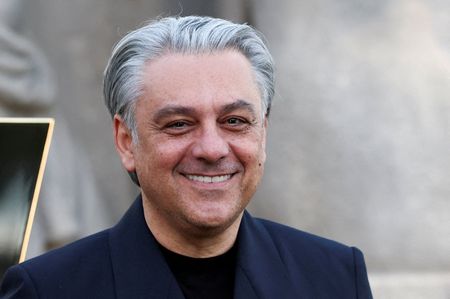

MILAN – Seven months after taking the helm at luxury conglomerate Kering, CEO Luca de Meo has successfully stabilized the company’s financial position. Now comes his biggest test: breathing new life into the struggling Gucci brand.
The former Renault executive has worked quickly since assuming leadership in September, divesting assets to strengthen Kering’s financial foundation, establishing fresh partnerships, and bringing in automotive industry colleagues to drive transformation at the French luxury giant.
Investors are now turning their attention to a more complicated objective: restoring momentum at Gucci, the company’s flagship label that once served as its primary revenue generator but has become its most significant ongoing concern.
This effort faces additional hurdles from deteriorating market conditions linked to the Iran conflict, as evidenced by lackluster first-quarter performance at competitor LVMH. Kering will announce quarterly results on Tuesday, followed by de Meo’s inaugural capital markets presentation in Florence, where Gucci was founded.
“Investor focus will simply be Gucci, Gucci, Gucci,” commented Bassel Choughari, a portfolio manager at Comgest.
De Meo arrived at Kering with credentials earned outside the luxury sector, having transformed Renault through streamlined strategy, enhanced discipline and elimination of corporate inefficiencies. His approach at Kering has followed similar principles.
Early in his tenure, he halted the planned purchase of Italian fashion house Valentino. He also negotiated a 4-billion-euro deal to transfer Kering’s complete beauty division to L’Oreal and generated approximately 1.5 billion euros through premium real estate sales in New York and Milan, addressing worries about the company’s debt burden.
These actions have strengthened Kering’s financial stability and changed the narrative. With liquidity assured and debt concerns diminished, attention has returned to its traditional focus: Gucci.
The brand that once drove the group’s profitability has seen revenues drop to nearly half their highest point under previous creative director Alessandro Michele. Extended periods of steep price increases, evolving design direction and leadership turnover have distanced portions of its clientele.
De Meo’s strategy has involved questioning established practices within Kering. He has criticized the organization’s historic dependence on Gucci and recognized that mistakes in pricing decisions required correction.
The Italian executive, who mentioned to employees at a technology conference in January that he could manage an entire corporation using only a smartphone and WhatsApp, has also centralized oversight from Paris headquarters, limiting the independence traditionally granted to Kering’s individual brands, including Yves Saint Laurent and Balenciaga.
Marketing operations and supply networks are undergoing closer coordination, an initiative designed to reduce expenses while restoring organizational consistency.
To implement these changes, de Meo has positioned several trusted associates from the automotive sector – many former Renault colleagues – in roles spanning manufacturing and human resources to investor communications and artificial intelligence.
For a luxury organization traditionally rooted in creative culture, this represents a significant shift. “The level of bullshit has decreased,” de Meo told reporters in February, characterizing his initial months.
This straightforward approach has resonated with investors. Kering stock has climbed roughly 13% since his appointment, exceeding the performance of rivals LVMH and Hermes during the same timeframe, despite those companies reporting substantially stronger sales figures. Expectations have improved, though starting from a modest baseline.
The financial impact is evident. Kering recorded a 29 million euro net loss from continuing operations last year, compared to peak profits of 3.6 billion euros in 2022. Its recurring operating margin reached only 11%, down from a high of 28% in 2021.
Addressing these issues, however, extends beyond de Meo’s efforts alone. Success also depends on Demna, Gucci’s current creative director.
After replacing Sabato de Sarno, who served less than two years, the Georgian designer has presented two collections featuring intentionally bold, eye-catching designs that have generated mixed reviews from critics.
These creations are just now appearing in retail locations, making concrete sales information limited, with first-quarter numbers likely affected by the Iran conflict and uncertain consumer sentiment.
De Meo’s challenge on Thursday will be convincing investors that while the recovery may not yet be apparent, progress is underway.