
A massive multinational military training operation scheduled for late April through early May will demonstrate America’s unwavering dedication to its Pacific allies, according to U.S. military leaders speaking in Manila on Tuesday.
The annual “Balikatan” exercises, which translates to “shoulder-to-shoulder,” will run from April 20 through May 8 across various sites throughout the Philippine islands. More than 17,000 military personnel will take part in what officials describe as one of the most extensive and complicated training operations to date, expanding from a two-nation exercise into a comprehensive multinational partnership.
“Balikatan represents an opportunity to showcase our ironclad alliance with the Philippines and demonstrate our commitment to a free and open Indo-Pacific,” said Colonel Robert Bunn, the U.S. spokesperson for the training exercises, during a Manila press briefing.
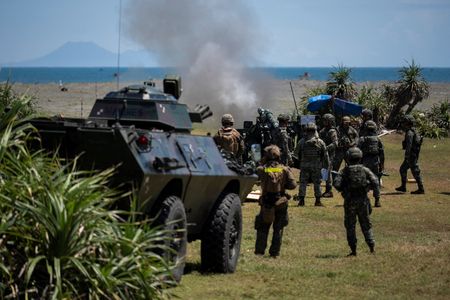
Japan’s involvement will reach new heights this year, with Japanese Self-Defense Force members participating in live ammunition exercises for the first time. They will deploy their Type 88 surface-to-ship missile system to help destroy a retired vessel during maritime combat training.
This enhanced cooperation follows a 2024 mutual access agreement between Tokyo and Manila that permits both nations to station military forces within each other’s borders.
The training program will also showcase the Philippines’ growing network of defense partnerships, with Canada, France, New Zealand, and Australia providing warships, aircraft, and personnel for the exercises.
According to Bunn, the size and complexity of this year’s Balikatan operations reflect America’s ongoing dedication to the Indo-Pacific region, even as global crises demand attention elsewhere.
Thousands of American military members are deploying to the Philippines for the training, strengthening alliance preparedness and regional security while advancing shared objectives for maintaining regional freedom, according to both U.S. and Philippine military leaders.
These expanded exercises occur as tensions escalate between the Philippines and China over disputed South China Sea territories, where Manila has criticized Beijing for increasingly hostile behavior—claims that China disputes.
Training activities will cover air, ground, naval, and cyber warfare domains, featuring maritime operations, combined air and missile defense systems, anti-landing live-fire training, and humanitarian assistance missions.
Colonel Dennis Hernandez, the Philippine spokesperson for the exercises, stated that his country has every right to strengthen its defense capabilities, emphasizing that the training was not targeted at any specific nation.