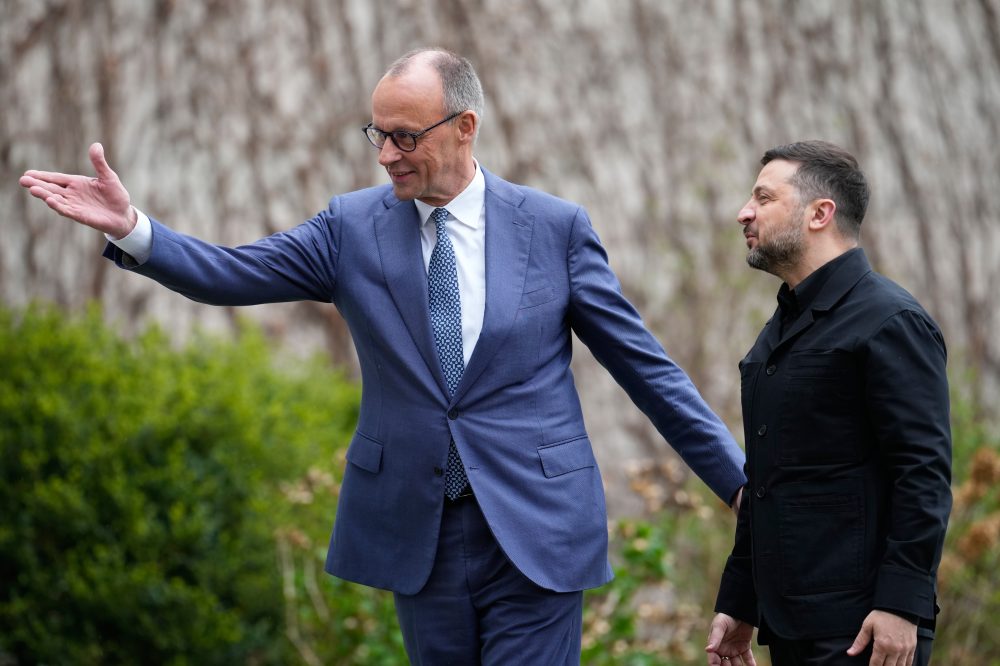

Ukrainian President Volodymyr Zelenskyy traveled to Berlin on Tuesday for discussions with German Chancellor Friedrich Merz, as Ukraine continues its fight against Russia’s full-scale invasion that has now entered its fifth year. Germany remains among Ukraine’s most significant allies in the ongoing conflict.
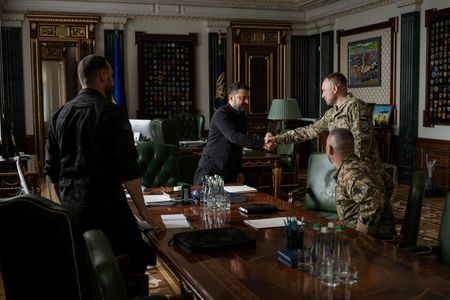
During the same visit, German Defense Minister Boris Pistorius conducted separate discussions with Ukraine’s Defense Minister Mykhailo Fedorov. Fedorov, who previously served as Ukraine’s digital transformation chief before assuming his current role in January, has been recognized for his work in advancing military drone capabilities.
The diplomatic meetings occur as U.S.-led diplomatic initiatives to resolve the Russian conflict have recently lost momentum, with the Trump administration’s focus shifting toward the Iran situation. However, Tammy Bruce, serving as deputy U.S. ambassador to the United Nations, assured the U.N. Security Council on Monday that Washington “will continue to push for a negotiated and durable end” to the hostilities.
According to Western military experts and government officials, Ukraine has achieved notable military victories in recent months against Russia’s numerically superior forces. These successes have disrupted Russia’s spring military campaign, which began as weather conditions improved and terrain became more favorable for operations.
Ukrainian forces have also demonstrated their capability to strike targets far beyond the front lines, with domestically-produced long-range drones and missiles consistently hitting petroleum infrastructure and manufacturing facilities throughout Russian territory.
Finland’s President Alexander Stubb offered an optimistic assessment during remarks at the Brookings Institution in Washington on Monday, stating that Ukraine “is in a much better place than it has been at any stage in this horrific war.”
Stubb further argued that Ukraine “is on top from a military perspective,” pointing out that Ukrainian forces launched more projectiles at Russian targets last month than Russia directed toward Ukraine.
Russian officials have also declared military advances in their favor. Neither side’s battlefield claims could be independently confirmed.
Russian forces currently control approximately 20% of Ukrainian territory, including the Crimean Peninsula, which Moscow annexed in 2014.
Ukraine faces severe financial constraints and urgently requires a pledged 90-billion-euro ($106 billion) European Union loan package. Hungarian Prime Minister Viktor Orbán had previously blocked this funding, though his recent electoral defeat could potentially clear the way for the loan’s approval.
Ukrainian forces also depend heavily on American intelligence for targeting operations within Russia and require additional advanced U.S.-manufactured air defense systems to counter Russian attacks on civilian power infrastructure. Zelenskyy has expressed concern that prolonged conflict in Iran could diminish crucial American support for Ukraine.
The Ukrainian military also confronts significant personnel challenges, with Defense Minister Fedorov reporting in January that approximately 200,000 troops have deserted and around 2 million individuals have avoided military conscription.