
House lawmakers will cast votes Tuesday evening on aviation safety legislation developed in response to the tragic January collision between a commercial airliner and military helicopter near Washington DC that claimed 67 lives, though several senators and grieving families believe the proposed law requires additional strengthening.
Known as the Alert Act, the House legislation has gained support from major industry organizations. The National Transportation Safety Board recently indicated that the updated bill now incorporates their recommendation mandating aircraft operating near high-traffic airports to install advanced positioning systems that provide pilots with precise real-time information about surrounding air traffic.
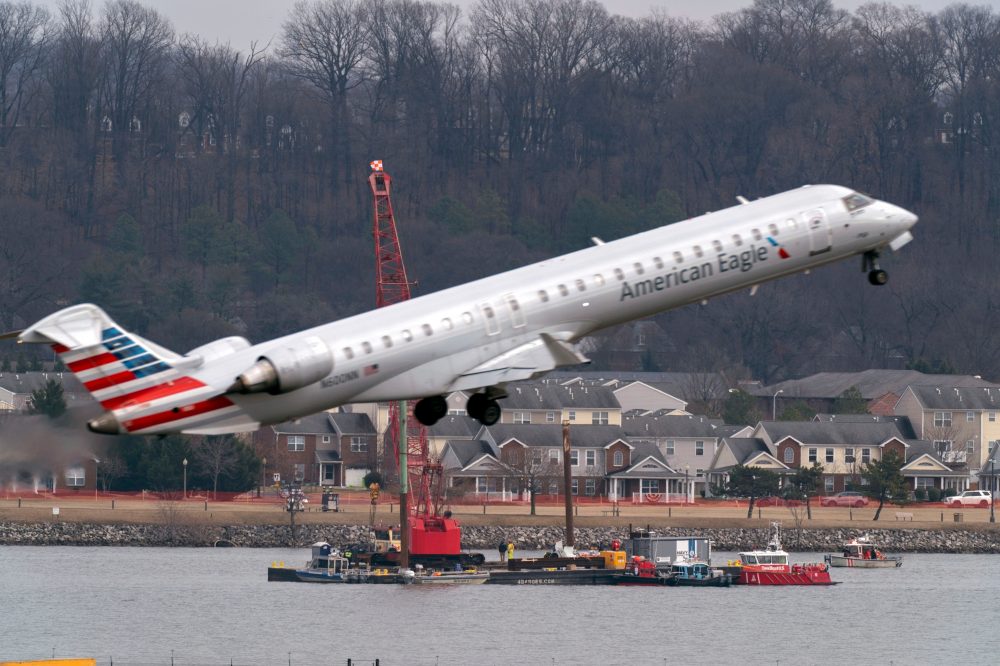
The NTSB has advocated for these technological improvements since 2008, with Chairwoman Jennifer Homendy stating that implementing such systems would have averted the catastrophic crash between the American Airlines aircraft and Army Black Hawk helicopter that crashed into the frigid Potomac River on January 29, 2025.
Two major House committees gave unanimous approval to the measure last month. The legislation now moves to a full House vote under procedures that prohibit any modifications. However, families who lost loved ones emphasize the importance of including firm deadlines to ensure reform implementation.
Co-sponsored by Republican Sam Graves and Democrat Rick Larens, the bill must obtain support from two-thirds of House members to proceed to Senate consideration. Alternative legislation known as the ROTOR Act, developed by the Senate, fell just one vote short during House deliberations. Senators Ted Cruz and Maria Cantwell have indicated the Alert Act requires further enhancements.
NTSB Chairwoman Homendy delivered harsh criticism earlier this year regarding the bill’s initial draft, describing it as a “watered down” proposal insufficient to prevent future catastrophes. The safety board now says the updated version addresses deficiencies their investigation revealed and mandates action from the Federal Aviation Administration, Transportation Department and military branches.
During late January hearings, National Transportation Safety Board officials expressed serious concern about years of unheeded warnings regarding helicopter traffic hazards and additional safety issues that preceded the collision.
All passengers and crew aboard the American Airlines flight from Wichita, Kansas, and the military helicopter perished in the crash. The incident represents the most devastating aviation disaster on American territory since 2001, with casualties including 28 individuals from the figure skating world.
Investigators determined that a helicopter corridor intersecting with a Reagan National Airport runway approach failed to maintain adequate spacing between helicopters and aircraft using the airport’s alternate runway, and officials did not conduct regular evaluations of this route. The flawed design of this flight path contributed significantly to the accident, along with air traffic controllers depending excessively on pilots’ visual detection and avoidance of other aircraft.
The current legislation mandates aircraft installation of Automatic Dependent Surveillance-Broadcast In technology capable of receiving location data from nearby aircraft. Supporters argue these systems would have provided earlier warning to American Airlines pilots about the approaching collision with the Black Hawk. Most commercial aircraft already carry the corresponding ADS-B Out equipment that transmits their positions.
While the NTSB identified systemic failures and years of overlooked safety warnings as primary crash factors, Homendy emphasized that equipping both the airliner and Black Hawk with operational ADS-B In systems would have prevented the collision. Army regulations at the time required helicopters to operate without this technology activated to maintain location secrecy, despite this particular helicopter conducting routine training rather than classified operations.