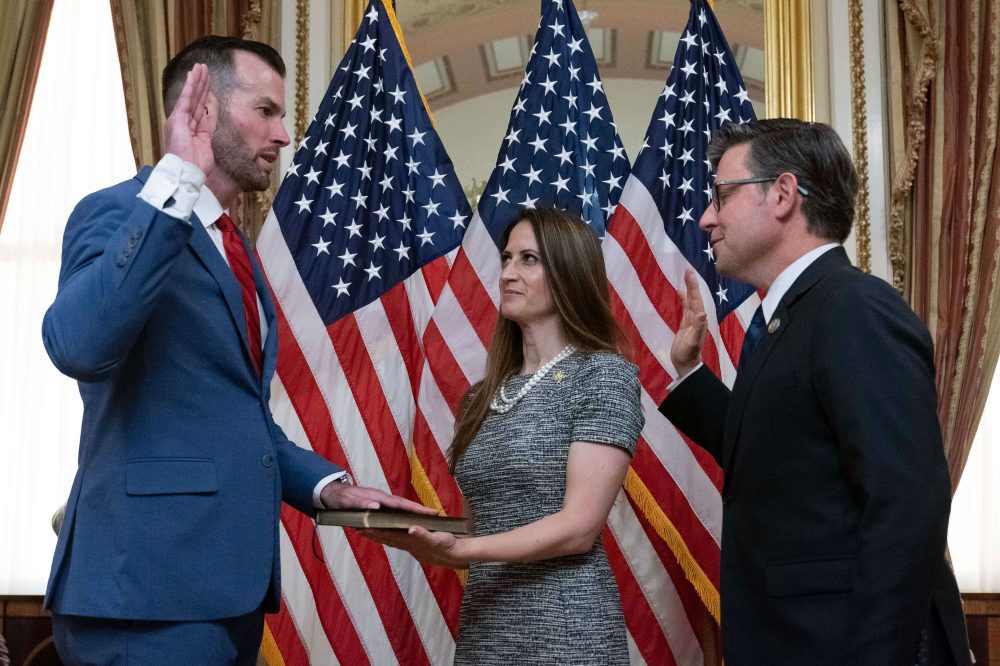
WASHINGTON — Georgia Republican Clay Fuller officially took the oath of office Tuesday following his special election victory to fill the House seat vacated by Marjorie Taylor Greene.
The new congressman hails from a heavily conservative district in Georgia’s northwest region and has made efforts to closely associate himself with President Donald Trump’s agenda. Fuller’s appointment helps preserve the GOP’s narrow control in the House of Representatives as he completes what remains of Greene’s congressional term.
Greene stepped down from her position following an ongoing public dispute with Trump that continues to escalate even after her departure from Capitol Hill.
Speaking to his new colleagues in the House chamber, Fuller told his constituents: “You have sent a warrior to Congress and I can’t wait to fight for you each and every day. To my Democratic colleagues, I look forward to working with each and every one of you.”
Federal authorities have targeted a prominent Mexican human rights advocate with sanctions, claiming he has been secretly working for a major drug trafficking organization while publicly criticizing Mexico’s military forces.
The Treasury Department announced Tuesday that Raymundo Ramos, who heads the Committee for Human Rights of Nuevo Laredo, has been operating as a cartel operative for over ten years while maintaining his public role as an activist. Officials claim Ramos has been creating fabricated allegations against Mexico’s Army to benefit the Cartel of the Northeast (CDN).
“On the CDN payroll, Ramos engages in these activities with the goal of boosting the public opinion of CDN and discrediting Mexican authorities’ law enforcement initiatives against the cartel,” the Treasury Department said in a statement.
The sanctions freeze any U.S.-based assets belonging to Ramos and prohibit American citizens and businesses from conducting transactions with him. Ramos has not yet responded to requests for comment regarding these allegations.
Operating from Nuevo Laredo, a border city in Tamaulipas state known for extreme violence, Ramos has established himself as one of the region’s most visible human rights advocates. Last year, he brought attention to alleged unlawful killings by military personnel, releasing footage that appeared to show Army soldiers fatally shooting five young men in a pickup truck, with one victim shot in the back of the neck. The previous year, he accused Navy personnel of forcibly disappearing civilians.
Both incidents prompted Mexican officials to detain military personnel and launch investigations, though it remains unclear whether formal charges or convictions resulted from these probes.
Mexico’s attorney general’s office has not responded to inquiries about the allegations against Ramos or whether they are conducting their own investigation into his activities.
Notably, in 2020, Mexican government agencies used Pegasus surveillance software to monitor Ramos’ communications, according to research by Mexico’s Digital Rights Defense Network and Toronto-based Citizen Lab. The organizations identified him among hundreds of Mexican journalists and activists who were subjected to government surveillance through the controversial spyware program.
Tensions are rising in Peru as ballot counting from Sunday’s presidential election enters its third day, generating accusations of electoral misconduct and prompting legislative intervention, while uncertainty persists over who will challenge conservative candidate Keiko Fujimori in the runoff.
Fujimori, who previously served in Congress and is the child of deceased former President Alberto Fujimori, continues to hold the top position with 16.8% of votes cast in Sunday’s contest, based on official tallies covering approximately 80% of all ballots.
The former congresswoman is positioned to move forward to a second-round election scheduled for June 7, as no contender has approached the 50% threshold required for an immediate victory. This marks Fujimori’s fourth attempt at securing the presidency.
Behind her, a competitive battle is developing, with right-leaning former Lima Mayor Rafael Lopez Aliaga holding second position at roughly 12% of votes, while center-left contender Jorge Nieto follows closely at approximately 11%, based on data from ONPE, the South American country’s election oversight body.
Left-wing legislator Roberto Sanchez occupied fourth position, capturing slightly more than 10% of the vote.
While ballot processing continues, claims of electoral misconduct have gained broader circulation. Lopez Aliaga, who previously declared that a “brutal fraud” was occurring, received support Tuesday from Sanchez, who expressed doubts about the process’s legitimacy, though both failed to present supporting evidence for their claims.
Several observers noted that the delayed counting mirrors patterns from past elections in the mineral-rich nation, pointing out that former President Pedro Castillo’s victory wasn’t officially validated until eight days following the 2021 runoff election.
INTERNATIONAL MONITORING
Election monitors from the European Union reported finding no substantial proof supporting fraud claims that have emerged since Sunday, while recognizing notable difficulties in the process.
“It is clear that there have been serious problems,” stated Annalisa Corrado, who leads the EU Election Observation Mission to Peru, during Tuesday’s media briefing, while noting that observers had “not found objective elements to support the narrative of fraud.”
The extended counting period resulted from operational breakdowns that disrupted the transport of voting supplies on Sunday, forcing officials to extend polling hours into Monday for over 50,000 citizens who couldn’t vote on the designated election day, primarily affecting areas within Lima, the nation’s capital housing roughly one-third of all voters.
Piero Corvetto, who heads Peru’s election commission, testified before Congress following lawmakers’ demands for explanations regarding the delays. He rejected suggestions of major irregularities, blaming the postponements on a single mistake in ballot material distribution. Corvetto issued an apology for the disruptions.
The election, encompassing both presidential and congressional contests, created multiple obstacles for both voters and election officials, Corvetto explained, following extended political instability in Peru that has weakened institutional trust and left numerous citizens feeling discouraged.
Peru has experienced a succession of different presidents in recent years, creating doubt about whether any new government will complete a full five-year mandate given ongoing impeachment efforts, corruption investigations, and unstable governing partnerships.
The nation’s temporary President Jose Balcazar assumed office through legislative appointment in February, succeeding removed President Jose Jeri, who was ousted by Congress after serving only four months due to controversy over undisclosed communications with a Chinese business figure.
An American naval destroyer stopped two Iranian oil tankers and directed them to return to port on Tuesday, marking the second day of President Donald Trump’s maritime blockade against Iran, according to a U.S. official who requested anonymity.
The vessels had departed from Chabahar port along the Gulf of Oman when the American warship made radio contact with them, the official reported. Details about any additional warnings issued remain unknown.
This incident provides new insight into the early stages of Trump’s blockade strategy, designed to compel Iran to stop its effective shutdown of the Strait of Hormuz, a critical waterway that handles approximately 20% of global oil shipments.
The president hopes this naval operation will force Iran to agree to American demands for concluding a conflict that began February 28 with joint U.S.-Israeli military action, particularly requiring Iran to reopen the Strait of Hormuz. Trump has indicated this condition is also part of a temporary ceasefire agreement with Iran set to end next week.
Policy experts remain skeptical about the blockade’s effectiveness. Noam Raydan from The Washington Institute for Near East Policy noted that tracking information did confirm one tanker reversing course after the blockade started, but warned that many vessels involved in Iranian oil operations disable their tracking systems.
“We just don’t know yet how effective it is. We are still in day two,” Raydan stated.
The U.S. official confirmed these two tankers were part of six commercial ships that U.S. Central Command announced earlier Tuesday had complied with orders to “turn around to re-enter an Iranian port on the Gulf of Oman.”
Central Command reported that no vessels have successfully bypassed the blockade since its Monday launch at 10 a.m. Eastern Time.
The blockade represents a substantial military operation requiring more than 10,000 American service members, over twelve warships, and numerous aircraft, according to military officials.
U.S. military commanders say they will continue protecting navigation rights for ships traveling through the Strait of Hormuz, provided those vessels are not traveling to or from Iranian ports.
Trump declared the blockade after weekend negotiations to end the ongoing conflict collapsed. Oil markets initially spiked above $100 per barrel before retreating Tuesday amid speculation about renewed diplomatic talks.
Should Trump’s approach prove successful, it would remove Iran’s primary bargaining chip in discussions with Washington and restore normal commercial traffic through the strait. However, military analysts warn that blockades constitute acts of war requiring sustained deployment of substantial naval forces.
Such action could also prompt new Iranian retaliation and place additional stress on the already tenuous ceasefire agreement.
Iranian threats against shipping have driven global oil prices up roughly 50%. The conflict has claimed approximately 5,000 lives so far.
Extensive U.S. military strikes have significantly damaged Iran’s armed forces. Nevertheless, experts believe Tehran has emerged from the fighting as a persistent challenge for Washington, now featuring more hardline leadership and hidden reserves of weapons-grade uranium.
Raydan predicted likely Iranian countermeasures if the blockade proves effective and continues long-term, highlighting Iranian warnings to attack Gulf nations hosting U.S. military bases and Iran’s history of targeting commercial vessels.
The artificial intelligence company behind the Claude chatbot has reportedly fielded several investment proposals from venture capital firms that would place its worth at up to $800 billion, according to a Business Insider report published Tuesday.
Sources familiar with the matter told the publication that Anthropic received these funding offers over the past few weeks. The proposed valuation would represent more than double what the AI company is currently worth in the marketplace.
When contacted by Reuters for verification, Anthropic had not provided a response regarding the reported investment interest. Reuters was unable to independently confirm the details of the Business Insider report.
ISLAMABAD (AP) — Behind-the-scenes diplomatic efforts continued Tuesday as officials worked to organize another round of negotiations between the United States and Iran following Washington’s implementation of a naval blockade at Iranian ports, while Tehran issued warnings of potential retaliatory strikes throughout the conflict-torn region.
President Donald Trump indicated that another round of negotiations could take place “over the next two days,” informing the New York Post that discussions might once again occur in Pakistan’s capital, Islamabad.
UN Secretary-General António Guterres agreed with this assessment, stating it’s “highly probable” that negotiations will resume. He referenced a discussion he held with Pakistan’s deputy prime minister, Ishaq Dar.
In Washington, the first face-to-face discussions in decades between Israeli and Lebanese ambassadors to the United States wrapped up with positive results, the State Department reported.
Israeli Ambassador Yechiel Leiter stated that both nations are “on the same side of the equation” regarding “liberating Lebanon” from Hezbollah militants. Lebanese Ambassador Nada Hamadeh Moawad described the session as “constructive” while calling for an end to the current conflict between Israel and Iran-supported Hezbollah forces. This war has forced over 1 million Lebanese people from their homes since March.
Israel and Lebanon have remained technically in a state of war since Israel’s establishment in 1948, with Lebanon continuing to be sharply divided regarding diplomatic relations with Israel.
Initial negotiations held in Pakistan over the weekend, designed to permanently resolve the US-Iran conflict, failed to reach any agreement. The White House identified Iran’s nuclear program as a primary obstacle.
A US official stated Tuesday that additional discussions with Iran remain under consideration, though no meetings have been confirmed. The official requested anonymity due to the sensitive nature of the negotiations.
Pakistan’s finance minister, Muhammad Aurangzeb, informed The Associated Press that “our leadership is not giving up” on efforts to help resolve the US-Iran conflict.
“We’ll keep at it,” Aurangzeb stated Tuesday.
While the ceasefire appeared stable, the standoff over the crucial Strait of Hormuz threatened to restart fighting and worsen the regional conflict’s economic impact.
The conflict, now entering its seventh week, has disrupted markets and shaken the global economy as shipping routes have been blocked and airstrikes have devastated military and civilian infrastructure throughout the region.
The violence has claimed at least 3,000 lives in Iran, over 2,100 in Lebanon, 23 in Israel, and more than a dozen in Gulf Arab nations. Thirteen American service members have also died.
The blockade aims to pressure Iran, which has shipped millions of oil barrels, primarily to Asian markets, since fighting began February 28. Much of this oil likely moved through covert transportation methods that avoid sanctions and monitoring, providing crucial revenue for Iran’s operations.
US Central Command reported Tuesday that no vessels successfully passed the blockade during the initial 24-hour period, while six commercial ships followed US military directions to reverse course and return to an Iranian port on the Gulf of Oman.
Oil tankers approaching the strait Monday changed direction shortly after the blockade began, though one vessel reversed course again and passed through the waterway.
The tanker Rich Starry had been positioned off the United Arab Emirates coast, according to shipping data company Lloyd’s List, which referenced information from energy cargo-tracking firm Vortexa. It remained unclear whether the tanker had previously docked in Iran, though the US Treasury’s Office of Foreign Assets Control listed it as connected to Iranian shipping.
Lloyd’s List, using ship registry and tracking information, indicated the vessel belongs to a Chinese shipping company and was destined for China with a planned stop at an Omani port south of the strait. The ship modified its broadcast signal Tuesday evening to remove its previous destination of Sohar, Oman, according to maritime analytics firm MarineTraffic tracking data.
Treasury Secretary Scott Bessent announced that Chinese tankers would be prohibited from passing through the strait. “So they’re not going to be able to get their oil,” he informed reporters Tuesday.
In unusual public criticism apparently aimed at Trump, Chinese President Xi Jinping stated that nations should “oppose the world’s retrogression to the law of the jungle.” Xi emphasized that countries should work to “jointly safeguard genuine multilateralism.”
Since the conflict began, Iran has restricted maritime traffic, with most commercial vessels avoiding the waterway. Tehran’s effective closure of the strait, which handles one-fifth of global oil transit during peaceful times, has caused oil prices to surge, increasing costs for gasoline, food, and other essential goods well beyond the Middle East.
Trump has warned he will destroy any Iranian military ships that challenge the US blockade. Iran has promised to target Persian Gulf ports if attacked.
French President Emmanuel Macron and British Prime Minister Keir Starmer will jointly lead a conference Friday for nations willing to provide warships to escort oil tankers and container ships through the strait. The deployment will occur “when security conditions allow,” Macron’s office announced Tuesday.
The Israel-Lebanon discussions in Washington were “productive,” the State Department confirmed, noting that “all sides agreed to launch direct negotiations at a mutually agreed time and venue.”
Secretary of State Marco Rubio, who facilitated the discussions, had minimized expectations for immediate results.
Israeli ambassador Leiter stated after the talks that both countries found common ground in multiple areas.
“The Lebanese government made it very clear that they will no longer be occupied by Hezbollah, and Iran has been weakened. Hezbollah is dramatically weakened,” he explained. “This is an opportunity.”
Lebanon’s top US envoy Moawad issued a brief statement calling for a ceasefire between Israel and Hezbollah and the safe return of Lebanese civilians displaced by the fighting.
Following the ceasefire in Iran, Israel continued its air and ground operations, maintaining that the truce does not cover fighting in Lebanon. However, it has suspended strikes in Beirut, the country’s capital since April 8, after a devastating bombardment that struck multiple crowded commercial and residential areas in central Beirut and killed over 350 people in a single day.
These casualties prompted international condemnation and Iranian threats to abandon the ceasefire.
Lebanese officials have advocated for a ceasefire. Israel has structured the negotiations around Hezbollah’s disarmament and a possible peace agreement, without publicly promising to stop hostilities or withdraw its forces.
Israel wants Lebanon’s government to take responsibility for disarming Hezbollah, similar to what was outlined in a November 2024 ceasefire. However, the militant organization has withstood decades of efforts to reduce its power and announced Monday that it will not honor any agreements that might emerge from the talks.
The widow of murdered conservative activist Charlie Kirk canceled her scheduled appearance at a political event with Vice President JD Vance on Tuesday after receiving death threats, according to the vice president.
Speaking to students at the University of Georgia in Athens, Vance confirmed that Erika Kirk had received threatening messages. “I know that she did get some threats,” Vance told the audience. “I was a little worried that we were going to have to cancel the event because Erika was not going to come, and she was very worried about it.”
The vice president indicated he had consulted with Secret Service personnel about the situation but expressed no concerns regarding his personal security. Vance did not provide specific information about the nature of the threats against Kirk, who currently serves as chief executive of Turning Point USA.
Neither the Secret Service nor Turning Point USA provided immediate responses when contacted for additional information.
Charlie Kirk was fatally shot in September while delivering a speech at Utah Valley University in Orem, Utah. The suspected gunman is facing murder charges in connection with the killing, which law enforcement officials have characterized as politically driven. Kirk had helped establish Turning Point USA as an organization aimed at mobilizing young people around conservative political issues.
The tragic incident has heightened discussions about political violence across America, drawing widespread criticism from leaders on both sides of the political aisle and resulting in enhanced security measures at university events featuring prominent political personalities.
Motorists traveling on Route 113 should expect delays due to intermittent lane restrictions currently in place along a section of the highway.
The Delaware Department of Transportation has announced that both northbound and southbound lanes of US Route 113 are experiencing periodic closures between Avenue of Honor and Oak Avenue.
These temporary lane restrictions will continue through the overnight hours, with operations scheduled to conclude at 1:00 AM.
Drivers are advised to plan for potential delays and consider alternate routes if possible during this timeframe.
WASHINGTON — Energy Secretary Chris Wright sparked confusion during a Tuesday ceremony when he declared the nation “looks like we’re going in the wrong direction” while promoting a new natural gas pipeline initiative.
Wright was addressing attendees at the ceremonial groundbreaking for a pipeline system designed to carry natural gas from Pennsylvania to New York City and Long Island. During his remarks, he praised President Donald Trump for “driving down costs for Americans and driving up job opportunities and wages for Americans.”
However, Wright appeared to make an error shortly afterward when he stated, “Just because it looks like we’re going in the wrong direction doesn’t mean that’s the direction we are going.”
Following the event, the Energy Department released selected portions of Wright’s speech that excluded the “wrong direction” remark.
This marks Wright’s second public communications mishap in recent weeks. Last month, he shared a social media video falsely claiming the U.S. Navy had assisted an oil tanker through the Strait of Hormuz during ongoing Middle East tensions. That post was subsequently removed, with department officials attributing the mistake to Wright’s staff.
Tuesday’s ceremony in Brooklyn celebrated the Northeast Supply Enhancement Pipeline, a Williams Companies project that officials say will deliver cost-effective and dependable energy to millions of regional residents.
The initiative represents an extension of current pipeline infrastructure spanning Pennsylvania, New Jersey and New York, and had been designated as a key objective under the Trump administration.
Both this project and another Williams pipeline called the Constitution Pipeline faced lengthy delays due to environmental objections. The Trump administration, which has prioritized expanding oil and gas infrastructure, worked to revive construction efforts for both pipelines.
These pipeline approvals followed the Trump administration’s decision to drop its opposition to a major offshore wind development near Long Island that New York Democratic Governor Kathy Hochul had strongly supported.
Hochul agreed to examine the pipeline proposals last year following intensive pressure from the Trump administration. However, she rejected suggestions of any quid pro quo arrangement linking the wind farm and gas pipeline decisions, stating in a release that she “will work with the administration and private entities on new energy projects that meet the legal requirements under New York law.”
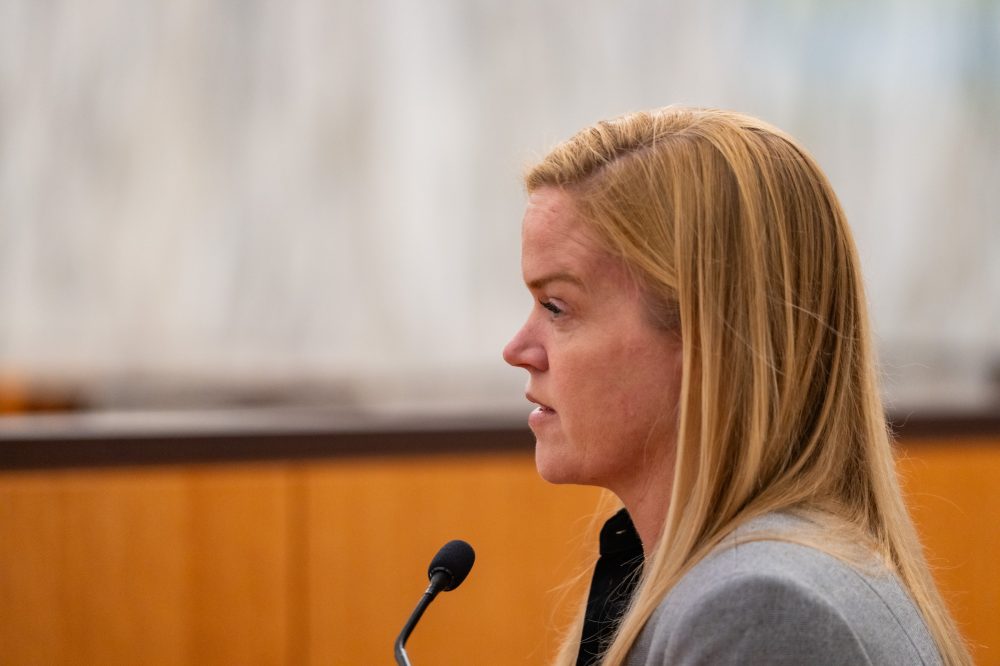
AUSTIN, Texas — A medical officer at a Texas summer camp where 27 people died in flooding last year admitted in court Tuesday that she has never officially notified state health regulators about the deaths, despite the camp’s recent application to resume operations this summer.
Mary Liz Eastland, who belongs to the family that owns Camp Mystic, faced questioning during ongoing legal proceedings between camp management and families of flood victims who have filed lawsuits. The families want the camp to maintain damaged areas as evidence. The two-day hearing has revealed the most comprehensive account yet from camp leadership about the July 4 early morning flood along the Guadalupe River and the fatal delays in evacuation efforts.
Though the deaths of 25 campers and two teenage counselors at the Christian girls’ camp have been extensively covered in media reports, Texas regulations mandate that camps notify state health officials about fatalities within 24 hours.
“I did not think of this requirement in the moments happening after the flood,” Eastland testified, noting she had also failed to do so before submitting the camp’s March 31 reopening application.
Eastland was unable to pinpoint when she first learned about camper deaths, stating it might have been one day or several days following the flood. Her father-in-law, Richard Eastland, also perished in the disaster.
When questioned whether she should now formally notify authorities with the camp license under review, Mary Liz Eastland responded, “I guess so.”
Whether this reporting failure will impact the camp’s licensing application remains unknown. The camp’s submitted application contains lists of staff members and flood zone maps. Management must also provide a comprehensive safety plan, though this document is not available for public review.
State officials plan to inspect the camp during the licensing process. The regulatory agency is also examining hundreds of complaints lodged against the facility and has requested assistance from the Texas Rangers investigative division. State legislators are conducting their own separate inquiry into the flooding incident.
“DSHS will consider any findings from the inspection and investigation when making the determination on the renewal application,” the agency stated Tuesday.
The camp’s intention to reopen portions of its facilities this summer for nearly 900 girls has angered families of those who died. The family of 8-year-old Cile Steward, the sole camper whose body remains missing, initiated the lawsuit that led to this week’s court proceedings.
The Steward family argues the camp should not resume operations while the Eastland family continues in leadership roles. Texas Lt. Gov. Dan Patrick has separately stated that no license should be granted until all investigations conclude.
Mary Liz Eastland’s testimony followed extensive questioning of her husband Edward Eastland on Monday and Tuesday regarding overlooked weather alerts, postponed evacuation choices, and frantic efforts to rescue children as floodwaters tore through the facility with sufficient power to generate rapids around the cabins.
He emotionally recounted seizing two girls while another climbed onto his back before the current swept them all away.
“A genuine hero testified today,” said Mikal Watts, representing the Eastlands. “He told a gripping story of saving lives in an unprecedented tsunami. I am proud to represent Edward Eastland and his family.”
Mary Liz Eastland detailed her actions that evening when she and her children departed their residence to join her mother-in-law. She described water flooding the house and breaking a window to escape. The family managed to reach higher elevation.
She also recounted what she witnessed at dawn when she approached the riverbank, “seeing girls in trees.” She and other staff collected survivors for attendance, comparing names to cabin lists.
“I had to figure out who we had and didn’t have at that point,” she testified.
However, she admitted never attempting to reach low-lying areas to evacuate campers during the storm’s initial stages, explaining she could not navigate the rising floodwaters. She was also questioned about why, as the camp’s head medical officer, she did not attempt to contact or alert other medical personnel to reach the campers before catastrophe struck.
Steward family lawyer Christina Yarnell pointed out that Eastland had been associated with Camp Mystic as a camper, counselor, or staff member since 2002.
“You knew the property. You knew the flood lines. You knew access points,” Yarnell stated. “Your children knew them. These were first-year campers … Cile needed your help and you abandoned her, didn’t you?”
Law enforcement officers in Omaha, Nebraska fatally shot a woman Tuesday after she kidnapped a toddler and attacked him with a knife in a Walmart parking lot.
According to Deputy Chief Scott Gray, the woman confronted a female shopper and a young child between 2 and 3 years old inside the store. After stealing a large knife from the retail location, she brandished the weapon and “took possession of the child, essentially kidnapping the child,” Gray explained.
The attacker forced the woman to walk ahead of the shopping cart while she followed behind, holding the child at knifepoint, Gray reported. The group moved outside the store and into the parking area, where the two women engaged in “some verbal back and forth” for several minutes before police responded.
When officers arrived after receiving an emergency call, they issued commands to the suspect. She then started “swiping the knife at the child, cutting him across the face,” Gray stated. One or more officers opened fire on the woman, killing her at the scene.
Police body camera footage that was made public shows the suspect holding a knife above the small boy who was seated in a shopping cart while an officer points his weapon at her.
Medical personnel transported the child to a local hospital where he received treatment for a significant cut on the left side of his face and an injury to his hand, Gray said. Doctors expect him to make a full recovery.
Authorities have not determined what motivated the attack. Gray confirmed the two women were strangers to each other. Officials have not clarified the relationship between the boy and the woman who was shopping with him.
Investigators are examining surveillance footage from inside the store. Gray described the incident as appearing to be isolated. The Walmart remained mostly empty while police conducted their investigation, he noted.
The suspect’s behavior inside the store would not have seemed suspicious to other customers, Gray observed.
“They kind of just purposely but casually walk out of the store, so I don’t think anybody was actually looking at them as being a suspect of anything,” Gray commented.
The officer-involved shooting will undergo investigation by Omaha police working alongside the Nebraska State Patrol and Sarpy County Sheriff’s Office.
Morning commuters traveling on Route 1 southbound in Sussex County should expect delays due to an active construction zone that has reduced traffic to a single lane.
The Delaware Department of Transportation reports that the right lane remains blocked between Cave Neck Road and Minos Conway Road while crews complete roadwork in the area.
Officials indicate the lane restriction will stay in place until 7 a.m., affecting the early morning rush hour traffic pattern.
Drivers are advised to allow extra travel time and use caution when passing through the construction zone.
The Goldey-Beacom Lightning baseball team saw their impressive recent run come to a halt Tuesday with a 13-5 defeat against Holy Family University at Doyle Field in Hockessin.
The loss marked just the second time the Lightning have fallen in their past 15 games, ending what had been a strong stretch for the team. The Central Atlantic Collegiate Conference matchup proved challenging for Goldey-Beacom as Holy Family dominated the scoreboard throughout the contest.
The Lightning will look to bounce back from this setback as they continue their conference schedule, hoping to return to the winning form that had characterized much of their recent play.
A leading dairy industry official recently emphasized how environmental stewardship practices can significantly impact farm profitability and market competitiveness during a television interview.
Alan Bjerga, who serves as Executive Vice President for the National Milk Producers Federation, spoke with RFD-TV about the critical role that quality stewardship plays in dairy farm economics. According to Bjerga, the nation’s approach of farmer-driven, voluntary programs designed to improve environmental practices serves a dual purpose.
These initiatives not only strengthen the ability of American dairy producers to compete in international markets but also bolster financial stability for operations domestically, Bjerga explained. He stressed that this connection between responsible farming practices and economic benefits represents an important message for consumers and the broader public to understand.
The discussion highlighted how environmental stewardship has become increasingly important for dairy operations looking to maintain their competitive edge both at home and abroad.
Dubai-based airline Flydubai plans to reinstate air service to Israel this Thursday, April 17, operating twice-daily flights connecting Dubai with Ben Gurion Airport, according to Channel 13 News.
The UAE-based carrier will immediately begin operating two round-trip flights per day on the route, signaling a return to normal scheduling after service interruptions.
The restored air link is anticipated to serve as a crucial travel option for Israeli passengers who use Dubai not only as a final destination but also as a connecting point for journeys to Far East markets and other global destinations.
Growing passenger demand has prompted the airline’s choice to reestablish the route, offering expanded seating capacity for travelers requiring connections via Dubai’s international airport.
Flydubai’s service restoration reflects a wider pattern of renewed international air traffic at Ben Gurion Airport, as airlines progressively reintroduce routes due to enhanced operating conditions.
On April 13, 2026, President Donald J. Trump enacted the Holocaust Expropriated Art Recovery (HEAR) Act, a measure advocates say will significantly boost efforts to return cultural treasures stolen from Jewish families during the Holocaust.
The Republican Jewish Coalition, which made this legislation a top priority during the current congressional session, reported that the measure garnered support from both parties in both chambers of Congress.
Key congressional figures backing the initiative included Senator John Cornyn, who played a role in advancing and reinforcing the legislation, alongside Representative Laurel Lee and Senator Ted Cruz.
Joel Greenberg, who leads Art Ashes, emphasized that this new law maintains ongoing responsibility for Holocaust-era atrocities. “Holocaust crimes can never be forgotten; and, with its passage, will not be erased by time. We are grateful for the bipartisan legislative process, including the White House, that has ensured a fair and just path to restitution for Holocaust survivors and their families,” Greenberg stated.
This legislation enhances a previous 2016 statute and aims to broaden judicial access for Holocaust victims and their descendants. The law curtails the application of technical legal defenses, particularly those related to statutes of limitations or concealment issues, while also reducing dependence on international legal systems that have hindered recovery efforts.
Matt Brooks, CEO of the Republican Jewish Coalition, noted the symbolic importance of the signing date, which coincided with Yom HaShoah, Holocaust Memorial Day. “It is deeply meaningful that on Yom HaShoah, Holocaust Memorial Day, President Trump signed the HEAR ACT—landmark legislation to extend and improve the Holocaust Expropriated Art Recovery Act of 2016—into law,” Brooks commented.
Brooks highlighted how this legislation aids families who have spent years pursuing their claims. “The HEAR Act empowers family members, who have fought for decades, to recover artwork stolen from Jews by the Nazi regime during the Second World War,” he explained.
Brooks also commended the president’s commitment to the legislation. “President Trump has consistently proven to be the best friend of the Jewish people ever to occupy the Oval Office, and his signature today ratifies the truth: the passage of time can never diminish the injustice of crimes committed by the Nazis and their collaborators during the Holocaust.”
SALISBURY, Md. – Salisbury University’s nationally-ranked baseball squad wrapped up an exhausting six-day period with a dominant performance, crushing the visiting Neumann Knights 14-5 on Tuesday at Donnie Williams Sea Gull Baseball Stadium.
The Sea Gulls, currently sitting at 13th in national rankings, showcased their offensive power in the decisive victory that marked the end of a grueling five-game stretch compressed into less than a week.
The lopsided win demonstrated Salisbury’s depth and resilience after the demanding schedule, as they overwhelmed their opponents on their home field in Maryland.
A venture capital firm created in response to Israel’s security challenges is working to complete a $60 million funding round designed to help technology companies whose workforce has been mobilized for military service.
Iron Nation, which was established following the October 7 attacks, has already obtained $50 million toward its fundraising goal, according to reports from Calcalist. The investment initiative addresses the capital-raising difficulties faced by tech companies when key personnel are deployed for active military service.
The venture capital firm plans to target Israeli businesses ranging from early-stage seed companies through Series B funding rounds. Six startups have already received investments from the new fund. Iron Nation’s previous $20.4 million fund supported 24 different companies, including Illumex, which Nvidia purchased in March 2026 less than two years following Iron Nation’s original investment.
In a parallel development, the Indiana Economic Development Corporation announced Monday a separate $60 million investment program called Iron Nation-Indiana, designed to build stronger connections between Indiana’s economy and Israel’s technology industry.
The Indiana initiative will receive $15 million from the state’s Twenty-First Century Research Fund. Private sector contributors have provided another $30 million, while organizers continue seeking the remaining $15 million needed to reach their funding target.
“Indiana is committed to competing and winning in the industries shaping the future,” Gov. Mike Braun said in a news release. “Iron Nation-Indiana reflects the kind of partnership we want to pursue — one that combines public leadership, private capital and real commercial opportunity to bring more investment, more innovation and more long-term value to our state.”
The collaboration aims to link Indiana businesses, healthcare organizations, universities, and communities with emerging Israeli technology companies. According to the IEDC, the partnership will offer Israeli tech firms opportunities to create American headquarters and operations within Indiana while developing business relationships with regional companies.
A leading religious freedom advocate has strongly criticized comments made on Japanese television suggesting that former presidential advisor Jared Kushner was unsuitable for diplomatic talks with Iran due to his Jewish heritage.
Rabbi Abraham Cooper, who serves as Associate Dean and Director of Global Social Action for the Simon Wiesenthal Center and previously chaired the United States Commission on International Religious Freedom, denounced remarks made by television personality Toru Tamagawa during a Friday morning program on TV Asahi.
During an appearance on the “Hatori Shinichi Morning Show,” Tamagawa raised questions about Kushner’s religious background affecting his diplomatic role. “It just looks like he’s there as a representative of the Trump family, and moreover, he’s Jewish, isn’t he?” Tamagawa stated on air. “Regarding these talks with Iran, I feel like he’s someone who would be better off not being there, and I’ve always wondered what kind of person he is, coming in as the son-in-law.”
The timing of these comments particularly troubled Cooper, as they occurred during Yom HaShoah, the annual Holocaust remembrance period. “This week Jews commemorate Yom HaShoah, Holocaust Memorial Day, when we remember 6 million innocent Jews murdered by the Nazis during World War II and those few brave souls, such as Japanese diplomat Chinue Sugihara, who saved thousands of Jewish refugees from certain death,” Cooper stated in his response.
The rabbi characterized the incident as part of a troubling global trend and called for stronger action from Japanese officials. “Antisemitism is raging the world over. Japan is a friend and ally. We expect better from friends and allies. I would welcome the opportunity to appear on TV Asahi and other media outlets to explain to the Japanese public how much such comments damage world Jewry,” Cooper declared.
Cooper also expressed disappointment with how the television program handled the situation during the broadcast. “Tamagawa should have immediately been criticized on the air for inserting persons religion and ethnicity into the discussion over Iran,” he said.
When addressing TV Asahi’s subsequent response to the controversy, Cooper found their explanation inadequate. “TV Asahi’s later statement asserts that there was no intention to discriminate. The impact of that not-so-subtle statement was to open the gates to discriminate against a person because of their identity,” he explained.
Cooper also drew connections between this incident and Japan’s diplomatic relationship with Iran, suggesting economic interests influence the country’s public stance. “We have been told for decades that Japan has a special relationship and respect for Iran because it represents an ancient civilization,” he noted. “As a result, criticism by Japan of Iran has been muted or absent altogether when the ayatollahs and their thugs murdered and maimed their own young citizens and built an empire of terrorism. But the real reason for Japan’s silence is because of Iranian oil.”
Drivers using Route 1 northbound are facing traffic delays today due to ongoing construction work that has forced the closure of the left travel lane.
The Delaware Department of Transportation reports that the left lane is blocked between Paytner Road and Deep Branch Road while crews complete construction activities in the area.
Officials say the lane restriction will remain in place until 3 PM today, after which normal traffic patterns are expected to resume.
Motorists are advised to allow extra travel time and exercise caution when driving through the work zone.
Israel’s Ambassador to the United States announced Tuesday that both nations discovered unexpected unity during their first face-to-face diplomatic discussions since 1993, with both countries expressing opposition to Hezbollah’s influence in Lebanon.
Ambassador Yechiel Leiter characterized the outcome as finding alignment on a crucial issue. “We discovered today that we’re on the same side of the equation. That’s the most positive thing we could have come away with,” Leiter stated following the Washington meeting. “We are both united in liberating Lebanon from an occupation power dominated by Iran called Hezbollah.”
The historic diplomatic session, facilitated by American officials, commenced at 11 a.m. Eastern Time and continued for two hours. Secretary of State Marco Rubio participated in the discussions alongside Leiter and Lebanon’s U.S. Ambassador Nada Hamadeh Moawad.
Before the negotiations began, Rubio warned against anticipating quick outcomes. He characterized the initiative as a “process, not an event” and stated, “This is a historic opportunity,” while acknowledging that “we’re working against decades of history and complexities” that cannot be rapidly resolved. Rubio mentioned the Trump administration is “very happy” to be overseeing these conversations.
Israeli officials have rejected any ceasefire before negotiations, declaring their goal is dismantling Hezbollah’s military capabilities and exploring potential peace arrangements with Lebanon. Foreign Minister Gideon Saar stated Tuesday that Israel’s conflict is not with Lebanon directly, emphasizing that “the problem is Hezbollah.”
Leiter indicated Israel anticipates Lebanon will “completely” distance itself from Iran and Hezbollah, noting that “the Lebanese government made it very clear that they will no longer be occupied by Hezbollah and Iran has been weakened; Hezbollah is dramatically weakened.” He characterized the current circumstances as “an opportunity.”
Before the discussions, Lebanese officials had demanded a ceasefire as a prerequisite. President Joseph Aoun stated Monday, “Israel’s destruction of Lebanese territories is not the solution, nor will it yield any results,” arguing that “Diplomatic solutions have consistently proven to be the most effective means of resolving armed conflicts globally.”
Hezbollah rejected the negotiations and had no representation present. Wafiq Safa announced the organization would not honor any resulting agreements, while Secretary-General Naim Kassem advocated for returning to a 2024 framework involving indirect negotiations mediated by the U.S., France, and United Nations peacekeeping forces.
Rabbi Jonathan Markovitch serves as Kyiv’s chief rabbi and senior Chabad representative, where Holocaust remembrance carries deeply personal meaning. His family’s tragic history intertwines with his current mission of helping a war-torn community rebuild Jewish life in Ukraine.
During an interview with The Media Line on Yom HaShoah, Holocaust Remembrance Day, Markovitch described his connection to the tragedy as a personal responsibility. “This is something I live with,” he explained. “Something I feel.”
His grandmother survived Auschwitz, and he recalls seeing the tattooed number on her arm during his youth in Israel. “She was in Auschwitz,” he remembered. “I remember the number tattooed on her arm.” As a young person, he admits the full impact didn’t register initially. “I understood less. I thought less about it, like many young people,” he said, noting that his grandmother rarely discussed her experiences even when asked.
Later, Markovitch learned about an even more horrific chapter of his family’s story. His grandfather’s relatives weren’t deported to camps but were murdered by neighbors in their Ukrainian village. “They were burned alive,” he recounted. “They put them inside a wooden building and burned them.”
“I am talking about the neighbors,” he emphasized.
His grandfather escaped that massacre but was later captured and sent to Auschwitz. After the war ended, he and Markovitch’s grandmother rebuilt their lives and started a family. This journey from devastation to renewal became the foundation for Markovitch’s own life philosophy.
Growing up in Israel, the educational message was clear about preventing future atrocities. “They taught us that we must do everything so that it will not happen again,” he said. This conviction influenced his military service. “When I enlisted, I thought I need to do everything I can so that it will not happen again, and that we must be strong.”
More than ten years later, Markovitch chose a different approach to honoring that legacy. Instead of remaining in Israel, he relocated to Ukraine, where Jewish communities had been nearly destroyed. His grandfather had served as chief rabbi in what is now western Ukraine. “We decided to come back to continue the family tradition,” he said. The choice was intentional. “It was a very thought-out decision.”
The Ukraine he found wasn’t empty of Jewish residents, but their connection to their heritage had been severed. “Dozens of thousands of Jews lived in Kyiv,” he said, estimating approximately 50,000 currently reside there. “But most of them did not know anything about Judaism. Not religion, just basic identity.” He attributed this disconnection to decades of Soviet policies designed to eliminate Jewish cultural and historical identity.
“The communist period tried to erase everything,” he explained. “If we do not support each other and rebuild, then the Nazis won. Because they erased the memory.”
His work in Kyiv today focuses on restoring what was lost, extending beyond religious practice to cultural identity.
This erasure also affected how Holocaust sites were commemorated. At Babyn Yar, one of Europe’s largest mass killing locations where Nazis and collaborators murdered 33,000 Jews over two days in September 1941, victims weren’t officially recognized as Jewish for decades. “They did not say this was a place where Jews were murdered,” Markovitch said. “They said it was a burial place of Soviet citizens.”
This pattern extended throughout Ukraine and the former Soviet Union, where mass graves were acknowledged but not described in Jewish terms.
Local residents still remember disturbing discoveries from that era. When Babyn Yar became a park, children playing in the area would sometimes uncover human remains without understanding their significance. “People tell me that when they were children, they played there,” he said. “They found bones, skulls. They did not understand what it was.”
Official recognition has evolved gradually and inconsistently. For years, government commemorations characterized Babyn Yar as a general tragedy affecting Soviet citizens. “Only gradually did it change,” he said, noting that even recently, political leaders resisted acknowledging responsibility. “There were cases where they were asked to apologize to the Jewish people, and they refused,” he said.
This reluctance reflects a broader pattern of avoiding accountability. “I do not hear public figures say, ‘We made a mistake,’” he said. “It is always someone else’s fault.” However, he notes recent improvements, with officials now participating more actively in Babyn Yar commemorations.
The ongoing war adds another layer to his community’s challenges. While many initially fled Kyiv, others have arrived from heavily contested areas. “At the beginning of the war, many people left,” he said. “Later, many came to Kyiv from the fighting areas.” He described families arriving from cities like Mariupol and Kharkiv with virtually nothing. “Some people left in slippers,” he said, highlighting how suddenly they were displaced.
Many remain in Ukraine due to family obligations and military conscription. “There are families where the husband was drafted, or a son was taken to the army,” he said. “They will not leave without him.” For elderly residents especially, psychological barriers can be as significant as practical ones. “It is easier to stay with something that is not good but familiar than something that might be better but unknown,” he observed.
His community responds by transforming synagogues into aid distribution centers. “We distribute thousands of food packages every month,” he said, describing a system entirely dependent on donations. “When someone gives, we say thank you, because they are literally saving lives.”
Community centers also provide daily meals, medical care, and social activities, particularly for elderly residents. “They come for a hot meal, and there is also a doctor,” he said, describing efforts to maintain both physical and social stability during disruption.
The connection between current warfare and Holocaust memory isn’t straightforward or consistent. “At the beginning, maybe people felt a connection,” he said. “But today, unfortunately, much less.” Instead, he points to a concerning trend of rising antisemitism.
“Antisemitism has increased,” he said. “It continues to grow.” He described how global narratives get absorbed locally, often without distinguishing between political criticism and broader hostility toward Jewish people. “They say Israel kills children, that Israel is an apartheid state,” he said. “And from that, they draw conclusions about Jews everywhere.”
These narratives sometimes develop into conspiracy theories. “They say Jews control the world, that Jews are responsible for the war here,” he said, noting the disconnect from reality. “They forget that Jews here are also fighting.”
He shared a recent conversation with a Ukrainian official who viewed Israel’s actions against Iran as harmful to Ukraine because they diverted global attention. Markovitch challenged that perspective directly. “I told him the opposite,” he said. “Iran supports Russia. If Iran is weakened, it helps Ukraine.” The official reconsidered his position. “He said, ‘Now I think you are completely right.’”
Holocaust commemoration dates differ between Jewish communities and the Ukrainian state. While Jewish communities observe Yom HaShoah, state ceremonies typically occur at different times, usually around Babyn Yar closer to Yom Kippur. “There is no official state event today,” he said.
Despite challenges, he sees encouraging developments, particularly in education. “The Ministry of Education is starting to include what happened to the Jews,” he said. “This is a complete change in approach.” For Markovitch, this shift is crucial for ensuring memory is both preserved and understood.
His message for Yom HaShoah avoids both oversimplification and despair. “We must never forget the events that were done to us,” he said. “But we must not live inside it.” This distinction, he suggests, is essential for maintaining both memory and forward progress.
“We have to move forward, to learn from it, so that it will not happen again,” he said.
For him, the focus extends beyond the past to present actions. In Kyiv, this manifests in practical ways. People continue arriving in the city from other regions. Some simply try to maintain daily routines. The war remains ever-present. Simultaneously, the past stays close. Residents know the locations and understand what occurred there.
For Markovitch, this represents reality. Moving forward becomes necessary because alternatives don’t exist. “Everything depends on us,” he said. “On our strength, and on our understanding of what we must do, not to wait for someone else to do it for us.”
Vice President JD Vance reported that diplomatic discussions with Iranian officials over the weekend in Islamabad showed advancement but stopped short of reaching a comprehensive agreement, with outstanding issues surrounding nuclear oversight and shipping lane access leaving the next move up to Iran.
In an interview with Fox News host Bret Baier, Vance described the discussions as an uncommon instance of senior-level diplomatic engagement between the nations that helped establish Washington’s position. “We made a lot of progress,” Vance stated, explaining that American diplomats communicated their areas of potential compromise as well as their firm positions. He indicated the critical factor moving forward is “whether the Iranians will have enough flexibility” to satisfy American requirements.
According to Vance, the administration’s non-negotiable boundaries are rooted in one fundamental goal: preventing Iran from acquiring nuclear weapons. Though Iranian officials claim they are not pursuing such weapons, he stressed the importance of reliable monitoring mechanisms.
Vance outlined two essential requirements: the removal of enriched uranium from Iranian territory and guaranteeing Iran’s inability to enrich uranium going forward. “We must have the enriched material out of Iran,” he stated, noting that Washington also demands “their conclusive commitment to not develop a nuclear weapon.”
While Iran demonstrated some flexibility during the discussions, Vance indicated it was insufficient to complete a deal. American officials determined the Iranian representatives needed to return home for additional authorization, effectively suspending the talks. “The ball really is in their court,” he remarked.
The negotiations also covered the Strait of Hormuz, a crucial international shipping corridor. Vance stated America’s expectation for complete reopening of the waterway, characterizing it as connected to the broader ceasefire agreement. “We need to see the Straits of Hormuz fully open,” he declared, claiming Iran tried to modify terms during the talks.
He noted that while maritime traffic has increased somewhat, it has not reached American standards. Vance cautioned that if advancement stops, it could change the direction of future negotiations.
Vance emphasized that Washington maintains considerable influence through military and economic measures, including sanctions on Iranian-connected ships. He characterized Iran’s activities in the shipping channel as “economic terrorism,” explaining that America’s response aims to counteract such tactics.
Military analyst Farzin Nadimi, who specializes in Iranian defense matters, has highlighted previous statements from Islamic republic officials warning they would block other nations’ regional port access if prevented from using their own maritime facilities.
According to analysis, an effective maritime blockade against Iran would create dual risks: escalating immediate conflict between Iran and the United States that could engulf the entire region, while simultaneously triggering severe disruptions to the worldwide economy, with China facing particularly significant impacts.
Economic projections indicate Iran’s oil export-reliant economy would face total breakdown in roughly three months under such conditions. Analysts predict this economic devastation would spark widespread civil unrest, fueled by government benefit reductions and extreme inflationary pressures reaching historic levels.
Iranian state media recently released footage claiming to show Revolutionary Guard naval forces confronting a U.S. military vessel in the Strait of Hormuz, alleging the American ship retreated following Iranian warnings.
The conflict involving Iran has intensified tensions between Israel and Turkey, transforming their already fractured diplomatic relationship into a more serious strategic confrontation over regional influence and military deterrence.
Turkish President Recep Tayyip Erdoğan has criticized US-Israeli military actions against Iran from the beginning, while Israeli leaders have accused Turkey of directing more anger toward Israel than toward Iran, even after Iranian missiles violated Turkish airspace.
The deterioration between these former allies didn’t start with the current Iran situation. Israel and Turkey were once close strategic partners with robust military cooperation, but their relationship collapsed following the 2010 Mavi Marmara incident. Although both countries restored full diplomatic relations in 2022, those ties didn’t survive the Gaza conflict. Following October 2023, Turkey withdrew its ambassador and suspended trade with Israel in 2024.
The breakdown became evident not just in policy but in diplomatic presence. Israeli diplomatic personnel had already departed their Istanbul consulate after relations soured over the Gaza war. When armed attackers targeted the building housing the Israeli consulate in Istanbul on April 7, the absence of Israeli staff highlighted how dramatically the relationship had deteriorated from its brief 2022 recovery.
The Iran conflict provided a new battleground for these tensions. On February 28, Erdoğan stated that US-Israeli attacks violated Iran’s sovereignty and disrupted peace for Iranian citizens, while also condemning Iran’s retaliatory strikes against Gulf nations. Two days later, he called the strikes a “clear violation” of international law, saying, “As their neighbor and brother, we share the pain of the Iranian people.” Israeli officials viewed this language as evidence that Erdoğan was aligning himself closer to Tehran while attempting to portray Turkey as a regional peacemaker.
The dispute intensified when the conflict directly affected Turkish territory. Reuters and AP news agencies documented multiple March incidents where Iranian ballistic missiles entered Turkish airspace and were intercepted by NATO air defense systems, with debris landing in southeastern Turkey but causing no casualties. Turkey formally protested to Tehran and warned that such violations were unacceptable. However, Turkey did not launch military retaliation against Iran and chose not to activate NATO’s Article 4 consultation process or Article 5 collective defense provisions.
Turkish officials argue their measured response demonstrates Ankara’s commitment to preventing the region from descending into broader warfare. Israeli critics of Erdoğan interpret this same restraint as evidence that Turkey has treated Israel more harshly than Iran, even after being directly affected by the conflict.
The confrontation then expanded to social media platforms. Through posts shared by Turkish official and pro-government accounts on X, Erdoğan and other Turkish leaders characterized the war as destabilizing, illegal, and politically advantageous to Prime Minister Benjamin Netanyahu. One widely shared message from Erdoğan declared: “Every drop of blood shed in war sparked by US-Israeli attacks on Iran will prolong Netanyahu’s political survival.” Turkish presidency accounts also reinforced Erdoğan’s stance that Turkey opposed both the attacks on Iran and Iran’s retaliation against regional countries.
Israeli officials responded with public statements. According to reports citing Netanyahu’s April 11 X post, he wrote that “Israel under my leadership will continue to fight Iran’s terror regime and its proxies, unlike Erdoğan, who accommodates them and massacres his own Kurdish citizens.” Israeli media also reported that Defense Minister Israel Katz criticized Erdoğan for failing to respond forcefully even after Iranian missiles entered or threatened Turkish airspace, describing him as showing bluster without taking action.
Kobi Michael, a political analyst at the Institute for National Security Studies and the Misgav Institute, believes direct military confrontation between Israel and Turkey remains unlikely because both nations are close US allies and Washington maintains significant influence over each country. “That we have already reached the edge, and it cannot be worse than that, because Turkey and Israel are very close allies of the United States. The United States has a very heavy leverage on both countries. I don’t think that Israel wants to escalate the situation, not at all,” he explained to The Media Line. “But if Turkey tries to escalate the situation, then I think that the Americans will prevent them from doing that. They have the leverage on Turkey. I don’t believe that we will reach a military confrontation with the Turks.”
Michael suggested that Erdoğan perceives opportunities in Iranian weakness, regional instability, and Israel’s diplomatic challenges. “Erdoğan has hegemonic aspirations in the broader Middle East. He perceives Turkey and perceives himself as the leader of the Sunni world and of a future Ottoman empire,” he stated. “Erdoğan sees now an opportunity, a window of opportunity when Iran is weaker.” According to his analysis, this opportunity is enhanced by Israel’s diminished international standing and ideological shifts within Turkey that make a near-term reconciliation unlikely.
“Israel is in sort of a problematic situation when it comes to its position and standing vis-à-vis the international community,” he noted. “So, actually, this is a geostrategic game. … Erdoğan is trying to improve its strategic position amid the regional chaos and a very strong anti-Israel sentiment worldwide.”
Michael doesn’t anticipate improvement in relations anytime soon. “I don’t think that something will be changed dramatically in the foreseeable future because Turkey has become sort of a theocracy. … It is a Muslim Brotherhood country,” he said. “I don’t think that there will be any substantial changes in diplomatic terms between the two countries, unless there is a very significant political change in Turkey itself that will bring the opposition to power.”
Barın Kayaoğlu, chair of American studies at the Social Sciences University of Ankara, provided a contrasting perspective. He portrayed Turkey not as a nation moving toward Iran, but as an independent player whose restraint and regional approach are being misunderstood by Israel. “Turkey did take on Iran’s biggest proxy in the region, the Assad regime, and helped with its overthrow,” he told The Media Line, while also highlighting Ankara’s involvement in Iraq, despite Tehran’s influence there. “On both counts, Turkey has proven itself to be a more useful regional security actor than Israel,” he argued.
Kayaoğlu also dismissed Israeli criticism regarding NATO protocols. “It’s silly of the Israelis to claim that. Iran did not attack NATO. No one asked for Art. 4 consultations or for Art. 5 to be invoked,” he said. “Had the US government wanted NATO, they should’ve called for a meeting of the NAC.” He also minimized the significance of the airspace violations, stating, “Of the four Iranian ballistic missiles that strayed into Turkey’s airspace … only one went considerably well into Turkish airspace.”
He cautioned against any Israeli assumption that Turkey could be militarily pressured or contained. “Now, there seems to be some hope among the Israeli leadership that they could provoke the United States to attack Turkey. Very bad idea,” he warned. “Turkey’s ability to hurt Israel is even more varied than that of Iran.”
“Any military conflict between the two sides would be a disaster for both,” he added. Regarding diplomatic normalization, Kayaoğlu predicted it would only resume following significant political changes in Israel.
These two experts present fundamentally different interpretations of the same crisis. Michael views Erdoğan as exploiting the war, Iranian vulnerability, and Israel’s diplomatic difficulties to enhance Turkey’s strategic position. Kayaoğlu sees Turkey as an independent actor whose restraint and regional stance are being misinterpreted by Israel.
What has emerged is a relationship no longer primarily characterized by diplomatic disagreements, but by competing strategic narratives reinforced through public declarations, military incidents, and political messaging. While neither side appears to seek direct military confrontation, and both maintain ties to the United States and, in Turkey’s case, NATO membership, each new regional crisis provides both governments additional justification to argue that the other represents not merely a rival, but an active threat.
WASHINGTON — Congressional Republicans are pushing forward with a partisan approach to restore full funding for the Department of Homeland Security, which has remained shuttered for nearly two months while Democrats insist on immigration enforcement reforms under President Donald Trump’s administration.
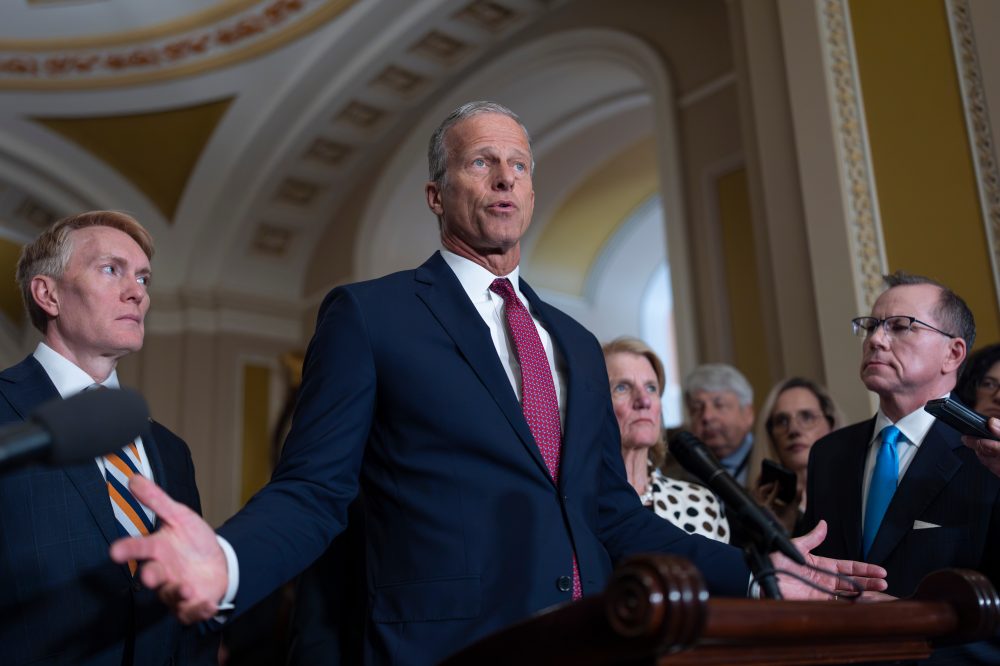
Senate Majority Leader John Thune announced Tuesday that the GOP will attempt to secure funding for Immigration and Customs Enforcement along with Customs and Border Protection through what he called “the hard way.” This approach would sidestep Democratic lawmakers who insist any funding legislation must include restrictions on federal immigration agencies, such as improved officer identification requirements and expanded use of court-issued warrants.
Following the breakdown of bipartisan discussions, Democrats will receive “none of that,” according to Thune’s statement. Instead, Republicans are crafting a partisan measure they plan to advance through budget reconciliation, a complex and lengthy procedure requiring only a simple majority in the 53-47 Senate.
The South Dakota Republican is advocating for a focused bill covering only ICE and CBP funding to quickly reopen the department. However, the process may become complicated as some GOP members will likely attempt to attach additional unrelated priorities.
Democratic opposition remains firm on agency reforms. “Americans want ICE and Border Patrol reined in,” stated Senate Democratic Leader Chuck Schumer of New York.
Thune and Republican leadership emphasize their desire to expedite the legislation through Congress with solely Homeland Security funding to enable the fastest possible department reopening.
During a White House meeting Friday, Wyoming Senator John Barrasso, the second-ranking Republican, and Senate Budget Committee Chairman Lindsey Graham of South Carolina discussed this approach with Trump. Barrasso later shared that “President Trump set a deadline of June 1 to get to his desk a focused reconciliation bill that funds ICE and Border Patrol.”
Trump expressed support on his social media platform, writing that “we are moving FAST and FOCUSED in keeping our Border SECURE!”
However, preventing senators and House members from adding other provisions to the bill will prove challenging.
Trump has been advocating for his strict proof-of-citizenship legislation, the SAVE Act, while the White House may soon request billions for Iran war funding. Agricultural state senators hope to advance comprehensive farm legislation to strengthen the rural economy. Some Republicans argue for offsetting program cuts to cover the estimated $75 billion cost.
Republican leaders indicate they would pursue a second partisan budget reconciliation bill for these additional issues. Many conference members doubt this could occur this year, given narrow GOP majorities in both chambers and the approaching election.
“We’re looking at the narrow vision,” said North Dakota GOP Senator John Hoeven following Tuesday’s Republican lunch meeting about the bill. “Now, do people have other ideas? Of course.”
The Homeland Security Department shutdown began in mid-February.
After federal agents shot two protesters in Minneapolis during January, Trump accepted a Democratic request to separate the Homeland Security bill from broader spending legislation that became law while negotiations continued. However, DHS funding expired without agreement on modifications to the administration’s immigration enforcement methods.
In March, the Senate approved legislation by voice vote that would separate ICE and Customs and Border Protection funding while supporting the remainder of the department, including the Transportation Security Administration as airport security lines lengthened. House Republicans rejected the measure, stating they wouldn’t support any bill excluding immigration enforcement funding.
Congress then departed for a two-week recess, leaving the matter unresolved. Trump has utilized executive orders to cover some department salaries temporarily, though this isn’t a lasting solution.
During the recess, Thune and House Speaker Mike Johnson announced a dual approach — passing the Senate bill covering most department funding through regular procedures while using the party-line bill for ICE and CBP funding. Whether Johnson can convince his members to support this strategy remains uncertain.
Upon returning to Washington this week, Thune said Republicans will attempt to fund the agencies for three years through the budget bill, avoiding annual spending measures to prevent another shutdown during Trump’s presidency.
The agencies would receive funding “not only today but well into the future,” Thune explained.
WASHINGTON — Federal prosecutors on Tuesday petitioned an appeals court to dismiss seditious conspiracy convictions against leaders of the Oath Keepers and Proud Boys extremist organizations who had been imprisoned for orchestrating the January 6, 2021 assault on the U.S. Capitol in an effort to maintain Donald Trump’s presidency more than five years ago.
Trump reduced the prison terms of multiple Oath Keepers and Proud Boys leaders this past January through broad clemency actions affecting all defendants charged in connection with the January 6, 2021 incident — more than 1,500 individuals total.
The Justice Department’s petition would extend beyond sentence reductions to completely eliminate convictions for extremist organization leaders, including Oath Keepers founder Stewart Rhodes, who did not receive clemency in January.
This decision to abandon the convictions marks a dramatic policy shift from the previous Biden administration, which celebrated these guilty verdicts as essential wins in efforts to prosecute individuals responsible for what government lawyers characterized as an assault on America’s democratic foundation. The action continues the Trump administration’s ongoing campaign to reshape January 6 narratives and minimize the severity of violence perpetrated by Trump supporters that resulted in injuries to over 100 law enforcement officers.
Through legal documents, government attorneys requested the U.S. Court of Appeals for the District of Columbia Circuit overturn the convictions to allow permanent case dismissals.
“The government’s motion to vacate in this case is consistent with its practice of moving the Supreme Court to vacate convictions in cases where the government has decided in its prosecutorial discretion that dismissal of a criminal case is in the interests of justice — motions that the Supreme Court routinely grants,” prosecutors wrote in a court filing signed by U.S. Attorney Jeanine Pirro.
Washington D.C. juries found Oath Keepers and Proud Boys leadership guilty of planning violent schemes to prevent the orderly transition of power following Trump’s 2020 electoral defeat to Democratic President Joe Biden.
The department’s dismissal motion encompasses convictions of Oath Keepers members Kelly Meggs, Kenneth Harrelson and Jessica Watkins, along with Proud Boys members Ethan Nordean, Joseph Biggs, Zachary Rehl and Dominic Pezzola.
Additional extremist group participants, including former Proud Boys national chairman Enrique Tarrio, obtained presidential pardons from Trump during his second term’s opening day.
Rhodes received an 18-year prison sentence after his conviction alongside several associates in one of the most significant prosecutions stemming from the January 6 Capitol breach by Trump supporters.
Government attorneys stated that Rhodes and his associates accumulated firearms for potential deployment by “quick reaction force” units stationed at a Virginia hotel, though these weapons were never used.
Nicholas Smith, representing Nordean, expressed appreciation for the Justice Department’s “wise decision” in pursuing conviction dismissals.
“We don’t want a precedent that says that any physical confrontation between protesters and law enforcement means a crime akin to treason, such as seditious conspiracy,” Smith said.
Senate Democrats are preparing for another attempt to restrict President Trump’s military authority, with a planned vote as early as Wednesday on legislation targeting his Iran war powers.
Democratic leadership announced Tuesday they will continue introducing such measures on a weekly basis throughout the ongoing Iranian conflict, which entered its 45th day.
“Forty-five days into this war, Congress has been sidelined because our Republican colleagues refuse to take a strong stand against this war and duck it completely because they’re afraid of Trump,” Democratic Leader Chuck Schumer of New York said in a Senate speech on Tuesday.
The president indicated Tuesday that diplomatic efforts to resolve the Iranian conflict might restart in Pakistan within the coming days, following the breakdown of weekend peace talks that led Washington to establish a blockade of Iranian ports. The failure of those negotiations has cast uncertainty over a two-week ceasefire agreement that still has one week remaining.
Democratic lawmakers have made multiple unsuccessful attempts in recent months to advance war powers legislation that would compel Trump to halt military operations and seek congressional approval before initiating future military campaigns in both Venezuela and Iran.
Party strategists are connecting their push to constrain Trump’s Iran policy with economic concerns, as supply chain disruptions affecting oil and natural gas have driven up gasoline costs and prices for agricultural supplies like fertilizers, adding to existing consumer price pressures.
Rising costs remain among the most politically sensitive issues for American voters, and the current inflationary surge is creating anxiety among Republican strategists concerned about their party’s electoral chances with less than seven months until November’s congressional elections.
Schumer revealed that Democrats have prepared 10 additional war powers resolutions and plan to introduce them weekly while the Iranian conflict, which started February 28, remains active.
Republicans, who maintain narrow control in both congressional chambers, have successfully defeated all previous resolutions and show no signs of changing their stance.
GOP legislators express support for Trump’s military approach and anticipate the conflict will conclude soon. “The military effort here has been extraordinarily successful,” Senate Republican leader John Thune of South Dakota told a news conference.
“I think the administration has a clear objective, a clear plan, and if they can execute on it that question (of whether Congress should authorize a prolonged conflict) won’t be a necessary one that we will be forced to answer,” Thune said.
While the Constitution grants Congress, rather than the president, authority to declare war, this limitation doesn’t extend to brief operations or situations involving immediate national threats.
White House officials maintain that Trump’s military actions remain lawful and fall within his constitutional authority as commander-in-chief to safeguard the nation through limited military interventions.
Senate staff indicated Tuesday evening that the upcoming resolution, sponsored by Illinois Senator Tammy Duckworth, a military veteran, could reach the floor Wednesday, though no official timing was confirmed.
House representatives expect a similar Iran war powers measure to receive a vote in their chamber as early as Thursday.
Chicago White Sox officials announced Tuesday they have called up their premier pitching prospect Noah Schultz from Triple-A Charlotte, setting the stage for his first major league appearance against Tampa Bay.
The organization also brought back outfielder Everson Pereira from the injured list while moving right-handed pitcher Jonathan Cannon to the IL due to inflammation in his right hip.
Baseball America ranks Schultz as Chicago’s top prospect and 21st overall in Major League Baseball. The White Sox selected him in the first round, 26th pick, during the 2022 draft. This season at Triple-A level, the southpaw has compiled an impressive 3-0 record with a 1.29 ERA across 14 innings, recording 19 strikeouts while issuing only two walks.
Standing at 6-foot-10, Schultz will join an exclusive group of the tallest left-handed pitchers in major league history, alongside Randy Johnson and Eric Hillman. Former White Sox right-hander Jon Rauch measured 6-foot-11.
Injury concerns limited Schultz to only 73 innings combined between Double-A and Triple-A last season after suffering a patella injury. Since being drafted, he has not exceeded 88 1/3 innings in any single season, having battled shoulder and hand injuries.
Throughout his five-year minor league career across five different levels, Schultz has posted a 2.76 ERA in 59 games (58 as a starter) over 221 2/3 innings. His statistics include 285 strikeouts compared to 84 walks.
The 25-year-old Pereira has been sidelined since April 3 with a sprained left ankle. Before his injury, he had gone 4-for-16 with one home run in five games this season following his acquisition from Tampa Bay in a November trade.
Cannon, also 25, sustained his injury during the third inning of Sunday’s matchup against Kansas City in what was his season opener. Over three seasons with Chicago, he holds a 9-20 record with a 5.13 ERA across 46 appearances, including 38 starts.
A Michigan judge sentenced former University of Michigan football head coach Sherrone Moore to 18 months of supervised probation Tuesday, allowing him to avoid prison time following his plea agreement on trespassing and telecommunications charges.
Moore received a fine exceeding $1,000 and must comply with a no-contact order regarding staff member Paige Shiver, with whom he had conducted an extramarital affair. The court also prohibited him from consuming drugs or alcohol throughout his probation period.
The 40-year-old former coach entered a no contest plea last month to reduced misdemeanor charges of malicious telecommunications use and trespassing. Prosecutors in Michigan’s Washtenaw County dropped more serious allegations in the plea agreement, including a third-degree felony home invasion charge.
District Court Judge J. Cedric Simpson explained his reasoning for the sentence, stating: “I don’t believe, when I look at the entirety of this situation, that incarceration should be appropriate. I warn you Mr. Moore, should there be a violation, all bets are off. I don’t like sending people to jail, but I don’t have a problem doing it.”
The judge credited Moore’s clean criminal record in his decision to avoid imprisonment. Simpson also acknowledged the support shown by Moore’s wife Kelli, describing her as the person “saving you from the full wrath of this court.” The couple has appeared together at each court hearing, holding hands while entering and leaving the building.
Moore addressed the court with a prepared statement expressing gratitude for his faith and his wife’s support. Both declined to speak with reporters following the hearing.
Defense attorney Ellen Michaels spoke on behalf of her client, telling media representatives: “Sherrone is grateful for this matter to be resolved and he and his wife Kelli are ready to move forward with their family and focus on the next chapter.”
The University of Michigan terminated Moore’s employment for cause on December 10th due to his ongoing relationship with his executive assistant. According to authorities, Moore went to the woman’s apartment on the same day he lost his job. The alleged victim reported that he forced his way inside, seized two butter knives, and cornered her in a threatening manner.
Law enforcement arrested Moore following the incident, and he remained in custody for two days. The initial charges carried potential penalties of up to five years imprisonment and included home invasion, stalking, and breaking and entering.
Moore compiled a 16-8 coaching record at Michigan after replacing Jim Harbaugh, where he had previously worked as offensive coordinator. Both coaches faced scrutiny during a sign-stealing scandal related to the school’s 2023 national championship season, resulting in Moore serving a two-game suspension.
On Tuesday, OpenAI introduced GPT-5.4-Cyber, a specialized version of its newest artificial intelligence model designed specifically for cybersecurity defense applications. The launch comes exactly one week following competitor Anthropic’s reveal of its advanced AI system called Mythos on April 7.
Anthropic’s Mythos model is currently being used through “Project Glasswing,” a carefully managed program that allows selected organizations to test the unreleased Claude Mythos Preview system for cybersecurity protection. The model has successfully identified “thousands” of significant security flaws in operating systems, web browsers and various software applications.
The ChatGPT creator announced that GPT-5.4-Cyber will launch with restricted access, available only to approved security companies, organizations and researchers due to its more flexible design capabilities.
Additionally, OpenAI is broadening its Trusted Access for Cyber initiative to include thousands of verified individual security professionals and hundreds of teams responsible for safeguarding essential software systems, according to a company website announcement.
The tech company is introducing additional levels to its TAC program, which debuted in February, where increased verification requirements provide access to more advanced features.
Security professionals who qualify for the program’s top tier will receive access to GPT-5.4-Cyber, which operates with reduced limitations on sensitive cybersecurity operations including vulnerability research and security analysis.
Facebook’s parent company Meta announced Tuesday it has entered into a long-term collaboration with semiconductor firm Broadcom to develop specialized artificial intelligence processing chips, supporting the social media company’s aggressive expansion of its data center operations.
Following the announcement, Broadcom’s stock price jumped 3.4% during after-hours trading.
The partnership begins with a 1-gigawatt commitment, which both companies describe as merely the opening phase of what they call a “sustained, multi-gigawatt rollout.” The collaboration includes a joint development plan to create and expand hardware designed to power real-time AI-generated content and what Meta refers to as “personal superintelligence” for billions of users on its social media platforms.
Last month, Meta revealed plans for four new processors it’s developing internally through its Meta Training and Inference Accelerator initiative.
Good evening, Delmarva! What a beautiful spring day we’ve had across the peninsula, and the pleasant weather is set to continue through the rest of the week.
Tonight, we’re looking at mostly clear skies with temperatures staying quite mild around 65 degrees. You’ll feel a gentle southwest breeze at 5 to 10 mph – perfect for keeping the windows open if you’d like some fresh air.
Wednesday is shaping up to be absolutely gorgeous! We’ll see plenty of sunshine with temperatures climbing to a warm 90 degrees. It’s definitely feeling more like late spring as we head toward summer. Wednesday night will be partly cloudy with lows dipping to a comfortable 68 degrees.
Looking ahead to Thursday, the sunshine continues with mostly sunny skies and highs near 87 degrees. No rain in sight for the next few days, so it’s a great time to get outside and enjoy some outdoor activities.
That’s your Delmarva forecast! Stay cool, stay hydrated, and enjoy this beautiful spring weather. I’m your meteorologist reminding you to make it a great day!
NEWARK, Del. – University of Delaware officials have revealed the schedule for their upcoming 302 Tour, marking the fourth year of the popular community outreach initiative.
The three-day program is scheduled to run from Thursday, June 11, through Saturday, June 13, according to Tuesday’s announcement from the university.
During the annual event, Blue Hens student-athletes will join coaching staff and university personnel as they travel throughout New Castle, Kent, and Sussex counties. The tour provides opportunities for the athletic program to connect directly with supporters while exploring unique attractions and landmarks that highlight Delaware’s character.
The 302 Tour has become a signature tradition for Delaware Athletics, strengthening ties between the university and communities across the First State through personal interactions and local engagement activities.
Listen to the Evening Delmarva Farm Report Update — April 14, 2026
DELMARVA — Mid-April heat continues across Delmarva with temperatures pushing well into the 80s, providing ideal conditions for fieldwork and early season growth. Farmers wrapped up another productive day with soil moisture levels holding steady after last week’s rainfall.
Planting operations are running ahead of schedule across the peninsula with corn emergence looking strong in early planted fields. Meanwhile, wheat stands are progressing through jointing stage under favorable conditions.
Markets
Corn futures closed at $5.18 per bushel. Soybeans settled at $11.42. Wheat finished at $6.71. Locally, number 2 yellow corn is bringing $4.90 at Delmarva elevators. Soybeans are running $10.85.
Forecast
Another warm evening is expected with mostly clear skies and temperatures dropping to 61 degrees under light southwest winds. Wednesday brings more sunshine with highs climbing to 86 degrees and southwest winds 5 to 10 miles per hour. Perfect conditions for spraying and fieldwork continue.
No rainfall is expected through mid-week, so irrigation planning may be necessary for newly planted fields and vegetable operations.
This article is based on the Delmarva Farm Report Update Evening Edition, April 14, 2026. Hosted by Tom Bradley.
EL SEGUNDO, Calif. — The Los Angeles Lakers will enter their opening playoff matchup against the Houston Rockets without their two highest-scoring players, as both Luka Doncic and Austin Reaves continue recovering from injuries sustained earlier this month.
Lakers head coach JJ Redick confirmed Tuesday following practice at the team’s training facility that both stars will miss the start of the first-round series. “They’re out indefinitely,” Redick stated. “I’m not going to have an update for you this week.”
Both players suffered their injuries during Los Angeles’ April 2 defeat against Oklahoma City. Doncic injured his hamstring while Reaves sustained an oblique strain, and neither was able to return for the remainder of the regular season. The Lakers will host Houston for Game 1 this Saturday evening.
Sources familiar with the situation tell The Associated Press that Doncic, who led the NBA in scoring this season, will return to Los Angeles on Friday after spending time in Spain for specialized hamstring treatment. The source requested anonymity as the team has not disclosed specifics about the star player’s rehabilitation process.
Reaves remains in Los Angeles and was observed taking free throw practice with teammates after Tuesday’s session concluded. Medical experts suggest his oblique injury could sideline him for the complete first-round series, as such injuries typically require at least a month for full recovery, though the Lakers have avoided setting any definitive recovery schedules.
The absence of both players represents a significant blow to Los Angeles’ championship aspirations, as the duo combined for 56.8 points, 13.8 assists, and 12.4 rebounds per game when available this season. However, the Lakers managed a 3-2 record during their absence, securing home-court advantage for the opening round as LeBron James stepped back into his primary offensive role.
The team has adjusted by utilizing Luke Kennard in ball-handling and playmaking duties, while guard Marcus Smart has returned after missing nearly three weeks with an ankle injury. Smart expressed confidence about matching Houston’s defensive intensity.
“They’re aggressive, and we’re going to try to use it against them,” Smart explained. “We’ve got some things put in, some different guys that are going to bring it up. They’re going to come out firing, and we’ve got to come out firing, too.”
Reserve center Jaxson Hayes is also expected to return after sitting out the final four regular season games to rest a foot injury. “I was going to play no matter what,” Hayes declared. “If I was hurting, I’d be playing.”
A former gynecologist at the University of California, Los Angeles entered a guilty plea Tuesday to charges of sexually abusing patients, following an appellate court’s decision to overturn his earlier conviction this year.
James Heaps received an 11-year prison sentence in 2023 after a jury found him guilty on five charges of sexual battery and penetration related to two patients. However, an appellate court threw out that conviction in February, determining that Heaps did not receive a fair trial because the presiding judge failed to inform defense lawyers about a jury foreman’s note expressing concerns regarding another juror’s ability to understand English.
Rather than face another trial, Heaps admitted guilt to 13 felony charges connected to five victims and received the same 11-year prison term.
Following the February appeal ruling, defense attorney Leonard Levine had expressed confidence that “it’s just a matter of time before he is totally exonerated.”
Levine has not yet responded to requests for comment regarding Tuesday’s guilty plea.
The well-known UCLA gynecologist faced an indictment in 2021 on numerous charges including sexual battery by fraud, sexual exploitation of a patient, and sexual penetration of an unconscious person through fraudulent representation. These charges stemmed from sexual assaults against seven women that occurred from 2009 through 2018.
Following the 2019 scandal that broke after the physician’s arrest, UCLA reached settlement agreements totaling nearly $700 million with hundreds of Heaps’ former patients — setting a record for payouts by a public university during a series of sexual misconduct cases involving campus medical staff.
Former patients reported that Heaps inappropriately touched them, made sexual remarks, or performed unnecessary invasive procedures throughout his 35-year medical career.
Attorney John Manly, who represented over 200 former patients in legal action against the university, stated that Heaps’ admission of guilt and prison sentence demonstrates that “there will be severe consequences for any violation of patients’ rights and dignity.”
FORT COLLINS, Colo. — The Trump administration has maintained its rejection of Colorado’s appeal for federal disaster assistance, following devastating wildfires and flooding that impacted communities throughout the state last year.
Democratic Governor Jared Polis had requested federal major disaster declarations for blazes that burned across 240 square miles in western Colorado, as well as flooding that devastated mountain towns in the southern region of the state.
The governor’s request included FEMA public assistance funding, which would allow local communities to receive reimbursement for debris removal and infrastructure reconstruction. He also sought hazard-mitigation money to help the state rebuild with improved disaster resilience.
After initially turning down Colorado’s requests in late 2023, Trump maintained that rejection on appeal this Monday following what FEMA acting administrator Karen S. Evans described as a “thorough review” in correspondence sent to Polis.
The rejection letters provided limited explanation for the decisions. Polis expressed frustration in his response, describing the outcome as “incredibly disappointing” given Colorado communities’ swift disaster response, thorough damage documentation, and cooperative efforts with federal officials.
“These disasters caused real damage to homes, infrastructure, and local economies, and Coloradans should not be left to shoulder these costs alone,” Polis stated.
Although FEMA conducts damage assessments and applies established formulas to evaluate potential impacts on state and local governments, presidential discretion ultimately determines disaster declaration approvals.
When Trump initially rejected Colorado’s request in December, Polis criticized the president for engaging in “political games” regarding disaster declarations.
White House spokesperson Abigail Jackson disputed claims that political considerations influenced the decisions. She told The Associated Press that the administration evaluates each request with “great care and consideration” to ensure federal funds are used appropriately and efficiently to supplement, rather than replace, state disaster response responsibilities.
“President Trump provides a more thorough review of disaster declaration requests than any administration has before him,” Jackson stated.
Multiple Democratic-controlled states have voiced complaints about disaster declaration denials despite demonstrating clear need.
Data analysis by Andrew Rumbach, a senior fellow at the nonpartisan Urban Institute, reveals that nearly 84% of disaster requests from Trump-supporting states received approval during his second term, compared to approximately 42% approval for states that supported 2024 Democratic presidential candidate Kamala Harris.
Rumbach expressed uncertainty about whether political motivations clearly influenced these decisions. He noted the relatively small sample size of about 60 state requests and acknowledged that some states may have presented inadequate justification for federal assistance.
“These are definitely questions worth asking, but I haven’t reached a conclusion that there’s clear political bias going on here,” Rumbach explained. “That’s why it’s really important that FEMA and DHS be as transparent as possible about how they’re making these decisions.”
These rejections have drawn criticism from Democratic governors including Maryland’s Wes Moore and Illinois’ JB Pritzker, who characterized Trump’s February denial of his state’s flood recovery appeal as “a politically motivated decision that punishes thousands of Illinois families in a critical moment of need.”
Colorado Attorney General Phil Weiser has been challenging several recent federal actions affecting Colorado, including the elimination of a climate research facility, threats to reduce transportation funding, withholding assistance for low-income families, and relocating the U.S. Space Command to Alabama.
Some communities nationwide have faced unusually extended delays for disaster request responses during Trump’s second administration, which critics argue hampers emergency response efforts and creates particular hardship for rural areas with limited financial resources.
Homeland Security Secretary Markwayne Mullin pledged last week to address the accumulated backlog of pending requests before the Atlantic hurricane season begins June 1st. Following Mullin’s briefing, Trump approved major disaster declarations for at least seven states last week.
AMHERST, Mass. — Hampshire College in western Massachusetts will shut its doors permanently following the fall semester, the institution announced Tuesday, citing overwhelming financial difficulties that have proven insurmountable.
The college’s Board of Trustees made the difficult decision to permanently close the campus after what administrators characterized as mounting economic pressures that have become too challenging to overcome. According to a joint statement from the board and President Jennifer Chrisler, attempts to boost student numbers, restructure existing loans, and generate income through property sales have all failed to provide adequate relief.
“The rationale behind this painful vote reflects several realities. The College no longer has the resources to sustain full operations and meet our regulatory responsibilities,” administrators explained in their announcement.
In a post shared on Instagram, Chrisler recognized the heartbreak surrounding the closure. “This is an incredibly painful moment for the Hampshire community, and we are doing everything to support our students in completing their studies and assist our faculty and staff in navigating what comes next,” she stated.
College officials indicated the December closure timeline will enable currently enrolled students at the small western Massachusetts campus to either finish their degrees at Hampshire or transfer to affiliated schools.
Established in 1965, the institution has faced ongoing challenges for multiple years. School leadership initiated a major $60 million fundraising effort in 2020, which brought in significant contributions, including a substantial $5 million donation made in recognition of notable graduate Ken Burns, the acclaimed documentary filmmaker.
Hampshire gained national headlines in 2023 when it extended enrollment opportunities to students from New College of Florida, after that institution underwent changes under conservative leadership appointed by Republican Governor Ron DeSantis.
The Massachusetts school had offered Florida students in good academic standing the opportunity to transfer while maintaining their current tuition costs through financial assistance. Both colleges share similar educational philosophies, emphasizing progressive values, non-traditional academic approaches, alternative grading systems, and student-directed learning programs.
Hampshire’s closure adds to a growing number of small New England colleges that have been forced to cease operations in recent years.
Educational institutions nationwide are increasingly struggling as they face a declining student population. Reduced birth rates have resulted in fewer college-bound young adults, while some regions have experienced drops in the percentage of high school graduates pursuing higher education following the coronavirus pandemic.
These demographic changes have created an oversupply situation in higher education markets. Numerous colleges, particularly smaller private institutions, have experienced sustained enrollment declines that have severely impacted their financial stability. New England, with its dense concentration of academic institutions, has been particularly affected by these trends.
Motorists should plan alternate routes as a section of Firetower Road remains blocked due to construction activities scheduled through 8 PM this evening.
The Delaware Department of Transportation reports the roadway is impassable between Route 20 and Cool Branch Road while crews complete necessary work in the area.
Drivers are advised to seek alternative routes and allow extra travel time until the construction zone reopens later tonight.
Delaware Department of Transportation personnel are currently managing traffic flow at the intersection of Heron Green Court and Timber Knoll Drive through a flagging operation.
The traffic control measures are expected to remain in place until 11:00 AM today. Motorists traveling through the area should anticipate potential delays and follow the directions of flagging personnel on site.
DelDOT has not specified the reason for the flagging operation, but such activities typically involve utility work, maintenance operations, or construction activities that require temporary traffic management.
Britain’s King Charles III is scheduled to visit the United States later this month in an effort to repair diplomatic relations with President Donald Trump following recent tensions between the two nations over military actions in Iran.
The monarch and Queen Camilla will arrive in America on April 27 for a four-day diplomatic mission that was originally planned to commemorate the 250th anniversary of American independence, but has taken on greater importance due to escalating disagreements between Trump and British Prime Minister Keir Starmer.
A representative from Buckingham Palace announced Tuesday that the trip acknowledges the difficulties facing both countries and their allies globally. “This visit is a moment to reaffirm and renew our bilateral ties as we address those challenges together, in the UK’s national interest,” the palace spokesperson stated.
During the Washington portion of the visit, Trump and First Lady Melania Trump will host the royal couple for a private tea session, followed by an official White House welcome ceremony, formal state dinner, and one-on-one meeting between the president and king.
King Charles will make history by addressing Congress, becoming only the second British monarch to speak before lawmakers since his mother Queen Elizabeth II did so in 1991. The royal visit will continue in New York, where Charles and Camilla plan to meet with families affected by the September 11, 2001 terrorist attacks.
The American portion of their tour concludes in Virginia, after which the king will travel to Bermuda, where he serves as head of state for the British territory.
British officials hope the ceremonial aspects of the royal visit will showcase what a foreign office representative described as “the closest of friendships” between the two nations.
However, this characterization has faced challenges since the US and Israel conducted military strikes against Iran in late February, with Trump repeatedly criticizing Britain and Starmer for not actively supporting the operation.
The president has publicly compared Starmer unfavorably to “Winston Churchill” and referred to British naval vessels as “toys,” though Trump has consistently expressed admiration for Charles and the royal family.
Public opinion surveys indicate Trump remains highly unpopular among British citizens, prompting some political figures to call for canceling the visit entirely.
Ed Davey, who leads the Liberal Democrat party, expressed his concerns during parliamentary proceedings Monday, calling Trump “a dangerous and corrupt gangster.” He added, “I really fear for what Trump might say or do while our king is forced to stand by his side. We cannot put His Majesty in that position.”
Starmer, who has attempted to maintain distance from the Iran conflict while avoiding direct confrontation with Trump, emphasized the enduring importance of Anglo-American relations. “The monarchy, through the bonds that it builds, is often able to reach through the decades on a situation like this,” Starmer commented.
Both leaders hope to avoid discussions about Jeffrey Epstein during the visit, as King Charles’s brother Andrew faces ongoing police investigation regarding his connections to the deceased financier, while Melania Trump recently made public statements denying any association with Epstein.
Some American legislators have suggested the king should meet with Epstein’s victims, but palace sources indicated this would not occur due to potential interference with ongoing criminal investigations.
“We fully understand and appreciate the survivors’ position,” a palace source explained. “Even though the risk may be small that a meeting or any public comments could impact on those inquiries, or the proper course of the law, that is a risk that we simply can’t take, for the best interest for the survivors themselves.”
NEW YORK, April 14 – Major stock indices surged Tuesday as renewed diplomatic efforts between Washington and Tehran raised hopes for reduced tensions in the Middle East, while investors closely watched quarterly earnings reports from major corporations.
The positive momentum in equity markets coincided with a decline in oil prices as supply concerns eased amid prospects for diplomatic progress.
Market Performance Highlights
Equity markets showed broad strength, with European indices reaching their highest levels in a month on expectations of Middle East stabilization. Eight of the eleven major S&P 500 sectors finished in positive territory, with communication services leading the advance.
Banking stocks delivered mixed results following quarterly earnings releases. JPMorgan Chase shares fell 0.8% while Wells Fargo dropped 5.7%, but Citigroup bucked the trend with a 2.6% gain.
Currency and commodity markets reflected the shifting geopolitical landscape. The dollar extended its losing streak to seven consecutive sessions as peace negotiations gained traction. U.S. Treasury yields declined on signs of diplomatic progress, while gold prices jumped as the greenback weakened.
Federal Reserve Officials Weigh In on Interest Rates
Treasury Secretary Scott Bessent voiced optimism that core inflation would continue declining despite ongoing Middle East conflicts, while maintaining his position that the Federal Reserve should reduce its benchmark interest rate.
However, recent economic data presents a mixed picture. Two of three key inflation measures for March showed core inflation, which strips out volatile food and energy costs, moving higher. Only average hourly wage growth showed a more moderate reading compared to the previous month.
Chicago Federal Reserve President Austan Goolsbee offered a more cautious perspective, suggesting the central bank may need to delay rate reductions until 2027 if war-related disruptions slow inflation’s gradual decline toward the Fed’s 2% annual target.
During their most recent policy meeting, Fed officials maintained the federal funds rate between 3.50% and 3.75%, though most policymakers indicated at least one rate cut could be warranted this year.
Small Business Confidence Weakens
American small business optimism dropped to an 11-month low in March as rising energy costs offset benefits from reduced tax burdens, according to the National Federation of Independent Business.
The sentiment index fell below the organization’s 52-year historical average, while uncertainty levels spiked four points to 92, significantly above the long-term average of 68. Survey respondents expecting better business conditions reached their most pessimistic outlook since October 2024.
Looking Ahead
Wednesday’s market drivers may include Middle East developments, energy sector movements, and earnings reports from Bank of America, Morgan Stanley, and transportation company J.B. Hunt.
International economic data releases include Chinese industrial output and retail sales figures for March, along with first-quarter GDP data from China. European indicators feature French inflation numbers and eurozone industrial production statistics.
Federal Reserve officials scheduled to speak include Board Governor Michael Barr and Vice Chair Michelle Bowman, whose comments could provide additional insight into monetary policy direction.
Delaware Department of Transportation crews are conducting flagging operations on Tamara Circle that are causing intermittent traffic delays for drivers in the area.
According to DelDOT, the flagging work will continue through 6 PM today, with motorists experiencing periodic stops and delays as crews direct traffic through the work zone.
Drivers are advised to expect delays and consider alternate routes if possible while the operations are underway.
Students from Delaware State University recently had the opportunity to go behind the scenes at 6ABC’s Philadelphia newsroom, gaining valuable insight into the world of broadcast journalism.
The educational visit allowed DSU students interested in media careers to observe television news operations firsthand and learn about the various roles within a professional newsroom environment.
This type of industry exposure helps students understand the day-to-day workings of broadcast journalism and provides networking opportunities as they consider their future career paths in media and communications.
The International Finance Corporation, which serves as the World Bank Group’s private sector division, has partnered with Citigroup to establish a substantial 1.6 billion rand financing arrangement worth approximately $98 million, both organizations announced Tuesday.
This new borrowing arrangement is intended to enhance the IFC’s capacity to offer rand-denominated loans to private companies in South Africa, representing part of a wider effort by development financing organizations to minimize currency risk exposure in developing nations.
Financing in domestic currency plays a vital role in emerging economies, where businesses and infrastructure projects generate income in local money but often find it difficult to secure long-term capital without accepting foreign currency exposure risks.
The newly created facility has already provided backing for the IFC’s primary investment in the Cape Water outcome-based bond that FirstRand Bank of South Africa issued.
“Local currency financing is extremely important in this day and age … we are living in a very volatile world,” said Jorge Familiar, vice president and World Bank Group treasurer.
Familiar explained that businesses generating income in domestic currency often encounter substantial difficulties when seeking loans denominated in foreign currency, which makes local currency funding a valuable tool for managing risk.
This agreement follows a comparable arrangement in Kenyan shillings that the IFC and Citigroup established during 2024.
“You could call that (Kenya facility) the pilot,” Familiar said, calling this new facility “proof that something that we piloted and has worked well can be replicated elsewhere.”
According to Familiar, during the previous fiscal year, 30% of the World Bank’s direct lending operations utilized local currency, and he characterized the rand facility as part of the IFC’s comprehensive strategy to assist clients in managing currency exposure.
Throughout the past ten years, the IFC has provided over $33 billion in domestic currency financing across 71 different local currencies, according to their statement.
WASHINGTON – The Treasury Department announced Tuesday that it has approved new general licenses permitting financial dealings with select Venezuelan banking institutions and certain government officials from the South American nation.
According to official documents released on the Treasury Department’s website, the authorization covers Venezuela’s central bank, which faced U.S. sanctions in April 2019, along with three government-owned financial institutions: Banco de Venezuela, Banco del Tesoro, and Banco Bicentenario del Pueblo de la Clase Obrera, Mujer y Comunas.
The new licensing represents a shift in the Trump administration’s approach to economic restrictions on Venezuelan financial entities, allowing previously prohibited transactions to move forward under specific conditions.
The Democratic Republic of Congo will welcome its first group of deportees from the United States this week, with more than 30 individuals expected to arrive under a newly implemented agreement between the two nations, according to four sources who spoke with Reuters.
The deportees originate from nations other than Congo, with at least some coming from Central and South American countries, based on source information and U.S. court records. While one source indicated the total would reach 37 people, another estimated 45 individuals would be involved.
This group represents the initial arrivals under the arrangement with the Trump administration that was officially announced on April 5, just two days after Reuters revealed negotiations between the two countries regarding Congo accepting third-country deportees.
The deportation agreement comes as the Trump administration works to implement a U.S.-facilitated peace agreement between Congo and Rwanda designed to end conflict with Rwanda-supported M23 rebels in eastern Congo. This fighting has resulted in thousands of deaths and displaced hundreds of thousands of people. The timing also follows the establishment of a strategic partnership that provides the United States with preferential access to Congo’s critical minerals.
Sources indicate the deportees should arrive in Congo by Friday and will be temporarily accommodated at a hotel located near Kinshasa’s primary airport. The three sources providing this information requested anonymity due to the controversial nature of the arrangement, which has faced opposition from human rights organizations and political opposition groups within Congo.
The United States has previously transported third-country deportees to various African nations, including Ghana, Cameroon, Equatorial Guinea and Eswatini. These actions have drawn condemnation from legal professionals and advocacy groups who question the legal foundation for such transfers and raise concerns about how deportees are treated when sent to countries where they lack citizenship.
In some cases, deportees were subsequently returned to their home countries despite having received court-mandated protection in the U.S. designed to prevent such deportations.
A Congolese government representative did not respond to requests for comment on Tuesday. Kinshasa has previously emphasized that it will not allocate any funds as part of its third-country deportee arrangement with the United States.
When contacted, a State Department representative stated that Washington had “no comment on the details of our diplomatic communications with other governments.”
The airport hotel in Kinshasa is scheduled to accommodate the deportees for just 10 to 15 days, according to one source who could not specify what arrangements would follow that period.
The facility will continue operating for regular guests, and the deportees will have freedom of movement, according to a diplomat and a senior humanitarian source. Individual rooms will be provided for the deportees, along with two daily meals. Security will be managed by Congo’s national police working alongside a private security company.
Neither Washington nor Kinshasa has disclosed the total number of deportees that would eventually be transferred to Congo.
The International Organization for Migration (IOM), a U.N.-affiliated agency, will provide support to the deportees arriving this week, two sources confirmed. IOM has similarly assisted third-country deportees transported from the U.S. to Eswatini and Cameroon.
In a statement, IOM clarified it plays no part in the actual deportations, which are managed by the respective governments. The organization said it could offer “post-arrival humanitarian assistance” if requested by Congolese officials.
An IOM source revealed earlier this month that the U.S.-Congo deportation agreement could encompass migrants from South America, potentially including Venezuelans.
Reuters confirmed at least four migrants whose legal representatives were informed by U.S. Immigration and Customs Enforcement that their clients would be deported to Congo this week. These individuals are from Colombia, Peru, Chile and Guatemala.
A federal judge’s April 8 court order from California, obtained by Reuters, revealed the U.S. government’s plan to remove a Peruvian migrant to Congo. This individual had been denied asylum but received protection against deportation to Peru due to fears of persecution.
Senate Republicans are preparing to advance legislation that would provide funding for immigration enforcement agencies through the conclusion of Donald Trump’s presidency in January 2029, with floor action potentially starting within days.
Senate Majority Leader John Thune is driving efforts to expedite consideration of the measure, which would authorize financial support for Immigration and Customs Enforcement and U.S. Border Patrol operations under the Department of Homeland Security umbrella.
Speaking to media representatives Tuesday, Thune indicated the complete Senate chamber might commence deliberations “as early as next week.” Lawmakers are set to enter a seven-day break beginning May 1.
Current annual appropriations for ICE and Border Patrol remain stalled due to disputes between Republican and Democratic lawmakers regarding new operational requirements for both organizations.
To secure approval without Democratic backing, Republicans plan to employ a specialized Senate mechanism that enables passage through simple majority votes, circumventing the typical 60-vote threshold required for most measures in the 100-member chamber.
Drawing from recent years’ baseline appropriations for ICE and Border Patrol, expenditures across the three-year period could reach $50 billion or higher.
This funding would supplement the more than $100 billion in multi-year appropriations Republicans secured last July through separate channels outside standard budget procedures.
Thune is advocating for streamlined legislation to prevent attempts by some among the 53 Republican senators to include unrelated provisions.
Louisiana Senator John Kennedy expressed to Reuters Tuesday his desire to incorporate the “SAVE America Act,” which would establish additional voting limitations across the nation. Trump has actively promoted this measure ahead of November 3 congressional contests.
“If (other) senators start getting their stuff, I want my stuff, and I think you’ll have most senators feel the way I feel,” Kennedy stated.
Republicans contend the election-focused legislation is necessary to block non-citizens from voter registration. Democrats reject the proposal, maintaining that fraudulent voting incidents in states occur extremely infrequently and that SAVE would ultimately prevent millions of eligible voters from registering and participating in elections.
Thune worries that including SAVE or additional unrelated measures could jeopardize the complete initiative.
Florida Republican Senator Rick Scott desires any additional ICE and Border Patrol funding to be balanced through reductions in other federal budget areas. Scott indicated he would review the forthcoming legislation’s specifics before determining his position on supporting or opposing the measure.
Republicans must navigate a two-phase congressional process for this legislation.
Initial passage involves a non-binding budget framework in both the Senate and House of Representatives. Subsequently, a reconciliation measure containing actual spending provisions would require presidential signature to become law.
Former NHL netminder Brian Boucher remembers constantly checking the shot counter during games, mentally calculating how many more saves he needed to consider his performance successful.
“It was a way to kind of validate what you were doing and how you felt about yourself and kind of a barometer that you used to gauge your game,” Boucher explained.
Today’s goalies shouldn’t rely on those same metrics, and there’s a compelling explanation why. The current NHL season is creating an unwelcome milestone for goaltenders across the league.
For the first time in thirty years, the league-wide save percentage has fallen below .900, currently sitting at .896 — the worst mark since 1994. Players at every position have become more talented and strategic in their shot selection, while the pace of play has reached unprecedented speeds. These combined elements are reshaping expectations for hockey’s most crucial position.
“The players evolve and they get better,” explained Washington’s Logan Thompson, whose .912 save percentage places him second among goalies with 50-plus starts. “Their sticks get better. Their shots get harder. They kind of know sneaky little spots, or they’re not shooting as many pucks as they did back in the day, as well.”
Current shot totals support Thompson’s observation. Teams average just 27.8 shots per contest, the fewest since the defensive-heavy late 1990s and early 2000s. That era’s emphasis on hooking, holding and interference prompted rule modifications following the 2004-05 lockout, specifically aimed at boosting offensive production. Those adjustments have succeeded beyond expectations.
Clubs now combine for more than six goals per game, a trend that has continued for four consecutive seasons. Modern players frequently seek additional passing opportunities instead of accepting mediocre scoring chances.
“It’s insane,” said Dallas goalie Jake Oettinger, whose .900 save percentage represents a career-low across six seasons. “Guys will have it in the slot and they’re passing it, where I feel like 10 years ago it was just pucks on net. I think guys are way more skilled, so when they get Grade-A chances, they’re that much more talented and everyone can shoot.”
Former goaltender Martin Biron, like Boucher, emphasizes how dramatically the sport has evolved since their playing days. During Biron’s peak years, league-average save percentages reached as high as .911.
“A lot of it was straight on: a guy coming down the wing, taking a shot,” Biron recalled. “All I had to worry about was the shooter, my angles and it was a lot easier.”
Post-game shot total revisions have become increasingly common, sometimes occurring days after contests conclude, which naturally affects goaltenders’ save statistics. Both Oettinger and Dallas backup Casey DeSmith express frustration with these modifications.
“They just take shots away that are shots on goal,” Oettinger noted. “There are probably three a game. If you multiple that by 50 games, that’s like having five more shutouts that they’re taking away.”
These statistical reviews have intensified since sports betting became legal throughout the United States and Canada. With wagers available on shots-on-goal totals, each recorded shot faces rigorous scrutiny.
“All of that auditing that the league is doing with shots, and honestly it stems from gambling,” Biron observed. “People don’t want to lose their bets if there was a shot that was missing the net or whatnot.”
NHL officials attribute the increased precision to advanced puck and player tracking technology, along with other innovations that provide more accurate data for both the league and betting operators. These technological reviews can result in changes to original scorekeeper decisions made during games.
Equipment modifications represent another factor in the league’s offensive surge. The NHL has systematically reduced goaltender gear dimensions over recent years, trimming shoulder pads, chest protectors, and pants to create additional target areas for shooters while maintaining safety standards.
Thompson prefers his equipment fitted tightly due to his mobile playing style, but acknowledges the impact of these changes on shots that previously would have struck padding.
“Sometimes, there might be a shot that it looks weak but it goes kind of through your knees and there’s really nothing else you can do: There’s just a little hole there and sometimes the puck goes in,” Thompson explained. “That’s out of your control.”
The Washington netminder, in his second season with the Capitals and a former Olympic backup for Canada, believes hockey is shifting away from large, position-blocking goalies toward more agile, reactive players.
“I don’t think you can be a blocking-style goalie,” Thompson stated. “With how good and skilled all these players are in this league, you’ve got to be able to react and use your hands. … You’ve got to be able to react because the shooters, they make too good of shots and too good of plays now.”
While teams have recently invested in specialized skill coaches to enhance scoring, goalie-specific instruction has existed for years, though these coaches may need to adapt their methods.
“Shooters are getting good, and it’s time for goalies to adjust a little bit,” Biron suggested. “It’s not the north-south game anymore. It’s an east-west game, so goalies have to adjust to that. They have to become much more conscious of the puck moving laterally, and the better goalies are the ones that can move laterally so much better.”
Biron identifies Tampa Bay’s Andrei Vasilevskiy, Buffalo’s Ukko-Pekka Luukkonen, Boston’s Jeremy Swayman, and the New York Islanders’ Ilya Sorokin as exceptional lateral movement specialists. Statistics support his assessment, with Vasilevskiy (.912) and Luukkonen (.910) ranking third and eighth league-wide, while Swayman and Sorokin both maintain .906 percentages.
Shot locations also reflect coaching philosophies that prioritize offensive opportunities over defensive security.
“Now teams are more OK with giving up what they give up,” Oettinger explained. “That’s kind of just the style now. It’s less defensive-minded and more try to score as much as you can.”
Given these transformations, Boucher questions whether the traditional .900 benchmark — stopping nine of every ten shots — remains realistic. Thompson recently watched Dallas face New Jersey, where Oettinger was removed after surrendering four goals on eight shots. The teams combined for ten goals on 51 total shots, producing an .803 save percentage that evening.
“You can say, ‘Oh the goaltending wasn’t good,’” Thompson reflected. “But at the same time, I don’t really know many goalies who are going to be making those stops.”
Sports journalist Dianna Russini has stepped down from her position at The Athletic following the publication of photographs showing her with New England Patriots head coach Mike Vrabel at an Arizona hotel, which triggered an internal review at the New York Times-owned publication.
The images, which appeared in the New York Post, were captured at a Sedona resort prior to the NFL owners meetings that commenced in Phoenix on March 29.
In a resignation letter dated Tuesday and sent to Athletic Executive Editor Steven Ginsberg, Russini defended her journalistic record while criticizing the media coverage that followed. “I have covered the NFL with professionalism and dedication throughout my career, and I stand behind every story I have ever published. When the Page Six item first appeared, The Athletic supported me unequivocally, expressed confidence in my work and pride in my journalism. For that I am grateful. In the days that followed, unfortunately, commentators in various media have engaged in self-feeding speculation that is simply unmoored from the facts,” she wrote.
Russini continued in her statement: “Moreover, this media frenzy is hurtling forward without regard for the review process The Athletic is trying to complete. It continues to escalate, fueled by repeated leaks, and I have no interest in submitting to a public inquiry that has already caused far more damage than I am willing to accept. Rather than allowing this to continue, I have decided to step aside now — before my current contract expires on June 30. I do so not because I accept the narrative that has been constructed around this episode, but because I refuse to lend it further oxygen or to let it define me or my career.”
The reporter came to The Athletic in 2023 following almost ten years at ESPN, where she served in multiple capacities including SportsCenter host, NFL analyst and league insider. At The Athletic, she produced a podcast and appeared on their video content.
Both Russini and Vrabel, who are married to other people, issued responses to the Post minimizing the significance of the photographs.
Russini explained that the images “don’t represent the group of six people who were hanging out during the day.”
Vrabel responded to the publication by stating: “Those photos show a completely innocent interaction and any suggestion otherwise is laughable.”
The Patriots coach was absent from New England’s pre-draft press event on Monday.
The New York Times confirmed on Saturday that the digital sports outlet had launched an inquiry into Russini’s professional conduct.
This investigation began despite Ginsberg’s earlier comments to the Post that the photographs “lacked essential context” while praising her contributions to The Athletic.
Vrabel, a three-time Super Bowl champion as a player with New England, is entering his second year leading the Patriots. He earned AP NFL Coach of the Year honors after guiding the team to a 14-3 record last season, which concluded with a Super Bowl defeat to Seattle. He previously received the same coaching award while with Tennessee in 2021.
PHOENIX — Major League Baseball organizations once viewed college baseball programs with doubt and uncertainty. Professional teams questioned the use of aluminum bats, the abbreviated season length, and believed nothing could substitute for the experience gained through years of development in the minor league system.
Those days are over.
Multiple influences — particularly increased funding and advanced technology — have brought MLB and college baseball closer together than ever before. The movement of personnel between both levels of the sport has increased significantly in recent years.
This shift explains how Tony Vitello became the San Francisco Giants manager without any prior professional baseball experience — making history as the first person to achieve this milestone. It also helps explain why Athletics first baseman Nick Kurtz earned AL Rookie of the Year honors in 2025 just one year after completing his standout college career at Wake Forest.
“The college game has definitely taken a bigger step toward the pro game — mainly because of the almighty dollar,” said Arizona State coach Willie Bloomquist, who spent 14 seasons in the major leagues.
“Essentially what’s happened, the Power 4 Conferences are basically the minor leagues.”
Athletics general manager David Forst — who chose Kurtz with the fourth overall selection in the 2024 draft — said the player’s rapid advancement through the farm system demonstrated how competitive college baseball has become. Kurtz required only 210 minor league plate appearances before excelling against MLB pitching, posting a .290 average with 36 home runs and 86 RBIs across 117 games in 2025.
“There’s no doubt that top-level college baseball is High-A or Double-A now. It’s really close,” Forst said. “I never would have imagined a player like Nick Kurtz coming to the big leagues for us 11 months after he was drafted.
“That was unthinkable when I first started doing this. The timeline is squashed because these guys are coming out of college so ready, so physically advanced. Some of them — frankly — don’t need the minor league at-bats they used to need.”
The improvement in college baseball stems largely from increased financial investment. Coaching compensation has skyrocketed over recent decades: LSU’s Jay Johnson leads the field earning more than $3 million annually while Mississippi State’s Brian O’Connor follows at $2.9 million.
While these represent the highest salaries, power conference coaches commonly earn over $1 million per year.
The top-paid MLB managers earn approximately $8 million per season, though premier assistants like pitching and hitting coaches typically receive six-figure salaries.
Name, Image, and Likeness compensation has also increased the financial appeal of college baseball, despite payments remaining below those for football and basketball players. Additionally, elite NCAA programs are investing heavily in technological resources.
“We have one of the better pitching labs on the West Coast,” Bloomquist said. “I think it would rival a lot of professional organizations. From a data standpoint, it’s all trickled down to the college level.”
Following his playing career, Bloomquist worked in the Arizona Diamondbacks’ front office before joining the Sun Devils. His pitching coach — Jeremy Accardo — brings 18 years of professional baseball experience as both player and coach.
Bloomquist explained that MLB organizations have grown more confident in allowing NCAA programs to develop professional prospects rather than risking draft picks on unproven 18-year-old high school graduates. He suggested this confidence likely contributed to MLB’s decision to eliminate 40 minor league affiliates in 2020.
During the 2025 MLB draft, 56 college players were chosen among the first 90 selections.
“These guys trust (college) programs,” Bloomquist said. “They say, ‘We’ll just watch them in college in three years at a Power 4 program, see how they development and then we’ll go get them.’”
Georgia baseball coach Wes Johnson represents another example of successful transitions between MLB and NCAA levels. He served as Minnesota Twins pitching coach for 3½ successful seasons from 2019 to 2022 before returning to college baseball. He contributed to developing 2025 NL Cy Young Award winner Paul Skenes while serving as LSU’s pitching coach before accepting the head coaching position with the Bulldogs.
Johnson acknowledged the undeniable similarities between college and professional baseball while noting important differences remain for players and coaches. The scheduling differences represent the most significant challenge.
College baseball’s compressed schedule makes each of the 56 regular-season games critically important. A three-game losing streak feels catastrophic. In professional baseball, such a streak represents a minor setback.
“With the Twins, we played 33 spring games, then played 162 in the season and then made the playoffs,” Johnson said. “It’s every day there. That’s the hardest challenge you have when you go from college to the big leagues. We won 101 games in 2019 (in the regular season). That means we only lost 61 games.
“But that’s the most I’ve ever lost in my life in one year.”
Bloomquist confirmed the scheduling differences while noting age as another consideration.
“There’s a different style in college than there is in professional baseball — to an extent that’s accurate,” Bloomquist said. “There’s an intensity in college, motivating 18 to 20 year olds, as opposed to guys who are making $20 million. Can you relate to those guys in pro ball?”
San Francisco Giants third baseman Matt Chapman, who played college baseball at Cal State Fullerton before becoming a five-time Gold Glove winner in the majors, wasn’t concerned about Vitello’s adjustment despite some differences — including more native Spanish speakers in professional baseball.
“Winning baseball looks the same,” Chapman said. “It’s pitching and defense, knowing how to run the bases and then managing personalities. He has a lot of experience with that.
“There will be a learning curve in some areas. You just can’t fully know how to run a Major League clubhouse unless you’ve been in one. But it’s not foreign to him. He’s a baseball guy.”
A major cyber attack orchestrated by Russian hackers has compromised internet routers nationwide, prompting federal regulators to issue updated security guidelines for home users.
The extensive hacking campaign has raised concerns about the vulnerability of residential internet equipment, leading the Federal Communications Commission to provide fresh recommendations on securing home network devices.
Homeowners are being urged to take proactive steps to safeguard their internet connections against potential cyber threats targeting router systems.
The Walt Disney Company initiated a major workforce reduction Tuesday that will result in approximately 1,000 employees losing their jobs throughout the entertainment giant.
CEO Josh D’Amaro, who took over leadership from Bob Iger in February, announced the widespread job eliminations following an earlier restructuring of Disney’s marketing operations in January. The workforce reduction will impact multiple areas of the California-headquartered corporation, spanning traditional television operations like ESPN and the film studio division. Workers in technology, product development, and various corporate departments will also face job losses.
In an internal company message acquired by The Associated Press, D’Amaro explained the reasoning behind the cuts. “Over the past several months, we have looked at ways in which we can streamline our operations in various parts of the company to ensure we deliver the world-class creativity and innovation our fans value and expect from Disney,” D’Amaro wrote. “Given the fast-moving pace of our industries, this requires us to constantly assess how to foster a more agile and technologically-enabled workforce to meet tomorrow’s needs.”
This marks Disney’s second major round of job reductions in recent years. When Iger resumed his role as CEO in 2022, the company eliminated approximately 8,000 positions. Disney’s workforce totaled roughly 230,000 employees as of late 2025.
D’Amaro, who joined Disney in 1998 and previously managed the company’s profitable theme park operations, now faces the challenge of navigating industry-wide pressures.
The entertainment sector has experienced widespread downsizing recently. Since David Ellison’s company acquired Paramount Skydance, that studio has eliminated 2,000 positions, with more cuts anticipated if Paramount’s proposed merger with Warner Bros. Discovery receives approval from shareholders and regulators. Additionally, Sony Pictures Entertainment announced plans last week to cut hundreds of jobs from its workforce.
A nonprofit journalism organization stepped in this week to rescue the Pittsburgh Post-Gazette from closing its doors, marking another instance of struggling news outlets seeking salvation through nonprofit partnerships as traditional revenue streams dry up.
Several major newspapers across the country have pursued similar strategies to survive the industry’s financial crisis.
In 2019, The Salt Lake Tribune became the nation’s first established newspaper to transform directly from for-profit status to nonprofit operations. The publication required Internal Revenue Service authorization for this groundbreaking conversion, which differed from other newspapers that were acquired by existing nonprofit entities.
The transformation included establishing a board of directors and shifting to donation-based funding. The newspaper implemented strict barriers between journalists and contributors to maintain editorial independence, and discontinued political candidate endorsements through its editorial board.
Since launching in 1871 as “The Tribune & Utah Mining Gazette,” The Salt Lake Tribune changed hands multiple times. The rise of internet usage during the mid-1900s created severe financial challenges for the publication and the broader newspaper industry, as readers migrated to digital sources and advertisers followed suit.
New York hedge fund Alden Global Capital, known for aggressive cost-cutting measures, acquired The Salt Lake Tribune in 2010, loading the company with $278 million in acquisition debt. The resulting reorganization triggered staff reductions and attracted a U.S. Department of Justice investigation.
Utah entrepreneur Paul Huntsman purchased the newspaper in 2016 and facilitated its transition to nonprofit status.
Chicago Public Media finalized its acquisition of the Chicago Sun-Times in 2022, forming one of America’s most significant local nonprofit news operations.
Department store magnate Marshall Field III established the Chicago Sun-Times in 1948. Field had launched the Chicago Sun newspaper several years prior and acquired the local Daily Times to obtain printing equipment. The publications combined to form the Chicago Sun-Times.
The newspaper changed ownership repeatedly over subsequent decades before Chicago Public Media’s purchase.
The public media company already operated WBEZ, the area’s NPR station. The radio outlet and newspaper now collaborate on content distribution, broadening both organizations’ audiences.
The Tampa Bay Times originated as the West Hillsborough Times, a weekly publication produced on manual printing equipment beginning in 1884.
Former Indiana newspaper owner Paul Poynter acquired controlling interest in 1912, according to the St. Petersburg Museum of History. The Poynter family maintained ownership for decades until Nelson Poynter’s death in 1978. He bequeathed the newspaper to a local journalism institution — the nonprofit Modern Media Institute — converting the publication to nonprofit operations.
The Modern Media Institute later adopted the Poynter name.
Media industry challenges extend beyond American borders. News organizations worldwide — including Caribbean outlets — have implemented staff cuts, ceased operations entirely, or pursued new funding through donations and website subscription models.
The Associated Press, among the globe’s oldest news services, began in the mid-1800s when newspapers sought to share reporting costs beyond their local markets. Though AP has operated as a nonprofit for decades, this status hasn’t shielded the organization from industry-wide financial pressures.
AP announced last week it would offer voluntary buyouts to an undetermined number of domestic journalists as part of its strategic shift away from traditional newspaper and print journalism that supported the company since the 1800s. The News Media Guild union, representing AP staff members, reported that over 120 of its members received buyout proposals.
The famous American lottery game Powerball is preparing to cross international waters this summer, welcoming players from England, Scotland, and other areas of the United Kingdom for the first time.
Officials announced Tuesday that the Multi-State Lottery Association, which oversees Powerball operations, has reached an agreement with Allwyn UK, the company that manages the U.K.’s National Lottery. The partnership still requires approval from British gambling regulators.
This marks a historic first — never before has a lottery outside American borders contributed to Powerball’s jackpot pool.
Matt Strawn, who leads Powerball operations and serves as chief executive of the Iowa Lottery, explained the reasoning behind the move. “We’re constantly looking for ways to make sure that we’re keeping Powerball culturally and commercially relevant,” Strawn said. “And this really is the next natural progression in doing just that.”
Winners on both continents will compete for identical jackpot amounts, with American prizes paid in dollars and British prizes distributed in pounds.
American players won’t see any changes to their lottery experience, Strawn confirmed. Tickets will remain $2, and the astronomical odds of hitting the jackpot — 1 in 292.2 million — stay the same. However, the addition of UK ticket buyers will create a larger player base, causing jackpots to climb more rapidly.
“Players consistently tell us in survey after survey that faster growing Powerball jackpots is what they’d like to see,” Strawn explained. “Not surprisingly, the higher the jackpots grow the more people play the game in a particular drawing. The more people play, the higher sales grow. The higher sales grow, the higher the jackpots get, the more people play.”
British players will gain access to significantly larger jackpots than currently available through domestic and European lottery options.
Powerball’s record-breaking payout reached slightly above $2 billion in 2022 when a California ticket holder claimed the prize. By comparison, EuroMillions — a nine-country European lottery that Allwyn also operates in the UK — awarded its largest British prize of £195 million ($265 million) in 2022.
Allwyn UK Chief Executive Andria Vidler expressed enthusiasm about the partnership in a statement. “Our ambition is to bring more games, more innovation and more excitement to The UK National Lottery — and it doesn’t get more exciting than Powerball, with its transformative jackpots and life-changing contribution to good causes,” Vidler said.
While jackpot amounts will be equivalent across countries, advertised prize estimates will vary due to currency exchange rates and different tax disclosure practices. The U.S. promotes pretax prize amounts, while the UK follows different advertising standards.
Payment structures will also differ between nations. British Powerball winners will receive their jackpots distributed over three decades, while American winners can choose between annual payments through an annuity or an immediate cash option — with nearly all selecting the cash alternative.
Though all participants will compete for the same grand prize, secondary prize tiers will vary between the two countries.
Currently, Powerball operates across 45 American states, plus Washington, D.C., Puerto Rico, and the U.S. Virgin Islands.
The game requires players to select five numbers from white balls numbered 1 through 69, plus one number from 1 to 26 on the red Powerball. Drawings will maintain their current schedule of Mondays, Wednesdays, and Saturdays.
More than 31 million people participate in at least one National Lottery game annually throughout the United Kingdom.
This international expansion will not affect Mega Millions, America’s other major lottery game.
BURLINGTON, Vt. — While Ben & Jerry’s marked its traditional Free Cone Day celebration on Tuesday, co-founder Ben Cohen had his sights set on a completely different kind of liberation.
Standing at the very location where he launched his first ice cream parlor in 1978 — the same spot that hosted the inaugural Free Cone Day the following year — Cohen demanded that The Magnum Ice Cream Co. put the beloved brand up for sale. According to Cohen, Magnum is blocking Ben & Jerry’s ability to take stands on social issues, and he envisions the company being purchased by investors who share its progressive values.
“Magnum prevented Ben & Jerry’s from putting out a post supporting Black History Month,” Cohen stated. “(Ben & Jerry’s) wanted to come out with a post calling for a ceasefire in Gaza. Magnum prevented that. We wanted to support the student protesters. Magnum wouldn’t allow that.”
“The longer this goes on, the more they’re destroying the brand equity,” Cohen continued.
Cohen’s business partner Jerry Greenfield stepped down from the company in September 2025, describing the choice as “painful” after spending almost five decades with the organization and expressing frustration over the loss of corporate independence in his departure letter. While Cohen remains on the company payroll, he stated he holds no decision-making power or operational duties.
According to Cohen’s estimates, Ben & Jerry’s current market value falls somewhere between $1.5 billion and $2 billion. Though he declined to identify specific potential buyers, Cohen indicated that interested investors are ready to enter discussions with Amsterdam-based Magnum.
Nevertheless, Magnum declared Tuesday that the ice cream brand remains off the market.
“Ben & Jerry’s is a proud and thriving part of The Magnum Ice Cream Company,” the company stated. “We remain fully committed to the Ben & Jerry’s model and its three-part mission — product, economic and social.”
Tuesday’s demonstration represents Cohen’s most recent effort in an ongoing multi-year push to restore Ben & Jerry’s independence. The company’s ownership journey began when London-based conglomerate Unilever purchased Ben & Jerry’s in 2000 for $326 million — equivalent to roughly $625 million in today’s currency. Both founders initially praised the acquisition, believing it would help spread their Vermont-based company’s progressive agenda worldwide. The purchase agreement included provisions allowing Ben & Jerry’s independent board to continue championing social causes, including racial equality, election finance reform, and ethical trade practices.
Tensions escalated in 2021 when Ben & Jerry’s declared it would cease operations in Israeli settlements within the occupied West Bank and disputed areas of east Jerusalem. Israel criticized the decision, prompting Unilever to distance itself from the move. The following year, Unilever transferred its Israeli operations to a domestic company that pledged to distribute Ben & Jerry’s products throughout Israel and the West Bank. In 2024, Ben & Jerry’s filed a lawsuit against Unilever, claiming the parent company was suppressing pro-Palestinian statements during the Gaza conflict. The ice cream maker also alleged that Unilever blocked social media content criticizing President Donald Trump and made threats to eliminate Ben & Jerry’s independent governing board.
Unilever revealed plans to separate its ice cream division — which includes Ben & Jerry’s — in March 2024 as part of a broader corporate restructuring focused on health and wellness products rather than food items. Magnum emerged as an independent entity in July 2025 and now ranks among the globe’s largest ice cream manufacturers, controlling brands such as Breyers and Cornetto.
The U.S. Treasury Department imposed fresh sanctions Tuesday targeting three individuals and two gambling establishments for their suspected connections to Mexico’s Northeast Cartel, a criminal organization the Trump administration labeled as a terrorist group last year.
Federal authorities have stepped up their campaign against the Northeast Cartel, which emerged from the remnants of the former Zetas organization. The group operates from Nuevo Laredo, the most active commercial crossing point along the U.S.-Mexico border, and faces accusations of smuggling weapons, narcotics, and people while engaging in violent tactics and extortion schemes.
The sanctions target Casino Centenario, a gambling establishment located in the border city of Nuevo Laredo, Tamaulipas. Federal officials allege the casino serves as a storage facility for narcotics and operates as a front for money laundering through its gaming operations.
Treasury officials also sanctioned Diamante Casino, based in the northern city of Tampico in Tamaulipas state, which runs an internet gambling platform.
The sanctions also hit several key facilitators, including Eduardo Javier Islas Valdez, who authorities describe as the cartel’s “gatekeeper” for human trafficking operations into Texas, and lawyer Juan Pablo Penilla Rodríguez, accused of providing illegal assistance to the organization.
In a surprising inclusion, the sanctions list features activist Jesús Reymundo Ramos, whom Treasury officials identified as a compensated operative tasked with distributing cartel propaganda while posing as a human rights advocate.
These financial penalties freeze any assets the designated individuals possess within the United States and ban American citizens and businesses from conducting transactions with them.
Ramos has not yet responded to requests for comment.
In March 2023, Ramos claimed that Mexico’s military and government fabricated allegations connecting him to the Northeast Cartel, accusations he firmly rejected. A separate investigation later revealed that his mobile device had been infiltrated by Pegasus surveillance software in 2020.
Federal authorities say Penilla Rodríguez provided assistance to Miguel Ángel Treviño Morales, known as Z-40, a former Los Zetas leader. Treviño Morales was sent to the United States last year alongside his brother Omar Treviño Morales, who led the organization, and 27 additional suspects.
In August, Treasury officials sanctioned two other individuals and popular Mexican rapper Ricardo Hernández Medrano, who performs under the names El Makabelico and Comando Exclusivo, for suspected ties to the criminal network.
WASHINGTON – During recent discussions facilitated by the United States, Lebanese officials expressed their unwillingness to remain under Hezbollah’s control, according to Israel’s Ambassador to America, Yechiel Leiter, who spoke with media representatives on Tuesday.
Leiter indicated that Lebanon’s government communicated they no longer wished to be “occupied” by the militant organization during the U.S.-mediated negotiations with Israeli representatives.
The ambassador also revealed that participants discussed establishing a long-term framework for creating well-defined boundaries between the neighboring countries.
The Tampa Bay Lightning will face the New York Rangers Wednesday night in their final regular season matchup, already knowing they’ll square off against the Montreal Canadiens when the Stanley Cup playoffs begin this weekend.
What remains uncertain is whether that opening playoff game will take place in the United States or north of the border.
Currently sitting in second place within the Atlantic Division with a 50-25-6 record and 106 points, Tampa Bay can secure home ice advantage for Game 1 by either beating New York or having Montreal suffer a regulation defeat Tuesday night against Philadelphia.
The Lightning and Canadiens are deadlocked in the standings as they prepare for their fifth postseason meeting in franchise history. Their most recent playoff encounter came during the 2021 Stanley Cup Final, a series that resulted from COVID-19 pandemic realignment.
Tampa Bay currently holds the home ice tiebreaker advantage due to their 40-34 edge in regulation wins over Montreal.
New York enters the contest with a disappointing 33-39-9 record worth 75 points, finishing dead last in the Eastern Conference standings. The Rangers split their season series with Tampa Bay at 1-1-0.
Both previous meetings between these teams featured lopsided results. The Rangers dominated in a 7-3 victory at Tampa Bay on November 12, while the Lightning answered back with a convincing 4-1 road win during Thanksgiving weekend.
The Rangers’ season took a dramatic downturn following that Black Friday period.
Head coach Mike Sullivan’s squad fell completely out of wild-card contention after posting a dismal 10-17-5 record across a three-month span covering December, January, and a shortened February due to Winter Olympic scheduling.
Monday night brought an emotional moment for New York as they honored retiring goaltender Jonathan Quick in his final career start. Despite the tribute, the Rangers fell 3-2 to the Florida Panthers, who executed a defensive strategy and converted on three of their 16 shots against the 2011-12 Conn Smythe Trophy recipient.
“I thought Quicky played well for us,” Sullivan commented after his entire team wore Quick’s No. 32 jersey during pregame warmups. “Obviously, tonight was about a celebration for him. … He’s an inspiration to all of us, just in his example and how he carries himself. In a lot of ways, he personifies what we hope to become as a group.”
“His work ethic, his attention to detail, just incredible attitude. His professionalism is second to no one’s. … We’re all better that we’ve had the opportunity to work with him.”
Tampa Bay managed to stay even with Montreal following Monday’s thrilling 4-3 overtime win against Detroit, despite surrendering a two-goal advantage heading into the final period.
Nikita Kucherov delivered the game-winner just 27 seconds into the extra frame, capitalizing on his team’s opening possession by completing a give-and-go sequence with Brayden Point that created a decisive two-on-one opportunity.
Lightning head coach Jon Cooper believes Kucherov deserves consideration for a second Hart Trophy, having previously claimed the award for the 2018-19 campaign. The star forward paces Tampa Bay across all offensive categories with 44 goals, 86 assists, and 130 total points.
“There are some fabulous players in this league. … He’s pretty darn important to us,” Cooper stated after positioning his team to control their playoff seeding this weekend. “Could you make a case for a bunch of guys? Yes. But I think it’s pretty evident that Kuch has made a name for himself this year, that he should be the guy.”
Lightning netminder Andrei Vasilevskiy made a crucial toe save on Alex DeBrincat’s breakaway attempt on the first overtime shot, preserving the game and setting up Kucherov’s heroics nine seconds later.
Vasilevskiy, a strong contender for this year’s Vezina Trophy, leads all NHL goaltenders in victories with a 39-15-4 record. The 2018-19 Vezina winner maintains a 2.31 goals-against average (second-best league-wide) and .912 save percentage (tied for third).
Major financial institutions are conducting enhanced oversight of their private credit investments as the rapidly growing sector faces increased examination, though banking leaders express confidence in their current positions.
During recent quarterly earnings reports, three of the nation’s six largest banks revealed approximately $108 billion in exposure to private credit and similar lending arrangements. This disclosure comes as the alternative investment industry grapples with artificial intelligence threats, fund withdrawals, and mounting concerns about credit quality that have negatively impacted asset management company stock prices.
The private credit market has expanded to $3.5 trillion, attracting pension funds, insurance companies, and high-net-worth investors seeking consistent, elevated returns. However, the sector’s swift growth into less liquid and more difficult-to-assess loans has sparked questions about its resilience during economic downturns.
Within private credit, the $1.8 trillion direct lending component directly competes with traditional bank loans and syndicated lending for financing medium and large private equity transactions.
“We’re passing our own test, and we’re comfortable with how we’re sitting there, so the constant monitoring the risk capital framework, will play a role,” stated Citigroup CFO Gonzalo Luchetti during an earnings conference call. He emphasized that the bank continuously conducts stress tests across all portfolios, including private credit holdings, under various economic scenarios.
The private credit industry has faced numerous challenging headlines this year, with growing worries that technology company portfolios face vulnerability from AI advancement and that loans to smaller, mid-market businesses could experience difficulties.
According to Fitch Ratings’ recent analysis, default rates among U.S. corporate private credit borrowers climbed to an unprecedented 9.2% in 2025.
Additional stress indicators have surfaced as business development companies (BDCs), which represent private credit funds, encounter elevated borrowing costs from banks while their traditionally high double-digit lending returns decrease.
JPMorgan Chief Financial Officer Jeremy Barnum told reporters the bank was “watching the space very closely,” noting that JPMorgan maintains strong protection through portfolio diversification, careful underwriting, and selective client relationships.
“But obviously, if you see a big credit cycle with significant increase in default rates, you’re going to see some losses across the whole system,” Barnum cautioned.
JPMorgan disclosed first-quarter private credit exposure of $50 billion.
Citigroup’s presentation showed $118 billion in exposure to non-bank financial institutions during the fourth quarter, with $22 billion classified as private credit. The bank emphasized its private credit exposure focuses on top-tier asset managers and has generated zero losses throughout the portfolio’s history. Securitizations comprised 76% of the total $118 billion in loans.
Wells Fargo announced Tuesday that corporate debt finance, primarily private credit, represented $36.2 billion in loans, with business services accounting for 19%, software 17%, and healthcare 15%.
Private credit has experienced explosive growth over the past ten years, developing into a multi-trillion-dollar market as traditional banks reduced risky lending following the 2008 financial crisis and subsequent regulatory tightening.
Last month, sources informed Reuters that JPMorgan, the country’s largest bank by assets, decreased collateral valuations behind certain private credit fund loans after assessing software company market volatility impacts.
When analysts questioned whether private credit risks posed systemic threats, JPMorgan Chase CEO Jamie Dimon, recognized as one of Wall Street’s most influential figures, responded, “I don’t think it’s systemic.”
“I know the media headlines have driven an enormous amount of negative sentiment around private credit,” Goldman Sachs CEO David Solomon remarked during a post-earnings analyst call.
“Looking forward, our predominantly institutional drawdown structures, as well as the breadth of our origination funnel, give us the flexibility to continue to patiently and selectively invest capital.”
Banking institutions also voiced comfort with the asset category. Wells Fargo CFO Mike Santomassimo indicated the bank felt comfortable with private credit portfolio risks.
BlackRock CEO Larry Fink declared Tuesday that private credit product demand represents a “structural” shift, reflecting banks’ withdrawal from certain markets after the 2008 crisis and increasing global debt levels. “That isn’t changing,” Fink noted.
While individual investors have reduced participation in some private credit funds, institutional demand continues “accelerating,” Fink explained, as superior returns and low leverage have made these investments essential portfolio components. Market spread widening indicates short-term sentiment shifts that may challenge some providers, he added, creating competitive advantages for BlackRock.
At Monday’s Semafor World Economy Summit in Washington, MetLife CEO Michel Khalaf suggested the private credit sector might show some weaknesses but not indicators of an impending bubble collapse.
Workers throughout Delaware have accumulated $10 million in retirement savings through the state’s automatic enrollment program, officials announced Tuesday.
State Treasurer Colleen Davis revealed that Delaware EARNS hit the significant financial benchmark in less than two years of operation. The program automatically enrolls eligible workers in retirement accounts.
“We celebrated EARNS reaching $1 million just last February, and it’s gratifying to see how those savings have grown,” Davis said during the announcement in Dover.
The auto-IRA initiative represents a major achievement for the state’s efforts to help workers build retirement security. The program targets employees whose employers don’t offer traditional retirement benefits.
The rapid growth from $1 million to $10 million in roughly 14 months demonstrates strong participation among Delaware workers who previously lacked access to workplace retirement plans.
Georgetown, Del., April 14, 2026: Sussex County officials are opening the door for local nonprofits to access settlement money from the national opioid crisis to fund community healing programs.
During Tuesday’s County Council meeting on April 14, 2026, officials outlined their strategy for distributing almost $500,000 that the county received from the historic $26 billion national settlement reached in 2021 following the prescription opioid epidemic. Last month, Delaware’s Prescription Opioid Settlement Distribution Commission revealed that multiple local governments, including Sussex County, would get portions of a nearly $250 million, ten-year settlement with the state after court fights against drug manufacturers and distributors.
Sussex County’s first payment will total $479,641. The money must go toward approved health-focused treatment initiatives and services, according to the National Opioid Settlement Agreement requirements, designed to address crisis-related harm. Local governments can either run these programs themselves or work with organizations specializing in this area. Sussex County has decided to partner with outside groups.
“The opioid crisis in this country left no corner untouched, including Sussex County,” said County Administrator Todd F. Lawson, who also serves on the commission. “It damaged and destroyed lives and put an incredible strain on healthcare systems that continue to this day. While these funds won’t undo the tragedy, they can help support programs that help victims and communities pick up the pieces to move forward.”
Organizations must submit their proposals by May 4, and County Council will evaluate them before forwarding recommendations to the Commission. Additional information is available at sussexcountyde.gov/application-opioid-settlement-funds.
DOVER, Del. – Officials from Delaware’s Historic Preservation Office within the Division of Historical and Cultural Affairs have joined forces with the Archaeological Society of Delaware to reveal the speaker lineup for the upcoming Delmarva Archaeology and History Symposium.
Historic Lewes will serve as the venue for this year’s annual gathering, which highlights diverse historical and archaeological studies from across the region. The symposium brings together researchers, historians, and archaeology enthusiasts to share discoveries and findings that illuminate the area’s rich past.
The event represents a collaborative effort between state preservation officials and local archaeological groups to promote understanding of the Delmarva Peninsula’s cultural heritage through scholarly presentations and community engagement.
Delaware transportation officials announced that a new bridge carrying northbound Route 1 over Route 16 near Milton will welcome traffic beginning Wednesday, April 15.
The Delaware Department of Transportation warns that northbound drivers should prepare for delays starting Tuesday evening, April 14, while construction crews work to redirect the flow of vehicles onto the newly completed bridge structure.
Construction on this grade-separated intersection project kicked off in June 2022, designed to enhance safety and reduce traffic backups at what was previously a traffic light-controlled intersection. Between 2012 and 2019, this particular intersection recorded the most crashes overall and the greatest number of injury-related accidents among all Route 1 intersections stretching from Prime Hook to Five Points in Lewes.
Motorists traveling along Route 26 should expect delays and plan alternate routes as construction activities have temporarily shut down the right turn lane at the Kent Avenue intersection.
The Delaware Department of Transportation reports that the lane closure on Garfield Parkway (Route 26) at Kent Avenue will remain in effect until 4 PM today due to ongoing construction work in the area.
Drivers are advised to allow extra travel time and exercise caution when navigating through the construction zone. Traffic may be heavier than usual as vehicles merge into the remaining lanes.
Congresswoman Jen Kiggans made a special appearance at a Northampton County community facility on April 13, 2026, to formally deliver federal grant funding to local officials.
The representative’s visit to the community center marked an important milestone in securing financial support for the county’s ongoing projects and initiatives.
During the presentation ceremony, Kiggans personally handed over the grant funds to county leadership, demonstrating the federal government’s commitment to supporting local community development efforts.
The funding delivery represents a successful collaboration between federal representatives and local government to address community needs in Northampton County.
Motorists traveling on Route 72 should expect delays today as construction crews have shut down one westbound lane along Wrangle Hill Road.
The lane closure spans the section between Wilson Boulevard and Fieldstone Crossing Drive, according to DelDOT traffic reports. Officials say the construction-related closure will remain in effect until 3PM this afternoon.
Drivers are advised to allow extra travel time and consider alternate routes if possible to avoid potential backups in the area.
The towering grass known as phragmites has long been considered a major threat to Chesapeake Bay wetlands, but new research from Maryland scientists suggests the invasive plant may not be entirely harmful.
A study published in March by the Maryland Department of Natural Resources examines both the positive and negative impacts of Phragmites australis australis, the common reed that has spread throughout the region’s marshes since the 1800s.
“People often assume that phragmites is harmful,” said Dr. Elliott Campbell, DNR’s director of the Office for Science and Research and lead author on the paper, published in Wetlands Ecology and Management. “But we wanted to look at what the science actually says, and what we found is that it’s a much more complicated picture.”
The invasive reed, which grows rapidly in dense thickets of pale green stalks, has drawn criticism from environmentalists and waterfront property owners for displacing native vegetation and transforming marsh landscapes. The plant arrived in North America from the Middle East via Western Europe, likely through ship ballast water or bedding materials, with the first documented Bay area specimen collected at Chesapeake Beach in 1883.
Campbell and NASA research scientist Dr. Anthony Campbell analyzed existing scientific studies to compare phragmites with native marsh plants across several environmental functions, including carbon storage, nutrient filtering, wave protection, and wildlife habitat support.
Their findings reveal surprising benefits: phragmites excels at capturing atmospheric carbon, storing up to three times more than native marsh vegetation due to its rapid growth, year-round stalks, and extensive underground root networks.
The researchers also discovered that phragmites performs similarly to native plants in removing nitrogen from water and protecting shorelines from wave damage and storm surge.
Wildlife impacts proved more complex. While the invasive grass supports many animal species and shows little negative effect on fish, mammals, amphibians, and soil organisms, it falls short for certain birds of conservation concern. Species like salt marsh sparrows, willets, and rails prefer native high marsh areas and typically won’t nest in phragmites stands.
These findings suggest a more strategic approach to managing the widespread plant, rather than attempting removal everywhere it appears.
“Once you consider all those factors, in many areas of high phragmites concentration, it’s probably not worth controlling for phragmites because your probability of successful removal and the net benefit of doing so is low,” Campbell said. “Where that starts to flip is if you’re in one of these areas with a species of concern or where phragmites is in low abundance, then it could make sense to control for phragmites.”
Campbell plans to develop a mapping tool to help DNR and other land managers identify priority areas for phragmites control by showing where the plant overlaps with sensitive species habitats and high-value native marshes.
The study represents a shift in invasive species management philosophy, moving away from universal eradication efforts toward targeted interventions based on specific ecological costs and benefits.
“It challenges the widely held belief that we always need to be fighting invasive species everywhere,” he said. “There’s no going back to the ecosystem that’s like the one that existed in the past, particularly pre-Western colonization. So we need to think about what’s the most realistically achievable and beneficial ecosystem in our novel environment.”
The Maryland Department of Natural Resources continues its phragmites management programs but will incorporate this research into future decision-making about where and when to focus control efforts.
Interestingly, the invasive phragmites coexists with a native subspecies, Phragmites australis americanus, which still grows in Maryland but has become less common than its invasive relative.
The researchers noted that more study is needed to understand how phragmites compares to native plants in helping marshes adapt to rising sea levels and increased erosion.
The Trump administration has accused the outgoing Biden Justice Department of politically motivated prosecutions against conservative anti-abortion activists through enforcement of federal law.
According to the new administration, the Biden DOJ’s application of the FACE Act represents what they call “the prototypical example” of weaponizing legal authority against conservative groups.
The Freedom of Access to Clinic Entrances Act, known as the FACE Act, makes it a federal crime to use force, threats, or physical obstruction to interfere with reproductive health services.
Trump officials argue that the previous administration selectively enforced this legislation to disproportionately target anti-abortion demonstrators while ignoring similar violations by abortion rights supporters.
The accusation comes as part of broader claims from the incoming administration that federal law enforcement agencies were used as political weapons during the Biden presidency.
This controversy highlights the ongoing tensions between abortion rights advocates and anti-abortion activists that have intensified since the Supreme Court overturned Roe v. Wade in 2022.
BRATISLAVA, Slovakia (AP) — Large crowds of demonstrators gathered Tuesday in Slovakia’s capital city and other locations throughout the nation to oppose a disputed proposal by populist Prime Minister Robert Fico that would eliminate mail-in ballot options for Slovak citizens residing overseas.
The demonstration outside Slovakia’s Parliament building in Bratislava began with attendees celebrating Hungary’s recent weekend election results that removed populist leader Viktor Orbán from power, replacing his authoritarian leadership with a pro-European candidate.
Since regaining power in 2023, Fico has created controversy both domestically and internationally. His pro-Russian stance and various policy decisions have sparked multiple protest movements. Political opponents argue his authoritarian leadership style mirrors that of Orbán.
This week’s demonstrations represent the most recent in an ongoing series of protests challenging Fico’s governmental policies. Political opposition groups claim his current proposal deliberately targets pro-Western voting demographics, while Fico defends the initiative as necessary to “prevent fraud and manipulations.”
Opposition Progressive Slovakia party leader Michal Šimečka, who coordinated the protests alongside three additional political organizations — Freedom and Solidarity, the Christian Democrats and the Democrats — addressed the Bratislava crowd, stating that democracy itself was at risk, similar to Hungary’s recent election.
Šimečka warned that the proposed legislation would result in “tens of thousands of Slovaks living abroad will be prevented from voting” while demonstrators responded by chanting, “Shame, shame.”
“It’s clear they are doing it because they are afraid,” Šimečka stated regarding government officials and the proposed legislation, which faces parliamentary discussion during the current legislative session.
“They are afraid of people, they are afraid elections, they are afraid of losing,” he declared.
Should the legislation pass, Slovak citizens abroad would only retain the option to vote at Slovakia’s Embassy locations.
During Slovakia’s 2023 parliamentary election, nearly 59,000 overseas Slovak citizens participated through mail-in voting. Fico’s Smer, or Direction, party captured just 6.1% of those votes while opposition parties secured more than 80%.
Slovakia’s next scheduled elections will occur in 2027 for the nation of 5.4 million residents.
Additional Tuesday demonstrations took place in the Slovak cities of Košice and Banská Bystrica, along with gatherings in Brussels and Prague, the Czech Republic’s capital.
WASHINGTON — Congressional Democrats are mounting an effort to block new Trump administration regulations that would modify a widely-used federal student loan forgiveness initiative, with legislators arguing the modifications are politically motivated and may deny promised relief to certain borrowers.
The federal Public Service Loan Forgiveness initiative eliminates outstanding student debt for eligible public sector employees after they complete ten years of qualifying payments. The program has traditionally served workers in government positions, educational institutions, emergency services, public medical facilities, and nonprofit organizations. However, this past autumn, the Trump administration implemented new regulations granting Education Secretary Linda McMahon authority to remove participants from the program if their employers are determined to operate with a “substantial illegal purpose.”
The regulation, scheduled for implementation in July, primarily targets organizations serving immigrant communities and transgender youth populations.
This Tuesday, Democratic members of both congressional chambers filed resolutions aimed at blocking the regulation, describing it as “a clear attempt to intimidate and punish certain organizations.” Although the legislation may receive consideration, passage appears doubtful.
The popular convenience store chain 7-Eleven is preparing to shutter hundreds of locations throughout North America in the coming year.
Financial documents released last week reveal that the company’s North American division intends to shut down 645 stores during fiscal 2026 — significantly more than the 205 new locations scheduled to open during the same period.
Seven & i Holdings Co., the Japanese corporation that owns the convenience store brand, explained that these shutdowns “include the conversion to wholesale fuel stores.” Company records indicate that 7-Eleven Inc. has consistently expanded its wholesale fuel operations across North America in recent years, reaching over 900 such locations by December 2025.
The corporation has not yet provided detailed explanations for the store closures or identified which specific locations will be affected. The Associated Press has requested additional information.
The company’s website shows that more than 86,000 7-Eleven outlets operate in 19 nations worldwide. 7-Eleven Inc., the Texas-based division handling North American operations, manages over 13,000 stores throughout the United States and Canada.
The convenience retailer has previously shuttered hundreds of poorly performing outlets, and these new closures come during a period when elevated prices are putting pressure on consumers globally. The ongoing conflict involving the U.S. and Israel against Iran has particularly disrupted energy markets, leading to increased gasoline costs for drivers.
Economic pressures existed even before the current conflict began. Regarding North America specifically, Seven & i noted in its April 9 financial report that “although the economy remained robust, personal consumption also began to soften” during the 2025 fiscal year — “particularly among low-income households, as inflation continued to weigh on spending.”
International expansion for Seven & i’s subsidiaries outside North America will exceed closures — Seven-Eleven Japan plans to shut 350 locations while opening 550 new stores, according to financial documents.
Seven & i anticipates a 9.4% decline in revenue for the current fiscal year, projecting approximately 9.45 trillion yen (roughly $59.5 billion) in total earnings.
The corporation has been exploring new growth strategies and last year announced a comprehensive transformation initiative designed to enhance its convenience store services. Among its objectives, Seven & i stated it would increase investment in fresh food options and expand its “7NOW” delivery platform.
These developments are occurring under new management, as Stephen Hayes Dacus assumed the role of Seven & i’s CEO last spring.
Norway announced Tuesday it will expand military cooperation with Ukraine through a new partnership that includes manufacturing Ukrainian unmanned aircraft within Norwegian borders.
The defense agreement establishes a two-way collaboration where Norway will assist with drone manufacturing operations in Ukraine, while Ukraine will provide Norway with tactical data, intelligence and battlefield expertise gained from its ongoing conflict with Russia.
During a joint news conference with Ukrainian President Volodymyr Zelenskiy, Norwegian Prime Minister Jonas Gahr Stoere emphasized the value of Ukraine’s combat experience.
“We can learn from the experiences that Ukraine is making in this hard-won fight against the Russian aggression,” Stoere stated. “It is crucial that we learn from these experiences.”
The Nordic nation has emerged as one of Ukraine’s strongest allies, joining other Scandinavian and Baltic states in providing substantial support since Russia’s invasion began.
Norway’s parliament has approved a comprehensive aid package worth approximately $28 billion spanning from 2023 through 2030, positioning the country among Ukraine’s most generous supporters when measured per capita.
The announcement came as Zelenskiy concluded meetings in Berlin with German Chancellor Friedrich Merz, where they finalized similar drone production agreements that the Ukrainian leader described as potentially becoming among Europe’s largest defense manufacturing partnerships.
Former University of Delaware football standout Nasir Adderley has officially ended his retirement, inking a deal with the Indianapolis Colts on Tuesday.
The Colts did not reveal financial details of the agreement with Adderley, who stepped away from professional football in March 2023.
The 28-year-old defensive back felt the pull to return to football and shared his comeback plans through social media posts in February.
During his NFL career with the Los Angeles Chargers from 2019 to 2022, Adderley compiled 232 tackles, three interceptions, and two forced fumbles across 50 games, starting 44 of them. The Chargers drafted him in the second round of the 2019 NFL Draft following his standout career at the University of Delaware.
Adderley becomes the third new safety addition for Indianapolis, joining Jonathan Owens and Juanyeh Thomas in the team’s revamped secondary.
WASHINGTON – Former President Donald Trump is pushing Republican members of Congress to unite behind efforts to reauthorize a crucial foreign surveillance program before its April 20 deadline.
On Tuesday, Trump advocated for extending Section 702 of the Foreign Intelligence Surveillance Act, known as FISA 702, which permits American intelligence agencies to monitor foreign communications that pass through U.S. digital networks. This surveillance tool was among several measures enacted following the September 11, 2001 terrorist attacks.
Trump emphasized that FISA 702 serves as an essential resource for America’s armed forces and stressed the importance of Republican unity in securing its renewal. He indicated he is collaborating with House Speaker Mike Johnson, Judiciary Committee Chairman Jim Jordan, and House Intelligence Committee Chairman Rick Crawford to push through a straightforward extension this week.
Taking to Truth Social, Trump posted: “I am asking Republicans to UNIFY, and vote together on the test vote to bring a clean Bill to the floor.”
He continued: “Our Military desperately needs FISA 702, and it is one of the reasons we have had such tremendous SUCCESS on the battlefield, both in Venezuela and Iran.”
The surveillance authority is scheduled to lapse on April 20 unless Congress acts to extend it.
The federal government will activate its new tariff reimbursement program this Monday, designed to return $166 billion to American businesses that paid duties later deemed illegal by the nation’s highest court.
U.S. Customs and Border Protection announced Tuesday in court documents that its new electronic refund platform, called CAPE, has finished initial development and is ready for deployment. The streamlined system will bundle refund payments into single electronic transfers with applicable interest, eliminating the previous entry-by-entry processing method.
Brandon Lord, a Customs official, confirmed the system’s readiness in documents submitted to the New York-based Court of International Trade. The agency separately revealed the April 20 launch date in a Friday announcement.
The Supreme Court determined in February that former President Trump exceeded his executive powers when implementing broad international tariffs using the International Emergency Economic Powers Act, legislation from 1977 designed specifically for national crisis situations.
According to Tuesday’s court submission, approximately 56,497 importing companies had registered for electronic reimbursements by April 9, representing $127 billion in eligible refunds from the court’s decision.
Officials plan to implement the refund program gradually across multiple phases.
Lord noted in his statement that the agency is evaluating approaches for handling refunds on certain shipments totaling $2.9 billion in tariffs. He explained these cases typically require individual manual review, which would significantly increase staff workload and redirect personnel from essential trade oversight and enforcement duties.
Following the Supreme Court’s February ruling, importing companies filed lawsuits in the Court of International Trade seeking reimbursement, with that court now overseeing the refund system’s implementation.
Court records show more than 330,000 importing businesses paid the contested tariffs across 53 million shipments of foreign goods.
Customs officials stated the CAPE platform will initially handle refunds for recent imports and uncomplicated entries.
Numerous smaller importing companies worried that pursuing refunds might cost more than the potential reimbursement amounts, leading some businesses to seek alternative financing arrangements related to their refund claims.
Trump criticized the Supreme Court following its February decision and subsequently implemented new temporary global tariffs under different legal authority, though those measures also face court challenges.
The U.S. Soccer Federation announced Tuesday that Matt Crocker is stepping down from his role as sporting director to take on what the organization described as “another opportunity in international soccer.”
According to Fox Sports, Crocker is moving to a comparable position with Saudi Arabia’s soccer federation.
The departure takes effect right away, occurring roughly two months before the 2026 FIFA World Cup kicks off.
The U.S. Soccer Federation stated that chief operating officer Dan Helfrich will oversee sporting operations while working alongside assistant sporting director Oguchi Onyewu and women’s development head Tracey Kevins.
“Over the past several years, U.S. Soccer has grown significantly across every part of our sporting organization, and we thank Matt for the role he played in that progress,” JT Batson, U.S. Soccer CEO and secretary general, stated. “Matt helped guide important steps across our sporting organization, and we’re grateful for his contributions. We’re confident in our strategy, leadership team, coaches, and technical staff. We will continue building the right structure for the future, and we’re well positioned to make the decisions needed in the short, medium, and long term.”
Crocker served in his U.S. Soccer Federation role for almost three years, playing a key part in bringing aboard women’s national team coach Emma Hayes and men’s coach Mauricio Pochettino.
“It has been a privilege to be part of U.S. Soccer during such an important period for the sport in this country,” Crocker commented. “I’m grateful for the people I’ve had the opportunity to work with across the Federation, from our coaches and players to our technical and administrative staff. I’m proud of what’s been built together and confident the team in place will continue to move the game forward and drive success on and off the field.”
The U.S. men’s team begins World Cup group stage action on June 12 against Paraguay in Los Angeles. Following that match, the Americans face Australia on June 19 in Seattle before meeting Turkey on June 25, returning to Los Angeles.
“I anticipate zero impact on World Cup preparation as a result of Matt’s decision,” Helfrich told Fox Sports on Monday. “Mauricio and his staff have full control of the preparations for this summer’s tournament, and we have full confidence in them. This transition in no way impacts those plans, which have been long-established.”
Multiple media sources indicate that Nasser Larguet is anticipated to step down from his technical director position with Saudi Arabia this month.
“If you’re going to compete at the highest levels in the sporting world, you expect that team members will have other opportunities,” Helfrich explained to Fox Sports. “Soccer in our country and the federation overall are in a better place than several years ago when Matt joined, and we’re grateful to him for those contributions.”
WASHINGTON – A prolonged conflict in the Middle East could force central banks worldwide to implement severe economic measures that would be more painful than actions taken during the post-pandemic recovery, according to the International Monetary Fund’s top economist.
Pierre-Olivier Gourinchas, the IMF’s chief economist, warned Tuesday that controlling inflation sparked by an extended war could require much harsher monetary policies than those used to address price increases following COVID-19.
However, Gourinchas noted that today’s global economy differs significantly from the 1970s oil crisis era. Oil represents a smaller portion of economic output now, and central banks have developed better tools for managing inflation expectations over the past five decades.
The economist explained that when Russia attacked Ukraine in 2022, sending oil costs beyond $100 per barrel, modest interest rate increases effectively cooled an already overheated post-pandemic economy.
Today’s economic landscape presents different challenges, with more slack in the system, including softer job markets and abundant supplies of most goods and services. This could necessitate more aggressive monetary tightening, especially if inflation expectations spiral out of control, Gourinchas explained.
“Stepping on the brakes will be painful” in such circumstances, Gourinchas stated during the opening of the IMF and World Bank spring meetings in Washington.
“You may have to inflict a lot more pain to get the same disinflation result,” he added.
The uncertainty surrounding how the conflict might evolve makes it difficult to predict exactly how forcefully central banks may need to respond to rising oil, gas, and commodity prices.
On Tuesday, the IMF reduced its 2026 global growth projection to 3.1%, a decrease of 0.2 percentage points from January’s forecast. This projection assumes a brief conflict with oil averaging $82 per barrel annually. However, Gourinchas indicated at a press conference that global conditions are already moving toward the organization’s “adverse scenario” – a longer conflict with oil prices averaging $100 this year and growth declining to 2.5%.
The IMF’s most dire projection, termed the “severe scenario,” forecasts an extended conflict with oil prices reaching $110 in 2026 and $125 in 2027. Under these conditions, growth would fall to 2.0% this year, approaching what the IMF considers the threshold for global recession.
Gourinchas emphasized that the primary worry in such circumstances would be inflation expectations becoming unmoored. He noted that 2022’s inflation surge has made consumers extremely sensitive to price changes.
In this environment, businesses would increase prices more quickly, and employees would demand higher wages more aggressively, he explained.
“Once we get into that world, people are going to look at this and say, inflation is here and it’s here to stay,” Gourinchas said.
He identified both similarities and differences between current conditions and the 1970s oil crises. The current oil supply shortage, measured by volume and averaged over 2026, matches the size relative to global consumption seen in the 1970s.
“Now the good news is between 1974 and now, the global economy has become much less oil intensive, or fossil fuel intensive more generally. So we produce a lot more GDP per barrel of oil,” he explained. “And so the impact on the economy from a shock the same size could be smaller.”
Gourinchas noted that central banks in the 1970s prioritized supporting economic activity over controlling inflation. Since that era’s oil crisis and the severe early 1980s recession used to combat inflation, central banks have gained greater independence from governments and established inflation-targeting frameworks.
“We don’t necessarily think that they need to raise interest rates right away, but if they see signs that inflation is taking hold, that if they see signs that the wage-price spirals, if they see signs that households and businesses start expecting a more permanent and persistent inflation, then they will need to take action,” Gourinchas concluded.
Ninety-three Delaware public high school students from the Class of 2026 have received recognition as Secretary of Education Scholars from Education Secretary Cindy Marten.
The honored students were celebrated at a special dinner event held in Dover, where Governor Matt Meyer and additional state officials joined Secretary Marten to acknowledge their achievements.
During the ceremony, Marten emphasized the deliberate nature of academic success. “Excellence like we see here tonight doesn’t happen by accident. It is built day by day, decision [by decision],” she stated.
The recognition highlights the academic accomplishments of these students who represent Delaware’s public school system and are set to graduate in 2026.
A Delaware organization dedicated to improving health outcomes for mothers and babies reached a major milestone this week, marking 20 years of service to families across the First State.
The Delaware Healthy Mother & Infant Consortium (DHMIC) commemorated its anniversary on April 13 during their yearly conference. The event’s theme focused on “Learning from the past. Leading in the present. Shaping maternal and child health for the future,” emphasizing both the organization’s accomplishments over the past two decades and their commitment to developing new approaches for ongoing progress in maternal and infant care.
The anniversary summit brought together healthcare professionals, advocates, and community leaders to discuss strategies for continuing to advance maternal and child health initiatives throughout Delaware.
A recent conviction in Ohio involving artificial intelligence-generated explicit content has highlighted the growing challenges law enforcement faces when dealing with technology-enabled crimes.
The Ohio resident was found guilty of cybercrimes related to creating obscene computer-generated images depicting women and children. This case represents one of the emerging legal battles surrounding the misuse of artificial intelligence technology.
Legal professionals are pointing to significant obstacles that investigators and prosecutors encounter when pursuing these types of technology-driven criminal cases. The sophisticated nature of AI systems and the rapidly evolving digital landscape create complex hurdles for traditional law enforcement approaches.
The conviction comes as authorities nationwide grapple with how to effectively address the criminal use of artificial intelligence tools. While this Ohio case resulted in a successful prosecution, experts emphasize that many similar investigations face substantial technical and legal barriers.
The case underscores the urgent need for law enforcement agencies to develop new strategies and expertise to combat the malicious use of emerging technologies, particularly when it involves the exploitation of vulnerable populations.
LAS VEGAS (AP) — Following major victories at last month’s Academy Awards including best picture, best actor and best director, Warner Bros. showcased its future film projects to cinema owners.
The established studio presented at Caesar’s Palace in Las Vegas on Tuesday during the yearly CinemaCon convention and industry exhibition. However, the company’s potential purchase by fellow historic studio Paramount has created an atmosphere far from typical business proceedings.
Notable directors Denis Villeneuve and J.J. Abrams were anticipated to appear and promote their forthcoming Warner Bros. projects. Villeneuve’s “Dune: Part Three” is scheduled for December release, while Abrams directs “The Great Beyond,” a science fiction film starring Glen Powell and Jenna Ortega, set for November. Beyond their fall movie releases with the same studio, both directors share strong opposition to the proposed merger. They joined more than 1,000 individuals who signed a public statement posted Monday on BlocktheMerger.com. Convention attendees have also been displaying #blockthemerger pins.
Greg Marcus, leader of Marcus Theaters — the nation’s fourth-largest theater chain operating 78 venues across 17 states — expressed his concerns to The Associated Press on Monday regarding potential impacts on moviegoers and ticket pricing.
“The concentration of power at the studio level has allowed them to raise the cost of going to the movies to the consumer quite significantly,” Marcus said. “Our margins are no better. We’re not making more money. And yet the cost to the consumer has far outpaced inflation.”
Michael O’Leary, president and CEO of the cinema industry trade association, restated his organization’s stance against the merger on Tuesday morning.
“Consolidation results in fewer films being produced for movie theaters,” he said. “We believe this transaction will be harmful to exhibition, consumers and the entire industry.”
O’Leary informed media representatives that regulatory authorities now hold decision-making power.
However, not all movie industry professionals oppose Paramount’s acquisition of Warner Bros. Director James Cameron actually supports the deal. He previously spoke against Netflix potentially purchasing Warner Bros. due to concerns about theatrical releases, but holds different views regarding Paramount ownership.
In comments to the AP last week while promoting the upcoming theater release “Billie Eilish — Hit Me Hard and Soft: The Tour (Live in 3D)” distributed by Paramount, Cameron stated “I’m a supporter of it, I know it’s controversial.”
Cameron collaborated extensively with Paramount Skydance chairman and CEO David Ellison on “Terminator: Dark Fate.” Ellison has committed to expanding the merged Paramount-Warner Bros. film output to approximately 30 theatrical releases annually.
“I know David quite well. And I know that he really cares about movies. And he’s a natural born storyteller and thinks like almost an old school entrepreneurial producer that was a storyteller that loves storytelling and loved putting on spectacular shows,” Cameron said. “He’s the right man for the job to run a major studio, and now it looks like he’s going to have two of them, you know, swept under his leadership, which doesn’t bother me at all.”
LOS ANGELES (AP) — Another woman has come forward with sexual assault allegations against Rep. Eric Swalwell, claiming the congressman raped her at a Southern California hotel in 2018.
Lonna Drewes made the accusation during a Tuesday press conference, stating she plans to file a formal complaint with law enforcement. Drewes alleges that after consuming just one glass of wine that evening, she believes Swalwell spiked her drink before sexually assaulting her.
“I did not consent to any sexual activity,” Drewes stated.
The congressman’s legal representative, Elias Debaie, has not yet responded to requests for comment regarding these latest claims.
This new allegation surfaces just one day after Swalwell announced his withdrawal from California’s gubernatorial race and his intention to step down from his congressional seat this week. His decision followed previous sexual misconduct accusations from another woman.
According to Drewes, she was operating a Beverly Hills-based fashion software business and working as a model when she first encountered Swalwell. The congressman allegedly offered to provide business connections and was aware of her political interests.
Drewes described meeting Swalwell on two prior occasions before the alleged assault. On the night in question, they attended a restaurant opening together and planned to go to a political gathering afterward. However, Swalwell suggested stopping at his hotel room to retrieve documents, she said.
Once at the hotel, Drewes reported feeling unusually heavy in her limbs and suspected she had been drugged. She alleges Swalwell then raped her and later strangled her until she lost consciousness.
While Drewes did not have a rape examination conducted, she says she confided in close friends about the incident and recorded details in a personal journal. She also discussed the alleged assault during counseling sessions at a Connecticut sexual assault support center.
Attorney Lisa Bloom confirmed that journal entries, text messages, and photographs will be submitted as evidence when filing the report with the Los Angeles County Sheriff’s Department.
Swalwell’s rapid political collapse began after initial allegations were reported by the San Francisco Chronicle and subsequently by CNN. Despite the mounting accusations, he has maintained his innocence, stating: “I will fight the serious, false allegations that have been made — but that’s my fight, not a campaign’s.”
The congressman has faced multiple allegations of sexual misconduct, including at least two other claims of non-consensual sexual encounters. Additional women have accused him of sending inappropriate messages and explicit photographs. While Swalwell has denied the sexual assault allegations, he acknowledged making unspecified poor decisions.
EDITOR’S NOTE: This story discusses sexual assault. Those needing support can contact the national sexual assault hotline at 1-800-656-4673.
A Texas man accused of launching a firebomb attack against OpenAI’s chief executive is scheduled for his first court hearing on Tuesday in San Francisco.
Daniel Moreno-Gama, 20, from Spring, Texas, made the trip to San Francisco last week and launched an incendiary device at CEO Sam Altman’s residence on Friday, igniting flames on an outdoor gate before running away, according to law enforcement. Within an hour of the attack, Moreno-Gama traveled approximately 3 miles to OpenAI’s corporate offices and made threats to set the building ablaze, officials reported.
The incidents resulted in no injuries at either Altman’s residence or the company facilities.
Law enforcement officials revealed that Moreno-Gama had documented his animosity toward artificial intelligence technology in written materials, calling it a threat to human existence and predicting “impending extinction,” based on legal documents.
“This was not spontaneous. This was planned, targeted and extremely serious,” FBI San Francisco Acting Special Agent in Charge Matt Cobo said during a news conference Monday.
San Francisco District Attorney Brooke Jenkins announced that Moreno-Gama faces state charges including two counts of attempted murder and attempted arson. According to Jenkins, the suspect targeted both Altman and a security officer at the residence. Authorities have not disclosed whether Altman was present during the incident.
Court records do not currently indicate if Moreno-Gama has secured legal representation.
Jenkins noted the state charges could result in sentences from 19 years to life imprisonment.
Federal agents conducted a search of Moreno-Gama’s residence in the Houston area Monday morning, spending multiple hours at the location. Federal prosecutors have also filed charges against him for possessing an unregistered weapon and property destruction using explosives. These federal violations carry maximum sentences of 10 and 20 years respectively.
“We will treat this as an act of domestic terrorism, and together with our partners, prosecute him to the fullest extent of the law,” U.S. Attorney Craig Missakian said when announcing the federal charges Monday.
Federal court filings do not identify legal counsel for Moreno-Gama, and his initial federal court appearance has not yet occurred.
The written materials in which Moreno-Gama expressed his anti-AI views also contained threats directed at Altman and leadership at other artificial intelligence companies, according to officials.
“If I am going to advocate for others to kill and commit crimes, then I must lead by example and show that I am fully sincere in my message,” Moreno-Gama wrote, according to authorities.
Organizations that have raised concerns about AI’s potential societal risks have denounced the violent actions.
Anthony Aguirre, president and CEO of the Future of Life Institute, said in a written statement Friday that “violence and intimidation of any kind have no place in the conversation about the future of AI.”
PauseAI, another advocacy organization, released a statement clarifying that while the suspect had no official connection to their group, he had joined their Discord forum approximately two years ago and contributed roughly 34 messages, none explicitly promoting violence though one was marked as “ambiguous.”
Discord announced Monday that it has permanently banned Moreno-Gama due to “off-platform behavior.”
A Salisbury University women’s lacrosse player has earned national recognition for her outstanding defensive performance over the weekend.
Abby Fleishell was named the Intercollegiate Women’s Lacrosse Coaches Association Division III Defensive Player of the Week, the organization announced Tuesday afternoon.
The recognition follows Fleishell’s stellar play in helping the nation’s top-ranked Sea Gulls secure a 6-4 road win against 12th-ranked The College of New Jersey on Saturday.
Fleishell’s defensive efforts were instrumental in the victory, which maintains Salisbury’s position at the top of the national rankings.
The weekly honor highlights the continued excellence of the Salisbury women’s lacrosse program, which has established itself as a powerhouse in Division III competition.
Delaware’s agricultural sector received a boost today as state and federal agencies formalized their commitment to balancing productive farming with environmental protection through a renewed partnership agreement.
The Delaware Department of Agriculture and the U.S. Environmental Protection Agency signed a new Memorandum of Understanding that outlines their joint commitment to supporting sustainable agricultural practices across the First State. The agreement emphasizes the dual goals of maintaining productive farms that feed local communities while protecting environmental quality for all residents.
The comprehensive partnership agreement addresses multiple areas of collaboration, including communication strategies, educational initiatives, environmental stewardship programs, funding opportunities, and regulatory oversight programs designed to support Delaware’s farming community.
The University of Maryland Eastern Shore Hawks have another reason to celebrate as Jonathan Gonzalez Perez has been selected as the Northeast Conference Player of the Week.
This recognition makes Gonzalez Perez the second Hawks athlete to receive a weekly conference honor this year, joining teammate De Jesus who previously earned the distinction in 2026.
The award highlights the continued strong performance of UME athletics within the Northeast Conference this season.
Major financial institutions delivered exceptional trading performance during the first three months of the year, but bank leaders are expressing growing concern about economic uncertainties affecting their customers.
Turbulent market conditions typically benefit large bank trading operations, as investors frequently adjust their investment strategies to protect against various risks. Tuesday’s financial results from Wells Fargo, JPMorgan Chase, and Citigroup demonstrated significantly improved trading income across the board.
“The performance of the quarter is a function of a high level of client engagement, volatile market conditions and success in managing the associated risks,” said Jeremy Barnum, JPMorgan’s Chief Financial Officer. While Barnum avoided making long-term market predictions, he noted some promising opportunities ahead.
“Generally, I would caution people against projecting forward the outperformance in this quarter, because I think conditions were unique,” Barnum explained. “But in the grand scheme of things, we feel good about the franchise, that there are some pockets of very durable revenue.”
Citigroup achieved its strongest quarterly earnings in ten years, benefiting from market instability that drove total markets income up 19% compared to the previous year. Equity market fees climbed 39% during the period, supported by growth in derivatives, prime services and cash equities. The company reported prime balances in its markets division increased by over 50%. Fixed income trading income rose 13% year-over-year, with rates and currencies generating 6% more revenue and other fixed income categories jumping 27%, powered by strong commodities performance.
JPMorgan Chase exceeded expectations with a 13% increase in first-quarter earnings as volatile conditions pushed trading income to record levels while deal-making activity improved. The bank’s markets income climbed 20% in the first quarter, with fixed income markets up 21% and equity markets surging 17%.
Wells Fargo’s markets income jumped 19% during the quarter, attributed to increased revenue across most investment categories.
Goldman Sachs also demonstrated strong equities trading performance on Monday. The investment bank’s equities trading division achieved record quarterly results, with revenue from trading intermediation and financing climbing 27%. However, the firm experienced weakness in its fixed income, currencies and commodities operations.
Concerns about artificial intelligence’s impact on technology companies and uncertainty surrounding the Iran conflict disrupted global financial markets during the first quarter, creating repeated selling waves that kept trading departments active.
Market anxiety escalated in March with the intensification of the U.S.-Israeli conflict with Iran. Worries about potential oil supply interruptions from a possible Strait of Hormuz blockage, which handles one-fifth of global oil shipments, raised stagflation concerns. Additional fears about artificial intelligence disrupting technology firms and private credit issues also troubled investors.
Despite reporting strong consumer and household resilience, banks expressed caution about economic risks, with JPMorgan CEO Jamie Dimon highlighting increasing global economic threats.
“There is an increasingly complex set of risks – such as geopolitical tensions and wars … While we cannot predict how these risks and uncertainties will ultimately play out, they are significant and they reinforce why we prepare the firm for a wide range of environments,” Dimon stated.
While acknowledging that employment markets have weakened, Dimon noted conditions don’t appear to be deteriorating further and consumer spending continues.
“The U.S. economy has remained resilient,” Dimon observed.
JPMorgan’s CFO indicated consumer spending growth was maintaining its pace above last year’s levels.
Wells Fargo Chief Financial Officer Mike Santomassimo estimated consumers were likely spending 25% to 30% more on gasoline than before the conflict began. Consumer banking generates approximately 40% of the bank’s total revenue.
“Overall spend continues to be quite resilient and quite strong. We’re not seeing the overall spend level trends change really with any significance,” Santomassimo explained to reporters.
Market instability and concerns related to the Iran situation could also affect mergers and acquisitions along with initial public offerings. Citigroup’s Chief Financial Officer Gonzalo Lucchetti suggested that if the conflict persists for an extended period, it might impact second-half business opportunities, though he described the current pipeline as “very active.”
The chief executive of German copper manufacturer Aurubis anticipates that enormous copper inventories currently held in United States commodity warehouses will decline over the next several months due to increasing domestic demand.
US Comex warehouses currently hold 532,000 metric tons of copper – representing nearly 25% of America’s yearly consumption – after traders relocated the metal to the United States in 2023 in anticipation of potential tariffs.
These inventory levels have remained relatively stable since reaching a peak of approximately 546,000 tons in February, with shipping opportunities to Comex reopening just last week.
“I think it’s a security of supply issue,” stated Aurubis Chief Executive Toralf Haag. “But in my opinion, the stocks will decrease over the next months through strong local demand.”
Speaking from the World Copper Conference in Santiago on Tuesday, Haag chose not to provide projections for where inventory levels might stand by the conclusion of 2026.
During his conference interview, Haag revealed that Aurubis plans to complete the second phase of its Richmond, Georgia recycling facility by September’s end. This expansion will add 90,000 tons of annual capacity.
The company’s decision regarding future expansion – whether to enlarge the existing Georgia plant, construct a new recycling facility elsewhere in America, or build a primary copper smelter – has been postponed from this summer to likely occur before 2026 concludes, according to Haag.
Aurubis has experienced “certain downturn” from clients due to conflicts involving Iran and has observed reduced demand from Germany’s struggling automobile industry, though other sectors including power and construction are offsetting these losses, Haag explained.
He identified data centers as a “big additional demand driver for copper,” calculating that each of 1,000 planned global data centers will require between 20,000 and 30,000 tons of copper.
The company is also experiencing increased demand for sulfuric acid as ongoing conflicts create supply shortages. Aurubis manufactures 2 million tons annually of this chemical at facilities in Hamburg and Bulgaria.
“We are getting enquiries from all around the world and also from players we haven’t done business with before,” Haag noted, explaining that existing long-term contracts mean Aurubis only partially benefits from rising acid prices and maintains limited availability for immediate sales.
Bloomberg News reported Tuesday that South African President Cyril Ramaphosa has chosen seasoned political negotiator Roelf Meyer to become the nation’s ambassador to the United States, according to sources with knowledge of the decision.
The news agency cited individuals familiar with the appointment in its April 14 report. Reuters noted it was unable to independently confirm the selection at the time of its reporting.
Meyer brings extensive experience in political negotiations to the potential diplomatic role, though official confirmation of his appointment has not yet been announced.
A leading cinema industry organization is raising concerns about a massive Hollywood merger, warning it could hurt moviegoers and theater businesses nationwide.
The head of Cinema United spoke out Tuesday against the planned $110 billion acquisition of Warner Bros Discovery by David Ellison’s Paramount Skydance. The deal was finalized in March after streaming giant Netflix withdrew from the bidding process.
Speaking to thousands of movie theater operators gathered at the CinemaCon convention in Las Vegas, Cinema United President and CEO Michael O’Leary expressed strong opposition to combining these entertainment powerhouses.
“We believe this transaction will be harmful to exhibition, consumers and the entire entertainment ecosystem,” O’Leary told the industry gathering.
The proposed merger would unite Warner Bros, the studio responsible for beloved franchises like “Harry Potter” and “Superman,” with Paramount Pictures, which produces the “Mission: Impossible,” “Star Trek” and “Top Gun” series.
Theater operators fear this consolidation will lead to reduced competition and ultimately fewer movie releases for cinemas. While Ellison has promised the merged company will distribute 30 films annually to theaters, industry veterans remain doubtful.
O’Leary pointed to Disney’s 2019 acquisition of Fox’s film division as evidence of their concerns. Before that merger, both studios combined released 26 new movies to over 2,000 theaters across the United States and Canada. Following the consolidation, that number dropped to just 14 wide releases last year.
“Unfortunately, history shows us that consolidation results in fewer films being produced for movie theaters,” O’Leary stated.
The cinema executive also warned that the merger could impact movie release schedules and the exclusive theatrical “windows” that give theaters first access to new films before they move to streaming platforms.
“Further concentrating marketplace power in the hands of a smaller group of distributors that dictate the terms, windows, scheduling, screen placement of movies, and access to historic film catalogs will have a real and lasting impact on Main Street and millions of movie fans around the world,” O’Leary explained.
Cinema United plans to continue pushing federal, state and international regulatory agencies to prevent the deal from moving forward.
Paramount representatives have not yet responded to requests for comment on the theater industry’s opposition. Ellison has previously stated that both studio operations would remain separate after the merger, potentially preserving or even creating additional jobs.
The theater industry isn’t alone in its opposition. More than 1,000 Hollywood actors and filmmakers have also signed a letter this week expressing their concerns about the proposed merger.
Paramount is scheduled to showcase its upcoming movie slate to theater owners at the CinemaCon event on Thursday.
Professional golfer Justin Rose has pulled out of this week’s RBC Heritage tournament following his disappointing finish at the Masters, where he let a final-round lead slip away on Sunday.
The golfer was replaced by Michael Thorbjornsen for the signature event after withdrawing on Monday, just one day after his third-place showing at Augusta National.
Rose had positioned himself perfectly during Sunday’s final round, taking the lead after sinking three straight birdies on the front nine. But his chances crumbled when he recorded back-to-back bogeys on holes 11 and 12 at the notorious “Amen Corner” section of the course. Meanwhile, Rory McIlroy seized control and never looked back.
The final scoreboard showed Rose finishing two strokes behind McIlroy in a four-way tie for third place, with Scottie Scheffler claiming second.
Following his round on Sunday, Rose reflected on the fan support he received throughout the week. “Felt like the crowd was amazing to me all week long. They pulled for me all week long,” Rose commented. “I felt their encouragement and support. At the end, it kind of goes a little flat. It’s more of a sympathy than anything.”
“But it was still, nonetheless, very beautiful. But, yeah, another little stinger,” he added.
The Heritage tournament at Harbour Town Golf Links in Hilton Head, South Carolina, has not been a strong venue for Rose historically. He placed 42nd there last season in his eighth attempt at the event. His last top-10 performance at the South Carolina course dates back to 2004.
Rose’s Masters performance showed consistency through most of the tournament, with rounds of 70-69-69-70. However, his 2-over 38 on the final nine holes on Sunday cost him a chance at his first green jacket.
Reflecting on his walk up the 18th fairway, Rose acknowledged the missed opportunity. “I think just chance that got away obviously,” Rose explained. “I was by no means kind of free and clear and was nowhere kind of close to having the job done, but I was right in position.”
BUDAPEST, Hungary (AP) — The young generation that spent their entire adult lives under Prime Minister Viktor Orbán’s administration became the driving force behind Sunday’s stunning electoral upset that removed him from power after 16 years of rule.
Massive crowds flooded Budapest’s streets to mark the historic victory of pro-European Union candidate Péter Magyar, with music from Hungary’s leading anti-government artists echoing throughout the celebrations. Young people climbed the famous Chain Bridge while playing rebellious songs from musicians who had voiced their generation’s anger toward the administration.
Throughout Budapest’s public transportation system, youth activists organized protest songs and performed computer-generated tribute music honoring Magyar.
Outside Hungary’s ornate parliament complex, an organization named “More Techno to Parliament!” threw a dance party to mark Orbán’s electoral loss.
These demonstrations highlighted how crucial younger voters were in the movement to overthrow Orbán’s authoritarian government.
Pre-election research from 21 Research Center revealed that 65% of voters younger than 30 chose Magyar’s Tisza party, compared to just 14% who supported the 62-year-old Orbán.
Marcell Szabó-Temple, a 26-year-old architect, was raised in Budapest’s suburbs by family members who avoided political discussions around children. During the 2018 election — his first opportunity to vote, which Orbán won decisively — he remained indifferent toward the electoral system.
However, Szabó-Temple’s perspective shifted dramatically during his college years. Despite attending Hungary’s premier engineering institution, he became dismayed by the educational system’s condition. Learning through what he called an obsolete program in deteriorating facilities led him to question: “Was this really all they could achieve in 12 years of governance? If so, we need something better.”
Additional challenges followed. During 2022, over 20 Hungarian institutions lost their eligibility for the European Union’s Erasmus student exchange initiative due to Orbán’s policy transferring university oversight to government-appointed foundation leaders.
Opposition voices argued Orbán’s restructuring aimed to dominate academic institutions and suppress independent thinking. Despite widespread protests from students and administrators, the changes proceeded as planned.
Unable to participate in international study programs and discouraged by Orbán’s dominant 2022 re-election, Szabó-Temple described feeling “like the world went silent for the next few years.”
“I stopped caring about politics, again,” he explained. “It was like being back in high school: I didn’t even want to hear the news.”
When the 45-year-old Magyar emerged as a political figure in 2024, Szabó-Temple experienced unprecedented optimism about potential reform.
Magyar, a former member of Orbán’s Fidesz party, focused his campaign on rebuilding Hungary’s European Union ties and returning to Western partnerships after years of growing Russian influence under Orbán’s leadership.
Throughout hundreds of campaign events nationwide, he regularly spoke directly to young audiences, encouraging them to shape their nation’s destiny.
During this period, a fresh wave of musical performers, many who gained popularity through online platforms, started creating more politically charged content. As young people faced worsening economic conditions and deepening societal rifts, their music became increasingly critical of Orbán’s administration.
Concert-goers began spontaneous anti-government demonstrations during summer music festivals. Government representatives criticized young people for these displays of opposition.
This musical resistance culminated two days before the election when more than 100,000 people filled a massive Budapest plaza for a “system-breaking” performance. More than 50 performers took the stage, encouraging young voters to support political transformation.
Following Orbán’s defeat, Szabó-Temple announced plans to return to Hungary from Portugal, where he currently works on an exchange program.
“There was a growing sense among young people that if we can’t change the regime now, we might not want to live in Hungary for the rest of our lives. I certainly felt like that,” he stated.
Similar to many Hungarian youth, he maintains high hopes for the Tisza party.
“We put our faith in them and we expect them to deliver,” he said. “If they do, I will settle down and build a family in Hungary.”
Virginia Democratic candidates are jumping into congressional races for districts that don’t officially exist yet, betting on voter approval of a redistricting plan that could dramatically shift the state’s political landscape.
Olivia Troye, a former staffer to ex-Republican Vice President Mike Pence who has emerged as a sharp Trump opponent, threw her hat into the ring Tuesday for Virginia’s proposed 7th Congressional District. She’s joining what’s already become a packed field of hopefuls.
On April 21, Virginia voters will determine whether to embrace a Democrat-crafted congressional map that has the potential to deliver four additional U.S. House seats to the party—an attractive opportunity that’s drawing ambitious candidates out of the woodwork.
“I just feel like we need people that are going to stand up and fight,” Troye said. “And I’m not seeing that right now, across the Democratic and Republican parties.”
The potential 7th District that Troye seeks to represent has been crafted to virtually guarantee a Democratic victory in November, combining portions of what are currently six separate districts.
Roughly six Democrats have declared their intention to seek the seat should voters green-light the new district boundaries. The candidate roster features Dorothy McAuliffe, who previously served as Virginia’s first lady, along with former federal prosecutor J.P. Cooney, who worked under special counsel Jack Smith before being dismissed by Trump.
The proposed district would center around the solidly Democratic northern Virginia suburbs surrounding Washington while extending into rural Republican-leaning territory.
Competitive primary contests are taking shape across several of the newly proposed districts, though the 7th District stands out for its exceptionally strong roster of well-known contenders.
Virginia joins other states implementing partisan redistricting strategies ahead of the 2026 midterm elections, as Democrats seek to reclaim House control and the ability to block Trump’s legislative priorities.
The Virginia proposal would position Democrats favorably in 10 of the state’s 11 House districts, a significant shift from the existing map that produced a delegation of six Democrats and five Republicans.
This redistricting battle began when Trump urged Texas Republicans last year to redraw their boundaries to potentially capture five additional House seats for the GOP. California Democrats countered with their own favorable plan, while Missouri, North Carolina and Ohio have implemented Republican-advantaged maps.
Maryland Democrats opted against pursuing a pro-Democratic redistricting plan this week, even as Florida Republicans continue advancing their own boundary changes.
Hip-hop star Offset suffered a gunshot wound to his leg during an attempted robbery by multiple attackers outside a South Florida casino, federal authorities announced Tuesday.
The FBI reports that investigators continue hunting for the group of suspects who attacked the Migos rapper last Monday evening at the Seminole Hard Rock casino in Hollywood, located just north of Miami. During the attack, one gunshot struck Offset in the leg as the assailants unsuccessfully attempted to steal his timepiece, according to federal officials. The artist, known for his work in the groundbreaking rap group Migos, spent several days recovering in the hospital before returning to perform at a University of Arkansas music festival on Saturday.
The attackers escaped in two separate Chevrolet vehicles – a black Suburban heading toward Hollywood, Florida, and a Tahoe traveling south toward Miami.
Police took two individuals into custody after the incident, though authorities have not presented evidence directly connecting either person to the shooting.
Among those detained was rapper Lil Tjay, whose legal name is Tione Jayden Merritt. The Seminole Police Department arrested him for his involvement in a disturbance that happened prior to the shooting incident. Authorities charged him with disorderly conduct and driving without proper licensing. His attorney, Dawn M. Florio, confirmed to The Associated Press that Lil Tjay was unarmed and faced no firearms-related charges. He secured his release after posting bail.
The victim, born Kiari Kendrell Cephus, gained fame as part of Migos, considered among hip-hop’s most successful groups ever. The Atlanta-based trio became known for pioneering a distinctive rapid-fire rap style that significantly influenced the trap music genre.
The group achieved massive commercial success with platinum-selling tracks such as “Bad and Boujee,” which topped the Billboard Hot 100 across all music genres, along with hits like “Stir Fry” and “Narcos.” Throughout their career, Migos produced four complete studio albums.
Tragedy struck the group over three years ago when Offset’s relative Takeoff, also a Migos member, was fatally shot at a Houston bowling facility.
Delaware transportation officials are notifying residents that a popular Sussex County recreational trail will be temporarily off-limits to the public this week.
The Delaware Department of Transportation has announced that the Lewes to Georgetown Trail will be shut down beginning at midnight on Thursday, April 16th, 2026, continuing through 8:00 a.m. that same day.
Officials say the eight-hour closure is necessary to allow crews to conduct vegetation management work along the trail corridor. The temporary shutdown will enable workers to safely apply chemical treatments for controlling plant growth in the area.
The trail, which connects the coastal community of Lewes with Georgetown in inland Sussex County, serves as a popular route for walkers, joggers, and cyclists throughout the region.
DelDOT has not indicated whether alternative dates would be scheduled if weather conditions prevent the planned herbicide application on Thursday.
The University of Delaware has released its weekly athletics summary, providing fans and supporters with updates on Blue Hens sports programs.
The athletics department’s regular communication keeps the university community informed about ongoing and upcoming sporting events across various teams.
Blue Hens supporters can stay current with their favorite teams through these weekly updates from the athletics department.
A major international health organization announced Tuesday it’s dramatically expanding distribution of an innovative HIV prevention medication, with plans to serve 3 million individuals worldwide by 2028.
The Global Fund to Fight AIDS, Tuberculosis and Malaria revealed that shipments of lenacapavir have already arrived in nine African nations. The organization plans to extend distribution to 12 more countries, encompassing the Dominican Republic, Fiji, Indonesia, Morocco, Rwanda, and Thailand.
Last July, the Global Fund and pharmaceutical company Gilead Sciences completed arrangements to distribute lenacapavir across low-income nations, with an initial commitment to supply sufficient medication for up to 2 million individuals over a three-year period.
The medication represents a significant advancement in HIV prevention, administered as an injection under the skin just twice annually. This approach addresses challenges linked to daily oral prevention medications, including missed doses and supply chain difficulties.
Preliminary program statistics show the treatment is gaining strong acceptance among key target groups, particularly expectant and nursing mothers, teenage girls and young women, and individuals receiving HIV prevention medication for the first time.
To ensure broader availability and lower costs, Gilead has authorized multiple manufacturers to create generic alternatives of lenacapavir, the Global Fund reported.
“By expanding our supplier base through both the original and generic manufacturers, we are working to ensure sustainable, affordable access at scale,” said Hui Yang, head of supply operations at Global Fund.