
SEOUL, South Korea — Kim Jong Un oversaw additional weapons testing from his newest naval vessel this past weekend, according to state-controlled media reports released Tuesday, while promising to strengthen his navy’s combat readiness through an expanding arsenal of nuclear-armed weaponry.
The state-run Rodong Sinmun newspaper reported that Kim witnessed the firing of two strategic cruise missiles and three anti-ship weapons on Sunday from his 5,000-ton destroyer called the Choe Hyon, which made its debut in April 2025. According to the publication, the cruise missiles remained airborne for over two hours while the anti-ship weapons flew for more than half an hour, following predetermined flight paths across the nation’s western waters before successfully hitting their intended targets.
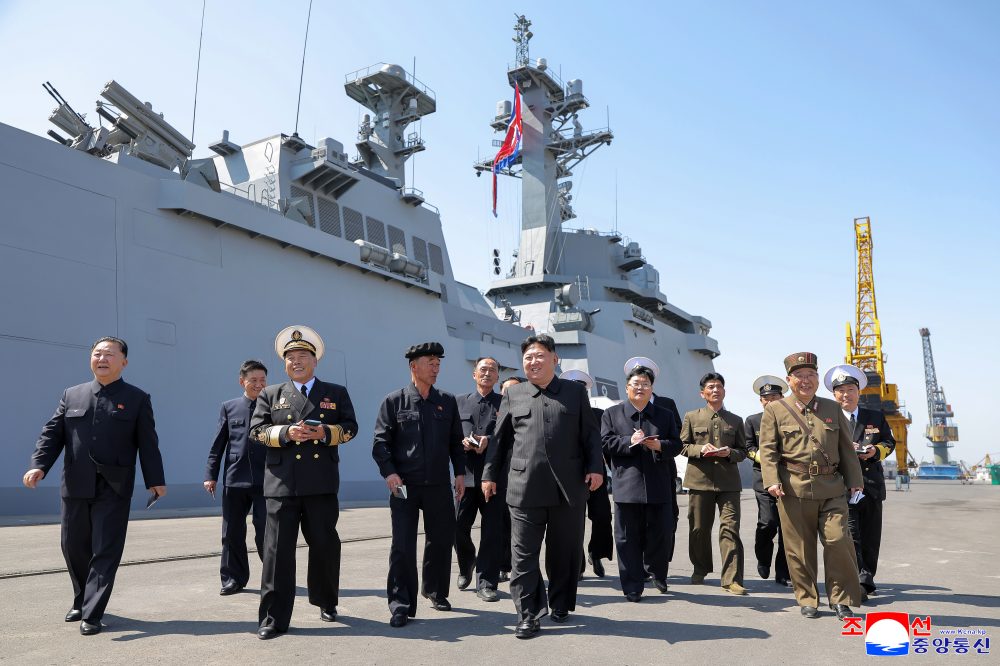
The Korean Central News Agency, another government media outlet, released images showing Kim and other high-ranking officials observing from a dock as a missile created a trail of gray smoke while launching from the naval vessel.
Kim had previously directed two separate missile testing sessions from the Choe Hyon during the previous month while promising to speed up his navy’s nuclear weapons development. Following Sunday’s launches, he declared his administration’s continued commitment to the “limitless expansion” of nuclear capabilities and assigned unspecified new objectives to enhance the nation’s nuclear strike and quick-response abilities. The leader also examined blueprints for weapons systems intended for his third and fourth destroyers currently under construction, according to Rodong Sinmun.
Kim has praised the creation of the Choe Hyon as a significant advancement in extending his military’s operational range and first-strike potential. Government media sources claim the vessel can accommodate various weapon systems, including air defense and anti-ship armaments along with nuclear-capable ballistic and cruise missiles. South Korean authorities and defense analysts believe the ship was probably constructed with Russian technical support as military cooperation between the countries has intensified, though some specialists doubt whether it’s prepared for actual deployment.
North Korea revealed a second destroyer of identical specifications in May of last year, but it suffered damage during a failed launch at Chongjin port in the north, triggering an angry reaction from Kim. The nation subsequently announced the vessel, designated Kang Kon, was relaunched in June following repairs, though outside analysts have expressed doubts about its full operational status.
Government media reports indicate a third destroyer being constructed at the Nampo shipbuilding facility on the western coastline should be finished by the ruling Workers’ Party’s founding celebration in October.
The most recent launches from the Choe Hyon contribute to a series of recent weapons evaluations as North Korea works to expand its nuclear-armed forces aimed at neighboring South Korea amid deteriorating relations and stalled diplomatic efforts.
North Korea carried out multiple tests the previous week that state media described as involving different new weapons platforms, including ballistic missiles equipped with cluster-bomb payloads, while senior officials made harsh statements mocking South Korean desires for improved relations.
Kim has halted substantive negotiations with Washington and Seoul following the breakdown of his diplomatic engagement with U.S. President Donald Trump in 2019. He has since taken a confrontational approach toward South Korea, currently characterizing it as his “most hostile” opponent, and has declined U.S. proposals to restart discussions as Trump begins his second presidency, demanding Washington abandon its insistence on denuclearization as a requirement.
Russia has become a primary foreign policy focus for Kim in recent years, with North Korea deploying thousands of soldiers and substantial weapons supplies to assist Moscow’s military campaign in Ukraine. He has also strengthened relationships with China, the North’s longtime partner and economic supporter, and expressed backing for Beijing’s promotion of a “multipolar world” during talks last week with Chinese Foreign Minister Wang Yi.