Police in New York City took nearly 100 protesters into custody Monday as demonstrations erupted demanding the United States halt weapons shipments to Israel and cease military assistance to the Middle Eastern ally.
The antiwar organization Jewish Voice for Peace reported that roughly 90 individuals were detained during the demonstrations. Notable among those arrested was Chelsea Manning, the former Army soldier turned whistleblower who previously leaked classified information to WikiLeaks.
While the New York City Police Department confirmed “multiple” arrests occurred, officials declined to specify an exact number of those taken into custody.
Video footage from the demonstrations revealed crowds assembled outside the offices of Senate Minority Leader Chuck Schumer and fellow Democratic Senator Kirsten Gillibrand.
Activists could be heard shouting various slogans including “stop the bombs,” “end the killings” and “free Palestine” as they voiced their opposition to joint U.S.-Israeli military actions against Iran, Israel’s operations in Lebanon, and the ongoing assault on Gaza.
Additional chants heard throughout the protest included “let Gaza live,” “let Iran live” and “let Lebanon live.”
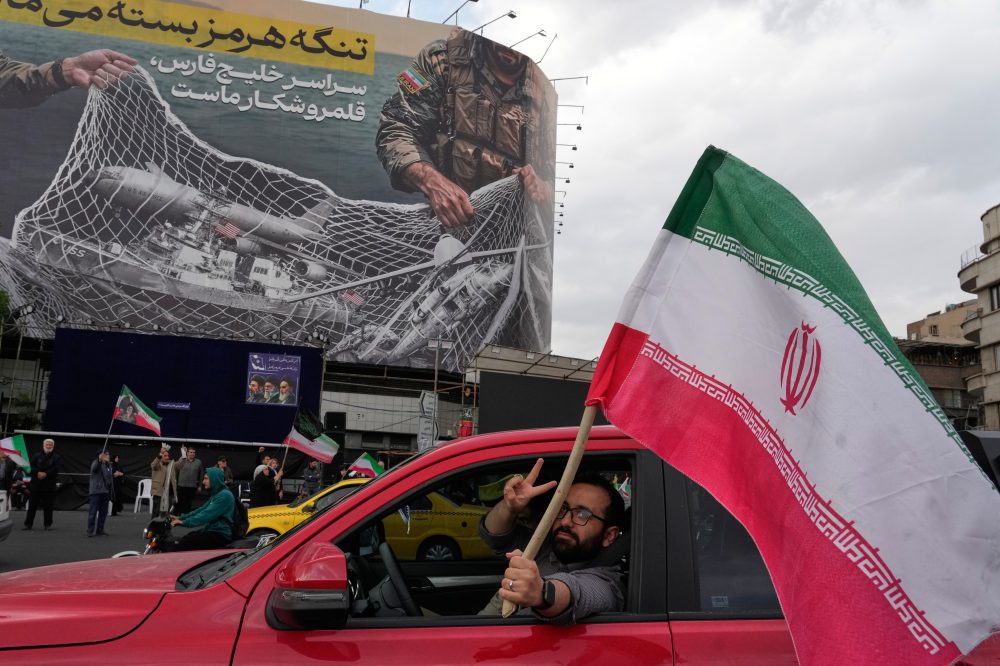
The demonstrations come amid escalating Middle East tensions following joint U.S.-Israeli strikes against Iran on February 28. Iran retaliated with its own attacks targeting Israel and Gulf nations that house American military installations. The combined U.S.-Israeli operations in Iran and Israeli military actions in Lebanon have resulted in thousands of deaths and displaced millions of civilians.
The Trump administration has implemented strict measures against similar protests, including attempts to deport international students, threats to cut university funding where demonstrations occurred, and requirements for screening immigrants’ social media activity. These enforcement efforts have encountered legal challenges in the courts.
New York City became a focal point for pro-Palestinian demonstrations throughout 2024.
American military assistance to Israel has drawn increased criticism from human rights organizations during Israel’s Gaza conflict, which has claimed tens of thousands of lives, created widespread hunger, forced the displacement of Gaza’s entire population, and prompted genocide allegations from academic experts and United Nations investigators.
Israel maintains its military actions constitute legitimate self-defense following the Hamas-led attack in October 2023 that killed 1,200 people and resulted in more than 250 hostages being taken.
E-commerce giant Amazon is reportedly close to finalizing an acquisition of satellite telecommunications company Globalstar, according to Bloomberg News sources on Monday.
The purchase would strengthen Amazon’s efforts to develop its own satellite network capabilities as the company expands beyond its traditional retail operations.
Sources familiar with the negotiations told Bloomberg that an official announcement regarding the transaction could come as early as Tuesday.
Reuters has not been able to independently verify the reported deal at this time.
The Duke and Duchess of Sussex touched down in Australia on Tuesday, beginning a four-day tour that will address mental health initiatives, veterans’ support, and community outreach programs.
Prince Harry and Meghan Markle’s itinerary kicks off with a stop at a Melbourne children’s hospital, followed by the Duchess visiting a shelter for women experiencing domestic violence, according to their official statement.
“Their programme will focus on mental health, community resilience and support for veterans and their families, alongside private meetings and special projects,” the statement said.
The royal couple’s schedule includes traveling to Canberra on Wednesday for meetings with military veterans, participating in a Melbourne mental health summit Thursday, and concluding their visit with sailing and rugby activities in Sydney on Friday.
This marks the Sussexes’ return to Australia since their 2018 visit as active working royals, when they announced Meghan’s first pregnancy shortly after landing in Sydney. The couple stepped away from royal duties in 2020, relocating to the United States while seeking financial independence and privacy from intense media scrutiny.
While their current visit has generated public interest in Australia, where King Charles serves as head of state despite growing republican sentiment, the reception appears markedly different from their previous trip. Television coverage showed the pair arriving via commercial aircraft from Los Angeles, with no fanfare or large crowds present at the airport.
The couple is personally financing their travel expenses, though Australian taxpayers will cover some security costs, prompting a protest petition that has gathered over 45,000 signatures from local media reports.
Unlike their previous official visit, the Sussexes plan to engage in commercial ventures during this trip. Meghan will remain in Australia beyond the tour to facilitate a wellness retreat at an upscale Sydney beachside resort over the weekend.
The retreat experience, featuring yoga sessions, manifestation workshops, and sound healing activities, carries a starting price of 2,699 Australian dollars (approximately $1,912 USD) per participant.
ROME, April 13 (Reuters) – The United Nations Food and Agriculture Organization warned Monday that an extended conflict in the Strait of Hormuz could lead to a worldwide food emergency by interrupting fertilizer and energy shipments, causing food costs to soar and reducing agricultural production.
According to FAO Chief Economist Maximo Torero, developing nations face the greatest risk because their agricultural timing schedules mean that interruptions in essential farming supplies could rapidly result in reduced harvests, increased inflation, and weakened economic growth worldwide.
Global financial markets responded positively Tuesday to renewed diplomatic signals between the United States and Iran, with stock indices climbing while oil prices and the dollar weakened on hopes for peaceful resolution.
Despite the breakdown of weekend peace negotiations, sources indicate both Washington and Tehran remain open to continued diplomatic discussions. A U.S. official reported progress in efforts to reach an agreement.
Asian markets led the rally, with the MSCI Asia-Pacific index excluding Japan climbing 1% during early trading sessions. Japan’s Nikkei and South Korea’s KOSPI each surged more than 2%.
U.S. market futures showed modest gains, with Nasdaq futures up 0.13% and S&P 500 futures remaining flat following Monday’s Wall Street rally. European markets also showed strength, with EUROSTOXX 50 futures gaining 0.63% and DAX futures adding 0.77%.
“Markets are trading hope, not resolution,” explained Charu Chanana, chief investment strategist at Saxo.
“The failed weekend talks did not produce a deal, but they also did not close the door on diplomacy, and that is enough for equities to keep pushing higher for now.”
President Donald Trump announced Monday that Iran had “called this morning” and “they’d like to work a deal,” though Reuters was unable to independently confirm this claim.
Simultaneously, U.S. military forces initiated a blockade of Iranian ports as a pressure tactic against Tehran. Trump has warned that Washington would intercept Iranian vessels and any ships paying related fees, threatening to destroy Iranian “fast-attack” ships approaching the blockade zone.
“The U.S. has actually played that trump card. To me it’s important because they forced the onus back on Iran to open the Strait without the need to put those boots on the ground,” noted Tony Sycamore, a market analyst at IG.
“It’s now forced the Iranians back to the drawing board.”
Energy markets reflected the diplomatic optimism, with oil prices declining as resolution hopes overshadowed supply disruption concerns. Brent crude futures dropped 2.7% to $96.66 per barrel, while U.S. crude futures fell 3% to $96.13 per barrel.
Currency markets saw the dollar weaken to a six-week low of 98.328 against a basket of major currencies as improved risk sentiment reduced demand for the safe-haven currency. The euro gained 0.05% to $1.1764, while the British pound reached a six-week high of $1.3514.
“The U.S. and Iran have started to walk down the path of coming up to an agreement,” said Joseph Capurso, a strategist at Commonwealth Bank of Australia.
However, he cautioned that “the markets are still facing a global economic outlook that is deteriorating, and I think the risks are high that you get equity markets and credit markets and the like fall again, and that would push up the U.S. dollar against probably all currencies.”
U.S. Treasury yields showed little movement, with two-year yields at 3.7722% and benchmark 10-year yields at 4.2854%.
The recent surge in energy prices has led investors to anticipate potential interest rate increases from major central banks, representing a significant shift from pre-conflict expectations of rate cuts or extended pauses.
Precious metals benefited from the risk-on sentiment, with spot gold rising 0.7% to $4,771.81 per ounce. Cryptocurrency bitcoin also gained 1.5% to approximately $74,312.
YOKOHAMA, Japan – Japanese automaker Nissan Motor announced Tuesday its intention to reduce its worldwide vehicle offerings by cutting 11 models from its current roster of 56, bringing the total down to 45 models globally.
The automotive manufacturer also revealed plans to incorporate artificial intelligence driving technology into 90% of its vehicle lineup as part of its long-term strategic vision.
According to a company announcement, Nissan has set ambitious sales targets for key markets by the 2030 financial year. The automaker aims to achieve annual sales of 1 million vehicles in the United States market and reach 550,000 annual vehicle sales in its home market of Japan by that timeframe.
SYDNEY, April 14 – Business confidence in Australia experienced a dramatic collapse in March, with concerns over the Iran conflict triggering economic uncertainty not witnessed since major financial downturns, according to new survey data released Tuesday.
National Australia Bank’s latest survey revealed that business confidence dropped by 29 points to reach -29 in March, marking the second-steepest monthly decline on record. However, actual business conditions remained relatively stable at +6.
Sales figures showed a minor decrease of 1 point to +11, maintaining relatively solid ground, while profit margins took a hit, declining from +4 to +1. This downturn reflects companies facing pressure from rising purchase costs, which surged 3% during the quarter ending in March.
Companies appear to be having difficulty transferring increased costs to customers, as retail price growth slowed to a quarterly rate of 0.5% compared to the previous 0.9%.
The Reserve Bank of Australia implemented its second interest rate increase in March, bringing rates to 4.1% and reversing two of the three rate reductions made the previous year. The central bank projects that elevated fuel prices resulting from Middle Eastern conflicts will push overall inflation to approximately 5% during the second quarter.
Additional survey data released Tuesday indicated that consumer sentiment dropped to its lowest point in over two years during April. An index tracking consumer willingness to make major purchases plummeted 15% as households became more cautious with spending.
A California man is now facing attempted murder charges after allegedly launching a Molotov cocktail attack against the residence of OpenAI’s chief executive officer, according to law enforcement officials.
The incident took place in San Francisco, where authorities say the suspect targeted the home of the artificial intelligence company’s leader. Law enforcement agencies have confirmed that nobody sustained injuries during the attack on either the executive’s residence or at OpenAI’s corporate facilities.
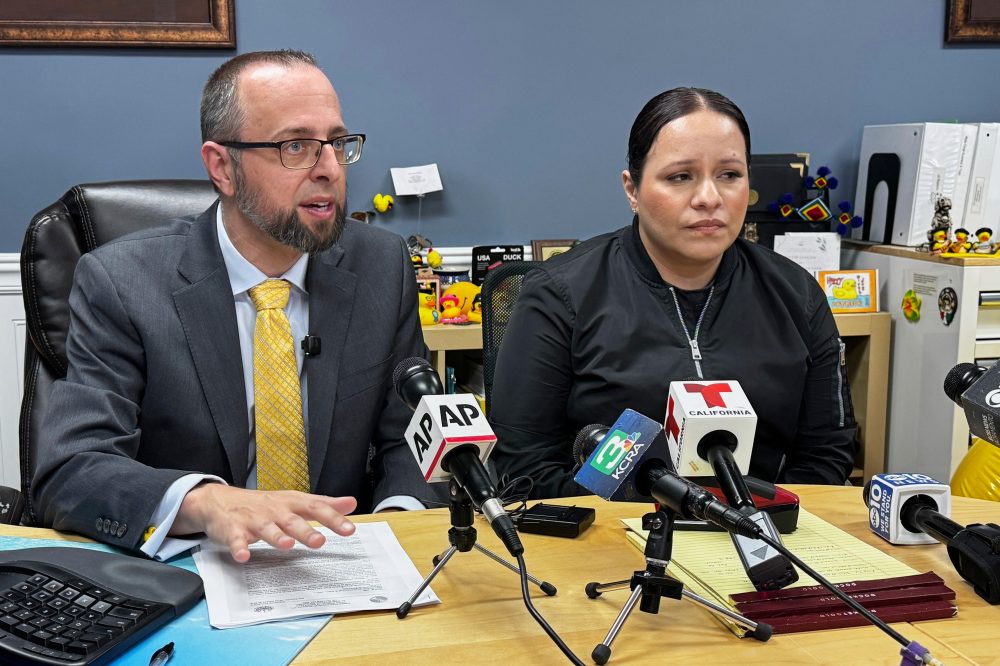
San Francisco law enforcement held a press conference on Monday, April 13, 2026, where FBI San Francisco Acting Special Agent in Charge Matt Cobo addressed the media alongside San Francisco Police Chief Derrick Lew and San Francisco District Attorney Brooke Jenkins.
The case represents a serious escalation in threats against technology executives, as the artificial intelligence industry continues to face scrutiny and controversy over its rapid development and potential societal impacts.
Investigators have not released additional details about the suspect’s motivations or the specific circumstances surrounding the alleged attack. The case remains under active investigation by federal and local authorities.
BOGOTA – During a Monday cabinet meeting broadcast on television, Colombian President Gustavo Petro clarified that his nation’s recently imposed 100% tariffs on imports from Ecuador will not cover every product category.
The president explained that his administration plans to implement subsidies along with what he called “smart tariffs” as part of the policy. The tariff increase came after Colombia responded to similar trade restrictions Ecuador had put in place just one day before, escalating tensions between the two South American nations.
The trade measures represent the latest development in an ongoing commercial and diplomatic conflict between Colombia and its neighboring country.
SEOUL, South Korea — Kim Jong Un oversaw additional weapons testing from his newest naval vessel this past weekend, according to state-controlled media reports released Tuesday, while promising to strengthen his navy’s combat readiness through an expanding arsenal of nuclear-armed weaponry.
The state-run Rodong Sinmun newspaper reported that Kim witnessed the firing of two strategic cruise missiles and three anti-ship weapons on Sunday from his 5,000-ton destroyer called the Choe Hyon, which made its debut in April 2025. According to the publication, the cruise missiles remained airborne for over two hours while the anti-ship weapons flew for more than half an hour, following predetermined flight paths across the nation’s western waters before successfully hitting their intended targets.
The Korean Central News Agency, another government media outlet, released images showing Kim and other high-ranking officials observing from a dock as a missile created a trail of gray smoke while launching from the naval vessel.
Kim had previously directed two separate missile testing sessions from the Choe Hyon during the previous month while promising to speed up his navy’s nuclear weapons development. Following Sunday’s launches, he declared his administration’s continued commitment to the “limitless expansion” of nuclear capabilities and assigned unspecified new objectives to enhance the nation’s nuclear strike and quick-response abilities. The leader also examined blueprints for weapons systems intended for his third and fourth destroyers currently under construction, according to Rodong Sinmun.
Kim has praised the creation of the Choe Hyon as a significant advancement in extending his military’s operational range and first-strike potential. Government media sources claim the vessel can accommodate various weapon systems, including air defense and anti-ship armaments along with nuclear-capable ballistic and cruise missiles. South Korean authorities and defense analysts believe the ship was probably constructed with Russian technical support as military cooperation between the countries has intensified, though some specialists doubt whether it’s prepared for actual deployment.
North Korea revealed a second destroyer of identical specifications in May of last year, but it suffered damage during a failed launch at Chongjin port in the north, triggering an angry reaction from Kim. The nation subsequently announced the vessel, designated Kang Kon, was relaunched in June following repairs, though outside analysts have expressed doubts about its full operational status.
Government media reports indicate a third destroyer being constructed at the Nampo shipbuilding facility on the western coastline should be finished by the ruling Workers’ Party’s founding celebration in October.
The most recent launches from the Choe Hyon contribute to a series of recent weapons evaluations as North Korea works to expand its nuclear-armed forces aimed at neighboring South Korea amid deteriorating relations and stalled diplomatic efforts.
North Korea carried out multiple tests the previous week that state media described as involving different new weapons platforms, including ballistic missiles equipped with cluster-bomb payloads, while senior officials made harsh statements mocking South Korean desires for improved relations.
Kim has halted substantive negotiations with Washington and Seoul following the breakdown of his diplomatic engagement with U.S. President Donald Trump in 2019. He has since taken a confrontational approach toward South Korea, currently characterizing it as his “most hostile” opponent, and has declined U.S. proposals to restart discussions as Trump begins his second presidency, demanding Washington abandon its insistence on denuclearization as a requirement.
Russia has become a primary foreign policy focus for Kim in recent years, with North Korea deploying thousands of soldiers and substantial weapons supplies to assist Moscow’s military campaign in Ukraine. He has also strengthened relationships with China, the North’s longtime partner and economic supporter, and expressed backing for Beijing’s promotion of a “multipolar world” during talks last week with Chinese Foreign Minister Wang Yi.
Military officials announced Monday that U.S. forces conducted a fatal strike against a vessel suspected of drug trafficking in the Pacific Ocean’s eastern waters, resulting in two deaths.
This ongoing military operation targeting alleged narcotics smuggling boats in Latin American waters has now lasted over seven months, continuing despite the military’s focus on the Iran conflict for more than six weeks.
Monday’s action marked the second consecutive day of announced strikes by U.S. Southern Command through social media channels. Officials reported Sunday that forces destroyed two vessels in the eastern Pacific on Saturday, resulting in five deaths and one survivor whose current status remains unknown.
Following Monday’s operation, the death toll from these maritime strikes has reached at least 170 people since the campaign launched in early September, occurring months before the January U.S. operation that resulted in the capture of former Venezuelan President Nicolás Maduro. Maduro now faces drug trafficking charges in New York and has entered a not guilty plea.
U.S. Southern Command reiterated earlier statements claiming the strikes targeted suspected drug traffickers operating along established smuggling corridors. Military officials did not present evidence confirming the vessel was transporting narcotics. They shared footage on X depicting a small watercraft before an explosion engulfs it in smoke.
President Donald Trump has characterized the U.S. as being in “armed conflict” with Latin American cartels, defending these operations as essential escalation to reduce drug imports and American overdose deaths. However, his administration has provided minimal evidence supporting claims of eliminating “narcoterrorists.”
Trump appeared to reference these maritime strike tactics Monday while issuing fresh warnings to Tehran as an Iranian port blockade commenced.
“Warning: If any of these ships come anywhere close to our BLOCKADE, they will be immediately ELIMINATED, using the same system of kill that we use against the drug dealers on boats at Sea,” Trump posted on Truth Social.
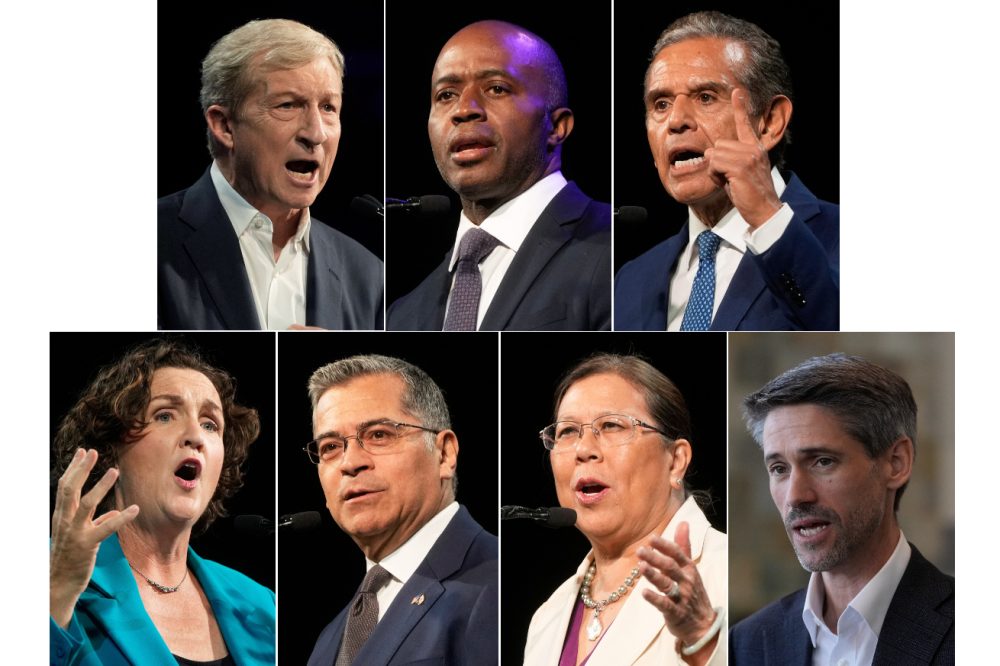
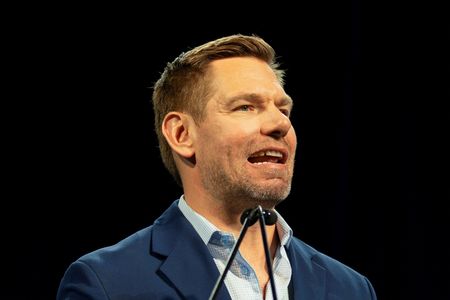
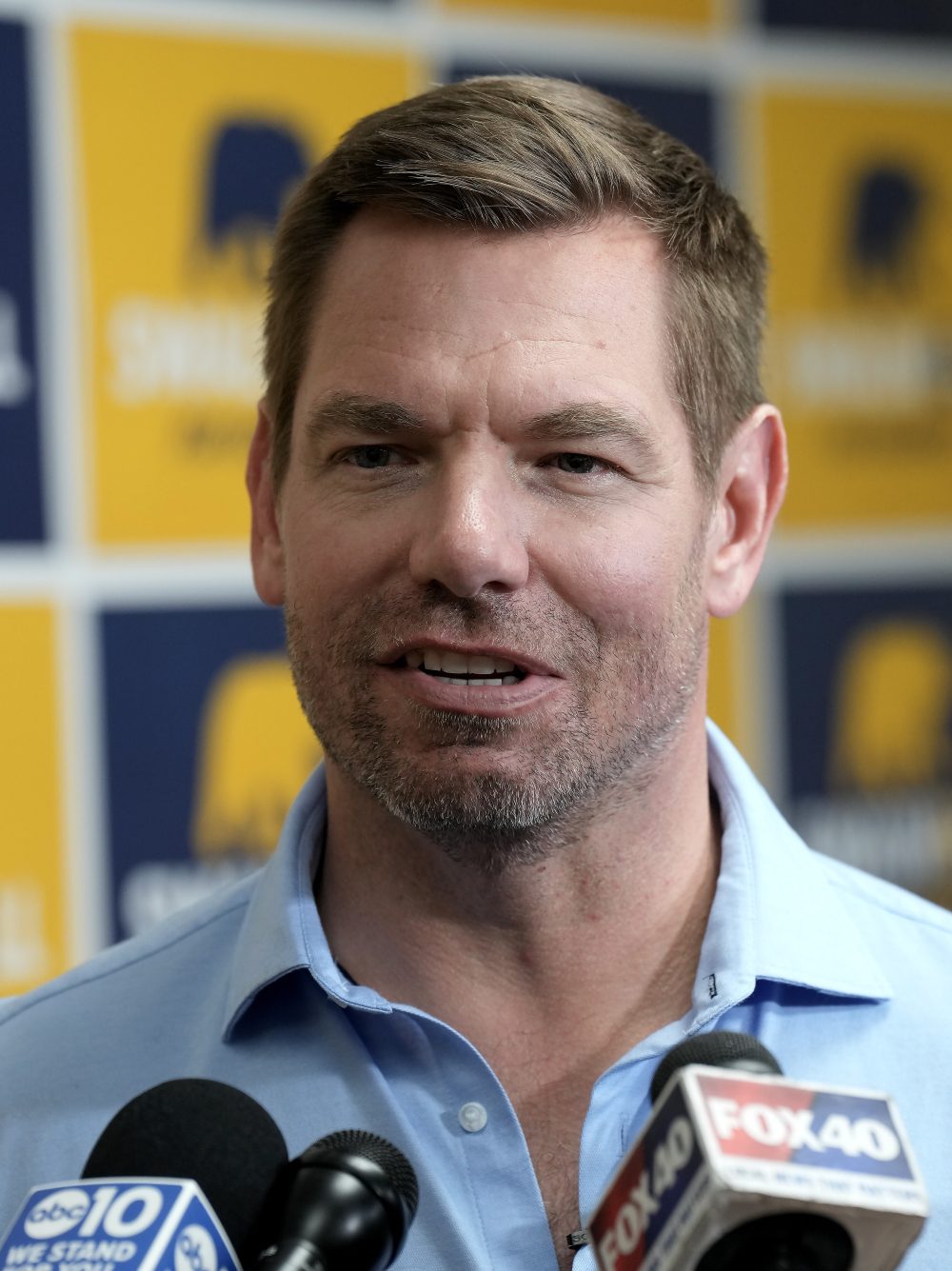
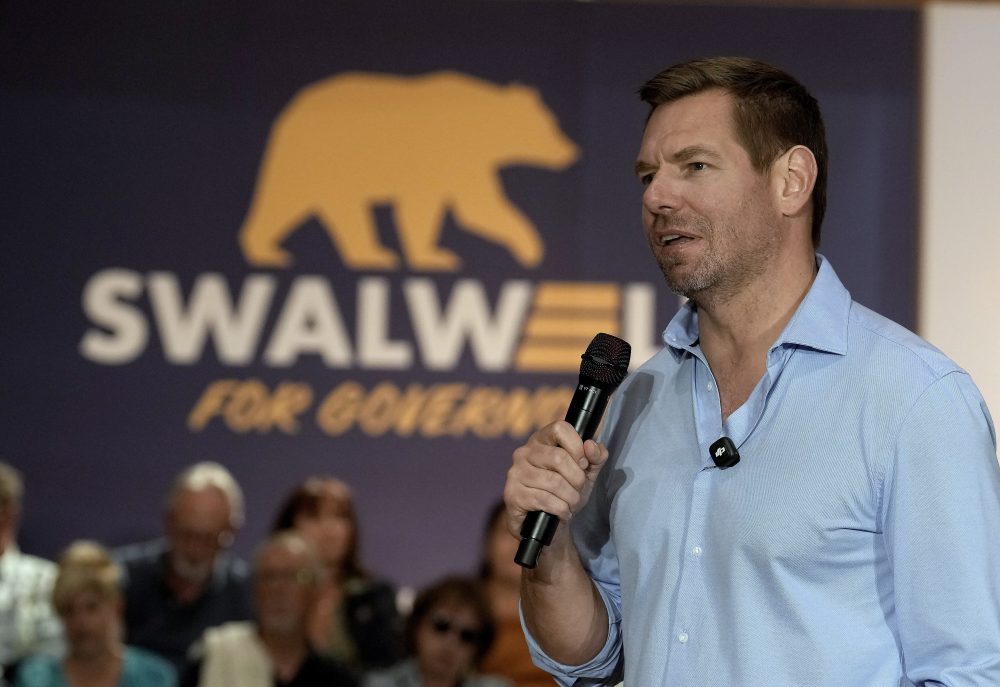
SACRAMENTO, Calif. — California’s race for governor has been thrown into chaos after Representative Eric Swalwell unexpectedly withdrew from the contest, leaving Democrats without a clear frontrunner as mail-in ballots are set to go out in less than four weeks.
The Golden State’s unique primary system has party leaders worried about being completely shut out come November. Under California’s top-two format, all candidates appear on a single ballot, with only the highest two vote-getters moving forward regardless of political affiliation. Democratic officials are concerned their large field of contenders could split their voter base, potentially allowing two Republican candidates to claim both spots in the general election.
The battle to succeed Governor Gavin Newsom, who cannot seek reelection due to term limits, has become increasingly contentious as hopefuls clash over debate participation rules and identity-based campaign strategies.
Among the leading Republican contenders is Chad Bianco, the Riverside County Sheriff who took office in 2018. Bianco has been a vocal advocate for former President Donald Trump’s agenda throughout his three-decade career in law enforcement.
Recently, Bianco made headlines by confiscating over 500,000 ballots from a November special election, claiming he was looking into vote counting irregularities. Multiple lawsuits have been filed challenging this action, and California’s highest court has ordered him to halt the investigation.
Steve Hilton brings a media background to the Republican field, having hosted a program on Fox News for six years while also serving as an advisor to former British Prime Minister David Cameron.
Last week, Trump praised Hilton as “a truly fine man” and gave him his endorsement. However, the state Republican Party chose not to back any candidate during their recent convention.
On the Democratic side, Katie Porter stands out as a former House representative famous for using whiteboards during congressional hearings to challenge corporate executives. She first won her Orange County seat in 2018 by defeating a Republican incumbent, though her 2024 Senate bid was unsuccessful.
Porter faced controversy last year when she nearly ended a television interview early following a tense exchange with the interviewer. She has also dealt with accusations regarding her management style with staff members.
Porter represents one of just two prominent female candidates in the race. California has never had a woman serve as governor.
Tom Steyer, a billionaire who made his fortune in hedge funds before becoming a liberal political activist, is largely self-funding his gubernatorial campaign. The progressive candidate also mounted an unsuccessful White House run in 2020.
Steyer has recently faced increased scrutiny over his previous financial involvement with coal mining operations and private prison facilities that now house immigration detainees.
Matt Mahan, currently serving as San Jose’s mayor, emerged as a frequent critic of Newsom before officially entering the race this past January. Positioning himself as a centrist Democrat, he has rapidly secured millions in backing from Silicon Valley executives and other business interests.
Mahan’s political career began in 2020 when he won a city council seat, followed by his mayoral victory in 2022, marking his initial foray into elected positions.
Betty Yee brings extensive state government experience, having previously held the controller position and served as vice chair of the state Democratic Party. In her role as the state’s chief financial officer, she managed fund distribution, conducted government audits, and participated in more than 70 boards and commissions.
While Yee has attempted to establish herself as a progressive leader, her campaign has failed to build significant support despite launching her gubernatorial bid over two years ago.
Xavier Becerra served as President Biden’s Secretary of Health and Human Services, leading the federal COVID-19 response efforts. He also held the position of California Attorney General during Trump’s initial presidency and spent more than twenty years in Congress.
Even with his statewide electoral success, Becerra’s campaign has struggled to gain momentum. His former chief of staff was charged with federal corruption last year for allegedly stealing campaign funds from Becerra, though Becerra himself faces no accusations.
Antonio Villaraigosa made history in 2014 when he became Los Angeles mayor, the first Latino to hold that office in over 100 years. His political background includes time in the state Legislature, where he served as Assembly Speaker.
This marks Villaraigosa’s second gubernatorial attempt, having lost to Newsom in the 2018 primary without reaching the general election.
Tony Thurmond has overseen the state’s education system as Superintendent of Public Instruction since 2019. He gained attention for fighting against policies that would require school personnel to inform parents when students change their pronouns or gender identity. He previously served in the state Legislature.
Newly released police body camera footage reveals a St. Louis officer shooting 17-year-old Emeshyon Wilkins in the back of the head as he ran away, directly challenging the department’s initial claim that the teenager had aimed a weapon at law enforcement.
The footage was made public Monday after family attorney Al Watkins secured it through federal court proceedings. Watkins says his attempts to obtain the video through standard public records channels were unsuccessful.
“They fought that video issue for over a year,” Watkins told The Associated Press. “We had to file a federal lawsuit to get it. That’s not transparent. That’s not integrity. Indeed, it’s irresponsible.”
The fatal shooting occurred in June 2024, just two weeks following Wilkins’ 17th birthday. According to Watkins, the Black teenager had no previous criminal record.
The incident began when detectives tried to pull over an SUV that had been reported as stolen, according to police reports. While authorities described a brief chase, Watkins characterized it as a low-speed pursuit with the vehicle traveling approximately 10 mph.
The chase concluded when Wilkins abandoned the SUV and ran on foot, with two officers following behind. Court documents indicate one officer carried a taser while the other was armed with a firearm.
The recorded footage captures the gun-carrying officer shouting commands for the teenager to lie down while raising his weapon. The officer can be heard ordering the teen to drop a gun. As Wilkins continues fleeing, the officer opens fire.
According to the lawsuit, one of four bullets hit the teenager in the back of his head, causing his death. While a firearm was discovered in Wilkins’ pocket, the lawsuit states it was broken apart into several pieces and could not be fired.
The video evidence does not show Wilkins holding or pointing any weapon at the pursuing officer.
“There was no threat to the public, and you look at the video, and there were no furtive movements,” Watkins said.
Following Monday’s video release, police officials admitted that “information provided by a third-party to investigators in the immediate aftermath of the incident was not consistent with the actual events or what was initially shared with the community.”
The department announced it now deploys a member of its body-worn camera unit to such incidents so footage can be examined by investigating supervisors before detailed public statements are issued.
“In this case, an earlier review of body-worn camera footage would have provided greater clarity than what was available in the initial moments following the incident,” the statement says.
The shooting brings back painful memories of the 2014 killing of 18-year-old Michael Brown, an unarmed Black teenager, by a white Ferguson police officer in the St. Louis area. Some witnesses claimed Brown had raised his hands in surrender. The officer was cleared of criminal charges and later resigned, while Brown’s death sparked months of demonstrations.
Watkins noted that officials promised reforms would follow that incident. However, he points out that the officer who killed Wilkins remains on administrative duty with full pay, questioning why the investigation is proceeding so slowly.
“The family needs answers, and the only way answers can be given is if there is justice that is open and transparent,” Watkins said.
The St. Louis Circuit Attorney’s Office confirmed receiving the police investigation report in October. However, officials say they conduct their own “review of the evidence and law to determine whether there is a basis for criminal liability.”
“The CAO is committed to reviewing each matter as expeditiously as possible while ensuring that all available evidence and legal considerations are carefully and thoroughly evaluated,” the statement says.
Currency markets showed little movement Tuesday as traders evaluated the potential economic impact of escalating Middle East tensions alongside ongoing diplomatic efforts between the United States and Iran.
The greenback’s performance index, which tracks the currency against major international counterparts like the euro and yen, climbed a modest 0.04% to reach 98.38. The euro gained 0.03% to $1.1761 during trading.
Against the Japanese yen, the dollar weakened slightly by 0.08% to 159.3 yen per dollar, while the British pound advanced 0.03% to $1.3508.
Market analyst Terumasa Kawakami from Mitsubishi UFJ Bank noted the cautious optimism among investors. “Expectations that the negotiations will continue are helping to stem the worsening of sentiment in financial markets,” Kawakami wrote in his analysis.
The currency stability comes as President Donald Trump announced Monday that US naval forces have initiated a blockade of vessels departing Iranian ports. Iran has responded with threats to target neighboring Gulf nations’ shipping facilities after weekend peace negotiations in Pakistan collapsed without agreement.
Despite the heightened tensions, Reuters sources indicate that diplomatic channels between Washington and Tehran remain active following the unsuccessful Islamabad meetings. Trump stated Monday that Iranian officials have maintained contact and expressed interest in reaching an agreement, while Vice President JD Vance indicated in a recent interview that the administration anticipates Iranian cooperation in reopening the Strait of Hormuz.
Commonwealth Bank of Australia currency expert Carol Kong warned that the naval blockade could challenge the fragile ceasefire established last week, potentially driving the dollar higher if the situation deteriorates.
Oil markets reflected the uncertainty, with US crude futures dropping more than $2 during early Asian trading to $96.99 per barrel.
The geopolitical instability has also influenced expectations for Japanese monetary policy. The Bank of Japan, previously expected to raise interest rates this month, now appears less likely to act as regional conflicts create market volatility and economic uncertainty, according to Reuters sources.
Tokyo market data showed interest rate swap indicators reflecting a 40% probability of a BOJ rate increase this month, down from 57% on Friday.
National Australia Bank’s forex strategy chief Ray Attrill warned of potential currency intervention if current trends continue. “We’re very much of the view that if the BOJ decides to stand pat at the end of April, then the risks are that the dollar-yen exchange rate is going to punch up through 160 (yen against the dollar),” Attrill said in a recent podcast.
The 160-yen threshold represents a significant psychological barrier that many traders believe could trigger government currency market intervention.
Bank of Japan Governor Kazuo Ueda emphasized Monday the importance of monitoring Middle East developments when considering future monetary policy decisions, departing from the central bank’s previous commitment to continued rate increases.
Other Pacific currencies showed mixed results, with the Australian dollar declining 0.04% to $0.7091, while New Zealand’s currency strengthened 0.03% to $0.5868.
Cryptocurrency markets bucked the cautious trend, with bitcoin jumping 1.70% to $74,438.67 and ethereum surging 5.32% to $2,373.32.
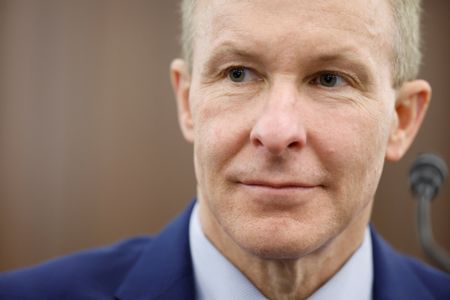
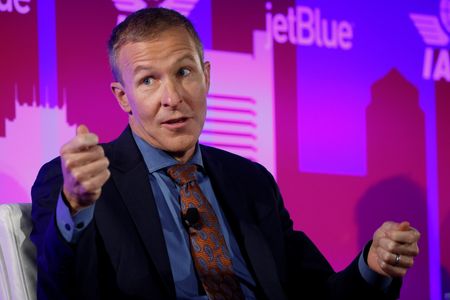
WASHINGTON, April 13 – The chief executive of United Airlines discussed a possible merger with American Airlines during a February meeting with President Donald Trump, according to two sources familiar with the conversation.
Scott Kirby, who leads United Airlines, brought up the merger topic at the conclusion of a White House discussion that was originally scheduled to address future plans for Dulles airport, the sources revealed.
When contacted for a response, United Airlines chose not to provide any statement. The White House has not yet replied to requests seeking comment on the reported discussion.
Two key New York Yankees starting pitchers are approaching their return to action after extended injury recoveries, according to manager Aaron Boone’s comments to media before Monday’s matchup with the Los Angeles Angels.
Star right-hander Gerrit Cole and left-handed pitcher Carlos Rodon could both begin minor league rehabilitation assignments within the coming week as they work their way back from elbow procedures.
Cole, who had Tommy John surgery 13 months ago, has been gradually building up his arm strength. While he appeared in a pair of spring training contests, the organization slowed his progression to align with his recovery timeline. On Sunday, the veteran hurler completed live batting practice, reaching 42 pitches during the session, Boone reported.
Meanwhile, Rodon underwent surgery following last season to have bone chips removed from his elbow. The southpaw, coming off his most successful Yankees season with an 18-9 record, 3.09 ERA, and 1.05 WHIP in 2025, threw 50 pitches during Monday’s live batting practice.
Both pitchers will take their next turn after four days of rest, though team officials haven’t determined whether that will come in an actual game setting or another batting practice session.
“I don’t have an opinion one way or the other,” Cole said. “I just want to make sure we do what’s right, really. So I think we’re just taking in a little bit more information over the next couple of days before we make that call.”
The Yankees’ current rotation has performed exceptionally well through 15 games, posting a major league-leading 2.67 ERA while tying Pittsburgh for the fewest home runs allowed with just three.
The 35-year-old Cole captured the Cy Young Award in 2023 after going 15-4 with a league-best 2.63 ERA across 209 innings. Throughout his career, he’s been selected as an All-Star six times, earning recognition with Pittsburgh in 2015, Houston in 2018 and 2019, and the Yankees from 2021-2023.
Over 12 major league seasons, Cole has compiled a 153-80 record with a 3.18 ERA in 317 starts.
Rodon, 33, brings an 93-72 record and 3.73 ERA over 231 games across 11 big league seasons. He’s also earned All-Star selections with three different organizations: Chicago White Sox in 2021, San Francisco Giants in 2022, and the Yankees last year.
Additionally, Boone announced that shortstop Anthony Volpe is scheduled to participate in four games with Double-A Somerset this week, pending medical clearance. Volpe played through most of last season with a partially torn labrum in his left shoulder and had corrective surgery during the offseason.
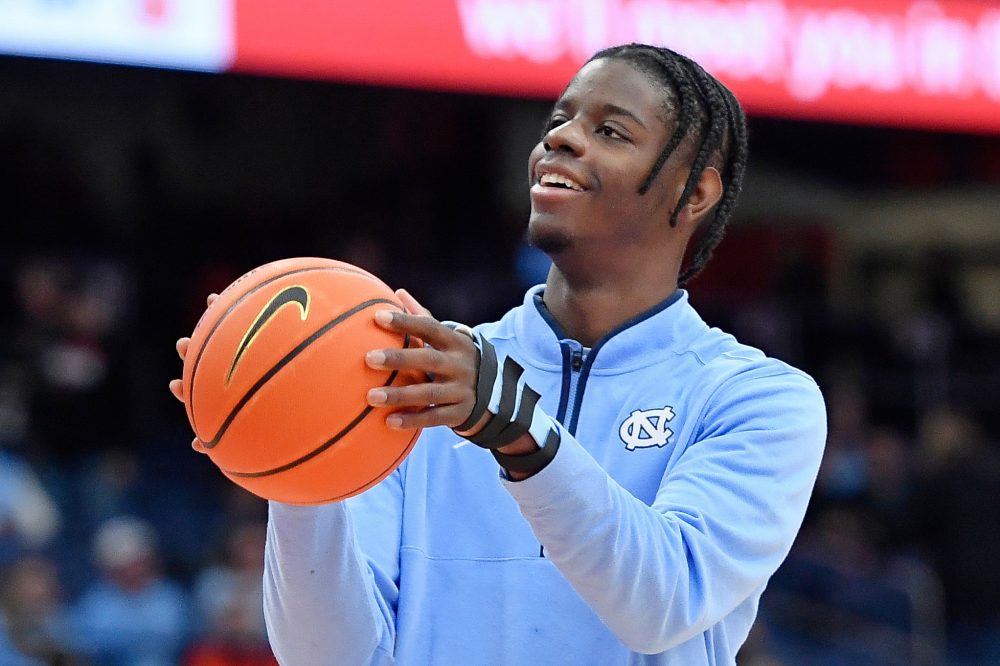
A top-tier basketball recruit has reversed course on his college plans, withdrawing his pledge to the University of North Carolina after meeting with the program’s new coaching staff.
Dylan Mingo, ranked as the eighth-best prospect nationally in the 2027 graduating class by 247Sports, announced Monday that he is backing out of his February commitment to UNC and will explore other college options. The 6-foot-5 versatile guard from Long Island Lutheran in New York had originally pledged to play for former head coach Hubert Davis on February 17.
The decision comes after UNC brought in Michael Malone as the new head coach on April 7, replacing Davis who was dismissed from his position. Mingo spent time with Malone and his coaching staff during the weekend before making his announcement.
Since Mingo never signed an official letter of intent with North Carolina, he remains free to consider other programs. His original list of finalists included Baylor, Penn State, and Washington, while he also received scholarship offers from Alabama, Illinois, Louisville, UConn, and Texas.
The talented guard’s senior season was largely derailed by an ankle injury, which kept him sidelined for most games and prevented his selection to the prestigious McDonald’s All-American roster. Despite the setback, Mingo demonstrated his abilities last summer by earning Most Valuable Player honors at the NBPA Top 100 camp, where he averaged 23.8 points, 6.8 assists, and 6.5 rebounds per contest.
In limited action during 12 regular-season games with the PSA Cardinals in the Nike EYBL circuit, Mingo still managed impressive numbers, posting 19.3 points, 7.8 rebounds, 2.6 assists, and 2.3 steals per game.
When he initially committed to the Tar Heels, Mingo expressed his championship aspirations to ESPN, stating: “I feel like from Day 1, my role will be a player who impacts winning in every aspect. Honestly, I am just a person who will give it his all to win a national championship.”
SAO PAULO, April 13 – Three major Brazilian healthcare companies have called off discussions to form a joint venture, according to a report from local publication O Globo on Monday, which cited unnamed sources.
• Last month, Fleury, Porto, and Oncoclinicas had signed a preliminary agreement that gave them 30 days of exclusive negotiating rights to work out final terms for the partnership.
• The proposed arrangement would have seen Oncoclinicas bring its cancer treatment facilities and liabilities worth as much as 2.5 billion reais (equivalent to $500.44 million) to the new entity.
• Meanwhile, Fleury and Porto had planned to combine forces and put 500 million reais into the venture through a joint holding structure.
• When contacted for comment, representatives from all three companies did not respond immediately.
Motorists traveling northbound on Route 896 will need to find alternate routes as the roadway remains completely blocked at Old Baltimore Pike for construction activities.
According to DelDOT traffic reports, the northbound lanes are expected to stay closed until 6:00 AM while crews complete their work in the area.
Drivers are advised to plan extra travel time and seek alternative routes to avoid delays during the closure period.
Motorists should expect delays on a stretch of McKennan’s Church Road as construction crews continue work that requires periodic lane closures.
The affected roadway runs from Newport Gap Pike to Bardell Drive, where workers are causing intermittent lane restrictions that will remain in place until 6 AM.
Drivers are advised to plan alternate routes or allow extra travel time when using this section of McKennan’s Church Road during the construction period.
Drivers traveling on northbound Interstate 95 near Wilmington should expect delays as construction crews have shut down the two right lanes between Chapman Road and Exit 5A.
According to the Delaware Department of Transportation, the lane restrictions will remain in place until 5:00 AM. Motorists are advised to use caution when traveling through the work zone and allow extra time for their commute.
The construction activity is affecting traffic flow in the area, and drivers should consider alternate routes if possible to avoid potential backups.
Motorists traveling on East Market Street should expect lane restrictions overnight as construction crews work in the area.
The Delaware Department of Transportation has closed the left lanes in both eastbound and westbound directions on East Market Street from Parsons Lane to Murry Lane. The lane closures are scheduled to remain in effect until 6 a.m.
Drivers are advised to use caution when traveling through the work zone and to allow extra time for their commute. Traffic may be slower than usual in the affected area due to the reduced number of available lanes.
Authorities in the Bahamas have freed a Michigan man who had been detained while investigators looked into his wife’s mysterious disappearance during a boating trip earlier this month.
Police Commissioner Shanta Knowles confirmed Monday that Brian Hooker, 59, was released from custody after being taken into custody on April 8. He had originally been brought in for questioning as a witness before his arrest.
Hooker’s attorney, Terrel Butler, maintains her client did nothing wrong. She said authorities moved Hooker from Abaco, where initial questioning took place, to Grand Bahama, the island chain’s second-largest population center.
The incident occurred on April 4 when Hooker and his 55-year-old wife Lynette were traveling between Hope Town, Abaco, and Elbow Cay, according to initial police reports.
The Michigan couple was aboard an 8-foot hard-bottom dinghy named “Soulmate” when Lynette reportedly fell into the water while holding the vessel’s keys, police stated. Brian told authorities he paddled to shore after losing sight of his wife in the water.
Once he reached land, Brian notified someone about what had happened, and law enforcement was contacted, the report indicated.
Butler said police later brought Hooker back out on the water to help locate the Soulmate vessel, keeping him in handcuffs throughout the search “despite the choppy and dangerous sea conditions.”
During that search operation, Hooker “lost his footing and fell overboard,” sustaining a knee injury and cuts, his attorney explained.
Medical personnel treated Hooker’s injuries at a hospital on Grand Bahama, Butler confirmed.
Motorists traveling northbound on South DuPont Highway should expect delays this morning due to ongoing construction work in New Castle County.
Delaware Department of Transportation officials have closed the right lane of northbound traffic on the busy highway between the Route 10 intersection and Old North Road. The lane restriction is part of construction activities in the area.
The closure is expected to remain in place until 6:30 AM, according to DelDOT’s traffic incident reporting system. Drivers are advised to allow extra travel time and merge safely into the remaining open lanes when approaching the work zone.
South DuPont Highway serves as a major north-south corridor through New Castle County, connecting communities between Wilmington and the Delaware-Maryland border.
CHAPEL HILL, N.C. — University of North Carolina first-year player Caleb Wilson has officially declared his intention to enter the NBA draft, concluding what he described as an unforgettable season with the Tar Heels despite being hampered by injuries.
The basketball program shared a video announcement Monday featuring the 6-foot-10 forward, who is widely considered among the elite prospects for the upcoming June draft. Wilson’s declaration confirms his single-season college career, following a cryptic “#8out” post he shared on social media in recent weeks that hinted at his professional aspirations.
“I am grateful for the opportunity I had to represent North Carolina,” Wilson said. “Wearing No. 8, running out of that historic tunnel every day for practice and games, and i’m happy to say every day I gave it my all.”
The talented forward put up impressive numbers with 19.8 points and 9.4 rebounds per game during an outstanding campaign that was unfortunately derailed by multiple injuries. His season was first interrupted by a fractured bone in his left hand, occurring just days following an exciting victory over conference rival Duke. Later, as Wilson prepared to make his comeback, he suffered a broken right thumb during a non-contact practice session, ultimately ending his season just before a second matchup with the Blue Devils.
Despite the shortened season, Wilson earned recognition as a second-team Associated Press All-American, an achievement that guarantees his jersey number will be displayed among the honored players in the Smith Center rafters.
A Brazilian senator announced Monday that Alexandre Ramagem, who previously led the country’s intelligence services, has been detained by U.S. Immigration and Customs Enforcement officials and is seeking political asylum in America.
Ramagem, who also served as a congressman, received a 16-year prison sentence in September for participating in the coup attempt orchestrated by former Brazilian President Jair Bolsonaro’s supporters in 2023. Brazilian federal authorities reported that he escaped the South American country before beginning his prison term.
Senator Jorge Seif posted on social media that he contacted the U.S. embassy in Brasilia, arguing that Ramagem should be released from detention because he faces political persecution in his homeland. Seif did not provide specifics about the circumstances of the former intelligence director’s arrest.
ICE’s online detainee records showed Ramagem in custody as of Monday, though the specific detention location was not disclosed.
“The political persecution against President Bolsonaro, his sons and his allies is now hitting an elected lawmaker in foreign soil,” Seif stated. “In our document (to the U.S. embassy) we showed all the reasons that justify and defend the concession of political asylum to Ramagem and his family.”
In December, Ramagem lost his congressional position as a direct result of his conviction in the coup case from the previous month.
Brazilian federal police issued a statement Monday confirming that a “fugitive of the country’s justice was arrested” in Orlando, though they did not specifically name Ramagem.
The federal police also noted that this unnamed fugitive had recently been convicted by Brazil’s highest court on identical charges to those in Ramagem’s case.
Neither ICE officials nor Ramagem’s legal representation provided responses to requests for comment from The Associated Press.
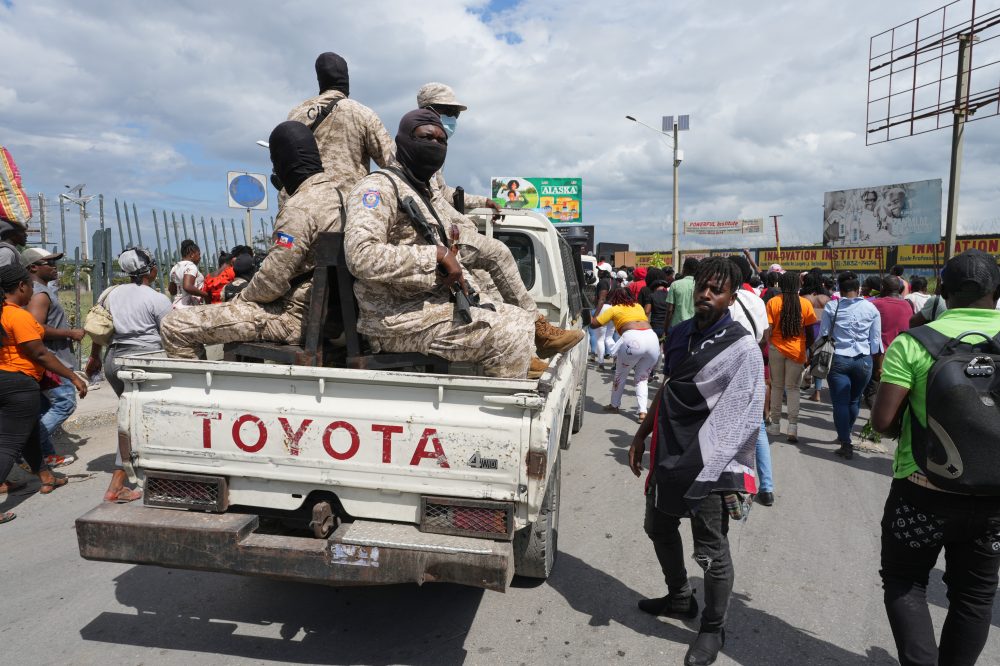
PORT-AU-PRINCE, Haiti — Seven individuals are now in custody following a devastating stampede that claimed the lives of at least 25 people at a historic fortress in northern Haiti over the weekend, according to police officials who announced the arrests Monday.
The detained suspects include five law enforcement officers and two workers from Haiti’s Institute for the Preservation of National Heritage, the organization responsible for managing La Citadelle. This imposing fortress, constructed in the early 1800s, sits atop a mountain in the town of Milot and was the site of Saturday’s tragic incident.
The stampede left dozens wounded, with 30 individuals still receiving medical treatment at hospitals as of Sunday. Investigators have not yet determined what triggered the deadly crush of people, and the probe continues.
Officials have not disclosed whether formal charges have been filed against the police officers or heritage institute workers.
Speaking to Magik9 radio on Monday, Milot Mayor Wesner Joseph revealed that local government officials had no knowledge of any scheduled activities at La Citadelle that day. He said investigators later discovered that a local DJ had used TikTok to invite people to an event at the fortress, drawing many young people and teenagers.
Social media footage from before the gathering shows hundreds of youth undertaking the challenging 8-kilometer climb up the steep mountainside to reach La Citadelle, while others chose to make the journey on horseback.
Additional video evidence captured two young Haitians promoting the event through loudspeakers more than a week prior, saying “You have to hurry to make sure you’re in the line.”
Those wanting to participate in the event were required to pay approximately $8 for admission. Organizers promised complimentary water and fruit beverages, instructing attendees to gather at 7 a.m. at the park situated below La Citadelle and emphasizing that everyone needed to arrive by 10 a.m.
Romuald Wadagni, who serves as Benin’s Finance Minister, claimed a commanding presidential victory in the West African country’s election held April 12th, capturing more than 94% of votes cast according to preliminary results released Monday by election officials.
The head of Benin’s independent electoral commission, Sacca Lafia, made the announcement during a televised broadcast, explaining that the figures reflected tallies from over 90% of ballots counted and demonstrated Wadagni’s overwhelming advantage.
Election participation reached 58.78% of eligible voters, according to Lafia’s statement.
Earlier Monday, opposition contender Paul Hounkpe acknowledged his loss in the race.
WASHINGTON – American military forces conducted a deadly operation Monday in the Eastern Pacific Ocean, resulting in the deaths of two individuals involved in drug trafficking activities.
U.S. Southern Command confirmed the military action through a statement posted on social media platform X, explaining that intelligence gathering had verified the targeted vessel’s involvement in illegal narcotics operations.
“Intelligence confirmed the vessel was transiting along known narco-trafficking routes in the Eastern Pacific and was engaged in narco-trafficking operations,” the command stated in their announcement.
The military operation represents ongoing U.S. efforts to combat international drug smuggling networks operating in Pacific waters.
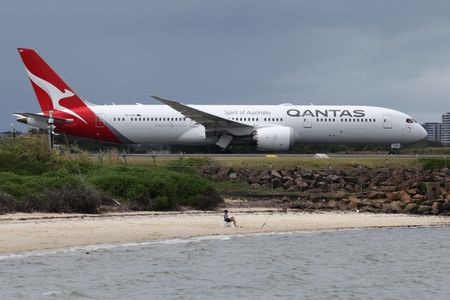
Australia’s flagship carrier Qantas Airways announced Tuesday that it has dramatically increased its fuel expense projections and postponed a planned stock repurchase program due to skyrocketing aviation fuel costs triggered by Middle Eastern conflicts that have disrupted global oil supplies.
The carrier revealed that aviation fuel costs have increased by more than 100%, pushing its projected fuel expenses for the latter half of fiscal year 2026 to between A$3.1 billion and A$3.3 billion ($2.20 billion to $2.34 billion), a substantial jump from its previous estimate of A$2.2 billion.
This dramatic increase highlights how rapidly international conflicts can impact airline operating expenses, as aviation fuel costs have skyrocketed due to refineries being compelled to reduce production following the disruption of crude oil supplies from Middle Eastern regions.
Although Qantas has implemented hedging strategies to protect against much of its crude oil price exposure, the company stated it remains substantially vulnerable to the sharp increase in jet fuel price spreads.
In response to escalating expenses, Qantas is implementing higher ticket prices and redirecting aircraft toward more profitable destinations like Europe, where passenger demand continues to hold steady, while simultaneously reducing domestic flight capacity by approximately 5 percentage points during the June quarter.
The airline indicated that revenue per available seat kilometer (RASK), a crucial indicator of pricing strength, is projected to increase between 4% and 6% for international services and approximately 5% for domestic routes in the six-month period ending in June, demonstrating the impact of increased fares, though noted that roughly half of fourth-quarter bookings were secured prior to the crisis.
“Qantas continues to see strong demand for international travel to Europe as customers seek alternative routes. In response, the Group has redeployed capacity from the U.S. and its domestic network to increase flights to Paris and Rome,” the company stated.
Despite these adjustments, the magnitude and rapid pace of the fuel price shock has led to a more conservative approach to capital allocation, with company leadership choosing to delay a previously announced A$150 million stock buyback program.
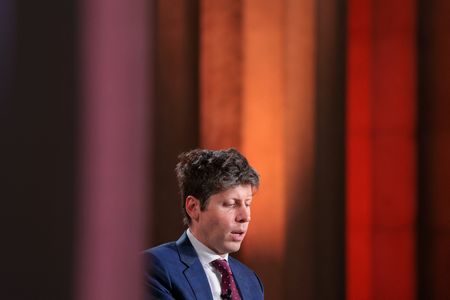
Federal authorities have filed charges against a 20-year-old Texas resident accused of launching a firebomb attack on the San Francisco home of artificial intelligence company CEO Sam Altman.
Daniel Moreno-Gama faces federal charges after surveillance cameras captured him lobbing an incendiary device at the residence of OpenAI’s chief executive, according to an FBI affidavit submitted to federal court Monday.
When San Francisco police took Moreno-Gama into custody, investigators say he was carrying a handwritten document expressing opposition to artificial intelligence technology.
The FBI stated that Moreno-Gama’s written manifesto, which authorities are using to establish his motive, included specific threats targeting Altman personally.
U.S. Attorney Craig Missakian indicated prosecutors may pursue domestic terrorism charges depending on the investigation’s findings. “We are only at the beginning of this investigation, but if the evidence shows that Mr. Moreno-Gama executed these attacks to change public policy or to coerce government and other officials, we will treat this as an act of domestic terrorism and together with our law enforcement partners prosecute him to the fullest extent allowed by law,” Missakian said in a statement.
The incident comes as OpenAI encounters increased examination over national security concerns, particularly regarding potential agreements allowing the government to utilize the company’s AI systems for classified defense purposes.
Prosecutors have charged Moreno-Gama with attempting to damage property using explosives and illegally possessing an unregistered weapon.
Authorities report that Moreno-Gama made the journey from Texas to California specifically to conduct these attacks. During his arrest, law enforcement confiscated several explosive devices, kerosene, and ignition equipment.
Court documents reveal that Moreno-Gama explicitly told OpenAI security staff at the company’s main office that he planned to set the facility ablaze and injure employees inside.
Should he be found guilty, Moreno-Gama could receive between five and 20 years imprisonment for the explosives-related charges, plus an additional decade behind bars for the firearms violation, according to federal sentencing guidelines.
Escalating fuel costs across Europe prompted car buyers to turn to electric vehicles in unprecedented numbers last month, marking the first time global EV sales increased this year, according to research released Tuesday by consulting firm Benchmark Mineral Intelligence.
Nations around the world have implemented fuel price caps to protect drivers from rising costs following the conflict in Iran that began February 28, which has disrupted a crucial shipping corridor responsible for approximately 20% of worldwide oil transport.
According to BMI, new registrations for battery-electric and plug-in hybrid vehicles climbed 3% compared to last year, reaching more than 1.7 million cars globally. Europe experienced a dramatic 37% increase, hitting a record monthly peak of nearly 540,000 electric vehicles sold.
Though vehicle registrations typically follow behind actual sales, BMI data manager Charles Lester explained that “there is a good portion of this that you can put down to the rise in petrol prices.”
The most significant growth occurred in nations experiencing the steepest energy price increases, including Australia, New Zealand, Vietnam and Thailand. These countries collectively generated a 79% spike in EV registrations outside the primary markets of China, Europe and North America, Lester noted.
In China, the world’s largest automotive market, EV registrations dropped 14% to more than 850,000 vehicles sold, continuing a downward trend that began in January after the government ended funding for vehicle trade-ins and eliminated tax exemptions for EV purchases.
Lester observed that Chinese buyers, who previously utilized these incentives to purchase compact EVs, are now gravitating toward larger vehicles.
North American EV registrations declined 30% to 121,500 vehicles sold during March, representing the sixth straight year-over-year decrease following the termination of an EV tax credit program in the United States and President Donald Trump’s administration’s proposals to reduce CO2 emission requirements.
“It has been its highest monthly figure since the tax credit ended, but the reality is the pullbacks have happened,” Lester stated.
The head of United Airlines has reportedly presented the possibility of merging with competitor American Airlines Group to federal government officials, according to a Bloomberg News report published Monday that cited sources with knowledge of the discussions.
Scott Kirby, United’s chief executive officer, has brought this concept to high-ranking government representatives, though the report indicates it remains uncertain whether any formal approaches have been made or if an official review process has begun for such a transaction.
When contacted for comment, United Airlines refused to provide a statement. American Airlines and the White House have not yet responded to requests for their perspective on the matter.
Such a merger between these major carriers would increase concentration in the American domestic aviation industry, which is currently dominated by four primary airlines: American Airlines, Delta Air Lines, United Airlines, and Southwest Airlines.
Following the news, American Airlines stock prices climbed more than 5% in after-hours trading, while United Airlines shares remained unchanged.
Notably, Kirby previously held the position of president at American Airlines between 2013 and 2016 before joining United.
According to LSEG financial data, United Airlines currently holds a market value approaching $31 billion, significantly higher than American Airlines’ $7.42 billion valuation.
Motorists traveling on southbound Route 1 will encounter ongoing construction-related lane restrictions this morning between Cave Neck Road and Minos Conaway Road.
The Delaware Department of Transportation reports that lanes are being closed intermittently in the southbound direction as crews continue their work in the area.
The construction activity and associated lane closures are expected to wrap up by 7:00 AM, after which normal traffic patterns should resume.
Drivers are advised to allow extra travel time and exercise caution when passing through the work zone.
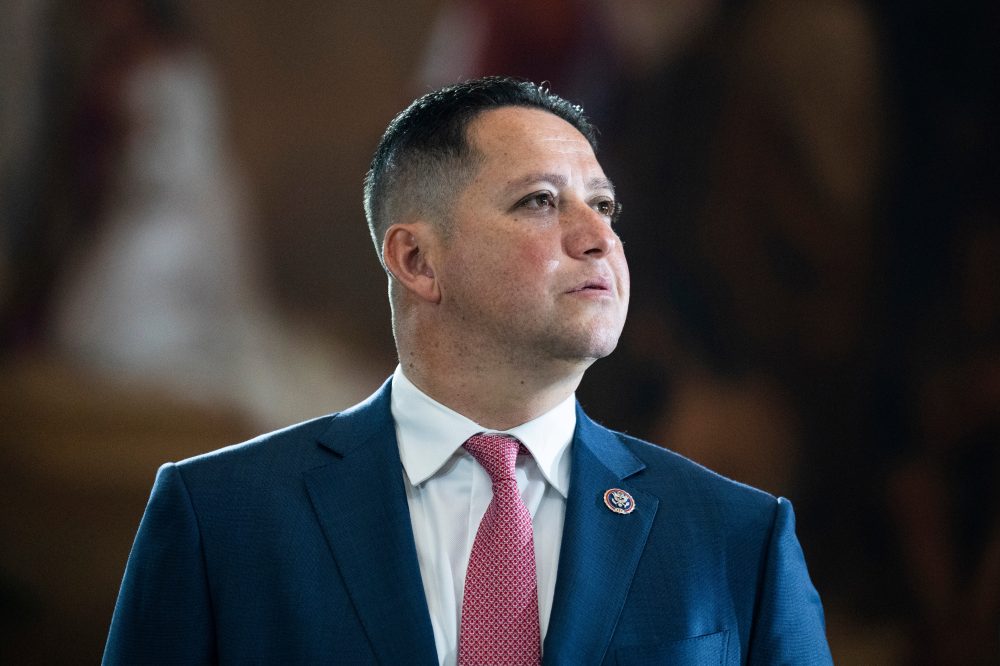
WASHINGTON — Texas Republican Representative Tony Gonzales announced Monday his intention to step down from Congress following mounting pressure from both parties for his removal from office.
The congressman had previously revealed he engaged in an inappropriate relationship with a member of his staff who subsequently died by suicide, and had already declared he would not pursue reelection. His retirement announcement followed closely after California Democratic Representative Eric Swalwell announced his own resignation while facing similar allegations of improper conduct.
Leadership within the Republican caucus had previously urged the three-term representative to abandon any reelection plans. Additionally, the House Ethics Committee had launched a formal inquiry into his conduct. Congressional ethics regulations explicitly prohibit lawmakers from maintaining romantic relationships with House employees under their direct authority.
“There is a season for everything and God has a plan for us all,” Gonzales wrote on social media. “When Congress returns tomorrow, I will file my retirement from office.”
The departing congressman expressed gratitude for the opportunity “to serve the great people of Texas” but provided no additional information regarding the timeline for his departure.
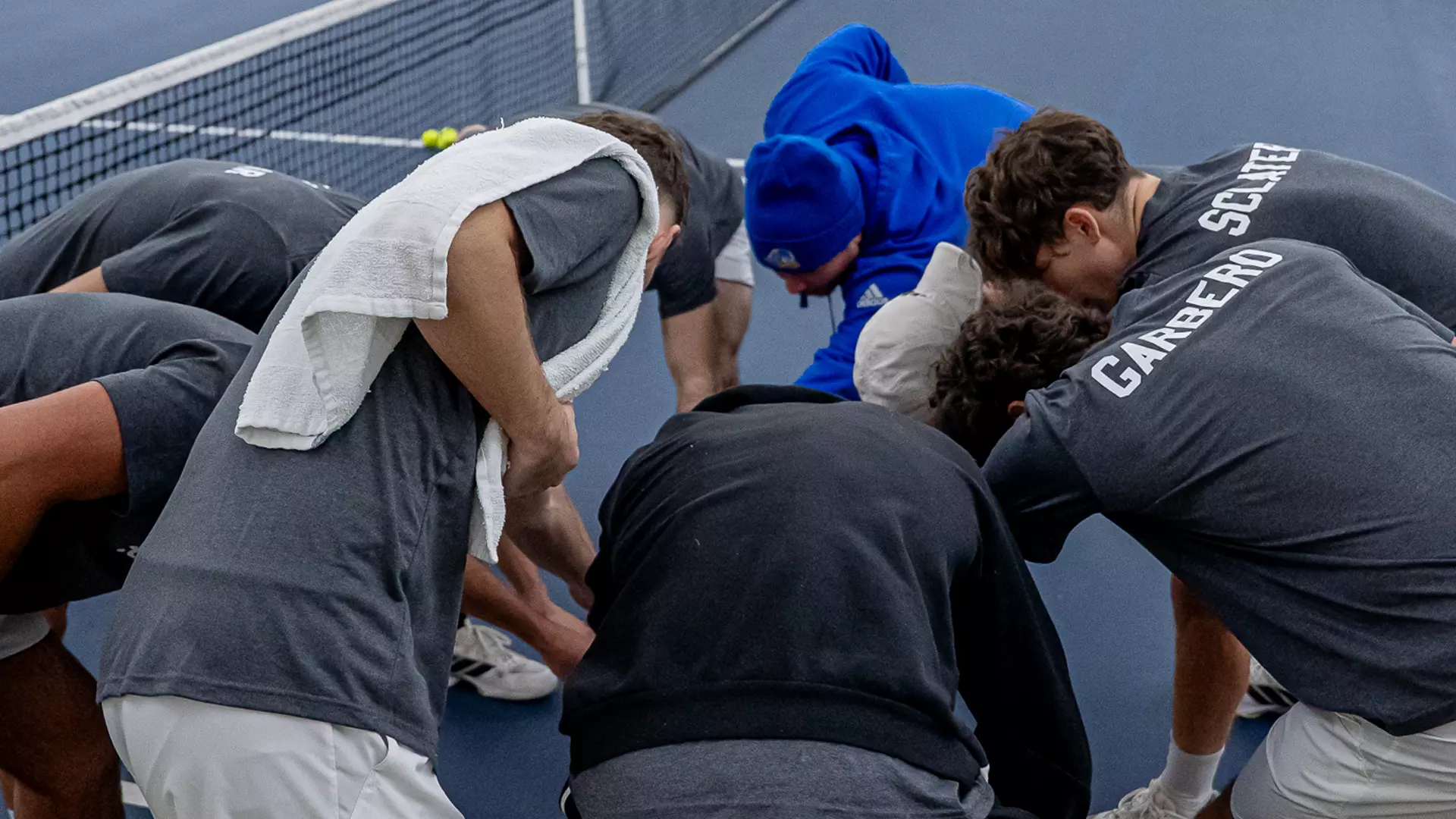
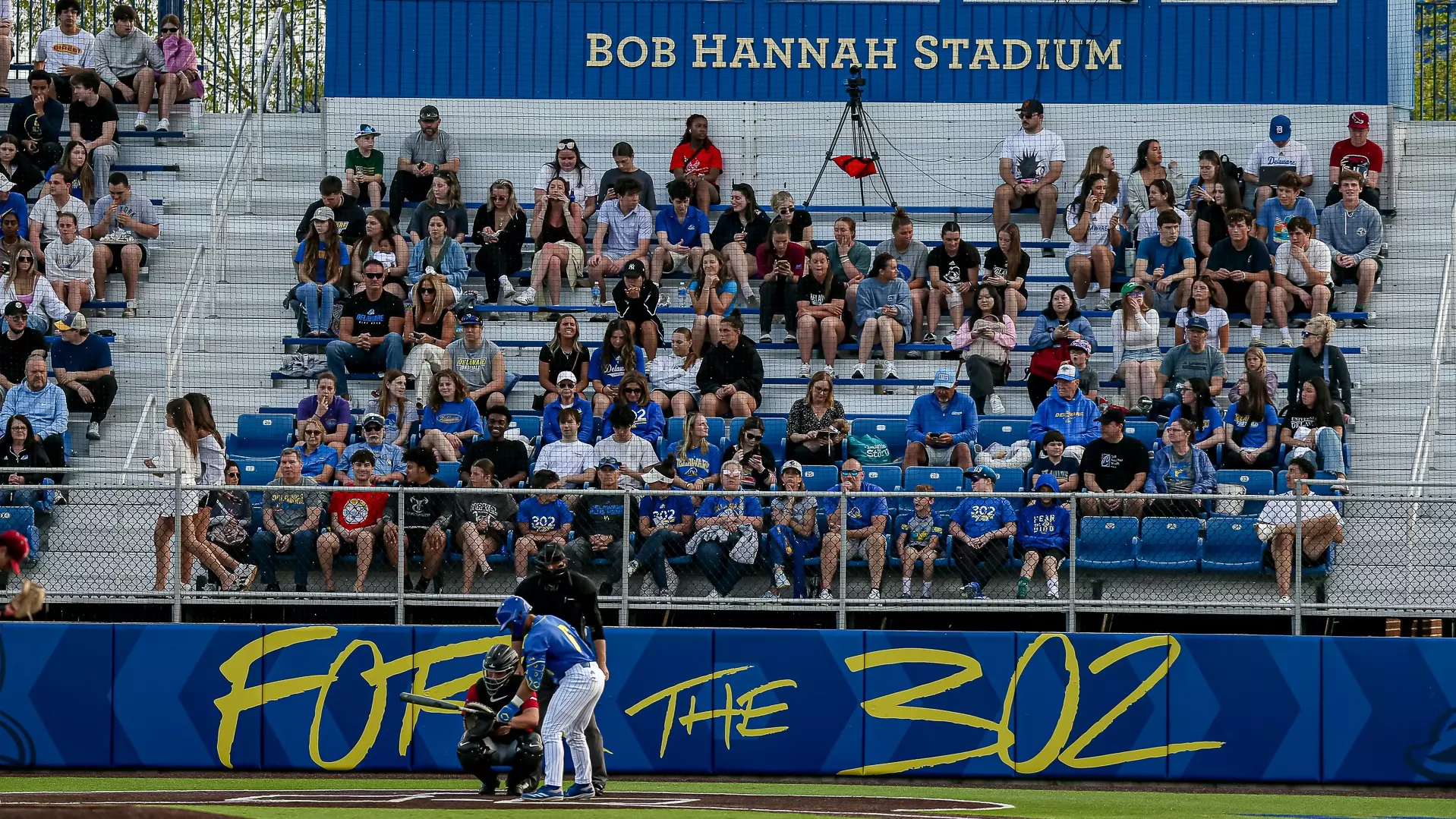
NEWARK, Del. – The Blue Hens men’s tennis program has secured the fifth seed position for the 2026 Conference USA Tennis Championship, setting up a matchup against the fourth-seeded Kennesaw State Owls, according to Monday’s conference announcement.
The University of Delaware’s tennis team will now prepare for their championship tournament appearance as they look to advance through the conference bracket against the Georgia-based Owls squad.
NEWARK, Del. – The Blue Hens women’s tennis squad has locked up the fourth seed position for the 2026 Conference USA Tennis Championship and will battle fifth-seeded Jacksonville State Gamecocks in tournament play, according to Monday’s conference announcement.
The tournament seeding positions the Delaware team favorably as they prepare for championship competition against the Gamecocks in what promises to be competitive conference tournament action.
Brazilian national team manager Carlo Ancelotti believes superstar forward Neymar can still earn his way onto the World Cup roster despite recent injury struggles.
The Italian coach expressed confidence in the player’s recovery prospects during an interview with L’Equipe. “He is capable of getting back to 100%,” Ancelotti stated when asked about Neymar’s World Cup chances. “He is being assessed by the CBF (Brazil’s Football Confederation) and by me, and he still has two months to show that he has what it takes to play in the next World Cup.”
The 34-year-old attacking midfielder, who holds Brazil’s all-time scoring record with 79 international goals, has been absent from national team duty since 2023 due to persistent left knee problems. Following minor knee surgery on December 22, Neymar received platelet-rich plasma therapy in early April to accelerate his healing process.
Ancelotti praised the player’s progress since the December procedure. “After his knee injury (in December), Neymar has made a good recovery,” the coach explained. “He’s scoring goals. He needs to keep going down this path and improve his fitness. He’s on the right track.”
Currently serving as captain for Santos in Brazil’s top-flight Serie A, Neymar has publicly expressed his determination to represent his country at this summer’s World Cup in North America. His current contract with Santos runs through the end of this calendar year.
The veteran player previously starred for European giants Barcelona from 2013 to 2017 and Paris Saint-Germain from 2017 to 2023, forming memorable partnerships with Lionel Messi at both clubs during his peak years as one of soccer’s elite attacking talents.
An ankle problem contributed to his exit from PSG, leading to a brief stint with Saudi Arabian club Al-Hilal. However, a torn ACL cut short his time in the Middle East. He rejoined Santos in January 2025, marking his return to professional soccer in his homeland.
This season, Neymar has contributed three goals and two assists across five appearances for Santos. After missing two consecutive matches, he completed the full 90 minutes in Saturday’s 1-0 victory against Atletico Mineiro.
Santos head coach Cuca offered an encouraging assessment following Saturday’s performance. “Neymar is improving with every game,” Cuca told ESPN reporters. “He’s been staying behind to train. His movement on the ball is much better and he’s likely to get even better. It’s risky to play him for the full 90 minutes; we’ll see if he can handle it, and we’ll work towards him playing on Tuesday.”
During his debut season back in Brazilian soccer last year, Neymar recorded eight goals and one assist over 20 appearances, starting 17 of those matches.
Ancelotti acknowledged the player’s legendary status while maintaining realistic expectations. “Neymar has made, and continues to make, history in Brazilian football,” the coach noted. “He is a great talent and it’s only natural that people think he can help us win the next World Cup.”
Despite the optimistic outlook, Neymar has not appeared on any national team roster since Ancelotti assumed coaching duties last June.
The coach emphasized his selection philosophy when pressed about future call-ups. “I’ve said this several times, and it’s very clear: I’ll call up the players who are physically ready,” Ancelotti declared.
Federal health officials have cleared the way for broader use of a Travere Therapeutics medication to address a uncommon kidney condition, the pharmaceutical company announced Monday.
The regulatory decision marks Sparsentan as the initial FDA-sanctioned treatment for focal segmental glomerulosclerosis (FSGS), a kidney ailment that creates scarring in filtering components and may result in protein appearing in urine, body swelling, and complete kidney failure.
The medication works by targeting and blocking two critical receptors to shield kidney cells, which helps minimize protein loss and delays how quickly the disease advances.
This approval comes after federal drug regulators extended their evaluation period in January to gather additional information about the treatment’s clinical effectiveness.
The same drug already has regulatory clearance under the commercial name Filspari for slowing kidney deterioration in adults diagnosed with IgA nephropathy, a advancing autoimmune disorder.
According to Travere, kidney specialists can begin writing prescriptions for FSGS patients right away.
Company data indicates FSGS impacts more than 40,000 individuals across the United States, with comparable numbers affected throughout Europe.
The pharmaceutical firm sets Filspari’s cost at $9,900 monthly for IgA nephropathy treatment, totaling roughly $170,000 annually.
Jefferies analyst Maury Raycroft shared with Reuters: “We think the price should be approximately 2x of what they’re charging for IgAN, and that’s because of the higher dose.”
Financial analysts at Jefferies project the medication could generate peak revenue of $961 million by 2033 for this particular condition.
Travere secured licensing rights to the drug from Ligand Pharmaceuticals in 2012 through an arrangement that provides Ligand with milestone payments and a 9% share of worldwide sales.
Filspari, which received approval in 2023 for IgA nephropathy, includes serious warnings about potential liver injury and birth complications.
Meanwhile, Swiss pharmaceutical company Novartis is conducting mid-stage testing of its competing drug, atrasentan, for FSGS patients.
During the three-month period ending December 31, Filspari recorded $103.3 million in sales revenue.
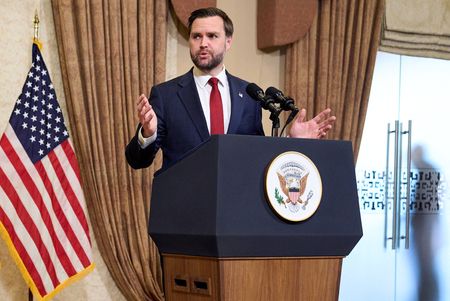
WASHINGTON – Vice President JD Vance reported substantial advancement in recent diplomatic discussions with Iran during a Monday evening television appearance on Fox News’ Special Report with Bret Baier.
When questioned about whether additional negotiations would take place, Vance indicated that Iran now holds responsibility for the next move in diplomatic relations.
The Vice President also stated that the United States anticipates Iran will take steps toward reopening the Strait of Hormuz, cautioning that the nature of negotiations could shift if Tehran fails to act.
The Indiana University basketball program announced three significant transfer portal additions on Monday, highlighted by the commitment of Notre Dame guard Markus Burton, who gets to stay in his home state for his next chapter.
Burton will be joined by Duke forward Darren Harris and Georgia Tech guard Jaeden Mustaf, all three announcing their decisions to become Hoosiers on the same day.
The Notre Dame transfer brings impressive scoring credentials despite battling injuries over his past two seasons. Burton missed five weeks during the 2024-25 campaign after suffering a knee injury in late November. His most recent season was cut short when he required surgery for a left ankle injury sustained on December 5.
Throughout his three-year career with the Fighting Irish, Burton compiled strong numbers across 69 games with 68 starts. He posted 19.1 points per game while shooting 43.8% from the field and 33.2% from beyond the arc, also contributing 3.8 assists, 3.4 rebounds and 1.8 steals per contest. His accolades include ACC Rookie of the Year honors in 2023-24, along with third-team All-ACC recognition that season and second-team honors for 2024-25.
Harris brings a 6-foot-6 frame to Indiana’s wing position after spending two seasons coming off Duke’s bench. The former top-40 national recruit from the 2024 class contributed 2.8 points per game in 8.4 minutes of action across 57 appearances with the Blue Devils.
Mustaf, like Harris, was rated as a four-star prospect in the 2024 recruiting class and had previously shown interest in Indiana before choosing Georgia Tech. During his time with the Yellow Jackets, he appeared in 55 games with 33 starts, averaging 9.4 points, 3.7 rebounds and 2.0 assists per game. His three-point shooting was particularly strong in 2025-26, connecting on 38.9% of his attempts while averaging 10.4 points per game.
DOVER — Delaware high school students now have the opportunity to serve on the state’s top education policy board after Governor Matt Meyer opened applications for a student representative position.
The application window is now open for the student seat on Delaware’s State Board of Education, covering the 2026-2027 school year. High schoolers who will be entering their junior or senior years and have a strong interest in public education policy are invited to submit their applications.
Interested students must submit their applications no later than 5:00 p.m. on Thursday, April 30th to be considered for the position.
The student board member role provides young people with a direct voice in statewide education decisions and policy development that affects Delaware’s public school system.
Motorists traveling through the Bayside Drive area should expect delays due to an ongoing moving operation at the intersection with South Little Creek Road.
Delaware Department of Transportation officials report that the moving activity along Route 9 will impact traffic patterns in the area through 6 PM today.
Drivers are advised to seek alternate routes or allow extra travel time when passing through this section of Bayside Drive during the afternoon hours.
WASHINGTON – According to a Monday report from the Washington Post, the Trump administration is weighing the appointment of Dr. Houman Hemmati to oversee a key FDA division responsible for vaccine oversight.
Three sources with knowledge of the discussions told the newspaper that Hemmati, who works as an eye doctor and makes regular television appearances on Fox News, is being evaluated to head the FDA’s Center for Biologics Evaluation and Research.
The center plays a critical role in evaluating vaccines and other biological products before they reach the public.
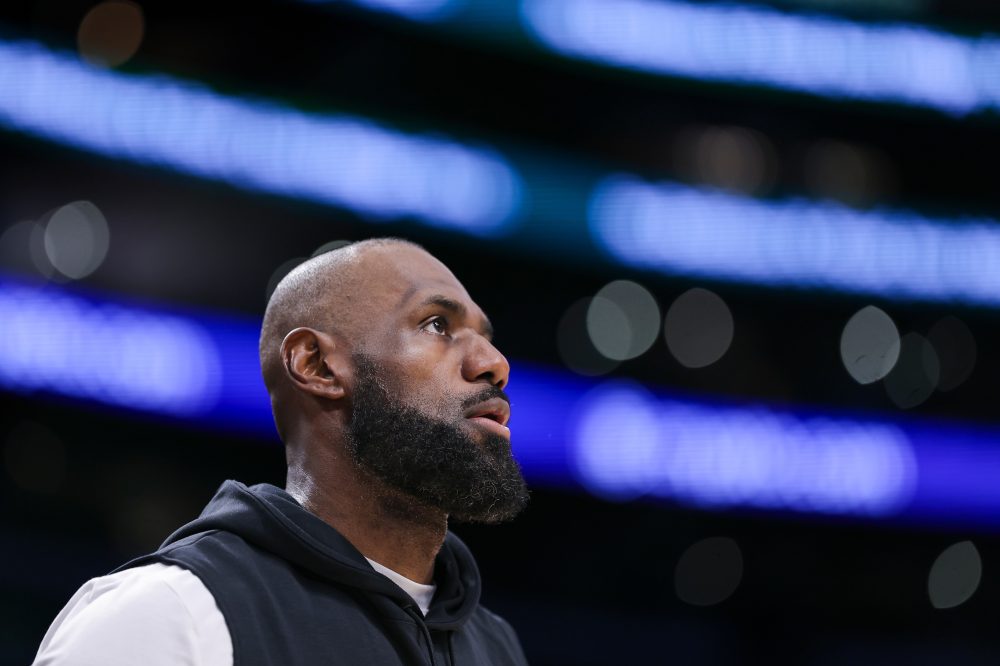
LOS ANGELES — The NBA’s all-time leading scorer likely believed his days of single-handedly carrying teams were behind him.
Throughout his career, LeBron James has repeatedly lifted ordinary rosters to remarkable heights, but this season with the Los Angeles Lakers looked different. Playing his first complete campaign alongside Luka Doncic, the 41-year-old superstar had stepped into more of a complementary role, watching Doncic lead the offense while emerging talent Austin Reaves flourished.
The strategy proved highly effective during Los Angeles’ impressive 16-2 run in March, capturing the Pacific Division title and sparking discussions about potentially challenging powerhouses Oklahoma City or San Antonio in the postseason.
However, disaster struck in early April when both Doncic suffered a hamstring injury and Reaves went down with an oblique strain during the Lakers’ first game of the month, leaving both stars facing multi-week absences.
Suddenly, James finds himself thrust back into the familiar position of being his team’s primary hope, with the Lakers’ playoff aspirations now resting on the shoulders of a player entering his 23rd NBA season.
As Los Angeles prepares to face the Houston Rockets in Saturday night’s playoff opener, James faces another seemingly impossible task in a career filled with them: maintaining the Lakers’ championship hopes until his injured teammates can return.
“I’ve had to tap back into a role that I’ve been accustomed to in the past, but obviously wasn’t what it was this year,” James explained. “Circumstances have put me back in here, and I’m just trying to feed off my teammates (while my) teammates feed off of me. Trying to make things happen for us to continue to stay afloat.”
This challenge would overwhelm most players, but James has repeatedly proven his ability to rise to such occasions. Following his 26-point, 11-assist, eight-rebound performance in the Lakers’ victory over Golden State, reporters asked what his team requires from him without their top two scorers.
“Everything,” James responded. “So nothing changes for me. Just back to the old ways.”
James has dedicated most of his basketball career to elevating those around him. Even after departing Cleveland initially to join Miami’s super-team and reduce that burden, he returned home and spent four additional seasons leading the Cavaliers to consecutive NBA Finals appearances against Golden State — including an incredible stretch to six games in 2015 without Kyrie Irving or Kevin Love, followed by orchestrating Cleveland’s historic comeback from a 3-1 deficit to claim the 2016 championship.
Currently, the Lakers recognize that unfortunate injuries have likely undermined what appeared to be a promising campaign. Doncic, who topped the league in scoring, has traveled to Spain seeking medical treatments that might accelerate his return, while Reaves appears unlikely to play in the opening playoff round.
Despite these setbacks, Lakers head coach JJ Redick maintains confidence with James in the lineup.
“We’re going to need him to facilitate, and we’re going to need him to score,” Redick stated. “We’re going to need him to defend and rebound. I think he recognizes the task at hand, and he’s very locked in. He’s played great.”
Injuries have plagued all three Lakers stars this season, limiting their time playing together until recently. James battled sciatica that caused him to miss training camp and the season’s first 14 games, yet he appeared in 60 of the following 68 contests for Los Angeles, including five consecutive game sets.
“He had not a good season, not a great — he had a remarkable season, all things considered,” Redick observed. “You take away the fact that he’s in his 23rd year, and he’s 41 years old, he had a remarkable season. The fact that those things are real, and they’re very real in terms of the day-to-day management, it’s unbelievable what he did this year.”
James’ statistics show only minor adjustments to his advanced age and reduced responsibilities behind Doncic and Reaves: His 20.9 points per game marked his lowest average since his 2003-04 rookie campaign, while his 33.2 minutes per game represented a career low.
However, when the spotlight returns to James, he continues performing at an elite level with stunning consistency. He concluded the regular season by averaging 24.0 points, 9.7 assists, 6.0 rebounds and 3.0 steals across three Lakers wins that secured home-court advantage for the opening playoff round.
James earned Western Conference Player of the Week honors Monday for the 70th time — exceeding the combined total of any other two players in league history.
“Just trying to squeeze as much of the juice as I can, until it’s as dry as it can be for me,” James reflected. “I’ve been given an opportunity to play the game that I love, and tried to do it at a high level, and I’ve tried to commit to it, and the game has given back to me.”
SALISBURY, Md. – Salisbury University’s baseball squad broke out of a recent slump in dramatic fashion Monday, securing one of their most significant victories this season with a 6-3 triumph over highly-ranked Shenandoah.
The Sea Gulls, currently ranked 12th nationally, ended their two-game losing streak by defeating the fifth-ranked Hornets during Monday afternoon’s matchup at Donnie Williams Sea Gull Baseball Stadium.
The victory represents a major upset for Salisbury, which managed to overcome a team ranked seven spots higher in the national standings. The win could prove crucial for the Sea Gulls’ postseason positioning as they continue their campaign.
Motorists traveling on northbound Interstate 95 should expect delays this morning as construction crews continue work near Exit 1.
The Delaware Department of Transportation has shut down the right lane in the area for ongoing construction activities. The lane closure is expected to remain in effect until 6 a.m.
Drivers are advised to use caution when approaching the work zone and allow extra travel time for their morning commute. Traffic may be moving slower than usual through the affected area.
Drivers using Interstate 95 southbound should plan for delays as construction crews continue work that has shut down the left lane between the Welcome Center and the Toll Plaza.
The lane closure is scheduled to remain in effect until 6:00 AM, according to DelDOT traffic officials. Motorists are advised to use caution when traveling through the construction zone and allow extra time for their commute.
The ongoing roadwork is part of routine maintenance operations along the busy corridor. Traffic is being directed around the work area using the remaining open lanes.
Federal authorities have taken into custody a man who sustained multiple gunshot wounds when Immigration and Customs Enforcement officers opened fire during a traffic stop in central California last week, according to his legal representative.
Carlos Ivan Mendoza Hernandez was taken into FBI custody Monday following his release from medical care, lawyer Patrick Kolasinski confirmed. Federal officials have not disclosed what criminal charges the 36-year-old may be facing, and attempts to reach the FBI and U.S. Attorney’s Office for additional details have gone unanswered.
Kolasinski revealed that Mendoza, who required three surgical procedures to treat his gunshot injuries, was released directly to federal custody without any advance notice given to his family or legal representatives.
“We’re in shock,” Kolasinski told The Associated Press. “He should not be out of that hospital. He was in no condition to be released.”
The Department of Homeland Security maintains that ICE officers discharged their weapons in self-defense when Mendoza attempted to strike them with his vehicle following a traffic stop last Tuesday. Authorities stated they were conducting a targeted enforcement operation against Mendoza in Patterson, located approximately 75 miles southeast of San Francisco. They characterized him as an alleged gang associate sought by El Salvador for questioning regarding a homicide case.
During a press conference last week, Kolasinski reported that Mendoza was experiencing speech difficulties due to a gunshot wound to his jaw, but maintained his innocence regarding any gang affiliation. The attorney stated his client has only been cited for minor traffic violations, maintains a clean criminal record in the United States, and is not wanted on any arrest warrant in El Salvador, where he was cleared of murder charges.
Federal agencies have not provided an explanation for why Mendoza became the focus of their enforcement efforts. The Department of Homeland Security has remained silent regarding Kolasinski’s assertions.
Last Tuesday’s incident represents another shooting occurrence during the current administration’s intensified efforts to apprehend and remove undocumented immigrants, raising ongoing concerns about federal immigration enforcement tactics.
Kolasinski contends that officers opened fire on Mendoza while his vehicle was stationary, prompting him to drive away to escape the gunfire.
A court document dated October 25, 2019, from an El Salvadoran judge shows Mendoza was cleared of murder accusations and ordered released immediately. He was 29 years old at that time. The same document lists 10 other individuals who received convictions for crimes ranging from aggravated robbery to homicide, noting that at least one belonged to the 18th Street Gang. However, the document makes no reference to Mendoza having gang ties or participating in gang-related activities.
Regarding the California ICE incident, dashboard camera video secured by KCRA-TV reveals three officers positioned around a vehicle pulled over on a roadside. One officer appears to be making contact with the driver’s window when the car starts reversing and turning, striking another vehicle positioned behind it. Two officers can be seen with drawn firearms aimed at the car. The driver then accelerates forward toward the officers’ location and makes a sharp turn, crossing over the road’s median strip.
The footage lacks audio, making it impossible to determine the timing of gunshots or any verbal exchanges.
Kolasinski reported Monday that Mendoza’s fiancée visited him at the hospital over the weekend, where he remained in considerable pain.
According to Kolasinski, Mendoza holds citizenship in both El Salvador and Mexico and arrived in the United States in 2019, though the attorney was uncertain about his immigration status or method of entry.
The lawyer described his client as a construction worker specializing in fire damage restoration. Mendoza is the father of a 2-year-old daughter and is engaged to an American citizen, according to his attorney.
A rocket fired from Lebanon struck a building in the Israeli city of Nahariya on Monday, leaving one woman injured and causing significant structural damage.
Emergency medical teams from Magen David Adom rushed to the scene after the projectile hit during an attack targeting Israel’s western Galilee region. Medics treated a woman in her 60s for minor injuries sustained from flying glass and the explosion’s force, while also caring for another individual experiencing anxiety from the incident.
Emergency responders described arriving at the scene within minutes using ambulances, intensive care vehicles, and motorcycles to find widespread destruction, broken glass covering the area, and smoke rising from the impact site.
Fire and rescue crews from Nahariya’s station discovered severe damage to the three-story structure upon their arrival, though no fire had broken out. After conducting thorough searches, rescue teams confirmed that no individuals were buried beneath debris.
This attack occurred while Israeli Defense Forces have intensified military operations across the border in Lebanon, focusing on the militant organization’s stronghold in Bint Jbeil. Meanwhile, direct negotiations between Israeli and Lebanese representatives are set to take place Tuesday in Washington.
Good evening, Delmarva! We’re wrapping up this Monday with some pleasant spring weather across the peninsula. Tonight, expect partly cloudy skies with temperatures staying quite mild around 61 degrees. We’ll have a gentle southwest breeze picking up to 5-15 mph, so it’s a perfect evening to keep those windows open!
Looking ahead to Tuesday, we’re in for a beautiful day! Sunshine will dominate with mostly sunny skies and temperatures climbing to a very pleasant 85 degrees. It’s shaping up to be an excellent day for any outdoor activities you’ve been planning.
Tuesday night stays comfortable with partly cloudy conditions and lows dipping to 65 degrees. Wednesday continues our fantastic weather pattern with mostly sunny skies again and temperatures reaching 88 degrees – our warmest day of the stretch.
This is classic spring weather at its finest, folks! No rain in sight and plenty of sunshine ahead. Perfect timing to get outside and enjoy everything our beautiful Delmarva region has to offer. Stay safe out there, and I’ll see you tomorrow!
Motorists using Holland Glade Road should plan for potential delays as construction crews continue work that requires periodic lane closures.
The affected stretch runs between Hebron Road and Coastal Highway (Route 1), where workers are implementing intermittent traffic restrictions throughout the day.
According to DelDOT traffic reports, the lane closures will continue until 8 PM today. Drivers are advised to allow extra travel time and consider alternate routes if possible during the construction period.
Motorists should expect delays at a major Delaware intersection following a vehicle accident that has shut down multiple turning lanes.
The crash occurred at the intersection where Route 7 meets Route 4, prompting authorities to close both the northbound and southbound left turn lanes as crews respond to the incident.
Delaware Department of Transportation officials are advising drivers to seek alternate routes or expect significant delays while emergency responders work to clear the scene.
No additional details about the severity of the crash or potential injuries have been released at this time.
Israel observed Holocaust Martyrs’ and Heroes’ Remembrance Day on April 13 through a solemn state ceremony held at Jerusalem’s Yad Vashem memorial, with this year’s commemoration centering on the theme of Jewish family bonds.
Former Ashkenazi Chief Rabbi Yisrael Meir Lau, who serves as chairman of the Yad Vashem Council, began the ceremony by lighting the memorial torch. The observance also included special prayers for Israeli soldiers and families who have lost loved ones during the current conflict.
Event organizers selected “the Jewish family” as the 2026 theme to showcase both the devastation and strength of family connections throughout the Holocaust period. Speakers explained how Jewish families, which had traditionally served as pillars of stability and cultural identity, were torn apart by Nazi brutality through forced deportations, starvation, and violence that pushed children and parents into desperate survival situations.
Even amid this devastation, family bonds continued to provide emotional support in ghettos, concentration camps, and hiding places. Following the war’s end, Holocaust survivors made rebuilding family structures a priority as they worked to restore hope and cultural continuity.
President Isaac Herzog connected the ceremony’s theme to modern-day Israel, acknowledging that the commemoration occurred during wartime. He shared the story of Holocaust survivor Magda Baratz and her great-grandson, Master Sergeant Asaf Cafri, who lost his life in Gaza the previous year. Herzog portrayed the connection between a survivor who lived through Auschwitz and Bergen-Belsen and a soldier who died protecting Israel as representing the Jewish people’s transformation from devastation to renewal.
The president also highlighted the Holocaust’s massive scope, noting that roughly six million Jews—representing one-third of the world’s Jewish population at that time—were killed. He stressed that Jewish identity has historically been built around shared family connections, historical memory, and common purpose.
Prime Minister Benjamin Netanyahu praised Holocaust survivors as “giants of spirit” while contrasting Jewish defenselessness during the Holocaust with Israel’s current military capabilities. Netanyahu stated that Israel has absorbed the lessons of history and committed to preventing any future existential dangers, making reference to ongoing military actions against Iran and its regional partners.
The ceremony featured the customary lighting of six memorial torches representing the six million victims. Holocaust survivors joined by their family members lit each torch, creating a powerful symbol of both remembrance and ongoing legacy.
The annual observance concluded with messages emphasizing remembrance, resilience, and the continuing importance of family in Jewish culture, connecting Holocaust memory to Israel’s present and future.
Diplomatic efforts between the United States and Iran have reached a standstill following the breakdown of negotiations that lasted nearly an entire day, with regional experts expressing alarm over the widening gap between both nations.
The failed diplomatic session has intensified worries that the existing ceasefire may represent nothing more than a temporary halt in hostilities rather than a genuine opportunity for lasting peace negotiations.
According to Middle East analysts, the unsuccessful talks highlight the substantial obstacles facing any potential diplomatic resolution, with one Iran specialist noting they have never witnessed such a significant divide between the two countries.
The breakdown in communication between Washington and Tehran is prompting fresh doubts about whether meaningful diplomatic progress can be achieved while operating within the constraints of the current ceasefire arrangement.
Regional observers warn that the collapse of these negotiations may signal that the ceasefire is built on shaky ground, driven more by tactical considerations than any genuine commitment to long-term diplomatic engagement.
Listen to the Evening Delmarva Farm Report Update — April 13, 2026
DELMARVA — Spring planting accelerated across Delmarva as another dry week concluded, with soil temperatures holding in the mid-50s to low-60s. Growers from Kent County down through the Eastern Shore are planting corn and soybeans ahead of schedule. Extension agents reported the moisture window has been ideal, but rainfall will be needed within the next 10 days to support germination.
Markets
Corn futures closed Monday at $5.18 per bushel, up $0.03. Soybeans settled at $11.42, down $0.05. Wheat finished at $6.07, up $0.02.
Locally, Delaware spot corn is running $4.95 to $5.05, and soybeans are bringing $11.20 to $11.35 at most elevators.
Forecast
Partly sunny skies are expected this evening with temperatures dropping to 77°F under southwest winds at 15 mph. Tonight will stay mild, down to 57°F with partly cloudy conditions and lighter winds at 5-10 mph.
Tuesday brings mostly sunny skies and a high near 80°F with continued southwest breezes at 5-10 mph, providing a solid window for fieldwork.
This article is based on the Delmarva Farm Report Update Evening Edition, April 13, 2026. Hosted by Tom Bradley.
FOXBOROUGH, Mass. — Head coach Mike Vrabel was absent from the New England Patriots’ pre-draft media session on Monday, but team officials indicate he continues his normal duties in preparation for the upcoming NFL draft amid recent media attention surrounding photographs with a sports journalist.
When questioned about Vrabel’s participation in draft preparations, Patriots vice president of player personnel Eliot Wolf described his involvement as standard operating procedure.
“Very involved. Business as usual,” Wolf stated regarding Vrabel’s role in the team’s draft activities. “I’d say he’s been in there with us this round probably a little more than he was in there last year. … He’s been in there. He’s been contributing. He’s watched a ton of the players.”
This marked the initial public comments from a Patriots front office representative since the New York Post released images showing Vrabel alongside NFL journalist Dianna Russini of The Athletic at an Arizona hotel, sparking questions about their professional relationship.
While Vrabel participated in media sessions before last season’s draft, he chose not to attend Monday’s formal press conference. However, reporters encountered him briefly during a facility tour following Wolf’s media availability, where he offered a quick greeting.
The Post reported the photographs were captured in Arizona approximately two weeks prior to the NFL owners meetings that commenced March 29 in Phoenix.
Both Vrabel and Russini, who are married to other people, issued responses to the Post minimizing the significance of the images.
Russini explained the photos “don’t represent the group of six people who were hanging out during the day.”
Vrabel responded to the publication stating: “Those photos show a completely innocent interaction and any suggestion otherwise is laughable.”
The New York Times, parent company of The Athletic, announced Saturday it would examine Russini’s professional conduct.
This investigation followed earlier comments from Athletic executive editor Steven Ginsberg, who had defended Russini’s journalism and told the Post the images “lacked essential context.”
Vrabel, a three-time Super Bowl champion during his playing career with New England, enters his sophomore campaign as Patriots head coach. He guided the franchise to a 14-3 record in his debut season, which concluded with a Super Bowl defeat against Seattle.
New England possesses the 31st selection in the upcoming draft along with 11 total picks.
President Donald Trump’s announcement Monday of a naval blockade targeting Iranian ports threatens to send already elevated fuel costs even higher while raising serious questions about international maritime law and military effectiveness.
The blockade decision came after weekend ceasefire negotiations collapsed without reaching an agreement. Iran had previously restricted most tanker movement through the critical shipping channel, permitting only select vessels deemed favorable to pass while imposing substantial transit fees.
Military analysts warn that implementing such a blockade will demand extensive U.S. Navy resources and could raise concerns regarding the use of force under international maritime regulations. Supply chain specialists emphasize that these restrictions may severely impact the movement of petroleum, fertilizers, food products and other essential commodities to consumers already struggling with inflated costs.
Naval experts indicate that maintaining the blockade will require a sustained deployment of American warships and personnel, along with precise directives from both the Trump administration and Navy legal advisors.
The primary military obstacle involves managing the massive volume of maritime traffic that typically moves through the Strait of Hormuz, where approximately 20% of globally traded petroleum normally flows. A substantial naval presence may be necessary to implement these restrictions effectively, according to Sidharth Kaushal, who studies naval capabilities at the Royal United Services Institute, a London-based defense research organization.
“A lot depends on the early days of the blockade, how many vessels the Americans can seize, how much they can convince vessels attempting to slip through a cordon that they’re likely to be seized,” Kaushal said. “But in all likelihood, I’d say it will prove difficult for the U.S. to enforce.”
Todd Huntley, who leads Georgetown University Law Center’s National Security Law Program, noted that while the strait’s narrow geography limits the area requiring coverage, the sheer volume of shipping traffic “is going to be a challenge.”
According to Huntley, American officials may need to decide whether humanitarian supplies should reach Iranian ports, a choice that could affect the blockade’s compliance with international legal standards. Maritime law also mandates that any country implementing a blockade must do so fairly and provide proper notification to sailors.
“How it is carried out will determine whether it is lawful or not,” said Huntley, a former Navy captain and judge advocate general. “You can’t enact a blockade with the goal of starving the civilian population. Even the DOD law of war manual states that neutral vessels carrying relief supplies should be allowed to pass.”
Raul Pedrozo, an international law instructor at the Naval War College and former Navy captain and JAG officer, believes most commercial ships will avoid challenging a blockade rather than risk confrontation with U.S. naval forces.
“They see a warship, and they’re going to heave to,” Pedrozo said.
Historical evidence suggests blockades alone rarely achieve complete success but serve as tools to apply economic pressure during conflicts, according to military specialists.
“There are always ways to economize, import, substitute, or just give up on certain things that you can no longer build for want of foreign inputs,” Kaushal said. “It can make things a lot harder in a lot of ways, but it doesn’t necessarily achieve decisive outcomes.”
A maritime blockade cannot completely eliminate Iran’s commercial relationships with allies like China and Russia, nor block access to the Caspian Sea or Central Asian routes.
The operation also risks Iranian retaliation that could restart broader hostilities, warned Farzin Nadimi, an Iran and Persian Gulf specialist at the Washington Institute for Near East Policy.
Iran might respond by deploying underwater mines, rapid patrol boats and missile systems against shipping, creating additional disruption to global commerce.
“The U.S. wants this to be a short and sweet operation. I don’t think that it can be,” Nadimi said.
Trump warned that Iran’s remaining “fast attack ships” would face “quick and brutal” destruction if they approach the American blockade. Iran countered with its own warnings about targeting ports throughout the Persian Gulf and Gulf of Oman.
Given the threat of military action, experts predict most shipping companies will avoid the risk entirely. The waterway could remain effectively closed, driving petroleum and gasoline costs even higher. Stopping roughly 20% of global oil movement has already forced some regional producers to reduce output because their crude cannot reach markets.
“The problem with a two-side blockade is that you know it’s going to take much longer for the strait to open up and for some kind of agreement to come about — and that’s what’s going to send these prices further skyrocketing,” said Vidya Mani, a visiting associate professor at Cornell University whose research focuses on supply chains.
Market analysts caution that extended closure of the shipping route will worsen price increases. Oil markets have fluctuated sharply based on statements from Trump and others regarding the conflict’s progress, but prices remain elevated overall, with crude trading Monday above $100 per barrel, up from approximately $70 before hostilities began.
Consumers and businesses worldwide are experiencing the financial impact, especially in Asia where nations depend heavily on Middle Eastern fuel imports. Since oil trades as a global commodity, people everywhere are feeling increased costs at the pump.
American motorists have watched gasoline prices jump to an average exceeding $4.12 per gallon, compared to $2.98 before the conflict started.
The blockade would also disrupt food and fertilizer shipments, explained Patrick Penfield, a supply chain professor at Syracuse University. He predicted the United Arab Emirates, Qatar, Bahrain and neighboring countries could face “dramatic food price increases” as supplies would need to arrive by air transport.
Approximately 30% of global fertilizer also moves through the strait, potentially harming agricultural producers and worsening food insecurity worldwide.
“Now you’re talking about impacting the global harvest,” Penfield said. Combined with oil market disruptions, he noted that such instability and uncertainty “bleeds out throughout the whole world.”
Mani highlighted that chemicals used to manufacture basic products like paint and metals, including aluminum, would face additional supply interruptions. She pointed to cost pressures that existed even before the U.S. and Israel began military operations against Iran, including new Trump administration tariffs, pandemic-related supply problems and other international tensions.
“We just have to be prepared for constant higher prices, irrespective of how this blockade turns out,” she said. “Each crisis has a lingering effect on the next one.”
A Tennessee man connected to white supremacist groups admitted Monday to deliberately setting fire to a historic civil rights training facility, according to federal court documents.
Regan Prater entered guilty pleas for the arson that burned down an office at the Highlander Research and Education Center in New Market, Tennessee. He also admitted to trying to assist the terrorist organization Hezbollah by attempting to provide “a list of personally identifiable information for individuals purportedly affiliated with the government of Israel,” court records show.
Prater is scheduled to receive his sentence on September 9 in Knoxville. His public defender has not responded to requests for comment.
Authorities arrested Prater in April following the March 2019 arson, more than six years after the incident occurred. Federal investigators connected him to the crime through his activity in online chat groups linked to white supremacist organizations, according to court filings. When questioned by another user in a private message about whether he started the fire, the person believed to be Prater responded:
“I’m not admitting anything,” wrote someone using the username ‘Rooster.’ However, he proceeded to detail how the fire was started using “a sparkler bomb and some Napalm.”
Investigators discovered a white supremacist symbol spray-painted near where the fire occurred. The court documents identify it as a “triple cross,” the same marking found on weapons used by the gunman who murdered 51 people at New Zealand mosques on March 15, 2019, approximately two weeks before the Highlander incident.
Originally facing a single arson charge filed in 2025, Prater’s case was updated in February to include the terrorism-related charge involving Hezbollah. As part of his plea deal, prosecutors agreed that a maximum sentence of 20 years would be fitting.
This isn’t Prater’s first arson conviction. He previously received a five-year federal prison term for burning down an adult entertainment store in East Tennessee in June 2019. He was ordered to pay $106,000 in damages for that crime. Investigators linked him to that fire through a cellphone found at the scene, which contained video footage of someone inside the store igniting an accelerant.
The Highlander center holds significant importance in civil rights history as a training ground for legendary activists including Rosa Parks and John Lewis. Parks participated in an integration workshop there in 1955, roughly six months before her historic bus boycott in Montgomery, Alabama. She consistently acknowledged that Highlander strengthened her resolve as an activist.
Two years following her workshop, Parks returned to Highlander alongside Rev. Martin Luther King Jr. for the organization’s 25th anniversary, where King delivered a keynote speech about achieving freedom and equality through peaceful resistance.
The fire erupted in the early morning hours of March 29, 2019. While no injuries occurred, the blaze destroyed decades of irreplaceable historical materials, including artifacts, speeches, and documents spanning multiple eras of the Civil Rights Movement.
WASHINGTON — In a carefully orchestrated publicity stunt on Monday, President Donald Trump received a McDonald’s order at the White House and handed the delivery driver a $100 tip to highlight his administration’s tax policy benefiting workers who earn gratuities.
The delivery driver, Sharon Simmons from Arkansas, wore a “DoorDash Grandma” shirt as she approached the Oval Office exterior door while news cameras captured the moment. Trump emerged to greet her, saying “Hello. Nice to see you,” before acknowledging the obvious staging by asking nearby reporters, “This doesn’t look staged, does it?”
The event was indeed completely planned, as accessing White House grounds requires advance security clearance and background checks — making any spontaneous delivery impossible.
The White House organized this media opportunity to draw attention to Trump’s tax legislation passed last summer, which permits Americans to temporarily deduct federal taxes from tip income. The policy allows qualifying workers to deduct as much as $25,000, though benefits decrease for higher earners.
Administration officials are ramping up promotion of this tax benefit before Wednesday’s Tax Day deadline, despite recent focus shifting to the Iran conflict that has driven up gas prices and unsettled markets, plus Trump’s ongoing dispute with Pope Leo XIV.
Trump has long favored McDonald’s and previously used the fast-food chain for political purposes. During his first presidency in 2019, he served McDonald’s and other fast food to the visiting Clemson Tigers football team during a government shutdown that reduced White House kitchen operations. He also created a memorable 2024 campaign moment by working at a Pennsylvania McDonald’s location, operating the fryer and answering reporters’ questions through the drive-thru.
During Monday’s event, Simmons explained how the tax policy helped her receive $11,000 she otherwise wouldn’t have gotten — money that proved essential while her husband fought cancer.
Trump then invited her to join an impromptu press conference, asking “Would you like to do a little news conference with me?” as she stood beside him during questions about his Strait of Hormuz threats and his refusal to apologize to the Pope.
The president eventually asked Simmons: “I think you voted for me. Do you think?” She replied uncertainly, “Um, maybe.” Trump persisted: “I heard you’re a great supporter. We appreciate it.”
When a reporter inquired whether the White House tipped well, Simmons paused and said “Um … potentially.”
“Wait,” Trump exclaimed, pulling out a $100 bill and presenting it to Simmons with a smile. She accepted the money and laughed, changing her answer to “Yes, very,” while Trump patted her back and smiled broadly.
Minutes later, Trump questioned Simmons about whether she thinks “men should play in women’s sports” — a topic he frequently raises while criticizing Democrats’ stance on transgender rights.
“I really don’t have an opinion on that,” Simmons answered, leading Trump to respond, “I’ll bet you do.”
“No, no,” she maintained. “I’m here about no tax on tips.”
The White House later reported that Trump personally distributed the delivered food — cheeseburgers and fries — to West Wing employees.
Officials didn’t mention whether he received any tips for that service.
RALEIGH, N.C. — A federal judge has approved home detention for a former military contractor who stands accused of sharing classified details about an elite special operations unit with a journalist and through social media platforms.
Courtney Williams, 40, appeared before U.S. Magistrate Judge Brian Meyers on Monday, facing four federal charges related to disclosing national defense information about a specialized military unit stationed at Fort Bragg, North Carolina. Williams worked as a civilian contractor for the unit before her arrest last week.
Judge Meyers granted Williams’ release from custody but imposed strict conditions including electronic monitoring and a complete ban on media contact and social media use. Williams, who appeared in court wearing jail clothing, was taken into custody just days earlier.
Defense attorney Christian Dysart chose not to speak with reporters following Monday’s court proceeding, which occurred more than a week after prosecutors initially filed criminal charges against his client.
Federal authorities unsealed the criminal complaint last week simultaneously with a grand jury indictment and the Justice Department’s public announcement of Williams’ arrest. An FBI spokesperson characterized her alleged actions as putting “our nation, our warfighters, and our allies at risk.” Williams could face up to 10 years in prison on each charge if convicted, plus financial penalties.
According to court records, Williams began working as a defense contractor in 2010 before transitioning to a Department of Defense position several months later. She maintained employment with the special operations unit at Fort Bragg through 2016 and possessed top-secret security clearance during her tenure.
While court documents don’t identify the specific unit or journalist involved, the timeline and circumstances align with reporting and a book about the Army’s classified Delta Force written by author Seth Harp.
Williams, whose residence is located approximately 35 miles from Fort Bragg, was featured prominently in a 2025 Politico piece titled “My Life Became a Living Hell: One Woman’s Career in Delta Force, the Army’s Most Elite Unit.” The story detailed Williams’ military background as an interrogator and Arabic language specialist, and was published alongside Harp’s book “The Fort Bragg Cartel,” which documents allegations of sexual harassment and workplace discrimination.
Prosecutors claim that from 2022 through 2025, Williams maintained extensive communication with the author, including more than 10 hours of recorded phone conversations and hundreds of text message exchanges.
The federal indictment specifically alleges Williams improperly revealed a “cover alias identity issued and owned” by the unit, operational methods the unit employed to “execute covert missions without being detected,” and “true names of individuals” working for the unit, including details about “their capture during a sensitive military mission in a foreign country.”
In a written response last week, Harp defended Williams as a “courageous whistleblower” exposing discrimination and harassment within Delta Force operations. He argued that former unit personnel regularly share similar operational details on podcasts and YouTube programs that the government now considers criminal when disclosed by Williams.
“I am confident that the DOJ’s slapdash indictment, full of misleadingly juxtaposed quotations taken out of context, will fall apart upon careful scrutiny,” Harp stated.
FBI documentation indicates Williams had signed multiple nondisclosure agreements concerning classified materials both during her employment with the unit and upon her departure from the position.
According to the FBI affidavit, Williams sent messages to the journalist around the time of the article’s publication expressing worry about “the amount of classified information being disclosed.” In separate communications, she allegedly told her mother she might face arrest “for disclosing classified information.”
An Italian technology company has eliminated a significant number of jobs at the American event ticketing platform Eventbrite in the weeks since completing its acquisition in March, company officials announced Monday.
Andrea Parodi, who assumed control of Eventbrite following the March buyout by Bending Spoons, explained that the job eliminations came after conducting a comprehensive evaluation of operations. He noted that employees who lost their positions received what he described as a “substantial separation package.”
These developments represent the first comprehensive look at how Bending Spoons intends to transform Eventbrite, pairing workforce reductions with efforts to enhance system reliability, tools for event creators, event discovery features, and the ticketing and purchasing experience.
Such workforce reductions typically occur following major corporate acquisitions, as acquiring companies frequently seek to eliminate redundancies and reduce expenses during the integration process.
According to Bending Spoons, the company is fast-tracking product improvements at Eventbrite and has already rolled out multiple enhancements. These include streamlined event creation processes, revamped creator profile designs, improved image quality for events, and more straightforward confirmation messaging.
Additional features scheduled for release later this month will allow users to access tickets through the Eventbrite mobile application without an internet connection, provide designated time periods for ticket verification, and enable simultaneous scanning for events with overlapping sessions.
Parodi mentioned that personnel from Bending Spoons are being integrated into the operation to accelerate product enhancement efforts.
The Italian technology company has established its business model around acquiring and transforming existing digital platforms, with previous purchases including file transfer service WeTransfer, video platform Vimeo, and internet portal AOL.
Last November, company Chief Executive Luca Ferrari indicated to Reuters that the organization might be prepared for a public stock offering as soon as 2026. The company received an $11 billion valuation during a funding round conducted in October.
Shipping giant FedEx Corp. revealed Monday that its Chief Financial Officer John Dietrich will resign from his position, with his departure set for June 1st once the company finalizes the separation of its freight trucking operations into an independent public entity.
During the transition period, Claude Russ, who currently holds the position of finance enterprise vice president, will take over CFO duties on an interim basis while company leadership conducts a search for Dietrich’s permanent replacement. Dietrich will continue working with the company through July 31st to ensure a smooth handover.
The Memphis-based delivery company had previously revealed plans in December 2024 to split off its freight trucking operations as part of a broader reorganization strategy aimed at concentrating resources on its primary package delivery services. Company executives expect this separation process to reach completion by June 2026.
In the same Monday announcement, FedEx maintained its earnings projections for the current fiscal year concluding May 31st, anticipating adjusted profits to fall within the $19.30 to $20.10 per share range.
The freight division being spun off currently holds the top position among less-than-truckload service providers nationwide and projects revenue growth of 4% to 6% over the coming years.
Recent financial performance has exceeded Wall Street predictions, with the company’s third-quarter earnings surpassing analyst forecasts last month. This success stemmed largely from robust performance in the Express division, where higher-value time-critical shipments generated increased volume and improved pricing, resulting in the most profitable holiday shipping season in company history.
NEW YORK – Major U.S. stock market indexes posted strong gains Monday, driven by investor optimism surrounding potential diplomatic progress in Middle East conflicts and the kickoff of first-quarter corporate earnings reports.
The positive market sentiment emerged despite ongoing tensions with Iran and failed recent diplomatic efforts, as traders appeared to focus on signs of possible de-escalation in the region.
Market performance showed broad-based strength across most sectors. Nine of the eleven primary S&P 500 sectors finished in positive territory, with financial and technology companies leading the advance. The software and services sector, which has struggled this year with a 23.5% decline due to artificial intelligence disruption concerns, rebounded strongly with a 4.6% gain.
Currency markets saw the dollar continue its recent slide, marking the sixth straight session of weakness as the Strait of Hormuz blockade implementation affected trading patterns. U.S. Treasury bond yields moved lower in volatile trading conditions.
Energy markets remained turbulent, with crude oil prices pulling back to settle under $100 per barrel after earlier gains. Gold prices edged slightly lower during the session.
The earnings season officially begins this week with major banking institutions taking center stage. Market analysts currently project S&P 500 companies will show aggregate year-over-year earnings growth of 13.9%, representing a slight decrease from the 14.4% forecast at the beginning of April, according to LSEG data.
President Donald Trump cautioned Sunday that oil and gasoline prices could stay elevated through the midterm elections due to his administration’s decision to take military action against Iran. This warning comes as rising fuel costs have already begun impacting consumer confidence, with the University of Michigan’s consumer sentiment index reaching record lows partly due to surging gasoline prices.
Looking ahead, several factors could influence Tuesday’s trading session, including continued developments in Middle East conflicts, the release of U.S. producer price data for March, and quarterly earnings reports from major banks including JPMorgan Chase, Citigroup, and Wells Fargo.
Multiple Federal Reserve officials are scheduled to speak Tuesday, including Chicago Fed President Austan Goolsbee, Fed Governor Michael Barr, Boston Fed President Susan Collins, Richmond Fed President Thomas Barkin, and Philadelphia Fed President Anna Paulson.
Los Angeles Lakers superstar Luka Doncic is scheduled to fly back to Los Angeles this Friday following specialized medical treatment in Europe for his hamstring injury, according to an ESPN report released Monday. However, team officials have not indicated when the star player might be cleared to return to the court.
The 27-year-old basketball star traveled to Spain last week to undergo multiple injection treatments for a Grade 2 left hamstring strain he suffered during the team’s 139-96 defeat against the Oklahoma City Thunder on April 2.
Following an MRI examination the day after the injury occurred, Lakers management announced that Doncic would be sidelined for at least the rest of the regular season. The organization has remained silent about his recovery progress since that initial statement.
Medical experts typically expect Grade 2 hamstring strains to require approximately one month of recovery time. This timeline could potentially sideline the NBA’s top scorer, who averages 33.5 points per game, along with Los Angeles’ leader in both assists (8.3) and steals (1.6), for the entire opening round of playoff competition.
The Lakers, who earned the fourth seed in the Western Conference, are scheduled to begin their first-round playoff matchup this Saturday when they face the fifth-seeded Houston Rockets.
Adding to the team’s injury concerns, Austin Reaves remains unavailable after suffering a Grade 2 left oblique strain. The guard, who contributes 23.3 points and 5.5 assists per game, is projected to miss four to six weeks of action.
Despite losing both key players, Los Angeles managed to close out the regular season with a 3-2 record following Doncic and Reaves’ injuries.
The University of Delaware Blue Hens baseball squad is set to take on Delaware State University in an upcoming matchup featuring a fan-favorite concession deal.
Spectators attending the game will have the opportunity to purchase hot dogs for the discounted price of one dollar each during the special promotional event.
The contest between the two Delaware universities promises to bring together local baseball fans for an affordable evening of collegiate athletics and budget-friendly ballpark fare.
National Public Radio host Mary Louise Kelly conducted an interview with PBS NewsHour reporter Lisa Desjardins regarding recent sexual misconduct claims involving Representative Eric Swalwell and the continuing trend of similar accusations targeting Congressional members.
The discussion examined the persistent nature of these allegations within the halls of Congress and how they reflect a broader institutional challenge facing lawmakers on Capitol Hill.
University of Maryland Eastern Shore volleyball standout Chase Valentine has captured dual recognition from the Northeast Conference, earning both Defensive Player of the Week and Rookie of the Week accolades.
This latest honor marks Valentine’s sixth time receiving the Defensive Player of the Week award and his fourth Rookie of the Year recognition during his collegiate career with the Hawks.
The dual recognition highlights Valentine’s exceptional contributions on both ends of the court for the UMES men’s volleyball program, demonstrating his impact as both a defensive specialist and emerging talent in the conference.
Valentine’s consistent performance throughout the season has made him a key player for the Hawks’ volleyball squad as they compete in Northeast Conference play.
Drivers in the Dover area should expect delays on southbound Frederica Road today due to ongoing construction work.
DelDOT reports that the right lane is currently closed between East David Street and Water Street while crews complete their work. The lane closure is expected to last until 4 PM this afternoon.
Motorists are advised to use caution when traveling through the construction zone and allow extra time for their commute. Traffic may be backed up during peak travel times as vehicles merge into the remaining open lane.
LAS VEGAS (AP) — Las Vegas betting markets suggest the real NBA championship battle may unfold in a potential Western Conference clash between defending titleholder Oklahoma City and San Antonio, a squad that dominated the Thunder during regular season play.
However, sportsbook numbers also suggest not overlooking Boston as NBA postseason action commences, given the Celtics captured their record 18th title just two seasons ago.
Oklahoma City stands as the +120 betting choice at BetMGM Sportsbook to become the first franchise since Golden State in 2018 to claim back-to-back championships. San Antonio, which beat the Thunder in four of their five regular season encounters, follows at +450 odds. Boston remains within striking distance at +550.
All remaining franchises carry betting lines of 10-1 or higher.
“The West team is going to be favored in the final unless there’s a real shocker,” said Bruce Marshall, handicapper for WagerTalk/Gold Sheet. “We’re assuming it’s Oklahoma or San Antonio. Either of those two would be favored. Boston would have the best chance, I think, in the East, followed by the Knicks and then Detroit.”
David Lieberman, pro basketball lead at Caesars Sportsbook, expressed caution about assuming favorites would wind up in the NBA Finals.
“It should be pretty wide open this year, and I can see any of the top 3-5 seeds making a run in each conference,” Lieberman said. “I expect several long, competitive series all the way through.”
Jayson Tatum’s earlier-than-expected return from an Achilles tendon tear sustained in last year’s playoffs has made bettors believers of the Celtics. Boston was listed at 10-1 before his comeback, and 8.7% of the bets and 8.2% of the money at BetMGM are on the Celtics. That’s behind only the Pistons in the Eastern Conference (10.2% of bets, 9.7% of the handle).
Detroit has generated significant optimism with Cade Cunningham returning after missing approximately three weeks due to a collapsed lung.
Despite the Western Conference’s superior depth and talent, numerous bettors are finding value in Eastern Conference wagering opportunities.
“The Detroit Pistons have been getting bet all year, and now with Cade Cunningham back and healthy, bets are coming in on them again,” Lieberman said. “The top five seeds in the East have been pretty popular bets of late, so I think there is some belief in those teams outside of the Celtics.”
Los Angeles Lakers generated considerable discussion as a potential dark horse contender in the West before Luka Doncic (hamstring) and Austin Reaves (oblique) suffered injuries this month.
BetMGM’s wagering figures demonstrate minimal confidence in the Lakers’ championship prospects. Los Angeles carries 125-1 odds to advance from the Western Conference and 250-1 to capture the title.
The fourth-seeded Lakers begin postseason play against fifth-ranked Houston. The Rockets are 8-1 series favorites despite lacking home-court advantage.
“The moment Luka got hurt, the chances of the Lakers making a deep run ended,” Marshall said. “Houston has been playing better, so I think that Lakers (have a) short stay. It’s too bad because it was looking like they might be menacing for a while when all the hands were on deck.”
Should betting predictions prove accurate, Tuesday and Wednesday’s four play-in tournament contests should remain competitive until the final moments.
Charlotte and Los Angeles Clippers, each favored by 5 1/2 points, represent BetMGM’s largest spreads.
The Hornets face Miami, with the victor meeting either Orlando or Philadelphia before potentially challenging top-seeded Detroit. Philadelphia holds a 1 1/2-point edge over Orlando, with that winner advancing to face Boston.
In Western Conference action, the Clippers battle Golden State for the opportunity to face Portland or Phoenix before potentially meeting Oklahoma City. Phoenix carries a 3 1/2-point advantage over Portland, with that victor set to challenge San Antonio.
Marshall concurred with NBA Commissioner Adam Silver regarding tanking as a significant league concern.
Teams potentially not providing maximum effort won’t influence playoff betting, unlike regular season wagering.
“Actually, I kind of enjoyed it when you got these teams that weren’t trying because you could try to go against them, although the oddsmakers were really making us pay with a lot of these numbers,” Marshall said. “It’s really a disease in the NBA and they’re trying to address, but it gets worse every year with the tanking stuff. As soon as a team sees they’re out of the playoff picture, they try not to win.”
PORT-AU-PRINCE, Haiti (AP) — Over 1,000 factory employees took to the streets Monday in Haiti’s capital city, calling for increased minimum wages as rising tensions in Iran continue to drive fuel costs higher worldwide.
Employees from the government-operated Metropolitan Industrial Park, commonly called Sonapi, assembled at the facility’s entrance in Port-au-Prince, chanting, “When we are hungry, we don’t mess around!”
The workers pointed out they haven’t received any pay increases since 2023, and basic necessities have become unaffordable after Haiti’s administration boosted diesel costs by 37% and gas prices by 29% this month.
“A gallon of gas is higher than our minimum daily wage,” said Marc Jean Jean-Pierre, a 47-year-old father of two children.
Jean-Pierre manufactures denim at a factory, making 685 Haitian gourdes ($5.23) daily, while gasoline now sells for 850 gourdes ($6.49) per gallon.
“You can see what we’re going through,” he said.
Jean-Pierre previously relied on public transit for his commute but now walks an hour each way to save money, as round-trip bus fare has jumped by 100 gourdes (76 cents).
“We will be in the street until the government hears our voice,” he said.
Also participating in Monday’s demonstration was Maxime Excellence, a 49-year-old custodian at the factory, who expressed concern about escalating transportation costs and other expenses.
“On top of it, I have to eat. I can’t spent the whole day not eating,” he said. “God knows what I’m going to have to eat when I get home.”
Excellence described the workers’ requests as reasonable.
“We can barely make ends meet with what we’re living on,” he said.
He vowed to continue demonstrating until their demands are addressed and indicated he would turn to violence if needed.
James Cardichon, a 37-year-old T-shirt manufacturer, shared similar views.
“We need a revolution for them to understand,” he said, noting that workplace conditions also require improvement. “We are leaving our sweat behind.”
Cardichon explained that employees want better compensation so their kids won’t face identical hardships.
“We are tired,” he said. “Our country is infested by gangs. The bus charges more because they have to pay the gangs to get through, and we end up paying for everything.”
Cardichon also expressed frustration with repeated government pledges to address the nation’s problems.
“We are tired of promises,” he said. “We want them to take action, and quickly.”
Several Haitians who joined the demonstration don’t work at the industrial complex but wanted to voice their anger over Haiti’s worsening crises, including escalating gang violence and increasing poverty.
Garry Jean Paul, 35, who sells mobile phones on the street, said climbing oil prices are making the country’s circumstances worse.
“Some days I make a couple hundred of gourdes, some days I have to go home with nothing,” he said. “Families are doing things they are not supposed to be doing. They are begging.”
NEW YORK — Law enforcement officers arrested approximately 90 demonstrators Monday during a protest targeting Senate Democratic Leader Chuck Schumer and Senator Kirsten Gillibrand over their stance on American weapons sales to Israel.
The antiwar organization Jewish Voice for Peace organized the demonstration, which drew hundreds of participants to the Manhattan offices of both Democratic senators. Activists accused the lawmakers of supporting Israel’s escalating military operations in Lebanon and the broader U.S.-Israeli conflict with Iran.
When building security prevented protesters from conducting their planned sit-in inside the offices, demonstrators moved to the street where they blocked vehicular traffic. Participants chanted “fund people, not bombs” as officers placed them under arrest and transported them on three separate buses.
Notable individuals among the 90 people detained included whistleblower Chelsea Manning, actress Hari Nef, and New York City Council Member Alexa Avilés, a spokesperson for Jewish Voice for Peace confirmed.
The protest centered around legislative measures introduced by Senator Bernie Sanders that would prevent the sale of over $600 million worth of bombs to Israel.
Previous attempts by Sanders, a Vermont independent, to advance similar legislation have been unsuccessful. However, his latest effort during the summer months gained backing from more than half of the Democratic senators in response to widespread humanitarian concerns in Gaza. Neither Schumer nor Gillibrand supported those measures.
Monday’s demonstrators emphasized that Israel’s military campaign in southern Lebanon, combined with the expanded U.S.-Israeli operations against Iran, made the upcoming vote more critical. The Senate is expected to consider the resolution later this week.
“This is the moment when Schumer and Gillibrand must listen to their constituents,” stated Sonya Meyerson-Knox, communications director for Jewish Voice for Peace. “The majority of Americans and New Yorkers want a resolution to what the Israeli government is doing.”
Representatives for both Senator Schumer and Senator Gillibrand did not respond to requests for comment.
AUSTIN, Texas (AP) — The leader of a Texas summer camp where flooding claimed the lives of 27 campers and staff members in 2025 testified Monday that he failed to receive advance weather alerts from federal and state agencies issued before the deadly storm struck, and no staff discussions occurred regarding the approaching threat.
Edward Eastland, who runs Camp Mystic, gave his testimony during court proceedings focused on maintaining damaged portions of the facility as evidence for multiple lawsuits brought by families affected by the July 4th tragedy along the Guadalupe River.
Last month, a judge mandated the camp preserve these areas, prompting an appeal from camp management. Monday’s court session continued testimony regarding the facility’s operations before and during the fatal flooding.
The current proceedings, potentially offering the most comprehensive public statements from leadership of the all-girls Christian facility, occur as operators seek state approval to reopen Camp Mystic this summer on grounds unaffected by flooding.
Edward Eastland spent several hours on the witness stand Monday before a courtroom filled with relatives of the deceased girls.
Eastland explained that he and fellow staff members had registered for emergency notifications on their mobile devices and utilized various weather applications. However, he stated he never saw flood watch announcements posted by the National Weather Service and Texas Department of Emergency Management on July 2nd and 3rd on social media platforms.
Eastland noted he wasn’t connected to those agencies through social media and believed the local “CodeRED” mobile alert system and staff weather applications “was enough.”
A July 3rd National Weather Service bulletin requested area media outlets inform the public that intense local rainfall might trigger flash flooding in rivers, creeks, streams and low-elevation areas – all characteristics present at Camp Mystic’s location.
Eastland explained that his father, camp co-owner Richard Eastland, usually handled weather monitoring duties. Edward Eastland stated he didn’t think camp personnel conducted any meetings regarding the alerts and warnings that day.
The storms struck during the night, taking the lives of 25 campers, two teenage staff members and Richard Eastland.
“We did not expect what was going to happen,” Edward Eastland said.
“You were warned,” said Brad Beckworth, an attorney representing families who have sued Camp Mystic.
Eastland faced questioning about the minimal information available to campers and cabin supervisors since mobile phones weren’t permitted in sleeping quarters, and only select staff possessed walkie-talkies for communication.
The courtroom listened to a portion of a “Taps” recording broadcast through speakers when campers retired at 10 p.m. on July 3rd. Those same speakers weren’t utilized to announce weather warnings, Eastland confirmed.
Eastland said he retired around 11 p.m. His father contacted him via walkie-talkie near 2 a.m. to report heavy rainfall and the necessity to relocate canoes and water gear from the riverbank.
Eastland testified he never received a National Weather Service flash flood alert at 1:14 a.m. and slept through a CodeRED text message at the same time targeting his specific location. The notification warned of flooding that could persist for several hours.
Family attorneys questioned Eastland about a written account from a counselor who awakened during the storm and reported seeing girls fleeing to safety.
“The water was rising faster than anything I have ever witnessed,” the counselor wrote.
Overall, the catastrophic flooding resulted in at least 136 deaths across several miles of the river, prompting questions about how the situation became so deadly.
Relatives of multiple deceased girls have filed lawsuits against camp management, claiming officials didn’t implement proper safety measures to protect campers as dangerous floodwaters advanced.
The camp’s reopening plans have angered victim families and Texas Lt. Gov. Dan Patrick, who believes the license should be rejected while state legislators and agencies conduct investigations. Camp leadership reports nearly 900 campers have registered to return.
Texas health officials announced last week they’re examining hundreds of complaints submitted against camp ownership. The Texas Rangers are also assisting with investigations into neglect allegations, according to the Texas Department of Safety, though the extent of the elite investigation unit’s involvement remains unclear.
The Trump family’s business empire has experienced unprecedented growth during Donald Trump’s second presidency, raising new questions about potential conflicts of interest and what precedent this might establish for future commanders-in-chief.
While the Trump Organization completed zero international agreements during Trump’s initial White House tenure, the family has closed eight overseas deals within the last twelve months alone.
The financial windfall has been remarkable. Revenue from Trump-branded digital “meme” coins over just four months has exceeded twice what the organization earned operating their prominent Washington D.C. hotel throughout Trump’s entire first presidency.
Additional ethical concerns arise from family investments in corporations that rely on federal contracts and pursue government-backed funding and loans.
Columbia University historian Timothy Naftali observed that any previous limitations seem to have vanished entirely. “Whatever constraints there were in the first term appear to have completely disappeared,” Naftali stated.
Princeton University historian Julian Zelizer expressed concern about the precedent being established for future presidents. “He has shown politically there is no price to be paid to making money,” Zelizer explained. “You know you can go there.”
White House officials maintain Trump faces no conflicts of interest, emphasizing his assets remain in a trust overseen by his children and asserting he maintains “no involvement” in family business transactions. The Trump Organization separately declared, “The implication that politics has enriched the Trump family is unfounded.”
However, the recent surge in family business activity presents a stark contrast to Trump’s first presidential term.
International projects include a Qatar golf club and villa development partially backed by a Qatari government-owned company. In Vietnam, where The New York Times documented government displacement of farmers to accommodate a Trump resort, the nation’s deputy prime minister formally approved the project during a signing ceremony. Saudi Arabia is developing a “Trump Plaza” resort along the Red Sea through a Saudi developer with close royal family connections.
While determining whether these deals influenced U.S. policy decisions remains virtually impossible, each country achieved significant policy objectives: Qatar gained access to cutting-edge American technology, Vietnam received tariff reductions, and Saudi Arabia secured fighter jet purchases.
The Trump Organization has earned tens of millions in fees from these arrangements.
Just before inauguration, the Trump family sold nearly half their World Liberty Financial crypto operation to a UAE government-connected firm managed by a UAE royal family member for $500 million.
A second UAE entity, a government investment fund, purchased $2 billion worth of stablecoin digital currency for the offshore cryptocurrency platform Binance through World Liberty. This arrangement allows the Trump company receiving those dollars to invest in secure options like bonds or money market accounts while retaining tens of millions in interest earnings.
Subsequently, the Trump administration lifted Biden-era restrictions, granting the UAE access to advanced American semiconductor technology. Binance founder Changpeng Zhao later received a presidential pardon despite pleading guilty to failing to prevent criminals from using his platform for money laundering connected to child exploitation, drug trafficking, and terrorism.
Regarding the pardon, White House officials characterized Zhao as a casualty of what they termed “The Biden Administration’s war on crypto.” Zhao’s legal representative stated via email, “Any claim of a quid pro quo by Binance or CZ, or preferential financial treatment by Binance, is a clear misstatement of the public record.”
World Liberty has created another revenue source for a new Trump limited liability company through “governance token” sales, which provide buyers voting rights without ownership stakes. These sales generated $2 billion last year, translating to hundreds of millions for the Trumps through their World Liberty ownership and a separate agreement providing them a percentage of sales.
Cryptocurrency billionaire Justin Sun emerged as a major token purchaser, spending $75 million between Trump’s election and inauguration. As a foreign national, Sun would be prohibited under U.S. law from making political contributions to American politicians.
A federal lawsuit accusing Sun of investor fraud was suspended in February before reaching a $10 million settlement last month.
Digital “meme” coins featuring Trump’s image launched just days before his second inauguration have proven extraordinarily profitable.
Within four months, these coins generated $320 million, with the majority flowing to Trump-affiliated entities according to blockchain analyst Chainalysis. Unlike lobbyists or campaign contributors seeking to influence Trump, coin purchasers can buy anonymously.
Forbes estimates place Trump’s current net worth at $6.3 billion, representing a 60% increase since returning to office.
The business expansion has continued into Trump’s second year back in the White House.
Last month, his eldest sons acquired stakes in an armed drone manufacturer pursuing Pentagon contracts and seeking business with Gulf nations under Iranian attack who depend on U.S. military protection led by their father.
Other government contractors where one or both sons have obtained ownership interests this year include a rocket motor producer, an artificial intelligence chip supplier, and a data analytics firm.
When questioned about potential conflicts following the drone deal announcement, Eric Trump stated, “I am incredibly proud to invest in companies I believe in.” A representative for Donald Trump Jr. said he doesn’t “interface” with government officials regarding his portfolio companies.
The president has largely dismissed conflict-of-interest concerns, telling The New York Times in January, “I found out that nobody cared.”
WASHINGTON – California Representative Eric Swalwell faces mounting pressure from his Democratic colleagues to step down from Congress as a House ethics committee begins investigating sexual misconduct allegations against him.
The congressional ethics panel announced Monday it is examining whether Swalwell broke House rules. Four women have come forward with sexual assault accusations against the California congressman.
Swalwell ended his gubernatorial campaign on Sunday, issuing an apology for “mistakes in judgment” while maintaining his innocence and calling the allegations serious but untrue.
Oregon Representative Andrea Salinas issued a statement Monday demanding Swalwell’s resignation. “The allegations against him are serious, credible, and demand accountability,” Salinas stated. “The halls of power must not be a place where predators are shielded by inaction.”
Swalwell joins three other House members currently facing mounting calls for resignation or expulsion from Congress – a bipartisan group of two Democrats and two Republicans.
Texas Republican Tony Gonzales withdrew from his reelection bid last month, abandoning a May 26 runoff against gun rights advocate Brandon Herrera. Gonzales allegedly engaged in an affair with a former staff member who later took their own life.
New Jersey Democratic Representative Nellie Pou condemned both lawmakers in strong terms. “At a minimum, it is clear that Reps. Swalwell and Gonzalez have betrayed their constituents, staff, and their oath of office,” Pou declared. “At worst, it appears they may have committed abhorrent, outrageous, and potentially criminal acts. They should resign immediately; if they refuse, the House should debate their removal through expulsion.”
House expulsion represents the chamber’s harshest disciplinary action and demands a two-thirds majority vote for approval. Throughout history, only six House members have faced expulsion – most recently former New York Republican George Santos in December 2023.
With Republicans maintaining a slim 217-214 advantage over Democrats, any successful expulsion effort would require support from both parties.
Florida Republican Anna Paulina Luna announced plans to introduce expulsion legislation targeting Swalwell. Meanwhile, New Mexico Democrat Teresa Leger Fernandez said she would file similar measures against Gonzalez, with Luna promising her support.
North Carolina Republican Addison McDowell emphasized the need for action. “It’s past time to get rid of predators in Congress who prey on women – especially their own staff,” McDowell stated. “Women working in the halls of Congress deserve to know that, as an institution, we have their backs and that we condemn this behavior at the highest level.”
Arizona Democratic Representative Yassamin Ansari indicated she would vote to remove both men if they refuse to resign voluntarily. Maryland Democrat April McClain Delaney characterized their alleged behavior as “beyond inexcusable” and potentially criminal. “Both should be expelled,” she declared, contingent on investigations confirming “the facts are true.”
A coalition of Democrats from competitive districts that could determine House control in November’s midterm elections urged leadership to accelerate misconduct investigations.
“Public confidence in Congress is at a historic low, but it can be earned back through public accountability,” the group wrote. “We must demonstrate that no one is above the law and that serious misconduct will result in serious consequences. We respectfully request that you work together in a bipartisan manner to ensure these investigations proceed swiftly, that findings are made public, and that action is brought to the floor for a vote.”
New York Representative Nydia Velazquez went beyond her Democratic colleagues by suggesting two additional Florida representatives should also face resignation or expulsion. She named Democrat Sheila Cherfilus-McCormick and Republican Cory Mills alongside Swalwell and Gonzales.
Federal prosecutors have charged Cherfilus-McCormick with misappropriating $5 million in federal disaster relief funds for her congressional campaign. Mills faces allegations of sexual misconduct and campaign finance violations.
“Congress should not tolerate representatives who abuse staff, betray public trust for personal gain, and generally violate their oath of office,” Velazquez stated. “Americans deserve better and Congress must hold our members accountable.”
WASHINGTON – President Donald Trump orchestrated a McDonald’s delivery to the Oval Office Monday as part of an effort to showcase his elimination of taxes on tips, giving the delivery driver what looked like a $100 bill when reporters questioned whether White House staff tip well.
Sharon Simmons, a DoorDash driver from Arkansas sporting a red “DoorDash Grandma” shirt, arrived at the door with two bags of fast food while cameras rolled. The President greeted her and subsequently fielded questions from the press with Simmons beside him, who mentioned she has kept significantly more money since tip taxes were eliminated in January.
As November’s midterm elections approach with Congressional control at stake, Trump’s team began this year planning to highlight the robust U.S. economy. However, the ongoing U.S.-Israeli conflict with Iran has complicated these plans, especially as climbing oil prices have increased fuel costs, diminishing the impact of tax reductions on tips, Social Security benefits, overtime wages, auto loan interest, and state and local taxes that were included in last year’s GOP-supported tax legislation.
In fact, DoorDash and similar companies relying on independent contractors recently implemented strategies to address rising gasoline costs.
When a reporter questioned Simmons about the White House’s tipping practices, she responded: “Ummm, potentially.”
Trump interrupted with “wait,” reaching into his pocket to pull out what appeared to be a $100 bill for her.
“Thank you, you reminded me,” he stated.
During a later Fox News appearance, Simmons commented on the tip: “He took good care of me.” However, she declined to reveal the amount: “I don’t talk money.”
Simmons also skillfully deflected Trump’s attempts to draw her into political discussions before the press.
When Trump inquired: “Do you think that men should play in women’s sports?” she responded: “I really don’t have an opinion on that … I’m here about tax on tips.”
He also questioned whether she had voted for him. Smiling, Simmons answered: “Ummm, maybe.”
WASHINGTON – While the world’s banking system has successfully weathered recent economic turbulence from ongoing conflicts, a top international financial official is raising concerns about mounting pressures that could create a perfect storm of financial instability.
Bank of England Governor Andrew Bailey, who leads the Financial Stability Board, issued a warning letter to finance ministers and central bank leaders from the world’s largest economies on Monday. Bailey cautioned about the possibility of a “double or triple whammy” scenario where tightening credit conditions could simultaneously trigger problems across multiple areas of the financial system.
The financial watchdog chief specifically highlighted concerns about inflated asset prices, excessive borrowing by non-bank institutions, and mounting pressure in private lending markets. Bailey’s warning came as global policymakers prepared for this week’s International Monetary Fund gathering in Washington.
According to Bailey’s assessment, the most significant risk would come if financial markets suddenly began factoring in much more severe damage to worldwide economic growth. Such a shift could lead to sharp drops in stock prices while investors are already scrutinizing private asset valuations more closely than before.
Despite these emerging concerns, Bailey noted that traditional banks have shown remarkable strength, largely due to regulatory improvements put in place following the 2008 financial crisis. He emphasized the continued importance of implementing stronger capital requirements known as Basel III rules.
The Financial Stability Board serves as an international body that monitors risks to the global financial system and coordinates responses among major economies.
The Atlantic Sun Conference has recognized University of Delaware women’s lacrosse sophomore defender Lena Stolarick as Co-Defensive Player of the Week, the league announced Monday from Jacksonville, Florida.
The honor comes after Stolarick’s exceptional defensive play helped propel the Blue Hens to a pair of victories last week. Those two wins were crucial in securing Delaware’s berth in the upcoming 2026 ASUN Championship tournament.
The sophomore defender’s stellar week on the field caught the attention of conference officials, earning her the prestigious weekly recognition alongside another standout player from the league.
With their championship tournament spot now locked up, the Blue Hens women’s lacrosse team continues to build momentum as they prepare for postseason competition under Stolarick’s defensive leadership.
Drivers in New Castle County should prepare for a temporary detour next month as state transportation officials plan overnight road work at a major highway interchange.
The Delaware Department of Transportation has scheduled the closure of the southbound Route 896 ramp leading to northbound Interstate 95 for the evening of Monday, April 20, 2026. The shutdown will allow crews to complete milling and paving operations on southbound Route 896 in the area where traffic enters the ramp.
Officials say the work is scheduled to take place during overnight hours to minimize disruption to commuter traffic. Alternative routes will be marked with temporary signage to guide motorists around the construction zone.
DelDOT notes that the scheduled road work depends on favorable weather conditions.
The NHL’s most prestigious individual honors remain up for grabs as the league enters playoff season, with Associated Press hockey experts weighing in on the top contenders across all major categories.
The Hart Memorial Trophy for Most Valuable Player presents another year without a runaway favorite, marking three consecutive seasons where the award race has remained competitive until the final weeks. Connor McDavid of Edmonton appears poised to capture the scoring title and Art Ross Trophy for most points, while Nathan MacKinnon from Colorado leads the goal-scoring race. Meanwhile, Tampa Bay’s Nikita Kucherov has separated himself from teammates by more than 40 points and could earn his second straight Hart Trophy nomination.
AP Hockey Writers John Wawrow and Stephen Whyno offered their expert analysis on award winners across six categories:
Hart Memorial Trophy (MVP) BetMGM Sportsbook favorite: Nathan MacKinnon, Colorado
Wawrow selected Nikita Kucherov, explaining: “As much as McDavid and MacKinnon deserve consideration, and maybe Montreal’s Nick Suzuki merits mention, Kucherov did more with less on a Tampa Bay team that proved immune to the shakeup that turned the Atlantic Division upside down.”
Whyno chose McDavid, stating: “There’s an argument to be made for Kucherov, given where the Lightning could be without him after a season full of injuries. But McDavid carried the Oilers down the stretch after Leon Draisaitl got injured, and he should add a fourth MVP honor to his impressive resume that is missing only the Stanley Cup.”
Vezina Trophy (Top Goaltender) BetMGM Sportsbook favorite: Andrei Vasilevskiy, Tampa Bay
Both writers agreed on Vasilevskiy for the goaltending award.
Wawrow noted: “The numbers simply speak for themselves. Leading the league with 38 wins entering the final week, no goalie had a better goals-against average and save percentage playing 50 or more games this season.”
Whyno added: “John and I are on the same wavelength here. With a nod to Utah’s Karel Vejmelka for making more than 60 starts, no one has mixed a heavy workload with quality of play like Vasilevskiy, who has made the Cup Final four times, won it twice, but only won the Vezina once (2019).”
James Norris Memorial Trophy (Top Defenseman) BetMGM Sportsbook favorite: Zach Werenski, Columbus
The writers split on this category, with Wawrow backing Cale Makar of Colorado: “If the Blue Jackets make the playoffs, a case could be made for Werenski over a ton of talent such as Buffalo’s Rasmus Dahlin and Minnesota’s Quinn Hughes. Makar, however, stands out for once again being the NHL’s most complete defenseman.”
Whyno supported Werenski: “The Blue Jackets leaned heavily on the 28-year-old, who skated over 26 minutes per night. Werenski produced at better than a point-a-game level and does everything well on the defensive end as well.”
Calder Memorial Trophy (Rookie of the Year) BetMGM Sportsbook favorite: Matthew Schaefer, New York Islanders
Both experts agreed on Schaefer for rookie honors.
Wawrow explained: “Montreal’s Ivan Demidov and Anaheim’s Beckett Sennecke might have more points, but no rookie played more valuable minutes than Schaefer, justifying his selection as a No. 1 pick.”
Whyno emphasized the unanimous nature of the choice: “Schaefer could be unanimous. Even some of the best defensemen of this generation needed years to adapt to the learning curve at the position, and Schaefer did it perfectly at 18.”
Frank J. Selke Trophy (Best Defensive Forward)
The writers disagreed on defensive forward honors, with Wawrow choosing Nick Suzuki of Montreal: “With Aleksander Barkov injured, the field was wide open and Suzuki may run away with the honor. Though he is a secondary figure on the Canadiens’ penalty kill, his 5-on-5 numbers and puck-possession metrics, while facing opposing top lines, are solid.”
Whyno selected Jordan Staal of Carolina: “The team captain has consistently drawn tough defensive matchups and dominated on faceoffs and has only once been a Selke finalist. This should be his year.”
Jack Adams Award (Coach of the Year) BetMGM Sportsbook favorite: Lindy Ruff, Buffalo
Another split decision saw Wawrow backing Ruff: “He found the elusive key to finally unlock the potential of a team that too often faltered under pressure, carrying over the lessons learned from his first season back in Buffalo. He did so with a game-at-a-time focus, a changing lineup and being Buffalo’s first coach during the team’s 14-season playoff drought to finally place an emphasis on improving locker room culture.”
Whyno chose Jon Cooper of Tampa Bay: “Injuries and extended absences to key players, including Victor Hedman, Brayden Point, Anthony Cirelli and Ryan McDonagh, led the Lightning to dress 33 skaters and three goalies and showcased why Cooper is considered among the best in the business.”
Motorists traveling on Kingsley Drive should plan for potential delays as construction crews continue work that requires periodic lane restrictions.
The affected area spans from Durso Drive to Tamara Circle, where workers are implementing intermittent lane closures throughout the day. These temporary traffic restrictions are expected to remain in place until 6 PM today.
Drivers are advised to allow extra travel time when using this route and to exercise caution when passing through the construction zone. Alternative routes may be advisable for those seeking to avoid potential delays.
The United States Department of Agriculture’s National Agricultural Statistics Service has issued its most recent evaluation of crop advancement and agricultural conditions nationwide.
The federal agency’s latest assessment tracks the development of various crops and provides insight into current growing conditions across American farmland.
These regular reports from NASS serve as important indicators for farmers, agricultural markets, and food industry professionals monitoring seasonal crop performance throughout the country.
INDIANAPOLIS — Indiana Pacers All-Star Tyrese Haliburton expected to spend the entire NBA season working his way back from a ruptured right Achilles tendon that kept him off the court.
What the two-time All-Star didn’t see coming was how a severe case of shingles would complicate his comeback plans.
Speaking to media Monday, just one day after Indiana wrapped up a disappointing 19-win campaign without their star player, Haliburton revealed that while his Achilles has healed properly, the viral illness will be his main challenge heading into the offseason. The condition has led to weight gain, caused him to lose hair from his right eyebrow, and forced him to wear glasses to protect his irritated eye.
“First of all, I’d tell anybody over 50 years old to get the shot,” Haliburton said. “It’s been miserable. I have good days and bad days, but for the most part it’s been bad days. I’ve been taking unbelievable amounts of medication to try to get rid of it. It hasn’t worked. It’s not been fun and hopefully it goes away soon. It’s hard to really tell with nerve pain, but I’ve been dealing now with nerve pain for two months and in the world of nerve pain, that’s not very long. Hopefully, it goes away soon.”
The condition develops when the chickenpox virus, which remains dormant in nerve cells after childhood infection, reactivates due to stress, illness, or aging. This reactivation creates painful, blistering lesions that typically appear on one side of the body and can persist for weeks.
CDC data shows roughly one-third of Americans will experience shingles during their lifetime. While most patients recover completely, serious complications can occur. Eye involvement may result in permanent vision damage, and approximately 20% of patients endure severe nerve pain that can last months or years beyond the initial outbreak.
Team management quickly announced last July that the former Iowa State standout would miss the entire season, but Haliburton explained his rehabilitation had been progressing similarly to Boston Celtics star Jayson Tatum’s recovery timeline before the shingles diagnosis emerged. Haliburton suffered his injury during June’s Game 7 NBA Finals appearance, while Tatum tore his Achilles in May.
Tatum has since returned to competition and appears increasingly strong as Boston holds the Eastern Conference’s second seed.
Meanwhile, Haliburton and his Indiana teammates face a pivotal offseason that could determine whether the franchise remains competitive when their star returns next season.
The encouraging news is that Haliburton feels completely confident about his lower leg’s condition. His focus now centers on overcoming the illness that prevented him from participating in full-contact scrimmages until this past week.
“I’m out of shape like crazy, like I never have been before,” Haliburton said. “I’ve changed my medication a bunch of times. I’ve gotten a Botox injection I thought would help, it hasn’t really helped. I’ve done everything, it just hasn’t worked yet. But I’m confident it goes away soon.”
Many observers assumed losing Haliburton would end Indiana’s championship aspirations after reaching last year’s Eastern Conference finals. However, as training camp began, franchise officials rejected characterizing the season as simply waiting for their star’s return.
Early-season injuries to other key players, combined with a devastating 1-13 start, quickly shifted those expectations and left everyone frustrated.
“It was tough, just tough mentally going through that,” four-time All-Star Pascal Siakam said Sunday. “It was hard trying to get through it, find positive things, trying to continue to improve, trying to find ways to win games. It was pretty bad. It sucked.”
Despite his own struggles, Haliburton remained engaged with the team at coach Rick Carlisle’s suggestion, attending meetings, film study sessions, and practice. He served as a mentor to teammates dealing with their own injuries while encouraging younger players to develop their skills.
“Once I get off that (medication) and start running a little more, I have no worries,” Haliburton said. “I’ve got a long summer ahead of me — we’re only in April and the season doesn’t start till October. So I don’t really have any concerns. I can’t wait till I get out there and play and compete with my guys.”
A Texas man who allegedly hurled a firebomb at the San Francisco residence of OpenAI CEO Sam Altman was carrying anti-artificial intelligence writings when arrested, federal court records show.
Daniel Moreno-Gama is accused of launching the incendiary attack around 4 a.m. Friday morning, igniting an entrance gate at Altman’s property before escaping on foot, according to law enforcement officials. Within the next hour, investigators say Moreno-Gama traveled to OpenAI’s corporate offices and made threats to destroy the building with fire.
Federal agents conducted an extensive search Monday morning at Moreno-Gama’s residence in Spring, Texas, located in the Houston metropolitan area, remaining on scene for multiple hours. He now faces federal charges including unlawful firearm possession and property destruction using explosive materials.
Court filings indicate that when authorities took Moreno-Gama into custody Friday, they discovered written materials expressing his opposition to artificial intelligence technology and naming multiple executives from AI companies.
The documentation allegedly contained Moreno-Gama’s thoughts about “the purported risk AI poses to humanity,” according to the federal criminal complaint.
Following the attack on his residence, Altman shared an image of his spouse and young child on his blog while addressing the threats he has received.
“Normally we try to be pretty private, but in this case I am sharing a photo in the hopes that it might dissuade the next person from throwing a Molotov cocktail at our house, no matter what they think about me,” Altman wrote.
He continued by stating that “fear and anxiety about AI is justified” while emphasizing the need to “de-escalate the rhetoric and tactics and try to have fewer explosions in fewer homes, figuratively and literally.”
Despite winning support from a majority of Catholic voters in his 2024 election victory, President Donald Trump now faces widespread criticism from religious leaders following his verbal attack on Pope Leo XIV, America’s first pontiff.
The controversy has united Catholics across political lines, with both conservative bishops and progressive leaders expressing outrage over what historians call an unprecedented assault on papal authority by a U.S. president.
Pope Leo XIV maintains he is simply delivering the Gospel message through his calls for peace and his criticism of attitudes that contribute to ongoing conflicts, without targeting Trump or any specific individual.
Archbishop Paul Coakley, who leads the U.S. Conference of Catholic Bishops, joined Minnesota’s Bishop Robert Barron in condemning the president’s comments. Bishop Barron, who recently praised Trump during his Easter White House visit, described the president’s statements as “entirely inappropriate and disrespectful” while calling for a public apology.
The backlash extended beyond Catholic leadership to include conservative evangelical Christians, many of whom were horrified when Trump posted a Truth Social image portraying himself in a Christ-like manner.
David Brody, a well-known Trump supporter from the Christian Broadcasting Network, responded forcefully: “TAKE THIS DOWN, MR. PRESIDENT. You’re not God. None of us are. This goes too far. It crosses the line.”
The controversial image disappeared from Truth Social by Monday afternoon. During a White House appearance, Trump denied any intention to compare himself to Jesus Christ.
“How did they come up with that?” Trump questioned. “It’s supposed to be me as a doctor, making people better. And I do make people better. I make people a lot better.”
Regarding his conflict with the pope, Trump remained unapologetic: “There’s nothing to apologize for. He’s wrong.”
This religious controversy emerges six months before midterm elections, as Trump deals with declining approval ratings and internal MAGA base disagreements over the Iran conflict. Religious right voters have historically formed one of Trump’s most dependable support groups.
Some Trump supporters believe the dispute will fade quickly. Ralph Reed, a member of the president’s faith advisory board, expressed optimism to The Associated Press.
“There is a deep reservoir of appreciation for the president and his faith-based policies that transcends and eclipses any disagreement over a social media post,” Reed stated.
While previous presidents have disagreed with papal policies, Vatican and religious historians cannot recall any similar exchange between a U.S. leader and a pope over America’s military involvement.
University of Notre Dame political science professor David Campbell emphasized the historic nature of these events in an email statement: “This is unprecedented criticism of a Pope from a US president.”
Campbell noted that many Catholic laypeople have recently supported Trump despite episcopal criticism. “If this attack on the pope does not shift that dynamic in a marked way it will truly be a watershed moment… with American Catholics choosing a Catholic-baiting president over their own pope,” he added.
Notre Dame professor Kathleen Sprows Cummings placed Trump’s actions in historical context, noting that powerful leaders have long attempted to intimidate popes.
“Emperors, monarchs, and despots have long threatened popes in an effort to force them to bend to their will,” she explained via email. “In an American context, however, Trump’s invective does represent a historic reversal.”
She observed how the traditional dynamic has shifted: “For most of this country’s history, Americans viewed the pope as war-mongering, money-grubbing, anti-democratic menace who had designs on the White House. Today, the menace is in the White House, and the pope is the one defending the ideals of liberty and human dignity.”
Vice President JD Vance, a Catholic convert who has previously clashed with church leaders over immigration policies, has not commented on the papal dispute.
Catholics Vote Common Good, a progressive nonprofit organization, urged Vance to take a public stance through national co-chair Denise Murphy McGraw.
“At a moment when the Holy Father is being attacked and the dignity of the Church is being undermined, silence is not neutrality. It is complicity,” McGraw declared.
Several prominent evangelical Trump supporters criticized the Christ-like imagery while maintaining their overall support for the president.
Willy Rice, a Southern Baptist Convention presidential candidate and Clearwater, Florida pastor, called the situation clear-cut.
“It isn’t hard to condemn this outright,” Rice wrote on X. “Many Christians appreciate the President’s administration and have supported him in meaningful ways, but this is wrong.”
Doug Wilson, who co-founded the Communion of Reformed Evangelical Churches, a conservative Calvinist denomination with administration ties including Defense Secretary Pete Hegseth, also weighed in.
“I was very grateful to see how many conservative Christians immediately denounced the blasphemous Jesus/Trump image,” Wilson posted on X.
Conservative evangelical commentator Megan Basham supported Trump’s criticism of Leo as “Weak on crime, and terrible for Foreign Policy” but condemned the imagery as “OUTRAGEOUS blasphemy,” urging Trump to “ask for forgiveness from the American people and then from God.”
Such public evangelical criticism of Trump remains unusual. White evangelical Protestants formed a crucial part of Trump’s 2024 victory, with AP VoteCast showing 34% of Trump voters identifying as white evangelical or born-again Christians, compared to just 8% of Harris supporters. White evangelicals represented about 20% of all voters, with 79% supporting Trump.
A February AP-NORC poll revealed that approximately two-thirds of white born-again Protestants approve of Trump’s presidential performance, while one-third disapprove.
Catholic approval ratings were significantly lower, with only about 40% approving of Trump’s presidency, similar to national averages.
The Catholic Association, a national advocacy group promoting “faithful Catholic voice in the public square,” joined calls for a papal apology.
Senior fellow Ashley McGuire criticized the approach: “Insulting the Pope, and all Catholics by extension, with the hope of making the Church bend to American political agendas, is discouraging and counterproductive.”
Catholic author and Marine Corps veteran Phil Klay suggested Pope Leo would maintain a long-term perspective during a Georgetown University panel Monday.
“The church’s role is not to win a news cycle or a social media slap fight, but to calmly articulate timeless truths,” Klay explained. “I think that’s what Pope Leo is doing and I think we should listen and pray.”
Federal workplace safety officials have penalized three construction companies following the workplace death of an employee who was helping construct a massive immigration detention facility in Texas last year.
The U.S. Occupational Safety and Health Administration determined that serious safety violations occurred during its investigation of the July 21, 2025 fatal accident that killed Hector Gonzalez, 38. Gonzalez died when construction materials collapsed on him while crews worked to complete Camp East Montana in El Paso, Texas.
These safety violations were brought to public attention in a Monday report from Public Citizen, a watchdog organization that examined companies earning profits from work at the expensive and problematic U.S. Immigration and Customs Enforcement detention facility.
Gonzalez’s fatal accident occurred just days following the Army’s decision to award Acquisition Logistics a contract valued at up to $1.3 billion for constructing and managing the facility at Fort Bliss, located near the border with Mexico. The detention center began operations the following month and rapidly expanded to become ICE’s biggest facility for immigrants facing deportation proceedings or challenging removal orders, sometimes holding over 3,000 individuals.
The facility has faced numerous problems including accusations of cruel treatment conditions, disease outbreaks, and the deaths of three detainees between December and January. An ICE Office of Detention Oversight inspection conducted in February discovered dozens of violations of federal detention standards. Last month, ICE terminated its contract with Acquisition Logistics, a small Virginia-based company lacking previous detention facility management experience, and awarded a no-bid contract to Amentum Services instead.
“The Trump administration is doling out billions of dollars in taxpayer funds on contracts that have led to the deaths of four people in a six-month period. And things are not likely to improve,” said Public Citizen researcher Douglas Pasternak, who authored Monday’s report.
OSHA conducted its standard investigation into Gonzalez’s workplace death to evaluate compliance with safety regulations. The agency chose not to penalize Acquisition Logistics but pursued fines against three subcontractors involved in the camp’s construction. These companies — Base International, JMJ Production Services and Fulfillment Personnel Services — received citations in January for violations related to powered industrial truck safety standards, according to agency records.
Base International, which employed Gonzalez, is owned by Florida businessman Nathan Albers, who has contributed to Trump and other Republican candidates and organizations in recent years. OSHA determined the company violated safety regulations by exposing workers to “struck-by hazards” from an unstable, elevated stack of composite beams on a forklift during supply unloading operations.
The investigation also cited the remaining two companies for that same violation plus another for failing to verify that employees had proper certification to operate powered industrial trucks at the construction site.
Both JMJ Production Services and Fulfillment Personnel Services accepted reduced penalty payments of $15,000 each through February settlements with OSHA. However, Base International is challenging its citation, which carries a proposed $11,585 fine, according to the agency’s enforcement records. Without a settlement agreement, an administrative law judge will conduct a hearing to review the company’s appeal.
“Base International is appealing the ruling, because there was no wrongdoing by the company,” company spokesperson Tom McNicholas said.
Albers also serves as CEO of Disaster Management Group, a federal contractor operating from the same Jupiter, Florida address as Base International.
Public Citizen’s report characterized Albers as having close ties to the Trump family, noting he contributed over $150,000 to Republican campaigns in 2025. The report also mentioned that Albers’ wife recently co-chaired a pet fundraising event at Mar-A-Lago alongside Trump’s daughter-in-law, Lara Trump.
Juan Munoz, founder and president of Austin, Texas-based JMJ Production Services, told the AP by phone Friday, “I wish I could talk about that but you’d have to talk to my attorneys.” He did not respond to a follow-up email he requested.
Fulfillment Personnel Services, headquartered in Mobile, Alabama, did not respond to phone calls and email messages requesting comment.
SALISBURY, Md. – Salisbury University athletes dominated conference weekly honors, with five Sea Gulls capturing recognition across multiple sports from April 6-12, 2026.
The impressive haul came from three different conferences, showcasing the breadth of athletic excellence at the Maryland university. Krista Brosius from the women’s golf team claimed her second Colonial Women’s Golf Conference weekly award last Wednesday.
In lacrosse action, the Sea Gulls continued their recent dominance of Coast-to-Coast Athletic Conference honors. Women’s players Avery Dunbar and Abby Fleishell helped Salisbury achieve its third consecutive sweep of the C2C weekly recognition.
The men’s lacrosse program also earned double recognition from the Coastal Lacrosse Conference, with Riley Strub and Blake Malamphy both receiving weekly honors.
All five athletes earned their Jersey Mike’s A Sub Above Player of the Week distinctions through outstanding performances during the April 6-12 competition period.
Brazil’s highest-ranking labor inspection official has been terminated from his position after defying direct orders from his superior regarding the placement of Chinese electric vehicle manufacturer BYD on the country’s registry of companies accused of subjecting employees to slave-like working conditions, according to two individuals familiar with the situation who spoke to Reuters.
Luiz Felipe Brandao de Mello ignored instructions from Labor Minister Luiz Marinho to keep the automaker off Brazil’s labor violations registry, commonly referred to as the “dirty list,” the anonymous sources revealed.
The termination, which appeared in Monday’s official government publication, represents the most recent tension between President Luiz Inacio Lula da Silva’s administration and the historically autonomous labor inspectors responsible for investigating severe workplace violations. Minister Marinho has faced previous allegations of meddling in inspector activities to protect major corporations from being listed.
Neither Brazil’s Labor Ministry nor Mello responded immediately to requests for statements.
The country’s labor inspector association, Anafitra, condemned the firing and warned it compromises Brazil’s efforts to combat workplace exploitation while diminishing the effectiveness of the registry, which serves as an important enforcement mechanism.
“The dismissal of the secretary signals an escalation of political interference in labor inspections,” Anafitra declared in an official statement.
The controversy surrounding BYD stems from a 2024 incident involving 163 Chinese employees working for a subcontractor who were discovered constructing the company’s primary Brazilian manufacturing facility under conditions Brazilian authorities characterized as “slavery-like.”
This controversy damaged BYD’s public image and caused significant construction delays in Brazil, which represents the company’s second-largest market globally after China.
BYD has not responded to requests for comment but previously stated it was unaware of any violations until Brazilian news outlets reported on them in late 2024.
Government regulations require the labor violations registry to be refreshed every six months, with the most recent update deadline falling on April 6.
Sources indicated that Marinho instructed Mello to postpone adding BYD to the list without providing any technical reasoning for the delay.
Two days following this directive, a court issued an injunction removing BYD from the registry at the company’s request. A final court decision remains pending.
BYD has cultivated strong relationships with Brazil’s leftist administration, with President Lula participating in the factory’s opening ceremony in October, even as the labor abuse investigation was ongoing.
Companies placed on the registry face more than just public embarrassment, as they become ineligible for specific types of financing from Brazilian financial institutions.
In the previous year, Marinho conducted extraordinary final assessments of labor inspector findings to prevent certain companies from being listed, including a subsidiary of Brazilian meat processing giant JBS.
One source revealed that Mello had opposed Marinho’s previous interventions, noting that his refusal to comply with orders in the BYD situation was viewed as the breaking point.
Two Blue Hens lacrosse standouts have been recognized by the Atlantic 10 Conference for their outstanding play in a recent matchup against UMass.
The conference announced Monday that University of Delaware’s Colton Silverstein has earned the title of A-10 defensive player of the week. Meanwhile, teammate Scott Conte received recognition as the league’s top rookie performer of the week.
Both honors stem from the players’ contributions during Delaware’s game against the University of Massachusetts, highlighting the strong individual performances that helped drive the team’s effort.
The weekly awards mark continued success for the Blue Hens lacrosse program as the season progresses through Atlantic 10 competition.
Newark law enforcement officials are reaching out to the public for assistance in identifying two individuals connected to a credit card theft investigation that began earlier this month.
The case started on Tuesday, April 7, 2026, when police began looking into reports of a stolen payment card from the Kimberton area. Investigators discovered that the compromised card had been fraudulently used at two separate Newark establishments.
Police were able to secure security camera footage from the businesses, which captured images of both suspects as well as the vehicle they used to travel to the locations. The surveillance material has been released to help community members identify the individuals involved in the alleged fraud.
Authorities are encouraging anyone who recognizes the suspects or their vehicle from the released images to contact the police department with information that could assist in the ongoing investigation.
New federal agriculture statistics show turkey production displaying mixed trends as spring gets underway.
According to the latest report from the U.S. Department of Agriculture’s National Agricultural Statistics Service, the number of turkey eggs currently in incubation facilities has risen 2% compared to the same period last year as of April 1.
However, the data also shows that fewer young turkeys, known as poults, were successfully hatched during March compared to the same month in the previous year. The report indicates a slight decrease in both hatching numbers and the total number of poults delivered to turkey growing operations.
The statistics reflect ongoing fluctuations in the nation’s turkey industry as producers navigate seasonal breeding cycles and market conditions.
WASHINGTON — Federal lawmakers have launched a formal ethics investigation into California Democratic Representative Eric Swalwell following accusations of sexual misconduct involving a staff member who worked under him, officials announced Monday.
The congressional probe was revealed just 24 hours after Swalwell withdrew from the California governor’s race as allegations surfaced that he has consistently rejected.
Democratic Party members swiftly withdrew their backing of Swalwell following reports that he sexually assaulted a woman on two occasions, including during her employment in his office. These accusations, first detailed by the San Francisco Chronicle and subsequently reported by CNN, emerged just as Swalwell was gaining momentum as a top candidate in the competitive gubernatorial contest.
“I will fight the serious, false allegations that have been made — but that’s my fight, not a campaign’s,” Swalwell said in a social media post.
Committee officials emphasized that initiating this investigation and making it public does not suggest any wrongdoing has been established.
The investigation announcement follows mounting pressure from legislators across party lines demanding Swalwell’s resignation from Congress. Some discussions have even addressed the possibility of a House expulsion vote, though no such measure has been placed on the legislative calendar.
The Ethics Committee’s decision to begin its own investigation may temporarily halt other immediate congressional actions regarding the matter.
MIAMI — Inside his Miami Heat office, Rob Pimental stands at his workstation, navigating another lengthy 12-hour shift. The team’s director of operations focuses intently on his oversized monitor, crafting travel arrangements while a partially finished salad sits beside his keyboard.
Behind his chair sits a mobile IV pole. A transparent pouch containing dialysis solution rests on the floor nearby.
“Hey, don’t mind that,” he tells a guest, gesturing toward the medical equipment and tubing near his feet.
For almost twelve months, this setup has defined Pimental’s daily routine. After living with Type 1 diabetes for approximately three decades, his condition deteriorated significantly last spring when his kidneys started declining and his blood pressure began climbing dangerously. He has spent months on waiting lists, hoping for both kidney and pancreas donations.
The life-changing phone call could arrive within days or might not come for another year. The timeline remains completely uncertain.
“We’ve all just kind of wanted to rally around him,” Heat coach Erik Spoelstra said. “We support him as much as possible, but also we let him know, one, we love him, and two, we really appreciate everything that he does and that he’s still able to do it, despite everything.”
April marks National Donate Life Month, making the cause especially meaningful for Miami’s organization. Alonzo Mourning, the franchise’s legendary Hall of Fame player and current vice president for player programs, received a life-saving kidney donation in 2003. His experience has provided crucial guidance for Pimental during this challenging period.
“That’s a big thing, having Zo around me all the time,” Pimental said. “He’s been through this and just to have him come in and walk me through some steps I didn’t understand and then just be there if I have a question, it means something. Sometimes he walks in and he’s like, ‘Man, you look good today. You good? You feeling good? You look good.’ That means a lot, because he knows what I’m going through.”
The veteran equipment manager, among the NBA’s most experienced in his position, was absent from Monday’s team flight to the play-in tournament. Air travel with the squad has become impossible this season, marking the most significant adjustment to his responsibilities during his 15-year tenure in Miami.
His routine now includes self-administered dialysis sessions twice daily, along with increased dependence on fellow Heat employees and his staff members. Former Heat players Kyle Lowry and Kevin Love provide regular encouragement and humor through frequent check-ins, helping him maintain his demanding schedule.
“It’s meant a lot because he’s meant so much to us, as a mentor, as someone we look up to, as someone who has put so many years into this league,” said locker room manager Marvin Ulysse, who reports directly to Pimental. “I felt like it was our duty to get him through this journey. He’s a big brother to us. We’re like his human dialysis in a way.”
Despite his inability to accompany the team on road trips, Pimental maintains his effectiveness. When issues arise during away games, he resolves them remotely from his residence. His workdays remain demanding, though he now enjoys increased time with his spouse and children compared to previous years.
Nevertheless, frightening moments occur regularly. He frequently awakens during the night, frantically checking his phone out of concern that he missed the crucial call announcing available organs. The uncertainty creates constant anxiety, particularly regarding his family’s future should his condition worsen.
Despite these challenges, he maintains optimism each morning.
“Dialysis is working, I’m still here,” Pimental said. “Just like somebody said to me awhile back, you’ve got to learn how to string as many good days together as you can so when that one bad day comes, you can handle it. And that, I think, is what we’re doing right now. The Heat have been very, very supportive throughout this whole thing. But to be honest, the only motivation I need is my wife and my kids. To be here for them, that’s the only motivation I ever needed.”
BEIRUT (AP) — A top Hezbollah leader announced Monday that the Iranian-backed militant organization will reject any deals emerging from direct diplomatic discussions between Lebanon and Israel scheduled to take place in Washington.
Wafiq Safa, a senior member of Hezbollah’s political council, made his declaration just one day before Lebanese and Israeli ambassadors to the United States are set to conduct their first face-to-face negotiations in decades. The two nations maintain no formal diplomatic ties.
“As for the outcomes of this negotiation between Lebanon and the Israeli enemy, we are not interested in or concerned with them at all,” Safa stated during an interview with The Associated Press.
“We are not bound by what they agree to,” he continued in the uncommon media appearance, speaking beside a graveyard while an Israeli surveillance drone flew above.
Lebanese government representatives hope to secure a ceasefire in the current Israel-Hezbollah conflict through these Washington negotiations.
Israeli Prime Minister Benjamin Netanyahu has outlined different objectives, seeking Hezbollah’s complete disarmament and potentially establishing a formal peace treaty between the two countries. Netanyahu’s spokesperson Shosh Bedrosian stated Monday that Israel will not agree to any ceasefire with Hezbollah.
In related diplomatic activity, Iran attempted to incorporate Lebanon into its own ceasefire negotiations with the United States during talks held in Pakistan over the weekend. Both Israel and the U.S. rejected including Lebanon in those discussions.
Following Tehran and Washington’s announcement of a temporary truce last Wednesday, Israel conducted over 100 bombing raids throughout Lebanon, targeting crowded residential and business districts in central Beirut.
Despite the collapse of U.S.-Iran negotiations without reaching an accord, Safa revealed that Hezbollah learned Iran “was able to obtain a cessation of attacks” across Beirut’s entire administrative zone, including the southern suburbs known as Dahiyeh where Hezbollah maintains strong influence.
Israeli bombardment of Beirut and surrounding areas has ceased since Wednesday, though fierce combat persists in southern Lebanon.
The Iran-supported Lebanese militant organization and Israel have engaged in numerous conflicts since Hezbollah’s establishment in the 1980s as a guerrilla force opposing Israel’s occupation of southern Lebanese territory.
The current warfare began March 2, just two days after Israel and the United States initiated military action against Iran. Hezbollah joined the conflict by launching rockets across the border into Israeli territory. Israel retaliated with air strikes and ground forces.
The war has forced more than one million Lebanese residents from their homes and resulted in over 2,000 deaths, including more than 500 women, children, and healthcare personnel. Many Lebanese citizens have criticized Hezbollah for dragging Lebanon into the conflict while serving Iranian interests.
Safa defended Hezbollah’s involvement as a preventive measure, claiming the organization’s leadership believed “Israel was preparing for a second battle with Lebanon” aimed at eliminating Hezbollah entirely.
He described it as “an appropriate moment for Hezbollah … to rebuild a new equation” and reestablish deterrence against Israel, while denying any prior agreements with Tehran requiring Hezbollah to join combat if Iran faced attack.
Following a U.S.-mediated ceasefire that ended the previous Israel-Hezbollah war in November 2024, Israel maintained almost daily strikes in Lebanon, claiming these operations prevented the group from rebuilding its capabilities. Safa indicated Hezbollah seeks to prevent returning to that situation.
Israel has asserted that its Wednesday strikes in Lebanon eliminated more than 250 Hezbollah fighters. However, Lebanon’s health ministry reported that over 100 women and children were among the more than 350 people killed that day.
Based on Israel’s claims, this would indicate every adult male killed was allegedly a Hezbollah member.
“None of our officials or cadres was killed in Beirut,” Safa countered. “Those who died in Beirut are 100% civilians.” He did not dispute that group members may have been killed in other areas outside the Lebanese capital.
Israel claimed to have eliminated Ali Yusuf Harshi, who served as both secretary and nephew to Hezbollah leader Naim Kassem, along with several high-ranking commanders.
Safa disputed this, saying Kassem’s secretary survived, though “maybe a relative of his was” killed.
He also revealed for the first time that he sustained injuries during the earlier 2024 Israel-Hezbollah war after being targeted in two Israeli strikes in Beirut, “but God granted me survival.”
Tensions have escalated between Lebanon’s government and Hezbollah, which operates both as a militant organization and a political party holding parliamentary seats.
The government approved legislation last year requiring removal of all weapons not belonging to state security forces or the military, later claiming substantial progress implementing this policy south of the Litani River, where Hezbollah militants currently battle Israeli forces.
After March 2, the government took additional action by declaring Hezbollah’s military wing an illegal organization.
Safa disclosed that Hezbollah currently maintains no direct communication with President Joseph Aoun or Prime Minister Nawaf Salam, instead channeling all dialogue through Parliament Speaker Nabih Berri, who leads the Hezbollah-aligned Amal party.
Safa indicated that following any ceasefire and Israeli troop withdrawal from Lebanon, Hezbollah — which characterizes itself as a “resistance” movement opposing Israel — would be willing to discuss its weapons with the Lebanese government.
“The issue of resistance weapons is a Lebanese matter that has nothing to do with Israel or the United States,” he concluded.
COLUMBIA, S.C. — Paul Dans, a leading figure behind the conservative Project 2025 initiative, has ended his Republican primary campaign against Senator Lindsey Graham in South Carolina, withdrawing from a race that was expected to highlight divisions within President Trump’s political base.
Dans withdrew his candidacy on Friday, which marked the final opportunity to have his name removed from ballots ahead of South Carolina’s June 9 primary election.
President Trump, who has long supported Graham as one of his key congressional supporters, responded to Dans’ withdrawal with a social media message claiming that Tucker Carlson’s backing of Dans had been the “KISS OF DEATH” for his campaign.
The former president and Carlson have been in a public dispute regarding the Iran conflict, which the ex-Fox News host described as “absolutely disgusting and evil.” Dans rejected claims that Carlson’s involvement influenced his decision to exit the race.
Following his withdrawal, Dans announced his support for Mark Lynch, a Republican candidate who owns an appliance business. Trump quickly criticized this endorsement in another social media message, stating that Lynch “would be a DISASTER for the Republican Party” if he wins.
Dans gained national recognition as a primary organizer of Project 2025, a comprehensive conservative policy framework designed for Trump’s potential return to office. While expressing satisfaction with certain Trump administration achievements — such as reducing federal employment and cutting government programs — Dans indicated that “more work to do” remains in the Senate.
“What we’ve done with Project 2025 is really change the game in terms of closing the door on the progressive era,” Dans shared with The Associated Press in a previous interview. “If you look at where the chokepoint is, it’s the United States Senate. That’s the headwaters of the swamp.”
Dans, who served as White House liaison to the Office of Personnel Management during Trump’s first presidency, frequently traveled to Washington while developing Project 2025 at the Heritage Foundation, a prominent conservative policy organization. The extensive policy document spans nearly 1,000 pages and features contributions from prominent conservative policy experts.
Taking on Graham, who has successfully defended his seat against multiple challengers throughout his tenure, represents a significant political challenge. Six other Republican candidates continue their campaigns, while Graham’s team reported having over $11.6 million available, after raising approximately $1.4 million during the year’s first quarter.
Trump provided early support for Graham, who serves as both a trusted advisor and frequent golf companion, despite their occasionally strained relationship. Graham, who is pursuing a fifth Senate term, has also secured endorsements from South Carolina’s top Republican leaders, including Senator Tim Scott and Governor Henry McMaster, who will lead his 2026 campaign effort.
MAMMOTH LAKES, Calif. — A powerful weekend storm brought more than 3.5 feet of fresh snow to California’s eastern Sierra Nevada mountains, temporarily shuttering a major highway and giving Mammoth Mountain an unexpected opportunity to keep its slopes open longer.
The late-season snowfall arrived just weeks following a March heat wave that melted significant portions of California’s snowpack, compelling numerous ski facilities to end their seasons early. Additional snow remained in the forecast for Monday.
By April 1st, the Sierra snowpack — which supplies one-third of California’s water resources — measured only 18% of normal levels based on readings taken in mountains near Lake Tahoe. This marked the second-lowest measurement recorded for that date in history.
Between Friday and Sunday, the UC Berkeley Central Sierra Snow Lab documented 42.5 inches of accumulation, noting it “has been great to create a late-season snowpack.”
“Unfortunately, record warm temps this winter means that we’re still well below average for the water year,” the laboratory posted on social media.
Blizzard conditions forced authorities to close Interstate 80 in Northern California on Sunday, while chain requirements remained in effect Monday morning for the vital corridor linking San Francisco and Lake Tahoe.
The weather system also delivered powerful winds, intense rainfall and hail throughout many regions. Near Sacramento, a tornado made contact with the ground Sunday, though the National Weather Service reported no resulting damage.
Mammoth Mountain operated 11 chairlifts on Monday as conditions improved. While skies were becoming clearer, the resort’s daily update indicated another few inches of snow could still fall.
“While fresh snow may look inviting, hazards like dirt, rocks, and bushes remain just below the surface. Ski and ride with caution and avoid venturing off trail,” the resort’s report cautioned.
Throughout much of the western United States, snow had been disappearing following an unusually warm winter that created poor skiing conditions before giving way to record-breaking spring temperatures. Colorado this month recorded its most severe snowpack deficit since comprehensive state tracking began in 1941.
Authorities cautioned that these measurements clearly indicate potential worsening of water shortages amid the current substantial drought, unless unexpected heavy precipitation occurs.
Regional municipalities are implementing water usage limitations, while ranchers face uncertainty about feeding and watering their livestock. The possibility of catastrophic wildfire activity continues to threaten the area.
WASHINGTON — Federal lawmakers have initiated a formal ethics investigation into California Representative Eric Swalwell following accusations of sexual misconduct involving a staff member who worked under his authority, according to an announcement made Monday by the House Ethics Committee.
The investigation was announced just one day after the Democratic congressman halted his bid for California’s governorship when serious allegations surfaced that he continues to refute.
Support from fellow Democrats evaporated rapidly after reports emerged claiming Swalwell sexually assaulted a woman on two separate occasions, including during her employment in his office. These accusations, first reported by the San Francisco Chronicle and subsequently covered by CNN, surfaced just as Swalwell was gaining momentum as a top candidate in the competitive gubernatorial race.
“I will fight the serious, false allegations that have been made — but that’s my fight, not a campaign’s,” Swalwell said in a social media post.
Committee officials emphasized that launching this investigation and making it public does not suggest any wrongdoing has been confirmed.
The investigation announcement follows mounting pressure from legislators across party lines demanding Swalwell’s resignation from Congress. Some discussions have even explored the possibility of a House vote to remove the congressman from office, though no such vote has been officially scheduled.
The Ethics Committee’s decision to begin its own investigation may temporarily halt any other immediate congressional actions regarding Swalwell’s future.
MIAMI (AP) — Federal prosecutors have filed murder and aggravated sexual abuse charges against a 16-year-old Florida boy in connection with his stepsister’s death aboard a Carnival cruise ship, the U.S. Justice Department announced Monday.
Timothy Hudson initially faced juvenile charges on February 2, but the proceedings remained under seal until U.S. District Judge Beth Bloom approved prosecutors’ request to try him as an adult. Defense attorneys did not oppose the transfer to adult court, according to court documents. Hudson’s legal team has not responded to requests for comment regarding the indictment.
The victim, 18-year-old Anna Kepner, was vacationing with family members on the Carnival Horizon in November when tragedy struck. Her body was discovered hidden beneath a bed in a cabin she shared with two other teenagers, including her younger stepbrother, before the vessel was set to return to Florida.
Medical examiners determined Kepner died on November 6 from mechanical asphyxia, a condition that occurs when breathing is prevented by an object or physical pressure.
“Our hearts go out to the victim’s family during this unimaginable loss,” U.S. Attorney Jason Reding Quiñones said in a written statement. “A federal grand jury has returned an indictment charging serious offenses that allegedly occurred aboard a vessel in international waters.”
Kepner was a cheerleader at Temple Christian School in Titusville, Florida, located approximately 40 miles east of Orlando. During her November memorial service, relatives asked attendees to wear vibrant colors rather than traditional black “in honor of Anna’s bright and beautiful soul.”
Federal prosecution of minors is exceptionally uncommon. Hudson appeared at the Miami federal courthouse in February wearing a baseball cap and hoodie pulled over his face. His status remained unclear at that time due to age-related restrictions on public disclosure by attorneys, prosecutors, and court officials.
On February 6, a judge ordered Hudson to wear electronic monitoring while residing with his uncle. Court records indicate the conditions were modified last week to permit him to spend several days working with his father at a landscaping company.
Legal experts suggest the case falls under federal jurisdiction, rather than typical state court proceedings for juvenile defendants, because Kepner’s death occurred in international waters.
Officials in Minnesota’s Ramsey County announced Monday they are examining whether federal immigration agents committed kidnapping, burglary and false imprisonment when they arrested a Hmong American citizen in an incident caught on camera.
County Attorney John Choi and Sheriff Bob Fletcher told reporters they plan to seek information from the Department of Homeland Security for their probe into the January detention of ChongLy “Scott” Thao. The county encompasses Minnesota’s capital city of St. Paul.
Federal Immigration and Customs Enforcement agents broke down Thao’s front door with weapons drawn, operating without a warrant, before forcing him outside wearing only undergarments and a blanket during bitter cold weather.
“There are many facts we don’t know yet, but there’s one that we do know. And that is that Mr. Thao is and has been an American citizen. There’s not a dispute over that,” Fletcher stated. “There’s no dispute that he was taken out of his house, forcibly taken out of his home and driven around.”
Fletcher added: “Is that good law enforcement, to take an American citizen out of their home and drive them around aimlessly, trying to determine what they can tell them?”
The Department of Homeland Security, which supervises ICE, has declined to assist with other state and local probes into fatal shootings of two American citizens by federal agents in Minneapolis during the previous administration’s immigration enforcement efforts.
Choi explained they are working to establish if any violations occurred that could warrant prosecution under state or federal statutes.
“This is not about, any type of predetermined agenda other than to seek the truth and to investigate the facts,” he stated.
Federal agents ultimately discovered Thao was a long-term American citizen without any criminal history, Thao revealed during a January interview with The Associated Press. Officials brought him back to his residence after several hours.
Homeland Security subsequently stated ICE personnel had been searching for two individuals convicted of sex crimes. However, Thao informed the AP he had never encountered these men and they were not residents of his home.
Recorded footage showed the incident, featuring community members using whistles and horns, while neighbors shouted at more than twelve armed agents to stop bothering Thao’s family.
Minnesota and the top prosecutor in Hennepin County, which contains Minneapolis, filed legal action against the former administration last month seeking access to evidence they claim is necessary for independent investigations of three federal officer shootings in Minneapolis, including the deaths of Renee Good and Alex Pretti.
The legal challenge alleges the federal government broke its commitment to assist state investigations following the deployment of approximately 3,000 federal law enforcement personnel to Minnesota.
Both Minnesota and Hennepin County have requested public assistance in gathering information about potentially unlawful federal officer conduct, citing federal authorities’ refusal to provide evidence.
The former administration argued Minnesota officials lack authority to investigate these incidents. State and county prosecutors maintain they must conduct independent reviews because they lack confidence in federal oversight.
The Justice Department announced in January it was launching a federal civil rights investigation into Pretti’s death, placing two officers on administrative leave, but determined a similar federal review was unnecessary for Good’s killing.