
Pakistan announced Tuesday its willingness to facilitate another round of diplomatic discussions between the United States and Iran, as American leaders indicate recent negotiations may be moving forward.
According to Pakistani government sources who requested anonymity due to lack of authorization to speak publicly, Islamabad has extended an invitation for a second round of U.S.-Iran discussions to take place in their capital city within the coming days, potentially before any current ceasefire expires.
The diplomatic developments come after Vice President JD Vance indicated that recent negotiations with Iran “did make some progress” and President Donald Trump stated Monday that “we’ve been called by the other side” and “they want to work a deal.”
Pakistani sources emphasized that the location for potential talks could change based on preferences from both participating nations. One official noted that despite the first round of discussions concluding without a formal agreement, they represented part of a continuing diplomatic effort rather than an isolated attempt.
Meanwhile, tensions remain high in the Middle East as a senior Hezbollah representative declared Monday that the Lebanese militant organization would not honor any agreements emerging from direct Lebanon-Israel negotiations scheduled to begin Tuesday in Washington.
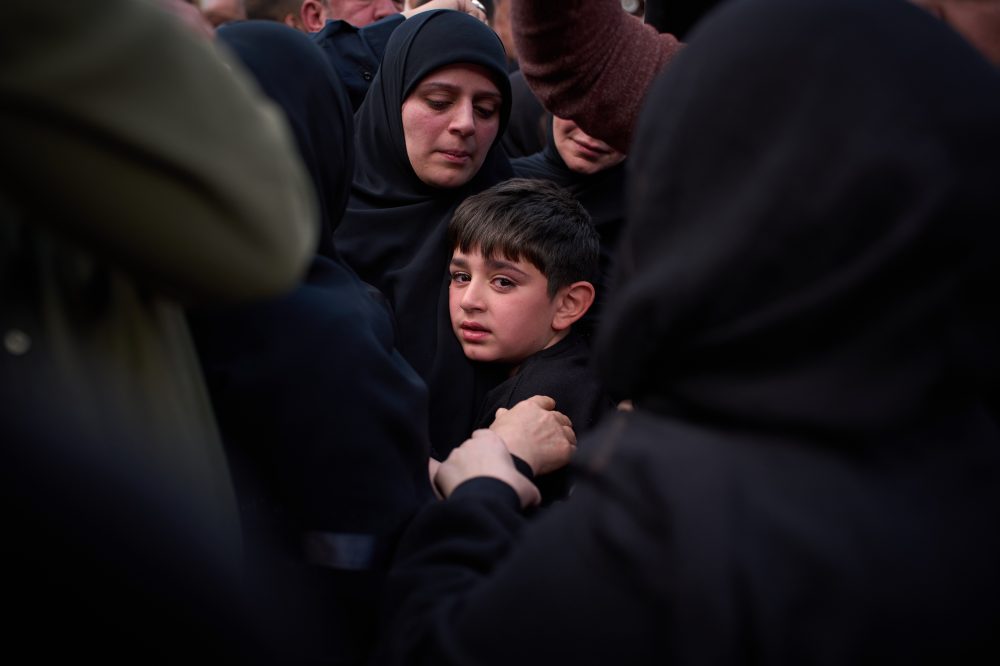
Lebanese leadership hopes to negotiate an end to the Israel-Hezbollah conflict, which has resulted in at least 2,089 deaths in Lebanon. However, Israeli Prime Minister Benjamin Netanyahu has stated his opposition to a ceasefire, emphasizing goals of Hezbollah’s disarmament and a potential peace treaty between Lebanon and Israel.
The diplomatic efforts unfold against a backdrop of escalating tensions, as a U.S. blockade of Iranian ports initiated Monday and Iran’s threatened response create significant risks for global economic stability and raise concerns about potential ceasefire breakdown.
In related developments, Chinese President Xi Jinping presented a four-point peace initiative for the Middle East during Tuesday meetings with Abu Dhabi Crown Prince Sheikh Khaled bin Mohamed bin Zayed Al Nahyan, according to China’s official Xinhua news agency.
Xi’s framework emphasizes regional peaceful coexistence, respect for national sovereignty, and coordination between development and security priorities. “Safeguard the authority of the international rule of law. It can’t be ‘use it when it suits us, discard it when it doesn’t,’ and we cannot allow the world to revert to the law of the jungle,” Xi stated.
Financial markets responded positively to diplomatic prospects, with Asian stock indexes climbing while oil prices declined Tuesday. Benchmark U.S. crude dropped 1.7% to $97.37 per barrel in early trading, while Brent crude fell 0.9% to $98.49 per barrel.
Tokyo’s Nikkei 225 gained 2.3% to reach 57,804.81, and South Korea’s Kospi surged 2.7% to 5,968.06. Hong Kong’s Hang Seng increased 0.5% to 25,783.41, while Shanghai’s Composite index rose 0.5% to 4,007.93.