
Businesses throughout Australia and New Zealand are reporting mounting financial pressures stemming from the Middle East conflict between the U.S.-Israel alliance and Iran, with escalating fuel costs driving up inflation and dampening both business and consumer confidence.
On Tuesday, two major Australian corporations – Westpac Banking Corp and Qantas Airways – issued warnings that rising fuel prices and economic pressures on consumers dealing with elevated costs and borrowing rates could significantly affect their bottom lines.
The following companies across both nations have reported impacts from the ongoing Middle Eastern tensions:
Air New Zealand
The country’s national airline withdrew its annual earnings forecast in early March and implemented fare increases citing instability in jet fuel markets, making it among the first carriers to announce such price hikes. On April 7, the carrier announced flight reductions through May and June, impacting approximately 4% of scheduled flights and 1% of total passenger volume.
a2 Milk
The New Zealand-based company reduced its fiscal 2026 profit projections due to increased shipping expenses and temporary disruptions to supply chains caused by the conflict, which have affected the distribution of its China-branded infant formula products in that key market.
Cleanaway Waste Management
This waste management firm reduced its annual operating earnings projection by approximately A$20 million ($14.17 million), primarily due to increased operational costs, reduced business activity, and delays in cost recovery processes.
Fonterra
New Zealand’s major dairy manufacturer reported that the conflict is disrupting its supply chain operations and may lead to higher inventory levels and increased costs during the year’s second half, while also contributing to instability in worldwide commodity pricing.
Orora
The packaging corporation lowered its yearly earnings expectations for its French subsidiary Saverglass and suspended its share repurchase program due to war-related impacts. The company also halted bottle manufacturing at its glass facility in Ras al Khaimah, United Arab Emirates, because of shipping route closures.
Qantas
Australia’s flagship airline increased its fuel expense forecast for the year’s latter half by as much as A$800 million and postponed its planned A$150 million share buyback program, attributing these decisions to dramatically higher and unstable jet fuel costs. To counteract rising expenses, Qantas is increasing ticket prices and redirecting flights to more profitable routes like Paris and Rome where passenger demand stays strong, while reducing domestic flight capacity by roughly 5 percentage points during the June quarter.
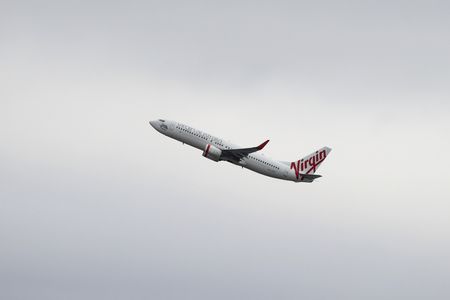
Virgin Australia
In mid-March, Virgin Australia announced fare adjustments as increasing costs throughout the aviation industry are “exacerbated by the situation in the Middle East.”
Westpac
Australia’s second-largest bank by assets reported that energy market disruptions from the conflict are creating profit pressures during the first half of the financial year ending March 31, leading the institution to boost credit provisions. The bank’s net interest margin in its treasury and markets division weakened due to interest-rate instability connected to the conflict, with deteriorating prospects already driving increased credit provisioning. Westpac’s provisions for potential loan defaults have reached their highest level since the COVID-19 pandemic.
($1 = 1.4118 Australian dollars)