
EDITOR’S NOTE: Following the catastrophic explosion and blaze at the Chernobyl nuclear facility on April 26, 1986, obtaining reliable details about the disaster’s true extent proved nearly impossible, with only brief official statements coming from Soviet leadership.
Following a phone tip, Associated Press Moscow bureau chief Carol J. Williams and a fellow Western reporter traveled to a burial ground in Moscow’s northwestern district, where they uncovered modest burial sites of disaster casualties. Police temporarily held the reporters at the location on trespassing charges, but they witnessed cemetery staff preparing burial plots for additional victims.
To mark the 40th anniversary of the Chernobyl catastrophe, AP is re-releasing Williams’ original report from June 24, 1986:
By CAROL J. WILLIAMS
MOSCOW (AP) — Twenty-three newly dug burial sites positioned near the primary gate of Mitinskoye Cemetery share identical characteristics. No markers identify the deceased as casualties from the Chernobyl nuclear catastrophe.
Fresh flower arrangements rest atop each earthen mound, surrounded by concrete borders. Construction crews install matching marble monuments. Ominously vacant plots suggest additional fatalities are anticipated.
Half a dozen headstones display names of firefighters whom Soviet media identified as radiation casualties from Chernobyl, while a cemetery administrator confirmed Tuesday that this section was designated for nuclear accident fatalities.
At this burial ground on Moscow’s northwestern edge, laborers worked through persistent rain installing marble monuments engraved with victims’ identities, birth years, and death dates in golden lettering. Every death date occurred following the April 26 nuclear plant disaster.
Several burial sites displayed temporary, handwritten markers showing names and dates.
A cemetery administrator who refused identification when speaking with two Western journalists visiting Mitinskoye indicated that a memorial would eventually honor the deceased.
“They will all be brought here,” the official said, declining to say how many deaths have occurred as a result of the Chernobyl accident.
The most recent official casualty count from the Ukrainian facility was announced June 5, when Soviet authorities reported 26 fatalities, including two who perished during the original explosion and fire.
Among the casualties, plant employee Valery Khodemchuk will remain sealed within the destroyed reactor No. 4 since his remains were never found, according to Communist Party publication Pravda’s May 23 report.
The publication stated that another victim, Vladimir Shashenok, died immediately and was interred at a community close to the power facility.
American bone marrow expert Dr. Robert Gale, who assisted Soviet physicians treating radiation poisoning patients, predicted additional deaths among the 55 to 60 individuals still critically ill.
Radiation poisoning victims were transported to a Moscow medical facility where the deaths likely took place.
At Mitinskoye Cemetery, preparations suggest more fatalities are expected. Fifteen burial plots create a line at the rear of the Chernobyl section. A second line contains eight sites, with three plots positioned right and five left of a space that could hold seven additional graves.
The monuments of firefighters Viktor Kibenok, Vladimir Pravik, Nikolai Vashchuk, Vasily Ignatenko, Vladimir Tishchura and Nikolai Titenok feature carved golden stars and military fire service rankings of those who initially responded to the emergency.
Cemetery employees refused to reveal when the burials occurred or whether ceremonies were conducted individually or collectively for the group.
Flower arrangements in red and pink left by family members were carefully arranged on the raised soil of each grave.
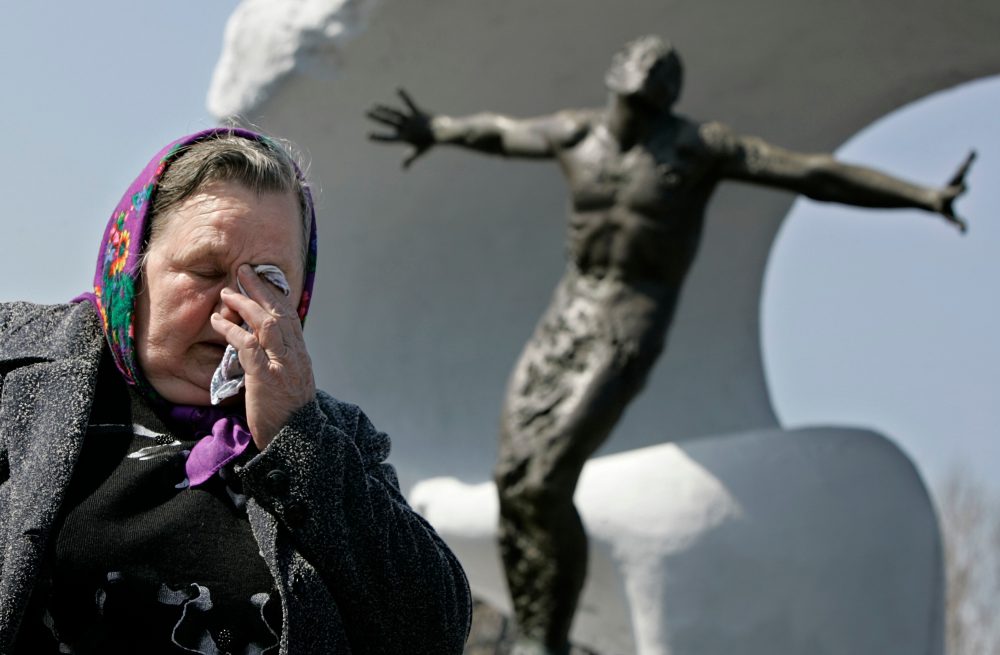
“It’s very sad, they were so young,” commented an elderly woman visiting another area of the cemetery. “They were brought here to be treated at hospitals, but they couldn’t be sent home to be buried.”
An exclusion zone has been established surrounding the nuclear facility and all area residents have been relocated.
Cemetery administrators seized the reporters’ notes and camera film, stating that journalists required authorization to visit the burial ground.
A police officer posted at the cemetery explained it was restricted to family members only and special clearance from local officials was required to record headstone names or photograph the site.
The administrator subsequently guided the two reporters to the graves under the condition they neither take notes nor capture images.