
PRIPYAT, Ukraine — Two devastating blasts have shaken the Chernobyl nuclear facility nearly four decades apart, both occurring in the early morning darkness.
The initial catastrophe struck at 1:23 a.m. on April 26, 1986, releasing a lethal radioactive plume that terrorized Europe and contributed to the Soviet Union’s eventual downfall.
The recent explosion occurred at 1:59 a.m. on February 14, 2025, when Ukrainian authorities say a Russian drone carrying explosives struck the site. Though less devastating than the original disaster, the attack has intensified concerns about Moscow’s war against Ukraine, targeting a location that represents immense tragedy for the nation.
“What once seemed unthinkable — strikes on nuclear facilities and other hazardous sites — has now become reality,” said Oleh Solonenko, head of a radiation safety shift at Chernobyl, which Ukrainians transliterate as Chornobyl.
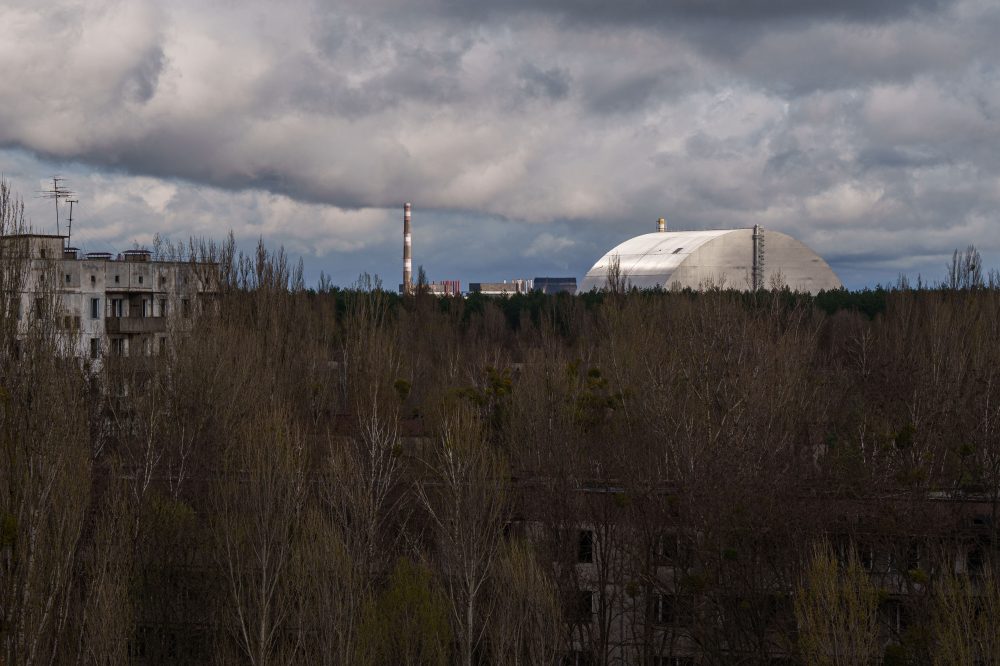
The drone struck the exterior of the New Safe Confinement structure, a massive $2.1 billion arch-shaped barrier completed in 2019 to surround the original concrete “sarcophagus” built hastily after the disaster to contain the destroyed Reactor No. 4 and prevent radiation leaks. Russia has denied deliberately attacking the facility, claiming Ukraine orchestrated the incident.
The impact ignited a blaze on the enormous structure — large enough to encompass the Statue of Liberty — but failed to breach it completely, affecting a section with minimal contamination. Radiation monitoring equipment showed no increase in levels beyond the protective barrier, and no injuries occurred.
However, the International Atomic Energy Agency cautioned that the damage could dramatically reduce the structure’s intended 100-year operational period, compromising its essential safety role.
For Klavdiia Omelchenko, who works alongside more than 2,200 engineers, scientists and other personnel at the shuttered facility, the attack brought back painful memories from four decades ago.
In 1986, Omelchenko was a 19-year-old working at a textile plant, sleeping in her Pripyat home where most Chernobyl employees resided. She never heard the explosion during what was supposed to be a routine reactor test.
She awakened to whispers about an accident, but only grasped its magnitude weeks afterward — following her evacuation with just a small bag containing identification papers and makeup. Her previous residence now sits within Chernobyl’s “exclusion zone,” a 2,600-square-kilometer area that remains uninhabited.
Soviet officials initially concealed the extent of what became the planet’s most severe nuclear accident, which released radiation clouds over present-day Ukraine and Belarus, creating panic throughout Europe. While dozens perished immediately, the long-term fatality count from radiation exposure remains undetermined.
Omelchenko never established another permanent residence and returned in 1993 to work in the plant’s dining facility. That homecoming “wasn’t as scary as now. Back then, at least, there was no bombing,” she added.
To her, the comprehensive 2022 invasion and last year’s drone assault are more frightening than radiation exposure.
She experienced headaches following the 1986 incident and later underwent surgery for a precancerous condition, but at 59 years old, she dismisses contamination risks.
“We grew up in it,” she said. “We don’t pay attention to it anymore.”
Bright yellow daffodils flourish next to military defensive positions at the Chernobyl facility as employees in regular clothing, carrying identification badges and special authorization, move through the restricted area.
The plant ceased generating power in 2000 when its final reactor was decommissioned. An international initiative constructed the protective NSC — a groundbreaking project intended to secure the location and allow for dismantling the deteriorating Soviet-era covering over the reactor.
However, Russia’s military offensive has suspended that initiative.
Liudmyla Kozak, an engineer with over twenty years at Chernobyl, was working when Russian forces captured the plant in February 2022. Staff maintained operations under armed supervision for nearly three weeks, exposing workers to radiation levels far exceeding their standard shift limits.
“We had no hope we would make it out alive — it was really that scary,” she said.
Kozak described how employees slept on floors and desks while Russian soldiers controlled critical areas. Equipment suffered damage and theft, she noted. The troops also operated heavy machinery through contaminated zones and excavated trenches, disturbing radioactive particles.
“With the drone strike as well, it will be much more complicated,” Kozak said.
The IAEA determined the damage has compromised the arch’s ability to perform its primary duties of containing radioactive materials and enabling safe reactor dismantlement. Without repairs, the structure would progressively deteriorate, heightening radiation exposure dangers for Ukraine and neighboring nations.
Serhii Bokov, who manages NSC operations, was on duty during the early hours of February 14, 2025, when the muffled explosion from the drone reverberated through the structure.
He and his team rushed outside, detecting smoke but initially seeing nothing. A nearby military post confirmed the attack, and firefighters arrived approximately 40 minutes later.
Ascending into the structure, they discovered flames burning through the outer covering. Fire hoses were extended across the arch as crews fought blazes that repeatedly reignited. The fire required more than two weeks to completely extinguish.
“There was no feeling of fear, none at all. It was just a fire — something we practice in drills — only this time it was real,” he said. “I didn’t think, honestly, that we could lose the entire arch.”
The damage has been temporarily repaired and concealed internally, while a sealed rupture remains visible externally.
Each evening, Bokov walks more than a kilometer through the structure via what employees call the “golden corridor” — a pathway bordered by yellow panels protecting them from radiation. It passes abandoned control centers, including Reactor No. 4’s.
When the NSC was finished in 2019, he felt pride in participating in something remarkable, observing its construction and development, and serving on the team maintaining its operation.
Currently, though, the structure no longer maintains complete containment. While no immediate radiation danger exists, dismantling work on the sarcophagus has stopped — delayed, Bokov estimates, by at least ten years.
“Everything depends on how quickly we can restore this and return to normal operations — and to preparing for dismantling,” he said.
Bokov believes the arch can continue operating in its present condition temporarily. However, the real worry involves the stability of the underlying sarcophagus — and why resuming its dismantlement is critical.
Oleh Solonenko, head of a radiation safety shift at the facility, confirmed the drone damaged the NSC’s outer layer without fully penetrating it. The damage affected a low-contamination area, with no radiation increase detected outside the arch.
Nevertheless, the incident demonstrated how the conflict has disrupted nuclear safety assumptions, he said.
Without immediate repairs, the sarcophagus collapse risk increases substantially, Greenpeace Ukraine warned in a report by engineer Eric Schmieman, who worked at Chernobyl for years and helped design the NSC.
“It is difficult to comprehend the scale of the deadly, hazardous conditions inside the sarcophagus,” he said. “There are tons of highly radioactive nuclear fuel, dust and debris. Now it is critical to find a way to restore the key functions of this facility.”