
During its ongoing trade ceasefire with Washington, Beijing has systematically strengthened its economic defense mechanisms and expanded its ability to impose retaliatory measures, according to a detailed timeline of policy changes.
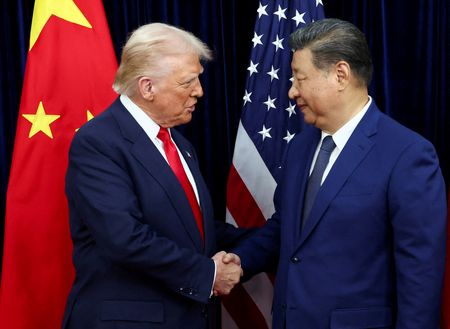
The temporary trade agreement between Chinese President Xi Jinping and U.S. President Donald Trump was established in Busan, South Korea, last October to reduce tensions in the ongoing trade conflict. This delicate arrangement is scheduled to end in November 2026.
Since the ceasefire began, China has implemented numerous strategic policy changes:
On April 15, 2026, Chinese government representatives initiated discussions with solar panel equipment manufacturers about potentially restricting exports of cutting-edge technology to America. Beijing controls production of over 80% of global solar panel components.
April 13 saw China’s State Council introduce fresh regulations that authorize response measures against foreign nations engaging in what it terms “unlawful extraterritorial jurisdiction.”
According to state-controlled Xinhua news agency, these new rules could target nations that impose secondary sanctions or enforce export controls with extraterritorial effects, such as de minimis threshold enforcement.
On April 7, the State Council rolled out additional regulations focused on industrial and supply chain protection, giving authorities power to investigate and respond to foreign governments, corporations, or international bodies that “adopt discriminatory measures” against Chinese industrial and supply networks.
February 24 marked an escalation in Beijing’s dispute with Tokyo, as China’s commerce ministry banned exports of dual-use materials to 20 Japanese organizations accused of supporting Japan’s military operations, including essential rare earth elements used in automotive, electronics, and weapons manufacturing.
Chinese officials instructed domestic businesses on January 14 to discontinue using cybersecurity products from more than twelve American and Israeli companies, citing national security risks.
Beginning January 9, China implemented export limitations on “heavy” rare earth elements and high-strength magnets containing these materials destined for Japanese firms.
On December 30, 2025, Beijing mandated that semiconductor manufacturers utilize a minimum of 50% domestically produced equipment when expanding production capacity, supporting the government’s goal of creating an independent chip manufacturing supply chain.
November 8 saw the implementation of Beijing’s export restrictions on advanced lithium-ion batteries, cathode materials, graphite anode components, and related technical expertise.
China issued requirements on November 5 mandating that new data center developments receiving government funding exclusively use domestically manufactured artificial intelligence processors.
The original trade agreement was finalized on October 30 when Xi and Trump met in Busan, South Korea. Trump committed to reducing Chinese tariffs in return for Beijing’s promise to combat illegal fentanyl trafficking, restart American soybean imports, and maintain rare earth exports.
Prior to the leadership talks on October 9, China significantly broadened its rare earth export controls by including five additional elements: holmium, erbium, thulium, europium, and ytterbium, along with enhanced semiconductor oversight.
As the world’s dominant rare earth producer, China also expanded its control list to include dozens of refining technologies and established compliance requirements for international rare earth companies utilizing Chinese materials.