
Iran’s top diplomat outlined his nation’s stance during weekend peace negotiations in Pakistan, rejecting what Tehran calls excessive American demands in efforts to resolve a deadly conflict affecting worldwide energy supplies.
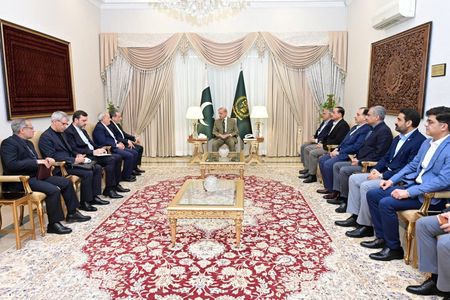
Foreign Minister Abbas Araqchi concluded discussions with Pakistani Prime Minister Shehbaz Sharif and senior officials before departing Islamabad under military escort Saturday, according to government sources. Specific details about the negotiations remained limited.
The White House previously announced that President Donald Trump’s special representative Steve Witkoff and son-in-law Jared Kushner would fly to Islamabad on Saturday.
Whether Araqchi plans to return to Pakistan for additional talks remains uncertain. Tehran has previously rejected the possibility of renewed direct negotiations with Washington.
The standoff continues as Iran maintains its closure of the Strait of Hormuz, a waterway that typically handles 20% of worldwide oil and liquefied natural gas transport, while America blocks Iranian petroleum exports.
The crisis began February 28 with joint US-Israeli military strikes against Iran, though a ceasefire is currently holding. Iran has retaliated with attacks on Israeli territory, American military installations, and Gulf region nations. The fighting has driven energy costs to multi-year peaks, fueling inflation concerns and threatening global economic growth.
Araqchi “explained our country’s principled positions regarding the latest developments related to the ceasefire and the complete end of the imposed war against Iran”, according to a statement posted on the minister’s official Telegram channel.
When questioned about Iran’s objections to American negotiating positions, an Iranian diplomatic source in Islamabad told Reuters: “Principally, Iranian side will not accept maximalist demands.”
Defense Secretary Pete Hegseth earlier suggested Iran still had an opportunity to reach a favorable agreement.
“Iran knows that they still have an open window to choose wisely,” he stated. “All they have to do is abandon a nuclear weapon in meaningful and verifiable ways.”
Araqchi reached Islamabad on Friday. However, an Iranian foreign ministry representative posted on social media that Iranian officials had no plans to meet with US representatives and would communicate Tehran’s position through Pakistani mediators.
Trump revealed Friday that Iran intended to present a proposal addressing American requirements, though he said he didn’t know the specifics. He refused to identify Washington’s negotiating partners, saying only “but we’re dealing with the people that are in charge now”.
White House spokesperson Karoline Leavitt indicated the US had observed some Iranian progress recently and anticipated further developments over the weekend, while Vice President JD Vance remained prepared to travel to Pakistan if needed.
Following Trump’s decision to extend the ceasefire earlier this week, international air travel resumed from Tehran’s Imam Khomeini International Airport on Saturday, Iranian media reported. Initial flights departed for Medina in Saudi Arabia, Muscat, and Istanbul, with expanded operations planned for coming days.
“Well, it’s a good feeling. When flights resume, trade is done, and people can do their jobs. It’s a good feeling,” one traveler told reporters at the airport, where passengers lined up at check-in counters.
Iranian airspace has remained largely shut since hostilities began. Tens of thousands of flights worldwide have faced cancellations, diversions, and schedule changes, effectively closing much Middle Eastern airspace due to missile and drone threats.
Trump unilaterally extended a two-week ceasefire Tuesday to provide additional time for negotiators to reconvene.
Energy markets surged this week, with Brent crude futures jumping 16% amid uncertainty about peace negotiations and renewed regional violence.
Maritime data from Friday showed only five vessels had passed through the Strait of Hormuz in the preceding 24 hours, compared to approximately 130 daily crossings before the conflict. The ships included an Iranian petroleum products tanker but none of the massive crude-carrying vessels that typically supply global energy markets.
Analytics company Vortexa reported recording 35 total passages through the US blockade between April 13-22, involving Iran-connected or sanctioned ships traveling in both directions.
“The enemy, whose objective of crippling Iran’s missile and military capabilities has failed, is now seeking an honorable exit from the quagmire of war,” Iranian media quoted a defense ministry representative as saying. “Iran is today in firm control of the Strait of Hormuz.”
Iranian state television quoted the nation’s military leadership reaffirming that Iran would respond if US forces continued their “blockade and piracy” in the region.
Thursday saw Israel and Lebanon extend their ceasefire for three weeks during a White House meeting facilitated by Trump, though fighting persisted in southern Lebanon.
Israel launched an invasion of its northern neighbor last month to eliminate Iran’s Hezbollah allies after the militant organization fired across the border in support of Iran. Tehran maintains that a ceasefire there represents a prerequisite for negotiations.
Four people died in Israeli strikes on southern Lebanon Saturday, Lebanon’s state news agency reported, while Hezbollah launched rockets at Israel, the Israeli military confirmed, representing the latest challenge to that ceasefire agreement.