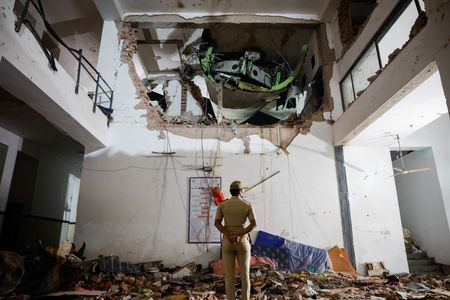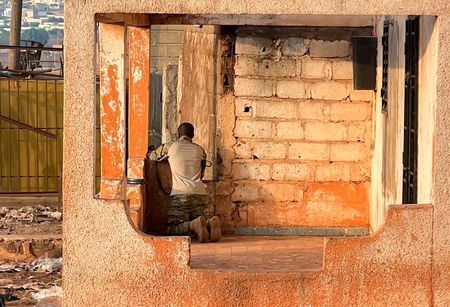

BAMAKO – Continuous gunfire echoed through a military garrison town close to Mali’s capital on Sunday, according to a Reuters witness, following one of the most significant coordinated assaults by al Qaeda affiliates and Tuareg rebel forces in recent years.
The ongoing shooting in Kati indicated that combat had extended into a second day, even though military officials claimed they had regained control of the area.
Following Saturday’s large-scale attacks, the United Nations has called for international intervention to address violence and terrorism throughout the West African Sahel region.
“The Secretary‑General is deeply concerned by reports of attacks in several locations across Mali. He strongly condemns these acts of violence,” a U.N. spokesperson posted on X.
COORDINATED ASSAULT WAVE
Both an al Qaeda affiliate and Tuareg rebel forces took credit for the synchronized strikes near Bamako, the capital, as well as in gold-mining regions and other locations throughout Mali. This represents one of the most daring operations insurgents have executed in their ongoing campaign against the military-controlled government.
By Sunday, the complete count of casualties remained unknown, as did the status of the disputed city of Kidal, which insurgents claimed they had retaken from government troops during the offensive.
Government spokesperson Issa Ousmane Coulibaly reported that 16 individuals had sustained injuries and stated that authorities had complete control over all targeted locations. Officials have also imposed a three-day overnight curfew.
RUSSIAN FORCES INVOLVED IN CONFLICT
However, the Azawad Liberation Front (FLA), a Tuareg-led rebel organization that has participated in multiple government uprisings over several decades, announced Sunday that it had regained control of Kidal.
A spokesperson for the FLA stated on X that an agreement had been reached allowing Russian mercenaries to evacuate from a surrounded camp outside the city where Malian military forces remained positioned.
Taking responsibility on Saturday, the FLA announced it had conducted the extensive operation in partnership with al Qaeda-affiliated Jama’at Nusrat al-Islam wal-Muslimin (JNIM).
JNIM also released a statement on Saturday, distributed by SITE Intelligence Group, claiming responsibility for strikes in Kati, at Bamako’s airport, and in northern regions including Mopti, Sevare, and Gao.
Reuters was unable to independently confirm the claims made by JNIM and FLA.
Saturday’s offensive represents the most recent indication that Mali’s government, which assumed power following military coups in 2020 and 2021, is having difficulty providing improved security after expelling Western forces and seeking Russian assistance instead.
In September 2024, JNIM attacked a police training facility near Bamako airport, resulting in approximately 70 deaths. More recently, the group implemented an effective blockade on fuel imports that has deprived the capital’s residents and businesses of power and essential supplies.
The administration led by Assimi Goita has recently pursued stronger relationships with Washington, which has attempted to rebuild security cooperation and investigate mining possibilities.
Mali’s foreign minister informed Reuters on Monday that neighboring nations and foreign powers were providing support to terrorist organizations, but refused to identify specific countries.