
Travelers with disabilities face numerous obstacles when visiting cultural attractions, ranging from obvious challenges like broken elevators to less apparent issues such as overly lengthy excursions or excessively noisy environments.
With the baby boomer population growing older, the tourism sector is increasingly focusing on serving senior travelers who possess both the resources and time for international travel, yet may require extra support. However, genuine inclusive accessibility extends far beyond this demographic, encompassing visitors with physical limitations as well as individuals with autism or dementia.
Cultural venues and museums around the world have introduced specialized guides and accessible programming to better accommodate guests with various visible or hidden disabilities. Technological advances have made many of these initiatives possible.
These programs encompass sign-language interpretation for deaf and hard-of-hearing visitors, tactile experiences for those with visual impairments, and specially designed activities for people on the autism spectrum. Additionally, travel companies focused exclusively on serving disabled tourists have emerged.
According to Ashley Grady, an accessibility program specialist at the Smithsonian Institution’s Office of Visitor Accessibility in Washington, providing accessible tours demonstrates that people with disabilities are valued in cultural environments.
These programs communicate that “we’ve thought of you,” Grady explained. “We want you to come to our museums. We want you to see yourselves reflected in our staff and our collections. And we want to make these programs as accessible as possible for you, your family, your loved ones, your friends.”
However, significant gaps persist. Ivor Ambrose, managing director of the European Network for Accessible Tourism nonprofit, noted an ongoing lack of understanding regarding the varying accessibility requirements that travelers have.
“This is actually a really big market and an opportunity, which is still not fulfilled by the operators in all these different areas of tourism,” he stated.
Multiple experts have shared recommendations for maximizing barrier-free travel opportunities for yourself or others.
Josh Grisdale, who founded Accessible Japan—a website featuring databases, resources and navigation guides for people with disabilities—has cerebral palsy and relies on a power wheelchair. When planning trips to unfamiliar destinations, he researches Reddit forums, views YouTube travel content regardless of whether the creators needed accommodations, and examines Google Street View to identify stairs or other wheelchair-incompatible features.
While Facebook can provide useful information, Grisdale noted that helpful tips are often hidden within private, unsearchable groups. He suggests working with hotel concierges when available and contacting venues directly to inquire about proper accessibility features. Most museums and cultural sites maintain online written guides detailing their accessible offerings.
Grisdale also developed tabifolk, an online platform that gathers crowdsourced accessible travel information from worldwide contributors. Since inadequate information can increase trip planning stress, he wanted to create a space where people could share their real-world experiences to help others.
“Even though I’m in a wheelchair and I’ve had a disability my whole life, there’s things that I don’t know about other disabilities,” he said.
Joanne Ndirangu, founder and director of Scout Group Agency accessible tourism company, emphasizes that thorough advance planning is essential for people with disabilities to fully experience Africa’s offerings, including safaris or Mount Kilimanjaro climbs.
Ndirangu advocates for expanding accessible tourism throughout Africa, particularly in Kenya. She encourages visitors to collaborate with local travel professionals or trained specialists who understand the region and available accessible options. These experts may have personally worked to convince hotels or restaurants to install ramps or train staff on assisting neurodivergent individuals.
“Let’s say you want to see giraffes somewhere,” Ndirangu explained. “I can now advise you, ‘That place is not viable if you’re on a wheelchair or on crutches because of the hills and the valleys.’ So I can give you an alternative — and you get to see the giraffes.”
Standard public tours frequently prove unsuitable for people with disabilities, whether due to exhibits positioned too high for wheelchair users to view or environments too loud for those with sensory sensitivities.
The Smithsonian Institution, the world’s largest museum complex, offers the sensory-friendly “Morning at the Museum” program, allowing neurodivergent participants and their families to visit Washington Smithsonian museums monthly before public opening. Visitors can participate in hands-on, multi-sensory activities or explore independently at their preferred pace.
“We can control the environment, we can reduce the crowds,” Grady said. “It’s a completely judgment-free environment and one that’s really meant to hopefully be that full bridge to inclusion, where they are able to come to a museum, have a great experience, and then maybe come back when we’re open to the public.”
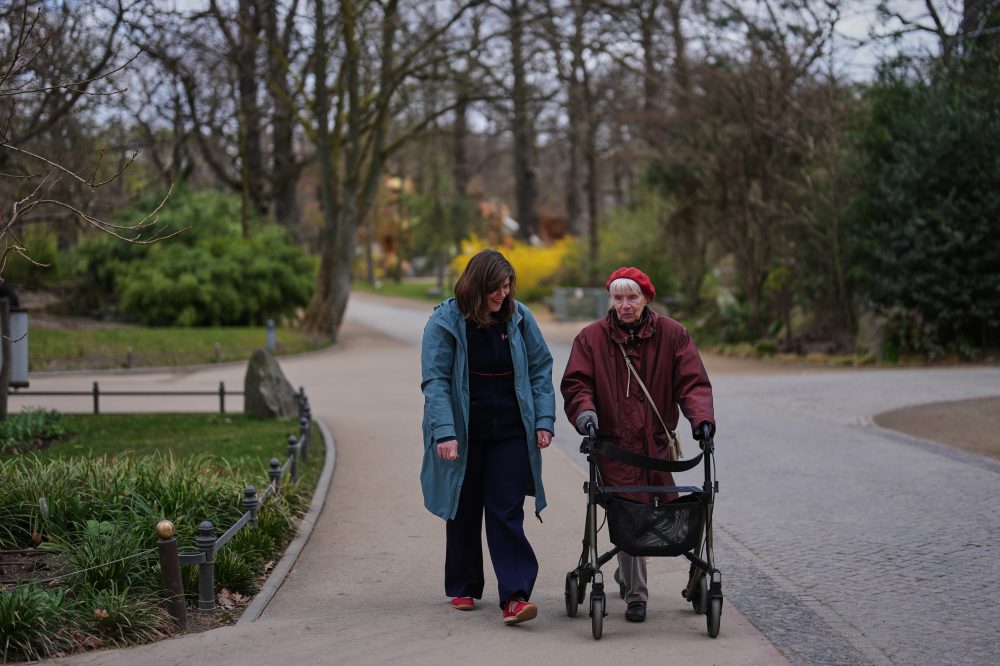
In Berlin, Catholic aid organization Malteser Deutschland recognized that people with dementia were frequently overlooked as museum visitors. The organization created accessible tours specifically for this population at Berlin Zoo, the Museum of Natural History, Britzer Garden and Charlottenburg Palace, with plans for additional locations.
The Berlin Zoo tour accommodates only a small group and lasts approximately 90 minutes. Rather than covering the zoo’s extensive animal collection, the program concentrates on select habitats to prevent participant fatigue or overstimulation.
Ndirangu explained that her team receives training to immediately ask visitors whether they or family members need disability accommodations, enabling them to recommend optimal options. She noted it’s not always feasible to address unknown needs in advance. Most Kenyan hotels feature only one or two accessible rooms, which may already be occupied when guests requiring them arrive.
“Give us that opportunity to give you solutions,” she said. “We’ve had guests who don’t mention anything.”
The European Network for Accessible Tourism recommends that travel companies incorporate barrier-free service costs into their overall programming, distributing expenses among all participants rather than only those requiring accommodations. Many museums offer discounted admission for people with disabilities or complimentary or reduced-price companion tickets.
Smithsonian’s Grady said the institution modified its programs based on participant feedback and advisory group input. Recommendations have included adjusting app colors for low-vision users and collaborating with curators to ensure upcoming exhibitions remain fully accessible.
“They’re not asking for anything out of the ordinary,” she said. “They’re literally just trying to experience a visit just like anyone else.”