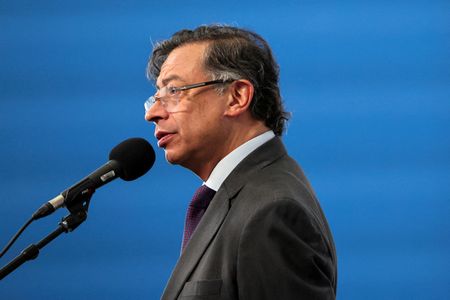

The presidents of Colombia and Venezuela reached agreements on Friday to enhance intelligence cooperation and strengthen economic ties during a diplomatic meeting at the presidential palace in Caracas.
Colombian President Gustavo Petro and Venezuelan leader Delcy Rodriguez committed to new information-sharing protocols designed to address criminal activity along their mutual border, while also discussing expanded trade relationships and electrical grid improvements for Venezuela’s western regions, which experience regular power outages.
Both presidents face significant pressure from U.S. President Donald Trump – Rodriguez to welcome foreign investment into Venezuela’s economy and Petro to intensify anti-drug trafficking efforts.
This marked Rodriguez’s second meeting with another head of state since taking office, following a brief visit to Grenada earlier this month.
“It makes no sense for Colombia or Venezuela to look toward other latitudes, another hemisphere, for what we can get in our own territories,” Rodriguez stated during joint remarks alongside Petro. She emphasized plans to boost bilateral commerce and energy cooperation, adding, “Electrical interconnection is already a step forward, and so is gas interconnection, through which we can not only supply gas to Colombia but also jointly export gas to other countries.”
The two nations share profound historical and cultural connections, particularly along their extensive 2,200-kilometer (1,370-mile) border where numerous families hold dual citizenship. Approximately 3 million Venezuelan refugees have relocated to Colombia in recent years, escaping their homeland’s economic crisis.
While the border area generates over $1 billion in yearly commerce, it also serves as a corridor for drug trafficking, contraband smuggling, and other criminal enterprises operated by armed organizations including criminal networks and Colombian rebel groups.
Human rights organizations and former Colombian administrations have accused these armed factions of operating with Venezuelan military assistance or tolerance, claims that Caracas has consistently rejected.
Petro and Rodriguez’s predecessor, Nicolas Maduro, who was ousted in a U.S. operation in January, had previously expanded military presence along the border to counter drug trafficking.
The nations are adopting “a very serious, very comprehensive approach” to addressing border criminality, Rodriguez explained, and will promptly implement “mechanisms for sharing information and developing intelligence” to combat narcotics and fuel smuggling, along with other illegal activities.
Petro declared that the border must serve the citizens of both nations, not criminal organizations.
Rodriguez, who previously served as vice president, has been working to attract oil and mining investors while operating under close Trump administration oversight. Trump has publicly commended her efforts, and she has hosted U.S. officials and prospective investors in Caracas.
She has actively called for the U.S. to remove sanctions against Venezuela, arguing that special permits and exemptions provide insufficient security for investors or economic recovery.
Petro has experienced multiple disagreements with Trump, who has consistently demanded greater Colombian cooperation in anti-drug operations, while Petro points to record drug seizures during his presidency.
Despite personal sanctions Washington imposed on Petro, both leaders expressed optimism following a direct meeting earlier this year. In March, they held a cordial phone conversation about border economic issues, according to Petro’s office.