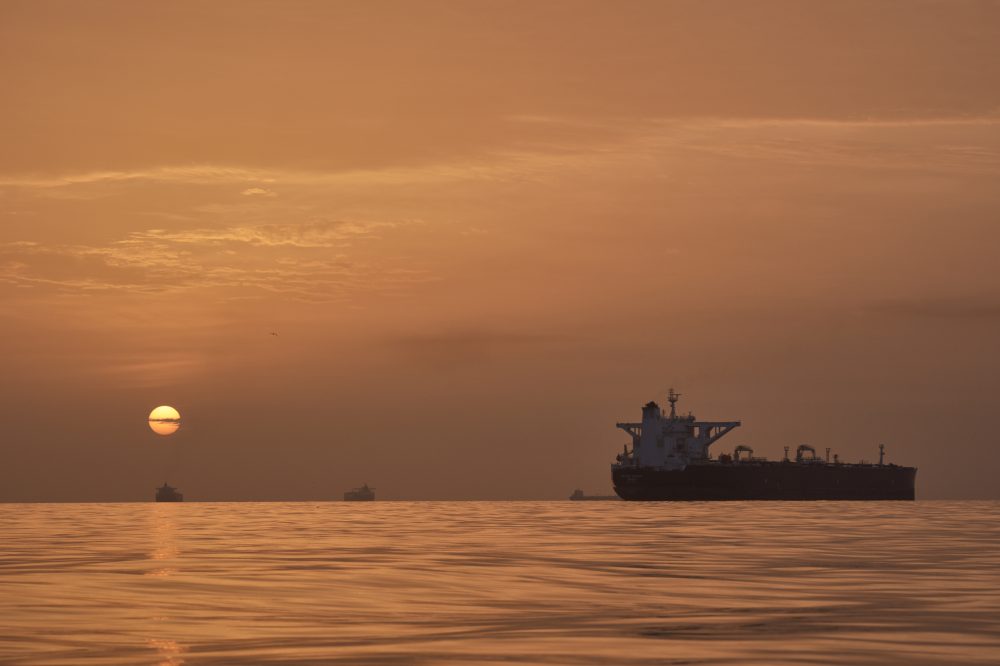

The U.S. Navy has launched operations to locate and remove underwater explosives from the Strait of Hormuz, according to President Donald Trump, as the military works to reopen the critical shipping lane that carries a fifth of the world’s oil supply.
Military officials briefing House Armed Services Committee members this week indicated the mine-clearing mission could require half a year to complete, even with a fragile ceasefire in place between Washington and Tehran following weeks of warfare, according to sources familiar with the classified discussion.
Defense Secretary Pete Hegseth declined to confirm the six-month timeline when questioned by reporters Friday, though he didn’t dispute the estimate. “Allegedly that was something that was said,” Hegseth stated during a Pentagon briefing. “But we feel confident in our ability, in the correct period of time, to clear any mines that we identify.”
The challenge extends beyond simply removing explosives from the seabed, according to defense analysts who warn that restoring commercial confidence in the waterway’s safety may prove even more difficult.
“You don’t even have to have lain mines — you just have to make people believe that you’ve laid mines,” explained Emma Salisbury, a researcher with the Foreign Policy Research Institute’s National Security Program.
“And even if the U.S. sweeps the strait and says everything’s clear, all the Iranians have to do is say, ‘Well, actually, you haven’t found them all yet,’” added Salisbury, who also works with the Royal Navy Strategic Studies Centre. “There’s only so much the U.S. can do to give that confidence back to commercial shipping.”
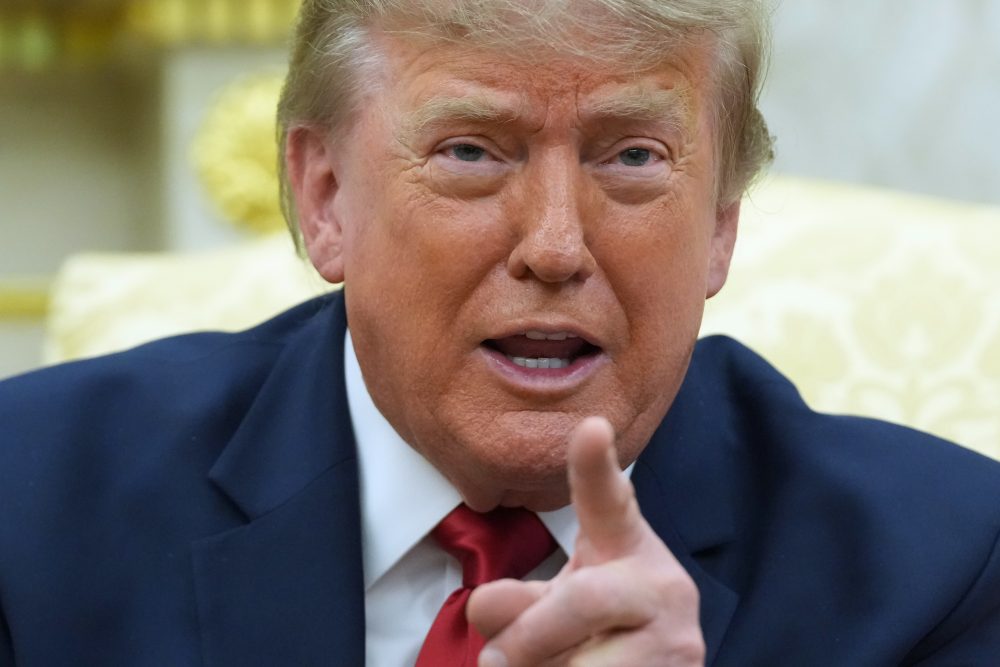
Trump announced an intensification of the mine-clearing efforts through social media Thursday, declaring he had directed naval forces to target any vessel attempting to deploy explosives in the strait.
“Additionally, our mine ‘sweepers’ are clearing the Strait right now,” the president wrote. “I am hereby ordering that activity to continue, but at a tripled up level!”
The operation represents one of several strategies the Trump administration is pursuing to restore traffic through the vital waterway as energy costs climb and economic pressures mount. Officials have also imposed blockades on Iranian ports, confiscated vessels linked to Tehran, and scheduled participation in additional ceasefire negotiations in Pakistan this weekend.
Admiral Brad Cooper, the senior U.S. military commander overseeing Middle East operations, recently confirmed to reporters that forces would work to eliminate mines from the strait, though he provided no operational specifics.
Current naval assets in the region include two littoral combat ships equipped with mine-clearing capabilities, according to defense officials speaking anonymously about sensitive military deployments. Additionally, two Avenger-class minesweepers stationed in Japan have begun transit toward the Middle East but remained in Pacific waters as of Friday.
Steven Wills, a former lieutenant commander with experience aboard Avenger-class vessels, explained that current operations likely focus on creating secure passage channels rather than comprehensive area clearing, which typically occurs after conflicts conclude.
“Minehunting is walking through your yard pulling individual weeds and dandelions so that you can walk safely from one side to the other. Minesweeping is more like mowing the grass,” said Wills, now an analyst with the Center for Maritime Strategy at the Navy League of the United States.
Intelligence assessments suggest Iran possesses several thousand mines in its arsenal, primarily older Soviet designs supplemented by some Chinese models and domestically produced variants, according to Salisbury. The weapons likely rest on the ocean floor or hang suspended beneath the surface on cables, activated by changes in water pressure or engine noise from passing ships.
“Minelaying is a lot easier than minesweeping, so you can literally push these things off the back of a speedboat,” Salisbury noted, though she acknowledged such activities would likely be detected by U.S. surveillance.
Iranian submarines capable of covert mine deployment pose a more significant detection challenge and appear to have survived the recent conflict, she added.
Naval mine-clearing teams employ remotely operated underwater vehicles equipped with sonar technology to locate explosives, along with specialized charges to destroy them safely. Helicopter units can also search for mines using laser systems, while explosive ordnance disposal divers provide additional clearing capabilities.
Scott Savitz, a RAND Corporation researcher specializing in naval operations and mine warfare, emphasized that complete clearance isn’t always necessary for resuming commercial traffic.
“There’s still areas that have not been cleared from World War II — and in some cases, World War I — just because it is so resource intensive and it takes a lot of time,” he explained.
Shipping companies will eventually accept calculated risks to transit the lucrative route, Savitz predicted, though current Iranian requirements mandate vessels use northern passages closer to Iranian shores rather than traditional shipping lanes.
Insurance companies have begun requiring ship owners to coordinate with Iranian authorities for safe passage certification, according to Dylan Mortimer, marine war insurance leader for broker Marsh. These approvals address the full spectrum of threats including missiles, drones, and potential vessel seizures, not just mines.
However, the psychological impact of potential mine threats continues influencing commercial decisions regardless of actual explosive presence, creating what Mortimer termed the “specter of threat.”
“That plays in the Iranians’ favor, because whether there are mines there or not, people think there’s mines there and they will operate accordingly,” Mortimer observed.
These persistent concerns may significantly delay the restoration of commercial confidence in strait safety even after hostilities formally conclude, experts warn.