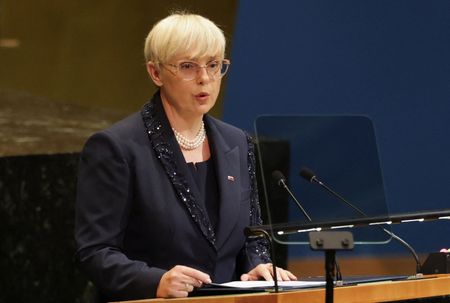

Slovenia finds itself in political limbo after President Natasa Pirc Musar announced Saturday that she will not designate a prime minister candidate following last month’s parliamentary elections, citing insufficient coalition support among competing parties.
Last month’s electoral contest resulted in a razor-thin margin, with current Prime Minister Robert Golob’s liberal Freedom Movement (GS) claiming 29 parliamentary seats compared to 28 won by former Premier Janez Jansa’s right-wing Slovenian Democratic Party (SDS).
Despite his party’s narrow lead, Golob attempted negotiations with various political groups but acknowledged this week that he could not gather the necessary 46 parliamentary votes, leading his Freedom Movement to accept an opposition role.
Meanwhile, Jansa has challenged the election outcome and denies actively pursuing government formation, though reports suggest he may be quietly building support among smaller center-right parties that gained parliamentary representation.
The president’s refusal to nominate a candidate transfers the responsibility to parliament members, who must propose a prime ministerial nominee within a two-week timeframe.
Should lawmakers fail in this initial attempt, the 90-member parliament will proceed to a third round of nominations.
“Only if the second and third rounds are not successful, I can call early elections,” Pirc Musar explained during a press conference announcing her choice.
During this week’s political consultations, no parliamentary faction provided the required 46 votes of confidence, the president noted. She also expressed concern about the absence of trust and mutual respect among the political leaders she met with.
“If political actors want to gain my trust to propose a candidate for prime minister after consultations with them, I expect them to speak honestly and frankly,” she stated.
Any shift in leadership could significantly impact Slovenia’s policy direction, as Golob has championed European Union-compatible foreign relations and progressive social legislation.
Conversely, Jansa, who has expressed support for former U.S. President Donald Trump, advocates for corporate tax reductions and decreased government spending on non-governmental organizations, social programs, and media outlets, potentially reversing current policies if he returns to power.