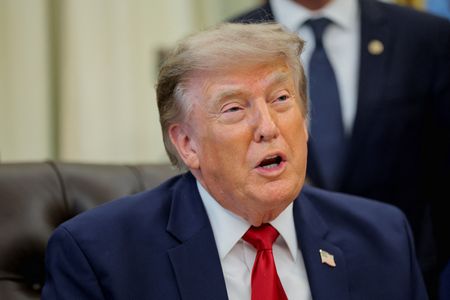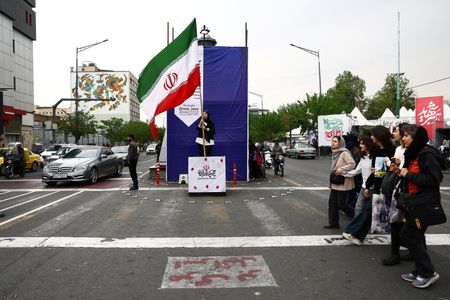

President Donald Trump has rejected Iran’s most recent peace offer aimed at ending the two-month-long conflict, according to a U.S. official, reducing prospects for resolving a war that has caused thousands of deaths, disrupted global energy markets, and contributed to rising inflation.
Tehran’s current proposal seeks to postpone negotiations about Iran’s nuclear activities until after the conflict concludes and maritime shipping disagreements in the Gulf region are settled.
Such an approach is expected to be unacceptable to Washington, which insists that nuclear matters must be addressed immediately. A U.S. official who was briefed on Trump’s Monday discussion with his advisers confirmed the president’s dissatisfaction with Iran’s offer, speaking anonymously.
White House spokesperson Olivia Wales stated the U.S. “will not negotiate through the press” and has “been clear about our red lines” as the Trump administration seeks to conclude the war against Iran that began in February with Israeli participation.
In 2015, Iran and several other nations including the United States reached an agreement that significantly limited Iran’s nuclear activities, which Tehran has consistently claimed serve only peaceful, civilian objectives. However, that accord collapsed after Trump withdrew from it unilaterally during his previous presidency.
Expectations for renewed diplomatic efforts have diminished since the president canceled a planned weekend trip by special envoy Steve Witkoff and son-in-law Jared Kushner to Islamabad, Pakistan’s capital, where Iranian Foreign Minister Abbas Araqchi made multiple visits over the weekend.
Araqchi also traveled to Oman and on Monday visited Russia, where he met with President Vladimir Putin and received supportive statements from a long-time Iranian ally.
OIL MARKETS SURGE AGAIN
As the opposing sides remain significantly divided, petroleum prices continued climbing, building on earlier gains during Tuesday’s early Asian trading session.
“For oil traders, it’s not the rhetoric that matters any more, but the actual physical flow of crude oil through the Strait of Hormuz, and right now, that flow remains constrained,” said Fawad Razaqzada, market analyst at City Index and FOREX.com.
Ship-tracking information revealed that at least six vessels carrying Iranian oil have been turned back to Iran by the U.S. naval blockade in recent days, highlighting the war’s effect on maritime traffic.
Iran’s foreign ministry criticized U.S. seizures of Iran-connected tankers as “outright legalization of piracy and armed robbery on the high seas” in a social media statement.
Prior to the war, between 125 and 140 vessels typically passed through the strait daily, but only seven have done so in the past day according to Kpler ship-tracking information and satellite data from SynMax, with none transporting oil destined for international markets.
Facing declining approval ratings, Trump confronts domestic pressure to conclude a war for which he has provided the American public with varying justifications.
Speaking to reporters in Russia, Araqchi claimed that Trump had sought negotiations because the U.S. has failed to accomplish any of its goals.
Senior Iranian officials, speaking anonymously to Reuters, said the proposal Araqchi brought to Islamabad over the weekend outlined a phased negotiation process, with nuclear issues to be deferred initially.
The first phase would require ending the U.S.-Israeli military campaign against Iran and securing guarantees preventing the U.S. from restarting hostilities. Subsequently, negotiators would address the U.S. Navy’s blockade of Iranian maritime trade and the status of the Strait of Hormuz, which Iran seeks to reopen under its authority.
Only after these steps would discussions turn to other matters, including the ongoing disagreement over Iran’s nuclear program, with Iran continuing to seek some form of U.S. recognition of its uranium enrichment rights.