
BENGALURU, April 27 – The Gulf Cooperation Council nations are confronting their most severe economic downturn since the COVID-19 pandemic, with multiple countries now projected to experience economic contractions this year due to fallout from the ongoing U.S.-Israel conflict with Iran occurring in their region.
The conflict’s ripple effects have devastated energy markets – which serve as the economic backbone for Gulf nations – pushing oil prices dramatically upward and creating a supply disruption not seen since the 1970s crisis.
Economic analysts have dramatically reduced their 2026 growth projections in a poll conducted April 8-24, with some nations shifting from anticipated expansion to economic decline. A partial recovery is anticipated for the following year.
Historically, rising oil prices have provided economic benefits to regional economies that depend heavily on energy exports.
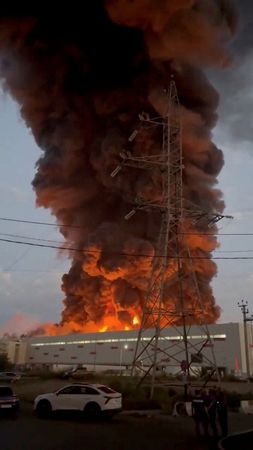
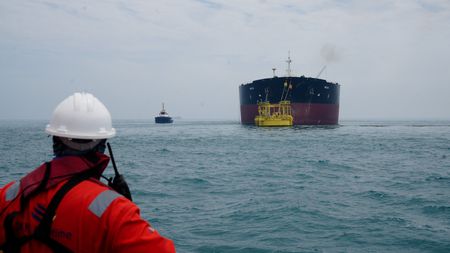
However, the nearly complete shutdown of the Strait of Hormuz, a critical passage for one-fifth of the world’s energy supplies, combined with infrastructure damage to refineries and gas facilities across Saudi Arabia, the United Arab Emirates, Kuwait and Qatar, has severely hampered the region’s economic output.
Despite oil prices remaining approximately 40% above pre-conflict levels from nearly two months ago, Qatar, Kuwait and Bahrain’s economies are now projected to decline by 6.0%, 4.4% and 2.9% respectively this year. This represents a complete reversal from January projections showing growth of 4.9%, 3.4% and 2.9%.
The UAE’s growth is expected to remain flat, a stark contrast to the 5.0% expansion forecasted three months earlier.
“We do not expect a simple return to the pre-war growth path,” stated Ralf Wiegert, head of MENA economics at S&P Global Market Intelligence.
“The GDP-level that will emerge after the war is clearly lower for the next several years, despite a relatively swift recovery…It will take the entire second half of 2026 to rebuild damaged assets and re-establish supply chains.”
Saudi Arabia, the globe’s top crude oil exporter, along with Oman are anticipated to handle the economic shock somewhat better. Their economies are projected to expand by 2.6% and 2.2% this year, based on responses from 18 economists surveyed. However, both figures fall significantly short of January predictions of 4.3% and 2.8%.
“The second layer of shock is the non-oil economy, especially important for Saudi Arabia, the UAE, Qatar,” explained Lluis Dalmau Taules, an economist at Allianz.
“The Middle East was the fastest-growing region in terms of tourism in the last few years, so that’s clearly going to take another shape, and that has impacts on retail and other areas.”
RAPID RECOVERY EXPECTED IN 2027
Economic experts anticipate a swift recovery next year, though this projection assumes the conflict concludes soon. Qatar, the UAE, and Kuwait are predicted to achieve growth rates of 7.8%, 5.4% and 5.0% next year, respectively.
Saudi Arabia, Bahrain and Oman are forecasted to expand by 4.5%, 4.3% and 2.8%.
These projections generally match the International Monetary Fund’s expectations that regional energy production and transportation will recover and stabilize in upcoming months.
“The prolonged delay in returning to full production capacity due to damage and shut-ins will have a significant but uneven impact on GCC economies and public finances,” Goldman Sachs economists observed.
“Longer-term, however, we expect the rebound in economic activity to be robust across the board, aided by high levels of public investment, financed by a recovery in hydrocarbon revenues…and high levels of government savings.”
Rising oil costs are driving inflation worldwide, and Gulf economies are experiencing similar effects.
Bahrain’s inflation is projected to average 2.4% in 2026, up from January’s forecast of 1.4%, according to poll results.
The UAE, Qatar, Kuwait and Oman are expected to see inflation rates averaging 2.6%, 2.6%, 2.9% and 1.7%, respectively, compared to earlier predictions of 1.9%, 2.0%, 2.3% and 1.4% from three months ago. Saudi Arabia’s projection remained steady at 2.0%.