
NEW DELHI (AP) — Officials from India and New Zealand formalized a comprehensive free trade pact on Monday, designed to strengthen economic partnerships and broaden market opportunities as both nations confront increasing global commerce challenges.
The pact arrives as New Delhi seeks to expand its export destinations to counteract the effects of high tariffs from the United States and disruptions in shipping and energy corridors linked to conflicts involving Iran. Meanwhile, New Zealand views this agreement as part of its strategic effort to decrease dependence on China, which remains its primary trade partner.
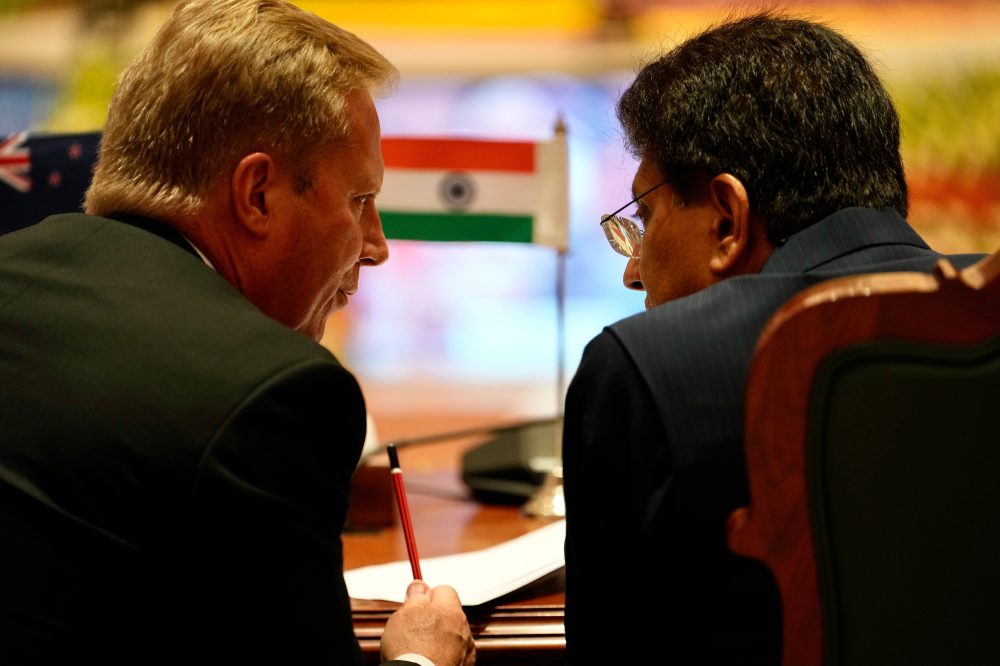
India’s Commerce and Industry Minister Piyush Goyal and New Zealand’s visiting Trade and Investment Minister Todd McClay formalized the agreement in New Delhi during Monday’s ceremony.
Following nine months of discussions and finalization in December, the pact will reduce or remove tariffs on 95% of goods New Zealand ships to India, while ensuring all Indian products entering New Zealand face no duties. Additionally, Wellington has pledged to invest $20 billion in India during the coming 15 years.
McClay described the agreement as representing a “once-in-a-generation” chance to strengthen economic relationships during a period marked by escalating global trade conflicts and unpredictability. New Zealand ranks as India’s 12th-largest export destination, with trade between the nations totaling $2.15 billion during the year ending June 2025, based on government statistics.
Goyal characterized the agreement as a “defining milestone” and noted that India and New Zealand had “chosen each other” during a time “when the world economy is being recast.” He emphasized that the pact provides market opportunities across various industries while establishing frameworks for investment partnerships and regulatory collaboration.
Indian industries positioned to benefit from enhanced market opportunities include textiles and clothing, engineering products, leather goods and footwear, plus marine exports. New Zealand anticipates growth in shipments of horticultural products, timber, coal, wool and meat products.
India has kept dairy products and specific agricultural items outside the agreement to safeguard its domestic farming industry.
Indian exporters have faced challenges from elevated U.S. tariffs implemented since August of last year, especially affecting labor-heavy industries including textiles, automotive parts and metals, while New Delhi maintains separate discussions with Washington regarding a distinct bilateral trade arrangement.
Trade agreements from New Zealand typically receive support across party lines. The pact must now receive parliamentary approval and is anticipated to succeed following endorsement from the opposition New Zealand Labour Party, despite objections from coalition partner New Zealand First, a populist minor party.