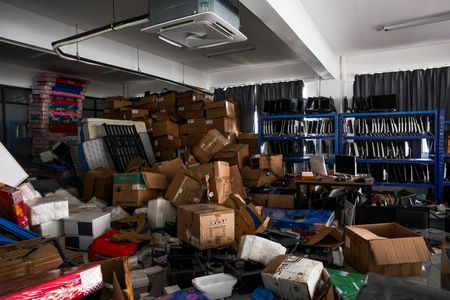

CAIRO (AP) — Iran’s renowned carpet manufacturing region has seen production come to a virtual standstill. Dairy companies can’t secure packaging materials for their milk and butter products. Massive steel production facilities that previously powered the nation’s economy have ceased operations. Hundreds of thousands have become unemployed, with millions more facing potential job losses.
Following more than five weeks of sustained attacks, American and Israeli military operations have targeted thousands of manufacturing facilities. The destruction is creating shockwaves throughout Iran’s economic system, threatening successive rounds of unemployment while Iranians confront dramatically rising costs. Chicken prices have surged 75% in the past month, while beef and lamb costs have climbed 68%. Numerous dairy items have seen price increases of 50%.
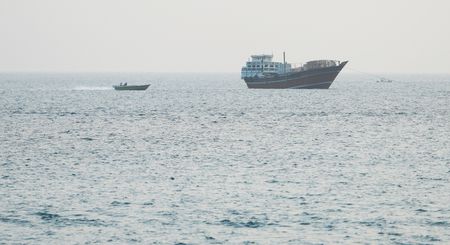
The situation may deteriorate further as America implements a naval blockade of Iranian harbors, severely restricting imports and petroleum exports worth billions annually. Economic hardships previously triggered widespread demonstrations that were violently suppressed before the current conflict and might once again drive citizens to protest publicly.
However, Iran possesses its own economic leverage against the world through its control of the Strait of Hormuz. Iranian officials declare they will only allow the crucial global energy passage to reopen when the blockade ends and hostilities cease. They’re wagering that an economy designed for self-sufficiency through decades of international sanctions can withstand hardship longer than U.S. President Donald Trump.
According to state media reports, Deputy Labor Minister Gholamhossein Mohammadi stated that Iran has lost no fewer than 1 million jobs directly due to the conflict.
However, the cascading consequences threaten between 10 million and 12 million positions — representing half of Iran’s workforce — according to Iranian economist Hadi Kahalzadeh’s warning.
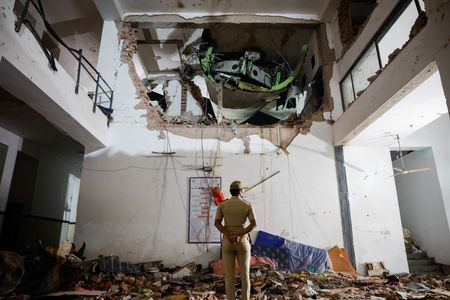
Israel has asserted it targeted the industrial infrastructure of Iran’s paramilitary Revolutionary Guard. However, the attacks extended far beyond this scope, damaging facilities not controlled by the organization.
According to Kahalzadeh, a research fellow at Brandeis University, military strikes damaged 20,000 manufacturing plants, representing approximately 20% of the nation’s production facilities. Among the affected sites was Tofigh Daru, Iran’s largest pharmaceutical company, which produces cancer treatment medications and other medicines. Optical equipment and chemical manufacturing plants, along with aluminum and cement production facilities, also sustained damage.
Most significantly destructive were Israel’s attacks on Iran’s largest steel production and petrochemical manufacturing plants, primarily during a series of strikes just prior to the April 8 ceasefire. The nation’s two largest steel companies, Mobarakeh Steel and Khuzestan Steel, along with smaller operations, suspended production. Over 50 petrochemical facilities have ceased operations, according to Iran’s semiofficial Jamaran news agency.
This has severely damaged Iran’s two largest non-petroleum export sectors, causing price increases for everything from plastic products to piping, textiles and food packaging for items like milk, butter and cheese.
Military attacks aren’t the sole source of economic difficulties. Internet services have been mostly disabled since the protests began, devastating small and medium businesses dependent on online commerce. Even prior to the U.S. blockade, Iranian attacks on the United Arab Emirates, which supplied roughly one-third of Iran’s imports, prompted that nation to sever trade relations.
Approximately 80% of carpet and rug producers have halted operations in the industrial district of Kashan, the hub of Iran’s rugmaking sector, according to a rugmaker’s son. His family’s factory, which employs 20 to 30 workers and previously manufactured hundreds of rugs monthly using machines, is among those that have closed, though his father continues visiting the facility daily.
“Never have I heard my father so upset,” said the son, who lives in the United States and spoke on condition of anonymity for his family’s security.
Kashan, housing hundreds of carpet producers, “relies on the rug industry and unfortunately it’s been crippled,” he explained. Export sales have plummeted since the conflict started, and domestic purchases are nearly nonexistent. Synthetic fiber costs have jumped 30%-50% — partially resulting from damage to petrochemical plants, he noted.
Mehdi Bostanchi operates a ventilation and air conditioning manufacturing facility, plus a second plant producing household fans, employing more than 1,130 workers total. Both continue functioning. However, the HVAC factory depends heavily on the construction sector, and “construction is facing a massive shock,” he explained.
Most new construction projects are suspended, while iron sheeting prices have more than doubled.
Bostanchi, who serves on a council representing Iranian manufacturers, explained that “all the country’s industries in some way rely on our petrochemical industry.” Even businesses that don’t directly require steel or petrochemical materials have contracts with companies that do.
A chemical engineer employed at one of Iran’s largest private construction companies reported it eliminated half of its 180 headquarters employees and was forced to cancel a project with Mobarakeh Steel, eliminating 1,000 positions.
A Tehran resident resigned from his consulting engineering position just before the conflict began, and the new position he had secured is now uncertain.
“I am at the top 1% (of society), and I am without a job. I am super worried about my future,” he stated, noting that people’s savings will begin running out in coming weeks.
Both he and the chemical engineer requested anonymity due to security concerns.
Millions demonstrated in January’s protests initially sparked by worsening inflation but evolved into demands for ending the Islamic Republic, resulting in violent government suppression.
Government officials are attempting to assure citizens that Iran can endure the economic suffering. The administration has pledged to expand unemployment benefits. However, the strain on Iran’s social security system is increasing while its funding sources are being damaged, since it relies heavily on investments in petrochemical companies and other essential industries, Kahalzadeh explained.
The U.S. blockade threatens to eliminate export income: Iran earned approximately $98 billion from exports in 2025, with just under half coming from oil sales.
However, implementing a complete blockade presents challenges; roughly half of Iran’s non-oil commerce travels overland or through Caspian Sea harbors, according to economic expert Esfandyar Batmanghelidj.
Iran has also developed substantial resilience and “readiness for worst-case scenarios,” Batmanghelidj wrote for the Bourse and Bazaar Foundation, a research organization he leads focusing on economic development in West and Central Asia.
Iran maintains substantial reserves of essential materials. By the end of 2025, Iran had stockpiled enough electrical equipment for nearly eight months, cement supplies lasting nearly six months and sufficient steel and iron for four months, he wrote, noting that supplies could be extended further through rationing.
Bostanchi, the factory owner, expressed belief that Iran’s economy could recover after the conflict ends. However, the extent depends on whether Iran can achieve an end to international sanctions.
“If we cannot lift the sanctions in any agreements, then no, the optimistic forecast … will not happen,” he stated.