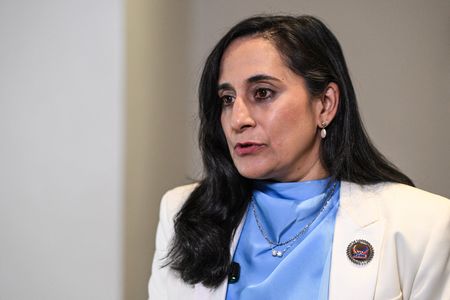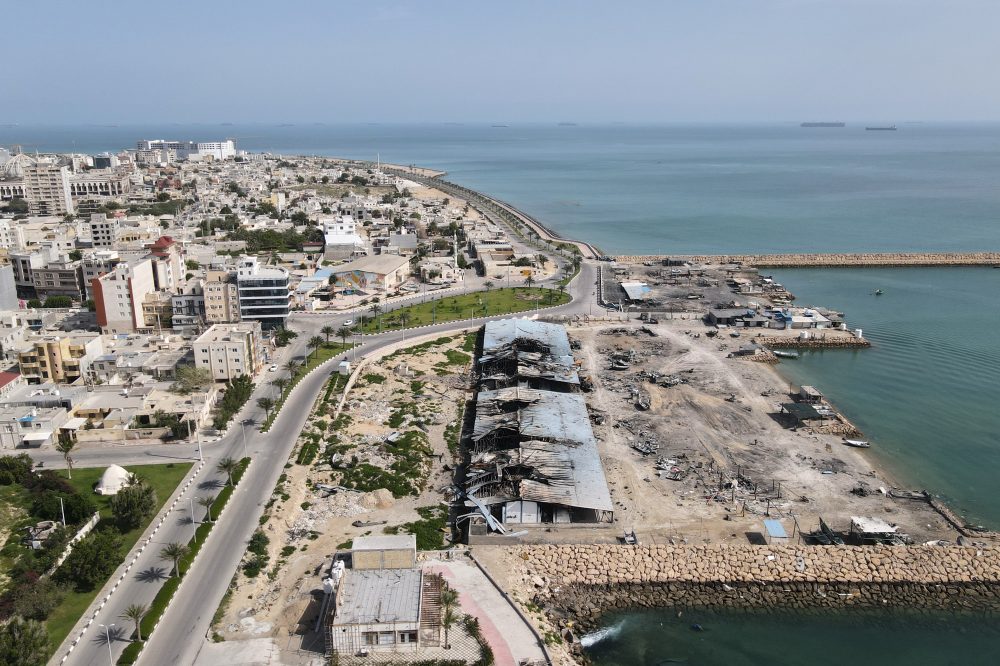

NEW DELHI (AP) — Indian Captain Rahul Dhar and his maritime crew have spent roughly two months trapped aboard their oil tanker in the Persian Gulf waters, witnessing drone strikes and missile explosions as the critical Strait of Hormuz shipping passage remains blocked due to the continuing Iran conflict.
While the crew maintains their daily operations, Dhar reports that psychological stress is becoming evident among his team members.
Although a fragile truce between America and Iran has provided “a careful sense of hope” for those aboard, no definitive conclusion to the hostilities appears imminent. “Day to day, we try to keep things normal with open conversations and small team activities that help lift everyone’s spirits,” Dhar explained.
During their maritime watches, the crew witnessed multiple drone flights and missile defense actions both in their immediate vicinity and across the water’s horizon. “Those moments were difficult and created real tension for the crew,” Dhar shared with The Associated Press.
“None of us expected the warlike situation,” he explained, emphasizing how dependable internet access has enabled communication with their families back home. “Those calls and messages really keep us grounded and give us strength.”
Approximately 20,000 maritime workers across hundreds of commercial vessels, including petroleum tankers and freight ships, remain trapped in Gulf waters, prevented from navigating through the Strait of Hormuz. Under normal circumstances, roughly one-fifth of global oil and liquefied natural gas shipments pass through this critical waterway.
Maritime tracking data from Lloyd’s List Intelligence shows approximately 80 ships successfully crossed the strait during the April 13-19 period, a dramatic decrease from the typical 130 or more daily crossings before hostilities began. Multiple vessels have suffered attacks since the conflict started, with United Nations reports confirming at least 10 seafarer deaths.
Despite President Donald Trump’s recent decision to extend the ceasefire without time limits, American forces continue blocking Iranian ports. Iran responded by attacking ships in the strait and capturing two vessels.
“Seafarers are the backbone of global trade, yet we are often the most affected by regional geopolitical conflicts,” stated Captain ArunKumar Rajendran, who has also remained stranded with his tanker crew for approximately eight weeks.
Manoj Kumar Yadav from the Forward Seamen’s Union of India reported thousands of Indian sailors aboard the trapped vessels, experiencing prolonged periods of terror and isolation while anchored near Iranian harbors including Bandar Abbas and Khorramshahr. Explosive incidents sometimes occurred within mere hundreds of meters of their positions.
“They were watching blasts from their decks,” he reported, noting his organization receives constant emergency calls from crews and their relatives. “Many of them were on board a ship for the first time, and you can imagine what mental state they have gone through.”
As one of the world’s primary sources of maritime workers, India has over 20,000 citizens employed on international vessels throughout the region, with many beyond the scope of organized rescue operations. India’s shipping ministry announced last week that no fewer than 2,680 sailors had been evacuated since fighting commenced.
Yadav described how numerous sailors faced severe shortages of food and fresh water, with certain ships implementing strict rationing protocols. Family communication from India remained intermittent due to internet interruptions and signal interference. When connections were available, sailors frequently paid expensive roaming fees for brief conversations, he noted.
Families of the stranded sailors express mounting concern, demanding their relatives’ safe evacuation.
Mohamed Arrachedi, the International Transport Workers’ Federation’s Middle East network coordinator, reported receiving hundreds of assistance requests earlier this month, including food supply needs from maritime workers.
Reza Muhammad Saleh, an Indonesian chief officer on a Greek-owned cargo vessel stranded off Oman for over a month, described a drone explosion near the port shortly after their March 3 arrival. At least two additional incidents followed, requiring multiple crew evacuations to protective shelters, though no injuries occurred.
“The biggest problem is the uncertainty. We don’t know when Hormuz will be open again,” Saleh informed the AP.
The ship carrying 24 crew members from Indonesia, Arab nations, India and Ethiopia normally hauls iron ore between Gulf states, crossing Hormuz one or two times monthly. Current operations require written Iranian authorization. “No company wants to take the risk without it,” he explained.
Despite experience in conflict areas, the crew has been shaken by missile attacks and GPS interference that forced manual navigation methods, he said.
“Sometimes we think it’s safe, then suddenly it’s not. Today we’re safe. Tomorrow, nobody knows,” he stated.
Fleet Management Limited maintains regular communication multiple times daily with dozens of stranded ships carrying more than 400 maritime workers, according to CEO Captain Rajalingam Subramaniam.
Regular inventory monitoring ensures food supply management, with pickup arrangements organized to guarantee availability by relocating vessels to accessible points for obtaining fresh and preserved provisions, he explained.
Limited crew rotations continue, though in reduced numbers. “Who wants to go on the ship?” Subramaniam questioned. “The inbound crew has the right to refuse and we respect (that).”
Most trapped mariners have remained in Gulf waters since hostilities began. “(For) mariners who did not sign up to be in warlike area, they also (need) to be respected so that they do not become the unintended collateral,” he stated.
Among vessels attempting Strait of Hormuz crossings during the ceasefire, several faced gunfire while others retreated. Ships under Fleet Management supervision avoided crossing attempts, Subramaniam confirmed.
Hapag-Lloyd, Germany’s largest shipping corporation, has approximately 150 sailors stranded near the strait aboard six vessels. “These are difficult days and weeks,” company spokesman Nils Haupt told the AP earlier this month. He confirmed Hapag-Lloyd maintains daily contact with captains and crews.
“We’ve been able to rotate some of them (crew) in the meantime, but you can easily imagine that after such a long time, monotony naturally sets in on board,” he noted.
The International Maritime Organization, the United Nations’ shipping authority, along with other organizations have requested a protected passage for commercial vessels through the strait. Most ships remain unable to transit, despite Iran’s claims that the strait was accessible to vessels it considered non-threatening and its demands to collect transit fees.
Reports indicate Iran deployed mines throughout the waterway, prompting Trump to announce last week that American forces were removing Iranian mines and would “shoot and kill” boats placing mines in the region. Given increased mine and attack risks, “there is no safe transit anywhere in the Strait of Hormuz,” declared IMO Secretary-General Arsenio Dominguez.
Recent years have seen multiple crises leaving many seafarers stranded at sea, including the COVID-19 pandemic, Russia’s Ukraine invasion and Houthi rebel attacks on Red Sea shipping. Subramaniam expressed concern that even after the Iran conflict ends, fewer individuals will accept maritime positions during an existing shortage of experienced seafarers.