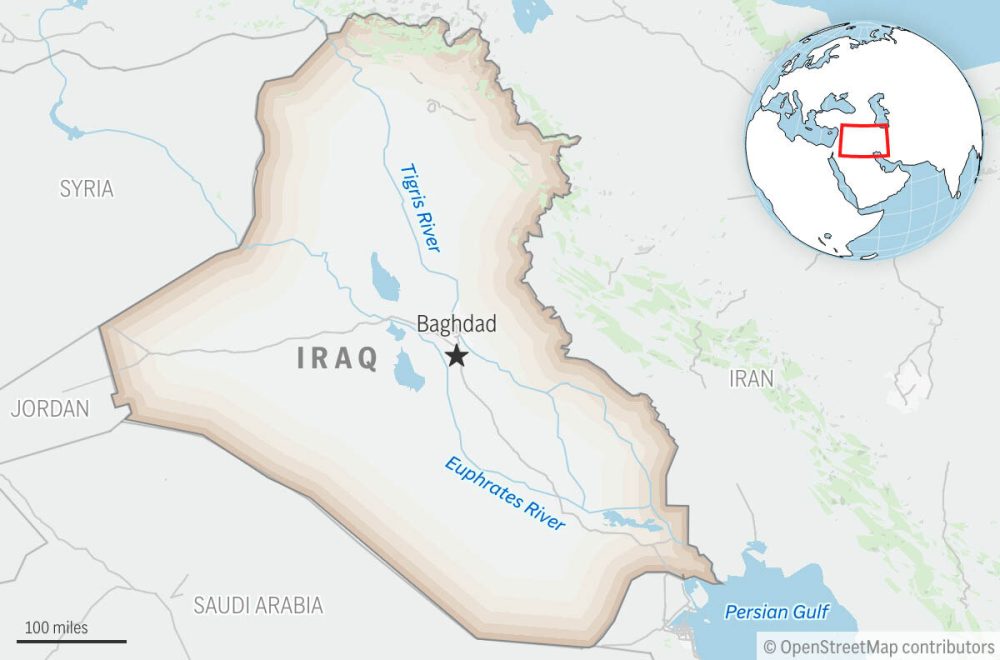

BAGHDAD — A prominent Iraqi parliamentary coalition selected Ali al-Zaidi, a banking executive with no previous government experience, as their choice for the nation’s next prime minister on Monday.
The Coordination Framework, which represents a group of Shiite political parties with ties to Iran, made the announcement following discussions at the government palace. The decision concluded weeks of internal negotiations among coalition members as they sought to identify a consensus candidate to head Iraq’s upcoming administration.
Despite having support from the leading parliamentary group, the proposed government still faces uncertainty in securing the necessary legislative approval.
The coalition had initially indicated support for former Prime Minister Nouri al-Maliki, whom the U.S. government considers too closely aligned with Iran. President Donald Trump openly opposed al-Maliki’s potential appointment and warned of possible aid cuts to Iraq if he received the position.
Though al-Maliki maintained his stance following Trump’s public objection, the coalition ultimately chose to pursue a different candidate to break the impasse.
In their official statement naming al-Zaidi, the Coordination Framework expressed gratitude to both al-Maliki and current Prime Minister Mohammed Shia al-Sudani for their “historic and responsible positions” in stepping aside to help resolve the political stalemate. Al-Sudani released his own statement offering congratulations to al-Zaidi.
Al-Zaidi, who serves as chairman of Al-Janoob Islamic Bank, gained prominence during the final rounds of candidate discussions due to his financial expertise and relationships within Iraq’s business and investment communities. He has never served in an elected or appointed government role.
After receiving the nomination, al-Zaidi pledged to work toward making Iraq “a balanced country, regionally and internationally.”
“This appointment comes at a sensitive time that requires concerted efforts from all political and social forces,” he stated.
According to Iraq’s constitutional framework, the nominated prime minister must present a complete Cabinet proposal to parliament within 30 days, requiring approval from at least 167 lawmakers to gain official confirmation.
The incoming administration will need to address significant challenges stemming from the ongoing U.S.-Israeli conflict with Iran, which has affected Iraqi territory, while disruptions to the Strait of Hormuz have impacted the oil revenue that forms the backbone of Iraq’s economy.
Additional obstacles facing the new government include addressing widespread corruption, managing armed groups operating outside official state control, and determining the role of the Popular Mobilization Forces, a collection of Shiite militia groups that technically fall under Iraqi military command but largely operate independently.