
A heated diplomatic exchange erupted at the United Nations on Monday when Iran was chosen to serve as one of 34 vice presidents for a major nuclear non-proliferation conference, drawing sharp criticism from American officials.
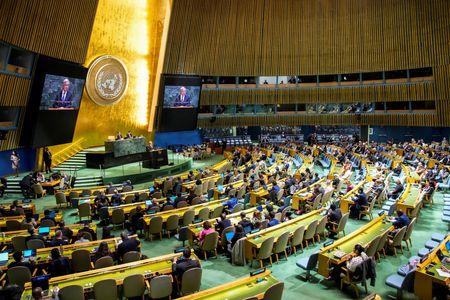
The month-long gathering to examine the Nuclear Non-Proliferation Treaty began at UN headquarters in New York. Vietnam’s UN Ambassador Do Hung Viet, who chairs the conference, announced that Iran received its nomination from “the group of non-aligned and other states.”
Christopher Yeaw, who leads the US Bureau of Arms Control and Nonproliferation, strongly condemned Iran’s appointment during the proceedings.
“It is indisputable that Iran has long demonstrated its contempt for the non-proliferation commitments of the NPT,” Yeaw stated, adding that Tehran has refused to work with the UN nuclear watchdog to address concerns about its atomic activities.
Yeaw characterized Iran’s selection as “beyond shameful and an embarrassment to the credibility of this conference” and called it an “affront” to the treaty itself.
Iran’s representative to the International Atomic Energy Agency, Reza Najafi, fired back at the American criticism.
“It is indefensible that United States, as the only state ever to have used nuclear weapons, and the one that continues to expand and modernize its nuclear arsenal… seeks to position itself as an arbitrator of the compliance,” Najafi responded, dismissing the US statements as “baseless and politically motivated.”
The nuclear dispute remains central to the ongoing two-month conflict involving Iran, the United States, and Israel. President Donald Trump emphasized again on Sunday that Iran must never be allowed to obtain nuclear weapons.
Tehran has consistently maintained that it only wants to enrich uranium for peaceful energy purposes, while Western nations worry the material could be weaponized. Iran denies seeking nuclear weapons, though both the IAEA and US intelligence agencies have concluded that Tehran operated a nuclear weapons development program until shutting it down in 2003.
Iranian sources revealed on Monday that Tehran has proposed a new framework to resolve the current crisis, suggesting that nuclear program discussions be postponed until the war ends and Gulf shipping disputes are settled.
Following a Monday meeting with his national security team about the conflict, Trump’s administration made clear its position remains firm. White House spokesperson Karoline Leavitt told reporters that “the president’s red lines with respect to Iran have been made very, very clear, not just to the American public, but also to them as well.”