
Tehran has put forward a new diplomatic proposal to lift its restrictions on the strategically vital Strait of Hormuz shipping corridor while requesting Washington end its economic sanctions against the Islamic Republic, according to two regional officials familiar with the negotiations who spoke anonymously Monday.
The Iranian offer, delivered through Pakistani intermediaries, notably sidesteps any commitments regarding Tehran’s nuclear activities – a key sticking point that makes the proposal unlikely to gain traction with President Trump’s administration, which has made dismantling Iran’s atomic capabilities a cornerstone of any comprehensive settlement.
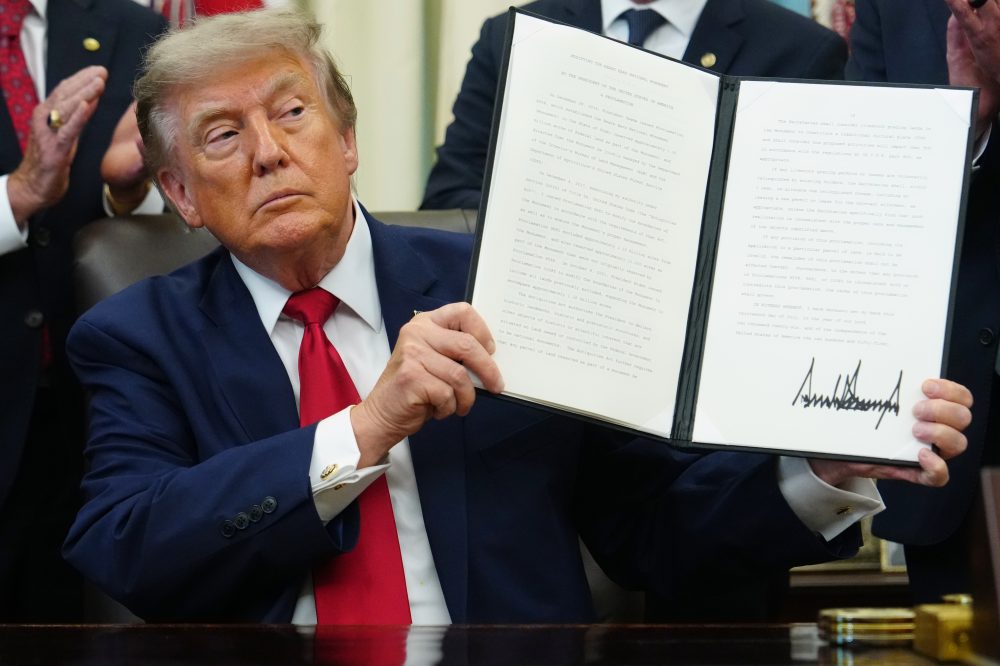
“We have all the cards. If they want to talk, they can come to us, or they can call us,” Trump told Fox News Channel on Sunday.
The Axios news organization was first to report on Iran’s diplomatic overture.
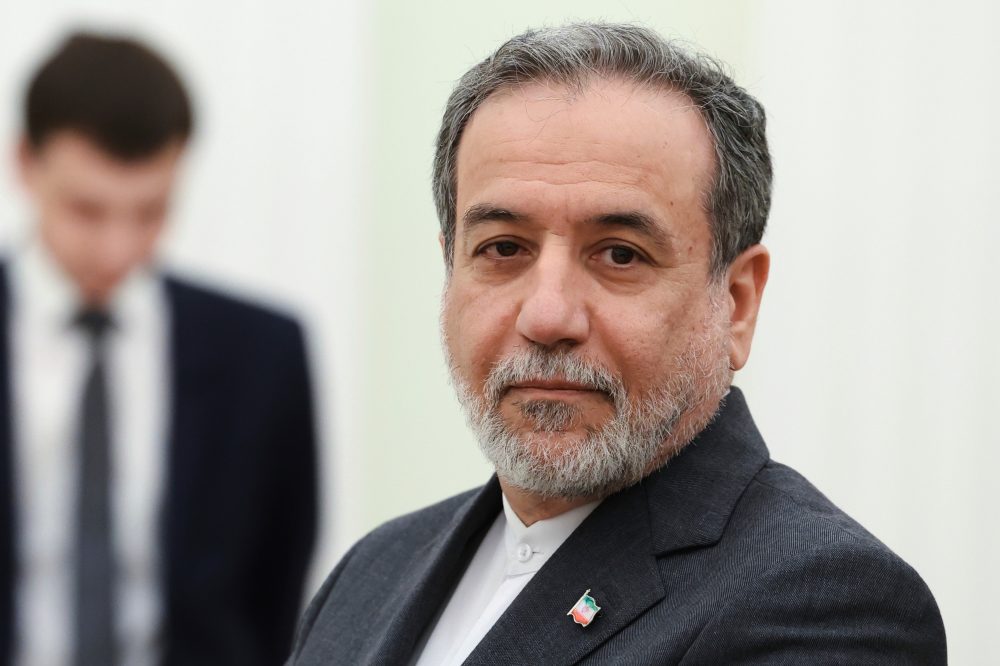
Iranian Foreign Minister Abbas Araghchi touched down in St. Petersburg Monday morning for scheduled discussions with Russian President Vladimir Putin, Iran’s state-run IRNA news agency reported. His recent diplomatic tour included stops in Pakistan and Oman, which controls the southern shore of the disputed waterway alongside Iran.
Araghchi’s Russian visit unfolds amid continued tensions between Tehran and Washington over the critical Strait of Hormuz, despite an existing ceasefire that has failed to resolve underlying disputes or stabilize global energy markets.
“It is a good opportunity for us to consult with our Russian friends about the developments that have occurred in relation to the war during this period and what is happening now,” Araghchi stated in a video interview released by IRNA.
Pakistani officials have been working to restart stalled diplomatic communications between Iran and the United States, with negotiations initially planned for Islamabad over the weekend. However, President Trump indicated the discussions might proceed via telephone rather than in-person meetings.
Araghchi attributed delays in the negotiation process to America’s stance, saying it was Washington’s approach that “caused the negotiations to be delayed.”
“The previous one, despite the progress that had been made, could not achieve its goals,” he stated, criticizing what he characterized as Washington’s “excessive demands.”
Trump has expressed uncertainty about Iran’s current leadership structure and suggested that internal confusion within the country’s theocratic government complicates reaching any meaningful agreement.
The White House announced last week it would send envoys Steve Witkoff and Jared Kushner to Islamabad to build on previous face-to-face discussions held earlier this month. However, after Araghchi departed the Pakistani capital Saturday, Trump canceled the diplomatic mission citing insufficient progress with Iranian officials.
“If they want, we can talk but we’re not sending people,” Trump stated to Fox News on Sunday. He had posted earlier on social media: “All they have to do is call!!!”
Araghchi subsequently returned to Islamabad and also traveled to Oman’s capital Muscat before departing for Russia. He conducted phone conversations with officials from Qatar and Saudi Arabia on Sunday.
The ongoing standoff centers on the Strait of Hormuz, the narrow Persian Gulf passage through which approximately one-fifth of global oil and natural gas typically flows, as Iran has limited vessel movement while the U.S. maintains its embargo of Iranian ports.
Brent crude futures, the international benchmark, traded around $107 per barrel Monday, a significant increase from $72 per barrel before the conflict erupted.
Energy prices have climbed consistently since hostilities began, with numerous oil tankers stranded in the Persian Gulf, unable to safely navigate through the strait to reach international markets.
The economic impact continues expanding two months into the conflict as worldwide shipments of oil, liquefied natural gas, fertilizers and other essential commodities face disruption from the near-total closure of this strategic waterway.
Iran is seeking Oman’s backing for a system to collect transit fees from ships using the strait, according to a regional official who requested anonymity due to lack of authorization to discuss the matter publicly.
Oman’s position on this proposal remains unclear.
The official, who participates in mediation efforts, also indicated Iran demands the lifting of U.S. sanctions before engaging in fresh negotiations, while Pakistani mediators work to narrow substantial differences between both nations.
Trump last week extended indefinitely the ceasefire agreement reached between the U.S. and Iran on April 7, which has largely stopped combat that commenced with combined U.S.-Israeli military strikes on Iran February 28. However, a lasting resolution remains out of reach in the conflict that has claimed thousands of lives and disrupted the global economy.
Prior to Saturday’s developments, Iran’s Foreign Ministry stated any discussions would be conducted indirectly through Pakistani representatives, demonstrating Tehran’s caution following previous rounds of indirect negotiations that concluded with military strikes by the U.S. and Israel.
Both nations continue issuing military warnings. Iran’s joint military command cautioned Saturday that “if the U.S. continues its aggressive military actions, including naval blockades, banditry, and piracy” it will encounter a “strong response.”
Trump ordered military forces last week to “shoot and kill” small vessels potentially deploying mines in the shipping channel.
Trump informed reporters Saturday that within ten minutes of canceling Witkoff and Kushner’s Islamabad trip, Iran submitted a “much better” proposal.
He declined to provide specifics but emphasized that among his conditions is that Iran “will not have a nuclear weapon.” Iran’s enriched uranium stockpile has remained central to ongoing tensions. Tehran currently possesses 440 kilograms (970 pounds) of uranium enriched to 60% purity, requiring only a brief technical process to reach weapons-grade concentration, according to U.N. nuclear monitoring officials.
Since fighting commenced, casualties include at least 3,375 people in Iran and at least 2,509 in Lebanon, where Israel-Hezbollah combat resumed two days after the Iran conflict started. Additional fatalities include 23 in Israel and over a dozen in Gulf Arab nations. Military losses encompass 15 Israeli soldiers in Lebanon, 13 U.S. service members in the region, and six U.N. peacekeepers in southern Lebanon.
A separate ceasefire between Israel and the Iranian-supported Lebanese militant organization Hezbollah has been extended for three weeks. Hezbollah has remained outside the Washington-facilitated diplomatic process.