
BOGOTA, Colombia — Security fears are mounting in Colombia as rebel forces have unleashed a series of devastating attacks in the nation’s southwest, just weeks before voters head to the polls in a May presidential race where public safety tops the agenda.
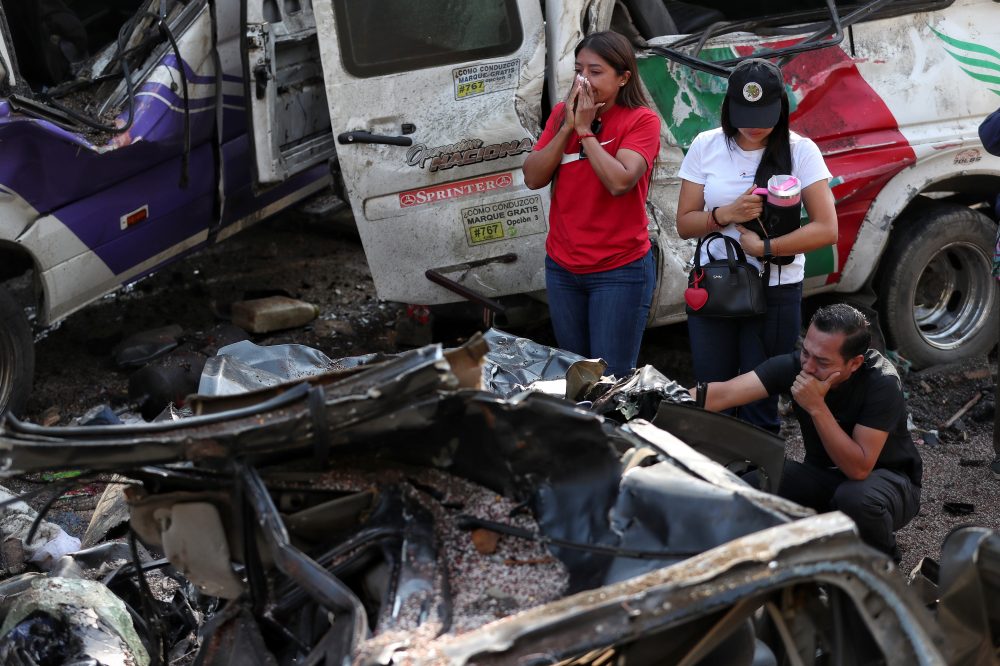
Since Friday, insurgent organizations have carried out 26 strikes using explosives and unmanned aircraft, Colombia’s defense ministry reports. The deadliest incident occurred Saturday when a bomb detonated along a major highway connecting Cali and Popayan, claiming 21 lives by Monday’s count.
The southwestern territory has long been plagued by conflict, with criminal organizations battling for decades to dominate this strategic zone that serves their illegal enterprises — from unlawful mining operations to narcotics smuggling and coca plant cultivation used in cocaine production.
Officials have identified the FARC-EMC organization as responsible for the fatal highway bombing near a Pan-American Highway tunnel. This faction operates under Nestor Vera, better known as Iván Mordisco, a former Revolutionary Armed Forces of Colombia fighter who rejected the government’s 2016 peace agreement.
Political risk expert Sergio Guzmán, based in Bogota, believes Mordisco’s organization may be showcasing its destructive capabilities while working to “establish its credibility” with Colombia’s incoming administration for potential future negotiations.
“Part of what they are doing is establishing leverage towards the future,” Guzmán said.
Current President Gustavo Petro, himself a former guerrilla fighter, has pursued dialogue with remaining insurgent factions through his “total peace” initiative.
His administration has extended ceasefire offers to multiple organizations hoping to advance peace discussions, though experts argue this approach has backfired by allowing these groups to reorganize, reequip, and tighten their community control.
Organizations such as the FARC-EMC impose taxes on residents in territories they occupy while forcing young people into their military ranks.
“The government’s peace policy has been naïve,” said Javier Garay, a political science professor at Colombia’s Externado University. “They thought that if they had a condescending attitude towards these groups they would receive a positive response.”
The FARC-EMC began peace discussions with Colombian officials in late 2023, but Mordisco’s wing withdrew from negotiations in April 2024 and has maintained armed resistance since.
International Crisis Group Colombia expert Elizabeth Dickinson notes that Mordisco’s forces maintain particular strength in Cauca and Valle del Cauca provinces, where they compete for control over drug smuggling corridors and illegal gold extraction sites.
For two years, Mordisco’s fighters have employed drone strikes and vehicle bombs to counter Colombian military operations in the Micay Canyon, an isolated coca-growing region under FARC-EMC influence.
According to Dickinson, these recent southwestern attacks demonstrate the group’s ability to maintain its “asymmetrical war” against government forces.
Colombia’s defense minister announced Sunday that rebel-imposed kidnappings and community lockdowns in Cauca have declined over the past year due to government interventions.
However, opposition politicians have criticized the total peace approach and hope to capitalize on security concerns by promising stricter anti-crime measures.
Constitutional term limits prevent Petro from seeking reelection, but his party’s nominee, Iván Cepeda, has pledged to continue rebel negotiations.
Cepeda condemned the recent southwestern violence on social media, calling for investigations into whether the attacks aim to disrupt the electoral process.
“It is worrying that these terrorist actions are happening in a region where there is ample support for our political project,” Cepeda said.
Colombian citizens will select from 14 presidential candidates on May 31, including Cepeda and conservative contenders Abelardo de la Espriella and Paloma Valencia.
While Cepeda supports continuing Petro’s “total peace” strategy, his conservative opponents advocate confronting rebel groups with increased military force before resuming any peace negotiations.
Guzmán observed that this weekend’s violence “deepens the discomfort” with Colombia’s security climate — where a presidential candidate was murdered last year — but both political camps will attempt to benefit from the renewed conflict.
“Government supporters will use the attacks as an opportunity to say that that this is exactly why we need to reach urgent agreements with (rebel) groups,” Guzmán said. “Detractors will say this is why we need to more aggressively attack them.”