
LAS MINAS, Cuba (AP) — In the rural town of Las Minas, 58-year-old farmer Eduardo Obiols Sobredo faces an impossible challenge: feeding his fellow Cubans while battling crippling fuel shortages caused by US energy sanctions that have triggered widespread power outages and water disruptions.
“I feel like crying,” Obiols Sobredo expressed. “It’s so sad to see crops grown with so much effort go to waste, especially when you know there are so many who need them.”
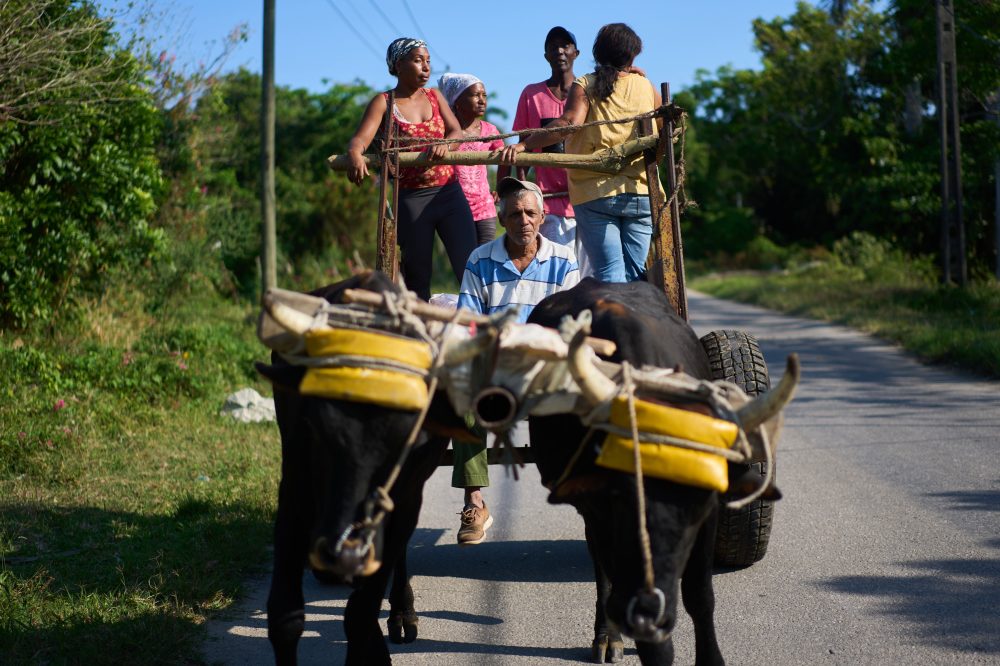
Agricultural machinery sits idle throughout Cuba as fuel supplies dwindle to nothing. Farmers such as Obiols Sobredo have resorted to using oxen and hand labor, though many cannot afford these alternatives and resources remain scarce.
The crisis has worsened poverty and expanded hunger throughout the Caribbean nation, home to almost 10 million residents. Fresh produce quality and availability continue declining while costs climb beyond what most citizens can afford.
Unlike other nations experiencing energy shortages due to global conflicts, Cuba directly attributes its struggles to targeted measures implemented by the Trump administration.
For three months, Cuba received no fuel deliveries after the US targeted Venezuela, a crucial oil partner, and issued threats of tariffs against any nation providing petroleum to the island.
The country was already struggling under intensified US sanctions that have existed for decades, blocking imports of essential items. The Trump administration has demanded Cuba’s socialist leadership free political detainees, enact significant economic changes, and alter its governing structure to eliminate perceived national security risks. Cuban officials consistently deny posing any danger to America.
With diplomatic tensions persisting, high-level government representatives are traveling to farms across Cuba, encouraging producers to increase output for greater national independence.
However, the impact of US energy restrictions is clearly visible in Las Minas, where 65 farmers share just 18 oxen.
Obiols Sobredo rents these animals and their operators when possible, but depends on manual work for smaller farming tasks. His crops include tomatoes, sorghum, cassava and other vegetables. He also maintains goats whose milk feeds local schoolchildren.
He joins other agricultural workers in a system that provides for Cuba’s most needy populations, including orphanages and elder care facilities.
Land preparation that once required 15 minutes using motorized equipment now demands three full days. His last government gasoline allocation arrived in January.
“It has forced us to take other kinds of actions in order to survive,” Obiols Sobredo explained.
Petroleum shortages also mean delivery vehicles don’t always arrive, compelling farmers to use their limited fuel reserves to transport milk to freezing facilities, hoping it won’t spoil before collection.
Electrical outages prevent Obiols Sobredo from processing feed for his goats, which produce less milk due to poor nutrition.
Crop irrigation has also suffered. Though a charitable organization funded solar irrigation equipment for his property last year, he lacks the gasoline needed for installation. He depends on rainfall that hasn’t occurred in almost two months.
Distribution companies increasingly use horse-drawn vehicles to move produce, causing bruising during extended journeys to marketplaces.
At a government market in Havana offering relatively affordable prices, 68-year-old customer Juan Lázaro expressed disappointment with produce quality.
“Look,” he stated, indicating a display of small, unripe tomatoes. “They’re lacking fertilizer, you can tell they’re lacking water. Look at their color.”
Lázaro retired from industrial mechanics but returned to work at a small shop to survive financially. During a recent visit, he purchased six potatoes as an unusual luxury.
“I’ve had to cut back. I either buy bread or I buy potatoes,” he noted.
He emphasized that Cuba’s present difficulties exceed the “Special Period” of the 1990s, when Soviet Union collapse eliminated aid and created widespread hardship. “We’ve been hitting rock bottom for a while.”
Fellow shopper Griselle Guillot, 64, now hesitates before buying rice.
“I need to see how much I can buy, because I also need onions,” she said.
Anthony Batista Guerra, a 47-year-old produce seller, noted customers understand the declining standards without explanation: “They know things are bad right now.”
As the market prepared to close, one vendor discarded a tomato into the street after shoppers rejected it as unsuitable.
On a steamy morning, 82-year-old Argelio González Juvier wielded a hoe against weeds surrounding cassava plants at his workplace.
A former interior ministry official who retired in 1995, he returned to work for additional income and selected agriculture.
“The earth provides everything. That’s what we should focus on,” he stated. “We have no other alternative.”
He condemned US energy restrictions, describing them as criminal.
“Cuba doesn’t deserve what they’re doing to us,” he declared. “The Americans think they’re the owners of the world.”
Working beside González Juvier was 36-year-old Jordanis Ríos, formerly a truck operator transporting construction materials until fuel shortages eliminated his position.
He now uses a machete to clear agricultural land, cutting dried vegetation each morning for $4 daily wages. He hopes to resume truck driving.
“My job is there. Just waiting for the country to improve,” he said.
Ríos avoided discussing recent US-Cuba negotiations, with American representatives visiting the island this month for the first time since 2016. Conversation details remain confidential, though Cuba has stated lifting the blockade remains its top priority.
Ríos indicated the outcome rests with leadership: “My goal is to survive here and see what happens.”