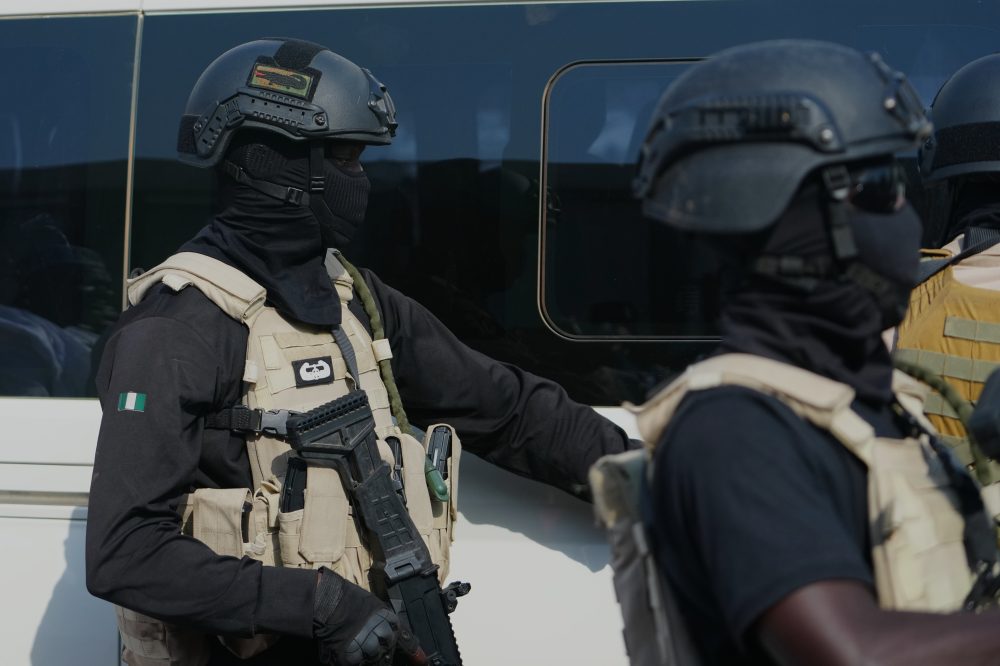

ABUJA, Nigeria — At least 29 people were killed when Islamic State fighters launched a deadly assault on a village in northeastern Nigeria during overnight hours, officials confirmed Monday. The violence represents the latest bloodshed in Africa’s most populated nation as it continues wrestling with widespread security threats.
The deadly raid occurred late Sunday evening in Guyaku village, located within Gombi local government territory in Adamawa state, state leadership reported.
ISIS operatives took credit for the deadly assault through a statement posted on the Telegram platform.
During a Monday visit to the attacked community, Adamawa State Governor Ahmadu Umaru Fintiri called the violence tragic and completely unacceptable.
Nigeria continues confronting numerous security threats, particularly across northern regions where militant activity has persisted for more than twenty years. The United States deployed military advisors to the West African country in February to assist local forces in combating the security crisis.
Two primary ISIS-affiliated militant organizations operate within Nigeria, though officials have not yet determined which group carried out the Guyaki assault.
The Islamic State West Africa Province, known as ISWAP, maintains operations throughout northeastern areas including Adamawa state, while another ISIS-connected organization called Lakurawa typically targets communities in north-central Sokoto and Kebbi states.
The village attack coincided with a separate incident where armed raiders struck an orphanage in north-central Nigeria, kidnapping 23 students. Authorities later freed 15 children and reported that “intensive operations” continue to “secure the safe return of the remaining eight victims and apprehend the perpetrators.”
Student abductions have become a defining characteristic of Nigeria’s security crisis, with security experts noting that criminal organizations view educational institutions and children as “strategic” targets for gaining public attention.
The orphanage raid occurred in an “isolated area” of Lokoja, the capital city of Kogi State, according to state commissioner Kingsley Femi Fanwo. He noted that the targeted facility, Dahallukitab Group of Schools, was functioning without proper authorization.
No organization has claimed responsibility for the kidnapping in a region experiencing rising numbers of ransom-motivated abductions. Officials did not specify the ages of the taken children, though the designation “pupil” in Nigeria typically refers to kindergarten through primary school students, generally ages 12 and under.