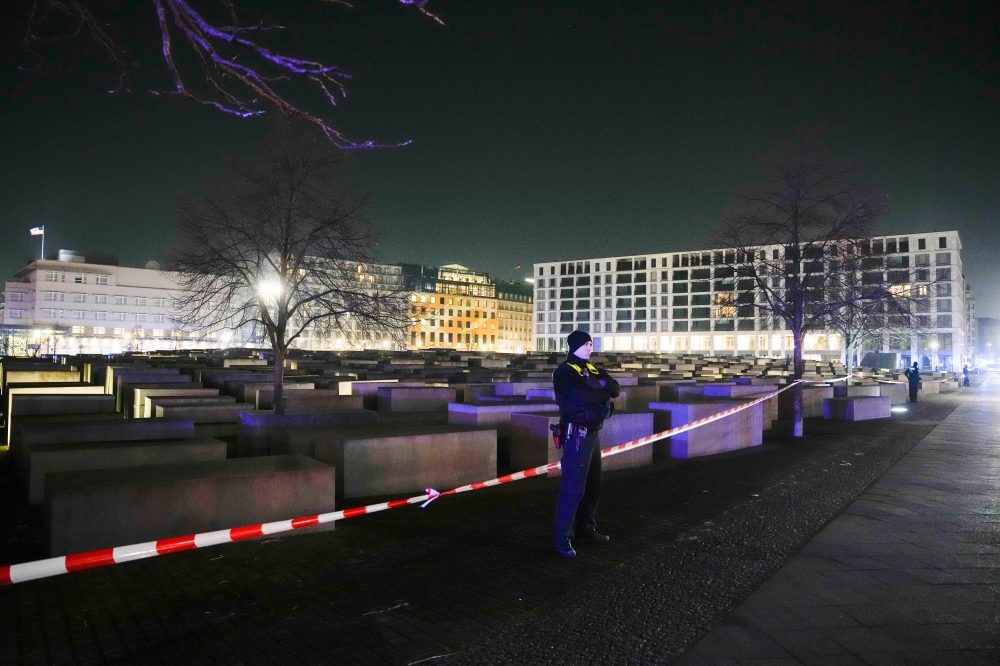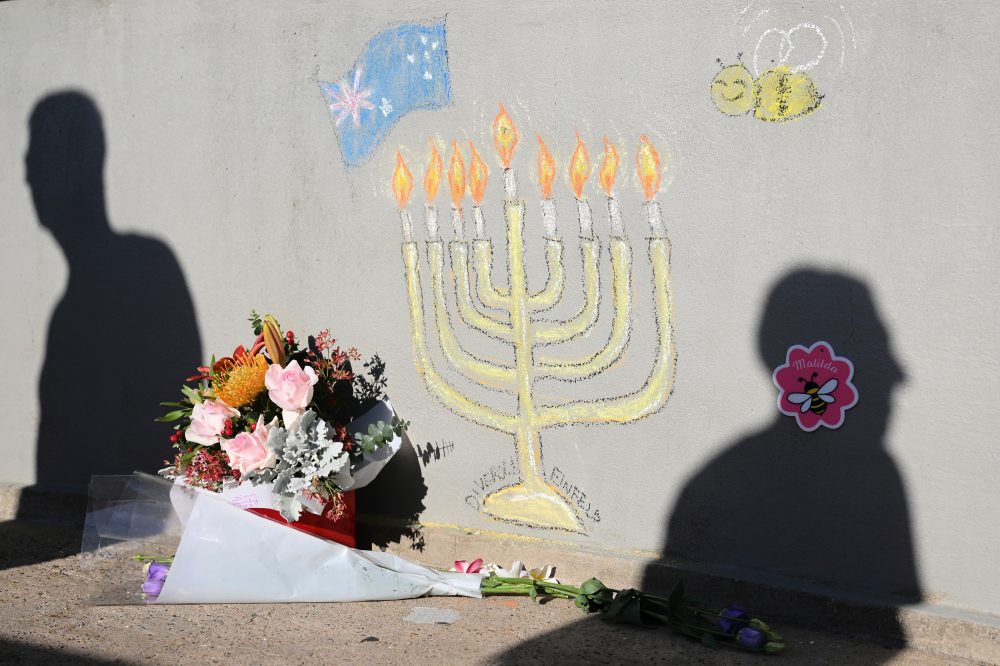
A comprehensive study released Monday by Tel Aviv University reveals that deadly attacks targeting Jewish communities reached their most severe levels in decades throughout 2025, with researchers documenting 20 fatalities across four separate incidents spanning three continents. The findings show incident numbers fluctuated inconsistently from nation to nation.
The extensive 152-page research, published jointly by Tel Aviv University’s Center for the Study of Contemporary European Jewry and the Irwin Cotler Institute, documented increases in physical attacks across multiple regions. Anti-Jewish incidents in Western nations continued to register at levels dozens of percentage points above 2022 figures, prior to the Gaza conflict’s start.
Researchers noted that the downward trend observed following the initial spike after October 7 failed to persist throughout 2025. Prof. Uriya Shavit, who served as the study’s editor-in-chief, expressed alarm about the implications. “The data raise concern that a high level of antisemitic incidents is becoming a normalized reality,” Shavit stated. He connected the increase in serious violence to enforcement patterns, explaining: “When law-enforcement authorities are indifferent to small crimes, the result is big crimes.”
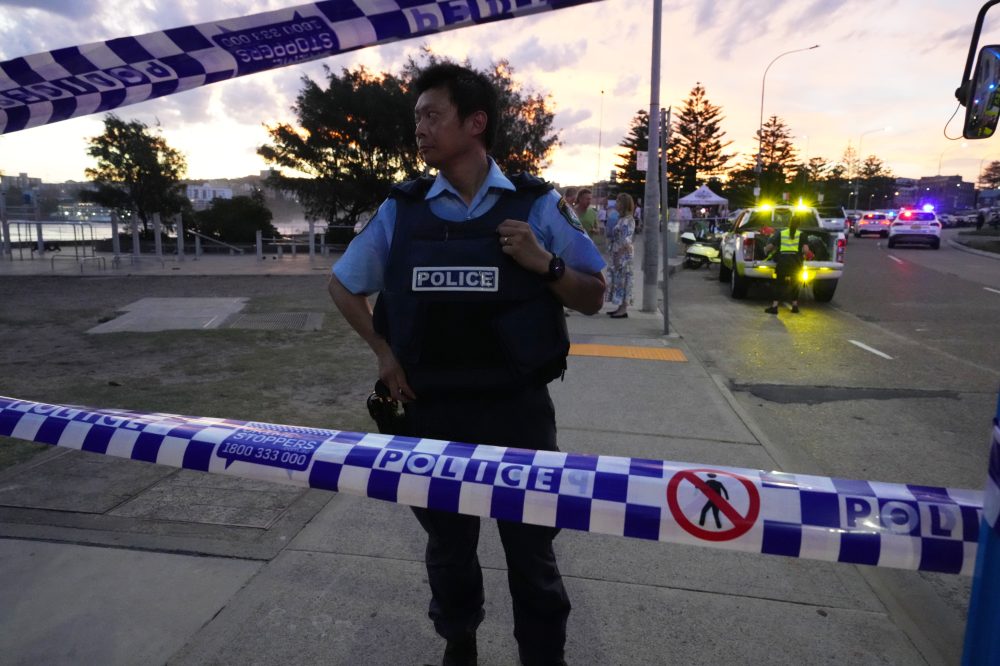
The research highlighted particularly troubling statistics from Australia and Canada. Australian authorities documented 1,750 incidents during 2025, representing an increase from 1,727 cases in 2024 and a dramatic jump from just 472 incidents in 2022. The study specifically highlighted the devastating Bondi Beach Hanukkah attack, which claimed 15 lives. Canadian figures showed an escalation from 6,219 incidents in 2024 to 6,800 in 2025, more than tripling the 2022 total.
British incidents climbed from 3,556 to 3,700, with researchers noting increased activity during the final quarter of 2025 following the Gaza war’s conclusion. French authorities reported fewer overall incidents compared to 2024, though physical attacks increased. Belgian data showed rises in both total incident counts and assault numbers. German statistics reflected an overall decrease in incidents, although the reduction in violent cases was more modest. New York City experienced a slight decline in anti-Jewish hate crime reports overall, but saw increases during the October-December period compared to the previous year.
The study included harsh criticism of Israeli government efforts, stating officials had “not contributed in any meaningful way” to combating antisemitism and had actually undermined these efforts by expanding the term’s definition for political purposes. Report authors recommended eliminating the Israeli Ministry for Diaspora Affairs and Combating Antisemitism, suggesting its resources be redirected to overseas diplomatic missions.
Additional research within the report analyzed prosecuted perpetrators across the United States, France, Canada, and Britain from 2020 through 2025, revealing many were individual actors representing opposing ideological positions, including white supremacists and anti-Zionist Muslims. Former Canadian Justice Minister Prof. Irwin Cotler characterized the situation as “an unprecedented global explosion in incidents of antisemitism.” The study also examined antisemitism within healthcare settings and the increasing acceptance of anti-Jewish language in American political discussions.
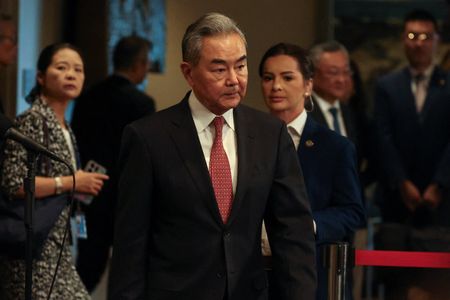
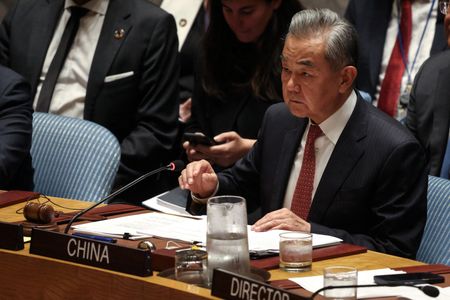
BEIJING, April 13 – China’s Foreign Minister Wang Yi expressed deep concern Monday about the stability of the existing US-Iran ceasefire, describing the situation as “very fragile” during diplomatic discussions.
Speaking with Pakistani Foreign Minister Mohammad Ishaq Dar in a telephone conversation, Wang called on nations worldwide to “unequivocally oppose any actions that undermine the ceasefire or escalate the confrontation,” according to statements from Wang’s ministry.
The Chinese diplomat emphasized that preventing renewed fighting should be the top priority, stressing the need “to preserve the hard-won momentum of ceasefire.”
Wang indicated China’s interest in seeing Pakistan take on a more significant role in diplomatic efforts to resolve the ongoing tensions, while also affirming that Beijing remains prepared to contribute to peaceful solutions.
Ukrainian officials are breathing a sigh of relief following Monday’s electoral defeat of Hungarian Prime Minister Viktor Orban, whose opposition had been blocking a critical 90 billion euro ($105 billion) aid package that Ukraine desperately needs to continue its fight against Russia.
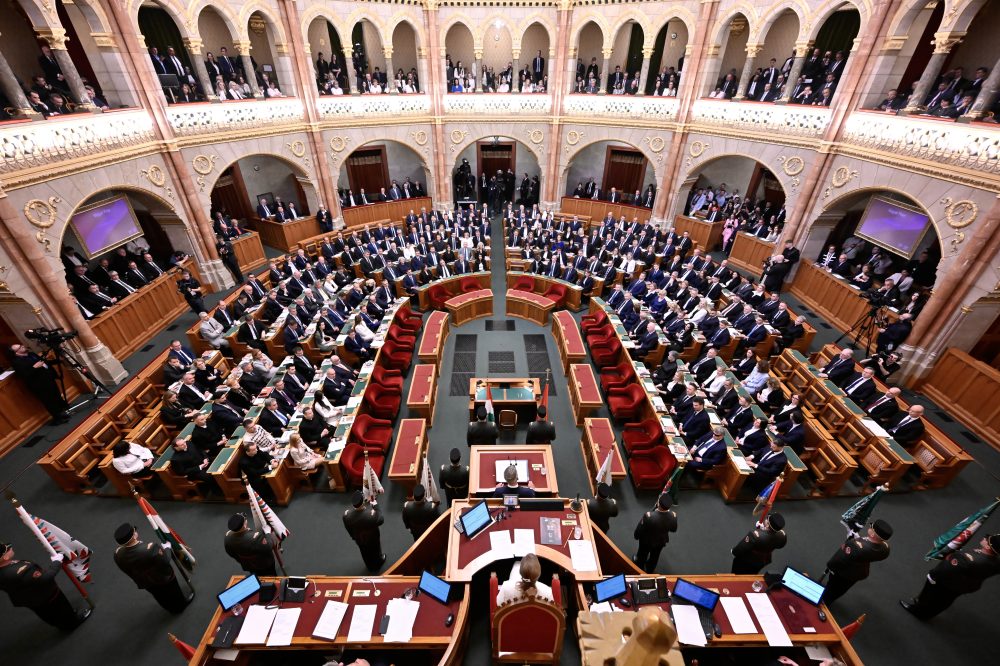
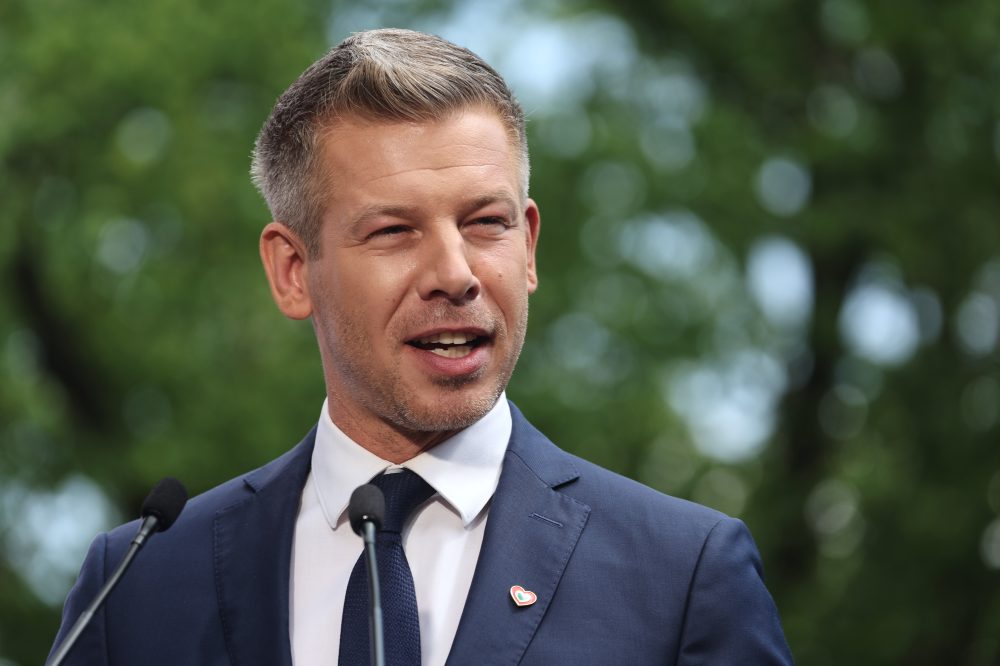
Peter Magyar’s center-right Tisza party secured a decisive victory on Sunday, bringing an end to Orban’s 16-year leadership and gaining the supermajority needed to implement constitutional changes.
For years, Orban had been Ukraine’s most vocal opponent within the European Union. The nationalist leader, who cultivated close relationships with Russian President Vladimir Putin, consistently blocked Brussels’ initiatives to assist Ukraine. Most recently, he prevented approval of the two-year EU loan package, claiming Ukraine had intentionally stopped Russian oil shipments through the Druzhba pipeline that crosses Ukrainian territory.
Ukrainian President Volodymyr Zelenskyy maintains that Russian military strikes damaged the Druzhba pipeline in January, with repairs expected to finish this spring. However, he has also encouraged European nations to cease purchasing Russian oil altogether.
Ukrainian lawmaker Oleksiy Honcharenko from the European Solidarity Party offered a measured assessment of the change in leadership. “One should not call Magyar pro-Ukrainian – he isn’t – but he is not anti-Ukrainian, unlike Orban, and that’s already great,” Honcharenko stated. “Putin has lost his main ally in Europe.”
During his inaugural press conference following the election results, Magyar acknowledged Ukraine as the victim in its conflict with Russia and committed to reducing Hungary’s energy dependence on Russia. However, he also indicated that Budapest would continue “pragmatic” relationships with Moscow and tied improved Ukraine relations to addressing concerns about Hungarian minorities living in western Ukraine.
European Union officials and policy experts anticipate that Magyar will eliminate Hungary’s blockade of the aid package and lift opposition to a 20th round of Russian sanctions once he assumes office, likely in mid-May. Magyar appears eager to restore EU funding for Hungary that was frozen due to concerns about democratic deterioration under Orban’s administration.
The timeline remains critical for Ukraine’s financial stability. After four years of warfare, Ukraine depends heavily on Western financial assistance and requires $52 billion this year. Economic analysts warn the country could face a funding crisis as early as next month.
“Hungary’s vetoes on EU financial support for Ukraine will likely cease, improving EU decision-making capacity,” explained Zsuzsanna Vegh, an analyst with the German Marshall Fund think tank. She noted that while Hungary would stop blocking aid, the country itself would not contribute funding, and “Tisza is unlikely to embrace expansive military support.”
In Kyiv, residents responded to Hungary’s election results with measured hope. Yehor Vasylchencko, a 33-year-old technology worker, called the outcome “very positive because it gives us a chance to improve relations with Hungary.” However, noting Magyar’s previous membership in Orban’s nationalist Fidesz party, he added, “I have some doubts about whether Magyar will be an improvement. Time will tell.”
Ukrainian Foreign Minister Andrii Sybiha emphasized that “meticulous, pragmatic, and calm work” would be necessary to establish common ground with Hungary’s incoming leadership.
Volodymyr Fesenko, who directs the Penta think tank, suggested that restarting oil flows through the Druzhba pipeline could serve as a goodwill gesture as Ukraine seeks to rebuild its relationship with Hungary.
Despite the political shift, years of anti-Ukrainian messaging in Hungarian media have left much of the Hungarian population skeptical about closer ties with Kyiv. During Monday’s press conference, Magyar reiterated his opposition to fast-tracking Ukraine’s EU membership application.
Other Central and Eastern European leaders remain Ukraine-skeptical as well. Slovak Prime Minister Robert Fico, who opposes EU sanctions on Russia, and Czech Prime Minister Andrej Babis both publicly supported Orban before Sunday’s vote. In Bulgaria, former President Rumen Radev, who favors improved Moscow relations, leads polling ahead of next Sunday’s parliamentary elections.
Oleksandr Merezhko, who chairs Ukraine’s parliamentary foreign affairs committee, believes Slovakia’s Fico may become more cautious without Orban’s political backing.
However, Yehor Cherniev, a lawmaker from Ukraine’s governing Servant of the People party and deputy chair of the national security committee, cautioned against expecting dramatic changes in European support. “A miracle isn’t going to happen,” Cherniev said.
Policy analysts expect Orban’s departure will reduce the confrontational tone in EU discussions about Ukraine and eliminate Hungary’s obstructionist stance. Budapest will likely stop blocking technical discussions about Ukraine’s EU membership process.
Nevertheless, significant reservations persist in several EU capitals, including Paris and Berlin, that accelerating Ukraine’s membership path might eliminate incentives for implementing promised reforms, particularly anti-corruption measures.
“Magyar will be obviously less hostile than Orban was,” said Orsolya Raczova, an analyst with Eurasia Group. “But, with Magyar as prime minister, Hungary will basically join the mainstream opposition to speedy EU accession for Ukraine.”
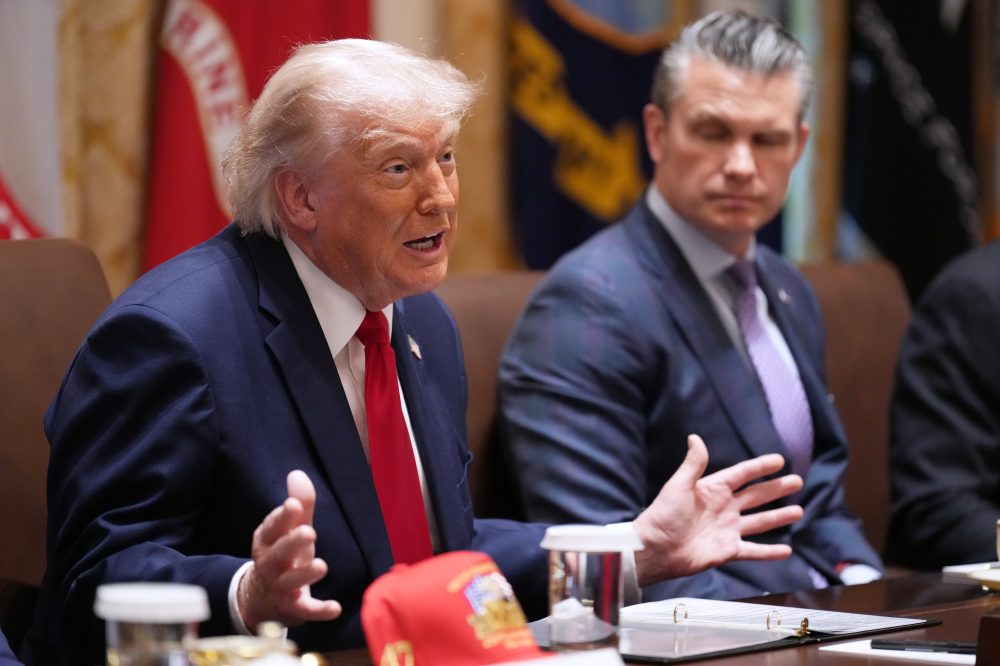
WASHINGTON – President Donald Trump issued a stark warning Monday that Iranian naval vessels attempting to approach the United States’ new maritime blockade would face immediate destruction.
The president’s threat came as the American naval blockade against Iranian shipping was scheduled to begin at 1400 GMT Monday.
In a post on Truth Social, Trump referenced Iran’s naval capabilities following what he described as a six-week military conflict that left Iran’s navy “completely obliterated.” He wrote: “What we have not hit are their small number of, what they call, ‘fast attack ships,’ because we did not consider them much of a threat.”
The president’s warning continued with explicit language about potential consequences. “Warning: If any of these ships come anywhere close to our BLOCKADE, they will be immediately ELIMINATED, using the same system of kill that we use against the drug dealers on boats at Sea. It is quick and brutal,” Trump wrote.
The president’s reference points to numerous American military operations targeting suspected narcotics vessels in Caribbean and Pacific waters since September, which have resulted in at least 110 deaths according to reports.
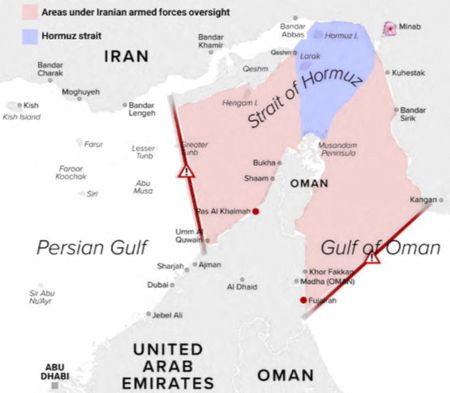
The maritime tensions have escalated as Iran has effectively shut down the Strait of Hormuz, blocking a crucial shipping route that typically handles approximately 20 percent of the world’s oil and liquefied natural gas transportation. This action represents Iran’s response to combined U.S.-Israeli military operations.
While Iran’s traditional naval forces have suffered significant damage, military experts note that the Islamic Revolutionary Guard Corps maintains various tactical options. According to retired Royal Navy commander Tom Sharpe, these include rapid-attack vessels, small submarines, naval mines, and explosive-laden watercraft including jet skis.
NEW YORK – The European Union’s foreign policy leader called for building an international maritime security alliance during a United Nations Security Council session on Monday, citing ongoing tensions in the Strait of Hormuz as justification for coordinated action.
Kaja Kallas, the EU’s foreign policy chief, advocated for a “strong international coalition on maritime security” while addressing the Security Council in New York, though she did not outline specific actions such a partnership would take.
Kallas emphasized that the European Union opposes any measures that would restrict “the free and safe passage through the straits in accordance with the international law.”
The Strait of Hormuz serves as a critical shipping route for global oil supplies, making maritime security in the region a key international concern.
A former Nigerian petroleum minister took the witness stand in a London courtroom Monday, firmly rejecting accusations that she accepted millions in bribes in exchange for awarding government oil contracts.
Diezani Alison-Madueke, 65, faces allegations that energy companies seeking Nigerian government deals provided her with free access to expensive UK residences worth millions of pounds, complete with renovations and furnishings.
According to prosecutors, the benefits extended far beyond housing. They claim she received private jet transportation, chauffeur services, and extravagant shopping excursions, including a staggering 2 million pounds ($2.7 million) shopping spree at the prestigious Harrods department store in London. Authorities also allege she pocketed 100,000 pounds in direct cash payments during her tenure leading Nigeria’s petroleum ministry from April 2010 through May 2015.
Speaking at Southwark Crown Court, Alison-Madueke firmly stated, “I did not abuse my office during that period.” She faces five separate bribery charges plus one conspiracy count.
Two other defendants are also standing trial. Olatimbo Ayinde, 54, who owns Nigerian oil enterprises, contests two bribery charges. Alison-Madueke’s brother, former archbishop Doye Agama, 69, denies conspiracy charges.
“I can state categorically at no time did I ask for, take, or seek a bribe or bribes of any sort from any of these persons,” Alison-Madueke declared during her testimony.
During her ministerial role, Alison-Madueke supervised Nigeria’s state oil corporation and its affiliated companies, including the Nigerian Petroleum Development Co. and Pipelines Product Marketing Co.
Prosecutors detail additional alleged spending sprees throughout London, claiming she used company funds for purchases totaling hundreds of thousands of pounds at high-end antique dealers and luxury home goods stores in the upscale Mayfair district.
In her defense, Alison-Madueke explained that Nigeria’s National Petroleum Company managed all travel logistics and financial arrangements for her official trips. She maintained that any services provided to her were properly reimbursed through official channels.
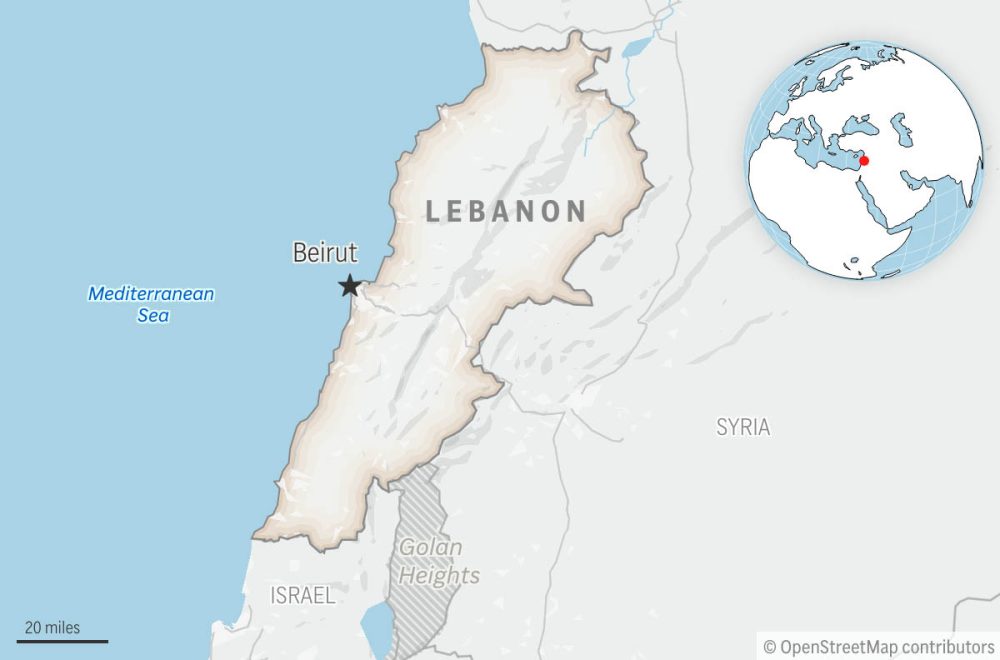
The International Committee of the Red Cross has voiced serious alarm over two consecutive attacks targeting medical personnel in Lebanon, following a deadly assault on a Red Cross facility Monday and the killing of a volunteer the previous day.
According to Lebanon’s state news agency, Monday’s attack, which the agency attributed to Israeli forces, resulted in one fatality and caused damage to Lebanese Red Cross vehicles.
The ICRC confirmed that the Lebanese Red Cross facility located in the Tyre district, situated along Lebanon’s coastline, was struck during the attack. The organization refrained from identifying who carried out the strike or providing additional details about the casualty.
Israeli military officials have not yet provided a response to requests for comment regarding Monday’s incident.
The day before, the Lebanese Red Cross announced that volunteer Hassan Badawi had succumbed to injuries sustained during a drone strike in the Bint Jbeil district of southern Lebanon.
Israel’s military acknowledged conducting a strike against what it described as a “Hezbollah terrorist” in that region and stated the matter was being investigated following reports of Red Cross personnel being injured.
Agnes Dhur, who leads the ICRC delegation in Lebanon, released a statement Monday expressing deep concern. “The loss of those who dedicate their lives to saving others is gravely concerning, given the impact on the civilians who depend on their help,” Dhur stated.
She continued, “Humanitarian and medical personnel must be protected. They must be allowed to reach and help the wounded, and return unharmed.”
The current conflict in Lebanon commenced on March 2, when the Lebanese militant organization Hezbollah launched attacks against Israeli positions in solidarity with Iran.
Since then, Israel has intensified its aerial bombardment and ground operations throughout the nation, with these military actions resulting in over 2,000 deaths, displacing more than one million residents, and prompting warnings that medical facilities may exhaust critical supplies.
BEIRUT (AP) — Sixteen-day-old Shiman has only experienced life inside a makeshift tent on Beirut’s coastline — surrounded by the odor of damp, moldy bedding, constant bug bites, and the terrifying sounds of Israeli fighter jets bombing Lebanon’s capital city.
Her mother, Haifa Kenjo, says the infant was delivered in the muddy camp conditions on March 28.
The 34-year-old Kenjo was in her final month of pregnancy when Israeli bombardments targeting Dahiyeh, Beirut’s southern neighborhoods, forced her family to flee their home immediately. She, her husband, and their toddler son Khalid escaped wearing only sleepwear and flip-flops as explosions rocked their residence, leaving behind all possessions including clothing and money.
The family found shelter in a donated tent structure near central Beirut, using stones to anchor the tarp against strong winds that constantly threaten to tear it away.
Among Lebanon’s more than one million displaced residents affected by the ongoing conflict between Israel and Iran-supported Hezbollah, 13,500 women are currently pregnant, with over 1,500 expected to give birth within the coming month, according to this week’s report from the UN’s sexual and reproductive health agency. The organization warns that many mothers cannot obtain proper prenatal and delivery care.
During peacetime, Kenjo had planned to deliver at Beirut’s primary public medical facility, the same hospital where she had given birth to Khalid. Originally from Syria, despite living nearly half her lifetime in Lebanon’s capital and marrying a Lebanese citizen, she must pay hospital fees that Lebanese women receive at no cost.
When labor began and her water broke on March 28, she contacted emergency services while her husband gathered the required $40 entrance fee. However, the $500 needed for the actual delivery remained trapped under the rubble of their destroyed home, which had been leveled by an Israeli air attack the previous week.
The couple returned to their tent shelter, contacted a midwife, and hoped for the best.
The midwife, known as Umm Ali, explained she provided the best care possible under the circumstances, but the tent environment was unsanitary. Rainwater leaked through the structure, and they could only clean newborn Shiman using bottled water.
Kenjo’s body failed to produce breast milk for her daughter. Baby formula costs exceed her husband’s daily wages from his water tank installation work.
She recognizes her infant is malnourished. Food distribution volunteers at the displacement site provided only enough formula to last several days.
Rather than typical newborn crying, Shiman produces coughing sounds. Her skin feels cold and damp, covered with bite marks from insects.
“She is so precious,” Kenjo said, stroking her baby girl. “But for her we have nothing. We have less than zero.”
BEIRUT (AP) — Intense combat erupted Monday in the Lebanese border town of Bint Jbeil, where Israeli forces moved to surround the strategically important location as Hezbollah fighters responded with rocket and artillery attacks.
The mountainous community, positioned just over 2 miles from the U.N.-established Blue Line separating Lebanon and Israel, has seen escalating violence during the past week following an Iran-U.S. agreement on a temporary ceasefire. The timing is significant as Lebanese and Israeli ambassadors to the United States are scheduled to conduct face-to-face discussions in Washington on Tuesday, marking the beginning of what could be historic direct peace negotiations.
Israeli military operations in Lebanon have shifted focus recently, with reduced bombardments in Beirut following a series of unannounced deadly attacks that struck busy residential and commercial districts in the capital, resulting in more than 350 deaths.
Simultaneously, Israel has intensified its ground operations and airstrikes in southern Lebanon, working to establish a security buffer zone extending to the Litani River, located approximately 20 miles from the international border. Bint Jbeil sits among numerous communities south of this river that Israel ordered evacuated when the current conflict began. The violence was triggered when Hezbollah launched rockets into northern Israel on March 2 as a show of support for Iran.
Lebanese Health Ministry statistics show that Israeli attacks have claimed at least 2,055 lives throughout Lebanon, including 252 women, 165 children, and 87 healthcare personnel, with an additional 6,588 people injured.
Reports from Lebanon’s government-operated National News Agency indicate Israeli ground troops have advanced into the town while blocking most escape routes. Regional media outlets suggest that numerous Hezbollah militants have become trapped in the encirclement.
Israeli military officials confirmed their forces have surrounded Hezbollah installations and initiated ground combat in Bint Jbeil and nearby areas, claiming to have eliminated more than 100 Hezbollah combatants. Hezbollah has not disclosed any losses from its fighters, while Israel has remained silent about its own military casualties.
On Sunday, Hezbollah reported conducting at least five separate attacks against Israeli troops in and around the town using rockets, artillery, and unmanned aircraft. The organization’s communications indicated Israeli forces had taken positions near educational facilities, medical centers, and key intersections in Bint Jbeil’s center. That same day, Israeli forces said they engaged Hezbollah personnel conducting surveillance from Bint Jbeil Government Hospital and discovered stored machine guns and rockets.
During Israel’s previous occupation of southern Lebanon, which lasted until 2000, the country used Bint Jbeil and other high-elevation sites as crucial observation posts. Hezbollah’s recapture of this hilltop community became a significant milestone, culminating in a victory address by former Secretary General Hassan Nasrallah at a local stadium. Israeli military sources released satellite imagery Monday showing the apparent destruction of that same stadium in a recent strike.
In other developments, funeral services were held in Choueifat, south of Beirut, for a Lebanese Red Cross volunteer who died in an Israeli attack Sunday while conducting a rescue operation in the southern village of Beit Yahoun.
Monday brought another incident when an Israeli strike near Red Cross headquarters in the coastal city of Tyre killed an injured person during transport, while also damaging multiple Red Cross vehicles. A source with knowledge of the situation said the attack targeted an individual on a motorcycle who was transporting the wounded person. The identities of both victims remain unclear. The source requested anonymity as they were not authorized to share this information.
Red Cross officials have not yet issued a statement regarding the incident. Israeli military representatives did not provide an immediate response when contacted by The Associated Press for comment.
Thailand’s annual Songkran water festival marks the beginning of the Thai new year with traditional water ceremonies. Participants splash and spray water as part of the celebration, with the ritual symbolizing spiritual purification and bringing good luck.
The festival showcases the cultural significance of water in Thai traditions, where the act of dousing represents washing away negativity and welcoming prosperity for the year ahead.
The celebration has been captured in a series of photographs compiled by Associated Press photo editors, documenting the vibrant festivities and community participation in this important Thai cultural event.
LAGOS – Nigerian military forces conducting an airstrike against a village marketplace have reportedly killed more than 200 civilians in what marks another tragic incident where non-combatants became casualties during operations targeting militant organizations.
This devastating attack represents just one example in a troubling pattern of civilian deaths resulting from military air operations across Nigeria. The following timeline shows recent incidents where innocent people lost their lives during military strikes:
In April 2026, Nigerian fighter jets bombed a village marketplace while chasing Islamic extremists in the country’s northeastern region, resulting in at least 200 feared casualties according to local officials and community members who spoke on Sunday following Saturday evening’s attack.
During January 2025, Nigeria’s Air Force launched an investigation into reports of non-combatant deaths during bombing operations that targeted criminal gangs in the nation’s northwest region. Local residents reported to Reuters that no fewer than 15 innocent people died, including community security personnel.
The military admitted in December 2024 that bombing raids aimed at a Lakurawa terrorist cell’s compound in northwestern Sokoto state resulted in 10 civilian deaths due to secondary explosions that followed the initial strike.
September 2024 saw at least 24 people lose their lives when military aircraft bombed a community in Kaduna state while conducting operations against criminal organizations and their strongholds.
An April 2024 military operation targeting kidnapping syndicates and their bases in northwestern Zamfara state killed at least 33 villagers during the Eid holiday celebration.
In December 2023, military drone attacks in northern Kaduna state claimed the lives of at least 85 individuals, including women and children. President Bola Tinubu ordered a full investigation, leading to court-martial proceedings against two military personnel.
January 2023 witnessed the deaths of numerous ethnic Fulani cattle herders during aerial bombardment in central Nasarawa state as they were retrieving livestock from government authorities in an adjacent state. The Nigerian Air Force later accepted responsibility for this incident, which became the focus of a Reuters investigative report.
European Commission President Ursula von der Leyen celebrated Hungary’s stunning electoral upset as a triumph for democratic values, drawing parallels between Viktor Orban’s defeat and pivotal moments in Hungarian history including the 1956 revolt against Soviet control and the nation’s 1989 communist collapse.
Citizens across Hungary awakened to dramatic political change following the center-right opposition’s overwhelming electoral success, creating ripple effects from Washington to Kyiv while boosting financial markets and sparking celebrations throughout Budapest.
Speaking to media in Brussels on Monday, von der Leyen addressed the Hungarian people directly: “I really want to say to the Hungarian people, you’ve done it again!”
She continued her remarks by referencing Hungary’s history of resistance: “Again against all odds, like you did in 1956 when you courageously stood up, like you did in 1989 when you were the first to cut the barbed wire that was dividing our continent.”
Throughout his tenure, Orban served as Vladimir Putin’s primary European Union supporter, frequently opposing the bloc’s initiatives and hampering assistance efforts for Ukraine during its ongoing conflict with Russia.
Political experts suggest that Orban’s departure following his 16-year leadership could bring Hungary closer to European Union consensus positions.
The 1956 Hungarian revolution against Soviet rule ended in violent suppression by Red Army forces.
When the uprising reached its 50th anniversary, Orban’s Fidesz movement attempted to connect itself with the rebels’ anti-communist principles, drawing criticism from leftist, liberal, and some conservative groups.
While supporters viewed Orban as a patriotic figure who had been an outspoken anti-communist activist during the Cold War era, domestic and international critics argued his policies pushed Hungary toward authoritarian governance.
LIVERPOOL, England – A British public inquiry has determined that the tragic deaths of three young girls at a Taylor Swift-themed dance class could have been avoided if government agencies had properly recognized the danger posed by their killer.
The devastating knife attack occurred on July 29, 2024, during a summer holiday dance event in Southport, located in northern England. Teenager Axel Rudakubana carried out the brutal assault, which British Prime Minister Keir Starmer described as “a devastating moment” in the nation’s history.
Following his guilty plea last year, Rudakubana received a prison sentence of at least 52 years for the murders.
Adrian Fulford, who chaired the inquiry, determined that various agencies – including law enforcement, social services, and the anti-radicalization program Prevent – failed to “take ownership of the risk” that Rudakubana represented.
“This failure lies at the heart of why (Rudakubana) was able to mount the attack, despite so many warning signs of his capacity for fatal violence,” Fulford stated.
The inquiry revealed that authorities had referred Rudakubana to the Prevent program on three separate occasions, beginning in December 2019 when he brought a knife to school and conducted online searches about school shootings. However, officials took no additional measures.
Later that same month, Rudakubana returned to his former school carrying both a hockey stick and a knife, an incident Fulford characterized as “a watershed event.”
“If appropriate arrangements and reasonable resources had been in place to address the risk that (Rudakubana) posed to others from December 2019 onwards, it is highly likely that the tragedy … would not have occurred,” Fulford concluded.
The inquiry chair also determined that Rudakubana’s parents “bear significant responsibility” for their failure to notify authorities about the threat their son presented.
During the attack, the then-17-year-old killer took the lives of three young victims: six-year-old Bebe King, seven-year-old Elsie Dot Stancombe, and nine-year-old Alice Dasilva Aguiar. Ten additional people suffered injuries in the assault, which subsequently triggered several days of riots across the country.
The Pentagon announced plans to impose a naval blockade on Iranian ports beginning at 10 a.m. Eastern Daylight Time, following the collapse of diplomatic negotiations.
U.S. Central Command officials stated the maritime blockade will be “enforced impartially against vessels of all nations” after peace negotiations broke down following 21 hours of talks.
The military action represents a significant escalation in tensions between the United States and Iran, coming after diplomatic efforts to resolve the crisis failed to produce an agreement.
Extremist fighters on motorcycles launched a deadly assault on a Nigerian military installation close to the Chad border Sunday evening, resulting in the deaths of seven soldiers including the base commander, according to military officials.
The attack on the 242 Battalion barracks in Monguno was carried out by Boko Haram fighters and members of Islamic State West Africa Province, military sources revealed to Reuters. The incident follows a series of coordinated strikes against military facilities throughout Borno State in recent days.
Among the casualties was the base commander, who was just weeks away from retirement, along with six additional soldiers who died when their vehicle hit an explosive device while rushing to support their fellow troops during the firefight, the sources reported.
Military officials, speaking on condition of anonymity since they lacked authorization to discuss the matter publicly, confirmed that at least 12 attackers were eliminated during the battle at the barracks.
The violence represents an escalation in militant activity across the region, where insurgent groups have intensified their campaigns against military outposts and seized weapons from government forces. This mounting pressure challenges President Bola Tinubu’s pledge to bring an end to the prolonged conflict.
The extremist uprising has persisted for 17 years as militants attempt to establish an Islamic state in Nigeria’s northeast. Humanitarian organizations report that the insurgency has claimed thousands of lives and forced at least 2 million people from their homes, despite extensive military operations aimed at defeating the groups.
American naval forces have begun implementing a maritime blockade in strategic Middle Eastern waters, according to a military communication obtained by news agencies on Monday.
The U.S. Central Command issued guidance to maritime operators stating that American forces will control shipping traffic in Gulf of Oman and Arabian Sea waters located east of the Strait of Hormuz, with restrictions applying to vessels of all nations.
The naval operation became active at 1400 GMT on Monday, military officials confirmed.
According to the maritime advisory, “Any vessel entering or departing the blockaded area without authorization is subject to interception, diversion, and capture.”
However, the military emphasized that normal shipping routes would remain open, stating “The blockade will not impede neutral transit passage through the Strait of Hormuz to or from non-Iranian destinations.”
The restricted zone covers Iran’s entire coastal region, including major shipping ports and petroleum export facilities, according to the official notice. While commercial traffic faces restrictions, the military indicated that relief supplies such as food, medical equipment, and other critical humanitarian materials would be allowed through following inspection procedures.
The maritime action comes as diplomatic efforts over the weekend failed to produce an agreement to halt ongoing conflicts, putting existing ceasefire arrangements at risk. Iranian officials have warned they may target neighboring Gulf states’ port facilities in response to the blockade.
MANILA, Philippines — Philippine President Ferdinand Marcos Jr. staged an unusual public display Monday, performing jumping jacks and a brief jog outside his Manila office to silence persistent speculation about his physical condition.
The 68-year-old commander-in-chief, dressed in business attire complete with reading glasses and leather shoes, conducted the spontaneous fitness demonstration before assembled reporters to address concerns about his wellbeing during a period when citizens face challenges from Middle Eastern conflicts.
“I challenge anyone who are saying that I am sick, that they come and exercise with me,” Marcos declared to the media. “You come to the gym with me. Let’s see who can lift the weights better.”
“Those people who tell you that I’m sick, that I’m paralyzed, they’re all liars,” Marcos stated firmly.
Speculation regarding the president’s physical condition and even false reports of his death have circulated across social media platforms following his temporary absence from public appearances in January. He later revealed through a video statement that medical professionals had treated him for an abdominal condition he attributed to stress and advancing age.
The Philippine leader dismissed reports of his death with laughter and disclosed his diagnosis of diverticulitis, a medical condition characterized by inflamed pouches within the digestive system, typically affecting the colon and causing symptoms including pain, elevated temperature, nausea, and digestive issues.
According to Marcos, his most recent medical examination several months ago confirmed his recovery from the condition. He reported returning to his regular eating habits and maintaining a consistent exercise routine.
Regarding ongoing medical treatment, the president acknowledged taking prescribed medications for gout and elevated blood pressure.
Throughout his presidency beginning in mid-2022, Marcos has confronted numerous challenging situations and political complications.
These obstacles encompass escalating territorial tensions with China over South China Sea disputes, destructive natural disasters including earthquakes, typhoons, and floods, economic pressures, strained relationships with his vice president, and a corruption investigation involving influential lawmakers and political associates that has generated public anger.
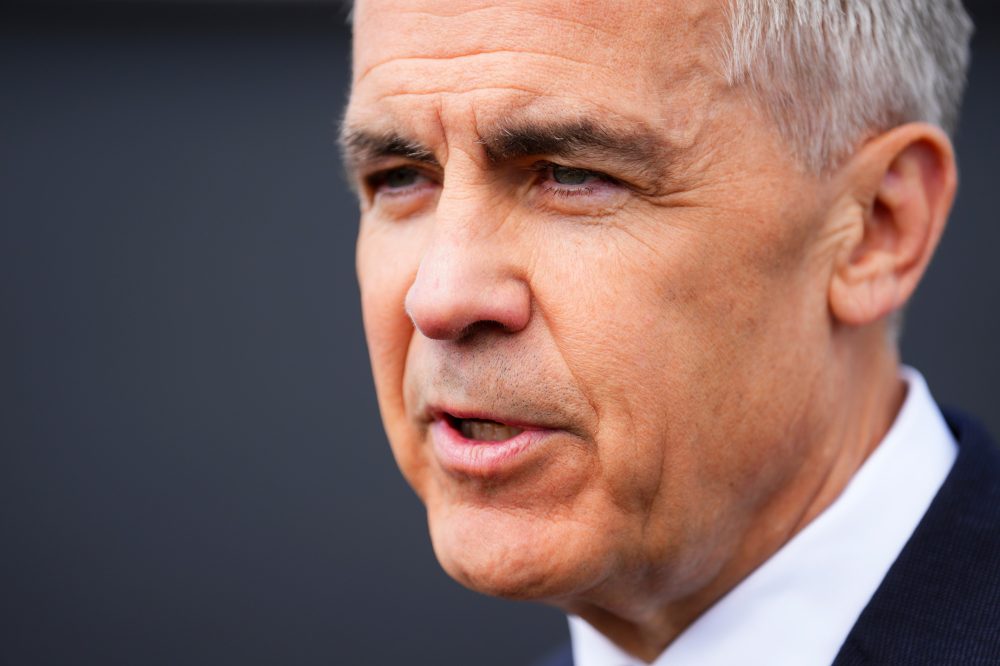
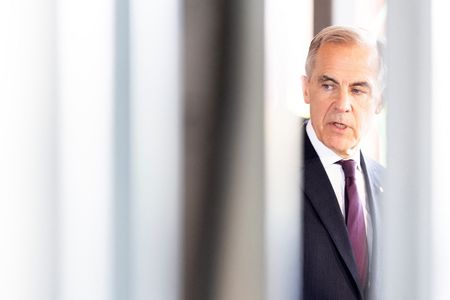
TORONTO (AP) — Monday’s special elections in three Canadian districts could push Prime Minister Mark Carney’s Liberal Party over the threshold needed for majority control of Parliament.
Voters in two Toronto-area constituencies — Scarborough Southwest and University-Rosedale — along with residents of Terrebonne near Montreal, are heading to the polls. Political analysts view the Toronto races as likely Liberal victories, while the Montreal-area contest remains competitive.
The Liberal Party currently holds 171 seats in the House of Commons and requires just 172 for majority status. Achieving this milestone would enable Carney’s government to advance legislation without opposition support and potentially remain in office through 2029 without calling another general election.
Election outcomes are anticipated later Monday evening.
Recent defections from rival parties have positioned the Liberals within striking distance of their goal. Five politicians have switched allegiance to Carney’s party, with four coming from the Conservative opposition.
One defector cited Carney’s recent address at the World Economic Forum in Davos, Switzerland, as influential in their decision-making process. During that appearance, Carney criticized economic intimidation tactics used by powerful nations against smaller states, earning broad acclaim for his statements.
Carney’s electoral success last year stemmed largely from Canadian frustration over President Donald Trump’s territorial acquisition rhetoric targeting their nation.
The former Bank of England governor, who also previously led Canada’s central bank, has shifted the Liberal Party toward more centrist-conservative positions since succeeding Justin Trudeau as prime minister in 2025.
McGill University political science professor Daniel Béland predicts strong Liberal performances in both Toronto constituencies, with reasonable prospects for success in Terrebonne as well.
According to Béland, worsening diplomatic relations between Canada and the United States during Trump’s second presidency has prompted many Canadians, including non-Liberal voters, to support their prime minister.
“Carney has thus far proved that he is an astute politician, despite the fact that he only formally entered the political arena in January of last year,” Béland said.
“The Davos speech has certainly helped boost Carney’s support at home, and he is now significantly more popular than when he became prime minister nearly 13 months ago.”
NEW DELHI, April 13 – Tehran is maintaining strong communication channels with New Delhi regarding the transit of Indian vessels through the strategically important Strait of Hormuz, Iran’s Ambassador to India Mohammad Fathali announced Monday.
Fathali described the diplomatic coordination as “good contact” and emphasized Iran’s commitment to assisting the Indian government with maritime passage through the vital shipping lane.
The ongoing U.S.-Israeli military conflict with Iran, which commenced in February, has created significant disruptions to maritime traffic through this critical waterway. The strait serves as a crucial transportation route for approximately 40% of India’s crude oil imports, with the current restrictions creating substantial impacts on commercial trade and creating pressure on energy supply chains.
Moscow officials announced Monday that Russia wants to establish shared food stockpiles with BRICS partner nations and former Soviet states as ongoing Middle East conflicts threaten worldwide food supplies.
Alexander Maslennikov, who serves as deputy secretary of Russia’s Security Council, stated that fertilizer supply disruptions have created serious concerns for agricultural production globally. Approximately half of the world’s food production depends on fertilizer, with one-third of global fertilizer trade previously moving through Iran’s Strait of Hormuz shipping corridor, which has faced major disruptions since regional conflicts intensified.
“To ensure food security, it is highly important to expand cooperation with friendly countries, primarily the member states of the Eurasian Economic Union and BRICS, including through the creation of joint food reserves,” Maslennikov told Russian news outlets.
The Security Council, headed by President Vladimir Putin, plays a key role in shaping Russia’s major national security policies. Putin was scheduled to meet with Indonesian President Prabowo Subianto on Monday, with food security expected to be a primary discussion topic.
Maslennikov warned that continued fertilizer shortages extending into early summer could slash major crop production by 50 percent, potentially triggering the most severe global food price increases seen in recent years. He projected that worldwide hunger could affect a record 673 million people.
International financial institutions including the World Bank, International Monetary Fund, and United Nations World Food Programme issued warnings last week about escalating oil, natural gas, and fertilizer costs from Middle East warfare inevitably leading to higher food prices and increased food insecurity.
As the world’s top wheat exporter, Russia produces and ships significant amounts of fertilizer but cannot substantially boost production capacity this year. The country aims to increase agricultural exports by 50 percent before 2030.
While acknowledging risks to Russia’s domestic food security, Maslennikov described the current crisis as creating long-term export opportunities for Russian agricultural producers.
“Russia is in a strong position to increase food exports to the countries of the Middle East, as well as to Asia, Africa and Latin America,” he explained.
Egypt leads BRICS nations in purchasing Russian wheat, while Russia also supplies food to China and India, the trading bloc’s largest economies. Russia heads the Eurasian Economic Union alongside grain-producing Kazakhstan, Belarus, Armenia, and Kyrgyzstan.
TEL AVIV, Israel (AP) — A comprehensive study released Monday by Tel Aviv University reveals that 2025 became the most lethal year for anti-Jewish violence in more than 30 years, claiming 20 lives across multiple continents.
Researchers documented fatal incidents spanning three continents, with the most devastating occurring during a December Hanukkah gathering at Sydney’s Bondi Beach, where 15 people lost their lives. Additional deadly attacks struck Washington D.C. and Colorado in the United States, while Britain witnessed two fatalities during a Yom Kippur service at a Manchester synagogue.
The surge in lethal violence represents a continuation of trends that emerged following Hamas’s October 7, 2023 assault and the ensuing Gaza conflict, according to the study’s authors.
“The data raise concern that a high level of antisemitic incidents is becoming a normalized reality,” said Uriya Shavit, the chief editor of the widely cited annual report.
The research indicates that 2025 surpassed all previous years for anti-Jewish fatalities since 1994, when a bombing targeting a Jewish community center in Argentina resulted in 85 deaths and over 300 injuries. Iranian involvement through its Hezbollah affiliate has been determined by Argentine courts in that earlier attack.
Beyond fatal incidents, investigators documented rising numbers of physical assaults, including beatings and stone-throwing incidents targeting Jewish individuals and communities.
While overall incident numbers showed modest growth compared to 2024, the totals represent a dramatic escalation from 2022 levels, before the Gaza war commenced. The study encompasses various forms of hostility, from physical violence and property damage to online harassment and verbal intimidation.
“The peak in the number of incidents was recorded in the immediate aftermath of the Oct. 7 attack, after which we began to see a downward trend — but unfortunately, that trend did not continue in 2025,” Shavit said.
Country-specific data shows the United Kingdom recording 3,700 incidents in 2025, up slightly from 3,556 the previous year. Canadian statistics jumped from 6,219 incidents in 2024 to 6,800 in 2025, representing more than triple the 2022 figures.
Even following the Gaza ceasefire implementation last October, hostile incidents continued climbing compared to the same timeframe in the previous year. Australian data shows incidents rising from 492 between October and December 2024 to 588 during the corresponding 2025 period. This contrasts sharply with the 472 total incidents recorded across all of 2022 in Australia, before the Israel-Hamas conflict began.
Carl Yonker, the study’s research director, noted that most physical assaults were perpetrated by individuals acting independently, making prevention efforts particularly challenging. He observed that attackers typically fell into categories of white supremacist extremists or radical Muslims, often sharing characteristics of unemployment and financial hardship.
The annual assessment comes from Tel Aviv University’s Center for the Study of Contemporary European Jewry in partnership with the Irwin Cotler Institute for Democracy, Human Rights and Justice. The timing coincides with Israel’s Holocaust Remembrance Day, which begins Monday evening to honor the 6 million Jewish victims of the Holocaust.
Data compilation draws from law enforcement reports, government agencies, and Jewish community organizations worldwide.
LIMA, Peru – Election officials in Peru continue tallying votes from a chaotic weekend election as conservative candidate Keiko Fujimori maintains a slim advantage in the country’s crowded presidential contest.
Distribution problems with voting materials forced election authorities to keep polls open through Monday for thousands of citizens who couldn’t vote Sunday when numerous polling locations opened late.
According to Peru’s national electoral office ONPE, the former congresswoman commands approximately 17% of ballots cast, with half of all votes now processed. Right-wing former Lima mayor Rafael Lopez Aliaga trails closely in second place with roughly 15%, while center-left contender Jorge Nieto holds third position at around 13%.
Sunday’s exit polling had indicated Fujimori would take the early lead, though Lopez Aliaga temporarily surged ahead during earlier vote counting phases, highlighting just how competitive and unpredictable this election has become.
Fujimori is the daughter of former President Alberto Fujimori, who is currently serving a prison sentence for human rights violations during his time in office.
ANKARA, Turkey – Turkey’s top diplomat voiced alarm Monday over the possibility that Iran or the United States might implement fresh restrictions governing passage through the Strait of Hormuz, while expressing skepticism about plans to reopen the crucial waterway using an international military presence.
Foreign Minister Hakan Fidan – who maintains regular communication with American, Iranian and Pakistani mediator officials – told the state-run Anadolu Agency that diplomatic solutions should be pursued to reopen Hormuz following unsuccessful weekend negotiations between Washington and Tehran that failed to produce a war-ending agreement.
The minister emphasized that negotiators must employ “convincing methods” when engaging with Iran and stressed the urgent need to reopen Hormuz quickly, noting that “nobody wants” the strategic passage to become entangled in the ongoing conflict.
“There are many difficulties to intervening here with an international armed force. Especially as the war continues, how much will it narrow, expand? We see many countries are not keen on this,” Fidan stated.
“The problem is whether there will be proposals on new regulations from now on, particularly from Iran,” which might choose to become “more active” regarding the strait, he explained.
Iran effectively sealed off Hormuz in response to American-Israeli military strikes, blocking approximately one-fifth of worldwide energy shipments and causing fuel costs to surge dramatically.
Beginning Monday, American military officials announced plans to implement a comprehensive blockade targeting all shipping traffic entering and leaving Iranian ports and coastal regions. The United States has requested assistance from international partners to help reopen the strait, though allies have shown little enthusiasm for the proposal.
Fidan characterized both American and Iranian negotiators as “sincere” during ceasefire discussions, but warned they might face obstacles if they take an “all-or-nothing” approach to addressing Iran’s nuclear enrichment activities.
According to sources, Fidan held discussions Sunday with American and Pakistani representatives participating in the diplomatic talks.
The United Kingdom and France are preparing to lead international discussions this week focused on reopening the critical Strait of Hormuz shipping corridor, with plans for what French President Emmanuel Macron called a strictly defensive maritime operation.
The diplomatic meetings aim to unite Britain, France, and other willing nations in creating a peaceful international coalition designed to restore open navigation through the strategic waterway.
“This strictly defensive mission, which will be separate from the warring parties, is intended to be deployed as soon as the situation allows,” Macron wrote on X.
Gulf region tensions have escalated following the United States’ announcement of a maritime blockade targeting Iranian port traffic, while Iran has essentially closed the strait, a critical passage that handles approximately 20% of global oil shipments.
UK Prime Minister Keir Starmer emphasized that the ongoing Strait of Hormuz closure is severely harming international commerce and contributing to rising living expenses worldwide.
“This week the UK and France will co-host a summit to advance work on a coordinated, independent, multinational plan to safeguard international shipping when the conflict ends,” Starmer posted on X.
Previously, Britain has organized meetings with representatives from more than 40 nations who support reopening navigation through the waterway. The United States did not participate in those earlier discussions.
Russian officials announced Monday their desire to maintain diplomatic relationships with Hungary’s incoming government after longtime ally Viktor Orban was defeated in recent elections by center-right candidate Peter Magyar.
Moscow’s spokesperson Dmitry Peskov addressed reporters, stating that Russia honors the decision made by Hungarian voters and seeks to preserve positive relationships with Hungary and broader Europe. Peskov described the current diplomatic relationship as “pragmatic ties” that the Kremlin wishes to continue under the new administration.
The electoral outcome marks a significant shift for Hungary, as Orban had maintained close partnerships with Russian leadership during his time in office.
Authorities in Noida, India deployed tear gas Monday to disperse factory workers whose labor demonstration entered its fourth day and escalated into violent confrontations, according to local police reports.
The industrial suburb near India’s capital witnessed scenes of chaos as demonstrators overturned and burned vehicles while hurling rocks at law enforcement officers throughout the satellite city.
Noida ranks among Asia’s most significant planned industrial centers, hosting thousands of manufacturing facilities across its territory.
The unrest comes amid rising living expenses worldwide, attributed to supply chain disruptions from ongoing conflicts affecting fuel availability. Similar worker demonstrations in Haryana state’s automotive sector recently prompted government officials to approve a 35% increase in minimum wage standards.
Vinay Mahoti, a 30-year-old employee from Bihar state working at a local textile manufacturer, explained his participation in the movement began within his workplace before joining street demonstrations with workers from other companies.
“Duty hours should be fixed, overtime hours should be paid, and companies…should adhere to the guidelines laid by the federal government,” he stated when outlining the protesters’ demands.
Video footage captured dozens of demonstrators marching through streets while chanting demands as riot-equipped security forces monitored the situation.
Additional recordings showed burning overturned vehicles and protesters attempting to breach police barriers while throwing projectiles.
Law enforcement officials confirmed they employed “minimum force” tactics to preserve public order, while Narendra Kashyap, a regional legislator representing Uttar Pradesh state, encouraged demonstrators to pursue dialogue with government representatives.
“Senior police and administrative officials are making persistent efforts to counsel the workers and urge them to maintain peace and restraint,” Gautam Budh Nagar police stated in their official announcement.
SEOUL – South Korean authorities announced Tuesday they will prohibit the hoarding of medical syringes and needles in an effort to ensure healthcare facilities maintain adequate supplies, according to the nation’s finance ministry.
Government officials met with syringe and needle manufacturers last week to assess current inventory levels and explore options for ramping up production amid growing supply chain concerns linked to the conflict in Iran, the industry ministry reported.
Rising costs for plastic materials used in medical equipment and packaging have resulted from disrupted oil and petrochemical supply chains, creating fears about potential shortages and excessive stockpiling behavior.
Canadian Prime Minister Mark Carney appears positioned to gain a parliamentary majority for his Liberal administration following Monday’s special elections, a development that would strengthen his ability to advance his policy priorities amid growing global uncertainty.
Monday’s voting takes place in three districts across Ontario and Quebec, with two of these areas having historically supported Liberal candidates. Securing victory in just one district would provide Carney with the majority he needs, while polling data suggests the Liberals may claim at least two seats.
Carney has indicated this parliamentary control would enhance his capacity to address ongoing trade disputes with the United States under President Donald Trump’s administration. The Liberal Party currently holds 171 positions in Canada’s 343-member House of Commons.
Achieving a parliamentary majority would grant Carney greater governing flexibility and strengthen his leadership position through 2029, when the next national elections are scheduled.
“He will be able to pass legislation without having to go to the opposition to secure enough votes,” explained Andrew McDougall, who teaches Canadian politics at the University of Toronto. The Liberal government has depended on occasional Conservative Party support to advance economic and trade-related bills over the past year.
McDougall noted that majority control would also allow Carney to determine when future elections occur. Minority governments face the constant threat of sudden elections if they fail confidence votes and typically survive less than two years.
Carney’s position has been bolstered by five opposition lawmakers who joined the Liberal Party over five months, providing him with a more substantial margin beyond a single-seat majority. Only governments under Canada’s first prime minister John A. Macdonald and Jean Chretien have experienced more defections to the ruling party.
This past Wednesday, veteran Conservative politician Marilyn Gladu announced her switch to Carney’s government, stating Canada requires “a serious leader who can address the uncertainty that has arrived due to the unjustified American tariffs.”
Gladu, a former chemical engineer who has faced criticism for promoting unverified scientific treatments during COVID-19, opposing conversion therapy bans, and suggesting military intervention against Indigenous pipeline protests, expressed gratitude to Carney for welcoming her into “the large Liberal tent.”
Speaking Thursday, Carney emphasized that fundamental Liberal Party principles including inclusivity, diversity, and protecting Charter of Rights and Freedoms remain unchanged, with government caucus membership requiring support for these values.
However, Yves-Francois Blanchet, who leads the separatist Bloc Quebecois party, criticized the development, saying “the ideological differences between the Liberals and Conservatives are getting thinner and thinner by the minute.”
The Bloc Quebecois faces an extremely close contest with the Liberals in Terrebonne, Quebec. While the Liberals won this district by a single vote in the previous federal election, Canada’s Supreme Court invalidated the result due to a printing error on a voter’s envelope.
The remaining two contested seats are located in Ontario, including one left vacant by former Deputy Prime Minister Chrystia Freeland and another previously occupied by former Liberal member Bill Blair, who stepped down after receiving appointment as ambassador to the United Kingdom. Analysts expect the Liberals to retain both positions.
“What we’re seeing right now is a change of focus for the Liberal party,” observed Laura Stephenson, who chairs the political science department at the University of Western Ontario.
Stephenson noted that while Carney’s predecessor Justin Trudeau moved the party leftward and emphasized Indigenous reconciliation, minority rights, and immigration, Carney faces more immediate challenges as a more centrist leader.
“He is focused on helping Canada survive the economic turmoil, not remaking society,” she explained. “When we’re in tough times like this, there are different calculations being made.”
New polling data from Nanos indicates more than half of Canadians favor Carney as prime minister, with only 23% supporting Conservative leader Pierre Poilievre. Before Carney assumed Liberal Party leadership last year, Poilievre was projected to win the next election by over 20 percentage points.
“Carney has done a fairly good job showing Canadians he can handle Trump,” McDougall from the University of Toronto said. “He’s shown Canadians he’s a competent manager of the economy and the country. And so far Canadians have not been overly impressed by the alternatives.”
KAMPALA, Uganda — In an unprecedented legal proceeding, Uganda launched its first mobile court session Monday as Christopher Okello Onyum faced charges for allegedly murdering four children at a nursery school.
The historic trial took place inside a large tent erected on church property, located near the scene where the horrific crime occurred on April 2. President Yoweri Museveni had specifically ordered this public court format to allow community members direct access to the proceedings.
Onyum entered a not guilty plea to all four murder charges during Monday’s session. Prosecutors allege he carried out a machete attack at the Gaba Early Childhood Development Program in a Kampala suburb, though authorities have not determined his motivation for the shocking assault.
According to witness accounts, the defendant posed as a parent to gain entry to the school facility. After speaking briefly with staff members, he reportedly secured the entrance gate before launching his attack on the children.
Following the incident, an enraged mob attempted to kill Onyum before police intervened to take him into protective custody. If found guilty, he faces potential execution under Uganda’s laws.
The mobile court concept has sparked significant debate since President Museveni ordered the expedited public trial. Critics argue this approach risks turning a tragic case into a spectacle while compromising the defendant’s legal rights.
The Uganda Law Society issued a sharp rebuke of the president’s directive, calling it governmental overreach that jeopardizes fair trial protections. “This is not justice,” the organization stated. “It’s a judicial lynching rally.”
Hundreds of spectators gathered to observe the proceedings, marking the inaugural use of mobile courts after formal operational guidelines were established in March.
Court officials have defended the innovative approach, describing it as demonstrating their “commitment to taking justice closer to the people through innovative approaches.”
BUDAPEST (AP) — Hungarian voters delivered a stunning blow to Prime Minister Viktor Orbán’s 16-year reign, decisively choosing pro-European candidate Péter Magyar in what many are calling a political earthquake that could reshape the nation’s future.
Magyar, a reformist leader who campaigned on restoring Hungary’s relationship with Europe, secured a commanding victory that has left citizens across the country wondering what comes next after more than a decade of increasingly authoritarian rule.
Crowds of jubilant supporters, including many young Hungarians, flooded Budapest’s streets late Sunday to celebrate what they see as a turning point toward greater freedom and a return to European democratic values.
Among the celebrants was Adrien Rixer, who traveled from London specifically to cast his ballot. “Because I really wanted to make my vote count, and I’m over the moon,” Rixer explained during the festivities.
“Finally I can say that I’m a proud Hungarian, finally after 16 years,” he said.
Throughout his campaign, Magyar committed to reversing Hungary’s alignment with Russia and rebuilding relationships with European partners. He told voters that following 16 years of authoritarian leadership and weakened legal institutions under Orbán, he would eliminate corruption and establish a “peaceful, functioning and humane” Hungary.
The specifics of these promised changes remain unclear. Throughout his lengthy tenure, Orbán wielded a two-thirds legislative supermajority that enabled him to enact a new constitution, overhaul election laws, and restructure the court system.
Magyar’s Tisza party achieved precisely that level of control Sunday, capturing 138 out of 199 parliamentary positions, providing extensive power to reverse much of the policy framework that enabled Orbán to influence the courts, distort electoral processes, restrict media freedoms, and target LGBTQ+ rights.
Numerous Hungarians, along with European observers who monitored the election closely, worried that a simple Tisza majority would prove insufficient to genuinely reform Orbán’s established system. Others express concern about the implications of such sweeping authority, questioning whether transferring a supermajority from Orbán to his rival is wise.
“Its hard to see that with two-thirds that it’s going to be a fair government, but we will see,” said celebrant Dániel Kovács. “Lets hope that it’s going to be a promising four years.”
Magyar has criticized Orbán and his administration for poor economic and social service management, along with widespread corruption that he claims has enriched a select group of political allies while neglecting average citizens.
The incoming leader has committed to addressing these alleged violations and intends to establish an Office for the Recovery of National Assets to retrieve what he characterizes as improperly obtained wealth by Orbán’s associates.
A central campaign theme for Magyar involved promising to secure billions of euros in frozen European Union funds that were withheld from Hungary due to corruption and legal system concerns during Orbán’s leadership. He has also committed to adopting the euro currency by 2030 — a move Orbán’s administration consistently opposed.
Budapest resident Imre Végh stated early Monday that Orbán had constructed an “illiberal system” that contradicted Hungary’s core principles.
“We are Europeans and we want to stay in Europe,” he said.
Armed attackers targeted a police vehicle escorting polio vaccination workers in Pakistan’s northwestern region on Tuesday, resulting in the death of one officer and injuries to four others, according to law enforcement officials. Police forces engaged the assailants, killing two of them during the firefight.
The assault took place in Hangu district within Khyber Pakhtunkhwa province, which shares a border with Afghanistan, as reported by local police official Mahmood Alam. The incident coincided with Pakistan’s launch of its second countrywide polio prevention initiative this year.
Although no organization has taken credit for the attack, authorities suspect involvement by the Pakistani Taliban or regional extremist factions known for conducting similar assaults throughout the area. According to the World Health Organization, Pakistan and Afghanistan are the sole remaining nations where polio transmission continues.
During the weeklong immunization effort targeting more than 45 million children under age 5 nationwide, First Lady Aseefa Bhutto Zardari called on families to have their children vaccinated. She emphasized that the initiative will coordinate with Afghanistan to prevent cross-border disease spread and address remaining coverage gaps.
The First Lady, whose parents are President Asif Ali Zardari and the late Prime Minister Benazir Bhutto—who was assassinated by militants in 2007 after championing polio elimination efforts—issued a statement declaring that “Pakistan stands at a crucial moment in the fight against polio.” She noted that despite being closer to eradication than ever before, “the final stretch remains the most challenging.”
She pointed to progress made, citing 31 polio cases documented across Pakistan in 2025 compared to just one case recorded this year, while cautioning against overconfidence.
Pakistan’s vaccination strategy involves teams visiting homes directly to immunize children, contrasting with Afghanistan’s approach of operating fixed vaccination centers where families bring their children for shots.
In Afghanistan’s capital, Ministry of Public Health spokesman Sharafat Zaman announced the start of the country’s first annual polio vaccination drive, conducted alongside international organizations to immunize approximately 12.6 million children under 5 years old. He noted that harsh weather conditions have caused delays in certain regions.
Zaman appealed to parents, religious leaders, and community figures to maximize campaign participation, emphasizing that vaccination remains the sole method of polio prevention.
Pakistan’s anti-polio efforts have continued for years despite ongoing threats to health workers and their police escorts from militants who spread false claims that vaccination programs represent Western plots to harm children’s fertility.
Security forces have positioned thousands of officers to safeguard workers after receiving intelligence about potential attacks. Since the 1990s, more than 200 polio vaccination workers and their police protectors have lost their lives in Pakistan, according to government figures.
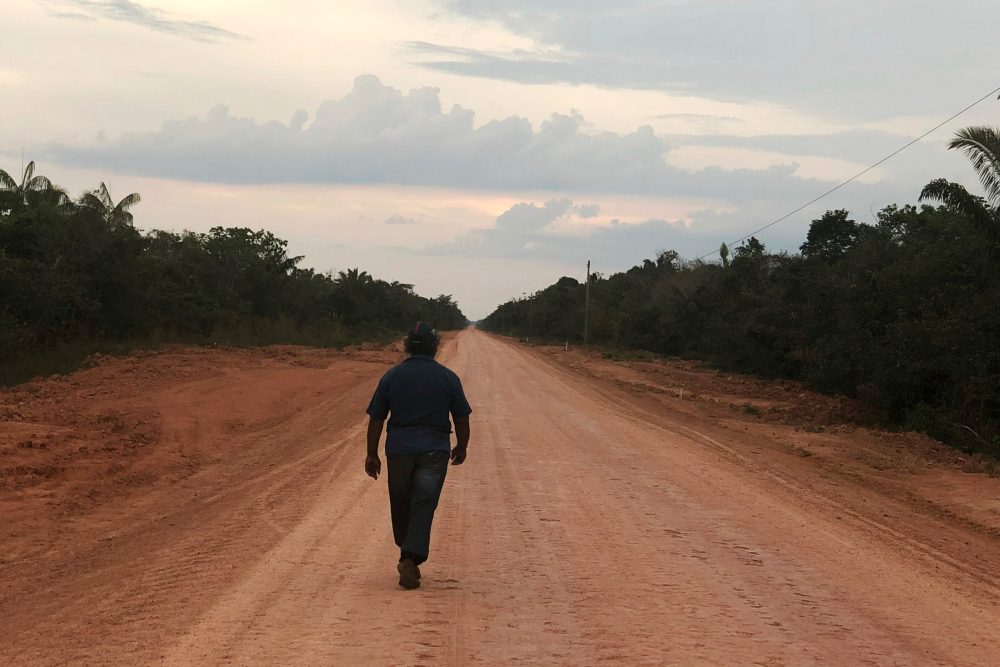
Venezuela is making a renewed push to bring international mining companies back to develop its mineral wealth, but the effort faces significant obstacles from criminal organizations that have taken control of mining operations over the past two decades.
The South American nation’s government has gained support from the Trump administration for its initiative to draw foreign investment to extract gold, iron and bauxite deposits. However, nine local miners, residents and community advocates interviewed by Reuters expressed doubt that international firms can make meaningful investments without substantial security improvements in Bolivar state.
Local sources report that criminal organizations operate alongside Colombian rebel groups in the region, while government security forces have been accused of working with criminals to support illegal gold mining operations.
“The (crime) syndicates control the mines. They’re the ones who set the rules and enforce the law in many of the mines where we work. Depending on the situation, they impose punishments and can be very violent,” said Ines Garcia, a 51-year-old informal miner in El Callao municipality. “You look after yourself, because even talking is a risk.”
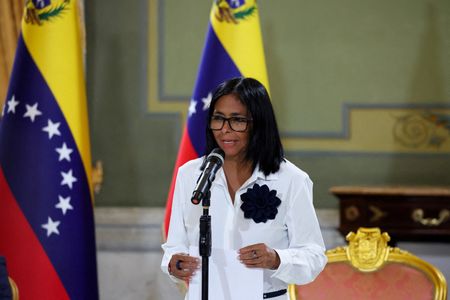
The Trump administration has endorsed efforts by Venezuela’s acting president, Delcy Rodriguez, to draw investors since she assumed power in January. This includes backing for mining legislation approved in April by the ruling party-controlled national assembly, led by Rodriguez’s brother Jorge. The new law permits foreign and private companies to form partnerships for extracting gold and strategic minerals.
Venezuela’s economy, heavily reliant on oil, has suffered for years from extreme inflation, widespread emigration of skilled workers, international sanctions, crumbling oil infrastructure and widespread corruption. The country urgently needs revenue to finance Rodriguez’s commitments to enhance public services and increase wages after Washington ousted former president Nicolas Maduro in January. Mining investments could provide additional sources of tax revenue, royalties and jobs.
During a March visit, U.S. Interior Secretary Doug Burgum stated the legislation would create business opportunities and that Rodriguez would guarantee company security. The United States has already issued permits authorizing specific transactions involving Venezuelan gold, including deals with state-owned mining firm Minerven.
“You have guarantees, you have legal certainty, political security, stability and peace of mind so your investments can be developed fully — not only in the hydrocarbons sector, where there are many opportunities, but also in the mining sector,” Rodriguez told visiting investors at a March event. The government has not disclosed specifics about its security strategy for Bolivar.
Canadian-listed Gold Reserve, which has announced plans to restart mining operations in Venezuela and participated in the Burgum delegation, subsequently received a U.S. license providing 30 days to negotiate with the government. Gold Reserve did not respond to Reuters inquiries about whether it was pursuing the return of its Brisas mine, which the government seized in 2009.
Swiss commodities trader Trafigura is already collaborating with Venezuela’s state gold mining company Minerven on a responsible sourcing initiative announced last month, stating the work complies with U.S. Treasury licensing requirements. Mining firms Hartree, Peabody Energy, Ivanhoe and TechMet, identified in local media as part of the Burgum delegation, did not respond to Reuters questions.
While many international mining companies have extensive experience handling security challenges, residents and workers in the Orinoco Mining Arc—four municipalities in Bolivar designated by Rodriguez’s predecessor for mining development—view corporate interest as premature.
“For real investment to take place it is essential to resolve supply-chain transparency, security — because this is a hot zone with armed groups present — and oversight of the socio-environmental impact of operations,” said an engineer who worked for Minerven for a decade and requested anonymity due to fear of retaliation.
According to sources, Colombia’s National Liberation Army (ELN) rebels and former members of the disbanded Revolutionary Armed Forces of Colombia (FARC) operate in Bolivar, along with local criminal organizations including Tren de Guayana and 3R, plus unnamed groups led by individuals known as ‘Juancho’ and ‘Fabio.’
Criminal networks have provided mining equipment, fuel and weapons in the area while extracting gold for years, according to Pedro Yepez, 61, who has worked in mining in El Callao and Sifontes municipalities for two decades. “There is no way they can do that without the government’s complicity and permission,” he said.
A community activist who has documented human rights abuses in the area for decades and requested anonymity for safety reasons confirmed that armed groups control mining operations with government complicity. Other residents and community leaders shared similar concerns, with several telling Reuters that criminals routinely extort businesses while authorities ignore the situation.
Venezuela’s communications ministry, which manages all government press inquiries, did not respond to detailed questions about allegations of military complicity, regional security plans or investor contacts.
The military’s ‘Operation Roraima,’ designed to combat illegal mining in Bolivar, launched in 2023 and has continued since, with senior officials publicly showcasing the destruction of illegal mining camps and equipment through social media posts featuring controlled explosions.
The U.S. Department of the Interior did not respond to detailed questions regarding regional security concerns.
A 2022 UN Human Rights Council fact-finding mission report accused both military forces and armed groups of involvement in killings and disappearances, along with other rights violations in the region. The report also expressed serious concern about worker exploitation, child labor, human trafficking, Indigenous rights violations and environmental damage.
The Organization for Economic Co-operation and Development noted in a separate 2021 report that gold exports from Venezuela have steadily increased since Maduro established the Arc in 2016, driven mainly by informal and illegal mining. The report highlighted human rights abuses, environmental destruction and military collaboration with armed groups connected to the industry.
Sixteen local non-governmental organizations criticized the new mining law in an open letter published in late March, arguing it would provide “a veneer of legality” to “severe environmental degradation and ongoing human rights violations.” They expressed particular concern about continued military oversight.
“Military presence in mines has historically been associated with human rights violations, corruption and the creation of hybrid governance structures,” the letter stated.
Even if foreign mining companies successfully established operations in Bolivar, some activists and residents remain concerned about community impacts and what international presence would mean for small-scale and informal miners, including Indigenous groups in the region.
“You have to put the term ‘benefit’ in quotation marks — who benefits? Because the same state that negotiates and seeks investors forgets all the problems that exist,” said Italo Pizarro, an activist from Sifontes municipality, who warned that Indigenous communities could face particular risks.
A Bolivar geologist with over 40 years of industry experience said removing tens of thousands of informal miners working in the region, along with criminals who profit from extortion, would be challenging: “This won’t be simple.”
Foreign ministers from Southeast Asian nations issued a joint appeal Monday for Washington and Tehran to maintain diplomatic efforts toward a lasting peace agreement, while ensuring current ceasefire terms are properly enforced.
The Association of Southeast Asian Nations held a virtual meeting to address ongoing Middle Eastern tensions and their worldwide effects. During the session, ministers emphasized the importance of keeping maritime and air traffic flowing freely through the strategically important Strait of Hormuz.
The diplomatic gathering revealed growing concerns about how the conflict affects regional stability beyond immediate security threats, particularly regarding energy supplies and food distribution networks.
Leaders from the 11-nation organization emphasized the critical importance of maintaining energy access for member countries when international crises emerge.
The ministers renewed their pledge to strengthen existing partnerships with China, Japan, and South Korea designed to address food shortages, price volatility, and supply chain interruptions across the region.
Philippine Foreign Affairs Secretary Ma. Theresa Lazaro told reporters that discussions included coordinated strategies for obtaining fertilizer and other essential agricultural materials.
Lazaro also revealed that ministers considered creating a rapid-response communication system for ASEAN foreign ministers during emergency situations.
The Philippines, currently serving as ASEAN chair, plans to move forward with the leaders’ summit scheduled for May, which will concentrate on food and energy security issues along with protecting citizens abroad, Lazaro confirmed.
Ghanaian officials report that France has signaled willingness to participate in discussions regarding reparations for the transatlantic slave trade, following diplomatic meetings held in Paris last week.
Ghana’s President John Dramani Mahama met with French President Emmanuel Macron on Wednesday, accompanied by Foreign Minister Samuel Okudzeto Ablakwa and additional government representatives.
Following the diplomatic session, Ablakwa posted on social media platform X that Macron demonstrated France’s readiness to engage in conversations about reparations. These discussions would encompass returning stolen cultural artifacts, tackling worldwide economic disparities, and eliminating institutional racism.
A spokesperson from the Élysée Palace confirmed on Sunday that both nations discussed France’s initiatives to repatriate culturally important items and human remains, along with the legal structures governing such returns.
However, the French official made no reference to the broader measures that Ablakwa described.
This diplomatic encounter occurred after the United Nations passed a resolution last month, spearheaded by Ghana, that designated slavery as the “gravest crime against humanity” while demanding reparations. France joined other European nations in abstaining from the vote.
France’s UN representative explained the abstention stemmed from worries that the resolution seemed to “establish a hierarchy among crimes against humanity.”
Despite the abstention, Ablakwa stated that Macron expressed France’s readiness for an “open and honest dialogue” on the issue.
France acknowledged transatlantic slavery as a crime against humanity in 2001. However, similar to most European countries, it has not issued a formal apology for its participation or pledged to provide reparations.
Between the 15th and 19th centuries, European vessels kidnapped and forcibly transported at least 12.5 million Africans who were then sold into slavery. Historical records from the Slave Voyages database indicate France was responsible for trafficking approximately 1.3 million people.
Macron announced last year his intention to establish a commission to investigate France’s historical relationship with Haiti.
While demands for reparations have gained global support in recent years, opposition has also intensified, with critics contending that contemporary nations should not bear responsibility for past injustices.
A diplomatic crisis has erupted between South Korea and Israel following inflammatory social media posts by South Korean President Lee Jae Myung that drew parallels between Israeli military operations and the Nazi Holocaust.
The international incident began Friday when President Lee posted on the social platform X, stating that “wartime killings” conducted by Israeli Defense Forces were “no different from the Jewish massacre” carried out by Nazi forces during World War Two. He also shared video footage claiming it depicted Israeli soldiers torturing and forcing a Palestinian off a building rooftop.
Israel’s Foreign Ministry responded sharply on Saturday, posting that Lee “for some strange reason, chose to dig up a story from 2024.” Israeli officials explained the incident happened during a military operation targeting what they termed “terrorists” and underwent complete investigation.
The ministry condemned Lee for the “trivialization of the massacre of Jews on the eve of Holocaust Remembrance Day in Israel,” declaring his statements were “unacceptable and warrant strong condemnation.” Israel observes Yom HaShoah on Monday, honoring the six million Jews killed by the Nazis.
Israeli military officials acknowledged in 2024 they were examining the incident shown in the videos, calling the soldiers’ behavior serious and inconsistent with military standards.
These Friday remarks represent an unusual foray into international affairs on social media for Lee, occurring while his administration deals with rising energy costs following American and Israeli military strikes against Iran. Iran has blocked tanker passage through the Strait of Hormuz, significantly impacting South Korea as a major global oil and gas importer.
While Lee’s posts didn’t reference the Iran conflict directly, he mentioned South Koreans currently experiencing “immense pain and national hardship.”
On Saturday, the president expressed disappointment over Israel’s criticism, saying it was normal to feel sympathy for those who are suffering.
South Korea’s foreign ministry subsequently stated it was unfortunate that Israel “misunderstood” Lee’s comments, which focused on universal human rights principles.
The controversy has also divided domestic opinion in South Korea.
Conservative opposition parties criticized Lee for lacking diplomatic prudence and accused him of applying double standards by remaining silent about North Korean human rights violations. Meanwhile, Lee’s Democratic Party commended him for defending universal human dignity values.
The influential Joongang Ilbo newspaper editorial on Monday suggested Lee should recognize the significant impact of presidential statements and the potential for miscommunication when making unfiltered social media posts about delicate international conflicts.
Spanish Prime Minister Pedro Sánchez has arrived in China this week for his fourth visit in four years to the globe’s second-largest economy, as Spain works to build stronger political and economic relationships with Beijing.
The visit occurs during a complicated international period, with European leaders attempting to help end the U.S.-Israeli conflict in Iran. Spain’s relationship with the United States has become tense, particularly because of Sánchez’s strong criticism of the U.S.-Israeli military actions in Iran.
Speaking at Beijing’s Tsinghua University on Monday, Sánchez called on China to take a larger leadership role in a multipolar world, one day before his scheduled meeting with Chinese President Xi Jinping.
“For example, by demanding … that international law be respected and that the conflicts in Lebanon, Iran, Gaza and the West Bank and Ukraine cease,” Sánchez said.
Spain has stated its goal to expand political relationships with major global powers, including Beijing.
Spanish government officials have indicated they want to increase Chinese investment and boost exports to China, despite the fact that trade negotiations are handled by the European Union on behalf of all 27 member nations, including Spain.
The southern European country, which produces more than half of its electricity through renewable energy sources, requires Chinese essential raw materials, solar panels and clean energy technologies — much like other European nations moving away from fossil fuels.
From a political standpoint, this visit happens as Spain has emerged as Europe’s most outspoken opponent of U.S. and Israeli military operations in the Middle East, with Sánchez’s administration recently closing Spanish airspace to U.S. aircraft being used in Iran and denying the U.S. access to jointly operated military facilities in southern Spain.
“Given the increased frictions with the U.S. administration, these annual meetings have taken on an increased importance,” said Eric Sigmon, a Madrid-based political analyst and a former U.S. national security adviser, about Sánchez’s latest trip to China.
Sánchez’s visit to China runs from April 13-15, and will include meetings Tuesday with Xi, Premier Li Qiang and China’s top lawmaker, Zhao Leji, who ranks third in the ruling Communist Party leadership.
Spain, which has the eurozone’s fourth-largest economy, has maintained a less confrontational approach toward China compared to other EU nations in recent years. The country has worked to restructure trade relationships with China, whose exports to Spain significantly exceed those from the Iberian nation of 49 million people to China, which has over 1.4 billion residents.
According to the American Enterprise Institute think tank’s China Global Investment Tracker, while Chinese investment in major EU economies like France and Germany has declined over the past five years, it has increased in Spain since 2019, though investment levels remain lower than several other European countries.
As a medium-sized political power, Spain under Sánchez has expressed its desire to develop stronger bilateral relationships with major global powers and economies, including China and increasingly India, alongside its U.S. relationship.
In November, Spain’s King Felipe VI also conducted an official visit to China, marking the first time in 18 years that a Spanish monarch had done so, highlighting the nation’s commitment to strengthening connections with Beijing.
“The economic and commercial part of the relationship is the most important part. Spain needs foreign capital and it needs investment and it likely sees China as a potential source for that,” said Sigmon.
For China, Spain represents “a more friendly and conciliatory partner in Western Europe,” he noted, adding that the unequal nature of the relationship may make it challenging for Spain to persuade Chinese negotiators to make concessions regarding technology or other areas the Spanish government has shown interest in.
Gonzalo Martinez, a 37-year-old educator, dreams of the day he can check his banking app without seeing red numbers staring back at him.
The Buenos Aires teacher represents a troubling trend across Argentina, where an increasing number of families are defaulting on bank loans as their buying power erodes due to soaring prices and reduced government assistance programs.
Fresh statistics from Argentina’s central banking authority reveal household loan defaults jumped to 10.6% this past January, climbing from 9.3% the previous month and representing a dramatic surge from just 2.8% in December 2023 when President Javier Milei assumed power.
Since taking office, Milei has implemented aggressive spending reductions he calls “chainsaw” cuts aimed at controlling runaway price increases, successfully delivering the nation’s first balanced budget in over ten years. However, these belt-tightening policies have sparked public demonstrations, with university students and senior citizens protesting cuts to educational funding and retirement benefits.
Economic experts speaking to Reuters explained that the surge in unpaid loans stems from declining real wages, as salary increases have failed to match inflation rates while the administration has eliminated subsidies for essential services including power, natural gas, and public transit.
“Rising utility bills have squeezed household budgets, making it increasingly difficult for families to manage their debt obligations,” explained Pablo Besmedrisnik, an economist who heads the VDC consulting firm.
Martinez, who calls Buenos Aires home, described how credit card balances have piled up as his teaching income hasn’t grown with inflation.
“I expected what I’d be paying on the card to represent a smaller share of my income, but it hasn’t,” he said.
While yearly price increases have declined substantially under Milei’s leadership — dropping from 211.4% in 2023 to 117.8% in 2024 and finishing 2025 at 31.5% — economic analysts note this progress hasn’t restored families’ spending power.
Month-to-month price increases have actually accelerated recently, jumping from 1.5% last May to 3% this past March, according to central bank market forecasts published Wednesday.
“Rising loan defaults mirror the financial squeeze hitting Argentine households,” said Pablo Moldovan, an economist who directs C-P Consultora.
Nahuel, a 37-year-old government worker who requested his surname not be published, described taking out a vacation loan and then needing additional borrowing to cover the payments.
He now carries five past-due loans.
Financial experts predict default rates will continue climbing as higher international energy costs drive up domestic prices.
“We see no indication this pattern will reverse,” Moldovan stated.
Multiple consulting firms and economists cautioned that default rates on loans from non-traditional lenders — including private loan companies — may be two to three times higher than official banking figures show.
Economic forecasters anticipate China’s financial performance will demonstrate renewed strength during the opening months of the year, driven primarily by robust international trade activity, according to a comprehensive survey of 50 economists conducted by Reuters.
The world’s second-largest economy is projected to achieve 4.8% growth compared to the same period last year, representing an uptick from the disappointing 4.5% recorded in the final quarter of the previous year – marking the weakest performance in three years.
However, analysts warn that this positive trajectory may not sustain itself throughout 2026. Economic expansion is anticipated to decelerate to 4.7% during the second quarter, ultimately resulting in annual growth of 4.6% for the full year, down from 5.0% in the previous year. This forecast aligns closely with Beijing’s official target range of 4.5% to 5.0%.
While China has managed to weather the initial economic impact from the Iranian conflict with relatively minor disruptions – thanks to substantial petroleum reserves, varied energy sources, and strict price regulation – economists caution that sustained elevated oil costs are already increasing production expenses and reducing company profits during a period when domestic consumer spending remains sluggish.
The nation’s export sector, which serves as a crucial economic foundation, faces potential challenges if the regional conflict continues and weakens the global marketplace, experts note.
“Higher oil prices would hit China’s economy through terms of trade shock and downstream margin squeeze,” analysts at Morgan Stanley said in a note.
“But unlike many other net oil importing countries, which face production disruptions owing to energy shortage and constrained policy space amid elevated inflation, China is better positioned.”
Warning signs are beginning to emerge within the Chinese economy. Manufacturing prices increased in March for the first time in over three years, indicating that energy-related cost pressures are infiltrating the economy and potentially threatening already narrow profit margins for businesses.
Upcoming economic data scheduled for release Tuesday is expected to reveal that China’s export growth weakened in March as international buyers pursuing artificial intelligence-driven opportunities face the harsh realities of Middle Eastern warfare.
When measured quarterly, economic growth is forecast at 1.3% for the January through March period, slightly higher than the 1.2% recorded in the previous quarter.
Chinese officials will publish first-quarter economic data alongside March activity statistics on April 16 at 0200 GMT.
Beijing has established a budget deficit target of approximately 4% of gross domestic product for 2026 and prepared substantial bond offerings to bolster economic growth. Meanwhile, the central bank has committed to maintaining supportive monetary policy despite having restricted ability to reduce interest rates as inflation begins to rise.
“With the 2026 growth target set at 4.5–5%, a strong first-quarter print should give policymakers room to hold off major stimulus at the late-April Politburo meeting despite Middle East-related energy risks,” analysts at Societe Generale said in a note.
The Politburo, representing the Communist Party’s primary decision-making authority, is scheduled to convene later this month to evaluate economic prospects.
Government leaders have recognized a significant disparity between robust production capacity and insufficient consumer demand, promising to substantially increase household spending’s portion of the overall economy during the next five years, though specific numerical goals have not been established.
Financial analysts surveyed by Reuters anticipate the central bank will maintain the primary one-year lending rate at current levels through the end of 2026, while reducing banks’ reserve requirements by 20 basis points during the third quarter.
Consumer price inflation is projected to accelerate to 1.0% in 2026 from zero growth in 2025, before stabilizing in 2027, according to the survey results.
Maritime traffic through the critical Strait of Hormuz has come to a complete stop, according to intelligence reports, while petroleum prices surged on Monday following President Donald Trump’s social media declaration that America would implement a naval blockade of the strategic waterway.
The U.S. Central Command subsequently clarified that the blockade would target vessels entering or leaving Iranian ports and coastal regions, while permitting ships traveling between other nations’ ports to continue using the strait – a modification from Trump’s initial threat to completely seal off the entire passage.
Trump validated the timeline and certain aspects of CENTCOM’s announcement through a post on his social media platform early Monday morning.
Iran’s Revolutionary Guard declared the waterway remained under Tehran’s “full control” and stayed accessible to civilian vessels, though military ships would face a “forceful response,” according to reports from two semi-official Iranian media outlets.
These developments followed extensive U.S.-Iran ceasefire negotiations in Pakistan that concluded without reaching any accord, creating conditions for a potential confrontation.
Iranian parliament speaker Mohammad Bagher Qalibaf, who headed Iran’s negotiating team, delivered a direct message to Trump upon returning to Iran: “If you fight, we will fight.”
The ongoing conflict, now in its seventh week, has resulted in thousands of casualties and disrupted international markets.
Japan voiced backing for the weekend U.S.-Iran discussions held in Pakistan and stated it continues monitoring developments while hoping for swift de-escalation.
Chief Cabinet Secretary Minoru Kihara informed reporters Monday that Tokyo believes achieving de-escalation, including guaranteeing safe transit through the Strait of Hormuz, remains paramount.
“We hope a final agreement will be reached swiftly through diplomatic efforts,” Kihara stated.
When questioned about Japan potentially deploying warships for minesweeping operations in the vital waterway, Kihara indicated no decisions had been made.
Southeast Asian nations called on Washington and Tehran Monday to continue peace talks, implement a ceasefire, and reestablish secure passage for vessels, maritime workers, and aircraft through the Strait of Hormuz.
Foreign ministers from the Association of Southeast Asian Nations issued this urgent appeal during an emergency video conference – their second in recent weeks – to evaluate the Middle East conflict’s impact, including rising fuel costs, and explore cooperative responses to global crises.
The 11-member organization emphasized “the obligations of all states to resolve their differences through peaceful means, to respect the sovereignty and territorial integrity of all nations, to protect civilians and civilian infrastructure in armed conflicts.”
It demanded “the full and effective implementation of the ceasefire, aimed at preventing further suffering and loss of lives, ensuring maritime security and freedom of navigation and overflight.”
Tehran issued warnings against Persian Gulf and Gulf of Oman ports following America’s announcement of blocking Iranian ports and coastline.
“Security in the Persian Gulf and the Sea of Oman is either for everyone or for NO ONE,” stated the Islamic Republic of Iran Broadcasting. “NO PORT in the region will be safe,” Iranian military officials declared.
Petroleum prices began rising and Asian financial markets largely fell Monday as U.S. military forces prepared to block ships traveling to or from Iranian ports through the Strait of Hormuz.
Monday saw benchmark U.S. crude oil surge $6.71, nearly 7%, reaching $103.28 per barrel. Brent crude, the global benchmark, climbed $6.20, or 6.5%, to $101.40 per barrel.
Oil costs have been increasing as shipping through the strait has virtually ceased since late February. Brent crude oil has risen from approximately $70 per barrel before the conflict began in late February to over $119 at peak times.
Japan’s benchmark Nikkei 225 dropped 0.7% to close at 56,502.77. Australia’s S&P/ASX 200 declined 0.4% to 8,926.00. South Korea’s Kospi fell 0.9% to 5,808.62. Hong Kong’s Hang Seng slipped 1.1% to 25,613.85, while Shanghai Composite remained nearly flat, rising less than 0.1% to 3,988.56.
Iraq’s petroleum exports collapsed in March to 18.6 million barrels, dropping from 99.87 million in February due to the Strait of Hormuz closure, official data released Monday revealed.
The government-run Organization for Marketing of Oil reported revenues also plummeted to merely $1.95 billion, down from over $6.81 billion.
Data indicated that Kurdistan Region exports through Turkey’s Ceyhan port also fell to 1.27 million barrels, declining from 5.55 million barrels in February.
LONDON – British Prime Minister Keir Starmer declared Monday that the United Kingdom will resist being pulled into armed conflict with Iran, regardless of mounting international pressure, and will not support closing off the Strait of Hormuz.
During an interview with BBC Radio 5 Live, Starmer emphasized the critical importance of ensuring the waterway remains accessible for international shipping.
“It is, in my view, vital that we get the Strait open and fully open, and that’s where we’ve put all of our efforts in the last few and we’ll continue to do so,” Starmer said.
The Prime Minister’s comments come amid rising tensions in the strategically important shipping corridor, which serves as a major route for global oil and gas transportation.
Philippine security officials announced Monday that they detected deadly cyanide aboard Chinese vessels near a contested reef in the South China Sea.
Laboratory analysis verified the toxic chemical was present in containers confiscated by Philippine naval forces during operations at Second Thomas Shoal in the previous year, according to government authorities.
Security leaders cautioned that the dangerous substance posed significant threats to ocean ecosystems and could weaken the coral formation that supports a Philippine warship intentionally run aground at the site to strengthen territorial claims.
“We wish to underscore that the use of cyanide in Ayungin Shoal is a form of sabotage that seeks to kill local fish populations, depriving Navy personnel of a vital food source,” National Security Council spokesperson Cornelio Valencia stated during a news briefing, using the Philippine designation for the reef. Valencia further explained that the toxic chemical could harm the coral structure and “ultimately compromise” the vessel’s foundation.
Chinese Embassy representatives in Manila have not yet provided a response to requests for comment on the allegations.
Manila has previously criticized Beijing for interfering with supply operations to military personnel aboard the grounded vessel, including a June 17, 2024, clash that escalated to violence and left one Filipino serviceman with a severed finger. Chinese officials have rejected claims of hostile behavior during such encounters and maintain that Philippine forces are illegally entering Chinese territorial waters.
Following the June altercation, both nations reached a temporary agreement regarding supply missions to the stationed vessel.
Last month, Beijing and Manila conducted senior-level discussions about South China Sea issues, examining initial steps toward energy sector collaboration and trust-building initiatives at sea, including communication protocols between their maritime enforcement agencies.
The Philippine foreign ministry clarified Monday that coast guard cooperation would have restricted parameters and “does not contemplate cooperation in sensitive operational areas,” noting that joint patrol operations were never discussed.
Beijing asserts sovereignty over virtually the entire South China Sea, including territories also claimed by Brunei, Malaysia, the Philippines and Vietnam.
An international arbitration court determined in 2016 that China’s extensive territorial assertions lacked legal foundation under international maritime law, though Beijing dismisses this ruling. The strategic waterway facilitates over $3 trillion worth of maritime trade annually.
Poland’s Prime Minister Donald Tusk celebrated Hungary’s recent election outcome on Monday, describing it as evidence that Europe can resist the spread of authoritarian governance after Viktor Orban’s 16-year reign came to an end with the victory of the center-right Tisza party.
Speaking during an official trip to South Korea, Tusk told Polish state news agency PAP that many had worried about a growing trend of authoritarian and corrupt leadership across the region.
“Everyone feared there was a trend toward authoritarian, corrupt regimes,” Tusk stated. “That’s not the case. First Warsaw, then Bucharest, Chisinau, now Budapest.”
The Polish leader referenced recent democratic victories across Eastern Europe, including Romania’s 2025 presidential election won by centrist candidate Nicusor Dan and Moldova’s pro-European party’s decisive triumph over Russia-backed opposition forces.
Tusk has been a vocal opponent of Orban’s administration, particularly criticizing its strong connections to Moscow over the years.
“I’m glad that this part of Europe is showing that we are not doomed to corrupt and authoritarian governments, because that’s what Victor Orban’s government unfortunately became after many years in power,” he remarked.
The two neighboring countries share deep historical connections, substantial trade relationships, and work together within both the European Union and NATO frameworks.
Tusk revealed he had already contacted Tisza party leader Peter Magyar to offer his congratulations on the electoral victory.
“We briefly discussed his visit to Warsaw,” Tusk explained. “As you know, he long ago chose Warsaw as his first visit for quite obvious reasons. I think our relationship will be absolutely exceptional.”
WASHINGTON – While ongoing Middle East conflicts capture headlines at this week’s global finance meetings in Washington, World Bank President Ajay Banga is raising concerns about a much larger challenge ahead: a massive shortage of employment opportunities for young people worldwide.
Banga warns that developing nations will face a staggering 800 million job shortfall over the coming decade and a half. With 1.2 billion individuals expected to enter the workforce in these countries during the next 10 to 15 years, current economic projections suggest only 400 million positions will be created.
The former Mastercard executive acknowledges the difficulty of maintaining focus on long-range planning while dealing with immediate global disruptions. Since the COVID-19 pandemic, a series of economic shocks have challenged world leaders, with the latest being the ongoing Middle East conflict.
Despite these pressing short-term issues, Banga remains committed to keeping global finance leaders concentrated on fundamental long-range problems including employment generation, electrical grid expansion, and clean water accessibility.
“We have to walk and chew gum at the same time. Short-velocity cycle is what we’re going through. Longer velocity is this jobs circumstance or water,” Banga explained during a Friday interview.
Thousands of international finance representatives are convening in Washington this week for the World Bank and International Monetary Fund’s spring conferences. The meetings occur amid tensions from the U.S.-Israel conflict with Iran, which threatens to dampen global economic growth and increase inflation rates.
Economic impacts will largely depend on how long the two-week ceasefire announced by President Donald Trump last week holds. Trump had threatened devastating strikes against Iran just hours before the truce was declared.
While the ceasefire has reduced most attacks, Iran continues its effective closure of the Strait of Hormuz, creating unprecedented disruptions to worldwide energy supplies. Additionally, fighting between Israel and Iran-supported Hezbollah forces in Lebanon continues.
The World Bank’s Development Committee has outlined strategies to collaborate with developing nations on improving policy and regulatory frameworks that have historically hindered investment and job creation.
Planned discussions will address permit transparency, anti-corruption measures, labor regulations, land ownership laws, business startup obstacles, logistics improvements, enhanced trade systems, and removing non-price trade barriers, according to Banga.
The World Bank leader expresses optimism about finding solutions that provide both employment and dignity for young workers while creating opportunities for private enterprises serving their needs.
“I don’t know that you can ever get to a situation of utopia and everybody is taken care of in the coming 15 years. I would doubt that’s going to happen, but if you don’t do it, the implications are quite severe in terms of illegal migration and instability,” Banga stated. United Nations statistics indicate more than 117 million people worldwide were displaced as of 2025.
Banga highlighted that companies from developing countries are beginning to expand internationally, citing examples like India’s Reliance Industries and Mahindra Group, along with Nigeria’s Dangote.
His conversations with officials from developing nations reveal strong interest in generating more and higher-quality employment opportunities for upcoming generations.
Beyond job creation, water access represents another major priority. The World Bank, working alongside other development institutions, plans to announce an initiative ensuring one billion additional people gain reliable access to clean water. This builds on existing programs connecting 300 million African households to electricity and improving healthcare services.
During last fall’s IMF and World Bank meetings, the institution emphasized human and physical infrastructure necessary for job creation. This fall’s Bangkok meetings will continue this focus while emphasizing private sector investment attraction, Banga noted.
The bank has identified five sectors suitable for investment that don’t rely on global trade or outsourcing from developed nations: infrastructure development, small-scale agriculture, primary healthcare, tourism, and value-added manufacturing. These areas are less vulnerable to immediate artificial intelligence disruptions, he explained.
“The problem is, we can’t do this alone. We’ve got to get this snowball to roll downhill, gathering a lot of snow as it goes along, to reach that amazing number of 800 million,” he concluded.
IRBIL, Iraq (AP) — One week following the death of beloved Iraqi vocalist Sajida Obaid, mourning women gathered in black clothing at her family residence in Irbil, tears streaming down their faces. The group included both relatives and devoted admirers who had cherished her music for many years.
Traditional bitter coffee, customary during Iraqi funeral observances, was shared quietly among the mourners. Musical sounds from the street outside provided a backdrop to the grieving voices within.
Male mourners assembled beneath a street tent where a traditional ensemble played the daf drum while some men dabbed at their eyes. According to Iraqi custom, the seventh day represents a final communal farewell before sorrow gradually transforms into remembrance.
The singer passed away April 4 at 68 following her fight against lung cancer. While news of her death was overshadowed by regional conflict spillover from Iran, her supporters experienced profound personal loss — mourning an artist whose performances had provided them brief moments of liberation.
Iraqi women navigate public spaces under constant scrutiny regarding their appearance, behavior, and adherence to social expectations. Recognizing this reality, Obaid created exclusively female gatherings. Every position from disc jockey to servers, security personnel, and event coordinators was filled by women. Photography was prohibited to ensure attendee privacy and protection.
Women who would never consider dancing before male spectators attended these events. They wore clothing of their choosing and rediscovered their capacity for uninhibited movement.
Among the attendees was 68-year-old Virgin Jaji. While most of the Arab world traditionally starts each day with Lebanese vocalist Fayrouz’s ethereal melodies, Jaji explained she had begun every morning for years listening to Obaid — whether driving, at home, or exercising. “Even my parrot only dances to Sajida Obaid’s music.
“At her women’s gatherings we moved without any worries,” Jaji stated through tear-reddened eyes. “We experienced genuine freedom.”
Forty-year-old Mina Mohammed shared, “When I first learned about Sajida’s women-only event, I obtained loans from friends just to attend. Her singing will forever remind me of life’s most joyful times.”
Born in Baghdad in 1957 to a Roma family, Obaid came from the “Kawliya” community in Iraq — a group historically connected to musical performance but marginalized socially for generations. She began performing at age 12, singing at celebrations to support her family financially.
During her teenage years, she had already gained recognition. Her vocal style combined warmth and authority, drawing from Kawliya dance traditions and the gentler Iraqi mawal form. By the 1980s, her reputation had reached Iraq’s most influential and dangerous figures.
Security personnel working for Saddam Hussein would interrupt her performances at private weddings to escort her to sing elsewhere. She performed at Hussein family weddings and birthday celebrations for his children. This represented the complex burden of achieving national fame under authoritarian rule. Her career included global travel, international festival appearances, and sometimes seven weekly performances.
However, the women-exclusive events held particular significance for her, according to her brother and manager, Aayed Awda.
“Female attendees themselves requested those gatherings, including women from highly traditional households, seeking venues where they could dress comfortably, move naturally, and express their authentic selves,” he explained. “Sajida felt strongly about supporting women and providing that environment.”
Some of Obaid’s compositions challenged social conventions, including “Inkasarat al-Sheesha” (“the shisha broke”), addressing a woman who has lost her virginity and must confront her family. “What will I tell my mother?” the song questions. In Iraqi society, this represents a serious concern. Obaid delivered these lyrics powerfully and unapologetically.
Many Iraqi women believe their previously gained rights are diminishing. Parliament approved personal status law modifications last year that critics claim would essentially permit child marriage and weaken women’s divorce and inheritance rights.
“Iraq seems to be regressing, with women’s freedom becoming increasingly restricted,” Mohammed observed, referring to her experience borrowing money for Obaid’s events. She hopes the joyful experiences they provided can “continue somehow, perhaps through women-only DJ events featuring her songs.”
During her final months, the performer who had entertained audiences across five continents lived peacefully in Irbil with her older brother’s family. She remained childless, having married and divorced twice. She seldom ventured out, spending time with loved ones and playing with household children.
“She displayed gentleness and warmth, never harming anyone,” said her 38-year-old niece Sahar Sabti, who lived with her. “She cared for everyone around her.”
Approximately four months before Obaid’s death, physicians discovered her lung cancer, Sabti reported. Despite her condition, she insisted on traveling to Canada for a performance. Upon returning home for initial chemotherapy, her health deteriorated rapidly.
She was admitted to an Irbil hospital, remaining there over two weeks before being discharged with oxygen support. Her family brought her back to the hospital once more, and she did not return home.
Her brother reflected on their four-decade working relationship and their sibling disputes over makeup shades, dress styles and cuts, and party themes.
“We argued about everything,” Awda said with a breaking voice. “And I long for each one of those disagreements.”
During the seventh mourning day, as outdoor drumming ceased and indoor mourners composed themselves, they discussed Obaid as if she had temporarily stepped away.
“For my friends and me, dancing and Sajida mean the same thing,” said 55-year-old Leila Botrus. “She united people wherever she performed through happiness and music.”
Outside under the tent, the musical group concluded their evening performance. Though coffee grew cold in cups, the women remained together longer.
In that room filled with closely seated women, it seemed Sajida had bequeathed exactly what she had always provided them — their own sanctuary.
Ukrainian regional authorities announced Monday that Russian forces killed two civilians and wounded another in the eastern Donetsk region during an Orthodox Easter ceasefire that was supposed to halt fighting through the weekend.
Regional governor Vadym Filashkin reported via Telegram that one death occurred in Kramatorsk while another happened in Druzhkivka on Sunday. The governor did not provide additional specifics about the incidents.
The 32-hour ceasefire was scheduled to run from Saturday afternoon until midnight Sunday, but both nations are now pointing fingers at each other for violating the temporary truce.
Ukraine’s prisoner of war coordination office made additional accusations Monday, claiming that Russian soldiers executed four Ukrainian prisoners of war in the Kharkiv region. A spokesperson for the 14th Army Corps was cited as the source, though officials said they expect Russia to launch a denial campaign.
Russian authorities have not responded to the allegations, and Reuters was unable to independently confirm the claims.
Ukrainian military leadership compiled what they called a comprehensive list of ceasefire breaches, totaling 10,721 Russian violations during the truce period. Their tally included 1,567 artillery bombardments, 119 ground assaults, and 9,035 drone attacks, though they noted no airstrikes were documented.
Moscow’s defense ministry has countered with its own accusations, stating they recorded 1,971 Ukrainian ceasefire violations from Saturday night into Sunday.
A major fitness center chain in the Netherlands disclosed Monday that cybercriminals gained unauthorized access to sensitive customer information belonging to roughly 200,000 gym members.
Basic-Fit announced that the security incident compromised members’ banking information along with personal details including names and contact data. The company made the disclosure on Monday following discovery of the breach.
The incident highlights ongoing cybersecurity challenges facing businesses that store customer financial and personal information in digital systems.
Vietnam’s government is shifting toward Chinese-style governance and technology as the nation’s most influential leader in decades prepares for a key meeting with Beijing officials this week, according to internal government documents and policy sources.
The Southeast Asian nation and China, both Communist countries, have experienced periods of both tension and partnership throughout history. Currently, Vietnam appears to be moving closer to Beijing’s approach as security officials with pro-China views gain influence under party leader To Lam, who previously headed the public security apparatus.
Lam is scheduled to meet with Chinese leader Xi Jinping on Wednesday during his inaugural international visit since assuming the state presidency on April 7. This appointment combines two of Vietnam’s highest offices under one person, mirroring Xi’s consolidation of power and departing from Vietnam’s historical preference for shared leadership.
“Vietnam-China relations have entered a new stage, marked by higher political trust, more substantive defence and security cooperation, deeper and more practical cooperation across sectors,” Lam stated in a joint declaration with Xi following their previous meeting in April 2025.
Officials familiar with the visit plans indicate this week’s meetings will produce numerous cooperation agreements. Although these documents often lack binding commitments, the partnership is becoming increasingly concrete, with Chinese exports to Vietnam reaching unprecedented levels and Chinese manufacturing investment across the border experiencing significant growth.
These sources requested anonymity given the delicate nature of the subject matter.
While Vietnam continues to balance its international relationships by maintaining connections with Washington and other partners, domestically it is adopting governance approaches similar to China’s, particularly regarding state control and regulation, despite concerns from Western nations. This demonstrates China’s growing influence as Lam transforms the government structure.
Vietnam employs “a dual approach of actively learning from the Chinese model while selectively resisting its influence,” according to Nguyen Khac Giang, a visiting fellow at Singapore’s ISEAS Yusof Ishak Institute.
Alexander Vuving from the Asia-Pacific Center for Security Studies in the United States warned that strengthening China ties without proper safeguards “will have a negative impact not only on Vietnam’s security, prosperity, and autonomy, but also on its relations with the U.S. and the West.”
Vietnam’s foreign ministry has not yet responded to requests for comment.
TECHNOLOGY AND STATE OVERSIGHT
Technology represents one of the most obvious indicators of strengthening relations between the two countries.
Vietnam has abandoned previous reservations about incorporating Chinese equipment into its 5G infrastructure, while the nation’s primary internet service provider FPT has announced investments in an undersea cable project to be constructed by a Chinese contractor that the United States believes is connected to sanctioned telecommunications company Huawei. A telecommunications firm under Vietnam’s public security ministry is negotiating with Chinese companies for additional 5G contracts.
Chinese corporations are simultaneously investigating investment opportunities in Vietnamese data centers, which represent critical infrastructure, according to individuals knowledgeable about these discussions.
“Chinese interest in Vietnam’s data-centre market has increased noticeably over the past 18-24 months,” stated Mickael Driol, who leads investment advisory firm Mekong Partners. He attributed much of this interest to manufacturers who relocated their operations to Vietnam from China.
Hanoi is emphasizing government oversight in data regulation, following China’s approach. Western technology companies and the United States government have consistently expressed concerns about data protection regulations developed by Vietnam’s security ministry that restrict international data transfers.
Internal documents reviewed by Reuters reveal Vietnam’s plans to create government-operated data-trading platforms supervised by the public security ministry, reflecting China’s centralized data approach and expanding the state’s capacity to utilize information for monitoring and strategic objectives. In Western nations, such platforms typically operate under private management.
Vietnam is also expanding a nationwide electronic identification system, allowing officials to identify citizens through artificial intelligence camera networks being deployed across the country, creating another similarity with China’s monitoring infrastructure.
“The police’s rising power (in Vietnam) may partly explain a growing interest in Chinese-style social control tactics,” Giang observed.
FOLLOWING CHINA’S ECONOMIC APPROACH
Without constraints from public sentiment that has become less critical of China, Vietnam’s Communist Party is also implementing a more Chinese-style economic framework focused on subsidies, government investment, and major infrastructure developments, sometimes working directly with Beijing on sensitive projects including high-speed railway connections.
This transformation has been strengthened by TikTok’s widespread use in Vietnam, where favorable content about China frequently appears, and by Hanoi’s increasingly restrained criticism of Beijing’s activities in the contested South China Sea.
Vietnam maintains greater openness to foreign investors compared to China and continues to rely significantly on external funding. However, China’s portion of total investments is increasing, and Chinese products are becoming more popular domestically.
China’s impact is also evident in financial policy. Vietnam uses unconventional monetary strategies such as bank lending requirements similar to China’s approach, maintains strict foreign ownership limits in crucial industries, and is addressing a real estate bubble that resembles China’s situation.
Hanoi is now considering more extensive intervention in stock markets. Proposed actions include a government-supported stabilization fund to purchase shares during market declines, an concept explicitly based on China’s model.
“China created one and succeeded in reassuring investors,” stated an internal security ministry document examined by Reuters.
Indonesian defense officials confirmed Monday that talks are underway with Washington regarding potential access for American military planes to traverse Indonesian airspace, though they emphasized no final agreement exists.
According to weekend media reports, the United States has requested comprehensive overnight flight privileges for military aircraft through Indonesia’s airspace, with Indonesian President Prabowo Subianto reportedly giving initial approval to the concept.
Indonesia’s defense ministry clarified in an official statement that negotiations continue over a “Letter of Intent,” with only an early version currently under internal review. Officials stressed the document remains preliminary and carries no legal obligations.
The ministry reaffirmed that Indonesia maintains complete authority over its airspace and emphasized that any international agreements must respect the nation’s sovereignty while complying with Indonesian legal requirements.
A scheduled meeting between US Defense Secretary Pete Hegseth and Indonesian Defense Minister Sjafrie Sjamsoeddin was planned for Monday, according to American government announcements.
HAVANA — During a scorching hot day in Cuba’s capital city, crowds of people with bicycles, scooters and electric motorcycles lined up at the entrance to the Havana Bay Tunnel. These commuters were waiting for the Ciclobús, a specialized transit vehicle designed to carry passengers and their two-wheeled transportation through the underwater passage connecting Old Havana with the city’s eastern districts.
This diesel-fueled vehicle holds approximately 60 passengers along with their bikes and motorcycles, completing sufficient daily runs to move over 2,000 commuters. The bus design includes passenger seating at the front, while half the metal structure consists of an open cargo area. Travelers board using a special ramp and remain with their vehicles throughout the journey, gripping wall-mounted handholds for stability. Two-wheeled vehicles cannot travel through the tunnel independently.
Although the Ciclobús has operated for years, its importance has reached unprecedented levels as Cuba confronts its worst energy shortage in decades.
Energy restrictions implemented by former U.S. President Donald Trump this past January have compelled the nation to limit gasoline distribution to just 20 liters per vehicle through a complex reservation system requiring weeks or months of waiting, effectively shutting down public transit. Currently, Havana’s roads show few automobiles but overflow with thousands of bicycles and compact electric motorcycles that have become residents’ primary transportation method.
“My husband owns a bicycle, so I’m riding as his companion,” explained Ingrid Quintana, an East Havana resident employed in the historic district, while awaiting the tunnel transport. “It’s an option we have, because there’s no public transportation and we can’t afford to pay for a private taxi, so we ride the Ciclobús.”
The Ciclobús operates the island’s most compact public transit route, spanning 3 kilometers in approximately 15 minutes.
Following departure near the Havana Bay Tunnel in the old city, riders experience a bumpy trip through the dark underwater corridor. The journey concludes in eastern Havana, a vast residential area housing hundreds of thousands of people. The alternative overland path requires navigating around the enormous bay, creating a 16-kilometer journey through sparsely inhabited industrial port zones with poor road conditions.
Ticket prices range between 2 and 5 Cuban pesos (worth pennies in U.S. currency on unofficial markets) based on whether passengers transport bicycles or motorcycles.
For comparison, shared taxi service from eastern neighborhoods through the tunnel costs 1,000 Cuban pesos (approximately $2). Cuban workers typically receive monthly wages of 7,000 Cuban pesos (roughly $14).
Operated by Havana’s government transportation agency, the Ciclobús began service during the 1990s throughout the “Special Period,” the economic crisis following the Soviet Union’s collapse that isolated the island, leading then-President Fidel Castro to distribute Chinese bicycles to citizens.
Eventually, the service became less popular as people returned to conventional buses and shared taxis. However, it now experiences renewed demand as fuel shortages compel more Cubans to depend on bicycles, electric tricycles, scooters and motorcycles for daily travel.
“Most jobs are on the other side, in the city, and that’s why we have to ride it to get across,” stated 32-year-old physical education instructor Bárbaro Cabral, clutching his bicycle as the Ciclobús filled with commuters.
The conflict in Iran is positioning China to gain significant advantages as worldwide energy disruptions push nations toward renewable technologies and away from traditional fossil fuels – sectors where China maintains global leadership.
The majority of oil and natural gas flowing through the now largely closed Strait of Hormuz was destined for Asian markets. Countries across Asia are now working to preserve energy supplies and strengthen diminishing reserves. With a fragile ceasefire in place, fuel costs are surging across the United States and Europe.
Although most Asian countries face serious challenges, China is expected to profit from the fossil fuel shortages despite purchasing more Iranian oil than any other nation. The country dominates worldwide exports of batteries, solar equipment, and electric vehicles, with analysts predicting increased demand for these renewable products.
Prior to the Iran conflict beginning in late February, China had already been expanding its leadership in clean energy technologies. Under President Donald Trump’s administration, the United States reduced its focus on renewable energy while emphasizing its abundant oil and gas resources, promoting energy exports to achieve what Trump called “energy dominance.”
Chinese manufacturing leaders including automaker BYD and battery manufacturer CATL are now strategically positioned to take advantage of rising interest in low-emission energy solutions as nations face the vulnerability of fossil fuel dependence.
“China’s approach to energy sector development and geopolitics has been completely validated by the Iran conflict,” said Sam Reynolds with the U.S.-based Institute for Energy Economics and Financial Analysis.
More than ten years ago, Chinese President Xi Jinping connected energy security with national security priorities. Since then, China has increased its emphasis on renewable energy development, despite fossil fuels remaining dominant in its domestic energy consumption.
According to the International Energy Agency, China produces more than 70% of global electric vehicle manufacturing and approximately 85% of worldwide battery cell production. The nation’s current five-year development plan through 2030 maintains these industries as top priorities.
“They are at the very forefront of this, more so than any other countries in the world, certainly more so than the United States,” said Li Shuo, director of the Asia Society Policy Institute’s China Climate Hub.
As the world’s leading oil producer, the United States has promoted liquefied natural gas development. The American strategy — characterized by Trump as “drill, baby, drill” — emphasizes fossil fuels rather than renewable alternatives.
Reynolds noted that markets were experiencing a “bifurcation” before the conflict began, with the major powers promoting vastly different energy strategies, creating complicated decisions for other nations about which direction to support.
The Iran conflict is increasing demand for Chinese technology, with exports of products like solar panels, batteries, and electric vehicles reaching nearly $22.3 billion in December. This represented approximately 47% growth from the previous year, with significant portions going to Southeast Asia and Europe, according to research organization Ember.
Credit rating agency Fitch Ratings expects increased investment in renewable power and battery storage systems — designed to store energy during periods without sun or wind — particularly in countries that rely heavily on energy imports, including European nations.
Financial markets are anticipating the conflict will increase renewable energy demand. During March, CATL and BYD’s Hong Kong stock prices climbed roughly 24% and 11%, respectively.
In recent years, Chinese automotive companies had already been expanding electric vehicle development and manufacturing while increasing exports more rapidly than American or European competitors, providing less expensive options and establishing stronger positions in areas like Southeast Asia.
These developments are anticipated to accelerate further.
The energy disruption is “going to help the Chinese industry globally and hurt the American car industry globally,” said Amy Myers Jaffe of New York University’s Center for Global Affairs.
However, substantial U.S. tariffs have effectively blocked Chinese electric vehicles from American markets.
Increasing fuel costs may also accelerate BYD’s expansion within China, according to Chris Liu with research firm Omdia.
Families dealing with higher energy expenses are likely to transition to clean power alternatives, said James Bowen of Australia-based consulting company ReMap Research.
Pakistan provides an early demonstration. The country’s renewable energy expansion in 2017 resulted in more than 50 gigawatts of Chinese solar panel imports by December 2025.
Pakistan continues importing one-third of its energy needs. Approximately 80% of its oil traveled through the Strait of Hormuz, while Qatar had been providing a quarter of its liquefied natural gas. However, “the shock isn’t as big as it would have been without solar,” said Nabiya Imran of Renewables First.
If energy prices stay elevated, solar power could save Pakistan $6.3 billion in fossil fuel imports during the coming year, according to research organizations Renewables First and the Centre for Research on Energy and Clean Air.
In the United Kingdom, electric vehicle leasing requests increased by more than one-third during the first three weeks of March compared to a similar February period before the conflict, according to renewable energy company Octopus Energy. Octopus also documented increases in rooftop solar sales and solar-related customer inquiries.
Throughout Southeast Asia, Vietnamese electric vehicle producer VinFast is providing discounts to help customers manage fuel price increases.
Extended fuel price spikes may serve as a future driver for electric vehicle adoption, but changes in purchasing patterns will take time to emerge, partly because consumers are likely waiting to see how the situation develops, said Patrick Tan with energy consulting firm Aurora Research.
Even Indonesia, the world’s largest coal exporter, is making adjustments that could increase its purchases of China’s clean energy technology.
In March, Indonesian President Prabowo Subianto announced an electric vehicle initiative, including plans to manufacture electric cars and expand charging infrastructure.
The vision of electrified transportation is receiving renewed focus, said Putra Adhiguna of Jakarta-based research organization Energy Shift Institute.
Chinese companies maintain significant roles in Indonesia’s clean energy supply chain. They completed more than $54 billion in agreements with the state utility during 2023 and made an additional $10 billion commitment during Prabowo’s Beijing visit in 2024.
“There will be direct financial benefits to Chinese companies,” said Reynolds of IEEFA.
Slovakia’s Prime Minister Robert Fico extended congratulations to Hungary’s newly elected leader Peter Magyar on Monday, pledging continued strong partnership between the two neighboring countries following a surprising electoral outcome.
Magyar’s center-right Tisza party secured a decisive parliamentary majority in Sunday’s voting, ending Viktor Orban’s 16-year tenure as Hungary’s leader. Fico, who had previously supported Orban before the election began, acknowledged the dramatic political shift while emphasizing Slovakia’s commitment to maintaining bilateral relations.
“With full respect, I take note of the decision of the citizens of Hungary … and am ready for intensive cooperation with the new Hungarian prime minister, whom I congratulate on the election result,” Fico stated in his official response.
The Slovak leader, who returned to power in 2023, has maintained close ties with Hungary on various issues, particularly regarding energy security and relations with Moscow. Both nations have opposed certain European Union sanctions and continued purchasing Russian energy supplies.
A key priority for both countries has been restoring operations of the Druzhba pipeline, which has remained inactive since late January following damage in Ukraine that Kiev attributed to Russian military action. Fico emphasized that collaborative efforts with Hungary to safeguard energy interests would continue as a primary government objective.
Ukrainian President Volodymyr Zelenskiy announced last week that pipeline restoration work would conclude during the spring months. Despite Russia’s 2022 invasion of Ukraine, both Fico and the outgoing Orban have maintained strained relationships with the Ukrainian leader.
In a Facebook post, Fico praised the unprecedented strength of Slovak-Hungarian diplomatic relations and commended Orban’s leadership in defending national sovereignty and protecting mutual interests during their partnership.
Sanoj Weeratunge believed 2024 would mark the turning point for his Sri Lankan tourism business after years of economic turmoil. Instead, conflict erupting 2,700 miles away in Iran has sent fuel costs skyrocketing 35%, causing his bookings to drop nearly one-third.
“We have had a very difficult road over the past six years to recover and were very hopeful that this would finally be the year where we reach pre-COVID levels,” Weeratunge explained from his Colombo headquarters. “But now this economic shock will affect us.”
Nations including Sri Lanka, Egypt, and Pakistan find themselves among financially vulnerable countries that experts worry are being pushed toward renewed economic distress as energy import expenses climb due to regional warfare.
Although a tentative ceasefire emerged this week in the Gulf region, Colombo has restored fuel subsidies and secured temporary relief from its International Monetary Fund rescue package conditions to provide financial cushioning. Additional nations are expected to seek similar arrangements during next week’s IMF and World Bank spring conferences in Washington.
IMF Managing Director Kristalina Georgieva announced Thursday that the organization stands prepared to deliver emergency assistance ranging from $20 billion to $50 billion in response to the crisis.
Reza Baqir, Pakistan’s former central bank chief who currently counsels governments facing debt difficulties, explains that the conflict has impacted vulnerable nations from multiple directions.
Oil price increases of 40% are driving import expenses higher while remittances from overseas workers in Gulf states appear likely to decline, creating broader economic pressure.
Widening current account shortfalls and weakening currencies — Egypt’s pound has dropped more than 10% since fighting began — make dollar-based purchases of oil, food, fertilizer, and debt servicing increasingly expensive.
These costs must then be managed through foreign currency reserves, additional borrowing, or reducing other imports.
“A credible statement from institutions like the IMF and others that they are ready to backstop these countries” is essential, Baqir emphasized. “And I think the sooner, the better.”
Pakistan’s gross reserves totaled $16.4 billion at March’s end — insufficient to cover three months of essential imports. JPMorgan analysts note the actual figure becomes negative when accounting for the central bank’s foreign currency obligations.
Gasoline prices there have been raised twice, schools remained shuttered for half of March, and government offices operated four-day weeks while being prohibited from purchasing new furniture or air conditioning units.
Islamabad now faces concerns about repaying a $3.5 billion United Arab Emirates loan. Failure to extend the agreement would intensify financial strain given its existing $7 billion IMF program, according to former fund official Jeff Franks.
“I’m sure for Pakistan and Egypt, if they get to meet with the managing director or other top IMF officials next week, they will be stressing just how bad this shock is for stability,” Franks predicted.
Rising prices have generated public frustration in traditionally unstable Pakistan and similar nations.
“Everything has become expensive,” said Maviq Hussain, a Karachi food delivery driver. “It’s difficult to manage daily expenses.”
Egypt faces additional challenges from tourism sector damage, which generated $19 billion in revenue last year, plus potential Suez Canal disruptions and massive debt obligations expected to consume 60% of government revenues this year.
Nearly $30 billion in upcoming payments exceed half of Egypt’s foreign exchange reserves. Approximately $8 billion in foreign investment has departed since the conflict started, Moody’s reported last week.
While the IMF has commended Cairo’s decision to let its currency serve as a “shock absorber,” the doubling of Egypt’s energy import costs suggests it may be among the most active countries seeking assistance in Washington next week.
“It is in no one’s interest to be rigid in the conditionality and allow these countries to fail,” Franks stated.
On local streets, crisis-weary residents simply hope for relief.
Kelum Dissanayaka, a 37-year-old Sri Lankan father of three, starts his ride-sharing and delivery driving job at 4 a.m., but escalating expenses and fuel rationing have forced him to miss his tuk-tuk lease payments for two consecutive months.
A devastating hunger crisis continues to worsen across Sudan, where millions of residents are now eating just one meal each day, according to a new study released Monday by several international humanitarian organizations.
The African nation’s brutal civil war between government forces and the paramilitary Rapid Support Forces will mark its third anniversary this Wednesday, creating massive displacement and severe food shortages throughout the region.
Five major relief organizations – Action Against Hunger, CARE International, International Rescue Committee, Mercy Corps, and the Norwegian Refugee Council – collaborated on the alarming assessment.
“In the two areas worst hit by the conflict – North Darfur and South Kordofan – millions of families can only access one meal a day,” their research documented.
The situation has become so dire that families frequently go without food for multiple days at a time, the study noted. Desperate residents have turned to consuming leaves and livestock feed just to stay alive.
Sudan’s military-backed government continues to reject claims that famine conditions exist, while the opposing RSF forces deny causing starvation in territories they control.
Current statistics show that nearly 62% of Sudan’s entire population – approximately 28.9 million individuals – face severe food insecurity, based on humanitarian planning documents for 2026.
The United Nations has documented extensive war crimes and ethnic violence throughout the conflict. Last November, international food security experts officially confirmed famine conditions in the cities of al-Fashir and Kadugli for the first time.
Additional areas reached famine-level malnutrition rates by February, when UN-supported analysis found that Um Baru and Kernoi had crossed critical thresholds. In Um Baru specifically, severe malnutrition among children under five years old reached nearly twice the famine benchmark.
The humanitarian organizations based their findings on direct interviews with local farmers, market vendors, and aid workers operating inside Sudan. Their research shows how the ongoing warfare pushes communities toward starvation through agricultural disruption and deliberate use of hunger as a military tactic, including intentional attacks on farms and marketplaces.
Community food programs struggle to meet growing demand while major international donors have reduced funding, severely limiting relief organizations’ capacity to provide assistance.
Women and girls face particularly severe risks, as they encounter high rates of sexual violence and harassment when attempting to tend crops, shop for food, or gather water. Female-led households experience food insecurity at three times the rate of male-headed families, the report found.
The United States military announced plans to implement a comprehensive naval blockade of Iranian ports starting Monday morning, following the collapse of weekend diplomatic negotiations aimed at ending ongoing hostilities between the two nations.
The high-stakes discussions held in Islamabad from Saturday through early Sunday marked the first face-to-face meeting between American and Iranian officials in over ten years, representing the most significant diplomatic engagement since Iran’s 1979 Islamic Revolution. These negotiations occurred during a delicate two-week ceasefire that began Tuesday, designed to halt six weeks of combat that has resulted in thousands of casualties throughout the Gulf region, disrupted critical energy supplies, and raised concerns about broader regional warfare.
According to U.S. Central Command, the maritime blockade will commence at 10 a.m. Eastern Time Monday and will be “enforced impartially against vessels of all nations entering or departing Iranian ports and coastal areas, including all Iranian ports on the Arabian Gulf and Gulf of Oman.”
Military officials clarified that ships traveling through the Strait of Hormuz to reach non-Iranian destinations will not face interference. Commercial shipping companies will receive formal notification with additional details before the blockade takes effect.
On Sunday, President Donald Trump announced that American forces would also stop any vessel in international waters that has paid fees to Iran. “No one who pays an illegal toll will have safe passage on the high seas,” Trump posted on social media, adding: “Any Iranian who fires at us, or at peaceful vessels, will be BLOWN TO HELL!”
Trump also stated that the U.S. Navy would begin clearing mines that Iran had placed in the Strait of Hormuz, a critical passage for approximately 20% of the world’s energy supplies.
While shipping records indicate three oil-laden supertankers successfully passed through the Strait on Saturday, tanker vessels began avoiding the waterway Monday in anticipation of the American blockade.
Global crude oil prices jumped more than 7% to exceed $100 per barrel during Monday morning Asian trading, while the dollar strengthened and U.S. stock futures declined following the blockade announcement.
“Trump wants a quick fix,” commented Dana Stroul, a former senior Pentagon official during the Biden administration who now works at The Washington Institute for Near East Policy. “The reality is, this mission is difficult to execute alone and likely unsustainable over the medium to long-term.”
Following Trump’s Sunday statements, Iran’s Islamic Revolutionary Guards issued a warning that any military vessels approaching the strait would be viewed as violating the ceasefire and would face severe and decisive response, highlighting the potential for dangerous escalation.
A U.S. official revealed that Iran declined Washington’s demands to halt all uranium enrichment activities, dismantle major enrichment facilities, and transfer highly enriched uranium materials.
Tehran also rejected American requirements to stop financial support for Hamas, Hezbollah and the Houthis, while refusing to fully reopen the Strait of Hormuz, the official stated.
Iranian media reported that negotiators found common ground on several matters, but the strait’s status and Iran’s nuclear program remained major obstacles.
Iranian Foreign Minister Abbas Araqchi said Iran faced “maximalism, shifting goalposts, and blockade” when very close to achieving an “Islamabad MoU.”
“Zero lessons learned,” he stated. “Good will begets good will. Enmity begets enmity.”
Even if the ceasefire continues, many experts anticipate that energy shipments through the Gulf will take considerable time to normalize, resulting in elevated fuel costs and increased global inflation.
Trump acknowledged to Fox News’ “Sunday Briefing” program that oil and gasoline prices may stay elevated through November’s midterm elections, representing an unusual admission of potential political consequences from the conflict.
Iran’s Qalibaf shared a map showing Washington-area gasoline prices on social media with the message: “Enjoy the current pump figures. With the so-called ‘blockade’. Soon you’ll be nostalgic for $4–$5 gas.”
Trump expressed belief that Iran would continue diplomatic efforts and described the Islamabad talks as “very friendly.”
“I do believe they’re going to come to the table on this, because nobody can be so stupid as to say, ‘We want nuclear weapons,’ and they have no cards,” he stated.
However, hours later, the president said he was indifferent about whether a “desperate” Iran would resume negotiations.
“If they don’t come back, I’m fine,” Trump told reporters Sunday evening after returning to the Washington area from an overnight trip to Florida.
Qalibaf criticized the U.S. for failing to earn Tehran’s confidence, despite his team presenting “forward-looking initiatives.” Iran’s President Masoud Pezeshkian, who discussed the negotiations in a conversation with Russian President Vladimir Putin, said Tehran sought “a balanced and fair agreement.”
“If the United States returns to the framework of international law, reaching an agreement is not far off,” he told Putin, according to Iranian state media.
BUDAPEST, Hungary — The stunning electoral loss of Hungarian Prime Minister Viktor Orbán is generating widespread international reaction following his decisive defeat by challenger Péter Magyar in Sunday’s election.
Orbán’s 16-year tenure made him a polarizing figure on the world stage. Supporters praised his approach to restructuring government institutions and protecting national interests against global pressures and immigration. Critics viewed him as undermining European democratic principles and threatening fundamental human rights protections.
Hungarian citizens ultimately chose change, delivering an overwhelming victory to Magyar and ending Orbán’s long hold on power.
International leaders wasted little time responding to the electoral shift.
Ukrainian President Volodymyr Zelenskyy, whose country faced repeated opposition from Orbán regarding aid to counter Russian aggression, expressed optimism about future relations. Orbán had been Moscow’s primary European Union supporter and consistently opposed Ukrainian assistance.
“It is important when constructive approach prevails. Ukraine has always sought good-neighbourly relations with everyone in Europe and we are ready to advance our cooperation with Hungary,” Zelenskyy wrote on social media.
“We are ready for meetings and joint constructive work for the benefit of both nations, as well as peace, security, and stability in Europe,” the Ukrainian leader added.
European Union officials, long at odds with Orbán despite Hungary receiving substantial EU funding, celebrated the outcome.
European Commission President Ursula Von der Leyen, frequently criticized by the outgoing Hungarian leader, posted immediately after his concession: “Europe’s heart is beating stronger in Hungary tonight.”
Major European powers also welcomed the results.
British Prime Minister Keir Starmer described the outcome as “an historic moment, not only for Hungary, but for European democracy. I look forward to working with you for the security and prosperity of both our countries.”
German Chancellor Friedrich Merz reached out directly to Magyar, stating: “Let’s join forces for a strong, secure and, above all, united Europe. Gratulálok, kedves Magyar Péter!”
French President Emmanuel Macron emphasized democratic values, saying “France welcomes the victory of democratic participation, the Hungarian people’s commitment to the values of the European Union, and Hungary’s commitment to Europe.”
Italian Premier Giorgia Meloni offered a more measured response, acknowledging her relationship with the defeated leader. She thanked her “friend Viktor Orbán” for their collaboration, adding “I know that even from the opposition he will continue to serve his Nation.”
France’s far-right National Rally, which had supported Orbán and hopes to challenge Macron in upcoming elections, took a cautious stance following the defeat.
Party president Jordan Bardella posted: “This result, respectfully welcomed by Viktor Orbán, shows that the incessant accusations by European institutions in recent years against Hungarian democracy were unfounded.”
The Pentagon announced plans to impose a naval blockade on all Iranian ports starting Monday, scaling back from President Trump’s initial threat to completely seal off the vital Strait of Hormuz as vessel movement through the waterway appears to have ceased.
This development follows the collapse of extensive U.S.-Iran peace negotiations held in Pakistan over the weekend, which failed to produce any ceasefire agreement and has set up a potential military confrontation. Tehran’s leadership has promised to respond forcefully to the blockade.
U.S. Central Command stated the port blockade will take effect Monday at 10 a.m. Eastern time (5:30 p.m. Iranian time) and will be “enforced impartially against vessels of all nations.” However, CENTCOM indicated ships traveling between non-Iranian ports would still be permitted to pass through the strait, representing a more limited approach than the president’s original proposal to shut down the entire waterway.
According to Lloyd’s List intelligence, the blockade announcement caused the remaining limited shipping activity in the strait to stop completely. Maritime tracking data shows approximately 40 commercial vessels have passed through since ceasefire talks began, a dramatic decrease from the typical 100 to 135 daily ship transits recorded before hostilities commenced.
On Sunday evening, Trump escalated his criticism of Pope Leo XIV regarding the conflict, posting on Truth Social that the pontiff was “terrible on foreign policy.” This unprecedented attack followed the Pope’s condemnation of the war and his call for political leaders to pursue peaceful negotiations.
The port restrictions appear designed to increase economic pressure on Iran, which has continued exporting substantial quantities of oil throughout the conflict, much of it through covert shipping operations that avoid Western sanctions and monitoring.
Trump seeks to challenge Iran’s dominance over the Strait of Hormuz after demanding the country reopen the critical shipping lane, through which 20% of the world’s oil flowed before fighting erupted. The American blockade threatens to further destabilize global energy markets.
Energy prices jumped following news of the blockade. U.S. crude oil climbed 8% to $104.24 per barrel, while Brent crude, the global benchmark, increased 7% to $102.29. Brent crude traded around $70 per barrel before the war started in late February.
Senior Iranian officials issued strong warnings of retaliation. Mohsen Rezaei, a military advisor and former Revolutionary Guard commander, posted on X that Iran’s military possessed “major untouched levers” to respond to a Hormuz blockade. He declared Iran would not be intimidated by “tweets and imaginary plans.”
Mohammad Bagher Qalibaf, Iran’s parliament speaker who headed the Iranian negotiating team, delivered a direct message to Trump upon returning to Iran: “If you fight, we will fight.”
Iran’s Revolutionary Guard subsequently declared the strait remained under Iranian “full control” and open to civilian ships, while warning that military vessels would face a “forceful response,” according to two semi-official Iranian news outlets.
During the 21-hour weekend negotiations in Pakistan, the U.S. military reported that two destroyers had passed through the strait to conduct mine-clearing operations, marking the first such transit since the conflict began. Iran disputed this claim.
The direct discussions that concluded early Sunday represented the highest-level diplomatic engagement between the adversaries since Iran’s 1979 Islamic Revolution.
Trump blamed Iran’s nuclear ambitions for the talks’ breakdown. Speaking to Fox News, he renewed threats against civilian infrastructure if Tehran refused to abandon its nuclear program.
“In one half of a day they wouldn’t have one bridge standing, they wouldn’t have one electric generating plant standing, and they’re back in the stone ages,” Trump stated.
Vice President JD Vance, who headed the American delegation, said Washington required “an affirmative commitment that they will not seek a nuclear weapon.”
Iranian negotiators were unable to accept all U.S. “red lines,” according to an American official speaking anonymously due to lack of authorization to discuss negotiating positions publicly. These demands included Iran permanently forgoing nuclear weapons, halting uranium enrichment, dismantling key enrichment facilities, allowing removal of highly enriched uranium, reopening the Strait of Hormuz, and ceasing support for Hamas, Hezbollah, and Houthi militants.
Iranian officials blamed the talks’ failure on two or three critical issues, citing what they characterized as excessive U.S. demands. Qalibaf, while acknowledging negotiating progress, said America needed “to decide whether it can gain our trust or not.”
Iran’s foreign minister accused the United States of sabotaging negotiations when they were “inches” from agreement, though he offered no supporting evidence.
“We encountered maximalism, shifting goalposts, and blockade,” Abbas Araghchi wrote on X.
Both Iran and the United States have remained silent about their plans after the current ceasefire ends on April 22.
Pakistani Foreign Minister Ishaq Dar announced his nation would attempt to broker renewed discussions in the coming days. Iran expressed willingness to continue diplomatic efforts, according to state-run IRNA news agency.
Iran’s nuclear program has been a source of tension long before the U.S. and Israel initiated military action on February 28. The conflict has claimed at least 3,000 lives in Iran, 2,055 in Lebanon, 23 in Israel, and more than a dozen across Gulf Arab nations, while damaging infrastructure in six countries.
Tehran has consistently denied pursuing nuclear weapons while asserting its right to civilian nuclear technology. The historic 2015 nuclear agreement, which Trump later withdrew the U.S. from, required over a year of negotiations. Nuclear experts warn Iran’s enriched uranium stockpile, while not weapons-grade, could be quickly converted for military use.
TOKYO — Energy costs soared and stock markets across Asia fell Monday following President Donald Trump’s declaration of an upcoming naval blockade at the Strait of Hormuz, after diplomatic efforts to reach a ceasefire agreement with Iran collapsed in Pakistan.
The planned military action targeting all Iranian ports is scheduled to commence Monday at 10 a.m. Eastern time, according to Pentagon officials. The strategic waterway has seen maritime traffic virtually halted since Iran began disrupting shipping operations when hostilities began in late February.
Energy markets have experienced dramatic volatility since the shipping disruptions began. International Brent crude has skyrocketed from approximately $70 per barrel before the conflict started to peaks exceeding $119.
Monday’s trading session saw dramatic increases in petroleum prices. Domestic crude futures surged $8.38, representing an 8.7% gain to reach $104.95 per barrel. International Brent crude climbed $7.00, or 7.4%, settling at $102.23 per barrel.
Financial markets throughout Asia experienced significant losses. Japan’s Nikkei 225 dropped 1.0% during morning sessions to 56,357.40. Australia’s S&P/ASX 200 declined 0.5% to 8,913.50. South Korea’s Kospi index fell 1.1% to 5,795.15. Hong Kong’s Hang Seng retreated nearly 1.5% to 25,513.42, while Shanghai’s Composite index slipped 0.2% to 3,976.57.
Financial experts anticipate continued market volatility in the coming period.
“The outcome of the talks was not really what people were hoping for, that’s for certain,” said Neil Newman, Managing Director and Head of Strategy at Astris Advisory Japan, speaking from Hong Kong.
“As we stand here at the moment, it doesn’t look very nice. Certainly, the oil prices are a big concern.”
American markets concluded the previous week with consecutive weekly advances. The S&P 500 edged down 0.1% Friday following volatile trading. The Dow Jones Industrial Average declined 0.6% while the Nasdaq composite advanced 0.4%. However, these gains occurred amid weekend optimism regarding the Pakistan negotiations that was subsequently dashed by later developments.
Ten-year Treasury yields increased to 4.32% Friday from the previous day’s close of 4.29%.
Overall, the S&P 500 dropped 7.77 points to close at 6,816.89. The Dow retreated 269.23 points to finish at 47,916.57, while the Nasdaq added 80.48 points to end at 22,902.89.
Currency markets saw the dollar strengthen to 159.74 Japanese yen from 159.25 yen. The euro weakened to $1.1687 from $1.1729.
Spanish Prime Minister Pedro Sanchez called on China to shoulder greater responsibility in addressing global challenges during a speech Monday at Beijing’s Tsinghua University, marking his fourth trip to the Asian nation in recent years.
Speaking to university audiences, Sanchez emphasized that China should expand its involvement in tackling climate change, security matters, defense issues, and efforts to combat worldwide inequality. He noted that European nations must also intensify their commitment as America steps back from leadership positions in various international areas.
The Spanish leader’s current Beijing visit represents part of a broader trend among Western leaders seeking continued diplomatic engagement with China despite ongoing trade disputes and security concerns. Earlier this year, government heads from Britain, Ireland, Canada, and Finland have also traveled to China for similar discussions.
Among European nations, Spain has emerged as a particularly strong advocate for increased trade relationships with China, viewing Beijing as a strategic partner rather than primarily an economic or political competitor.
Sanchez outlined specific areas where China could increase its global contributions, including environmental protection, international health initiatives, responsible artificial intelligence development, and nuclear weapons oversight.
“For example, by demanding as it is doing, that international law be respected and that the conflicts in Lebanon, Iran, Gaza and the West Bank and Ukraine cease,” he said.
“Europe will also have to redouble its efforts, especially now that the United States has decided to withdraw from many of these fronts.”
The Spanish Prime Minister is scheduled to hold talks with Chinese President Xi Jinping on Tuesday, with discussions expected to center on geopolitical matters.
Trade relationships between the two nations remain significantly imbalanced, with Sanchez noting that China represents 74% of Spain’s overall trade deficit. He stressed that enhanced cooperation would be essential for creating a “balanced, globalised economy that generates shared prosperity.”
Spanish officials hope this diplomatic visit will help reduce their country’s trade gap with China, which has more than doubled over four years to reach nearly $50 billion in 2025. Madrid aims to increase agricultural and manufacturing exports to balance the high volume of Chinese imports.
China’s state-run Xinhua news agency reported Monday that Sanchez’s visit would strengthen bilateral relationships and create broader opportunities for stable China-Europe cooperation amid increasing global uncertainties.
The Haitian government announced Sunday it will observe three days of national mourning following a tragic stampede that claimed 25 lives at one of the country’s most visited tourist destinations.
The deadly incident occurred during an annual festival at the Laferriere Citadel, where crowds of students and tourists had gathered for the celebration.
Prime Minister Alix Didier Fils-Aimé announced during a televised address to the nation that the mourning period will commence on Tuesday. The government has also pledged to pay for all funeral costs for those who perished in the tragedy.
Emmanuel Pierre, who leads Haiti’s civil protection agency, confirmed to news outlets that officials have updated the fatality count to 25, down from the original estimate of 30 deaths.
The historic fortress where the stampede took place dates back to the early 1800s and was constructed following Haiti’s liberation from French colonial rule. The site holds UNESCO World Heritage designation.
LIMA, Peru (AP) — Election results from Peru’s presidential race have been postponed until at least Monday following widespread operational problems that prevented thousands of citizens from casting their votes on Sunday.
Electoral officials announced they would grant an additional voting day to more than 52,000 residents in Lima, Peru’s capital city. The one-day extension, declared after ballot counting had already commenced Sunday night, will also apply to Peruvian citizens registered in Orlando, Florida, and Paterson, New Jersey.
Officials first stated that 63,300 people would be eligible to vote Monday, but subsequently lowered that number.
Peruvian law requires all citizens between 18 and 70 years old to participate in elections. Those who fail to vote face penalties of up to $32.
The crowded field includes 35 candidates — among them a former government minister, a comedian, and a political heiress — all competing to become Peru’s ninth president in the span of just one decade.
The electoral contest takes place against a backdrop of rising violent crime and corruption scandals that have generated significant voter frustration. Citizens largely perceive the candidates as corrupt and ill-equipped for the presidency. Many contenders have addressed public safety concerns with sweeping policy proposals, including constructing large-scale prisons, reducing prisoner meal provisions, and bringing back capital punishment for severe offenses.
Nurse Heidy Justiniano remained undecided about her vote choice even while standing in line at a Lima public school polling location.
“There’s so much crime, so many robberies on every corner; a bus driver was killed. What matters most to us right now is safety, the lives of every person,” Justiniano, 33, said. “Politicians don’t always keep their promises. This time, we have to choose our president wisely so that he can improve Peru.”
Over 27 million citizens are eligible to participate in the election. Approximately 1.2 million of those voters cast ballots from overseas locations, primarily in the United States and Argentina.
To win the presidency outright, a candidate must secure more than 50% of all votes. Given the fractured electorate and the historically large candidate pool, a runoff election in June appears almost certain.
Citizens are also selecting members of a two-chamber Congress for the first time in over three decades, following recent legislative changes that grant substantial authority to the newly created upper house.
South Korea’s nominee for central bank governor has pledged to take appropriate action if the nation’s currency experiences excessive declines, according to written statements he provided to lawmakers ahead of his confirmation hearing scheduled for Wednesday.
Shin Hyun-song told parliament members that while the dollar-won exchange rate has recently dropped slightly to around 1,480, the currency has fallen more dramatically than others since Middle Eastern conflicts began, creating ongoing uncertainty that requires careful monitoring of foreign exchange markets.
“Although dollar-won exchange rates recently fell slightly to the 1,480 level, their increases since the Middle East war had been bigger than other currencies and uncertainty is still high, so we will closely monitor foreign exchange market conditions,” Shin stated.
The South Korean won dropped as much as 1.1% on Monday, reaching 1,499.7 against the dollar following unsuccessful weekend negotiations between the United States and Iran aimed at ending the regional conflict.
Despite the currency fluctuations, Shin indicated that current dollar-won levels shouldn’t cause alarm given stable market liquidity conditions. He chose not to provide specific predictions about future exchange rate movements when pressed by legislators.
Regarding monetary policy direction, the nominee identified inflation pressures stemming from Middle Eastern conflicts as a primary consideration for upcoming policy decisions, according to reports from Yonhap News Agency.
Shin noted that while economic growth faces some headwinds, strong semiconductor export performance and additional government spending are helping to offset downward pressures on the economy.
Last week, South Korea’s central bank maintained its current interest rate policy while cautioning about an uncertain economic outlook, simultaneously lowering growth projections and raising inflation forecasts.
TAIPEI – A high-ranking Taiwanese security official declared Monday that Taiwan’s administration should take the lead in discussions with China regarding newly proposed trade and tourism relaxations, instead of allowing private political party negotiations to handle such matters.
Beijing announced 10 fresh incentive proposals on Sunday aimed at reducing restrictions on tourism, permitting “healthy” television programming, and streamlining food commerce between the nations. The announcement followed a recent visit by Taiwan’s opposition leadership.
However, Chinese officials maintain their refusal to engage directly with Taiwan President Lai Ching-te’s government, labeling him a “separatist” and consistently rejecting multiple diplomatic overtures.
Tsai Ming-yen, who heads Taiwan’s National Security Bureau, emphasized that direct government-to-government communication should remain the preferred method.
“Only then can the government conduct proper assessments and planning and drive relevant exchanges – rather than conducting private dealings through inter-party exchanges,” he told reporters at parliament.
“Having the government take charge of the relevant planning can therefore also better help avoid unnecessary risks and long-term consequences.”
Chinese officials from the Taiwan Affairs Office have not yet provided comment on these statements.
Tsai noted that such “goodwill measures” from Beijing have historically emerged before electoral periods, targeting particular regions, municipalities, businesses, sectors, or individuals.
“However, this has already become a tool the Chinese communists use to interfere in Taiwan’s elections,” he added.
The island nation faces important municipal elections this November.
Prior to Taiwan’s presidential contest in early 2024, officials accused China of attempting to influence voters through various economic policies, including reassessing preferential tariffs on agricultural products, seafood, industrial machinery, automotive components, and fabric goods.
Taiwan’s leadership continues to reject Beijing’s sovereignty assertions, maintaining that only Taiwan’s citizens can determine the island’s destiny.
Taiwan’s President Lai Ching-te is scheduled to make a diplomatic journey to Eswatini next week, according to an announcement from his office on Monday. The small African kingdom represents Taiwan’s only remaining formal diplomatic relationship on the continent.
The island nation now maintains official diplomatic ties with just 12 countries worldwide, primarily smaller, developing nations across Latin America, the Caribbean, and Pacific regions, including countries like Belize and Tuvalu. China considers Taiwan part of its territory and opposes any nation-to-nation diplomatic relationships involving the island.
According to spokesperson Karen Kuo, Lai’s visit will run from April 22-26 and will coincide with celebrations marking King Mswati III’s 40th year on the throne as well as the monarch’s 58th birthday festivities.
The president will fly directly to the landlocked nation, which sits almost completely within South Africa’s borders, eliminating the need for stopovers that typically complicate Taiwan’s diplomatic travel. This differs from visits to Latin American allies, which require transit through the United States and consistently provoke anger from Chinese officials.
This marks Lai’s first international travel since November 2024, when he made stops in the Marshall Islands, Tuvalu, and Palau, with transit stops in Hawaii and the U.S. territory of Guam.
The previous Taiwanese presidential visit to Eswatini occurred in 2023, when then-President Tsai Ing-wen made the trip. The nation, previously called Swaziland, has a population of approximately 1.3 million people.
Taiwan has provided substantial financial assistance to the absolute monarchy in southern Africa. In 2021, the island nation delivered antiviral treatments to help King Mswati III during his battle with COVID-19.
Maritime enforcement officials in Malaysia have seized two vessels accused of conducting an unauthorized fuel transfer operation involving hundreds of thousands of liters of diesel fuel near Penang island this past weekend.
The Malaysian Maritime Enforcement Agency (MMEA) took action following intelligence reports about suspicious activity in waters off Bagan Ajam on Saturday. The enforcement comes as Malaysia intensifies efforts to combat fuel smuggling operations that have increased due to regional supply shortages linked to Middle Eastern conflicts.
Muhammad Suffi Mohd Ramli, who heads the Penang MMEA division, announced that investigators discovered the vessels connected together during what appeared to be an unauthorized fuel transfer operation.
“The inspection found that both ships were in a coupled state and were suspected of carrying out ship-to-ship oil transfer activities without permission,” Muhammad Suffi stated in his Sunday announcement.
Officials report that approximately 700,000 liters of Euro 5 diesel were involved in the suspected transfer, while the total fuel seizure reached around 800,000 liters. The confiscated cargo carries an estimated worth of 5.43 million ringgit, equivalent to roughly $1.37 million.
Twenty-two crew members from various countries including Malaysia, Myanmar, Russia, the Philippines, and Indonesia were taken into custody during the operation.
Maritime enforcement officials have not disclosed details about where the tankers originated, the source of the diesel fuel, or its intended final destination.
These Malaysian waters have become notorious locations for unauthorized vessel-to-vessel fuel transfers, where petroleum products are moved between ships at sea to hide their true origins. Last July, Malaysian officials announced plans to strengthen enforcement of regulations governing such activities.
This incident follows a similar February operation where Penang MMEA officials detained two tankers for comparable unauthorized crude oil transfers, though those vessels were subsequently released under bond arrangements while investigations continued.
LIMA – Conservative businessman Rafael Lopez Aliaga has emerged as the frontrunner in Peru’s presidential election, capturing 23.4% of votes according to preliminary official tallies released Sunday.
Center-left contender Jorge Nieto holds second place with 16.4% of the vote, while conservative candidate Keiko Fujimori follows closely behind at 16.1%. These results reflect counting from 5% of all ballots cast.
Since no candidate has secured the 50% majority required for an outright victory, the top two vote-getters will face off in a runoff election set for June 7.
A stunning electoral upset in Hungary has brought Peter Magyar and his center-right Tisza party to power, ending Viktor Orban’s 16-year reign and potentially opening the door to billions in European Union funding.
Magyar’s decisive victory on Sunday delivered what experts call a commanding mandate that could allow his administration to implement significant reforms, strengthen democratic institutions, and repair Hungary’s strained relationship with Brussels.
Financial experts and political observers describe the incoming administration’s expected supermajority as the most favorable outcome for EU relations and market stability – a scenario that seemed highly unlikely before election day. Hungarian financial markets are expected to respond positively when trading begins Monday.
While some uncertainties persist, cautious diplomats and analysts note that the new leadership must follow through on campaign commitments before fully realizing potential benefits. However, markets appear ready to give Budapest’s new leadership an opportunity to prove itself.
“The result is a game-changer and will allow Magyar to govern with a free hand,” said Mujtaba Rahman, a managing director at Eurasia Group. “Most importantly, he will be able to unwind Orban’s autocracy and deliver on all of the reforms the EU is demanding.”
Rahman added: “That means at least 6.4 billion euros ($7.46 billion) from the resilience and recovery facility should flow quickly, shoring up the real economy and further consolidating Tisza’s win.”
MAGYAR PLEDGES TO REBUILD ALLIANCES
This election was widely viewed as Europe’s most economically significant political contest this year, given Orban’s frequent disputes with Brussels over immigration policy and his controversial ties to Russia during his decade-and-a-half in power.
Despite trailing in polling data, Orban had maintained confidence throughout his campaign, stating his commitment to preserving Hungary’s national character and Christian heritage within the European framework while rejecting accusations of misconduct.
Financial markets had been signaling anticipated change for weeks leading up to the vote. Stock prices for Orban-connected businesses dropped significantly, while market indicators suggested major currency fluctuations would follow the election results.
Speaking to enthusiastic supporters who chanted “Europe, Europe” after Orban acknowledged defeat, Magyar committed to strengthening Hungary’s position as a reliable EU and NATO partner while repairing relationships damaged by years of tension.
“With the two-thirds majority allowing us to amend the constitution, we will restore the system of checks and balances,” Magyar said.
“We will join the European Public Prosecutor’s Office and guarantee the democratic functioning of our country. We will never again allow anyone to hold free Hungary captive or to abandon it.”
A central component of Magyar’s economic revival strategy involves accessing EU funds that were suspended due to concerns about democratic backsliding under Orban’s administration. Hungary’s economy has experienced minimal growth over the past three years.
“A constitutional majority is a different story entirely,” said Ian Bremmer at GZERO Media.
“That would give Magyar the power to rewrite the constitution, clear out Fidesz loyalists from captured institutions, fully access EU funding, and even adopt the euro – a core campaign pledge.”
Following Sunday’s victory, Magyar demanded resignations from Hungary’s chief prosecutor, supreme court chief, media authority head, and other key officials, arguing that Orban supporters had compromised the country’s public institutions over 16 years.
DIPLOMATS AND RATING AGENCIES CAUTIOUS ON EU FUNDS
Magyar has promised an extensive anti-corruption campaign as his party works to satisfy EU requirements, including enhanced judicial independence and transparent public procurement processes, necessary to access frozen funds.
Nevertheless, credit rating firms including S&P Global and Fitch Ratings, along with some EU diplomatic sources, express doubt about whether remaining pandemic recovery funding would be quickly released.
Diplomatic and analytical sources suggest that comparisons to Poland’s 2023 election outcome, where Prime Minister Donald Tusk’s pro-European government quickly secured EU funding based on promises to reverse nationalist policies, may not apply to Hungary’s situation.
“There is no willingness to give out the money only on a promise like the EU did to Tusk in Poland, who was not able to deliver on most promises,” said an EU diplomat.
“Tisza would need to demonstrate that it can deliver. But if something is legally impossible, and that can be demonstrated, then the EU could figure out a way.”
Capital Economics analysts believe that accessing EU funding could reduce Hungary’s budget deficit to between 3.5% and 4% of national economic output by 2030 and stabilize public debt levels – currently the EU’s highest outside the eurozone.
“Overall, the election result marks a major turning point for Hungary’s economy,” Liam Peach said in a note.
“The durability of any positive market reaction will now depend on how quickly Tisza moves to rebuild relations with the EU, secure EU fund disbursements and signal a credible medium-term fiscal anchor.”
Defense analysts are warning that implementing a naval blockade against Iran would represent an enormous military commitment with significant risks, following President Trump’s announcement of the operation after failed peace negotiations in Islamabad over the weekend.
In a social media statement, Trump declared the U.S. Navy “will begin the process of BLOCKADING any and all Ships trying to enter, or leave, the Strait of Hormuz.”
U.S. Central Command clarified that the naval operation will target vessels traveling to and from Iranian ports along the Arabian Gulf and Gulf of Oman, with enforcement beginning Monday at 10 a.m. Eastern time.
Trump further announced that American forces would stop ships that have paid fees to Iran, regardless of their current location in international waters. “No one who pays an illegal toll will have safe passage on the high seas,” the president posted on Truth Social.
The operation seeks to force Iran to reopen the strategic waterway, which handles approximately 20% of global oil shipments but has been largely restricted to nations that obtain transit approval from Tehran.
Success would strip Iran of significant negotiating power with Washington and restore open maritime commerce through the strait, potentially reducing petroleum costs. However, defense experts emphasize that naval blockades constitute acts of war requiring substantial, long-term military resources.
“Trump wants a quick fix. The reality is, this mission is difficult to execute alone and likely unsustainable over the medium to long-term,” explained Dana Stroul, who previously served as a senior Pentagon official under the Biden administration and currently works at The Washington Institute for Near East Policy.
Military officials have yet to provide crucial operational details, including the number of warships involved, potential air support, and whether regional allies will participate. Central Command has not responded to media inquiries about these specifics.
Defense experts note that sufficient naval presence could deter commercial vessels from attempting to transport Iranian petroleum, but serious questions remain about enforcement protocols.
Critical concerns include whether the United States would board, seize, damage, or sink vessels attempting to breach the blockade, particularly those carrying oil for major powers like China or U.S. partners including India and South Korea.
Retired Admiral Gary Roughead, former chief of naval operations, warned that Iran might respond by attacking ships in the Gulf or targeting infrastructure in Gulf states that host American military installations.
“I honestly believe that if we begin to do it, that Iran will have some kind of a reaction,” Roughead stated.
Iranian shipping threats have driven global petroleum prices up roughly 50% since the U.S. and Israel initiated military action on February 28.
Trump acknowledged Sunday that oil and gasoline costs may stay elevated through November’s midterm elections, potentially threatening Republican congressional control if public opinion turns against the conflict, which has already faced widespread criticism.
Expressing frustration with Iran’s refusal to accept his proposed terms, Trump also suggested resuming American airstrikes within Iran, specifically mentioning missile production facilities as potential targets.
Virginia Senator Mark Warner, the leading Democrat on the Senate Intelligence Committee, challenged the approach, noting Iran could deploy small boats to plant mines in the strait or attach explosives to tankers.
“How is that going to ever bring down gas prices?” Warner questioned during an appearance on CBS’s “Face the Nation.”
Extensive U.S. military campaigns have significantly degraded Iranian military capabilities. Nevertheless, analysts believe Tehran has become an even more challenging adversary for Washington, featuring more extremist leadership and hidden reserves of weapons-grade uranium.
Trump issued a stark warning Sunday that “any Iranian who fires at us, or at peaceful vessels, will be BLOWN TO HELL!”
Iran’s Revolutionary Guards issued a counter-statement declaring that military ships approaching the strait would be viewed as ceasefire violations and met with severe, decisive action, highlighting the potential for dangerous escalation.
Stroul emphasized that resolving the crisis will demand sustained international cooperation.
“Over the long run, this will need to be resolved through diplomacy and international political will,” she concluded.
BUDAPEST – Hungary’s capital transformed into a massive street celebration that lasted until the early morning hours Monday as opposition supporters reveled in their stunning electoral victory that toppled Prime Minister Viktor Orban after 16 years in power.
Sunday’s election drew an unprecedented 80% voter turnout according to initial results, delivering a decisive win for the opposition Tisza party and bringing an end to Orban’s lengthy tenure as the country’s right-wing leader. For thousands of Hungarians who flooded the streets waving flags and raising toasts, the outcome represented a return to democratic values and closer ties with Europe after years of authoritarian drift under Orban’s administration since 2010.
The iconic Chain Bridge glowed with Hungary’s national colors as massive crowds gathered along the Danube riverfront, displaying both Hungarian and European Union flags while some celebrants shared champagne from disposable cups.
“I feel amazing! Really amazing! Like, I never thought this would actually happen. I’ve been praying for this for 16 years so I’m super happy,” expressed Szilvia, a Tisza supporter, while crowds gathered to watch opposition leader Peter Magyar deliver his victory address.
Spontaneous celebrations broke out throughout the city’s subway system, with riders chanting “it’s over.” Additional Tisza supporters organized an impromptu outdoor party near the nation’s historic parliament complex.
“It’s a big celebration. I’m quite happy. I have been waiting for this for some time. And I hope that the new leadership, new prime minister will be really a prime minister for all Hungarians, as he said,” commented Tisza supporter Sandor Zoletnik.
Groups of young voters expressed their elation with exclamations of “Amazing!” and “Can’t describe it!” as they embraced and celebrated, shouting “We are so happy that Orban is finally gone” and “We did not believe that it would change.”
“So, finally, after at least 16 years, we feel like there is a hope. We feel like there is a hope that Hungary can start walking into the right direction,” one young celebrant declared. Orban’s Fidesz party had struggled particularly with younger demographics throughout the campaign.
Polling data revealed Fidesz’s weakness among youth voters, with research firm Median showing only 8% support among 18-29 year-olds, while Zavecz Research found just 22% backing in the broader 18-39 age bracket. This marked a dramatic decline for Fidesz, which originally began as a youth opposition movement in the late 1980s.
Major thoroughfares experienced traffic disruptions as crowds spilled out from restaurants and bars, with flag-waving supporters stopping vehicles to share their joy. Hundreds continued strolling across the city’s Danube bridges well past midnight as the historic celebration continued.
BUDAPEST (AP) — Leaders across Europe are expressing jubilation following Péter Magyar’s unexpected electoral triumph in Hungary, celebrating not only what the dynamic candidate might accomplish as the nation’s incoming prime minister, but also the departure of Viktor Orbán, whose lengthy tenure many viewed as a serious challenge to continental stability and economic growth.
The widespread enthusiasm demonstrates how deeply frustrated the 27-member European Union and its governing bodies had become with Orbán’s leadership.
“Today Europe wins and European values win,” declared Spanish Prime Minister Pedro Sánchez in a social media post Sunday evening. Polish Prime Minister Donald Tusk wrote enthusiastically online: “Back together! Glorious victory, dear friends!”
Orbán’s decade-and-a-half control of Hungary had strained the EU’s governing framework designed to maintain stability through shared economic and political cooperation following the devastation of two world wars. Asserting his commitment to Hungarian sovereignty over policies developed in Brussels, Orbán repeatedly blocked unified measures including assistance for Ukraine after Russia launched its comprehensive military assault.
Most recently, the far-right politician’s administration angered EU leadership when it acknowledged serving as an unofficial communication channel with Russia during high-level meetings.
During a recent conversation with The Associated Press, Magyar indicated his intention to mend Hungary’s ties with the EU if victorious. Nevertheless, throughout his campaign he strategically avoided taking definitive stances on several controversial topics — including Orbán’s anti-LGBTQ+ legislation and whether Hungary should increase its Ukrainian aid. “All Hungarians know that this is a shared victory. Our homeland made up its mind. It wants to live again. It wants to be a European country,” Magyar declared during his triumph address from Budapest’s Danube River waterfront.
Magyar revealed receiving phone calls Sunday evening — prior to his public victory announcement — from French President Emmanuel Macron, NATO Secretary-General Mark Rutte, German Chancellor Friedrich Merz, and European Commission President Ursula von der Leyen.
Social media congratulations poured in from British Prime Minister Keir Starmer, Irish Prime Minister Micheál Martin, Swedish Prime Minister Ulf Kristersson and European Parliament Speaker Roberta Metsola. Danish Prime Minister Mette Frederiksen, Romanian President Nicușor Dan and European Council President António Costa also shared their congratulatory messages for Magyar.
“This is an historic moment, not only for Hungary, but for European democracy,” Starmer stated.
“France welcomes the victory of democratic participation, the Hungarian people’s commitment to the values of the European Union, and Hungary’s commitment to Europe,” Macron commented.
Merz declared, “Let’s join forces for a strong, secure and, above all, united Europe.”
Kristersson mentioned both the EU and NATO in his congratulatory message to Magyar: “I look forward to working closely with you – as Allies and EU Members. This marks a new chapter in the history of Hungary.”
Slovenia’s liberal Prime Minister Robert Golob praised Magyar, describing his “victory over right-wing populism is also a great victory for the EU and its future.”
“Only a more united and more effective EU will be able to respond to the extremely serious challenges of the times ahead,” Golob stated.
Israeli opposition figure Yair Lapid, whose family includes Hungarian Jewish Holocaust survivors, also offered congratulations to Magyar.
Italian Prime Minister Giorgia Meloni congratulated Magyar while also expressing gratitude to Orbán for “intense collaboration for these years.”
Far-right French politician Jordan Bardella, considered a viable contender in France’s 2027 elections, commended Orbán’s populist achievements in a social media post without acknowledging Magyar.
Von der Leyen, who like many EU officials had maintained public neutrality regarding Hungary’s election, posted online that “Hungary has chosen Europe. Europe has always chosen Hungary. Together, we are stronger. A country returns to its European path. The Union grows stronger.”
Orbán had consistently attacked the Brussels-headquartered EU leadership and regularly obstructed her policy initiatives.
European People’s Party President Manfried Weber, another frequent target of Orbán’s criticism, announced on social media that “Hungary is back at the heart of Europe.”
German lawmaker Daniel Freund noted that “Hungarians are sending a signal to the world” — and cautioned that Orbán’s electoral defeat would impact populist movements globally.
“The icon of illiberal anti-European forces has now failed – brought down by a disastrous economy, corruption, and his own unfair electoral system,” Freund observed.
Ukraine offered congratulations to Magyar through its social media account, referencing significant waterways in both nations.
“The Dnipro and the Tisza flow through a shared home — Europe,” the message read.
SINGAPORE, April 13 – The American dollar climbed to its strongest position in a week during Monday’s early Asian trading sessions as diplomatic negotiations between Washington and Tehran collapsed and the US military prepared to implement a naval blockade of Iranian shipping lanes.
Currency markets showed the dollar index, which tracks the greenback’s performance against six major world currencies, rising as much as 0.5% to reach 99.187 – marking its strongest showing since April 7.
European and Pacific currencies fell across the board, with the euro declining 0.5% to $1.1667 and the British pound dropping 0.6% to $1.3383. The Australian dollar weakened 0.8% to $0.7014 while New Zealand’s currency fell 0.7% to $0.5798.
President Donald Trump announced Sunday that American naval forces would begin blocking the Strait of Hormuz after extended negotiations with Iranian officials failed to produce an agreement ending the current conflict, putting at risk a fragile two-week ceasefire. US Central Command confirmed that American forces would start enforcing the blockade of all ship traffic moving in and out of Iranian ports beginning at 10 a.m. ET Monday.
Currency analysts at Westpac noted the market reaction in their research briefing, stating: “Early and thin FX trading this morning is showcasing a risk-off mood, with the broad-based rally in the USD in response.”
Crude oil markets experienced significant gains during early Sunday trading following the United States’ declaration that it will implement a naval blockade of Iranian ports starting Monday.
American crude jumped 8% to reach $104.24 per barrel, while Brent crude, which serves as the global benchmark, climbed 7% to $102.29.
Throughout the ongoing Iran conflict, Brent crude has experienced volatile swings, climbing from approximately $70 per barrel prior to the late February war outbreak to peaks exceeding $119. Friday’s trading session saw June delivery Brent decline 0.8% to $95.20 per barrel ahead of scheduled peace negotiations.
Iranian forces have maintained effective control over the Strait of Hormuz, a critical passage for international oil transportation.
According to U.S. Central Command, the naval blockade will be “enforced impartially against vessels of all nations” accessing Iranian ports and coastal regions, encompassing all Iranian facilities along the Persian Gulf and Gulf of Oman.
The military command indicated that vessels traveling between non-Iranian ports would continue to have transit access through the Strait of Hormuz.
Approximately 20% of global oil trade passes through the Strait of Hormuz daily. Major oil-exporting nations including Saudi Arabia, Iraq, the United Arab Emirates, Kuwait, and Iran all rely on this waterway.
Even following the recent ceasefire, shipping activity through the Strait has remained restricted. Maritime tracking systems indicate more than 40 commercial vessels have passed through since the ceasefire began.
Rystad Energy’s chief economist Claudio Galimberti suggested the blockade could increase prices while potentially advancing diplomatic discussions.
“It means the oil markets will be even tighter than before,” he said. “However, I think this is a negotiation tactic, which eventually resolves into a full opening of Hormuz. So, more pain now, but more gain later.”
Rice University Energy Research Fellow Jim Krane expressed concerns that while the blockade might serve as an effective long-term economic pressure tool against Iran, it represents poor short-term negotiating strategy given current market stress.
“If the deficit to the oil market takes another jump it is going to impose pain on every person on Earth that’s subject to market oil prices,” he said.
Cuban President Miguel Díaz-Canel issued a stern warning to the United States, stating there would be no legitimate grounds for military intervention against his nation or efforts to remove him from office.
During an appearance on NBC News’ Meet the Press, Díaz-Canel emphasized that any invasion would prove expensive and destabilize the region. However, he made clear that his people would resist any such action.
“If the time comes, I don’t think there would be any justification for the United States to launch a military aggression against Cuba, or for the U.S. to undertake a surgical operation or the kidnapping of a president,” Díaz-Canel stated through an interpreter.
The Cuban leader went further, declaring: “If that happens, there will be fighting, and there will be a struggle, and we will defend ourselves, and if we need to die, we’ll die, because as our national anthem says, ‘Dying for the homeland is to live’.”
These remarks surface amid ongoing strain between the two countries, though both nations have confirmed discussions are taking place without revealing specifics.
Díaz-Canel has criticized what he calls America’s “hostile policy” toward Cuba and claimed the U.S. lacks “moral authority to demand anything from Cuba.” He expressed Cuba’s willingness to participate in unconditional talks on any subject, “not demanding changes from our political system as we are not demanding change from the American system, about which we have a number of doubts.”
The island nation attributes its mounting difficulties to what it describes as an American energy embargo, with fuel shortages impacting healthcare, public transit, and the production of essential goods and services.
Cuba generates merely 40% of its required fuel supply and lost crucial oil deliveries from Venezuela following a U.S. military operation in early January that resulted in the capture of President Nicolás Maduro, who was transported to New York to face drug trafficking accusations. Subsequently, with assistance from Venezuelan political leaders, the Trump administration initiated a gradual plan to address Venezuela’s ongoing crisis.
A Russian vessel delivered 730,000 barrels of crude oil to Cuba in March, representing the nation’s first petroleum shipment in three months. Russia has committed to sending an additional tanker.
Although the Trump administration threatened tariffs in January against nations selling or supplying oil to Cuba, officials permitted the Russian tanker to proceed.
“Cuba’s finished,” President Donald Trump declared at that time. “They have a bad regime. They have very bad and corrupt leadership and whether or not they get a boat of oil, it’s not going to matter.”
Díaz-Canel indicated his administration interprets Trump’s statements as a threat.
“You hear that Cuba is next, that Cuba is going to be next, that there are, there’s a way out, that they’re going to take over Cuba,” he explained. “So, from the position of responsibility within the leadership of the country, that is a warning. And we need to responsibly protect our people, protect our project and protect our country.”
More than 40 vessels departed Barcelona this weekend as part of the Global Sumud Flotilla, launching another maritime mission aimed at reaching Gaza. Crews spent several days preparing equipment at the port while organizers conducted media interviews before setting sail. While participants characterize their journey as a humanitarian effort, Israeli authorities challenge this description.
According to organizers, this latest mission has attracted increased participation from activists. Their public statements focus on delivering aid while drawing attention to conditions in Gaza.
The dispute extends beyond questions about aid delivery methods. Israeli authorities have repeatedly referenced documents and internal communications they claim demonstrate Hamas involvement in these initiatives. According to Israeli assertions, these missions prioritize creating a media platform for international pressure rather than actually providing supplies.
Flotilla participants categorically deny these allegations, maintaining they have no coordination with Hamas whatsoever. Israeli officials argue that the focus has shifted over time from the actual cargo being transported to the public messaging and reactions these missions generate.
The Gaza conflict, which lasted more than two years, concluded when both parties agreed to a 20-point agreement proposed by President Donald Trump. While this ended active hostilities, many issues remain unresolved, including reconstruction plans, oversight arrangements, and basic access management.
The flotilla controversy is part of a larger discussion about Gaza’s future direction.
Israeli authorities also highlight current aid flows already entering the territory. Data from The Coordinator of Government Activities in the Territories (COGAT) shows that 600 to 800 trucks enter Gaza daily during the ceasefire, with approximately 70 percent carrying food items. These numbers reportedly exceed international nutritional standards established by World Food Programme guidelines.
Greenpeace’s participation has brought additional attention to the mission.
The environmental organization stated it joined for humanitarian reasons, describing its involvement as civilian assistance for Gaza. The group did not directly address Israeli allegations. Israeli officials have maintained a broader response, avoiding focus on specific organizations while emphasizing that efforts operating outside established coordination mechanisms may complicate rather than improve aid delivery.
Barcelona has served as a launch point for similar expeditions previously.
The port has historically provided both Mediterranean access and public visibility before vessels travel eastward. Outcomes typically depend on decisions made during the journey. Some missions fail to reach their destination, with vessels returning early, changing course midway, or continuing until they encounter Israeli naval patrols.
Currently, the flotilla remains at sea, with its ultimate destination still unclear. However, debate surrounding the mission has already intensified.
Mission organizers describe their effort as essential and long overdue. Israel maintains the opposite position, arguing that established aid delivery systems already exist and that such flotillas typically serve political objectives, which they connect to patterns observed in previous campaigns.
Despite competing narratives, the participants’ backgrounds and the operation’s scope suggest different priorities. International activists, many with established media profiles, have promoted this voyage in highly public terms from the beginning.
Even accepting the cargo descriptions provided by organizers, the volume would remain minimal compared to daily aid entering Gaza through existing channels.
Considering the expenses involved in maintaining vessels and crews, the relationship between publicity and actual delivery becomes increasingly apparent. From this perspective, the initiative appears to prioritize media attention over humanitarian impact.
The US dollar strengthened considerably against major global currencies during early Monday trading in Asia, as investors flocked to its relative security following the breakdown of extensive diplomatic negotiations between Washington and Tehran that failed to produce an agreement, extending market volatility into its seventh consecutive week.
On Sunday, President Donald Trump announced that the US Navy would begin blocking the Strait of Hormuz, a critical passage for 20% of global daily energy shipments that Iran has effectively shut down since hostilities began in late February. This development has pushed oil prices upward by more than 30% and intensified concerns about widespread inflationary pressures.
The dollar, serving as a refuge given America’s limited vulnerability to imported energy-price inflation, strengthened as Asian trading commenced, pushing the euro down 0.53% to $1.1663 and advancing 0.1% against the Japanese yen to reach 159.43.
US stock futures dropped more than 1% during late Sunday trading in the United States.
Market optimism that the Middle East conflict was nearing resolution, following last week’s ceasefire declaration, had buoyed trading throughout the week, assisting the S&P 500’s recovery. By Friday, the index had regained almost all losses sustained since US and Israeli military operations commenced in late February.
The United States and Iran declared a two-week ceasefire on April 7, which investors initially welcomed by selling oil and redirecting some funds back into riskier assets like equities. Worries about the agreement’s fragile nature have since triggered a reversal of some of those investment moves.
“This is an absolute unwinding of any optimism heading into the peace talks into that play of dollar: safe-haven; oil jumping and selling out of everything else,” City Index senior market analyst Fiona Cincotta said.
“On the other hand, we have seen the markets over-exaggerate sometimes. And I think especially around this scenario, the market is struggling to really price it correctly, because there is so much uncertainty, so many unknowns.”
Currencies more sensitive to risk, including the Australian dollar and British pound, faced significant downward pressure, declining 1.1% and 0.5% respectively.
As anticipation grows for renewed inflationary trends, investors have factored in the likelihood that multiple central banks, including the European Central Bank and Bank of England, may lean toward increasing interest rates this year, contrasting sharply with pre-war expectations that borrowing costs would stay flat or decrease.
International stock markets, which concluded last week near their highest levels since early March due to optimism about potential US-Iran resolution, remain 2% below pre-war levels.
Gold has declined approximately 10% in value since late February, as investors currently view the dollar as a superior safe-haven option.
“The market is now largely back to conditions before the ceasefire, except now the US will block the remaining up to (2 mln barrels) Iranian-linked flows through the Strait of Hormuz as well,” said Saul Kavonic, MST Marquee analyst in Sydney.
“The key remaining question is if the U.S. renews strikes on Iran, raising the risk of strikes on energy infrastructure across the region which could have a further lasting impact beyond the duration of the war.”
Trump indicated on Sunday that oil and gasoline prices may stay elevated through November’s midterm elections, representing an unusual acknowledgment of the war’s potential political consequences.
A renowned Iranian photographer who gained international recognition for her feminist imagery during the “Woman, Life, Freedom” protests has now turned her lens toward documenting the harsh realities of war in Tehran.
Maryam Saeedpoor, a fine art photographer based in Iran’s capital, has created a compelling series of photographs that capture women’s experiences during recent conflicts and bombardments. Speaking with The Media Line, Saeedpoor explained that her goal was to chronicle Tehran’s most challenging periods through her artistic vision.
The photographer has shared selected images from this powerful series on her Instagram account, adding to the growing visual record of war’s impact on Iranian society. Her latest work builds upon her previous acclaim for documenting women during the “Woman, Life, Freedom” uprising that swept through Iran.
Saeedpoor’s photographs stand out among the numerous images of destruction and conflict damage emerging from Iran, offering a unique artistic perspective on the human cost of war. Her work specifically focuses on how women navigate and endure these extraordinary circumstances in the Iranian capital.
The photographer’s documentation efforts took place during active bombardment situations, highlighting both the danger and dedication involved in creating this visual testimony of wartime Tehran.
Viktor Orban will step down as Hungary’s Prime Minister after suffering an electoral defeat that ends his 16-year hold on power, with the opposition Tisza Party projected to claim a commanding parliamentary majority.
Election officials reported Sunday evening that with approximately half the ballots tallied, Tisza was on track to capture 135 seats out of 199 in Hungary’s parliament, while Orban’s Fidesz party appeared headed for just 57 seats according to current vote counts.
Speaking from Fidesz headquarters, Orban acknowledged the outcome, stating: “The election results are not final yet, but the situation is understandable and clear. The responsibility and possibility of governing was not given to us. I have congratulated the winner.”
The results aligned with pre-election surveys that had shown Tisza holding a lead, making Sunday’s outcome largely expected. Peter Magyar is set to become Hungary’s next prime minister, marking the conclusion of Orban’s decade-and-a-half leadership during which he gained international recognition for conservative policies and maintained strong relationships with US President Donald Trump and Israeli Prime Minister Benjamin Netanyahu.
During the campaign’s closing days, US Vice President JD Vance made a visit to Hungary before heading to peace talks in Islamabad, in an apparent effort to support Orban’s reelection bid.
Throughout his tenure, Orban championed what he termed “illiberal democracy” while taking hardline stances on immigration policy, LGBTQ issues, and promoting Christian nationalist ideals.
Magyar, who will assume the prime minister role, was formerly a member of Orban’s Fidesz party until departing in 2024. Campaigning on a conservative platform, he promised to implement anti-corruption measures and successfully brought together Orban opponents from across the political spectrum.
Should the final vote tally confirm these projections, Tisza’s parliamentary majority would provide Magyar with substantial authority to implement his governing agenda.
Citizens of Hungary brought an end to Viktor Orbán’s lengthy political reign on Sunday, removing the Prime Minister from office after he held power for 16 years. Peter Magyar, representing the Tisza party and formerly aligned with Orbán, secured victory in the election.
The electoral outcome marks a significant political shift for the Eastern European nation, as voters chose to change leadership after more than a decade and a half under Orbán’s administration.
WASHINGTON – The Pentagon announced Friday that American naval forces will launch a comprehensive maritime blockade targeting Iranian ports starting Monday morning at 10 a.m. Eastern Time, following directives from President Donald Trump to restrict access through the Strait of Hormuz.
U.S. Central Command officials stated the naval operation will target all vessel traffic moving in and out of Iranian territorial waters without regard to the ships’ country of origin. “The blockade will be enforced impartially against vessels of all nations entering or departing Iranian ports and coastal areas, including all Iranian ports on the Arabian Gulf and Gulf of Oman. CENTCOM forces will not impede freedom of navigation for vessels transiting the Strait of Hormuz to and from non-Iranian ports,” military commanders announced through an official statement released on social media platforms.
Pentagon officials indicated they plan to distribute detailed operational guidelines to international shipping companies and commercial vessel operators through official maritime channels prior to the blockade’s implementation on Monday.
PORT-AU-PRINCE, Haiti — Officials have confirmed that a deadly crowd crush at Haiti’s renowned Citadelle Laferrière fortress has claimed the lives of at least 25 people, with dozens more suffering injuries during weekend festivities at the historic mountaintop site.
Cap-Haïtien city officials released a statement detailing how Saturday’s tragic incident in Milot “resulted in numerous cases of asphyxiation, trampling and loss of consciousness.” Emergency responders transported dozens of festival attendees to area medical facilities, while authorities continue searching for multiple missing persons.
“According to preliminary information … a situation of severe overcrowding, linked in particular to deficiencies in crowd management measures, triggered a stampede,” municipal leaders explained in their official statement.
The Haitian National Police have launched a formal investigation into what caused the devastating incident. Their inquiry prompted officials to revise the fatality count to 25 deaths, with medical examiners conducting autopsies as of Sunday.
Law enforcement reported that 30 individuals remain under hospital care. Police officials have urged citizens to assist with the ongoing investigation while cautioning against spreading unverified information.
The Haitian government has expressed sympathy for families affected by the tragedy at the Citadelle Laferrière, a popular tourist destination.
Recovery efforts continued Sunday, with some victims’ remains still located at the fortress site.
Donaldson Jean mourned the loss of his sister, who had earned her place on the school excursion through academic excellence. He wept while retrieving her body, which had been covered with white sheeting.
“Morning and night, she was studying for the genius program,” Jean recalled. “She would come and ask me to help with homework before dinner. Look how (I) lost her.”
BUDAPEST, April 12 – Viktor Orban, Hungary’s Prime Minister and a major critic of European Union assistance to Ukraine against Russia’s invasion, was removed from office Sunday following 16 years of rule as Hungarian citizens cast ballots in unprecedented numbers for a pro-European direction led by center-right challenger Peter Magyar.
The 62-year-old Orban had received support from U.S. President Donald Trump and several prominent European conservative figures, but initial vote tallies indicated his nationalist Fidesz party was defeated by Magyar’s pro-EU Tisza party amid Hungary’s economic decline.
Once a passionate anti-Communist activist during the Cold War era, Orban served as the European Union’s most tenured leader and represented a patriotic symbol for his followers, though domestic and international critics have charged him with steering Hungary toward authoritarian rule.
Born in 1963 in a rural community west of Budapest, Orban pursued legal studies, spent time studying political philosophy at Oxford, and even competed as a semi-professional soccer player before assuming the role of prime minister initially in 1998 at age 35.
During Orban’s leadership, Hungary became a NATO member, though he was voted out in 2002. Following eight years as opposition leader, he secured a decisive electoral triumph in 2010, which allowed him to restructure Hungary’s constitution and enact significant legislation designed to establish an “illiberal democracy.”
His concentration of executive authority, new restrictions on non-governmental organizations and press freedoms, plus the undermining of judicial independence created conflicts with the European Union regarding democratic principles, resulting in the suspension of billions of euros in Hungarian funding.
However, Orban’s political fortunes collapsed Sunday evening as initial vote counts showed Magyar heading toward a parliamentary supermajority, positioning his center-right movement to reverse all of Orban’s disputed policy changes.
“What tonight’s election result means for the fate of our country and nation and what the deeper or higher meaning of all this is, remains unclear. We do not know it yet. Time will tell,” Orban told supporters, conceding defeat.
“But however it has turned out, we will keep serving our country and the Hungarian nation from opposition.”
Throughout Europe’s 2015 migration crisis, Orban positioned himself as the protector of Hungary’s national character and Christian values, rejecting EU requirements for accepting asylum seekers, primarily Muslims from the Middle East and other regions. His administration has progressively implemented measures to limit LGBTQ+ rights.
His strict immigration stance and initiatives to boost Hungary’s falling birth rates garnered approval from other conservative figures, including Trump.
Orban, who also achieved decisive electoral victories in 2014, 2018 and 2022, had obtained endorsements this election cycle from Italy’s Prime Minister Giorgia Meloni, Marine Le Pen of France’s National Rally, and Alice Weidel of the Alternative for Germany.
Trump also backed Orban, stating that U.S.-Hungary diplomatic relations have achieved “new heights” through their leadership following years of tension under Democratic administrations in Washington.
Orban has preserved strong relationships with Russia, an important energy provider, and China, whose companies are constructing significant electric vehicle and battery manufacturing facilities in the landlocked central European nation.
He attempted to present the election as a decision between “war or peace,” implying Tisza wanted to involve Hungary in the conflict occurring in neighboring Ukraine, which the party firmly rejects.
“For peace, Fidesz is the safe choice,” Orban declared during campaign events in February. He has repeatedly disagreed with Ukraine’s President Volodymyr Zelenskiy and angered Hungary’s EU allies by obstructing a 90 billion euro assistance package for Kyiv.
However, polling data revealed Hungarian voters were more focused on internal matters like healthcare and the economy, which has remained stagnant for three years.
Hungary faced the EU’s most severe inflation crisis following Russia’s February 2022 invasion of Ukraine, which pushed food costs near EU average levels, while Hungarian salaries remain the third-lowest among the 27-member union.
Despite generous family-support programs, including affordable loans and tax advantages, Orban appears to have lost backing from younger voters as he moved further right politically.
Pre-election surveys indicated young voters were especially motivated for change, with Orban alternating between attempting to attract this crucial group and dismissing their opposition to his leadership as a “phony rebellion.”
“I know young people like to turn against their parents and this can cause political problems,” said Orban, a father of five and a grandfather.
Despite participating in numerous campaign events and maintaining constant interviews and social media activity, he offered a rare insight late last year into the exhaustion the campaign may have caused after so many years in leadership.
“When I was a soldier (doing military service), they told us a soldier cannot be cold, he can only perceive the cold,” he said. “I am the same. I am not tired. It is just that my strength is running out.”
A childhood admirer who once hung a poster of Viktor Orban on his bedroom wall has now toppled the Hungarian strongman from power after 16 years of rule.
Peter Magyar’s pro-European Union Tisza party secured a stunning victory in Sunday’s parliamentary elections, capturing 137 seats for a commanding two-thirds majority in Hungary’s 199-member legislature. The upset defeat of Orban’s nationalist Fidesz party drew record voter participation and is expected to send ripples through right-wing political movements worldwide, including supporters of U.S. President Donald Trump.
As a nine-year-old when communism fell in 1989, Magyar had adorned his Budapest bedroom with images of prominent political leaders, including Orban, who had gained fame as an anti-Communist activist demanding Soviet withdrawal from Hungary.
“There was a surge of energy around the regime change that swept me up as a child,” Magyar shared during an interview with the Fokuszcsoport podcast last year.
Magyar, whose surname translates to “Hungarian,” emerged from relative anonymity two years ago following a scandal involving his former wife, Judit Varga, who had served as Orban’s justice minister. Varga stepped down from all political positions after public outrage over a controversial sex-abuse case pardon.
Following that incident, Magyar severed ties with the ruling party and launched sharp criticism of Fidesz, alleging corruption and propaganda while expressing his growing disenchantment with the organization.
In a remarkable political ascent, Magyar’s newly formed party captured 30% of the vote in June 2024’s European elections just four months after his debut interview on YouTube channel Partizan, finishing second to Fidesz while decimating other opposition groups.
The electoral outcome carries major consequences extending far beyond Hungary’s borders, potentially reshaping European politics and dealing a blow to populist movements across the continent.
Since returning to power in 2010, Orban has constructed what he terms an “illiberal democracy,” restricting press freedom, limiting non-governmental organization operations, and undermining judicial independence.
While cultivating close ties with Russian President Vladimir Putin and U.S. President Donald Trump, Orban has repeatedly clashed with European Union leadership, resulting in the suspension of billions in EU funding over democracy concerns.
Magyar has outlined a dramatically different path, promising to restore Hungary’s Western partnerships and eliminate Russian energy dependence by 2035 while maintaining “pragmatic relations” with Moscow. He also pledged to unlock frozen EU funds to jumpstart Hungary’s struggling economy.
“On the first day we need to pass anti-corruption measures and we need to submit our application to join the European Prosecutor’s Office,” Magyar declared Sunday morning after voting.
Throughout the campaign, Magyar carefully balanced his positions to avoid alienating conservative voters. While not opposing Ukraine’s eventual EU membership in principle, his party’s platform stops short of supporting accelerated entry for Kyiv. Like Fidesz, Tisza maintains opposition to EU migrant quotas and would preserve border barriers constructed under Orban.
Political observers suggest Magyar’s victory could ease Budapest’s tensions with Brussels, particularly after Orban blocked a 90 billion euro aid package for Ukraine.
“Orban has lost faith in the current form and direction of European integration, and is pursuing a policy of vetoes and obstruction,” explained Botond Feledy, a geopolitical analyst at Red Snow Consulting. “Tisza has no objection in principle to integration and would pitch its battles at a practical level.”
Magyar adopted several tactics from Orban’s political handbook, conducting a grassroots campaign that penetrated Fidesz strongholds in rural areas. His rallies prominently displayed Hungarian flags in an appeal to voters’ patriotic sentiments, mirroring Orban’s approach.
Gabor Toka, senior research fellow at the Vera and Donald Blinken Open Society Archives, credited Magyar’s rapid ascent to consistent messaging and effective social media strategy.
“Many people are also reassured by the story of someone who has irrevocably come into conflict with the system, and has no way back,” Toka noted, referring to Magyar’s definitive break with Orban’s circle.
Born in 1981 to a legal family, Magyar pursued law studies and married Varga in 2006. When her career led to Brussels, Magyar joined Hungary’s diplomatic service working on EU legislation. Upon returning home, he worked at a state bank before leading a student loan agency.
Magyar and Varga, who divorced in 2023, share three sons. He describes himself as religious and enjoys cooking and playing soccer with friends and his children.
When asked in December about changes since entering politics, Magyar referenced media reports describing his temper, saying: “Now I count to 10.”
BUDAPEST, April 12 – Early election returns from Hungary indicate that the opposition centre-right Tisza party is positioned to claim victory in Sunday’s national vote, bringing to a close Prime Minister Viktor Orban’s 16-year tenure in power.
The nationalist leader, who has maintained close ties with both U.S. President Donald Trump and Russia, acknowledged the electoral outcome in his remarks following the preliminary results.
PRIME MINISTER VIKTOR ORBAN
“The election results are not final yet but the situation is understandable and clear. The election result is painful for us, but clear. The responsibility and possibility of governing was not given to us. I have congratulated the winner.”
European Commission President Ursula von der Leyen welcomed the apparent change in Hungarian leadership with her own statement.
URSULA VON DER LEYEN, president of the European Commission
“Europe’s heart is beating stronger in Hungary tonight.”
LONDON — Sunday’s ceremony for the prestigious Olivier Awards celebrated outstanding achievements across London’s theater, opera and dance scene for 2026.
“Paddington The Musical” emerged as the night’s biggest winner, claiming the top prize for Best New Musical. The beloved bear’s stage adaptation also earned recognition for James Hameed and Arti Shah in the Actor-Musical category, Victoria Hamilton-Barritt for Supporting Actress-Musical, and Tom Edden for Supporting Actor-Musical. Director Luke Sheppard received honors for his work on the production, which also took home awards for Set Design and Costume Design.
In the play categories, “Punch” claimed the Best New Play award, with Julie Hesmondhalgh earning Supporting Actress honors for her performance. Jack Holden received the Actor-Play recognition for “Kenrex,” while Rosamund Pike took home the Actress-Play award for “Inter Alia.”
Rachel Zegler was honored as Actress-Musical for her role in “Evita,” which also received the Theater Choreography award. “All My Sons” won the Revival category, with Paapa Essiedu earning Supporting Actor-Play recognition for his performance in the production.
Other notable winners included “Oh, Mary!” for New Entertainment or Comedy, “The Boy at the Back of the Class” for Family Show, and “Into The Woods” for Musical Revival. The Stephen Sondheim classic also earned the Lighting Design award.
Technical achievements were recognized across multiple productions, with “Kenrex” taking Sound Design honors. “Dead Man Walking” received the New Opera Production award, while “Into the Hairy” claimed New Dance Production recognition.
Chris Fenwick and Sean Hayes were honored for Outstanding Musical Contribution for “Goodnight Oscar.” The Yard Theatre’s production of “The Glass Menagerie” earned Outstanding Achievement in an Affiliate Theater, and veteran performer Elaine Paige received a Special Award for her contributions to theater.
Diplomatic negotiations between the United States and Iran concluded Sunday without a breakthrough, as Vice President JD Vance returned to Washington following weekend talks in Pakistan’s capital.
The ceasefire discussions, which took place Saturday in Islamabad, ended without producing a final deal. Vance and his team departed Sunday morning from Nur Khan Air Base, where Pakistani Deputy Prime Minister and Foreign Minister Ishaq Dar and Chief of Defense Forces Field Marshal Asim Munir bid them farewell.
During a brief news conference at the Serena Hotel before his departure, Vance addressed the outcome of the negotiations. “We’ve had a number of substantive discussions with the Iranians. That’s the good news. The bad news is that we have not reached an agreement, and I think that’s bad news for Iran much more than it is bad news for the United States of America,” he stated.
Following Vance’s departure, Dar conducted his own press briefing, describing the negotiations as involving several rounds of thorough and productive discussions between both delegations. He confirmed Pakistan’s commitment to continuing its role as a mediator in future US-Iran dialogue.
Dar voiced optimism that both nations would approach future negotiations with constructive attitudes aimed at achieving lasting peace and prosperity regionally and globally. He emphasized the importance of both parties maintaining their commitment to the current ceasefire agreement.
Iranian Foreign Ministry Spokesman Esmail Baghaei, quoted by Iranian media outlets, acknowledged the talks’ lack of concrete results while maintaining that “diplomacy never ends.”
Baghaei emphasized the importance of Iran’s diplomatic efforts, stating: “In any situation, the diplomatic apparatus must pursue the rights and interests of the Iranian people.”
In a social media post, Baghaei detailed the scope of the discussions, writing: “discussions were held on various dimensions of the main negotiation topics, including the Strait of Hormuz, the nuclear issue, war reparations, lifting of sanctions, and the complete end to the war against Iran and in the region.”
The Iranian spokesman revealed some progress had been made, noting that “Iran and the US have reached an understanding on several issues, and that there were differences of opinion on two to three important matters.”
While many news outlets have characterized the talks as unsuccessful, diplomatic experts and observers suggest the situation remains more open than it appears. The tone and statements from participating delegations and Pakistani facilitators indicate the diplomatic process has not completely stalled.
Foreign policy analysts caution against expecting decades of tensions to be resolved in approximately 20 to 21 hours of meetings, pointing to significant trust issues between the two countries as the primary obstacle. Nevertheless, they suggest these discussions may have created opportunities for renewed diplomatic engagement in the coming period.
President Donald Trump declared on his Truth Social platform that the United States Navy will commence an immediate blockade of shipping traffic through the Strait of Hormuz, while discussing Iran’s nuclear ambitions and military strategy during a Fox News Sunday interview with Maria Bartiromo.
In his Sunday Truth Social post, Trump announced that naval forces would start intercepting maritime traffic in the strategic waterway without delay. Trump wrote: “I have instructed our Navy to search for and prohibit any vessel in international waters that has paid a fee to Iran. No one who pays an illegal fee will have safe passage on the high seas.”
The president further declared: “We will also begin destroying the mines that the Iranians have placed in the strait. Any Iranian who fires at us, or at peaceful vessels, will be blown out of the water.”
This critical shipping lane has become a central battleground in the conflict with Iran, as approximately 20% of global oil and gas shipments travel through the waterway. Disruptions in this area have contributed significantly to rising fuel costs.
During his discussion with Bartiromo about war concerns and energy prices before upcoming midterm elections, Trump emphasized that Iran’s nuclear program remains the primary concern.
Trump declared during the interview: “We didn’t get there on the important issue. They want to have nuclear weapons. They’re not going to have nuclear weapons. I’ve been saying that for 30 years. I would never allow that to happen before I was in politics. And that country will not have nuclear weapons. Most countries shouldn’t be allowed to have, but that country will not have nuclear weapons.”
The president also emphasized American military capabilities, stating: “So we have the greatest military equipment. We have the greatest people. We have the strongest military in the world by far, and everybody sees it, whether it’s Venezuela or what we’ve done with Iran.”
Trump continued: “And when I read, you know, the fake news talking about how well Iran’s doing, they’re not doing well at all. They’re getting killed. I could take out Iran in one day.”
When questioned about a controversial social media message posted before ceasefire discussions that stated “A whole civilization will die tonight, never to be brought back again,” Trump defended his approach. “When I talk about a civilization, it really has changed, it really has. But think of it, they’re allowed to say, death to America, death to this, death to… And I make one statement, they say, oh, such a big deal.”
Trump claimed his strong rhetoric achieved diplomatic results: “Let me tell you, that statement got them to the bargaining table, and they haven’t left. They haven’t left the bargaining table. I predict they come back and they give us everything we want.”
The president concluded: “And I told my people, I want everything. I don’t want 90 percent. I don’t want 95 percent. I told them, I want everything.”
These developments follow unsuccessful diplomatic negotiations between the United States and Iran held in Islamabad, with Pakistani mediation, which concluded after 21 hours without reaching any agreement.
MAIDUGURI, Nigeria — Nigerian military officials have acknowledged an accidental strike that resulted in the deaths of more than 100 civilians during an operation aimed at militant groups in the country’s northeast region.
The tragic incident occurred Saturday when an air force operation targeting extremist fighters instead hit a marketplace in Yobe state, close to the Borno state boundary where insurgent activity has plagued communities for more than ten years.
Amnesty International reported that survivors confirmed the death toll reached at least 100 people in the bombing, with children among the victims.
“We have their pictures and they include children,” said Isa Sanusi, who directs Amnesty International’s Nigeria operations, when speaking with The Associated Press about the casualties.
“We are in touch with people that are there, we spoke with the hospital,” Sanusi explained. “We spoke with the person in charge of casualties, and we spoke with the victims.”
Medical staff at Geidam General hospital in Yobe confirmed that no fewer than 23 wounded individuals from the bombing were being treated at their facility. The hospital employee requested anonymity since they lacked permission to discuss the matter publicly.
These types of accidental strikes occur frequently throughout Nigeria, where armed forces regularly launch aerial operations against militant organizations that have established control over extensive wilderness areas. Since 2017, mistaken bombings have claimed the lives of at least 500 non-combatants, based on Associated Press records of documented fatalities. Military experts attribute these errors to gaps in intelligence collection and inadequate communication between ground forces, aircraft, and other parties involved.
The expansive marketplace situated along the Borno-Yobe boundary is reportedly frequented by Boko Haram extremists purchasing food and other necessities.
Abdulmumin Bulama, who serves with a civilian defense unit that collaborates with Nigerian forces in the northeast, explained that military intelligence had indicated Boko Haram fighters were assembling near the market area while preparing to assault surrounding villages.
“The intel was shared and the Air Force jet acted based on the credible information,” Bulama stated.
Yobe State officials released a statement acknowledging that Nigerian military forces had conducted an operation against a Boko Haram militant stronghold in the region, noting that “some people … who went to the Jilli weekly market were affected.”
The state’s Emergency Management Agency also verified that casualties had occurred “affecting some marketers” and announced the deployment of emergency response personnel to the location.
In their official statement, Nigeria’s military described conducting a successful operation against a “terrorist enclave and logistics hub” used by extremists in the area, claiming to have eliminated numerous militants traveling on motorcycles. The statement made no reference to any accidental civilian casualties but emphasized that motorcycle use remains banned in conflict zones and “any such movements in restricted areas are therefore treated with the utmost seriousness.”
Amnesty International has demanded an independent inquiry into the bombing, criticizing the military for being “fond of” characterizing civilian deaths as bandit casualties.
Nigeria, home to Africa’s largest population, faces widespread security challenges particularly in northern regions, where a decade-long insurgency continues alongside various criminal organizations that conduct kidnapping operations for financial gain.
The most significant Islamic extremist organizations include Boko Haram and a splinter group connected to the Islamic State known as Islamic State West Africa Province. Additionally, the IS-affiliated Lakurawa group operates in northwestern communities along the border with Niger Republic.
BUDAPEST – The center-right Tisza party appears positioned to claim control of Hungary’s parliament with 135 seats out of 199 total, according to the final polling data released before Sunday’s national election.
The Median polling organization’s survey, which was broadcast on RTL Klub television, shows the opposition party outpacing Prime Minister Viktor Orban’s ruling Fidesz party. The poll was conducted from April 7 through April 11, just days before voters head to the ballot box.
The survey results also indicate that the far-right Our Homeland party, known as Mi Hazank in Hungarian, would fail to reach the required 5% vote share needed to secure seats in the national legislature.
Iran’s Revolutionary Guards issued a stern warning Sunday, declaring that military ships attempting to enter the Strait of Hormuz will be treated as breaches of a two-week U.S. ceasefire and will face harsh and decisive action.
According to a statement carried by Iranian state media, the Guards emphasized that Iran’s Navy maintains control and ‘smart management’ over the crucial waterway. The statement noted the strait remains “open for the safe passage of non-military vessels in accordance with specific regulations.”
The announcement comes amid ongoing tensions in the region, with Iran asserting its authority over one of the world’s most strategically important shipping lanes.
On Sunday, April 12th, Saudi Arabia called in Iraq’s diplomatic representative to address ongoing drone attacks originating from within Iraq’s borders that are endangering Saudi Arabia and fellow Gulf region countries.
According to a statement released by Saudi Arabia’s foreign ministry, officials “emphasised the importance of Iraq dealing responsibly with these threats and attacks” during the diplomatic meeting.
The formal summoning of the Iraqi ambassador represents an escalation in diplomatic pressure as Saudi Arabia seeks to address the unmanned aerial vehicle strikes that have been launched from Iraqi territory.
LIMA, Peru — Peruvian citizens headed to the polls Sunday to select from a record-breaking field of 35 presidential hopefuls, including a former government official, an entertainer, and the daughter of a deceased former leader, as the South American nation searches for its ninth chief executive in a single decade.
The election unfolds against a backdrop of escalating violent crime and corruption scandals that have left citizens deeply frustrated with their political system. Voters express widespread skepticism about the honesty and qualifications of those seeking the country’s highest office. Crime concerns have prompted candidates to propose dramatic measures ranging from constructing massive detention facilities to limiting prisoner meals and bringing back capital punishment for severe offenses.
Construction worker Juan Gómez, 53, voiced the despair felt by many citizens as he transported bags of potatoes and rice to feed his five children. “You can’t trust anyone anymore, nothing’s going to change,” he said. “(Criminals) come on motorcycles, put a gun to your head… you look around and there’s no police officer.”
“What are you going to do? You just let them rob you,” Gómez continued.
The electoral process requires participation from all Peruvians between 18 and 70 years old. Registration records show more than 27 million eligible voters, with approximately 1.2 million expected to vote from overseas locations, particularly in the United States and Argentina.
Victory requires securing more than half of all votes cast. Given the fractured political landscape and unprecedented number of candidates, a second-round runoff in June appears almost certain.
Rising criminal activity dominates public concerns and has sparked regular demonstrations. Government statistics reveal that murders have doubled while extortion incidents have multiplied by five during this decade.
Retiree Raúl Zevallos, 63, described the daily fear experienced by ordinary citizens. “You get on the bus, and you have to sit far from the driver; you don’t know if you’ll make it home alive,” he explained. “Criminals drive by on motorcycles, shoot, kill the driver, and you could die, too.”
Official data shows that more than 200 public transit operators lost their lives in Peru during 2025. A government survey conducted by the National Institute of Statistics and Informatics revealed that 84% of urban residents fear becoming crime victims within the next year.
The ballot features Keiko Fujimori, a conservative former legislator whose father was the late President Alberto Fujimori. This represents her fourth presidential campaign.
Fujimori has pledged aggressive anti-crime measures while simultaneously supporting legislation that experts argue hampers criminal prosecutions. Her political party has endorsed laws in recent years that eliminated pretrial detention in specific situations and increased requirements for confiscating criminal proceeds.
Her proposed reforms include anonymous judges for criminal proceedings and requiring inmates to work for their meals.
Another contender is Rafael López Aliaga, a conservative politician who previously served as mayor of Lima, the nation’s capital. His platform includes establishing correctional facilities in Peru’s Amazon territory, permitting judicial anonymity, and deporting individuals residing illegally in the country.
Comedian-turned-politician Carlos Álvarez has attempted to build support by proposing to bring together leaders from El Salvador, Denmark, and Singapore to share their security expertise.
Voters are simultaneously selecting members of a bicameral Congress, marking the first time in over three decades that Peru will have both a House and Senate. Recent legislative reforms have concentrated significant authority in the new upper chamber, which the president cannot dissolve, though senators retain the power to remove presidents from office.
The restructured system makes presidential removal procedures more streamlined, requiring only 40 of 60 senators for approval. The previous single-chamber system needed 87 of 130 lawmakers to vote for removal, a power they used frequently and contributed to the constant turnover of presidents over the past ten years.
This bicameral arrangement returns despite 80% of voters rejecting it in a 2018 public referendum. Legislators modified the Constitution in 2024 to enable the change.
Alejandro Boyco, who researches at the Institute of Peruvian Studies, explained that senators will select and oversee senior government officials, including the national ombudsman, constitutional court justices, and certain central bank leadership positions. The upper chamber will also examine and modify legislation from the lower house.
“They’ve concentrated too much power in a 60-people chamber,” Boyco observed. “They are not going to be immune to being corrupt.”
QUETTA, Pakistan – In an unprecedented maritime assault, separatist militants fatally shot three Pakistan Coast Guard members aboard a patrol vessel in the Arabian Sea on Sunday, according to security officials.
The deadly encounter occurred while the coast guard crew was conducting standard patrol operations near the Pakistan-Iran coastal border when insurgents launched their attack, intelligence and police sources confirmed.
This maritime assault represents a significant escalation in the ongoing security crisis plaguing Balochistan province, where insurgent groups routinely target government forces and critical infrastructure.
The prohibited separatist organization Balochistan Liberation Army (BLA) took credit for the deadly operation. In an official statement, the BLA declared: “Following the operations on land, the action in maritime boundaries marks a new development in the BLA’s military strategy.”
Security and intelligence officials report that an investigation has been initiated and protective measures have been increased throughout the region following the attack.
The incident comes months after Pakistan conducted aerial bombardments in February that triggered a week-long military confrontation with Afghanistan. Pakistani officials accuse the Afghan government of sheltering militant organizations like the BLA, allowing them to organize and execute attacks from Afghan territory. Taliban leadership has rejected these allegations.
The strategically important Gwadar district, home to a crucial deep-water port central to China’s major “Belt and Road” development project, has experienced numerous assaults by Baloch separatist fighters targeting security personnel and government facilities.
Government representatives did not provide statements regarding the maritime attack when contacted for comment.
JERUSALEM (AP) — Diplomatic negotiations between the United States and Iran concluded without agreement early Sunday morning in Islamabad, Pakistan, sparking concerns about the future when the current two-week ceasefire ends on April 22.
Following the conclusion of discussions in Pakistan’s capital city, representatives from both nations pointed fingers at each other for the breakdown in negotiations.
Officials provided no indication whether diplomatic efforts would continue, while President Donald Trump issued fresh warnings directed at Iran.
While this diplomatic failure doesn’t guarantee a return to warfare, it demonstrates how firmly positioned both nations remain following an indecisive 40-day conflict that caused significant destruction in Iran, created regional instability, and disrupted worldwide economic markets.
Diplomatic representatives will now head back to their home countries to reassess their strategies moving forward.
Here’s an examination of the current situation:
Following the February 28 launch of military action by the U.S. and Israel, officials committed to dismantling Iran’s nuclear and missile capabilities along with its backing of armed proxy organizations throughout the region.
American negotiators have put forward a 15-point proposal that reportedly contains these identical requirements. Though the U.S. plan remains classified, Pakistani government sources informed The Associated Press that it includes provisions for reopening the Strait of Hormuz, the crucial shipping channel that handles twenty percent of global oil transport. Iran’s blockade of this waterway caused petroleum prices to surge and international markets to drop significantly.
Iranian officials have responded with their own 10-point proposal. Their plan demands Iranian authority over the strait, cessation of military operations, protection of their proxy forces including Lebanon’s influential Hezbollah organization, and financial compensation for war-related damages.
Both parties seemed to maintain their original ceasefire positions throughout 21 hours of direct negotiations.
Vice President JD Vance, who headed the U.S. negotiating team, stated that Iran refused to provide guarantees against pursuing nuclear weapons development.
While Iran has consistently rejected accusations of weapons development, the nation continues demanding a civilian nuclear program featuring uranium enrichment — a critical component in weapons production. Security analysts note that Iran’s current enriched uranium reserves require only minor technical advancement to reach weapons-grade levels.
“We need to see an affirmative commitment that they will not seek a nuclear weapon and they will not seek the tools that would enable them to quickly achieve a nuclear weapon,” Vance said.
Iran’s lead negotiator, Parliament Speaker Mohammad Bagher Qalibaf, stated the U.S. must determine “whether it can gain our trust or not.”
While Qalibaf avoided addressing central disagreements in his online statements, other Iranian representatives indicated that Strait of Hormuz control remains a major obstacle.
Mohammad Reza Aref, Iran’s first vice president, declared in an online post that strait control represents part of the “rights of the people.”
Pakistani Foreign Minister Ishaq Dar announced his nation’s intention to help arrange additional dialogue between Iran and the U.S. in upcoming days. Neither country responded immediately to this offer.
A significant barrier appears to be both sides’ belief that they achieved victory and possess advantageous timing.
Vance characterized the negotiation failure as “bad news for Iran much more than it’s bad for the United States of America.”
Trump announced Sunday through social media that U.S. Naval forces would establish a blockade controlling all Strait of Hormuz traffic.
Qalibaf declared Iran would continue “striving to securing the achievements” from the conflict.
Danny Citrinowicz, a senior analyst with the Institute for National Security Studies, an Israeli research organization, expressed pessimism about these opposing viewpoints. Writing on X, he described Iran’s victory perception as “not the mindset of a regime preparing to compromise.”
“This gap between American expectations and Iranian self-perception now lies at the heart of a growing strategic deadlock,” he said.
Ali Vaez, Iran project director at the International Crisis Group research institute, said the Islamabad discussions highlight significant differences but doesn’t anticipate immediate breakdown.
“The likelier scenario is not immediate war, but a volatile period of pressure, signaling, and last-minute attempts to prevent a wider conflagration,” he said. “The path forward, if there is one, lies in a limited, reciprocal deal that buys time and lowers the temperature.”
MAIDUGURI, Nigeria – A devastating military airstrike targeting Islamic extremists instead hit civilians at a village marketplace in northeastern Nigeria, with local officials reporting approximately 200 people may have died in the Saturday evening attack.
The tragic incident unfolded in a Yobe state community located along the border with Borno state, according to area council members and local residents who spoke out Sunday. Nigerian air force aircraft were conducting operations against militant groups when the strike occurred at the busy market.
The affected region sits at the center of a prolonged conflict with insurgent forces that has claimed thousands of lives and forced millions of people from their homes over many years. The border area between Yobe and Borno states has been particularly hard hit by the ongoing violence and military operations.
Australian Prime Minister Anthony Albanese is set to embark on a crucial diplomatic mission to Southeast Asia this week, focusing on strengthening fuel supply partnerships with regional allies as his nation grapples with energy disruptions stemming from Middle Eastern conflicts.
The Prime Minister’s office announced Sunday that Albanese will conduct official visits to the capitals of Brunei and Malaysia between April 14 and 17, traveling to Bandar Seri Begawan and Kuala Lumpur respectively.
During his Southeast Asian tour, Albanese is expected to hold discussions with Sultan Hassanal Bolkiah of Brunei and Malaysian Prime Minister Anwar Ibrahim. Additionally, Australian Foreign Minister Penny Wong will participate in separate meetings with her diplomatic counterparts from both nations.
“Engaging with critical regional partners such as Brunei Darussalam and Malaysia will help ensure Australia’s energy supply remains secure during times of uncertainty,” Albanese stated. “We are taking every step to reinforce relationships and engage with key partners to keep our fuel supply flowing.”
This diplomatic initiative follows significant disruptions to global energy markets caused by Iran’s blockade of the Strait of Hormuz, a critical waterway that previously handled approximately 20% of worldwide oil and gas shipments before the current regional conflict began.
The energy crisis has hit Australia particularly hard, given that the country relies on imports for roughly 80% of its fuel needs. Australians have experienced fuel shortages in various regions and witnessed dramatic price increases since the strait’s closure.
The trade relationships underscore the importance of these diplomatic talks. Malaysia currently ranks as Australia’s third-most important refined fuel supplier and provides 10% of the country’s fertilizer-grade urea imports, while Australia reciprocates by supplying 95% of Malaysia’s imported natural gas needs.
Brunei also plays a significant role in Australia’s energy security, contributing 9% of diesel imports and 11% of fertilizer-grade urea imports to the Australian market.
The current diplomatic push represents part of a broader strategy, as Australian officials have conducted fuel supply negotiations with multiple Asian partners, including China, Indonesia, Japan, South Korea, and others.
This week’s visits build upon recent diplomatic efforts, including Albanese’s trip to Singapore last week, where he met with Prime Minister Lawrence Wong on Friday. The two leaders reached agreements on enhanced cooperation to ensure regional energy security.
Irish authorities dismantled a demonstration in Dublin’s city center on Sunday, ending a six-day standoff with fuel protesters who had paralyzed much of the nation while government leaders prepared to pass relief measures aimed at stopping the widespread disruptions caused by rising pump prices.
While tractors and trucks departed O’Connell Street in the capital, demonstrations persisted in other areas, including confrontations at Galway docks where law enforcement deployed a military vehicle to dismantle a temporary barricade erected by protesters.
The widespread demonstrations created nationwide havoc as blockades at Ireland’s sole oil refinery and multiple critical fuel depots stopped delivery trucks from reaching gas stations, leaving more than one-third of pumps without fuel. Large, slow-moving vehicle convoys also created massive traffic backups on principal roadways.
Authorities initiated enforcement actions Saturday, deploying pepper spray to disperse demonstrators at the Whitegate refinery in County Cork while promising to clear additional protesters who were threatening essential infrastructure and public safety due to fuel shortages that could hamper emergency response capabilities.
“They are not a legitimate form of protest,” Irish police Commissioner Justin Kelly said on Saturday. “We gave the blockaders fair warning that we were moving to enforcement and they choose to ignore it and continue to hold the country to ransom.”
However, a farmer serving as a spokesperson for the Dublin group expressed frustration that their peaceful demonstration had been “ambushed” by numerous officers during overnight hours.
Christopher Duffy said police threatened to tow their heavy vehicles, so they had to leave.
“These vehicles are very expensive with automatic transmissions and everything, and if they drag them with the engine not on they could wreck them,” Duffy said. “So we have no choice, financially we have to move the vehicles.”
The demonstrations started Tuesday and expanded as information circulated through social media platforms, drawing participation from truckers, farmers, taxi drivers and bus operators demanding assistance such as price limits or tax reductions to lower fuel expenses they claim will force businesses to close.
Government leaders, who had already implemented relief measures for price increases two weeks earlier, expressed confusion about the reasoning behind the protests since the worldwide price surge stems from Middle Eastern conflicts that have limited oil shipments.

Prime Minister Micheál Martin called the move “illogical” and said the country was on the brink of turning tankers away at ports and losing its oil supply.
Officials were anticipated to approve legislation aimed at reducing gasoline and diesel costs, though it remained uncertain whether the measures would be sufficient to stop the protest movement.
TEHRAN, Iran (AP) — Citizens across Iran expressed mixed feelings of frustration and determination on Sunday following the breakdown of diplomatic negotiations between their country and the United States after an extended bargaining session.
American representatives stated the discussions fell apart due to what they characterized as Iran’s unwillingness to pledge abandonment of its nuclear activities. Tehran’s officials pointed fingers at Washington for the diplomatic breakdown, though they did not detail specific obstacles.
The collapse of these crucial discussions in Pakistan after 21 hours raises questions about a temporary ceasefire agreement scheduled to end on April 22.
Speaking near a newspaper vendor in Tehran, Farhad Simia shared with The Associated Press his hopes for productive discussions and conflict resolution, while expressing continued support for Iran despite the negotiation breakdown.
“I oppose armed conflict. I believe diplomatic solutions offer a superior approach,” stated Simia, 43. He attributed the negotiation failure to “unreasonable demands” from the United States.
Mehdi Hosseini, also 43, shared similar views: “Given Iran’s apparent military advantages, there was genuine worry we might surrender those battlefield successes during negotiations.
“The outcome of these discussions matters less than the fact that Iran’s diplomatic representatives managed to maintain our wartime achievements while refusing to retreat or capitulate, which provides grounds for optimism.”
Throughout Tehran’s streets, large national banners and massive displays celebrating the nation’s leadership and military successes were visible. One prominent artwork showed Iranian servicemen pulling a fishing net from ocean waters filled with miniature American military planes and naval vessels. “The Strait Remains Closed,” declared the display.

Hamid Haghi, 55, attributed the negotiation failure to “America’s excessive demands.” The United States seeks “access to the Strait of Hormuz, which represents our ancestral inheritance,” he explained. “We can manage it independently.”
Similar to many fellow citizens, 60-year-old Mohammad Bagher believes Iran should maintain its resistance against the United States in what he views as an American-initiated conflict.
“We represent a people committed to discussion and diplomacy provided our national interests receive respect. We have never pursued warfare,” he stated. “We will maintain our position until the end, we are prepared to give our lives, and will not surrender any portion of our territory.”
Following the February 28 launch of military operations by the United States and Israel, casualties have reached at least 3,000 in Iran, 2,020 in Lebanon, 23 in Israel, and over a dozen across Gulf Arab nations, while causing significant infrastructure damage throughout multiple Middle Eastern countries.
Iran’s control over the Strait of Hormuz has effectively blocked Persian Gulf oil and gas shipments from reaching global markets, causing energy costs to spike dramatically.
The Democratic Alliance, South Africa’s primary opposition party, has selected Cape Town Mayor Geordin Hill-Lewis as its new leader during a weekend party conference held near Johannesburg.
Hill-Lewis, age 39, was the anticipated choice to replace outgoing leader John Steenhuisen, who served as Agriculture Minister and guided the pro-business organization since 2019 before announcing his departure.
The leadership transition comes as South Africa prepares for mandatory local elections scheduled before November, with the ruling African National Congress expected to lose additional voter support.
Speaking before the leadership election on Saturday, Hill-Lewis outlined his ambitious goals. “Our mission is to build the DA into the biggest party in South Africa,” he declared.
The Democratic Alliance currently controls 22% of parliamentary seats in the lower chamber, trailing behind the ANC’s 41% majority. The party entered into a governing coalition with the ANC in 2024, though it continues opposing key policies including national health insurance and affirmative action measures.
Hill-Lewis has revealed limited specifics about his future strategy but is anticipated to maintain similar policies to his predecessor’s approach.
Local elections typically present greater challenges for the ANC compared to national contests, as citizens frustrated with inadequate basic services such as water delivery and infrastructure maintenance often vote against the party that has governed since apartheid’s conclusion in 1994.
However, the Democratic Alliance faces its own obstacles in expanding its influence across Africa’s most industrialized nation. The party continues to be perceived by many as representing white interests, and hasn’t had a non-white leader since 2019 in a country where over 90% of the population is non-white.
Political analyst and author Susan Booysen highlighted this challenge, noting: “It would’ve been so much easier for them to appeal to a broader constituency if there was a dynamic person … of another colour.”
A devastating Israeli attack on a Lebanese family’s home claimed the life of a toddler and wounded several relatives as they gathered to mourn her father during what many believed was a ceasefire period.
Seven-year-old Aline Saeed clung to life, her small body wrapped in blood-soaked bandages after the strike devastated her family’s residence in the southern Lebanese village of Srifa. The attack occurred Wednesday as the family prepared to lay her father to rest, just as regional ceasefire hopes were spreading following U.S.-Iran diplomatic talks.
The bombing took place on the opening day of what many Lebanese citizens thought would extend a U.S.-Iran truce to their nation. However, Israeli military operations continued, resulting in over 350 deaths throughout Lebanon and adding four more Saeed family members to the casualty count.
“They said it was a ceasefire. Like all these people, we went up to the village. We went to the casket to read the prayers and walk home… suddenly we felt like a storm was landing right on us,” explained Nasser Saeed, the 64-year-old grandfather who managed to survive the blast.
On Sunday, family members gathered in the coastal city of Tyre to collect bodies shrouded in green fabric. Among them was the smallest bundle – containing his granddaughter Taleen, Aline’s younger sister who had not yet reached her second birthday.
Bearing head and hand bandages along with facial wounds, the elder Saeed grieved quietly while female relatives around him lifted their faces skyward, crying out in anguish.
The current Lebanese conflict erupted March 2nd when Hezbollah, the Iranian-backed militant organization, launched attacks on Israeli military positions in solidarity with Tehran.
Israel has since intensified both aerial bombardments and ground operations throughout Lebanon, with military actions resulting in more than 2,000 fatalities, including 165 children and nearly 250 women.
Pope Leo expressed solidarity with the “beloved Lebanese people” during Sunday’s address and urged for an immediate ceasefire. Speaking to worshippers gathered in St. Peter’s Square, the pontiff emphasized “a moral obligation to protect the civilian population from the horrific effects of war.”
Wednesday marked one of Lebanon’s most deadly single days in recent memory.
“This isn’t humanity. This is a war crime,” Saeed declared to Reuters while visiting the medical facility where Aline’s mother, Ghinwa, remained under treatment.
“Where are the human rights? If a child – a child! – is wounded in Israel, the whole world jumps up. Are we not people? Are we not humans? We’re like them!” he demanded.
When questioned about the Srifa incident, Israeli military officials stated they were investigating reports of the strike.
Baby Taleen entered the world in 2024 during the previous round of intense fighting between Hezbollah and Israeli forces.
“She was born in the war and died in the war,” observed Mohammed Nazzal, Ghinwa’s father.
Iran seeks to include Lebanese ceasefire terms in ongoing negotiations with the United States, which ended Sunday without significant progress. Meanwhile, Israel prefers conducting separate discussions with Lebanese government representatives.
Intense bombing campaigns against Lebanon have persisted, with approximately 100 casualties reported Saturday alone.
Dr. Abbas Attiyeh, who oversees emergency services at Tyre’s Jabal Amel hospital, described last week’s bombardment as among the most severe in years, noting that many incoming patients were children.
“The challenges we’re facing now are the numbers of wounded that come at the same time, within the same 30 minutes or hour,” Attiyeh explained to Reuters.
The Philippine government declared Sunday that future energy partnerships with China must strictly adhere to the nation’s constitutional framework and honor Philippine sovereignty.
The Foreign Affairs Department acknowledged public commentary from various organizations regarding potential renewed energy discussions between Manila and Beijing in the South China Sea, an area where both nations have ongoing territorial disagreements.
Officials from the Chinese embassy in Manila had not provided a response to requests for comment at the time of this report.
“Any decision to pursue, structure, or conclude an agreement on oil and gas cooperation, with China or any other foreign government, will be made solely in accordance with the Philippine Constitution and the country’s laws, jurisprudence and regulations, and in full assertion of its sovereign prerogatives,” the department stated.
In late March, Manila and Beijing renewed diplomatic conversations regarding the contested South China Sea waters, examining initial measures for potential energy collaboration and tackling supply challenges for oil and fertilizers stemming from Middle Eastern conflicts.
Philippine leader Ferdinand Marcos Jr. has emphasized the importance of bolstering the nation’s energy independence and maintaining reliable, cost-effective power sources.
MUMBAI, India — Asha Bhosle, a legendary Bollywood vocalist whose voice helped define India’s cinematic soundscape for nearly 80 years, passed away Sunday at age 92.
The renowned singer succumbed to multiple organ failure at Mumbai’s Breach Candy Hospital, according to hospital physician Pratit Samdani. Her son Anand Bhosle announced that funeral services will take place Monday.
Bhosle had been hospitalized late Saturday evening after developing a chest infection and experiencing exhaustion, her granddaughter Zanai Bhosle revealed on social media.
Throughout her extraordinary career, Bhosle’s distinctive voice became synonymous with Indian cinema, contributing to approximately 12,000 recorded songs. She carved out a unique niche by incorporating cabaret styles and Western musical influences, creating a signature sound that distinguished her from her equally famous sister, Lata Mangeshkar, known as the “Melody Queen.”
News of her death prompted widespread mourning and tributes from across India.
“I am deeply saddened” by her passing, Indian Prime Minister Narendra Modi wrote on social media.
“Her unique musical journey spanning decades has enriched our cultural heritage and touched the hearts of countless people around the world,” Modi continued. “From soulful melodies to spirited compositions, her voice carried a timeless brilliance.”
Bhosle entered the world on September 8, 1933, and received her musical training from her father, Dinanath Mangeshkar, who was also a skilled vocalist. Music ran in the family, with all four of her siblings becoming talented singers and musicians.
Her personal life included two marriages — the first in 1949 ended in separation by 1960, while her second union was with renowned music composer R.D. Burman in 1980. She leaves behind a son and several grandchildren.