
TOKYO (AP) — A four-day diplomatic mission to Japan by Philippine President Ferdinand Marcos Jr. is concluding Thursday with an extraordinary display of hospitality from his hosts.
The visit has featured a formal palace dinner, a distinguished national honor, and clear signals that Tokyo wants to strengthen relationships with a country it views as a crucial defense ally — and significant arms buyer — amid growing concerns about China’s military presence across Asia.
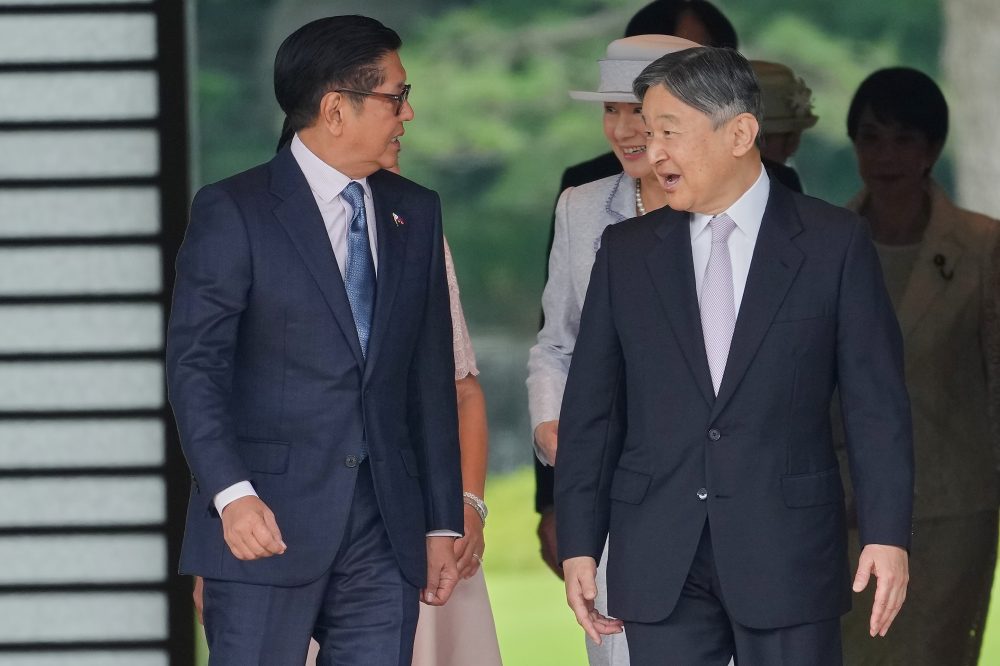
Marcos’ trip, which ends with his Friday departure, has included a formal reception by Emperor Naruhito, who presented him with the Grand Cordon of the Supreme Order of the Chrysanthemum.
Thursday’s agenda includes discussions between Marcos and Japanese Prime Minister Sanae Takaichi, with expectations that the meetings will produce announcements further enhancing defense and military equipment collaboration.
During remarks to Japanese lawmakers Wednesday, Marcos noted that the focus on elevating bilateral relations demonstrates an “exceptional level of trust” between the two countries.
Both governments are keeping China at the forefront of their thinking as they strengthen a military partnership that the United States anticipates will serve as a barrier against Beijing’s territorial goals in the East and South China Seas and its claims over Taiwan, the independently governed island that China considers its territory.
Marcos represents the first significant potential buyer of Japanese military equipment since Takaichi’s administration eliminated restrictions on exporting deadly weapons. This policy shift in April marked a departure from Japan’s post-World War II pacifist approach as the country accelerates its defense and arms manufacturing expansion.
The two countries have committed to pursuing discussions regarding the sale of several Abukuma-class destroyers and Japanese navy TC-90 training aircraft. Philippine Defense Minister Gilberto Teodoro Jr., who watched joint live-fire training exercises with his Japanese counterpart this month, has also shown interest in Type-88 surface-to-ship missiles.
According to Japanese officials, Marcos’ state visit also connects to the 70th anniversary of diplomatic relations between the nations and to the Philippines currently serving as the rotating chair of the Association of Southeast Asian Nations.
Marcos and Takaichi are also anticipated to establish formal discussions aimed at creating a military intelligence sharing agreement, which would allow better communication and strengthen three-way military cooperation with the U.S., their shared ally, according to Japanese officials.
Japan has delivered a package of five coastal surveillance radars to the Philippines through official security aid, and intelligence-sharing would improve reconnaissance collaboration.
Japan seeks to strengthen its relationship with the Philippines beyond Marcos’ term, which concludes in 2028, as Tokyo aims to prevent what it views as inconsistent China policies by some former Philippine administrations.
Marcos has adopted a firm position against China regarding territorial conflicts in the South China Sea. Under his leadership, the Philippines and Japan have quickly strengthened their security connections both bilaterally and in partnership with the U.S.
Japan and the Philippines established an agreement in 2024 permitting their military forces to easily visit each other’s territory for joint training exercises. This created opportunities for Japan to send 1,400 military personnel as regular participants in combined military training.
The nations signed an additional defense agreement this year that would permit the duty-free supply of ammunition, fuel, food and other essential items when their forces conduct joint training.
Throughout the state visit, Marcos and Takaichi are also scheduled to address energy cooperation and a Japan-led international funding initiative announced in April.
This initiative aims to assist Southeast Asian nations, including the Philippines, in maintaining stable oil reserves through financial support for building required infrastructure as they deal with consequences from the Iran conflict that has stopped oil shipments through the Strait of Hormuz.