
Counterfeit merchandise continues to flow freely through Vietnamese markets despite ongoing government enforcement campaigns and looming U.S. trade penalties, according to recent observations by news reporters.
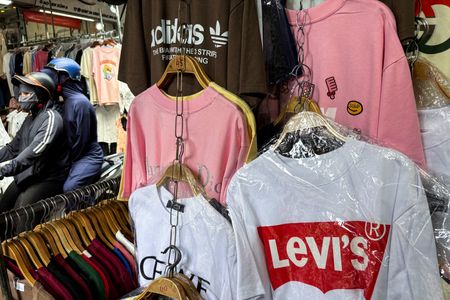
At Hanoi’s Ninh Hiep wholesale market, vendors openly acknowledge that enforcement efforts have minimal lasting impact on their operations. One merchant selling knockoff designer polo shirts explained the routine nature of police visits.
“Police come once a year with a TV crew. They film the seizure of a shop, and then it’s business as usual,” the vendor stated.
The Ninh Hiep market ranks among approximately 30 “notorious markets” globally that the U.S. Trade Representative has identified in its most recent annual assessment of counterfeiting and intellectual property theft.
U.S. officials have also highlighted streaming platforms like MyFlixerz, which they believe operate from Vietnam and attract hundreds of millions of monthly users worldwide by providing illegal access to movies and television programs. These sites remained active as of May 27, despite announced enforcement measures.
Neither the U.S. Trade Representative nor Vietnam’s foreign ministry provided responses to requests for comment.
The United States considers Vietnam’s intellectual property violations a significant threat to American economic interests. On April 30, Washington labeled the Southeast Asian country as the globe’s most serious intellectual property offender and indicated it could initiate an investigation by the end of May, potentially resulting in trade penalties.
This designation came as Vietnam’s exports to America surged, creating a U.S. trade deficit of $54.8 billion with Vietnam during the first quarter of this year – exceeding deficits with major trading partners China and Mexico, according to U.S. government statistics. The current administration has consistently emphasized its goal of reducing trade imbalances.
Following April’s classification as a “priority foreign country” for intellectual property violations – making Vietnam the first nation added to this worst-offender category in 13 years – the foreign ministry responded that Vietnam has made “strenuous efforts” to safeguard intellectual property rights and called on the United States to provide “an objective and balanced assessment of Vietnam’s efforts and achievements.”
In response to the U.S. announcement, Vietnamese authorities initiated an anti-counterfeiting and online piracy campaign running from May 7 through 30.
Similar enforcement action occurred last year following the previous administration’s implementation of 46% tariffs on Vietnamese imports, which have since been lowered to 10%. Vietnam has been pursuing trade agreement discussions with Washington, its primary export destination, for the past year.
News reporters made two visits to Ninh Hiep this month – once before the crackdown began and again on May 25 – interviewing approximately 10 market vendors. All described a pattern of routine government enforcement operations that produce limited long-term results. The vendors requested anonymity due to the sensitive nature of their business.
One seller revealed that recent police activity had caused some shops to reduce their displays of branded counterfeit items, but noted, “Fakes are still available in our storage if ordered.”
Officials responsible for anti-counterfeiting enforcement did not respond to requests for comment.
Reporters observed numerous stalls selling counterfeit clothing featuring brands such as Ralph Lauren, Calvin Klein, Gucci, Gap and Alo Yoga. Many products included Chinese-language labels identifying their manufacturers. When questioned, shop workers acknowledged the items were fake, primarily imported from Guangzhou, China, with a smaller portion manufactured domestically in Vietnam.
Previous enforcement campaigns have shown limited effectiveness, with some merchants noting that enforcement pressure and new tax regulations have affected their business. Another “notorious market” in Ho Chi Minh City faced police raids last year but continues operating.
Motorcycle riders still navigate Ninh Hiep’s cramped pathways, seeking merchandise for resale in downtown Hanoi and other retail locations.
“As long as there is demand, there will be supply,” one vendor observed.