
Washington imposed new economic penalties Wednesday on Iran’s maritime control agency as part of an extensive financial pressure strategy during ongoing hostilities, focusing on the nation’s recently established organization that oversees vessel movement through the Strait of Hormuz.
The action, initially disclosed by The Associated Press, represents Washington’s continued strategy of combining financial pressure with military measures to compel Iranian officials toward a settlement that would conclude the conflict and reopen the crucial shipping lane through which one-fifth of global oil and natural gas typically flows. President Donald Trump has indicated an agreement is approaching, though discussions continue.
The decision arrives amid increasing energy costs and other expenses resulting from Iran’s effective blockade of the strait, creating political challenges for Trump and fellow Republicans before upcoming midterm congressional elections.
“The Iranian military’s latest attempt to extort global maritime trade is proof that Economic Fury has left the regime desperate for cash,” Treasury Secretary Scott Bessent said in a statement.
The penalties focus on Iran’s Persian Gulf Strait Authority and any individual or organization working with the recently announced agency that authorizes passage through the strait and imposes fees potentially reaching $2 million per ship.
Iran’s influential paramilitary Revolutionary Guard has supported this supervision initiative, claiming the sole secure passage for transit through the vital waterway follows their designated corridor and warning that vessels departing from that route encounter multiple attacks and dangers.
Iran’s grip on the strait has triggered global energy disruptions following the commencement of hostilities by the U.S. and Israel on Feb. 28. Costs have increased for oil, gas and associated products, with analysts indicating recovery of shipping and pricing would require weeks or months after the waterway’s reopening.
Meanwhile, the U.S. has maintained a blockade of Iranian ports for more than a month, with Trump stating it “will remain in full force and effect until an agreement is reached, certified, and signed.”
These recent financial measures occur as Washington and Tehran have participated in some of their most intensive diplomatic discussions and negotiations in years, seeking to conclude the war and establish a framework for addressing longer-term disputes between the long-standing adversaries.
Trump stated Wednesday that Iran is “negotiating on fumes” and indicated the parties are approaching an agreement even after U.S. military officials reported conducting strikes on missile facilities and vessels deploying mines in “self-defense.” Later Wednesday, American forces executed additional defensive strikes on an Iranian military installation after destroying Iranian attack drones, according to U.S. officials who lacked authorization for public comment and requested anonymity.
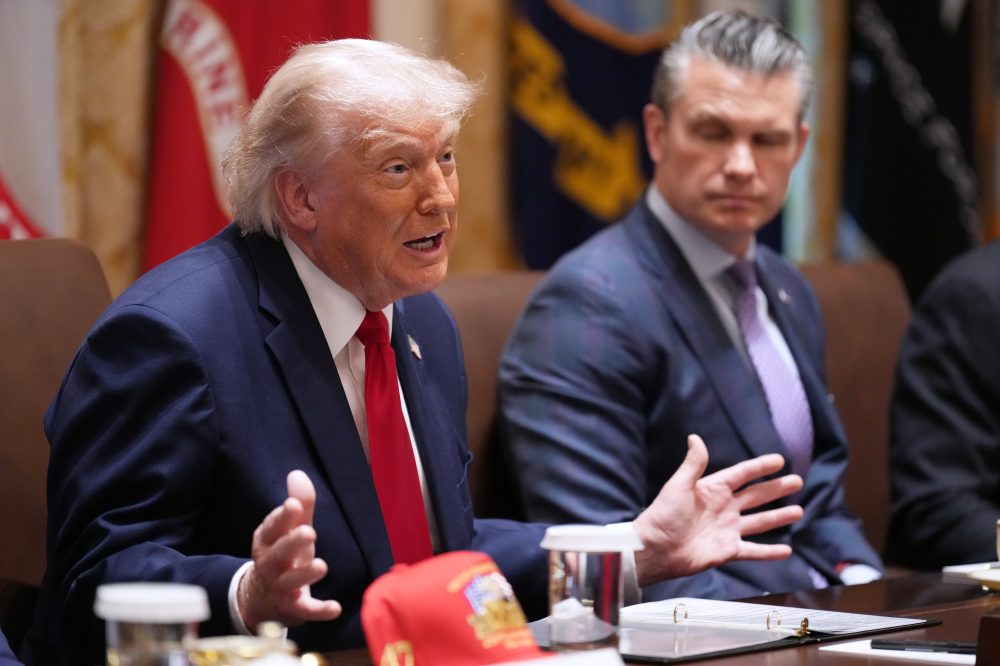
“They want very much to make a deal,” Trump said at a Cabinet meeting Wednesday. “So far, they haven’t gotten there. We’re not satisfied with it, but we will be — either that or we’ll have to just finish the job.”
The Republican president has also restated his warning that combat would continue without a settlement but has stepped back from those threats multiple times over recent months.