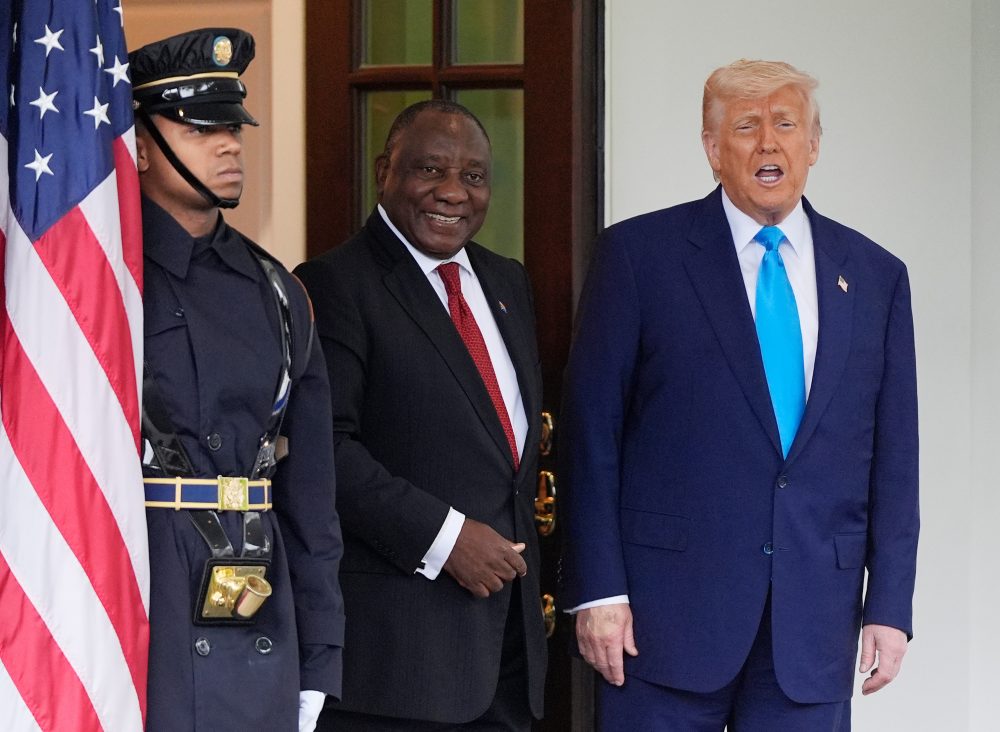

JOHANNESBURG (AP) — Officials in South Africa and organizations representing Afrikaner interests strongly disputed claims made by the Trump administration on Wednesday regarding an alleged humanitarian crisis affecting the country’s white population.
This justification was used to expand America’s refugee intake, specifically targeting white Afrikaners. On Tuesday, the Trump administration announced it would accept an additional 10,000 white South Africans as refugees in the coming year, expanding the annual limit while preventing individuals from other nations from accessing the same program.
U.S. President Donald Trump published his decision in the Federal Register, stating he was expanding refugee admissions due to “an unforeseen emergency refugee situation.” Trump attributed blame to South Africa’s leadership for “recent increases in the incitement of racially motivated violence,” though he provided no concrete evidence.
South Africa’s international relations department responded Wednesday by calling allegations of widespread persecution against white Afrikaners baseless, noting that some people who participated in immigration programs have decided to return to South Africa.
“This reality is further corroborated by the actions of individuals who, despite having availed themselves of this preferential immigration program, have since resolved to return home,” spokesman Chrispin Phiri said.
The Afrikaner labor organization Solidariteit contended that refugee designation isn’t an appropriate remedy for Afrikaners, who ought to flourish within South Africa. Representative Jaco Kleynhans stated the group had not engaged with the Trump administration about any “unforeseen emergency refugee situation,” while acknowledging America’s right to set its own refugee policies regarding Afrikaners.
The organization “is in no way aware of anything that the Trump administration could be referring to,” Kleynhans said.
AfriForum, an advocacy group representing the nation’s white Afrikaner minority population of over 300,000 members, indicated it “does not have information” about the specific claim of an emergency refugee crisis.
The group’s CEO, Kallie Kriel, explained their mission centers on “fighting to create the circumstances in South Africa where there is no need for Afrikaners to leave.”
Trump halted America’s refugee program immediately upon taking office and has subsequently transformed it into a pathway specifically for Afrikaners — white South Africans primarily of Dutch ancestry — to enter the United States. Critics argue this decision to concentrate a long-established program on a single demographic has abandoned people worldwide who are escaping conflict and hardship.
Refugee advocacy organizations have questioned the prioritization of white South Africans over individuals from nations experiencing warfare and natural catastrophes. The vetting process for U.S. refugee status typically requires multiple years.
According to Dr. Bryony Fox, a social justice researcher at Stellenbosch University, the Trump administration’s preference for white Afrikaner refugee admissions creates concerns about discriminatory humanitarian aid, inconsistent refugee protection, and favoring advantaged populations while overlooking other refugee communities facing extreme difficulties.
“This risks politicizing refugee protection in a way that may ultimately weaken the legitimacy and universality of the refugee regime itself,” she said.