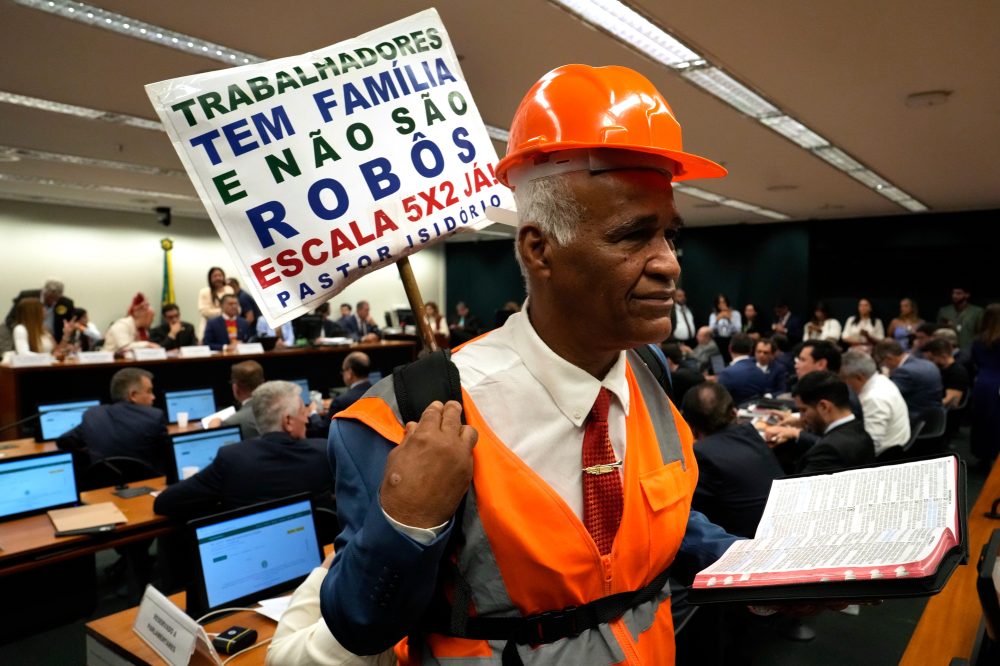

Brazil’s lower house of congress moved the country closer to joining a regional trend toward shorter work weeks, passing a constitutional amendment Wednesday that would establish a 40-hour, five-day work schedule.
The measure has strong public support as Brazil approaches its October presidential elections, with President Luiz Inácio Lula da Silva backing the initiative and frequently advocating for it. The change represents part of a broader regional movement that has earned praise from labor advocates while drawing sharp criticism from business interests.
Under the current system, Brazilian workers put in five eight-hour shifts plus an additional four hours on a sixth day, totaling 44 hours weekly. The approved amendment would eliminate the sixth work day while maintaining current wages for approximately 37 million workers and cap the work week at 40 hours. The new rules would guarantee workers two full consecutive days off each week, ideally Saturday and Sunday.
“People who have this workweek from Monday to Saturday are the ones that have to work the hardest and are paid the least,” lawmaker Paulo Pimenta, Brazil’s government whip in the lower house, told his peers as they voted. “We need to be brave and do justice.”
While numerous opposition legislators supported the measure following months of constituent pressure, some maintained their opposition to the plan.
“I don’t care this is an election year. I think we need to be responsible. This will be a problem for many companies,” lawmaker Kim Kataguiri said. “We are doing this in a rush and workers should know they might end up worse than they are now if business leaders stop hiring.”
The legislation provides companies with 14 months to implement the changes, a crucial element in the negotiation process. Many corporate executives and legislators had pushed for a gradual implementation spanning 10 years.
“This was built with a lot of responsibility, thinking about workers and families in Brazil,” said lawmaker Leo Prates, who drafted the amendment in the lower house. “We need to accomplish this for the Brazilian people.”
Wednesday evening’s lower house approval sends the amendment to the upper chamber. Brazil’s Senate has not scheduled its vote and could modify the proposal before it reaches Lula for final constitutional approval.
Lula’s primary electoral opponent, Sen. Flávio Bolsonaro, advocates replacing the existing work week structure with a more flexible hourly payment system, an approach that appears popular mainly among certain business leaders.
Several other Latin American nations have recently implemented similar work week reductions.
Mexican lawmakers in February approved President Claudia Sheinbaum’s proposal to reduce the 48-hour work week. The changes will be phased in gradually, reaching a 40-hour work week by 2030.
Chile enacted its “40-Hour Law” in 2023, cutting its work week to 40 hours effective last year. The law covers all workers under Chile’s Labor Code while preserving current pay levels.
However, Argentina has moved in the opposite direction under libertarian President Javier Milei and may expand its 48-hour work week. A labor reform package enacted earlier this year increases the maximum daily shift from eight to 12 hours and eliminates overtime compensation, among other changes that Argentine labor organizations claim benefit employers over workers.