
Oil markets experienced significant volatility Tuesday as Brent crude futures surged approximately 4% following U.S. military action in Iran, dealing a blow to weekend optimism that Washington and Tehran might reach a deal to conclude their three-month conflict and reopen the strategically important Strait of Hormuz to shipping.
While international oil prices climbed, U.S. crude futures declined as they adjusted to Monday’s Brent selloff that occurred while American markets were shuttered.
The global Brent benchmark increased $3.44, or 3.6%, closing at $99.58 per barrel, whereas U.S. West Texas Intermediate crude dropped $2.71, or 2.8%, finishing at $93.89.
Monday saw Brent reach its lowest point since April 20, falling 7% amid fresh optimism for a U.S.-Iran accord. American crude markets were closed Monday for the Memorial Day holiday.
WTI hit its lowest close since April 22 on Tuesday, with U.S. gasoline futures plummeting 7% and diesel declining 4% to five-week lows.
American officials have repeatedly indicated they were nearing an agreement with Iran to cease hostilities, though no deal has materialized beyond a temporary truce that has minimized attacks.
Tuesday brought Iranian accusations that the U.S. violated the ceasefire through what America termed defensive operations in southern Iran, while U.S. Secretary of State Marco Rubio suggested reaching a conflict-ending agreement might “take a few days.”
Iran’s foreign ministry characterized the U.S. operations in the southern Hormozgan province, where Iranian media documented explosion sounds early Tuesday, as a “gross violation” of the fragile seven-week ceasefire.
Previously, both nations had signaled advancement on a memorandum of understanding that could end hostilities and resume Strait of Hormuz shipping, providing negotiators 60 days to address more complicated matters, including Iran’s nuclear activities.
“We are still waiting for more details on a potential deal,” said Giovanni Staunovo at UBS. “Meanwhile we see renewed tensions in the Middle East, while flows through the Strait remain restricted.”
The American military action coincided with Iran’s chief negotiator and foreign minister conducting discussions in Doha with Qatar’s prime minister to pursue an agreement.
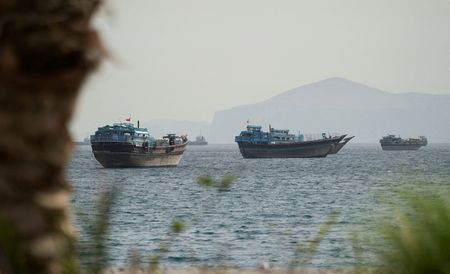
Iran has essentially blocked nearly all non-Iranian vessel traffic through the Strait of Hormuz since late February when the conflict commenced, restricting roughly one-fifth of worldwide oil and liquefied natural gas transportation.
Nevertheless, vessel tracking information revealed three LNG carriers recently transited the Strait heading to Pakistan, China and India, alongside a supertanker transporting Iraqi crude to China that had been stranded for almost three months.
The United Kingdom Maritime Trade Operations reported Tuesday that a tanker experienced an external blast on its port side near the waterline, approximately 60 nautical miles from Oman’s capital, Muscat.
Pakistan intends to expand domestic storage capacity for crude oil and refined products to enhance energy security, according to government documentation shared with oil producers and major global trading companies.
American consumer confidence decreased in May as concerns about war-related inflation escalated and households maintained negative labor market outlooks.
Rising inflation increases consumer costs for goods, prompting central banks like the U.S. Federal Reserve to consider tighter monetary policies that would likely raise borrowing expenses and slow economic expansion.