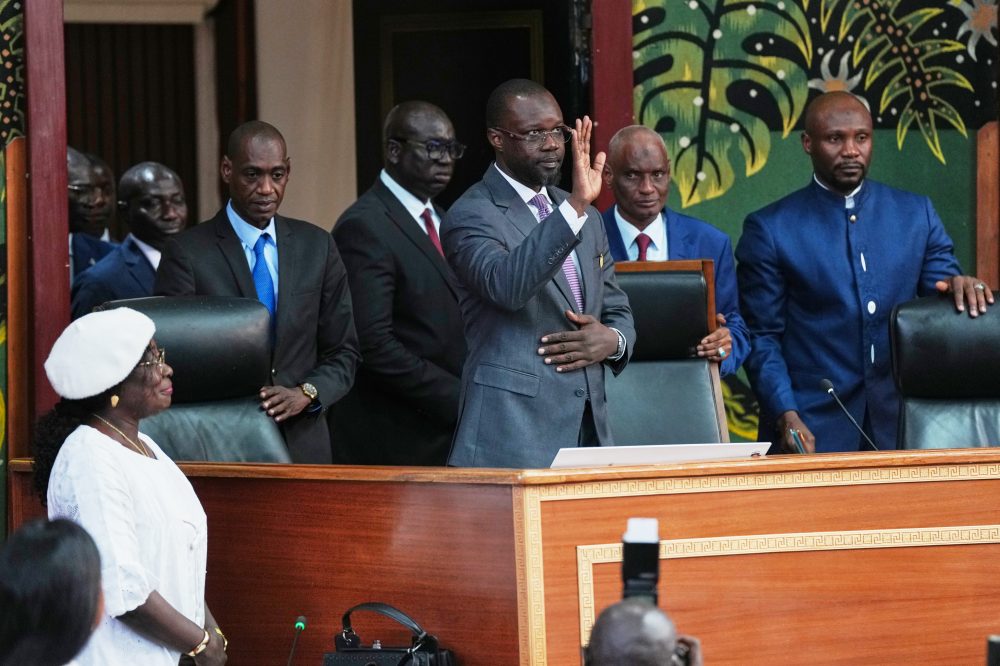
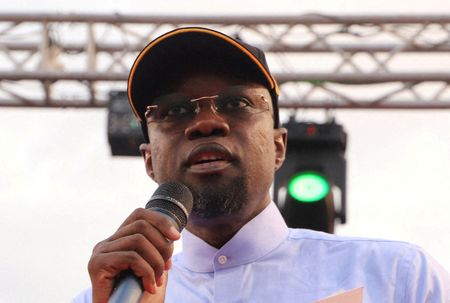
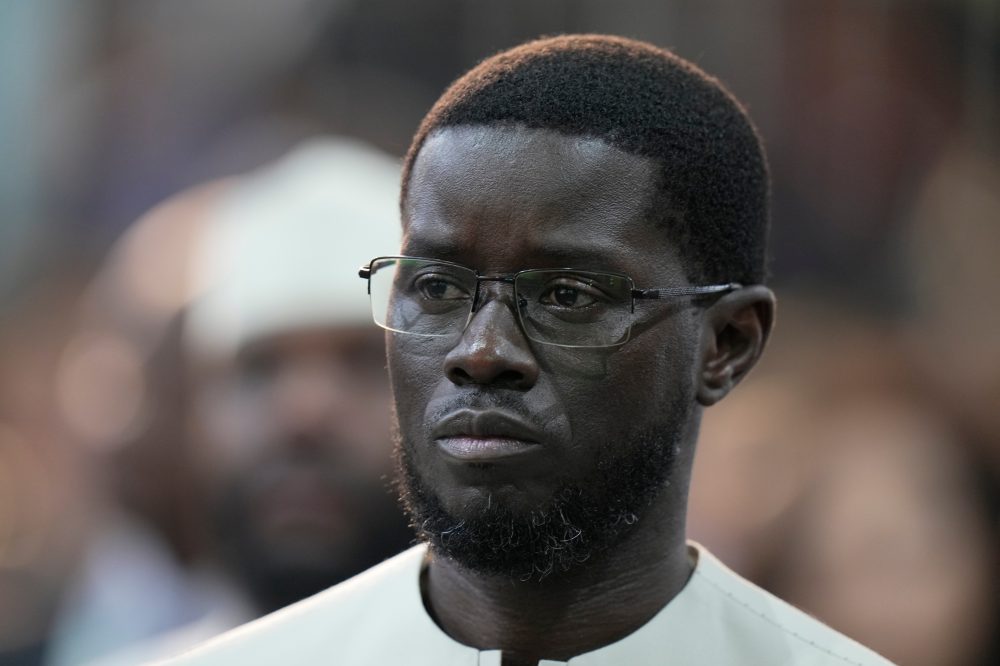
DAKAR, Senegal (AP) — In a direct challenge to presidential authority, Senegal’s National Assembly chose dismissed Prime Minister Ousmane Sonko as parliament speaker on Tuesday, just days after President Bassirou Diomaye Faye removed him from office. The move raises concerns about potential political gridlock in the West African nation as it struggles with unprecedented debt levels.
Last week, the president dismissed Sonko along with the entire cabinet after months of growing friction between the two leaders whose once-strong alliance had propelled them to power. The dismissal prompted the previous parliament speaker to step down. On Monday, the president appointed a replacement prime minister and plans to unveil a new cabinet soon.
Both leaders assumed their positions after winning the March 2024 presidential race, pledging sweeping changes including anti-corruption efforts, job creation for the nation’s expanding youth demographic, and better utilization of natural resources for national benefit.
However, the former partners have publicly clashed over major policy decisions in recent months, particularly regarding discussions with the International Monetary Fund about potential lending arrangements.
In his new position as speaker, Sonko will wield significant influence over legislative priorities, government oversight, and bill introduction — authority that could create direct confrontation with his former boss, according to Babacar Ndiaye, a political analyst at the Senegal-based Wathi think tank.
While Sonko pledged not to exploit his parliamentary role for personal vendettas against the president, he vowed to maintain strict government oversight and utilize all available constitutional mechanisms to fulfill that responsibility.
The two politicians previously worked together within the Pastef party, which maintains commanding control of parliament with 130 seats out of 165 total. As party leader, Sonko maintains the potential to undermine the president’s governing agenda.
The political drama unfolds as Senegal confronts escalating financial difficulties and increasing living costs. The nation ranks among Africa’s most debt-burdened countries by GDP ratio, following a government review last year that uncovered $13 billion in previously undisclosed obligations from the former government.
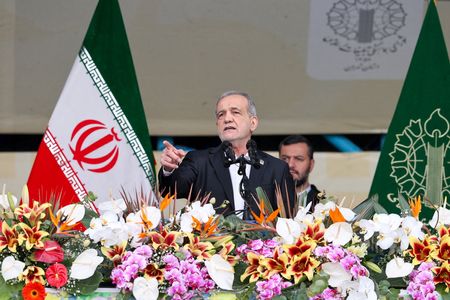
Iran sharply criticized U.S. military operations conducted Monday, characterizing them as evidence of “bad faith and unreliability” while diplomatic efforts continue toward reaching an agreement to conclude the ongoing conflict.
American military officials described Monday’s operations in southern Iran as protective measures, stating that targets encompassed missile launching facilities and vessels deploying mines, emphasizing that the U.S. demonstrated “restraint” given the multi-week truce period.
Iran’s foreign ministry characterized the operations as a breach of the ceasefire and cautioned that Washington would be held accountable for “all consequences,” though specific details were not provided.
“The Islamic Republic of Iran will leave no act of aggression unanswered,” it added in a statement.
Iran’s Revolutionary Guard on Tuesday said it had shot down and deterred drones and a fighter jet that entered its airspace, according to Iran’s official Mizan news agency, which did not specify when the incident occurred.
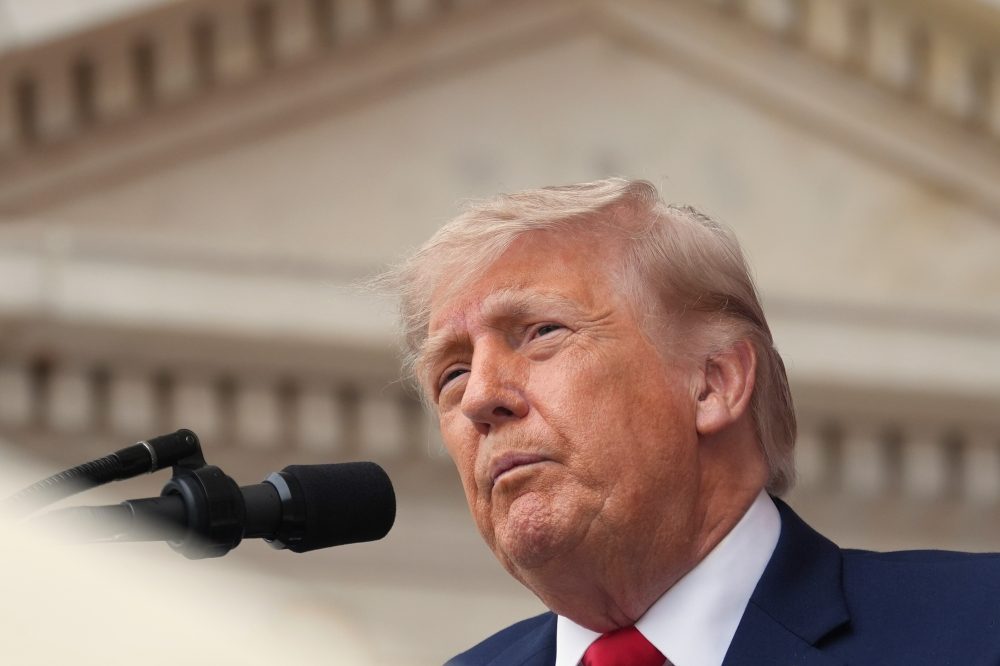
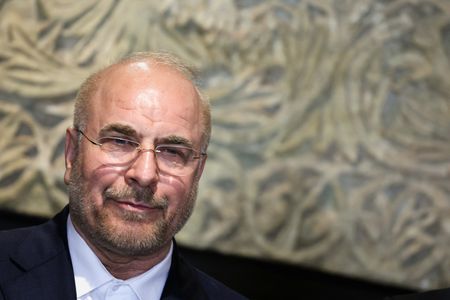
The impact these events will have on ongoing diplomatic discussions remains uncertain. The military actions occurred following Iranian parliament speaker Mohammad Bagher Qalibaf’s travel to Qatar for the negotiations, which U.S. President Donald Trump described Monday as “proceeding nicely.”
These operations represent the most recent escalation in the delicate truce that commenced April 7 and has remained mostly intact.
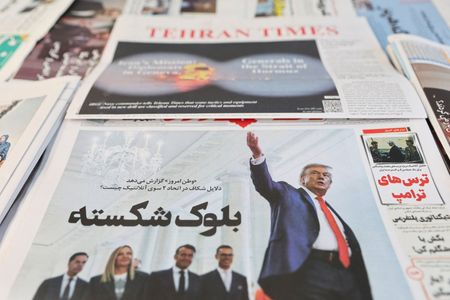
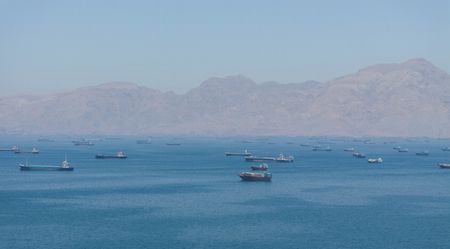
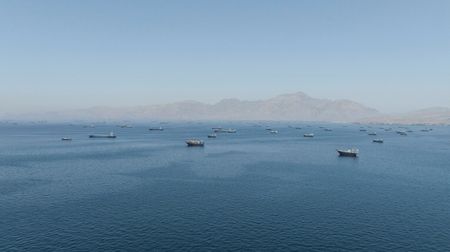
Diplomatic discussions focus partly on the Strait of Hormuz, the vital shipping channel near southern Iran that facilitated passage for one-fifth of global crude oil and natural gas before hostilities began with U.S.-Israeli operations in February. Tehran responded by essentially blocking the waterway, leaving hundreds of vessels stranded and disrupting the worldwide economy.
The waterway has emerged as a significant bargaining tool for Tehran during negotiations, alongside the ongoing matter of Iran’s nuclear program and highly enriched uranium. Iran seeks removal of the U.S. military blockade of Iranian ports that started on April 17.
The strait also generates increasing worry as fertilizer supplies face severe disruption for at-risk global agricultural producers.
“What we are witnessing today is not only a geopolitical crisis, it is a systemic shock to the global agrifood system,” the director-general of the U.N.’s Food and Agriculture Organization, Qu Dongyu, said Tuesday.
Trump has brought a fresh perspective to negotiations for resolving the conflict, stating that any agreement to conclude the war should mandate several additional nations, including Saudi Arabia and Pakistan, to become part of the Abraham Accords, a collection of U.S.-facilitated diplomatic, economic and security agreements designed to normalize relationships with Israel.
Bahrain and the United Arab Emirates became the first countries to join in 2020; Sudan, Morocco and Kazakhstan have followed. Egypt and Jordan already formally recognize Israel and have long-standing peace treaties. Turkey first recognized Israel in 1949.
Israel’s conduct against Palestinians, including in the war against Hamas in the Gaza Strip, has alienated Gulf Arab states and the wider Muslim world, but Trump has been keen to build on the Abraham Accords, forged during his first term. He even has suggested that Iran eventually could sign on.
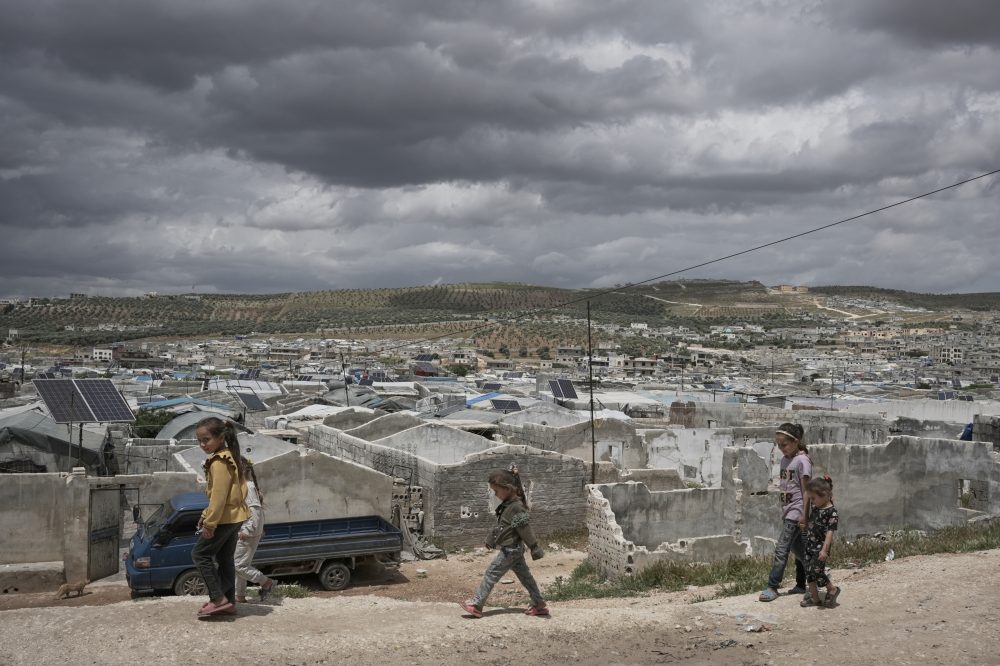
ATMEH, Syria (AP) — When rebel forces successfully removed President Bashar Assad from power in late 2024, ending more than thirteen years of devastating warfare, Sobhieh al-Saleh believed she would immediately abandon her temporary shelter and go back to her original residence.
However, she remains housed at the al-Karama camp, a temporary settlement located in Atmeh within Idlib province close to the Turkish border, alongside her spouse and eleven children.
“I went and saw my house and it was completely razed to the ground,” she told The Associated Press regarding her residence in al-Lataminah across Idlib province, which she abandoned during the peak of the fighting. While over half of the camp’s population has departed, she lacks the financial means to reconstruct her dwelling and relocate, similar to many other impoverished Syrians.
Therefore, she remains in difficult living conditions. Annually, rainwater seeps into her shelter, and during summer months, she and approximately 40,000 other camp residents must endure extreme temperatures and insect problems.
The Syrian conflict that began as protests in 2011 and continued until late 2024 devastated the nation, forcing over 90% of its roughly 26 million citizens into economic hardship. According to United Nations estimates, reconstruction efforts will require hundreds of billions of dollars.
The warfare resulted in 500,000 deaths, over 1 million injuries, and forced more than half of Syria’s prewar population of 23 million to flee their homes.
Under interim President Ahmad al-Sharaa, the administration has made progress in rebuilding Syria’s international relationships, seeking relief from devastating sanctions while pledging comprehensive reforms.
Over a year following the conflict’s conclusion, more than 7 million internally displaced Syrians cannot return to their original communities. According to United Nations data, one million continue residing in temporary shelters like al-Saleh.
Al-Sharaa has promised that displaced Syrians will no longer remain in temporary housing and will receive proper accommodations before 2027 ends. Saudi Arabia has committed $1.5 billion to support this effort.
However, even with significant investment pledges and partnerships designed to create employment and economic opportunities, the enormous scope of destruction means reducing poverty and facilitating returns will require considerable time.
The World Bank calculates that postwar rebuilding would require approximately $216 billion. Nearly 18 months after ending five decades of Assad family control, substantial portions of Syria’s major urban centers including Aleppo and Raqqa in the north, Homs in the center, and sections of Damascus remain destroyed.
Meanwhile, the government faces time constraints. Humanitarian organizations, which have endured years of significant funding reductions, continue scaling back programs that millions of Syrians depend upon.
“Where are we going to get money to rebuild? We’re barely able to provide ourselves with bread and water,” al-Saleh said. “No aid has come to the camp since the liberation.”
Most recently, the World Food Program announced on May 13 that it reduced by half its food assistance program to the most vulnerable that once supported 1.3 million people. It also cut a bread subsidy program that millions relied on.
Simultaneously, Syrian inflation has increased dramatically, preventing people from accumulating sufficient savings for reconstruction.
“The cost of building materials has surged beyond comprehension. I can barely afford to take my medications,” said Abdulhamid Abu Alaa, who lives with his family in the same camp as al-Saleh.
He explained that he and numerous others continue repaying loans they obtained to cover essential living expenses.
Abu Alaa stated that despite Syria’s significant diplomatic and economic progress, he encourages the government to address quickly the needs of the nation’s most impoverished citizens who remain in terrible conditions.
“The government’s priorities need to change, and put the needs of the poorest people above all things,” he said.
The United Nations continues pledging to maximize its available resources to help reduce Syrian financial hardships and support al-Sharaa’s 2027 initiative.
During a visit to a camp in Idlib’s Maarat Misrin area, the U.N. resident and humanitarian coordinator in Syria, Nathalie Fustier, said that the private sector and international financial institutions might need to help al-Sharaa reach the late 2027 deadline.
“I don’t know exactly how long it will take,” Fustier said. “Maybe there will still be camps, but we will be working again and again to end these camps.”
BEIJING – Chinese authorities are conducting a comprehensive investigation into a devastating coal mine explosion that claimed at least 82 lives on Friday, uncovering an elaborate scheme of deception designed to hide illegal mining operations from government inspectors.
The fatal gas blast occurred at the Liushenyu mine located in Shanxi province, a coal-producing region in northern China. Two people remain missing while 128 others were taken to hospitals for treatment, according to government media reports.
This incident marks China’s most catastrophic mining disaster since 2009, when 108 workers perished in a gas explosion at the Xinxing Mine in Heilongjiang province.
Initial findings from the investigation reveal that the mine operator maintained secret tunnels, doctored blueprints, and employed unregistered workers who lacked mandatory safety tracking devices, state news agency Xinhua reported Tuesday.
The mining facility, operated by Shanxi Tongzhou Coal Coking Group, maintained dual sets of operational plans and monitoring systems. Officials used one set for actual mining activities while presenting the other to government inspectors, effectively concealing portions of their operation from regulatory supervision.
Company representatives could not be reached for comment, as state media reports indicate they have been taken into custody.
Coal extracted from these unauthorized tunnels was excluded from official production records and escaped taxation.
These duplicate planning systems are commonly referred to as “yin-yang drawings” – one version displayed openly for inspector review and another kept secret. The national mine safety administration acknowledges that such profit-motivated deceptions persist throughout China’s coal industry despite enforcement efforts.
According to Xinhua, the Liushenyu operation “constructed false doors using wire mesh and woven plastic bags coated with mortar, creating barriers that closely resembled the natural rock walls of mining tunnels.”
Mine personnel received advance warning when inspectors approached, allowing them to close these deceptive barriers and apply coal dust to camouflage them within the underground passages.
To avoid detection, mine management employed subcontracted workers in the concealed areas without providing mandatory identification and location tracking equipment or recording their presence in official entry logs.
These tracking devices would have enabled authorities to monitor worker locations throughout the underground facility, particularly during emergency situations.
Official records indicated only 124 workers had entered the mine when Friday’s explosion occurred, based on footage broadcast by state television CCTV on Monday. However, 247 workers were actually present in the facility, indicating that 123 individuals were operating in unmonitored tunnels beyond official oversight.
The absence of precise maps and worker location data has significantly complicated rescue efforts, state media reported.
The Liushenyu facility – designated as a “high-gas mine” due to elevated explosion risks – also intentionally failed to install gas-detection equipment to further avoid regulatory scrutiny, according to a separate report from state radio.
These violations were previously known to authorities before Friday’s tragedy. In 2025, regulators fined the mine operator after discovering hidden work areas, but “the penalty failed to serve as an effective deterrent, and the company continued illegal production,” Xinhua stated.
Following this incident, several mines throughout China have suspended or reduced operations for safety evaluations.
Ukraine’s diplomatic representative to Turkey anticipates that NATO will address financial assistance for his country during the alliance’s July summit, even though the funding proposal has struggled to win over member nations.
Ambassador Nariman Dzhelialov stated during a Tuesday interview that he hopes Ukrainian President Volodymyr Zelenskiy will participate in the July 7-8 gathering in Ankara. He emphasized that Ukraine also seeks renewed commitments from members regarding the country’s aspirations to join the military alliance.
Ukraine relies heavily on foreign assistance to meet its budget requirements and finance its ongoing conflict with Russia.
Last June, Zelenskiy requested that Western allies dedicate 0.25% of their gross domestic product toward helping Ukraine enhance weapons manufacturing. Officials indicated that NATO leader Mark Rutte had proposed the concept of alliance members, excluding the United States, spending that percentage for Ukraine’s benefit.
The proposal has encountered opposition, and Rutte acknowledged last week his doubts about its acceptance. Diplomatic sources indicated that conversations continue regarding ways to show NATO’s commitment to Ukraine during the summit.
Even with limited support for the concept, the ambassador indicated Ukraine continues advocating for the plan.
“A mechanism here (could be) one in which every NATO member contributes a part of their finances to support strengthening Ukraine’s security capabilities,” he explained, recognizing that some allies hesitate to allocate resources while working to enhance their own military capabilities according to NATO standards.
“But we are not saying ‘give us 100%’, just a very small piece,” he added without providing additional specifics.
The summit occurs during a period of strain between Washington and European partners on multiple fronts. U.S. President Donald Trump has consistently called for NATO allies to substantially increase defense spending, as his administration argues that European nations should eventually take primary responsibility for the continent’s conventional security.
Dzhelialov praised Turkey’s mediation efforts between Ukraine and Russia, noting that Ukraine remains prepared for leadership-level discussions with Russia.
He identified Turkey as the most suitable location for such talks, given its history of hosting previous negotiations and its relationships with both nations.
The ambassador highlighted defense industry collaboration as a crucial area of partnership between Turkey and Ukraine, mentioning that Zelenskiy discussed this topic with President Tayyip Erdogan during an Istanbul visit in April.
He revealed that Ukraine has presented Turkey with a proposal concerning potential sales, joint manufacturing, or technology sharing for Ukrainian drone systems, with Ukraine prepared to provide operator training if necessary.
“We have ideas, dreams, technology and they are working, but (Turkey) has the production capacity. This is a bit slow for us because the Russians are always attacking … This is why it is difficult to produce some weapons for us, but (Turkey) has that capacity,” he explained.
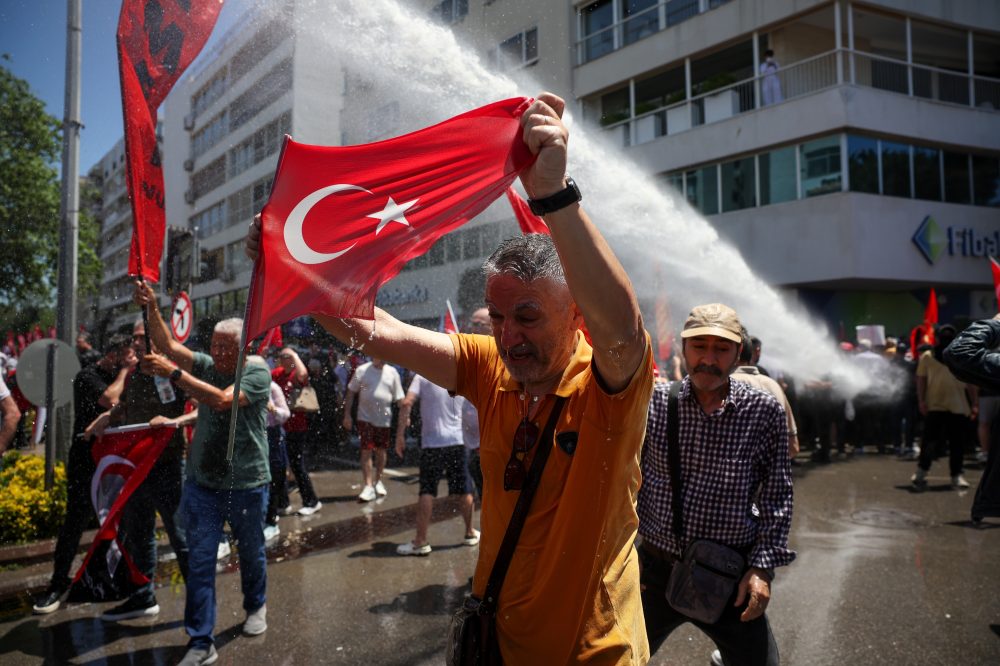
ISTANBUL — Turkish authorities deployed water cannons Tuesday to disperse crowds attempting to attend a rally featuring the ousted head of Turkey’s primary opposition political organization.
A court directive issued Thursday stripped Ozgur Ozel and the central leadership team of the Republican People’s Party, known as CHP, from their positions in what many observers view as a decision driven by political considerations.
Ozel planned to speak to his supporters Tuesday in Izmir, a western Turkish municipality, but attendees found steel barricades and law enforcement officers blocking access to Cumhuriyet Square.
Broadcasting network Halk TV, which supports the opposition, documented numerous attendees, primarily middle-aged individuals, getting drenched by water cannons while attempting to access the square. Regional news outlets additionally reported authorities used pepper spray.
The governmental turmoil began last week after an Ankara appeals court reversed a 2023 party convention decision that selected Ozel to lead the CHP. The judicial ruling reinstated his former colleague, Kemal Kilicdaroglu, creating anger among party members.
The 51-year-old Ozel, who replaced the 77-year-old Kilicdaroglu following 13 years of largely unsuccessful resistance to President Recep Tayyip Erdogan, appealed Tuesday for Kilicdaroglu to conduct a new leadership election. “Don’t divide the party, don’t stop our march to power,” he stated. “Let’s ask the 2 million members (and) whoever they choose, let’s hold the congress immediately.”
Critics of the president regard the legal proceedings, which focused on voting irregularities during the convention, as another judicial assault on the CHP, during which numerous elected representatives and party participants have faced imprisonment.
After the court’s determination, Ozel and his allies fortified themselves within CHP headquarters in Ankara. Authorities raided the facility Sunday, using plastic pellets and pepper spray to violently conclude the standoff.
Ozel, who has promised to continue the fight in public spaces, announced upon reaching Izmir that he would “go wherever the people are waiting.” He subsequently appeared at Cumhuriyet Square before moving to an adjacent square where he addressed thousands of enthusiastic supporters.
The clash in Izmir — Turkey’s third-most populous city and historically a CHP fortress — occurred one day before the official Eid al-Adha celebration, though many citizens had also taken Monday and Tuesday as vacation days.
During a broadcast Eid address, Erdogan expressed hope the holiday would serve as “an occasion for hearts to soften, for those who are estranged to reconcile, for grievances to be resolved.”
Recent polling shows the CHP tied with the governing Justice and Development Party, known as AKP, and while the next election isn’t scheduled until 2028, many anticipate Erdogan will seek earlier voting.
Ozel inflicted significant damage on the AKP during 2024 municipal contests, reinforcing the opposition’s control over major cities it had captured five years prior, including Istanbul and Ankara.
Istanbul’s CHP mayor, Ekrem Imamoglu, has become the most probable opponent to Erdogan, who has governed Turkey since 2003, in the upcoming presidential contest. However, he has been incarcerated since March of last year while confronting multiple criminal charges that could result in decades of imprisonment.
Numerous analysts have stated the legal actions targeting the CHP — primarily focusing on corruption accusations — are designed to weaken the party. Government officials maintain that Turkey’s judicial system remains impartial and operates without political interference.
Dutch authorities announced Tuesday they will prevent the acquisition of a critical cloud computing firm by an American technology company, citing national security risks.
The Netherlands will block US-based software firm Kyndryl from purchasing Solvinity, a Dutch cloud services provider that operates the country’s essential DigiD digital identity platform. Citizens rely on this system to interact with government agencies and access personal medical, insurance, and tax records.
Junior Economic Affairs Minister Willemijn Aerdts informed parliament in a written statement that government officials determined the proposed acquisition could threaten public interests. The decision follows implementation of legislation aimed at limiting foreign oversight of telecommunications infrastructure.
Parliamentary representatives had expressed concerns that allowing Kyndryl to complete the purchase might enable US authorities to gain access to all data managed by Solvinity’s systems.
Officials from the Economic Affairs ministry indicated they are currently coordinating with Solvinity and its existing ownership to determine how to proceed following this ruling.
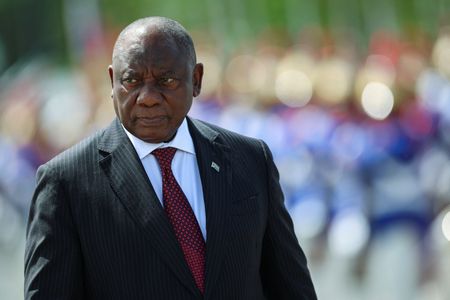
South Africa’s president has taken legal action to overturn a panel’s determination that he potentially engaged in misconduct connected to a controversy involving stolen cash hidden in furniture at his property, according to broadcaster eNCA’s Tuesday report.
The president is seeking to have the 2022 finding that he possibly breached the constitution thrown out, contending the report relied on secondhand information and the panel exceeded its authority, eNCA reported, referencing court documents.
Vincent Magwenya, the president’s spokesperson, has not yet responded to requests for comment from Reuters.
The president, who has held office since 2018, has consistently maintained his innocence regarding the controversy that local news outlets have nicknamed “Farmgate.”
The incident sparked concerns about the president’s acquisition of the $580,000 in cash that he claimed was taken from his property in 2020, questions about proper declaration procedures, and why the money was concealed in furniture instead of being placed in a banking institution.
Before entering politics, the president worked as a successful businessman and explained the funds represented earnings from buffalo sales. A central bank review determined he had not broken exchange control rules.
The controversy has created significant political difficulties for the leader, who assumed power promising to combat corruption and restore the reputation of his African National Congress (ANC) party.
In 2022, ANC legislators prevented impeachment actions against the president, but the constitutional court ruled this month that the parliamentary decision was illegitimate and the accusations warrant additional investigation.
The 73-year-old president has stated he accepts the court’s decision and has resisted pressure from political opponents calling for his resignation.
His current term extends until 2029, and political experts believe he will likely survive any parliamentary impeachment vote.
The ANC reaffirmed its backing for the president this month, improving his prospects of surviving any renewed impeachment attempts.
Any impeachment would need approval from two-thirds of parliament, and despite the ANC losing its parliamentary majority in the 2024 election, the party maintains approximately 40% of National Assembly seats.
Federal authorities in Belgium reported Tuesday that multiple individuals sustained injuries when a train struck a minibus transporting children at a railroad crossing in the northern part of the country.
The collision occurred at a railway crossing close to Buggenhout, situated approximately 30 kilometers (20 miles) northwest of Brussels, the nation’s capital. Authorities have not yet released specific information about how the incident developed.
Federal police confirmed that “several people” sustained injuries in the collision, though they stated they cannot release additional specifics at this time. A Belgian private television network, VTM, reported that multiple fatalities occurred in the incident.
Officials said that prosecutors along with forensic investigators and transportation specialists were expected to arrive at the location.
Belgian Interior Minister Bernard Quintin posted on social media expressing “great sadness” regarding “the tragic accident in Buggenhout, where a school bus was struck by a train. My thoughts go out to the victims and their loved ones.”
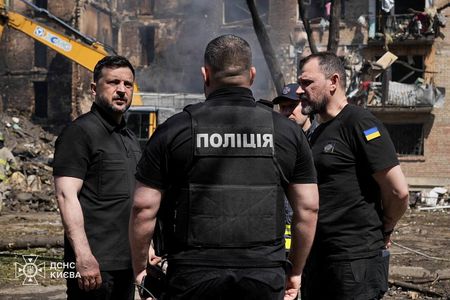
Ukrainian air force officials reported Tuesday that Russia launched more than 100 drones and two ballistic missiles targeting Ukraine during overnight attacks, while Moscow issued warnings of intensified strikes on the capital city.
Moscow on Monday advised foreign nationals and diplomatic personnel to quickly evacuate the Ukrainian capital and warned civilians to avoid military and government buildings. Russian officials stated they were preparing “systemic strikes” against Kyiv.
According to a foreign ministry statement, Russia’s Foreign Minister Sergey Lavrov contacted U.S. Secretary of State Marco Rubio by telephone Monday, urging America to withdraw its diplomatic personnel from Kyiv. While Rubio did not indicate whether the State Department would follow that recommendation, he expressed concerns during his India visit that the “terrible” conflict in Ukraine might intensify.
The Trump administration has spent more than a year attempting to end the hostilities that began following Russia’s February 2022 invasion. However, these diplomatic efforts have produced no major breakthroughs and are currently suspended as Washington concentrates on the Iran war.
No diplomatic missions announced plans to depart from Kyiv. The European Union, French and Polish delegations publicly declared their intention to remain.
Ukraine’s foreign ministry issued a statement late Monday asserting that security threats from Russia against Kyiv and other Ukrainian cities “remains the same as in previous years and months.”
The ministry emphasized that Russia has consistently conducted missile and drone strikes against the capital for over four years, while noting Ukraine stands ready to help diplomatic missions requiring enhanced security measures.
Moscow characterized its largest missile assault of the year last weekend as retaliation for Friday’s fatal Ukrainian drone attack on what Russia described as a college dormitory in Starobilsk, located in Ukraine’s Russia-controlled Luhansk region.
However, the Ukrainian General Staff stated that its Starobilsk strike targeted the regional headquarters of the Russian military’s specialized drone unit.
Ukrainian President Volodymyr Zelenskyy observed that advanced American-manufactured air defense systems needed by Ukraine to counter Russian ballistic missiles are scarce because of the Iran war.
“Unfortunately, there has been no progress for a long time with America on expanding the production of anti-ballistic capabilities,” Zelenskyy posted on social media late Monday, noting that Kyiv is collaborating with Europe to develop sufficient anti-ballistic defenses.
He highlighted that Ukrainian military successes in recent months have allowed the country to “stabilize” the 1,250-kilometer (780-mile) front line across eastern and southern Ukraine, indicating Kyiv’s forces are maintaining their position against Russia’s larger military.
According to the Institute for the Study of War, Russia’s spring offensive is struggling as Ukraine’s medium-range drone attacks disrupt Moscow’s rear supply operations.
The Washington-based think tank stated late Monday that Moscow’s threats of major strikes are designed to divert public focus from its “poor battlefield performance” and economic strain from war expenses and international sanctions.
A century-old private club in India’s capital faces potential closure after government officials demanded it abandon the prestigious location it has called home since British colonial times, setting off a court fight and public discussion about privilege among India’s wealthy elite.
The Delhi Gymkhana Club has operated continuously since 1913 on a sprawling property adjacent to where the prime minister lives in central New Delhi. The facility features an expansive complex of elegant buildings and perfectly maintained grounds, complete with teakwood furnishings, leather seating, and large artwork adorning the walls.
While the organization and government officials have previously disagreed over how the club is run, authorities issued a notice last Friday demanding return of the leased property, pointing to security concerns and infrastructure requirements.
Through a legal filing exceeding 900 pages that Reuters reviewed, a coalition of club members and staff petitioned the Delhi High Court to stop the action while their legal challenge proceeds.
According to court documents Reuters examined, the government seeks to “illegally gain possession of a hundred-year-old institution in a period of 15 days.”
During Tuesday’s court session, the club’s legal representative asked the judge to block authorities from taking forceful measures, while government attorneys stated no removal would occur without proper procedures. The judge scheduled the next hearing for July.
The exclusive venue serves as a gathering place for high-ranking government workers, military leaders, and influential corporate executives, with membership waiting periods extending over three decades. The Delhi Gymkhana Club has also been the setting for elaborate celebrations, including wedding parties for children of the capital’s wealthy families.
The private facility provides recreational amenities such as an indoor pool and tennis courts with both clay and grass surfaces. Multiple dining establishments and bars operate within the club, which maintains strict clothing requirements that prohibit round-neck T-shirts.
The organization relocated to its present 27-acre location two years following Britain’s designation of New Delhi as India’s capital city.
The conflict with government officials has generated discussion across social media platforms and television broadcasts, with some critics questioning whether such exclusive organizations should exist on subsidized government property, while supporters argue the club provides important cultural and recreational value.
“If ‘elite privilege’ is suddenly the issue . . . why not also question sprawling ministerial residences, endless VIP (very important person) convoys, private aircraft and the entire ecosystem of taxpayer-funded political privilege?” one user wrote on X.
The dismissal of Senegal’s prime minister by President Bassirou Diomaye Faye has injected new momentum into long-stalled negotiations to address West Africa’s most severe debt crisis, though the move brings both opportunities and fresh uncertainties.
Faye’s decision Friday to remove Prime Minister Ousmane Sonko, a vocal opponent of International Monetary Fund policies, could eliminate a key barrier to reaching an IMF agreement. However, financial experts and investors warn that the political upheaval may create new challenges for the ongoing discussions and increase risks for those holding Senegalese bonds.
“The removal of PM Sonko creates additional political uncertainty,” explained Thalia Petousis, portfolio manager at Allan Gray. “There is also a chance that a newly appointed PM might be in favour of a deep debt restructuring, increasing the probability of a negative outcome for Senegalese bondholders.”
On Monday evening, Faye appointed Ahmadou Al Aminou Lo, an experienced economist and former regional central bank official, to take over from the populist Sonko.
Financial markets responded negatively Tuesday, with Senegal’s foreign currency government bonds dropping significantly – falling as much as 5.7 cents on the euro and nearly 4 cents on the dollar, according to Tradeweb data.
Morgan Stanley noted Tuesday that investors were now calculating higher chances of a restructuring following recent developments.
Petousis cautioned that if foreign-currency debt underwent restructuring while local currency debt remained untouched, “the risks are that realised haircuts could be steeper than what is currently priced.”
Over the past three months, Senegalese dollar-denominated bonds have generated losses of 9.7% for investors, contrasting sharply with the 0.1% average return of comparable securities in the JPM EMBI Global Diversified Africa index. Bonds maturing in May 2033 were trading around 50.6 cents on the dollar, reaching historic lows.
Senegal has been pursuing intermittent discussions to secure a new IMF agreement since the Fund suspended a $1.8 billion program in 2024 after discovering previously undisclosed debt that pushed the country’s debt-to-GDP ratio beyond 130%.
The nation is essentially shut out of international capital markets and faces mounting challenges in controlling escalating fuel subsidy costs. Investors are becoming increasingly concerned about the government’s capacity to meet its debt obligations.
Earlier this month, President Faye’s office announced he was assuming direct control of Senegal’s debt portfolio. Cheikh Diba, who served as finance minister until Friday, indicated that IMF discussions would restart during the week of June 8, with a potential agreement on a new program’s framework possible by late June.
In one of his final actions as prime minister, Sonko, who had previously advocated against debt restructuring pressure, criticized the IMF Friday before lawmakers, declaring it had “never developed a country” and arguing Senegal should depend more on domestic resources rather than foreign lenders.
Despite losing his prime ministerial position, Sonko is expected to maintain significant political influence. His party continues to control the National Assembly and plans to meet Tuesday to “reintegrate” him as a legislator.
The sudden resignation of the National Assembly speaker Sunday has sparked rumors that Sonko might assume that position, which would preserve his ability to influence Senegal’s future relationship with the Fund.
Previous government timelines for IMF agreements have proven overly ambitious, with officials initially projecting a program would be established last year.
Responding to emailed inquiries, the IMF told Reuters it was monitoring Senegalese developments closely and anticipated working with the new administration.
“The timing of IMF staff’s next visit to Dakar will be guided by the availability and readiness of the incoming authorities,” the organization stated.
Fuel subsidies will likely dominate future negotiations when talks resume.
Senegal had allocated 250 billion CFA francs ($446.03 million) for subsidies this year before the U.S. and Israel attacked Iran in late February, triggering a conflict that drove oil prices higher.
Former Finance Minister Diba warned Friday that subsidy costs could surpass the 2026 budget by 1.39 trillion CFA francs – approximately $2 billion – should oil prices reach $115 per barrel.
However, Sonko had rejected a proposal to increase fuel prices, Diba informed parliament.
Barclays analyst Michael Kafe wrote that it “seems unlikely that the IMF would sign an agreement with Senegal that would not include the removal of the country’s expensive fuel subsidies.”
Should Sonko become parliament speaker, Kafe added, this could create conditions for future confrontations between executive and legislative branches.
“In many countries, energy prices are incredibly politically sensitive and thus governments will be tempted to alleviate price pressure,” observed Nicholas Sauer, portfolio manager at Robeco.
“There is indeed a long history of inflation-inspired social unrest that can eventually topple governments.”
A Lithuanian communications official reports that Russia has significantly expanded its capability to disrupt GPS signals across large portions of Europe, with interference now extending up to 280 miles from Russian territory.
According to Darius Kuliesius, deputy head of Lithuania’s communications regulator, Russia has dramatically increased its GPS “spoofing” equipment in the Kaliningrad region from just three antennas in early 2025 to 36 currently operating. These devices transmit false location data designed to confuse navigation systems.
The equipment operates from Kaliningrad, a heavily fortified Russian territory located between NATO members Lithuania and Poland along the Baltic Sea.
“The occasional interference began with the 2023 NATO summit in Vilnius. Now they have built up the infrastructure and the interference has become systemic, permanent, unending Russian provocation against European security,” Kuliesius stated.
Since Russia’s 2022 invasion of Ukraine, European countries have repeatedly alleged electronic interference from Moscow, though President Vladimir Putin’s administration rejects these claims, attributing them to Western smear campaigns.
The Russian embassy in Lithuania’s capital Vilnius did not provide an immediate response to requests for comment, though Moscow has consistently denied similar allegations previously.
Lithuanian regulatory data shows the GPS disruption potentially affects Estonia, Latvia, Lithuania, most of Poland, portions of Finland, Sweden, Belarus, and Baltic Sea waters within the 280-mile range.
Several high-profile incidents have occurred, including GPS interference experienced by a Spanish military aircraft carrying Defence Minister Margarita Robles near Kaliningrad, and jamming of a plane transporting European Commission President Ursula von der Leyen while traveling to Bulgaria.
Both Estonia and Finland have also attributed GPS navigation disruptions in regional airspace to Russian interference.
Despite these disruptions, most commercial aircraft and major airports maintain multiple navigation backup systems when GPS becomes unreliable.
Kuliesius noted that mobile phone service quality near Kaliningrad suffers due to frequency interference, with notable increases during Ukrainian drone operations against Russia.
“Online bus schedules in Klaipeda stop working during the spikes, because they rely on tracking buses by GPS,” he explained, referencing a community located 30 miles from the Kaliningrad border.
A deadly Israeli military strike targeted a village in eastern Lebanon, claiming 12 lives according to state media reports released Tuesday. Israeli officials confirmed the deployment of additional military personnel to the region.
The attack occurred late Monday in Mashghara, located in the Bekaa Valley, Lebanon’s state-run National News Agency reported.
The strike followed Israeli Prime Minister Benjamin Netanyahu’s announcement authorizing more aggressive military operations against the Hezbollah militant organization throughout Lebanon. While Israeli military forces did not provide details about this specific attack, they confirmed Monday that operations were focused on Hezbollah facilities in eastern Lebanon.
A security official from Israel, speaking anonymously due to protocol requirements, confirmed that military leadership had deployed an additional battalion to Lebanon.
Emergency response teams recovered a dozen bodies from debris after a series of overnight bombardments struck multiple areas across southern and eastern Lebanon.
The escalated military action occurs just three days before scheduled direct negotiations between Lebanese and Israeli military representatives in Washington.
Hezbollah forces continue their offensive against Israeli military units in southern Lebanon and northern Israeli communities, pledging to maintain combat operations until Israel ceases daily bombardments and removes military forces from Lebanese territory.
In recent weeks, Hezbollah has claimed success using advanced fiber-optic drone technology that Israeli forces have found difficult to counter, successfully targeting both military personnel and northern border communities.
Israel has revised its security protocols for northern regions in response to current developments, advising residents to avoid large gatherings.
“What this requires of us now is to increase the blows, to increase the intensity. We will smite them hip and thigh,” Netanyahu said in a video posted on social media Monday ahead of the strikes.
Lebanese government officials express hope that upcoming direct negotiations with Israel, which Hezbollah opposes, will result in a ceasefire agreement.
More than one million Lebanese residents have been forced from their homes due to the conflict, which began when Hezbollah launched rockets into northern Israel on March 2 in solidarity with Iran.
Lebanese Health Ministry statistics show 3,185 people in Lebanon have died from Israeli strikes since fighting began, with over 9,600 additional casualties reported as wounded.
The increased military operations have raised concerns throughout Lebanon about the possibility of expanded warfare, leaving the capital vulnerable to potential future attacks.
“By just saying a few words on TV he (Netanyahu) causes everyone to panic and flee their homes,” said Tony Aboud, in Beirut’s bustling Hamra district. “I don’t know what’s going to happen and how long we can live like this.”
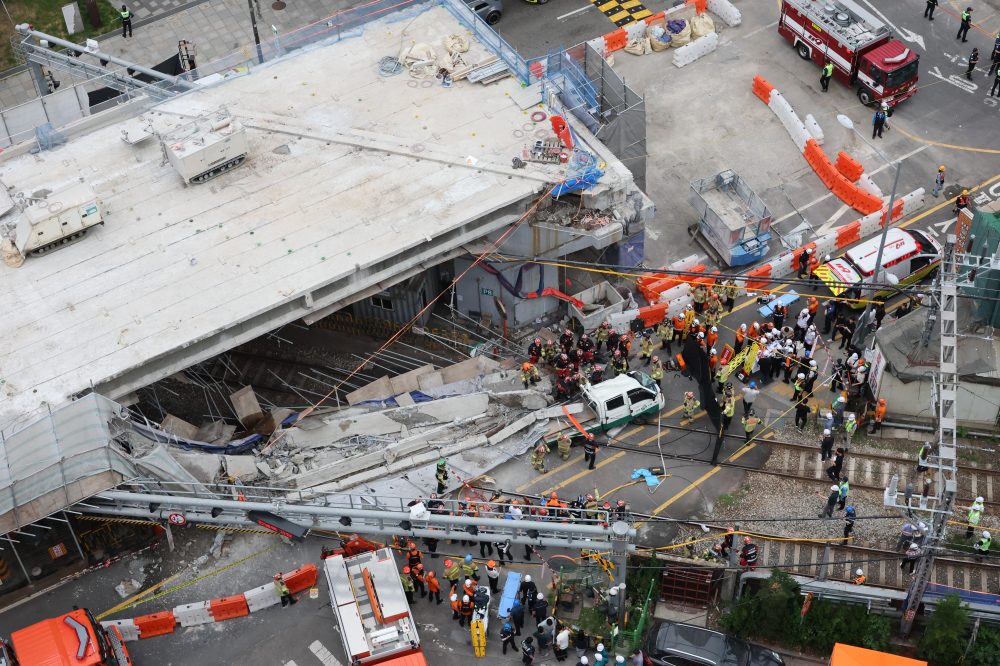
A tragic incident in Seoul, South Korea claimed three lives and left three people injured on Tuesday when an aging overpass being demolished partially gave way, according to fire department officials.
The deadly incident happened while safety inspectors were examining the structure after demolition crews had stopped their work when they observed that part of the bridge had begun to sink slightly during concrete cutting operations, according to Lee Jong-woon, an official at Seoul’s Seodaemun District Fire Station. The fatalities occurred when victims were struck by falling debris and wreckage as a portion of the bridge deck suddenly gave way, authorities reported.
Law enforcement and emergency responders blocked off traffic in the surrounding area, where mangled steel supports and broken concrete pieces remained dangerously suspended from the overpass edge.
Falling debris also struck a nearby railroad line, prompting the Korea Railroad Corp. to halt certain train services to Seoul Station.
The overpass, originally constructed in 1966, had been in the demolition process since August of the previous year due to structural safety issues.
French authorities announced Tuesday that seven fatalities have occurred due to circumstances directly or indirectly connected to the ongoing heat wave affecting the nation, according to French Junior Energy Minister Maud Bregeon.
Among the casualties, five deaths involved individuals who drowned while seeking relief in lakes, rivers, or at beaches, Bregeon reported.
In response to the dangerous conditions, officials have directed local authorities to implement protective measures during sporting events, the minister stated.
The country has been experiencing temperatures above normal levels since Saturday, with weather conditions continuing to deteriorate.
Weather agency Meteo France has issued an orange-level alert for most of Brittany, forecasting temperatures could climb as high as 36 degrees Celsius by Tuesday afternoon.
The extreme heat conditions are anticipated to persist through Wednesday and Thursday, according to Meteo France’s official website.
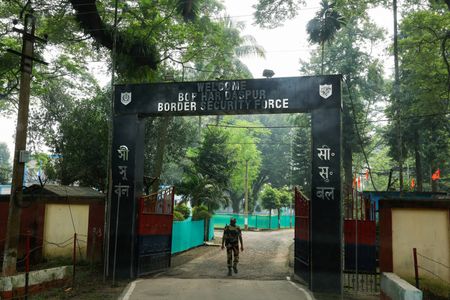
DHAKA, May 26 – Border security forces in Bangladesh have stepped up patrol operations and initiated community outreach efforts along sections of the India-Bangladesh frontier amid worries that India is unlawfully pushing individuals across the border, according to government officials.
The ruling Bharatiya Janata Party in India, which controls the frontier states of Tripura, West Bengal and Assam, has indicated it plans to address unauthorized migration as a key objective.
This month, India’s foreign ministry informed journalists that the country has requested Bangladesh confirm the citizenship status of over 2,860 individuals believed to be Bangladeshi nationals residing unlawfully within India’s borders. India’s foreign ministry did not provide a response to requests for comment on Tuesday.
The 60th Battalion of Border Guard Bangladesh initiated outreach efforts on Sunday in frontier regions of the Brahmanbaria district, employing loudspeakers to alert local populations and encourage them to watch for efforts to force people across the boundary.
“We have started miking in border villages to raise awareness among residents and ask them to stay vigilant against any illegal crossings or push-in attempts,” Lieutenant Colonel S. M. Shariful Islam, commander of the battalion, told Reuters.
“Our patrols and surveillance have been strengthened across the border areas. Intelligence operations are also continuing to prevent illegal push-ins, human trafficking, and the smuggling of drugs and other goods,” he said.
The frontier between Bangladesh and India extends for more than 4,000 kilometres (2,485 miles), representing one of the world’s most extensive land boundaries.
Three administrative areas within Brahmanbaria district in eastern Bangladesh encompass approximately 73 kilometres of the frontier with India’s Tripura state.
India’s northeastern Assam state, which borders Bangladesh, has since May 2025 forced hundreds of individuals back into Bangladesh from among the 30,000 people that legal tribunals have determined to be non-citizens. Multiple human rights organizations have stated that officials have randomly expelled people from the nation.
The government in Dhaka has consistently stated that any deportation process must adhere to established diplomatic protocols and has cautioned against one-sided forced movements across the frontier.
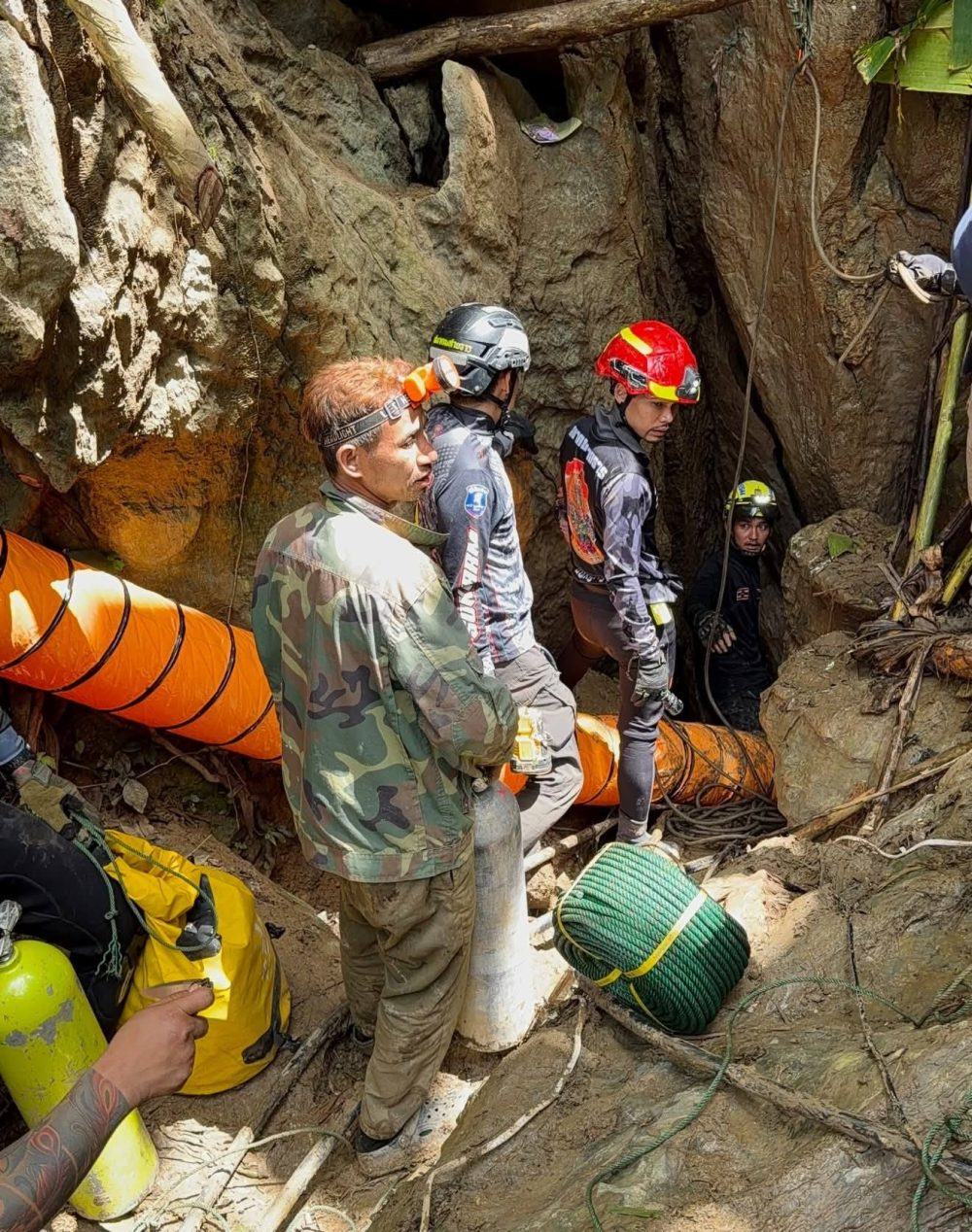
BANGKOK — Rescue operations for seven villagers stuck in a water-filled cave in central Laos have reached their seventh day Tuesday, with emergency crews facing challenging conditions and harsh weather while attempting to locate the group whose status remains unclear.
The group went into the cave located in Xaisomboun province on May 19, but intense rainfall caused sudden flooding that sealed off their way out, rescue teams from Laos and Thailand reported.
Rescue Volunteer for People, a Lao organization collaborating with local officials, announced on Facebook that Tuesday’s rescue strategy involves examining air shafts located above the cave to find potential entry routes and determine where the trapped individuals might be.
Emergency personnel from Thailand arrived at the location during the weekend to help with rescue efforts.
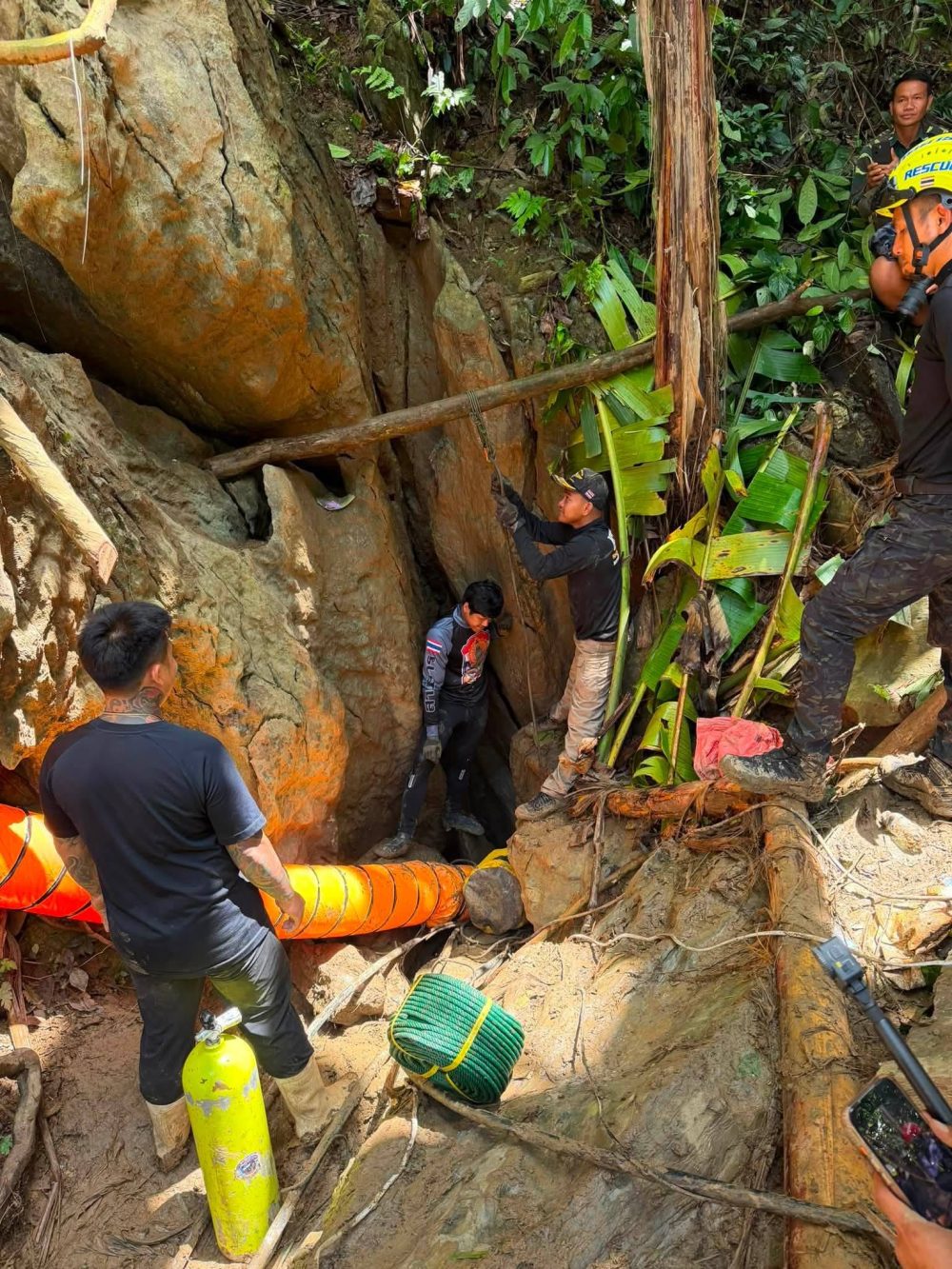
Rescue teams report that diving specialists have made their way approximately 100 meters into the water-filled, confined cave. Officials believe the villagers could be stuck roughly 30 meters past the farthest reachable location. Teams are operating pumps to remove water from the cave to help their search mission.
The location sits in an isolated section of Longcheng district in Xaisomboun province, positioned approximately 120 kilometers (75 miles) north of Vientiane, the capital city. Emergency workers have documented on social media the difficult mountainous landscape and persistent rainfall creating obstacles for their mission.
Online footage from Thai rescue workers demonstrated that accessing the cave opening demands a challenging uphill trek on foot covering roughly 4 kilometers (2.5 miles). The opening itself features steep, rocky terrain and remains so narrow that only one individual can pass through at any given time.
Within the cave, rescue workers must navigate through muddy corridors, water-filled areas and tight passages requiring them to crawl on their hands and knees.
Officials have not provided formal confirmation regarding the villagers’ purpose for entering the cave, though rescue personnel indicated they went inside searching for gold deposits.
Bounkham Luanglath from the Lao rescue organization informed The Associated Press that local people regularly visited the cave seeking gold, despite repeated safety warnings from authorities advising against cave entry.
Laos maintains one of Southeast Asia’s lowest average individual incomes at approximately $2,000-2,500, with even lower earnings in underdeveloped rural regions.
While Laos doesn’t rank as a significant gold-producing nation, its mining sector represents a substantial portion of the developing country’s economy. Foreign investment, primarily from Thailand and China, drives the mining industry. Copper serves as a major export product, while rare earth element mining for modern technology has grown increasingly prevalent in Laos.
The Laos Foreign Ministry stated Tuesday that no official details are available for media distribution. The Southeast Asian country operates as a single-party communist government without organized political opposition and maintains strict control over information release.
The situation gained attention in Thailand due to similarities with the dramatic 2018 cave rescue in northern Thailand, where 12 boys and their soccer coach remained trapped for over two weeks before successful rescue in an operation that captured worldwide attention. A former Thai navy SEAL diver died during that search and rescue mission.
Another recent tragedy occurred this month when five Italian divers were discovered dead after disappearing while cave diving in the Maldives. A Maldivian military diver participating in the body recovery operation was killed during the dangerous retrieval mission.
Cave entrapment poses significant health dangers, with cold temperatures rapidly causing hypothermia. While the human body can survive weeks without food, clean water remains essential to prevent dehydration. Contaminated water sources may trigger diarrhea, accelerating dehydration.
Reduced oxygen levels create symptoms resembling altitude sickness and can eventually harm lungs and other vital organs, while carbon dioxide accumulation leads to fatigue and potential loss of consciousness.
Continuous darkness affects time awareness and disrupts the body’s natural sleep cycles. It also creates extreme light sensitivity when eyes must readjust to illumination.
Spanish regulators have issued a temporary shutdown order against two American prediction market platforms, Polymarket and Kalshi, after determining they were operating without proper gambling licenses, according to the country’s official state gazette published Tuesday.
The Consumer Rights Ministry announced that its gambling oversight agency has launched an investigation into the U.S.-based firms for allegedly violating domestic regulations by failing to obtain required administrative permits.
Officials estimate the prohibition will remain in effect for approximately three to four months while the investigation runs its course.
These prediction market platforms allow participants to purchase and trade positions based on anticipated results of upcoming events, with market prices indicating the likelihood of various outcomes.
Spanish authorities — similar to other European regulators — classify prediction markets as gambling activities when participants wager on uncertain results.
According to the ministry, unlicensed operators are missing essential technical and regulatory protections including identity verification processes, age restriction controls for minors, blocking mechanisms for individuals who have self-banned or been prohibited from gambling, plus necessary user protection standards.
What began as a specialized internet sector has expanded into a multi-billion-dollar market after establishing significant presence in American political betting during 2024.
Rescue operations in Laos are showing promising signs as teams work around the clock to reach seven individuals who have been stuck underground for nearly a week, according to the mission leader.
The group became stranded inside a cave located in Laos’ central Xaisomboun province on May 20 when heavy rainfall caused a landslide that blocked their path out, local rescue organizations and state-run Lao Phattana News reported.
International assistance arrived Sunday when a Thai rescue squad joined the mission, bringing expertise that has led to major advances in reaching the chamber where the trapped individuals are believed to be located.
“From this moment on, I believe our success is not far away,” said Kengkard Bongkawong, who leads the rescue operation, in a statement posted to social media Monday.
The rescue effort is being conducted in partnership with a local organization called the Laos Rescue Volunteer for People, which reported that the seven people had gone into the cave system while searching for gold. Attempts to contact the country’s disaster management agency were unsuccessful.
Video shared on the Facebook account of Lao Phattana News revealed the challenging conditions facing rescuers, showing helmet-wearing team members crawling through narrow passages by flashlight, struggling to breathe, while others moved slowly through muddy water that reached their chests in the cave’s depths.
Among the rescue personnel is a diver who participated in the 17-day mission at a flooded mountain cave in Thailand during 2018 that drew worldwide attention, when experts from multiple countries, including American military forces and Thai Navy SEALs, converged on Chiang Rai province to free a youth soccer team called the “Wild Boars.”
Kengkard, who leads a volunteer emergency response organization in northeastern Thailand, announced that water removal operations would proceed continuously, following the team’s breakthrough of sand and rock barriers that brought them closer to an underwater passage they believe will provide access to the trapped group.
He reported that an examination of the terrain above the cave system identified four potential shafts that might connect to the underground network and offer an alternative rescue route.
“We estimate that less than 20 metres remain before we reach the key target area,” he stated.
BEIJING, May 26 – Beijing voiced its concerns Tuesday regarding the four-nation alliance between Australia, India, Japan, and the United States, emphasizing that international partnerships should promote regional stability and prosperity without singling out specific nations.
“We also do not support the formation of exclusive cliques or bloc confrontation. No cooperation should undermine mutual trust and cooperation among regional countries,” China’s foreign ministry spokesperson, Mao Ning, told a daily press conference.
Foreign ministers from the four Quad nations met Tuesday in India, where they reached agreements to jointly construct a port facility in Fiji and established agreements focused on critical minerals and energy security matters.
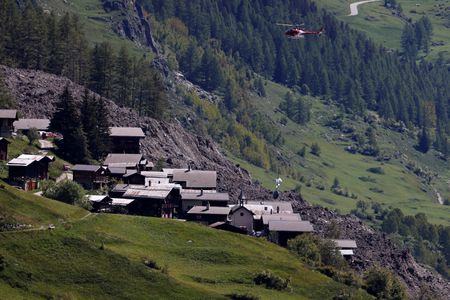
WILER, Switzerland – One year has passed since a catastrophic glacier collapse wiped out the Swiss village of Blatten, and residents are demonstrating remarkable resilience as they work to rebuild their shattered community.
Standing prominently above Switzerland’s Loetschen Valley, Hotel Momentum represents hope and determination in the face of devastating loss. The wooden structure, completed in just 105 days near the adjacent town of Wiler, serves as a powerful example of how displaced villagers are piecing their lives back together following the natural disaster.
A German-language wooden plaque at the hotel’s front desk delivers a poignant message that captures the spirit of many who lost everything: “The past is no longer, the future is not here yet, life is here and now.”
Through the hotel’s windows, visitors can gaze across rugged mountain peaks toward the site where Blatten previously existed — now transformed into a gray expanse of rubble and a turquoise lake, with rooftops of buried homes still protruding from the water.
The catastrophe unfolded after several days of official warnings. Government officials ordered the evacuation of more than 300 village residents when falling rocks destabilized the Birch glacier positioned above their community. On May 28, 2025, an avalanche of stone, earth and ice thundered down the slope in an enormous dust cloud, covering most of Blatten.
Scientists have connected the glacier failure to climate change impacts throughout the Alps. Melting permafrost undermines rock formations that were once permanently frozen — creating concerns about whether settlements like Blatten can be safely restored.
Despite these challenges, reconstruction blueprints target completion around 2030. Meanwhile, former villagers such as hotel proprietor Lukas Kalbermatten have been forced to begin anew.
Kalbermatten’s family lost the Hotel Edelweiss, which served as both their residence and a three-generation family enterprise. Following their safe evacuation, he partnered with another displaced Blatten hotel operator to establish Hotel Momentum.
BEGINNING AGAIN
Almost twelve months later, Kalbermatten describes his journey using grief as a comparison.
“In the grieving process, there’s always that first time, isn’t there? For us, it was the first church service, then the kids’ first St. Nicholas Day that wasn’t spent at home, then the first Christmas,” he explained. “And now this anniversary is coming up, and I think then we’ve made it once around, right?”
Welcoming visitors once more has created conflicted feelings. “Now you’re welcoming them back in a different place and it’s difficult,” Kalbermatten noted. “Some of them are very sad themselves, still almost in shock.”
Throughout Momentum’s interior, subtle touches honor Blatten — including throw blankets designed to match those from the destroyed village — though the facility itself is planned as temporary. Stairwell walls remain incomplete, and the building serves as a five-year interim measure before potential disassembly and relocation.
RESTORATION ‘WILL TAKE TIME’
Authorities report that progress toward reconstructing Blatten remains on schedule. Road reconstruction commenced last month, and if everything proceeds as planned, residents whose properties survived could potentially return this year. By 2029, major benchmarks should enable wider resettlement.
Manfred Ebener, construction project lead of the Blatten 2030 coordination group, emphasized that the focus involves creating a village capable of lasting for coming generations, regardless of whether all former residents choose to return.
“Rebuilding Blatten will take time before the village can return to a size similar or the same as what it was before. We realise that some of us may not live to see that happen,” he stated.
With climate change threats increasing, surrounding mountains, including those near Kandersteg, face continuous monitoring. Several kilometers from Blatten, isolated fragments breaking from the Oigschtchummun glacier triggered preventive road closures this month.
However, specialists indicate that the collapse that devastated Blatten was uncommon. Matthias Huss, head of the Swiss glacier monitoring network, informed the media outlet Swissinfo that the Birch glacier collapse resulted from an exceptional accumulation of rock, and warned against making direct comparisons.
RETURNING HOME?
For Daniel and Karin Ritler, reconstruction has involved transforming their means of earning a living.
Prior to the catastrophe, their work encompassed everything from sheep farming to glamping accommodations and food service. One month following the upheaval of their world, they started planning a fresh beginning.
They are currently launching a new hotel within the Loetschen Valley, explaining that additional lodging is essential — not just for visitors, but also for homeless residents. Through April, they remained in temporary housing.
The pair has since relocated to an apartment within their new hotel, scheduled to debut later this year under the name Zeitlos, meaning “timeless.”
While official statistics are unavailable, Kalbermatten believes approximately 80% of Blatten’s previous residents continue living in the valley. Students from the village still attend identical schools in Wiler.
As reconstruction efforts advance, the mountainside’s stability cannot be assumed, and Blatten’s future remains unclear.
“We’re not saying we will never go back to Blatten, and we also can’t say we will be back in Blatten at this or that time. That will have to unfold,” Daniel Ritler explained.
For others, the choice is more definite.
“Personally, we will certainly go back. That’s not really up for debate for us,” said Kalbermatten.
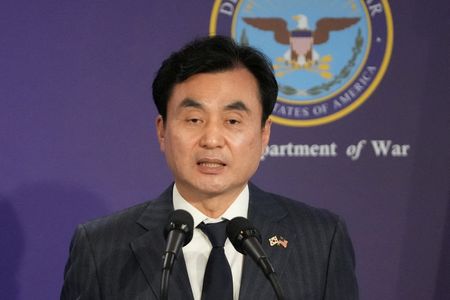
South Korea’s Defense Minister Ahn Gyu-back announced Tuesday that the nation plans to develop its first nuclear-powered submarine by the mid-2030s as part of efforts to address submarine-launched nuclear and missile threats from North Korea.
According to Ahn, the submarine will utilize low-enriched uranium fuel and will be constructed domestically within South Korea. The defense minister outlined South Korea’s fundamental strategy for obtaining nuclear-powered submarine capabilities.
The initiative will leverage South Korea’s existing nuclear technology, shipbuilding expertise, and defense manufacturing sectors, Ahn explained, while preserving Seoul’s pledge to avoid acquiring or developing nuclear weapons.
During the process of obtaining low-enriched uranium fuel, South Korea plans to collaborate closely with the United States to ensure non-proliferation standards are met and will also coordinate with the International Atomic Energy Agency, according to Ahn.
The defense minister confirmed that the timeline calls for deploying the first submarine by the mid-2030s.
Government officials have stated that nuclear propulsion technology would allow these new submarines to remain submerged for significantly longer periods and provide enhanced mobility compared to South Korea’s current submarine fleet.
SEOUL, May 26 – A portion of a bridge in South Korea’s capital city came down Tuesday during demolition operations, leaving six people injured, according to reports from the Yonhap News Agency.
Authorities are working to determine if additional individuals were caught in the incident, according to the news report.
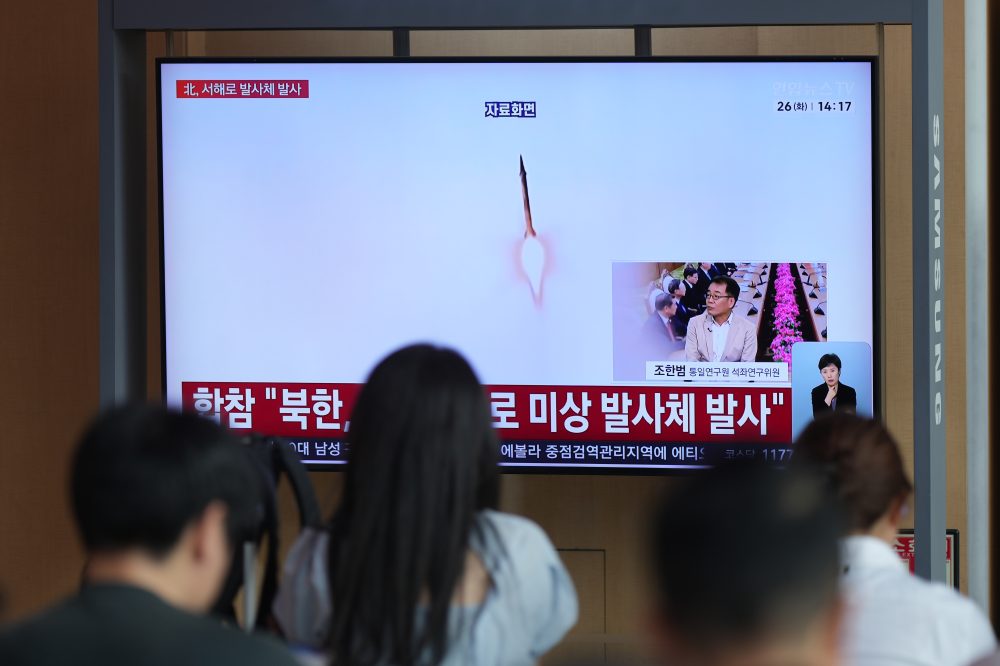
North Korea conducted a missile test Tuesday, firing several short-range ballistic missiles into the sea from its western coastline, according to South Korean military officials.
The missiles were launched from Jongju city along North Korea’s western shore, South Korea’s Joint Chiefs of Staff reported.
In response to the weapons test, South Korean military officials said they have increased their surveillance operations and are sharing intelligence with both U.S. and Japanese counterparts.
Tuesday’s missile launch marks the first weapons test conducted by North Korea since April 19, when the nation fired several short-range missiles that state media characterized as testing cluster bomb warheads.
North Korean leader Kim Jong Un has prioritized building up his country’s nuclear and missile capabilities following the breakdown of nuclear negotiations with U.S. President Donald Trump in 2019. While Trump has publicly stated his interest in restarting diplomatic talks with Kim, North Korea has dismissed these attempts and insists Washington must abandon its demands for nuclear disarmament before any negotiations can proceed.
Kim has adopted an increasingly aggressive approach toward South Korea, labeling it his nation’s permanent and most hostile enemy while working to sever all diplomatic connections.
During a Cabinet session earlier Tuesday, South Korean President Lee Jae Myung called for enhanced military development efforts. He highlighted the need for advances in artificial intelligence and drone technology, as well as the possible procurement of a nuclear-powered submarine, which has been a topic in discussions with Washington.
Lee, who advocates for better relations with North Korea, did not directly address the northern threat. However, he emphasized South Korea’s need to show “resolve to take responsibility for and protect our own security ourselves,” arguing that such independence would also strengthen the alliance with the United States.
South Korean military authorities reported Tuesday that North Korea launched multiple missiles, including at least one short-range ballistic missile, into waters along the nation’s western shoreline.
According to a statement from South Korea’s Joint Chiefs of Staff, the weapons were fired around 1 p.m. local time (0400 GMT) from Chongju, located in North Korea’s North Pyongan Province.
This represents the first documented missile test by North Korea since April 19, when the nation launched several short-range ballistic missiles that officials claimed were fitted with cluster bomb technology.
Earlier in April, Pyongyang announced it had conducted tests of a new cluster-bomb warhead attached to a ballistic missile along with an electromagnetic weapon. Military analysts characterized these tests as demonstrations of North Korea’s capabilities for contemporary warfare.
In March, North Korean leader Kim Jong Un declared that his nation’s nuclear weapons status could not be reversed and emphasized that building up a “self-defensive nuclear deterrent” remained crucial for the country’s security.
North Korea has intensified its weapons development programs under Kim’s leadership in recent years, despite facing U.N. sanctions on its nuclear and ballistic missile activities since 2006. These efforts have drawn criticism from South Korea, Japan and the United States.
Financial markets across Asia showed varied results Tuesday following U.S. military operations in southern Iran that targeted missile launch facilities and vessels deploying mines, according to military officials who described the actions as defensive measures.
The military operations occurred despite President Donald Trump’s social media statements indicating that peace negotiations were “proceeding nicely.”
American market futures experienced significant gains while petroleum prices showed mixed movement, with Brent crude trading under $95 per barrel.
Military officials stated the Monday operations aimed “to protect our troops from threats posed by Iranian forces.” They noted exercising restraint due to an existing ceasefire agreement with Iran, which has not provided an official statement. Additional information regarding specific Iranian threats and negotiation implications remained unavailable.
Financial markets continue responding to various developments and Trump’s statements as the future of peace discussions with Iran remains uncertain.
“Markets are behaving as though a full Iran breakthrough already exists, even though the hardest parts of the negotiation remain unresolved,” Stephen Innes of SPI Asset Management wrote in a commentary. “Washington continues to signal optimism, while Tehran insists no agreement is imminent.”
Japan’s Nikkei 225 declined 0.4% to 64,897.64, retreating from Monday’s record closing high.
Hong Kong’s Hang Seng index climbed 0.3% to 25,668.55, while Shanghai’s Composite index dropped 0.7% to 4,122.87.
South Korea’s Kospi surged 2.9% to 8,075.71, making up ground after Monday’s holiday closure.
Australia’s S&P/ASX 200 fell 0.4% to 8,653.80.
Early Tuesday trading showed S&P 500 and Dow Jones Industrial Average futures rising 0.6%.
U.S. benchmark crude oil dropped $5.01, more than 4%, reaching $91.59 per barrel. International standard Brent crude increased $1.57 to $94.99 per barrel following Monday’s nearly $5 decline.
American markets remained closed Monday for Memorial Day while European exchanges posted gains.
The increases followed indications of peace agreement progress. Regional officials reported Sunday that the United States was approaching a deal with Iran to conclude the conflict, reopen the Strait of Hormuz, and secure Iran’s surrender of highly enriched uranium stockpiles.
The Strait of Hormuz reopening will significantly influence petroleum pricing direction. War-related closure has blocked oil tankers from leaving the Persian Gulf and delivering crude to global customers. Japan, which imports nearly all its oil primarily through the strait, exemplifies this impact.
Early Tuesday currency trading showed the U.S. dollar rising to 158.94 Japanese yen from 158.91 yen. The euro traded at $1.1634, down from $1.1645.
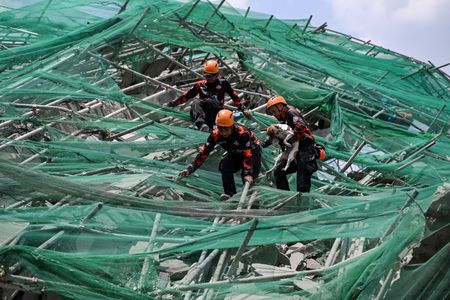
A devastating construction site accident in the Philippines has left families heartbroken as rescue teams officially ended their search for survivors following a building collapse that occurred early Sunday morning.
Lea Casilao, 47, described the daily routine she shared with her husband Joselito – morning text messages that began each day with her “Good morning” greeting and his response of “Good morning, love.” However, Sunday brought only silence.
Casilao explained that her spouse had been staying overnight in the workers’ housing facility on Saturday, as they had been texting until evening hours. This meant he was likely inside when the structure under construction in Angeles, located north of Manila, came crashing down at daybreak on Sunday.
Officials terminated search and rescue activities Monday night after emergency responders used specialized life detection equipment and found no indications of survivors trapped in the wreckage.
Recovery operations for the deceased began Tuesday.
“My hope of still finding him alive has collapsed,” Casilao expressed, her voice filled with emotion.
The grieving wife recounted how she and her husband had arranged to meet at the construction location Sunday afternoon, where he was supposed to collect her. When she couldn’t contact him, she traveled directly to the site and witnessed the destruction of concrete debris, twisted metal, and fallen scaffolding.
“I kept calling his number, but nothing,” Casilao shared while sitting in a temporary shelter as heavy machinery worked outside to remove debris from the roadway.
Other families sat nearby, anxiously awaiting updates about their missing relatives.
“We know how hard this is for you,” stated Maria Leah Sajili, information officer at the regional Bureau of Fire Protection, during a Tuesday news conference.
“We sympathise with what you are going through. Rest assured, we did everything we could to save lives, and now we have to move forward,” she added.
The confirmed death toll stands at four people, including one Malaysian citizen whose body was retrieved Sunday from an adjacent hotel structure also damaged in the collapse. Sixteen individuals, primarily construction workers, are still unaccounted for.
Among the fatalities was the father of 19-year-old Evelyn Alicaway. She learned about the accident from her uncle, and after viewing footage on social media, she recognized her father among those rescue workers were trying to extract from the debris.
“Even with his face blurred, I knew right away it was him. It hurt me so much to see my father like that,” Alicaway said through tears during her father’s funeral service.
Officials have initiated an investigation into the cause of the structural failure and whether the project exceeded its approved construction permits. While authorization was granted for only nine floors, a swimming pool was being built on a tenth level.
The Philippine labor agency had halted construction at the location in September 2025 due to safety infractions, but removed the work stoppage order one month later after the company addressed regulatory requirements.
“We hope the owner will take responsibility and address what happened to the workers. The families are also suffering. This is not what we wanted, but they need to coordinate with us,” said Rosenda, Alicaway’s mother.
Energy markets experienced volatility Tuesday as diplomatic efforts between Washington and Tehran encountered new obstacles, according to financial analysts tracking global developments.
Crude oil values increased following U.S. military operations in southern Iran, which American officials characterized as defensive measures. The timing proved particularly significant as negotiators had been pursuing diplomatic solutions to end the ongoing three-month conflict.
Iran’s chief negotiator and foreign minister traveled to Doha on Monday for discussions with Qatar’s prime minister regarding a possible agreement with the U.S. to conclude the war. However, both Washington and Tehran have tempered expectations for any immediate diplomatic breakthrough.
This cautious approach has influenced financial markets, with the dollar strengthening as investors seek safer assets while stock markets showed mixed performance.
Market participants remain focused on the potential reopening of the Strait of Hormuz, a critical shipping corridor. Japan’s Nikkei newspaper indicated that both nations are exploring a framework to reopen this waterway approximately 30 days following any peace agreement, though specific details have not been disclosed.
The continued uncertainty is expected to keep energy costs elevated, creating challenges for policymakers and increasing financial pressure on businesses and consumers as inflationary concerns mount.
In other economic developments, Sri Lanka’s central bank surprised markets by implementing a substantial 100 basis point increase to its benchmark policy rate, aiming to address inflation and currency pressures.
Bank of Japan Deputy Governor Ryozo Himino noted that Middle Eastern developments would influence the central bank’s decisions regarding interest rate adjustments.
Financial markets are now anticipating a 25-basis-point rate increase from the Federal Reserve by December, marking a significant shift from the two rate reductions that were expected at the beginning of the year. Similar policy tightening is anticipated from the European Central Bank and Bank of England.
Tuesday’s economic calendar includes the release of the Conference Board’s U.S. Consumer Confidence Index for May, with economists projecting a decline of eight-tenths of a point to 92. Rising gasoline prices related to the Iran conflict are expected to continue affecting consumer sentiment.
NEW DELHI (AP) — Top diplomats from four allied nations convened in India’s capital Tuesday to address ways to bolster their partnership across the Indo-Pacific region amid shared concerns over China’s expanding regional influence.
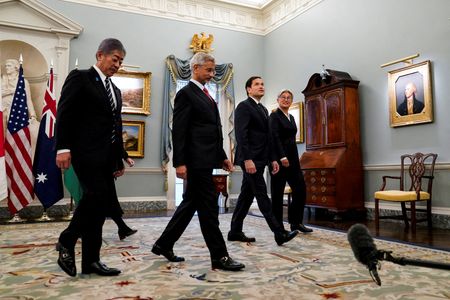
The diplomatic gathering brought together India’s Foreign Minister Subrahmanyam Jaishankar, U.S. Secretary of State Marco Rubio, Japanese Foreign Minister Toshimitsu Motegi and Australian Foreign Minister Penny Wong. According to India’s foreign ministry, the diplomats planned to review current Indo-Pacific developments and explore enhanced collaboration between their countries.
The diplomatic leaders are also anticipated to address the Iran war and disrupted energy shipments through the Strait of Hormuz.
These four countries comprise the Quad group, an important strategic alliance focused on maritime security collaboration, supply chain coordination and regional planning as China extends its military and economic reach throughout the Indo-Pacific.
The Quad has consistently criticized China for demonstrating military strength in the South China Sea and forcefully advancing its ocean territorial demands. Beijing argues that its military presence serves defensive purposes to safeguard what it considers China’s rightful sovereignty and characterizes the Quad as an effort to limit its economic development and regional power.
The diplomatic session occurs following U.S. President Donald Trump’s recent visit to China, a journey that New Delhi officials monitored carefully for potential changes in Washington’s strategy toward Beijing.
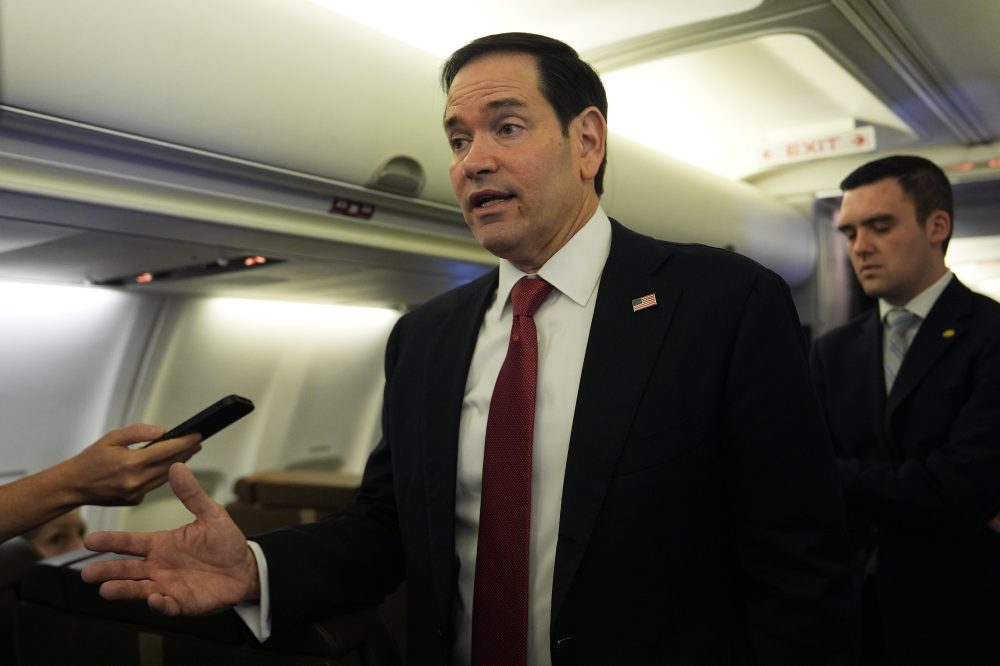
Rubio, who touched down in India on Saturday, stated that Washington seeks to transform the Quad from a discussion forum into an organization that implements concrete measures on topics such as maritime security and critical minerals. He also mentioned that officials are planning a summit of the four leaders sometime this year, though no specific date has been set.
The four nations had previously planned to conduct a leaders’ summit in India last year, but those arrangements were postponed due to tensions in U.S.-India diplomatic relations, including disputes over tariffs.
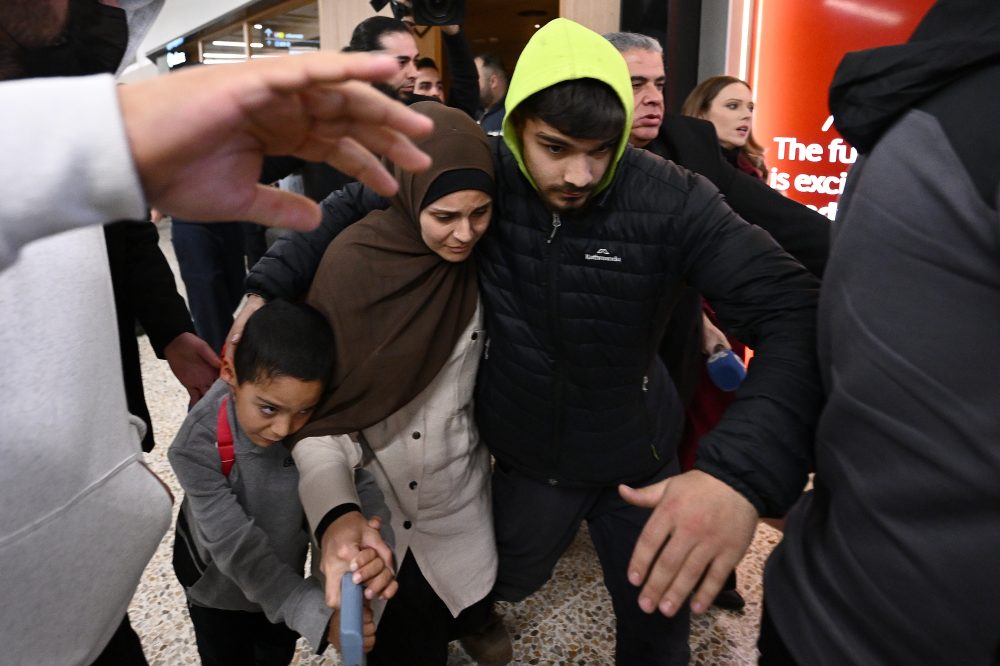
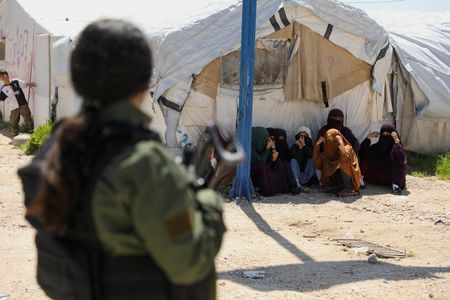
MELBOURNE, Australia — Nineteen Australian women and children with ties to the Islamic State group have arranged flights back from Syria, with some potentially facing criminal charges upon arrival, according to Australia’s government on Tuesday.
The group consists of seven women and 12 children who were scheduled to land in Sydney and Melbourne on Tuesday. This comes less than three weeks following the return of 13 individuals in comparable circumstances to Australia’s two most populous cities.
Among the four women from the previous flights, three were hit with slavery and terrorism charges and are currently incarcerated.
Home Affairs Minister Tony Burke stated that any of the 19 individuals heading to Australia who committed crimes “can expect to face the full force of the law.”
“The government has not and will not provide any assistance to this group,” Burke declared in a statement.
“These are people who have made the horrific choice to join a dangerous terrorist organisation and to place their children in an unspeakable situation,” he continued.
Burke explained that Australian law enforcement and intelligence agencies have been making preparations for their return since 2014 and have established long-term plans to manage and monitor them.
“The priority of the government, as always, is the safety of the Australian community,” he stated.
Following this latest group’s departure, a minimum of two Australians will stay at Roj camp, a facility in northeastern Syria close to the Iraq border where individuals connected to IS have been detained since IS forces in the Middle East were defeated in 2019.
A mother who was blocked from returning to Australia in February through a temporary exclusion order was not part of this traveling group.
The government previously disclosed that one woman at Roj was subject to an order that can be utilized to prevent high-risk citizens from returning for as long as two years.
These exclusion orders were established through legislation passed in 2019 to stop defeated IS fighters from coming back to Australia.
The most recent Australian group returned from Syria on May 7, also without government assistance.
Kawsar Ahmed, also known as Kawsar Abbas, 53, and her daughter Zeinab Ahmed, 31, were taken into custody upon landing in Melbourne regarding allegations that their family had purchased a female Yazidi slave.
Janai Safar, 32, was arrested at Sydney Airport when she arrived with her 9-year-old son on charges of membership in a terrorist organization and entering or remaining in territory controlled by a terrorist organization.
Australian governments have brought Australian women and children back from Syrian detention camps on two separate occasions. Other Australians have returned discreetly without government support.
A tragic residential fire in Russia’s Omsk region has claimed the lives of six individuals, with four children among the deceased, according to reports from the TASS news agency citing regional officials.
The deadly blaze occurred at a private residence in the region, which is situated in southwestern Siberia approximately 1,370 miles east of Moscow.
Secretary of State Marco Rubio announced Tuesday that reaching an agreement with Iran might require “a few days” more, diminishing expectations for a swift resolution to the conflict following new American military strikes in southern Iran on Monday.
The strikes targeted various locations including vessels attempting to place mines and sites for launching missiles, according to Rubio, who emphasized that the Strait of Hormuz must remain accessible “one way or the other.”
“The straits have to be open, they’re going to be open one way or the other, so they need to be open,” Rubio stated while speaking to journalists aboard his aircraft in India’s Jaipur.
U.S. Central Command announced Monday that despite an April ceasefire remaining in effect, American forces executed additional strikes intended “to protect our troops from threats posed by Iranian forces.”
Iranian officials reported Monday that their military had shot down what they described as a “hostile” stealth drone using newly deployed air defense technology, though they did not specify the aircraft’s origin, according to Iranian media outlets.
The American military action occurred while Iran’s chief negotiator and foreign minister were meeting in Doha with Qatar’s prime minister to discuss a possible agreement with the United States to conclude the three-month conflict, according to a source familiar with the visit.
Speaking to reporters in New Delhi earlier, Rubio indicated the U.S. would exhaust diplomatic options before exploring alternative approaches to dealing with Iran.
He described having a “pretty solid thing on the table” regarding discussions about reopening the strait and a “very real, significant, time-limited negotiation on the nuclear matter.”
President Donald Trump posted extensively on Truth Social Monday, stating that discussions with Iran were progressing “nicely” while cautioning about potential additional attacks if negotiations collapse. “It will only be a Great Deal for all, or no Deal at all,” he posted.
Highlighting regional tensions, Israeli Prime Minister Benjamin Netanyahu announced Monday that Israel would escalate attacks against the Iran-supported Hezbollah militia operating in Lebanon.
Israeli military forces subsequently confirmed they were striking Hezbollah facilities in Lebanon’s eastern Bekaa Valley and additional locations.
While Israel and Lebanon established a ceasefire in mid-April, Israeli airstrikes have continued, with Israel characterizing them as defensive measures against Hezbollah, which was not included in the truce agreement.
The source briefed on the Iranian delegation’s Doha visit told Reuters that conversations centered on the Strait of Hormuz and Iran’s stockpile of highly enriched uranium, with Iran’s central bank governor participating to address potentially unfreezing Iranian assets as part of any final agreement.
Iranian foreign ministry spokesperson Esmaeil Baghaei stated earlier that nuclear discussions would only commence after establishing the framework agreement.
Trump has identified preventing Iran from creating nuclear weapons using its highly enriched uranium as his primary objective in the conflict. Tehran has repeatedly rejected claims that it intends to develop such weapons.
Baghaei noted that the proposed Iran agreement lacks specific provisions for managing the Strait of Hormuz, the waterway through which roughly one-fifth of global oil and liquefied natural gas typically passes.
Iran would not impose transit fees for ships but would charge for services like navigation assistance and environmental protection measures, he explained, under a protocol to be established with Oman, located on the waterway’s opposite side.
Japan’s Nikkei newspaper, citing a Middle East diplomatic source, reported that the U.S. and Iran were considering a proposal to reopen the strait approximately 30 days after reaching a hostilities agreement.
Following U.S. and Israeli strikes on Iran beginning February 28, vessel traffic through the Strait of Hormuz has dropped to only dozens of ships compared to the previous daily average of 125 to 140.
This standoff has triggered rising oil prices and increased costs for fuel, fertilizer, and food products.
During early Tuesday Asian trading, U.S. West Texas Intermediate crude showed slight gains from Monday’s closing price but remained 5.5% below Friday’s close.
A prominent international human rights organization released findings Tuesday alleging that the United Arab Emirates provided military instruction to Colombian fighters before deploying them in Sudan’s ongoing conflict.
Human Rights Watch’s latest findings represent another accusation against the Gulf nation, claiming it has provided financial and military assistance to the Rapid Support Forces, a paramilitary organization facing widespread allegations of committing serious violations including war crimes, crimes against humanity and genocide.
The UAE rejected these new claims when contacted by The Associated Press for comment.
“The recruitment of Colombian private military contractors adds to a growing body of evidence that the UAE provides military support to the Rapid Support Forces, which have repeatedly carried out heinous atrocities in Sudan,” said Mausi Segun, executive director of HRW’s Africa Division.
The conflict in Sudan began on April 15, 2023, after tensions between the country’s military leadership and the RSF escalated into armed confrontations in Khartoum and other areas throughout the large northeastern African nation.
The RSF emerged from the Janjaweed militias, Arab groups that gained infamy for brutal acts committed against East and Central African populations in Sudan’s Darfur region during the early 2000s.
According to Human Rights Watch’s investigation, hundreds of Colombian fighters received instruction from UAE citizens at a military installation in the Al Dhafra region, located approximately 250 kilometers west of Abu Dhabi, as well as at a second location in Abu Dhabi, before being sent to Sudan to support RSF operations.
The organization cited an unidentified Colombian fighter who said he provided training to RSF personnel at facilities near Nyala, South Darfur’s main city, in April of the previous year.
Numerous trainees were “young children,” according to the fighter’s account. The rights organization reported conducting interviews with another Colombian fighter and additional sources, including former Colombian military personnel.
A United Nations expert panel reported to the U.N. Security Council in September that Colombian fighters participated in combat operations across various regions of Sudan, including Khartoum, the neighboring city of Omdurman, and the Darfur and Kordofan areas. The panel noted that these fighters’ responsibilities included operating RSF unmanned aircraft, artillery equipment and armored vehicles, while also taking part in direct military operations.
In February video statements, RSF commander Gen. Mohammed Hamdan Dagalo confirmed that Colombian fighters have assisted his organization with drone operations.
Human Rights Watch identified Global Security Services Group, a private security company based in Abu Dhabi, as the entity responsible for hiring the fighters. The U.N. experts reported that Mohammed Hamdan Al-Zaabi, a UAE citizen, led the company.
While UAE authorities and the security firm did not respond to Human Rights Watch’s inquiries, the UAE’s Foreign Ministry disputed the claims in correspondence with the AP.
“The UAE does not permit its territory to be used for the recruitment, training, financing or transit of foreign fighters to any conflict, including Sudan,” the ministry stated.
The ministry added that any individual or organization, whether Emirati or foreign, providing assistance to non-state armed organizations “would be doing so without state authorization, in violation of Emirati law, and would be subject to criminal investigation and prosecution.”
Human Rights Watch reported authenticating video evidence showing fighters, believed to be Colombian, supporting RSF forces during their seizure of el-Fasher in Darfur this October. U.N.-commissioned experts characterized this military campaign as displaying “the hallmarks of genocide.” The United Nations reported that no fewer than 6,000 people died within three days.
The rights organization urged the global community, including the European Union, to pressure the UAE to cease its RSF support by halting military cooperation and weapons transactions.
“Other countries need to stop accepting the UAE’s blanket denials of support to the RSF which fly in the face of the facts, and should put an end to its impunity for war crimes and crimes against humanity,” Segun said.
The United States has placed sanctions on numerous individuals and companies in Colombia’s capital, Bogota, for allegedly recruiting and sending Colombian fighters to support the RSF. However, it has not responded to reports regarding the UAE’s alleged RSF assistance, despite accusing the group of conducting “summary executions, ethnically motivated attacks, sexual and gender-based violence, and torture throughout areas under its control” during the conflict.
The Armed Conflict Location and Event Data Project reported that at least 59,000 people have died during the three-year period. The U.S.-based monitoring organization acknowledged that its casualty count likely underrepresents the actual toll due to reporting challenges.
Authorities in Malaysia took 51 men into custody during weekend operations at a Kuala Lumpur hotel, where officials say drugs were being used during what they characterized as illegal activities.
The arrests occurred across four different raids on Sunday, according to narcotics investigations department director Hussein Omar Khan, who released details in a Monday evening statement. The detained individuals ranged in age from 21 to 52 years old, with 28 being foreign nationals.
Officers confiscated illegal substances valued at approximately 103,070 ringgit ($26,021), which included MDMA, ecstasy in both pill and powder forms, and ketamine, Khan reported.
“This group was found to be using rooms in upscale hotels for entertainment, drug abuse, and is believed to be involved in immoral activities,” Khan stated, noting that investigators are proceeding under the Dangerous Drugs Act.
Before the raids took place, authorities discovered an unconscious man in the hotel lobby who they suspect was connected to the gathering. Emergency responders transported him to Kuala Lumpur Hospital, where medical staff declared him deceased upon arrival. Khan did not reveal information regarding what caused the death.
The detained men are being held for three to six days while the investigation proceeds, Khan explained, and drug tests came back positive for 36 of those arrested.
In Malaysia, a nation with a Muslim majority, homosexuality remains illegal under a dual legal framework that combines Islamic law for Muslims with civil statutes. Sodomy carries criminal penalties, while sharia law prohibits same-sex relationships and cross-dressing.
Advocacy organizations have cautioned that LGBT individuals in Malaysia are experiencing heightened surveillance and growing hostility.
In the previous year, Kuala Lumpur law enforcement announced they would examine their protocols following an incident where 171 people detained on suspicion of same-sex conduct were released without charges when no prosecutable evidence emerged. LGBT rights organizations criticized police for allegedly holding some detainees illegally for almost two days despite a court order for their release.
America’s top diplomat declared Tuesday that the Strait of Hormuz must remain accessible following U.S. military strikes against Iran the previous day.
Secretary of State Marco Rubio made the emphatic statement while speaking with reporters aboard his aircraft in Jaipur, India.
“The straits have to be open, they’re going to be open one way or the other, so they need to be open,” Rubio declared.
The Secretary of State also indicated that finalizing the language for an agreement with Iran could require “take a few days” to complete.
SEOUL, South Korea (AP) — The chairman of South Korea’s Starbucks operations delivered his second public apology within two weeks on Tuesday, following intense criticism over a marketing promotion that many interpreted as disrespectful to victims of a 1980 military assault on democracy advocates.
Chung Yong-jin, who leads Shinsegae Group that controls a 67.5% ownership in Starbucks Korea, performed three ceremonial bows during a broadcast appearance while seeking forgiveness from relatives of democracy fighters killed under the nation’s previous military regime and from citizens at large.
The controversy erupted when the coffee company tried to market a large tumbler called a ‘tank’ by designating May 18 as ‘Tank Day.’ This date marks the anniversary of a democratic revolt in Gwangju, a southern city where military forces using troops, armored vehicles and aircraft violently crushed the movement, resulting in hundreds of deaths and injuries.
The marketing effort further inflamed public anger by featuring the phrase ‘Thwack it on the table!,’ which many interpreted as referencing an infamous 1987 police explanation that sought to conceal the torture killing of student protester Park Jong-chol. Authorities had claimed Park suddenly died after investigators ‘hit the desk with a thwack.’
Public fury was swift, prompting Shinsegae to halt the campaign within hours and dismiss Starbucks Korea’s chief executive. Law enforcement also launched an inquiry following complaints from families of Gwangju victims.
‘I take it very seriously the fact that many people felt deep pain and anger because of Starbucks Korea’s inappropriate marketing campaign,’ Chung stated Tuesday.
He additionally urged the public not to direct their anger toward store employees, emphasizing that leadership bears the responsibility. No significant incidents at retail locations have been reported.
Chung’s initial apology came on May 19, when he released a statement acknowledging the campaign brought ‘deep pain to the victims and bereaved families of the May 18 Democratization Movement as well as to the public.’
Jeon Sangjin, a top Shinsegae Group official, indicated the company hasn’t discovered definitive proof that Starbucks Korea marketing staff deliberately intended to ridicule the pro-democracy movement, claims the workers have rejected.
Nevertheless, he noted some staff members declined management’s requests to surrender their mobile phones during a seven-day internal investigation. Jeon stated the company would review findings from the police examination and terminate any employee proven to have intentionally mocked protesters.
The campaign backlash has generated widespread boycott demands, supported by government leaders including Interior and Safety Minister Yoon Ho-jung, who announced Starbucks items would be banned from government functions and criticized the company’s ‘anti-historical behavior.’
President Lee Jae Myung posted on X last week that the campaign demonstrated ‘inhumane and disgraceful behavior by cheap profiteers who deny the values of the South Korean community, basic human rights and democracy.’
The Gwangju suppression occurred months following General Chun Doo-hwan’s power seizure through a late 1979 military takeover. Official documents indicate approximately 200 deaths in Gwangju, though activists believe the actual casualty count was significantly higher. Chun’s administration also jailed tens of thousands under the guise of eliminating social problems.
Public fury regarding Chun’s authoritarian rule sparked massive nationwide demonstrations in 1987, compelling him to approve constitutional changes establishing direct presidential voting, commonly regarded as the beginning of South Korea’s democratic transformation.
Top diplomats from four major Indo-Pacific nations are convening Tuesday in New Delhi, working to breathe new life into their strategic alliance that observers say has lost steam during President Donald Trump’s administration.
The foreign ministers gathering represents the third such diplomatic meeting since September 2024, bringing together Australia’s Penny Wong, India’s S Jaishankar, Japan’s Toshimitsu Motegi and U.S. Secretary of State Marco Rubio.
Plans for a leadership summit in India last year fell through as tensions mounted between Trump and Indian Prime Minister Narendra Modi over Washington’s trade tariffs and other disagreements.
Despite these challenges, the four countries remain united in their concerns about China’s expanding influence in the region. Rubio, who touched down in India Saturday for a four-day diplomatic mission focused on strengthening ties with New Delhi, has emphasized the critical need to preserve a “free and open Indo-Pacific.”
Speaking to Indian media Sunday, Rubio outlined his vision for the partnership’s future. “We don’t just want the Quad to be a semi-annual meeting of like-minded countries,” he explained. “We want it to actually be a forum on which we continue to partner on things.”
The U.S. Secretary of State called for the Quad to pursue “concrete actions” in areas such as maritime security and critical minerals cooperation, while diplomatic teams work toward arranging a leaders’ summit before year’s end.
“I don’t have a date on that yet, but hopefully this year we’ll find a time for all four leaders to get together,” Rubio stated.
Japan has particular urgency in diversifying its critical mineral sources after Beijing halted shipments of materials essential for aerospace, defense and semiconductor manufacturing following a recent diplomatic clash.
The diplomatic gathering occurs amid ongoing U.S.-Iran negotiations potentially aimed at resolving their three-month standoff and reopening the Strait of Hormuz.
Tehran’s blockade of this vital shipping lane has thrown energy markets into chaos and disrupted the worldwide economy, creating an issue expected to dominate Quad discussions.
Earlier Quad initiatives have focused on preserving “the free and open maritime order” throughout the Indo-Pacific by enhancing intelligence-sharing about regional maritime activities.
A Japanese foreign ministry official indicated last week that Japan anticipates discussions will address the U.S.-Israeli conflict with Iran, alongside rising tensions in the East China Sea and South China Sea, where China’s increased military activity in contested waters has heightened friction with Tokyo, the Philippines and neighboring nations.
Beijing has denounced the Quad as a Cold War-era mechanism designed to restrict its growth and development.
India also faces territorial disagreements with China, though Modi had indicated openness to improving relations with Beijing during his disputes with Trump.
New Delhi has advocated for a Trump visit to India, a trip that would likely coincide with a Quad summit. Political analysts have raised concerns that the absence of high-level leadership engagement may have diminished the Quad’s strategic significance.
The Japanese official noted that India, as the host nation, would determine when a leaders’ meeting could be scheduled.
“It is quite difficult to get all four leaders together,” the official acknowledged.
Trump’s attention has been divided by the Iranian conflict, failed attempts to resolve the Ukraine situation, and strained relationships with Quad partners due to his broad tariff policies.
However, Trump recently praised Modi during a phone call to a U.S. reception in New Delhi Sunday, expressing his affection for the Indian prime minister.
Stock prices for South Korean retail company Shinsegae dropped on Tuesday following a public apology from Chairman Chung Yong-jin regarding a controversial Starbucks Korea marketing effort that appeared to reference a deadly 1980 military assault on democracy activists.
The retail company, which runs Starbucks operations in Korea, encountered significant public criticism over its “Tank Day” promotional campaign featuring tumblers on May 18, coinciding with the nation’s remembrance of the student-led Gwangju Uprising from May 1980.
“I take it very seriously that Starbucks Korea’s inappropriate marketing hurt and angered many people,” Chung said. “I will take all responsibility for the incident.” While Shinsegae stock initially rose Tuesday morning, it subsequently declined 2.6% after the chairman’s statement.
Military forces and tanks were deployed by the military dictatorship of Chun Doo-hwan to suppress the demonstrations, resulting in an estimated hundreds of deaths and disappearances.
Last week, Shinsegae dismissed the leader of Starbucks Korea following an apology for “inappropriate marketing.” The global Starbucks corporation has also issued an apology and announced the start of an investigation.
In response to the controversy, South Korea’s Interior Minister announced that his department would cease purchasing products from businesses that “make light” of the nation’s democratic heritage.
According to company documents, Starbucks Korea ownership is split between E-Mart at 67.5% and Singapore’s sovereign wealth fund GIC at 32.5%.
The Russian leader has authorized financial relief for military recruits joining the Ukraine conflict and their families, according to an announcement from Moscow late Monday, as part of ongoing efforts to strengthen military forces in the prolonged war.
Those who enter into military service agreements with Russia’s defense ministry starting May 1, along with their spouses, will have debts up to 10 million roubles ($139,700) forgiven if legal collection proceedings were active prior to that date, according to the official decree published on Moscow’s government website.
Military service agreements for what Russia terms its ‘special military operation’ — Moscow’s designation for its February 2022 invasion and occupation of Ukraine — must span at least one year, officials stated.
The debt forgiveness amount equals roughly the cost of a 35 square meter studio apartment in Moscow, based on Cian real estate data.
This financial incentive joins other support programs for Russian military personnel, including substantial payments and preferential university admission policies, as Moscow works to expand its military capacity while U.S.-led peace negotiations remain stalled.
Both nations blame each other for escalating tensions, with Ukraine preparing to deploy additional forces to northern territories in response to suspected Russian plans for renewed offensive operations.
The Russian leader also signed additional legislation Monday permanently extending state land rental agreements for those participating in the Ukraine conflict, according to government officials.
US Secretary of State Marco Rubio issued official congratulations Monday to King Abdullah II and Jordan’s citizens as the kingdom marked eight decades of independence, highlighting Jordan’s important contribution to Middle East peace and security.
In a statement released to commemorate Jordan’s National Day on May 25, Rubio declared: “On behalf of the United States of America, I extend my best wishes and congratulations to His Majesty King Abdullah II and the Jordanian people on the 80th anniversary of Jordan’s Independence.”
The secretary of state emphasized that the relationship between Washington and Amman stems from “our shared commitment to a peaceful, prosperous, and secure Middle East.”
“We deeply value Jordan’s critical role in advancing our shared priorities for the region,” he stated.
Rubio also voiced America’s commitment to maintaining the ongoing partnership between the nations.
“As you celebrate Jordan’s National Day, the United States wishes the people of Jordan lasting prosperity under the leadership of His Majesty King Abdullah II, and we look forward to continuing our steadfast, decades-long partnership,” Rubio declared.
An additional statement released under Rubio’s authority noted that the United States “deeply value[s] the pivotal role Jordan plays in advancing our shared priorities in the region” and confirmed Washington’s dedication to preserving its enduring alliance with the kingdom.
Each year on May 25, Jordan celebrates its independence day, marking when the British Mandate concluded and the Hashemite Kingdom of Jordan was founded in 1946.
After World War I ended, the region came under British control. An agreement reached during King Abdullah I’s reign terminated the mandate in March 1946, and the Jordanian Legislative Council officially proclaimed independence on May 25 of that same year.
The milestone is celebrated as a national holiday throughout Jordan featuring government ceremonies, military parades, cultural events, concerts, and public celebrations.
Traditional festivities include gatherings with Hashemite royal family members, government leaders, and international diplomats, alongside fireworks, flag ceremonies, and community events in locations such as Amman.
Israeli military officials confirmed Monday the death of Sgt. Nehorai Leizer, a 19-year-old soldier from Eilat, following a drone attack on Israeli forces conducting operations in southern Lebanon. The explosive device also left another service member from his unit with serious injuries.
According to military sources, Leizer was assigned to the 601st Combat Engineering Battalion within the “Iron Tracks” Brigade (401). The injured soldier was transported to a medical facility for treatment, with his family receiving notification of the incident.
Military officials stated that the attack happened when an explosive-laden drone targeted the location where Israeli troops were positioned during their southern Lebanon mission.
This announcement follows Sunday’s funeral for Staff Sgt. Noam Hamburger, a 23-year-old from Atlit who died during military operations in northern Israel.
Military reports indicate Hamburger was fatally injured when an explosive drone from Lebanese territory hit a position near the Lebanon border where Israeli forces were stationed within Israeli boundaries. The same attack left one soldier with severe wounds and caused minor injuries to a noncommissioned officer.
Hamburger had been serving as a technology and maintenance specialist in Battalion 9 of the “Iron Tracks” Brigade (401) and was scheduled to finish his military duty in just one month.
His funeral drew hundreds of mourners, with local residents from the Hof HaCarmel Regional Council lining the streets with Israeli flags as the funeral convoy proceeded to the burial site.
Israeli opposition leader Yair Lapid delivered sharp criticism of settler violence during a Foreign Press Association briefing, declaring without hesitation that “Settler terror is terror” when questioned about extremist actions in the West Bank.
During the press conference, Lapid addressed foreign policy matters involving Iran, Gaza and the West Bank, but made headlines when he outlined potential leadership arrangements for a future government headed by Naftali Bennett.
“I assume that the ideal government for most Israelis will be Naftali Bennett as prime minister, and former IDF chief Gadi Eisenkot as defense minister, and former finance minister Avigdor Lieberman as finance minister, and myself as foreign minister,” Lapid stated. “Again, this will be subject, I assume, to political results, but this is what we’re trying to do.”
Lapid characterized this potential partnership as “a union between the center and the liberal right” while indicating that additional political groups might still join the coalition. He expressed hope that Eisenkot would formally participate, saying “he will eventually.”
When pressed about whether settler violence constitutes terrorism, Lapid responded immediately and forcefully. “I never thought that in my lifetime we would talk about Jewish terrorism,” he declared. “But this is Jewish terror.”
The opposition leader argued that radical settler actions in the West Bank create both security risks and diplomatic problems for Israel. “These people are the greatest gift anti-Semites around the world could ask for,” Lapid explained. “It allows anti-Semites on both the right and the left to claim that this is Zionism and these are the values of the State of Israel. It is not.”
Lapid also targeted National Security Minister Itamar Ben-Gvir regarding treatment of Gaza flotilla activists, describing the situation as “a national disgrace” and emphasizing that “democracy comes with a price,” which includes “upholding international law.”
International relations emerged as a major focus when The Media Line questioned what Israel’s Foreign Ministry had accomplished recently and what changes he would implement. “You’re asking what the Foreign Ministry has done right in the last three and a half years?” Lapid responded. “Nothing.”
He blamed the current administration for damaging Israel’s bipartisan support in the United States, mismanaging European relationships, and choosing public confrontation over diplomatic engagement. “Part of foreign relations is dealing with these issues, not calling everybody an anti-Semite,” Lapid stated. “There are enough anti-Semites. We don’t have to create new ones.”
To illustrate his point, he referenced Israel’s decision to withdraw its ambassador from Ireland during a diplomatic disagreement, while Ireland kept its diplomatic presence in Israel. “So now if you’re an Israeli in Ireland, you have no one to talk to if you lost your passport,” Lapid observed. “But if you’re an Irish man or woman in Israel who lost his passport, you have an ambassador to talk to. This doesn’t make any sense.”
Lapid also expressed concern that Israel’s Washington influence had declined substantially despite the close ties between Netanyahu and US President Donald Trump. “In Washington, the Israeli government is actually at an all-time low in its ability to influence decisions in Washington,” Lapid warned. “Israel is not a vassal state and we are not a protectorate.”
Despite his harsh assessment of current diplomatic efforts, Lapid maintained tough positions on Iran and security matters. He supported Israel’s right to take military action against Iran when needed and expressed concerns about developing agreements between Washington and Tehran that could threaten Israeli interests.
“There will be no two-state solution in the coming years,” Lapid declared later during the session, explaining that Israelis have lost confidence that a Palestinian state could avoid becoming “another failing terror state on our border.”
However, he indicated that a Bennett-led administration would pursue a cautious approach in the West Bank, avoiding major policy shifts. The government would implement neither annexation nor significant diplomatic efforts toward Palestinian statehood in the immediate future. “We will make sure that nothing will happen that is irreversible,” Lapid promised.
The head of Australia’s domestic intelligence agency testified that anti-Jewish sentiment had become commonplace and went unaddressed prior to a deadly incident at Bondi Beach that claimed 15 lives during a Hanukkah gathering last December.
Michael Burgess, who serves as director-general of security for the Australian Security Intelligence Organisation, delivered these statements while appearing before the Royal Commission on Antisemitism and Social Cohesion, a panel established to examine circumstances that led to the Bondi incident.
“There is no doubt that the war in the Middle East invoked a range of emotions in Australia,” Burgess told the commission. “Some of those violent aspects … and those behaviors, including antisemitism that, in our view, were left unchecked, were therefore normalized and gave more permission for violence … and Jewish Australians were on the receiving end.”
The intelligence leader explained that anti-Jewish hostility grew more severe starting in late 2024, evolving from harassment and intimidation into physical assaults aimed at Jewish individuals and organizations.
“From late 2024,” he said, antisemitism escalated from “threatening, intimidating behavior to direct targeting of people, businesses, and places of worship.”
Burgess pointed to destructive acts and fire-bombing incidents against residences, educational facilities, houses of worship, and automobiles in the period leading up to the Bondi incident.
According to Burgess, the intelligence organization also concluded that Iran’s Islamic Revolutionary Guards Corps orchestrated strikes against a kosher dining establishment in Sydney and Melbourne’s Adass Israel Synagogue.
“They use their network of proxies and agents to do their bidding, and that is to bring harm to Jewish people wherever they are in the world,” he said.
The security official revealed that his agency elevated Australia’s national terrorism alert status to “probable” in August 2024 following an assessment that terrorist incidents had become more likely.
The alert level had been previously reduced in November 2022 from “probable” to “possible,” which Burgess characterized as the second-lowest designation on the nation’s five-level threat system.
He explained that the prior reduction came after the collapse of the Islamic State group in the Middle East and a decrease in foreign fighter recruitment efforts.
OTTAWA, Ontario — A recent diplomatic visit by Canadian Prime Minister Mark Carney to India has helped establish a pathway for completely resetting relations between the two nations, according to India’s trade minister speaking on Monday. The diplomatic relationship had deteriorated under Carney’s predecessor following the 2023 death of a Sikh activist on Canadian soil.
India’s Commerce and Industry Minister Piyush Goyal made these statements during his visit to Canada, where he held discussions with Canada’s International Trade Minister Maninder Sidhu.
Goyal arrived with more than 100 senior business leaders representing India’s mining, energy, automotive and aerospace industries, forming what New Delhi describes as its largest business delegation ever sent to Canada.
“This is a partnership that is being reset very, very rapidly,” Goyal stated on Monday.
According to Goyal, Carney’s late February visit — marking the first time a Canadian prime minister had traveled to India in eight years — “completely changed the way Canada and India looked at each other.”
“It has set in motion the pathway to a complete overhaul of this relationship, setting new agendas, new goals,” he explained.
Trade negotiations between the two countries began in 2010 but were suspended by Ottawa in 2023 when Canadian officials claimed India played a role in the death of Canadian Sikh activist Hareep Singh Nijjar, who was killed near Vancouver in June of that year.
New Delhi strongly rejected these claims and criticized former Canadian Prime Minister Justin Trudeau’s administration for providing refuge to Sikh extremists associated with the Khalistan movement. This movement seeks to establish an independent Sikh nation and is prohibited in India.
Prior to his meeting with Sidhu, Goyal expressed that both nations are eager to finalize a free-trade agreement within this year.
During Carney’s India trip, he held talks with Indian Prime Minister Narendra Modi, and the countries executed multiple agreements — including a 2.6 billion Canadian dollar ($1.9 billion) contract to provide approximately 22 million pounds of uranium to India for nuclear power production.
A Canadian trade delegation traveled to New Delhi earlier this month for negotiations, and another Indian delegation plans to visit Canada later this year to advance discussions.
Goyal also mentioned that both countries aim to increase their trade volume threefold to $50 billion by 2030.
While in Ottawa, Goyal held meetings with Carney and Foreign Affairs Minister Anita Anand. His itinerary also includes discussions with chief executives from major corporations, startups and pension funds.
Vina Nadjibulla, vice president of research and strategy at the Asia Pacific Foundation of Canada, noted that both nations seek to broaden their partnerships and decrease reliance on the United States, which some allies increasingly view as unpredictable.
India has recently completed trade agreements with the European Union, the United Kingdom and New Zealand.
“India is now pivoting to Europe as well as to other Western economies like Australia and Canada to be able to meet its needs for capital, technology and innovation,” Nadjibulla said.
Taiwan’s military forces responded to China’s second major military exercise near the island within a seven-day period, deploying naval vessels and fighter aircraft for monitoring operations.
Beijing has intensified military pressure on Taiwan through expanded naval and air operations in the region, prompting heightened vigilance from Taiwanese officials following recent discussions about Taiwan between President Xi Jinping and U.S. President Donald Trump in Beijing.
Beijing considers the democratically-run island part of its sovereign territory and conducts near-daily military operations with naval vessels and aircraft in the area. Taiwan’s leadership disputes China’s territorial assertions.
Taiwan’s defense ministry reported Monday evening that surveillance detected 21 Chinese military aircraft, including J-16 fighter jets and unmanned vehicles, conducting operations around the island’s perimeter alongside naval vessels in what officials termed a “joint combat readiness patrol.”
Beijing’s defense ministry has not yet provided comment regarding the military activities.
Taiwanese defense officials released three photographs captured by their personnel – including an image from an F-16 aircraft showing two Chinese fighters following a Y-20 refueling plane, a photo of the Chinese naval vessel Yinchuan, and documentation of a Taiwanese naval crew member observing the vessel with field glasses.
Beijing conducted a comparable “readiness patrol” the previous Tuesday, one day prior to Taiwan President Lai Ching-te commemorating his second anniversary in office. Chinese leadership regards Lai as a “separatist” and has rejected his repeated diplomatic overtures.
During the weekend, Taiwan reported that its coast guard encountered a Chinese coast guard vessel near the Taiwan-administered Pratas Islands, which hold strategic importance at the northern edge of the South China Sea.
On Saturday, Taiwan’s National Security Council Secretary-General Joseph Wu used social media to highlight what he described as 100 Chinese vessels currently positioned in the first island chain, an area extending from Japan through Taiwan to the Philippines.
Australian officials announced Tuesday that seven women and 12 children with connections to the Islamic State have arranged to depart a Syrian refugee camp and return to Australia, marking the second such group to make this journey within the month.
Home Affairs Minister Tony Burke emphasized that the government is providing no assistance with their travel arrangements and warned that anyone who has broken laws “can expect to face the full force of the law.”
“These are people who have made the horrific choice to join a dangerous terrorist organisation and to place their children in an unspeakable situation,” Burke stated.
While Burke did not specify an arrival date for this second group, and his office has not yet provided additional details, the Australian Broadcasting Corporation reported the group departed a northeastern Syrian camp last Thursday and may arrive within days.
Earlier this month, four women and nine children returned to Australia following more than seven years in Syrian detention facilities. Authorities subsequently charged two of the women with slavery-related crimes, while a third faced terrorism charges, including allegations of joining the Islamic State.
The upcoming arrivals have sparked opposition criticism, with detractors arguing the center-left government has failed to prevent these repatriations. Government officials countered that there are “very serious limits” on their ability to block Australian citizens from re-entering their home country.
Officials stated that law enforcement and intelligence services have spent over ten years preparing for such returns and have established monitoring protocols for arriving individuals.
During the period from 2012 to 2016, several Australian women traveled to Syria to reunite with husbands who were reportedly ISIS members. After the caliphate’s fall in 2019, many ended up in detention camps.
This January, the United States initiated the relocation of detained ISIS members from Syria following the breakdown of the Kurdish-led Syrian Democratic Forces, which had been overseeing approximately twelve facilities housing fighters and associated civilians, including foreign nationals.
DAKAR, Senegal — A former banking executive has been chosen to lead Senegal’s government after the country’s president dismissed his previous prime minister last week amid mounting political tensions and economic difficulties.
President Bassirou Diomaye Faye announced through a televised statement on Monday his selection of Ahmadou Al Aminou Lo to serve as the nation’s new head of government, taking over from Ousmane Sonko.
The dismissal of Sonko occurred on Friday following several months of growing friction between the former prime minister and the president. This action led to the complete dissolution of the government as all ministers submitted their resignations.
Lo brings extensive financial experience to his new role, having previously worked as an executive with the Central Bank of West African States where he helped develop monetary and economic strategies across the region. He also held positions as state minister to the president and secretary-general under Sonko’s administration.
The relationship between Faye and Sonko had deteriorated over recent months due to disagreements on major policy decisions, particularly regarding discussions with the International Monetary Fund about potential loan arrangements. In May, Faye publicly stated that Sonko’s continued employment depended on his job performance.
Both leaders previously worked together within the political party Pastef, which stands for Patriotes Africains du Sénégal pour le Travail, l’Éthique et la Fraternité in French.
The party gained control following the March 2024 parliamentary elections after campaigning against the incumbent Alliance pour la République party, amid widespread concerns that former President Macky Sall might exploit a 2016 constitutional amendment to extend his time in office.
Due to a defamation conviction confirmed by Senegal’s highest court and subsequent rejection by the Constitutional Court, Sonko was prohibited from seeking the presidency. Faye stepped in as the party’s candidate and later named Sonko as prime minister after winning the election.
TORONTO (AP) — Canada’s Prime Minister Mark Carney drew comparisons Monday between an upcoming Alberta independence vote and Britain’s Brexit decision, describing the provincial referendum as a potentially “dangerous bluff.”
Alberta Premier Danielle Smith announced last week that residents will vote October 19th on whether the oil-rich province should remain part of Canada or pursue constitutional measures toward holding a binding separation referendum.
Drawing from his Brexit experience as Bank of England governor in 2016, Carney helped steer the central bank through Britain’s European Union departure process.
“I saw firsthand what happened in the United Kingdom when the view was, ‘Vote for this, it’ll be soft and then we’ll negotiate, etc.,’ Carney said. “They’re still 10 years later trying to undo what people didn’t think they were voting for, but what they ended up having.”
The referendum proposal wasn’t part of Smith’s party platform during their most recent provincial election campaign.
Carney expressed concern that the vote undermines his efforts to bring investment into Canada, questioning its democratic legitimacy.
“Is it the democratic will of Albertans? Did they vote for this in the last provincial election? No, they didn’t. It wasn’t on the ballot paper,” Carney said.
Smith has publicly stated her preference for Alberta to stay within Canada. Observers have noted similarities between her position and former British Prime Minister David Cameron’s approach to Brexit — using the referendum to manage internal party divisions while personally opposing separation.
Carney is currently working to develop a new oil pipeline connecting Alberta to Canada’s Pacific coastline. Alberta residents have historically criticized Ottawa for insufficient efforts to connect the province’s substantial oil resources with Asian markets.
“We have to be very careful about this. There’s a very strong positive case for Canada, a strong Alberta in a united Canada,” Carney said. “I look forward to making that case with many, many other Albertans and Canadians over the course of the next 150 days.”
In response to Carney’s Monday remarks, Smith maintained that separation decisions belong exclusively to Alberta residents.
“Albertans’ frustrations have been fueled by the last 10 years of disastrous policies from Ottawa under … Justin Trudeau,” Smith said in a statement from her office, referencing the previous prime minister.
“I would also remind all Canadians that we should not dismiss the legitimate grievances of Albertans. Instead, we should focus on addressing these issues, restoring hope in Canada, and demonstrating that our country can work and is working.”
Canadian Prime Minister Mark Carney strongly criticized Israel’s treatment of detained activists during a conversation with Israeli President Isaac Herzog on Monday, according to a statement from Carney’s office.
Carney described the handling of civilians aboard a Gaza-bound aid flotilla as “appalling” and characterized the Gaza situation as “catastrophic” during the diplomatic exchange.
“The Prime Minister reiterated that the appalling treatment of civilians, including Canadian citizens, aboard the Gaza-bound flotilla was unacceptable, and he called for an independent investigation,” the official statement read.
The Canadian leader also restated his country’s stance against unauthorized Israeli settlement growth, violence by settlers in the West Bank, and attacks on Palestinian civilians, according to the statement.
While Carney had previously criticized Israel’s flotilla response last week, Monday’s comprehensive rebuke demonstrates the growing tension between Israel and some of its traditional allies.
Israeli embassy officials in Ottawa could not be reached for immediate response.
Flotilla organizers report that activists faced mistreatment during detention, with several requiring hospital care for injuries and at least 15 alleging sexual violence, including rape. Israel’s prison service has rejected these claims.
Israel’s ambassador to Canada recently told the Globe and Mail that diplomatic relations between the two nations had reached their lowest point in history.
In a related development, Canadian Foreign Minister Anita Anand revealed she spoke with Israeli counterpart Gideon Saar on Monday, informing him that Ottawa would share evidence of Canadian citizens’ mistreatment aboard the flotilla.
“I raised that denying Canadian citizens access to consular services while they were detained violates the Vienna Convention and must never happen again,” Anand wrote on social media platform X.
Saar responded by claiming the activists were motivated by Hamas and criticized Canada’s handling of antisemitic incidents.
“I also highlighted the horrific antisemitic wave in Canada — an average of 19 incidents a day. The Canadian government must take steps against antisemitic incitement and attacks,” Saar posted on X.
Israeli warplanes conducted bombing missions against Hezbollah positions throughout Lebanon, including targets in the eastern Bekaa Valley region, on Monday evening after Israeli Prime Minister Benjamin Netanyahu promised to escalate military operations against the Lebanese militant organization.
The prime minister’s pledge followed recent weeks of Hezbollah deploying fiber optic drones against Israeli military personnel in southern Lebanon and northern Israel – the same type of weaponry that has been extensively utilized during the conflict in Ukraine.
“We will hit them. It’s true that they are shooting drones at us, fiber optic drones. We have a special team working on that and we will solve that too,” Netanyahu said in a video posted on social media. “What this requires of us now is to increase the blows, to increase the intensity. We will smite them hip and thigh.”
Following Netanyahu’s social media statement, some civilians began evacuating Beirut’s southern neighborhoods where Hezbollah maintains a significant presence, according to Lebanon’s state-run National News Agency. The same agency reported multiple bombing runs targeted the eastern community of Mashghara in the Bekaa area Monday evening.
Hezbollah announced it conducted eight separate operations during the day, including launching a drone strike against Israeli soldiers stationed in Misgav Am in northern Israel.
These daily exchanges of fire between both forces have continued even with a U.S.-brokered ceasefire that took effect on April 17.
A U.S. State Department official reported Monday that Hezbollah has disregarded multiple calls to cease attacking Israel, including a recent ultimatum. The official, who lacked authorization to speak publicly and requested anonymity, stated that Israel cannot be expected to passively endure assaults on its military personnel and citizens.
The official revealed that since the ceasefire began, Hezbollah has launched more than a thousand drones and over 700 rockets in an effort to disrupt ongoing diplomatic discussions between Lebanon and Israel, describing “the status quo is untenable.”
Lebanon and Israel initiated their first face-to-face negotiations in over thirty years last month through meetings conducted in Washington. Military representatives from both Lebanese and Israeli forces are scheduled to reconvene Friday at the Pentagon to review the ceasefire agreement. Both Israel and the United States are working toward Hezbollah’s disarmament.
The State Department official explained that the direct diplomatic engagement between Lebanon and Israel, along with the possibility of substantial U.S. assistance to Lebanon, poses a challenge to the Iran-supported Hezbollah and undermines its anti-Israel resistance messaging.
“A successful ceasefire led by the government of Lebanon would strip Hezbollah of their power and their narrative,” the official said.
Earlier Monday, an Israeli bombing attack on the southern community of Kfar Rumman resulted in four deaths and three injuries, the Lebanese NNA documented. Additional Israeli drone operations in southern areas – including an attack on a roadway near Kfar Rumman’s municipal center – caused three more fatalities.
Israeli military officials confirmed striking more than 70 Hezbollah infrastructure locations throughout Monday.
The current Israel-Hezbollah conflict started March 2, when Hezbollah launched rockets toward northern Israel, occurring two days following the commencement of U.S. and Israeli operations against Iran.
Lebanese Health Ministry data shows more than 3,000 people have died in Lebanon during the recent hostilities. Additionally, 22 Israeli soldiers and one defense contractor have been killed in or around southern Lebanon, while two civilians have died in northern Israel, according to Netanyahu’s office.
HAVANA, May 25 – Cuban officials on Monday made public the full roster of inmates who were freed during a prisoner release program in April, which took place while the island nation engaged in complex diplomatic talks with the United States.
In April, Cuba announced plans to release more than 2,000 inmates from its correctional facilities, marking the second prisoner amnesty declared by the communist-led administration this year.
Prior to Monday’s announcement, officials had not disclosed the names of those who benefited from the release program.
Iranian news agencies reported Monday that multiple explosions were detected in coastal regions of Iran near the strategically vital Strait of Hormuz, though officials have not determined what caused the blasts.
According to Tasnim news agency, three separate explosions were detected in the port city of Bandar Abbas. Meanwhile, Fars news agency reported that comparable explosive sounds were registered near the towns of Sirik and Jask, both located close to the crucial maritime passage.
Iranian authorities have not yet provided an explanation for the source of the explosions in the area.
Hospital officials in Gaza report that an Israeli airstrike on Monday resulted in the deaths of a Palestinian woman and a young girl in the southern region of the territory.
According to the Kuwait field hospital that treated the victims, the attack targeted a temporary shelter housing a displaced family in Muwasi, located on Khan Younis’ western edge. Medical staff confirmed that another young girl sustained injuries in the incident.
Israeli military officials acknowledged conducting a strike against what they described as a militant target, though they provided no additional information about the operation.
These deaths add to the ongoing casualties among Palestinians in the territory following an October ceasefire agreement that sought to end more than two years of conflict between Israel and the Palestinian militant Hamas group controlling Gaza. Despite the reduction in major combat operations, the fragile truce continues to experience nearly continuous Israeli military action.
Since the ceasefire began, Israeli military operations including repeated aerial bombardments and regular gunfire targeting Palestinians in proximity to military-controlled areas have resulted in over 880 Palestinian deaths, according to Gaza’s Health Ministry.
While the ministry operates under Hamas leadership, United Nations agencies and independent experts generally consider its casualty reporting credible. However, the ministry does not distinguish between civilian and militant fatalities in its counts.
Palestinian militants have conducted armed attacks against Israeli forces, with Israel justifying its military responses as necessary to address ceasefire violations or protect its personnel from threats. Israeli military casualties since the truce began total four soldiers.
Russia’s Foreign Minister Sergei Lavrov contacted U.S. Secretary of State Marco Rubio by phone on Monday to inform him of Moscow’s plan to target military-connected locations in Kyiv, according to an announcement from Russia’s Foreign Ministry.
The ministry released a statement indicating that Lavrov explained the action to Rubio as a response “in response to the continuing terrorist attacks by the Kyiv regime against the peaceful population and civilian sites on Russian territory.”
According to the statement, Russian military forces “are starting systematic strikes on facilities located in Kyiv that are used for the needs of the Armed Forces of Ukraine, as well as on centres where the corresponding decisions are being made.”
Prime Minister Giorgia Meloni’s right-wing coalition secured a surprising victory in Venice’s mayoral race on Monday, according to election projections, maintaining their grip on Italy’s most high-profile city in nationwide local elections.
The electoral contest took place across more than 600 Italian municipalities, marking the government’s first major political test following a significant loss in a justice referendum this past March – a defeat that represented Meloni’s biggest political setback since assuming office in 2022.
Venice, which has remained under right-wing leadership for ten years, appeared headed for a political shift based on recent polling data that indicated the center-left held a commanding position. The city recently faced diplomatic tensions regarding Russia’s participation in the Biennale Art Festival.
Despite the polling predictions, center-right candidate Simone Venturini captured approximately 51% of voter support, latest projections indicated, significantly outpacing his primary challenger who received 39%. This margin eliminated the need for a runoff election that occurs when no candidate reaches the 50% threshold.
Polling firm Youtrend declared Venturini the winner, stating his substantial lead made the election outcome certain.
Giovanni Donzelli, a high-ranking member of Meloni’s Brothers of Italy party, commented on the victory: “(Opposition) turned up in Venice convinced they could push the narrative that Meloni was finished, that the centre-right was in crisis. Then Italians went to the polls and those expectations ran up against reality.”
These local elections represent some of the final contests before national elections scheduled for next year, with political analysts viewing the two major coalitions as evenly matched in a competition that will determine the country’s political direction through 2027.
In other election results, Vincenzo De Luca secured his fifth consecutive term in Salerno, located near the Amalfi Coast in southern Campania, after previously completing a decade as regional governor within a center-left alliance.
The Sicilian city of Messina saw former Mayor Federico Basile, who operates independently of the major coalitions, win another term. Meanwhile, the center-right achieved significant gains in Reggio Calabria, displacing leftist leadership that had controlled the city since 2014.
Ukrainian President Volodymyr Zelenskiy announced Monday that his country has encountered significant obstacles in discussions with America about boosting missile defense manufacturing capabilities.
“Unfortunately, there has been no progress for a long time with America regarding the expansion of anti-ballistic missile production,” he stated during his evening video address.
“We are trying to accelerate this work in Europe, the production of our own anti-ballistic systems on the continent in sufficient quantities.”
The Ukrainian leader emphasized that his nation continues diplomatic discussions with America about potential assistance, noting that American leadership remains crucial to Ukraine’s defense efforts.
Zelenskiy expressed appreciation to French President Emmanuel Macron for his contributions to developing defense systems and highlighted Europe’s significant role in providing financial support for Ukraine’s weapons procurement.
“Europe is helping us financially. But the leadership of the United States is also very much needed. Today it is very, very important to say this,” he remarked.
While acknowledging gratitude for American technical knowledge, Zelenskiy stressed the importance of achieving tangible outcomes. “Very important that there are results. The same applies to diplomacy. We expect new diplomatic measures with representatives of the President of the United States of America.”
American-led diplomatic efforts to reach a resolution in the conflict between Ukraine and Russia, which has persisted for more than four years, have encountered delays as attention has shifted toward the war with Iran. Last week, Zelenskiy indicated he anticipated fresh American proposals for advancing peace negotiations.
PHNOM PENH, Cambodia (AP) — A new military draft law in Cambodia is now active, establishing prison terms as long as five years for individuals who dodge mandatory service, according to the country’s Prime Minister Hun Manet, who announced the development Monday.
Senate president Hun Sen signed the legislation Saturday while serving as interim head of state as King Norodom Sihamoni receives treatment in China for prostate cancer.
The push for updated conscription rules came after deadly border clashes with Thailand that erupted on two occasions last year, killing roughly 100 individuals and forcing hundreds of thousands from their homes.
The updated legislation features eight chapters and 20 articles, taking the place of a 2006 law that was never put into practice and had become obsolete. Under the new rules, Cambodian males between 18 and 25 must complete two years of military duty, while females can volunteer for service. Those called to serve have 30 days to report after notification or face charges for avoiding service, unless they have legitimate reasons for absence.
Punishment for dodging service depends on whether the nation is experiencing peace or conflict.
In times of peace, violators could receive six months to two years behind bars plus fines between $250 and $1,000. If the country faces war or foreign invasion, sentences jump to two to five years in prison with fines from $1,000 to $2,500.
The law provides exceptions for monks, priests, disabled individuals and people with specialized expertise in science and technology. Following completion of mandatory service, citizens join reserve units until reaching age 45.
Speaking to legislators earlier this month, Hun Manet characterized the law as a framework for shaping young Cambodians’ thinking to develop love for their homeland, build patriotic feelings and create readiness to serve militarily in defense of the nation.
Iran’s president has directed the restoration of global internet connectivity following an almost three-month restriction period, according to state media outlets reporting Monday.
The directive was confirmed by the head of public relations at Iran’s Communications Ministry, though details about the timeline and implementation process remain unclear.
According to internet monitoring group NetBlocks, Iranian citizens have been largely cut off from worldwide web access for 87 days as of Monday. Only a small number of residents with costly and sophisticated VPN technology have been able to bypass the restrictions.
The initial internet shutdown began January 8 in response to widespread anti-government demonstrations across the country. Service had started returning to normal in February before officials implemented another blackout on February 28, coinciding with military strikes by U.S. and Israeli forces against Iran.
Even during typical periods, Iranian internet access faces significant limitations through website censorship. Government officials have increasingly shifted toward using a domestic intranet system to deliver online services without depending on global internet infrastructure, particularly for educational institutions currently operating with digital learning programs.
The United States and Iran are reportedly negotiating an agreement that would lead to the reopening of the Strait of Hormuz approximately one month following a peace deal between the two nations, according to a report published Monday by the Nikkei newspaper citing a Middle East diplomatic source.
Under the proposed arrangement, Iran would spend a 30-day period removing mines from the strategic waterway after reaching an agreement, the report states. Once this process is completed, vessels from all nations would regain the ability to travel through the strait without restrictions or safety concerns, and Iran would cease charging transit fees, according to Nikkei.
The publication also reported that the ceasefire established in early April would receive a 60-day extension, during which time negotiations regarding Iran’s nuclear program would take place throughout the two-month period.
Canada’s Prime Minister issued a stern warning Monday about Alberta’s upcoming referendum on potentially leaving the country, describing the non-binding vote as potentially becoming “a dangerous bluff.”
The western oil-producing province announced last week its intention to hold a non-binding referendum this October asking residents whether they want Alberta to stay part of Canada.
Drawing from his experience during Britain’s exit from the European Union, the Prime Minister referenced the ongoing complications from that 2016 decision. “I saw firsthand what happened in the United Kingdom … They’re still 10 years later trying to undo what people didn’t think they were voting for, but what they ended up having,” he stated.
October’s ballot will ask Albertans if their province should continue as part of Canada or if officials should begin constitutional procedures needed for a future binding independence vote.
“Is it helpful to ask these fundamental questions? No, it’s not helpful, of course it’s not,” the Prime Minister told reporters. “Is it the democratic will of Albertans? Did they vote for this in the last provincial election? No, they didn’t.”
Alberta’s right-of-center United Conservative Party made no mention of separation during their successful 2023 provincial campaign.
A new Angus Reid survey released Monday shows 60% of Alberta residents would choose to remain in Canada, with 67% opposing a binding independence referendum if one were eventually scheduled.
Separation supporters cite frustration with environmental policies from the Prime Minister’s predecessor, which they claim damaged Alberta’s oil and gas sector. The current Prime Minister has reversed several of those environmental measures since assuming office in March 2025.
Having served as governor of the Bank of England during Brexit, the Prime Minister cautioned against arguments that supporting a non-binding vote would improve Alberta’s negotiating position with Ottawa.
“This is an observation from experience. In these separation issues, it’s often advanced that, ‘Vote for this, and it’s a free option, vote for this, and we will strengthen our hand in future negotiation.’ That is a very dangerous bluff,” he explained.
This October vote would represent the first instance in Canadian history where a province other than Quebec has presented separation as a public question.
The referendum is anticipated to create divisions both within Alberta and across Canada, as the Prime Minister works to maintain national unity while addressing U.S. trade tariffs and upcoming negotiations for the U.S.-Mexico-Canada trade agreement.
Armed groups carried out two devastating attacks in Nigeria’s Kwara state over the weekend, resulting in three deaths and the kidnapping of 25 people, according to local authorities.
The first assault occurred around 2 a.m. Sunday morning in Yashikira, located in the Baruten local government area close to Nigeria’s northwestern border. Police described the incident as a well-planned coordinated strike.
Armed attackers targeted the police divisional headquarters, but officers successfully fought off the assault, according to a statement from the Kwara State Police Command. However, during the same operation, the gunmen torched portions of the Emir of Yashikira’s palace and kidnapped 10 local residents before fleeing to parts unknown.
Police Commissioner Ojo Adekimi announced that security forces have initiated a comprehensive search operation combining military personnel, forest guards and local vigilantes. The mission focuses on combing through nearby wooded areas and suspected criminal hideouts to free the hostages and capture the perpetrators.
In a separate incident, authorities confirmed another attack occurred late Friday in the Ekiti local government area. Gunmen opened fire on worshippers conducting an overnight prayer vigil at Ori-Oke Ajaiye, killing three people and taking 15 others captive.
A local pastor reported the Friday night assault, stating the attackers invaded the religious gathering around 8:30 p.m., firing randomly before forcing victims to leave with them.
Law enforcement officials said they have deployed specialized tactical units, including drone operators and mobile force specialists, to conduct rescue missions and pursue the attackers.
Kwara state, situated in Nigeria’s north-central area, has increasingly experienced violence from armed criminal organizations locally known as bandits in recent years. These groups typically operate throughout forested border territories and frequently engage in kidnapping schemes to collect ransom payments.
A controversial Turkish appeals court decision has removed opposition leader Ozgur Ozel from his leadership role, creating a significant political upheaval that has disrupted financial markets and may extend President Tayyip Erdogan’s 23-year tenure in power.
The May 21 court decision represents the latest development in an ongoing government offensive targeting the opposition Republican People’s Party (CHP), which has resulted in the arrest or imprisonment of hundreds of party members and multiple mayors.
Opposition Response and Street Protests
The CHP has denounced the appeals court decision as a “judicial coup,” with Ozel pledging to challenge the ruling through legal channels.
Following a police action involving tear gas that forced him from party headquarters on May 24, Ozel proceeded to parliament and declared that the CHP would now be “on the streets, in the squares, marching towards power.”
Other opposition groups have also criticized the decision as undemocratic, though Erdogan ally Devlet Bahceli suggested courts should avoid interfering in party internal affairs.
The pro-Kurdish DEM, which holds the third-largest parliamentary presence, condemned the ruling and called the police action at CHP headquarters a “disgrace to democracy.”
Justice Minister Akin Gurlek defended the court’s action, stating it showed democracy’s self-correcting mechanisms and rule of law were working properly, a position supported by a spokesperson for Erdogan’s ruling AK Party (AKP).
The European Union expressed concerns about rule of law, judicial independence and democratic pluralism in Turkey, an EU membership candidate, emphasizing that opposition parties must operate freely without facing repression.
Political analysts consider the ruling a critical test of the democratic-autocratic balance in NATO member Turkey and believe it could extend Erdogan’s time in office.
The political crisis caused market turbulence, weakening the lira and other Turkish investments and forcing the central bank to sell billions in foreign reserves, though markets recovered the following day.
Central Political Figures
Ozel assumed the CHP chairmanship through a party congress in 2023, succeeding Kemal Kilicdaroglu. He has organized anti-Erdogan demonstrations since the detention of Erdogan’s primary political opponent, Istanbul Mayor Ekrem Imamoglu.
The court ruling has restored Kilicdaroglu to CHP leadership. The controversial figure headed the party for 13 years and lost his leadership position after his 2023 presidential election loss to Erdogan.
Imamoglu was imprisoned in March 2025 facing corruption and additional charges including espionage and terrorism, all of which he firmly denies. His university credentials were also invalidated, making him ineligible under Turkish law to seek the presidency.
Erdogan has reached his constitutional term limits and can only seek reelection if an early election occurs or the constitution is modified. He currently lacks the required 360 members in the 600-seat parliament needed for a referendum. The next presidential election is scheduled for 2028.
Timeline of Government Actions
The crackdown began on October 31, 2024, when Ahmet Ozer, the CHP mayor of Istanbul’s Esenyurt district, was imprisoned pending trial over suspected connections to the banned Kurdistan Workers Party (PKK) militant organization, before his release on November 12, 2025 with proceedings still ongoing.
Hundreds of party members and elected officials have faced detention since 2024 on corruption and other allegations, which the CHP rejects. Imamoglu’s March 2025 arrest triggered significant market decline and Turkey’s biggest demonstrations in ten years.
The CHP, fellow opposition parties, rights organizations and some European officials characterize the crackdown as a politically motivated effort to silence opposition under Erdogan’s increasingly authoritarian governance. Government officials reject these claims, maintaining Turkey’s judicial system operates independently.
Imamoglu, whose legal proceedings continue, confronts additional allegations of espionage and insulting chief prosecutor Gurlek, whom Erdogan appointed as justice minister earlier this year.
Gurlek has previously sought a prison term exceeding 2,000 years for Imamoglu, claiming he directed an extensive corruption scheme that cost the government billions of lira, allegations the Istanbul mayor categorically denies.
Brazilian President Luiz Inacio Lula da Silva has begun preventive radiation therapy following a diagnosis of early-stage skin cancer, according to his medical team and presidential office announced Monday.
The 80-year-old leftist leader underwent surgery on April 24 to remove a basal cell lesion.
Medical staff at the Sirio-Libanes Hospital released a statement saying they “decided to proceed with complementary treatment with preventive, superficial radiotherapy on the scalp.” The doctors noted that the president will continue his normal daily responsibilities without any limitations.
A presidential spokesperson confirmed to Reuters that the “small” lesion was identified as early-stage cancer. The president will complete 15 radiotherapy treatments designed to prevent additional lesions from developing.
The president is anticipated to seek a fourth non-consecutive term in the October election and currently holds a lead over right-wing opponent Flavio Bolsonaro in multiple polling surveys for a possible second-round runoff.
As Brazil’s oldest serving president, he has faced several health challenges, including emergency surgical procedures in 2024 to address and prevent brain bleeding. In 2011, the president received treatment for throat cancer.
Turkey’s pro-Kurdish DEM Party on Monday criticized a court decision that removed leadership of the country’s main opposition party, describing a police raid that forced leaders from their headquarters as shameful for democratic principles.
Security forces deployed tear gas and stormed the Republican People’s Party headquarters in Ankara on Sunday, removing ousted leader Ozgur Ozel. His party has characterized the court decision as an attack on democracy and promised to challenge it.
The DEM Party, which holds the third-largest number of seats in parliament, joined other opposition groups in denouncing the appeals court decision as undemocratic.
After meeting with Ozel at parliament, DEM Party co-chair Tuncer Bakirhan described the police actions as “shameful and unacceptable,” stating the security forces’ response represented “a disgrace to democracy and a scandal for the rule of law.”
“The fate of political parties should not be determined by courts; it should be determined by their members and the choices of their voters,” Bakirhan added.
The DEM Party ranks as the third-largest parliamentary group, trailing the Republican People’s Party and President Tayyip Erdogan’s ruling AK Party.
The party has worked to broker peace negotiations between Turkish authorities and the banned Kurdistan Workers’ Party, a conflict that has claimed over 40,000 lives since 1984.
However, the DEM has criticized government management of peace efforts, demanding more substantial democratic reforms. The party has expressed concern that the crackdown on opposition forces undermines public confidence in the peace process.
Thursday’s court ruling removed Ozel by invalidating results from the 2023 party congress where he won leadership, citing procedural violations, and restored former leader Kemal Kilicdaroglu, who lost to Erdogan in that year’s presidential race.
The Republican People’s Party accused the court of functioning as an extension of the governing party.
Following his departure from party headquarters Sunday, Ozel organized a demonstration march to the national parliament, declaring to assembled supporters that the legislature would serve as their temporary base “until this struggle frees the party from occupation.”
Omer Celik, spokesman for Erdogan’s AK Party, dismissed criticism of the court ruling Monday.
“Today’s events simply involve the judiciary investigating and reaching a conclusion regarding certain allegations that emerged as a result of internal conflicts and struggles within the CHP,” Celik said.
This controversy unfolds during an extraordinary legal campaign targeting the Republican People’s Party, which polls similarly to Erdogan’s conservative, Islamic-oriented AK Party.
Since 2024, hundreds of party members and elected officials, including Istanbul mayor Ekrem Imamoglu who serves as the party’s expected presidential nominee, have been arrested on corruption allegations the party disputes.
Turkey’s next nationwide election is scheduled for 2028, though it would require earlier scheduling if Erdogan, now 72 and facing constitutional term restrictions, seeks another candidacy.
Bolivian President Rodrigo Paz announced Monday that he will reduce his own salary along with his cabinet members’ compensation by 50% as the South American nation grapples with mounting civil disorder and calls for his ouster.
During remarks at a gathering in Sucre, Bolivia’s constitutional capital, Paz characterized the salary reductions as evidence of his administration’s “commitment to the country.”
The wage cuts follow nearly four weeks of ongoing political turmoil and civil demonstrations across Bolivia. The unrest has disrupted supply chains throughout La Paz and El Alto, creating critical shortages of essential items including food, fuel and medical supplies that have impacted retail outlets, healthcare facilities and fuel stations.
Demonstrators are demanding that Paz’s moderate administration reverse budget-cutting policies and tackle escalating costs of living.
Paz, who assumed the presidency in November after inheriting significant economic challenges, has maintained that reducing government spending and cutting fuel subsidies are essential steps to restore fiscal stability.
Israel’s opposition leader Yair Lapid condemned on Monday the potential agreement under discussion between the United States and Iran, stating it accomplishes none of Israel’s objectives for the conflict while criticizing Prime Minister Benjamin Netanyahu for his inability to secure more favorable terms.
Speaking to reporters in Jerusalem, Lapid, who leads an alliance working to remove Netanyahu from office in upcoming elections this year, described the specifics of the potential agreement as “troubling.”
“The deal is bad for Israel, bad for the region, bad for the citizens of Iran,” Lapid stated.
The conflict began February 28 with Israel and the United States declaring their intention to dismantle Iran’s ballistic missile capabilities, halt its backing of proxy militant organizations throughout the region, and eliminate Iran’s capacity to develop nuclear weapons. Both Netanyahu and President Donald Trump also expressed hopes of creating circumstances that would lead to the overthrow of Iran’s current government.
Regional officials report that the current agreement under consideration would require Iran to surrender its stockpile of highly enriched uranium and reopen the crucial Strait of Hormuz. In return, the U.S. would end its blockade of Iranian ports and remove sanctions against the country. Critical aspects of Iran’s nuclear program would be addressed through negotiations over a 60-day timeframe. Whether the agreement will tackle Iran’s missile capabilities or its backing of regional militant organizations remains uncertain.
While Lapid thanked Trump for initiating the conflict alongside Israel, he faulted Netanyahu for permitting Washington to pursue negotiations with minimal coordination with Israeli leadership.
“The Israeli government is at an all-time low in its ability to influence decisions in Washington,” he stated, referencing Trump’s recent comment that “Netanyahu will do whatever I want him to do.”
The leader of the centrist “Yesh Atid” party, Lapid held the position of prime minister temporarily in 2022 through a power-sharing arrangement with Naftali Bennett, who heads a smaller conservative party. Their coalition administration brought Netanyahu’s 12-year tenure to an end.
The two politicians have again combined their parties into a unified faction under Bennett’s leadership as they work to defeat Netanyahu in elections scheduled by late October.
Since Netanyahu’s return to office in late 2022, Lapid has served as Israel’s opposition leader, while Bennett stepped away from political activities. Their partnership seeks to consolidate a divided opposition largely united by their mutual opposition to Netanyahu.
Among the dwindling number of Israeli political figures who advocate for Palestinian independence, Lapid indicated this matter would not be prioritized by the next administration. He cited inappropriate conditions following the devastating impact of the Hamas attacks on October 7, 2023, and subsequent conflicts.
“There will be no two-state solution in the coming years, because Israelis now understand this will become just another failing terrorist state on our borders,” Lapid explained, adding that the Palestinian Authority lacks the capability to effectively stop attacks against Israel.
However, Lapid indicated he would resist unilateral actions that would eliminate the possibility of a future Palestinian state and had secured commitments from Bennett, a former West Bank settlement leader, that Israel would not pursue annexation of the occupied territory.
Lapid also dismissed the possibility of working with Arab parties to create a coalition capable of removing Netanyahu from power.
Polling data suggests Bennett and Lapid may be unable to establish a governing majority without support from Arab legislators, similar to their previous administration. They challenged a long-standing convention in 2021 by including Mansour Abbas, who leads a small Arab faction, in Israel’s governing coalition – marking the first and only occurrence in the nation’s history.
Lapid characterized his earlier collaboration with Abbas as “the right government for the moment,” but emphasized that Israel faces vastly different circumstances after almost three years of warfare, and he and Bennett will not form a coalition with Abbas’ party in the upcoming elections.
BEIJING (AP) — While tens of thousands of protesters clashed with police in his home country over the weekend, Serbian President Aleksandar Vucic was in Beijing on Monday strengthening his nation’s relationship with China through high-level diplomatic meetings.
Vucic met with Chinese President Xi Jinping, and the two leaders oversaw the execution of more than 20 cooperation deals spanning politics, trade, technology and education sectors, according to Chinese state broadcaster CCTV. During their discussions, Xi emphasized that both nations should enhance their exchanges and collaborative efforts to elevate their comprehensive strategic partnership.
“China supports Serbia in persisting on a development path that suits its own national conditions, and is willing to strengthen exchanges of governance experience with Serbia,” CCTV quoted Xi as saying.
Xi also highlighted the importance of expanding collaboration in artificial intelligence, digital economy and green energy sectors to create new opportunities for growth.
A joint statement issued by Chinese official news agency Xinhua outlined both countries’ position that human rights issues should not be used for political purposes, while emphasizing their commitment to sovereign equality, multilateralism and adherence to international legal frameworks.
According to CCTV, Vucic expressed Serbia’s strong commitment to building relations with China and pledged unwavering support for China’s core interests. Xi presented him with a “friendship medal,” Xinhua reported.
The Serbian leader launched his five-day state visit to China on Sunday while confronting significant political challenges at home. Violence broke out between protest groups and riot police following Saturday’s massive anti-government demonstration that drew tens of thousands of opposition supporters to the Serbian capital of Belgrade.
Vucic has attempted to suppress the widespread demonstrations that have challenged his authoritarian governance in the Balkan nation. However, Saturday’s large turnout indicated that public opposition remains strong more than a year after protests initially began demanding accountability for a fatal train station collapse in November 2024.
The disaster has become a catalyst for widespread frustration with Serbia’s leadership and has sparked increasing public calls for transparency in the corruption-riddled country, which has implemented a rapid succession of major infrastructure developments, primarily through Chinese contractors.
While Serbia officially pursues European Union membership, the country has cultivated relationships with Russia and China. In an opinion piece Vucic published in the South China Morning Post newspaper on Sunday, he argued that European discussions about China are “too often clouded by suspicion and strategic anxiety.”
“I understand that every major political community must guard its future, but I believe Europe should approach China not with fear and suspicion but with confidence and a serious, open-eyed willingness to cooperate,” he wrote.
BRUSSELS, May 25 – Officials forced residents to leave their homes Monday after a textile warehouse caught fire in Turbize, Belgium, creating what the local mayor described as a substantial explosion threat from gas canisters stored in the facility.
The town council instructed other residents throughout Turbize to remain indoors with all windows and doors shut tight because of dangerous smoke from the blaze, according to information posted on the municipality’s website.
“Right now, we are evacuating everybody in the street, as there is a significant risk of explosion for the nearby houses because of the gas canisters inside the building,” mayor Samuel d’Orazio told local radio station RTBF.
The mayor explained that officials were conducting tests to determine the toxicity levels of the dense black smoke rising from the fire.
The safety warning to secure homes extended throughout a wide region west of Brussels as dangerous fumes continued spreading across the surrounding area.
Medical professionals working to contain Congo’s Ebola crisis are confronting a dangerous new challenge as violent incidents target treatment facilities, causing infected patients to escape into surrounding communities.
Three separate assaults have taken place in Ituri province, where initial cases emerged, including two weekend incidents at one hospital that resulted in more than 24 patients fleeing the facility.
These violent episodes echo the widespread targeting of medical centers during Congo’s 2018-2020 Ebola crisis in the eastern region, which resulted in over 25 healthcare worker fatalities.
Previous attacks involved community members angry about burial restrictions or those believing the disease was fabricated. The sudden arrival of resources and personnel in regions long overlooked during years of warfare and humanitarian disasters has created local skepticism about true intentions behind the heightened attention.
Dr Richard Lokodu, who leads the Mongbwalu General Referral Hospital that experienced attacks on both Saturday and Sunday, indicated similar patterns are emerging now.
“There is denial of the disease within the population, with some members wanting to claim the bodies of suspected and/or confirmed cases,” he said.
The World Health Organization has classified this outbreak of the uncommon Bundibugyo strain as the third-largest recorded and declared it a public health emergency of international concern.
WHO chief Tedros Adhanom Ghebreyesus reported Sunday that more than 900 suspected cases have occurred during this outbreak, with 101 laboratory-confirmed infections.
On Monday, Tedros announced 220 suspected fatalities in the current crisis and noted that delayed case identification has left response teams “playing catch-up”.
At Mongbwalu General Referral Hospital in the town where numerous cases have emerged, 18 Ebola patients escaped Saturday after “unidentified individuals” set fire to isolation tents established by medical charity Medecins Sans Frontieres, according to Lokodu.
Laboratory testing of four escapees has returned three negative and one positive result, he reported.
“So we have one confirmed case of Ebola that continues to circulate in the community and evade the response,” Lokodu said.
Sunday brought four separate assault waves by youth organized by family members of a deceased Christian religious leader who died from Ebola, he explained.
Seven additional patients escaped while Congolese law enforcement and military forces intervened to restore calm, he said.
A critically ill suspected Ebola patient experiencing hemorrhaging died during the second assault while attempting to leave his bed, Lokodu reported.
Those conducting the attacks demanded release of deceased Ebola victims for burial purposes, according to Lokodu.
Ebola victims remain extremely contagious after death, and improper burials where family members contact bodies without adequate protective gear represent a primary transmission source.
Healthcare workers encountered several mob attacks during West Africa’s 2013-2016 outbreak, the largest recorded, with some accusers claiming medical staff were spreading the disease.
However, such incidents dramatically increased during eastern Congo’s 2018-2020 outbreak in a region characterized by widespread violence and distrust toward official institutions.
Beyond spontaneous community anger, research revealed many attacks were conducted by armed groups seeking to exploit the outbreak for political and economic advantage.
The present outbreak reportedly began in Ituri before expanding to North and South Kivu provinces, including territories controlled by Rwanda-backed M23 rebels, and crossing into neighboring Uganda.
Monday brought two additional confirmed Ebola cases in Uganda, raising that country’s total to seven infections.
President Trump has made it clear that any potential agreement with Iran must meet his standards of being exceptional and significant, or no deal will be reached at all.
The president shared his position this morning through a Truth Social post as reports surface that some form of agreement may be developing – described as a potential Memorandum of Understanding that could require several days to finalize.
President Trump is criticizing those who oppose a potential agreement to resolve the current tensions with Iran.
Through his social media platform, the president states that those finding fault with the proposed arrangement lack understanding of the situation. Various conflicting reports have emerged regarding what terms have been settled.
The timeline and process for completing any agreement remains uncertain, as does when different components might go into effect. The president held discussions with Middle Eastern allies, including Israel, during the weekend. These details come from two regional officials and a U.S. official who requested anonymity due to the delicate nature of the ongoing negotiations.
A delegation from Iran headed by parliament speaker Mohammad Bagher Qalibaf made the trip to Qatar on Monday as negotiations continue, although the specific topics for discussion were not immediately known. Qalibaf previously conducted significant direct negotiations with Vice President JD Vance in Pakistan last month.
PHNOM PENH, Cambodia (AP) — A leading Cambodian opposition figure was freed from house arrest Monday after receiving a royal pardon that overturned his 27-year treason conviction, just one month following an appeals court’s decision to uphold both his guilty verdict and sentence.
The Senate president, Hun Sen, acting in place of King Norodom Sihamoni while the monarch receives medical care in China during an extended visit, granted the pardon that released Kem Sokha from his confinement.
In a post shared on Telegram, Prime Minister Hun Manet characterized the pardoning decision as a measure to promote national unity. Kem Sokha has not yet made any public statements regarding his release.
Political analysts suggest this development will have minimal impact on Cambodia’s political landscape, given that other prominent opposition leaders remain in exile while activists continue facing limitations on their freedom of expression and activities.
The opposition leader’s conviction came in 2023 after spending an extended period in pretrial custody. Authorities alleged he plotted with the United States to overthrow Cambodia’s ruling government. Prosecutors relied heavily on video footage showing him receiving political guidance from American pro-democracy organizations.
Kem Sokha has maintained his innocence throughout the legal proceedings, telling the appeals court last month that he had never conspired with any foreign country to cost the lives of Cambodian citizens or the loss of national territory.
His 2017 detention triggered a widespread government campaign targeting independent journalists and political adversaries, particularly affecting Kem Sokha’s well-supported Cambodia National Rescue Party.
Following his arrest in 2017, the Supreme Court disbanded the political party. This action enabled Hun Sen’s governing Cambodian People’s Party to claim every parliamentary position in the 2018 electoral contest.
When Kem Sokha faced arrest and conviction, Hun Sen held the prime minister’s office. In 2023, Hun Sen transitioned to Senate president while his son, Hun Manet, assumed the role of prime minister.
Throughout his 38-year tenure leading Cambodia, Hun Sen faced persistent allegations of weaponizing the court system against critics and political rivals. Despite government claims of upholding legal principles within a democratic electoral framework, the judiciary has repeatedly dismantled opposition parties viewed as threats and imprisoned or intimidated their leadership.
Critics maintain that conditions have shown little improvement under Hun Manet’s leadership.
At the end of April, the Phnom Penh Appeals Court upheld Kem Sokha’s 27-year punishment after a significantly delayed appeals hearing. The court imposed an additional restriction preventing him from international travel for five years beyond his sentence completion. The current status of this travel ban remains uncertain.
Earlier Monday, before the pardon announcement, Kem Sokha had received court approval to visit his sick 101-year-old mother.
While he avoided media interviews, his attorney shared social media footage showing him embracing his mother and expressing that if freed, he would join the Buddhist monkhood in her honor. He also stated he would not pursue retribution against those responsible for his imprisonment.
Former President Donald Trump announced Monday that he believes several Middle Eastern nations should be required to sign the Abraham Accords simultaneously as part of ongoing diplomatic efforts with Iran.
Speaking about weekend conversations with foreign leaders, Trump said he discussed the normalization agreements with officials from Qatar, Pakistan, Egypt, Jordan, and Turkey, along with representatives from Saudi Arabia and Bahrain, who have already signed the accords establishing diplomatic relations with Israel.
“I stated that, after all the work done by the United States to try and pull this very complex puzzle together, it should be mandatory that all of these Countries, at a minimum, simultaneously, sign onto the Abraham Accords,” Trump posted on his Truth Social platform Monday.
The former president indicated that these nations would welcome Iran’s participation in the accords following the completion of a peace agreement to end current conflicts.
While Trump described talks with Iran as “proceeding nicely,” he provided no timeline or details suggesting an agreement might be reached soon.
A British mountaineer who recently achieved his 20th successful climb of Mount Everest is calling on expedition companies to more carefully evaluate the qualifications of those attempting the dangerous journey.
Kenton Cool, age 52, completed his latest ascent of the world’s tallest peak at 8,849 meters (29,032 feet) last week, setting a record for most summits by a non-Sherpa climber. Speaking from Kathmandu on Monday, he emphasized that expedition leaders need to be more selective about which climbers they accept for summit attempts.
“It is the operators who should be more diligent with who they allow to be with the team (of guides) that goes to the summit,” Cool stated, highlighting the importance of screening out climbers with insufficient experience.
This climbing season has already seen five fatalities on Everest, with several mountaineers requiring emergency rescue operations from the dangerous high-altitude area known as the “death zone” during their descent.
Cool believes the mountain itself isn’t inherently dangerous when proper protocols are followed, including working with qualified guides, using correct techniques, and implementing thorough preparation strategies.
“People should not die on Everest if they have good enough experience,” Cool explained.
The safety concerns have intensified following last week’s unprecedented milestone when 274 climbers successfully reached the summit on the same day – the highest single-day total ever recorded from Nepal’s side of the mountain.
This massive influx of climbers has reignited discussions about the dangers of overcrowding on Everest and renewed criticism that Nepal has previously encountered regarding mountain management.
The congestion often creates dangerous bottlenecks and extended waiting periods in the “death zone,” where oxygen levels fall far below what humans need to survive safely.
Nepalese authorities have recognized these hazards stemming from crowded conditions and inexperienced climbers, responding with stricter regulations and increased permit costs.
Cool, whose first Everest summit occurred in 2004, noted that mountaineering conditions have evolved significantly due to technological advances.
According to Cool, Sherpa guides now have better understanding of their clients, rope installation has become more systematic and reliable, and improvements in gear, communication systems, and weather prediction have enhanced safety.
While Cool acknowledged that passing other climbers at the congested Hillary Step bottleneck during summit attempts remains challenging due to crowds, he described the situation as ultimately manageable.
Earlier this season, a massive ice formation caused nearly two weeks of delays in opening the climbing route, leaving hundreds of mountaineers stranded at base camp throughout April.
However, Cool praised the skilled Sherpas from the “Icefall Doctors” team and the Expedition Operators Association of Nepal for completing rope installations to the summit on schedule despite the initial setbacks.
“It is much more professional than last year,” Cool concluded.
Provincial authorities in Pakistan report that a devastating suicide attack on a passenger train has claimed the lives of more than 30 individuals, marking another deadly incident in the country’s ongoing security crisis.
The attack occurred Sunday when a suicide bomber crashed a vehicle packed with explosives into a shuttle train in Quetta, the capital of southwestern Pakistan’s restive province. Two provincial officials, who requested anonymity because they lacked authorization to share the details publicly, confirmed Monday that fatalities had climbed beyond 30 from an initial count of 24.
The targeted train was transporting Pakistani security forces members and their relatives from Quetta’s military cantonment district. Passengers were connecting to the Jaffar Express for holiday travel to their hometowns for Eid al-Adha celebrations, according to an official.
The powerful blast caused the locomotive and three cars to derail, while two additional cars flipped over, Pakistan’s railways ministry reported. Photographs from the attack site revealed charred vehicles, overturned train cars, damaged homes, mangled metal and scattered wreckage along the railway line, with flames and smoke continuing to rise from the destruction.
The Baloch Liberation Army (BLA) has taken responsibility for the bombing, characterizing it as a suicide attack. Reuters was unable to independently confirm this claim.
Neither Pakistan’s civilian government nor its military leadership has issued an official casualty figure for the incident, which represents the most recent in an ongoing series of assaults targeting trains, security personnel and critical infrastructure.
The separatist organization has waged a multi-decade campaign over what it calls the unfair exploitation of natural resources in the mineral-wealthy province, arguing that residents are denied their rightful portion of the benefits.
The province shares borders with both Iran and Afghanistan and hosts Chinese development initiatives as well as the strategically important Gwadar deep-water port.
In a previous major incident last March, BLA fighters seized control of the same Jaffar Express while it carried army soldiers, holding hundreds of passengers captive before military forces ended the daylong siege. That confrontation resulted in 21 hostage deaths, four military casualties and the elimination of all 33 attackers.
Pakistani security forces announced earlier this year that they had eliminated 145 militants following coordinated strikes the group launched throughout the province that killed nearly 50 people.
NICOSIA, Cyprus — A Cypriot social media influencer who transformed his internet fame into a rapid-fire political rise announced Monday he will retain his position in the European Parliament, turning down a seat he won in Cyprus’ national legislature.
Fidias Panayiotou, known simply as Fidias, told reporters ahead of a ceremonial event that staying in the European Parliament would benefit his Direct Democracy party. “I’ll stay in the European Parliament because it would be good for the Direct Democracy party to have a European Parliament member,” he stated.
“We could’ve done better but we’re happy with what has happened, this is a small victory,” he added.
The 26-year-old YouTuber and TikToker kept observers guessing about his political intentions throughout his campaign, creating widespread speculation about his plans.
Fidias established the Direct Democracy party just six months ago with the goal of disrupting Cyprus’ traditional political establishment both domestically and internationally. The party’s approach allows regular citizens to participate in policy development and apply online to become candidates.
In Sunday’s parliamentary contest, Direct Democracy secured 5.4% of votes cast and claimed four positions in the 56-seat House. While Fidias received the highest vote count among his party’s nominees, he passed his seat to the second-place finisher, Yiannis Laouris.
The outcome represents a significant achievement for an organization that rejected conventional voter outreach methods and policy presentations. However, the results disappointed compared to Fidias’ earlier performance when nearly 20% of voters supported him in the June 2024 European Parliament race, despite his refusal to take policy stances, make campaign pledges, or outline governing plans.
“It seems now that people are hungry not for political positions, but for true people that are not lying, (but) saying the truth,” he explained to The Associated Press following the 2024 election.
Fidias built his following through years of attention-grabbing video content, including footage of lavish spending sprees in Vietnam, surviving a week in an airport without money, and remaining buried underground for 10 days.
His online breakthrough occurred when he persistently sought and obtained an embrace from billionaire entrepreneur Elon Musk, who subsequently became a supporter.
Fidias has recognized that his internet stunts provided Cypriot voters—who have grown deeply frustrated with perceived corruption in a political system built on exchanging favors for votes over decades—a method to voice their dissatisfaction.
Using digital platforms as his main communication channel, Fidias has shared European Parliament operations with supporters, explained his voting decisions on various issues, and responded to increasing criticism from those who view him and his learning-as-he-goes approach as politically immature.
He has generated significant controversy for his apparent backing of discussions with Russia regarding the Ukraine conflict and for questioning the International Criminal Court’s characterization of Ukrainian children’s transfer to Russia as “unlawful deportation.”
Sunday’s parliamentary voting showed substantial gains for the ultranationalist National Popular Front, or ELAM, party, which captured nearly 11% of votes and eight seats—an increase from just under 7% and four seats in the prior election.
Emergency crews are working urgently against the clock to reach seven individuals who have remained stuck inside a cave in central Laos since the previous week.
The group of local residents from Xaisomboun province entered the cave on May 19 searching for gold, but intense rainfall caused flash flooding that sealed off their escape route, rescue teams from both Laos and Thailand reported.
On Monday, Bounkham Luanglath, who heads the Laos’ Rescue Volunteer for People, explained to The Associated Press that one member of the original group managed to get out before the entrance became blocked and notified emergency services. The condition of the seven individuals who remain trapped is currently unclear.
According to him, the cave consists of a tight passageway that local residents frequently visit while hunting for gold deposits. He noted that officials had consistently cautioned people not to enter the cave due to safety risks.
Lao National Radio, operated by the state, reported that rescue personnel from Thailand reached the location on Sunday to provide support. Diving teams have started making their way through the water-filled portions of the cave system toward the location where officials believe the group could be stranded.
The Ministry of Foreign Affairs of Laos refused to provide comment. The Southeast Asian country operates as a single-party communist government without organized political opposition, and officials frequently restrict information flow.
Cambodia’s monarch has issued a royal pardon for former opposition leader Kem Sokha, who was serving time for a treason conviction, according to an official decree made public Monday.
The 72-year-old Kem Sokha, who helped establish the now-disbanded Cambodia National Rescue Party, had remained under house arrest following his treason conviction in March 2023. Authorities alleged he worked with foreign entities in a plot to remove then-premier Hun Sen from power.
Just last month, a Phnom Penh court confirmed his 27-year prison term and imposed a five-year travel restriction to take effect after his sentence concluded. The royal decree specified that the pardon covers only his original punishment.
Legal representatives for Kem Sokha could not be reached for immediate response regarding the pardon.
Kem Sokha’s prosecution stood out as one of the most high-profile cases in an extensive campaign against rivals of the Cambodian People’s Party, which has maintained control over Cambodia for more than 40 years.
American officials characterized his conviction as rooted in “fabricated conspiracy theories” when it was announced.
He remained one of the few opposition voices left in the Southeast Asian nation, as many others had fled following a 2017 Supreme Court decision that dissolved the CNRP.
Cambodia’s current administration, led by Hun Manet, the American- and British-educated son of the still-powerful former premier Hun Sen, rejects claims of political persecution and maintains that convicted individuals violated the law.
Hun Sen, who currently holds the position of senate president, executed the decree on behalf of King Norodom Sihamoni, who is receiving medical care for prostate cancer.
President Xi Jinping described China’s relationship with Pakistan as “unbreakable” during a Monday meeting with Prime Minister Shehbaz Sharif in Beijing, as both nations work to strengthen their comprehensive partnership.
The Chinese president greeted the Pakistani leader as an “old friend” during ceremonies at Beijing’s Great Hall of the People, noting that both nations have “understood, trusted and supported each other” for many decades.
Pakistan holds a special status among the select nations that China considers an “all-weather strategic partner,” a designation that encompasses extensive economic, trade and security collaboration.
However, recent attacks by Islamist militants targeting Chinese citizens and infrastructure projects in southwestern Pakistan have created tensions with Beijing, while Pakistan’s improved relations with Washington have added complexity to the bilateral relationship.
“No matter how the international situation changes, China always prioritises the development of China-Pakistan relations in its neighbourhood diplomacy,” Xi stated.
According to Chinese state broadcaster CCTV, China expressed interest in expanding cooperation with Pakistan across multiple sectors including agriculture, industry, artificial intelligence and talent development.
Beijing indicated its readiness to collaborate with Pakistan in building a stronger China-Pakistan community with shared objectives, CCTV reported. The Chinese leader stressed the importance of maintaining high-level diplomatic exchanges and reinforcing strategic communication.
Prime Minister Sharif responded by describing China and Pakistan as “iron brother” nations with a relationship that is “next to none.”
Sharif traveled to Beijing alongside Pakistan’s army chief, Asim Munir, who recently visited Tehran for discussions with Iranian leadership.
Following a fragile ceasefire in the Iran conflict established in April, Pakistan facilitated mediation discussions between Washington and Tehran, serving as an intermediary for proposals and communications between the two sides.
After several weeks of Pakistan’s diplomatic intervention, Washington has indicated advancement in negotiations with Tehran.
“I know that you have just returned from Iran and made positive efforts for the current peace. We still appreciate the constructive role played by Pakistan,” Xi remarked.
CCTV quoted Xi as saying both nations should pursue enhanced and more comprehensive security cooperation to support regional peace and stability, though he did not reference any particular conflict.
For Pakistan, involving China in its mediation activities holds significance given the close relationship between Beijing and Tehran.
In March, China and Pakistan released a joint initiative when their foreign ministers convened in Beijing, advocating for peace negotiations and the restoration of regular shipping operations in the Strait of Hormuz.
Palestinian medical authorities reported Monday that an Israeli helicopter attack on a displacement camp in southern Gaza resulted in the deaths of two civilians, including a young child, while injuring 17 others.
Health officials identified the victims as six-year-old Mennatallah Abu Libda and 31-year-old Hanan Mahmoud, who were killed when the strike hit tents housing displaced families in the Mawasi section of Khan Younis in Gaza’s southern region.
According to witnesses at the scene, the assault involved two military helicopters.
Israeli military officials had not provided a response regarding the incident at the time of this report.
The deadly strike occurred despite a ceasefire agreement negotiated by U.S. President Donald Trump in October, which has not succeeded in stopping Israeli military operations in Gaza. Negotiations between Israel and Hamas remain stalled over implementing the agreement’s second phase, which would require the militant organization to disarm and Israeli forces to withdraw.
Under the current truce terms, Israel maintains authority over more than half of Gaza’s territory, while Hamas retains control of a narrow coastal strip.
Gaza health authorities report that approximately 900 Palestinians have died in Israeli military actions since the ceasefire took effect, though these numbers do not separate militant fighters from non-combatants.
Israeli military sources indicate that four of their soldiers have been killed by militants during this same timeframe.
Hamas has not released casualty figures for its fighters. Israeli officials state that their continued strikes after the ceasefire are designed to prevent attacks and stop individuals from approaching the armistice boundary with Hamas.
KYIV, Ukraine — The exiled opposition leader from Belarus traveled to Kyiv on Monday as Ukraine’s capital worked to recover from Russia’s most extensive missile bombardment this year, while international leaders monitored how much assistance the Belarusian government might offer to Moscow’s comprehensive invasion of Ukraine.
Opposition leader Sviatlana Tsikhanouskaya of Belarus reached Kyiv by rail for her inaugural trip to the Ukrainian capital, occurring one day after French President Emmanuel Macron conducted a telephone conversation with President Alexander Lukashenko, who has ruled Belarus with authoritarian control for over thirty years.
The French president “underscored the risks for Belarus of allowing itself to be dragged into Russia’s war of aggression in Ukraine,” according to a presidential aide in Macron’s office who spoke on condition of anonymity in accordance with the presidential palace’s practices.
Macron additionally held discussions on Sunday with Ukrainian President Volodymyr Zelenskyy, who has recently intensified warnings that Belarus might serve as a staging area for Russia to establish a new battlefront in northern Ukraine.
With the comprehensive invasion extending beyond four years, Russian forces remain engaged in a difficult and expensive campaign along the 1,250-kilometer (780-mile) battle line that primarily winds through eastern and southern Ukraine. Given the shortage of American-manufactured air defense missiles due to the Iran war, Ukrainian defenses face greater challenges stopping Russian projectiles.
American diplomatic initiatives to end the conflict have achieved minimal advancement and are currently at a standstill.
Sunday’s massive bombardment featured Russia’s advanced hypersonic Oreshnik ballistic missile, capable of carrying multiple warheads. Russian President Vladimir Putin has claimed it can strike targets at velocities reaching Mach 10.
Zelenskyy reported that Ukrainian intelligence agencies had been alerted by the United States and European nations that Russia was preparing to deploy an Oreshnik missile.
No fewer than 87 individuals sustained injuries in Kyiv, including three minors, during the attack, Zelenskyy announced Monday. Twenty-one people required hospitalization.
The fierce bombardment caused damage to structures throughout the city, including areas near government facilities, apartment buildings, educational institutions and a marketplace, Ukrainian officials reported. Broken glass remained scattered on walkways Monday.
Macron’s conversation with Lukashenko marked their first communication since 2022, shortly following Russia’s launch of the comprehensive invasion on Feb. 24, 2022, when Belarus’ administration permitted Moscow to utilize the nation’s land as a base for deploying forces into neighboring Ukraine.
A brief statement issued by the Belarusian presidential press office indicated the call occurred “on the French side’s initiative” and that both leaders addressed “regional issues” and Belarus’ relationships with the European Union and France.
Tsikhanouskaya, the exiled Belarusian opposition leader, stated Sunday that France aims to prevent Belarus from becoming involved in the Russia-Ukraine conflict.
“The main goal — to warn Lukashenko that dragging Belarus into the war would be unacceptable,” Tsikhanouskaya told The Associated Press.
“Lukashenko’s regime knows well what needs to be done to improve ties with the European Union, but it isn’t happening, instead hybrid attacks, nuclear blackmail and threats to the entire region continue,” she said.
Lukashenko depends on the Kremlin for affordable energy, financial assistance and additional support. Russia and Belarus conducted joint nuclear exercises last week.
Zelenskyy has consistently cautioned that Belarus might expand its assistance to Moscow.
The estranged spouse of a former Scottish First Minister admitted guilt Monday for stealing more than $540,000 from the Scottish National Party during his time as the organization’s top executive.
Peter Murrell, age 62, was taken into custody following his confession at Edinburgh’s High Court that he misappropriated the funds to purchase a recreational vehicle, two automobiles, and high-end merchandise.
Authorities first detained Murrell in April 2023 during a probe into the party’s financial dealings, with formal charges filed against him in April 2024.
The former First Minister, who was a commanding presence in Scottish politics for nearly ten years, was exonerated of any misconduct last year, roughly two years following her surprise departure from leading Scotland’s semi-autonomous administration. Her tenure in that position lasted eight years.
Murrell and the former leader announced their marital separation last year, ending approximately 15 years together as husband and wife.
The financial probe created uncertainty around the former First Minister for nearly two years and sparked concerns about party governance as authorities examined how more than $810,000 earmarked for Scottish independence efforts was utilized.
A former party financial officer was also exonerated. Both he and the former First Minister were detained and questioned approximately three years ago before being released pending further investigation.
The former leader transformed her party into Scotland’s dominant political force and reshaped it from a single-focus organization into a governing powerhouse with progressive social policies. She steered her party through three nationwide elections and two Scottish contests, while guiding Scotland during the health crisis and earning recognition for her clear and thoughtful public communications.
However, she stepped down while the party faced internal conflicts, without achieving her primary objective of securing independence from the United Kingdom for the nation of 5.5 million residents.
Emergency crews transported 25 individuals to area hospitals Monday following reports that someone released an unidentified chemical near an upscale Tokyo shopping center, according to local fire officials.
Officials with the Tokyo Fire Department reported that 26 individuals suddenly experienced throat irritation and felt sick close to the Ginza Six retail complex, with 25 requiring hospital treatment. Authorities described the symptoms as minor in severity.
Both fire and police departments confirmed an active investigation is taking place. According to the widely-read Yomiuri newspaper, law enforcement has found evidence of pepper spray residue on building walls.
Emergency response teams deployed numerous fire trucks and ambulances to the scene, leading to temporary street closures in the vicinity. News broadcasts captured images of first responders in protective gear helping victims, including some individuals being evacuated from the structure.
Yuzo Tsuda, a 78-year-old Tokyo resident, spoke with The Associated Press about his experience. He explained that after finishing lunch with companions, he approached the shopping center due to the visible emergency activity when he experienced sudden throat discomfort and began coughing. “The ache in his throat subsided about an hour later and he did not plan to go to the hospital,” Tsuda stated.
KABUL, Afghanistan — Afghanistan’s already fragile economy is facing a new crisis as conflict in the Strait of Hormuz has severed crucial supply lines, leaving businesses struggling and humanitarian aid organizations unable to deliver life-saving assistance.
The landlocked nation had already lost access to Pakistan’s key Karachi shipping hub when border disputes closed crossings between the two countries in late 2023. Afghan importers then shifted their operations to Iran’s Bandar Abbas port as an alternative route.
However, that backup plan quickly unraveled when warfare erupted in the strategic waterway, trapping hundreds of vessels and thousands of crew members. Simultaneously, thousands of containers destined for Afghanistan remained stranded in Pakistan.
The dual blockade has created a catastrophic situation for Afghan commerce and international relief efforts.
The World Food Program, which provides essential nutrition assistance including supplements for undernourished mothers and children plus fortified energy biscuits for students, has watched transportation expenses soar while supply deliveries ground to a halt.
According to the organization, most nutrition materials previously came through Pakistan. When that border shut down in October, shipments were redirected through Dubai and Iran by sea. However, that pathway became unusable as Tehran gained control over the strait while U.S. forces established blockades around Iranian ports.
Critical nutritional supplies steadily decreased before completely running out by mid-April.
“At a time when malnutrition is already at near-record levels, weakened and desperate mothers and children are being turned away from health clinics, as we have no food to give them,” said John Aylieff, WFP’s country director in Afghanistan.
The organization was already struggling with severe funding shortfalls, having received just 8% of its annual budget requirements this year.
“On top of a funding crisis, conflict in the Middle East and the closure of the border with Pakistan are choking WFP’s operations — blocking supply routes, driving up costs and straining markets at the worst possible time,” Aylieff said in emailed comments.
Relief supplies now must travel overland through Central Asian countries, completely avoiding ocean routes. This has caused WFP’s shipping expenses to triple, while supplement costs for malnourished mothers and children have increased by 35%, according to Aylieff.
When the Iran conflict began in late February, one of the organization’s shipments of fortified energy biscuits became stranded in the United Arab Emirates.
Rather than taking the direct route from Dubai through Iran into Afghanistan, the cargo has been forced onto an extremely lengthy detour through Saudi Arabia, Jordan, Syria, Turkey, Georgia, Azerbaijan and across the Caspian Sea into Turkmenistan, the organization reported.
That shipment has been in transit for three months.
Local businesses are equally devastated. Lutfullah Akbari, who operates a small Kabul company importing construction machinery, faces an impossible situation with his Chinese supplies trapped on vessels unable to pass through the Strait of Hormuz while logistics costs continue climbing.
“I have nothing else to use to continue my business here,” he said.
Akbari is now contemplating abandoning his cargo entirely if the waterway doesn’t reopen soon.
“The Iran-U.S. war has had a huge impact on my business,” he said. While other merchants have redirected shipments through Central Asia, the route is both longer and more costly.
“The logistics company now wants more than the value of our goods and the capital we had invested in them. We can’t afford it,” Akbari said.
“Even if I bring them here, I’ll have to sell them all at a loss. I can’t afford to lose twice.”
Gul Meer Amini, logistics director at freight company Etifaq Bamyan International Transport and Trade Forwarding, reported that the Iran conflict has dramatically inflated expenses. His company handles various cargo including humanitarian supplies.
Container rental fees that previously ranged from $3,000 to $3,600 per shipment have now jumped above $7,000. For certain goods, costs have exceeded $11,000, he noted.
“The impact is reaching all traders,” Amini said.
Mohammad Murtaza Ishaqzai, a Kabul electronics retailer, said shipping his Chinese merchandise through Iran previously cost between $1,100 and $1,500 before the conflict. Those expenses have now skyrocketed to more than $15,000.
“We can’t export and we can’t import,” he said, urging the Taliban government to settle its dispute with Pakistan to allow border commerce to restart.
If current conditions persist, he warned, “our business will be finished.”
Afghanistan’s Commerce and Trade Ministry spokesperson Abdul Salam Jawad noted that nationwide price increases have remained relatively modest at approximately 3%, due to ongoing commerce with Iran and sourcing many imports from Central Asia, Russia and China.
“The problem we faced was the restrictions on our imported goods and containers coming from other countries” via Iran, he said. “We are waiting for a solution to be found in the Strait of Hormuz so that we can export normally.”
Khan Jan Alokozai, senior adviser to Afghanistan’s Chamber of Commerce and Investment, said over 60% of Afghanistan’s trade now flows through Central Asia, helping to reduce the Iran conflict’s overall impact.
Food and fuel products are arriving through Central Asia and Russia, while significant trade is now being conducted via Turkey, with goods then transported by rail through Iran or Azerbaijan, Alokozai explained.
The former chief executive of Scotland’s National Party entered a guilty plea on Monday for stealing more than $540,000 from party coffers, acknowledging he redirected organizational funds to purchase vehicles, a recreational vehicle, and high-end merchandise.
Peter Murrell was previously married to the former party leader, who stepped down unexpectedly in 2023 just before being taken into custody during the financial investigation. She was exonerated of any criminal conduct in March of last year.
The law enforcement investigation and detention of the party’s most tenured leader created significant scandal for the independence-supporting organization that has controlled Scottish governance for much of the past twenty years.
Authorities had been examining the fate of donations collected by Scottish independence advocates in 2017 that were meant to be set aside but were reportedly diverted for alternative uses.
According to his written admission of guilt, Murrell acknowledged stealing £400,310.65 from the party spanning from August 12, 2010, through January 13, 2023, approximately £60,000 below the initial charges.
“Peter Murrell has shown utter contempt for the high public trust placed in him as the Chief Executive of a political party and his position in the wider political establishment in Scotland for many years,” said Police Scotland’s Assistant Chief Constable Stuart Houston.
“He abused his privileged position with access to Scottish National Party funds to divert cash into his own accounts and bankroll the lavish lifestyle he craved but could not afford.”
Court documents revealed he had purchased multiple automobiles and merchandise from premium retailers including Estee Lauder and Harrods using the stolen funds.
Murrell remains in jail custody awaiting his sentencing hearing scheduled for June 23.
Russian investigators announced Monday they discovered multiple magnetic mines manufactured by NATO countries on a commercial tanker docked at the Baltic Sea port of Ust-Luga.
Divers conducting a hull inspection found the explosive devices attached to the tanker Arrhenius, which had sailed from Belgium’s Antwerp port to take on liquefied petroleum gas cargo, according to Russia’s Investigative Committee.
Russian authorities have enhanced security protocols at their ports following what they describe as suspected sabotage attempts targeting the country’s energy facilities.
The heightened security measures were implemented last year after Russia mandated underwater inspections of vessels following suspected attacks on four oil tankers. In February 2025, the Suezmax tanker Koala became grounded at Ust-Luga following an explosion in its engine compartment.
Ship tracking information from LSEG indicates the Arrhenius operates under Liberia’s flag and is operated by Maple Mariner Holding based in the UAE.
Svetlana Petrenko, a spokesperson for Russia’s Investigative Committee, confirmed the mines originated from a NATO member nation. She noted the ship docked at Ust-Luga on May 20 and was preparing to depart for the Turkish port of Samsun.
NATO officials were not immediately accessible for a response.
The explosive devices have been rendered safe, Petrenko confirmed.
“Based on initial investigative actions, it can already be concluded that the magnetic mines could not have been installed in Russia’s territorial waters,” Petrenko said.
The creator of a satirical social media presence that rapidly attracted more than 22 million Instagram followers in India claims he’s facing government retaliation and family intimidation after his content criticized Prime Minister Narendra Modi’s administration.
Abhijeet Dipke, who runs the “Cockroach Janta Party” account, says his content struck a chord with India’s younger generation by addressing issues like joblessness and educational scandals, including leaked examination materials.
“The government has taken down our iconic website,” Dipke stated on X, claiming that his X account had been restricted in India, his Instagram presence had been hacked, and his relatives had been intimidated.
Reuters was unable to confirm independently whether government officials ordered the website’s removal. Neither India’s home ministry nor IT department responded when asked for comment about any actions taken against the social media accounts or website.
The account’s rapid rise in popularity stands in sharp contrast to recent election successes by Modi’s Bharatiya Janata Party in important state races, strengthening the party’s position after governing nationally for over ten years.
The Internet Freedom Foundation, which advocates for digital rights, condemned what it called an arbitrary attempt to silence free expression through the alleged blocking of the X account.
Federal minister Kiren Rijiju, a prominent BJP official, responded to the controversy on social media by expressing sympathy for those who he suggested were gaining followers from foreign sources.
“Those who are heroes of the anti-India gang cannot be heroes of India,” Rijiju wrote on X without directly referencing the viral account. “We have complete faith in Indian democracy and Indian youth.”
In response to the minister’s comments, Dipke shared data about his Instagram audience demographics, stating, “More than 94% of the audience is from India.”
He also questioned on X, “Why is a union minister, Kiren Rijiju, labelling Indian youth as Pakistani?”
Research by polling organization CVoter revealed that the issues raised by the account connected with younger Indians, with over 60% of survey participants between ages 18 and 24 expressing worry about their prospects.
Sixty percent of those surveyed indicated the account captured their frustrations regarding joblessness and administrative problems such as leaked test materials, including a recent medical school entrance examination that impacted approximately 2.3 million test-takers.
Official statistics show that unemployment among India’s city-dwelling young people reaches 14%, significantly exceeding the national unemployment rate of roughly 5%.
Most survey participants believed government efforts to block such social media platforms would be unjustified.
Lawyer and activist Prashant Bhushan suggested the online movement might expand if it moves beyond digital platforms.
“If they want to take it forward, they will have to organise and mobilise on the ground,” he stated.
Deadly flooding in China’s Chongqing municipality has claimed nine lives while 11 individuals remain unaccounted for after intense storms battered the region, according to state broadcaster CCTV’s Monday report.
Multiple communities and rural areas within the Yongchuan district experienced devastating impacts from intense precipitation that struck suddenly during Saturday night hours, according to earlier state media accounts. Officials had initially confirmed three fatalities on Sunday.
The intense precipitation triggered rapid flooding and slope failures throughout the region, prompting authorities to evacuate more than 2,000 local residents, according to the state-operated Xinhua news agency.
The latest casualties add to the dozens of fatalities recorded earlier in the week as a band of severe weather moved through extensive portions of central and southwestern China.
Law enforcement officials in Greece detained 20 individuals on the island of Crete Monday, announcing they had broken up a criminal organization accused of stealing European Union agricultural subsidies in what represents the most recent development in an expanding fraud investigation that has created political turmoil for the government.
Police officials reported that the organization’s alleged ringleaders included two accountants along with government workers who helped farmers file paperwork to obtain EU agricultural funding through fraudulent land ownership claims.
Authorities stated that the criminal network generated illegal profits exceeding €3 million ($3.49 million) after beginning operations in 2019.
The Monday detentions represent the most recent developments in multiple local investigations connected to a broader examination by the European Public Prosecutor’s Office — an independent EU agency — into suspected criminal activity in Greece targeting the bloc’s financial resources.
During the previous year, European prosecutors brought charges against numerous Greek livestock farmers for falsifying grazing land ownership documents to obtain millions of euros in EU subsidies, allegedly with assistance from government employees and conservative politicians.
The fraud investigation has created significant political controversy in Greece, leading to parliamentary investigations — which reached no definitive conclusions — along with cabinet resignations and demands from opposition parties for early elections.
Following a request from the European chief prosecutor, parliament voted in April to remove parliamentary immunity from 13 lawmakers belonging to the ruling New Democracy party, allowing them to face investigation regarding their suspected involvement in related cases.
Prime Minister Kyriakos Mitsotakis called on EU prosecutors to quickly determine whether to formally charge the lawmakers, as he attempts to limit the political damage from the investigation ahead of the upcoming parliamentary election scheduled by spring 2027.
VILNIUS, Lithuania (AP) — Officials in Lithuania are investigating what they believe was a state-sponsored cyberattack that compromised more than 600,000 records from government databases.
On Friday, Lithuania’s general prosecutor’s office revealed that hackers gained access to property and business registry information by using stolen login credentials belonging to organizations with authorized access to the databases.
Adrijus Jusas, who led the State Enterprise Centre of Registers, stepped down from his position on Monday in the wake of the security breach.
In response to the incident, officials quickly put new cybersecurity protocols in place, which included shutting down accounts belonging to users under suspicion and requiring all users to create new login credentials, according to prosecutors.
While prosecutors indicated they believe another nation orchestrated the attack, they have not identified which country they suspect.
The breach has heightened concerns in Lithuania, a nation of 2.9 million people that faces ongoing threats from Russia’s hybrid warfare campaign targeting Europe, which encompasses sabotage operations, arson incidents, vandalism, and propaganda efforts.
On Sunday, opposition politician Laurynas Kasčiūnas posted on social media that he believes Russian intelligence services were behind the data theft, though he provided no supporting evidence for his assertion.
The politician expressed concern that the stolen information could include home addresses of intelligence operatives, service members, diplomatic staff, or elected officials, potentially enabling foreign actors to conduct surveillance or intimidation campaigns against these individuals.
DHAKA, Bangladesh (AP) — At least 15 people died and 10 others sustained injuries when a truck loaded with iron rods and carrying passengers flipped over on a main highway during the early morning hours Monday in central Bangladesh, according to police reports.
The accident occurred around 5 a.m. when the driver lost control of the vehicle in the Soratoil area of Tangail district, located 83 kilometers (52 miles) northwest of Dhaka, the country’s capital, according to local police chief Fuad Hossain.
The truck was transporting hitchhiking passengers and was en route from Dhaka to the northern part of the country as holiday travelers began their journeys before the Islamic festival Eid al-Adha scheduled for Thursday, Hossain explained. The vehicle rolled over, killing the victims instantly at the crash site, he reported.
According to the official, the majority of those aboard were day laborers making their way to reunite with family members for the religious celebration.
People who saw the accident told television news outlets that they hurried to the crash site after hearing the commotion and began helping to rescue passengers who had become trapped.
Traffic fatalities claim thousands of lives annually in this country of over 170 million residents due to poor enforcement of driving regulations, deteriorating roadway infrastructure and inexperienced drivers.
An opposition politician in Latvia announced Monday his efforts to establish a new four-party majority government following the breakdown of the current ruling coalition earlier this month due to national security disagreements.
The collapse occurred amid ongoing concerns about Russian drone violations in the Baltic region, as these NATO member nations continue supporting Ukraine while facing repeated airspace breaches during Ukraine’s expanded military operations against Russian targets near the Baltic Sea.
The current Prime Minister Evika Silina resigned following internal coalition disagreements about the government’s response to the drone violations, causing the government to fall apart just five months ahead of the planned general election.
“We have now reached a division plan,” stated Andris Kulbergs of the United List, who has received authorization from President Edgars Rinkevics to establish a new cabinet, during a news conference.
“The way we reached this solution, a division among four partners, was straightforward. We had to proceed based on the simplest possible principles – four partners, equal terms – and simply move forward from there,” he explained.
As head of the United List, which represents the parliament’s largest opposition group, Kulbergs would assume leadership if legislators approve his proposed centre-right cabinet. According to Rinkevics, parliamentary voting on the new government could occur within days.
Security matters are anticipated to continue as a primary focus for any new coalition led by Kulbergs, as the Baltic nations maintain their strong opposition to Russia and continue as vocal opponents of Moscow regarding the Ukrainian conflict.
The current administration under Silina will continue operating in a temporary capacity until a replacement government takes office.
Political instability in Senegal has intensified as the country’s National Assembly leader El Malick Ndiaye stepped down from his position on Sunday, just two days following the president’s decision to remove the prime minister from office.
Ndiaye, who holds a prominent position within the governing PASTEF party, characterized his departure as a personal choice, stating he was acting in the “higher interest of the nation” when explaining his decision to resign.
The resignation follows President Bassirou Diomaye Faye’s Friday dismissal of Prime Minister Ousmane Sonko and the dissolution of the entire government, marking the end of months of escalating friction between the two officials.
The relationship between Faye and Sonko, former political partners who rose to power as a team in 2024, has deteriorated amid increasing economic pressures related to national debt and domestic consequences stemming from the Iran war.
Parliamentary members are scheduled to meet Tuesday for votes on two key matters: restoring Sonko’s status as a legislator and selecting Ndiaye’s replacement to lead the National Assembly.
However, some opposition voices argue that returning Sonko to parliamentary status would violate legal requirements, pointing out that he has never previously served as a member of parliament.
Indian oil refineries have shifted their crude oil purchasing patterns, turning to suppliers in Latin America and Africa after Middle Eastern supply chains faced disruptions, according to trade data sources.
The world’s third-largest oil importing nation and consumer historically relied heavily on Middle Eastern crude until conflict erupted at the end of February. The Israeli-U.S. war on Iran has created shipping restrictions through the Strait of Hormuz, forcing refiners to seek alternative sources.
Trade data from Kpler reveals that during April and May, Indian refineries increased their purchases from Venezuela, Brazil, Angola and Nigeria to compensate for the supply gaps, while maintaining their Russian oil acquisitions.
In April, India halted purchases from Iraq due to suspended exports, but resumed Iranian oil imports for the first time in seven years after Washington issued a temporary waiver aimed at stabilizing global oil markets.
Russian oil imports to India dropped by approximately 29.4% from March levels to 1.6 million barrels daily, primarily due to Nayara Energy closing its 400,000-barrel-per-day refinery for scheduled maintenance.
May projections indicate India will receive roughly 1.9 million barrels per day from Russia and about 41,000 barrels per day from Iraq, according to preliminary Kpler data.
India’s total oil imports reached 4.57 million barrels daily in April, matching March levels but representing a 15.5% decrease compared to the previous year.
Imports from the United Arab Emirates surged in April to 669,700 barrels per day from March’s 230,600 barrels per day, while Saudi Arabian oil intake remained steady at approximately 619,500 barrels per day.
The UAE and Saudi Arabia maintain the only Gulf pipeline systems that can export crude oil without using the Strait of Hormuz, unlike Kuwait, Iraq, Qatar, and Bahrain, which depend on the waterway for shipments.
The Organization of the Petroleum Exporting Countries’ portion of India’s oil imports climbed to 45.2% in April from roughly 30% in March, with the UAE counted as a member during that period.
The UAE withdrew from OPEC in May, eliminating its obligation to follow oil production quotas.
Increased UAE imports helped prevent a larger drop in the Middle East’s share of India’s oil supply, while Russian oil’s portion fell to about 35% from nearly 50%.
Russia maintained its position as India’s primary oil supplier, with the UAE and Saudi Arabia following. Brazil ranked as the fourth-largest supplier, and Venezuela came in fifth. Data suggests Venezuela is positioned to become the fourth-largest supplier in May.
CAIRO (AP) — An agreement appears to be taking shape between the United States and Iran to conclude their conflict and reopen the Strait of Hormuz, with U.S. President Donald Trump stating over the weekend that negotiations had been “largely completed.”
The timeline for finalizing the agreement and implementing its various components remains unclear. Trump made his comments following conversations with Middle Eastern allies, including a separate discussion with Israel. Information comes from two regional officials and a U.S. official who requested anonymity to discuss the delicate negotiations.
Here’s the current situation:
During the 12 weeks following the start of hostilities when the U.S. and Israel launched attacks on Iran that resulted in the deaths of senior officials including Supreme Leader Ayatollah Ali Khamenei, Tehran has maintained that any agreement must address ending combat on all battlefronts. This encompasses Lebanon, where the Iranian-supported Hezbollah militant organization has been engaged with Israel since the conflict’s second day.
A tentative ceasefire has remained in place since April 7. Concluding the war would reduce tensions across a region that witnessed Gulf safe havens and transportation centers like the United Arab Emirates hit by Iranian missiles and drones. This would permit global commerce, including approximately 20% of the world’s oil and natural gas supplies, to resume passage through the Strait of Hormuz. It would also enable reconstruction of energy and other critical infrastructure throughout the region.
Both regional officials indicated the preliminary agreement encompasses ending hostilities between Israel and Hezbollah, along with a pledge to avoid meddling in regional countries’ internal matters, including Iran. This represents a crucial reference to Iran’s backing of proxy forces, which also encompass the Houthi rebels in Yemen, Hamas militants in Gaza and Shiite armed groups in Iraq.
The U.S. seeks Israel to maintain freedom to respond to perceived Lebanese threats while Iran opposes this, one regional official noted. The U.S. official stated the agreement would ensure Israel’s right to act against immediate threats in self-defense.
Iran’s nuclear activities, missile capabilities and proxy support were the declared justifications for U.S. and Israeli strikes against Iran. However, Tehran’s retaliatory control over the Strait of Hormuz rapidly became a primary global concern as hundreds of vessels transporting oil, natural gas, fertilizer and other commodities became stranded.
According to the developing accord, the strait would progressively reopen alongside the U.S. ending its blockade of Iranian ports initiated on April 17, the regional officials reported. The blockade has restricted Iran’s capacity to export oil and generate desperately needed revenue for its struggling economy.
The U.S. would permit Iran to market its oil through sanctions exemptions, according to one official briefed on the discussions. Sanctions relief and the release of Iran’s billions in frozen assets would be negotiated during a 60-day timeframe, the official added.
Iran’s nuclear activities and international worries about its potential weapons development underpin all tensions, with the U.S. and Israel having contemplated highly sophisticated military operations to eliminate its highly enriched uranium.
Under the prospective agreement, Tehran would consent to surrender that stockpile of highly enriched uranium, according to regional officials. One official with direct negotiation knowledge said the method of Iran’s surrender would be determined through additional discussions during the 60-day period. Some would likely be diluted while the remainder transferred to a third nation, possibly Russia, the official noted. Russia has expressed willingness to accept it.
A U.S. official verified the 60-day timeframe and stated that without Iran surrendering its stockpile, sanctions relief would not occur.
Iran possesses 440.9 kilograms (972 pounds) of uranium enriched to 60% purity, representing a brief technical advancement from weapons-grade levels of 90%, according to the International Atomic Energy Agency.
Iran claims an “inalienable” right to nuclear technology while maintaining its program serves peaceful purposes. On Sunday, President Masoud Pezeshkian told state television they were prepared “to assure the world that we are not after a nuclear weapon.”
Trump posted on social media Sunday that “our relationship with Iran is becoming a much more professional and productive one. They must understand, however, that they cannot develop or procure a Nuclear Weapon or Bomb.”
Several matters have not been addressed in descriptions of the developing deal, including Iran’s uranium enrichment status.
Another concern is Iran’s missile program, which Israel particularly has aimed to eliminate.
While the United States and Israel began the war with declared goals of encouraging Iranians to challenge their government following nationwide demonstrations earlier in the year, any discussion of leadership change in Tehran seems to be excluded.
Regarding Iran’s previously stated negotiation objectives, there appears to be no reference to U.S. military withdrawal from the region, or compensation for war-related damages.
Iran’s foreign ministry announced Monday that substantial progress has been achieved on various issues being discussed in potential talks with the United States, though officials stressed this doesn’t indicate an imminent agreement.
Foreign ministry spokesperson Esmaeil Baghaei clarified that Iran’s current diplomatic efforts center on ending warfare and do not involve nuclear matters at this time. He also reiterated concerns that shifting stances from U.S. officials continue to complicate any potential agreement.
The comments come as diplomatic discussions continue between the two nations, though the timeline for any formal agreement remains unclear.
JAMUNDI, Colombia — Gladys Marín faces a difficult decision this Sunday. Though the polling station sits just across the street from her home in the small Colombian town of Potrerito, safety concerns may prevent her from casting her ballot in the country’s presidential election.
Marín’s residence sits within 100 meters of the local police station, which has repeatedly been targeted by explosive devices dropped from drones. Government officials attribute these assaults to rebel fighters who refused to accept a peace deal negotiated with the Colombian government ten years ago.
“You have to stay alert to what is happening, because we live very close to the police station,” Marín explained while speaking from her porch in the town located approximately 470 kilometers from Bogotá, the nation’s capital.
The South American nation will select its next president and vice president on May 31 in elections widely viewed as a judgment on President Gustavo Petro’s administration, particularly his divisive “total peace” program designed to establish negotiations with remaining insurgent organizations.
Most observers agree that violence from armed factions has intensified during Petro’s presidency.
Data from Colombia’s Electoral Observation Mission shows that 386 municipalities — roughly one-third of all local governments — face threats from illegal military organizations. Research from the Ideas for Peace Foundation indicates approximately 27,000 individuals remain armed across the nation.
In the nearby community of Robles within Jamundi municipality, makeshift barriers block roads approaching the police headquarters. Law enforcement personnel have fortified their positions behind sandbag and black fabric shelters, constantly monitoring the skies for incoming drone threats.
“You pass by the police station with this sense of dread, looking up, hoping you won’t run into a nasty surprise,” explained Eucaris Zamora, who was forced to abandon her residence after a cylinder bomb damaged it in October, leaving the structure partially demolished.
Guillermo Londoño, a regional security administrator in Valle del Cauca where Jamundi is situated, noted that criminal armed organizations have adopted coordinated “swarm-style” drone operations to increase destruction. This represents a change from earlier methods where attackers used single drones, reloaded them, and continued their offensive.
Explosive-carrying drones have transformed Colombia’s internal conflict dynamics since 2024, creating significant dangers for both civilians and military personnel, especially near the Venezuelan frontier, in northern Bolivar province, and along southwestern coastal regions.
The Defense Ministry documented 333 drone strikes in 2025, a sharp increase from 61 incidents in 2024. Military forces have logged 107 drone assaults this year alone, resulting in two soldier fatalities.
Regional authorities believe their area has suffered consequences from Petro’s “total peace” approach, which seeks to end one of the globe’s most enduring conflicts.
Petro admits the program has not succeeded in dismantling illegal networks as intended, and his willingness to engage with all groups has become more restrictive. He has suspended talks with certain organizations due to ongoing violence while maintaining communication with others.
A sharp division exists among presidential candidates. Some support continued negotiations with illegal groups, including Sen. Iván Cepeda from Petro’s political coalition. Others advocate abandoning such efforts in favor of military action, such as opposition Democratic Center Sen. Paloma Valencia and Abelardo de la Espriella, who describes himself as an admirer of Salvadoran President Nayib Bukele and promises aggressive action against armed groups.
Elizabeth Dickinson, a senior analyst at the International Crisis Group, warns violence could escalate if an aggressive candidate wins office.
“Right-wing candidates propose a ‘hard-line’ response that could exacerbate the violence, because the armed groups will respond to pressure from security forces with terror-style attacks, as they lack the means to respond symmetrically, army-to-army,” Dickinson stated.
Last December, gunmen terrorized the small southern community of Buenos Aires, attacking the police facility and injuring multiple officers while destroying a local bank and surrounding residences.
The destruction included the home of 89-year-old Celimo Enrique Aguilar.
“I haven’t lost faith that, someday, one might be able to live in peace,” he said.
PESHAWAR, Pakistan — Seventeen people died and five others sustained injuries when a fast-moving minibus collided with a stationary bus on a highway in northwestern Pakistan on Monday, according to police and emergency response officials.
The deadly collision happened close to Mardan in Khyber Pakhtunkhwa province as the minibus crashed into the parked vehicle, Shah Fahad, director-general of Rescue 1122 emergency services, reported. Initial investigations point to driver negligence as the probable cause of the tragedy, he stated.
The stationary vehicle had been transporting travelers headed for the picturesque Swat Valley.
Emergency responders and law enforcement transported both the deceased and wounded to a medical facility, Fahad reported.
Such traffic collisions occur frequently throughout Pakistan due to inadequate road systems, dangerous driving practices and insufficient enforcement of vehicle safety laws.
Mohammad Bagher Qalibaf has secured another term as Iran’s parliamentary speaker, according to a Monday report from the semi-official Fars news agency.
Qalibaf, who also serves as Iran’s chief negotiator in discussions with the United States, won reelection to the legislative leadership position.
Workers equipped with metal detectors searched mountainous terrain in northern Sudan, hunting for gold deposits in conditions lacking even basic safety protections. One miner crouched down with a digging implement to probe the earth for valuable ore.
These unregulated workers operate at a small private gold extraction site in the northern community of Dalgo Mahas. This facility represents just one among thousands of small and artisanal mining operations spread throughout Sudan, forming part of an industry central to the destructive conflict that has occasionally driven regions of the nation toward starvation.
The precious metal emerged as a crucial revenue source for Sudan’s national treasury following the loss of more than two-thirds of oil income when South Sudan gained independence in 2011. Gold represented 70% of national income in the years following South Sudan’s separation, supplying the Sudanese administration with essential foreign currency.
Currently, gold sits at the heart of the continuing conflict between military forces and the paramilitary Rapid Support Forces. Substantial amounts of gold have been illegally transported from the country to fund paramilitary groups, who maintain control over gold-producing territories in Darfur and Kordofan regions, according to United Nations-commissioned experts.
The fighting has resulted in the deaths of at least 59,000 individuals, according to the Armed Conflict Location & Event Data Project, a U.S.-based war tracking group that says its toll is almost certainly an underestimate, given the difficulties in reporting.
The conflict also generated the globe’s most severe humanitarian catastrophe, compelling over 10 million individuals to abandon their residences. Numerous displaced persons entered the mining sector to support their families financially.
“Gold mining is the only thing I can rely on,” said Atta al-Khazin, a 28-year-old miner who abandoned his previous profession as a farmer. “Due to the high oil prices, agriculture no longer covered expenses.”
Zahir Adam, a 35-year-old father from the Darfur city of el-Fasher who worked in gold mining for more than a decade, said the sector has drawn many people since the war broke out over three years ago.
They had “no other option,” he said. “Many young people, and many families, depend on mining.”
Sudan extracted 70 tons of gold during the previous year, increasing from 64 tons in 2024, according to official figures, positioning it among Africa’s leading producers. Gold brought in approximately $1.8 billion in income during 2025, data from the state-run Sudanese Mineral Resources Company indicated.
Small-scale and artisanal gold extraction represents the bulk of gold recovered in the vast nation, where safety protocols are mostly disregarded.
Independent miners like those working in Dalgo Nahas typically remove the gold, then pulverize the raw material before adding poisonous mercury to form an amalgam. The mixture is subsequently heated, often using a stove, to eliminate the mercury and retrieve the gold.
This procedure, involving dangerous chemicals, also poses threats to residents living close to mining sites.
Government oversight does not extend to many of these operations. The U.N. panel of experts stated in their 2024 report that more than 50% of the gold mined in Sudan was not traded through formal channels but was smuggled out of the country.
Fatal mining cave-ins occur regularly in Sudan, where safety requirements are not broadly enforced. During the previous month, no fewer than seven miners perished in a mine collapse within the Red Sea province. Thirteen additional workers died in another collapse in South Kordofan province during January.
A civilian transitional government that ruled the country for over a year after the military overthrow of longtime dictator Omar al-Bashir in April 2019 attempted to regulate the crucial industry.
However, its efforts were aborted by a military coup in October 2021, and the war that began in 2023.