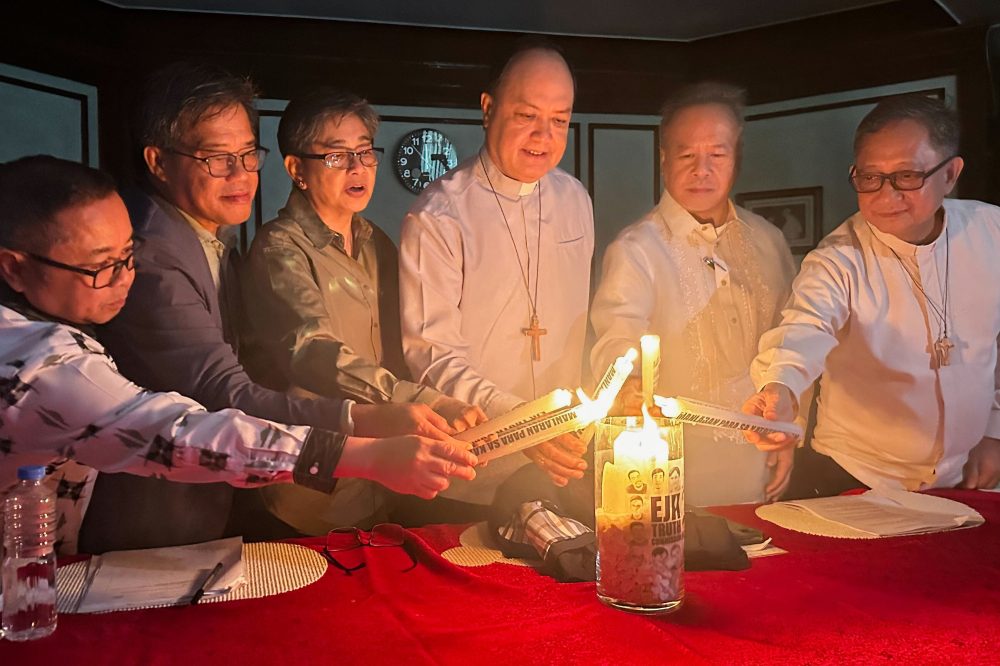

MANILA, Philippines — A new investigative commission was established Wednesday to examine the deadly drug enforcement campaign conducted under former Philippine President Rodrigo Duterte, with organizers seeking to compile witness testimonies and evidence for potential prosecutions.
The commission is being spearheaded by a Catholic bishop and includes a former judge from the international court system. Duterte concluded his turbulent six-year term in 2022 and was subsequently detained and transported to the Netherlands last year to face charges at the International Criminal Court in The Hague for alleged crimes against humanity related to the killings.
Sen. Ronald dela Rosa, a close supporter of Duterte who previously served as his top police official and initially implemented the violent enforcement efforts, faces ICC charges as an alleged accomplice in the numerous deaths that drew criticism from Western nations and human rights organizations.
Dela Rosa has disappeared from public view and is being pursued by Philippine law enforcement, which has committed to executing the ICC arrest warrant and delivering him to the international tribunal.
Both dela Rosa and the outspoken former president have rejected claims they approved unlawful executions, though Duterte frequently made public threats against suspected criminals during his presidency.
Thousands of police personnel who participated directly in the harsh enforcement operation that resulted in the deaths of numerous impoverished suspects have escaped thorough investigation, with very few facing criminal conviction, human rights organizations report.
“This is long overdue,” Cardinal Pablo Virgilio David stated during a press briefing. The independent “EJK Truth Commission” he helped establish will concentrate on assisting victims, their relatives and even remorseful law enforcement personnel in achieving resolution, David explained.
“This is an opportunity for a catharsis … so we can recover our dignity as a country,” David commented. “Ultimately, what we aspire for is healing not only for the victims but also our institutions.”
Raul Pangalangan, an esteemed Philippine attorney who previously served as an ICC judge for several years, explained that the commission he will lead “was created to ensure that the stories of victims, survivors and families are heard, verified and preserved.”
The commission intends to conduct open hearings.
“These things happened because everybody looked the other way,” Pangalangan stated. “It is almost a conspiracy of silence.”
Commission representatives indicated they will make their research available to government officials to assist in investigations, prosecutions and accountability efforts. They plan to submit regular reports to justice and human rights agencies, they announced.
David appealed to civic organizations, educational institutions, faith communities and other groups to support the commission’s work and mentioned that a major German charitable organization has provided financial backing.
Commission member Raquel Fortun, a forensic pathologist with the state-run University of the Philippines, told The Associated Press that determining facts years after the deaths occurred would be challenging. Some law enforcement personnel involved in the killings attempted to avoid responsibility, she noted.
Official death records for 13 drug suspects whose bodies were recovered after Duterte left office indicated they died from natural causes such as heart attack and pneumonia, she reported.
“When I examined the remains, I found that they were hit by gunfire,” Fortun revealed.