
Moscow has issued a stark ultimatum to Armenia, threatening to cut off discounted energy supplies if the South Caucasus nation continues its pursuit of European Union membership.
The warning comes as Armenia prepares for parliamentary elections on June 7, with polls showing Prime Minister Nikol Pashinyan’s Civil Contract party maintaining a strong advantage over candidates favoring closer Russian ties. Pashinyan has cultivated stronger relationships with Western nations, drawing Moscow’s displeasure.
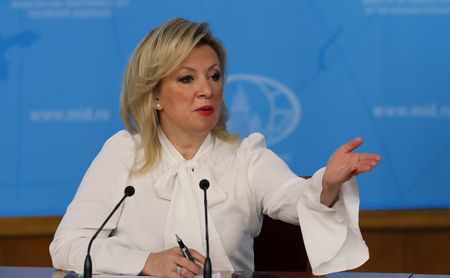
Maria Zakharova, who speaks for Russia’s Foreign Ministry, confirmed the formal notification to the RIA news agency. “The Russian Embassy has officially forwarded a letter…stating that if the process of accession to the EU continues, the Russian side will suspend or unilaterally terminate the Agreement on Cooperation in the Supply of Natural Gas, Petroleum Products and Rough Diamonds,” she stated.
The landlocked country of approximately 3 million people has historically maintained strong connections with Russia and belongs to the Moscow-led Eurasian Economic Union. Armenia houses Russian military installations and relies heavily on Moscow for energy needs, with 82% of its gas originating from Russia last year, the Interfax news agency reported.
During a campaign event, Pashinyan indicated Armenia had no plans to exit the Eurasian Union, arguing that membership in both organizations could coexist. “For now, Armenia can be a member of the Eurasian Economic Union and proceed with reforms to achieve European standards. We are on this path,” Russian news outlets reported him saying.
“When the time comes to make a choice, we will make a choice. We must have an alternative so that no one can say of Armenia — who needs it, where is it heading?” he added.
Relations between the two countries have deteriorated significantly following Azerbaijan’s recapture of the breakaway Nagorno-Karabakh region in September 2023, which led to a massive departure of ethnic Armenians despite Russian peacekeeping forces being stationed there.
Pashinyan blamed Russia for failing to safeguard his nation during that crisis and has subsequently worked to strengthen connections with Brussels and Washington. Armenia has also halted its involvement in a Moscow-led regional defense alliance.
U.S. Secretary of State Marco Rubio traveled to the Armenian capital on Tuesday, where he finalized a strategic partnership agreement demonstrating improved bilateral relations. Armenia also passed legislation last year beginning its EU membership application process.
Moscow contends that EU membership would conflict with Armenia’s participation in the Eurasian Economic Union. This month, Russian officials criticized Armenia for being pulled into what they termed the EU’s “anti-Russian orbit” and for giving Ukrainian President Volodymyr Zelenskiy “a platform for anti-Russian remarks.”
The cooperation deal that Russia threatens to cancel enables Armenia to purchase oil, gas and rough diamonds without export taxes and at significantly reduced prices.
Moscow confirmed that Russian Energy Minister Sergei Tsivilev sent the warning letter to Armenia’s Territorial Administration and Infrastructure Ministry.
According to the letter’s text published by Russia’s Kommersant newspaper, Tsivilev described Armenia’s EU orientation as “inconsistent with the nature of the partnership between the governments and economic entities of our countries.”
Armenian ministry officials told state media on Wednesday they had not received any correspondence from Tsivilev.