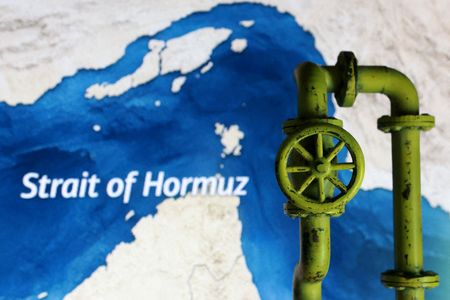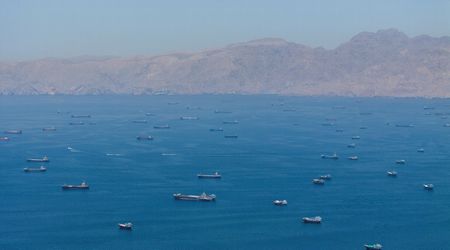

Iranian state media reported Wednesday that Tehran could restore maritime traffic through the Strait of Hormuz to levels seen before the current conflict within 30 days, as part of a potential framework agreement with the United States that would also involve the withdrawal of American forces from Iran’s region.
According to the television report, the United States would halt its naval blockade of Iranian vessels, referencing a memorandum of understanding currently being discussed between both nations to conclude the war that has severely restricted global energy supplies through the vital shipping corridor.
Iranian state television claimed to have accessed an unofficial version of the memorandum, though it emphasized the document remains incomplete and may never reach final agreement.
The White House rejected the claims, describing them as “complete fabrication” in a statement posted on social media.
Iranian government officials have not provided any response to the report.
The television broadcast noted that the matter of American military presence in the area requires additional negotiations, without providing further specifics.
The report made no reference to Iran’s nuclear program, which the United States seeks to eliminate.
This latest state television announcement represents another indication of potential movement toward an agreement, though both Tehran and Washington have publicly maintained vastly different positions, and the terms described by the broadcaster failed to address all American requirements.
U.S. Secretary of State Marco Rubio indicated Tuesday that several more days might be needed, following President Donald Trump’s weekend comments that raised expectations for a swift conclusion to the conflict.
Major obstacles have centered on reopening and controlling the waterway that previously carried one-fifth of global oil and liquefied natural gas before hostilities began, as well as eliminating Iran’s nuclear capabilities.
Oil markets dropped more than 5% Wednesday following the Iranian television announcement.
The scope of any American military reduction described by Iranian state media remains unclear.
Currently, the U.S. military maintains approximately 15,000 troops enforcing the Iranian blockade, with thousands more stationed at regional bases in Gulf nations including Qatar, the United Arab Emirates and Bahrain.
American naval ships carrying thousands of sailors and Marines routinely operate in the region, making port visits in locations such as Oman. The Pentagon has not yet responded to requests for comment.
Iranian sources indicate that nuclear program discussions would occur during a second phase of negotiations – an approach that may prove unacceptable to some of Trump’s key allies.
Trump, scheduled to meet with senior advisors at the White House Wednesday, has stated that eliminating Iran’s nuclear program to prevent Tehran from acquiring nuclear weapons represents the war’s primary objective. Iran maintains its program serves only peaceful purposes.
Earlier Wednesday, a high-ranking Iranian official speaking to reporters at the first International Security Forum in Moscow said reopening the strait continues to present challenges.
“As long as we have not agreed on all issues, we consider that nothing has been agreed,” Iran’s deputy secretary of the Supreme National Security Council, Ali Bagheri Kani, told reporters when questioned about a waterway reopening agreement.
State television reported that the framework, which would exclude military ships and envision Iran controlling vessel movement through the strait alongside Oman, has not been completed and that Tehran would take no action without “tangible verification.”
The conflict, which started February 28, has resulted in thousands of deaths and triggered an unprecedented disruption to oil supplies, driving up costs for fuel, fertilizer and food products.
The war has also generated domestic political challenges for Trump, with polling data showing public opposition to the conflict six months ahead of mid-term elections.
Despite ongoing peace negotiations, the United States conducted what it termed defensive strikes Tuesday against missile installations and vessels attempting to deploy mines in Iran’s southern Hormozgan province.
Iran’s foreign ministry characterized the strikes as a “gross violation” of a fragile ceasefire that has held for nearly seven weeks.